🛎️ AI Secret Forward Look

Good Morning, AI Enthusiasts!
Before we look ahead to 2026, thank you for reading AI Secret through 2025. This is our final issue of the year. After Christmas, we return to what comes next for AI.

STANFORD
Stanford Calls 2026 the Year AI Faces Reality
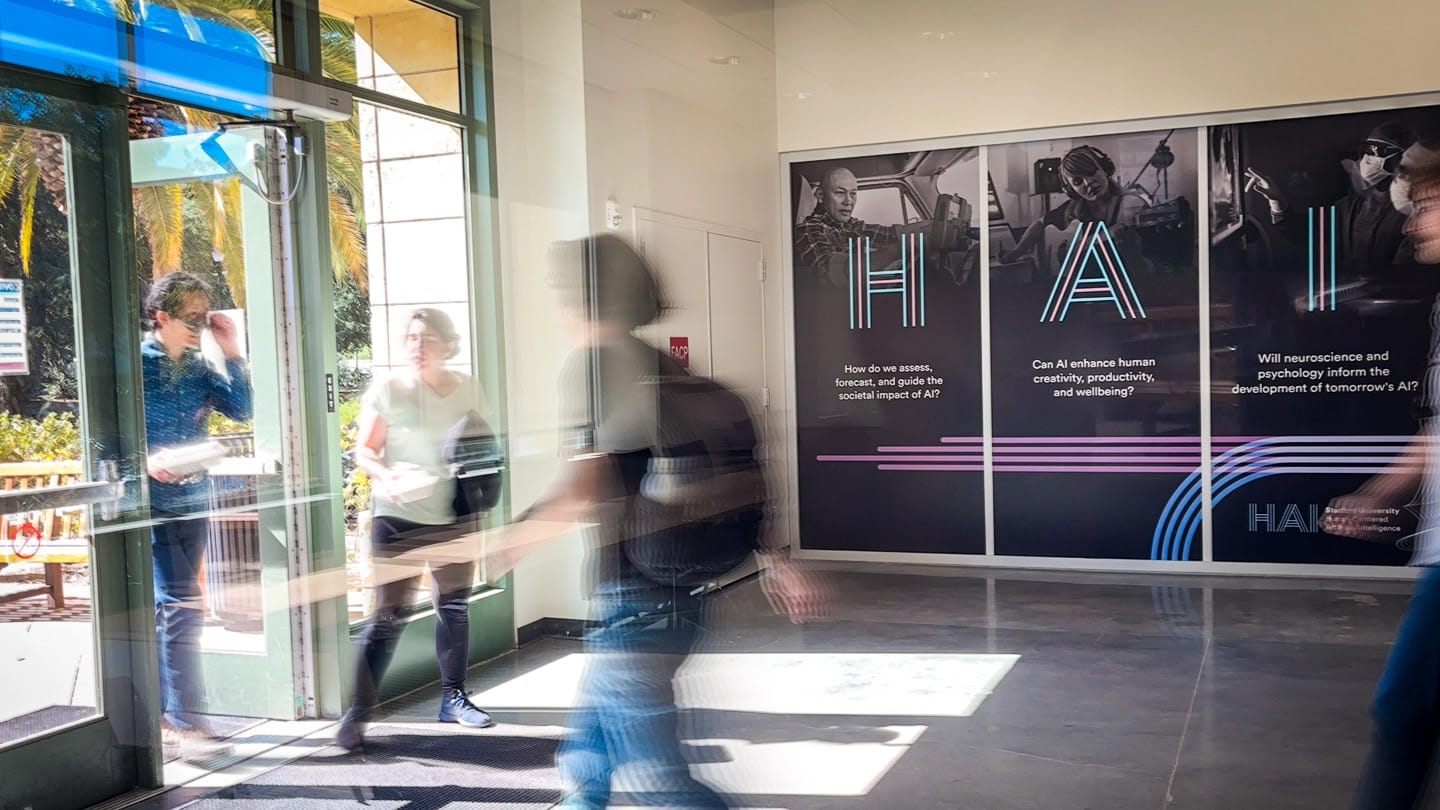
Stanford researchers describe 2026 as the year AI stops selling possibility and starts answering for results. Faculty across computer science, medicine, law, and economics converge on the same shift. No AGI breakthrough. Fewer grand claims. More audits, benchmarks, and postmortems. Governments push AI sovereignty through local compute and data control. Enterprises admit many deployments failed to lift productivity outside narrow zones like programming and call centers. Model progress slows as data quality and scale hit limits, pushing attention toward smaller systems trained on carefully curated datasets. Video and medical AI finally move from demos into real use, pulling copyright and clinical scrutiny with them.
The change puts pressure on the foundations built over the last three years. Massive data center investments assume long run returns that now face tighter evaluation. Hospitals drown in overlapping AI vendors and start demanding workflow level ROI, not accuracy alone. Courts and law firms shift toward multi document reasoning, citation integrity, and risk exposure as table stakes. Economists build high frequency dashboards to track task level labor effects monthly, not years later. Measurement becomes unavoidable once capital, labor, and regulation intersect.
The likely outcome is a narrower, more disciplined AI economy. Fewer generalized claims. More domain specific systems tied to cost, reliability, and accountability. Compute still matters, but justification replaces momentum. Teams that align models, interfaces, and infrastructure to provable utility continue forward. The rest fade from view.
TOGETHER WITH ROBOTICS HERALD
Explore the Rise of Humanoid Intelligence

From factories to frontlines, humanoid robots are no longer prototypes — they’re becoming co-workers, caregivers, and companions. Robotics Herald tracks the breakthroughs shaping this transformation, offering deep insights into the companies, technologies, and people building our mechanical future.
AGENTS
Google Sees AI Agents Replacing How Work Gets Done in 2026
Google Cloud’s 2026 outlook is simple and quietly disruptive. AI agents stop being assistants and start becoming the default interface for work. These systems understand goals, break them into steps, coordinate with other agents, and execute across enterprise software with human oversight. Google frames 2026 as the point where this shifts from experimentation to daily operations. Employees no longer ask tools for answers. They assign outcomes and supervise execution. The change feels different because it is already visible inside large organizations, not locked in research demos or future roadmaps.
The pressure lands on how companies are built. When agents run workflows end to end, assumptions about approvals, tickets, security, and accountability start to bend. Google cites cases where tens of thousands of employees save meaningful time per task, customer response cycles shrink from days to minutes, and security teams offload triage at scale. Systems designed around human initiation struggle when software is allowed to act. Identity, payments, compliance, and monitoring all become harder once the actor is an agent, not a person. That is the quiet friction most teams underestimate.
The trajectory points toward agent orchestration becoming a core management skill. Organizations that invest early in interoperable agents and workforce training gain compounding leverage. Those that delay risk losing control over systems that still technically work, but no longer match how work actually flows.
MARKET
AI Capital Spending Accelerates As Market Discipline Tightens in 2026
Goldman Sachs is pointing to another sharp step up in AI spending next year. Wall Street now expects hyperscalers to pour about $527 billion into capital expenditures in 2026, and Goldman notes these numbers have been revised higher almost every quarter. The pattern is familiar. Earnings arrive, infrastructure plans expand, and prior estimates look too low. What feels new is the reaction. Investors are no longer treating all AI investment as equally valuable.
The internal strain is already visible. Since mid year, stock price correlation among major AI hyperscalers has dropped from roughly 80 percent to around 20 percent. Infrastructure stocks are up more than 40 percent year to date, while forward earnings expectations have barely moved. AI capex sits near 0.8 percent of GDP, well below historic technology boom peaks closer to 1.5 percent. That leaves headroom, but also exposes companies relying on debt funded builds and uncertain power availability.
Goldman expects attention to migrate away from pure infrastructure toward AI platforms and productivity beneficiaries that can show revenue leverage. Spending is unlikely to slow soon. The bigger constraint looks like investor patience and physical supply, not cash. Capital keeps flowing, but fewer names will be allowed to justify it.
QUICK HITS
- OpenAI says prompt injection can’t be fully eliminated and is mitigating Atlas risks through automated attack simulations and layered defenses.
- Instacart has shut down its AI-driven pricing experiments and pulled access to Eversight after scrutiny from researchers and regulators.
- ChatGPT is rolling out a yearly recap that summarizes users’ conversations with stats, archetypes, and an AI-generated image.
- The UK government wants the BBC to educate the public on AI and explore new AI-driven business models.
- Mark Zuckerberg is reportedly already clashing with new AI chief Alexandr Wang, highlighting internal strain as Meta races to build “superintelligence.”
TRENDING
Daily AI Launches
- ConnectMachine has launched a privacy-first AI contact manager for iOS/Android that uses digital cards and voice queries to organize networks.
- Surgeflow has launched a tool that automates multi-tab browser tasks like research and shopping based on a single command.
- Routine has launched its local-first, AI-powered workspace on Android for unified management of tasks, calendars, and notes.
- Qwen has released Qwen-Image-Layered, a model that splits images into editable RGBA layers for artifact-free object manipulation.
Featured AI Tools
- 🎥 KaraVideo unites all AI video models in one place.
- 📚 Heardly is the Fast Way to read Best Book.
- 🪶 CopyOwl is the First AI Research Agent, deep research on any topic in one click.
- 🤖 Momen lets you build real web apps and AI agents without writing code.
TOGETHER WITH US
AI Secret Media Group is the world’s #1 AI & Tech Newsletter Group, reaching over 2 million leaders across the global innovation ecosystem, from OpenAI, Anthropic, Google, and Microsoft to top AI labs, VCs, and fast-growing startups.
We operate the industry’s most influential portfolio of newsletters, each shaping a different frontier of the AI & Tech revolution:
Be Smarter in 5 Minutes
- AI: AI Secret
- Tech & Business: Bay Area Letters
- Marketing: Marketing Secret
Discover the Future Products
- AI Launchpad: Oncely
- Robotics: Robotics Herald
- Hardwares: The Hardwire
We've helped promote over 500 Tech Brands. Will yours be the next?
Email our co-founder Mark directly at mark@aisecret.us if the button fails.