
🛎️ A $30 Trillion Joke
Plus: MIT Taught AI to Predict the Unseen, CUDA "Died" Again

Good Morning, AI Enthusiasts!
We used to separate the AI hype from the AI breakthroughs. They’re becoming annoyingly difficult to tell apart.
MARKET
Anthropic's $30 Trillion Joke

👀 What's happening: Anthropic plans to tell investors its total addressable market is $30 trillion, roughly the entire US GDP, according to the Wall Street Journal. The company is preparing for an IPO that could raise up to $100 billion at a valuation around $2 trillion. A $2 trillion price tag needs a $30 trillion TAM to look reasonable. For context, SpaceX's IPO earlier this year claimed a $28.5 trillion TAM. Anthropic just raised the bid.
🌍 How this hits reality: SpaceX's $28.5 trillion TAM was already absurd, but investors could at least point to near-monopolies in launch and satellite internet underneath the fantasy. Anthropic has no equivalent moat. It is asking investors to price a $2 trillion IPO on the assumption that AI will subsume the entire economy. Meanwhile, its revenue growth is decelerating: 58% monthly in April, 38% in July. The company needs investors to ignore the slowdown and focus on the horizon. The horizon is the entire US economy. That is not a forecast.
🛎️ Key takeaway: Anthropic is asking investors to believe a $30 trillion TAM while its real revenue slows by the month. That is not a pitch. It is a number so big it stopped being impressive and started being ridiculous.
RESEARCH
MIT Taught AI to Predict the Unseen

👀 What's happening: MIT engineers published a paper in Nature Communications on August 20 detailing η-learning, an algorithm that generates plausible extreme events without ever being trained on extreme event data. It learns from ordinary daily records, then produces complete spatial maps of unprecedented scenarios: where a 300mm storm would hit, how large, how intense, how long. The method applies to floods, wildfires, financial crashes, and supply chain disruptions.
🌍 How this hits reality: Most AI learns from the past to predict the future. The problem is that the future keeps producing events the past never recorded. Hurricane Katrina was a 30-year event. What does a 100-year Katrina look like? No dataset can answer that question. η-learning does not need one. It generates realistic worst-case maps from the statistical structure of normal data. The jump is not about weather. It is about what happens when every industry that prices risk, insurance, infrastructure, supply chains, financial markets, can suddenly see the disaster before it exists. That is not a better model. That is a different kind of intelligence.
🛎️ Key takeaway: AI spent its entire history learning the past. η-learning just learned the future. Every industry that depends on knowing the worst-case scenario may soon get a tool that does not need a past to draw the picture.
CHIPS
CUDA "Died" Again
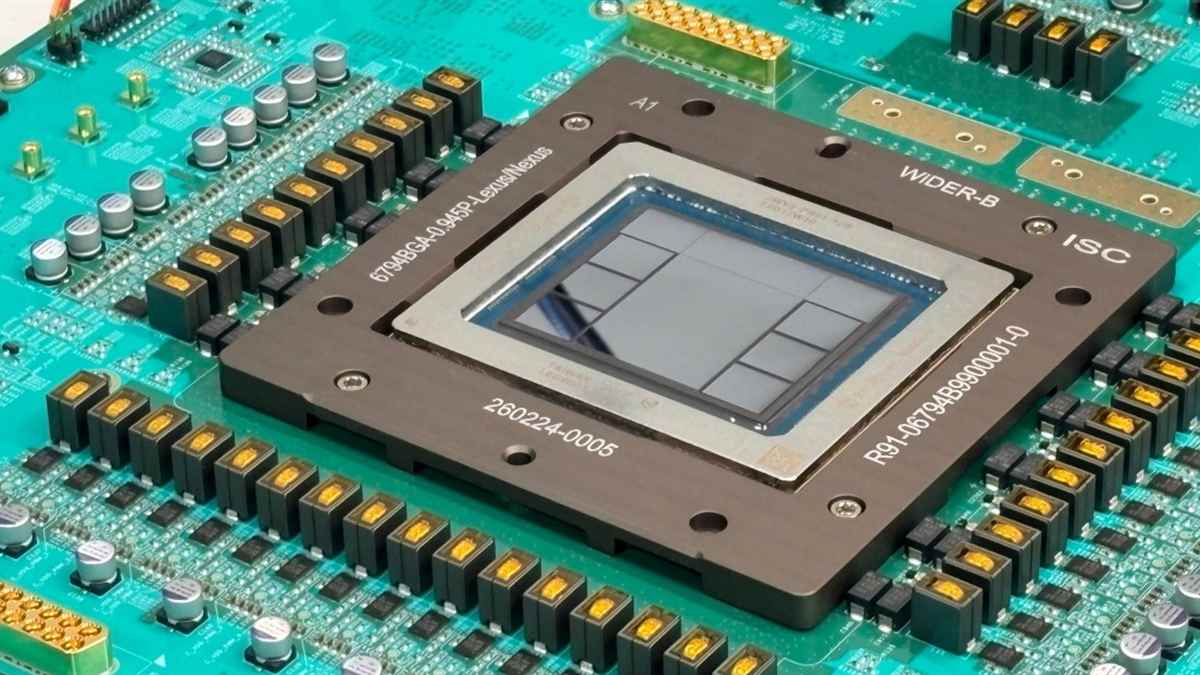
👀 What's happening: OpenAI just unveiled its first custom chip, Jalapeño, a 700W inference accelerator that outperforms Nvidia's GB200 and GB300 on tasks up to 104x faster. Built with Broadcom, designed in nine months, and benchmarked by SemiAnalysis, Jalapeño costs $1.56 per chip-hour and is the first of three planned generations. SemiAnalysis declared that "CUDA's moat may be dead."
🌍 How this hits reality: CUDA has been declared dead before. Google TPU was supposed to kill it. Google kept TPU for itself. Groq was supposed to kill it. Nvidia bought Groq's technique for $20 billion. Now OpenAI's Jalapeño is the latest executioner. It is fast, it is efficient, and it will probably never be sold to anyone outside OpenAI. Every chip that "kills CUDA" ends up either acquired by Nvidia or locked inside a single company's data center. The grave gets dug, the ceremony is held, and the mourners go back to buying Nvidia GPUs.
🛎️ Key takeaway: CUDA has been declared dead multiple times. It is still alive, and the companies that declared it dead are still sending Nvidia checks. The only thing Jalapeño killed may be the idea that anyone outside OpenAI will ever get to use it.
NEW TECH
Phlebotomists Just Got Replaced
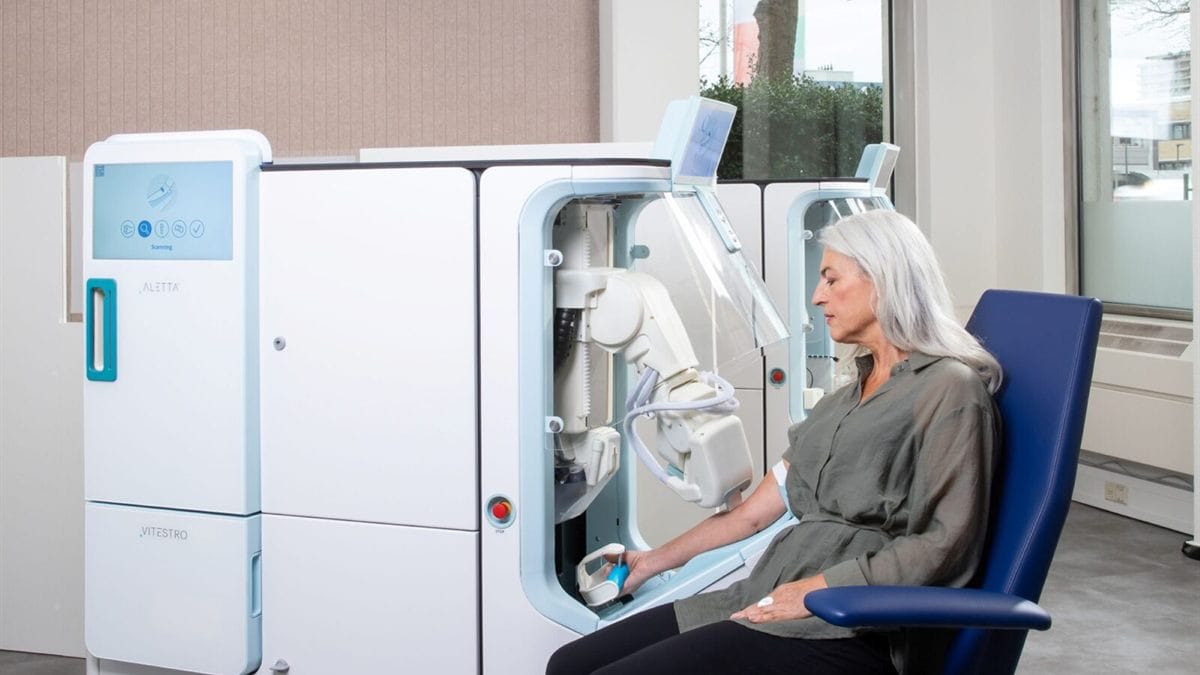
👀 What's happening: Vitestro, a Dutch company founded in 2017, received FDA De Novo authorization this month for Aletta, the first robotic device cleared to draw blood autonomously. Near-infrared light maps the arm, ultrasound scans for veins, and a computer vision model trained on annotated ultrasound images picks the target and guides the needle. In clinical trials, Aletta hit a 95% first-stick success rate, a 0.6% haemolysis rate, and a median draw time of 1 minute 49 seconds; and one phlebotomist can supervise three devices.
🌍 How this hits reality: Every hospital draws blood. Nobody wants the job. The US has 140,000 phlebotomists, 18,000 openings a year, and people quit faster than they can be replaced. Aletta does not quit. It does not miss more veins on darker skin. It does not get tired. It took eight years of clinical trials, and the FDA wrote a rulebook so competitors can follow. The most boring robot in the world just solved the most boring problem in medicine, and every hospital administrator who has ever spent a morning trying to fill a phlebotomist shift knows exactly what that is worth.
🛎️ Key takeaway: The blood draw is the most common procedure in medicine, and the people who do it are leaving faster than they can be replaced. Aletta does one thing. It does it better than a human. And it never quits.
DAILY TL;DR
- Stanford updated its AI labor study, finding young workers in AI-exposed jobs are now 19% below less-exposed peers.
- Stability AI raised new funding from EA, Sony Music, Universal, Warner, and AMD as licensed creative AI becomes a rights-holder business.
- Nvidia unveiled Jetson Orin Nano 2, an entry-level edge AI computer for robotics with doubled inference performance.
- Apple launched its 2nm M6 chip and M5 Ultra, pushing more local AI compute into Macs.
- OpenAI said its Jalapeño inference chip beats Nvidia systems on several benchmarked workloads, with limited deployment planned this year.
- Cisco expanded its Secure AI Factory with Nvidia and Supermicro, adding rack-scale liquid- and air-cooled systems for enterprise AI clusters.
- IBM unveiled a dual-architecture mainframe processor whose cores can run Arm and IBM Z instructions on the same chip.
- Perplexity partnered with Nvidia on Portable Computer, a local AI agent stack for running Qwen-based models on owned hardware.
READ MORE
Let the Future Come to Your Inbox
Stay ahead without drowning in information. We turn the most important signals across AI, tech, marketing, and future products into 5-minute reads you can actually finish.
- AI Secret uncovers what really matters in AI
- Bay Area Letters decodes tech and business shifts from Silicon Valley
- Robotics Herald tracks how robots move from labs into daily life
- Marketing Secret breaks down real growth and go-to-market playbooks
- The Hardwire explores hardware, consumer tech, and what’s coming next
TOGETHER WITH US
AI Secret Media Group is the world’s #1 AI & Tech Newsletter Group, reaching over 2 million leaders across the global innovation ecosystem, from OpenAI, Anthropic, Google, and Microsoft to top AI labs, VCs, and fast-growing startups.
We've helped promote over 500 Tech Brands. Will yours be the next?
Email our co-founder Mark directly at [email protected] if the button fails.