🛎️ Displayless Smartglasses

Good Morning, AI Enthusiasts!
It’s day one at CES 2026, and instead of trying to cover everything, we picked a few products that quietly signal where things are actually heading. These launches feel less like demos and more like direction.

GLASSES
Displayless Smartglasses Push AI Wearables Into Daily Infrastructure
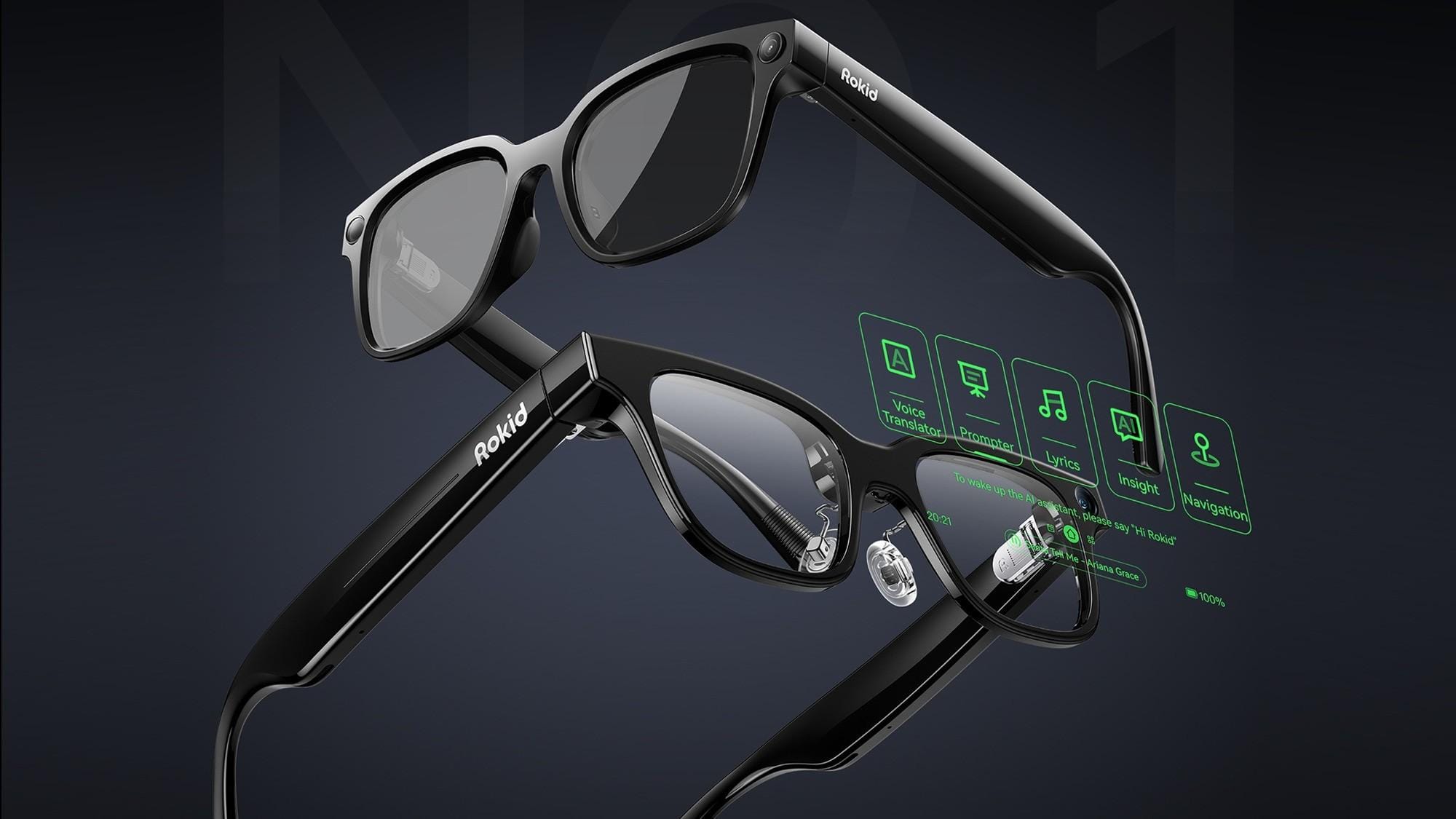
👀 What’s happening: At CES 2026, Rokid unveiled Style, AI smartglasses with no display, built for all day wear and prescription lenses. They run multiple AI engines like ChatGPT and DeepSeek, plug into Google Maps and translation, and avoid locking users into one model for constant ambient assistance.
🌍 How this hits reality: Display free glasses change the bet. Power goes to audio, vision capture, and context, not screens. With dual chips and 12 hours battery life, Style targets daily use. At 38.5 grams and $300, it pressures Meta Ray-Bans. It signals confidence that cameras and microphones are enough for most tasks without constant user attention overhead.
🛎️ Key takeaway: Smartglasses are sliding away from displays toward invisible assistants. If this holds, control shifts to AI routing and integrations. Hardware becomes lighter, cheaper, harder to differentiate. Platform power quietly moves upstream silently.
TOGETHER WITH HARDWIRE
The Future Just Got Physical
The Hardwire is a weekly newsletter tracking the next wave of AI-powered hardware: consumer devices, wearables, spatial computing, and the silicon shaping it all. From product launches to deep-tech inflection points, it connects what’s being built with why it matters.
Read by founders, engineers, investors, and operators who want to understand how AI escapes the cloud and enters the physical world.
If you care about where software meets atoms, The Hardwire is where the future gets wired.
CONSTRUCTION
Compact Construction Equipment Just Got Its First AI Copilot
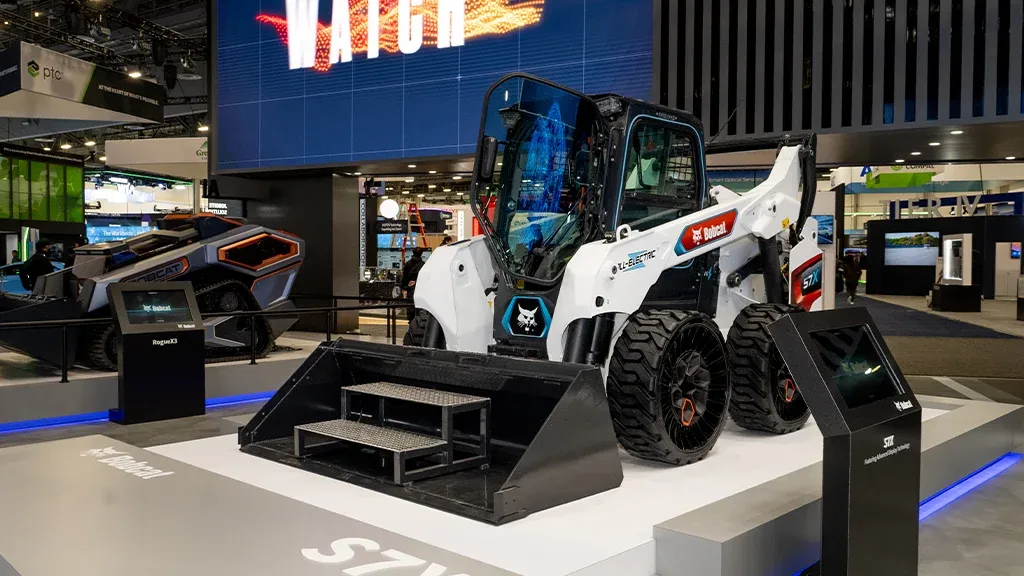
👀 What’s happening: At CES 2026, Doosan Bobcat Inc. introduced Jobsite Companion, the first AI enabled feature built specifically for compact construction equipment. Operators can speak naturally to the machine. It responds in real time, automating over 50 functions and adjusting settings without hands leaving controls.
🌍 How this hits reality: This matters because small machines run in harsh, disconnected environments with constant operator turnover. Jobsite Companion runs fully onboard, not in the cloud. That means zero latency, no connectivity dependency, and consistent performance on remote jobsites. Training time drops. Errors drop. Productivity rises per operator hour.
🛎️ Key takeaway: Construction is quietly entering the AI interface era. When expertise moves into the cab itself, compact equipment stops being skill gated hardware and starts behaving like adaptive systems built for labor constrained sites.
RETAIL
An AI Bartender That Remembers You and Cuts You Off
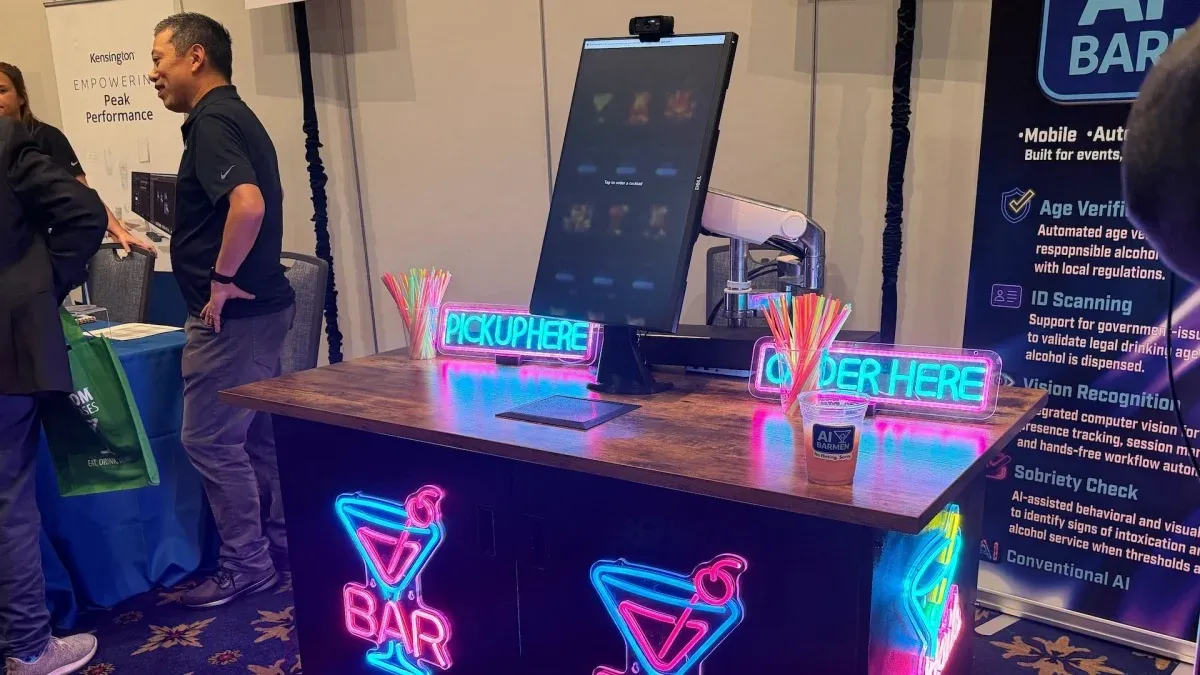
👀 What’s happening: At CES 2026, a startup demoed AI Barmen, an AI-powered bartender designed to behave less like a vending machine and more like a real human behind the bar. It scans your face to estimate age, talks with you, remembers preferences, generates custom cocktails, and even comments on you in ways that feel uncomfortably personal.
🌍 How this hits reality: This pushes consumer AI past task execution into social role simulation. Bars rely on trust, memory, and judgment. AI Barmen attempts all three. Facial age estimation replaces IDs. Conversation replaces menus. A built-in sobriety check can slow or stop service. That means computer vision, real-time reasoning, and behavioral policy all converge in a regulated, physical environment.
🛎️ Key takeaway: The real experiment is not mixing drinks but automating judgment. If machines can convincingly play roles that require discretion and memory, hospitality may be one of the first industries where “presence AI” replaces human interaction by default.
GAMING
Razer Is Quietly Turning Gaming Hardware Into an AI Platform
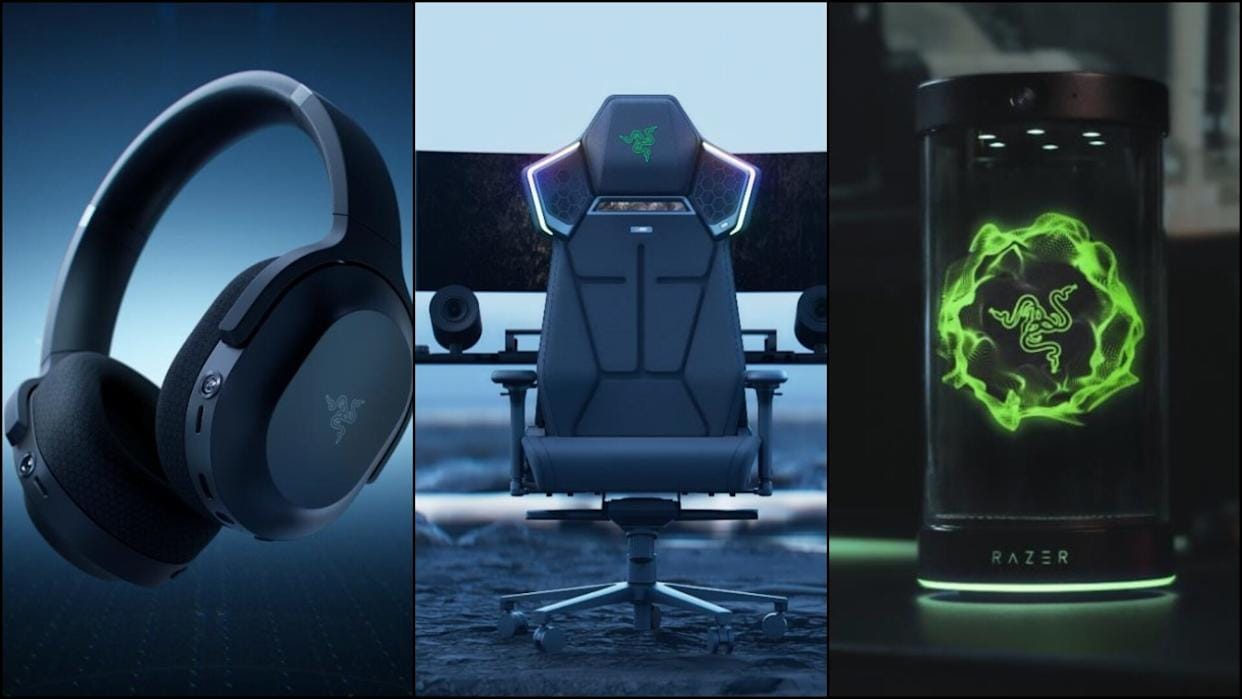
👀 What’s happening: At CES 2026, Razer reframed its lineup as an AI-native ecosystem. Project AVA moved from esports coach to persistent AI desk companion. Project Motoko introduced wearable first-person AI sensing. Alongside them, Razer rolled out local AI workstations, open-source tooling, and portable accelerators. This feels less like peripherals and more like infrastructure.
🌍 How this hits reality: Gaming hardware is being repositioned as always-on AI compute and data capture. Dual POV cameras, low-latency audio, haptics, and local GPUs collapse inference, interaction, and training into the same loop. That stresses cloud dependence, subscription models, and even how training data is sourced. A headset generating human POV data is not just for play. It feeds robotics, simulation, and embodied AI pipelines.
🛎️ Key takeaway: If this holds, Razer is no longer selling devices. It is building a local-first AI stack anchored in gamers and developers. The risk for others is missing that the next AI platform may enter through play, not productivity.
QUICK HITS
- At CES 2026, Google brought Gemini-powered image and video generation to Google TV to explore AI content in the living room.
- At CES 2026, Lenovo announced an Nvidia partnership to speed up AI data centre deployment and unveiled Qira, a cross-device personal AI platform.
- A California lawmaker proposed SB 867, seeking a four-year ban on AI chatbot toys for children.
- Meta paused the global rollout of its Ray-Ban Display smart glasses due to strong U.S. demand and limited supply.
- Snowflake has integrated Google Gemini into Cortex AI, advancing its model-agnostic, cross-cloud approach to enterprise data intelligence.
TRENDING
Daily AI Launches
- 2-b.ai has launched a browser tool that blends a to-do list with AI, allowing you to capture tasks from text and use AI to plan and execute them.
- Canary has launched a language app that uses music, karaoke, and real-time lyrics translation to make learning fun.
- Instruct has released v2.5, an autonomous agent that executes tasks across apps and converts successful runs into recurring automations.
- Okara has launched a Reddit Agent that monitors threads for keywords and drafts authentic comments to help startups grow organically.
Featured AI Tools
- ✨ MuseMail.ai makes creating stunning, on-brand emails from one prompt with AI precision.
- 🎥 KaraVideo unites all AI video models in one place.
- 📚 Heardly is the Fast Way to read Best Book.
- 🪶 CopyOwl is the First AI Research Agent, deep research on any topic in one click.
- 👁️ Looki personal AI wearable captures, understands, and recalls your life moments seamlessly.
TOGETHER WITH US
AI Secret Media Group is the world’s #1 AI & Tech Newsletter Group, reaching over 2 million leaders across the global innovation ecosystem, from OpenAI, Anthropic, Google, and Microsoft to top AI labs, VCs, and fast-growing startups.
We operate the industry’s most influential portfolio of newsletters, each shaping a different frontier of the AI & Tech revolution:
Be Smarter in 5 Minutes
- AI: AI Secret
- Tech & Business: Bay Area Letters
- Marketing: Marketing Secret
Discover the Future Products
- AI Launchpad: Oncely
- Robotics: Robotics Herald
- Hardwares: The Hardwire
We've helped promote over 500 Tech Brands. Will yours be the next?
Email our co-founder Mark directly at mark@aisecret.us if the button fails.