🛎️ King of the Agent Economy

Good Morning, AI Enthusiasts!
The world did not speed up. It fragmented.

AGENTS
King of the Agent Economy
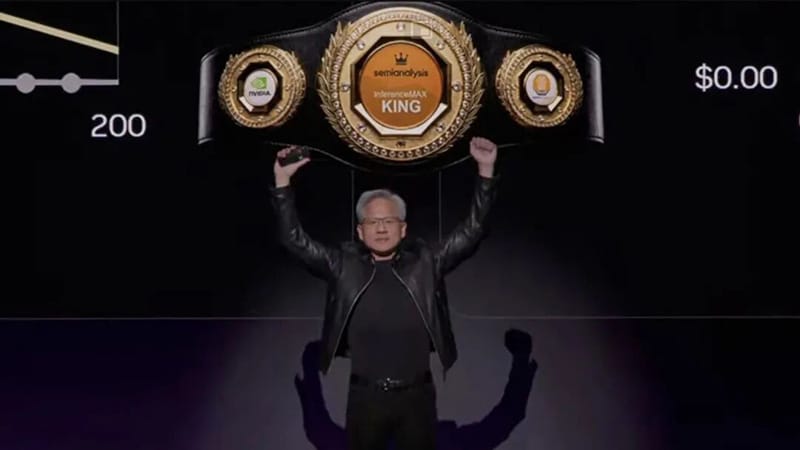
👀 What’s happening: At GTC 2026, Jensen Huang stopped talking about chips and declared a new order built on tokens and agents. While positioning OpenClaw as the "New Computer," Nvidia launched the Vera Rubin system, fused it with Groq for real-time decoding, and showed a jump from 2 million to 700 million tokens per second in a 1GW data center, a 350× leap in two years,
🌍 How this hits reality: This locks the full stack. OpenClaw defines how agents run, Nvidia defines how tokens are produced, and pricing from $3 to $150 per million tokens maps directly to intelligence tiers. Power is capped, so token per watt decides everything. Whoever owns token supply controls agent deployment, margins, and global compute access.
🛎️ Key takeaway: This is a regime change. Tokens become the currency, agents become the workers, and Nvidia sits at the center of both. The agent era still starts under one king.
TOGETHER WITH MYCLAW
Run OpenClaw on MyClaw.ai
Skip Docker, VPS configs, and late-night debugging. With MyClaw.ai, you can launch your agent in minutes and keep it running 24/7 in a dedicated environment built for serious builders.
If you’re serious about OpenClaw, run it properly — with speed and security by default.
RESEARCH
AI Workloads Are Rising

👀 What’s happening: A Harvard backed study of 1,500 workers shows heavy AI usage is triggering cognitive overload. Around 14 percent report symptoms like reduced focus and slower decisions. The issue is not the work itself. It is the constant supervision of agents and switching across multiple tools.
🌍 How this hits reality: The real cost comes from coordination overhead. Managing more than three AI tools starts to hurt productivity, while supervision adds 14 percent more mental effort and 12 percent more fatigue. Error rates rise, with major mistakes up 39 percent. Human attention is now the most constrained resource.
🛎️ Key takeaway: The next shift is toward unified agent systems. Instead of stacking tools, platforms like OpenClaw centralize memory, workflows, and execution. Reducing supervision layers may become the only scalable way to keep humans in the loop without burning them out.
DEEPFAKE
Netanyahu Forced to Prove He Is Not AI
👀 What’s happening: A livestream of Benjamin Netanyahu, Prime Minister of Israel, triggered viral claims that he had been replaced by an AI clone after viewers pointed to visual glitches like an apparent extra finger. The rumor spread fast enough that he later filmed a “proof-of-life” clip, asking someone to count his fingers on camera.
🌍 How this hits reality: Fact-checkers quickly debunked the clip. The video was real, and current AI still cannot generate convincing 40-minute sequences. But that no longer matters. If millions distrust a long-form livestream, then traditional proof systems are breaking. Visual evidence, once a baseline for truth, is losing authority.
🛎️ Key takeaway: This is the early stage of a harder problem. As synthetic media improves, humans will need stronger ways to prove they are real. Identity itself is becoming something that must be continuously verified, not assumed.
OPENAI
OpenAI Backs Off Adult Mode
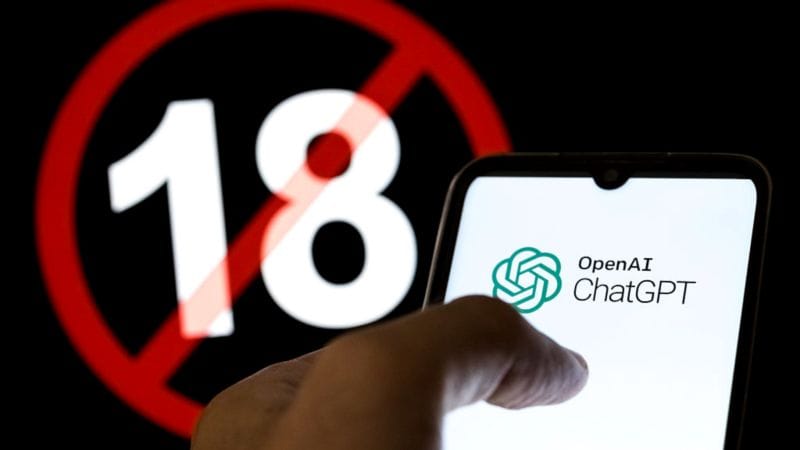
👀 What’s happening: OpenAI has delayed its planned adult mode again, which would allow sexually suggestive text conversations but no images or video. The blocker is not capability but control. Internal systems for moderation and age detection are not reliable enough, forcing a deliberate pause instead of a rushed launch.
🌍 How this hits reality: The numbers are the problem. With roughly 100 million underage users weekly and a 12 percent misclassification rate under test, millions could access adult interactions. At the same time, regulatory gaps treat text differently from images, creating pressure to ship. OpenAI is caught between legal loopholes and real exposure risk.
🛎️ Key takeaway: OpenAI is in a sensitive window and chose to slow down before it breaks in public. The real issue is control lagging capability. Until that gap closes, every push into emotional or agentic systems carries the same exposure risk.
DAILY TL;DR
- Elon Musk said any proceeds from the OpenAI lawsuit will be fully donated to charity.
- Mistral released the open-source Small 4 model with a MoE architecture, offering lower latency, higher throughput, and multimodal support.
- NVIDIA launched the Vera CPU, purpose-built for agentic AI, delivering higher performance and efficiency for large-scale AI workloads.
- Encyclopaedia Britannica and Merriam-Webster sued OpenAI, alleging it trained on copyrighted content and produced near-identical outputs.
- Three teens sued xAI, alleging Grok generated harmful content involving minors and lacked adequate safety safeguards.
- Shopify is investing in AI shopping agents, seeing them as a new entry point that will reshape product discovery and purchasing.
- Nebius secured a $27B deal with Meta to provide large-scale AI compute infrastructure using NVIDIA’s new chips.
READ MORE
Let the Future Come to Your Inbox
Stay ahead without drowning in information. We turn the most important signals across AI, tech, marketing, and future products into 5-minute reads you can actually finish.
- AI Secret uncovers what really matters in AI
- Bay Area Letters decodes tech and business shifts from Silicon Valley
- Robotics Herald tracks how robots move from labs into daily life
- Marketing Secret breaks down real growth and go-to-market playbooks
- The Hardwire explores hardware, consumer tech, and what’s coming next
TOGETHER WITH US
AI Secret Media Group is the world’s #1 AI & Tech Newsletter Group, reaching over 2 million leaders across the global innovation ecosystem, from OpenAI, Anthropic, Google, and Microsoft to top AI labs, VCs, and fast-growing startups.
We've helped promote over 500 Tech Brands. Will yours be the next?
Email our co-founder Mark directly at mark@aisecret.us if the button fails.