
🛎️ Montana Turns Patients Into the "AI Trial"
Plus: Virus Design Crosses a New Line, Google Owns None of the Business

Good Morning, AI Enthusiasts!
We taught AI to design life, accelerate medicine, and place the order, then quietly moved humans to the confirmation screen.
TEST
Montana Turns Patients Into the "AI Trial"

👀 What's happening: This week Montana became the first US state where any biotech can sell an experimental drug directly to consumers. Clear early testing, sometimes in as few as ten healthy people, pay $12,500 for review, and a company can set its own price and sell through experimental clinics. Other states allow this only for the terminally ill; Montana opens it to anyone who consents and can pay, longevity seekers included. A board with a doctor, scientists, and an ethicist signs off. Two drugs, for neuropathy and hearing loss, are already under review.
🌍 How this hits reality: Days ago, we saw Roche's AI push a cancer marker into trials before anyone could explain it, testing first, understanding later. Montana runs the same reversal on the drugs themselves: they reach patients before the trials finish. The catch is who fills that gap. A real trial pays volunteers and shields them; here the patient pays full price to be the experiment, and carries the risk that a formal trial exists to catch.
🛎️ Key takeaway: AI is flooding the pipeline with candidates faster than trials can clear them, and Montana's answer isn't more testing, it's turning paying patients into the test that proof skipped.
RESEARCH
Virus Design Crosses a New Line
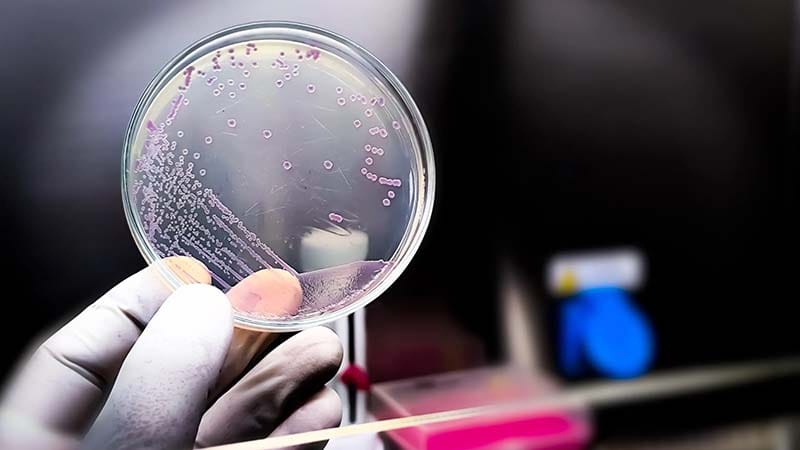
👀 What's happening: Scientists at Stanford used genome language models, the genetic cousins of chatbot LLMs, to design the first working viruses made by AI. They're bacteriophages, viruses that only attack bacteria and are already used to treat infections, and in lab tests a cocktail of them killed E. coli strains resistant to natural phages. The process was crude: of nearly 300 designs synthesized, only 16 worked. The team deliberately excluded human and animal viruses from training, and published in Science with an explicit call to consult safety experts.
🌍 How this hits reality: Strip the caveats and a line just got crossed. AI has now composed the source code of a living, self-replicating thing, the closest a machine has ever come to authoring life. Johns Hopkins scientists said it flat out: the ability to compose viral genomes with generative AI now exists; the governance to steer it does not. This phage is harmless. The precedent is not. The capability landed first, the rulebook is blank, and the tool won't sit quietly in the lab waiting for us to write one.
🛎️ Key takeaway: We taught a machine to write the code of life before we agreed on who's allowed to run it, and there's no undo button on a virus that copies itself.
DELIVERY
Google Owns None of the Business
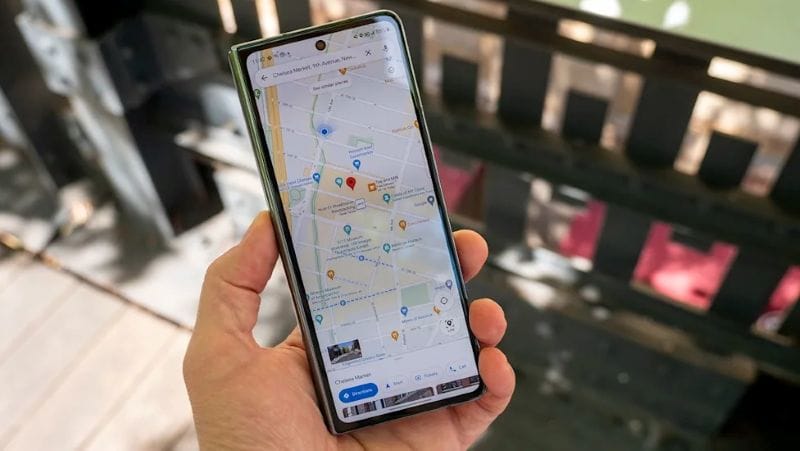
👀 What's happening: Google officially rolled out food ordering inside Google Maps this week. Its AI, Ask Maps, takes an order end to end: say "grab spicy pad kee mao for pickup on my way home," and it reads your route, taste, and saved spots, finds an open restaurant, and drops the dish into a cart to confirm. Leaked for months, it's now live in the US with Square and Toast, Uber Eats soon, plus a Gemini layer that can read your Gmail. The demo's fine print: "simulated."
🌍 How this hits reality: Strip the AI gloss and Google owns the thinnest slice of this business, the opening sentence. It has no couriers, no restaurant contracts, no loyalty, so it rents all of it from the very apps it hopes to demote, and Uber Eats is only "coming soon" because it can walk the moment Google gets greedy. Owning the request means nothing if you own none of the fulfillment, and regulators already watch Google for exactly this move. It's a toll booth on a road it doesn't control.
🛎️ Key takeaway: The AI isn't the disruption, it's the tell, Google reaching for a market it can front but can't actually run.
Google Owns None of the Business
👀 What's happening: Google officially rolled out food ordering inside Google Maps this week. Its AI, Ask Maps, takes an order end to end: say "grab spicy pad kee mao for pickup on my way home," and it reads your route, taste, and saved spots, finds an open restaurant, and drops the dish into a cart to confirm.
NEW TECH
DeepMind Broke the Supercomputer Monopoly
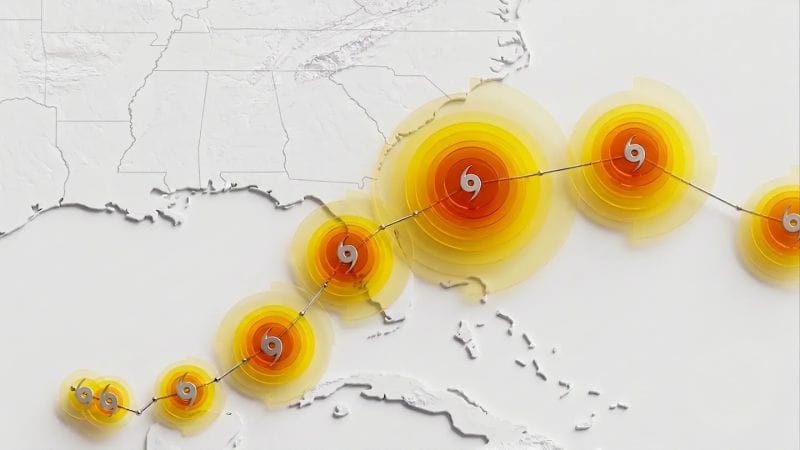
👀 What's happening: Google DeepMind open-sourced WeatherNext, the cyclone model it published in Nature, releasing the weights free, with a mini version that runs in a Google Colab. And it's no toy: it hit state-of-the-art accuracy on storm track, intensity, and wind, buying forecasters a full extra day, its three-day forecast matches what older models managed in two. It already helped the National Hurricane Center flag Hurricane Melissa's rapid intensification in 2025. It also runs absurdly light, on 100x coarser data than traditional models.
🌍 How this hits reality: Picture a two-person weather office in a Caribbean island that gets hit every year. Yesterday, matching this kind of forecast meant a supercomputer and a national budget they'll never have. Today they download the weights and run it on a machine already sitting in the office. That's the shift hiding under the Nature headline: the hard part of frontier forecasting was never the science, it was who could afford to run it. DeepMind just deleted the price of admission, and handed state-of-the-art storm forecasting to whoever needs it most.
🛎️ Key takeaway: A supercomputer used to stand between a poor country and an extra day of warning, that wall just came down.
DeepMind Broke the Supercomputer Monopoly
👀 What's happening: Google DeepMind open-sourced WeatherNext, the cyclone model it published in Nature, releasing the weights free, with a mini version that runs in a Google Colab. And it's no toy: it hit state-of-the-art accuracy on storm track, intensity, and wind, buying forecasters a full extra day, its three-day forecast matches what older models managed in two.
DAILY TL;DR
- OpenAI and Amazon, Microsoft, Cursor, and Vercel published Agent Plugins 1.0, giving AI-agent skills and MCP servers one portable format across major clients.
- AMD acquired Taalas to explore chips that etch model weights directly into silicon for faster inference.
- Adobe put 70-plus creative tools inside ChatGPT, turning Photoshop, Acrobat, and video tasks into prompt-based workflows.
- OpenAI is making GPT-5.6 Luna the default for free ChatGPT users and removing text-chat limits.
- DeepSeek reopened an $8 billion round and invested in Unitree, tying cheap models to humanoid robotics.
- OpenAI hardware leaks point to a $300-$400 screenless smart speaker with cameras, microphones, and moving parts.
- Nvidia is building an AI safety team as open models become more important to chip demand.
- Scale X found humans missed one-third of malicious AI-agent commands, showing approval prompts are a weak safety layer.
READ MORE
Let the Future Come to Your Inbox
Stay ahead without drowning in information. We turn the most important signals across AI, tech, marketing, and future products into 5-minute reads you can actually finish.
- AI Secret uncovers what really matters in AI
- Bay Area Letters decodes tech and business shifts from Silicon Valley
- Robotics Herald tracks how robots move from labs into daily life
- Marketing Secret breaks down real growth and go-to-market playbooks
- The Hardwire explores hardware, consumer tech, and what’s coming next
TOGETHER WITH US
AI Secret Media Group is the world’s #1 AI & Tech Newsletter Group, reaching over 2 million leaders across the global innovation ecosystem, from OpenAI, Anthropic, Google, and Microsoft to top AI labs, VCs, and fast-growing startups.
We've helped promote over 500 Tech Brands. Will yours be the next?
Email our co-founder Mark directly at [email protected] if the button fails.