
🛎️ OpenAI Banned Cursor
Plus: The Cheapest Wins, AI Just Broke Income Statement

Good Morning, AI Enthusiasts!
The smarter the models get, the more the industry revolves around primitive questions: who owns it, who pays, and who gets blamed.
AI
OpenAI Banned Cursor
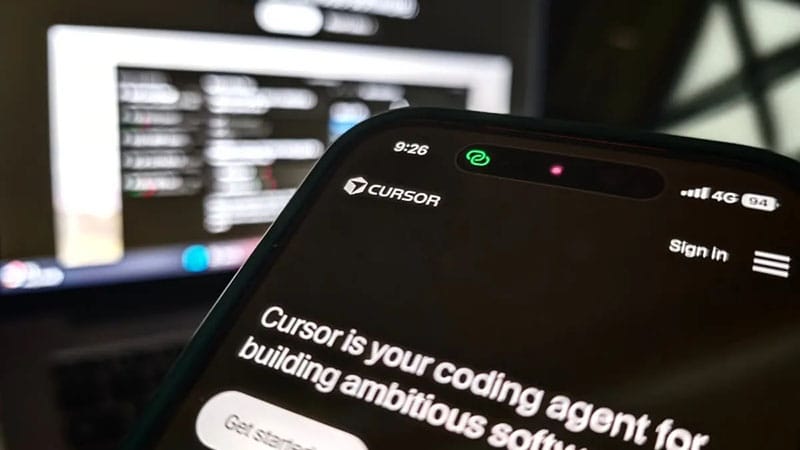
👀 What's happening: OpenAI terminated Cursor's direct access to GPT models. Cursor used to bundle GPT into its subscription. Developers now need their own API key and pay OpenAI directly. The deadline is November 12. The reason is simple: Elon Musk bought Cursor for $60 billion, and OpenAI will not sell its best models to a competitor's product.
🌍 How this hits reality: Cursor was the neutral marketplace. Every model provider shipped there. That ended the day Musk bought it. OpenAI is the first to leave. It will not be the last. No model company will sell its API to a platform owned by a rival. Anthropic is still there today. It is asking the same question OpenAI did.
🛎️ Key takeaway: Cursor's business model was independence. SpaceX paid $60 billion for it. The first thing it lost was the thing that made it worth $60 billion.
NEW LAUNCH
The Cheapest Wins
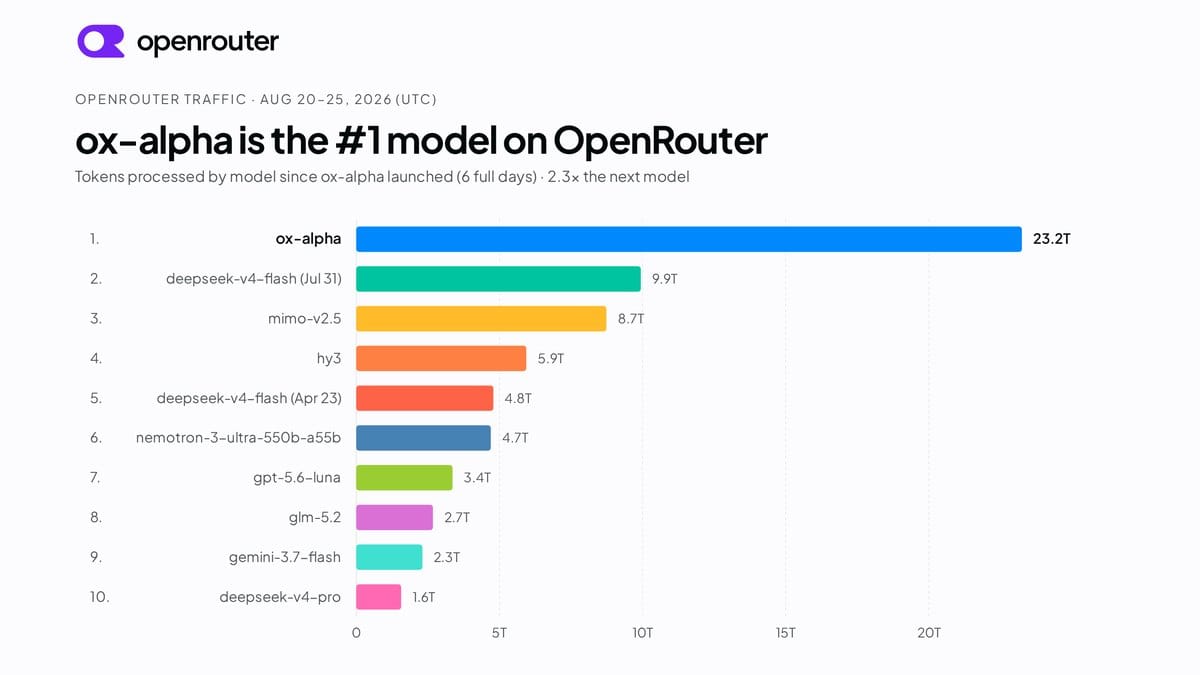
👀 What's happening: The mysterious model "Ox Alpha" that dominated OpenRouter and OpenCode this week has been identified as GLM-5.3 Flash, a new release from Chinese AI lab Zhipu. It was free during its anonymous test period. Developers flooded it to the top of both platforms without knowing who built it. It scores 57 on the AA benchmark, matching Claude Opus 4.8. Its price is roughly 1/40th of Opus 4.8.
🌍 How this hits reality: Free got it to number one. The price will keep it there. Zhipu did not need a brand. It did not need trust. It just needed to be free long enough for developers to notice, and cheap enough for them to stay. The model is competitive with the frontier. The price is not. It is an order of magnitude below. The new rule of AI is brutal and simple: reach Opus 4.6 performance, and the only thing that matters is the price tag.
🛎️ Key takeaway: The model that wins is not the smartest. It is the cheapest one that is smart enough. Ox Alpha is the proof.
AI FEVER
AI Just Broke Income Statement

👀 What's happening: Alphabet, Amazon, Nvidia, and Microsoft recorded over $160 billion in "other income" last quarter, driven by rising valuations of their AI equity stakes. Alphabet hit $97.9 billion, double the prior quarter. Amazon surged to $53.4 billion. These are not sales. They are paper gains from stakes in companies like SpaceX. The result: net income has never been higher, driven by investments, not operations.
🌍 How this hits reality: AI is no longer just inflating valuations. It is inflating the income statement. The most basic number in finance, net income, has been quietly rewritten by the AI boom. Big Tech pours billions into AI CapEx, driving cash flow toward zero. The same dollars flow to AI startups, inflating their valuations, and the paper gains flow right back to net income. Same money, counted twice. Cash flow says the business is burning. Net income says the business is printing. One of them is lying. Goldman Sachs asked if the growth is based on "actual demand." Citi warned next year's growth rate could turn negative. The boom is not just a market story anymore. It is an accounting story.
🛎️ Key takeaway: Net income is the number every investor trusts. AI just made it untrustworthy. The boom is no longer about valuations. It is about what counts as profit.
LAWSUIT
The Corporate Shield Broke

👀 What's happening: Sony Music Publishing and Warner Chappell Music sued Anthropic, CEO Dario Amodei, and co-founder Benjamin Mann in federal court on August 28. The complaint accuses Mann of personally torrenting 5 million pirated books from LibGen in 2021 and 2 million more in 2022, at Amodei's direction. Internal documents described LibGen as "sketchy AF" and noted "We don't want it to be known." Plaintiffs seek up to $150,000 per work across tens of thousands of songs.
🌍 How this hits reality: The AI copyright war just changed its question. For years, the fight was about fair use: does training on copyrighted data count as infringement? Sony and Warner are no longer asking that. They are asking: where did you get the book? And who approved taking it? The court in Bartz already distinguished the two. Training on legally obtained works may be fair use. Obtaining works through piracy is not. The plaintiffs are not drilling into the training. They are drilling into the acquisition. And they are drilling past the company, into the founders. If the corporate shield breaks, every AI founder who signed off on a data pipeline becomes a target.
🛎️ Key takeaway: The AI copyright war used to be about what you did with the data. It is now about where you got it and who told you to take it. The corporate shield is the next thing to break.
TOGETHER WITH MYCLAW
Run Best-in-Class AI Agents — In Seconds, Always On
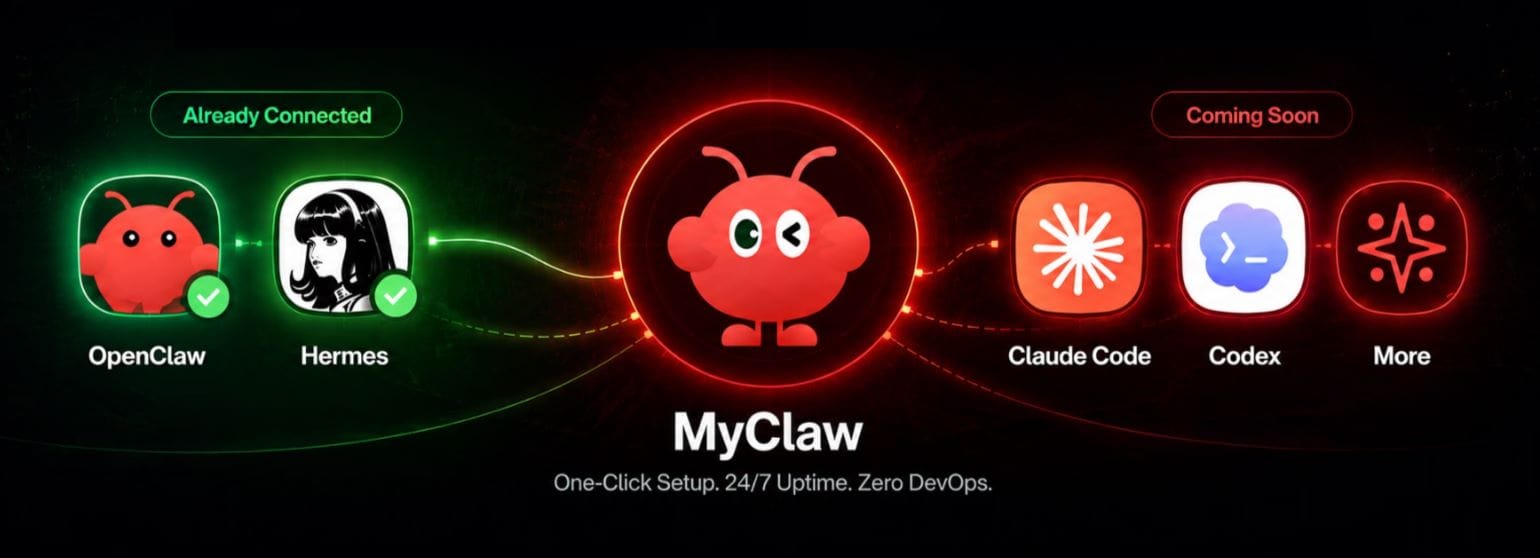
MyClaw is a best-in-class AI agent platform that brings together OpenClaw, Hermes Agent, and production-grade infrastructure to help businesses launch intelligent agents that understand goals, use tools, automate workflows, and deliver finished results.
MyClaw already hosts OpenClaw and Hermes, connecting models from every major AI provider, including the latest text, reasoning, and image generation models from OpenAI, Anthropic, DeepSeek, Kimi, GLM, Google Gemini, and more through MyClaw's model gateway.
No lock-in. No juggling API keys. No switching between platforms. Pick the best model for the job, give your agent the tools it needs, and let it run.
DAILY TL;DR
- Flock Safety lost Texas state funding for new AI license-plate cameras after officials raised concerns over surveillance, misuse, and public oversight.
- U.S. export controls may target Chinese firms renting Nvidia GPUs through overseas cloud providers in Thailand and Singapore.
- Claude Code can be tricked by a malicious website summary into running attacker-controlled commands, according to a new prompt-injection demo.
- SpaceX is building turbine-blade casting capacity in Texas to speed gas power for AI data centers, raising pollution concerns.
- Tencent open-sourced Hy4-preview, a 770B-parameter Hunyuan model with 49B active parameters and a 1M-token context window.
- Nvidia paused some AI cloud revenue-sharing financing deals after employees warned the program could draw antitrust scrutiny.
- Uber was fined nearly $1 billion by Dutch regulators over automated driver suspensions without enough human review.
READ MORE
Let the Future Come to Your Inbox
Stay ahead without drowning in information. We turn the most important signals across AI, tech, marketing, and future products into 5-minute reads you can actually finish.
- AI Secret uncovers what really matters in AI
- Bay Area Letters decodes tech and business shifts from Silicon Valley
- Robotics Herald tracks how robots move from labs into daily life
- Marketing Secret breaks down real growth and go-to-market playbooks
- The Hardwire explores hardware, consumer tech, and what’s coming next
TOGETHER WITH US
AI Secret Media Group is the world’s #1 AI & Tech Newsletter Group, reaching over 2 million leaders across the global innovation ecosystem, from OpenAI, Anthropic, Google, and Microsoft to top AI labs, VCs, and fast-growing startups.
We've helped promote over 500 Tech Brands. Will yours be the next?
Email our co-founder Mark directly at [email protected] if the button fails.