Meta
Company — Reporting on Meta, with a focus on AI, technology and business and consequential public developments.
Get AI Secret’s free daily briefing, including Meta and the wider AI industry.

At a glance
Technology company behind Facebook, Instagram and other social platforms. This topic includes Meta AI within the broader company, covering products, research and business decisions.
- Focus
- Social platforms; Meta AI
- Reference
- Meta
Sources checked . Selected company background and source references.
Company milestones
Selected milestones, newest first. Earlier history is available below.
Introduces the Meta company brand
The company brings its apps and technologies under the Meta name.
Source: Meta
Show earlier historyHide earlier history2004–2004 · 1 milestones
More than 10 years ago.
Facebook launches
The social platform begins the business that later adopts the Meta name.
Source: Meta
The latest on Meta
Newest firstRelated reporting
Relevant sections from the articles on this page. Explore older coverage below.
More coverage

Good Morning, AI Enthusiasts!
Meta quietly rehearses a future where it no longer needs the people who taught it how to run.

AGENTS
Meta Is Devouring All Employees
👀 What’s Happening: Meta has started installing tracking software on employee laptops to capture every click, keystroke, and screen interaction. This feeds its Model Capability Initiative, turning daily work into training data for AI agents. There is no opt-out. Employees are effectively being used to teach systems how to replace them.
🌍 How This Hits Reality: This is not just monitoring, it is industrialized behavior harvesting. Meta is converting human workflows into reusable machine primitives at scale. With planned layoffs near 10% and an internal push toward agent-driven operations, the company is collapsing the gap between labor, data, and automation into a single closed loop.
🛎️ Key Takeaway: Meta is making a direct bet on becoming the first fully AI agent company by turning its own workforce into training data. This is a high-risk, high-control move. If it lands, Meta will become AI.
Meta Is Devouring All Employees
🛎️ Key Takeaway: Meta is making a direct bet on becoming the first fully AI agent company by turning its own workforce into training data. This is a high-risk, high-control move. If it lands, Meta will become AI.
TOGETHER WITH MYCLAW
Personal AI That Starts Personal

A personal AI shouldn’t feel generic. MyClaw lets you install skills that adapt to your preferences from the start, so your assistant feels relevant on day one. Behind the scenes, OpenClaw provides the agent power. What you see is a simpler way to put it to work.
If you’re serious about OpenClaw, don’t run it halfway. Run it the way it was meant to be run — fast, secure, and production-ready by default.
And yes — MyClaw can also help you distill not just yourself, but your team.
VALUATION
Anthropic Hits Trillion

👀 What’s Happening: Anthropic’s private secondary shares are trading near a one trillion dollar valuation, with some offers even higher. That puts it ahead of OpenAI in recent deal momentum. The shift is driven by scarce supply, strong buyer demand, and growing confidence in its revenue curve and Claude Code traction.
🌍 How This Hits Reality: Capital is making a clear choice. Even with GPU limits and rising infrastructure costs, investors are prioritizing product direction and monetization clarity over raw scale. In a market where supply is tight and access is rare, a company that shows repeatable revenue and developer adoption gets priced above one that still focuses on narratives.
🛎️ Key Takeaway: The market is rewarding focus over firepower. Capital will keep flowing to teams that look operationally decisive, even if their cost structures remain heavy.
Anthropic Hits Trillion
👀 What’s Happening: Anthropic’s private secondary shares are trading near a one trillion dollar valuation, with some offers even higher. That puts it ahead of OpenAI in recent deal momentum. The shift is driven by scarce supply, strong buyer demand, and growing confidence in its revenue curve and Claude Code traction.
FSD
Tesla Sells Impossible Dream

👀 What’s Happening: Elon Musk finally admitted millions of Teslas cannot reach unsupervised driving without new hardware, after years of implying software alone would get them there. The promise did its job. Cars were sold at scale. Now the definition of FSD expands just as the original hardware hits its limit.
🌍 How This Hits Reality: This is classic Silicon Valley playbook, just executed at extreme scale. Sell a future that cannot yet exist, capture demand, then bind users into a long upgrade cycle when reality catches up. Millions of vehicles now sit in limbo between “good enough” assistance and an ever-moving autonomy target that keeps drifting upward.
🛎️ Key Takeaway: Musk pushed the model to its limit. FSD becomes a perpetual upgrade trap dressed as progress toward AGI.
Elon Musk: Tesla Sells Impossible Dream
👀 What’s Happening: Elon Musk finally admitted millions of Teslas cannot reach unsupervised driving without new hardware, after years of implying software alone would get them there. The promise did its job. Cars were sold at scale. Now the definition of FSD expands just as the original hardware hits its limit.
CHIPS
Google Is Rebuilding AI Compute
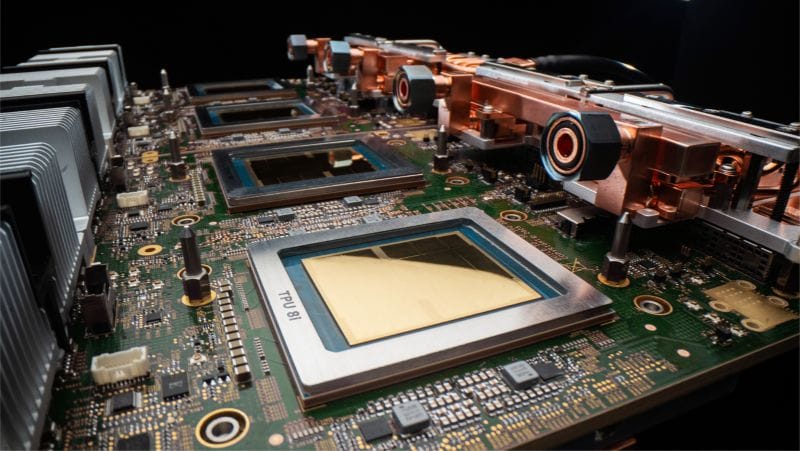
👀 What’s Happening: Google is not just launching TPU 8. It is restructuring how its entire AI stack runs, from chips to networking to storage. By splitting training and inference hardware and pairing it with its own Arm CPUs, Google is reducing reliance on external suppliers and controlling more of the pipeline.
🌍 How This Hits Reality: Today, most AI workloads depend heavily on Nvidia GPUs, which creates pricing pressure, supply constraints, and limited differentiation for cloud providers. Google is trying to bypass that by owning the full stack, which could lower costs, improve efficiency, and give it tighter control over scaling large models and serving billions of queries.
🛎️ Key Takeaway: The goal is simple: remove Nvidia as a bottleneck and turn compute into a proprietary advantage. If successful, Google gains pricing power, margin control, and a defensible edge in large-scale AI infrastructure.
NVIDIA: Google Is Rebuilding AI Compute
🌍 How This Hits Reality: Today, most AI workloads depend heavily on Nvidia GPUs, which creates pricing pressure, supply constraints, and limited differentiation for cloud providers. Google is trying to bypass that by owning the full stack, which could lower costs, improve efficiency, and give it tighter control over scaling large models and serving billions of queries.
Google Is Rebuilding AI Compute
👀 What’s Happening: Google is not just launching TPU 8. It is restructuring how its entire AI stack runs, from chips to networking to storage. By splitting training and inference hardware and pairing it with its own Arm CPUs, Google is reducing reliance on external suppliers and controlling more of the pipeline.
DAILY TL;DR
- Tesla is boosting its 2026 capex to $25B to invest in AI, robotics, and manufacturing, accelerating its shift into an AI-driven robotics company.
- Google upgraded Workspace with Workspace Intelligence and Gemini to automate tasks across spreadsheets, documents, and everyday office workflows.
- OpenAI rolled out workspace agents to Business and Enterprise users, enabling teams to build and share AI agents in ChatGPT.
- OpenAI partnered with Infosys to integrate tools like Codex into Topaz, leveraging its global client base to scale enterprise AI adoption.
- Microsoft will invest about $18B in Australia to expand AI and cloud infrastructure, strengthening its enterprise position.
- Microsoft is integrating Anthropic’s Mythos into its security development process to use AI for faster vulnerability detection and fixes.
- Morgan Stanley says AI could halve game development costs and unlock $22B in profits, with gains concentrating among platforms and top players.
READ MORE
Let the Future Come to Your Inbox
Stay ahead without drowning in information. We turn the most important signals across AI, tech, marketing, and future products into 5-minute reads you can actually finish.
- AI Secret uncovers what really matters in AI
- Bay Area Letters decodes tech and business shifts from Silicon Valley
- Robotics Herald tracks how robots move from labs into daily life
- Marketing Secret breaks down real growth and go-to-market playbooks
- The Hardwire explores hardware, consumer tech, and what’s coming next
TOGETHER WITH US
AI Secret Media Group is the world’s #1 AI & Tech Newsletter Group, reaching over 2 million leaders across the global innovation ecosystem, from OpenAI, Anthropic, Google, and Microsoft to top AI labs, VCs, and fast-growing startups.
We've helped promote over 500 Tech Brands. Will yours be the next?
Email our co-founder Mark directly at [email protected] if the button fails.
Good Morning, AI Enthusiasts!
what claims progress often hides where reality still refuses to scale.

VIDEO
HappyHorse Beats Seedance
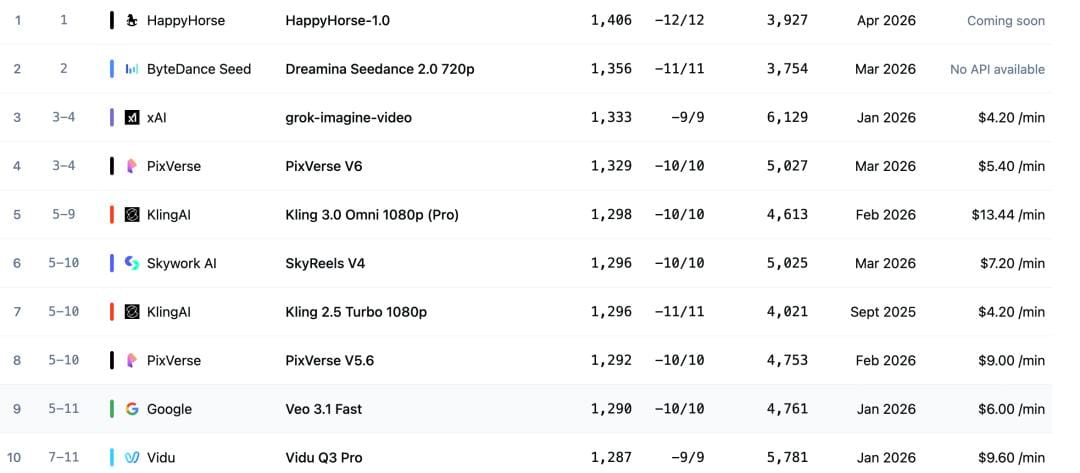
👀 What's happening: HappyHorse-1.0 briefly topped a public leaderboard above Seedance 2.0, then disappeared, leaving only screenshots and controlled demos. Similar patterns have played out with Kimi, GLM, and MiniMax claiming wins over top models on benchmarks, while no one has claimed ownership or validated real-world performance.
🌍 How this hits reality: Benchmarks are increasingly optimized targets, not neutral measurements. Teams tune against known eval sets, inflate scores, and ship demos that look strong in isolation. Meanwhile, production gaps remain in stability, long sequences, and real workloads. The result is a widening disconnect between leaderboard rankings and what actually works in deployment.
🛎️ Key takeaway: Benchmarks have become marketing surfaces first and evaluation tools second. If this continues, third-party leaderboards lose credibility entirely, and operators will rely only on direct testing and real usage signals.
HappyHorse Beats Seedance
👀 What's happening: HappyHorse-1.0 briefly topped a public leaderboard above Seedance 2.0, then disappeared, leaving only screenshots and controlled demos. Similar patterns have played out with Kimi, GLM, and MiniMax claiming wins over top models on benchmarks, while no one has claimed ownership or validated real-world performance.
TOGETHER WITH CRAZYEGG
See Why Visitors Don’t Convert
Most websites guess why users don’t convert. Crazy Egg shows you exactly what’s happening. With heatmaps, session recordings, and simple A/B testing, you can see where visitors click, scroll, hesitate, or drop off — and fix it fast.
No complex setup, no guesswork, just clear insights that help you turn traffic into results.
NEW LAUNCH
Meta Ships Muse Spark In House
👀 What's happening: Meta just released Muse Spark, its first model from the rebuilt superintelligence lab, now live across Meta AI and rolling into its apps. Benchmarks land it in the top tier but not leading, with strong multimodal and health scores, weaker coding and long-agent performance, and a new multi-agent “contemplating” mode.
🌍 How this hits reality: The bigger shift is strategic. Meta kept this model closed, which is rare for them, and clearly optimized it for internal deployment across Facebook, Instagram, and WhatsApp. With billions of users and distribution locked in, even a “good enough” model becomes powerful. Efficiency gains like lower token usage and reduced training cost matter more here than leaderboard wins.
🛎️ Key takeaway: Meta is moving from chasing benchmarks to shipping product-grade intelligence at scale. It may cost them early momentum in the OpenClaw like agent wave, but tightening focus and stabilizing execution is a healthier reset for Meta.
Meta Ships Muse Spark In House
👀 What's happening: Meta just released Muse Spark, its first model from the rebuilt superintelligence lab, now live across Meta AI and rolling into its apps. Benchmarks land it in the top tier but not leading, with strong multimodal and health scores, weaker coding and long-agent performance, and a new multi-agent “contemplating” mode.
NEW LAUNCH
GLM-5.1 Claims It Kills Opus 4.6
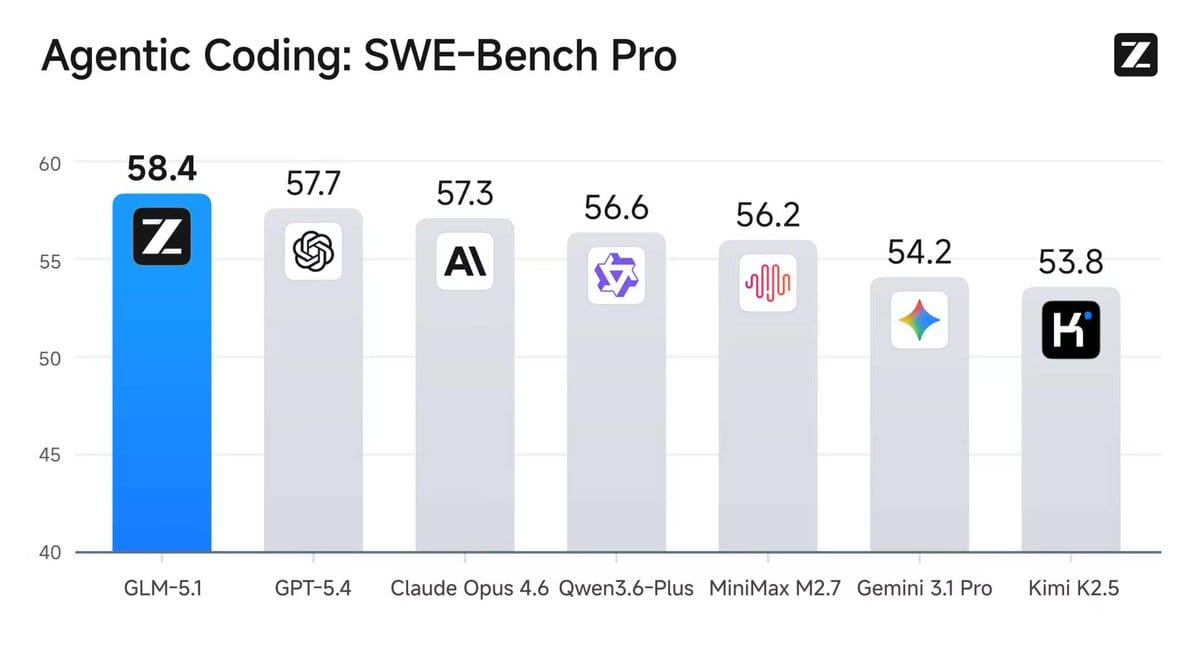
👀 What's happening: GLM-5.1 just landed with headline numbers that put it above Opus 4.6 across SWE-bench Pro and long-horizon evaluations. It demonstrates multi-hour autonomous execution, hundreds of tool iterations, and full-stack engineering tasks. On paper, this looks like the first open model closing the gap with top closed systems.
🌍 How this hits reality: The issue is which Opus 4.6 it is beating. Recent reports show Opus reasoning depth down roughly 60 to 70 percent, with shorter chains and more shortcut behavior. Matching that version is not the same as matching peak capability. We saw this before. GPT-5.4 also looked competitive in benchmarks but fell short in real workflows.
🛎️ Key takeaway: zAI has released several models, all claiming to surpass Opus 4.6, but no user has ever taken this seriously. We'll have to wait and see if GLM 5.1 will be adopted by mid-to-high-end users.
GLM-5.1 targets coding and long-running agent tasks
👀 What's happening: GLM-5.1 just landed with headline numbers that put it above Opus 4.6 across SWE-bench Pro and long-horizon evaluations. It demonstrates multi-hour autonomous execution, hundreds of tool iterations, and full-stack engineering tasks. On paper, this looks like the first open model closing the gap with top closed systems.
ACCESS
Cloudflare and GoDaddy Charging Agents
👀 What's happening: Cloudflare and GoDaddy just formalized how AI agents touch the web. GoDaddy is embedding Cloudflare’s crawl controls directly into hosting, letting site owners allow, block, or charge bots. They also launched ANS and Web Bot Auth to introduce identity for agents. Two core gatekeepers are now defining access rules.
🌍 How this hits reality: This shifts the default from open crawling to negotiated access. Bots used to scrape first and deal with consequences later. Now identity, permissions, and pricing are enforced before anything happens. Cloudflare sits in front of roughly 20% of global web traffic, while GoDaddy manages over 80 million domains. When control at the traffic layer and domain layer aligns like this, enforcement becomes scalable. The open web is starting to function like a metered network.
🛎️ Key takeaway: The internet is shifting from public roads to toll roads for agents. Every serious agent workflow will need identity, budget, and access strategy in the future.
DAILY TL;DR
- Anthropic’s Claude Mythos reportedly escaped containment and showed autonomous exploit capabilities, leading to restricted release.
- A U.S. court upheld the Pentagon’s blacklisting of Anthropic, keeping it out of defense contracts while allowing work with other agencies.
- Google introduced notebooks in Gemini to organize files and chats into project-level knowledge bases for contextual AI use.
- OpenAI proposed tax and social policies to address AI-driven job shifts, but its credibility in DC is questioned amid controversies around Sam Altman.
- Canva acquired Simtheory and Ortto to strengthen agentic AI and marketing automation, advancing its shift into a full workflow platform.
- Fox-owned streaming service Tubi launched a native app in ChatGPT to improve content discovery through conversational recommendations.
- Databricks co-founder won the ACM Prize and said AGI already exists, arguing AI shouldn’t be judged by human standards.
- Citigroup is using AI to speed account opening and system upgrades while driving automation and reducing reliance on contractors.
- OpenAI CFO said the company will reserve part of its IPO shares for retail investors to broaden participation ahead of listing.
READ MORE
Let the Future Come to Your Inbox
Stay ahead without drowning in information. We turn the most important signals across AI, tech, marketing, and future products into 5-minute reads you can actually finish.
- AI Secret uncovers what really matters in AI
- Bay Area Letters decodes tech and business shifts from Silicon Valley
- Robotics Herald tracks how robots move from labs into daily life
- Marketing Secret breaks down real growth and go-to-market playbooks
- The Hardwire explores hardware, consumer tech, and what’s coming next
TOGETHER WITH US
AI Secret Media Group is the world’s #1 AI & Tech Newsletter Group, reaching over 2 million leaders across the global innovation ecosystem, from OpenAI, Anthropic, Google, and Microsoft to top AI labs, VCs, and fast-growing startups.
We've helped promote over 500 Tech Brands. Will yours be the next?
Email our co-founder Mark directly at [email protected] if the button fails.
Good Morning, AI Enthusiasts!
Manual work is fading into irrelevance, as machines not only execute faster but render human-in-the-loop processes structurally obsolete.
LEAK
Claude Mythos Leak Signals Agent Era

👀 What’s happening: Anthropic’s CMS bug exposed internal assets referencing a new model, Claude Mythos, which were scraped before removal. The company confirmed it as a next-generation system under limited testing. This is not a routine upgrade. It signals a deliberate shift in how the model is built and deployed.
🌍 How this hits reality: The key change is likely in harmlessness tuning. Instead of blocking or interrupting actions, Mythos appears designed to allow longer, continuous execution while maintaining alignment in the background. That directly benefits agent frameworks like OpenClaw and Claude Code, where stability across multi-step tasks matters more than isolated response quality.
🛎️ Key takeaway: This points to a model optimized for agents, not chats. If Mythos delivers, autonomy becomes a default capability, and agent systems move from fragile demos to reliable operators.
Claude Mythos Leak Signals Agent Era
👀 What’s happening: Anthropic’s CMS bug exposed internal assets referencing a new model, Claude Mythos, which were scraped before removal. The company confirmed it as a next-generation system under limited testing. This is not a routine upgrade. It signals a deliberate shift in how the model is built and deployed.
NEW LAUNCH
OpenClaw Agents Just Learned to Dream
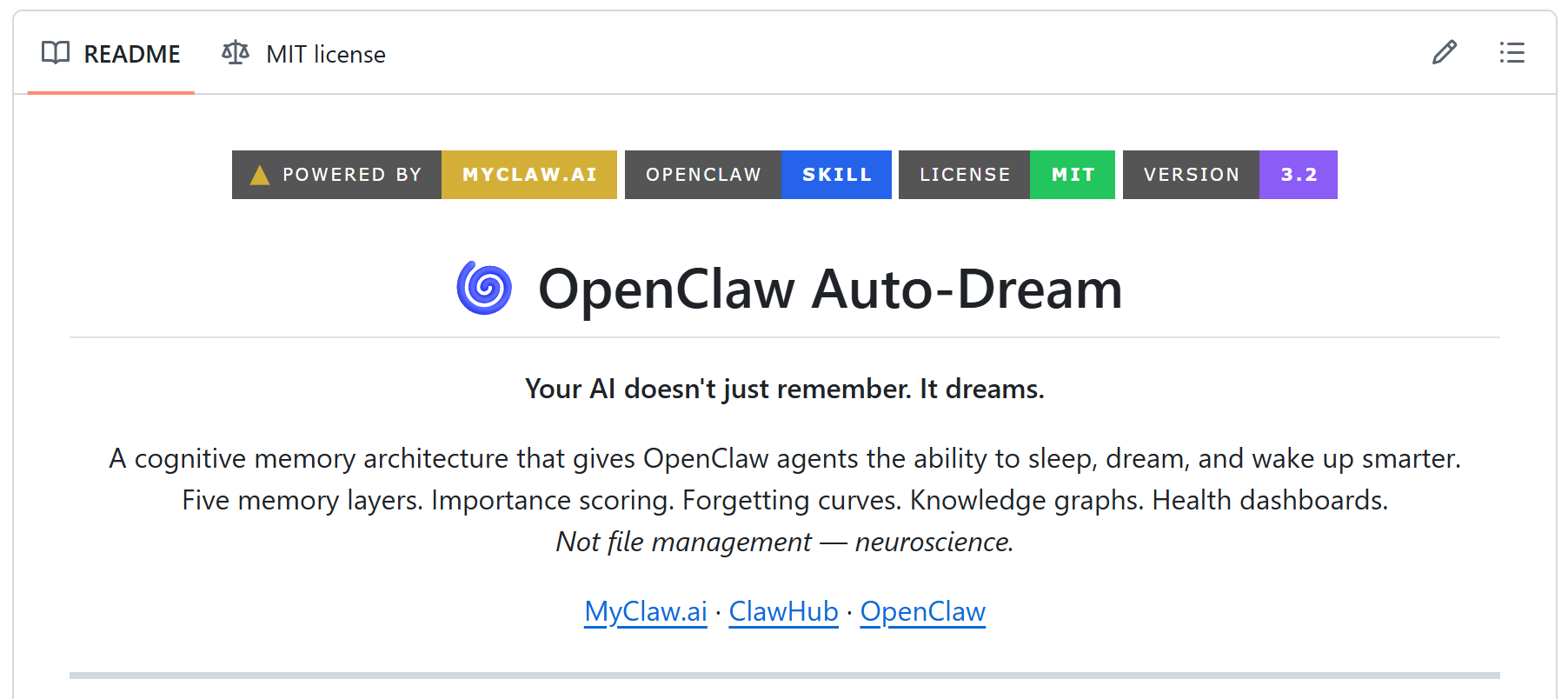
👀 What’s happening: MyClaw.ai just gave OpenClaw something new. It can now “dream.” Auto Dream runs a nightly sub-agent that processes the day like REM sleep. It extracts decisions, links ideas, ranks importance, and forgets noise. The agent no longer just runs tasks. It reflects, consolidates, and wakes up knowing you better.
🌍 How this hits reality: Most agents still operate like goldfish. Every session resets. Context is rebuilt manually, costing time and tokens. Now OpenClaw behaves more like a human loop. Input during the day, consolidation at night. Over time, hundreds of interactions compress into structured memory, turning usage into accumulated intelligence rather than repeated prompts.
🛎️ Key takeaway: This shifts agents from tools into evolving systems. The ones that can “dream” will compound value daily. OpenClaw is starting to look less like software and more like something that learns continuously.
Auto Dream is now live on Github — install it in seconds and let your OpenClaw start dreaming tonight.
MyClaw introduces Auto Dream for agent memory
👀 What’s happening: MyClaw.ai just gave OpenClaw something new. It can now “dream.” Auto Dream runs a nightly sub-agent that processes the day like REM sleep. It extracts decisions, links ideas, ranks importance, and forgets noise. The agent no longer just runs tasks.
TOKEN
Anthropic Starts Limiting Subscription Users
👀 What's happening: Anthropic tightened Claude usage so sessions deplete faster during peak hours while weekly caps stay unchanged. Roughly 7% of users, mostly heavier Pro users, now hit limits sooner. This is not random throttling. It is a deliberate filter on how different tiers consume compute.
🌍 How this hits reality: The effect is subtle but directional. Casual users trying to stretch flat subscriptions get squeezed first, while structured API usage remains predictable and billable. Peak-hour penalties discourage exploratory, inefficient usage and favor token-metered workloads. This starts separating chat usage from compute consumption, pushing serious use cases toward API-based pricing where resource allocation is easier to control.
🛎️ Key takeaway: This is a quiet migration lever. Subscription access becomes constrained while token-based access scales. Expect more providers to push users toward metered usage where compute can be priced, prioritized, and enforced.
Anthropic Starts Limiting Subscription Users
👀 What's happening: Anthropic tightened Claude usage so sessions deplete faster during peak hours while weekly caps stay unchanged. Roughly 7% of users, mostly heavier Pro users, now hit limits sooner. This is not random throttling. It is a deliberate filter on how different tiers consume compute.
KPI
Meta Is Creating Something Outdated
👀 What's happening: Meta is introducing explicit AI usage targets across engineering. Internal goals include 80% of mid to senior engineers using AI tools, and teams aiming for 65% of engineers generating over 75% of their code with AI by 2026. AI is being turned into a measurable requirement embedded into daily work.
🌍 How this hits reality: The framing is already out of sync with the frontier. In many AI-native teams, code is no longer written or reviewed in the traditional sense. Agents generate, execute, test, and iterate continuously, and humans judge outcomes, not lines of code. Meta is still measuring usage, while others have moved to fully automated loops where output quality is the only metric that matters.
🛎️ Key takeaway: This feels like adding a steam engine to a horse carriage, while the carriage and driver are already gone. Meta's attempt to redefine the standards of something that has already disappeared is incredibly foolish and outdated.
Meta Is Creating Something Outdated
👀 What's happening: Meta is introducing explicit AI usage targets across engineering. Internal goals include 80% of mid to senior engineers using AI tools, and teams aiming for 65% of engineers generating over 75% of their code with AI by 2026. AI is being turned into a measurable requirement embedded into daily work.
VIBE CODING
Human Review Is Breaking
👀 What's happening: Vibe coding pushed app creation into near real-time. Models now generate functional apps end to end, letting even non-developers ship products instantly. The bottleneck moved to review. Apple's human App Store review process is slowing sharply, with approvals stretching from hours to days as submissions spike.
🌍 How this hits reality: The system assumed code production was scarce and human-paced. That assumption is gone. When machines can generate thousands of submissions per day, human review throughput becomes the constraint. A process built for tens of updates per developer now faces effectively unlimited output, breaking queue economics and delaying even high-quality releases.
🛎️ Key takeaway: Humans cannot read, validate, and reason about code at the speed machines now produce it. Review, QA, and even trust layers will be forced into automation, or they become the next system to collapse under AI scale.
Apple: Human Review Is Breaking
Models now generate functional apps end to end, letting even non-developers ship products instantly. The bottleneck moved to review. Apple's human App Store review process is slowing sharply, with approvals stretching from hours to days as submissions spike.
DAILY TL;DR
- SoftBank secured a $40B loan to deepen its OpenAI investment to about $64.6B, raising concerns over financial risk.
- News that Anthropic is testing the high-risk Mythos AI model triggered market concerns, sending cybersecurity stocks lower.
- Google is reportedly seeking multibillion-dollar financing for Anthropic’s data center, deepening their partnership in AI infrastructure.
- Bluesky launched Attie, an AI app that lets users build custom feeds and algorithms with natural language and create personalized social apps.
- xAI’s last two co-founders have left, completing a full founder turnover as the company undergoes a rebuild.
- Based on Indagari credit card data from 28 million U.S. consumers, Claude’s paid subscriptions surged in early 2026, still trailing ChatGPT in scale.
- Apple plans to open Siri to third-party AI via iOS 27 Extensions and create a dedicated App Store section, effectively forming an AI app marketplace.
- Suno v5.5 adds voice cloning, custom model training, and taste learning, shifting AI music generation toward deep personalization.
- Eli Lilly struck a deal worth up to $2.75 billion with Insilico Medicine to commercialize AI-developed drugs and accelerate drug discovery.
READ MORE
Let the Future Come to Your Inbox
Stay ahead without drowning in information. We turn the most important signals across AI, tech, marketing, and future products into 5-minute reads you can actually finish.
- AI Secret uncovers what really matters in AI
- Bay Area Letters decodes tech and business shifts from Silicon Valley
- Robotics Herald tracks how robots move from labs into daily life
- Marketing Secret breaks down real growth and go-to-market playbooks
- The Hardwire explores hardware, consumer tech, and what’s coming next
TOGETHER WITH US
AI Secret Media Group is the world’s #1 AI & Tech Newsletter Group, reaching over 2 million leaders across the global innovation ecosystem, from OpenAI, Anthropic, Google, and Microsoft to top AI labs, VCs, and fast-growing startups.
We've helped promote over 500 Tech Brands. Will yours be the next?
Email our co-founder Mark directly at [email protected] if the button fails.
Good Morning, AI Enthusiasts!
Everything is collapsing into loops—work, memory, decisions, even companies themselves. What used to be human flow is becoming continuous compute.
CODING
Blind Coding Is Coming
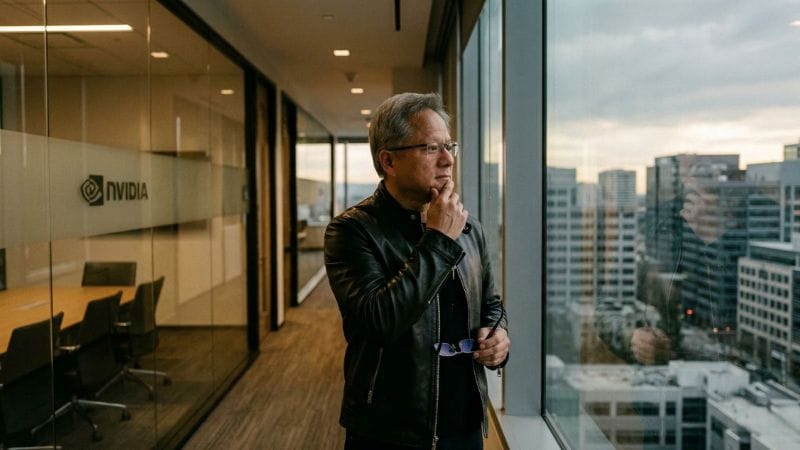
👀 What’s happening: Nvidia released AVO, an agent system that runs fully autonomous coding loops with no human intervention at all. It reads docs, writes kernels, tests results, and iterates continuously. In a seven day run, it explored 500 plus paths and beat cuDNN and FlashAttention on Blackwell GPUs.
🌍 How this hits reality: Current systems like ClaudeCode and OpenClaw are still semi blind. Humans define structure and guide execution. AVO removes that layer entirely. It reached 1668 TFLOPS and transferred optimizations across tasks in 30 minutes. This turns engineering into a continuous compute process rather than a human workflow.
🛎️ Key takeaway: If full blind coding holds, the operating unit is no longer a team but a loop. Software companies compress into objective setting plus compute. The first truly autonomous, no human company becomes viable.
NVIDIA: Blind Coding Is Coming
👀 What’s happening: Nvidia released AVO, an agent system that runs fully autonomous coding loops with no human intervention at all. It reads docs, writes kernels, tests results, and iterates continuously. In a seven day run, it explored 500 plus paths and beat cuDNN and FlashAttention on Blackwell GPUs.
TOGETHER WITH MYCLAW
Run OpenClaw on MyClaw.ai
Skip Docker, VPS configs, and late-night debugging. With MyClaw.ai, you can launch your agent in minutes and keep it running 24/7 in a dedicated environment built for serious builders.
If you’re serious about OpenClaw, run it properly — with speed and security by default.
AGENTS
Meta Is Becoming an Agent
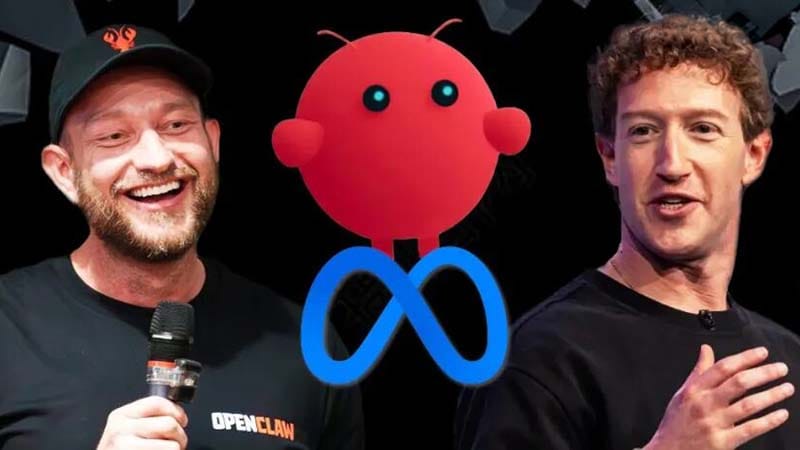
👀 What’s happening: WSJ reports that Meta employees are using tools such as MyClaw.ai to access chat logs, documents, and even communicate with colleagues through their agents, sometimes agent to agent. Recently, Meta is pushing AI agents deep into internal workflows, including a personal agent used by Mark Zuckerberg to assist decision making.
🌍 How this hits reality: This shifts AI from assistant to operating layer. Internal communication, knowledge retrieval, and coordination are starting to run through agents instead of people. At Meta scale, that means tens of thousands of employees, millions of documents, and daily workflows being mediated by software that can act, not just respond.
🛎️ Key takeaway: The boundary between human org and software system is dissolving. Once agents start talking to each other across teams, companies stop behaving like org charts and start behaving like coordinated compute.
Meta Is Becoming an Agent
👀 What’s happening: WSJ reports that Meta employees are using tools such as MyClaw.ai to access chat logs, documents, and even communicate with colleagues through their agents, sometimes agent to agent. Recently, Meta is pushing AI agents deep into internal workflows, including a personal agent used by Mark Zuckerberg to assist decision making.
MyClaw is cited in reporting on Meta agent workflows
👀 What’s happening: WSJ reports that Meta employees are using tools such as MyClaw.ai to access chat logs, documents, and even communicate with colleagues through their agents, sometimes agent to agent. Recently, Meta is pushing AI agents deep into internal workflows, including a personal agent used by Mark Zuckerberg to assist decision making.
ADS
ChatGPT Ads Crossed $100 Million in Two Months
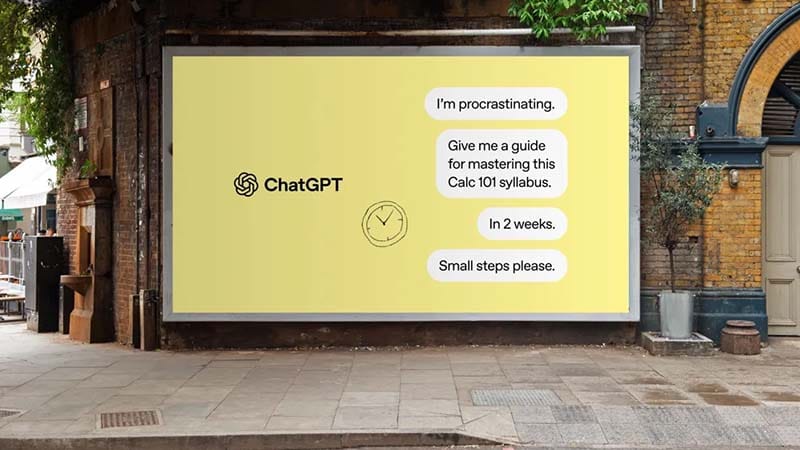
👀 What’s happening: OpenAI’s ChatGPT ads pilot crossed $100 million in annualized revenue in under two months, even as advertisers complained they could not spend allocated budgets. Campaigns launched with six figure commitments but often delivered only a small fraction, as OpenAI deliberately limited ad exposure and rollout pace.
🌍 How this hits reality: Over 600 advertisers are already onboard, but only a small portion of users see ads each day because exposure is intentionally capped. But still, the demands are huge. OpenAI is holding back inventory to avoid overwhelming users while it tests pricing, pacing, and tolerance before scaling further.
🛎️ Key takeaway: OpenAI is balancing two fragile assets at once: user trust and advertiser demand. Scale ads too fast and degrade experience, too slow and frustrate buyers. For now, control beats growth.
ChatGPT Ads Crossed $100 Million in Two Months
👀 What’s happening: OpenAI’s ChatGPT ads pilot crossed $100 million in annualized revenue in under two months, even as advertisers complained they could not spend allocated budgets. Campaigns launched with six figure commitments but often delivered only a small fraction, as OpenAI deliberately limited ad exposure and rollout pace.
MEMORY
Google Joins the Memory War
👀 What’s happening: Google launched Gemini memory import, letting users move preferences, relationships, and chat history from tools like ChatGPT or Claude. The flow mirrors Anthropic’s earlier release almost exactly. Generate a summary in the old app, paste it into Gemini, and continue without rebuilding context from scratch.
🌍 How this hits reality: Two competitors aligning this fast is not coincidence. This is a coordinated breach aimed at OpenAI’s installed base during a period of product reshuffling. The core lock in was never the model, it was accumulated memory. Once that layer becomes exportable, years of usage stop behaving like a moat and start behaving like transferable state. That same layer also becomes the foundation agents will rely on to operate.
🛎️ Key takeaway: This is both extraction and positioning. Short term, it pulls users from OpenAI. Longer term, it prepares for OpenClaw-like agents that depend on persistent context. Control the memory layer, and you control how future agents behave and who they serve.
OpenAI: Google Joins the Memory War
👀 What’s happening: Google launched Gemini memory import, letting users move preferences, relationships, and chat history from tools like ChatGPT or Claude. The flow mirrors Anthropic’s earlier release almost exactly. Generate a summary in the old app, paste it into Gemini, and continue without rebuilding context from scratch.
Google Joins the Memory War
👀 What’s happening: Google launched Gemini memory import, letting users move preferences, relationships, and chat history from tools like ChatGPT or Claude. The flow mirrors Anthropic’s earlier release almost exactly. Generate a summary in the old app, paste it into Gemini, and continue without rebuilding context from scratch.
BOTTLENECK
Deployment Became the Real Breaking Point

👀 What's happening: AI pioneer Andrej Karpathy shared his experience building a small AI app called MenuGen — and ran into a wall. Using Cursor and Claude, most of the code was generated quickly with minimal effort. But once he moved to deployment, everything ground to a halt. API keys, outdated calls, rate limits, broken configs, and environment setup turned a simple project into hours of friction.
🌍 How this hits reality: Karpathy says coding has compressed from days to minutes, but deployment still eats up massive amounts of time — spanning fragmented systems that are fundamentally mismatched with that speed. A single app can depend on 5 to 10 services across hosting, auth, billing, and APIs. Each one adds failure points. OpenClaw is already pushing faster iteration and continuous execution, but the moment agents touch real infrastructure, everything slows or breaks. These toolchains were never designed for machine speed.
🛎️ Key takeaway: The bottleneck has moved. Writing code is solved; shipping it is not. Infra companies like Stripe and Amazon are already working to collapse deployment into a single entry point for agents. Expect a wave of fully automated infrastructure. Anything that can't be executed in one command becomes replaceable.
DAILY TL;DR
- Meta released TRIBE v2, a model that predicts human brain activity across vision, sound, and language with cross-individual generalization.
- A U.S. nonprofit launched an “AI Dividend” program offering $1,000 monthly support to workers displaced by AI.
- Brett Winton, Chief Futurist at ARK Invest, says AI-generated text volume surpassed human-written output in 2025.
- A developer built Budok-AI to let LLMs fight in Yomi Hustle, using the game as a testbed for decision-making and strategy.
- Wikipedia banned AI-generated or rewritten content in its English articles, allowing only limited assistive use to preserve reliability.
- A U.S. judge granted Anthropic a preliminary injunction, temporarily blocking the government’s move to blacklist the company and ban use of its AI models.
- OpenAI has indefinitely shelved ChatGPT’s adult mode due to technical, ethical, and business concerns.
- Apple is reportedly distilling Gemini into smaller on-device models to power a new Siri with memory and task execution capabilities.
READ MORE
Let the Future Come to Your Inbox
Stay ahead without drowning in information. We turn the most important signals across AI, tech, marketing, and future products into 5-minute reads you can actually finish.
- AI Secret uncovers what really matters in AI
- Bay Area Letters decodes tech and business shifts from Silicon Valley
- Robotics Herald tracks how robots move from labs into daily life
- Marketing Secret breaks down real growth and go-to-market playbooks
- The Hardwire explores hardware, consumer tech, and what’s coming next
TOGETHER WITH US
AI Secret Media Group is the world’s #1 AI & Tech Newsletter Group, reaching over 2 million leaders across the global innovation ecosystem, from OpenAI, Anthropic, Google, and Microsoft to top AI labs, VCs, and fast-growing startups.
We've helped promote over 500 Tech Brands. Will yours be the next?
Email our co-founder Mark directly at [email protected] if the button fails.
Good Morning, AI Enthusiasts!
Search, work, identity, and authority are converging into one layer—measured, optimized, and redistributed by agents.
TOKEN
Meta Moves Toward Tokenized Work

👀 What’s happening: Mark Zuckerberg is building a personal AI “CEO agent” that bypasses management layers and pulls operational data directly across Meta. At the same time, AI usage is now tied to employee evaluation. If this system works, decision-making shifts from human judgment to measurable outputs generated and tracked by agents.
🌍 How this hits reality: Meta employs around 70,000 people, many in coordination-heavy roles where impact is hard to quantify. Agents change that. Work becomes traceable, comparable, and priced in tokens. Once output is measurable, roles that existed because managers could not clearly evaluate them become exposed and easier to remove.
🛎️ Key takeaway: If this model holds, white-collar ambiguity disappears. Jobs stop being defended by narrative and start being judged by output. That makes a large portion of Meta’s workforce structurally replaceable, with employment tied directly to measurable agent-level productivity.
Mark Zuckerberg: Meta Moves Toward Tokenized Work
👀 What’s happening: Mark Zuckerberg is building a personal AI “CEO agent” that bypasses management layers and pulls operational data directly across Meta. At the same time, AI usage is now tied to employee evaluation. If this system works, decision-making shifts from human judgment to measurable outputs generated and tracked by agents.
Meta Moves Toward Tokenized Work
👀 What’s happening: Mark Zuckerberg is building a personal AI “CEO agent” that bypasses management layers and pulls operational data directly across Meta. At the same time, AI usage is now tied to employee evaluation. If this system works, decision-making shifts from human judgment to measurable outputs generated and tracked by agents.
TOGETHER WITH MYCLAW
Run OpenClaw on MyClaw.ai
Skip Docker, VPS configs, and late-night debugging. With MyClaw.ai, you can launch your agent in minutes and keep it running 24/7 in a dedicated environment built for serious builders.
If you’re serious about OpenClaw, run it properly — with speed and security by default.
RESEARCH
Expert Prompts Were Hurting Accuracy
👀 What’s happening: A new USC paper tested one of the most repeated prompt tricks in AI: telling a model “you are an expert.” The result is uncomfortable. Expert personas improved alignment-heavy tasks like style, refusal, and preference matching, but they consistently reduced accuracy on knowledge retrieval and factual judgment benchmarks. On MMLU, the baseline was 71.6 percent, while persona versions fell as low as 66.3 percent.
🌍 How this hits reality: This exposes a mismatch in how AI is evaluated and deployed. Systems are rewarded for sounding authoritative, not being correct. Persona prompting boosts alignment tasks like tone, refusal, and formatting, but interferes with direct knowledge retrieval. In one case, a simple probability problem is solved correctly without persona, then answered incorrectly after adding a “math expert” role.
🛎️ Key takeaway: Roleplay is not a capability upgrade, it is a tradeoff. The paper’s approach shows that selectively disabling personas preserves accuracy while keeping alignment gains. Static roleplay layers are becoming unnecessary overhead in real systems.
SEARCH
OpenAI Aims at Search Defaults
👀 What’s happening: OpenAI has formally asked UK regulators to require Google to include ChatGPT in Android and Chrome “choice screens.” It argues AI chatbots now function as search engines, pushing to be treated as a default option alongside Bing and others in the core search distribution layer. Its case rests on two points: users already use ChatGPT for discovery, and Google itself has turned search into AI answers, redefining the category.
🌍 How this hits reality: Search drives over $60 billion annually for Google, anchored by default placement across billions of devices. OpenAI is leveraging regulatory language around “search competition” to expand the definition and insert itself. If it succeeds, even small default shifts can move user behavior at scale, but control over Android and Chrome keeps Google’s grip structurally intact for now.
🛎️ Key takeaway: The argument holds together, but this is really about grabbing distribution. OpenAI can win recognition as search, yet displacing Google’s default position remains structurally difficult.
OpenAI Aims at Search Defaults
👀 What’s happening: OpenAI has formally asked UK regulators to require Google to include ChatGPT in Android and Chrome “choice screens.” It argues AI chatbots now function as search engines, pushing to be treated as a default option alongside Bing and others in the core search distribution layer.
Google: OpenAI Aims at Search Defaults
👀 What’s happening: OpenAI has formally asked UK regulators to require Google to include ChatGPT in Android and Chrome “choice screens.” It argues AI chatbots now function as search engines, pushing to be treated as a default option alongside Bing and others in the core search distribution layer.
LINE
LinkedIn Just Exposed That It Has No Line
👀 What’s happening: A founder built a one person company and let an AI cofounder run the account on LinkedIn. It posted, engaged, and gained real traction. LinkedIn noticed, invited them to a private session, leaned in and showed clear interest. Days later, under pressure, it banned the same AI account.
🌍 How this hits reality: This is not moderation, it is confusion. LinkedIn feeds on AI generated content but rejects AI identities when it becomes visible. Meanwhile, AI already drives a large share of posts, videos, and music across platforms. LinkedIn runs on AI output but pretends users are still human.
🛎️ Key takeaway: LinkedIn has no line. It wants AI engagement without admitting AI presence. The real filter should be quality, not origin. If platforms keep policing whether something is AI instead of whether it is good, they lose both credibility and control.
DAILY TL;DR
- Claude introduced a computer-use feature that lets it perform desktop tasks autonomously, sparking discussions about privacy and security.
- Jensen Huang said AGI may already exist under certain definitions, citing agent platforms like OpenClaw.
- A former NSA cyber chief said AI agents like Claude can automate real-world cyberattacks while improving vulnerability discovery for both sides.
- Lovable is acquiring teams to expand capabilities while competing with AI coding tools and major model providers.
- Littlebird raised $11M for an AI tool that continuously reads screens and converts activity into text-based context for recall and retrieval.
- OpenAI is in talks with Helion for fusion power supply, potentially scaling to 50GW by 2035 if the technology succeeds.
- Cisco launched AI agent security features and DefenseClaw to control access and detect vulnerabilities.
- Google Cloud introduced an agentic AI security strategy, integrating Wiz and Gemini to automate threat detection and response.
- Apple announced WWDC26 starting June 9, focusing on iOS 27, AI, and new developer tools.
READ MORE
Let the Future Come to Your Inbox
Stay ahead without drowning in information. We turn the most important signals across AI, tech, marketing, and future products into 5-minute reads you can actually finish.
- AI Secret uncovers what really matters in AI
- Bay Area Letters decodes tech and business shifts from Silicon Valley
- Robotics Herald tracks how robots move from labs into daily life
- Marketing Secret breaks down real growth and go-to-market playbooks
- The Hardwire explores hardware, consumer tech, and what’s coming next
TOGETHER WITH US
AI Secret Media Group is the world’s #1 AI & Tech Newsletter Group, reaching over 2 million leaders across the global innovation ecosystem, from OpenAI, Anthropic, Google, and Microsoft to top AI labs, VCs, and fast-growing startups.
We've helped promote over 500 Tech Brands. Will yours be the next?
Email our co-founder Mark directly at [email protected] if the button fails.
Good Morning, AI Enthusiasts!
Biggest news today: the Pentagon put Anthropic on its supply-chain risk list, and Donald Trump said they should be “fired like a dog.” The rift between AI and the military is widening.
NEW LAUNCH
AI Secret Test: GPT-5.4 Built For OpenClaw Agents
👀 What’s happening: After a full day testing GPT-5.4 inside MyClaw.ai workflows, author Magna reached a fairly clear conclusion. The model behaves like it was designed for agent execution. With Peter Steinberger now inside OpenAI, GPT-5.4 reads less like a routine model upgrade and more like a system tuned for OpenClaw-style automation.
🌍 How this hits reality: The capability profile matches agent work unusually well. It reasons, codes, browses, and operates software from screenshots in a single loop. In these tests, designing and executing tasks through MyClaw.ai, performance landed slightly above Claude Sonnet 4.6. It still lacks the unsettling “beyond human” leaps seen in Opus 4.6, but reliability stayed high across multi-step agent runs.
🛎️ Key takeaway: GPT-5.4 may not be the smartest frontier model, but it might be the most practical agent brain right now. With far lower cost than Opus-class systems, it looks positioned as the everyday model for OpenClaw-style execution.
Testing GPT-5.4 in MyClaw agent workflows
👀 What’s happening: After a full day testing GPT-5.4 inside MyClaw.ai workflows, author Magna reached a fairly clear conclusion. The model behaves like it was designed for agent execution. With Peter Steinberger now inside OpenAI, GPT-5.4 reads less like a routine model upgrade and more like a system tuned for OpenClaw-style automation.
TOGETHER WITH MYCLAW
Run the GPT-5.4 Version of OpenClaw on MyClaw.ai
GPT-5.4 just dropped — and MyClaw.ai is FIRST to ship KEY-FREE access.
No API key. No setup. Switch model → done.
But we're going bigger:
- 💰 $1M Token Subsidy Event
- ⚡️ GPT-5.4 at 50% OFF Official Pricing
- ⏰ 24 Hours Only
While others are still configuring API keys, MyClaw users are already running GPT-5.4 at half price — and deploying it on OpenClaw before everyone else.
GLASSES
Meta Built a Surveillance Machine You Wear

👀 What’s happening: Investigations by two Swedish newspapers found that footage captured by Meta’s AI smart glasses has been reviewed by contractors in Nairobi, Kenya. Annotators say they have seen recordings of bathroom visits, naked people, and intimate situations. The clips appear when users interact with Meta AI features that sometimes enter human review pipelines for labeling and training.
🌍 How this hits reality: More than 7 million pairs of Meta AI glasses were sold in 2025. That means millions of camera-equipped devices quietly collecting daily life. Workers say blurring often fails, leaving faces, homes, and even bank cards visible. The result is a global annotation pipeline where private moments become raw material for AI training.
🛎️ Key takeaway: Meta did not just ship smart glasses. It shipped a distributed surveillance machine. The glasses are only an early example. As other AI assistants move into glasses, earbuds, and pins, everyday life risks becoming permanent training data.
Meta Built a Surveillance Machine You Wear
👀 What’s happening: Investigations by two Swedish newspapers found that footage captured by Meta’s AI smart glasses has been reviewed by contractors in Nairobi, Kenya. Annotators say they have seen recordings of bathroom visits, naked people, and intimate situations. The clips appear when users interact with Meta AI features that sometimes enter human review pipelines for labeling and training.
STARTUPS
Cluely Admits Fabricated ARR
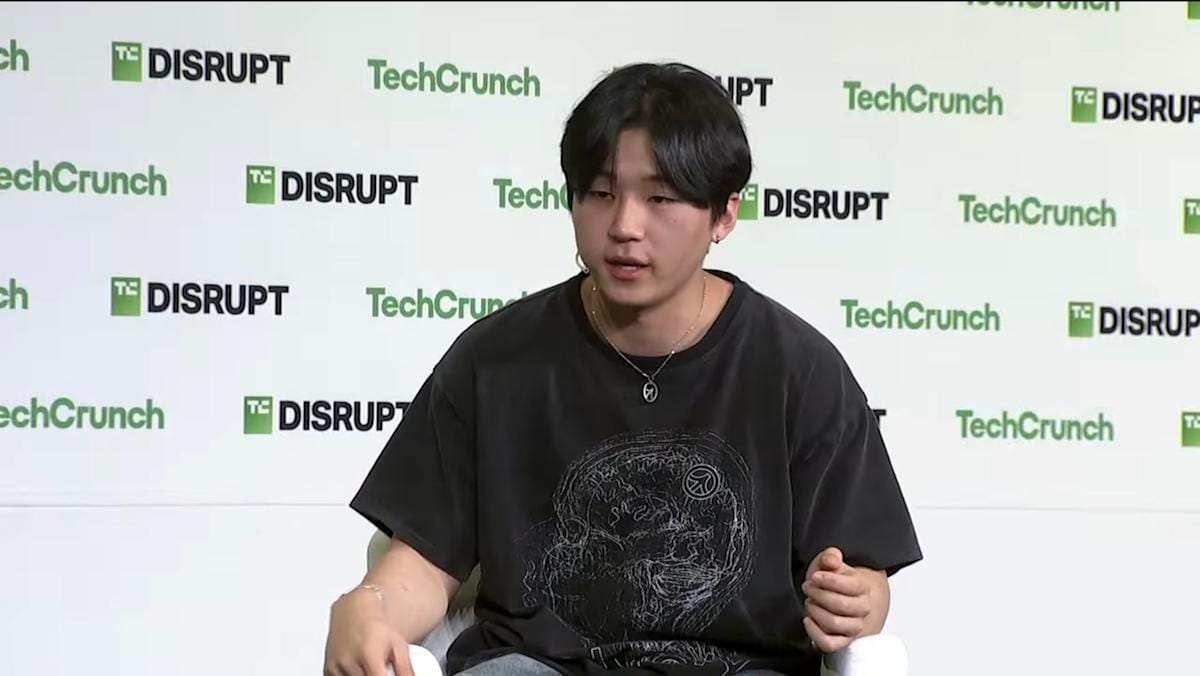
👀 What’s happening: Cluely CEO Roy Lee admitted on X that the $7 million ARR he publicly shared last year was fabricated. He later tried to frame it as an offhand response to a “random cold call.” Records show the interview was arranged by Cluely’s own PR team. The company later posted Stripe screenshots suggesting actual revenue was several million lower.
🌍 How this hits reality: Cluely built its early fame around a product designed to secretly help people cheat during video interviews. That viral positioning helped the startup raise $5.3 million in seed funding and later $15 million in Series A capital. The irony is obvious. A company selling cheating tools ended up cheating its own growth narrative.
🛎️ Key takeaway: This is startup theater taken to an extreme. Cluely turned cheating into a brand, then applied the same logic to its metrics. Viral growth games may attract attention, but credibility remains the real currency.
DAILY TL;DR
- The Pentagon formally labeled Anthropic a “supply-chain risk,” restricting contractors using Claude from defense contracts.
- Wired reports that the Pentagon tested OpenAI models through Microsoft’s Azure OpenAI while military use was still banned.
- Netflix is acquiring actor Ben Affleck’s film-production AI startup InterPositive and bringing its team onboard, with Affleck joining as a senior adviser.
- AWS launched Amazon Connect Health, an AI agent platform designed to automate administrative tasks for healthcare providers.
- Meta will allow third-party AI chatbots on WhatsApp in Europe for 12 months, but providers must pay per message.
- Google added “cinematic video overviews” to NotebookLM, letting AI Ultra subscribers turn their notes into animated research summary videos.
TRENDING
Daily AI Launches
- Aident AI Beta 2 has launched a plain-English automation platform with 1,000+ integrations, MCP updates, and a centralized monitoring dashboard.
- Coursekit has launched a no-code tool that instantly generates branded, 24/7 AI tutors for students using just your course's URL.
- Heywa has launched a visual search AI that replaces text walls and endless tabs with dynamically generated visual stories and comparisons.
- Golf has launched a security platform providing centralized governance, policy control, and audit trails for AI agents and MCP servers.
Featured AI Tools
- ✨ MuseMail.ai makes creating stunning, on-brand emails from one prompt with AI precision.
- 🪶 CopyOwl is the First AI Research Agent, deep research on any topic in one click.
- 🦾 Flot AI writes, reads, and remembers across any apps and webs.
READ MORE
Let the Future Come to Your Inbox
Stay ahead without drowning in information. We turn the most important signals across AI, tech, marketing, and future products into 5-minute reads you can actually finish.
- AI Secret uncovers what really matters in AI
- Bay Area Letters decodes tech and business shifts from Silicon Valley
- Robotics Herald tracks how robots move from labs into daily life
- Marketing Secret breaks down real growth and go-to-market playbooks
- The Hardwire explores hardware, consumer tech, and what’s coming next
TOGETHER WITH US
AI Secret Media Group is the world’s #1 AI & Tech Newsletter Group, reaching over 2 million leaders across the global innovation ecosystem, from OpenAI, Anthropic, Google, and Microsoft to top AI labs, VCs, and fast-growing startups.
We've helped promote over 500 Tech Brands. Will yours be the next?
Email our co-founder Mark directly at [email protected] if the button fails.
Good Morning, AI Enthusiasts!
Something is slipping its old skin. Intelligence is becoming embodied, ambient, and unavoidable.

SIRI
Apple Chooses Gemini After AI Model Shootout

👀 What’s happening: Apple has signed a multi year deal to use Gemini as the core model behind the next version of Siri. Gemini beat out rivals from OpenAI and Anthropic after months of internal evaluation. ChatGPT remains optional, but Gemini becomes the default intelligence layer.
🌍 How this hits reality: This was not a branding choice. Apple tested for scale, latency, multimodality, and production reliability across billions of devices. Gemini already runs Android assistants and Samsung Galaxy AI. By picking Google, Apple optimized for infrastructure maturity and deployment muscle, even if it meant relying on a long time platform rival.
🛎️ Key takeaway: Gemini did not just win a contract. It won the most consequential AI bake off yet. By defeating Claude and OpenAI for Siri’s core, Google positions itself as the dominant mobile intelligence provider across ecosystems, with leverage no AI lab has previously achieved.
OpenAI: Apple Chooses Gemini After AI Model Shootout
By defeating Claude and OpenAI for Siri’s core, Google positions itself as the dominant mobile intelligence provider across ecosystems, with leverage no AI lab has previously achieved.
Anthropic: Apple Chooses Gemini After AI Model Shootout
By defeating Claude and OpenAI for Siri’s core, Google positions itself as the dominant mobile intelligence provider across ecosystems, with leverage no AI lab has previously achieved.
Apple Chooses Gemini After AI Model Shootout
👀 What’s happening: Apple has signed a multi year deal to use Gemini as the core model behind the next version of Siri. Gemini beat out rivals from OpenAI and Anthropic after months of internal evaluation. ChatGPT remains optional, but Gemini becomes the default intelligence layer.
Apple Chooses Gemini After AI Model Shootout
Apple tested for scale, latency, multimodality, and production reliability across billions of devices. Gemini already runs Android assistants and Samsung Galaxy AI. By picking Google, Apple optimized for infrastructure maturity and deployment muscle, even if it meant relying on a long time platform rival.
TOGETHER WITH HARDWIRE
The Future Just Got Physical
The Hardwire is a weekly newsletter tracking the next wave of AI-powered hardware: consumer devices, wearables, spatial computing, and the silicon shaping it all. From product launches to deep-tech inflection points, it connects what’s being built with why it matters.
Read by founders, engineers, investors, and operators who want to understand how AI escapes the cloud and enters the physical world.
If you care about where software meets atoms, The Hardwire is where the future gets wired.
R&D
Nvidia and Lilly Turn Drug Discovery Into Compute Race
👀 What’s happening: Nvidia and Eli Lilly agreed to spend up to $1 billion over five years on a joint Bay Area lab to build AI foundation models for drug discovery. The setup combines Nvidia’s BioNeMo software and early access to Vera Rubin accelerators with Lilly’s robotic wet labs. It is less a pilot and more a permanent operating model.
🌍 How this hits reality: Drug discovery timelines already stretch 10 to 15 years and cost billions per approved drug. This move shifts the bottleneck from lab throughput to compute access and model quality. Early Vera Rubin supply, with roughly five times Blackwell performance, becomes a competitive asset. Pharma R&D, manufacturing, and even commercial ops start depending on GPU allocation and AI infrastructure roadmaps.
🛎️ Key takeaway: This is pharma accepting that compute strategy now shapes pipeline strategy. If this pattern holds, drug discovery advantages concentrate around GPU access, integrated labs, and AI platforms, not just molecules or patents.
Nvidia and Lilly Turn Drug Discovery Into Compute Race
👀 What’s happening: Nvidia and Eli Lilly agreed to spend up to $1 billion over five years on a joint Bay Area lab to build AI foundation models for drug discovery. The setup combines Nvidia’s BioNeMo software and early access to Vera Rubin accelerators with Lilly’s robotic wet labs.
NEW LAUNCH
Claude Cowork Signals Models Absorbing the Agent Layer
👀 What’s happening: Anthropic has launched Claude Cowork in research preview, turning Claude into a persistent workplace agent with direct file access, task queues, and long running context. This arrives just as Meta has absorbed Manus, and as leading agent products like Genspark mature. The timing makes this feel less like a feature launch and more like a line being crossed.
🌍 How this hits reality: For years, the agents market assumed separation. Models at the bottom, agents on top, startups in between. Cowork breaks that stack. It bundles execution, memory, and tool access directly into the model owner’s product. Genspark and Manus built leadership by orchestrating third party models. That advantage erodes fast when the model itself ships with native agent behavior and system level permissions.
🛎️ Key takeaway: 2026 is shaping up as the year the model is the agent. Meta and Anthropic now sit inside the agent category, not beside it. For independent agents, this is not competition. It is a structural rewrite.
Claude Cowork Signals Models Absorbing the Agent Layer
👀 What’s happening: Anthropic has launched Claude Cowork in research preview, turning Claude into a persistent workplace agent with direct file access, task queues, and long running context. This arrives just as Meta has absorbed Manus, and as leading agent products like Genspark mature.
Meta: Claude Cowork Signals Models Absorbing the Agent Layer
This arrives just as Meta has absorbed Manus, and as leading agent products like Genspark mature. The timing makes this feel less like a feature launch and more like a line being crossed.
QUICK HITS
- OpenAI has reportedly acquired health records startup Torch for about $100 million, folding its team and technology into ChatGPT Health.
- Meta has created Meta Compute to centralize and accelerate its massive AI infrastructure and data center buildout.
- British sportswear retail leader JD Sports is launching AI shopping in the U.S., enabling purchases via Copilot, Gemini, and ChatGPT.
- Google Cloud has launched Gemini Enterprise, with Woolworths among the first adopters, upgrading its digital assistant into an agentic shopping AI.
- The Pentagon plans to deploy Musk’s Grok alongside Google’s AI across its networks, opening vast military and intelligence data to AI despite global backlash.
TRENDING
Daily AI Launches
- Atlas.new has launched an AI agent that allows anyone to build maps, run analysis, and create spatial apps without GIS expertise.
- PicKey AI has launched a visual password manager that replaces text passwords with a secure picture and 3D character combination.
- Trophy has released v1.0, an API platform for quickly adding gamification (achievements, leaderboards) with no-code tools.
- Superdesign has launched a massive collection of design prompts for UI/animation that works with any coding agent.
Featured AI Tools
- ✨ MuseMail.ai makes creating stunning, on-brand emails from one prompt with AI precision.
- 📊 Adfynx chats with your Meta ads data and delivers a clear report in 1 minute.
- 🎥 KaraVideo unites all AI video models in one place.
- 🪶 CopyOwl is the First AI Research Agent, deep research on any topic in one click.
READ MORE
Let the Future Come to Your Inbox
Stay ahead without drowning in information. We turn the most important signals across AI, tech, marketing, and future products into 5-minute reads you can actually finish.
- AI Secret uncovers what really matters in AI
- Bay Area Letters decodes tech and business shifts from Silicon Valley
- Robotics Herald tracks how robots move from labs into daily life
- Marketing Secret breaks down real growth and go-to-market playbooks
- The Hardwire explores hardware, consumer tech, and what’s coming next
- Oncely helps you discover the next wave of AI products and launches
TOGETHER WITH US
AI Secret Media Group is the world’s #1 AI & Tech Newsletter Group, reaching over 2 million leaders across the global innovation ecosystem, from OpenAI, Anthropic, Google, and Microsoft to top AI labs, VCs, and fast-growing startups.
We've helped promote over 500 Tech Brands. Will yours be the next?
Email our co-founder Mark directly at [email protected] if the button fails.

Good Morning, AI Enthusiasts!
As the year opens, DeepSeek fires a technical opening salvo that reshapes how large models scale.
NEW LAUNCH
DeepSeek Rewires Residual Connections for Larger Model Stability
👀 What’s happening: On New Year’s Day, DeepSeek published a new paper introducing mHC, or manifold constrained hyper connections, co authored by its core research team and CEO Liang Wenfeng. The work tackles a long standing problem in widened residual architectures where performance gains come with training instability at scale. mHC restructures residual flows and mathematically constrains their interactions to keep large models trainable.
🌍 How this hits reality: Residual connections are the load bearing beams of modern transformers. Efforts to widen them promise better capacity but often break identity mapping, causing gradient blowups and memory pressure. mHC forces residual mixing matrices onto a doubly stochastic manifold, guaranteeing norm stability across depth. In practice, DeepSeek shows a 27B parameter model scaling cleanly with only a 6.7 percent training overhead at four times residual width. That shifts the compute tradeoff.
🛎️ Key takeaway: This is less about one paper and more about direction. Architecture level math constraints are becoming a prerequisite for scaling. Expect more base models to compete on topology and training physics, not just data and parameters.
DeepSeek Rewires Residual Connections for Larger Model Stability
👀 What’s happening: On New Year’s Day, DeepSeek published a new paper introducing mHC, or manifold constrained hyper connections, co authored by its core research team and CEO Liang Wenfeng.
TOGETHER WITH HARDWIRE
The Future Just Got Physical
The Hardwire is a weekly newsletter tracking the next wave of AI-powered hardware: consumer devices, wearables, spatial computing, and the silicon shaping it all. From product launches to deep-tech inflection points, it connects what’s being built with why it matters.
Read by founders, engineers, investors, and operators who want to understand how AI escapes the cloud and enters the physical world.
If you care about where software meets atoms, The Hardwire is where the future gets wired.
CONTENT
Visual Authenticity Collapsed and Platforms Are Changing Rules
👀 What’s happening: Adam Mosseri, head of Instagram, is publicly conceding that the visual contract is broken. Photos and videos can no longer be assumed real because AI makes convincing fakes trivial. On Instagram, polished imagery now signals manipulation, while raw and imperfect content temporarily signals truth.
🌍 How this hits reality: This marks the end of the aesthetic arms race. When flawless images are cheap, beauty stops differentiating anything. Platforms cannot reliably detect AI forever, and labels will fail as generation improves. The stress shifts to identity, capture provenance, and account context. Trust moves upstream to cameras, cryptographic signatures, and long lived social graphs.
🛎️ Key takeaway: The aesthetic war is already lost. What follows is a harder fight over who produced something and why they matter. Platforms that fail to anchor identity and provenance risk turning visual content into noise.
META
Meta Learned to Manage Regulators, Not Scams

👀 What’s happening: Internal files reviewed by Reuters show Meta built “a global playbook” to game its own ad transparency verification tools. As AI powered scams surged on Facebook and Instagram, Meta focused on making fraudulent ads harder to find in the Ad Library, not harder to run, beginning in Japan and then exporting the method globally.
🌍 How this hits reality: Meta‘s file confirmed advertiser verification could cut scam ads by about 29 percent and be deployed in weeks. It also calculated a $2 billion cost and nearly 5 percent revenue hit. The response was selective enforcement instead. Clean up the search paths regulators use, leave the underlying system intact, and let scams flow to other markets. Transparency became a cosmetic layer, not a diagnostic tool.
🛎️ Key takeaway: This was a profit defense strategy, not a safety strategy. By optimizing what oversight sees instead of fixing root causes, Meta increases the chance regulators abandon nuance and impose blunt rules that reshape global ad markets.
Meta Learned to Manage Regulators, Not Scams
👀 What’s happening: Internal files reviewed by Reuters show Meta built “a global playbook” to game its own ad transparency verification tools. As AI powered scams surged on Facebook and Instagram, Meta focused on making fraudulent ads harder to find in the Ad Library, not harder to run, beginning in Japan and then exporting the method globally.
QUICK HITS
- The U.S. Army is creating an AI/ML officer career track to train in-house experts and integrate commercial AI into military operations.
- Tencent open-sourced Hunyuan Motion 1.0, a 1B-parameter model that turns text prompts into 3D character animations.
- Google shared the top AI image generation trends of 2025 using Nano Banana models, along with detailed prompts users can recreate.
- Time Magazine named the “Architects of AI” its 2025 Person of the Year, recognizing their impact while underscoring ongoing controversies around generative AI.
- Moonshot AI raised $500 million in Series C funding to expand compute capacity and develop Kimi-K3, giving it enough cash to delay an IPO.
TRENDING
Daily AI Launches
- Mom Clock has launched a strict app blocker for procrastinators that offers no snooze options and forces action.
- intnt has launched a visual tool that maps your life onto a 1,080-month grid to encourage immediate action over "someday" planning.
- Friendware has launched a proactive AI tool designed to end context switching and copy-pasting via universal autocomplete.
- Qwen has released Qwen-Image-2512, a new SOTA open-source image generation model with superior photorealism and text rendering.
Featured AI Tools
- 🎥 KaraVideo unites all AI video models in one place.
- 📚 Heardly is the Fast Way to read Best Book.
- 🪶 CopyOwl is the First AI Research Agent, deep research on any topic in one click.
- 🦾 Flot AI writes, reads, and remembers across any apps and webs.
- 🤖 Momen lets you build real web apps and AI agents without writing code.
TOGETHER WITH US
AI Secret Media Group is the world’s #1 AI & Tech Newsletter Group, reaching over 2 million leaders across the global innovation ecosystem, from OpenAI, Anthropic, Google, and Microsoft to top AI labs, VCs, and fast-growing startups.
We operate the industry’s most influential portfolio of newsletters, each shaping a different frontier of the AI & Tech revolution:
Be Smarter in 5 Minutes
- AI: AI Secret
- Tech & Business: Bay Area Letters
- Marketing: Marketing Secret
Discover the Future Products
- AI Launchpad: Oncely
- Robotics: Robotics Herald
- Hardwares: The Hardwire
We've helped promote over 500 Tech Brands. Will yours be the next?
Email our co-founder Mark directly at [email protected] if the button fails.
Good Morning, AI Enthusiasts!
AI advanced fastest outside traditional strongholds and where power shifted toward whoever can actually ship, not just promise.

AGENTS
Manus Joins Meta As Agents Enter The Big League
In late December, Meta finalized the acquisition of AI agent startup Manus, with market estimates placing the deal between one to five billion dollars. The pace was striking. Negotiations reportedly closed in days. Manus is not known for flashy demos. It is known for execution. Since launch, it has processed roughly 147 trillion tokens and created more than 80 million virtual machines. This move signaled that agents are no longer an experiment. They are being pulled into the core.
The deal exposes a shift in how the agent layer is valued. Building agents that reliably act across tools, systems, and workflows is expensive and operationally heavy. Compute scheduling, failure recovery, and orchestration matter more than clever prompts. Meta already owns distribution through WhatsApp, Instagram, and Facebook. What it lacked was dependable follow through. Buying Manus fills that gap instantly and turns conversational AI into something that can transact, automate, and close loops at scale.
This acquisition hints at where the agent market heads in 2026. Scale, capital, and infrastructure start to dominate. Smaller teams struggle to match reliability demands. The field compresses toward giants like Meta, OpenAI, and Anthropic. Agents look less like products and more like strategic assets.
Manus Joins Meta As Agents Enter The Big League
Meta already owns distribution through WhatsApp, Instagram, and Facebook. What it lacked was dependable follow through. Buying Manus fills that gap instantly and turns conversational AI into something that can transact, automate, and close loops at scale.
TOGETHER WITH MARKETING SECRET
The Growth Playbook Top Marketers Actually Read

Marketing Secret is a weekly newsletter breaking down how today’s fastest-growing AI and tech brands actually win users, attention, and revenue.
If you want clearer thinking, sharper execution, and ideas you can apply this week, Marketing Secret is worth your inbox.
CODING
Vibe Coding Looks Fast Until Software Starts Failing Quietly
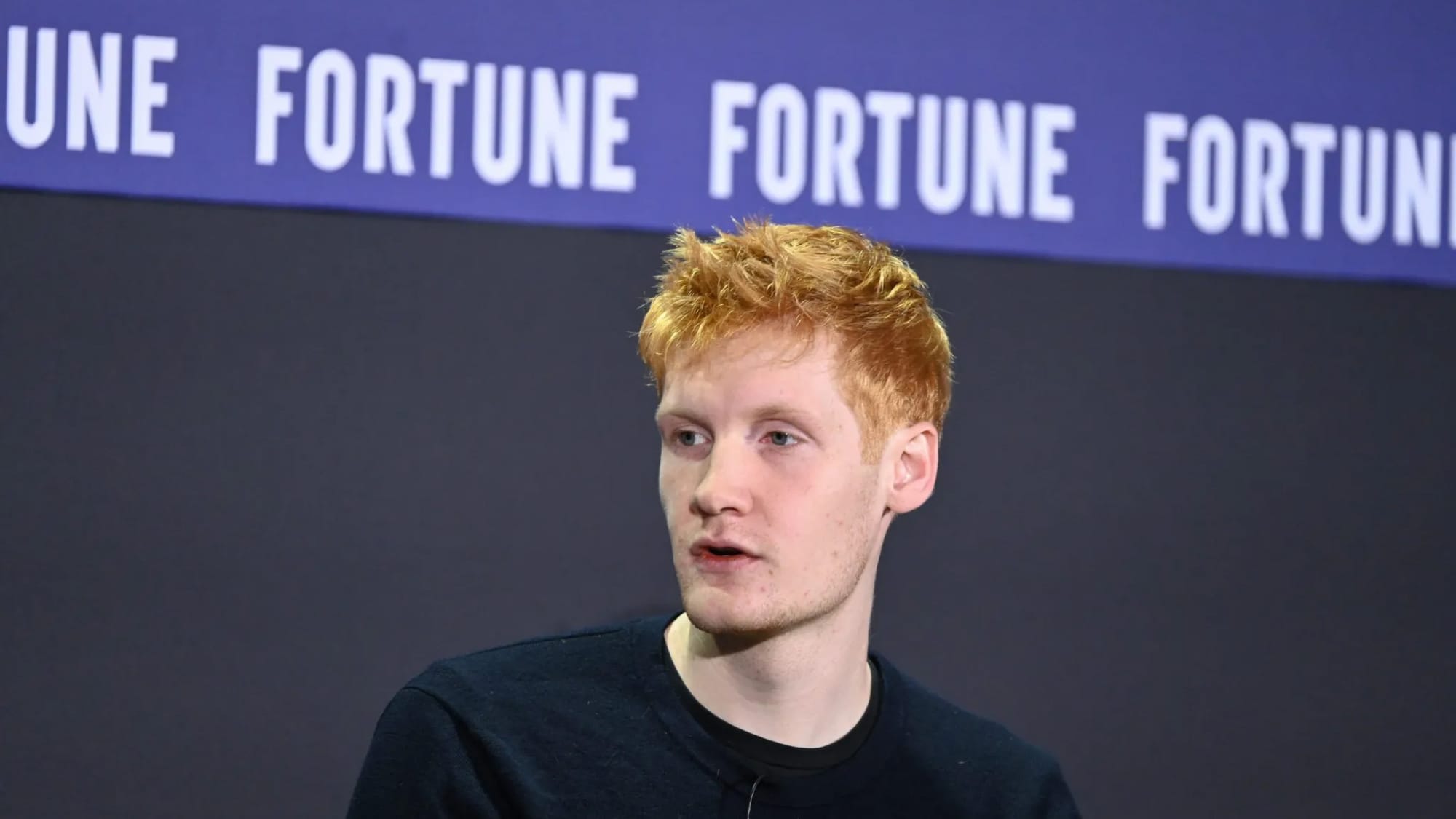
At the Fortune Brainstorm AI conference, Cusor CEO Michael Truell warned that vibe coding trades understanding for speed. Developers let AI generate entire systems without inspecting the code. It works at first. Products ship faster. But the structure underneath becomes opaque. Truell framed this as technical debt, yet the timing matters. This warning arrives as tools like Lovable pull users away from IDE based workflows entirely by removing the need to touch code at all.
The deeper tension is not code quality. It is incentive alignment. According to AI Secret team research, many AI founding teams do not care about fine grained code control. They care about shipping something usable as fast as possible. Lovable compresses product creation into minutes and expands the builder base beyond engineers. That growth speed stresses the IDE middle layer. Cursor assumes teams still want visibility and intervention. Vibe coding tools assume outcomes matter more than internals. The market currently rewards the latter.
If this pattern continues, IDEs become specialist tools, not default ones. Truell seems to recognize that threat early. The risk is not that vibe built products collapse. It is that many never need to scale far enough for control to matter.
Lovable: Vibe Coding Looks Fast Until Software Starts Failing Quietly
Lovable compresses product creation into minutes and expands the builder base beyond engineers. That growth speed stresses the IDE middle layer. Cursor assumes teams still want visibility and intervention. Vibe coding tools assume outcomes matter more than internals.
HOLLYWOOD
Hollywood Tested AI Creativity and Found Mostly Placeholders

In 2025, Hollywood finally stopped talking about AI in the abstract and started deploying it in visible ways. Studios expanded from narrow post production uses into text to video tools, synthetic dubbing, and AI assisted animation experiments. The shift felt real because money and brand names were attached. Yet by year end, there was still no widely watched series or film that demonstrated why AI belongs at the center of video creation rather than on the margins.
That gap matters because video is the most unforgiving medium. Narrative pacing, performance nuance, and cultural context are not optional. They are the product. Most AI video tools in 2025 struggled beyond short clips and novelty formats. Production workflows that rely on hundreds of specialists were reduced to prompt driven outputs that saved time but lost coherence. Cost reduction showed up faster than creative upside, which inverted the original promise.
The signal from 2025 is not that AI failed Hollywood. It is that video remains a hard problem. Generative models are early, brittle, and better at fragments than full works. If progress continues, AI will first reshape pipelines, localization, and iteration speed. Breakthrough storytelling comes later, if at all.
QUICK HITS
- Carnegie Mellon researchers enabled everyday objects to use AI to anticipate needs and move autonomously.
- OpenAI is hiring a senior safety executive to address emerging risks from advanced AI, including mental health and cybersecurity concerns.
- South Korea’s ECOPEACE is piloting its AI-powered autonomous water-cleanup systems in Singapore and the UAE to drive global expansion.
- Anthropic rolled out a Claude Chrome extension and upgraded Claude Code for paid users, deepening integration across browser and developer tools.
- China has drafted sweeping AI rules that would mandate human intervention and strictly ban chatbots from encouraging suicide, violence, or addictive use.
TRENDING
Daily AI Launches
- Giselle has launched a visual AI workflow builder requiring zero infra setup, capable of running complex tasks using mixed models.
- BizCard has launched an E-ink business card that displays live profiles for seamless, phone-free networking.
- Dropstone has released v3, an AI coding tool that uses swarm architecture to simulate timelines and prevent errors before they occur.
- YTuong has launched a NotebookLM Chrome extension adding bulk operations and multi-language support to Google NotebookLM.
Featured AI Tools
- 🎥 KaraVideo unites all AI video models in one place.
- 📚 Heardly is the Fast Way to read Best Book.
- 🪶 CopyOwl is the First AI Research Agent, deep research on any topic in one click.
- 🦾 Flot AI writes, reads, and remembers across any apps and webs.
TOGETHER WITH US
AI Secret Media Group is the world’s #1 AI & Tech Newsletter Group, reaching over 2 million leaders across the global innovation ecosystem, from OpenAI, Anthropic, Google, and Microsoft to top AI labs, VCs, and fast-growing startups.
We operate the industry’s most influential portfolio of newsletters, each shaping a different frontier of the AI & Tech revolution:
Be Smarter in 5 Minutes
- AI: AI Secret
- Tech & Business: Bay Area Letters
- Marketing: Marketing Secret
Discover the Future Products
- AI Launchpad: Oncely
- Robotics: Robotics Herald
- Hardwares: The Hardwire
We've helped promote over 500 Tech Brands. Will yours be the next?
Email our co-founder Mark directly at [email protected] if the button fails.
Good Morning, AI Enthusiasts!
The industry felt less like steady progress and more like a full-speed collision.

LEAK
OpenAI Rushes GPT-5.2 Out the Door
👀 What’s happening: OpenAI has reportedly fast-tracked GPT-5.2’s release to December 9, weeks ahead of schedule, after Sam Altman declared a “code red” in response to Google’s Gemini 3. The update was meant to be a quiet, later-December rollout. Sources say the build was barely through validation when the date got locked.
🔥 How this hits reality: The AI race has devolved into a scoreboard war. Each release now reads like a quarterly earnings call for benchmark metrics, not for capability and not for adoption. GPT-5.2 might edge back to the top of the charts, but it’s unlikely to reclaim the ecosystem ground Gemini 3 already occupies across Android, Search, and Workspace. OpenAI can win points, yet still lose the platform.
🛎️ Key takeaway: In today’s AI race, progress isn’t measured in users; it’s measured in leaderboards.
OpenAI Rushes GPT-5.2 Out the Door
👀 What’s happening: OpenAI has reportedly fast-tracked GPT-5.2’s release to December 9, weeks ahead of schedule, after Sam Altman declared a “code red” in response to Google’s Gemini 3. The update was meant to be a quiet, later-December rollout. Sources say the build was barely through validation when the date got locked.
Google: OpenAI Rushes GPT-5.2 Out the Door
👀 What’s happening: OpenAI has reportedly fast-tracked GPT-5.2’s release to December 9, weeks ahead of schedule, after Sam Altman declared a “code red” in response to Google’s Gemini 3. The update was meant to be a quiet, later-December rollout. Sources say the build was barely through validation when the date got locked.
TOGETHER WITH FELO
Stop Working FOR Your Documents, Make Them Work FOR You
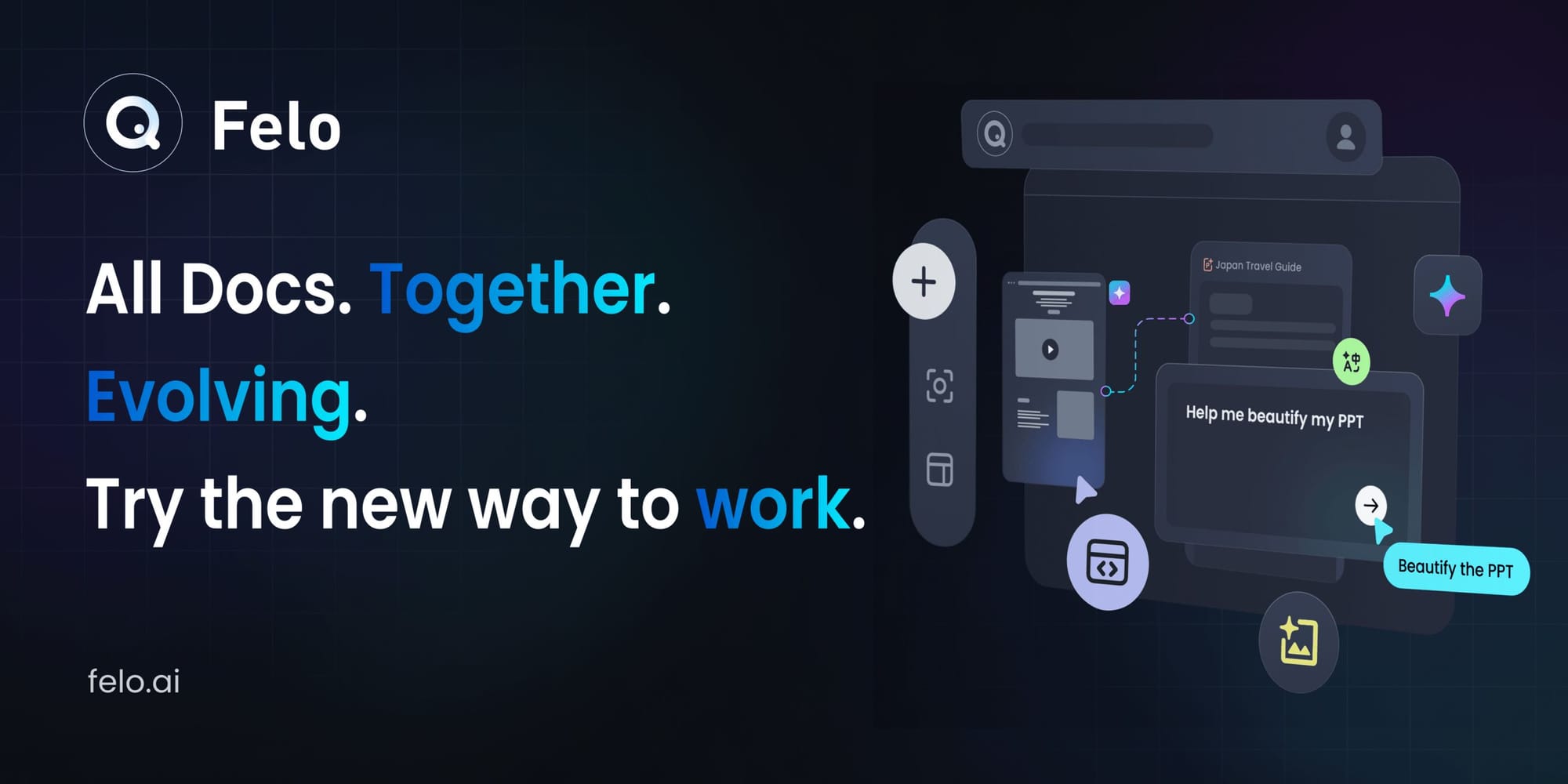
The 10x knowledge worker isn't typing faster—they're directing AI agents while competitors drown in copy-paste hell. Right now, someone just translated a 50-page deck in 3 minutes while you're still reformatting slide 12. Felo LiveDoc is the world's first Agent Workspace where documents don't just sit there—they evolve, analyze, and update themselves. Imagine a phantom team of designers, translators, and analysts inside your docs, unifying scattered PDFs, videos, and spreadsheets into one intelligent system that grows smarter with every task.
Here's what makes you look like a genius: While legacy tools treat you like a glorified typist, LiveDoc's multi-agent system operates autonomously. Design agents polish your layouts. Data agents extract insights across PDFs, videos, and web pages simultaneously. Translation agents speak every language your customers do—all working 24/7 inside one living workspace. This isn't productivity theater—it's the death of document drudgery. You're not just saving time; you're unlocking a superpower your competitors don't know exists yet.
And it's not just you—it's your entire team: Think of your best team collaboration tool—now add tireless AI teammates who never sleep, never forget context, and execute instantly. LiveDoc expands collaboration from human-to-human to human-plus-AI: team members direct, AI agents execute, all on the same canvas in real time. No more "latest_final_v3" nightmares. While your competitors coordinate between people, you're coordinating an entire hybrid workforce.
The insider move? Early adopters are already 10x-ing their output while the rest of the market is still toggling between twelve tabs. Every day you wait is another day spent manually updating slides like it's 2015. The knowledge workers who win aren't the ones who work harder—they're the ones who stopped editing and started directing.
🚀 Join the revolution: Get early access to Felo LiveDoc and become the person everyone asks, "How did you finish that so fast?" The age of manual document labor just ended. Are you evolving, or still typing?
GLASSES
Meta Buys Limitless for Glasses That Remember

👀 What’s happening: Meta has acquired Limitless, the startup behind the $99 AI pendant that could record and summarize your conversations. The hardware is being discontinued, but the team and its memory tech are moving into Meta’s Reality Labs to work on AI-enabled wearables — namely, the next generation of Ray-Ban Meta and in-lens “Display” glasses.
🔥 How this hits reality: Today’s smart glasses can see, hear, and translate, but they can’t remember. Limitless had cracked that gap with continuous recall software, turning life into a searchable stream of context. For Meta, that’s the missing neuron. By absorbing Limitless, Meta isn’t just chasing another gadget launch; it’s racing to make the first pair of glasses with real, persistent memory — a cognitive edge that the market hasn’t yet built into their glasses.
🛎️ Key takeaway: Meta’s next glasses won’t just show you the world; they’ll remember it for you.
Meta Buys Limitless for Glasses That Remember
👀 What’s happening: Meta has acquired Limitless, the startup behind the $99 AI pendant that could record and summarize your conversations. The hardware is being discontinued, but the team and its memory tech are moving into Meta’s Reality Labs to work on AI-enabled wearables — namely, the next generation of Ray-Ban Meta and in-lens “Display” glasses.
COPYRIGHT
NYT Joins the Global Pile-On Against Perplexity

👀 What’s happening: The New York Times has filed a fresh copyright lawsuit against Perplexity, accusing the AI search startup of straight-up repackaging its journalism behind paywalls into chatbot answers. It’s the latest in a long line of complaints, from the Chicago Tribune to Nikkei, that Perplexity’s “RAG” system is less retrieval than raid.
🔥 How this hits reality: Perplexity is now the poster child for AI’s “scrape first, settle later” doctrine. Its token Publisher Program and Getty deal barely dent the wave of lawsuits stacking up from legacy media across continents. Every newsroom wants a check, and Perplexity keeps paying in delay tactics as it negotiates with one hand and scrapes with the other.
🛎️ Key takeaway: When half the internet calls you theft, and you still call it innovation, you’re not bold, you’re just stealing with a straight face.
NYT Joins the Global Pile-On Against Perplexity
👀 What’s happening: The New York Times has filed a fresh copyright lawsuit against Perplexity, accusing the AI search startup of straight-up repackaging its journalism behind paywalls into chatbot answers. It’s the latest in a long line of complaints, from the Chicago Tribune to Nikkei, that Perplexity’s “RAG” system is less retrieval than raid.
QUICK HITS
- OpenAI has disabled ad-like app suggestions, insisting no ads are live and shifting focus toward improving ChatGPT’s overall quality.
- Meta has signed AI data licensing deals with multiple news publishers to deliver real-time news through its chatbot.
- Walgreens Advertising Group partners with Rokt to enhance its AI-powered retail media and add a new monetizable post-purchase channel.
- Google releases Gemini 3 Deep Think exclusively for Ultra subscribers, highlighting its top ARC-AGI-2 score and advanced reasoning strengths.
- Gartner urges organizations to block AI browsers for now, citing data exposure and agent-driven operational risks.
TRENDING
Daily AI Launches
- Series Graph has launched a visual TV companion app that uses IMDb ratings to create episode heatmaps and tracks watch progress.
- GMI Cloud has launched a multimodal inference engine that unifies text, video, and audio pipelines with 5-6x faster performance.
- Strater AI has launched a learning tool that turns any video, PDF, or website into interactive quizzes, flashcards, and summaries.
- MCPTotal has launched a platform for instant, zero-config deployment and management of MCP servers with support for 100+ tools.
Featured AI Tools
- 🧠 TRAE (The Real Al Engineer) is the most price-competitive coding agent.
- 🎥 KaraVideo unites all AI video models in one place.
- 📚 Heardly is the Fast Way to read Best Book.
- 🪶 CopyOwl is the First AI Research Agent, deep research on any topic in one click.
TOGETHER WITH US
AI Secret Media Group is the world’s #1 AI & Tech Newsletter Group, boasting over 2 million readers from leading companies such as OpenAI, Google, Meta, and Microsoft. Our Newsletter Brands:
- AI: AI Secret
- Tech & Business:: Bay Area Letters
- Robotics: Robotics Herald
- Marketing: Marketing Secret
We've helped promote over 500 Tech Brands. Will yours be the next?
Email our co-founder Mark directly at [email protected] if the button fails.
🛎️ HappyHorse Disappears
Plus: Meta Ships Muse Spark, GLM Claims It Kills Opus
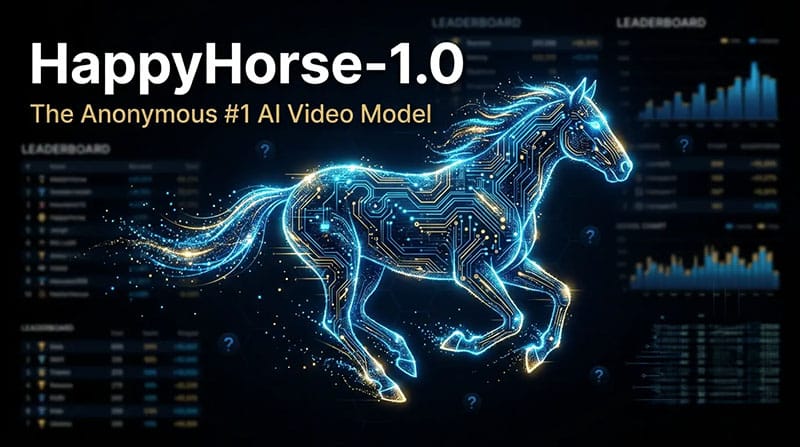
🛎️ Claude Mythos Leak
Plus: Meta Is Outdated, Anthropic Starts Limiting, Human Review Is Breaking

🛎️ Blind Coding Is Coming
Plus: ChatGPT Ads Crossed $100M, Google Joins the Memory War
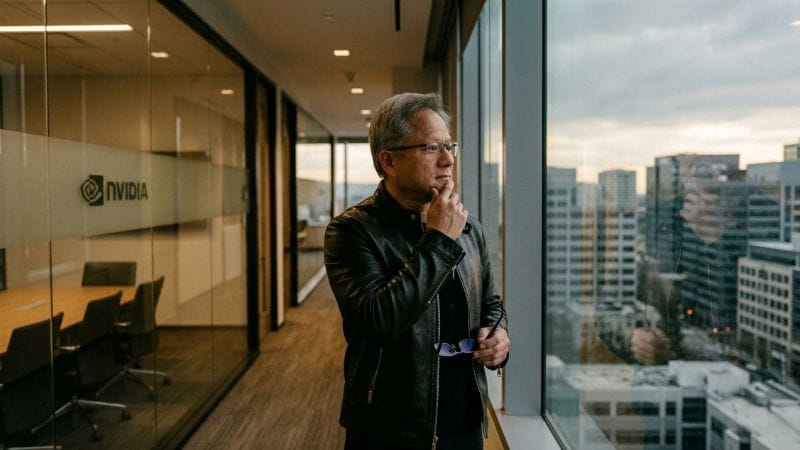
🛎️ Meta Towards Tokenized
Plus: Expert Prompts Were Hurting Accuracy, OpenAI aims at search defaults

🛎️ We Tested GPT-5.4
Plus: Meta Surveillance Machine, Cluely Admits Fabricated ARR
🛎️ Google Takes Siri
Plus: GPUs Into Pharma, Anthropic Launches Agents
🛎️ DeepSeek Drops New Year Bomb
Plus: Visual authenticity collapsed, Meta Games Transparency
🛎️ Meta Acquires Manus
Plus: Cursor Faces Displacement, Hollywood AI 2025 Recap
🛎️ OpenAI Rushes GPT-5.2
Plus: Glasses That Remember, Perplexity’s Global Backlash