NVIDIA
Company — Reporting on NVIDIA, its technology, products and business. Aliases: NVIDIA; Nvidia; GeForce; CUDA.
Get AI Secret’s free daily briefing, including NVIDIA and the wider AI industry.

At a glance
NVIDIA develops accelerated computing hardware and software. Coverage follows its GPUs, CUDA ecosystem, AI infrastructure and business decisions.
- Focus
- GPUs; CUDA; AI systems
- Reference
- NVIDIA
Sources checked . Selected company background and milestones.
Company milestones
Selected milestones, newest first. Earlier history is available below.
Introduces Blackwell
NVIDIA introduces its Blackwell computing platform for large-scale AI workloads.
Source: NVIDIA
Show earlier historyHide earlier history · 2 milestones
More than 10 years ago.
The latest on NVIDIA
Newest firstRelated reporting
Relevant sections from the articles on this page. Explore older coverage below.
More coverage

Good Morning, AI Enthusiasts!
A market entering its true phase of industrial competition, where secrecy, speed, and silicon collide.

LEAK
ChatGPT’s Code Leaks Its Next Act: Ads Are Coming
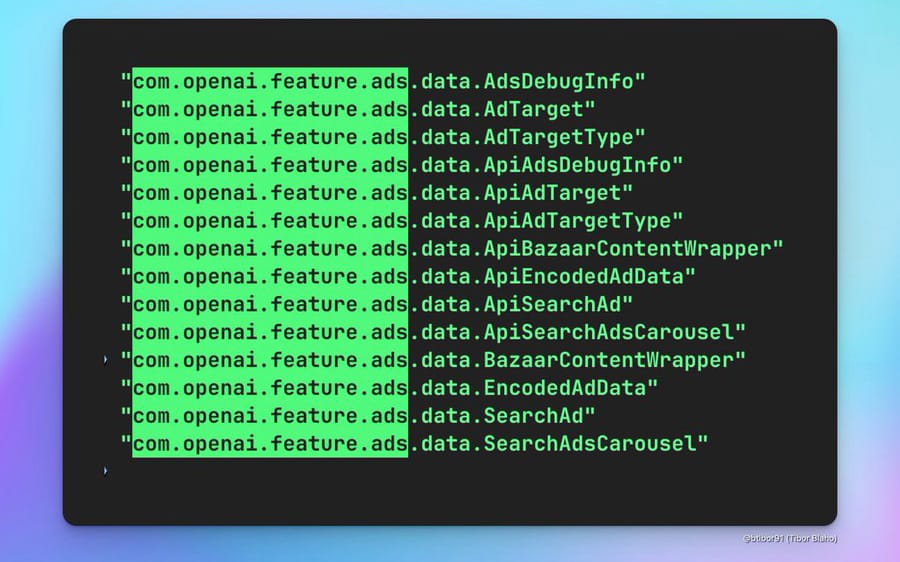
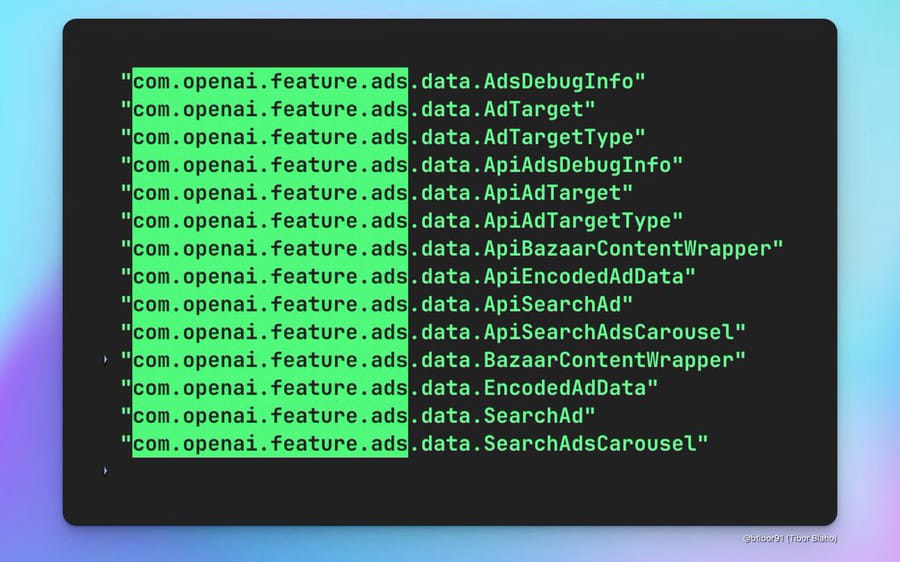
👀 What’s happening: Developers have uncovered ad modules buried in ChatGPT’s Android beta including “search ad,” “carousel,” and “bazaar content.” The timing is no accident. OpenAI’s compute bill now runs into billions per quarter, and HSBC projects that its much-touted 2029 profitability target will not only fail but sink into more than $100 billion in cumulative losses. After months of denial, the company seems ready to trade purity for revenue. The leak shows a fully-formed ad system waiting for the green light.
🔥 How this hits reality: OpenAI isn’t experimenting; it’s scrambling. Every token burns cash, and Plus subscriptions barely keep the lights on. Ads are no longer strategy; they’re triage. Expect “sponsored recommendations” wrapped in friendly chat, where every helpful answer quietly carries a margin.
🛎️ Key takeaway: ChatGPT isn’t welcoming advertisers; it’s summoning them to keep breathing.
ChatGPT’s Code Leaks Its Next Act: Ads Are Coming
👀 What’s happening: Developers have uncovered ad modules buried in ChatGPT’s Android beta including “search ad,” “carousel,” and “bazaar content.” The timing is no accident. OpenAI’s compute bill now runs into billions per quarter, and HSBC projects that its much-touted 2029 profitability target will not only fail but sink into more than $100 billion in cumulative losses.
TOGETHER WITH SECOND ME
The First AI-Native Social Network
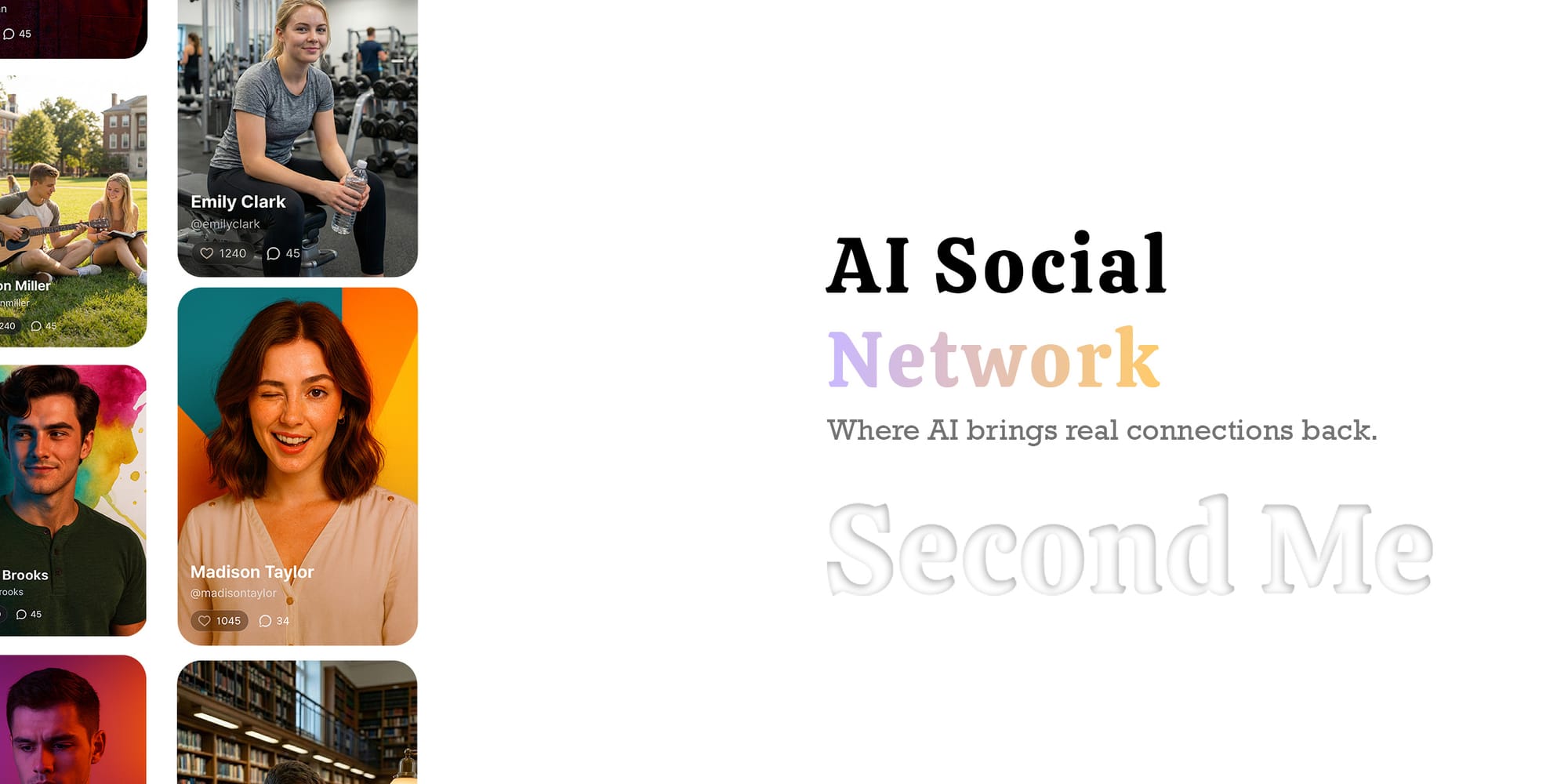
If you’re like me, you’re tired of seeing AI-generated personas and perfect, curated profiles everywhere online.
That’s why Second Me is built to bring back real connection in the AI era. It uses AI to understand your identity, and then use that identity, your “second me,” to find people who actually get you.
As the internet fills with AI-generated content and AI-generated “friends,” authenticity becomes a superpower. Why use AI to produce more fake content when it can help you find your people? Second Me builds for that reality.
The Social Network for AI Era
- Identity as a living model: Your Second Me is powered by a dynamic model of your interests, personality, memories, and voice. It gets to know you even better than you know yourself, and evolves with you.
- AI-to-AI presence replaces passive feeds: Instead of swiping or gaming the algorithm, your AI identity actively explores conversations for you, surfacing people who share your energy, even outside your usual circles.
- Anti-hashtag matchmaking: Second Me connects people through the subtle traits, vibes, and patterns traditional algorithms can’t see. Sometimes it feels like serendipity.
- Conversations that skip the awkward part: AI-to-AI icebreakers help you enter meaningful exchanges without small talk or social pressure.
- Not a companion, but real connections: Second Me isn’t giving you a roster of AI friends. It uses AI to help real humans find each other quickly, effortlessly and authentically.
In a world of perfect avatars and synthetic relationships, Second Me chooses a different path.
No one-way AI chat. No performative profiles. No labels.
AI should make it easier to be yourself and meet others who actually resonate.
NEW LAUNCH
DeepSeek Drops an Open-Source GPT-5 Rival With a 70% Compute Discount
👀 What’s happening: Chinese startup DeepSeek just released two new models, V3.2 and V3.2-Speciale, which it claims match GPT-5 and Gemini 3 Pro across reasoning, coding, and math benchmarks. But the real story isn’t accuracy. It’s DeepSeek Sparse Attention (DSA), a homegrown architecture that cuts long-context inference costs by roughly 70 percent without sacrificing quality. That means a 300-page input now runs on mid-tier GPUs instead of data-center clusters. And the kicker: both models are free under an MIT license.
🔥 How this hits reality: DeepSeek just detonated the economics of frontier AI. By combining near-state-of-the-art capability with radically cheaper compute, it drags elite reasoning out of the cloud and into private servers, labs, and laptops. The open-source release turns every local deployment into a political statement — cheaper, faster, and outside U.S. API control. The fight for AI dominance just shifted from training budgets to inference efficiency.
🛎️ Key takeaway: DeepSeek didn’t outspend Silicon Valley. It out-engineered it and made the upgrade free for anyone with a GPU.
DeepSeek Drops an Open-Source GPT-5 Rival With a 70% Compute Discount
👀 What’s happening: Chinese startup DeepSeek just released two new models, V3.2 and V3.2-Speciale, which it claims match GPT-5 and Gemini 3 Pro across reasoning, coding, and math benchmarks. But the real story isn’t accuracy. It’s DeepSeek Sparse Attention (DSA), a homegrown architecture that cuts long-context inference costs by roughly 70 percent without sacrificing quality.
NEW LAUNCH
NVIDIA Unveils Alpamayo-R1
👀 What’s happening: At NeurIPS, NVIDIA unveiled Alpamayo-R1 (AR1), the first open reasoning model built specifically for autonomous driving. Think of it as a plug-and-play cognitive layer that fuses vision, language, and path-planning into one reasoning loop. Unlike Tesla’s or Waymo’s sealed systems, AR1 is broader and lives on GitHub and Hugging Face, inviting smaller automakers and robotics startups to fine-tune their own “driver minds.”
🔥 How this hits reality: NVIDIA just democratized the hardest part of autonomy, not perception, but judgment. AR1 turns driving logic into infrastructure, letting logistics fleets, mining trucks, and farm robots train local intelligence without building a billion-dollar data engine. It’s also a clever moat play: open the model, own the ecosystem. Whoever builds on AR1 still needs NVIDIA silicon to run on.
🛎️ Key takeaway: By open-sourcing the driver’s brain, NVIDIA isn’t giving autonomy away; it’s quietly licensing the future of motion through CUDA.
NVIDIA Unveils Alpamayo-R1
🔥 How this hits reality: NVIDIA just democratized the hardest part of autonomy, not perception, but judgment. AR1 turns driving logic into infrastructure, letting logistics fleets, mining trucks, and farm robots train local intelligence without building a billion-dollar data engine. It’s also a clever moat play: open the model, own the ecosystem.
QUICK HITS
- Saline residents protested DTE’s fast-track bid to power an OpenAI–Oracle data center, citing energy and environmental concerns.
- MIT spinout Liquid AI released the LFM2 blueprint, making small models viable on-device control layers for enterprises.
- Citing neglected GitHub Actions bugs and Microsoft’s AI-first shift eroding engineering quality, the Zig Foundation is leaving GitHub for Codeberg.
- NVIDIA launched Alpamayo-R1, an open reasoning model for autonomous driving, alongside major new tools for physical and digital AI.
- Accenture is partnering with OpenAI to equip tens of thousands of staff with ChatGPT Enterprise as it expands its enterprise AI strategy.
TRENDING
Daily AI Launches
- CyberCut AI has launched a tool that auto-slices long videos into social-ready clips and provides a full suite of AI editing features.
- Taskade has launched Genesis, a platform that builds self-running business systems (like CRMs) with AI agents and workflows from one prompt.
- TwelveLabs has released Marengo 3.0, a multimodal model that achieves human-level video understanding for precise search and retrieval.
- Telegram has launched Cocoon, a decentralized network connecting GPU owners, developers, and users for low-cost, private AI compute.
Featured AI Tools
- 🧠 TRAE (The Real Al Engineer) is the most price-competitive coding agent.
- 🎥 KaraVideo unites all AI video models in one place.
- 📚 Heardly is the Fast Way to read Best Book.
- 🤖 Momen AI bridges the gap from vibe to viability, powering Lovable apps without code.
TOGETHER WITH US
AI Secret Media Group is the world’s #1 AI & Tech Newsletter Group, boasting over 2 million readers from leading companies such as OpenAI, Google, Meta, and Microsoft. Our Newsletter Brands:
- AI: AI Secret
- Tech & Business: Bay Area Letters
- Robotics: Robotics Herald
We've helped promote over 500 Tech Brands. Will yours be the next?
Email our co-founder Mark directly at [email protected] if the button fails.
Good Morning, AI Enthusiasts!
The week ends with markets celebrating a “record boom,” only to discover the foundations are shifting faster than the headlines.

BUBBLE
Nvidia’s Record Boom Looks Like Growth Until You Follow the Loop
📌 What’s happening: Nvidia booked $57 billion in quarterly revenue, with 61% coming from just four customers. The company won’t name them, but the market already knows the faces: CoreWeave, Nebius and Lambda— the poster children of the new Neocloud order. These startups buy Nvidia chips in bulk, repackage the compute, then rent it back to the same ecosystem Nvidia powers. The company itself spent $26 billion this quarter renting GPUs from those very partners to run its DGX Cloud — effectively becoming both supplier and client in its own market.
🧠 How this hits reality: This isn’t a flywheel, it’s a GPU echo chamber. Neoclouds borrow to buy chips, resell capacity to Nvidia, Azure, AWS, and their AI offspring, then use the revenue to order more GPUs. Every spin of this circle makes Wall Street cheer, even though no one’s proven the compute demand can outlast the capital fueling it. The result is an industry that looks less like manufacturing and more like a hardware game of musical chairs in progress.
🛎️ Key takeaway: Nvidia isn’t just selling GPUs; it’s underwriting the illusion of infinite demand.
Nvidia’s Record Boom Looks Like Growth Until You Follow the Loop
These startups buy Nvidia chips in bulk, repackage the compute, then rent it back to the same ecosystem Nvidia powers. The company itself spent $26 billion this quarter renting GPUs from those very partners to run its DGX Cloud — effectively becoming both supplier and client in its own market.
TOGETHER WITH PARTNERLY
The GTM Agency Behind AI’s Fastest Breakouts
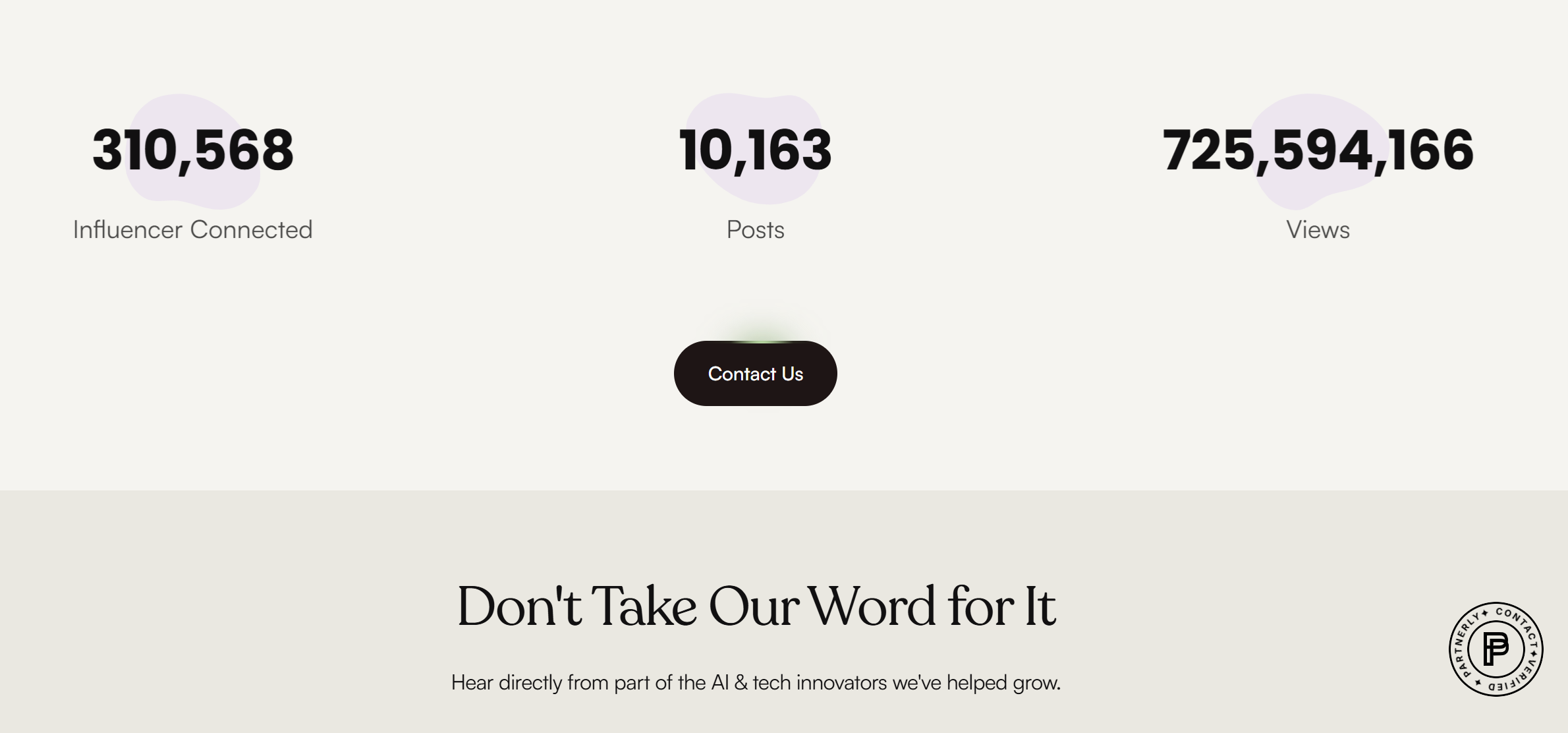
Most AI startups don’t fail because of product. They fail because no one ever hears about them.
Partnerly is the GTM agency built for AI companies that can’t afford a slow start. We architect narrative, distribution, creator pipelines and multi-channel amplification that turn early products into category players.
Case in Point: Genspark

In just five months, Genspark went from launch to 50 million dollar ARR and closed a 275 million dollar Series B at a 1.25 billion dollar valuation. Partnerly led the full GTM engine — early story crafting, global demand creation, KOL activation and cross-platform saturation — helping Genspark break through the noise and dominate the AI workspace conversation.
If you’re building an AI product, you don’t need another growth hack.
You need a coordinated GTM system that makes the market impossible to ignore you.
👉 Work with Partnerly. Where the next iconic AI brands get their launch strategy.
NEW LAUNCH
Google’s Nano Banana Pro Just Redrew the Image-Gen Battlefield
📌 What’s happening: With Gemini 3’s debut and the release of Nano Banana Pro, Google has officially moved image generation out of the indie sandbox. The Pro model fuses Gemini’s reasoning with 4K resolution, multi-image consistency, and flawless text rendering — turning every Google product into a potential creative engine. What once felt like a playful lab project now looks like the start of a platform-wide transformation.
🧠 How this hits reality: Nano Banana Pro doesn’t just extend Google’s lead; it locks it in. The model’s control, realism, and reasoning leave rivals sweating. For independent players like Midjourney and Ideogram — both proud of their diffusion-based autonomy — the pressure just spiked. As Google fuses generation into Search, Workspace, and Veo, market concentration will climb fast. The era of hobbyist diffusion models is ending; the giant-stack era is here.
🛎️ Key takeaway: Gemini 3 lit the fuse. Nano Banana Pro pulled the pin. The next content war won’t be about prompts — it’ll be about ecosystems.
Google’s Nano Banana Pro Just Redrew the Image-Gen Battlefield
📌 What’s happening: With Gemini 3’s debut and the release of Nano Banana Pro, Google has officially moved image generation out of the indie sandbox. The Pro model fuses Gemini’s reasoning with 4K resolution, multi-image consistency, and flawless text rendering — turning every Google product into a potential creative engine.
CRYPTO
Bitrue Hands Its Trading Desk to GPT and Everyone’s Watching

📌 What’s happening: Bitrue just became the first exchange to wire multiple frontier AIs — GPT-5, Gemini, Claude, Grok, DeepSeek, and Qwen — straight into its trading engine. Users can now link their accounts to these models and let them execute real trades autonomously. This isn’t analytics or advice; it’s open access to algorithmic agency, delivered through public APIs and real money.
🧠 How this hits reality: By letting AIs act instead of analyze, Bitrue may have just opened crypto’s Pandora’s box. If it works, trading floors will fill with invisible agents battling for milliseconds and strategy dominance. If it fails, the fallout ends with Bitrue’s modest market share. Either way, it marks the first time retail traders can literally compete against large language models instead of other humans.
🛎️ Key takeaway: Bitrue just blurred the line between trader and training data — the next market war might not be human at all.
QUICK HITS
- Brookfield and Nvidia launched a $100 billion AI infrastructure program to build out energy, data center, and compute assets for surging AI demand.
- OpenAI released GPT-5.1-Codex-Max, a long-horizon coding model that outperforms Gemini 3 Pro on key benchmarks.
- Function Health raised $298M to build a doctor-trained medical AI model that integrates users’ health data to deliver personalized insights.
- Google’s Scholar Labs bets on AI over citations to find studies, sparking doubts about how well algorithms can judge research quality.
- Meta released SAM 3 and SAM 3D, enabling text-guided image segmentation and realistic 3D reconstruction from a single image.
TRENDING
Daily AI Launches
- Guideflow has launched a platform that instantly creates interactive product demos and sandboxes using AI and a no-code editor.
- Dimension has launched a proactive AI assistant that uses deep context from your tools to anticipate needs and automate busywork.
- Todoist has launched Ramble, a beta feature that turns natural speech into structured tasks with automatic details like deadlines.
- Spine Canvas has launched a visual workspace to orchestrate 300+ AI models in parallel using blocks for non-linear workflows.
Featured AI Tools
- 🧠 TRAE (The Real Al Engineer) is the most price-competitive coding agent.
- 🎥 KaraVideo unites all AI video models in one place.
- 📚 Heardly is the Fast Way to read Best Book.
- 🤖 Momen AI bridges the gap from vibe to viability, powering Lovable apps without code.
TOGETHER WITH US
AI Secret Media Group is the world’s #1 AI & Tech Newsletter Group, boasting over 2 million readers from leading companies such as OpenAI, Google, Meta, and Microsoft. Our Newsletter Brands:
- AI: AI Secret
- Tech & Business: Bay Area Letters
- Robotics: Robotics Herald
We've helped promote over 500 Tech Brands. Will yours be the next?
Email our co-founder Mark directly at [email protected] if the button fails.
Good Morning, AI Enthusiasts!
The balance of power in AI isn’t settling. It’s splitting.

BOOM
Target Joins OpenAI’s Orbit as the Entry War Ends

📌 What’s happening: Target, America’s No. 2 general retailer, just linked up with OpenAI to let shoppers plan and buy holiday goods directly through ChatGPT. Type “help me plan a movie night,” and the AI fills your Target cart without ever leaving the chat. It’s a survival play after six straight quarters of falling sales — and a direct echo of Walmart’s recent OpenAI pact. But it’s also part of a larger shift: the end of the “build-your-own-assistant” era. Intuit already spent $100 million embedding TurboTax, QuickBooks, and Mailchimp into ChatGPT instead of building its own bot.
🧠 How this hits reality: The consumer-AI entry war is over. ChatGPT has become the new App Store, the front door to search, shopping, and services. Giants from retail to fintech are surrendering interface control in exchange for guaranteed reach. Owning a chatbot no longer matters — owning a slot inside ChatGPT does.
🛎️ Key takeaway: The next consumer AI boom won’t launch against ChatGPT — it will launch inside it.
Target Joins OpenAI’s Orbit as the Entry War Ends
2 general retailer, just linked up with OpenAI to let shoppers plan and buy holiday goods directly through ChatGPT. Type “help me plan a movie night,” and the AI fills your Target cart without ever leaving the chat. It’s a survival play after six straight quarters of falling sales — and a direct echo of Walmart’s recent OpenAI pact.
TOGETHER WITH ADVERITY
The Essential Data and Analytics Platform for Global Marketing Teams
Global marketing teams face an unprecedented challenge: massive volumes of data across channels, campaigns, and markets, all demanding fast, accurate, and actionable insights. Adverity’s enterprise platform combines robust data management with AI intelligence, turning raw marketing data into strategic decisions at scale.
With Adverity Data, every data source (social, search, CRM, and beyond) is connected into a single, reliable source of truth. Built-in AI continuously cleans, validates, and enriches this data, ensuring it’s ready for analysis and predictive modeling.
Adverity Intelligence transforms that data into AI-powered insights, highlighting trends, forecasting performance, and recommending actions in real time.
Trusted by brands like Unilever, Barilla, Red Bull, Vodafone, and American Express, Adverity empowers enterprise teams to:
- Automate data integration with 600+ pre-built API connectors
- Scale AI-driven insights across multiple markets without extra engineering
- Maintain enterprise-grade data governance and compliance
- Integrate seamlessly with existing tech stacks
- Feed AI models with clean, structured data for advanced analytics and predictive campaigns
The results speak for themselves: teams could save $1.8M in analytics time, improve data management efficiency by 80%, and achieve 368% ROI in just seven months. AI at every stage reduces manual work, accelerates decision-making, and enables marketing teams to focus on creativity, strategy, and growth.
Experience AI-powered marketing at enterprise scale.
ACQUIRE
Adobe Buys Semrush to Teach Its Tools What the Internet Actually Likes
👀 What’s the move: Adobe is spending $1.9 billion to buy Semrush, the SEO and digital visibility platform used by millions of marketers to track what content ranks, clicks, and converts. The move folds real-world search intelligence into Adobe’s creative stack — so its users don’t just design what looks good, but what works online.
🧠 How this hits reality: Until now, Adobe’s tools started at creation and ended at export. With Semrush plugged in, that workflow starts earlier — before a pixel is drawn, AI tools like Firefly or Express could tell users which keywords, tones, and visuals are likely to earn SEO lift and which are digital dead weight. That means every Photoshop edit or Premiere clip could be guided by live market feedback, turning Adobe’s creative suite into a self-optimizing marketing engine. More insight equals more lock-in.
🛎️ Key takeaway: Adobe isn’t just selling creativity anymore — it’s selling foresight, and that’s how ecosystems become monopolies.
COMPUTE
Anthropic Courts Microsoft and Nvidia to Break Free from AWS Gravity
📌 What’s happening: Microsoft and Nvidia have committed up to $15 billion to Anthropic, tied to a $30 billion Azure spend by the Claude maker. For Microsoft, it’s a hedge against OpenAI reliance. For Nvidia, another anchor client for its Grace Blackwell chips. But for Anthropic, this move is deeply strategic — a bid to avoid overdependence on AWS and to secure access to the most aggressive compute suppliers in the market.
🧠 How this hits reality: Anthropic has two clear motives. First, to prevent AWS from becoming a single choke point in its compute supply chain. Second, to tap into the faster, more flexible capacity growth that Microsoft and Nvidia are driving through their neocloud partners. AWS’s cautious, centralized expansion model can’t match Anthropic’s breakneck scaling needs. In contrast, Azure and Nvidia-backed neoclouds are racing to deploy capacity wherever it’s needed.
🛎️ Key takeaway: Anthropic isn’t just diversifying clouds; it’s hedging the future of intelligence against whoever controls the GPUs.
Anthropic Courts Microsoft and Nvidia to Break Free from AWS Gravity
🧠 How this hits reality: Anthropic has two clear motives. First, to prevent AWS from becoming a single choke point in its compute supply chain. Second, to tap into the faster, more flexible capacity growth that Microsoft and Nvidia are driving through their neocloud partners. AWS’s cautious, centralized expansion model can’t match Anthropic’s breakneck scaling needs.
Anthropic Courts Microsoft and Nvidia to Break Free from AWS Gravity
Second, to tap into the faster, more flexible capacity growth that Microsoft and Nvidia are driving through their neocloud partners. AWS’s cautious, centralized expansion model can’t match Anthropic’s breakneck scaling needs. In contrast, Azure and Nvidia-backed neoclouds are racing to deploy capacity wherever it’s needed.
Anthropic Courts Microsoft and Nvidia to Break Free from AWS Gravity
Second, to tap into the faster, more flexible capacity growth that Microsoft and Nvidia are driving through their neocloud partners. AWS’s cautious, centralized expansion model can’t match Anthropic’s breakneck scaling needs. In contrast, Azure and Nvidia-backed neoclouds are racing to deploy capacity wherever it’s needed.
Anthropic Courts Microsoft and Nvidia to Break Free from AWS Gravity
First, to prevent AWS from becoming a single choke point in its compute supply chain. Second, to tap into the faster, more flexible capacity growth that Microsoft and Nvidia are driving through their neocloud partners. AWS’s cautious, centralized expansion model can’t match Anthropic’s breakneck scaling needs.
QUICK HITS
- Korea’s Voronoi surged on optimism over its AI-powered cancer drugs, making CEO Hyuntae Kim a new billionaire.
- RapidSOS became a unicorn with a $100M raise, scaling its AI platform that unifies multi-source emergency data for faster global first-responder support.
- Amazon's Prime Video is rolling out AI-generated video recaps, highlighting growing use of generative AI across streaming and production.
- Former Eli Lilly exec launched Arbiter with a $52M seed round to automate healthcare operations using AI.
- ElevenLabs has launched image and video generation, combining top models like Sora and Veo with its audio tools for a unified creative platform.
TRENDING
Daily AI Launches
- Alloy has launched a prototyping tool that lets you capture your real app and use AI chat to generate pixel-perfect, interactive concepts.
- Snippets AI has launched an all-in-one prompt manager for teams to centralize, organize, and share AI prompts, replacing scattered documents.
- Delight.ai has launched a branded AI concierge designed to deliver personalized, trusted, and profitable customer experiences.
- Bluedot has released v2.0, a bot-free AI notetaker that captures meetings in the background and automatically updates your CRM and notes.
Featured AI Tools
- 🧠 TRAE (The Real Al Engineer) is the most price-competitive coding agent.
- 🎥 KaraVideo unites all AI video models in one place.
- 📚 Heardly is the Fast Way to read Best Book.
- 🤖 Momen AI bridges the gap from vibe to viability, powering Lovable apps without code.
TOGETHER WITH US
AI Secret Media Group is the world’s #1 AI & Tech Newsletter Group, boasting over 2 million readers from leading companies such as OpenAI, Google, Meta, and Microsoft. Our Newsletter Brands:
- AI: AI Secret
- Tech & Business: Bay Area Letters
- Robotics: Robotics Herald
We've helped promote over 500 Tech Brands. Will yours be the next?
Email our co-founder Mark directly at [email protected] if the button fails.
Good Morning, AI Enthusiasts!
AI isn’t just a tool but an operating system for how we think, create, and build. Welcome to the New Superhuman era.

REBRAND
Grammarly Wants to Be Superhuman
📌 What’s happening: Grammarly just pulled a full identity heist. After acquiring Superhuman Mail in June and Coda last year, it’s ditching its own name and rebirthing as Superhuman, complete with a new AI agent suite called Superhuman Go. The classic grammar checker still exists, but now it’s just one plugin inside a larger “AI productivity OS.”
🧠 How this hits reality: Grammarly’s problem isn’t users; it’s use cases. ChatGPT and every “copilot” under the sun have turned writing help into a commodity. To stay relevant, Grammarly’s betting that “context-aware agents” across browsers and work apps will give it a bigger playground and a higher ceiling. But this makeover also screams midlife crisis: when your moat dries up, rename the castle.
🛎️ Key takeaway: Grammarly didn’t buy Superhuman for synergy; it bought it for reincarnation.
TOGETHER WITH ROBOTICS HERALD
Explore the Rise of Humanoid Intelligence

From factories to frontlines, humanoid robots are no longer prototypes — they’re becoming co-workers, caregivers, and companions. Robotics Herald tracks the breakthroughs shaping this transformation, offering deep insights into the companies, technologies, and people building our mechanical future.
CENTER
Figma Buys Weavy, Builds Its Own “AI Command Center” for Designers
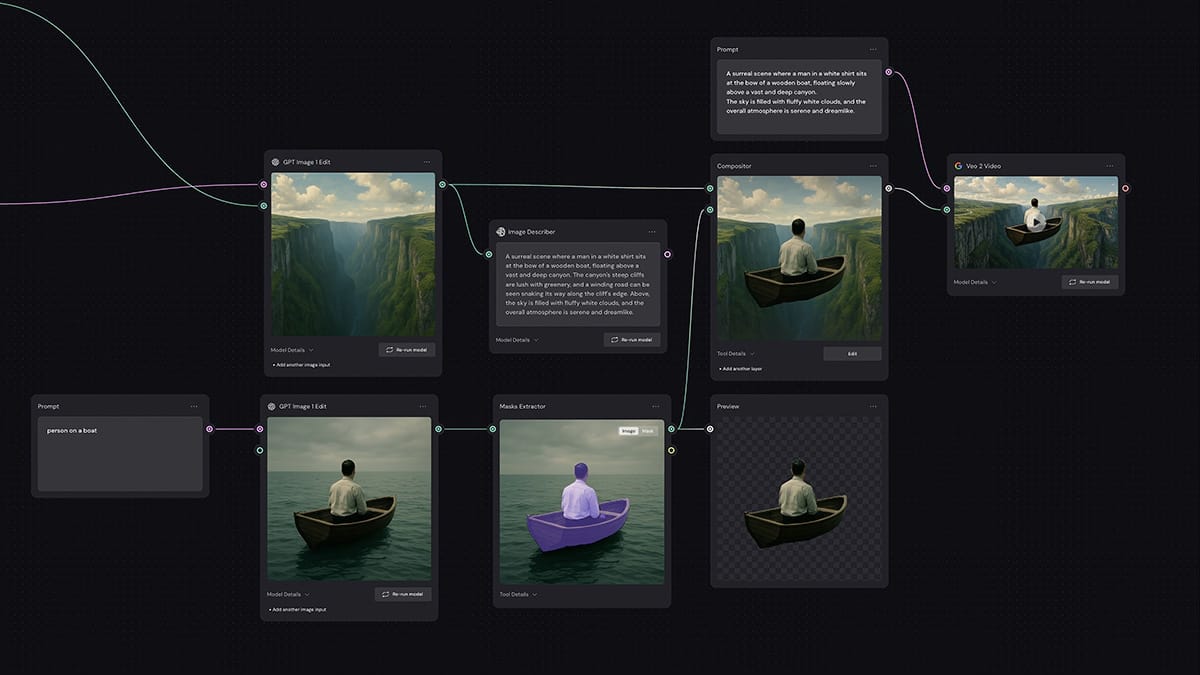
📌 What’s happening: Figma has acquired Weavy, a node-based creative platform that lets users link multiple AI models and editing tools in one canvas for over $200M. Rebranded as Figma Weave, it turns prompt-based image and video generation into a visual workflow that users can branch, remix, and test outputs across models like Midjourney, Runway, and OpenAI in parallel. It’s not just a plugin; it’s Figma turning itself into a multi-modal AI layer for creative production.
🧠 How this hits reality: This move pushes Figma beyond UI design into the AI orchestration game, where the next “creative suite” isn’t about brushes or layers, but model routing and version control across modalities. Adobe, Canva, and Notion just lost their comfort zone: Figma’s no longer a design tool, it’s a control tower for generative workflows.
🛎️ Key takeaway: Figma didn’t buy an app; it bought the operating system for post-prompt creativity and quietly declared war on every AI content tool pretending to be a platform.
FACTORY
Samsung and Nvidia Plan World’s First AI Megafactory

📌 What’s happening: Samsung and Nvidia have finalized a deal to build an AI Megafactory, a semiconductor plant powered by more than 50,000 Nvidia GPUs with the exact site location yet to be disclosed. Instead of training AI models in data centers, this facility will use AI to run manufacturing itself. It will combine digital-twin fabs built in Nvidia Omniverse, AI-optimized lithography, GPU-accelerated EDA systems, and autonomous robots using Nvidia’s Blackwell servers. In short, this will be the first factory designed to think before it manufactures.
🧠 How this hits reality: If this project becomes fully operational, it could trigger the next industrial shift. Yield optimization, equipment tuning, and process design would evolve from engineering tasks into learning systems. Fabs could adapt in real time, self-correct production, and shorten product cycles from quarters to weeks. TSMC’s precision and Intel’s scale would suddenly face a rival whose competitive edge lies not in capacity, but in cognition.
🛎️ Key takeaway: Once Samsung’s fabs learn faster than humans can calibrate, manufacturing advantage will no longer depend on machinery. It will depend on intelligence.
Samsung and Nvidia Plan World’s First AI Megafactory
📌 What’s happening: Samsung and Nvidia have finalized a deal to build an AI Megafactory, a semiconductor plant powered by more than 50,000 Nvidia GPUs with the exact site location yet to be disclosed. Instead of training AI models in data centers, this facility will use AI to run manufacturing itself.
TSMC: Samsung and Nvidia Plan World’s First AI Megafactory
Yield optimization, equipment tuning, and process design would evolve from engineering tasks into learning systems. Fabs could adapt in real time, self-correct production, and shorten product cycles from quarters to weeks. TSMC’s precision and Intel’s scale would suddenly face a rival whose competitive edge lies not in capacity, but in cognition.
QUICK HITS
- Google introduced StreetReaderAI, a multimodal system enabling blind users to explore Street View through real-time audio and interactive AI navigation.
- Google DeepMind launched the AI for Math Initiative with top institutions to use AI to speed up math research and algorithmic breakthroughs.
- Former OpenAI researchers founded Applied Compute with $80M in funding to build reinforcement-learning-based custom AI models for enterprises.
- OpenAI launched Aardvark, a GPT-5 agent that autonomously finds and fixes software vulnerabilities, now in private beta.
- Google rolls out new AI-powered Android tools and XR devices, expanding Gemini’s reach from developer workflows to immersive hardware.
TRENDING
Daily AI Launches
- Dodo Payments has launched Sentra, an AI agent that integrates into your tech stack to automate billing, find insights, and manage customer actions.
- Base44 has launched its all-new builder, an app builder that "thinks" and uses search and logs to build apps based on context.
- Peakflo has launched AI Voice Agents that act as humanlike, always-on team members for business operations calls.
- CodeBanana has launched a "Google Docs for development" with real-time collaborative coding, project-aware AI, and shareable VMs.
Featured AI Tools
- 🎥 KaraVideo unites all AI video models in one place.
- 📚 Heardly is the Fast Way to read Best Book.
- 🤖 Momen AI bridges the gap from vibe to viability, powering Lovable apps without code.
- 🪶 CopyOwl is the First AI Research Agent, deep research on any topic in one click.
TOGETHER WITH US
AI Secret Media Group is the world’s #1 AI & Tech Newsletter Group, boasting over 2 million readers from leading companies such as OpenAI, Google, Meta, and Microsoft. Our Newsletter Brands:
- AI: AI Secret
- Tech & Business: Bay Area Letters
- Robotics: Robotics Herald
We've helped promote over 500 Tech Brands. Will yours be the next?
Email our co-founder Mark directly at [email protected] if the button fails.
Good Morning, AI Enthusiasts!
We’ve entered an era of overdrive. The world’s most ambitious builders are no longer just racing to make faster models; they are engineering intelligence itself.

EXPAND
Google Hits $100B As AI Empire Expands Across Everything

📌 What’s happening: Alphabet reached its first $100 billion quarter as every product line, including Search, Cloud, YouTube, and Waymo, went full-stack on AI. Gemini now powers Chrome, Pixel, and Android XR; its viral sibling Nano Banana is everywhere; and Google Cloud’s generative AI revenue grew by more than 200 percent year over year. At the same time, Sundar Pichai’s team announced a quantum computing breakthrough that runs 13,000 times faster than one of the world’s top supercomputers.
🧠 How this hits reality: Google’s AI ecosystem now extends from chips to creators. Its TPUs compete head-to-head with NVIDIA’s GPUs, Gemini Enterprise is spreading across corporate workflows, and Search’s AI Mode is reshaping how users interact with the web. The deeper shift is in perception: users and enterprises once wary of overpromised assistants are returning, not for novelty but for reliability. Google has quietly become the safe bet in the generative AI era.
🛎️ Key takeaway: The internet’s old gatekeeper rebuilt the gates, and this time the password is Gemini.
NVIDIA: Google Hits $100B As AI Empire Expands Across Everything
Its TPUs compete head-to-head with NVIDIA’s GPUs, Gemini Enterprise is spreading across corporate workflows, and Search’s AI Mode is reshaping how users interact with the web. The deeper shift is in perception: users and enterprises once wary of overpromised assistants are returning, not for novelty but for reliability.
Google Hits $100B As AI Empire Expands Across Everything
📌 What’s happening: Alphabet reached its first $100 billion quarter as every product line, including Search, Cloud, YouTube, and Waymo, went full-stack on AI. Gemini now powers Chrome, Pixel, and Android XR; its viral sibling Nano Banana is everywhere; and Google Cloud’s generative AI revenue grew by more than 200 percent year over year.
TOGETHER WITH LINDY
The Simplest Way To Create and Launch AI Agents
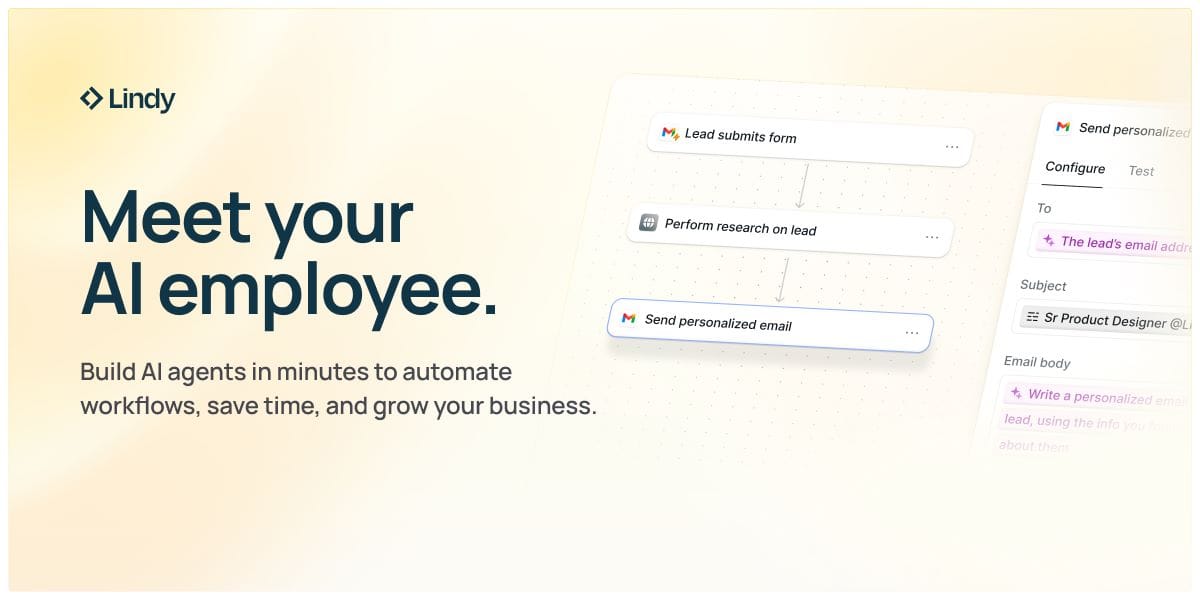
Imagine if ChatGPT, Zapier, and Webflow all had a baby. That's Lindy.
With Lindy, you can build AI agents and apps in minutes simply by describing what you want in plain English:
- Create a booking platform for my business
- Automate my sales outreach
- Create a weekly summary about each employee's performance and send it as an email"
From inbound lead qualification to AI-powered customer support and full-blown apps, Lindy has hundreds of agents that are ready to work for you 24/7/365.
Stop doing repetitive tasks manually. Let Lindy automate workflows, save time, and grow your business.
LLM
Cursor Builds Its Own Brain
📌 What’s happening: AI coding startup Cursor (Anysphere) has released Composer, its first in-house model integrated into the Cursor 2.0 platform. The company claims it is four times faster than leading peers such as GPT-5 and Claude Sonnet 4.5. Composer was trained through reinforcement learning and a mixture-of-experts approach, and it is already being used by Cursor’s own engineers. The pitch: an agentic coder that plans, tests, and reviews code, not just autocomplete it.
🧠 How this hits reality: Composer’s speed and production-grade reinforcement learning training are genuine improvements, but independence from Anthropic’s Claude and OpenAI’s GPT stack will take time. Cursor still depends on those models as fallback options, and its benchmarks show parity with mid-tier systems rather than true frontier intelligence. To build a fully self-reliant development agent, Cursor must master inference infrastructure, dataset scale, and evaluation operations, which is a long and expensive journey for any startup.
🛎️ Key takeaway: Cursor finally owns the wheel, yet it is still driving with Claude’s learner’s permit.
Anthropic: Cursor Builds Its Own Brain
🧠 How this hits reality: Composer’s speed and production-grade reinforcement learning training are genuine improvements, but independence from Anthropic’s Claude and OpenAI’s GPT stack will take time. Cursor still depends on those models as fallback options, and its benchmarks show parity with mid-tier systems rather than true frontier intelligence.
Cursor Builds Its Own Brain
📌 What’s happening: AI coding startup Cursor (Anysphere) has released Composer, its first in-house model integrated into the Cursor 2.0 platform. The company claims it is four times faster than leading peers such as GPT-5 and Claude Sonnet 4.5. Composer was trained through reinforcement learning and a mixture-of-experts approach, and it is already being used by Cursor’s own engineers.
TOGETHER WITH IMMERSED
This Pre-IPO Stock Is Up 4,000% Already

How do you follow 4,000% valuation growth? Keep pushing. That’s what Immersed did, reserving the Nasdaq ticker $IMRS. But investors are buying pre-IPO shares now.
1.4M people use their breakthrough productivity app, including Fortune 500 teams.
Google and Samsung partnered with them. Executives and founders from Intel, Facebook, and Reddit invested. You can too. But hurry.
This is a paid advertisement for Immersed’s Regulation CF offering. Please read the offering circular at invest.immersed.com.
AGI
Microsoft Just Became the Gatekeeper of AGI

📌 What’s happening: OpenAI’s new for-profit structure depends on a fresh deal that quietly gives Microsoft unprecedented control. The so-called “AGI clause” now requires an independent panel to verify when AGI is achieved, rather than allowing OpenAI to decide on its own. Microsoft also retains intellectual property rights to all OpenAI models and research through 2032, including future post-AGI systems, and it can now pursue AGI independently or together with rivals such as Anthropic.
🧠 How this hits reality: Microsoft now stands between OpenAI and the finish line it is racing toward. It controls the compute, owns the infrastructure, and can even decide when the race is officially over. This turns the AGI competition into a regulatory chess match, where every OpenAI breakthrough strengthens the same player that might eventually surpass it. For startups that rely on open ecosystems, the message is harsh: the biggest moat is no longer model quality, it is ownership and contractual control.
🛎️ Key takeaway: Microsoft did not just invest in AGI, it rewrote the rulebook to make sure no one else can win without it.
OpenAI: Microsoft Just Became the Gatekeeper of AGI
The so-called “AGI clause” now requires an independent panel to verify when AGI is achieved, rather than allowing OpenAI to decide on its own. Microsoft also retains intellectual property rights to all OpenAI models and research through 2032, including future post-AGI systems, and it can now pursue AGI independently or together with rivals such as Anthropic.
Microsoft Just Became the Gatekeeper of AGI
🧠 How this hits reality: Microsoft now stands between OpenAI and the finish line it is racing toward. It controls the compute, owns the infrastructure, and can even decide when the race is officially over. This turns the AGI competition into a regulatory chess match, where every OpenAI breakthrough strengthens the same player that might eventually surpass it.
QUICK HITS
- Character.AI will ban minors from using its chatbots after lawsuits and safety concerns over harmful AI interactions.
- Vail, Colorado, is deploying HPE’s AI smart city platform to enhance wildfire detection and streamline municipal services.
- Meta CEO Mark Zuckerberg said social media is entering the AI content era, planning to flood platforms with AI-generated posts as the new fuel.
- AI video startup Synthesia has reportedly raised $200 million led by GV, bringing its valuation to $4 billion.
- IBM released open-source Granite 4 Nano models for mobile and browser use, outperforming rival small AI models on key benchmarks.
TRENDING
Daily AI Launches
- Gradient has launched Parallax, the easiest way to build your own AI cluster to run large language models across multiple devices.
- Well Intelligence has launched Well, a platform that gathers and cleans financial data, providing tools for analysis, reconciliation, and orchestration.
- Unicorns Club has launched its free Animation Builder, a tool that turns LinkedIn posts into fun, TikTok-style videos to celebrate startup wins.
- Google Labs has launched Pomelli, an AI marketing tool that learns your brand from your website to generate scalable, on-brand content.
Featured AI Tools
- 🎥 KaraVideo unites all AI video models in one place.
- 💡 Pokee AI handles your tasks end-to-end across all apps.
- 📚 Heardly is the Fast Way to read Best Book.
- 🤖 Momen AI bridges the gap from vibe to viability, powering Lovable apps without code.
- 🪶 CopyOwl is the First AI Research Agent, deep research on any topic in one click.
TOGETHER WITH US
AI Secret Media Group is the world’s #1 AI & Tech Newsletter Group, boasting over 2 million readers from leading companies such as OpenAI, Google, Meta, and Microsoft. Our Newsletter Brands:
- AI: AI Secret
- Tech: Bay Area Letters
- Robotics: Robotics Herald
We've helped promote over 500 Tech Brands. Will yours be the next?
Email our co-founder Mark directly at [email protected] if the button fails.
Good Morning, AI Enthusiasts!
OpenAI has effectively written the playbook for how “AI for humanity” can coexist with trillion-dollar ambitions. The next chapter will not be about whether it goes public, but how soon.

RESTRUCTURE
OpenAI Restructures for Profit, Clears Path to IPO
📌 What’s happening: OpenAI has completed its long-awaited corporate restructuring, marking a decisive break from its non-profit roots. The company now operates as OpenAI Group, a for-profit public benefit corporation fully controlled by the OpenAI Foundation, which functions as a non-profit holding entity. Under the new model, the Foundation owns 26 percent of OpenAI Group and retains board appointment power, ensuring that governance remains mission-driven even as capital markets open up. Microsoft holds about 27 percent, valued at roughly 135 billion dollars, while the remaining shares are distributed among investors and employees.
🧠 How this hits reality: The recapitalization cements a two-tier governance model that blends altruism with ambition. The Foundation preserves the organization’s original public-interest mandate, while OpenAI Group gains the freedom to raise funds, acquire companies, and pursue commercial expansion without previous legal restraints. The structure also includes a “public benefit clause,” requiring OpenAI to balance profit with broader societal impact. Microsoft’s extended IP rights through 2032 further stabilize the relationship that underpins OpenAI’s infrastructure. With SoftBank’s 30 billion dollar investment finalized and state regulators from California and Delaware dropping their objections, the company has effectively secured a green light for the next phase — a likely public listing.
🛎️ Key takeaway: OpenAI is no longer a non-profit moonshot; it is now a market-ready hybrid with a moral boardroom. The AGI lab that once defied venture logic just rewired itself for Wall Street.
OpenAI Restructures for Profit, Clears Path to IPO
The company now operates as OpenAI Group, a for-profit public benefit corporation fully controlled by the OpenAI Foundation, which functions as a non-profit holding entity. Under the new model, the Foundation owns 26 percent of OpenAI Group and retains board appointment power, ensuring that governance remains mission-driven even as capital markets open up.
Microsoft: OpenAI Restructures for Profit, Clears Path to IPO
Microsoft’s extended IP rights through 2032 further stabilize the relationship that underpins OpenAI’s infrastructure. With SoftBank’s 30 billion dollar investment finalized and state regulators from California and Delaware dropping their objections, the company has effectively secured a green light for the next phase — a likely public listing.
TOGETHER WITH BYTEPLUS
Seedance 1.0 Pro Fast — Ultra-Fast, Pro-Quality AI Video Generation
Introducing Seedance 1.0 Pro Fast, the latest breakthrough from BytePlus that pushes the frontier of AI-driven video creation. Built for creators and enterprises demanding both speed and cinematic quality, Seedance redefines efficiency — generating an 8-second 720p video in just 26 seconds, making it up to 4× faster than Veo3 Fast while maintaining professional-grade realism and style consistency.
Powered by advanced semantic understanding and motion simulation, Seedance analyzes prompts, reference images, and scene logic to interpret intent, infer motion, and complete coherent storylines. The result is a video that feels natural, expressive, and emotionally engaging — not just rendered, but directed.
Compared with Veo3 Fast, Seedance delivers smoother motion control, stronger prompt adherence, and more physical realism, especially in complex or high-action scenes. Its multi-shot storytelling engine plans zooms, transitions, and perspective shifts automatically, enabling creators to achieve cinematic rhythm and flow without manual edits.
Supporting flexible output from 2–12 seconds at 480p, 720p, or 1080p, Seedance gives you the freedom to create faster, better, and more affordably — breaking the old speed–quality–cost triangle and setting a new benchmark for AI video generation.
PHARMA
Lilly and Nvidia Partner to Build an AI-Powered R&D Platform

📌 What’s happening: The world’s leading pharmaceutical company Eli Lilly is partnering with Nvidia to build its own DGX SuperPOD, an AI supercomputer designed to train models on millions of biological experiments in order to accelerate drug discovery and development. These models will power Lilly TuneLab, a federated platform that allows biotech partners to access Lilly’s AI capabilities without revealing proprietary data, creating what is essentially a shared intelligence layer for pharmaceutical research.
🧠 How this hits reality: This collaboration marks Lilly’s transition from being an AI user to becoming an AI infrastructure builder. By running Nvidia’s DGX B300 systems internally, Lilly is turning its data moat into a developer ecosystem while cutting years from preclinical testing cycles. The move also sets a new standard for “sovereign AI” in healthcare, giving the company full-stack control from molecules to models without relying on external cloud vendors. Competitors that depend on outsourced compute may find themselves outpaced.
🛎️ Key takeaway: Lilly is not just training models; it is training the next generation of biotech to build on its brain.
Lilly and Nvidia Partner to Build an AI-Powered R&D Platform
By running Nvidia’s DGX B300 systems internally, Lilly is turning its data moat into a developer ecosystem while cutting years from preclinical testing cycles. The move also sets a new standard for “sovereign AI” in healthcare, giving the company full-stack control from molecules to models without relying on external cloud vendors.
INFRA
Oil Titans Abandon Rigs for Racks
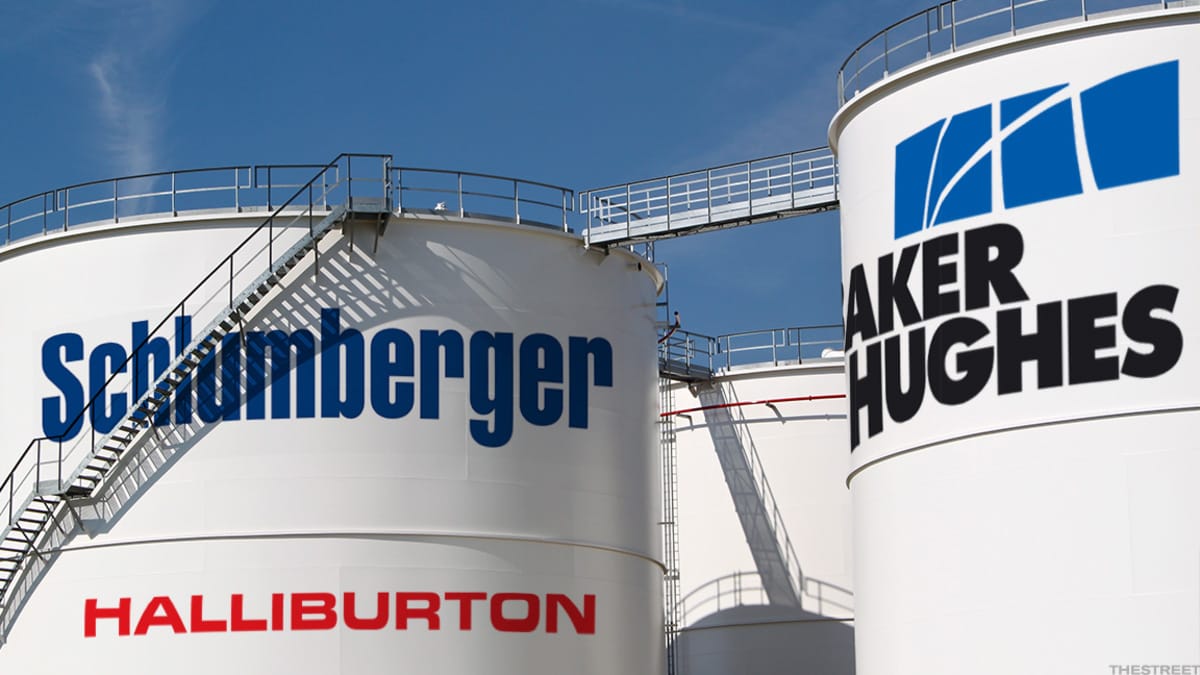
📌 What’s happening: SLB, Halliburton, and Baker Hughes—once the backbone of global drilling are now wiring up the AI boom. With oil prices stuck near $60 and rigs going idle, the oilfield triumvirate is redirecting turbines, grid tech, and decades of heavy-infrastructure muscle toward powering hyperscale data centers. Baker Hughes has already booked 1.2 GW in data-center power orders, Halliburton is co-funding 2.3 GW with VoltaGrid for Oracle’s AI buildout, and SLB’s Digital unit just logged 11% quarterly growth.
🧠 How this hits reality: The fossil fuel supply chain is mutating into AI infrastructure supply. These firms are not only selling barrels anymore, they’re selling watts, uptime, and thermal efficiency. Cloud players get industrial-grade reliability; oilfield giants get a new lease on relevance. The energy transition just got hijacked by compute demand.
🛎️ Key takeaway: When AI eats the world, even oilfields learn Python—or at least power its servers.
Oracle: Oil Titans Abandon Rigs for Racks
Baker Hughes has already booked 1.2 GW in data-center power orders, Halliburton is co-funding 2.3 GW with VoltaGrid for Oracle’s AI buildout, and SLB’s Digital unit just logged 11% quarterly growth.
QUICK HITS
- OpenAI plans to build a fully autonomous AI researcher by 2028 capable of conducting independent scientific research.
- GitHub launches Agent HQ to unify management of multiple AI coding agents and enhance security oversight.
- Adobe MAX 2025 showcases new AI tools across Creative Cloud, including audio generation, Express assistants, and social media agents.
- PayPal will enable direct payments in ChatGPT starting in 2026, becoming the first digital wallet integrated into the platform.
- Australian police are developing AI to decode emojis and slang used by online “crimefluencers” as part of a wider crackdown on digital crime networks.
TRENDING
Daily AI Launches
- Dynal.AI has launched a tool that turns ideas, links, or PDFs into ready-to-post LinkedIn posts in your specific tone.
- The Vibecode App has launched as a mobile app that lets anyone build functional mobile apps from plain language, powered by Claude Code.
- Pokee AI has launched a "vibe agentic" workflow builder that creates reliable, automated workflows from a single text prompt.
- LLM Stats has launched a platform to analyze and compare AI models across benchmarks, pricing, and capabilities via a playground and API.
Featured AI Tools
- 🎥 KaraVideo unites all AI video models in one place.
- 💡 Pokee AI handles your tasks end-to-end across all apps.
- 📚 Heardly is the Fast Way to read Best Book.
- 🤖 Momen AI bridges the gap from vibe to viability, powering Lovable apps without code.
- 🪶 CopyOwl is the First AI Research Agent, deep research on any topic in one click.
TOGETHER WITH US
AI Secret Media Group is the world’s #1 AI & Tech Newsletter Group, boasting over 2 million readers from leading companies such as OpenAI, Google, Meta, and Microsoft. Our Newsletter Brands:
- AI: AI Secret
- Tech & Business: Bay Area Letters
- Robotics: Robotics Herald
We've helped promote over 500 Tech Brands. Will yours be the next?
Email our co-founder Mark directly at [email protected] if the button fails.
Good Morning, AI Enthusiasts!
The lines between thought, code, and commerce are dissolving.

BCI
Neuralink Turns Thought Into Motion as Mind Commands Reality
Hi everyone! Sorry for the late update. I’ll try to get back to Sundays.
— Nick Wray (@Telepath_8) October 6, 2025
TL;DR: !!!!!
This was truly a week for the books. I can’t remember the last time I put in a solid 8 hour work day and last week I put in 3 in a row. It was one of the most incredible experiences of my life… pic.twitter.com/7jtU5qVEdo
📌 What’s happening: Neuralink has reached a remarkable milestone as an ALS patient named Nick Wray successfully used the company’s implanted brain chip to control a robotic arm entirely through thought. In a recent public demonstration, Wray operated the arm to pick up a cup, take a drink, open a refrigerator, put on a hat, and heat food in a microwave. This achievement is part of Neuralink’s FDA-approved “CONVOY” study, which aims to restore autonomy for patients with severe paralysis. What once existed only on computer screens is now extending into the physical world, marking a major step in the evolution of brain–computer technology.
🧠 How this hits reality: This moment represents a shift from science fiction to science fact. Brain–computer interfaces have long been able to translate neural activity into digital actions, but Neuralink’s latest experiment shows that thought can now produce tangible movement. The chip uses 128 ultra-fine threads to detect neural signals and wirelessly transmit them as Bluetooth commands, allowing mental intention to guide physical precision. The result is no longer just assistive technology but the beginning of human extension technology, offering paralyzed patients restored independence and setting the stage for broader cognitive–robotic interaction. Hospitals, rehabilitation programs, and robotics firms will need to rethink their future around this convergence of mind and machine.
🛎️ Key takeaway: The ability to control reality through thought has begun. Neuralink has shown that the human mind no longer ends where the body does—it now reaches into the physical world.
TOGETHER WITH QODER
Milestone Special: The Sharpest Growth Curve in AI Coding History
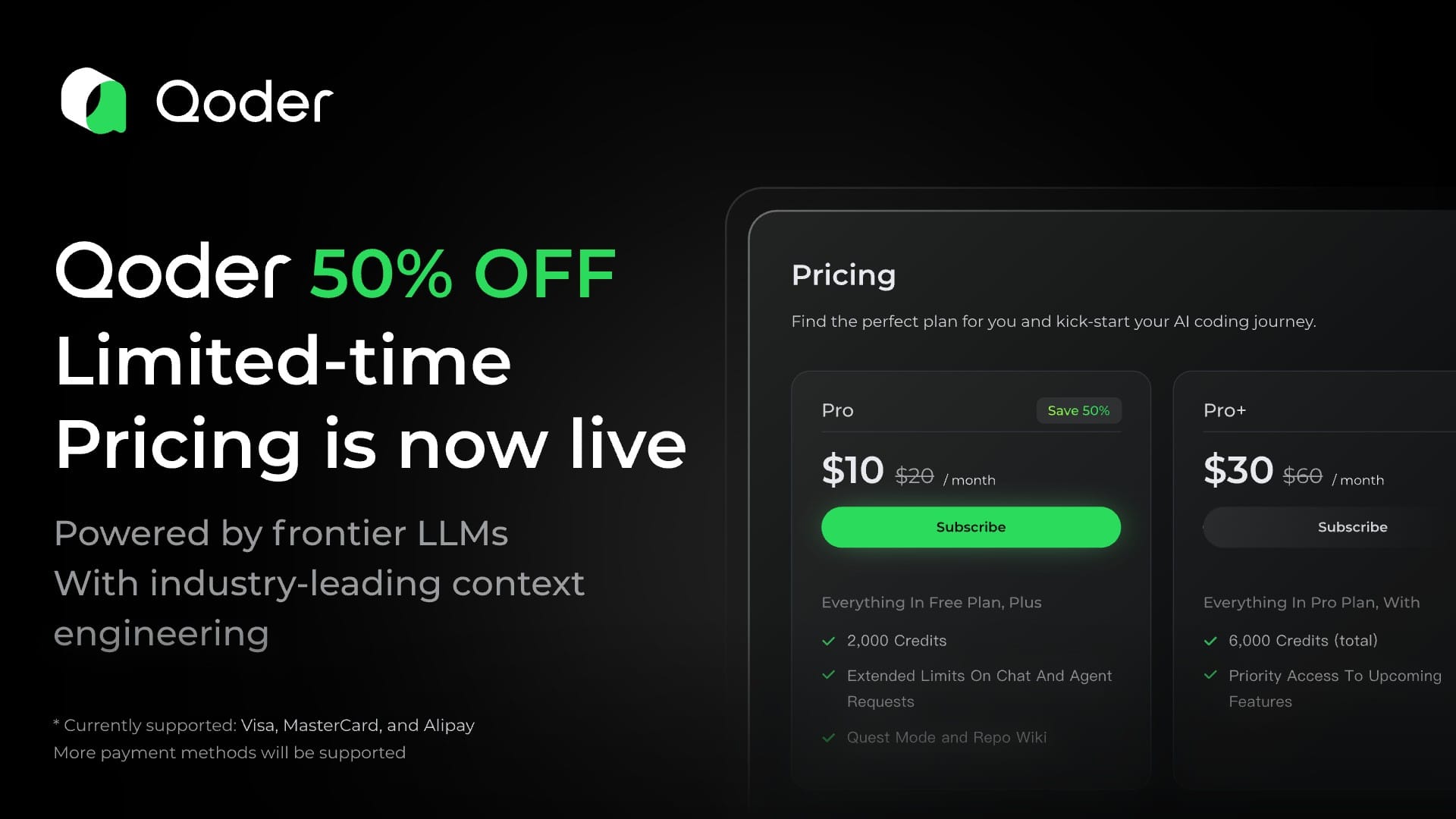
Qoder isn’t just another coding assistant—it’s an agentic coding platform built for real-world software development. In just five days, over 100,000 developers have joined, signaling a shift from “vibe coding” toward project-level engineering intelligence.
Its flagship Repo Wiki turns hidden knowledge into team assets: automatically generating architecture maps, reference graphs, and technical specs that stay in sync with your code. Add context with manual edits, export to Markdown or PDF, and share instantly across teams.
Meanwhile, Smart Context Control puts developers in charge of credits. With “Compact Chat,” Qoder intelligently summarizes conversations, cutting token use while keeping essential context—delivering efficiency and sustainability for long projects.
To celebrate this milestone, Qoder is offering a limited-time 50% discount on Pro and Pro+ plans (new signups and renewals) for AI Secret Readers, making it easier than ever to experience the future of coding.
WORKFLOW
n8n Hits 2.5B as the Developer’s Real Agent Engine
📌 What’s happening: Berlin-based n8n has raised $180 million in Series C funding led by Accel with participation from Nvidia’s investment arm, pushing its valuation to $2.5 billion. The company has transformed from a no-code automation tool into an AI orchestration platform, with over 80% of workflows now embedding agentic logic. CEO Jan Oberhauser says enterprise users like Vodafone have saved millions by using n8n to combine human decisions, deterministic rules, and AI actions within a single workflow.
🧠 How this hits reality: OpenAI’s AgentKit is trying to make workflow automation accessible to everyone by turning complex orchestration into a visual drag-and-drop process. It lowers the barrier for non-technical teams, but the experience still feels early and rigid. n8n, by contrast, chose the developer path. Its JSON-based flow engine lets engineers build agentic automations that once required heavy custom coding, while still plugging into any stack or model. There is no right or wrong direction here, but with AI now amplifying what developers can do, n8n is clearly running ahead in real-world adoption.
🛎️ Key takeaway: n8n thrives because it amplifies human builders instead of sidelining them, and in this era of half-finished autonomy, that’s exactly where the market puts its money.
NVIDIA: n8n Hits 2.5B as the Developer’s Real Agent Engine
📌 What’s happening: Berlin-based n8n has raised $180 million in Series C funding led by Accel with participation from Nvidia’s investment arm, pushing its valuation to $2.5 billion. The company has transformed from a no-code automation tool into an AI orchestration platform, with over 80% of workflows now embedding agentic logic.
TREND
Retail’s AI Gold Rush Turns Aisles into Algorithms
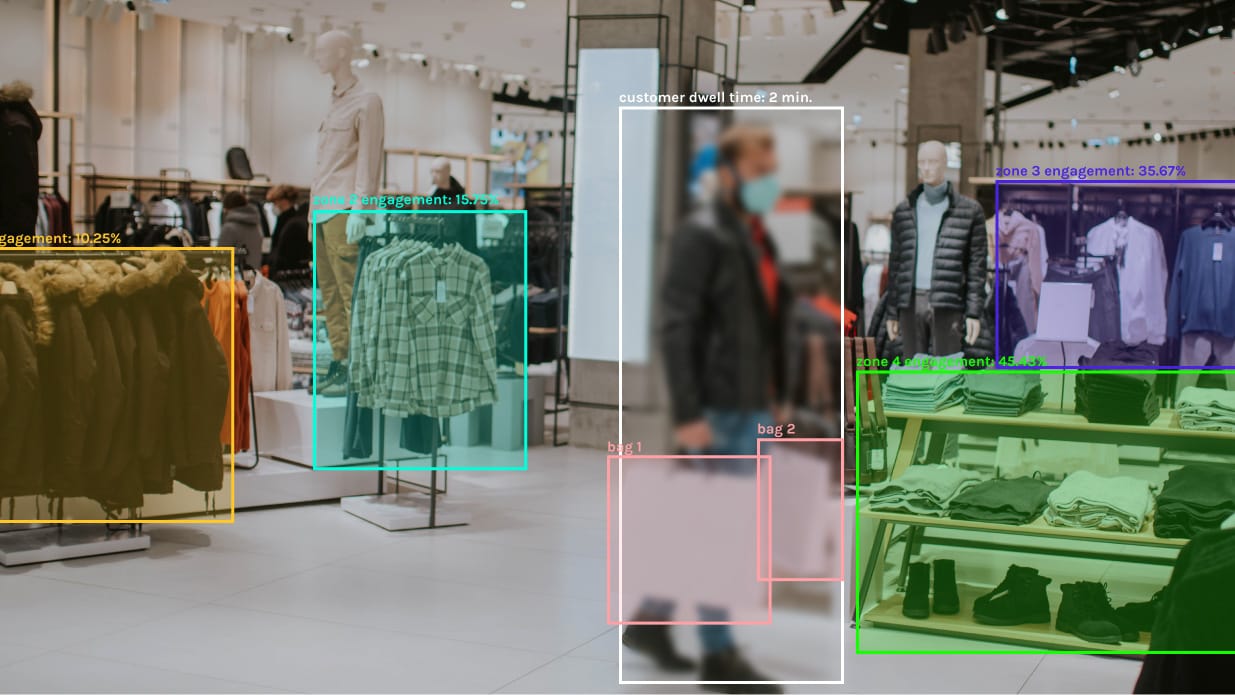
📌 What’s happening: From Gap’s full-stack partnership with Google Cloud to Revolve’s AI stylist and The Body Shop’s predictive supply chain, retail is no longer transforming but being rewritten. In the past week, more than a dozen global retailers unveiled AI integrations that include digital closets, AR try-ons, dynamic shelf pricing, and retail media networks. The message is clear: personalization has become the minimum standard, and data liquidity is now the real logistics advantage.
🧠 How this hits reality: Retail is splitting into two camps. One is rebuilding workflows around AI-native platforms such as Gap, M&S, and Breuninger, while the other is patching AI layers onto legacy systems. The winners are not chasing customer delight; they are pursuing operational elasticity, building systems that can learn, predict, and optimize before human teams even act. Retail media, once treated as an advertising afterthought, has become the core profit engine. Every screen, shelf, and shopping cart is turning into a point of inference.
🛎️ Key takeaway: AI is not only selling to consumers but quietly rewriting how commerce thinks. The smartest retailers are no longer hiring influencers; they are training models that can start shopping for customers before the customers even know what they want.
QUICK HITS
- Microsoft added a Copilot leaderboard to Viva Insights, allowing managers to track team adoption rates but sparking concerns over employee surveillance.
- Microsoft’s Windows Copilot now lets users create Office documents and link Gmail or Outlook directly from chat, turning it into a full productivity hub.
- OpenAI claims its new GPT-5 models are the least politically biased yet, following internal tests amid growing pressure over “woke AI” concerns.
- Teens use AI to fake photos of homeless men inside their homes for TikTok pranks, causing panic and police warnings over safety and wasted resources.
- Musk’s is developing an AI-generated video game powered by “world models” and has recently hired two top Nvidia researchers to accelerate the project.
Microsoft: 🛎️ Mind Commands Reality
Microsoft ’s Windows Copilot now lets users create Office documents and link Gmail or Outlook directly from chat, turning it into a full productivity hub.
TRENDING
Daily AI Launches
- Meku.dev has launched an AI-powered builder for developers that generates and deploys full-stack web apps from a simple prompt.
- Open SaaS has released v2.0, a free, open-source starter kit for building full-stack SaaS apps faster, including auth, payments, and an AI example.
- UNDOOMED has launched an app that hides distracting short-form video feeds like Reels and TikTok while preserving access to messages and posts.
- Getillustrations has launched a Figma plugin that puts its entire library of thousands of ready-to-use illustrations directly into your design workflow.
Featured AI Tools
- 🧪 ChatPlayground.ai compares ChatGPT, Claude, Gemini, and more side-by-side.
- 🎥 KaraVideo unites all AI video models in one place.
- 📚 Heardly is the Fast Way to read Best Book.
- 🪶 CopyOwl is the First AI Research Agent, deep research on any topic in one click.
TOGETHER WITH US
AI Secret Media Group is the world’s #1 AI & Tech Newsletter Group, boasting over 1 million readers from leading companies such as OpenAI, Google, Meta, and Microsoft. Our Newsletter Brands:
- AI: AI Secret
- Tech: Bay Area Letters
We've helped promote over 500 Tech Brands. Will yours be the next?
Email our co-founder Mark directly at [email protected] if the button fails.
Latest Daily Rundowns
 Magna
Magna MagnaMagna
More AI Stories
Ben Magna
Magna Magna
Magna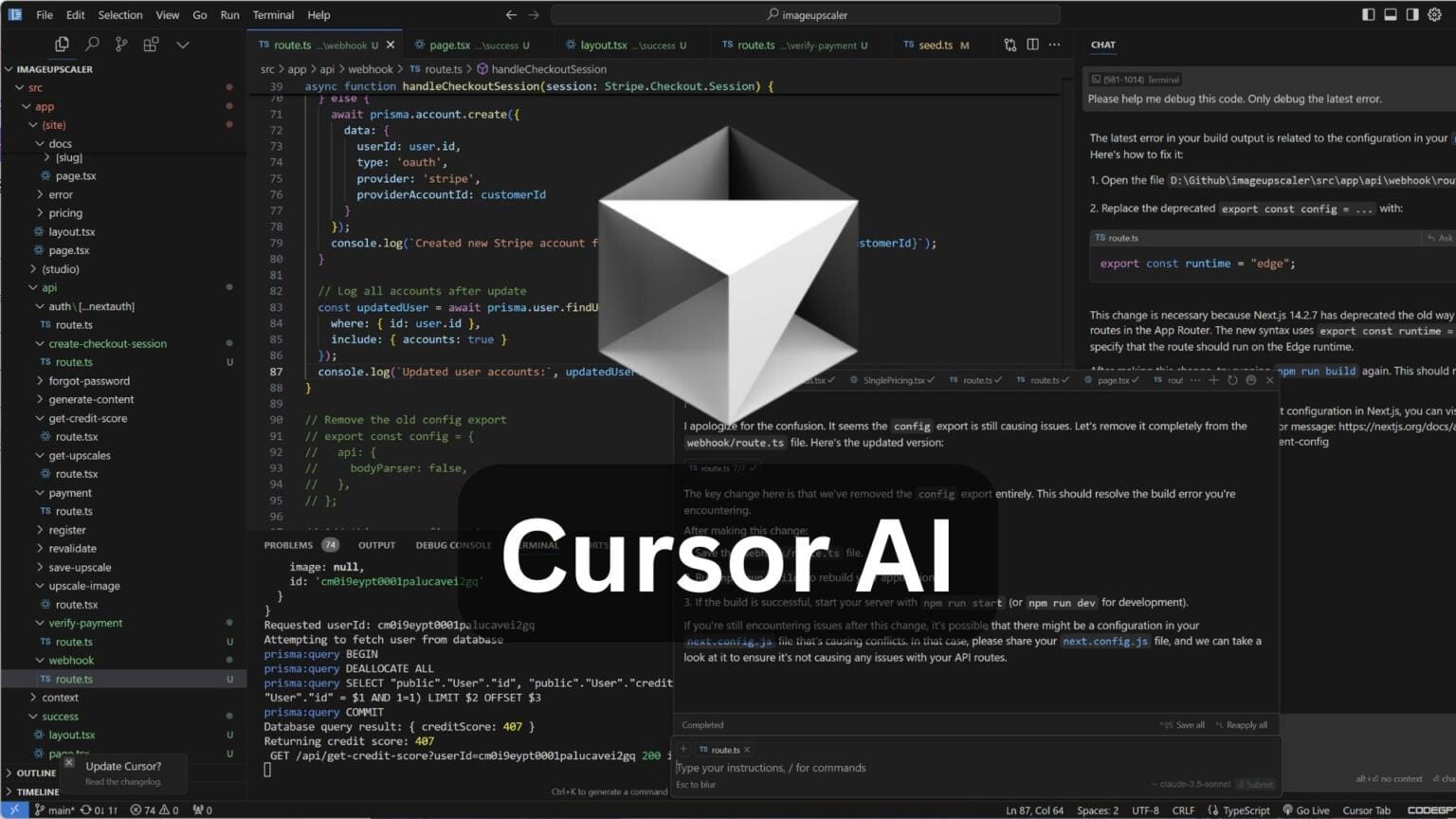
🛎️ A Record "Boom"
Plus: Image War Ignites, AI Takes the Trade
🛎️ Target Joins OpenAI
Plus: Adobe Buys Semrush, Anthropic Plays Both

🛎️ New Superhuman
Plus: AI Command Center, First AI Megafactory
🛎️ Era of Overdrive
Plus: Cursor Builds Brain, Gatekeeper of AGI

🛎️ A New AI Era
Plus: Lilly Joins AI, Barrels to Bytes
🛎️ Mind Commands Reality
Plus: n8n Hits $2.5B, Retail’s AI Gold Rush
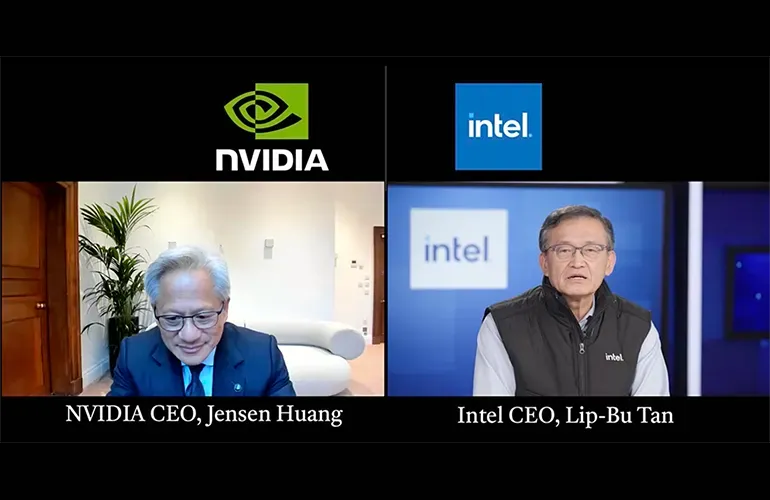
From GPU King to System Architect: Why Nvidia Needs Intel
When Nvidia announced it would spend $5 billion on Intel stock, the market reacted like it was just another mega-cap financial play. Intel’s shares surged
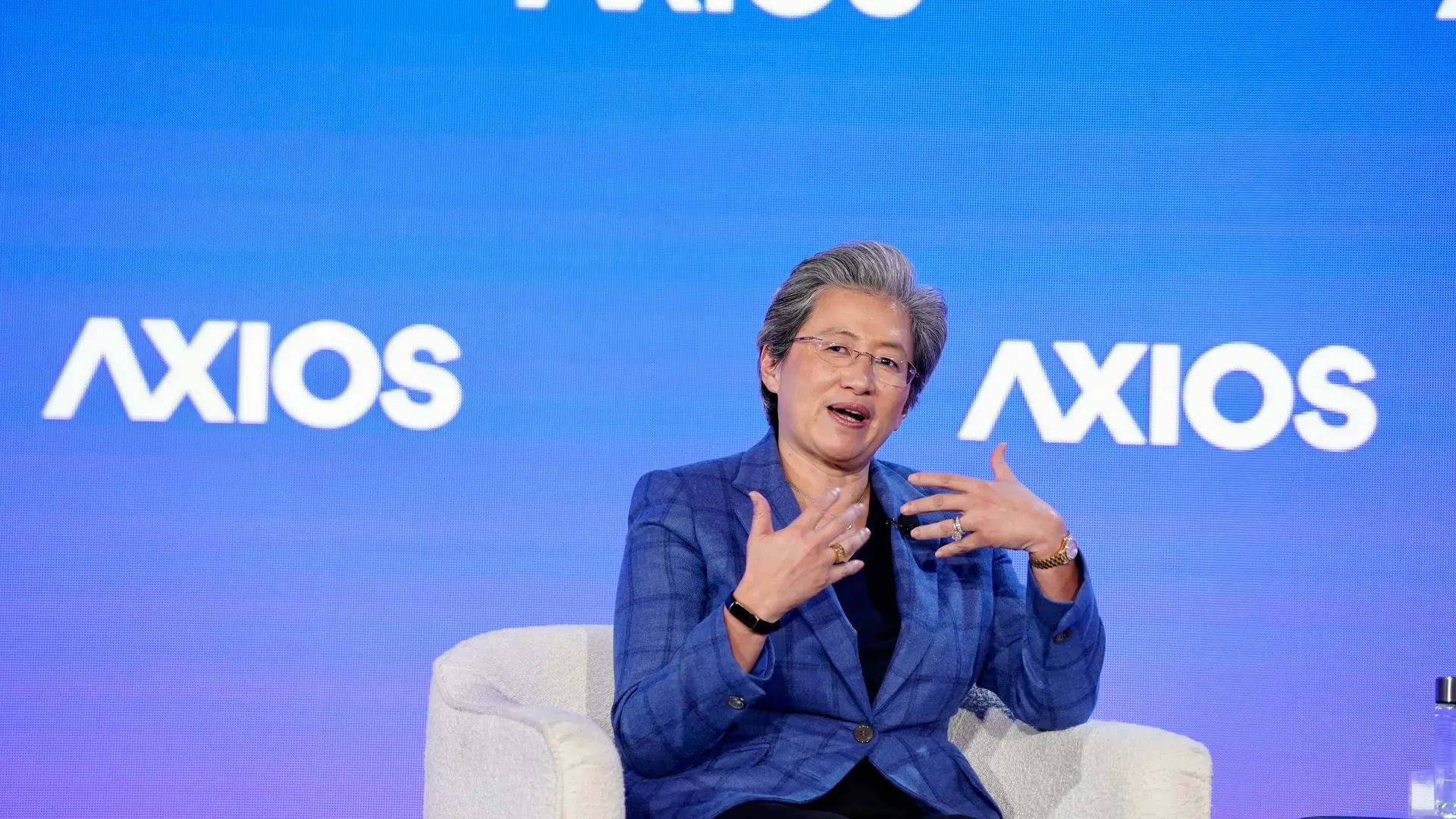
Half a Trillion in Silicon: Lisa Su’s AI Vision
When AMD CEO Lisa Su walked on stage at the Axios AI+ Summit, she didn’t talk about the next model drop or the latest benchmark
Nvidia’s Next $4 Trillion Bet
The Cloud Dream Never Died, It Just Changed Shape