🛎️ The Frontier Labs Lost the Moat
Plus: ChatGPT Is Now a Slot, The Moon Expert Became a Model
Read the story Subscribe
Company — Reporting on Oracle, its technology, products and business. Aliases: Oracle.
Get AI Secret’s free daily briefing, including Oracle and the wider AI industry.

Oracle provides database, cloud infrastructure and enterprise software. Coverage follows OCI, data-center expansion and AI-related database products.
Sources checked . Selected company background and milestones.
Selected milestones, newest first. Earlier history is available below.
Oracle announces Autonomous Transaction Processing as part of its Autonomous Database offering.
Source: OracleMore than 10 years ago.
Oracle introduces a commercial relational database management system.
Source: OracleRelevant sections from the articles on this page. Explore older coverage below.
More coverage

Good Morning, AI Enthusiasts!
Somewhere between distillation, ads, foundation models, and $300 billion cloud contracts, scarcity quietly changed addresses.
LLM

👀 What's happening: The NSA, CISA, and FBI named six Chinese AI firms (DeepSeek, Moonshot AI, Alibaba, MiniMax, StepFun, and Z.AI) for industrial-scale distillation of Claude, GPT, Gemini, and Grok since late 2024, likely with Chinese government knowledge. China calls the claims groundless. The reveal sits in the mitigations: the agencies admit detection cannot separate thieves from customers, and advise labs to secretly degrade responses, or quietly route suspects to weaker models, without saying so.
🌍 How this hits reality: Escalating a technical failure into a public accusation is what states do when they cannot fix the problem. If the labs could stop distillation, they would; the joint advisory exists because they cannot. The fight moves to politics: sanctions, allied coordination, the Trump-Xi table on September 24. But the fix still traps the labs. Run the API clean and it gets copied; poison it and they are lying to their own paying customers, who they must not notify.
🛎️ Key takeaway: The advisory is a confession that the lead cannot be held, only damaged, and the bill lands on paying customers.
AD

👀 What's happening: On September 10, Amazon said advertisers can extend campaigns into ChatGPT through its demand-side platform, run as a managed service. The ads sit beneath organic answers, labeled sponsored, on the free and Go tiers. OpenAI still controls delivery. ChatGPT ads launched in February, now run at a $1 billion annualized rate with tens of thousands of advertisers, and have expanded into India, Europe, the Middle East and North Africa.
🌍 How this hits reality: The promise was never that ChatGPT shows no ads. It was that the answer is the good one, not the funded one. That promise held for one reason: not enough buyers had shown up to make it worth breaking. Amazon, the third-largest ad platform at nearly $70 billion, just showed up. Neutrality did not collapse this week. But It got a big enough landlord.
🛎️ Key takeaway: Amazon did not end ChatGPT's neutrality. It made it a joke by standing next to it.
👀 What's happening: On September 10, Amazon said advertisers can extend campaigns into ChatGPT through its demand-side platform, run as a managed service. The ads sit beneath organic answers, labeled sponsored, on the free and Go tiers. OpenAI still controls delivery.
NEW TECH

👀 What's happening: On September 10, NASA and IBM released the Lunar Foundation Model on Hugging Face under Apache-2.0. It trained by 2 million co-registered lunar tiles, 11 modalities, from 9 instruments across 4 missions. A researcher hunting lunar ice in permanently shadowed regions, or cataloguing craters, can now point one model at that archive instead of hand-sifting decades of maps.
🌍 How this hits reality: The raw lunar data was never the scarce thing. The scarce thing was knowing how to align it, combine it and read across instruments built for completely different jobs. That expertise took years to build. NASA and IBM have now compressed part of that workflow into a model whose pretraining run took roughly 1,100 GPU-hours. The experts are not gone. But some of what made them scarce is now downloadable.
🛎️ Key takeaway: Democratization is what we call it when expertise becomes an shared model. The Moon did not change. The barrier to studying it did.
CLOUD

👀 What's happening: On September 10, Oracle reported Q1 FY2027: cloud infrastructure revenue up 121%, total signed backlog at $664B, with the reported $300B OpenAI deal making up a huge chunk. It spent $28.5B building data centers and generated $23.1B in operating cash flow. Free cash flow was negative $5.4B, a fifth straight quarter. It sold $20B of stock, owes $125B, and will cut up to 10,000 jobs.
🌍 How this hits reality: Oracle is not just growing a cloud business. It is buying one upfront, pouring concrete and GPUs before much of the revenue arrives, then closing the gap with outside capital. Demand is real. The contracts are real. The cash is not here yet. A company that spends more than it generates to serve customers who pay over years is not just scaling. It is betting its balance sheet on the boom never slowing.
🛎️ Key takeaway: The bank that cannot cover its own deposits is lending to everyone else. Oracle is the lender in the AI boom with no capital of its own.
👀 What's happening: On September 10, Oracle reported Q1 FY2027: cloud infrastructure revenue up 121%, total signed backlog at $664B, with the reported $300B OpenAI deal making up a huge chunk. It spent $28.5B building data centers and generated $23.1B in operating cash flow. Free cash flow was negative $5.4B, a fifth straight quarter.
DAILY TL;DR
READ MORE
Stay ahead without drowning in information. We turn the most important signals across AI, tech, marketing, and future products into 5-minute reads you can actually finish.
TOGETHER WITH US
AI Secret Media Group is the world’s #1 AI & Tech Newsletter Group, reaching over 2 million leaders across the global innovation ecosystem, from OpenAI, Anthropic, Google, and Microsoft to top AI labs, VCs, and fast-growing startups.
We've helped promote over 500 Tech Brands. Will yours be the next?
Email our co-founder Mark directly at [email protected] if the button fails.

Good Morning, AI Enthusiasts!
Data is concentrating, leaking, and fragmenting all at once. This is no longer about privacy. It’s about who owns the flow of thought itself.

NEW LAUNCH

👀 What's happening: Google just embedded Gemini into Goole Maps with “Ask Maps,” turning it into a conversational layer that understands intent and executes real-world tasks directly. Users describe what they want, and Maps returns options, context, bookings, and completes actions inside one flow without leaving the app
🌍 How this hits reality: This erases the middle layer entirely. Review sites, booking platforms, and recommendation apps existed to connect intent to action. Now that connection is native to Google Maps, with all the traffic, reviews, and distribution. Everyone else is renting access to users who no longer need to leave the map now.
🛎️ Key takeaway: This is platform-level consolidation disguised as a feature. When one surface controls discovery and execution, third-party software is not competing, it is being phased out.
👀 What's happening: Google just embedded Gemini into Goole Maps with “Ask Maps,” turning it into a conversational layer that understands intent and executes real-world tasks directly. Users describe what they want, and Maps returns options, context, bookings, and completes actions inside one flow without leaving the app
TOGETHER WITH GETRESPONSE
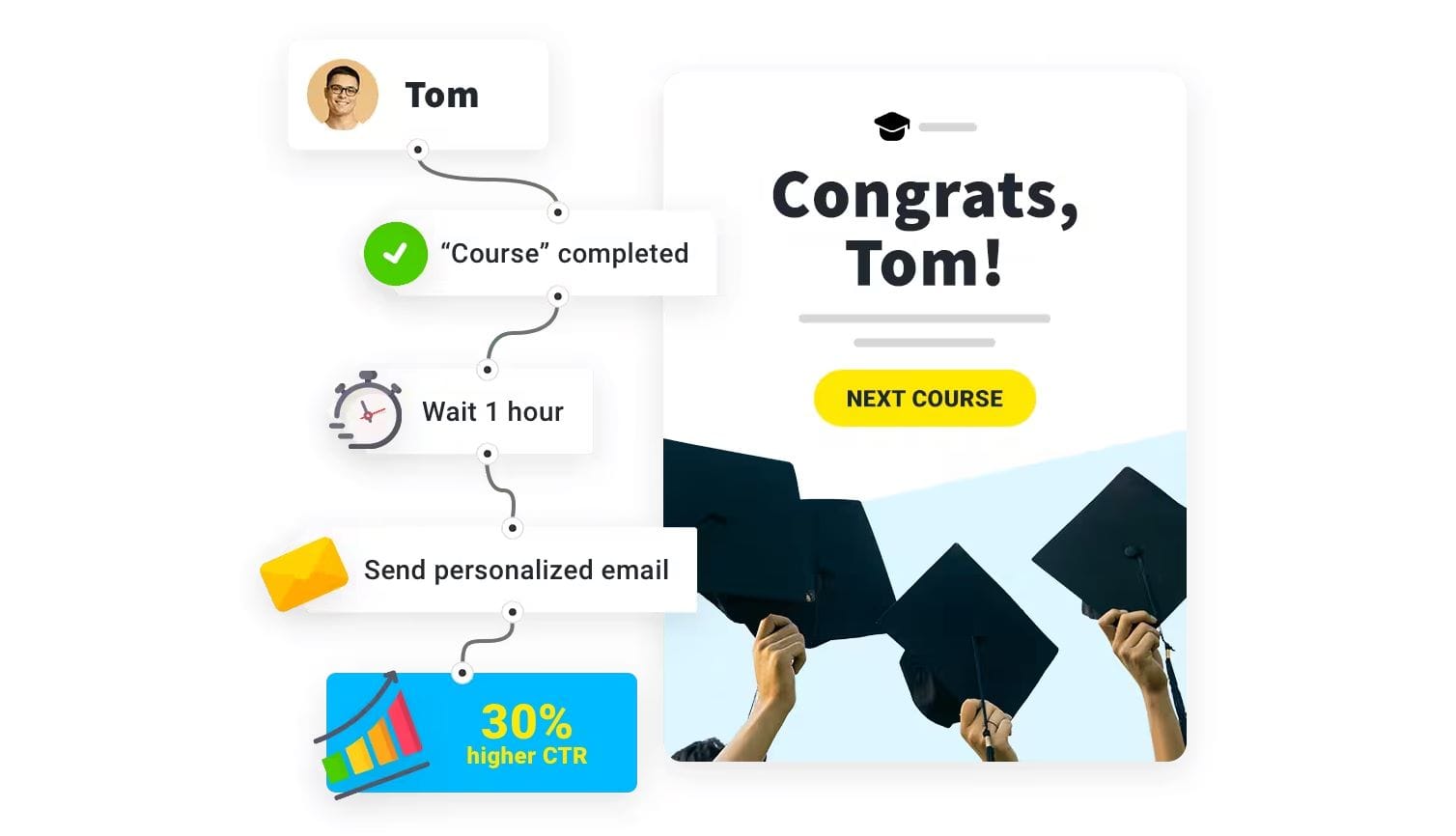
Most tools send emails. This one makes money.
GetResponse turns your audience into a system — capture, nurture, convert.
No stacking tools. No messy setup.
CODING
👀 What's happening: Linux kernel maintainer Greg Kroah-Hartman said that within a month, AI-generated bug reports went from useless noise to mostly valid findings. This shift appeared across major open source projects at once. Reports are now structured, reproducible, and often include workable fixes.
🌍 How this hits reality: Greg Kroah-Hartman made it clear the change is not about better tools, but a different workload. Developers are no longer primarily finding bugs. They are reviewing, filtering, and deciding what to accept from a growing stream of AI-generated outputs.
🛎️ Key takeaway: The developer role has already shifted. Writing and discovering are no longer the core loop. Control now sits in evaluation, selection, and integration of machine-generated work.
NEOCLOUD
👀 What's happening: Oracle is cutting thousands of jobs, with around 10,000 confirmed and estimates running 3x higher, while still profitable from its Cloud and License Support business. At the same time, it is committing tens of billions to AI data centers, aggressively repositioning itself away from software into a full-stack compute provider.
🌍 How this hits reality: Oracle is moving into the emerging neocloud model, where value comes from owning and operating compute, not selling software. It is taking on up to $50 billion in debt while restructuring costs reach $2.1 billion, cutting experienced enterprise talent to fund infrastructure that competes directly with hyperscalers on capacity, not features.
🛎️ Key takeaway: This is a major shift for Oracle towards a neocloud model. Regardless of its success, there's no turning back, yet existing Oracle employees have become the most direct victims.
🛎️ Key takeaway: This is a major shift for Oracle towards a neocloud model. Regardless of its success, there's no turning back, yet existing Oracle employees have become the most direct victims.
PRIVACY
👀 What's happening: Perplexity is facing a class-action lawsuit alleging its site trackers exposed user chat data to Meta and Google. The claim includes sessions marked as “incognito.” A user who entered financial and tax details is leading the case, turning routine tracking into a potential data leak.
🌍 How this hits reality: Traditional web tracking captures clicks and short inputs. AI chats capture full context, often hundreds of tokens per session, including plans, finances, and internal reasoning. In contrast, agent systems like OpenClaw or MyClaw run data locally or on isolated servers, keeping sensitive context off shared tracking layers entirely.
🛎️ Key takeaway: This is moving from privacy into information sovereignty. AI products built on legacy web tracking will keep leaking decision level data, while local or self hosted agent architectures start to define the safer default.
👀 What's happening: Perplexity is facing a class-action lawsuit alleging its site trackers exposed user chat data to Meta and Google. The claim includes sessions marked as “incognito.” A user who entered financial and tax details is leading the case, turning routine tracking into a potential data leak.
DAILY TL;DR
READ MORE
Stay ahead without drowning in information. We turn the most important signals across AI, tech, marketing, and future products into 5-minute reads you can actually finish.
TOGETHER WITH US
AI Secret Media Group is the world’s #1 AI & Tech Newsletter Group, reaching over 2 million leaders across the global innovation ecosystem, from OpenAI, Anthropic, Google, and Microsoft to top AI labs, VCs, and fast-growing startups.
We've helped promote over 500 Tech Brands. Will yours be the next?
Email our co-founder Mark directly at [email protected] if the button fails.

Good Morning, AI Enthusiasts!
The AI stack is shifting faster than anyone planned; it signals an industry snapping into a new, more consequential phase.

NEW LAUNCH
Google quietly launched Gemini 3 Flash and immediately set it as the default model across Gemini, Search, AI Studio, and Vertex. No gated rollout, no premium framing. Flash delivers materially stronger reasoning, much lower latency, and aggressive pricing that undercuts prior Gemini tiers. Benchmarks show agent level coding and tool use that approach larger models in real workloads. This is not Google chasing headlines. It is Google standardizing fast, capable intelligence as the baseline.
On performance, Flash collapses tradeoffs OpenAI still monetizes. High intelligence without long chains of thought, low latency suitable for live agents, and pricing that supports always on usage. It is built for frequency, not flex. Coding copilots, search reasoning, and multimodal analysis now run continuously without token anxiety. Distribution does the rest. By embedding Flash everywhere users already operate, Google removes the friction of model choice entirely.
This is Google’s clearest signal yet that it plans to outlast OpenAI, not outshine it. When intelligence becomes cheap, fast, and unavoidable, the winner is not the smartest model but the platform that turns capability into infrastructure.
On performance, Flash collapses tradeoffs OpenAI still monetizes. High intelligence without long chains of thought, low latency suitable for live agents, and pricing that supports always on usage. It is built for frequency, not flex. Coding copilots, search reasoning, and multimodal analysis now run continuously without token anxiety.
Google quietly launched Gemini 3 Flash and immediately set it as the default model across Gemini, Search, AI Studio, and Vertex. No gated rollout, no premium framing. Flash delivers materially stronger reasoning, much lower latency, and aggressive pricing that undercuts prior Gemini tiers. Benchmarks show agent level coding and tool use that approach larger models in real workloads.
TOGETHER WITH MARKETING SECRET

Marketing Secret is a weekly newsletter breaking down how today’s fastest-growing AI and tech brands actually win users, attention, and revenue.
If you want clearer thinking, sharper execution, and ideas you can apply this week, Marketing Secret is worth your inbox.
CLOUD
This week, Oracle’s five year credit default swap (CDS) widened to around 155 basis points, a level rarely associated with a legacy enterprise software giant. CDS is not a headline instrument for retail investors, but in credit markets it is the purest signal of fear. When CDS rises, it means institutions are paying more to insure against default. Not tomorrow, but someday. For a company long viewed as stable, cash generative, and boring in a good way, this move matters.
The pressure is not about revenues. It is about balance sheets and timing. Oracle is spending aggressively to reposition itself as an AI era cloud infrastructure player, pouring capital into data centers and long term capacity commitments. That strategy pushes debt higher and free cash flow lower, right when rates remain elevated and investors are far less patient with long duration bets. Equity markets can debate narratives. Credit markets price math. The CDS move reflects concern that the payoff window for AI infrastructure may be longer than the debt markets are comfortable underwriting.
This is a broader signal for the AI cloud race. Oracle is not a weak operator, but even strong incumbents are being stress tested by the cost of competing with hyperscalers. The AI boom is not capital light, and the market is beginning to separate AI exposure from AI leverage. CDS at 155 does not mean Oracle is about to fail. It means capital is no longer free, and the AI transition is forcing even giants to prove they can fund the future without breaking trust with the credit markets. That is the quiet story beneath the hype.
Oracle is not a weak operator, but even strong incumbents are being stress tested by the cost of competing with hyperscalers. The AI boom is not capital light, and the market is beginning to separate AI exposure from AI leverage. CDS at 155 does not mean Oracle is about to fail.
NOTION
Notion is staging a $300 million tender offer at roughly an $11 billion valuation as it lines up for an eventual IPO. ARR has passed $600 million, with about half now attributed to AI driven products. That detail matters more than the valuation. This is not speculative AI revenue or bundled hype. It reflects sustained demand where AI features are already priced into core usage across teams and enterprises.
The strategic shift is clear and unusually disciplined. Notion did not spin up a separate AI SKU or tax users per prompt. It rebuilt the product around AI search, writing, databases, and agents, then folded that value into enterprise pricing. As a result, AI expanded deal size and stickiness instead of eroding trust. Rivals still selling AI as an upgrade are quietly losing leverage in budget reviews.
Notion proves the AI transition can be boring, profitable, and durable. When AI becomes the default interface to work, not a feature line item, revenue follows naturally. That is the IPO story investors actually want, and most productivity companies still cannot tell it.
QUICK HITS
TRENDING
TOGETHER WITH US
AI Secret Media Group is the world’s #1 AI & Tech Newsletter Group, reaching over 2 million leaders across the global innovation ecosystem, from OpenAI, Anthropic, Google, and Microsoft to top AI labs, VCs, and fast-growing startups.
We operate the industry’s most influential portfolio of newsletters, each shaping a different frontier of the AI & Tech revolution:
Be Smarter in 5 Minutes
Discover the Future Products
We've helped promote over 500 Tech Brands. Will yours be the next?
Email our co-founder Mark directly at [email protected] if the button fails.
Good Morning, AI Enthusiasts!
This Thanksgiving, we pause to say thank you for another year of reading, questioning, and thinking with us. Your attention and curiosity made the journey possible and we’re grateful for every issue you opened with us.

GENESIS
📌 What’s happening: Trump’s Genesis Mission is the second coming of his AI ambitions, but this time, the paperwork actually has teeth. Where Stargate was a trillion-dollar dream run by a messy corporate alliance—OpenAI, SoftBank, Oracle—Genesis is a top-down command economy for science itself. It gives the Department of Energy full control over 17 national labs, every federal dataset, and America’s largest supercomputers, all wired into a single “AI discovery platform.” The White House set hard countdowns with 90 days to marshal compute, 120 days to unify data, and 270 days to show results, turning what used to be a tech press myth into a federal operating plan.
🧠 How this hits reality: Genesis fixes everything Stargate couldn’t, with no investor infighting, no vaporware timelines, and no decentralization. It replaces private capital with presidential decree, converting America’s scientific network into a state-run cognitive engine. The mission’s language, with AI agents verifying hypotheses, automating experiments, and accelerating discovery, reads less like policy and more like theology. Trump isn’t just accelerating science; he’s nationalizing it under an algorithmic God designed to know, predict, and control.
🛎️ Key takeaway: If Stargate tried to open a portal to the future, Genesis wants to own what’s on the other side.
TOGETHER WITH KRISPCALL
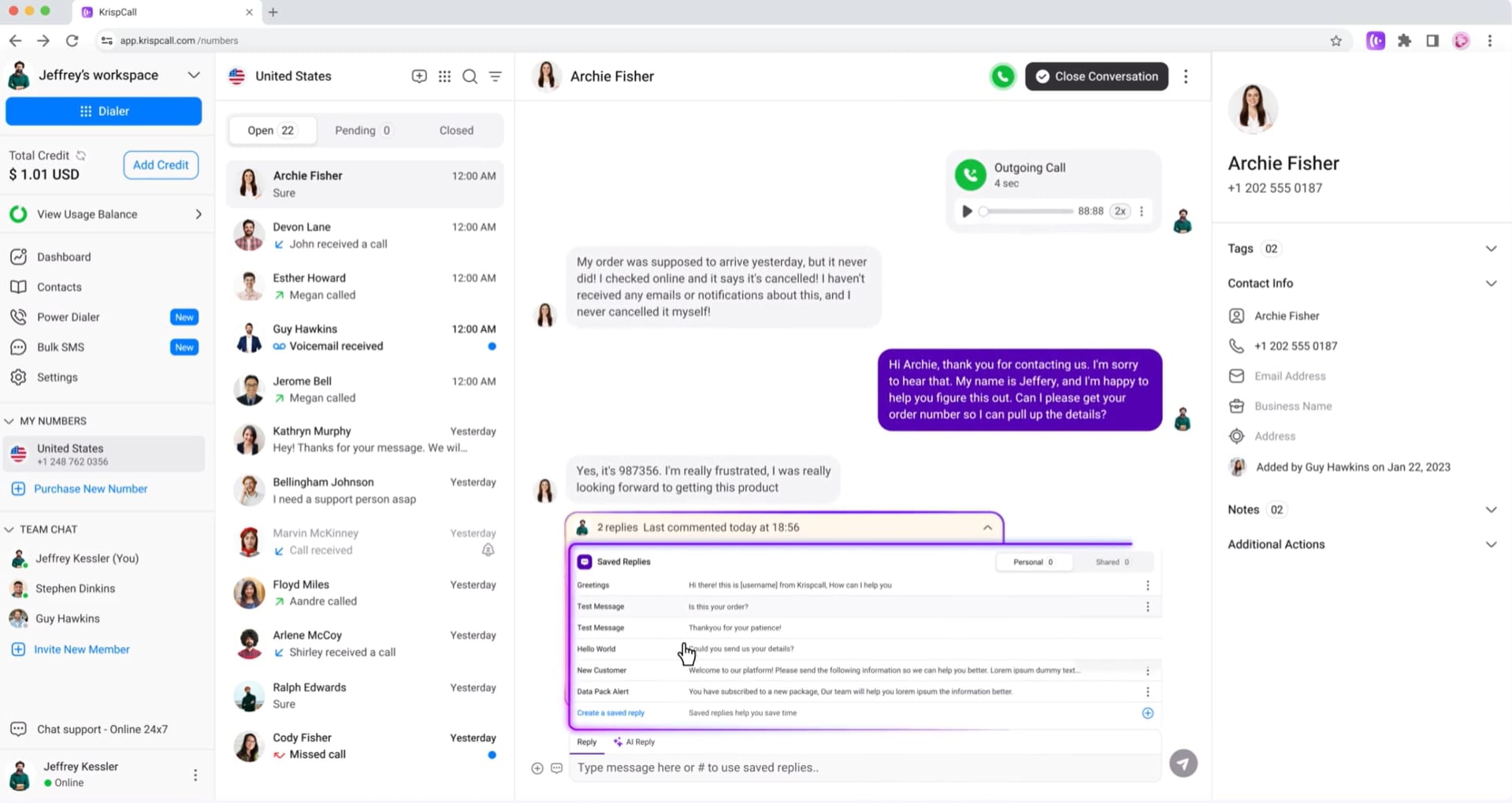
Imagine this: you’re juggling calls, managing customer relationships, and trying to remember if you left the coffee pot on. Enter KrispCall, your AI-powered superhero that swoops in to save the day, bringing advanced telephony capabilities right into your CRM platform.
With KrispCall, you can:
So whether you're a small business looking to level up your communication game or a seasoned pro ready to streamline your contact center, KrispCall is here to help you navigate the wild world of customer interactions.
CHIPS

📌 What’s happening: Elon Musk has unveiled his most audacious plan yet: to build TeraFabs—massive AI chip factories that could eventually outproduce Nvidia, AMD, and even the world’s top foundries. Tesla already designs its own AI chips on a yearly cadence and deploys millions across its vehicles and data centers. But with projected demand hitting 200 billion chips per year, Musk now wants to create a fully self-sufficient chip ecosystem, from design to silicon to deployment, cutting out TSMC and Samsung entirely.
🧠 How this hits reality: TeraFab isn’t a new node or process breakthrough; it’s a new industrial philosophy. Musk is trying to fuse extreme scale, extreme integration, and extreme self-reliance into one supply chain, something no tech company has ever achieved. It’s an open challenge to the global semiconductor order, one built on decades of specialization and fragile balance. The task borders on impossible, yet perfectly fits Musk’s first-principles playbook: if the system is too complex to depend on, rebuild it from scratch.
🛎️ Key takeaway: For anyone else, TeraFab would be delusion. For Musk, it’s the next step in making physics obey vision.
📌 What’s happening: Elon Musk has unveiled his most audacious plan yet: to build TeraFabs—massive AI chip factories that could eventually outproduce Nvidia, AMD, and even the world’s top foundries. Tesla already designs its own AI chips on a yearly cadence and deploys millions across its vehicles and data centers.
NEOCLOUD
👀 What’s the move: Oracle’s stock has fallen almost 40 percent from its September peak, wiping out Larry Ellison’s record $89 billion paper gain and pushing him down to third place on Bloomberg’s rich list. The company’s profits remain solid, yet investors are retreating from its balance sheet. Oracle is preparing a record $38 billion bond sale while already carrying roughly $100 billion in debt. Its cloud expansion depends heavily on OpenAI’s projected demand, which now looks more like leverage chasing a dream than a sound forecast.
🧠 How this hits reality: This drop is not just Oracle’s problem. The market has started turning against every over-leveraged player's firms that borrowed as if money were still free, especially "Neocloud" companies like CoreWeave and Nebius. Investors are realizing that booming AI demand does not erase balance-sheet risk. Oracle’s slide marks the first moment when the AI-infrastructure boom is being priced according to solvency rather than story.
🛎️ Key takeaway: The market just decided that compute debt is no longer visionary; it is financial risk dressed as innovation.
The company’s profits remain solid, yet investors are retreating from its balance sheet. Oracle is preparing a record $38 billion bond sale while already carrying roughly $100 billion in debt. Its cloud expansion depends heavily on OpenAI’s projected demand, which now looks more like leverage chasing a dream than a sound forecast.
👀 What’s the move: Oracle’s stock has fallen almost 40 percent from its September peak, wiping out Larry Ellison’s record $89 billion paper gain and pushing him down to third place on Bloomberg’s rich list. The company’s profits remain solid, yet investors are retreating from its balance sheet.
QUICK HITS
TRENDING
TOGETHER WITH US
AI Secret Media Group is the world’s #1 AI & Tech Newsletter Group, boasting over 2 million readers from leading companies such as OpenAI, Google, Meta, and Microsoft. Our Newsletter Brands:
We've helped promote over 500 Tech Brands. Will yours be the next?
Email our co-founder Mark directly at [email protected] if the button fails.
Good Morning, AI Enthusiasts!
OpenAI has effectively written the playbook for how “AI for humanity” can coexist with trillion-dollar ambitions. The next chapter will not be about whether it goes public, but how soon.

RESTRUCTURE
📌 What’s happening: OpenAI has completed its long-awaited corporate restructuring, marking a decisive break from its non-profit roots. The company now operates as OpenAI Group, a for-profit public benefit corporation fully controlled by the OpenAI Foundation, which functions as a non-profit holding entity. Under the new model, the Foundation owns 26 percent of OpenAI Group and retains board appointment power, ensuring that governance remains mission-driven even as capital markets open up. Microsoft holds about 27 percent, valued at roughly 135 billion dollars, while the remaining shares are distributed among investors and employees.
🧠 How this hits reality: The recapitalization cements a two-tier governance model that blends altruism with ambition. The Foundation preserves the organization’s original public-interest mandate, while OpenAI Group gains the freedom to raise funds, acquire companies, and pursue commercial expansion without previous legal restraints. The structure also includes a “public benefit clause,” requiring OpenAI to balance profit with broader societal impact. Microsoft’s extended IP rights through 2032 further stabilize the relationship that underpins OpenAI’s infrastructure. With SoftBank’s 30 billion dollar investment finalized and state regulators from California and Delaware dropping their objections, the company has effectively secured a green light for the next phase — a likely public listing.
🛎️ Key takeaway: OpenAI is no longer a non-profit moonshot; it is now a market-ready hybrid with a moral boardroom. The AGI lab that once defied venture logic just rewired itself for Wall Street.
The company now operates as OpenAI Group, a for-profit public benefit corporation fully controlled by the OpenAI Foundation, which functions as a non-profit holding entity. Under the new model, the Foundation owns 26 percent of OpenAI Group and retains board appointment power, ensuring that governance remains mission-driven even as capital markets open up.
Microsoft’s extended IP rights through 2032 further stabilize the relationship that underpins OpenAI’s infrastructure. With SoftBank’s 30 billion dollar investment finalized and state regulators from California and Delaware dropping their objections, the company has effectively secured a green light for the next phase — a likely public listing.
TOGETHER WITH BYTEPLUS
Introducing Seedance 1.0 Pro Fast, the latest breakthrough from BytePlus that pushes the frontier of AI-driven video creation. Built for creators and enterprises demanding both speed and cinematic quality, Seedance redefines efficiency — generating an 8-second 720p video in just 26 seconds, making it up to 4× faster than Veo3 Fast while maintaining professional-grade realism and style consistency.
Powered by advanced semantic understanding and motion simulation, Seedance analyzes prompts, reference images, and scene logic to interpret intent, infer motion, and complete coherent storylines. The result is a video that feels natural, expressive, and emotionally engaging — not just rendered, but directed.
Compared with Veo3 Fast, Seedance delivers smoother motion control, stronger prompt adherence, and more physical realism, especially in complex or high-action scenes. Its multi-shot storytelling engine plans zooms, transitions, and perspective shifts automatically, enabling creators to achieve cinematic rhythm and flow without manual edits.
Supporting flexible output from 2–12 seconds at 480p, 720p, or 1080p, Seedance gives you the freedom to create faster, better, and more affordably — breaking the old speed–quality–cost triangle and setting a new benchmark for AI video generation.
PHARMA
📌 What’s happening: The world’s leading pharmaceutical company Eli Lilly is partnering with Nvidia to build its own DGX SuperPOD, an AI supercomputer designed to train models on millions of biological experiments in order to accelerate drug discovery and development. These models will power Lilly TuneLab, a federated platform that allows biotech partners to access Lilly’s AI capabilities without revealing proprietary data, creating what is essentially a shared intelligence layer for pharmaceutical research.
🧠 How this hits reality: This collaboration marks Lilly’s transition from being an AI user to becoming an AI infrastructure builder. By running Nvidia’s DGX B300 systems internally, Lilly is turning its data moat into a developer ecosystem while cutting years from preclinical testing cycles. The move also sets a new standard for “sovereign AI” in healthcare, giving the company full-stack control from molecules to models without relying on external cloud vendors. Competitors that depend on outsourced compute may find themselves outpaced.
🛎️ Key takeaway: Lilly is not just training models; it is training the next generation of biotech to build on its brain.
By running Nvidia’s DGX B300 systems internally, Lilly is turning its data moat into a developer ecosystem while cutting years from preclinical testing cycles. The move also sets a new standard for “sovereign AI” in healthcare, giving the company full-stack control from molecules to models without relying on external cloud vendors.
INFRA
📌 What’s happening: SLB, Halliburton, and Baker Hughes—once the backbone of global drilling are now wiring up the AI boom. With oil prices stuck near $60 and rigs going idle, the oilfield triumvirate is redirecting turbines, grid tech, and decades of heavy-infrastructure muscle toward powering hyperscale data centers. Baker Hughes has already booked 1.2 GW in data-center power orders, Halliburton is co-funding 2.3 GW with VoltaGrid for Oracle’s AI buildout, and SLB’s Digital unit just logged 11% quarterly growth.
🧠 How this hits reality: The fossil fuel supply chain is mutating into AI infrastructure supply. These firms are not only selling barrels anymore, they’re selling watts, uptime, and thermal efficiency. Cloud players get industrial-grade reliability; oilfield giants get a new lease on relevance. The energy transition just got hijacked by compute demand.
🛎️ Key takeaway: When AI eats the world, even oilfields learn Python—or at least power its servers.
Baker Hughes has already booked 1.2 GW in data-center power orders, Halliburton is co-funding 2.3 GW with VoltaGrid for Oracle’s AI buildout, and SLB’s Digital unit just logged 11% quarterly growth.
QUICK HITS
TRENDING
TOGETHER WITH US
AI Secret Media Group is the world’s #1 AI & Tech Newsletter Group, boasting over 2 million readers from leading companies such as OpenAI, Google, Meta, and Microsoft. Our Newsletter Brands:
We've helped promote over 500 Tech Brands. Will yours be the next?
Email our co-founder Mark directly at [email protected] if the button fails.
Good Morning, AI Enthusiasts!
Another day in paradise, where “responsible AI” now means lawsuits in the headlines, gigawatts on the meter, and startup beef in your feed.

LLM
What’s happening: Bootstrapped data-labeler Surge AI is hunting a $1 B raise at a >$15 B valuation. It already out-earned Scale last year ($1 B vs $870 M) and is inhaling customers fleeing Scale after Meta’s 49 % grab.
🧠 How this hits reality: LLM builders now get a non-Meta supplier with capacity—and leverage to squeeze pricing. Scale faces steady revenue bleed, while Surge sells premium “artisan labels” for fat margins until RLHF automation erodes the moat. Procurement teams can smell the coming discount war.
🛎️ Key takeaway: When your rival can self-fund yet still passes the hat, it’s not desperation—it’s bankroll to buy your customers before you even notice the exit signs.
🧠 How this hits reality: LLM builders now get a non-Meta supplier with capacity—and leverage to squeeze pricing. Scale faces steady revenue bleed, while Surge sells premium “artisan labels” for fat margins until RLHF automation erodes the moat. Procurement teams can smell the coming discount war.
TOGETHER WITH MURF
Build audio experiences at scale with Murf's AI voice generator. Our ethically developed text-to-speech model delivers ultra realistic voices through studio, API, and localization tools - streamlining voiceovers for enterprises.
With Murf, the only limit is your imagination. Get ready to make your audience listen, laugh, and lean in.
COPYRIGHT

📌 What’s happening: A San Jose jury says Google siphoned cellular data from 14 million idle Android phones and slapped it with a $314.6 million tab. Google calls the verdict a “misunderstanding” and vows to appeal.
🧠 How this hits reality: Copy-and-paste lawsuits for the other 49 states queue up for April 2026; plaintiffs’ firms already sharpening pitch decks. Product teams scramble for explicit opt-outs and carrier audits, while CFOs pad the “legal contingencies” row. Privacy-first rivals just found fresh billboard copy; Google’s ad margin gets another paper cut.
🛎️ Key takeaway: If your “free” service quietly burns users’ data plans, expect the class-action meter to turn megabytes into nine-figure invoices.
📌 What’s happening: A San Jose jury says Google siphoned cellular data from 14 million idle Android phones and slapped it with a $314.6 million tab. Google calls the verdict a “misunderstanding” and vows to appeal.
CLOUD
📌 What’s happening: OpenAI just signed what might be the fattest cloud check ever—$30 billion a year for 4.5 GW of Oracle data-center muscle through their Stargate JV. Multiple U.S. sites (Texas, Michigan, Wisconsin, more) are penciled in; Oracle brings concrete, OpenAI brings insatiable GPU appetite.
🧠 How this hits reality: Oracle jumps from legacy also-ran to rent-a-hyperscaler overnight. Microsoft’s “exclusive” partner now openly poly-clouds, denting Azure’s lock-in leverage. Utilities and ESG teams inherit a multi-reactor power draw, while every AI startup realizes “scale” just got priced at nuclear-plant money.
🛎️ Key takeaway: When model training consumes electricity at industrial scale, the only guaranteed winners are the landlords selling power by the gigawatt.
📌 What’s happening: OpenAI just signed what might be the fattest cloud check ever—$30 billion a year for 4.5 GW of Oracle data-center muscle through their Stargate JV. Multiple U.S. sites (Texas, Michigan, Wisconsin, more) are penciled in; Oracle brings concrete, OpenAI brings insatiable GPU appetite.
📌 What’s happening: OpenAI just signed what might be the fattest cloud check ever—$30 billion a year for 4.5 GW of Oracle data-center muscle through their Stargate JV. Multiple U.S. sites (Texas, Michigan, Wisconsin, more) are penciled in; Oracle brings concrete, OpenAI brings insatiable GPU appetite.
QUICK HITS
TRENDING
TOGETHER WITH US
AI Secret Media Group is the world’s #1 AI & Tech Newsletter Group, boasting over 1 million readers from leading companies such as OpenAI, Google, Meta, and Microsoft. Our Newsletter Brands:
We've helped promote over 500 Tech Brands. Will yours be the next?
Email our co-founder Mark directly at [email protected] if the button fails.
Latest Daily Rundowns
 Magna
Magna MagnaMagna
More AI Stories
Magna Magna
Magna Magna
Magna
Plus: ChatGPT Is Now a Slot, The Moon Expert Became a Model
Read the storyPlus: AI Bug Reports Flipped Overnight, Oracle's Big Play, Perplexity Leaks Data
Plus: An AI Warning, Notion’s AI Moment
Plus: Musk Rewrites the Chips, Oracle Gets Caught
Plus: Lilly Joins AI, Barrels to Bytes
On Wall Street, an algorithm once referred to lines of code, quiet formulas buried inside servers that calculated risk and return. Today, it has a new
For a brief, surreal moment this September, Larry Ellison stood at the summit of global wealth. Oracle’s co-founder — long caricatured as a swashbuckling yachtsman billionaire
By 2050, antimicrobial resistance (AMR) is projected to kill staggering numbers of people. The antibiotics that transformed modern medicine into something survivable are steadily losing their
In the galaxy of artificial intelligence, gravity is a tricky thing. The more powerful a platform becomes, the more it pulls others into its orbit. Yet,
Label War, Google Billed Again, $30B Burn