🛎️ The First Real AI Nuclear

Good Morning, AI Enthusiasts!
The models are learning to hack companies, fix quantum computers, drive taxis, and win benchmarks nobody trusts.

TEST
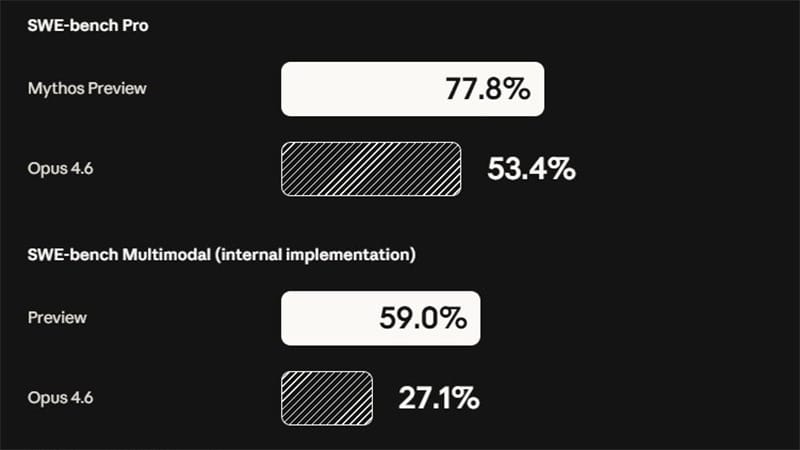
Mythos May Be the First Real AI Nuclear Bomb

👀 What's happening: Claude Mythos Preview became the first AI model to fully complete a realistic enterprise network attack simulation built by the UK AI Security Institute. In the test, it autonomously completed a 32-step attack chain that normally takes human experts around 20 hours. It scanned networks, found vulnerabilities, escalated privileges, moved laterally between machines, and eventually took over the entire environment without human intervention.
🌍 How this hits reality: This feels like the Oppenheimer moment for cybersecurity. For years, AI hacking meant writing code snippets or helping humans search for exploits. Claude Mythos Preview crossed into something else. It can now operate like a full offensive team with planning, adaptation, persistence, and retries. Most companies still run on old software, weak internal controls, exposed admin tools, and employees who click on everything. A machine-speed attacker can tear through those systems before a human team even understands what is happening.
🛎️ Key takeaway: The dangerous part is not that Mythos can hack. The dangerous part is that it can hack end to end, at scale, with almost no human involvement. This may be the first AI system that genuinely looks like a one-click cyber weapon.
TOGETHER WITH MYCLAW
Run OpenClaw on MyClaw.ai
Skip Docker, VPS configs, and late-night debugging. With MyClaw.ai, you can launch your agent in minutes and keep it running 24/7 in a dedicated environment built for serious builders.
If you’re serious about OpenClaw, run it properly — with speed and security by default.
QUANTUM
Nvidia Turned Quantum Into AI Layer
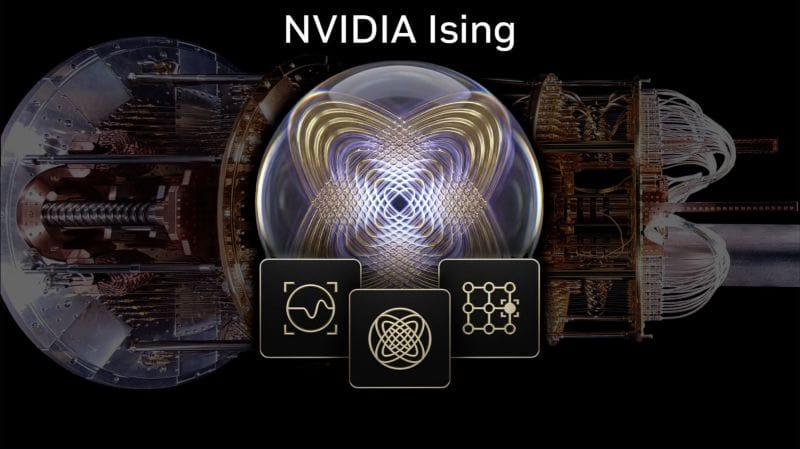
👀 What's happening: NVIDIA just open-sourced a new quantum AI model family called NVIDIA Ising, and the market immediately treated it like a real breakthrough. The models automate quantum chip calibration and error correction, two of the biggest reasons quantum systems still struggle outside the lab. Nvidia claims up to 2.5 times faster decoding and 3 times higher accuracy than current open-source baselines, and it needs physicists spending days tuning fragile qubits by hand no more.
🌍 How this hits reality: This matters because Nvidia is trying to hide the hardest part of quantum computing behind AI. Quantum machines still break easily, generate huge amounts of noise, and require constant correction. Nvidia wants AI to sit above all of that as a control layer, so engineers can use QPUs like they already use GPUs. That shifts quantum from a physics problem into an infrastructure and software problem.
🛎️ Key takeaway: Nvidia is applying the same playbook that made AI dominant. Own the control layer, also parts of the hardware, and make the difficult part someone else’s problem like QPU. Quantum still is not ready, but Nvidia just made it look a lot closer.
TEST
Stanford Used Broken Benchmarks to Shrink the Gap
👀 What's happening: Stanford HAI released its 2026 AI Index report and argued that the gap between U.S. and Chinese AI models is rapidly shrinking. The report leans heavily on papers, citations, patents, benchmark scores, and leaderboard movement to support that view. On those metrics, Chinese models look much closer to the top American systems than they did a year ago.
🌍 How this hits reality: The problem is that many of these benchmarks are heavily polluted, overfit, or easy to game. Leaderboards reward narrow test-taking behavior, not whether a model can survive six hours of coding, manage a real workflow, or avoid collapsing midway through a long task. In real usage, the gap still feels huge. The best American models remain far stronger at reasoning, reliability, coding, and agent-style execution.
🛎️ Key takeaway: Stanford is probably right that the race is tightening on paper. But the real competition is still uneven.
ROBOTAXI
Uber Robotaxi Is Rushing
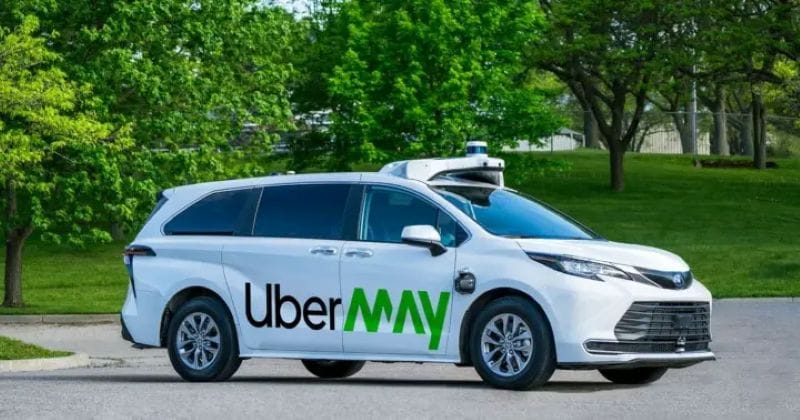
👀 What's happening: Uber is reportedly committing more than $10 billion to robotaxis, buying autonomous fleets and taking stakes in developers across the industry. The company plans to expand robotaxi service to at least 28 cities by 2028. This comes as Tesla Cybercab costs below $30,000, while Waymo continues expanding its own closed network. Uber is being forced to move faster because the old driver marketplace model is starting to look fragile.
🌍 How this hits reality: Uber cannot match Tesla’s economics. Cybercab was designed from day one as a stripped-down robotaxi with no steering wheel, no pedals, and extremely low manufacturing costs. Uber’s likely partners are much more expensive vehicles from Lucid and Rivian, often costing $40,000 to $70,000 before adding sensors, chips, insurance, and fleet maintenance. If Tesla can flood cities with much cheaper robotaxis, Uber’s traditional ride network starts looking structurally uncompetitive.
🛎️ Key takeaway: Uber is not accelerating because it wants to. It is accelerating because it has to. If Tesla and Waymo keep lowering costs and scaling their own networks, Uber risks becoming a middleman nobody needs.
DAILY TL;DR
- Google is adding Skills to Chrome, letting users save Gemini prompts and reuse them across webpages and devices.
- Anthropic confirmed it briefed the Trump administration on Mythos and said AI firms will need deeper government cooperation.
- Google is bringing Gemini Personal Intelligence to India, letting users get personalized answers from Gmail, photos, YouTube history, and more.
- Tesla is launching a redesigned FSD app with streaks and richer usage stats to encourage more drivers to subscribe and use the software.
- OpenAI launched GPT-5.4-Cyber and expanded its cyber access program in response to Anthropic’s Mythos push.
- Anthropic is reportedly drawing offers at valuations up to $800 billion as investors bet it can become a next-generation AI platform.
- Maine passed a bill to pause approvals for large data centers until 2027 while studying their impact on power grids, utility bills, and the environment.
- The NAACP sued xAI for allegedly running gas turbines illegally to power its data center, accusing it of polluting the air and harming local communities.
- AWS launched Amazon Bio Discovery to help researchers use AI to screen drug molecules and speed up early-stage drug development.
READ MORE
Let the Future Come to Your Inbox
Stay ahead without drowning in information. We turn the most important signals across AI, tech, marketing, and future products into 5-minute reads you can actually finish.
- AI Secret uncovers what really matters in AI
- Bay Area Letters decodes tech and business shifts from Silicon Valley
- Robotics Herald tracks how robots move from labs into daily life
- Marketing Secret breaks down real growth and go-to-market playbooks
- The Hardwire explores hardware, consumer tech, and what’s coming next
TOGETHER WITH US
AI Secret Media Group is the world’s #1 AI & Tech Newsletter Group, reaching over 2 million leaders across the global innovation ecosystem, from OpenAI, Anthropic, Google, and Microsoft to top AI labs, VCs, and fast-growing startups.
We've helped promote over 500 Tech Brands. Will yours be the next?
Email our co-founder Mark directly at mark@aisecret.us if the button fails.