The Lobster That Moved $50 Billion
Tencent stock jumped more than 10% in a single trading day this Tuesday.
That move added roughly $50 billion in market value.
In a year where most global tech stocks have been under pressure, the surge puzzled analysts. Financial models, earnings forecasts, policy speculation… none of them fully explained it.
Eventually the attention landed somewhere unexpected.
A lobster.
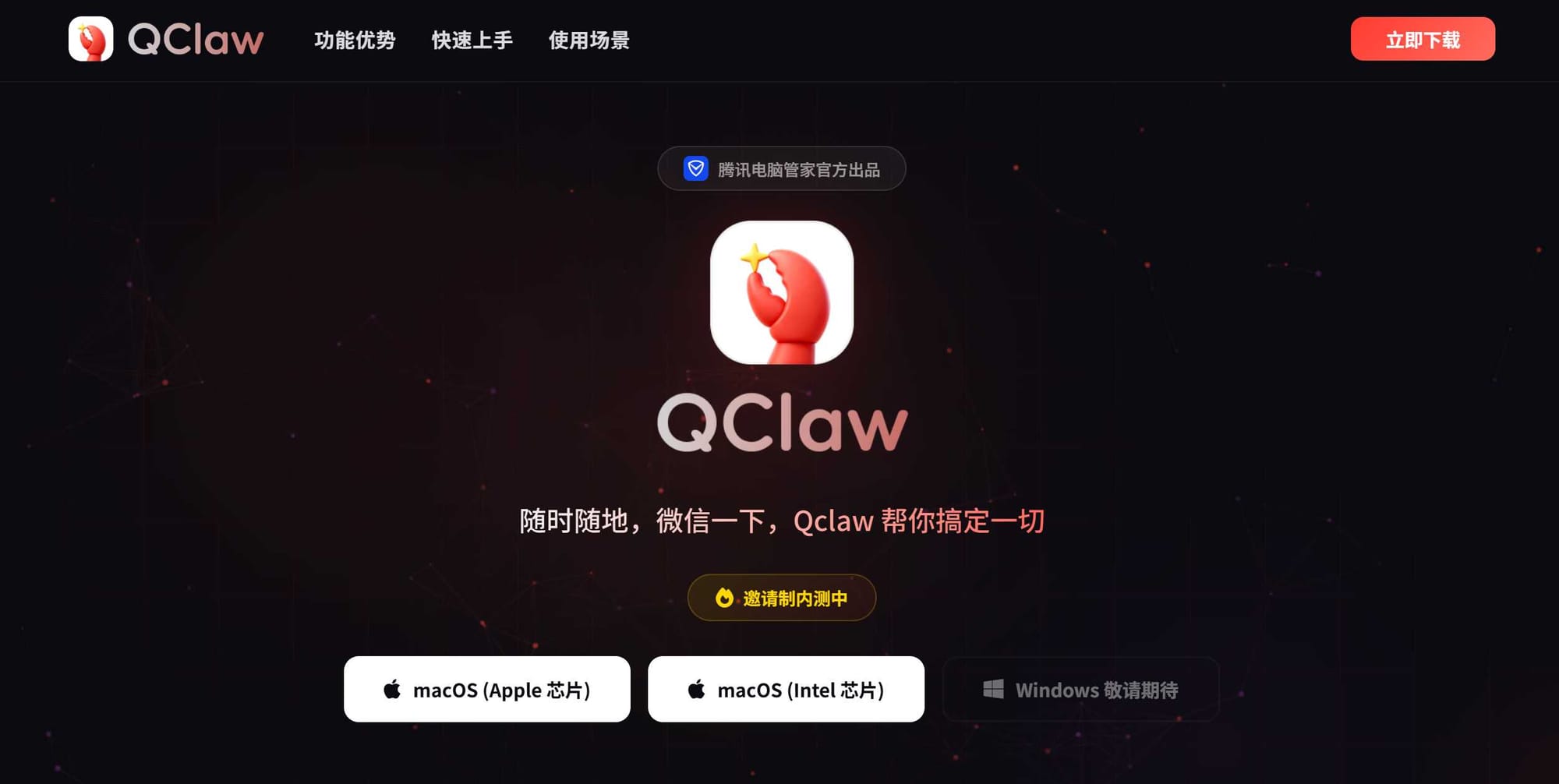
More precisely, a new AI agent product called QClaw.
From Leak to Market Shock in 48 Hours
The timeline felt almost surreal.
Sunday night: Screenshots of an internal test build of QClaw started circulating across Chinese tech communities.
Monday: The product appeared on Weibo trending topics. Invitation codes began selling on secondary markets.
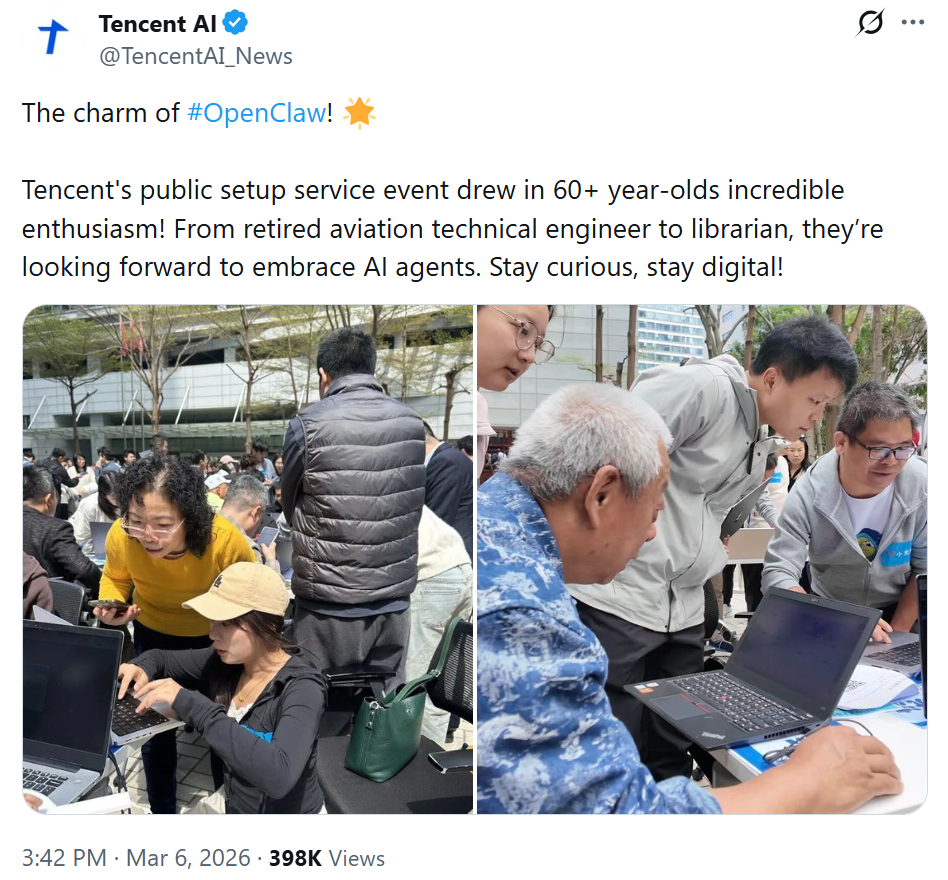
Tuesday morning: RedNote posts exploded with installation tutorials. Tencent engineers were reportedly helping people install the software in person at pop-up street booths.
Tuesday close: Tencent’s stock finished the day +10%.
The company had not even formally launched the product yet. And yet the market had already priced in the future.
What QClaw Actually Is
QClaw is built on top of an open-source framework called OpenClaw.
If you have not heard of it, OpenClaw represents one of the most important shifts happening in AI software right now.
It is not a chatbot.It is an always-running AI agent. Instead of answering questions, an OpenClaw agent can:
- operate software
- access files
- monitor tools and dashboards
- execute workflows
- run continuously in the background
Think of it less like ChatGPT, and more like a digital employee that never logs off.
The idea has captured developers globally. OpenClaw became one of the fastest-growing open-source projects in history.
But it had a major limitation in China. It could not connect to WeChat.
The One Thing That Changed Everything
China’s digital life runs through WeChat. Work messages. Payments. Communities. Customer service. Social feeds.
Connecting an AI agent to email or Slack is useful. Connecting it to WeChat changes the game entirely.
That is exactly what QClaw does.
Users link their personal WeChat account and suddenly their AI agent lives inside the messaging interface they already use every day.
Technically the integration is still conservative. The agent communicates through a service-message layer buried inside secondary menus.
But the signal is unmistakable.
Tencent does not want WeChat to miss the AI agent era.
The 26-Year-Old Behind the Launch

The most surprising part of the story may not be the product.
It is the person running it.
According to sources close to the project, QClaw’s product lead is Shuyu Zhang, a 26-year-old humanities graduate. Her team at launch consisted of:
- 1 product manager (herself)
- 5 engineers
- marketing budget: $0
Yet the result was a $50B market reaction. The product spread almost entirely through organic curiosity and user experimentation.
Why Users Love It
To most observers, QClaw may look like “just another OpenClaw wrapper.” However Chinese users see something different.
Tencent added a layer of local-first usability that dramatically lowers the barrier to entry. Examples include:
- Chinese-first responses: The agent defaults to Chinese output automatically.
- Domestic mirror switching: If GitHub, npm, or PyPI fail to connect, the system automatically switches to local mirrors.
- One-click launch: No terminal commands, no environment setup.
- Security scanning: Skills are inspected for malicious operations before installation.
- Chinese skill search: Users can simply search phrases like “Xiaohongshu automation.”
None of these features individually sound revolutionary. Together they transform a developer tool into a consumer product.
OpenClaw was originally built by engineers for engineers. QClaw is trying to give everyone their own lobster.
When American Open Source Meets Chinese Scale
The bigger narrative here goes beyond one product. OpenClaw was created in the United States by Peter Steinberger, an Austrian-born developer who recently joined OpenAI.
Yet some of the most dramatic real-world adoption is now happening in China. Reports have emerged of:
- Tencent engineers helping strangers install AI agents in public squares.
- Social media feeds filled with “my lobster did this today” experiments.
- Entire communities trading skills and automation workflows.
An open-source framework born in Silicon Valley suddenly powering a viral consumer trend in China.
The pattern is familiar.
Android. Linux. Kubernetes. American infrastructure technology often becomes mass-market culture in China.
But the speed this time is striking. OpenClaw moved from GitHub project to national trending topic in a matter of months.
A Quiet Revolution
Still, something fundamental is happening.
The bigger signal may not be about Tencent at all. It may be about the future of software.
If AI agents become the new interface to computing, the traditional app economy begins to dissolve.
Instead of opening dozens of tools, users simply run persistent digital workers.
The lobster is just the beginning.
And the next wave of AI products may not look like software at all.