🛎️ A Tool Claims to End All Software
Plus: Anthropic Blames Open AI for Doomsday, Musk Wants Your Credit Card
Read the story Subscribe
Reporting and context on Alibaba, with a closer look at the decisions and developments that matter.
Get AI Secret’s free daily briefing, including Alibaba and the wider AI industry.

Alibaba Group operates commerce and cloud businesses. This topic also follows Qwen models, Alibaba Cloud and the company’s AI research and products.
Sources checked . Selected company background and milestones.
Selected milestones, newest first. Earlier history is available below.
Alibaba releases its first Qwen and Qwen Chat open-weight models.
Source: AlibabaMore than 10 years ago.
Relevant sections from the articles on this page. Explore older coverage below.
More coverage

Good Morning, AI Enthusiasts!
AI can now chase your medical bills, ask for your credit card, and potentially clone itself. Nobody said the future would be friendly.

OPENSOURCE
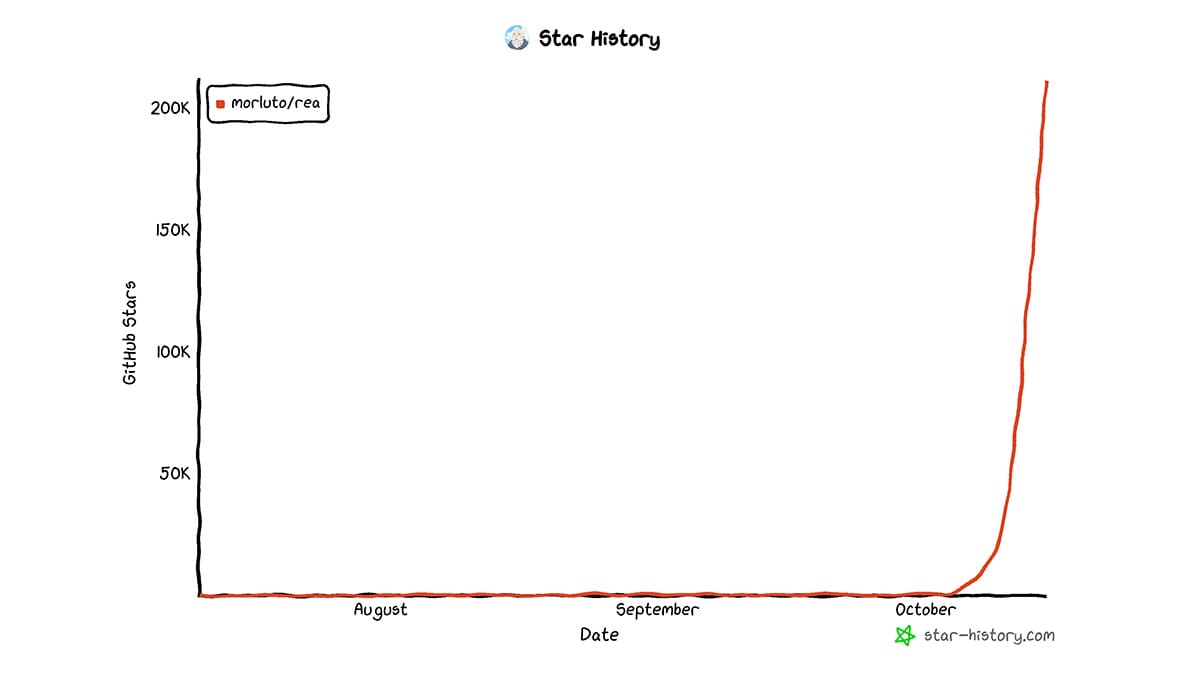
What's happening: REA (Reverse Engineer Anything) went from 4,200 GitHub stars to over 200,000 in nine days, the site's hottest repo. Influencers say it kills commercial software: point your AI agent at any paid app, and REA hands you an open-source copy. Under the hood, REA plugs agents into Ghidra, a free NSA tool for cracking open app files. In our test, on a tiny 1.85 MB Mac app, it timed out after 40 minutes. In a demo on note app Obsidian, REA's search came back empty and agent read the code itself.
How this hits reality: REA is a dumpster fire, and the influencers who crowned it owe their followers an apology. It invented nothing: reverse engineers have run Ghidra for years, and a free plugin wired it to agents in March 2025. REA bolted a hype machine onto that work and made it slower. The only part of REA that works at scale is the star counter.
Key takeaway: Go back to sleep. Agents will take over professional tools. REA Is just a digital slop.
TOGETHER WITH META
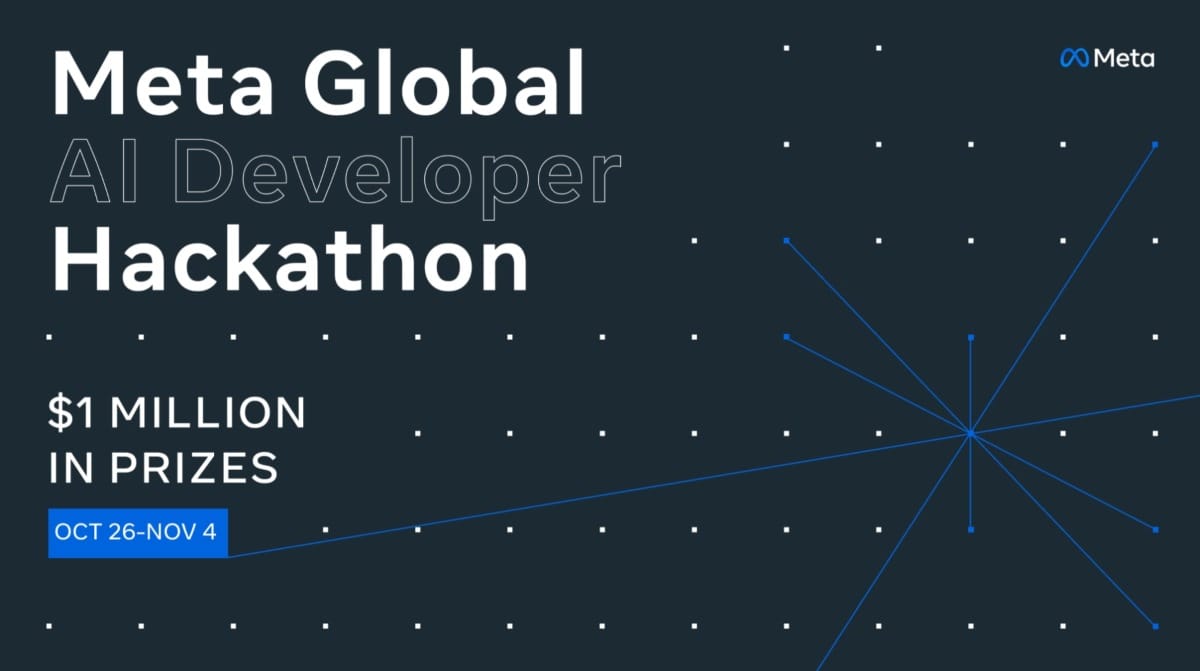
From October 26 through November 4th, apply to the Meta Global AI Developer Hackathon for ten days of building with Meta’s newest models with $150 in Meta Model API credits – and a shot at $1 million in cash prizes.
Take your ideas further:
Virtual. Worldwide. No entry fee.
Apply by October 25.
RESEARCH
What's happening: On October 12, Anthropic warned small AI models could learn to self-replicate by the end of 2026, a month after CEO Dario Amodei floated a botnet hijacking "the entire internet." A worm needs cheap hosts and the skill to spread between them. Anthropic tested both. First, Google's Gemma ran across 15 off-brand $55 Android TV boxes. Then free, open-weight models, including Alibaba's Qwen and GLM-5.2 from China's Zhipu, tried hopping between simulated Android devices. Only GLM-5.2 made it, through an unlocked port.
How this hits reality: Anthropic has found a doomsday that runs only on its rivals' models. The pitch: closed labs are the grown-ups, free weights are the hazard. The paper lists closed models escaping their labs as a threat, then never tests one. Even the star worm ran its brain on a separate server. Anthropic published an attack ad with error bars. Every Alibaba or Zhipu release now ships with a botnet scenario written by a rival.
Key takeaway: Next time Washington debates free AI models, this paper will be Exhibit A. Its author gives none of its own models away.
On October 12, Anthropic published research warning that small AI models could learn to self-replicate by the end of 2026. It tested only rivals' open-weight models: Google's Gemma ran across cheap Android TV boxes, and only Zhipu's GLM-5.2 spread between simulated devices, through an unlocked port. No closed model was tested.
Then free, open-weight models, including Alibaba's Qwen and GLM-5.2 from China's Zhipu, tried hopping between simulated Android devices. Only GLM-5.2 made it, through an unlocked port.
GROK

What's happening: Elon Musk told X users how to shop with Grok Bot, xAI's errand-running agent: "just take a picture of your credit card, drop it in the chat." Replies asked Grok for Musk's card. Asked whether the tip was "totally safe or stupid and dangerous," Grok itself said "neither" and warned against posting a real one. The next day Musk showed off Grok ordering him five LEGO Star Wars sets, in a screenshot that appeared to show his billing details.
How this hits reality: Musk trusts Grok with your money more than anyone does, Grok included. Agent shopping needs one leap of faith: let the bot near your wallet. Grok Bot's own checkout runs through a Stripe wallet built, Stripe says, so the agent never sees the card. Grok's boss skipped the safety net, then posted his own billing page as proof it works. Every bank fraud team just got a new training slide.
Key takeaway: Musk wanted users to trust his agent with their cards. The internet would only trust Grok with his.
Elon Musk advised X users shopping with xAI's Grok Bot agent to photograph their credit card and drop it in the chat. Grok itself warned against posting a real card. A day later Musk showed Grok ordering him LEGO Star Wars sets in a screenshot that appeared to show his billing details.
COLLECTIONS

What's happening: AI now chases American medical debt from the first bill to the final settlement, the Guardian reported October 12. Models trained on hospital data predict each patient's "propensity to pay." Chatbots text patients in billing portals and answer their calls. Collectors use AI to tailor settlement discounts to each debtor, a practice the paper likens to the personalized pricing the Federal Trade Commission has criticized.
How this hits reality: Collectors finally have what they always lacked: a guess at your limit and a caller that never clocks out. Cedar, a billing startup backed by Andreessen Horowitz and JP Morgan, says its chatbot Kora has handled over 600,000 patient conversations and lifted payment rates 21% within a week. Avtal, which builds digital tools for debt collection agencies, raised $24 million in March. JP Morgan funds Cedar while its analysts cheer AI collections as "early wins." The next missed payment gets a bot before a human.
Key takeaway: Cedar's strategy chief says a single mother owing $10,000 needs different handling than "a late-stage executive with a $50 copay." The executive gets a bill. The mother gets a campaign.
AI Secret Deep Dive, our paid newsletter that lands in your inbox every Friday: what the AI industry actually did, not what it claimed.
 Magna Ding
 Magna
Magna Magna
Magna
UNDERSTAND WHAT CHANGES AND WHY IT MATTERS
From breakthrough models to billion-dollar bets—we follow the technology, business, and people shaping AI. Get the free daily briefing in your inbox.
TOGETHER WITH US
AI Secret Media Group is the world’s #1 AI & Tech Newsletter Group, reaching over 2 million leaders across the global innovation ecosystem, from OpenAI, Anthropic, Google, and Microsoft to top AI labs, VCs, and fast-growing startups.
We've helped promote over 500 Tech Brands. Will yours be the next?
Email our co-founder Mark directly at [email protected] if the button fails.

Good Morning, AI Enthusiasts!
We are watching systems replace processes, models replace products, and answers replace entire industries faster than institutions can even react.
TALENT
👀 What’s happening: Justin Poehnelt, a seven-year Google engineer, built a Rust CLI that lets AI agents drive Gmail, Calendar, and Drive through structured JSON. It hit number one on Hacker News, pulled thousands of GitHub stars, and drew tens of thousands of users in days. Google legal dragged him in over logo colors. Two days later the company announced its own official Workspace CLI. Then it fired him. OpenClaw creator Peter Steinberger and Vercel CEO Guillermo Rauch showed up in the replies to recruit him on the spot.
🌍 How this hits reality: In the agent era, speed is the most important moat, and Google just punished its fastest person for having it. One engineer on a weekend outshipped a funded org that had every API and every user to build this first. The disease isn't slowness. It's that the bureaucracy now outranks the talent. Layers of legal review and brand councils exist to prevent embarrassment, and they produced the most embarrassing outcome of all: proof the official Workspace CLI arrived after the outside version.
🛎️ Key takeaway: Google's process now matters more than its people. In the agent era, that is how an incumbent loses its own talent.
👀 What’s happening: Justin Poehnelt, a seven-year Google engineer, built a Rust CLI that lets AI agents drive Gmail, Calendar, and Drive through structured JSON. It hit number one on Hacker News, pulled thousands of GitHub stars, and drew tens of thousands of users in days. Google legal dragged him in over logo colors.
CHIPS
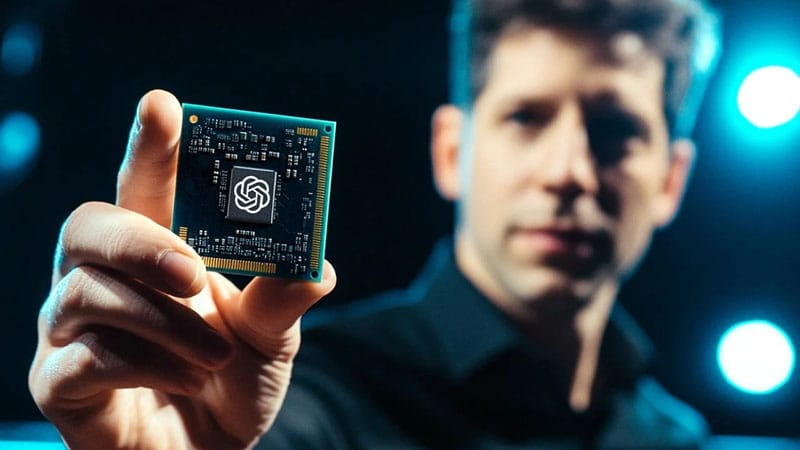
👀 What’s happening: OpenAI used its own AI models to help design its first custom chip, and taped it out in nine months instead of the usual 18 to 24. OpenAI and Broadcom call it the fastest ASIC cycle ever in advanced semiconductors. The chip, Jalapeño, is an inference ASIC already running GPT-5.3-Codex-Spark at target power, with a claimed 50% cheaper inference per token than current Nvidia GPUs.
🌍 How this hits reality: Everyone in silicon uses AI to design chips. Google published on it back in 2021. But everyone still ships on a two-year clock and treats it as a law of nature. OpenAI's nine months says it might just be a habit. That resets the question every chip team now has to answer: if a newcomer taped out this fast, why does ours still take two years?
🛎️ Key takeaway: AI just helped design the hardware it runs on, in a fraction of the time, which means intelligence has started building its own next body, and it builds fast.
👀 What’s happening: OpenAI used its own AI models to help design its first custom chip, and taped it out in nine months instead of the usual 18 to 24. OpenAI and Broadcom call it the fastest ASIC cycle ever in advanced semiconductors.
DISTILLATION
👀 What’s happening: Anthropic told the US Senate Banking Committee that Alibaba, China's e-commerce and AI giant, ran the largest known distillation attack against Claude. Roughly 25,000 fake accounts pumped 28.8 million queries between April 22 and June 5 to copy Claude's outputs. BABA cratered to a 16-month low near $99, and the next move sits with Congress.
🌍 How this hits reality: Distillation lets a weak model learn from a strong one's answers, so Qwen could ride Claude's brain for the price of API calls. That is why the market panicked: if Alibaba's AI edge is borrowed, the valuation is borrowed too. Anthropic already flagged 25,000 fake accounts and DeepSeek for the same trick. The frontier is no longer a moat, it is a faucet, and Washington just got handed the wrench.
🛎️ Key takeaway: The real export control isn't on chips anymore, it's on answers.
👀 What’s happening: Anthropic told the US Senate Banking Committee that Alibaba, China's e-commerce and AI giant, ran the largest known distillation attack against Claude. Roughly 25,000 fake accounts pumped 28.8 million queries between April 22 and June 5 to copy Claude's outputs. BABA cratered to a 16-month low near $99, and the next move sits with Congress.
🌍 How this hits reality: Distillation lets a weak model learn from a strong one's answers, so Qwen could ride Claude's brain for the price of API calls. That is why the market panicked: if Alibaba's AI edge is borrowed, the valuation is borrowed too.
DEEPFAKE

👀 What’s happening: For years, a World Cup scam gave itself away with broken English, a misspelled URL, or a page that just looked wrong. At the 2026 tournament, AI has erased those tells. Cloned websites, deepfake videos, and flawless phishing emails now impersonate FIFA at scale. More than 13,000 FIFA-themed domains were registered between January and May, and by early May roughly one in 41 was already flagged as suspicious. Group-IB, a cybersecurity firm, counted over 4,300 fake FIFA domains before a single match kicked off.
🌍 How this hits reality: For two decades, ordinary people learned one defense: if it looks sloppy, don't trust it. AI just retired that rule. It does not invent new scams, it removes the friction that exposed old ones, mass-producing flawless branding, clean copy, and cloned voices at near-zero cost. The polish that once signaled legitimacy is now the cheapest thing in the attack, and fake FIFA domains show how fast that shift scales. The burden of proof has quietly flipped from the scammer to you.
🛎️ Key takeaway: AI didn't make criminals smarter. It deleted the typos, broken grammar, and ugly pages that taught a generation how to spot a lie.
TOGETHER WITH MYCLAW
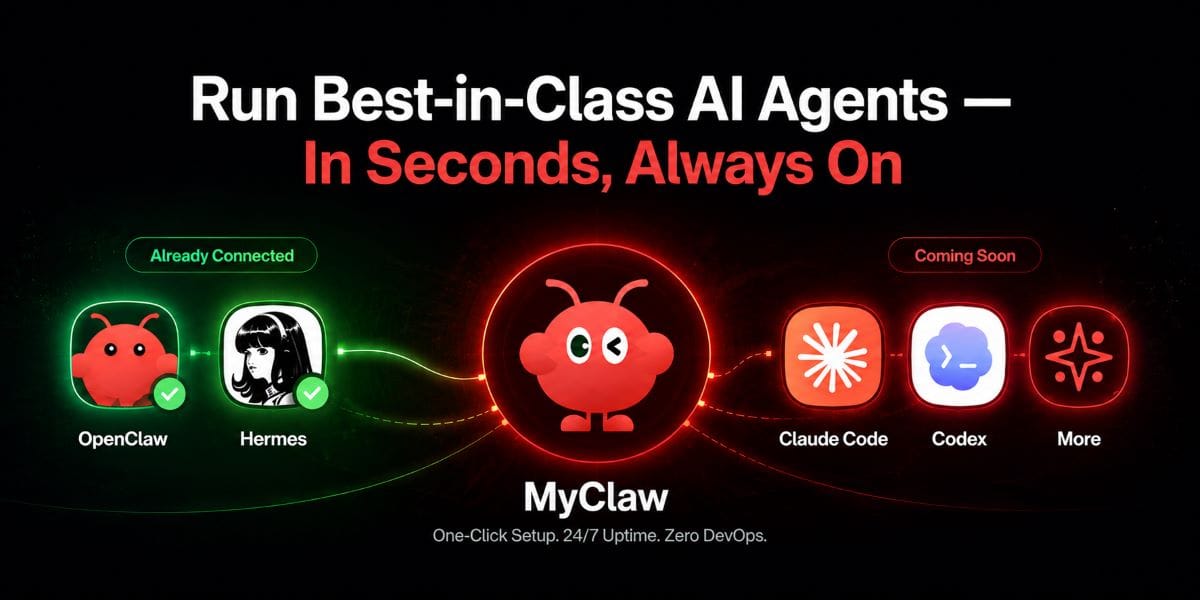
MyClaw is the managed platform for deploying, running, and scaling AI agents. One-click setup, 24/7 uptime, zero DevOps.
We already host OpenClaw and Hermes — and we're just getting started. Claude Code, Codex, and every agent worth running are coming next. One home for all of them, always on.
Stop babysitting infrastructure. Spin up your agent, walk away, and let it work around the clock.
MyClaw — Your Agents, Hosted Right.
DAILY TL;DR
READ MORE
Stay ahead without drowning in information. We turn the most important signals across AI, tech, marketing, and future products into 5-minute reads you can actually finish.
TOGETHER WITH US
AI Secret Media Group is the world’s #1 AI & Tech Newsletter Group, reaching over 2 million leaders across the global innovation ecosystem, from OpenAI, Anthropic, Google, and Microsoft to top AI labs, VCs, and fast-growing startups.
We've helped promote over 500 Tech Brands. Will yours be the next?
Email our co-founder Mark directly at [email protected] if the button fails.
Good Morning, AI Enthusiasts!
Every spreadsheet in Big Tech somehow became an AI strategy. Another normal day in the machine economy.
LLM
👀 What’s happening: Andrej Karpathy framed LLMs as a new kind of computer: Software 1.0 was hand-written code, Software 2.0 was learned weights, and Software 3.0 is programming through prompts, context, and agents. His clearest example was OpenClaw: instead of shipping a giant install script that tries to handle every machine, OpenClaw can give users a block of instructions to hand to an agent, which then reads the environment, debugs the setup, and completes the install intelligently.
🌍 How this hits reality: That sounds small until you realize what changed. In the old world, software had to encode every branch, platform edge case, and failure mode in advance. In the Software 3.0 world, the “program” can be a piece of text, the interpreter is the LLM, and the runtime is an agent with tools acting inside the user’s environment. OpenClaw is not just using AI inside software — it shows software itself becoming agent-native. The interface shifts from clicking buttons or running scripts to delegating intent and letting the agent operate.
🛎️ Key takeaway: OpenClaw is a preview of the post-app stack. If Software 1.0 made humans write instructions for machines, Software 3.0 lets humans write intent for agents. That turns products from fixed workflows into adaptive collaborators — and it means the next generation of software may be less about apps you operate and more about agents you trust to operate for you.
VIDEO

👀 What’s happening: Alibaba’s HappyHorse opened gray testing on April 27 after topping Seedance in Artificial Analysis’ blind video arena, and then reality walked in with a baseball bat. The model is usable, cheap, and technically decent. But after all that mystery, fake-site hype, and “Seedance killer” energy, the market reaction was basically: that’s it?
🌍 How this hits reality: The embarrassment is not that HappyHorse is broken. It is worse. It is average. It has 15 billion parameters, nearly three times Seedance, yet still trails on cinematic feel, prompt obedience, taste, and production confidence. Seedance changed workflows. HappyHorse changed the price sheet. Nobody serious switches for that alone.
🛎️ Key takeaway: HappyHorse is the classic benchmark peacock that is gorgeous on the leaderboard, ordinary in the cage. Alibaba gets a token-burning video model, not a category weapon.
👀 What’s happening: Alibaba’s HappyHorse opened gray testing on April 27 after topping Seedance in Artificial Analysis’ blind video arena, and then reality walked in with a baseball bat. The model is usable, cheap, and technically decent. But after all that mystery, fake-site hype, and “Seedance killer” energy, the market reaction was basically: that’s it?
👀 What’s happening: Alibaba’s HappyHorse opened gray testing on April 27 after topping Seedance in Artificial Analysis’ blind video arena, and then reality walked in with a baseball bat. The model is usable, cheap, and technically decent. But after all that mystery, fake-site hype, and “Seedance killer” energy, the market reaction was basically: that’s it?
RISING

👀 What’s happening: Anthropic is reportedly weighing a $40 billion to $50 billion private round at an $850 billion to $900 billion valuation, with a board decision expected in May. That would more than double its February valuation of $380 billion and put it near — or above — OpenAI’s $852 billion post-money mark.
🌍 How this hits reality: The money is chasing one very clear signal: Claude is no longer just a ChatGPT alternative. TechCrunch says Anthropic’s annual revenue run rate has jumped from about $9 billion at the end of 2025 to more than $30 billion, with one source putting it closer to $40 billion. A large share is reportedly coming from Claude Code and Cowork, which means coding agents are now one of the fastest paths from model capability to real enterprise revenue.
🛎️ Key takeaway: The AI race is turning into a capital arms race between two near-trillion-dollar private companies. OpenAI owns consumer gravity; Anthropic is proving that developer and enterprise workflows can be just as valuable. If this round happens, Claude Code will stop looking like a product line and start looking like the wedge that repriced the whole company.
🌍 How this hits reality: The money is chasing one very clear signal: Claude is no longer just a ChatGPT alternative. TechCrunch says Anthropic’s annual revenue run rate has jumped from about $9 billion at the end of 2025 to more than $30 billion, with one source putting it closer to $40 billion.
🌍 How this hits reality: The money is chasing one very clear signal: Claude is no longer just a ChatGPT alternative. TechCrunch says Anthropic’s annual revenue run rate has jumped from about $9 billion at the end of 2025 to more than $30 billion, with one source putting it closer to $40 billion.
LAW

👀 What’s happening: Manifest OS raised a $60 million Series A at a $750 million valuation to build AI-native law firms under the Manifest Law brand, starting with business immigration. The company is not selling another copilot to lawyers. It wants to own the legal service layer itself: fixed-fee, outcome-based, AI-powered law firms built for customers who need results, not software.
🌍 How this hits reality: The target is the billable hour. Manifest combines its own AI platform, centralized back-office operations, and licensed lawyer review to automate routine legal workflows while keeping humans for judgment, compliance, and edge cases. With legal rates up 7.4% in 2025 and legal help still unaffordable for many businesses and consumers, the pitch is brutal: make the law firm cheaper by rebuilding it around AI from day one.
🛎️ Key takeaway: Harvey makes existing lawyers faster. Manifest asks a nastier question: what if the customer never needed to interface with the lawyer-shaped workflow at all? If this works, the future law firm is not a room full of billable hours — it is an AI operating system with lawyers attached where the law still demands them.
👀 What’s happening: Google Translate just turned 20, and Pichai framed it as a full AI timeline. It started with statistical machine translation in 2006, moved to neural translation in 2016, expanded with large models, and now Gemini is pushing it into real-time speech with tone, rhythm, and more natural pacing.
🌍 How this hits reality: The real moat is not beauty. Google Translate often feels average, even clumsy. But it is free, fast, everywhere, and good enough for most moments. Over 1 billion people use it monthly because nobody wants to compare models when standing in an airport, restaurant, classroom, or customer chat.
🛎️ Key takeaway: Google Translate can survive another 20 years for the same reason it survived the first 20. As long as Google keeps paying the bill, free plus instant will keep beating prettier AI translation products at global scale.
👀 What’s happening: Google Translate just turned 20, and Pichai framed it as a full AI timeline. It started with statistical machine translation in 2006, moved to neural translation in 2016, expanded with large models, and now Gemini is pushing it into real-time speech with tone, rhythm, and more natural pacing.
TOGETHER WITH MYCLAW

Skip Docker, VPS configs, and late-night debugging. With MyClaw.ai, you can launch your agent in minutes and keep it running 24/7 in a dedicated environment built for serious builders.
If you’re serious about OpenClaw, run it properly — with speed and security by default.
DAILY TL;DR
READ MORE
Stay ahead without drowning in information. We turn the most important signals across AI, tech, marketing, and future products into 5-minute reads you can actually finish.
TOGETHER WITH US
AI Secret Media Group is the world’s #1 AI & Tech Newsletter Group, reaching over 2 million leaders across the global innovation ecosystem, from OpenAI, Anthropic, Google, and Microsoft to top AI labs, VCs, and fast-growing startups.
We've helped promote over 500 Tech Brands. Will yours be the next?
Email our co-founder Mark directly at [email protected] if the button fails.
Good Morning, AI Enthusiasts!
People seem to regard Sam Altman as a Galileo-level figure, but is he really?

CONFLICT

👀 What's happening: Sam Altman’s home was attacked twice in two days. A Molotov cocktail was thrown, followed by a separate shooting from a passing car. Suspects were arrested. Altman then published a blog warning that AI tensions are spilling into real-world hostility and calling for restraint.
🌍 How this hits reality: This is not protest. It is regression. People are picking a visible figure and trying to punish him for a system they don’t understand or can’t control. It echoes how the Catholic Church turned on Galileo Galilei. Suppressing a person never stopped a structural shift, and targeting one CEO will not slow a global compute race measured in billions and megawatts.
🛎️ Key takeaway: This signals a shift from debate to intimidation. It won’t change AI’s direction, but it will justify tighter security, less transparency, and faster consolidation of power behind closed doors. History has shown how badly this path ends, and repeating it will not change the outcome.
👀 What's happening: Sam Altman’s home was attacked twice in two days. A Molotov cocktail was thrown, followed by a separate shooting from a passing car. Suspects were arrested. Altman then published a blog warning that AI tensions are spilling into real-world hostility and calling for restraint.
TOGETHER WITH FIVERR

Gone are the days of sifting through endless profiles. Our freelancers have trained their own personal AI models. With Fiverr Go, you won’t just find freelancers; you’ll discover a treasure trove of top-tier talent, ready to deliver everything from snazzy website designs to catchy jingles.
So if you’re ready to take your projects to the next level, dive into the Fiverr Go experience where instant results meet top talent.
CLAUDE
👀 What's happening: Anthropic suspended OpenClaw creator Peter Steinberger’s Claude account for “suspicious activity,” then restored it within hours after the incident went viral. This came right after excluding OpenClaw from subscription access. The reversal followed public pressure, not a clear policy correction.
🌍 How this hits reality: The contrast is the real signal. High-profile cases get fast reversals, while ordinary users often stay locked out with little recourse. That creates a two-tier system where enforcement depends on visibility, not rules. Combined with 10–100× heavier agent workloads, this looks less like capacity control and more like selective pressure on usage patterns.
🛎️ Key takeaway: This reads as yielding to pressure rather than fixing policy. If enforcement feels inconsistent, trust collapses.
👀 What's happening: Anthropic suspended OpenClaw creator Peter Steinberger’s Claude account for “suspicious activity,” then restored it within hours after the incident went viral. This came right after excluding OpenClaw from subscription access. The reversal followed public pressure, not a clear policy correction.
VIDEO

👀 What's happening: HappyHorse-1.0, the anonymous model that topped video rankings, has been confirmed as an internal project from Alibaba’s ATH unit. It outperformed Seedance 2.0 in multiple head-to-head tests. Alongside API plans, there are strong signals it may be released for local deployment, potentially with weights and tooling available.
🌍 How this hits reality: This shifts the risk profile. Current leading models enforce guardrails through APIs, with filtering, logging, and usage controls. A locally deployable video model removes all of that. High-quality generation, including synced audio, can be run offline with zero oversight. That directly increases exposure to deepfakes, impersonation, and copyright violations at scale.
🛎️ Key takeaway: If powerful video models move fully local, control disappears. Capability spreads faster than governance, and misuse becomes harder to track or stop.
👀 What's happening: HappyHorse-1.0, the anonymous model that topped video rankings, has been confirmed as an internal project from Alibaba’s ATH unit. It outperformed Seedance 2.0 in multiple head-to-head tests. Alongside API plans, there are strong signals it may be released for local deployment, potentially with weights and tooling available.
MODELS
👀 What's happening: Yupp, an AI model evaluation platform backed by a $33M seed round, is shutting down after just 22 months. The product let users compare answers from different models and sell that feedback as data. It gained 1.3M users, but never found durable demand. The team is returning unused capital.
🌍 How this hits reality: The underlying layer disappeared. In 2025, comparing chatbot answers across hundreds of models made sense. Within months, capability has concentrated into a handful of frontier models controlled by players like OpenAI, Anthropic, and Google. Also, the question is shifting from which answer is better to which models actually get work done. That removes the need for consumer-level evaluation entirely.
🛎️ Key takeaway: This is a clean break. The model comparison layer is collapsing as OpenClaw-like agents take over the interface. Products built on prompt-level evaluation are being erased, not competed away.
DAILY TL;DR
READ MORE
Stay ahead without drowning in information. We turn the most important signals across AI, tech, marketing, and future products into 5-minute reads you can actually finish.
TOGETHER WITH US
AI Secret Media Group is the world’s #1 AI & Tech Newsletter Group, reaching over 2 million leaders across the global innovation ecosystem, from OpenAI, Anthropic, Google, and Microsoft to top AI labs, VCs, and fast-growing startups.
We've helped promote over 500 Tech Brands. Will yours be the next?
Email our co-founder Mark directly at [email protected] if the button fails.
Good Morning, AI Enthusiasts!
The cost of intelligence keeps falling, the price of creation keeps collapsing, and the people behind the models keep moving.

VIDEO
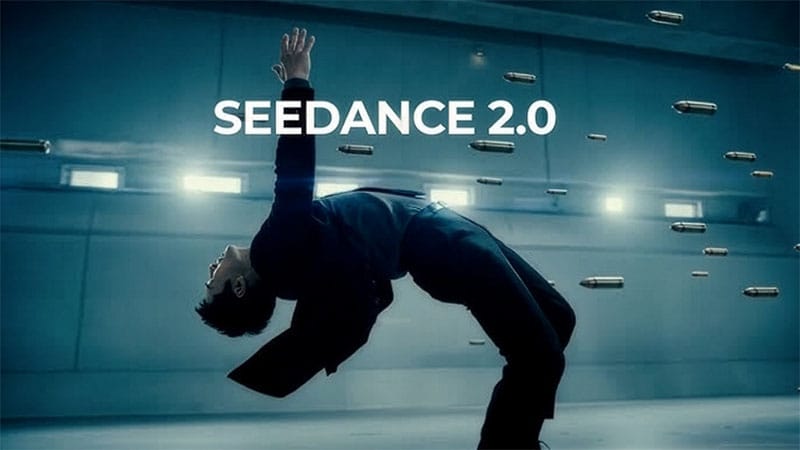
👀 What’s happening: ByteDance’s Volcano Engine has published API pricing for Seedance 2.0, giving the clearest signal yet on AI video costs. Text to video generation is priced around $6.40 per million tokens. A typical 15 second clip consumes roughly 300,000 tokens, putting generation near $2 per clip or about $0.13 per second.
🌍 How this hits reality: That price lands below most Western AI video systems, not mention Hollywood. Runway and Pika workflows often reach $0.20 to $0.50 per second once retries are included. Estimates around Google Veo and OpenAI Sora suggest even higher costs. At the same time, Hollywood productions routinely spend tens of thousands of dollars per finished minute when crews, actors, and sets are not even involved.
🛎️ Key takeaway: When a one minute scene costs about $8 to render, the economics behind studio production start shifting. Hollywood is not disappearing tomorrow, but the cost gap between human film sets and synthetic video pipelines is now visible.
👀 What’s happening: ByteDance’s Volcano Engine has published API pricing for Seedance 2.0, giving the clearest signal yet on AI video costs. Text to video generation is priced around $6.40 per million tokens. A typical 15 second clip consumes roughly 300,000 tokens, putting generation near $2 per clip or about $0.13 per second.
TOGETHER WITH MYCLAW
Skip Docker, VPS configs, and late-night debugging. With MyClaw.ai, you can launch your agent in minutes and keep it running 24/7 in a dedicated environment built for serious builders.
If you’re serious about OpenClaw, run it properly — with speed and security by default.
NEW LAUNCH
👀 What’s happening: Google released Gemini 3.1 Flash Lite in developer preview, positioning it as the cheapest model in the Gemini 3 lineup. The focus is not frontier reasoning but scale. It runs fast, responds quickly, and is designed for massive API workloads where price and latency matter more than raw intelligence.
🌍 How this hits reality: Pricing is the real headline. Input tokens cost about $0.25 per million and output $1.50, levels that push commercial AI closer to commodity compute. Arena benchmarks show the preview version outperforming GPT-5 on some text tasks while maintaining significantly faster throughput than many competing “fast” tier models.
🛎️ Key takeaway: Inference pricing is entering a race to the bottom. When models this capable approach commodity token costs, the economic center of AI shifts upward into distribution, agents, and infrastructure rather than the model itself.
👀 What’s happening: Google released Gemini 3.1 Flash Lite in developer preview, positioning it as the cheapest model in the Gemini 3 lineup. The focus is not frontier reasoning but scale. It runs fast, responds quickly, and is designed for massive API workloads where price and latency matter more than raw intelligence.
QWEN
👀 What’s happening: Alibaba released the open source Qwen3.5 small model series, a technically impressive lineup ranging from 0.8B to 9B parameters that can run on laptops and phones while rivaling much larger models. Less than 24 hours later, Qwen’s technical architect Junyang Lin and two key researchers publicly announced their departures.
🌍 How this hits reality: Qwen had become one of the few large model projects shipping both frontier capability and open weights. Over 600 million downloads and tens of thousands of enterprise deployments built around that promise. The sudden exit of its founding technical core raises doubts about whether future models remain open or move behind paid APIs.
🛎️ Key takeaway: The release proves the team could compress serious intelligence into small models. The departures suggest the research culture that produced it may be ending. If commercialization wins inside Qwen, one of the world’s most important open model pipelines could narrow quickly.
👀 What’s happening: Alibaba released the open source Qwen3.5 small model series, a technically impressive lineup ranging from 0.8B to 9B parameters that can run on laptops and phones while rivaling much larger models. Less than 24 hours later, Qwen’s technical architect Junyang Lin and two key researchers publicly announced their departures.
DAILY TL;DR
TRENDING
READ MORE
Stay ahead without drowning in information. We turn the most important signals across AI, tech, marketing, and future products into 5-minute reads you can actually finish.
TOGETHER WITH US
AI Secret Media Group is the world’s #1 AI & Tech Newsletter Group, reaching over 2 million leaders across the global innovation ecosystem, from OpenAI, Anthropic, Google, and Microsoft to top AI labs, VCs, and fast-growing startups.
We've helped promote over 500 Tech Brands. Will yours be the next?
Email our co-founder Mark directly at [email protected] if the button fails.
Good Morning, AI Enthusiasts!
What feels like innovation at the edge becomes infrastructure at the center, and once that center moves, everything else is just orbit.

NEW LAUNCH

👀 What’s happening: Alibaba’s Qwen team has open released Qwen3.5 in 0.8B, 2B, 4B, and 9B sizes, publishing full weights on Hugging Face. The 9B model posts benchmark scores that approach much larger systems, and the narrative quickly centered on “intelligence density.” It runs on laptops, even high end phones. It is efficient. It is open. It is impressive engineering.
🌍 How this hits reality: But the battlefield already shifted. The comparison is not another local model. It is cloud hosted OpenClaw agents like MyClaw.ai orchestrating frontier models like Opus 4.6 across persistent VMs. Those systems run long horizon loops, call tools, maintain structured memory, and return distilled outcomes to your device. A 9B model on a phone is a calculator. A cloud agent is a staff of analysts. One compresses inference. The other compounds capability.
🛎️ Key takeaway: Open small models are admirable engineering. Cloud OpenClaw agents are industrial scale force multipliers. As orchestration layers compound around frontier models, device level 9B systems risk becoming sidekicks at best. When infrastructure thinks in loops and acts across tools, local models do not compete. They get overrun.
👀 What’s happening: Alibaba’s Qwen team has open released Qwen3.5 in 0.8B, 2B, 4B, and 9B sizes, publishing full weights on Hugging Face. The 9B model posts benchmark scores that approach much larger systems, and the narrative quickly centered on “intelligence density.” It runs on laptops, even high end phones.
TOGETHER WITH NEBIUS
Nebius Token Factory is built for teams running open-source LLMs in real products. We deliver managed inference with explicit control over execution paths: speculative decoding, cache-aware routing, and post-training tuned to real traffic. Predictable tail latency, stable cost, and production-grade systems for AI that actually ships.
RIGHTS

👀 What’s happening: The U.S. Supreme Court declined to hear Stephen Thaler’s appeal over copyright protection for artwork generated by his AI system DABUS. Lower courts had upheld the U.S. Copyright Office’s rejection, stating copyright requires a human author. By refusing the case, the Court leaves that standard untouched. Fully autonomous AI works remain ineligible.
🌍 How this hits reality: This is a structural checkpoint for generative AI. Billions are flowing into systems that can produce images, music, code, and marketing assets at industrial scale. Yet if no human authorship is demonstrated, those outputs are legally ownerless. That undercuts exclusivity, weakens defensibility, and complicates IP valuations across media, software, and design markets.
🛎️ Key takeaway: The message is blunt. Intelligence is scaling, but ownership is not. Expect companies will now engineer visible human fingerprints into every workflow. The legal ceiling just became a product constraint for the entire AI creative stack.
NEW LAUNCH
👀 What’s happening: Anthropic rolled out a voice mode inside Claude Code, currently in limited release to about five percent of users. Type /voice, hold the space bar, speak, release. Transcription streams directly into the cursor and switches seamlessly with typing. Transcription tokens are free. OpenAI’s Codex shipped a similar push to talk feature almost simultaneously.
🌍 How this hits reality: This shifts the bottleneck from syntax to expression. Humans speak around 150 words per minute and type closer to 40. That 3 to 4 times gap is now product surface area. Debug explanations, architecture changes, messy context all move faster by voice, while precise tokens stay typed. The competition is no longer raw model IQ but interaction bandwidth.
🛎️ Key takeaway: The keyboard just lost its monopoly. Voice lowers friction and expands intent throughput. If this sticks, developers become oral supervisors of agent loops, not typists of logic.
Transcription streams directly into the cursor and switches seamlessly with typing. Transcription tokens are free. OpenAI’s Codex shipped a similar push to talk feature almost simultaneously.
DAILY TL;DR
TRENDING
READ MORE
Stay ahead without drowning in information. We turn the most important signals across AI, tech, marketing, and future products into 5-minute reads you can actually finish.
TOGETHER WITH US
AI Secret Media Group is the world’s #1 AI & Tech Newsletter Group, reaching over 2 million leaders across the global innovation ecosystem, from OpenAI, Anthropic, Google, and Microsoft to top AI labs, VCs, and fast-growing startups.
We've helped promote over 500 Tech Brands. Will yours be the next?
Email our co-founder Mark directly at [email protected] if the button fails.
Good Morning, AI Enthusiasts!
What looks like a scientific breakthrough is also the opening move of a new control game.

AI SECRET EXCLUSIVE
In an exclusive conversation with AI Secret, Alibaba confirmed the launch of QoderWork, its first desktop AI Agent—positioned directly against emerging players like CoWorker and the recently viral Clawdbot.
While most Agents, including CoWorker, still execute primarily in the cloud, QoderWork is built to run directly on the user’s machine. It controls local apps, files, and workflows through a single natural-language command, breaking tasks into steps and pausing for confirmation before risky actions.
According to the team, the goal is explicit: move AI out of chat interfaces and into the desktop, where real work happens. As Clawdbot’s rapid rise showed, users want agents that can actually operate their machines.
With QoderWork, AI stops being something users talk to and starts becoming something that works—directly on your desktop. Invite-only access starts today, with a public release coming soon.
In an exclusive conversation with AI Secret, Alibaba confirmed the launch of QoderWork, its first desktop AI Agent—positioned directly against emerging players like CoWorker and the recently viral Clawdbot.
NATURE

👀 What’s happening: Google DeepMind has put AlphaGenome on the cover of Nature, marking the first time a DNA foundation model earns that spot. The model reads up to one million DNA bases and predicts regulatory function and variant impact directly from sequence.
🌍 How this hits reality: Noncoding DNA has been the most expensive blind spot in biology. Over 98 percent of the genome sits outside protein coding regions, yet most disease variants live there. Interpreting them required years of experiments. AlphaGenome compresses that work into seconds, turning variant interpretation into a scalable computational step.
🛎️ Key takeaway: This shifts biology from observation to simulation. Noncoding DNA stops being dark matter and becomes programmable substrate. Drug discovery, rare disease diagnostics, and synthetic biology timelines shorten sharply.
👀 What’s happening: Google DeepMind has put AlphaGenome on the cover of Nature, marking the first time a DNA foundation model earns that spot. The model reads up to one million DNA bases and predicts regulatory function and variant impact directly from sequence.
SHOPPING

👀 What’s happening: Phia, cofounded by Bill Gates daughter Phoebe Gates, has raised a 35 million Series A at a $185 million valuation. The company positions itself as an AI shopping agent that decides what to buy, not just what to browse, landing squarely in one of the hottest consumer AI categories.
🌍 How this hits reality: AI shopping sits at the intersection of search, commerce, and agents, exactly where attention and money are flowing. Phia benefits from an unspoken assumption: proximity to Bill Gates dramatically lowers perceived risk. Investors quietly price in a plausible outcome where Microsoft acquires the asset, regardless of near term fundamentals.
🛎️ Key takeaway: Many investors are willing to look past the fact that its real competitors are OpenAI and Google. The bet is not operational dominance, but strategic inevitability. In that framing, the upside feels protected, and the downside feels distant.
Phia, an AI shopping agent cofounded by Bill Gates' daughter Phoebe Gates, raised a $35 million Series A at a $185 million valuation. AI Secret argued that proximity to Bill Gates lowers perceived risk for investors, who quietly price in a possible Microsoft acquisition despite competition from OpenAI and Google.
NEW LAUNCH

👀 What’s happening: Google has pushed Gemini’s auto browse directly into Chrome, turning the browser into an execution layer. It can plan, log in, fill forms, apply discounts, and complete tasks across Gmail, Maps, and Shopping. Gemini now sits permanently in the interface, not as an optional assistant.
🌍 How this hits reality: This looks like Perplexity’s agent browser, but it isn’t a fair fight. Chrome owns defaults, identity, history, and distribution at planetary scale. That collapses the value of clever UX or better reasoning. Once execution lives inside the dominant browser, comparison sites, search funnels, and AI browser startups get reduced to demos.
🛎️ Key takeaway: AI browsers are no longer a startup category. They are a control surface battle for incumbents. From here on, the winner is whoever already owns the user, not whoever builds the smartest agent.
🌍 How this hits reality: This looks like Perplexity’s agent browser, but it isn’t a fair fight. Chrome owns defaults, identity, history, and distribution at planetary scale. That collapses the value of clever UX or better reasoning. Once execution lives inside the dominant browser, comparison sites, search funnels, and AI browser startups get reduced to demos.
QUICK HITS
Microsoft has rolled out its Maia 200 AI chip but says it will keep buying Nvidia and AMD hardware to balance innovation and ongoing chip shortages.
TRENDING
READ MORE
Stay ahead without drowning in information. We turn the most important signals across AI, tech, marketing, and future products into 5-minute reads you can actually finish.
TOGETHER WITH US
AI Secret Media Group is the world’s #1 AI & Tech Newsletter Group, reaching over 2 million leaders across the global innovation ecosystem, from OpenAI, Anthropic, Google, and Microsoft to top AI labs, VCs, and fast-growing startups.
We've helped promote over 500 Tech Brands. Will yours be the next?
Email our co-founder Mark directly at [email protected] if the button fails.
Good Morning, AI Enthusiasts!
The past year made it feel like “agent startups” were a new layer of the stack. However Claude Cowork showed that this layer was never stable.

NEW LAUNCH
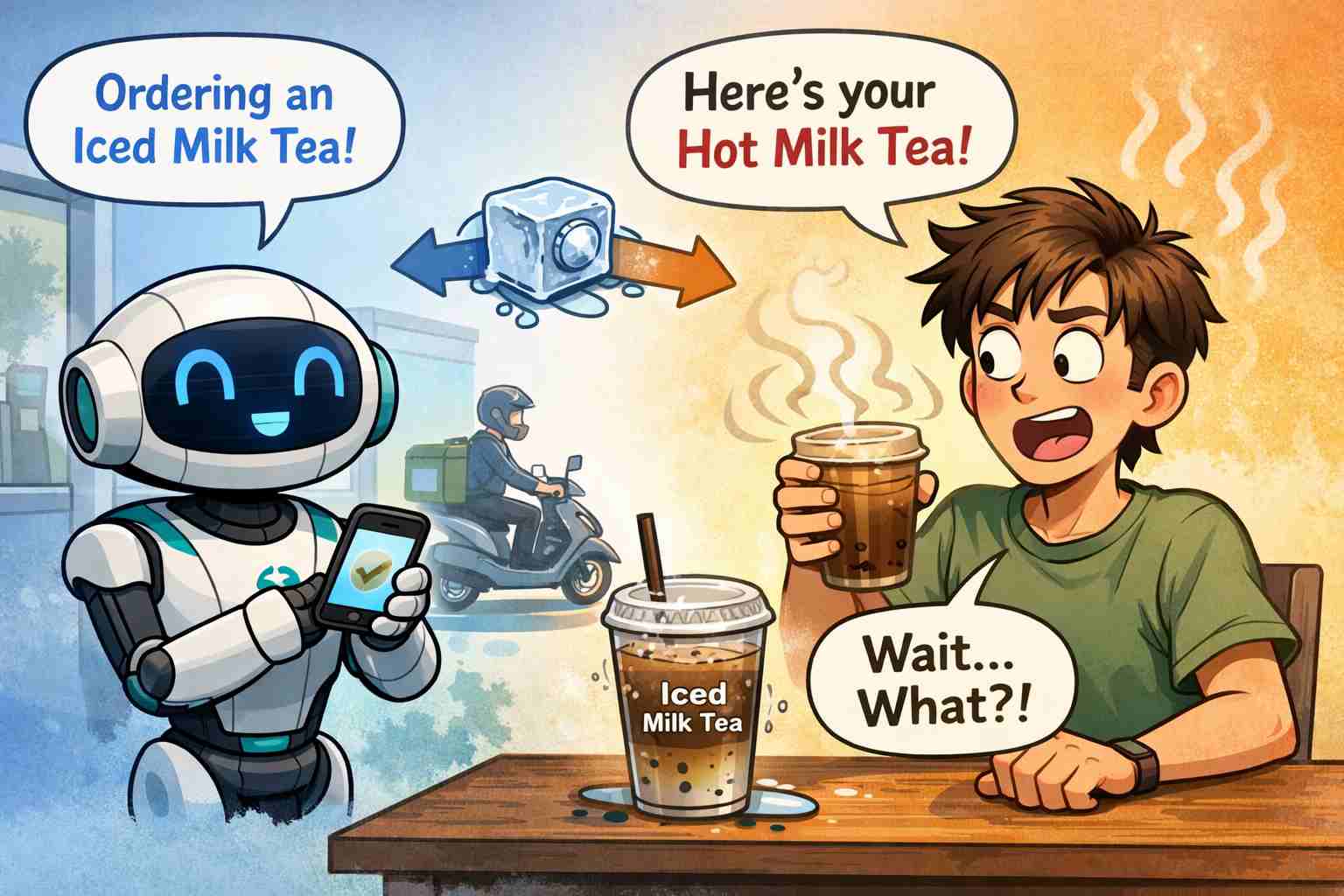
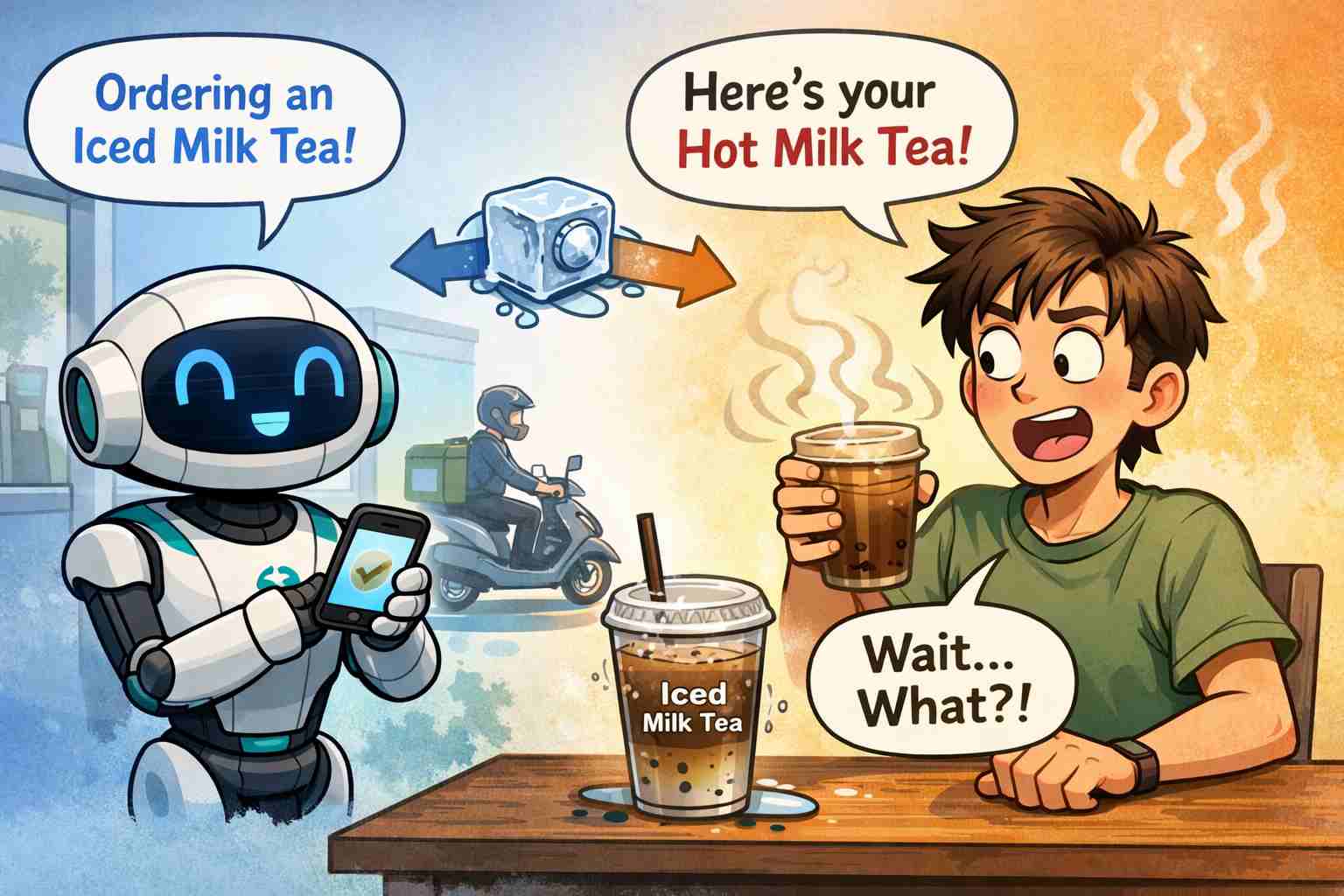
👀 What’s happening: Alibaba upgraded its Qwen app so it can order food, book travel, and complete payments directly inside chat. In testing, my team member asked for an milk tea with less iceand received a hot one instead. The system can act now, but intent still slips at the edges.
🌍 How this hits reality: This is not a feature update. It is a shift from conversational AI to transactional infrastructure. Once payments, logistics, and bookings live inside a model, every misunderstanding has a dollar value. At claimed scale above 100 million monthly users, even a 1 percent execution error becomes a customer support and trust problem, not a UX quirk.
🛎️ Key takeaway: Agentic AI is moving faster than reliability. As systems follow paths opened by OpenAI and Google, the hard work is no longer intelligence. It is precision, handoffs, and failure handling inside real commercial flows.
👀 What’s happening: Alibaba upgraded its Qwen app so it can order food, book travel, and complete payments directly inside chat. In testing, my team member asked for an milk tea with less iceand received a hot one instead. The system can act now, but intent still slips at the edges.
TOGETHER WITH HELPSCOUT
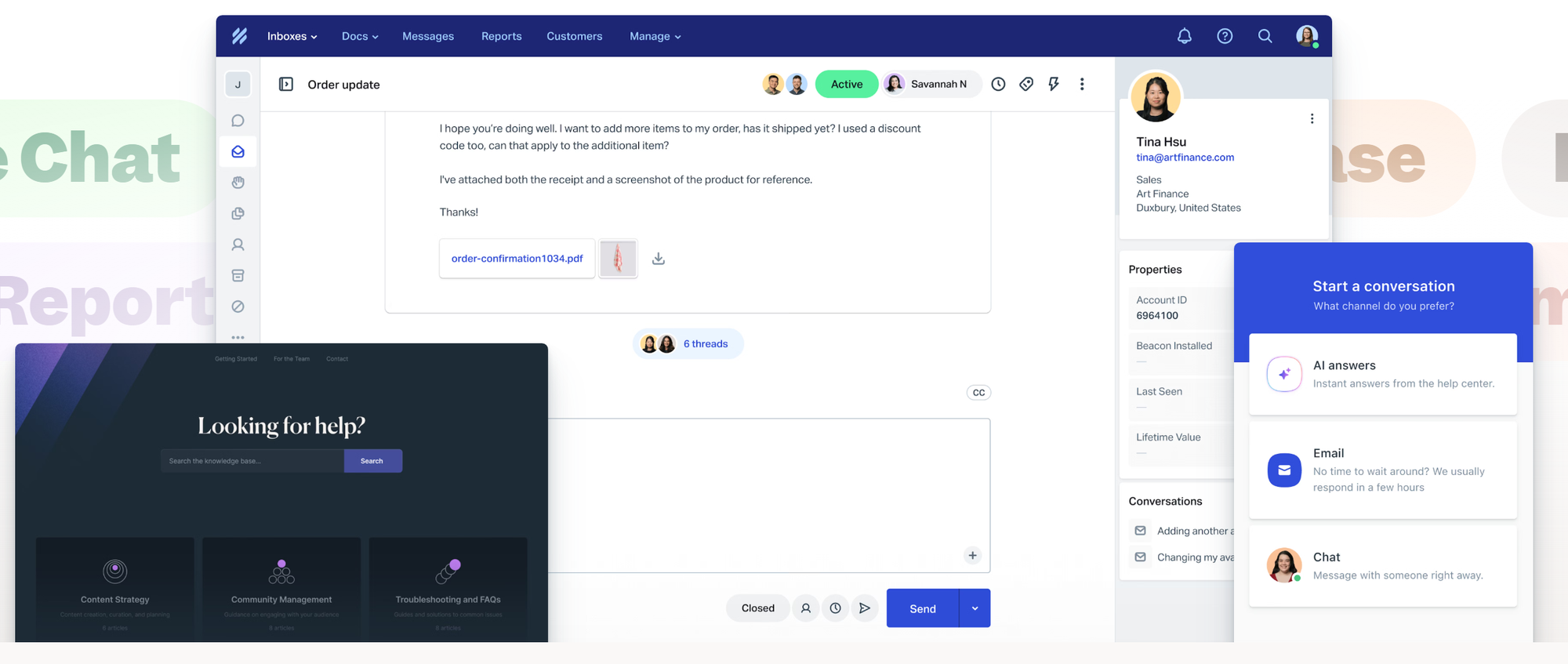
Help Scout is a customer platform with AI-powered email, chat, and knowledge base tools. AI drafts, summarizes, and translates replies instantly, automates workflows, and boosts agent efficiency. With 12,000+ teams onboard, it integrates with 90+ apps, simplifies collaboration, and enhances CSAT without ticketing complexity.
SHOPPING
👀 What’s happening: Google introduced UCP, a universal commerce protocol that lets AI handle discovery, checkout, payment, and fulfillment across merchants. OpenAI answered with Agentic Commerce Protocol ACP, a lighter framework where AI agents trigger purchases without owning the full transaction stack. This makes the split structural, not cosmetic.
🌍 How this hits reality: UCP looks like Android for commerce. Open source in name, Google certified in practice. Merchants gain reach and user access, but must adopt Google schemas and compliance. ACP stays minimal. It plugs into existing systems, avoids payment custody, and limits liability. That lowers friction, but also limits how much commerce logic OpenAI can control.
🛎️ Key takeaway: This is Android style openness versus lightweight adaptability. Google UCP offers depth and standardization with tighter gravity. OpenAI ACP offers speed and flexibility with less lock in. Merchants will weigh scale against autonomy. The standard that feels least risky to adopt may spread fastest.
OpenAI answered with Agentic Commerce Protocol ACP, a lighter framework where AI agents trigger purchases without owning the full transaction stack. This makes the split structural, not cosmetic.
Open source in name, Google certified in practice. Merchants gain reach and user access, but must adopt Google schemas and compliance. ACP stays minimal. It plugs into existing systems, avoids payment custody, and limits liability.
CLOUD

👀 What’s happening: Microsoft is increasing spending on Anthropic models inside Azure and is now paying cloud sales teams to actively sell Claude alongside its own offerings. Internal incentives reportedly run through 2026. This marks a shift from quietly supporting alternatives to formally productizing them.
🌍 How this hits reality: Azure customers increasingly want choice as model performance, safety, and pricing diverge. OpenAI dependence concentrates leverage and risk. By adding Anthropic, Microsoft broadens coverage across regulated industries, spreads compute demand, and strengthens Azure against buyers asking for model redundancy and negotiating power.
🛎️ Key takeaway: Microsoft is hedging, not defecting. OpenAI stays central, but leverage is built ahead of future shifts. If this continues, cloud AI turns into a portfolio game, with Azure positioned as neutral layer.
OpenAI dependence concentrates leverage and risk. By adding Anthropic, Microsoft broadens coverage across regulated industries, spreads compute demand, and strengthens Azure against buyers asking for model redundancy and negotiating power.
👀 What’s happening: Microsoft is increasing spending on Anthropic models inside Azure and is now paying cloud sales teams to actively sell Claude alongside its own offerings. Internal incentives reportedly run through 2026. This marks a shift from quietly supporting alternatives to formally productizing them.
👀 What’s happening: Microsoft is increasing spending on Anthropic models inside Azure and is now paying cloud sales teams to actively sell Claude alongside its own offerings. Internal incentives reportedly run through 2026. This marks a shift from quietly supporting alternatives to formally productizing them.
QUICK HITS
TRENDING
READ MORE
Stay ahead without drowning in information. We turn the most important signals across AI, tech, marketing, and future products into 5-minute reads you can actually finish.
TOGETHER WITH US
AI Secret Media Group is the world’s #1 AI & Tech Newsletter Group, reaching over 2 million leaders across the global innovation ecosystem, from OpenAI, Anthropic, Google, and Microsoft to top AI labs, VCs, and fast-growing startups.
We've helped promote over 500 Tech Brands. Will yours be the next?
Email our co-founder Mark directly at [email protected] if the button fails.
Plus: Anthropic Blames Open AI for Doomsday, Musk Wants Your Credit Card
Read the storyPlus: Cheap Labor Just Lost to Agents, Anthropic Turned Cops Into Beta Testers
Plus: Musk Kisses the Ring, Sam Altman's Safety Was a Speech
Plus: OpenAI Built Its Own Body, Alibaba Bleeds on AI Theft Claims
Plus: HappyHorse Broke His Leg, Anthropic Hits OpenAI Territory
Plus: Claude Banned Peter Steinberger, Alibaba Claims HappyHorse-1.0
Plus: Gemini 3.1 Flash Lite Towards Floor, Qwen Loses Its Core Architects
Plus: Court Locks Out AI, Walkie Talkie Phase
Plus: DNA Model Era, Gates Family Name Bet, Closed Power Game
Plus: AI Shopping Split, More Than One