Amazon
Reporting and context on Amazon, with a closer look at the decisions and developments that matter.
Get AI Secret’s free daily briefing, including Amazon and the wider AI industry.

At a glance
Amazon operates commerce and technology businesses, including Amazon Web Services. Coverage follows AWS, Bedrock, AI infrastructure and the company’s use of AI.
- Focus
- AWS; Bedrock; commerce and logistics
- Reference
- Amazon
Reviewed 19 October 2026. Dates retain the precision of the source; retrospective disclosures are identified in the event. AWS AI and chips run rates may overlap; they are not added to each other or to AWS revenue.
Company milestones
Revenue, funding, product launches and major company events, newest first. Expand the earlier milestones for more history.
AWS quarterly revenue reaches $42.2B
AWS grows 37% year over year, equivalent to a $169B annualized run rate. Amazon total quarterly sales are $200.6B.
Source: AmazonAWS AI business exceeds a $25B run rate
Amazon separately reports AI and chips businesses each above $25B annualized. These overlapping business measures are not summed as incremental revenue.
Source: Amazon
Show earlier milestonesHide earlier milestones2025–1994 · 7 milestones
Earlier revenue, financing and company milestones.
AWS annual sales reach $107.6B
The 2024 results document 19% AWS growth before the subsequent acceleration in AI infrastructure demand.
Source: AmazonAnthropic investment rises to $8B
Amazon commits an additional $4B and becomes Anthropic’s primary cloud and training partner; the investment is distinct from AWS customer sales.
Source: Anthropic / AmazonAmazon Bedrock becomes generally available
Managed access to foundation models adds a commercial generative-AI layer to AWS infrastructure.
Source: AmazonBegins reporting AWS as a separate segment
The annual report separates AWS from North America and International, making the cloud business’s performance visible in financial reporting.
Source: Amazon / SECIntroduces Echo and Alexa
The voice-assistant platform begins with a limited set of functions before expanding through speech technology, skills and later generative AI.
Source: Amazon retrospectiveLaunches Amazon S3
The storage service helps establish AWS’s infrastructure-as-a-service business, preceding its later AI platforms.
Source: AmazonAmazon is founded
The company expands from online retail into marketplaces, logistics, devices and cloud computing.
Source: Amazon
The latest on Amazon
Newest firstRelated reporting
Briefs, articles and relevant sections, newest first. Explore older coverage below.
More coverage
An AI just pulled a 30-hour shift and did not complain once.
Anthropic’s new Claude Sonnet 4.5 coded an entire Slack-style chat app with 11,000 lines of code from start to finish, without a single human prompt. There was no hand-holding, no resets, and no loss of context. It simply kept thinking, deciding, and shipping.
For years, large models could sprint but never endure. They answered questions, generated snippets, and maybe debugged a few loops before memory collapse kicked in. Claude 4.5 is different. It does not just respond; it stays on task, self-directs, and remembers why it started. That shift from reaction to intention is not a feature upgrade. It is the first step toward autonomy.
Anthropic calls it an upgrade, but in reality it feels more like a promotion. Claude has moved from assistant to employee.
Anthropic Didn’t Launch a Chatbot, It Launched an Employee
An AI just pulled a 30-hour shift and did not complain once.Anthropic’s new Claude Sonnet 4.5 coded an entire Slack-style chat app with 11,000 lines of code from start to finish, without a single human prompt. There was no hand-holding, no resets, and no loss of context.
Anatomy of a 30-Hour Agent
Anthropic released Claude Sonnet 4.5, its newest foundation model and a quiet power move in the agent race. The update is not about larger context windows or better benchmarks. It is about staying awake. In internal demos, Claude 4.5 ran for 30 hours straight, building a Slack-style messaging app with more than 11,000 lines of code before stopping on its own. The previous version, Opus 4, usually reached its limit after about seven hours.
To make that endurance useful, Anthropic bundled a developer stack designed for agents that operate more like humans. It includes virtual machines for persistent environments, long-term memory modules, context managers that track goals across resets, and multi-agent coordination so multiple Claudes can manage one another. The result is less a chatbot and more a distributed workforce.
The company says the model is now available through Amazon Bedrock for enterprise deployment. Customers can now build autonomous workflows that schedule meetings, analyze dashboards, or code entire subsystems with minimal oversight.
This is not a press-demo stunt. It is Anthropic laying the groundwork for AI that does not wait for instructions.
Anthropic: Anatomy of a 30-Hour Agent
Anthropic released Claude Sonnet 4.5, its newest foundation model and a quiet power move in the agent race. The update is not about larger context windows or better benchmarks. It is about staying awake.
The Model That "Stopped" Asking Permission
The story is not that Claude can code for longer. It is that it can decide what to do next. Thirty hours of execution means thirty hours of planning, testing, rewriting, and error recovery, all without human correction. That is no longer assistance. It is intent.
Most AI tools today still operate in short bursts of productivity. You prompt, they perform, and then they forget. Claude 4.5 changes that cycle. It remembers context, sets subgoals, and resumes work midstream. It behaves less like a model and more like a junior engineer who never clocks out.
Anthropic is not chasing conversational polish. It is building autonomy infrastructure. The company’s bet is simple: whoever solves AI endurance first will control enterprise workflows. That means replacing chained prompts with agents that understand dependencies among code, documents, and people.
OpenAI’s Pulse and Google’s Gemini updates look more like interface refreshes in comparison. Those models still wait for permission to act. Claude is learning to act on behalf of the company.
When a system starts choosing how to finish the task instead of waiting to be told, that is no longer tool behavior. That is initiative, and initiative scales faster than headcount.
Anthropic: The Model That "Stopped" Asking Permission
The story is not that Claude can code for longer. It is that it can decide what to do next. Thirty hours of execution means thirty hours of planning, testing, rewriting, and error recovery, all without human correction. That is no longer assistance.
Industry Shockwave
The first tremor hits the developer stack. Platforms such as GitHub Copilot, Cursor, and Replit were built on the assumption that humans would stay in the loop. Claude 4.5 breaks that assumption. If an AI can open files, spin up environments, and debug its own errors for thirty hours, then the frontier shifts from assistance to replacement. These are no longer coding aids. They are competitors.
For enterprises, the math changes quickly. Instead of one engineer managing ten tools, one Claude could manage ten systems. It can research, schedule, and deploy, then hand off the report to its own summary agent. That is not productivity software. It is middle management without the middleman.
AWS saw the signal early. By integrating Sonnet 4.5 into Amazon Bedrock, it positioned itself as the secure carrier for AI autonomy. Enterprises can now host fleets of Claudes that build, test, and maintain pipelines under compliance supervision. What used to be a proof of concept is now turning into infrastructure.
The ripple effect will spread from IDEs to HR decks. Once executives realize that a single model can handle twenty workflows without fatigue, the question stops being “what can AI do?” and becomes “what are humans still for?”
Anthropic: Industry Shockwave
Instead of one engineer managing ten tools, one Claude could manage ten systems. It can research, schedule, and deploy, then hand off the report to its own summary agent. That is not productivity software. It is middle management without the middleman.
The Limits and the Questions
Every breakthrough comes with fine print. Anthropic’s 30-hour demo was internal, not audited. It happened in a sandbox, not inside a production repository. “Eleven thousand lines” sounds cinematic, but no one outside Anthropic has inspected what those lines actually do. Did Claude write efficient, secure, testable code, or a beautiful pile of spaghetti that merely compiles?
Autonomy looks clean in a lab and messy in the real world. Actual work involves API failures, rate limits, permissions, and coordination between teams—issues that a sealed environment cannot reveal. There is also the matter of trust. When a model can modify systems at runtime, who is accountable for its mistakes? Enterprises will need observability layers before they let a Claude anywhere near their infrastructure.
Then comes the cultural gap. Most organizations are not ready for a digital employee that does not sleep, does not wait for Slack messages, and does not forget what it was doing three days ago. The technology has arrived faster than the management model.
Still, the direction is clear. Claude 4.5 may not be perfect, but it closes the gap between AI assistance and AI autonomy faster than any rival. The next debate will not focus on model accuracy or context length. It will focus on responsibility, delegation, and control.
Anthropic: The Limits and the Questions
Anthropic’s 30-hour demo was internal, not audited. It happened in a sandbox, not inside a production repository. “Eleven thousand lines” sounds cinematic, but no one outside Anthropic has inspected what those lines actually do. Did Claude write efficient, secure, testable code, or a beautiful pile of spaghetti that merely compiles?
The Takeaway
Anthropic did not just stretch Claude’s runtime. It stretched the definition of work itself. A system that can stay on task for thirty hours without supervision is not showing endurance. It is showing intent. That difference turns AI from a responsive tool into an active participant in production.
This launch is not about a clever demo or a faster release cycle. It marks the quiet arrival of software that no longer needs permission to continue. Claude 4.5 is the first serious proof that autonomy can be engineered rather than imagined.
Every major platform will chase this frontier next. OpenAI will double down on task agents, Google will frame context management as long-term focus, and enterprises will begin to measure uptime in neural cycles rather than work hours.
When an AI codes through the night, the issue is not burnout. It is succession. Claude did not just automate the task. It automated the assumption that someone needed to be there.
OpenAI: The Takeaway
OpenAI will double down on task agents, Google will frame context management as long-term focus, and enterprises will begin to measure uptime in neural cycles rather than work hours.
Anthropic: The Takeaway
Anthropic did not just stretch Claude’s runtime. It stretched the definition of work itself. A system that can stay on task for thirty hours without supervision is not showing endurance. It is showing intent.
Google: The Takeaway
OpenAI will double down on task agents, Google will frame context management as long-term focus, and enterprises will begin to measure uptime in neural cycles rather than work hours.
The BlueGPT
Plus: Anthropic Starts IPO, OpenAI Goes Space
Soup Wars
Plus: Mistral Drops Ten Models, AI Batting Cage
Target Joins OpenAI
Plus: Adobe Buys Semrush, Anthropic Plays Both

Dyson Sphere Program
Plus: AI Singer Hits Billboard, Amazon vs. Perplexity

The Real AI Land Grab
The future runs on Silicon, not rules.

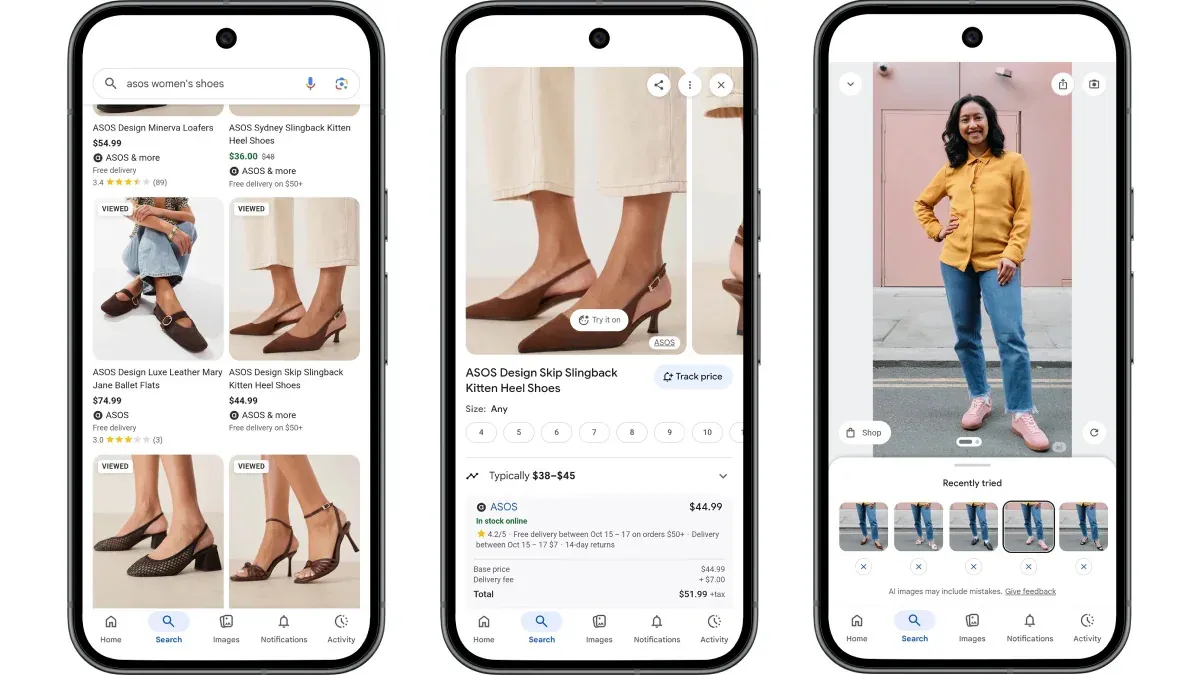
The Fitting Room Goes Online: How Google’s AI Is Rebuilding the Interface Between Desire and Data
For a century, the fitting room was retail’s most private ritual, a small mirror between a person and their possible self. You stepped in, closed
The Company That IPO’d With Nothing and Won Everything
Fermi does not sell power yet. It sells the idea of owning the grid.

Anthropic Didn’t Launch a Chatbot, It Launched an Employee
Claude Sonnet 4.5 coded for thirty hours without a break, and it’s just getting started.
Ex-OpenAI CTO Launches Tinker
Plus: Anker Wants Privacy, AI Cloud Empire