I Want You
Is Perplexity AI's bid to merge with TikTok US a joke or a real possibility?
Read the story
Reporting and context on ByteDance, with a closer look at the decisions and developments that matter.
Get AI Secret’s free daily briefing, including ByteDance and the wider AI industry.

ByteDance is an internet technology company. Coverage follows its AI research and products, including the Seed team and Doubao ecosystem.
Reviewed 19 October 2026. Dates retain the precision of the source; retrospective disclosures are identified in the event. Reported group sales are not separately disclosed AI revenue. No verified standalone AI ARR series was located.
Revenue, funding, product launches and major company events, newest first. Expand the earlier milestones for more history.
Seed expands its multimodal research into systems that combine audio and video for natural interaction.
Source: ByteDance SeedThe video-generation release adds reference-guided creation, extending ByteDance’s generative-media product family.
Source: ByteDance SeedEarlier revenue, financing and company milestones.
The image-generation family expands its design-oriented capabilities alongside the Seed language and video models.
Source: ByteDance SeedThe next-generation model is positioned around real-world agent productivity, following Seed2.0 in February.
Source: ByteDance SeedThe model portfolio enters a new generation after the Seed1.x series, supporting ByteDance’s broader AI products and services.
Source: ByteDance SeedReuters reports an employee share-buyback plan. The implied valuation does not represent a fresh primary funding round.
Source: ReutersThe Information reports 29% annual growth. This is reported group revenue, not AI ARR.
Source: The InformationThe Doubao-1.5-pro model establishes an earlier stage of the Seed foundation-model family.
Source: ByteDance SeedByteDance establishes Seed to pursue AI research and general intelligence.
Source: ByteDanceByteDance combines the short-video platforms after acquiring Musical.ly in November 2017.
Source: ByteDanceThe global short-video service expands ByteDance beyond its earlier domestic news and video products.
Source: ByteDanceThe Chinese short-video app becomes a major distribution platform for algorithmic recommendations and creative tools.
Source: ByteDanceThe news and information app becomes one of ByteDance’s first products, shortly after the company’s formation.
Source: ByteDanceBriefs, articles and relevant sections, newest first. Explore older coverage below.
More coverage
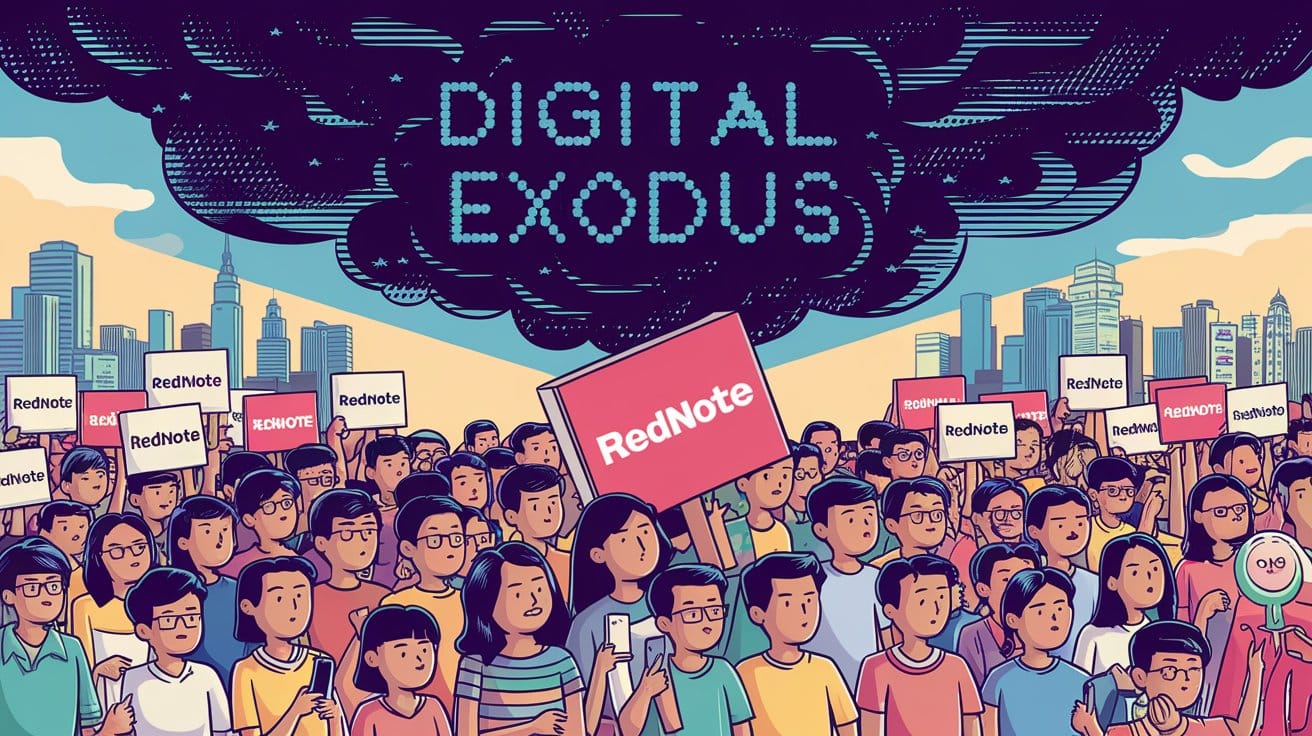
The digital world is witnessing a dramatic migration, and no, it’s not another Netflix series about post-apocalyptic survival. This time, it’s TikTok users in the United States, affectionately dubbing themselves “TikTok refugees,” who are fleeing the potential ban of their beloved app.
Their destination? A Chinese social media platform called RedNote, known as Xiaohongshu in China, which translates to “Little Red Book.” This app has skyrocketed to the top of the U.S. Apple App Store, becoming the most downloaded app in record time. But what’s driving this exodus, and why is RedNote suddenly the hottest digital hangout?
Let’s dive into this fascinating saga of social media survival, rebellion, and a sprinkle of irony.
TikTok, the short-form video app that has been the cultural epicenter for Gen Z and Millennials, is facing an existential crisis in the U.S. The Supreme Court is set to rule on a law that requires TikTok’s Chinese parent company, ByteDance, to sell its U.S. operations by January 19, 2025, or face a nationwide ban. The ban stems from national security concerns, with U.S. lawmakers fearing that TikTok could be used by the Chinese government for surveillance. ByteDance, however, has refused to sell, setting the stage for a potential digital blackout.
If the ban goes into effect, TikTok will be removed from the Apple App Store and Google Play Store, and internet service providers will be required to block access to the app. Current users may still have access, but they’ll be cut off from updates, leaving the app to slowly wither like a neglected houseplant.
As TikTok’s fate hangs in the balance, millions of users are jumping ship to RedNote, a Chinese app that is being hailed as a hybrid of TikTok, Instagram, and Pinterest. RedNote, owned by Shanghai-based Xingyin Information Technology (not ByteDance, for those keeping score), offers a mix of short-form videos, lifestyle tips, shopping features, and community-building tools. It’s like TikTok’s artsy cousin who also happens to be a fashion influencer.
RedNote has been around since 2013, initially designed as a platform for sharing shopping advice and product reviews. Over the years, it has evolved into a lifestyle-focused app with a strong emphasis on short-form video content. With approximately 300 million monthly users, primarily young urban women in Mandarin-speaking regions, RedNote has now captured the attention of American users desperate for a TikTok alternative.
The migration to RedNote isn’t just about finding a new platform; it’s also a form of protest. Many TikTok users view the potential ban as an overreach by the U.S. government and a capitulation to anti-China sentiment. By downloading RedNote, they’re sending a message: “If you take away our Chinese app, we’ll just download another one!” Some users have even admitted to joining RedNote out of spite, hoping to undermine the U.S. government’s decision.
The hashtag #TikTokRefugees has gained traction as creators encourage their followers to join them on RedNote. Videos explaining how to navigate the app’s primarily Chinese interface, often using translation tools, are flooding TikTok itself. It’s a bit like using your old apartment’s Wi-Fi to find a new place to live.
So, what makes RedNote so appealing to TikTok users? For starters, it offers many of the same features, including short-form videos and community engagement. But RedNote also brings something new to the table. It integrates elements of Pinterest, allowing users to share product reviews and lifestyle content, creating a blend of social interaction and online shopping. Think of it as TikTok with a side of Amazon and a sprinkle of Instagram aesthetics.
Additionally, RedNote’s rise to prominence during the pandemic mirrors TikTok’s trajectory in the U.S. This familiarity, combined with its focus on lifestyle and fashion, makes it a natural fit for TikTok’s audience. It’s like switching from one trendy coffee shop to another, but with a slightly different menu.
While RedNote’s sudden popularity is impressive, it’s not without challenges. The app’s interface is primarily in Chinese, which has left many American users relying on translation tools to navigate. This language barrier could deter some users, especially those who aren’t tech-savvy or patient enough to figure out how to post a video without accidentally ordering a pair of shoes.
Moreover, RedNote’s Chinese origins could make it a target for the same scrutiny that TikTok is facing. If the U.S. government is concerned about data privacy and surveillance, RedNote might find itself under the microscope sooner rather than later. It’s like jumping from the frying pan into another frying pan, but this one has a slightly different logo.
The TikTok-RedNote saga highlights the growing tension between the U.S. and China in the tech world. As American lawmakers push for greater control over Chinese-owned apps, users are caught in the crossfire. This digital migration also underscores the power of social media platforms to shape culture and community. TikTok isn’t just an app; it’s a cultural phenomenon, and its potential ban has left a void that RedNote is eager to fill.
As January 19 approaches, the fate of TikTok in the U.S. remains uncertain. Whether or not the ban goes into effect, one thing is clear: TikTok users are resilient, resourceful, and not afraid to make a statement. RedNote’s sudden rise to fame is a testament to the power of community and the lengths people will go to preserve their digital identities.
So, will RedNote become the new TikTok, or is it just a temporary refuge? Only time will tell. But for now, the #TikTokRefugees have found a new home, and they’re making themselves comfortable—language barriers, government scrutiny, and all.
Is Perplexity AI's bid to merge with TikTok US a joke or a real possibility?
Read the storyTikTok, the app that has us all dancing, lip-syncing, and wondering if we’re too old to be on it. But behind the viral trends and
The digital world is witnessing a dramatic migration, and no, it’s not another Netflix series about post-apocalyptic survival. This time, it’s TikTok users in
Daily News Collection
ByteDance, the Chinese technology giant and parent company of TikTok, has emerged as a significant player in the artificial intelligence (AI) sector. The company has been