IBM supplies enterprise AI models, software, consulting and hybrid cloud infrastructure. Its watsonx platform and Granite models help organizations build and govern AI applications, while data and automation acquisitions extend the infrastructure supporting production deployments.
IBM traces its origins to the 1911 formation of the Computing-Tabulating-Recording Company. Its AI history includes Deep Blue’s chess victory and Watson’s Jeopardy success, followed by enterprise products built around data, governance and hybrid cloud. Today its Granite models and watsonx platform sit alongside Red Hat, consulting and infrastructure businesses. Recent acquisitions add automation and streaming data capabilities; reported company and software revenue cover substantially more than AI alone.
Sources checked . Financing, revenue run rates and recognized revenue are distinguished below.
Company milestones
Revenue, funding, product launches and major company events, newest first. Expand the earlier milestones for more history.
Q3 revenue reaches US$17.1 billion
IBM reported Q3 2026 company revenue of US$17.1 billion, up 5% as reported and 6% at constant currency. Software revenue was US$7.8 billion, covering more than AI products.
IBM released Granite 4.2, with its official model card identifying reasoning, code generation, tool calling and agentic workflows as intended strengths. The model was distributed under the Apache 2.0 license.
IBM released Granite 4.1 language models. Its official model card describes an improved post-training pipeline combining supervised fine-tuning and reinforcement learning to strengthen tool calling, instruction following and conversational use.
IBM completed its acquisition of Confluent at an enterprise value of approximately US$11 billion. The announcement linked real-time streaming data with watsonx.data, hybrid-cloud applications and enterprise AI agents.
IBM launched Granite 4.0, using a hybrid Mamba and transformer architecture to reduce model memory requirements. The Apache 2.0 release reinforced its focus on smaller enterprise models and efficient deployment.
IBM completed its HashiCorp acquisition at approximately US$6.4 billion in enterprise value. Terraform and Vault joined IBM’s automation portfolio, adding infrastructure provisioning and secrets-management capabilities relevant to hybrid-cloud and AI deployments.
IBM released Granite 3.0, its next generation of enterprise AI models. The announcement included general-purpose language models and Granite Guardian models, alongside updated coding assistance and tools for building AI applications.
IBM released Granite code models under Apache 2.0 at Think 2024. The models ranged from 3 billion to 34 billion parameters and targeted code generation, explanation, maintenance and modernization workflows.
watsonx is announced for enterprise foundation models
IBM announced watsonx as an AI and data platform comprising an AI studio, a data store and governance tools. The announcement set out planned availability rather than declaring every component generally available.
IBM completed its acquisition of Red Hat, adding open hybrid-cloud technology based on Linux and Kubernetes. The combined platform became an important foundation for deploying enterprise applications and subsequent AI offerings.
IBM’s Watson DeepQA system defeated Brad Rutter and Ken Jennings in a televised Jeopardy contest. The system demonstrated natural-language question answering and analysis of unstructured information without an internet connection.
IBM’s Deep Blue defeated reigning world chess champion Garry Kasparov in a six-game match under standard tournament controls. The achievement demonstrated the power of specialized parallel computation for complex search.
The Computing-Tabulating-Recording Company was incorporated through the combination of three data-processing businesses. This company became IBM, establishing the corporate lineage behind its later computing, research and enterprise technology operations.
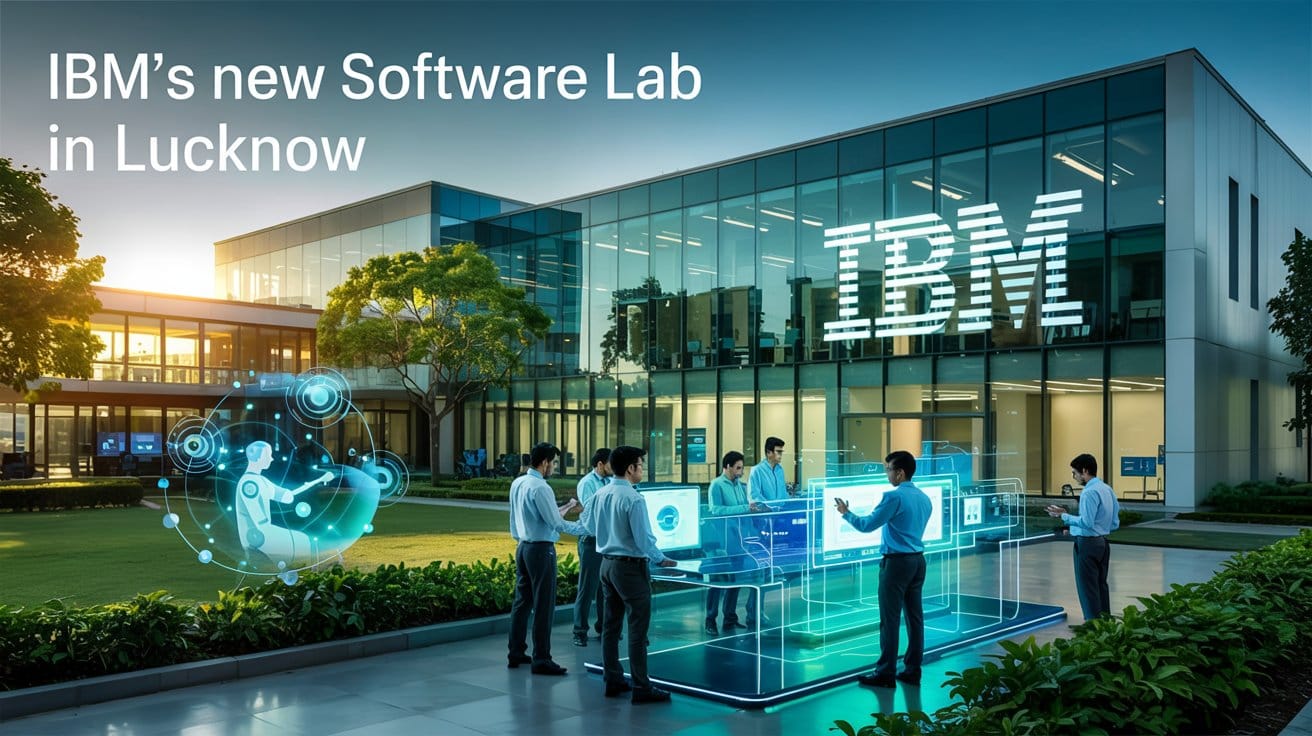
IBM, a global leader in information technology, has announced its plans to establish a cutting-edge Software Lab in Lucknow, Uttar Pradesh. This initiative represents a significant milestone in IBM’s broader expansion