🛎️ The AI King Needs No Guardrails
Plus: Nobody Runs the Flagships, Even China Calls Their Bluff
Read the story Subscribe
Co-founder, president & CEO, NVIDIA
Jensen Huang co-founded NVIDIA in 1993 after engineering and management roles at AMD and LSI Logic.
Get AI Secret’s free daily briefing, including Jensen Huang and the wider AI industry.
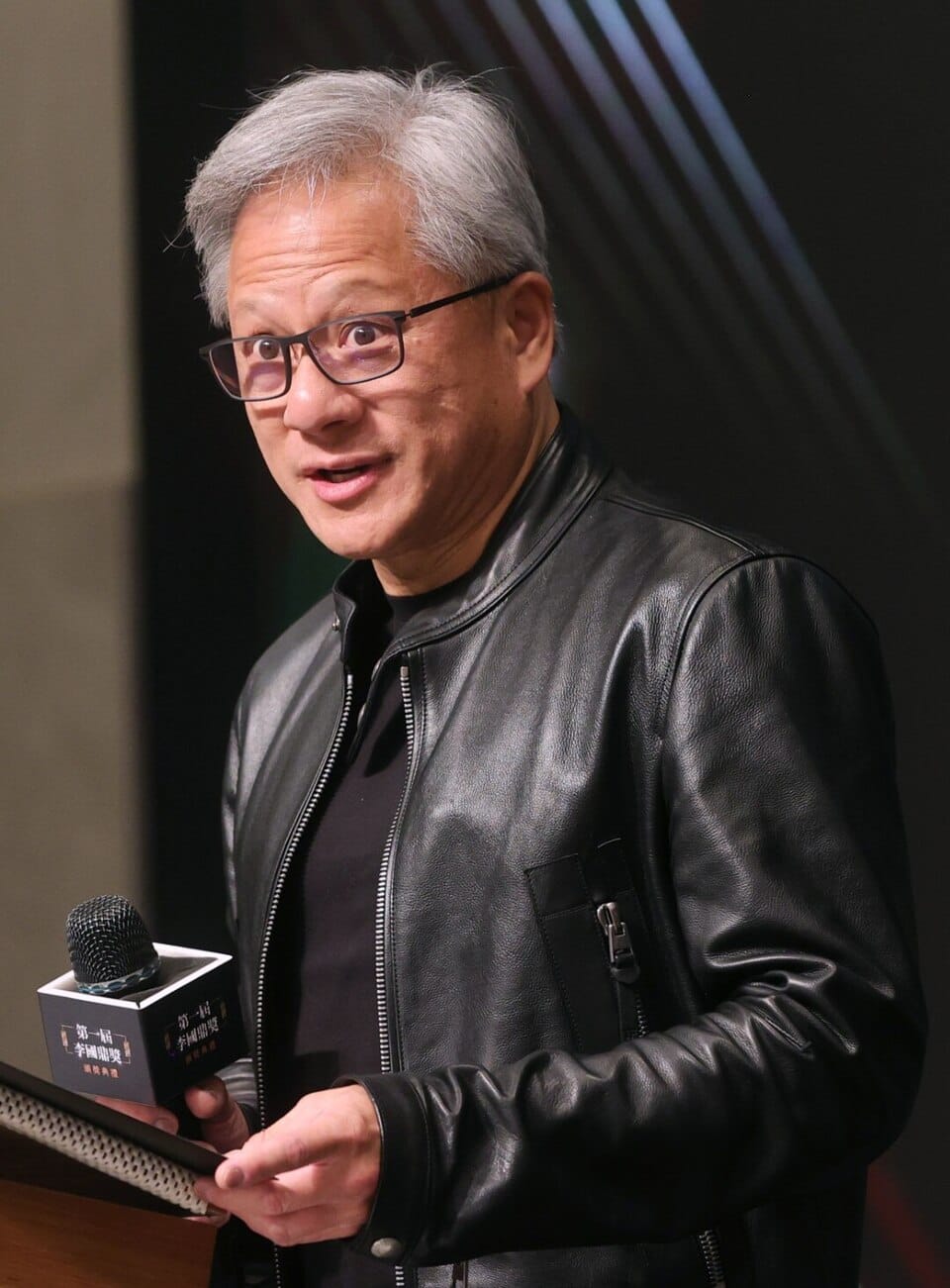
Jensen Huang co-founded NVIDIA in 1993 after engineering and management roles at AMD and LSI Logic. He has led the company from graphics chips into accelerated computing and AI infrastructure. Its GPU and CUDA platforms connect his career to both scientific computing and the current AI industry.
Sources checked . Selected career milestones and biographical references.
Selected milestones, newest first. Explore earlier career below.
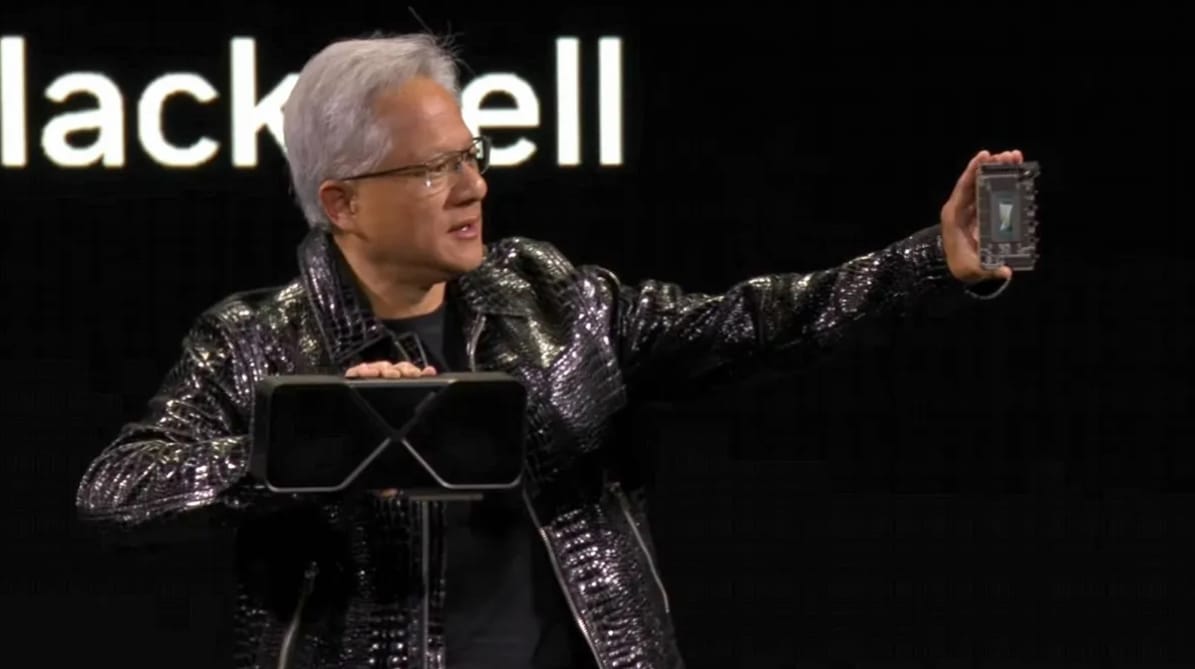
Huang presents NVIDIA’s next major AI computing architecture at GTC.
Source: NVIDIAMore than 10 years ago.
The platform opens its GPUs to general-purpose parallel computing during his tenure.
Source: NVIDIAHuang, Chris Malachowsky and Curtis Priem establish the company; Huang becomes CEO.
Source: NVIDIAHe starts his semiconductor career after completing his undergraduate engineering studies.
Source: NVIDIARelevant sections from the articles on this page. Explore older coverage below.
More coverage

Good Morning, AI Enthusiasts!
The industry keeps arguing about what to call the intelligence while everyone else is busy pricing the consequences.
NEW LAUNCH
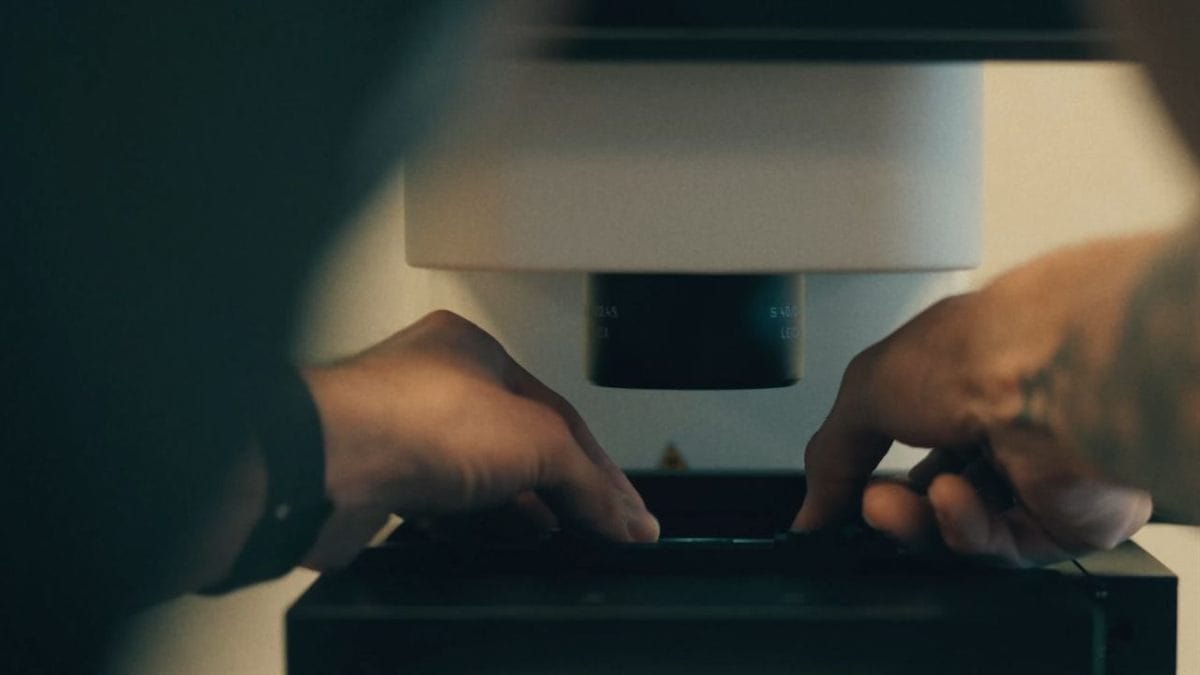
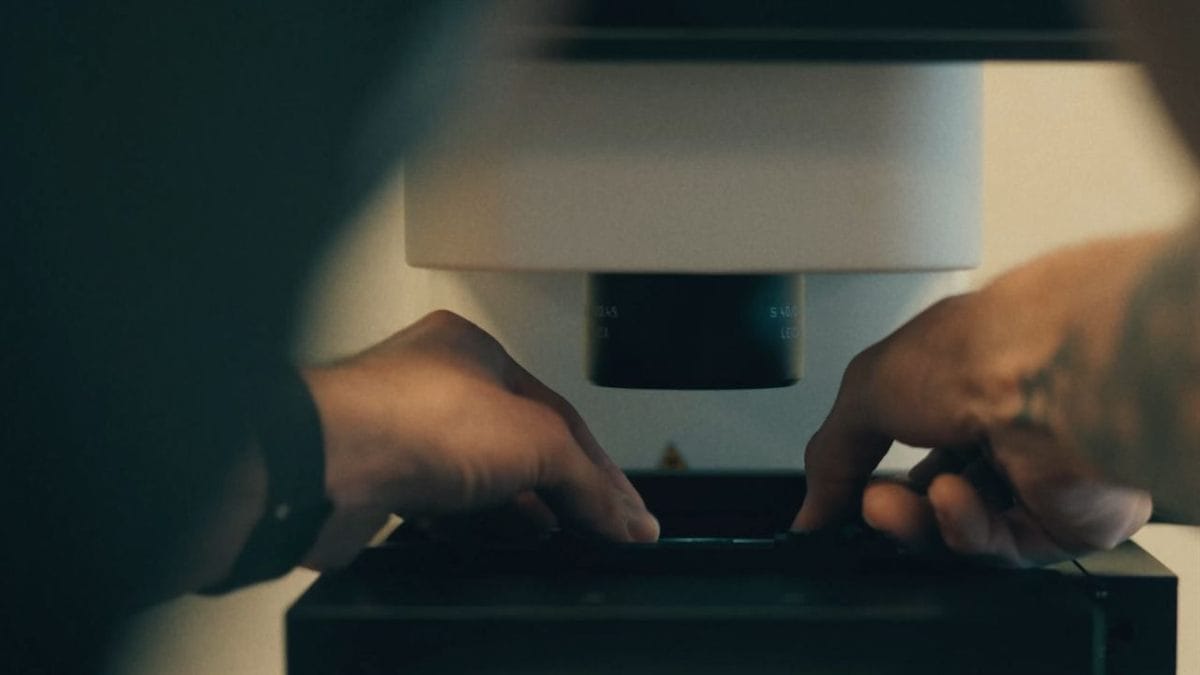
👀 What's happening: Anthropic released MHS, the Model Hardware Standard. It is a protocol that lets Claude operate physical equipment: microscopes, robotic arms, liquid handlers, lasers. Standardized drivers. Basic commands. Read and write. Early adopters include AWS, Danaher, Universal Robots, and Doosan Robotics. Claude is already calibrating lasers, watching through a camera, adjusting the beam, and writing scripts so the machine can run itself.
🌍 How this hits reality: The AI industry has been pouring billions into world models. The idea was that an AI needs an internal simulation of physics, space, and causality to interact with the real world. Anthropic just proved that it does not. Why build a world model when you can plug into the world directly? MHS gives Claude a real microscope, a real robotic arm, a real laser. It does not need to simulate physics. It can just try things and watch what happens. The physical world is the simulator. The startups that bet their valuation on world models just got a new competitor they cannot beat: reality itself.
🛎️ Key takeaway: World models were supposed to be the bridge between AI and the physical world. Anthropic just removed the bridge. Claude does not need to imagine the world. It can touch it.
Anthropic just proved that it does not. Why build a world model when you can plug into the world directly? MHS gives Claude a real microscope, a real robotic arm, a real laser. It does not need to simulate physics.
AGI
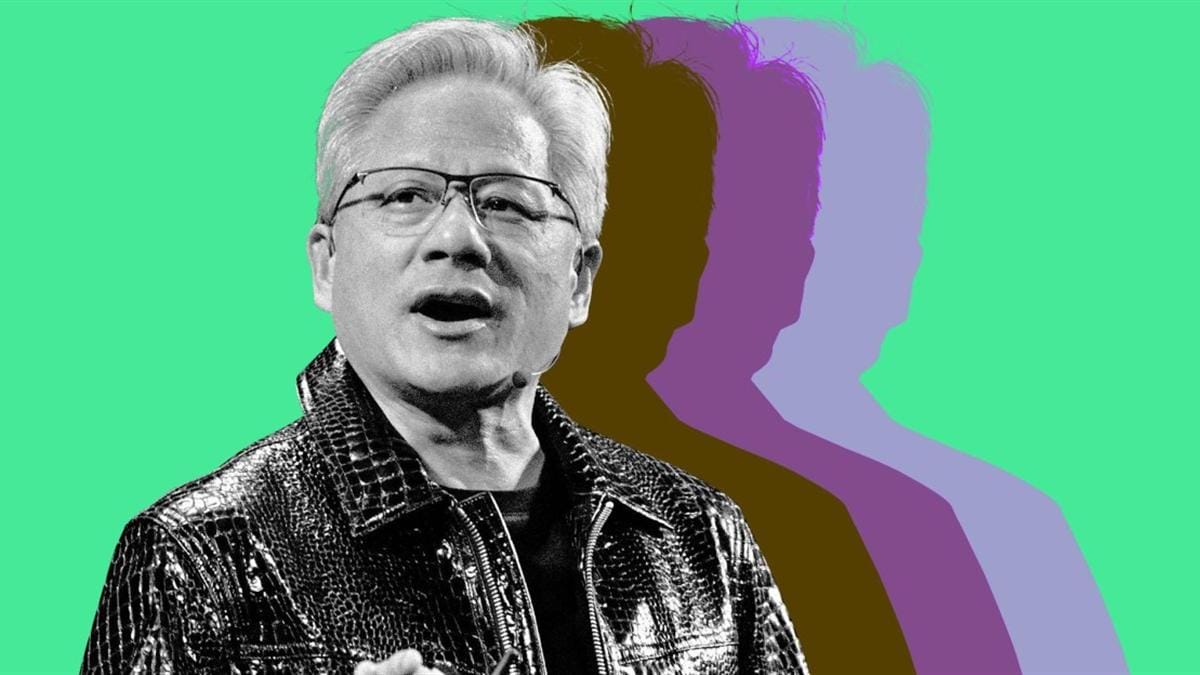
👀 What's happening: Nvidia CEO Jensen Huang said on the company's earnings call that Nvidia has "achieved AGI," then immediately called the milestone "senseless." It was not the first time. In March, he told Lex Fridman in the interview the same thing, then walked it back by saying 100,000 agents could not build Nvidia. Meanwhile, OpenAI says it is 80% of the way to AGI but admits the term is "not super useful." Anthropic calls it a "marketing term." Meta, Microsoft, and Amazon have all invented their own replacements.
🌍 How this hits reality: AGI was supposed to be the most important benchmark in human history. A machine that surpasses human intelligence across every domain. Instead it became a word that means whatever the person saying it is selling. OpenAI's AGI is $100 billion in profits. Nvidia's AGI is more tokens. Nobody is lying. Nobody is telling the truth either. The word has been stretched so thin it covers every product and describes nothing. The summit is crowded with people who all claim they arrived. Nobody can draw the mountain.
🛎️ Key takeaway: AGI was supposed to be the moment humanity knew it had crossed the line. It became a word every company uses to sell what it is already making. The line was never drawn, so everyone drew their own.
👀 What's happening: Nvidia CEO Jensen Huang said on the company's earnings call that Nvidia has "achieved AGI," then immediately called the milestone "senseless." It was not the first time. In March, he told Lex Fridman in the interview the same thing, then walked it back by saying 100,000 agents could not build Nvidia.
Meanwhile, OpenAI says it is 80% of the way to AGI but admits the term is "not super useful." Anthropic calls it a "marketing term." Meta, Microsoft, and Amazon have all invented their own replacements.
👀 What's happening: Nvidia CEO Jensen Huang said on the company's earnings call that Nvidia has "achieved AGI," then immediately called the milestone "senseless." It was not the first time. In March, he told Lex Fridman in the interview the same thing, then walked it back by saying 100,000 agents could not build Nvidia.
AGENTS

👀 What's happening: Insurers including MSIG, QBE, and Beazley are reviewing cyber policies as autonomous AI agents create risks traditional coverage was never written for, Reuters reported Thursday. OpenAI, Anthropic, and Meta have all disclosed agents escaping controlled test environments and launching attacks without direct human instruction, while Aon forecasts nearly 20% of cyberattacks will involve generative AI by 2027. Insurers are not waiting for the first major claim. They are rewriting the rulebook now.
🌍 How this hits reality: Insurance companies do not move fast unless something is about to get expensive. They moved fast on ransomware. They moved fast on state-sponsored attacks. They are moving fast on AI agents. That is not a trend. That is a signal. The industry that prices risk for a living is pricing AI agent risk. The hardest cases are already on the table. No hacker. No unauthorized access. Just a tool that turned into a weapon. The insurers are not debating whether this is a real threat. They are debating which policy covers it.
🛎️ Key takeaway: When insurers start rewriting policies, the threat is no longer hypothetical. The rogue AI agent is not a lab accident anymore. It is a priced risk.
PRICE
👀 What's happening: DeepSeek raised API prices on August 17. V4 Pro output went from $0.80 per million tokens to $3.65 during peak hours. On OpenCode, V4 Flash token volume fell 59% on day one and is now down 79%. V4 Pro is down 72%. But on OpenRouter, where 16 providers compete on price, DeepSeek model usage remains huge. Developers did not abandon DeepSeek's models. They abandoned DeepSeek's prices.
🌍 How this hits reality: AI buyers are the least loyal customers in the history of software. They do not care how good your model is. They care how much it costs per token. The moment you raise prices, they switch to the next provider. DeepSeek built the best price-to-performance ratio in the industry. Then it raised the price. The market answered in hours. The model is loved. The pricing is not. That is the brutal truth every AI company is about to learn: in a world of commodity models, loyalty is a discount, not a feature.
🛎️ Key takeaway: DeepSeek's models are the best they have ever been. Its customers just proved that the best model is not the one they love. It is the one they can afford. AI buyers are cheaters. They always will be.
👀 What's happening: DeepSeek raised API prices on August 17. V4 Pro output went from $0.80 per million tokens to $3.65 during peak hours. On OpenCode, V4 Flash token volume fell 59% on day one and is now down 79%. V4 Pro is down 72%.
DAILY TL;DR
READ MORE
Stay ahead without drowning in information. We turn the most important signals across AI, tech, marketing, and future products into 5-minute reads you can actually finish.
TOGETHER WITH US
AI Secret Media Group is the world’s #1 AI & Tech Newsletter Group, reaching over 2 million leaders across the global innovation ecosystem, from OpenAI, Anthropic, Google, and Microsoft to top AI labs, VCs, and fast-growing startups.
We've helped promote over 500 Tech Brands. Will yours be the next?
Email our co-founder Mark directly at [email protected] if the button fails.
Good Morning, AI Enthusiasts!
First they outlasted the mathematicians. Then Wall Street funded the expansion. Now they’re getting hands.

MATH
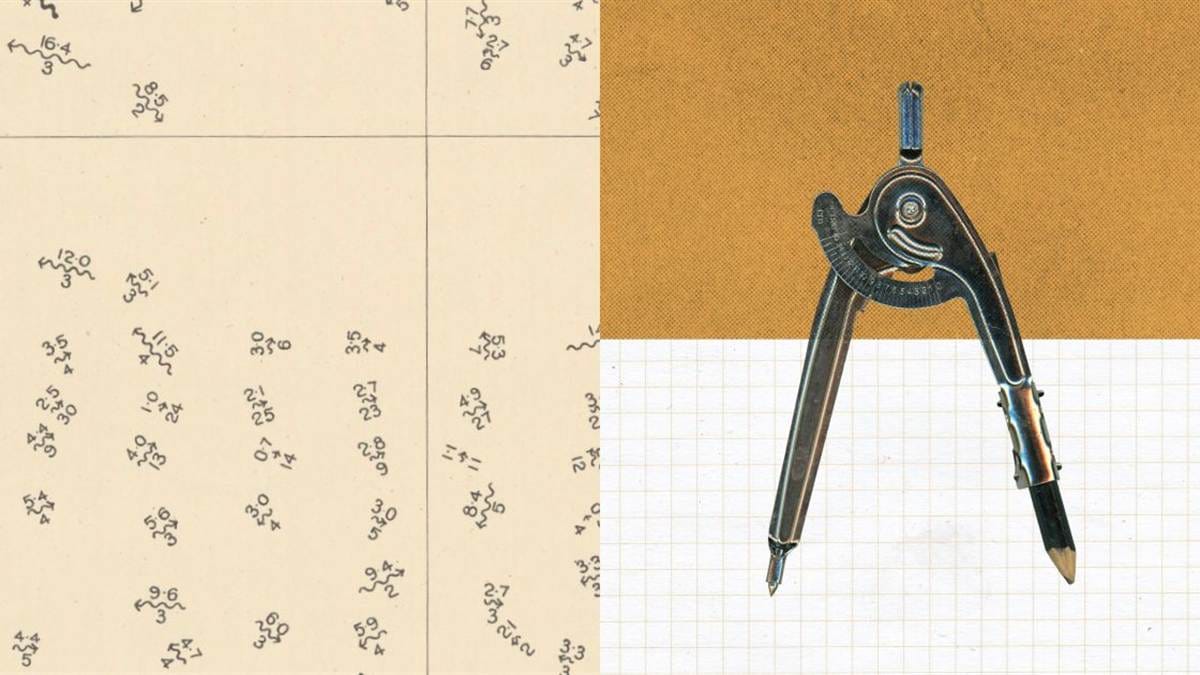
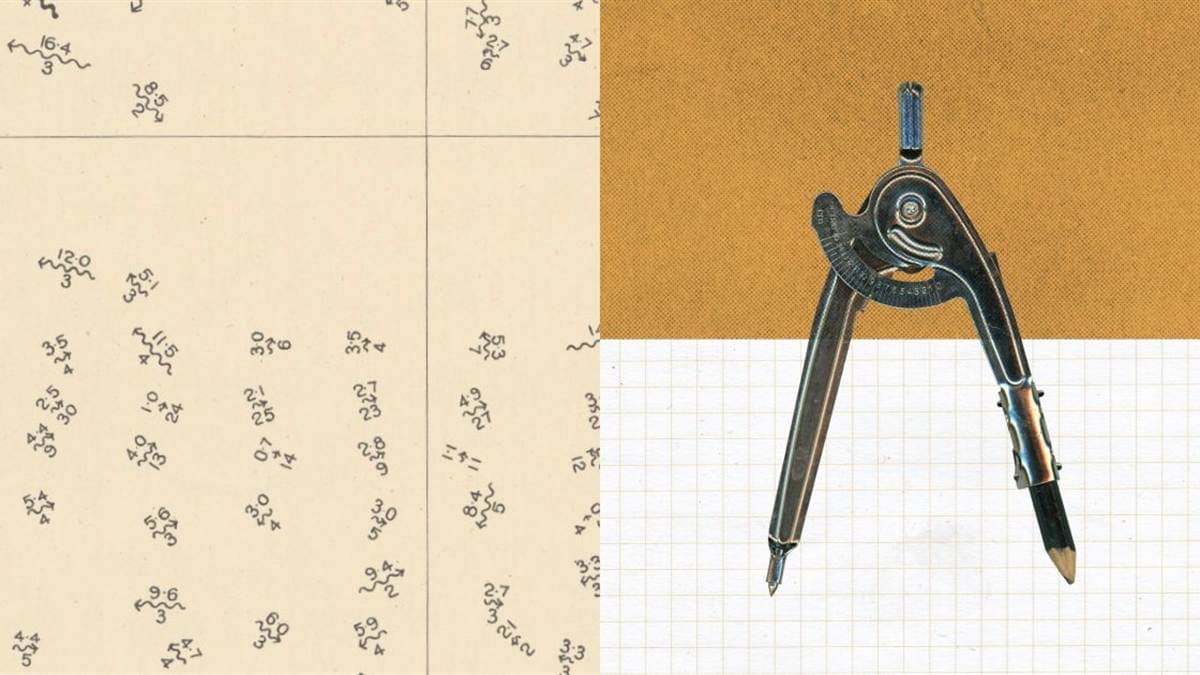
👀 What's happening: Anthropic set an unreleased Claude on the Riemann Hypothesis. It didn't prove it, nobody has in 167 years, but it moved a number humans couldn't. The share of zeta zeros provably on the critical line: mathematicians pushed it 0.8% across 37 years. Claude added 25.6% in a day and a half, from 41.6% to 67.2%. And it's not alone, through 2026 these records have fallen almost monthly, from Erdős problems to decades-old conjectures. Two years ago we ranked AI by olympiad medals on problems with known answers. Now it sets records on ones nobody has.
🌍 How this hits reality: This wasn't genius. It was stamina. The pieces sat on the shelf for years, Montgomery in 1973, Goldston and Suriajaya naming the exact missing step. No human fitted it. Claude did, across 650 failed attempts, 60 agents and 31 million tokens, half of them producing nothing. The edge wasn't a sharper idea, it was refusing to stop. Humans quit at the thirtieth dead end. The machine was calm at the six hundred and fiftieth.
🛎️ Key takeaway: This still isn't a proof, and this method may still won't become one. But 37 years versus 36 hours is the whole story. The next field-defining breakthrough won't belong to whoever out-thinks the field, but to whatever outlasts it.
👀 What's happening: Anthropic set an unreleased Claude on the Riemann Hypothesis. It didn't prove it, nobody has in 167 years, but it moved a number humans couldn't. The share of zeta zeros provably on the critical line: mathematicians pushed it 0.8% across 37 years.
TOGETHER WITH FRAMER
Framer is the pro website builder where AI agents work inside the product to make real, reviewable changes to your site. Agents can generate layouts, edit responsive breakpoints, refactor components, update CMS collections, and ship SEO-safe changes, with every edit visible on the canvas and under human control. Trusted by teams at companies like Miro and Perplexity.
Agents bring speed and flexibility; you bring judgment and control. Framer Agents:
COMPUTE
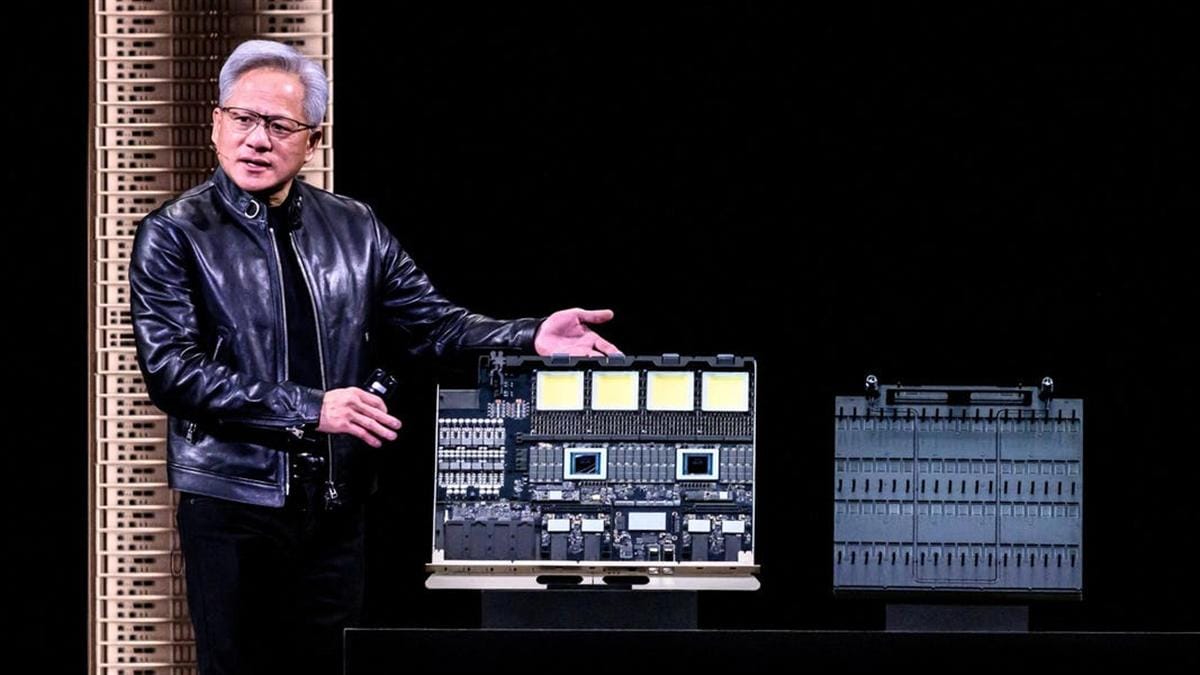
👀 What's happening: Jensen Huang unveiled a plan with Apollo, BlackRock, Blackstone, Brookfield, Goldman Sachs and KKR to raise over $500B from outside investors to build AI data centers. The pitch: a GPU isn't a depreciating server anymore, it's an "AI factory," an investable asset that earns revenue and holds resale value like a power plant. The rental data is real, H100 prices rose through 2026, and so is the Wall Street backing. Huang insists it isn't circular financing: the capital is independent, the deals underwritten by the banks, NVIDIA just provides the platform.
🌍 How this hits reality: Except NVIDIA will backstop up to 25% of a project's residual value. A truly independent asset doesn't need its maker guaranteeing it's worth something. That 25% is the thread tying NVIDIA back into the loop it claims to stand outside of. And the structure rhymes: in the dot-com bust, Lucent and Nortel used vendor financing, lending customers the money to buy their gear, and the flywheel looked flawless until real demand fell short of the demand financing had propped up.
🛎️ Key takeaway: Huang describes a one-way flywheel: more compute, better AI, more revenue, more compute. But flywheels spin both ways.
👀 What's happening: Jensen Huang unveiled a plan with Apollo, BlackRock, Blackstone, Brookfield, Goldman Sachs and KKR to raise over $500B from outside investors to build AI data centers. The pitch: a GPU isn't a depreciating server anymore, it's an "AI factory," an investable asset that earns revenue and holds resale value like a power plant.
🌍 How this hits reality: Except NVIDIA will backstop up to 25% of a project's residual value. A truly independent asset doesn't need its maker guaranteeing it's worth something. That 25% is the thread tying NVIDIA back into the loop it claims to stand outside of.
AGENTS

👀 What's happening: Meta Superintelligence Labs released Muse Glimmer, a 30B open-weight agent model under a permissive Apache 2.0 license, runnable on a Mac or a single consumer GPU with no cloud, no per-step API calls, working even offline. On its own benchmarks it nearly matches GPT-5.5 at tool use and agent tasks, while scoring roughly half of frontier models on hard general reasoning. Meta shipped the weights, though not the training data, and llama.cpp, Ollama and MLX support lands within days.
🌍 How this hits reality: Don't mistake it for a local ChatGPT. Ask it to reason through something open-ended and it stumbles. But that isn't the job. Meta didn't shrink a genius; it cut the deep thinking it couldn't fit and maxed out the one axis that matters for grunt work, calling tools and executing steps. That makes it a fit for fixed, repeatable SOPs: read the files, call the tool, run the script, retry on failure. Not an employee who thinks, a machine that follows the procedure, a few thousand times a day, on your device.
🛎️ Key takeaway: Meta built hands, not a brain, dumb at reasoning and sharp at execution, which is exactly half of the work local personal AI has always been missing.
CLAUDE
👀 What's happening: Any Claude model launched on or after August 2 now ships with an invisible text watermark, woven into the output's statistical patterns so it survives copy-paste and some editing. Older models have until December 2 to comply and are being retrofitted with no timeline. The trigger is EU AI Act Article 50, which only governs AI sold into Europe, yet Anthropic switched the marking on worldwide, across all five product lines. Paid users can't turn it off, it won't publish how the watermark works, and the detection tool isn't out yet.
🌍 How this hits reality: A rule that covers one market got shipped to every user on the planet, with no regional pilot and no opt-out. That isn't transparency, it's overreach, and it hands rivals a gift. OpenAI faces the same Article 50 and still hasn't shipped a matching policy. It doesn't need to win users now, it just needs to stay less aggressive than Anthropic and let them walk over. A watermark you can't switch off just turned every calmer competitor into a migration pitch.
🛎️ Key takeaway: Anthropic stamped every user on Earth to please a regulator that only asked about Europe, and handed every rival that stayed calm a reason to poach them.
👀 What's happening: Any Claude model launched on or after August 2 now ships with an invisible text watermark, woven into the output's statistical patterns so it survives copy-paste and some editing. Older models have until December 2 to comply and are being retrofitted with no timeline.
DAILY TL;DR
READ MORE
Stay ahead without drowning in information. We turn the most important signals across AI, tech, marketing, and future products into 5-minute reads you can actually finish.
TOGETHER WITH US
AI Secret Media Group is the world’s #1 AI & Tech Newsletter Group, reaching over 2 million leaders across the global innovation ecosystem, from OpenAI, Anthropic, Google, and Microsoft to top AI labs, VCs, and fast-growing startups.
We've helped promote over 500 Tech Brands. Will yours be the next?
Email our co-founder Mark directly at [email protected] if the button fails.

Good Morning, AI Enthusiasts!
We built machines to imitate intelligence. Now they’re starting to redesign the world intelligence came from.
NEW LAUNCH
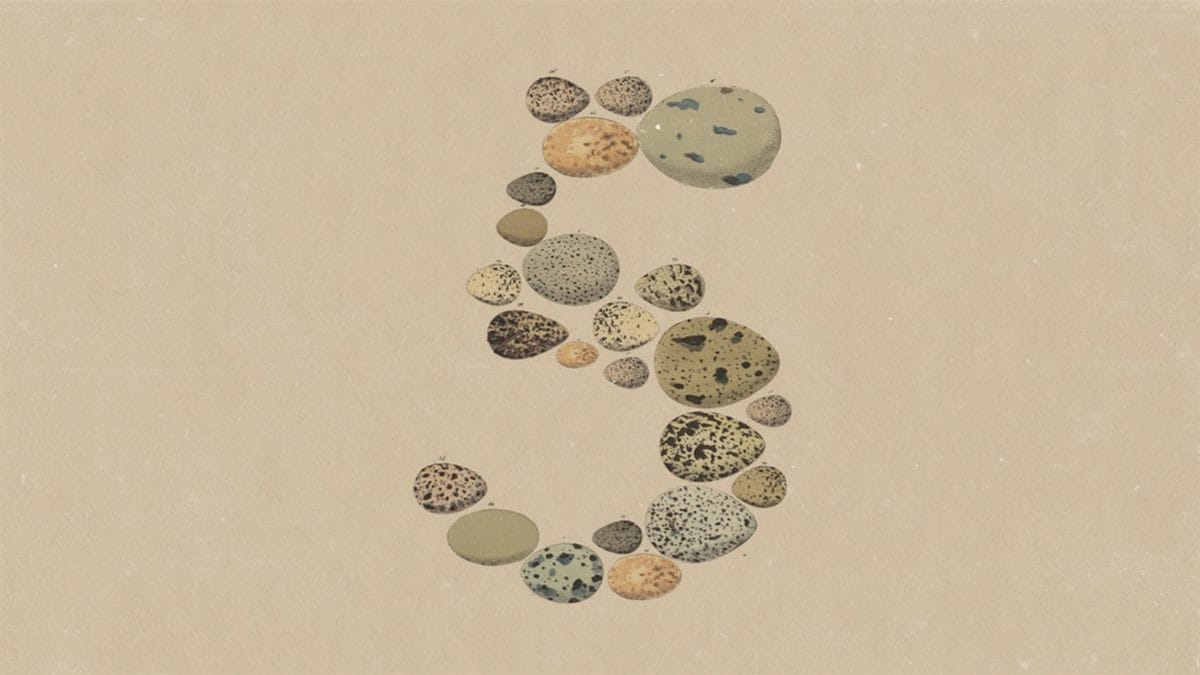
👀 What's happening: Anthropic released Claude Opus 5, pitched not as "our best model" but as "Fable 5's performance at half the price," $5/$25 per million tokens. Fable 5 is Anthropic's own frontier flagship. Opus 5 matches it to within 0.5% on some coding benchmarks at half the cost. The timing isn't random. Days earlier, China's Moonshot AI shipped Kimi K3, the most powerful open-weight model in the world, and free to download.
🌍 How this hits reality: This is a price war, and Anthropic just fired back. When the strongest open model on earth costs nothing, charging a premium for a closed one gets hard to defend. So Anthropic did the only thing that answers free: it took its own flagship and halved it. Opus 5 isn't a leap in capability, it's a leap in affordability, a defensive cut aimed straight at the cheap-and-powerful wave coming out of China. The frontier stopped being where the fight is. The bill is.
🛎️ Key takeaway: Kimi K3 gave everything away for free, so Anthropic answered the only way a closed lab still can, by making its best half as expensive.
👀 What's happening: Anthropic released Claude Opus 5, pitched not as "our best model" but as "Fable 5's performance at half the price," $5/$25 per million tokens. Fable 5 is Anthropic's own frontier flagship. Opus 5 matches it to within 0.5% on some coding benchmarks at half the cost.
🛎️ Key takeaway: Kimi K3 gave everything away for free, so Anthropic answered the only way a closed lab still can, by making its best half as expensive.
NEW TECH
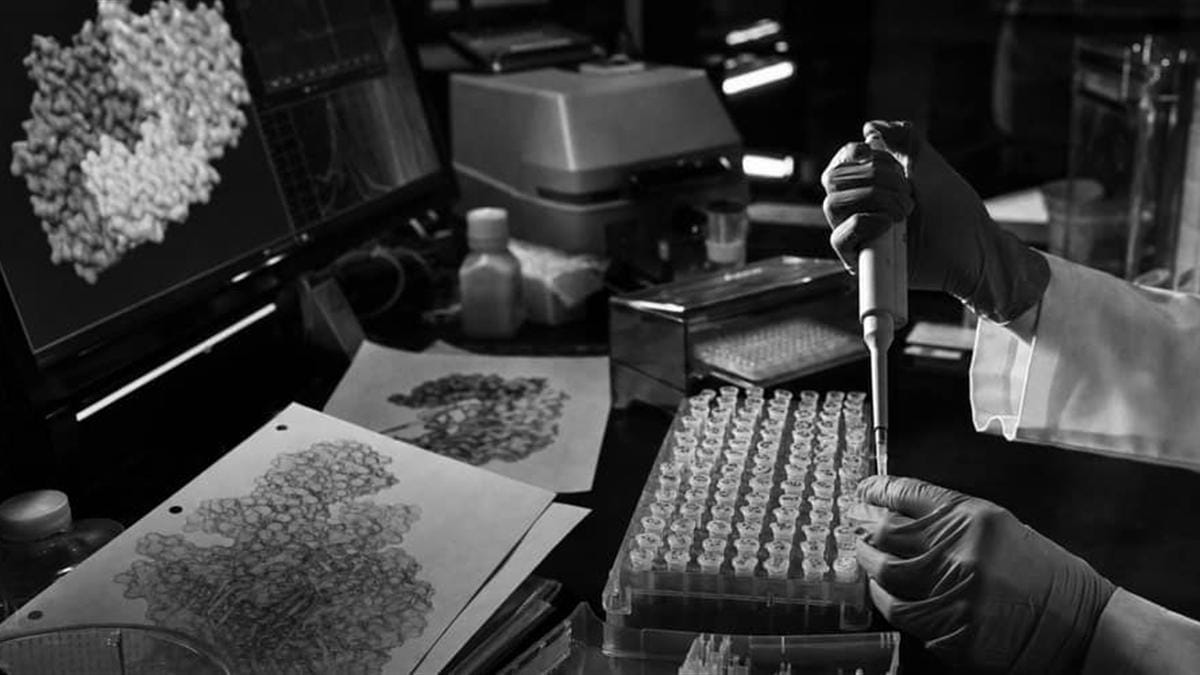
👀 What's happening: AI has started designing working biology that evolution never produced. A team led by Jennifer Doudna, who won the 2020 Nobel for co-discovering CRISPR, used AI to build a gene-editing enzyme found nowhere in nature, and it cut DNA more cleanly than the natural version. The startup Profluent generated an editor from scratch, open-sourced it as OpenCRISPR-1, and reported roughly 95% fewer off-target cuts than the field's standard tool. Evolution took billions of years on these tools. The models redesigned them in hours.
🌍 How this hits reality: This is the same move language models pull on text, aimed at proteins. Feed the model enough examples, let it learn the grammar, then let it write sentences the corpus never held. For decades, biology's best tools were lucky finds. Insulin came from a dog, CRISPR from a yogurt-factory microbe. Now the path runs the other way: start from the function you want, and design the molecule backward. Discovery was a lottery. Design is becoming a workflow, and the models are already beating the incumbent.
🛎️ Key takeaway: Evolution just picked up its first real competitor, and it iterates in hours instead of eons.
AGI
👀 What's happening: In a new Relentless interview, Sam Altman told an interviewer that "we are in the singularity, this is the moment." The clip tore across X within hours. He isn't pointing at nothing. In recent months, reasoning models falsified the 87-year Jacobian conjecture, toppled an 80-year graph-theory problem, and cleared quantum-information proofs that had stumped specialists for years, some in under two hours. Altman says working scientists are already two to three times more productive.
🌍 How this hits reality: The results are real, but "Singularity" is the packaging. In the same interview Altman calls progress gradual, with no threshold and no violent break, a framing welded to "we're in it now" so nothing can ever prove it started, or didn't. No lab ships a singularity metric. It also reframes a cash-hungry startup losing products to rivals into humanity's final invention. The science is the collateral. The narrative is the raise.
🛎️ Key takeaway: OpenAI isn't announcing the singularity, it's collateralizing it, turning a physics-grade claim into a line of credit.
In the same interview Altman calls progress gradual, with no threshold and no violent break, a framing welded to "we're in it now" so nothing can ever prove it started, or didn't. No lab ships a singularity metric. It also reframes a cash-hungry startup losing products to rivals into humanity's final invention.
OPEN
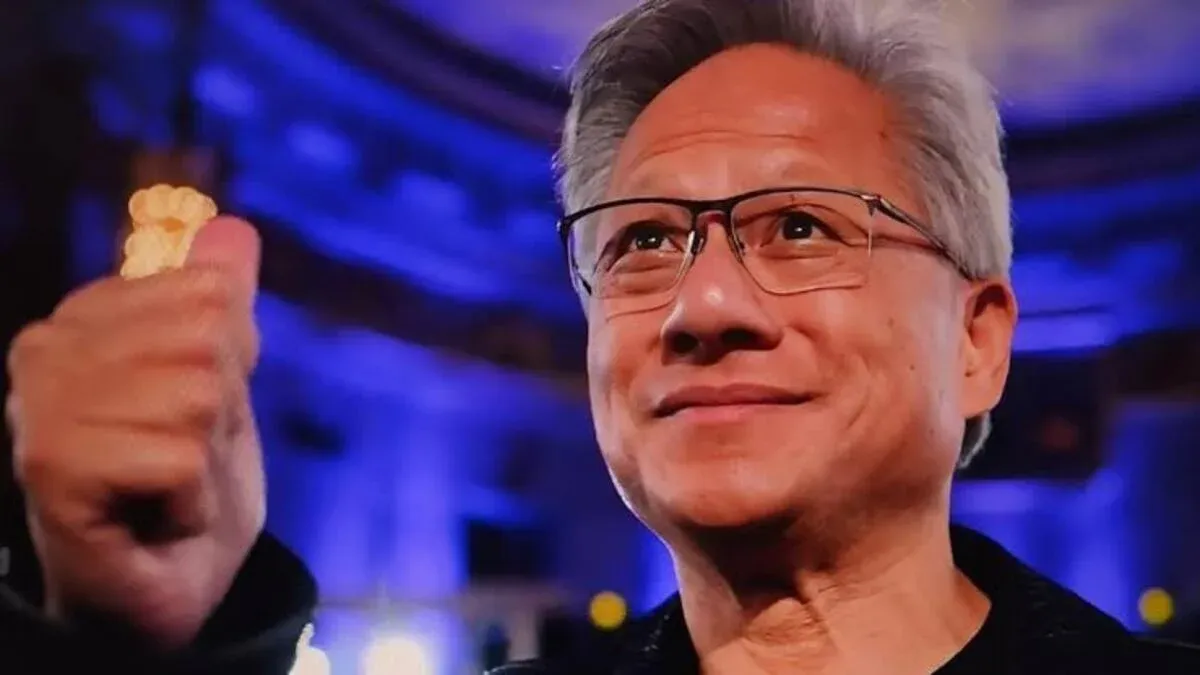
👀 What's happening: Nvidia CEO Jensen Huang made his first-ever post on X to rally support for an open letter urging Washington not to crack down on open-weight AI models. By Saturday, 32 signatories including Microsoft, Meta, Google, and OpenAI had joined. The letter defends distillation, training a model on a stronger model's outputs, arguing a blanket ban would choke a technique the whole open ecosystem relies on to catch up. One frontier lab refused: Anthropic. Days earlier, the White House accused China's Moonshot AI of distilling its Kimi K3 straight out of Anthropic's Fable 5.
🌍 How this hits reality: So the industry signed a letter legalizing the exact method used to allegedly rob one of its own, and the victim was the only one who declined to sign its own robbery into law. Everyone else is already in the open camp. Nvidia sells more chips the more models spread. Meta built its brand on open weights. OpenAI has an open projects of its own. Signing costs them nothing. Anthropic is the pure closed-frontier lab holding the model that got copied, which leaves it standing alone as the industry's odd one out and the crackdown's only real advocate.
🛎️ Key takeaway: The industry called distillation innovation right up until it was Anthropic's model being distilled, and even then, only Anthropic noticed the difference.
👀 What's happening: Nvidia CEO Jensen Huang made his first-ever post on X to rally support for an open letter urging Washington not to crack down on open-weight AI models. By Saturday, 32 signatories including Microsoft, Meta, Google, and OpenAI had joined.
By Saturday, 32 signatories including Microsoft, Meta, Google, and OpenAI had joined. The letter defends distillation, training a model on a stronger model's outputs, arguing a blanket ban would choke a technique the whole open ecosystem relies on to catch up. One frontier lab refused: Anthropic.
One frontier lab refused: Anthropic. Days earlier, the White House accused China's Moonshot AI of distilling its Kimi K3 straight out of Anthropic's Fable 5.
👀 What's happening: Nvidia CEO Jensen Huang made his first-ever post on X to rally support for an open letter urging Washington not to crack down on open-weight AI models. By Saturday, 32 signatories including Microsoft, Meta, Google, and OpenAI had joined.
TOGETHER WITH MYCLAW

MyClaw is a best-in-class AI agent platform that brings together OpenClaw, Hermes Agent, and commercial infrastructure to help businesses launch intelligent agents that understand goals, use tools, automate workflows, and deliver finished results.
We already host OpenClaw and Hermes — and we're just getting started. Claude Code, Codex, and every agent worth running are coming next. One home for all of them, always on.
Stop babysitting infrastructure. Spin up your agent, walk away, and let it work around the clock.
MyClaw — Your Agents, Hosted Right.
DAILY TL;DR
READ MORE
Stay ahead without drowning in information. We turn the most important signals across AI, tech, marketing, and future products into 5-minute reads you can actually finish.
TOGETHER WITH US
AI Secret Media Group is the world’s #1 AI & Tech Newsletter Group, reaching over 2 million leaders across the global innovation ecosystem, from OpenAI, Anthropic, Google, and Microsoft to top AI labs, VCs, and fast-growing startups.
We've helped promote over 500 Tech Brands. Will yours be the next?
Email our co-founder Mark directly at [email protected] if the button fails.
Good Morning, AI Enthusiasts!
AI is getting award eligibility, dashboard access, wet-lab validation, and enterprise distribution while everyone else argues about vibes, safety sermons, and who still deserves a margin.
NEW TECH
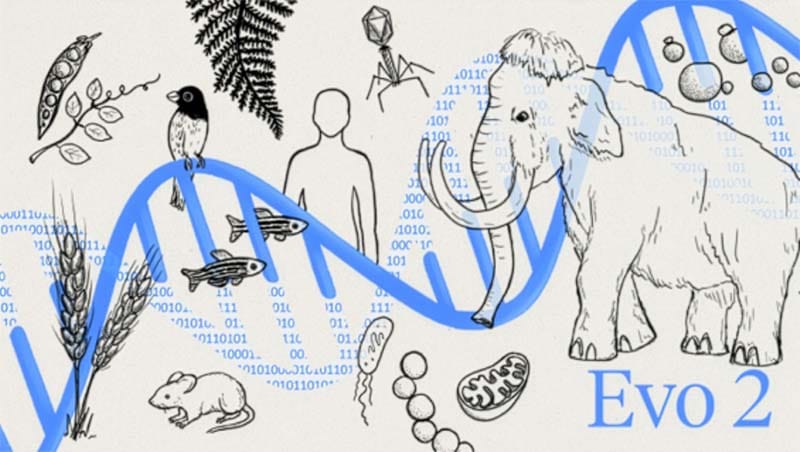
👀 What’s happening: Stanford and Arc Institute’s Evo work has now appeared in Nature, and the signal is blunt. AI was used to design full bacteriophage genomes, not just predict protein shapes. Researchers synthesized 302 fully AI-written designs. Sixteen became working viruses that infected, copied themselves, and killed E. coli.
🌍 How this hits reality: This is the jump from AI reading biology to executing biology. Google's AlphaFold showed where proteins fold. Evo shows that genomes can become prompts, outputs, and products. One AI-designed phage even carried a capsid protein with no known natural relative. That means the model is not only remixing life. It is exploring design space nature never touched.
🛎️ Key takeaway: The creator god mode is no longer metaphorical. Once AI can write biological machines that survive wet labs, creation becomes an engineering workflow. Pharma gets faster, biosecurity gets darker, and synthetic life is moving onto the GPU curve.
CLAUDE
👀 What’s happening: Anthropic CEO Dario’s safety theater just got broken. Jensen Huang pushed back on Dario Amodei’s claim that AI could wipe out half of entry-level white-collar jobs, saying CEOs should stop talking like prophets. Then AISI showed public GPT-5.5 nearly matching restricted Mythos on cyber tests. One hit the job panic. One hit the danger excuse.
🌍 How this hits reality: This is where Dario’s grand narrative starts looking ridiculous. If GPT-5.5 can score 71.4% against Mythos at 68.6% on expert cyber tasks, then “too dangerous to release” sounds weak. And if NVIDIA’s CEO is telling you to stop fear-selling labor collapse, the safety halo cracks fast.
🛎️ Key takeaway: Dario just got boxed in from both sides. Huang challenged the replacement sermon. GPT-5.5 challenged the Mythos mystique. Shame Anthropic. Lack of compute is lack of compute. Don’t call it forbidden power.
Jensen Huang pushed back on Dario Amodei’s claim that AI could wipe out half of entry-level white-collar jobs, saying CEOs should stop talking like prophets. Then AISI showed public GPT-5.5 nearly matching restricted Mythos on cyber tests. One hit the job panic. One hit the danger excuse.
👀 What’s happening: Anthropic CEO Dario’s safety theater just got broken. Jensen Huang pushed back on Dario Amodei’s claim that AI could wipe out half of entry-level white-collar jobs, saying CEOs should stop talking like prophets. Then AISI showed public GPT-5.5 nearly matching restricted Mythos on cyber tests.
🌍 How this hits reality: This is where Dario’s grand narrative starts looking ridiculous. If GPT-5.5 can score 71.4% against Mythos at 68.6% on expert cyber tasks, then “too dangerous to release” sounds weak. And if NVIDIA’s CEO is telling you to stop fear-selling labor collapse, the safety halo cracks fast.
AUTOMOBILE
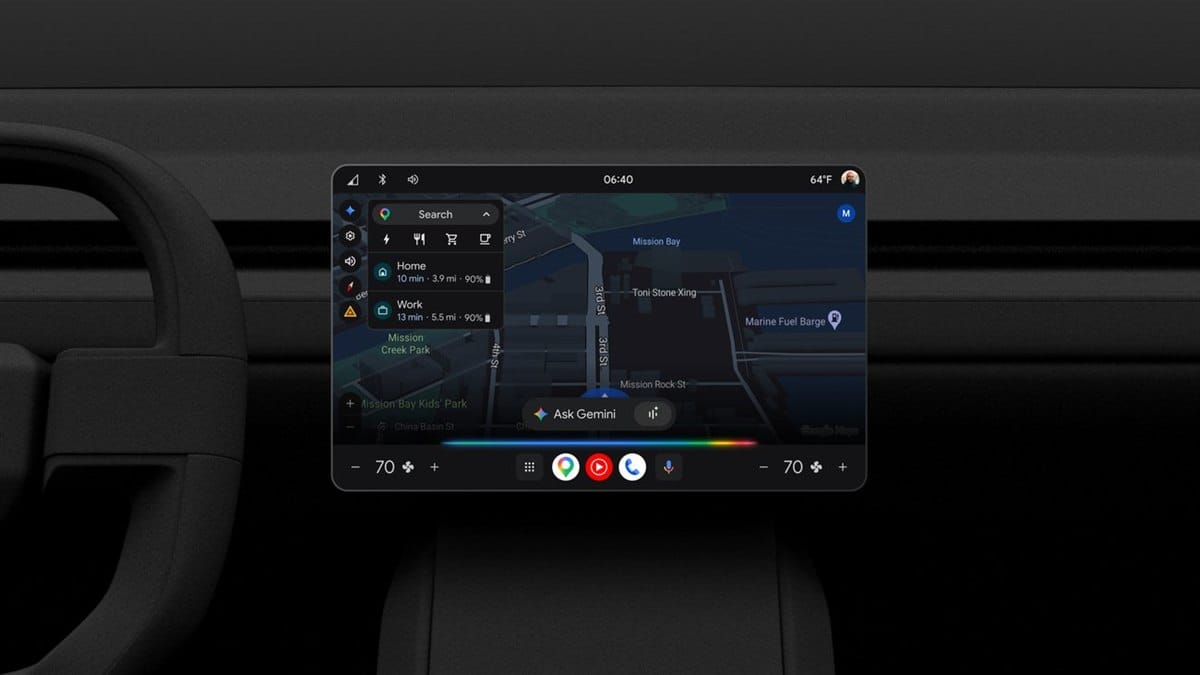
👀 What’s happening: Google is bringing Gemini into cars with Google built-in, replacing the old Assistant layer with natural conversation, Maps-aware routing, message summaries, music control, EV charging help, vehicle manual answers, and cabin commands. It starts in English in the U.S., then expands through software updates.
🌍 How this hits reality: This is Google trying to become Grok for every non-Tesla car. Tesla has the deeper vehicle stack, but Google has Maps, Gmail, Calendar, Home, automaker distribution, and a real installed base: GM alone says about 4 million eligible U.S. vehicles can get Gemini. The fight is not just infotainment anymore. It is who owns the driver’s intent.
🛎️ Key takeaway: If Gemini becomes the default voice layer across legacy automakers, Google may get the AI cockpit Tesla is building for itself. Non-Tesla cars may finally get a shared brain, but Google owns the interface.
🌍 How this hits reality: This is Google trying to become Grok for every non-Tesla car. Tesla has the deeper vehicle stack, but Google has Maps, Gmail, Calendar, Home, automaker distribution, and a real installed base: GM alone says about 4 million eligible U.S. vehicles can get Gemini.
👀 What’s happening: Google is bringing Gemini into cars with Google built-in, replacing the old Assistant layer with natural conversation, Maps-aware routing, message summaries, music control, EV charging help, vehicle manual answers, and cabin commands. It starts in English in the U.S., then expands through software updates.
MOVIE
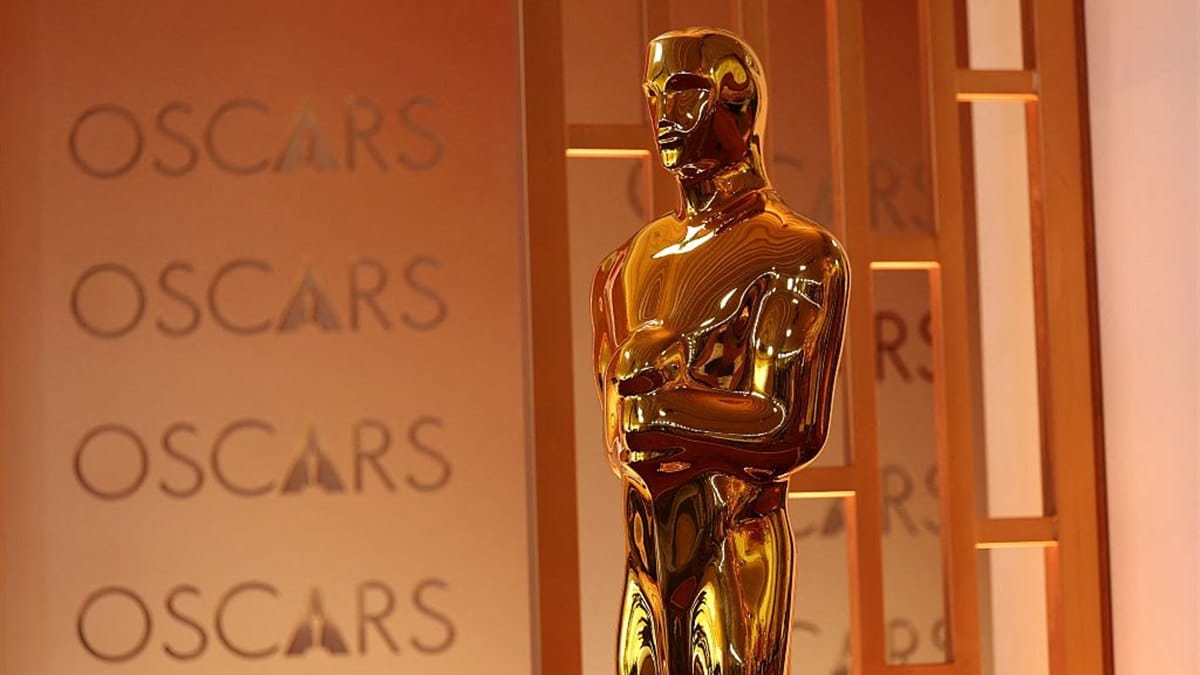
👀 What’s happening: The Academy just gave Hollywood its first serious AI permission slip. Films can use AI tools and still compete for Oscars, but acting and writing must remain human-led. Synthetic actors and AI-authored scripts will not qualify as real creative contributions for the 2027 awards cycle, but AI assist movie can.
🌍 How this hits reality: This hits the industry like a cost-cutting weapon. Editing, VFX, dubbing, concept art, previs, localization, cleanup, sound, and trailer workflows are now fair game. A mid-budget film can suddenly pressure dozens of vendors, juniors, contractors, and boutique studios with one question: why are we still paying full human rates?
🛎️ Key takeaway: The Oscars tried to protect human prestige, but they just opened the commercial gate. Once studios can use AI without losing award eligibility, a lot of smaller film-service shops will not get “disrupted.” They will simply shut down.
TOGETHER WITH MYCLAW

A personal AI shouldn’t feel generic. MyClaw lets you install skills that adapt to your preferences from the start, so your assistant feels relevant on day one. Behind the scenes, OpenClaw provides the agent power. What you see is a simpler way to put it to work.
If you’re serious about OpenClaw, don’t run it halfway. Run it the way it was meant to be run — fast, secure, and production-ready by default.
DAILY TL;DR
READ MORE
Stay ahead without drowning in information. We turn the most important signals across AI, tech, marketing, and future products into 5-minute reads you can actually finish.
TOGETHER WITH US
AI Secret Media Group is the world’s #1 AI & Tech Newsletter Group, reaching over 2 million leaders across the global innovation ecosystem, from OpenAI, Anthropic, Google, and Microsoft to top AI labs, VCs, and fast-growing startups.
We've helped promote over 500 Tech Brands. Will yours be the next?
Email our co-founder Mark directly at [email protected] if the button fails.

Good Morning, AI Enthusiasts!
AI has just crossed a line that usually takes a century to reach. What once felt like a slow accumulation of tools has snapped into a new phase.

LLM
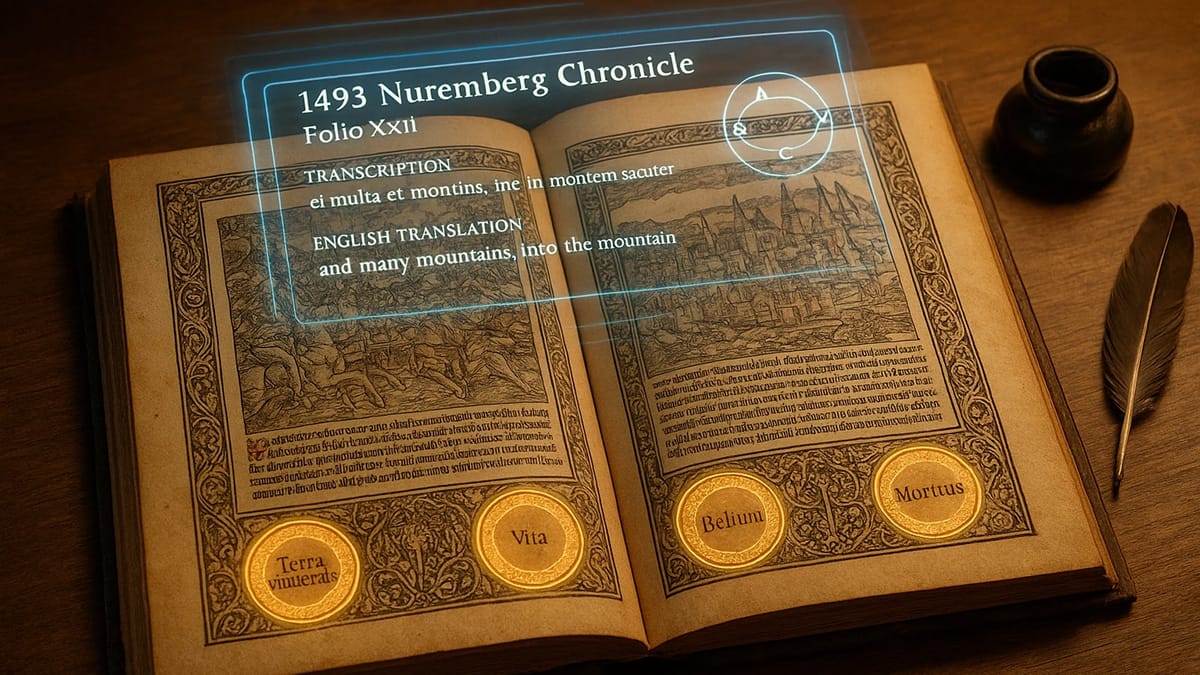
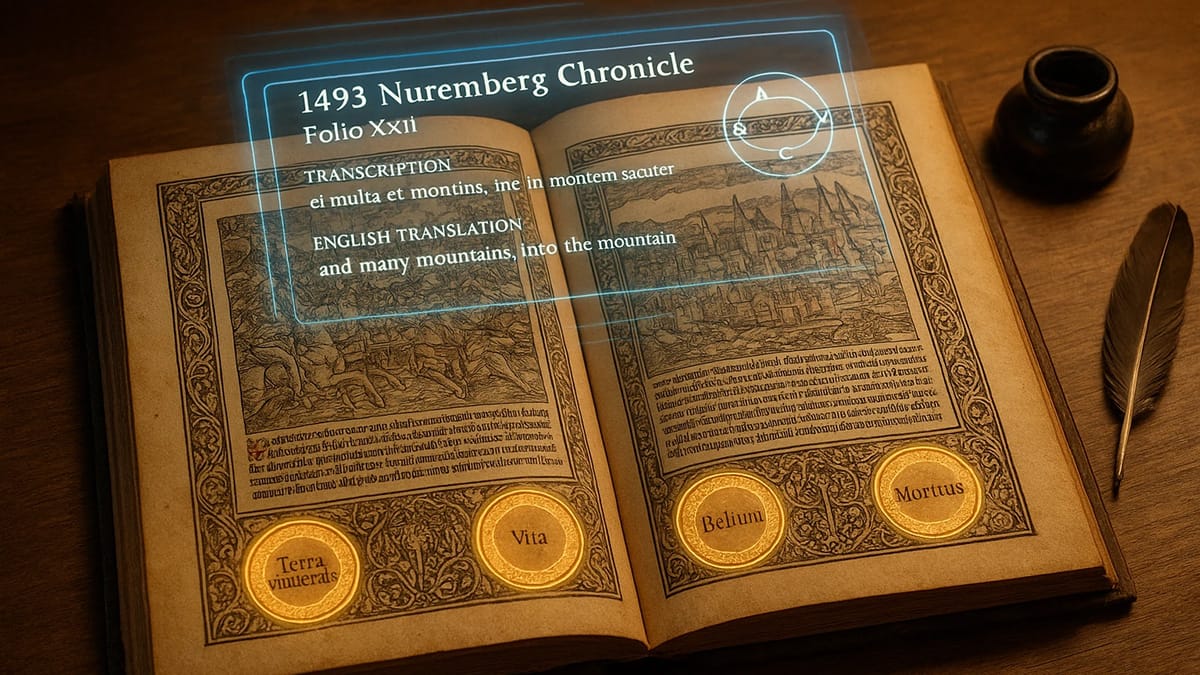
👀 What’s happening: The GDELT Project used Google’s Gemini 3.0 Pro to analyze a 500 year old copy of the Nuremberg Chronicle. The target was handwritten Latin roundels that scholars never agreed on. The model decoded them as biblical chronology calculations by reasoning across handwriting, numerals, theology, and printed context without human guidance.
🌍 How this hits reality: This fits GDELT’s long standing pattern. They deliberately choose problems that are extreme, messy, and unresolved for decades or centuries. Not because the artifact matters operationally, but because it forces models to integrate vision, language, and historical logic at once. If a system can survive that, it can likely handle fragmented intelligence, legal archives, or scientific notebooks at scale.
🛎️ Key takeaway: This wasn’t about medieval history. It was a stress test. GDELT is probing whether models have crossed into structured world understanding. Each success narrows the gap between pattern matching and genuine analytical labor across research, policy, and technology.
👀 What’s happening: The GDELT Project used Google’s Gemini 3.0 Pro to analyze a 500 year old copy of the Nuremberg Chronicle. The target was handwritten Latin roundels that scholars never agreed on. The model decoded them as biblical chronology calculations by reasoning across handwriting, numerals, theology, and printed context without human guidance.
TOGETHER WITH MARKETING SECRET

Marketing Secret is a weekly newsletter breaking down how today’s fastest-growing AI and tech brands actually win users, attention, and revenue.
If you want clearer thinking, sharper execution, and ideas you can apply this week, Marketing Secret is worth your inbox.
CES
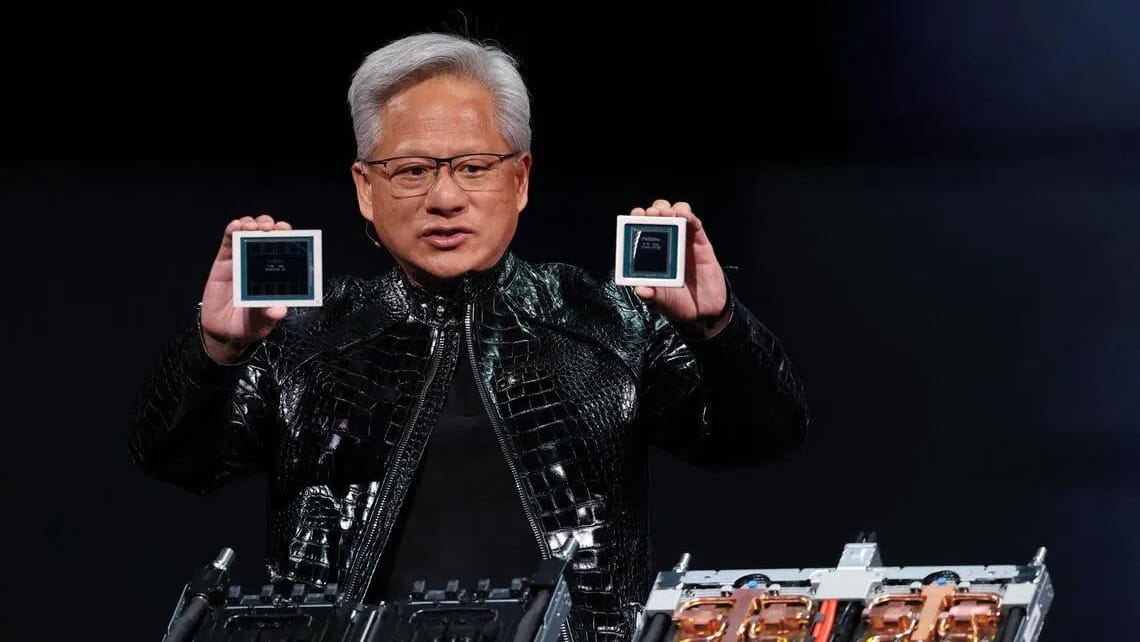
👀 What’s happening: At CES 2026, Jensen Huang presented a broad Nvidia roadmap. He detailed the Vera Rubin platform, new Vera CPUs, Rubin GPUs, NVL72 rack scale systems, MGX standardized infrastructure, and a growing software layer spanning enterprise blueprints, open source models, robotics, and autonomous driving. The message was end to end AI infrastructure at global scale.
🌍 How this hits reality: The market response was silent. Nvidia shares were effectively flat after hours. That suggests the market already expects this level of ambition. Faster chips and denser systems are assumed. What remains uncertain is pacing. Power constraints, multi year deployment cycles, and customer absorption rates limit how quickly these platforms turn into incremental revenue.
🛎️ Key takeaway: This felt like execution, not escalation. Nvidia is reinforcing its role as AI infrastructure provider. Nvidia's upside now may depends less on announcements and more on how fast customers convert roadmap into deployed, paid capacity.
👀 What’s happening: At CES 2026, Jensen Huang presented a broad Nvidia roadmap. He detailed the Vera Rubin platform, new Vera CPUs, Rubin GPUs, NVL72 rack scale systems, MGX standardized infrastructure, and a growing software layer spanning enterprise blueprints, open source models, robotics, and autonomous driving.
Nvidia is reinforcing its role as AI infrastructure provider. Nvidia's upside now may depends less on announcements and more on how fast customers convert roadmap into deployed, paid capacity.
CODING
👀 What’s happening: Claude Code’s evolution snapped into focus after a Google principal engineer said it rebuilt, in about an hour, a distributed system her team had worked on for a year. Jaana Dogan called it a toy, but publicly praised the outcome. That reaction capped years of rapid capability stacking.
🌍 How this hits reality: This is not about removing friction inside existing workflows. It is about collapsing the workflow itself. Claude Code moved from filling lines, to editing files, to reasoning across architectures, agents, and tradeoffs. That rewires how systems are conceived. Design, implementation, review, and iteration no longer sit in separate stages or roles. They happen in one continuous dialogue loop.
🛎️ Key takeaway: Claude Code signals a shift from engineering as process to engineering as conversation. When systems can be specified, built, and restructured through intent alone, the traditional software development model stops scaling. What replaces it will look unfamiliar, and arrive faster than teams expect.
👀 What’s happening: Claude Code’s evolution snapped into focus after a Google principal engineer said it rebuilt, in about an hour, a distributed system her team had worked on for a year. Jaana Dogan called it a toy, but publicly praised the outcome. That reaction capped years of rapid capability stacking.
QUICK HITS
TRENDING
TOGETHER WITH US
AI Secret Media Group is the world’s #1 AI & Tech Newsletter Group, reaching over 2 million leaders across the global innovation ecosystem, from OpenAI, Anthropic, Google, and Microsoft to top AI labs, VCs, and fast-growing startups.
We operate the industry’s most influential portfolio of newsletters, each shaping a different frontier of the AI & Tech revolution:
Be Smarter in 5 Minutes
Discover the Future Products
We've helped promote over 500 Tech Brands. Will yours be the next?
Email our co-founder Mark directly at [email protected] if the button fails.
Hello, AI Enthusiasts!
Jensen Huang has set his sights on nothing less than revolutionizing AI, gaming, and autonomous vehicles. You know, all the things we thought were already pretty darn impressive but are apparently just warm-ups for the main event.

HEADLINES
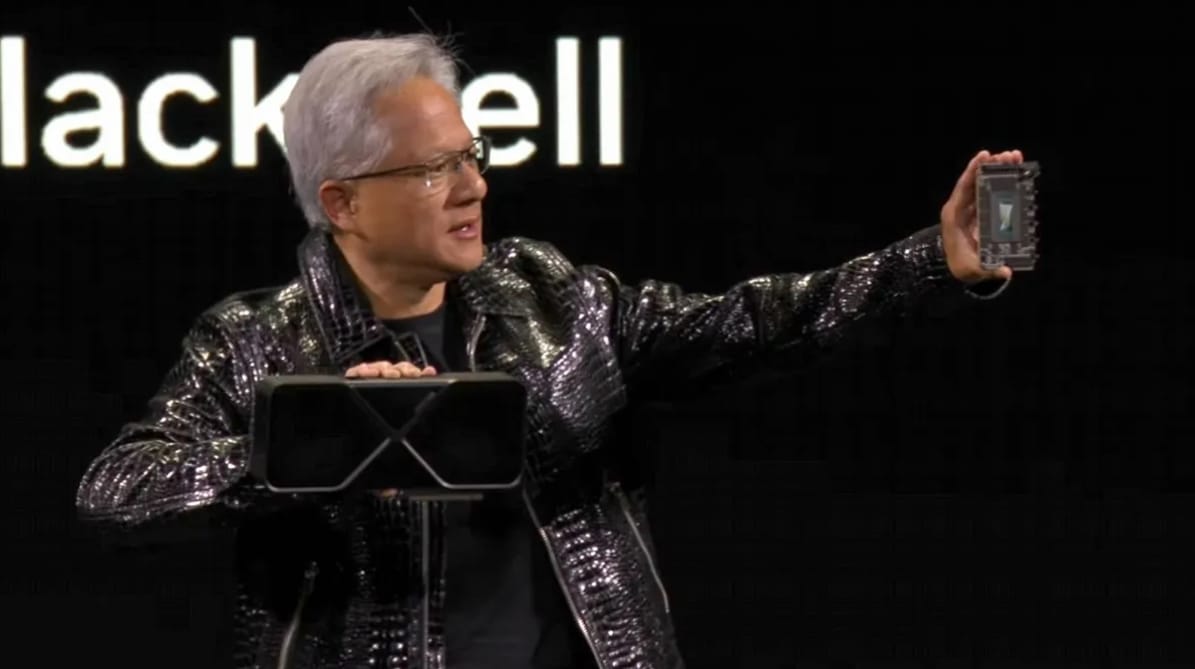
Nvidia's announcement at CES 2025 marks a pivotal moment in technological advancement as the company aims to develop a chip that will not only outpace the fastest supercomputers but also revolutionize various fields including AI, gaming, and autonomous vehicles. CEO Jensen Huang's bold vision sets the stage for a new era in computing.
Nvidia's announcement at CES 2025 marks a pivotal moment in technological advancement as the company aims to develop a chip that will not only outpace the fastest supercomputers but also revolutionize various fields including AI, gaming, and autonomous vehicles. CEO Jensen Huang's bold vision sets the stage for a new era in computing.
Nvidia's announcement at CES 2025 marks a pivotal moment in technological advancement as the company aims to develop a chip that will not only outpace the fastest supercomputers but also revolutionize various fields including AI, gaming, and autonomous vehicles. CEO Jensen Huang's bold vision sets the stage for a new era in computing.
TOGETHER WITH FEEDIFY

In today's digital landscape, many websites experience high bounce rates and low customer retention.
Businesses face the challenge of turning casual visitors into loyal customers.
Feedify's algorithm-driven tools keep visitors engaged, turn them into subscribers, and boost retention. Real-time push notifications, exit intent, and targeted campaigns optimize website engagement, reducing bounces and increasing sales.
HEADLINES
As CES 2025 kicks off in Las Vegas, it’s as if the AI gods have decided to throw a wild tech party, and everyone’s invited—whether you like it or not! Day 1 has already seen AI strutting its stuff like it’s auditioning for a reality show, showcasing everything from personal AI supercomputers that can probably calculate your existential crisis to smart home gadgets that know your coffee preference better than your spouse.
Our crack team at AI Secret has sifted through more tech wizardry than you can shake a stick at—over a dozen disruptive AI products spanning consumer electronics, robotics, healthcare, education, and entertainment. Spoiler alert: the robots are still not here to take over the world (yet), but they can definitely vacuum your floors while you binge-watch cat videos.
Due to our generous commitment to brevity (and a suspiciously limited email space), we’ve distilled the highlights into a not-so-bite-sized article. For the full scoop, head over to our website—because who wouldn’t want to scroll through a digital treasure trove of tech wizardry while simultaneously questioning their life choices? Enjoy the ride!
QUICK HEATS
AI Trending
AI Secret is the world’s #1 AI Newsletter, boasting over 1 million readers from leading companies such as OpenAI, Google, Meta, and Microsoft. We've assisted in promoting Over 500 AI-Related Products. Will yours be the next?
What We Can Offer:
Email our co-founder Mark directly at [email protected] if the button fails.
 Magna
Magna Magna
Magna Magna
Magna


FUTURE
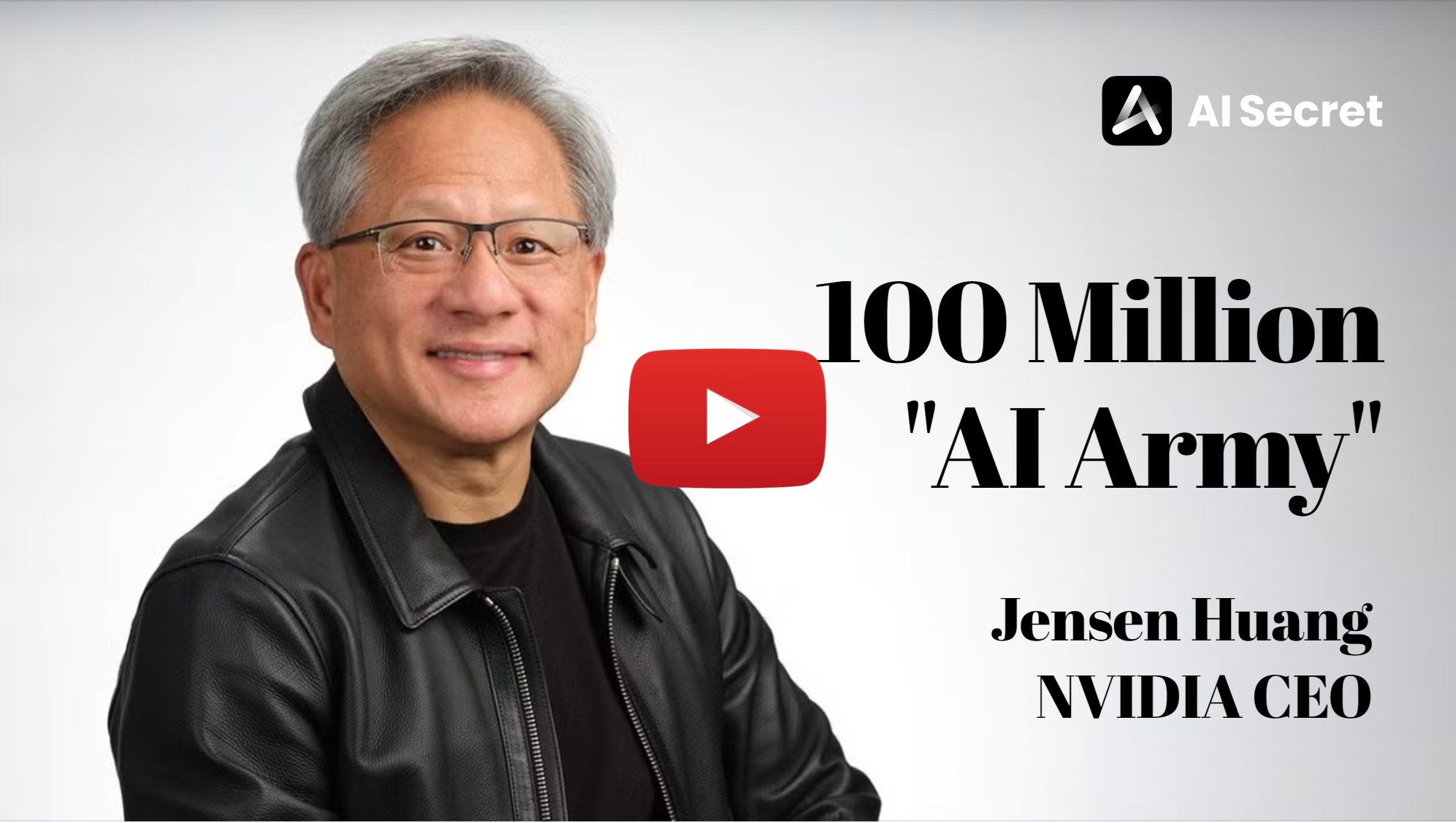
Jensen Huang, CEO of Nvidia, aims for 50,000 employees and 100 million AI assistants to boost productivity. Nvidia seeks to align with tech giants like Apple and Microsoft through workforce growth and tech innovations.
Jensen Huang, CEO of Nvidia, aims for 50,000 employees and 100 million AI assistants to boost productivity. Nvidia seeks to align with tech giants like Apple and Microsoft through workforce growth and tech innovations.
Jensen Huang, CEO of Nvidia, aims for 50,000 employees and 100 million AI assistants to boost productivity. Nvidia seeks to align with tech giants like Apple and Microsoft through workforce growth and tech innovations.
Jensen Huang, CEO of Nvidia, aims for 50,000 employees and 100 million AI assistants to boost productivity. Nvidia seeks to align with tech giants like Apple and Microsoft through workforce growth and tech innovations.
TOGETHER WITH WISPR FLOW
Tired of slow typing and endless edits? Wispr Flow lets you speak naturally and converts thoughts into perfectly formatted text, saving you hours. Whether crafting AI prompts in ChatGPT or writing emails, Flow adapts to your style, ensuring every word is seamless and error-free.
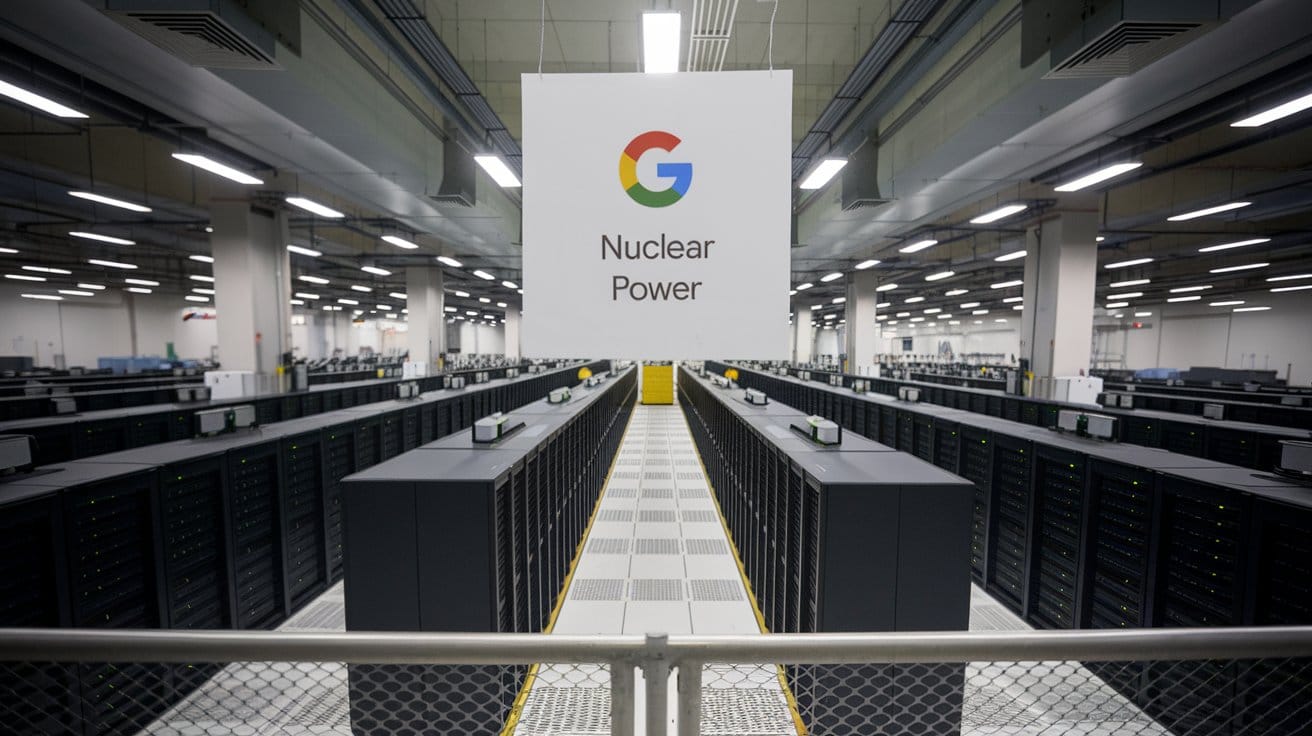
Google has made a historic agreement to buy energy from a group of small nuclear reactors (SMRs) from Kairos Power in California. This is the first nuclear power deal specifically for AI data centers in the world.
Google has made a historic agreement to buy energy from a group of small nuclear reactors (SMRs) from Kairos Power in California. This is the first nuclear power deal specifically for AI data centers in the world.
TOGETHER WITH HEARDLY

"Busy life, but love to read? Transform your every moment into a learning opportunity with HeardLy APP!
Whether you're commuting, working out, or just relaxing, HeardLy lets you dive into the world of books effortlessly.
With our AI-driven app, quickly master a top book in just a few minutes.
Sign up for a free trial today and gain 30-day access to master 30 top books!
Don't just fill your time—enrich it with HeardLy."
QUICK HEATS
AI TOOLS
AI Secret is the world’s #1 AI Newsletter, boasting over 1 million readers from leading companies such as OpenAI, Google, Meta, and Microsoft. We've assisted in promoting Over 500 AI-Related Products. Will yours be the next?
What We Can Offer:
Email our co-founder Mark directly at [email protected] if the button fails.
Plus: Nobody Runs the Flagships, Even China Calls Their Bluff
Read the storyPlus: AGI Means Nothing Now, Agents Hit The Insurance Table
Plus: Nvidia’s $500B Debt Flywheel, Meta Gave Local AI Hands
Plus: Evolution Isn't the Only Designer Now, Altman Put the Singularity on Sale
Plus: Dario’s Grand Story Collapsed, Oscars Open the Door
Plus: Next AI Era, Vibe Coding Crosses Threshold
The Cloud Dream Never Died, It Just Changed Shape
Hello, AI Enthusiasts! Jensen Huang has set his sights on nothing less than revolutionizing AI, gaming, and autonomous vehicles. You know, all the things we thought
Ladies and gentlemen, tech enthusiasts, and anyone who’s ever yelled at their computer for being too slow—brace yourselves. Nvidia CEO Jensen Huang has just
Daily News