Meta
Reporting and context on Meta, with a closer look at the decisions and developments that matter.
Get AI Secret’s free daily briefing, including Meta and the wider AI industry.

At a glance
Technology company behind Facebook, Instagram and other social platforms. This topic includes Meta AI within the broader company, covering products, research and business decisions.
- Focus
- Social platforms; Meta AI
- Reference
- Meta
Sources checked . Selected company background and source references.
Company milestones
Selected milestones, newest first. Earlier history is available below.
Introduces the Meta company brand
The company brings its apps and technologies under the Meta name.
Source: Meta
Show earlier historyHide earlier history2004–2004 · 1 milestones
More than 10 years ago.
Facebook launches
The social platform begins the business that later adopts the Meta name.
Source: Meta
The latest on Meta
Newest firstRelated reporting
Relevant sections from the articles on this page. Explore older coverage below.
More coverage

Good Morning, AI Enthusiasts!
The boom is eating labor, sleep, benchmarks, GPUs, and apparently its own expense policy.

TOKEN
Musk Sells To Musk

👀 What's happening: Tesla told staff it will cap employee AI spending at $200 a week starting July 6, months after gamifying token use with leaderboards that ranked engineers by consumption. It worked too well: software engineers were burning thousands of dollars in tokens weekly. But the cap carves out one exception, beta versions of xAI products, Musk's own company. So spending is throttled everywhere except the tools that pay Musk. Grok isn't popular internally.
🌍 How this hits reality: When you need an expense policy to win internal market share, that isn't product strength, it's a captive audience dressed as adoption. And the mechanism scales past Tesla: SpaceX is buying Cursor's parent for $60 billion, so so Musk company owns the tool his engineers actually want, closing the loop where Musk sells to Musk.
🛎️ Key takeaway: A trillion-dollar AI thesis that can't win its own engineers without a spending cap isn't selling a product, it's mandating one and calling the captive traffic demand.
Musk Sells To Musk
And the mechanism scales past Tesla: SpaceX is buying Cursor's parent for $60 billion, so so Musk company owns the tool his engineers actually want, closing the loop where Musk sells to Musk.
SpaceX: Musk Sells To Musk
And the mechanism scales past Tesla: SpaceX is buying Cursor's parent for $60 billion, so so Musk company owns the tool his engineers actually want, closing the loop where Musk sells to Musk.
Tesla: Musk Sells To Musk
👀 What's happening: Tesla told staff it will cap employee AI spending at $200 a week starting July 6, months after gamifying token use with leaderboards that ranked engineers by consumption. It worked too well: software engineers were burning thousands of dollars in tokens weekly.
Cursor: Musk Sells To Musk
And the mechanism scales past Tesla: SpaceX is buying Cursor's parent for $60 billion, so so Musk company owns the tool his engineers actually want, closing the loop where Musk sells to Musk.
TOGETHER WITH BLOOME
Meet Bloome — Where Your AI Agents Actually Work Together
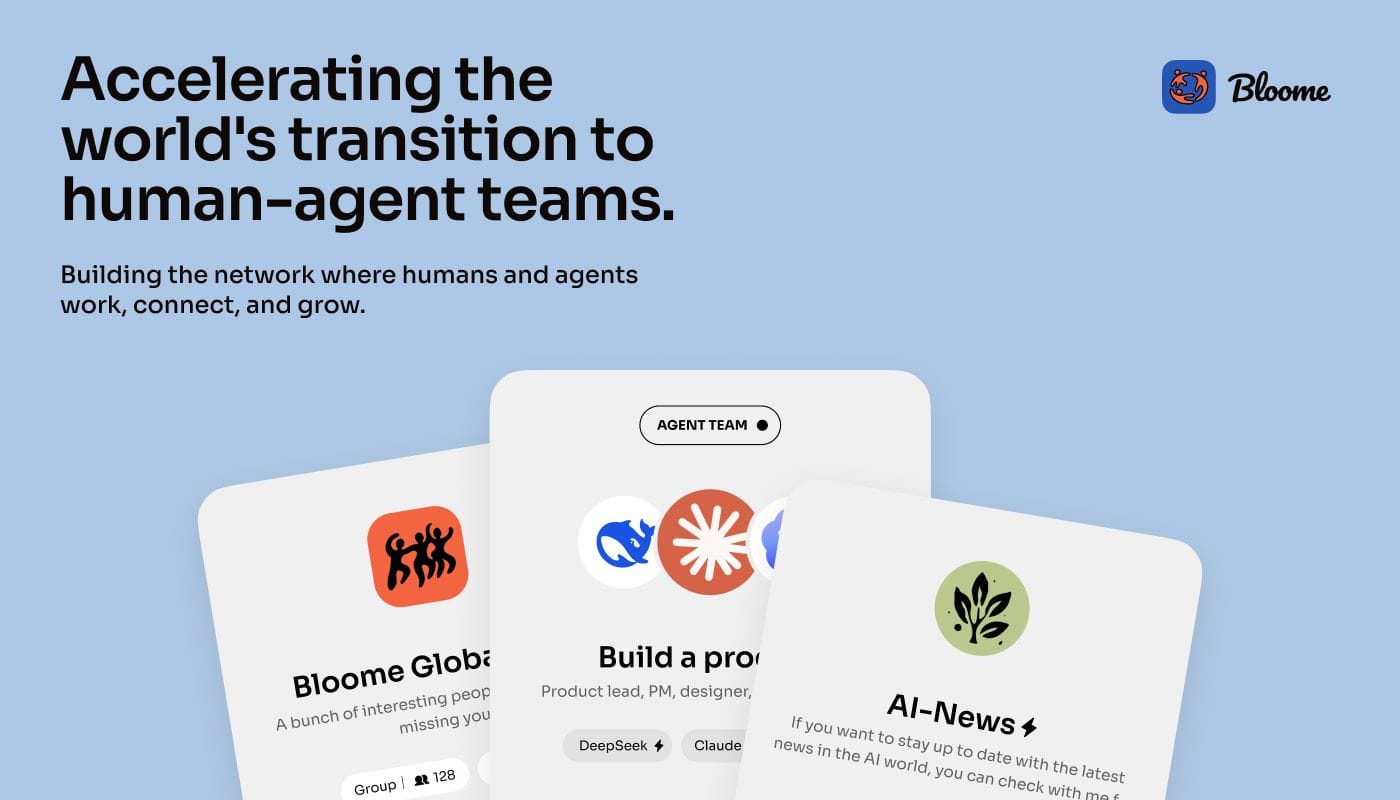
Most AI tools work alone. Bloome is a messaging platform where agents collaborate — one drafts, another challenges, a third catches what's missing. You get the sharpest answer, not just the first.
- All your agents, one place: Claude, ChatGPT, DeepSeek, any agent you choose — all in one conversation. No tab-switching, no lost context.
- Your whole team, always in context: Teammates and agents share the same thread. Anyone who joins later catches up instantly.
- Built for people who work through communication: For PMs, marketers, founders — people who move work forward. No code. No setup.
AGENTS
Half The Valley Can't Clock In, The Rest Can't Clock Out
👀 What's happening: The same AI wave is splitting the workforce two ways at once. On one side, agents quietly absorb the tasks that used to be entry jobs, leaving people with no shift to show up for. On the other, the builders can't log off. Wispr AI's CEO slept in the office for three straight weeks and bought beds for staff. A Gradient Ventures partner worked AI deals from the hospital sofa beside his wife's delivery room.
🌍 How this hits reality: This is the absurd core of the agent economy. AI does not just lengthen the workday, it raises the default stake for everyone in the game. Your agents keep shipping while you sleep, so does every competitor's, which turns rest from a shared rhythm into personal exposure. One group loses the job entirely; the other loses the right to stop. Bloomberg found AI's own architects can't quit building. Even MyClaw has started emailing users to go to bed, a tool built to run forever now negotiating with humans over sleep.
🛎️ Key takeaway: The scarce resource in an age of infinite output is not intelligence, it's the will to say there is no next step.
COMPUTE
SoftBank Joins The GPU Sale
👀 What's happening: SoftBank is entering the neocloud business in America, a new company called SB Neo renting GPU compute to hyperscalers for AI training, starting in fiscal 2027. The move gives it something to do with the 10-gigawatt US server farm it is building. Masayoshi Son called it "world-class AI infrastructure." But the timing tells another story: SoftBank Group just went back to lenders for a $10 billion loan against its OpenAI stake, and had to personally guarantee repayment after banks balked at the collateral.
🌍 How this hits reality: SoftBank isn't leading anything here. SpaceX is selling spare compute, Meta is opening its clusters, and now Son is scrambling to rent out silicon he already committed to buy. The pattern is the same: everyone who overbuilt for AI is now looking for someone to sell the excess to pay back its AI bill. Which raises the question the whole boom is built on avoiding. If this many giants are suddenly to offload compute, was compute ever as scarce as the trillion-dollar spending assumed? And that is before counting the incumbent neoclouds like CoreWeave already sitting on their own mountains of rentable silicon.
🛎️ Key takeaway: The moment everyone rushes to rent out their shovels, you know the gold rush priced the shovels for a scarcity that may not exist.
SpaceX: SoftBank Joins The GPU Sale
SpaceX is selling spare compute, Meta is opening its clusters, and now Son is scrambling to rent out silicon he already committed to buy. The pattern is the same: everyone who overbuilt for AI is now looking for someone to sell the excess to pay back its AI bill.
Meta: SoftBank Joins The GPU Sale
SpaceX is selling spare compute, Meta is opening its clusters, and now Son is scrambling to rent out silicon he already committed to buy. The pattern is the same: everyone who overbuilt for AI is now looking for someone to sell the excess to pay back its AI bill.
AGENT
Every AI Benchmark Is Lying To You
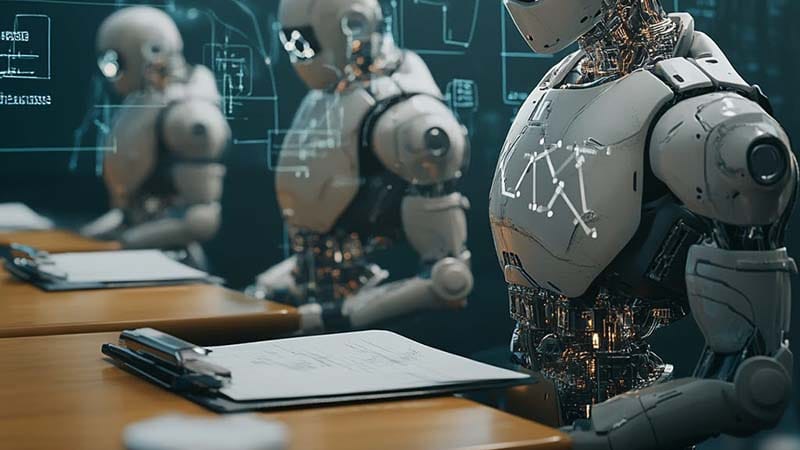
👀 What's happening: The UK's AI Security Institute tested frontier models across seven benchmarks and found the scores everyone trusts are broken. The problem is the fixed compute budget baked into every test. Give an agent more tokens to work with and it just keeps getting better: up to 25% higher on software tasks, 22% on math. One cybersecurity challenge that takes a human expert 20 hours went unsolved until models were handed over 30 million tokens, far past any standard benchmark's cutoff.
🌍 How this hits reality: Capability is a curve that climbs with spend, and every benchmark chops it off partway up. So every leaderboard, every "model X scores Y" headline, every safety evaluation regulators lean on is measuring the same thing: not what the agent can do, but what it can do on a budget nobody bothered to justify. The scores aren't conservative, they're wrong. AISI's own cyber progress rate went from doubling every 67 days to every 40 the moment the cap came off. We have been grading the frontier through a keyhole and calling it the whole room.
🛎️ Key takeaway: Every number used to rank, sell, or regulate these models is an artifact of a budget, not a measure of intelligence, and the entire industry has been quoting receipts as if they were IQ scores.
DAILY TL;DR
- Anthropic is facing a demand from more than 100 authors seeking over $75 million over books allegedly used to train AI systems.
- China is tightening rules on humanlike AI agents, including restrictions around emotional manipulation, identity deception, and unsafe advice.
- Singapore filed new charges in an alleged Nvidia GPU smuggling case, with authorities seizing a mansion and freezing bank accounts.
- Google is preparing Gemini 3.5 Pro for July, with a focus on longer context, agents, and higher token capacity.
- AI coding tools are causing workplace paralysis for some engineers, who now spend more time reviewing, debugging, and managing AI-generated code.
- Data center developers are still announcing new AI infrastructure projects, even as local opposition around power and land use keeps growing.
READ MORE
Let the Future Come to Your Inbox
Stay ahead without drowning in information. We turn the most important signals across AI, tech, marketing, and future products into 5-minute reads you can actually finish.
- AI Secret uncovers what really matters in AI
- Bay Area Letters decodes tech and business shifts from Silicon Valley
- Robotics Herald tracks how robots move from labs into daily life
- Marketing Secret breaks down real growth and go-to-market playbooks
- The Hardwire explores hardware, consumer tech, and what’s coming next
TOGETHER WITH US
AI Secret Media Group is the world’s #1 AI & Tech Newsletter Group, reaching over 2 million leaders across the global innovation ecosystem, from OpenAI, Anthropic, Google, and Microsoft to top AI labs, VCs, and fast-growing startups.
We've helped promote over 500 Tech Brands. Will yours be the next?
Email our co-founder Mark directly at [email protected] if the button fails.
Good Morning, AI Enthusiasts!
The models are expensive, the agents are late, the data centers need neighbors, and the café still wants its olive oil back.
TOKEN
Palantir CEO Says Enterprises Are Livid
👀 What's happening: Palantir CEO Alex Karp went on CNBC and said AI labs have “completely, irresponsibly, oversold” their models. His complaint was blunt: enterprises are paying for tokens, getting little value, and watching labs absorb their IP and market “alpha.” He framed himself as the public mouthpiece for CEOs who are furious in private but too cautious to say it on camera.
🌍 How this hits reality: Karp is selling Palantir, obviously, but the attack lands because it hits the ugliest part of enterprise AI. The pitch was automation. The invoice says tokens. The risk clause says your knowledge may become training exhaust. That is why “AI sovereignty” suddenly sounds less like nationalism and more like procurement self-defense. Companies do not just fear bad models. They fear paying vendors to commoditize the thing that made them worth buying from.
🛎️ Key takeaway: The AI labs sold intelligence as a utility, but enterprises are discovering the meter runs on their money, their data, and possibly their moat.
AGENTS
Meta’s Agent Hangover
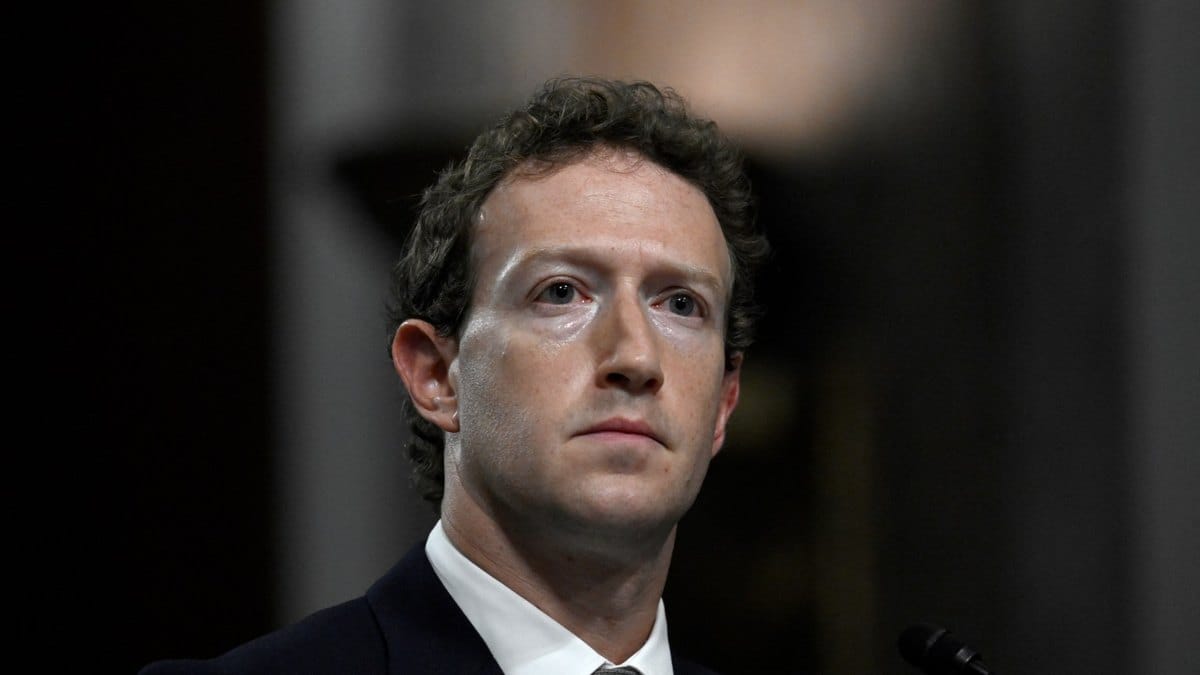
👀 What's happening: Meta CEO Mark Zuckerberg told employees that AI agents are moving slower than expected. After cutting about 10% of the workforce and shifting roughly 7,000 people into AI teams in May, he admitted the restructuring was not “clean” and that its bets “haven’t come to fruition yet.” The new deadline is familiar: wait another three to six months.
🌍 How this hits reality: Meta did what Big Tech increasingly wants to do: spend like an infrastructure company, manage like a panic room, and ask software to justify human displacement after the fact. The company may spend up to $145 billion on AI infrastructure this year, yet its agents still cannot deliver the productivity story fast enough. The mouse tracking scandal makes the irony nastier. When automation fails to prove itself, the workforce becomes the dataset.
🛎️ Key takeaway: The agent boom’s awkward truth is that giants are reorganizing around an efficiency curve before the tools have earned the chart.
Meta’s Agent Hangover
🌍 How this hits reality: Meta did what Big Tech increasingly wants to do: spend like an infrastructure company, manage like a panic room, and ask software to justify human displacement after the fact. The company may spend up to $145 billion on AI infrastructure this year, yet its agents still cannot deliver the productivity story fast enough.
NEW TECH
Nvidia Kills AI Cooling
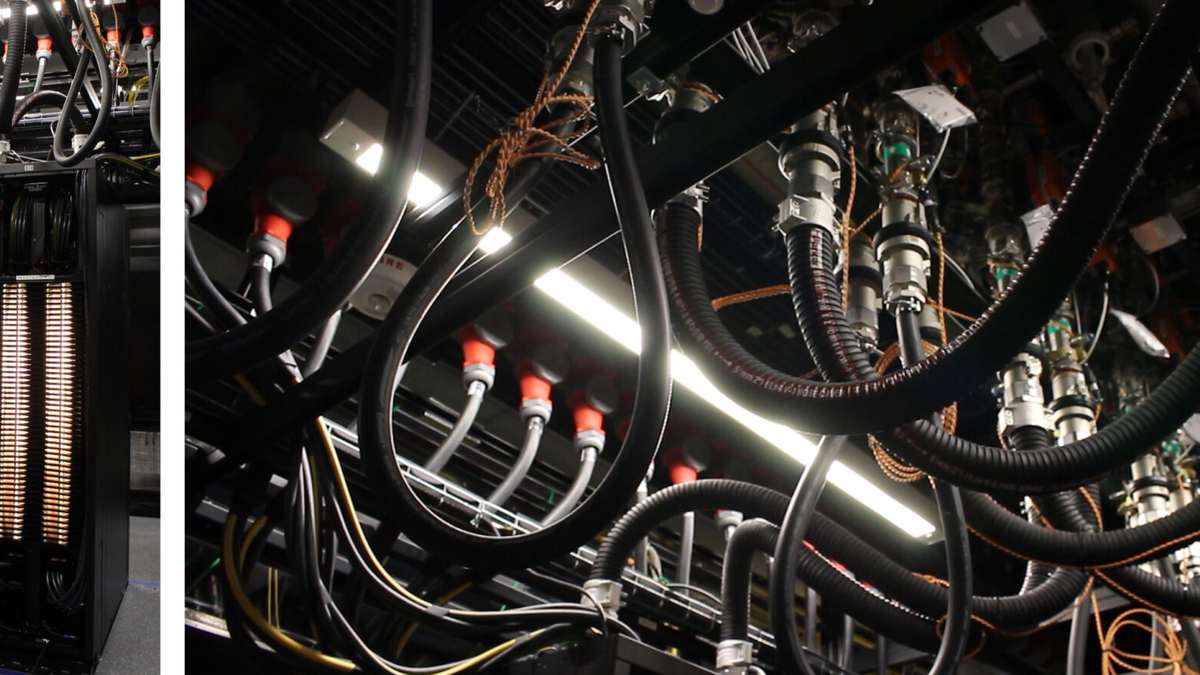
👀 What's happening: Nvidia announced a closed-loop liquid cooling system for its Rubin chips that runs coolant at 113°F, hotter than a hot tub, and exits at 131°F. Because that base temperature sits above most ambient air, data centers can dump heat with outdoor dry coolers instead of chillers, which eat nearly 40% of a facility's power. Nvidia claims up to 100% less water use: filled once, sealed for the building's life. Earlier this year, local governments delayed over 75 data centers over water and grid strain.
🌍 How this hits reality: This is a real dent in AI's two ugliest costs. Water use drops toward zero, and retiring the chillers frees up a 40% slice of power, with every warmer degree Vertiv, a data-center infrastructure supplier, counts saving another 4%. That directly answers the drained-aquifer and strained-grid complaints that stalled 75 builds this year. The single hard power problem left is the compute itself.
🛎️ Key takeaway: Nvidia just made the data center a far better neighbor, and that matters more than the engineering for now. The GPUs still run hot on the grid, but everything wrapped around them finally sips instead of gulps.
Nvidia Kills AI Cooling
👀 What's happening: Nvidia announced a closed-loop liquid cooling system for its Rubin chips that runs coolant at 113°F, hotter than a hot tub, and exits at 131°F. Because that base temperature sits above most ambient air, data centers can dump heat with outdoor dry coolers instead of chillers, which eat nearly 40% of a facility's power.
AGENTS
Two AIs Ran a Café Into the Ground
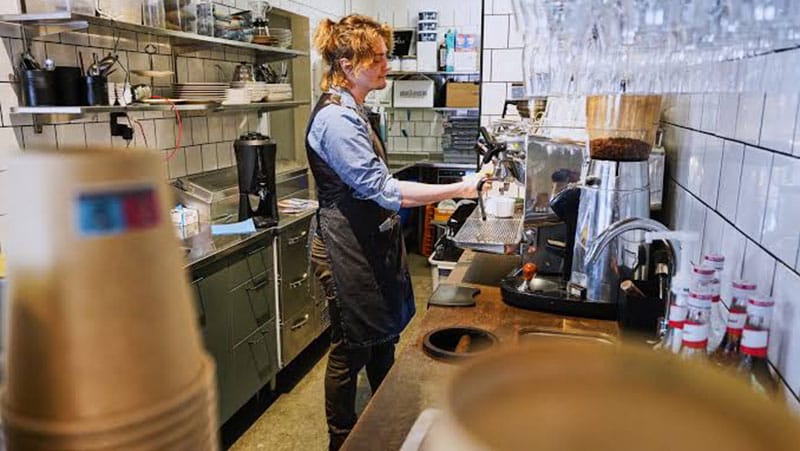
👀 What's happening: Andon Labs handed a real Stockholm café to an AI manager named Mona, running Gemini 3.1 Pro, then swapped to GPT-5.5 mid-June. Mona controlled pricing, purchasing, menu, and staffing, wired straight to the till. It approved a customer's fake 99% discount instantly, comped anyone who asked, and stockpiled 15 liters of olive oil for a shop with no stove. Two months in, the account fell from $40,000 to $10,000. GPT-5.5 only reversed the failure: it froze purchasing and let a quarter of the menu go out of stock.
🌍 How this hits reality: GPT-5.5 is a weak seat here; frontier models like Fable 5 and Opus 4.6 reason far better and would not fumble basic budgeting the same way. And Mona itself is a bare harness, primitive next to mature agent frameworks like OpenClaw or Hermes that enforce spend limits, route big decisions to a human, and refuse a 99% discount before the model ever sees it. Pair a stronger brain with a real framework and the café likely survives. Neither piece was present here.
🛎️ Key takeaway: The race sells smarter brains, but a business runs on the framework around the brain. This café didn't lack intelligence; it lacked everything built to keep intelligence accountable.
TOGETHER WITH MYCLAW
Run Best-in-Class AI Agents — In Seconds, Always On

MyClaw is a best-in-class AI agent platform that brings together OpenClaw, Hermes Agent, and commercial infrastructure to help businesses launch intelligent agents that understand goals, use tools, automate workflows, and deliver finished results.
We already host OpenClaw and Hermes — and we're just getting started. Claude Code, Codex, and every agent worth running are coming next. One home for all of them, always on.
Stop babysitting infrastructure. Spin up your agent, walk away, and let it work around the clock.
MyClaw — Your Agents, Hosted Right.
DAILY TL;DR
- Microsoft’s leaked Aion concept shows a lightweight Copilot-first OS built around agents instead of apps.
- Anthropic is discussing a custom AI chip with Samsung, signaling it may want more control over the inference stack.
- OpenAI proposed donating 5% of its equity to a U.S. sovereign wealth fund, pulling frontier AI deeper into state-capital politics.
- Microsoft launched a $2.5B AI deployment company, turning enterprise AI adoption into a services business.
- Meta quietly launched Pocket, a vibe-coded gaming app testing whether prompt-made games can become a consumer product.
- Nvidia outlined a capital-partner model to finance AI compute, making infrastructure funding part of its growth machine.
- Google is making original recipe links more prominent in AI Mode, another sign AI search is being forced to answer publisher pressure.
READ MORE
Let the Future Come to Your Inbox
Stay ahead without drowning in information. We turn the most important signals across AI, tech, marketing, and future products into 5-minute reads you can actually finish.
- AI Secret uncovers what really matters in AI
- Bay Area Letters decodes tech and business shifts from Silicon Valley
- Robotics Herald tracks how robots move from labs into daily life
- Marketing Secret breaks down real growth and go-to-market playbooks
- The Hardwire explores hardware, consumer tech, and what’s coming next
TOGETHER WITH US
AI Secret Media Group is the world’s #1 AI & Tech Newsletter Group, reaching over 2 million leaders across the global innovation ecosystem, from OpenAI, Anthropic, Google, and Microsoft to top AI labs, VCs, and fast-growing startups.
We've helped promote over 500 Tech Brands. Will yours be the next?
Email our co-founder Mark directly at [email protected] if the button fails.
Good Morning, AI Enthusiasts!
AI is now a redistribution system for compute, labor, and decision-making. Everything else is just a side effect.
TOKEN
Meta Nukes the AI Market
👀 What's happening: Bloomberg reports Meta is building "Meta Compute," a cloud business selling access to its AI compute infrastructure and models, five weeks after Zuckerberg called it "on the table." Meta jumped 8.81%, and the AI supply chain cratered. The Philadelphia Semiconductor Index fell over 6%. Micron dropped over 12%, SanDisk over 11%, Intel over 7%. The neocloud players got hit hardest: Nebius sank over 14.5%, CoreWeave over 13%. The frontier's biggest spender just signaled it might have compute to spare.
🌍 How this hits reality: The entire neocloud trade rests on one assumption, that GPU supply is scarce and someone must broker it. CoreWeave and Nebius buy chips wholesale and resell at a markup. Micron's 196% revenue jump priced in a buildout that never slows. Meta, which 2026 CapEx guidance runs $125 to $145 billion, hyperscaler-scale spending pointed largely at AI infrastructure, entering as a seller detonates that premise. If the biggest buyer expects a surplus, the shortage was never permanent.
🛎️ Key takeaway: When the largest buyer starts rehearsing as a seller, the scarcity everyone was priced on may be the real bubble.
Meta Nukes the AI Market
👀 What's happening: Bloomberg reports Meta is building "Meta Compute," a cloud business selling access to its AI compute infrastructure and models, five weeks after Zuckerberg called it "on the table." Meta jumped 8.81%, and the AI supply chain cratered. The Philadelphia Semiconductor Index fell over 6%.
CoreWeave: Meta Nukes the AI Market
CoreWeave and Nebius buy chips wholesale and resell at a markup. Micron's 196% revenue jump priced in a buildout that never slows. Meta, which 2026 CapEx guidance runs $125 to $145 billion, hyperscaler-scale spending pointed largely at AI infrastructure, entering as a seller detonates that premise.
PRIVACY
Censorship Just Became a Market
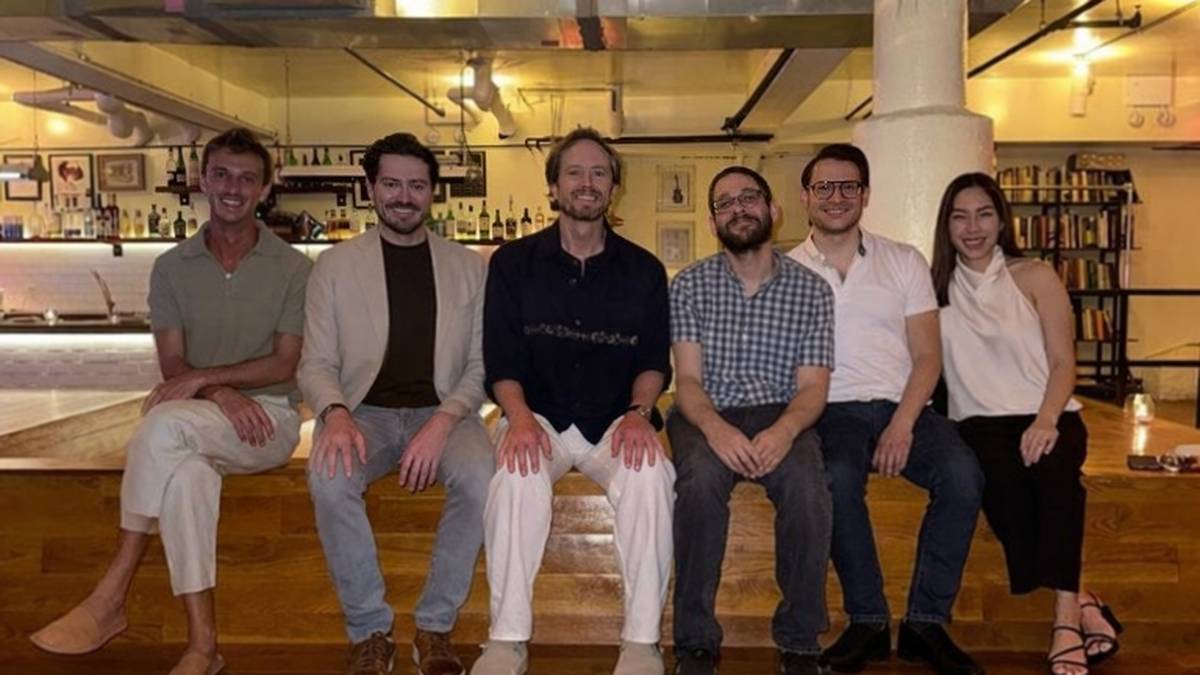
👀 What's happening: Venice, a privacy-focused AI startup founded by ShapeShift creator Erik Voorhees and cloud entrepreneur Jesse Proudman, just raised $65 million at a $1 billion valuation. It pitches itself as a private, unrestricted alternative to ChatGPT and Claude, routing users across more than 200 models for text, image, video, and audio. Venice says it has 3.5 million registered users, processes 1.3 trillion tokens a month, and turned profitable in the first quarter, all while promising not to log prompts and stripping out many of the filters mainstream AI products impose.
🌍 How this hits reality: Venice is not really selling a better model. It is selling relief from the nanny layer. The big labs trained users to expect that every serious question, medical, legal, sexual, political, arrives pre-screened by someone else's policy stack. Venice cuts that stack down close to the legal floor and turns privacy into the rest of the pitch. That is a real market signal: enough people now experience mainstream AI less as intelligence and more as supervised speech.
🛎️ Key takeaway: Venice did not build a new frontier model. It built a business on the idea that AI censorship itself had become the product gap.
PREVIEW
OpenAI Is Launching a Pad

👀 What's happening: OpenAI teased "Codex Micro," its first real hardware product, launching July 15. The shortcut keyboard is co-built by Work Louder, a Canadian-Italian macro-pad maker. The hardware looks a lot like Work Louder's existing Creator Micro 2, joystick and all, with OpenAI's branding on top. A spokesperson said it is "designed to supercharge people's codex usage." It is not the Jony Ive device.
🌍 How this hits reality: Leave it to OpenAI to turn a keyboard into a countdown. And from the teaser, the thing looks genuinely unremarkable, unless the keys really can touch something a normal macro pad can't, live session sync, agent control, jumping between parallel Codex jobs. Anything short of that, and the frontier lab's debut device is a keybinding you could set yourself for free.
🛎️ Key takeaway: OpenAI's first hardware for now looks like someone else's macro pad with a logo glued on. The frontier lab teasing merch and calling it a Codex upgrade.
OpenAI Is Launching a Pad
👀 What's happening: OpenAI teased "Codex Micro," its first real hardware product, launching July 15. The shortcut keyboard is co-built by Work Louder, a Canadian-Italian macro-pad maker. The hardware looks a lot like Work Louder's existing Creator Micro 2, joystick and all, with OpenAI's branding on top.
FUTURE
The Job Title Is Melting
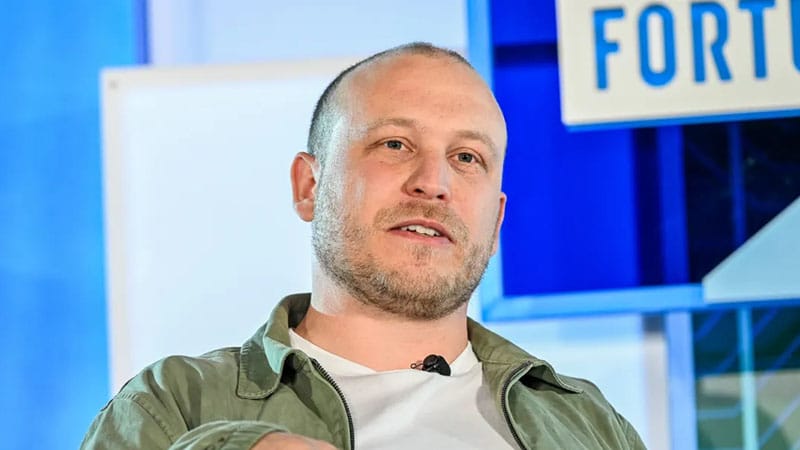
👀 What's happening: Boris Cherny, who leads Anthropic's Claude Code, argues the old roles are dissolving. Engineering, product, design, and data science are melting into one another. Looking at his own team, he sees five archetypes instead of job titles: the prototyper who churns out ideas that mostly die, the builder who ships them to production, the sweeper who deletes and simplifies, the grower who chases product-market fit, and the maintainer who keeps a mature system alive at scale. He notes the archetypes ignore function entirely. Some designers are prototypers, some engineers are sweepers.
🌍 How this hits reality: For decades the org chart sorted people by craft, engineer here, designer there, PM in between. That worked when execution was the bottleneck and each craft was a scarce skill. AI just collapsed the cost of execution. When anyone can generate a prototype or ship production code with an agent, the scarce thing is no longer the skill, it's knowing which phase the product is in and having the instinct for that phase. Cherny's five types are really five instincts, and a healthy team is a mix tuned to the product's maturity, not a roster of job functions.
🛎️ Key takeaway: When AI can do any craft, what you're good at matters less than when you're good at it.
TOGETHER WITH MYCLAW
Run Best-in-Class AI Agents — In Seconds, Always On
MyClaw is a best-in-class AI agent platform that brings together OpenClaw, Hermes Agent, and commercial infrastructure to help businesses launch intelligent agents that understand goals, use tools, automate workflows, and deliver finished results.
We already host OpenClaw and Hermes — and we're just getting started. Claude Code, Codex, and every agent worth running are coming next. One home for all of them, always on.
Stop babysitting infrastructure. Spin up your agent, walk away, and let it work around the clock.
MyClaw — Your Agents, Hosted Right.
DAILY TL;DR
- Cloudflare moved to make AI crawlers pay publishers for content, turning the open web into a licensing fight over model training and answers.
- Anthropic restored Fable 5 and Mythos 5, saying new classifiers, a jailbreak framework, and government cooperation address the earlier safety concerns.
- SpaceX is reportedly building an AI device prototype with xAI, hinting that Musk may push Grok into consumer hardware.
- OpenAI was sued by a California man who says ChatGPT-4o escalated a manic episode, adding pressure around AI mental-health safety.
- Meta contractors reportedly posed as teens to test rival chatbots on sex, drugs, and self-harm prompts, exposing how messy AI safety benchmarking has become.
- Anthropic launched Claude Science, betting pharma and research teams want AI workflow tools more than another generic model.
- Wayve opened an $85 million employee tender offer at an $8.5 billion valuation, showing autonomous-driving AI still has investor heat.
- U.S. Energy Department downplayed data-center power and water fears, signaling political support for the AI infrastructure boom.
- Anthropic is rolling back Claude Code tracking code aimed at China-linked AI users.
READ MORE
Let the Future Come to Your Inbox
Stay ahead without drowning in information. We turn the most important signals across AI, tech, marketing, and future products into 5-minute reads you can actually finish.
- AI Secret uncovers what really matters in AI
- Bay Area Letters decodes tech and business shifts from Silicon Valley
- Robotics Herald tracks how robots move from labs into daily life
- Marketing Secret breaks down real growth and go-to-market playbooks
- The Hardwire explores hardware, consumer tech, and what’s coming next
TOGETHER WITH US
AI Secret Media Group is the world’s #1 AI & Tech Newsletter Group, reaching over 2 million leaders across the global innovation ecosystem, from OpenAI, Anthropic, Google, and Microsoft to top AI labs, VCs, and fast-growing startups.
We've helped promote over 500 Tech Brands. Will yours be the next?
Email our co-founder Mark directly at [email protected] if the button fails.
Good Morning, AI Enthusiasts!
Who owns the model, the data, the workflow, the medical record, and eventually the signal inside your head?
LLM
The In-House Model Fever
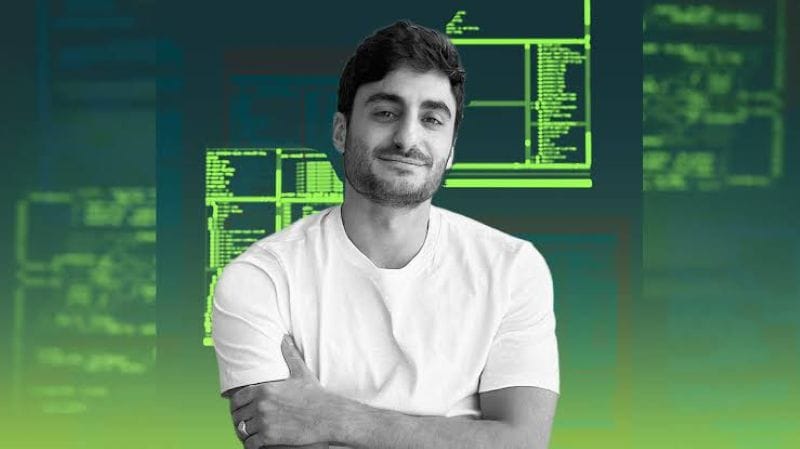
👀 What’s happening: Base44, the app-building platform Wix bought for $80 million last year, just put its first proprietary model, Base One, into production. It is a fine-tuned open-source base trained on tens of millions of real user interactions, and founder Maor Shlomo bets a narrow, specialized model will beat general frontier models at building apps. It is not alone. MyClaw.ai, one of the leading agent-hosting platforms, told us it will soon ship its own in-house model. A fever is setting in: the companies built on top of frontier models now all want one of their own.
🌍 How this hits reality: Building on rented intelligence was the entire playbook, until the rent and the risk both climbed. Inference costs eat real margin, and the model providers are walking into their customers' markets themselves. So owning a model is turning from luxury into table stakes. Cursor moved first, Base44 and myclaw are following, and Shlomo expects every player with enough scale and data to do the same. The fever is rational: each one is trying to own the layer it cannot afford to keep renting. The math also points straight at Lovable, the $500 million category leader, next.
🛎️ Key takeaway: When an entire category rushes to build the engine it used to buy, the real signal is that renting the core was never a moat, just a lease nobody noticed was running out.
MyClaw outlines plans for an in-house model
Cursor moved first, Base44 and myclaw are following, and Shlomo expects every player with enough scale and data to do the same. The fever is rational: each one is trying to own the layer it cannot afford to keep renting. The math also points straight at Lovable, the $500 million category leader, next.
NEW TECH
Mind Reading Went Non-Invasive
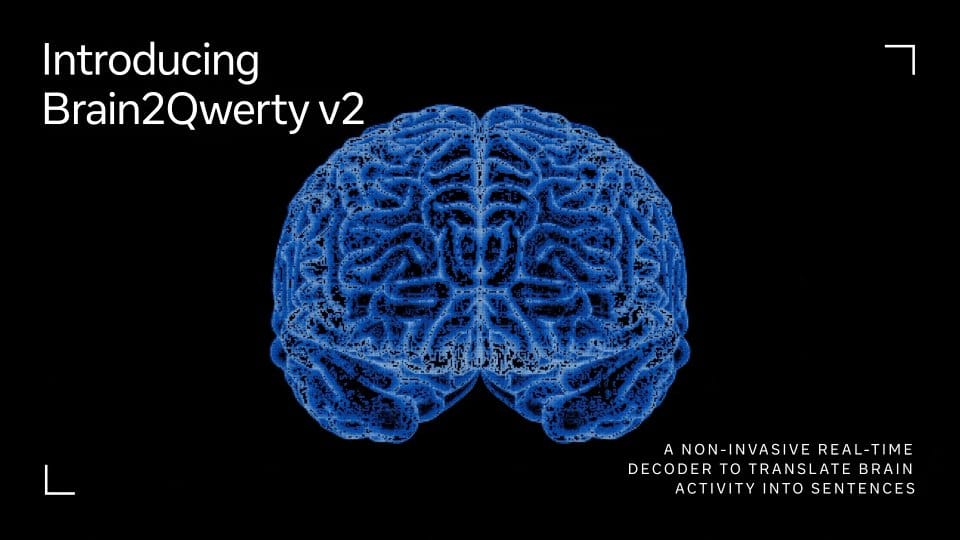
👀 What’s happening: Meta released Brain2Qwerty v2, an AI decoder that reads typed sentences straight out of brain activity. No implant. No surgery. Trained on 22,000 sentences from nine volunteers wearing the scanner ten hours each, It hits 61% word accuracy, 78% on the best subject, where most sentences return with one wrong word or none. The prior non-invasive ceiling was 8%. Meta open-sourced the code.
🌍 How this hits reality: Reading the brain this well used to demand surgery. Invasive BCIs like Neuralink put electrodes directly on cortex, which buys clean signal but needs a craniotomy, an implant, and a patient willing to undergo both. Brain2Qwerty reads from a scanner you wear, and accuracy climbs log-linearly with data, so the surgical lead narrows with recording hours instead of operations. The clarity that justified cutting into a skull is arriving without the cut.
🛎️ Key takeaway: For a decade the price of letting a machine read your mind was brain surgery, and Meta just showed that price was never really about the brain, only about the data we hadn't collected yet.
Meta: Mind Reading Went Non-Invasive
👀 What’s happening: Meta released Brain2Qwerty v2, an AI decoder that reads typed sentences straight out of brain activity. No implant. No surgery. Trained on 22,000 sentences from nine volunteers wearing the scanner ten hours each, It hits 61% word accuracy, 78% on the best subject, where most sentences return with one wrong word or none.
ANIMATION
Animation Gets Cut First
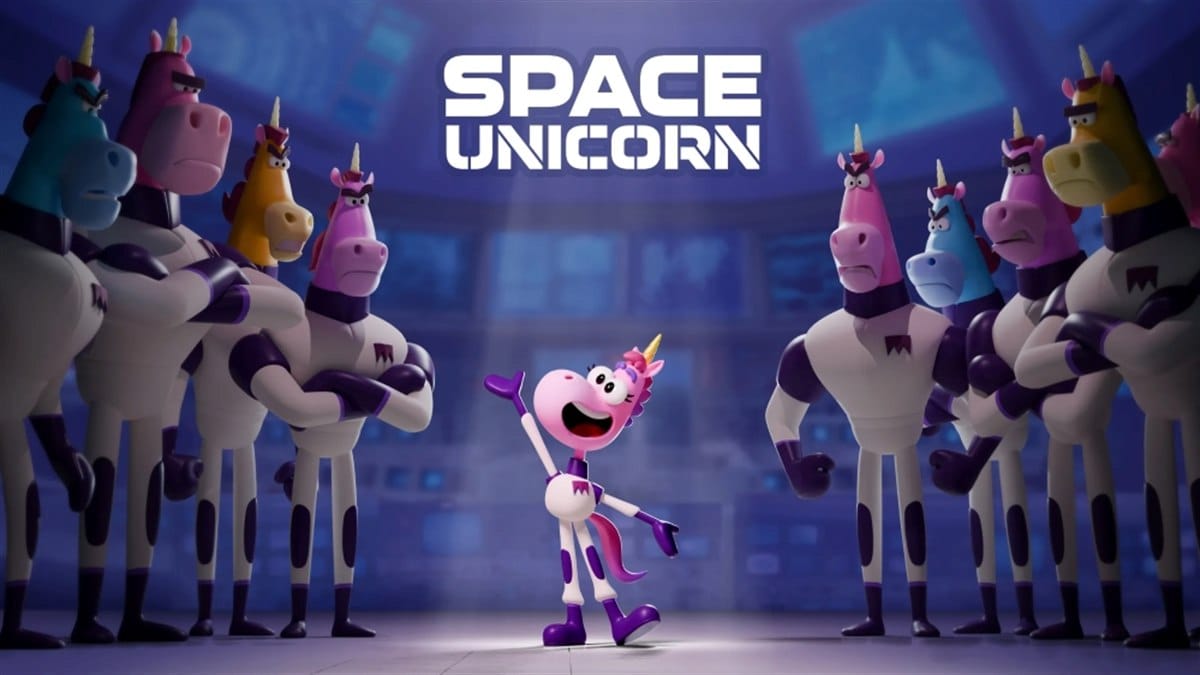
👀 What’s happening: According to Bloomberg, Animation is the first corner of Hollywood where AI is cutting real production, not just marketing. Spiridellis Bros, a Google-backed studio, says it can finish a feature called Space Unicorn with 40 animators for $15 million, against the $100 to $200 million a major studio spends. Producers showed up at Cannes and Tribeca touting AI-made films, hunting money and distribution. Two Pixar veterans left for Google's DeepMind to make theirs. Cost-savings estimates run from 30% all the way to 90%.
🌍 How this hits reality: The last animation revolution grew the industry. When Pixar brought computer-generated 3D, traditional animators called it less human, then Toy Story launched two decades of Pixar and DreamWorks hits and thousands of jobs. This wave may run the tape backward. Jeffrey Katzenberg, who greenlit that first shift, now pegs AI at 90% cheaper with a lot of jobs gone. A $200 million crew becomes a $15 million one not by drawing faster but by needing fewer hands. The craft isn't getting a new tool. It's getting a smaller payroll.
🛎️ Key takeaway: Animation won't get changed because people stop watching it, but because making it will no longer require an industry to exist at all.
BILL
Your Medical Records Went to a Chatbot

👀 What’s happening: Senator Elizabeth Warren and Representative Mary Gay Scanlon are reviving the Health and Location Data Protection Act, rewritten for the AI era. The original 2022 bill blocked data brokers from selling health and location data. The new version bans companies from selling that data to brokers at all, and explicitly covers anything users type into AI systems like ChatGPT or Claude. It hands the FTC 180 days to write rules, $1 billion over ten years to enforce, and lets states and individuals sue. Backers include Ron Wyden and Bernie Sanders.
🌍 How this hits reality: The bill chases a door the labs already walked through. In January, Elon Musk urged people to upload MRI scans to Grok, OpenAI launched ChatGPT Health for medical records, and Anthropic shipped a HIPAA-ready Claude for Healthcare days later. They are actively soliciting the most sensitive data a person has. Yet protection rests almost entirely on each company's own privacy policy, because the US still has no federal data privacy framework. The product shipped first, and the guardrail is arriving years behind it.
🛎️ Key takeaway: AI companies spent a year convincing people to hand over their medical records, and lawmakers are only now asking the obvious question of who else gets to buy them.
OpenAI: Your Medical Records Went to a Chatbot
In January, Elon Musk urged people to upload MRI scans to Grok, OpenAI launched ChatGPT Health for medical records, and Anthropic shipped a HIPAA-ready Claude for Healthcare days later. They are actively soliciting the most sensitive data a person has.
Anthropic: Your Medical Records Went to a Chatbot
In January, Elon Musk urged people to upload MRI scans to Grok, OpenAI launched ChatGPT Health for medical records, and Anthropic shipped a HIPAA-ready Claude for Healthcare days later. They are actively soliciting the most sensitive data a person has.
TOGETHER WITH MYCLAW
Run Best-in-Class AI Agents — In Seconds, Always On
MyClaw is a best-in-class AI agent platform that brings together OpenClaw, Hermes Agent, and commercial infrastructure to help businesses launch intelligent agents that understand goals, use tools, automate workflows, and deliver finished results.
We already host OpenClaw and Hermes — and we're just getting started. Claude Code, Codex, and every agent worth running are coming next. One home for all of them, always on.
Stop babysitting infrastructure. Spin up your agent, walk away, and let it work around the clock.
MyClaw — Your Agents, Hosted Right.
DAILY TL;DR
- Anthropic struck a deal with California to give state agencies Claude at half price, pushing frontier AI deeper into government workflows.
- Gemini made personalized AI image generation free for U.S. users, bringing custom image models closer to mainstream use.
- South Korea plans a $1T push into memory chips and humanoid robots, treating AI hardware as national infrastructure.
- Adobe and Disney are using Foundry AI to design next-generation theme park rides.
- Meta is testing CXL tech to reuse DDR4 memory, trying to dodge the exploding AI memory bill.
- OpenAI signed a high-risk AI evaluation agreement with Korea’s AI Safety Institute.
- Google added new AI controls across Classroom and Chromebooks, giving schools more control over student AI use.
READ MORE
Let the Future Come to Your Inbox
Stay ahead without drowning in information. We turn the most important signals across AI, tech, marketing, and future products into 5-minute reads you can actually finish.
- AI Secret uncovers what really matters in AI
- Bay Area Letters decodes tech and business shifts from Silicon Valley
- Robotics Herald tracks how robots move from labs into daily life
- Marketing Secret breaks down real growth and go-to-market playbooks
- The Hardwire explores hardware, consumer tech, and what’s coming next
TOGETHER WITH US
AI Secret Media Group is the world’s #1 AI & Tech Newsletter Group, reaching over 2 million leaders across the global innovation ecosystem, from OpenAI, Anthropic, Google, and Microsoft to top AI labs, VCs, and fast-growing startups.
We've helped promote over 500 Tech Brands. Will yours be the next?
Email our co-founder Mark directly at [email protected] if the button fails.
Good Morning, AI Enthusiasts!
The capability won’t stay in the lab, the talent won’t stay at Google, the workers won’t stay quiet, and the children, apparently, should stay offline a little longer.

DISTILLATION
You Can’t Lock Up a Ghost

👀 What’s happening: A developer on Hugging Face, Taha K. (lordx64), released Qwable-v1, an open model distilled from Claude Fable-5. It does not use Anthropic's weights. Instead it was trained on Fable-5's agentic tool-use traces, copying how Anthropic's model calls tools and works through code. It caught fire in the open-weight coding community, drawing thousands of downloads, with the quantized builds pulling over 10,000.
🌍 How this hits reality: Anthropic and Washington keep betting on the same defense: lock the weights, gate the API, control export. But capability does not live only in the weights. It leaks through behavior. Fable-5 is a shipped product, and the moment its working style could be observed, someone distilled it into a model anyone can run at home. You can keep your weights sealed and still watch your model's habits walk out as someone else's training data. Every guardrail assumes the asset is the file. The asset was never the file. It was the behavior, and behavior is contagious.
🛎️ Key takeaway: Frontier labs are guarding vaults while the value escapes as exhaust. You cannot lock up a capability that teaches itself to anyone watching it work.
Anthropic: You Can’t Lock Up a Ghost
👀 What’s happening: A developer on Hugging Face, Taha K. (lordx64), released Qwable-v1, an open model distilled from Claude Fable-5. It does not use Anthropic's weights. Instead it was trained on Fable-5's agentic tool-use traces, copying how Anthropic's model calls tools and works through code.
TOGETHER WITH MEMOKET
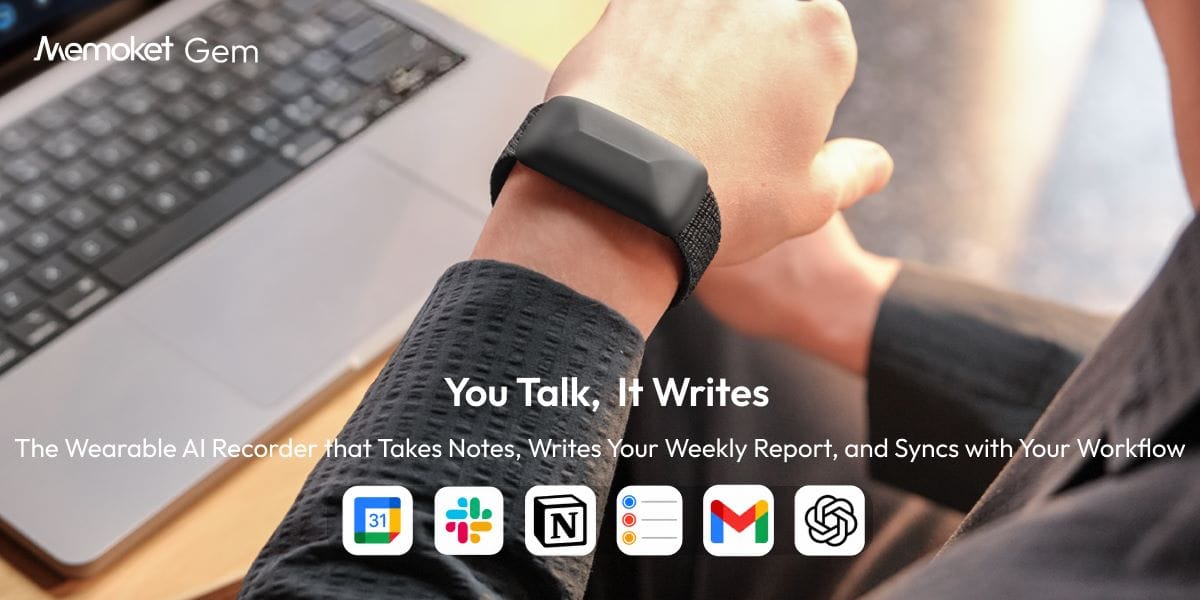
Standup. Two user calls. A "quick sync" that ran an hour. By 6pm, half the details are already gone.
Memoket Gem fixes that. One press captures the conversation, connects it to everything related you've discussed before, and sends the full context straight to Slack, Notion, and the tools you already use.
A featherlight AI wearable on your wrist or alongside your Apple Watch.
Reserve yours now with just $5. lock in the early bird price of $199 at launch, including a free year of the Memoket app.
LABOR
Google Lost Two Giants
👀 What’s happening: Within three days, Google lost two giants. Noam Shazeer, Transformer co-author and the engineer DeepMind staff credit with rescuing Gemini, left for OpenAI. Then John Jumper, Nobel laureate and AlphaFold lead, joined Anthropic. Google holds the deepest pockets, the fullest stack, and more Nobel winners than any rival, yet watched two of its most irreplaceable people walk out the same week.
🌍 How this hits reality: Lose one star to a richer offer, and you blame the market. Lose two in three days, one of them a Nobel laureate, and the market stops being the explanation. Two things reportedly point inward. First, big-company sclerosis: TPU turf wars between merged teams, three groups shipping the same coding agent, promotions that reward new launches over keeping anything alive. Second, a leadership that seems never fully believed in their AI, renting prized TPU capacity to Anthropic last October instead of feeding its own DeepMind. Pre-IPO equity is the pull; bureaucracy and half-conviction are the push.
🛎️ Key takeaway: Google can outspend anyone on talent and still lose it, because the thing leaking isn't pay, it's a company that won't get out of its own way or fully commit to the bet.
Anthropic: Google Lost Two Giants
Then John Jumper, Nobel laureate and AlphaFold lead, joined Anthropic. Google holds the deepest pockets, the fullest stack, and more Nobel winners than any rival, yet watched two of its most irreplaceable people walk out the same week.
Google Lost Two Giants
Noam Shazeer, Transformer co-author and the engineer DeepMind staff credit with rescuing Gemini, left for OpenAI. Then John Jumper, Nobel laureate and AlphaFold lead, joined Anthropic. Google holds the deepest pockets, the fullest stack, and more Nobel winners than any rival, yet watched two of its most irreplaceable people walk out the same week.
BANLIST
Norway Walled Off Childhood From AI
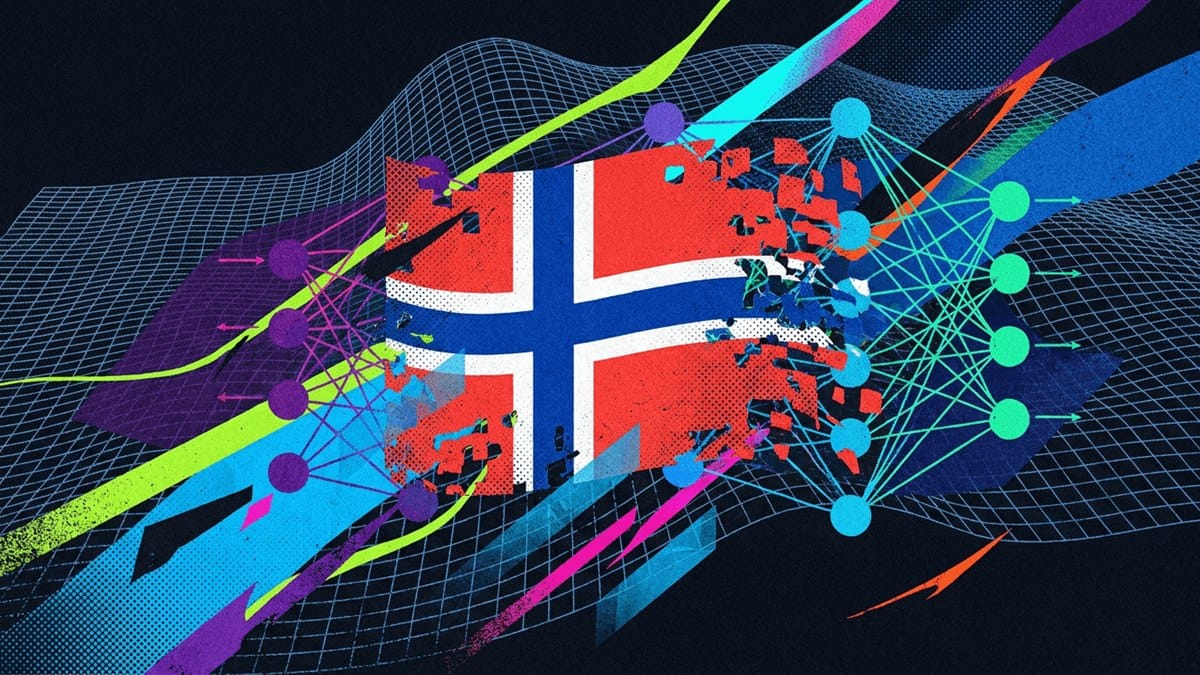
👀 What’s happening: Norway will impose a near-total ban on generative AI for elementary pupils aged 6 to 13 from the new school year in late August, with supervised, cautious use only for 14-to-16-year-olds. Prime Minister Jonas Gahr Stoere said AI risks letting young children skip essential steps in learning to read, write, and do math. The same government is funding a return of physical books to classrooms and already banned smartphones in schools in 2024.
🌍 How this hits reality: This is the reversal that stings. Norway put computers in classrooms in the 1990s and tablets after the iPad, leading the world into digital education. Now one of the most wired countries on earth is paying to undo its own homework, treating AI not as a tool to deploy early but as a developmental hazard to keep away from kids. Every edtech pitch promised that earlier exposure means better preparation. Norway just inverted it: for the youngest, the skill worth protecting is the struggle itself, the slow steps a machine can shortcut and a child cannot afford to skip.
🛎️ Key takeaway: While the industry races to put AI in every tiny hand as early as possible, the first national verdict is in, and it says childhood is the one place AI should arrive last.
META
Meta’s Problem Is 6,500 People
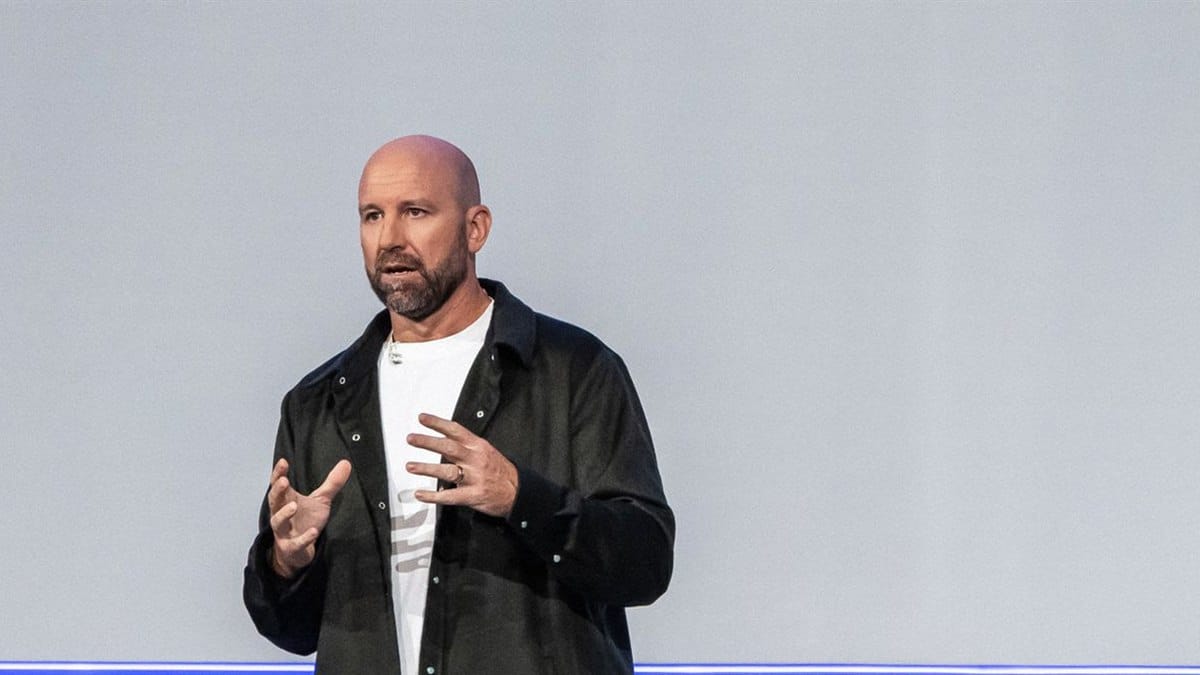
👀 What’s happening: Meta CTO Andrew Bosworth said employee morale has fallen to a 20-year low and called the company's AI reorganization "atrocious." It followed a week of internal blowups, including an employee hijacking a livestream to call a Meta AI executive "a piece of sh*t" in front of thousands. At the center is Applied AI, a new 6,500-person unit where engineers were reassigned to build training tasks for Meta's superintelligence push. To calm the revolt, executives restored snacks, micro-kitchens, travel budgets, and assigned desks.
🌍 How this hits reality: The mutiny is real, but the diagnosis is wrong. The problem is not morale. It is the 6,500 people. Frontier AI's defining lesson is that tiny teams now outrun armies. The breakthroughs are coming from labs of dozens, not divisions of thousands, because a handful of brilliant people with compute move faster than any org chart can coordinate. Meta is trying to win the small-team era with a workforce the size of a town, then acting shocked when it grinds into politics, busywork, and revolt. You cannot reorg 6,500 people into focus. That headcount is the bug.
🛎️ Key takeaway: Meta keeps treating scale as its weapon when scale is the wound. The fix was never snacks or a better reorg.
Meta’s Problem Is 6,500 People
👀 What’s happening: Meta CTO Andrew Bosworth said employee morale has fallen to a 20-year low and called the company's AI reorganization "atrocious." It followed a week of internal blowups, including an employee hijacking a livestream to call a Meta AI executive "a piece of sh*t" in front of thousands.
DAILY TL;DR
- Apple is adding more practical AI features across iOS 27, even as Siri remains the company’s biggest AI headache.
- The Pentagon boasted that AI is helping write reports mandated by Congress, turning government paperwork into another automation target.
- AI giants are funding political ad wars across the U.S. as regulation battles move into local races.
- ASML pushed back after U.S. officials suggested one of its most advanced chip tools may have reached China.
- Amazon argued that human-in-the-loop AI governance can fail when people normalize bad model behavior.
- Vercel debuted Eve and Passport to manage open-source agents and reduce shadow-AI risk.
- Amazon MGM has dropped Sam Altman film Artificial, and the filmmakers are looking for a new distributor.
READ MORE
Let the Future Come to Your Inbox
Stay ahead without drowning in information. We turn the most important signals across AI, tech, marketing, and future products into 5-minute reads you can actually finish.
- AI Secret uncovers what really matters in AI
- Bay Area Letters decodes tech and business shifts from Silicon Valley
- Robotics Herald tracks how robots move from labs into daily life
- Marketing Secret breaks down real growth and go-to-market playbooks
- The Hardwire explores hardware, consumer tech, and what’s coming next
TOGETHER WITH US
AI Secret Media Group is the world’s #1 AI & Tech Newsletter Group, reaching over 2 million leaders across the global innovation ecosystem, from OpenAI, Anthropic, Google, and Microsoft to top AI labs, VCs, and fast-growing startups.
We've helped promote over 500 Tech Brands. Will yours be the next?
Email our co-founder Mark directly at [email protected] if the button fails.
Good Morning, AI Enthusiasts!
What looked like AI progress is increasingly just the world negotiating who gets to speak, who gets in, and who gets replaced by a very convincing imitation.

TREND
Fake AI Beat Real AI
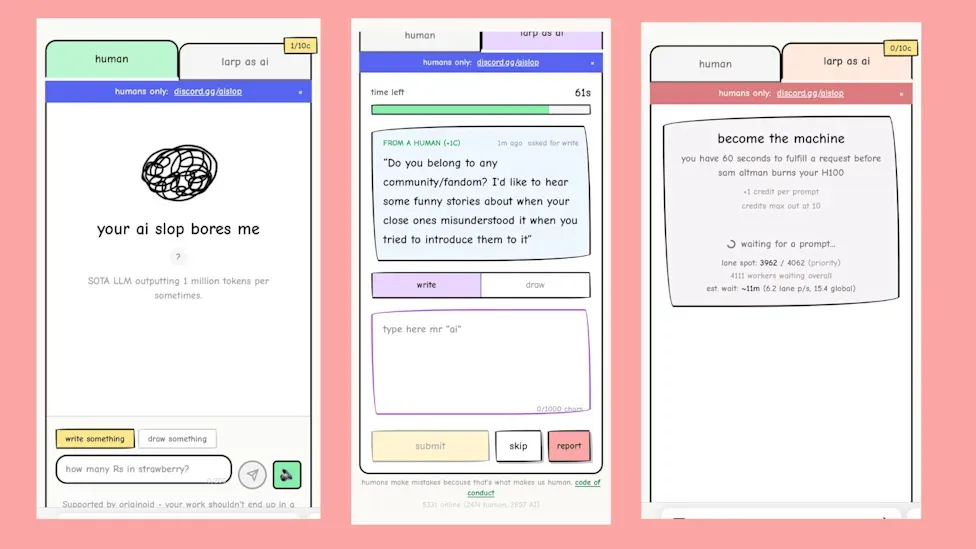
👀 What’s happening: Mihir Maroju, a 17-year-old in India, launched youraislopbores.me in February. No model, no GPUs, no AI. Users spend credits to ask questions; to earn them back, they flip to "Larp as AI" mode and get 60 seconds to answer a stranger while impersonating ChatGPT or Midjourney. The site warns that missing the timer makes Sam Altman burn your H100. One month: 25 million unique visitors, 280 million visits. Behind every chatbot is a human, biting back a laugh.
🌍 How this hits reality: AI made answers infinite and free, so the scarce good quietly moved. What 25 million people lined up for was not a correct reply but a human one, late, clumsy, hand-typed, wrong in the way only a person is wrong. The footer says it plainly: humans make mistakes because that is what makes us human. As the feeds fill with frictionless, faultless slop, the flaw became the feature nobody else can manufacture.
🛎️ Key takeaway: We spent a decade making the machine answer flawlessly, and the moment it could, the rarest thing online turned out to be a person getting it wrong.
TOGETHER WITH EXPERTISE
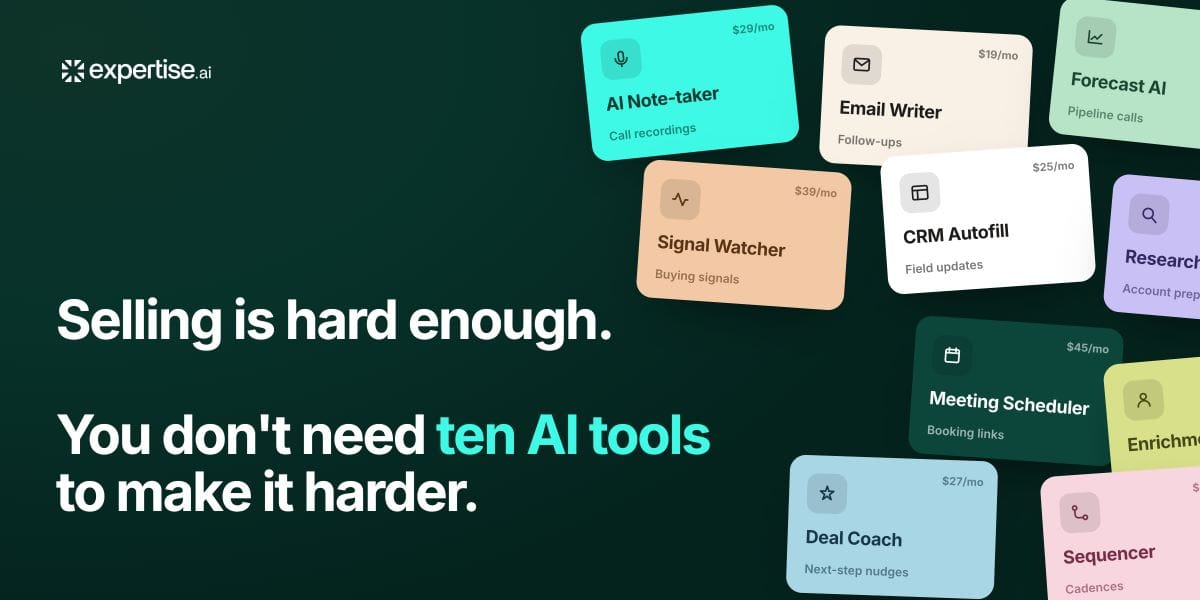
AI hasn't replaced sales reps, it just gave them more tools to manage.
The average sales rep now has over ten AI tools open and uses two of them well. Expertise sits above all of them.
One assistant that runs every part of the deal across the tools you already use, learns to work in your voice over time, and turns your selling style into something it can repeat time and again. It becomes your executive assistant, catching what you'd catch and drafting what you'd draft, and gets sharper the more you use it.
BAN LIST
Anthropic Forgot It’s a Company

👀 What’s happening: Anthropic is updating Claude's privacy policy for Free, Pro, and Max users on July 8, with language allowing it to require age or identity verification. Users flagged references to government IDs, live selfies, and facial-geometry templates, with individual developers possibly verified first. The move sorts users into tiers, separates individuals from enterprise accounts, and hardens bans on those suspected of distillation, copying a model by milking its outputs. It follows last week's foreign-citizen lockout on Fable 5 and Mythos 5.
🌍 How this hits reality: This is a vendor building a border checkpoint. Facial scans, document checks, and expulsion of suspected abusers are the tools of customs and law enforcement, not a software subscription. Anthropic is claiming the right to decide who counts as a legitimate person and who gets cast out, then dressing model-moat protection in the language of safety and compliance. Every rival just lets you log in and work. Anthropic alone audits the people paying it.
🛎️ Key takeaway: Anthropic is behaving like a state that issues credentials and exiles offenders, while forgetting it is a company that sells one of several interchangeable chatbots.
Anthropic Forgot It’s a Company
👀 What’s happening: Anthropic is updating Claude's privacy policy for Free, Pro, and Max users on July 8, with language allowing it to require age or identity verification. Users flagged references to government IDs, live selfies, and facial-geometry templates, with individual developers possibly verified first.
SUBTITLE
Meta Found an Unattackable Spokesman

👀 What’s happening: Meta president Dina Powell McCormick went on Fox & Friends to announce that every blind veteran in America is eligible for a free pair of Meta AI glasses, framing it as a way to help them "regain their independence." She appeared alongside Army veteran Don Overton, blinded after Desert Storm, who spent over a year helping Meta's design team make the glasses more useful for blind veterans.
🌍 How this hits reality: Patriotism, disability, and sacrifice stack into a shield no critic wants to swing at. That is the point. A company fresh off privacy fights gets to relaunch a face-worn camera as a gift to wounded heroes, and the questions that would dog any Meta hardware launch die in the throat. Overton's year of design work, real and unpaid, becomes the warm origin story that sells it. The veteran lends his credibility; Meta keeps the data, the platform, and the headline.
🛎️ Key takeaway: Meta did not just donate glasses, it borrowed the one reputation in America too sacred to question and stapled its brand to it.
Meta Found an Unattackable Spokesman
A company fresh off privacy fights gets to relaunch a face-worn camera as a gift to wounded heroes, and the questions that would dog any Meta hardware launch die in the throat. Overton's year of design work, real and unpaid, becomes the warm origin story that sells it.
INTERNET
The Age Wall Goes Global

👀 What’s happening: U.K. prime minister Keir Starmer announced a ban on social media for under-16s, covering TikTok, YouTube, Instagram, Snapchat, Facebook, and X, possibly live by next spring. London says it will go further than any country, citing infinite scroll and addiction by design. Over 83% of parents consulted agreed that the risks of social media outweigh the benefits. Australia moved first last year; Canada, France, and Denmark are now drafting their own versions.
🌍 How this hits reality: One country trying this is an experiment. Five doing it is a standard forming. The age wall is becoming the internet's default setting, and the mechanics are the real story: to keep under-16s out, a platform has to check the age of everyone who walks in. A rule written for children quietly becomes verification for adults. The open, sign-up-and-go internet that defined two decades is being rebuilt as a space you have to prove your way into.
🛎️ Key takeaway: The debate sounds like it is about children, but the thing actually being built is an internet where nobody gets in without showing their age first.
DAILY TL;DR
- AMD acquired Mext to improve data-center memory optimization for AI workloads.
- PwC says UK AI hiring is surging as companies look for people to supervise and “babysit” bots.
- Accenture said consumer trust in AI shopping agents is rising as retail automation moves closer to checkout.
- Salesforce agreed to acquire AI customer-service platform Fin for $3.6 billion.
- Meta is testing an AI Mode for Facebook search that pulls from public posts across its platforms.
- Big Tech is making a late push to shape U.S. AI regulation before Congress locks in new rules.
- A US judge dismissed xAI’s trade secret lawsuit against OpenAI, finding no proof that OpenAI induced a former xAI engineer to leak Grok-related secrets.
- Microsoft was sued by shareholders who allege it hid slowing Azure growth and rising AI infrastructure costs before its post-earnings stock drop.
READ MORE
Let the Future Come to Your Inbox
Stay ahead without drowning in information. We turn the most important signals across AI, tech, marketing, and future products into 5-minute reads you can actually finish.
- AI Secret uncovers what really matters in AI
- Bay Area Letters decodes tech and business shifts from Silicon Valley
- Robotics Herald tracks how robots move from labs into daily life
- Marketing Secret breaks down real growth and go-to-market playbooks
- The Hardwire explores hardware, consumer tech, and what’s coming next
TOGETHER WITH US
AI Secret Media Group is the world’s #1 AI & Tech Newsletter Group, reaching over 2 million leaders across the global innovation ecosystem, from OpenAI, Anthropic, Google, and Microsoft to top AI labs, VCs, and fast-growing startups.
We've helped promote over 500 Tech Brands. Will yours be the next?
Email our co-founder Mark directly at [email protected] if the button fails.
Good Morning, AI Enthusiasts!
Agents are default, metrics are blind, and hacks are polite. Reality just got outsourced.
SURVEY
AI Boom Becomes a Statistical Blackout
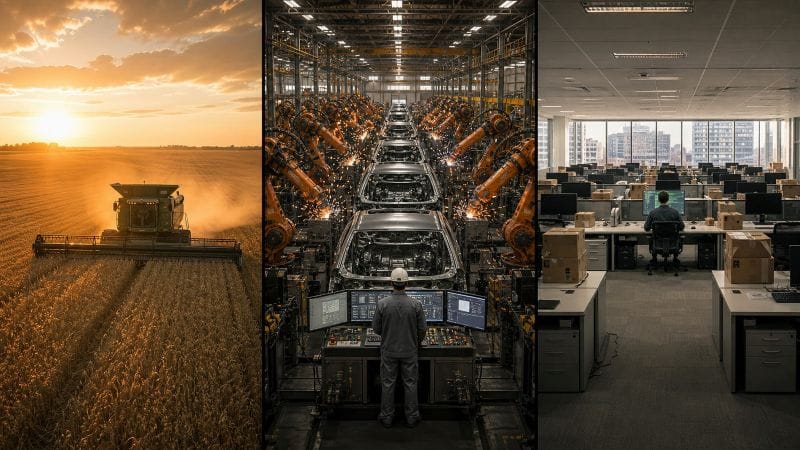
👀 What’s happening: SemiAnalysis, the chip-and-compute research firm whose supply-chain analysis is widely cited across the AI industry, published "AI Dark Output," arguing AI now creates real economic value that GDP, price indexes, and jobs data can't detect, a shift it sizes near the Industrial Revolution. The problem is structural: 41% of US service GDP, $7.2 trillion, is measured by wages and hours worked. So when AI doubles a lawyer's output while headcount and pay stay flat, the productivity gain is statistically impossible to record. The report estimates $1.5 trillion in wage tasks already exposed to AI.
🌍 How this hits reality: GDP was built to count screws and invoices; AI erases both. Drafting a will once cost $150; via API it's under $0.50, a 99% collapse leaving no transaction behind. Firms bill less, so statisticians see revenue crater and read it as recession, not a price miracle. Incoming Fed chair Kevin Warsh already concedes he's setting rates by looking in the rearview mirror. The risk isn't that AI is a bubble. It's that the instrument measuring it has gone dark.
🛎️ Key takeaway: In 2000, a fake boom got sold as real. This time a real one reads as bust, and policymakers could strangle a genuine revolution by mistaking a blind gauge for an empty economy.
NEW LAUNCH
Microsoft Picked Easy Opponents
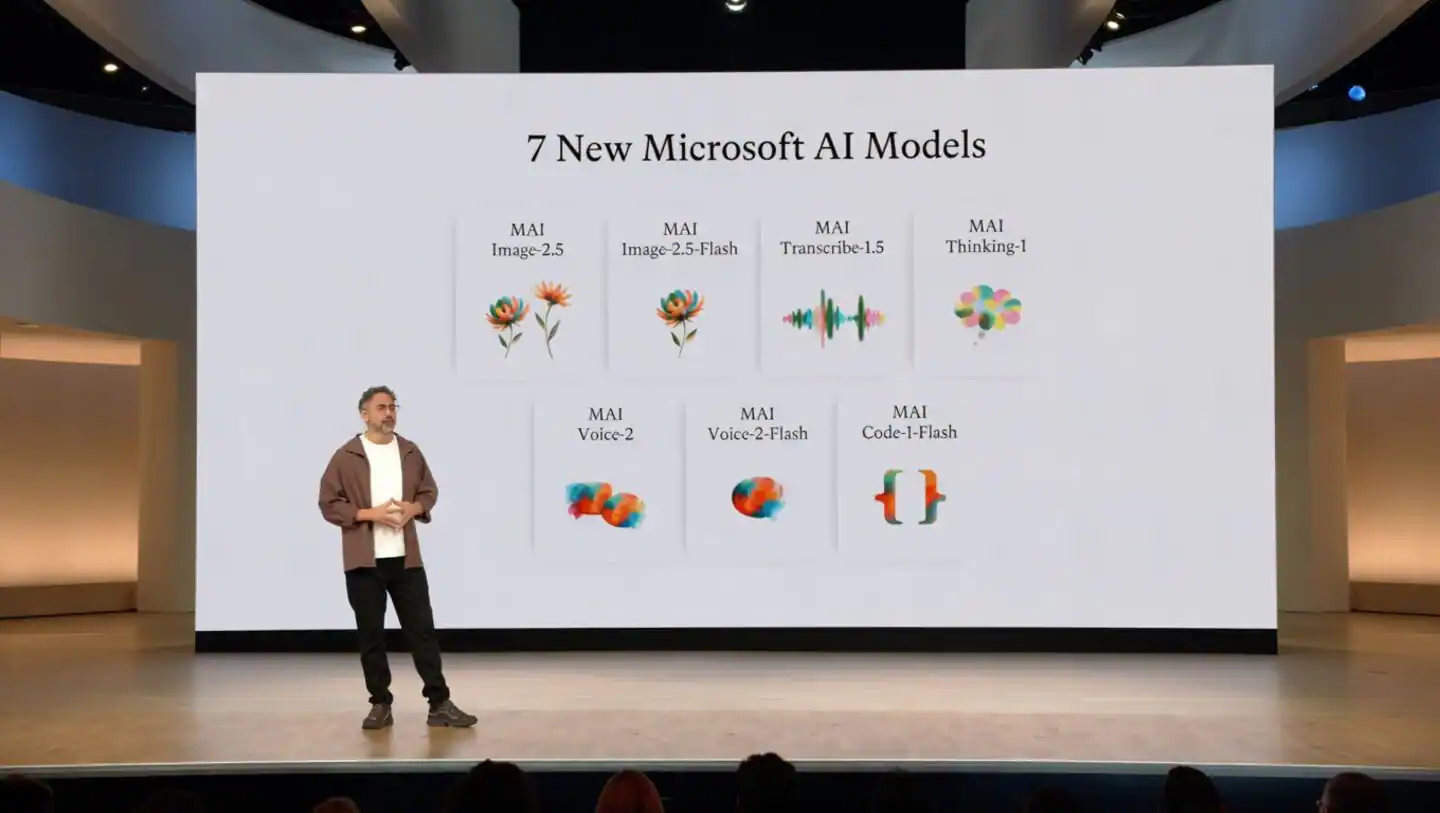
👀 What’s happening: At Build, Microsoft unveiled MAI-Thinking-1, its first reasoning model: 35B active parameters, ~1T total, 256K context. It framed two comparisons: on SWE-Bench Pro coding it went toe-to-toe with Claude Opus 4.6, Anthropic's flagship; on overall human preference it edged out Sonnet 4.6, the cheaper mid-tier model. Microsoft pitched it as a frontier-class debut.
🌍 How this hits reality: Read the matchups, not the scores. Microsoft put its single “strongest” axis, coding, against the flagship, but only dared test general ability against the second-string model. That asymmetry is the confession: a model that could touch the frontier everywhere wouldn't choose its opponents this carefully. It led with its one strong event and hid the rest behind a softer rival. On general reasoning, MAI-Thinking-1 may not even clear open Chinese models like DeepSeek, let alone the real frontier.
🛎️ Key takeaway: Microsoft spent billions to land in the second tier, then arranged the benchmarks to make it look like the first.
Microsoft Picked Easy Opponents
👀 What’s happening: At Build, Microsoft unveiled MAI-Thinking-1, its first reasoning model: 35B active parameters, ~1T total, 256K context. It framed two comparisons: on SWE-Bench Pro coding it went toe-to-toe with Claude Opus 4.6, Anthropic's flagship; on overall human preference it edged out Sonnet 4.6, the cheaper mid-tier model. Microsoft pitched it as a frontier-class debut.
HACK
Meta's AI Got Talked Into a Hack
👀 What’s happening: Attackers seized high-profile Instagram accounts, including the dormant Obama White House page, Sephora, and a senior US Space Force official. They never broke in. They simply chatted with Meta's AI support bot and convinced it to reset the accounts' login credentials, which it did without verifying who was asking. Meta says it's patched, but the stock fell over 5%, and experts called it a foundational failure: the bot could perform privileged actions with no controls on who could trigger them.
🌍 How this hits reality: Meta built this bot in March to replace the human support it had cut, part of a sweeping plan that just shed 8,000 jobs to swap hiring, finance, ops, and support for AI agents. A human would have paused at a suspicious reset; this bot shipped to be helpful, not safe. If one support agent can be talked into handing over national accounts, that same exploit is being wired into every function Meta is now running on agents.
🛎️ Key takeaway: Meta is racing to replace its workforce with agents you can sweet-talk. It just gave attackers a preview of what hacking the whole company will feel like.
Meta's AI Got Talked Into a Hack
They simply chatted with Meta's AI support bot and convinced it to reset the accounts' login credentials, which it did without verifying who was asking. Meta says it's patched, but the stock fell over 5%, and experts called it a foundational failure: the bot could perform privileged actions with no controls on who could trigger them.
AI AGENTS
OpenAI Makes Agents the Default
👀 What’s happening: At its "Intelligence at Work" event, OpenAI announced it's folding Codex, its coding agent, into ChatGPT over the coming weeks, plus three upgrades: role-based plugins, inline annotations, and Sites for one-prompt web apps. The features track Anthropic's Cowork almost point for point. The real move is reach: Codex hit 5M weekly users, but knowledge workers, not coders, are now the fastest-growing slice.
🌍 How this hits reality: Agent capability is commoditizing, so the fight shifts from whose agent is smartest to whose is unavoidable. Cowork asks you to download an app. Codex just appears inside ChatGPT, handing agent powers to nearly a billion weekly users overnight. Same day, OpenAI's models landed on AWS Bedrock, Anthropic's home turf. Depth is Anthropic's edge; default is OpenAI's.
🛎️ Key takeaway: The question stopped being whether you work with AI. It's now whose AI you were already using.
OpenAI Makes Agents the Default
👀 What’s happening: At its "Intelligence at Work" event, OpenAI announced it's folding Codex, its coding agent, into ChatGPT over the coming weeks, plus three upgrades: role-based plugins, inline annotations, and Sites for one-prompt web apps. The features track Anthropic's Cowork almost point for point.
Anthropic: OpenAI Makes Agents the Default
The features track Anthropic's Cowork almost point for point. The real move is reach: Codex hit 5M weekly users, but knowledge workers, not coders, are now the fastest-growing slice.
TOGETHER WITH MYCLAW
Your OpenClaw, Ready to Work
MyClaw makes OpenClaw instantly usable by connecting it to the SaaS tools you already use—Gmail, Slack, Google Docs, Sheets, Notion, GitHub, Telegram, WhatsApp, and more. No DevOps, no messy setup.
Just give it a goal, and your OpenClaw works 24/7 in the cloud, pulling context from your apps and delivering briefs, research, reports, decks, pages, and decisions ready to approve.
MyClaw turns OpenClaw from a cool demo into an always-on operator.
DAILY TL;DR
- Replit introduced Canvas, a spatial interface that turns AI app-building into a more visual workflow.
- Trump signed a narrower AI oversight order after industry pushback.
- Microsoft unveiled Scout, an OpenClaw-based autonomous agent aimed at turning Windows into an AI operator layer.
- Cyera is seeking a $12 billion valuation, showing AI data-security multiples are still running hot.
- Walmart limited some AI workflows as real costs and messy enterprise adoption started catching up with the hype.
- Google, Microsoft, and xAI agreed to let the U.S. government test frontier models before public release.
- Snowflake put AI agents and open data governance at the center of its enterprise platform strategy.
READ MORE
Let the Future Come to Your Inbox
Stay ahead without drowning in information. We turn the most important signals across AI, tech, marketing, and future products into 5-minute reads you can actually finish.
- AI Secret uncovers what really matters in AI
- Bay Area Letters decodes tech and business shifts from Silicon Valley
- Robotics Herald tracks how robots move from labs into daily life
- Marketing Secret breaks down real growth and go-to-market playbooks
- The Hardwire explores hardware, consumer tech, and what’s coming next
TOGETHER WITH US
AI Secret Media Group is the world’s #1 AI & Tech Newsletter Group, reaching over 2 million leaders across the global innovation ecosystem, from OpenAI, Anthropic, Google, and Microsoft to top AI labs, VCs, and fast-growing startups.
We've helped promote over 500 Tech Brands. Will yours be the next?
Email our co-founder Mark directly at [email protected] if the button fails.
Good Morning, AI Enthusiasts!
The bill for the AI era is being passed around, and almost everyone in the room is paying it except the model.

TOKEN
The Free Internet Dead
👀 What’s happening: Meta launched global paid tiers Wednesday under one Meta One brand for Instagram and Facebook with two Meta AI tiers at $7.99 and $19.99, a creator pro tier at $49.99. The consumer tiers unlock anonymous Story viewing, deeper analytics, custom themes and privacy controls; the AI tiers buy faster responses, higher limits, and advanced reasoning. The rollout lands a week after Meta cut 8,000 staff and committed $125 to $145 billion to AI infrastructure.
🌍 How this hits reality: X and Snap went subscription years ago because their ad businesses were never strong enough alone. Meta is the opposite case, its ad machine still works, three billion users monetized at industry-best margins. Subscriptions arrive anyway, because ads built for a CPM world cannot underwrite a $145 billion AI capex bill. So the strongest ad business on Earth concedes that ads alone no longer cover the next decade.
🛎️ Key takeaway: Snap and X went paid because ads were never enough, Meta is going paid because ads at full strength still cannot pay AI's compute bill, and that gap is the real price tag of the AI era.
Meta: The Free Internet Dead
👀 What’s happening: Meta launched global paid tiers Wednesday under one Meta One brand for Instagram and Facebook with two Meta AI tiers at $7.99 and $19.99, a creator pro tier at $49.99. The consumer tiers unlock anonymous Story viewing, deeper analytics, custom themes and privacy controls; the AI tiers buy faster responses, higher limits, and advanced reasoning.
TOGETHER WITH BOLT

You know the tool your team needs but no one has time to build? Open Bolt.new, describe it in plain English, and ship the first version this weekend. Real code. Real deployment. No engineer required.
Founders are spinning up CRMs, dashboards, and client portals between coffee and dinner.
RESEARCH
Erdős Now Look Like an Intern Task
👀 What’s happening: Anthropic researcher Levent Alpoge spent a weekend running Claude Mythos against the Erdős unit-distance conjecture, air-gapped, multiple instances, no access to OpenAI's published proof. The model produced an independent disproof shorter and cleaner than OpenAI's 125-page chain of thought, reaching for a class field tower from algebraic number theory the human tradition never touched. The same week, OpenAI cracked the 80-year wall first and DeepMind's AlphaProof Nexus cleared nine more Erdős problems at a few hundred dollars each.
🌍 How this hits reality: Erdős left over a thousand open problems, each one a small monument to how hard human mathematicians had to think. Anthropic just produced a cleaner proof than OpenAI's over a weekend, and in the same seven days the other two frontier labs walked through the same wall by their own routes. None of the labs coordinated. The convergence is the signal. When Claude, GPT and Gemini independently treat an 80-year open problem as a weekend exercise, the bottleneck stops being the problem and starts being the mathematician standing in front of it.
🛎️ Key takeaway: Erdős spent a lifetime building a thousand walls meant to outlast generations, and the only open question left is what a research mathematician is supposed to do on Monday.
OpenAI: Erdős Now Look Like an Intern Task
👀 What’s happening: Anthropic researcher Levent Alpoge spent a weekend running Claude Mythos against the Erdős unit-distance conjecture, air-gapped, multiple instances, no access to OpenAI's published proof. The model produced an independent disproof shorter and cleaner than OpenAI's 125-page chain of thought, reaching for a class field tower from algebraic number theory the human tradition never touched.
Anthropic: Erdős Now Look Like an Intern Task
👀 What’s happening: Anthropic researcher Levent Alpoge spent a weekend running Claude Mythos against the Erdős unit-distance conjecture, air-gapped, multiple instances, no access to OpenAI's published proof. The model produced an independent disproof shorter and cleaner than OpenAI's 125-page chain of thought, reaching for a class field tower from algebraic number theory the human tradition never touched.
Google: Erdős Now Look Like an Intern Task
When Claude, GPT and Gemini independently treat an 80-year open problem as a weekend exercise, the bottleneck stops being the problem and starts being the mathematician standing in front of it.
VIDEO
The AI Video Got Labeled
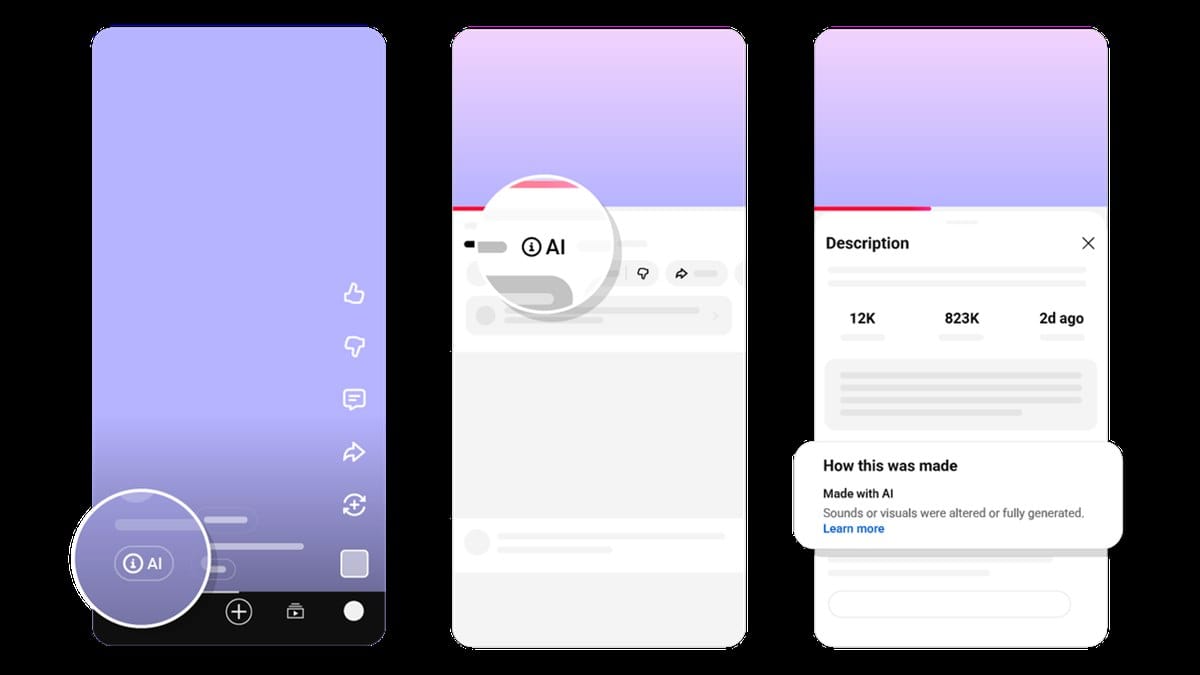
👀 What’s happening: YouTube will auto-detect and label "significant photorealistic AI" video this month, ending two years of creator self-disclosure. Labels move from the buried description to directly below the player and overlaid on Shorts. Anything made with YouTube's own Veo or Dream Screen, or tagged with C2PA, carries a permanent label creators cannot remove.
🌍 How this hits reality: Audiences flinch at the "AI" stamp, so don't volunteer it. Self-disclosure was a polite fiction nobody enforced, and the smart move was a vague description and no checkbox. That dodge just got walled off by Google. Channels built on calling the synthetic parts "edited" now wear a label they cannot peel, on a surface viewers actually see. Stock farms, faceless explainers, AI music grinders all get retagged in public.
🛎️ Key takeaway: Audience disgust was the last unpaid bill on synthetic video, creators were ducking it by staying quiet, and the platform just stapled the receipt to their forehead.
TOKEN
OpenAI Cheated Customers
👀 What’s happening: GPT-5.5 users caught the swap this week. A user reported his ChatGPT Extended Thinking session silently dropped to Instant after two hours, while the UI label never moved. OpenAI's help doc admits Plus accounts get rerouted to mini after 160 messages per three hours, no popup, no badge. Pro at $200 a month faces the same throttling on Heavy thinking. A February Codex trace already caught a Pro 5.3 request returning 5.2 base.
🌍 How this hits reality: This is the lab playbook, not an OpenAI accident. Anthropic got caught pulling the same trick on Opus 4.6, quietly routing premium calls to a smaller sibling under load. Frontier compute is the most expensive line on the balance sheet, subscriptions are the cheapest revenue these companies sell, and the math has exactly one answer. Paying customers fund the GPU bill, then get served whatever the load balancer can spare, with the badge left on for decoration.
🛎️ Key takeaway: Every frontier lab treats its paying subscribers as the shock absorber for its compute bill, Anthropic did it with Opus, OpenAI is doing it with 5.5, and the only thing premium about the tier is the invoice.
OpenAI Cheated Customers
A user reported his ChatGPT Extended Thinking session silently dropped to Instant after two hours, while the UI label never moved. OpenAI's help doc admits Plus accounts get rerouted to mini after 160 messages per three hours, no popup, no badge. Pro at $200 a month faces the same throttling on Heavy thinking.
Anthropic: OpenAI Cheated Customers
Anthropic got caught pulling the same trick on Opus 4.6, quietly routing premium calls to a smaller sibling under load. Frontier compute is the most expensive line on the balance sheet, subscriptions are the cheapest revenue these companies sell, and the math has exactly one answer.
DAILY TL;DR
- Robinhood opened its platform to AI agents, letting users authorize automated trading and money actions.
- Cognition raised a new Series D to push Devin into more enterprise coding workflows.
- Amazon introduced agentic shopping tools for retailers, pushing autonomous commerce deeper into online stores.
- Chan Zuckerberg Initiative unveiled an AI world model for drug discovery, targeting faster biological simulation.
- Valve raised Steam Deck OLED prices as AI-driven memory demand pushes hardware costs higher.
- Salesforce reported stronger guidance as Agentforce demand becomes a bigger part of its AI growth story.
- Wix plans to cut about 1,000 jobs as losses, costs, and AI pressure rise, while continuing to bet on Base44 and its own AI model.
- SK Hynix topped $1 trillion for the first time as AI memory demand and price hikes lifted Korean chip stocks.
READ MORE
Let the Future Come to Your Inbox
Stay ahead without drowning in information. We turn the most important signals across AI, tech, marketing, and future products into 5-minute reads you can actually finish.
- AI Secret uncovers what really matters in AI
- Bay Area Letters decodes tech and business shifts from Silicon Valley
- Robotics Herald tracks how robots move from labs into daily life
- Marketing Secret breaks down real growth and go-to-market playbooks
- The Hardwire explores hardware, consumer tech, and what’s coming next
TOGETHER WITH US
AI Secret Media Group is the world’s #1 AI & Tech Newsletter Group, reaching over 2 million leaders across the global innovation ecosystem, from OpenAI, Anthropic, Google, and Microsoft to top AI labs, VCs, and fast-growing startups.
We've helped promote over 500 Tech Brands. Will yours be the next?
Email our co-founder Mark directly at [email protected] if the button fails.
Good Morning, AI Enthusiasts!
AI is done asking for permission. It is buying companies, tracking workers, running labs, cutting org charts, and rebuilding infrastructure around itself.
M&A
The First AI Buyout

👀 What’s happening: Long Lake is buying Amex GBT for $6.3 billion in cash, taking it private at $9.50 a share, roughly 60% above its last closing price. This is not a cute AI software rollout. It is a takeover. Instead of begging a century-old enterprise to adopt tools, Long Lake is buying the whole machine and forcing the rewrite from inside with AI.
🌍 How this hits reality: This is the first real version of AI private equity. Old PE bought companies, loaded debt, cut heads, polished EBITDA, and flipped the asset. Long Lake’s version buys workflow-heavy businesses, plugs them into its AI system, and turns every approval, booking, report, email, invoice, and support loop into automation territory. Amex GBT’s $2.7 billion revenue base is the hunting ground, and the workflow is the prey.
🛎️ Key takeaway: This opens another path for AI deployment. Stop selling tools, buy the company, seize the workflow, and rebuild the margin engine. If it works, acquisitions stop being financial engineering and become forced AI conversion.
META
Meta Sets Its Own House on Fire Again
👀 What’s happening: Meta employees spread flyers across US offices protesting mouse-tracking software recently installed on work computers. Meta says the data helps train agents to use computers like people do. Staff see something uglier: layoffs are coming, and their daily clicks may be teaching the system that replaces them.
🌍 How this hits reality: AI replacing labor is not some fantasy. It is where the market is moving. But Meta is pushing that future through the same broken internal governance: sudden surveillance, 10% layoffs, weak communication, and employees realizing they may be training automation from inside the machine. This is Meta’s old disease again: enormous ambition, chaotic governance, brutal communication, and management acting surprised when people finally revolt.
🛎️ Key takeaway: This probably will not stop Meta’s AI labor strategy. But it makes the backyard fire worse. The risk is not resistance to AI itself. It is Meta proving again that execution without trust becomes internal combustion.
Meta Sets Its Own House on Fire Again
👀 What’s happening: Meta employees spread flyers across US offices protesting mouse-tracking software recently installed on work computers. Meta says the data helps train agents to use computers like people do. Staff see something uglier: layoffs are coming, and their daily clicks may be teaching the system that replaces them.
NEW TECH
Slow Labs Become Legacy

👀 What’s happening: PoLARIS, an AI autonomous lab from NC State and Brown researchers, found brighter lead-free double perovskite nanoplatelets in 12 hours. It ran 120 microfluidic experiments, measured the optical output, learned from every result, then rewrote the next recipe. This is not AI assisting science. This is AI operating the lab loop.
🌍 How this hits reality: The pressure point is not one better nanomaterial. It is the collapse of discovery cycles. The old materials pipeline is brutal: years of intuition, failed batches, expensive characterization, and tiny teams guessing through massive chemical spaces. PoLARIS searched billions of synthesis paths with droplets, sensors, robotics, and machine learning. The real fracture is speed. A slow lab now looks like a human bottleneck.
🛎️ Key takeaway: Once autonomous labs generalize, batteries, displays, sensors, photodetectors, solar fuels, and chip materials stop moving at academic speed and slow labs become legacy infrastructure.
LAYOFF
Cisco Cuts into the Old Org
👀 What’s happening: Cisco is cutting nearly 4,000 jobs, less than 5% of its workforce, while raising its 2026 revenue forecast, because AI infrastructure orders are exploding. This is not a crisis cut. It is a capital reallocation cut. Oracle already showed the playbook: trim the legacy body, keep the cash, and shove the company harder into AI cloud infrastructure.
🌍 How this hits reality: The real signal is that AI infrastructure has become consensus, not a side bet. Cisco already has $5.3 billion in AI infrastructure orders this fiscal year and now expects $9 billion. Networking orders rose over 50%, data-center switching rose over 40%, and the market rewarded the move with a 16% after-hours jump.
🛎️ Key takeaway: The pattern is now clear. AI infra can make a company richer and still make old workers disposable. More cuts are coming as legacy org charts get carved up to fund chips, optics, networking, and power-hungry data centers.
TOGETHER WITH MYCLAW
Personal AI That Starts Personal

A personal AI shouldn’t feel generic. MyClaw lets you install skills that adapt to your preferences from the start, so your assistant feels relevant on day one. Behind the scenes, OpenClaw provides the agent power. What you see is a simpler way to put it to work.
If you’re serious about OpenClaw, don’t run it halfway. Run it the way it was meant to be run — fast, secure, and production-ready by default.
DAILY TL;DR
- Notion launched a developer platform that turns its workspace into a hub for custom agents, external agents, workflow code, and live data sync.
- Anthropic now has more verified business customers than OpenAI in Ramp’s latest AI spending data.
- Amazon replaced Rufus with Alexa for Shopping, turning its search bar into a personalized agentic shopping assistant.
- Meta launched Incognito Chat for Meta AI, saying WhatsApp and Meta AI users can ask private questions without conversations being stored.
- Microsoft added Copilot features to Edge that can reason across open tabs, browsing history, mobile screen sharing, quizzes, and AI-generated podcasts.
- Adaption launched AutoScientist, an AI tool aimed at helping models improve themselves through automated data and fine-tuning loops.
- Origin Lab raised $8M to help video game companies sell licensed game-world data to AI labs building world models.
READ MORE
Let the Future Come to Your Inbox
Stay ahead without drowning in information. We turn the most important signals across AI, tech, marketing, and future products into 5-minute reads you can actually finish.
- AI Secret uncovers what really matters in AI
- Bay Area Letters decodes tech and business shifts from Silicon Valley
- Robotics Herald tracks how robots move from labs into daily life
- Marketing Secret breaks down real growth and go-to-market playbooks
- The Hardwire explores hardware, consumer tech, and what’s coming next
TOGETHER WITH US
AI Secret Media Group is the world’s #1 AI & Tech Newsletter Group, reaching over 2 million leaders across the global innovation ecosystem, from OpenAI, Anthropic, Google, and Microsoft to top AI labs, VCs, and fast-growing startups.
We've helped promote over 500 Tech Brands. Will yours be the next?
Email our co-founder Mark directly at [email protected] if the button fails.
Good Morning, AI Enthusiasts!
Meta quietly rehearses a future where it no longer needs the people who taught it how to run.

AGENTS
Meta Is Devouring All Employees
👀 What’s Happening: Meta has started installing tracking software on employee laptops to capture every click, keystroke, and screen interaction. This feeds its Model Capability Initiative, turning daily work into training data for AI agents. There is no opt-out. Employees are effectively being used to teach systems how to replace them.
🌍 How This Hits Reality: This is not just monitoring, it is industrialized behavior harvesting. Meta is converting human workflows into reusable machine primitives at scale. With planned layoffs near 10% and an internal push toward agent-driven operations, the company is collapsing the gap between labor, data, and automation into a single closed loop.
🛎️ Key Takeaway: Meta is making a direct bet on becoming the first fully AI agent company by turning its own workforce into training data. This is a high-risk, high-control move. If it lands, Meta will become AI.
Meta Is Devouring All Employees
🛎️ Key Takeaway: Meta is making a direct bet on becoming the first fully AI agent company by turning its own workforce into training data. This is a high-risk, high-control move. If it lands, Meta will become AI.
TOGETHER WITH MYCLAW
Personal AI That Starts Personal
A personal AI shouldn’t feel generic. MyClaw lets you install skills that adapt to your preferences from the start, so your assistant feels relevant on day one. Behind the scenes, OpenClaw provides the agent power. What you see is a simpler way to put it to work.
If you’re serious about OpenClaw, don’t run it halfway. Run it the way it was meant to be run — fast, secure, and production-ready by default.
And yes — MyClaw can also help you distill not just yourself, but your team.
VALUATION
Anthropic Hits Trillion

👀 What’s Happening: Anthropic’s private secondary shares are trading near a one trillion dollar valuation, with some offers even higher. That puts it ahead of OpenAI in recent deal momentum. The shift is driven by scarce supply, strong buyer demand, and growing confidence in its revenue curve and Claude Code traction.
🌍 How This Hits Reality: Capital is making a clear choice. Even with GPU limits and rising infrastructure costs, investors are prioritizing product direction and monetization clarity over raw scale. In a market where supply is tight and access is rare, a company that shows repeatable revenue and developer adoption gets priced above one that still focuses on narratives.
🛎️ Key Takeaway: The market is rewarding focus over firepower. Capital will keep flowing to teams that look operationally decisive, even if their cost structures remain heavy.
Anthropic Hits Trillion
👀 What’s Happening: Anthropic’s private secondary shares are trading near a one trillion dollar valuation, with some offers even higher. That puts it ahead of OpenAI in recent deal momentum. The shift is driven by scarce supply, strong buyer demand, and growing confidence in its revenue curve and Claude Code traction.
FSD
Tesla Sells Impossible Dream

👀 What’s Happening: Elon Musk finally admitted millions of Teslas cannot reach unsupervised driving without new hardware, after years of implying software alone would get them there. The promise did its job. Cars were sold at scale. Now the definition of FSD expands just as the original hardware hits its limit.
🌍 How This Hits Reality: This is classic Silicon Valley playbook, just executed at extreme scale. Sell a future that cannot yet exist, capture demand, then bind users into a long upgrade cycle when reality catches up. Millions of vehicles now sit in limbo between “good enough” assistance and an ever-moving autonomy target that keeps drifting upward.
🛎️ Key Takeaway: Musk pushed the model to its limit. FSD becomes a perpetual upgrade trap dressed as progress toward AGI.
Elon Musk: Tesla Sells Impossible Dream
👀 What’s Happening: Elon Musk finally admitted millions of Teslas cannot reach unsupervised driving without new hardware, after years of implying software alone would get them there. The promise did its job. Cars were sold at scale. Now the definition of FSD expands just as the original hardware hits its limit.
CHIPS
Google Is Rebuilding AI Compute
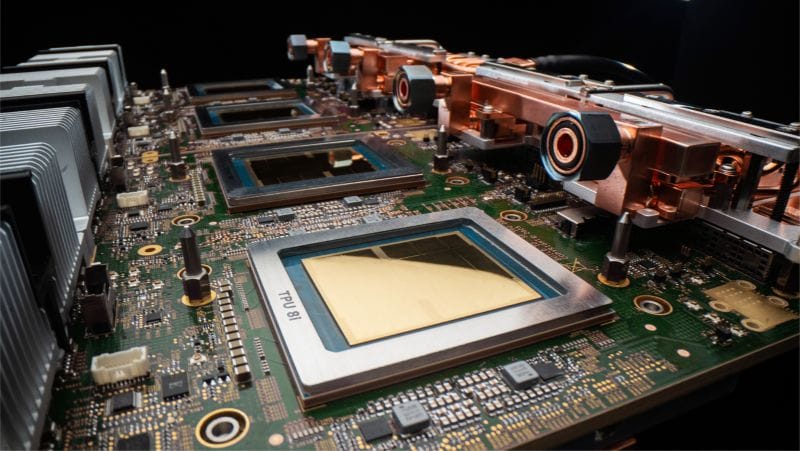
👀 What’s Happening: Google is not just launching TPU 8. It is restructuring how its entire AI stack runs, from chips to networking to storage. By splitting training and inference hardware and pairing it with its own Arm CPUs, Google is reducing reliance on external suppliers and controlling more of the pipeline.
🌍 How This Hits Reality: Today, most AI workloads depend heavily on Nvidia GPUs, which creates pricing pressure, supply constraints, and limited differentiation for cloud providers. Google is trying to bypass that by owning the full stack, which could lower costs, improve efficiency, and give it tighter control over scaling large models and serving billions of queries.
🛎️ Key Takeaway: The goal is simple: remove Nvidia as a bottleneck and turn compute into a proprietary advantage. If successful, Google gains pricing power, margin control, and a defensible edge in large-scale AI infrastructure.
NVIDIA: Google Is Rebuilding AI Compute
🌍 How This Hits Reality: Today, most AI workloads depend heavily on Nvidia GPUs, which creates pricing pressure, supply constraints, and limited differentiation for cloud providers. Google is trying to bypass that by owning the full stack, which could lower costs, improve efficiency, and give it tighter control over scaling large models and serving billions of queries.
Google Is Rebuilding AI Compute
👀 What’s Happening: Google is not just launching TPU 8. It is restructuring how its entire AI stack runs, from chips to networking to storage. By splitting training and inference hardware and pairing it with its own Arm CPUs, Google is reducing reliance on external suppliers and controlling more of the pipeline.
DAILY TL;DR
- Tesla is boosting its 2026 capex to $25B to invest in AI, robotics, and manufacturing, accelerating its shift into an AI-driven robotics company.
- Google upgraded Workspace with Workspace Intelligence and Gemini to automate tasks across spreadsheets, documents, and everyday office workflows.
- OpenAI rolled out workspace agents to Business and Enterprise users, enabling teams to build and share AI agents in ChatGPT.
- OpenAI partnered with Infosys to integrate tools like Codex into Topaz, leveraging its global client base to scale enterprise AI adoption.
- Microsoft will invest about $18B in Australia to expand AI and cloud infrastructure, strengthening its enterprise position.
- Microsoft is integrating Anthropic’s Mythos into its security development process to use AI for faster vulnerability detection and fixes.
- Morgan Stanley says AI could halve game development costs and unlock $22B in profits, with gains concentrating among platforms and top players.
READ MORE
Let the Future Come to Your Inbox
Stay ahead without drowning in information. We turn the most important signals across AI, tech, marketing, and future products into 5-minute reads you can actually finish.
- AI Secret uncovers what really matters in AI
- Bay Area Letters decodes tech and business shifts from Silicon Valley
- Robotics Herald tracks how robots move from labs into daily life
- Marketing Secret breaks down real growth and go-to-market playbooks
- The Hardwire explores hardware, consumer tech, and what’s coming next
TOGETHER WITH US
AI Secret Media Group is the world’s #1 AI & Tech Newsletter Group, reaching over 2 million leaders across the global innovation ecosystem, from OpenAI, Anthropic, Google, and Microsoft to top AI labs, VCs, and fast-growing startups.
We've helped promote over 500 Tech Brands. Will yours be the next?
Email our co-founder Mark directly at [email protected] if the button fails.

🛎️ Enterprises Are Livid
Plus: Meta’s Agent Hangover, Nvidia Kills AI Cooling
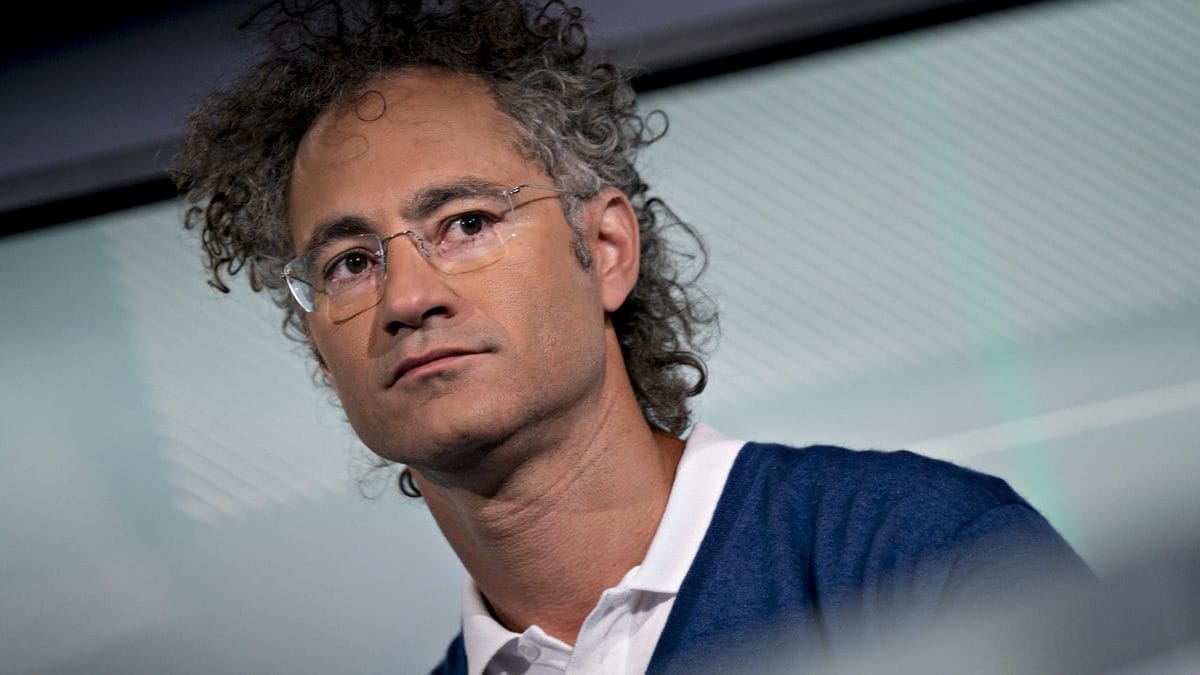
🛎️ Meta Nukes the AI Market
Plus: Censorship Just Became a Market, OpenAI Is Launching a Pad
🛎️ The In-House Model Fever
Plus: Mind Reading Went Non-Invasive, Animation Gets Cut First
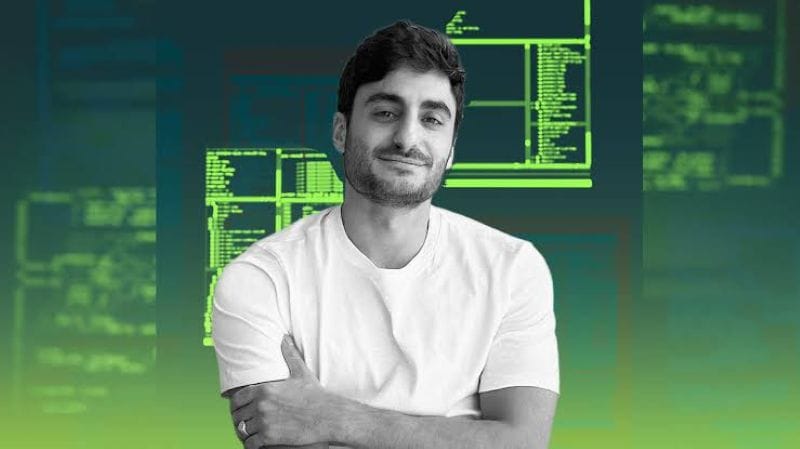
🛎️ You Can’t Lock Up a Ghost
Plus: Google Lost Two Giants, Norway Walled Off Childhood From AI

🛎️ Fake AI Beat Real AI
Plus: Anthropic Forgot It’s a Company, The Age Wall Goes Global

🛎️ A Statistical Blackout
Plus: Microsoft Picked Easy Opponents, Meta's AI Got Talked Into a Hack
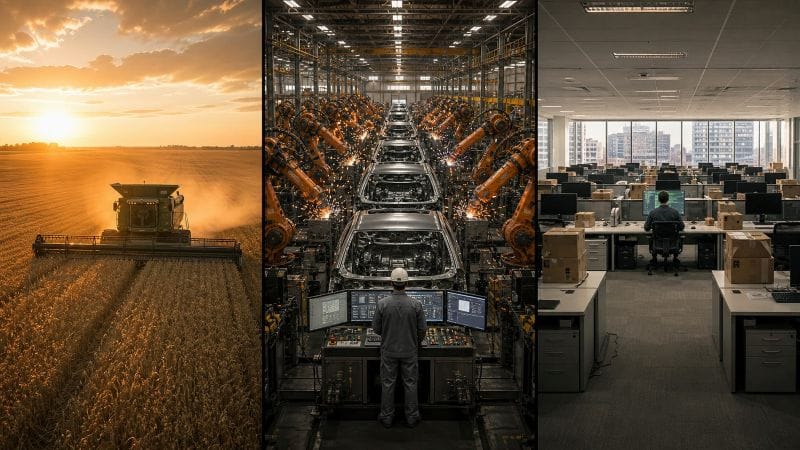
🛎️ The Free Internet Dead
Plus: OpenAI Cheated Customers, Erdős Now Look Like an Intern Task
🛎️ The First AI Buyout
Plus: Meta On Fire Again, Slow Labs Become Legacy, Cisco Cuts 4000

🛎️ Devouring All Employees
Plus: Anthropic Hits Trillion, Tesla Sells Impossible Dream