Mira Murati leads Thinking Machines Lab, which develops customizable AI systems, training tools, and interfaces for collaboration between people and models. Previously OpenAI’s chief technology officer, she oversaw research, product, and safety during the development of several widely used AI systems. Her earlier engineering and product work included Tesla and Leap Motion; her current company combines model research with tools that let others adapt it.
Mira Murati leads Thinking Machines Lab, which develops customizable AI systems, training tools, and interfaces for collaboration between people and models. Previously OpenAI’s chief technology officer, she oversaw research, product, and safety during the development of several widely used AI systems. Her earlier engineering and product work included Tesla and Leap Motion; her current company combines model research with tools that let others adapt it.
Organization
Thinking Machines Lab
Earlier role
Chief Technology Officer, OpenAI
Education
Dartmouth Bachelor of Engineering, 2012
Sources checked . Selected career background and milestones.
Career, in context.
Selected research, leadership and career milestones, newest first.
Thinking Machines releases Inkling
Thinking Machines released the weights of Inkling, a multimodal mixture-of-experts model trained from scratch, and made it available for customization through its Tinker platform.
Murati’s company announced a partnership targeting at least one gigawatt of NVIDIA Vera Rubin systems. Deployment was targeted for early 2027, rather than already completed.
Thinking Machines removed Tinker’s waitlist and added vision input, another reasoning model, and an OpenAI-compatible sampling interface, broadening access to its managed training service.
Thinking Machines introduced Tinker, an API for fine-tuning language models that exposes training algorithms and data control while managing distributed infrastructure and resource allocation.
Dartmouth’s current biography dates Murati’s founding of Thinking Machines to December 2024, after her work overseeing research, product, and safety as OpenAI’s chief technology officer.
Dartmouth awarded Murati an honorary Doctor of Science, recognizing her engineering leadership and work developing AI systems, following her earlier undergraduate engineering studies at the college.
OpenAI appointed Murati chief technology officer after she led research, product, and partnership functions, recognizing her role in bringing those groups together for DALL-E research.
Murati earned her Bachelor of Engineering from Dartmouth’s Thayer School, an academic foundation preceding her engineering and product work in vehicles, interfaces, and artificial intelligence.
The future is here, and it’s just as awkward and clunky as that one friend who insists on showing you every feature of their new tech gadget at dinner.
Zuckerberg announced the The World's Most Advanced Glasses
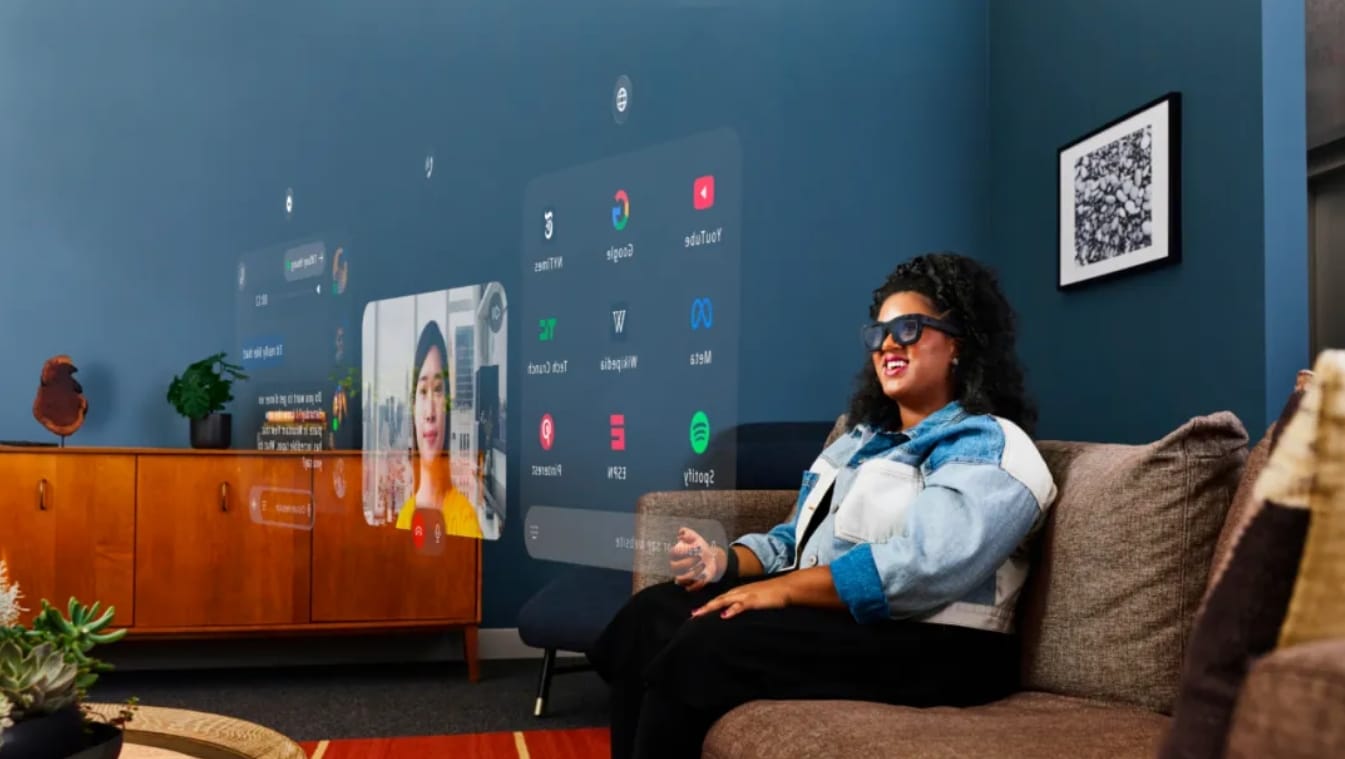
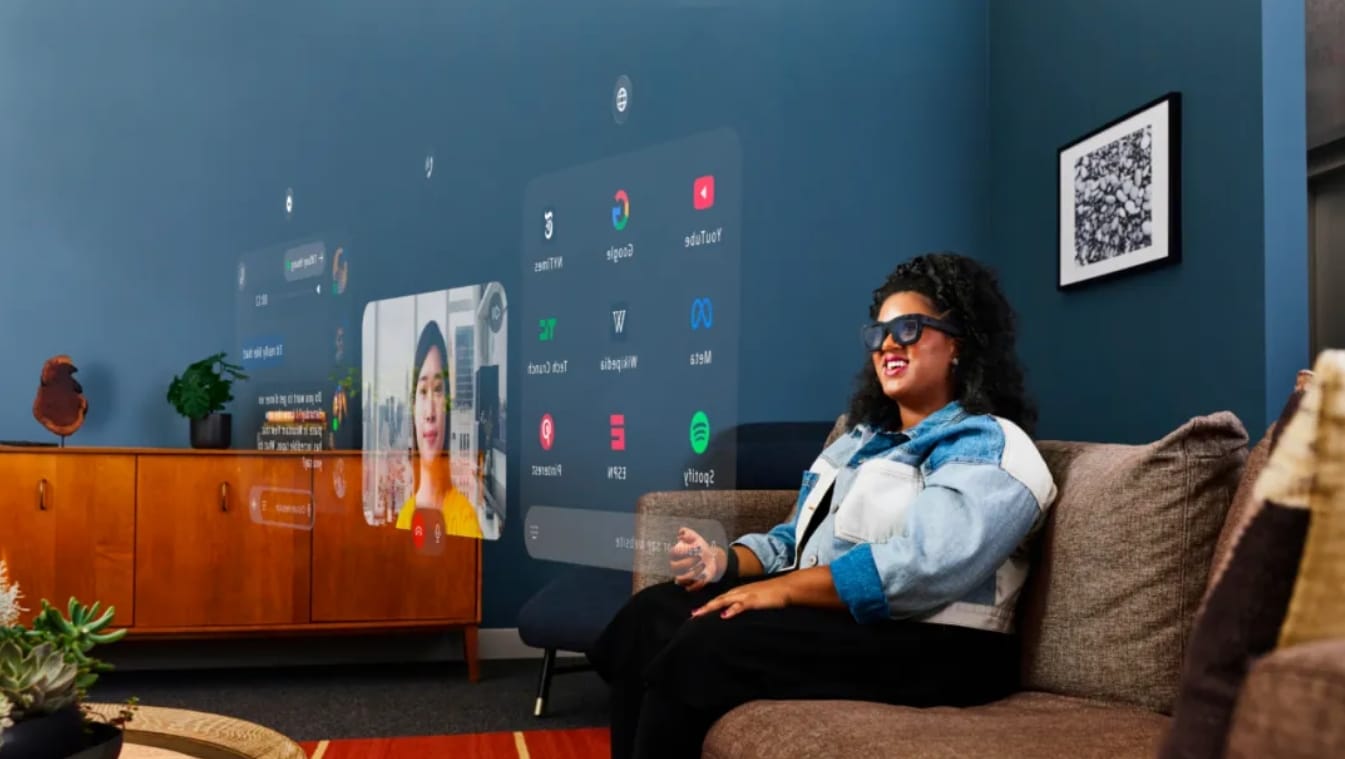
At the Meta Connect event, CEO Mark Zuckerberg announced the launch of Orion, calling it "the world's most advanced glasses." He noted that the development took ten years and that the product is still in the conceptual stage, requiring significant fine-tuning before it becomes a consumer product.
Orion is much smaller than Snap's recently released Spectacles 5 and is described as a true augmented reality (AR) headset, utilizing built-in micro projectors in the eyeglass arms to create a heads-up display.
In addition to standard voice prompts, Orion can be controlled via a "neural interface," a technology achieved after Meta's acquisition of CTRL-Labs in 2019, which produces a wristband compatible with the device.
Orion is positioned as the successor to Meta's current live product, Meta Ray-Bans. The company emphasizes that while Ray-Ban Meta pioneered a new category of AI-powered glasses without a display, the XR industry has long envisioned true AR glasses that combine large holographic displays with personalized AI assistance.
Orion is claimed to have the largest field of view among the smallest AR glasses to date, unlocking truly immersive use cases, from multitasking windows to large-screen entertainment, seamlessly integrating digital content with the physical world.
The manufacturing cost of Orion is approximately $10,000 per unit. While Meta is accustomed to losing money on Quest headsets, this cost is significantly higher.
Zuckerberg announced the The World's Most Advanced Glasses
At the Meta Connect event, CEO Mark Zuckerberg announced the launch of Orion, calling it "the world's most advanced glasses." He noted that the development took ten years and that the product is still in the conceptual stage, requiring significant fine-tuning before it becomes a consumer product.
Meta: Zuckerberg announced the The World's Most Advanced Glasses
Orion is positioned as the successor to Meta's current live product, Meta Ray-Bans. The company emphasizes that while Ray-Ban Meta pioneered a new category of AI-powered glasses without a display, the XR industry has long envisioned true AR glasses that combine large holographic displays with personalized AI assistance.
This product is provided by Oncely.com. Oncely is the #1 Lifetime Deals Marketplace for AI products. The software landscape has evolved into a Lifetime era — Pay Once, Use Forever, and say goodbye to monthly fees.
🛎️
BIG NAME
OpenAI's Leadership Team Continues To Shake Up
Ilya and Mira resigned, Greg Brockman took a long vacation
Following the resignation of OpenAI's CTO Mira Murati, CEO Sam Altman announced that other executives, Bob McGrew and Barret Zoph, also decided to leave. Altman expressed his sadness over Mira's departure but supported her decision, acknowledging her crucial role in the company's growth.
Mark Chen has been appointed as the new Senior Vice President of Research, collaborating with Chief Scientist Jakub Pachocki. Josh Achiam will take on the role of Head of Mission Alignment, while Kevin Weil and Srinivas Narayanan will continue to lead the application teams.
Reports indicate that OpenAI is discussing granting CEO Sam Altman a 7% equity stake and restructuring the organization into a for-profit entity. This move could signify a shift from a non-profit model to one that balances profit-making with social responsibility.
Altman mentioned that there would be further discussions regarding these changes and their rationale during an upcoming all-staff meeting, acknowledging that while the changes may not feel entirely natural, they are part of the company's evolution.
Sam Altman: OpenAI's Leadership Team Continues To Shake Up
Following the resignation of OpenAI's CTO Mira Murati, CEO Sam Altman announced that other executives, Bob McGrew and Barret Zoph, also decided to leave. Altman expressed his sadness over Mira's departure but supported her decision, acknowledging her crucial role in the company's growth.
OpenAI's Leadership Team Continues To Shake Up
Following the resignation of OpenAI's CTO Mira Murati, CEO Sam Altman announced that other executives, Bob McGrew and Barret Zoph, also decided to leave. Altman expressed his sadness over Mira's departure but supported her decision, acknowledging her crucial role in the company's growth.
🦾 Flot AI writes, reads, and remembers across any apps and webs.
🔀 ChatHub enhances your AI chatbot experience by using multiple AIs at once.
🗺️ MapsScraperAI gathers business data from Google Maps to enhance lead generation and market research.
💡 MimicPC instantly runs Stable Diffusion and Flux online.
1 Million+ AI enthusiasts are eager to learn about your product.
AI Secret is the world’s #1 AI Newsletter, boasting over 1 million readers from leading companies such as OpenAI, Google, Meta, and Microsoft. We've assisted in promoting Over 500 AI-Related Products. Will yours be the next?
Mira Murati, the former CTO of OpenAI, has embarked on an ambitious journey to establish her own artificial intelligence (AI) startup. After leaving OpenAI in September 2024, Murati wasted no time in