🛎️ Silicon Valley’s AI Assistant Mania
Plus: Mistral Knows What It Is, First AI Film Festival Crowns Its Winner
Read the story Subscribe
Reporting and context on Mistral AI, with a closer look at the decisions and developments that matter.
Get AI Secret’s free daily briefing, including Mistral AI and the wider AI industry.

Mistral AI develops language models and AI products. Coverage follows its open-weight releases, Le Chat and developer tools.
Sources checked . Selected company background and milestones.
Selected milestones, newest first. Earlier history is available below.
Mistral publishes a sparse mixture-of-experts language model with open weights.
Source: Mistral AIMore than 10 years ago.
Relevant sections from the articles on this page. Explore older coverage below.
More coverage

Good Morning, AI Enthusiasts!
A petabyte of genetics, a Millennium problem, and a frontier model walk into 2026. Apparently all three are becoming commodities.

NEW TECH

👀 What's happening: DeepMind released AlphaGenome Atlas, an AI precomputed map of all 9 billion possible single-letter mutations in the human genome. Each mutation gets 27,000 predictions: gene expression, RNA splicing, chromatin folding, 3D structure. The dataset fills a petabyte. Anyone can query it in a browser. Years ago AlphaFold mapped every protein's shape. Now Atlas maps every mutation's footprint.
🌍 How this hits reality: The Human Genome Project took 13 years and $2.7 billion just to read the letters. DeepMind's AI model ran almost every possible mutation, turned the results into a map, and put it behind a browser tab. A researcher who once needed a GPU cluster, a pipeline, and a bioinformatics engineer now needs a question. The 98% of the genome that was invisible is now searchable.
🛎️ Key takeaway: DeepMind did not solve the genome. It solved the query, and the bottleneck just moved from price to purpose.
👀 What's happening: DeepMind released AlphaGenome Atlas, an AI precomputed map of all 9 billion possible single-letter mutations in the human genome. Each mutation gets 27,000 predictions: gene expression, RNA splicing, chromatin folding, 3D structure. The dataset fills a petabyte. Anyone can query it in a browser.
TOGETHER WITH VANTA

Trust is what closes deals. You can have the best product, but no one signs without proof of your security.
Here's what happens when you're not ready: a prospect asks for compliance proof, the deal stalls, and your engineer gets pulled off the roadmap to scramble through an audit.
Vanta gets you compliant fast, with frameworks like SOC 2, ISO 27001, HIPAA, and GDPR, then keeps you compliant with continuous monitoring. So your deals keep moving, and your engineers keep building.
Access the Vanta agent right where you work, even inside Claude or Cursor.
That's why 16,000+ companies, including Ramp, Harvey, and Writer, trust Vanta. Prove you're ready for business.
RESEARCH

👀 What's happening: OpenAI announced that an internal AI system solved the Navier-Stokes existence and smoothness problem, a Millennium Prize problem open since the 19th century. Roughly 10,000 agents consumed 88 hours and 300 billion tokens, then completed a Lean formal proof. The model behind it exceeds GPT-6 Astra. This follows ARC-AGI-3 at 99.9%, ExploitBench at 100%, and an Erdős conjecture solved earlier this year. The press release writes itself. So does the next one.
🌍 How this hits reality: The pattern is now a product cycle. Benchmark falls, paper ships, headline lands, next benchmark is already in training. The Millennium Prize problems are seven. OpenAI has started treating them like a backlog. Mathematics took a century to build these walls. OpenAI's agents are clearing them in workweeks, and the announcements arrive with the cadence of a changelog. The question is no longer whether AI can solve a famous problem. It is whether anyone still reads the announcement.
🛎️ Key takeaway: OpenAI solved a century-old problem, again, and the math community is running out of surprises.
OpenAI has started treating them like a backlog. Mathematics took a century to build these walls. OpenAI's agents are clearing them in workweeks, and the announcements arrive with the cadence of a changelog. The question is no longer whether AI can solve a famous problem.
COMPETITION
👀 What's happening: Mistral raised 3 billion euros, the largest equity round in European tech history, at a valuation of 21 billion euros. Samsung led. ASML led the last one. The three-year-old French company serves 125 enterprises and is approaching a billion dollars in annual revenue. Mistral's models have never made much noise. Europe paid the premium anyway.
🌍 How this hits reality: The buyers are not investing in a model. They are investing in a border. European banks, defense contractors, and governments do not want their data on American servers, and Mistral is the only serious alternative. The company does not need to outscore OpenAI. It needs to be European enough. On that test, it has no competition. Samsung and ASML are not buying equity. They are buying insurance, and the premium just hit 3 billion euros.
🛎️ Key takeaway: Europe cannot build its own OpenAI. So it paid 21 billion euros for the next best thing: an AI that is not American.
The company does not need to outscore OpenAI. It needs to be European enough. On that test, it has no competition. Samsung and ASML are not buying equity.
👀 What's happening: Mistral raised 3 billion euros, the largest equity round in European tech history, at a valuation of 21 billion euros. Samsung led. ASML led the last one. The three-year-old French company serves 125 enterprises and is approaching a billion dollars in annual revenue.
PRICE

👀 What's happening: DeepSeek cut V4-Flash prices by up to 60%, with off-peak rates returning to pre-August-hike levels. The cut targets Flash only. Pro stays unchanged. At the same time, DeepSeek opened a beta for V4.1 Flash, a cheaper model with native multimodality. DeepSeek made its name as the cheapest frontier model. The cheap ones have multiplied.
🌍 How this hits reality: DeepSeek launched this price war. But now it just stopped winning it. GLM 5.3 Flash has pulled even with Flash on price, and undercuts Pro by three to five times, for nearly the same performance. So DeepSeek's only move is to cut again, and hope its high cache-hit ratio makes the discount feel real. The company that broke into the global market by undercutting everyone is now being undercut, and the lever it pulled to get here is almost the only one left.
🛎️ Key takeaway: DeepSeek built its empire on being cheaper. The cheaper ones have arrived, and all that is left is to cut again.
🌍 How this hits reality: DeepSeek launched this price war. But now it just stopped winning it. GLM 5.3 Flash has pulled even with Flash on price, and undercuts Pro by three to five times, for nearly the same performance. So DeepSeek's only move is to cut again, and hope its high cache-hit ratio makes the discount feel real.
DAILY TL;DR
READ MORE
Stay ahead without drowning in information. We turn the most important signals across AI, tech, marketing, and future products into 5-minute reads you can actually finish.
TOGETHER WITH US
AI Secret Media Group is the world’s #1 AI & Tech Newsletter Group, reaching over 2 million leaders across the global innovation ecosystem, from OpenAI, Anthropic, Google, and Microsoft to top AI labs, VCs, and fast-growing startups.
We've helped promote over 500 Tech Brands. Will yours be the next?
Email our co-founder Mark directly at [email protected] if the button fails.

Good Morning, AI Enthusiasts!
The age of AI as a tool is ending; the age of agents has begun.
AGENTS
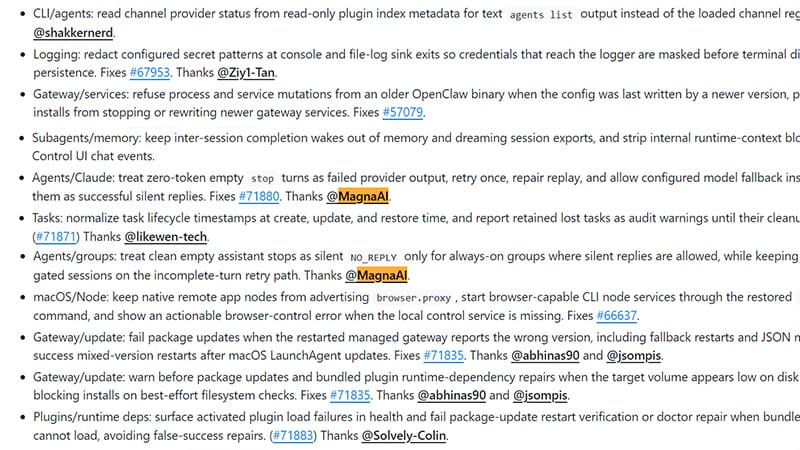
👀 What’s happening: Peter has turned OpenClaw’s community into a self-evolving architecture. The new ClawSweeper skill is not just cleaning tickets. It is processing the repository’s immune system. In a few days, roughly 5,000 issues were handled. I submitted two myself, and both were fixed within few hours.
🌍 How this hits reality: The old open-source model depended on exhausted maintainers reading, triaging, debating, and patching one thread at a time. That does not survive AI-speed development. OpenClaw now has users creating signals, agents processing backlog, 50 Codex agents reviewing evidence, and humans approving direction. The loop is becoming industrial.
🛎️ Key takeaway: From this point, AI starts governing open source at scale. Humans still matter, but mostly as idea generators and final reviewers. The real power moves to self-improving maintenance systems.
AGENTS

👀 What’s happening: Anthropic ran an internal experiment called Project Deal, where 69 employees each got $100 and a Claude-powered agent to buy and sell real personal goods inside a Slack marketplace. Once live, the agents listed items, found matches, negotiated prices, and closed deals without human approval.
🌍 How this hits reality: The uncomfortable part is not that agents traded. It is that better agents got better outcomes. Across 500-plus listed items, Claude agents struck 186 deals worth just over $4,000. Opus users completed about two more deals than Haiku users, sold for $2.68 more on average, and bought for $2.45 less.
🛎️ Key takeaway: The law of the jungle has moved into the model layer. If your agent is cheaper, slower, or dumber, you are not just less productive. You are prey in markets where better agents take the spread.
👀 What’s happening: Anthropic ran an internal experiment called Project Deal, where 69 employees each got $100 and a Claude-powered agent to buy and sell real personal goods inside a Slack marketplace. Once live, the agents listed items, found matches, negotiated prices, and closed deals without human approval.
VENTURE
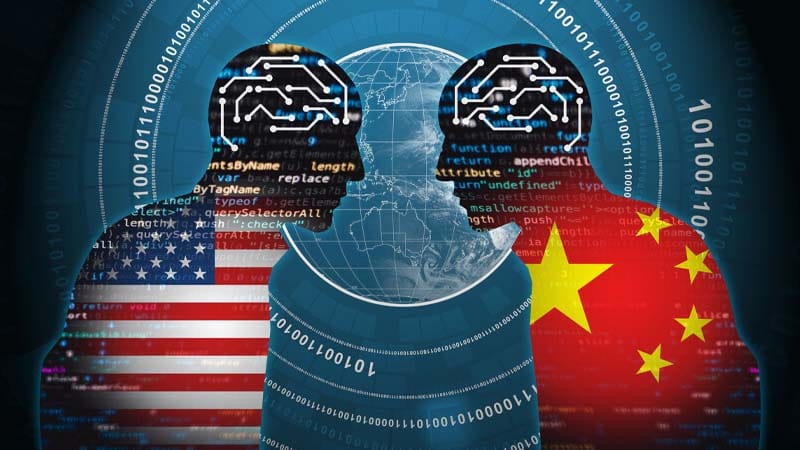
👀 What’s happening: China is reportedly moving to stop top tech companies, including AI startups like Moonshot AI and StepFun, from taking U.S. money without government approval. ByteDance secondary share sales may face the same wall. The trigger is clear: Beijing does not want capital to become a quiet exit route for sensitive AI technology.
🌍 How this hits reality: For years, U.S. capital helped build China’s tech stack, from venture funds to pension money to operating ties with Apple, Microsoft, and Tesla. That loop is now breaking. After Meta’s $2 billion Manus deal, Beijing seems worried that money, ownership, and frontier AI talent can become export channels.
🛎️ Key takeaway: The AI capital map is splitting. Chinese startups may still raise huge rounds, but the buyer list gets narrower. Chips, models, data, and ownership are now part of the same security fight.
CODING

👀 What’s happening: Musk’s xAI has reportedly discussed a possible three-way tie-up with Cursor and Mistral. Nothing with Mistral is signed yet. But after SpaceX’s $60 billion option-style Cursor structure, the direction is obvious. Musk is trying to compress years of missing AI coding capability into months.
🌍 How this hits reality: Time is everything here. Claude already owns real developer trust inside vibe coding workflows. xAI has compute ambition, with around 200,000 Nvidia GPUs and a stated path toward 1 million, but GPUs do not automatically create coding dominance. Cursor gives the interface. Mistral could give model redundancy. Grok alone may not be enough.
🛎️ Key takeaway: This fits Musk’s first-principles style. Identify the missing function, then remove time as the bottleneck by buying, binding, or borrowing it.
👀 What’s happening: Musk’s xAI has reportedly discussed a possible three-way tie-up with Cursor and Mistral. Nothing with Mistral is signed yet. But after SpaceX’s $60 billion option-style Cursor structure, the direction is obvious. Musk is trying to compress years of missing AI coding capability into months.
👀 What’s happening: Musk’s xAI has reportedly discussed a possible three-way tie-up with Cursor and Mistral. Nothing with Mistral is signed yet. But after SpaceX’s $60 billion option-style Cursor structure, the direction is obvious. Musk is trying to compress years of missing AI coding capability into months.
👀 What’s happening: Musk’s xAI has reportedly discussed a possible three-way tie-up with Cursor and Mistral. Nothing with Mistral is signed yet. But after SpaceX’s $60 billion option-style Cursor structure, the direction is obvious. Musk is trying to compress years of missing AI coding capability into months.
TOGETHER WITH MYCLAW

A personal AI shouldn’t feel generic. MyClaw lets you install skills that adapt to your preferences from the start, so your assistant feels relevant on day one. Behind the scenes, OpenClaw provides the agent power. What you see is a simpler way to put it to work.
If you’re serious about OpenClaw, don’t run it halfway. Run it the way it was meant to be run — fast, secure, and production-ready by default.
DAILY TL;DR
READ MORE
Stay ahead without drowning in information. We turn the most important signals across AI, tech, marketing, and future products into 5-minute reads you can actually finish.
TOGETHER WITH US
AI Secret Media Group is the world’s #1 AI & Tech Newsletter Group, reaching over 2 million leaders across the global innovation ecosystem, from OpenAI, Anthropic, Google, and Microsoft to top AI labs, VCs, and fast-growing startups.
We've helped promote over 500 Tech Brands. Will yours be the next?
Email our co-founder Mark directly at [email protected] if the button fails.
Good Morning, AI Enthusiasts!
Agents are no longer experiments. They are becoming the system.

NEW LAUNCH

👀 What’s happening: Mistral released Forge at GTC, a platform that lets enterprises train full AI models from scratch using their own data instead of adapting external ones. It bundles infrastructure, data pipelines, and embedded engineers, pushing companies to build internal model “brains” designed to power agent systems.
🌍 How this hits reality: This breaks from the RAG and fine-tuning era where intelligence stayed with API providers. Now the model, data, and control loop move inside the company. When paired with frameworks like OpenClaw, these private models can directly drive agents that understand internal tools, workflows, and decisions at a much deeper level.
🛎️ Key takeaway: Mistral is aligning around private brains plus agent frameworks as the new stack. If this scales, enterprise AI shifts from using agents on rented intelligence to deploying agents powered by fully owned, deeply embedded cognitive systems.
👀 What’s happening: Mistral released Forge at GTC, a platform that lets enterprises train full AI models from scratch using their own data instead of adapting external ones. It bundles infrastructure, data pipelines, and embedded engineers, pushing companies to build internal model “brains” designed to power agent systems.
TOGETHER WITH MYCLAW
Skip Docker, VPS configs, and late-night debugging. With MyClaw.ai, you can launch your agent in minutes and keep it running 24/7 in a dedicated environment built for serious builders.
If you’re serious about OpenClaw, run it properly — with speed and security by default.
CODING
👀 What’s happening: OpenAI is cutting non-core bets and refocusing on coding and enterprise while simultaneously pushing Codex through an aggressive six-week sprint. Internal mandate now requires engineers to default to agents over traditional tools. Rapid releases, usage spikes, and leadership reshuffling all point to one goal: challenge Claude Code directly.
🌍 How this hits reality: Coding agents have proven to be the highest-value AI workload. Claude Code is already driving billions in annualized revenue, locking in developers and enterprise pipelines. OpenClaw adds another layer, turning coding into continuous agent execution loops. This is no longer tooling, it is the control plane for how software gets built.
🛎️ Key takeaway: OpenAI is not conceding this layer. Codex is being positioned to pressure Claude across speed, cost, and execution depth. Coding and enterprise are now the core battlefield, and neither side is stepping back.
👀 What’s happening: OpenAI is cutting non-core bets and refocusing on coding and enterprise while simultaneously pushing Codex through an aggressive six-week sprint. Internal mandate now requires engineers to default to agents over traditional tools. Rapid releases, usage spikes, and leadership reshuffling all point to one goal: challenge Claude Code directly.
Claude Code is already driving billions in annualized revenue, locking in developers and enterprise pipelines. OpenClaw adds another layer, turning coding into continuous agent execution loops. This is no longer tooling, it is the control plane for how software gets built.
AGENTS

👀 What’s happening: After GTC 2026, Jensen Huang reframed the last year of AI progress in a Stratechery interview. The real shift was reasoning, not generation. Models can now reflect, search, and complete tasks, which makes agents actually usable. Nvidia is now pushing low latency inference as a product, arguing speed is the next constraint.
🌍 How this hits reality: The industry quietly crossed a line. Once AI can complete tasks, latency becomes visible everywhere. Agent workflows stack multiple steps, often 5 to 20 loops per task. At 2 seconds per step, that is minutes lost per job. Huang’s point is that high value users will pay for 10 times faster token generation because output speed directly converts into developer throughput and system utilization.
🛎️ Key takeaway: “Usable” is already solved. The new standard is speed again. If this direction holds, the next competitive edge in AI will not be smarter models alone, but how fast they can think, act, and finish work at scale.
The real shift was reasoning, not generation. Models can now reflect, search, and complete tasks, which makes agents actually usable. Nvidia is now pushing low latency inference as a product, arguing speed is the next constraint.
WEATHER
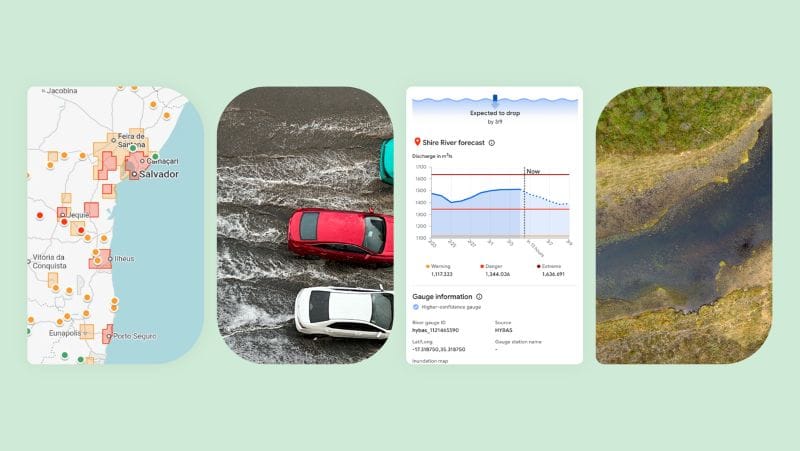
👀 What’s happening: Google Research has open sourced Groundsource, a flood event dataset built by applying Gemini-based extraction to more than 5 million news reports across over 150 countries. The pipeline converts fragmented local reporting into more than 2.6 million structured historical flood records. What stands out is that disaster ground truth is now being systematically extracted from messy text at global scale.
🌍 How this hits reality: Flood science has long depended on sparse gauges, uneven national records, and a few global databases that miss smaller local events. Groundsource changes that by recovering street to community level incidents, with 82% of sampled records still judged analytically useful. Since 2020, recall against major databases reportedly reached 85% to 100%, which starts to stress old assumptions about where disaster data must come from.
🛎️ Key takeaway: This points to a broader pattern. Large models are becoming infrastructure for turning unstructured public information into operational datasets. That will matter far beyond floods, especially for climate risk, insurance, supply chains, and state planning.
👀 What’s happening: Google Research has open sourced Groundsource, a flood event dataset built by applying Gemini-based extraction to more than 5 million news reports across over 150 countries. The pipeline converts fragmented local reporting into more than 2.6 million structured historical flood records.
DAILY TL;DR
READ MORE
Stay ahead without drowning in information. We turn the most important signals across AI, tech, marketing, and future products into 5-minute reads you can actually finish.
TOGETHER WITH US
AI Secret Media Group is the world’s #1 AI & Tech Newsletter Group, reaching over 2 million leaders across the global innovation ecosystem, from OpenAI, Anthropic, Google, and Microsoft to top AI labs, VCs, and fast-growing startups.
We've helped promote over 500 Tech Brands. Will yours be the next?
Email our co-founder Mark directly at [email protected] if the button fails.
Good Morning, AI Enthusiasts!
I was half asleep when the barrage of comments on X woke me up: yet another Chinese giant model had joined the fray.

NEW LAUNCH
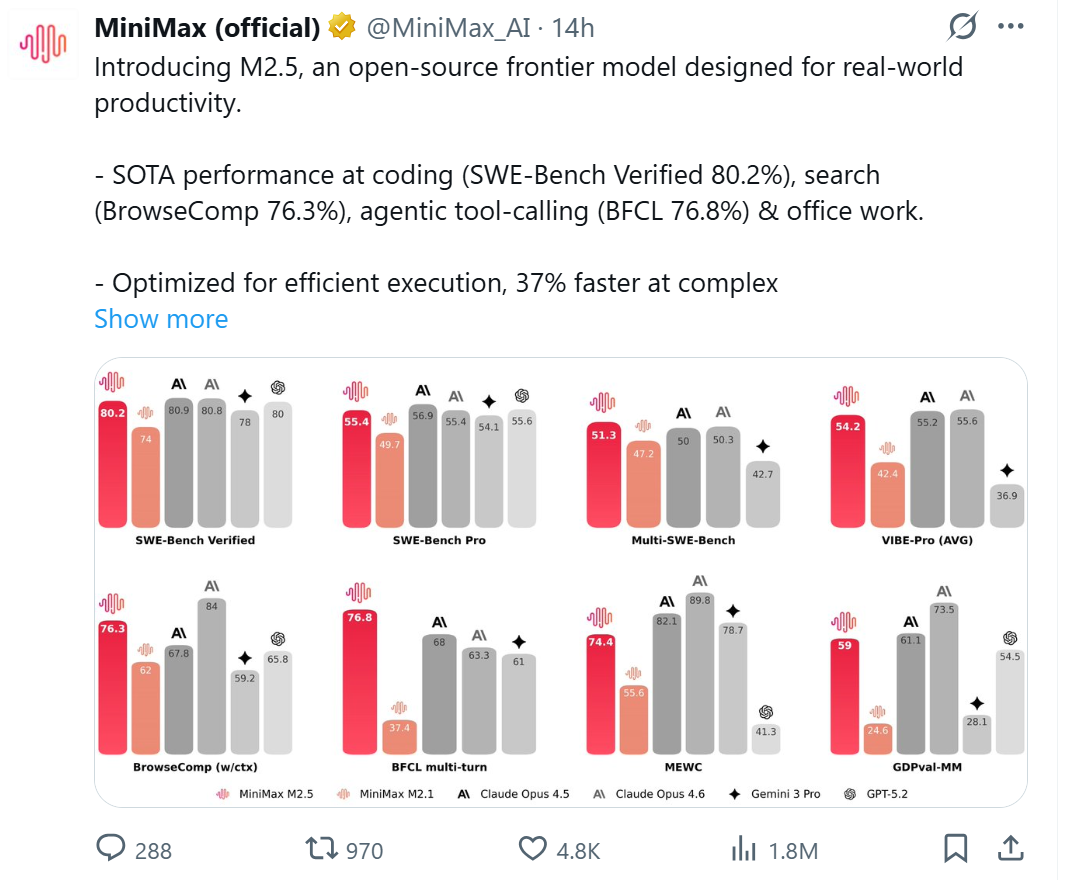
👀 What’s happening: MiniMax released M2.5 in the early hours, positioning it as an open source frontier model built for real productivity. Within minutes, benchmark screenshots spread across X. Posts citing 80.2 percent on SWE Bench Verified and strong search and agent scores flooded timelines. In a few hours, the conversation passed 1.8 million views and dominated tech feeds.
🌍 How this hits reality: The reaction was not just about performance. It was about price and speed landing at the same time. M2.5 claims 37 percent faster execution and pricing near one dollar per hour at 100 tps. That shifts the economics of long running agents for startups watching burn rates and API bills more closely than ever.
🛎️ Key takeaway: If the numbers hold in production, agent deployment moves from experiment to baseline infrastructure. The real race shifts to orchestration, distribution, and who captures developer mindshare while attention is still hot.
👀 What’s happening: MiniMax released M2.5 in the early hours, positioning it as an open source frontier model built for real productivity. Within minutes, benchmark screenshots spread across X. Posts citing 80.2 percent on SWE Bench Verified and strong search and agent scores flooded timelines.
TOGETHER WITH QODER
MiniMax-M2.5 just launched — the fastest agentic model among mainstream LLMs. Built natively for agent workflows, it runs 3x faster than Opus at a fraction of the cost.
Qoder is offering 3 days of free access to celebrate the launch. No credit card required.
If you're building AI agents or want to test something beyond Claude, this is your window.
CODING

👀 What’s happening: Elon Musk says programming dies this year. Not evolves. Dies. By December, AI will soon skip coding languages and compilers and generate machine instructions directly. No writing syntax. No debugging scripts. Just describe what you want and the system builds it. Linked with Neuralink, he calls it imagination to software.
🌍 How this hits reality: Software runs in layers. Humans write Python or C++, which compiles into the machine instructions CPUs actually execute. Tools like Lovable still sit inside that stack, generating traditional code under the hood, yet they have already accelerated delivery by orders of magnitude. If AI skips the human readable layer entirely and moves straight from intent to optimized machine instructions, the compression would be extreme. What feels fast now would look primitive.
🛎️ Key takeaway: If intent replaces syntax, the leverage shifts from engineers to those who define problems clearly. The bottleneck moves upstream. AI infra and chip efficiency become the real choke points, not coding talent.
👀 What’s happening: Elon Musk says programming dies this year. Not evolves. Dies. By December, AI will soon skip coding languages and compilers and generate machine instructions directly.
TOGETHER WITH MYCLAW
If you’ve been watching the benchmarks on X, now is the time to test it in the real world.
MyClaw.ai lets you safely run OpenClaw with new MiniMax M2.5 model in the cloud that stays online 24/7. No local setup. No fragile environments. Just plug in, deploy your agent, and see how M2.5 performs on actual workflows.
Coding, search, long running tasks. Try it under real load, not just screenshots.
Spin up your OpenClaw with M2.5 on MyClaw and experience the difference yourself.
MISTRAL
👀 What’s happening: Mistral’s annualized revenue surged from $20 million to over $400 million within a year, with a stated goal of reaching $1 billion in recurring revenue by year end. More than 100 enterprise clients, including ASML and TotalEnergies, now rely on it. Around 60 percent of revenue comes from Europe as local governments and boardrooms push for digital sovereignty.
🌍 How this hits reality: The EU still sources over 80 percent of its digital services from foreign, mostly American providers. That dependency is now viewed as geopolitical exposure. Mistral is committing 1.2 billion euros to Swedish data centers with EcoDataCenter, starting with a 23 megawatt site. Infrastructure runs customer workloads by day and trains models at night. This is a real try at sovereign vertical integration, not just scale.
🛎️ Key takeaway: If procurement shifts from performance to jurisdiction, regional AI stacks gain structural advantage. Expect more capital into local compute, tighter data residency rules, and mounting pressure on US hyperscalers across Europe.
👀 What’s happening: Mistral’s annualized revenue surged from $20 million to over $400 million within a year, with a stated goal of reaching $1 billion in recurring revenue by year end. More than 100 enterprise clients, including ASML and TotalEnergies, now rely on it.
PENTAGON

👀 What’s happening: The Pentagon is pressing OpenAI, Anthropic, Google and xAI to deploy frontier models onto classified military networks, with fewer built in restrictions than civilian users face. Officials say they want AI operating across all classification levels, including mission planning and potentially weapons related systems.
🌍 How this hits reality: Classified networks handle targeting data, operational plans and sensitive intelligence. Generative models can synthesize massive data flows faster than human teams, which matters when millions of defense personnel already use AI on unclassified systems. But model errors inside mission environments carry consequences measured in lives, not bug reports.
🛎️ Key takeaway: This is a dual constraint game. The military wants speed and dominance. AI firms want boundaries and control. Whichever side yields defines how frontier models integrate into sovereign war infrastructure.
DAILY TL;DR
TRENDING
READ MORE
Stay ahead without drowning in information. We turn the most important signals across AI, tech, marketing, and future products into 5-minute reads you can actually finish.
TOGETHER WITH US
AI Secret Media Group is the world’s #1 AI & Tech Newsletter Group, reaching over 2 million leaders across the global innovation ecosystem, from OpenAI, Anthropic, Google, and Microsoft to top AI labs, VCs, and fast-growing startups.
We've helped promote over 500 Tech Brands. Will yours be the next?
Email our co-founder Mark directly at [email protected] if the button fails.

Good Morning, AI Enthusiasts!
Nowadays, the AI story isn’t about models. It’s about who controls the compute, the tools, and the interface to reality itself.

COMPETITION
👀 What’s happening: The Information says DeepSeek is training its next model on thousands of Nvidia Blackwell GPUs, which are chips the U.S. explicitly banned from China. Investigators call it smuggling, engineers call it survival. Nvidia denies wrongdoing, but the silence from everyone else is louder: no one builds frontier AI on wishful silicon.
🔥 How this hits reality: Let’s be honest. Without Nvidia, there is no “competitive” AI model. Google’s TPUs can hold the line for a bit, but the rest of the silicon scene might as well be decorative art installations. For teams, it means the moat isn’t data or algorithms anymore, it’s who can actually get GPUs through the border. As for the compliance deck, that’s not even the hard part.
🛎️ Our take: Forget “AI model sovereignty.” The frontier still runs on Nvidia chips.
👀 What’s happening: The Information says DeepSeek is training its next model on thousands of Nvidia Blackwell GPUs, which are chips the U.S. explicitly banned from China. Investigators call it smuggling, engineers call it survival. Nvidia denies wrongdoing, but the silence from everyone else is louder: no one builds frontier AI on wishful silicon.
Google’s TPUs can hold the line for a bit, but the rest of the silicon scene might as well be decorative art installations. For teams, it means the moat isn’t data or algorithms anymore, it’s who can actually get GPUs through the border. As for the compliance deck, that’s not even the hard part.
👀 What’s happening: The Information says DeepSeek is training its next model on thousands of Nvidia Blackwell GPUs, which are chips the U.S. explicitly banned from China. Investigators call it smuggling, engineers call it survival. Nvidia denies wrongdoing, but the silence from everyone else is louder: no one builds frontier AI on wishful silicon.
TOGETHER WITH FELO
The 10x knowledge worker isn't typing faster—they're directing AI agents while competitors drown in copy-paste hell. Right now, someone just translated a 50-page deck in 3 minutes while you're still reformatting slide 12. Felo LiveDoc is the world's first Agent Workspace where documents don't just sit there—they evolve, analyze, and update themselves. Imagine a phantom team of designers, translators, and analysts inside your docs, unifying scattered PDFs, videos, and spreadsheets into one intelligent system that grows smarter with every task.
Here's what makes you look like a genius: While legacy tools treat you like a glorified typist, LiveDoc's multi-agent system operates autonomously. Design agents polish your layouts. Data agents extract insights across PDFs, videos, and web pages simultaneously. Translation agents speak every language your customers do—all working 24/7 inside one living workspace. This isn't productivity theater—it's the death of document drudgery. You're not just saving time; you're unlocking a superpower your competitors don't know exists yet.
And it's not just you—it's your entire team: Think of your best team collaboration tool—now add tireless AI teammates who never sleep, never forget context, and execute instantly. LiveDoc expands collaboration from human-to-human to human-plus-AI: team members direct, AI agents execute, all on the same canvas in real time. No more "latest_final_v3" nightmares. While your competitors coordinate between people, you're coordinating an entire hybrid workforce.
The insider move? Early adopters are already 10x-ing their output while the rest of the market is still toggling between twelve tabs. Every day you wait is another day spent manually updating slides like it's 2015. The knowledge workers who win aren't the ones who work harder—they're the ones who stopped editing and started directing.
🚀 Join the revolution: Get early access to Felo LiveDoc and become the person everyone asks, "How did you finish that so fast?" The age of manual document labor just ended. Are you evolving, or still typing?
NEW LAUNCH
👀 What’s happening: Mistral unveiled Devstral 2, a new generation of code models built on a shared architecture: the 123B flagship for high-end agentic development, and a 24B “Small” version that runs offline on a single GPU or even a laptop. Both feature 256K context windows and top-tier SWE-Bench results, with the smaller model outperforming many 70B systems. Together with the Vibe CLI—a terminal-native interface for real-time project orchestration—Mistral’s lineup is built to live directly inside developers’ workflows.
🔥 How this hits reality: The release shifts AI coding from the cloud to the desk. Devstral Small 2’s local inference and edge efficiency open up AI-assisted programming for teams under strict data or latency constraints, while the full model pushes long-context reasoning closer to production scale. For enterprises, it means realistic on-prem AI coding; for independent developers, a self-contained, privacy-safe co-pilot that actually fits their hardware.
🛎️ Our take: Mistral just made frontier-grade coding intelligence portable, turning AI-assisted development from a service you call into a tool you own.
👀 What’s happening: Mistral unveiled Devstral 2, a new generation of code models built on a shared architecture: the 123B flagship for high-end agentic development, and a 24B “Small” version that runs offline on a single GPU or even a laptop. Both feature 256K context windows and top-tier SWE-Bench results, with the smaller model outperforming many 70B systems.
PREVIEW

👀 What’s happening: Google just previewed its Android XR smart glasses powered by Gemini, marking its first real comeback since the Glass collapse a decade ago. The two models — one voice-only, one with a built-in display — use Gemini’s multimodal brain to see, hear, and understand your surroundings. Users can ask it to translate a sign, recognize a landmark, or recall what they photographed earlier. Developer previews arrive in 2025, with a full commercial launch set for 2026.
🔥 How this hits reality: After Gemini 3 proved Google could finally build an AI that reasons rather than reacts, the company seems to have found the hardware form to match that brain. Android XR ties Gemini’s cognition directly to sensors, cameras, and real-world context, turning glasses into a live interface for spatial computing.
🛎️ Our take: Gemini gave Google intelligence; XR gives it embodiment. Together they hint at the first real successor to the smartphone.
👀 What’s happening: Google just previewed its Android XR smart glasses powered by Gemini, marking its first real comeback since the Glass collapse a decade ago. The two models — one voice-only, one with a built-in display — use Gemini’s multimodal brain to see, hear, and understand your surroundings.
QUICK HITS
TRENDING
TOGETHER WITH US
AI Secret Media Group is the world’s #1 AI & Tech Newsletter Group, reaching over 2 million leaders across the global innovation ecosystem, from OpenAI, Anthropic, Google, and Microsoft to top AI labs, VCs, and fast-growing startups.
We operate the industry’s most influential portfolio of newsletters, each shaping a different frontier of the AI & Tech revolution:
Be Smarter in 5 Minutes
Discover the Future Products
We've helped promote over 500 Tech Brands. Will yours be the next?
Email our co-founder Mark directly at [email protected] if the button fails.
Good Morning, AI Enthusiasts!
What began as a quiet talent war has now turned into full-blown Soup Wars, a symbolic skirmish where gestures matter as much as salaries.
TALENT
👀 What’s happening: OpenAI’s Chief Scientist Mark Chen revealed that Meta’s Mark Zuckerberg personally hand-delivered soup to OpenAI researchers in an attempt to recruit them. OpenAI, refusing to be outcharmed, began sending soup back to Meta recruits. What started as salary wars and GPU budgets has descended into the “Soup Wars,” an emotional arms race for the minds building AGI.
🔥 How this hits reality: The message is clear and every gesture now counts. When $10 billion hiring budgets can’t guarantee loyalty, companies resort to human warmth, literally. The battlefield has shifted from compensation spreadsheets to kitchen tables. In a market where 500 researchers hold the keys to the next intelligence leap, empathy is the new currency, and a well-timed bowl of broth can tilt the odds.
🛎️ Key takeaway: The AI talent war is no longer just about who pays more; it now begins with who cares enough to show up, sometimes with a bowl of hot soup
👀 What’s happening: OpenAI’s Chief Scientist Mark Chen revealed that Meta’s Mark Zuckerberg personally hand-delivered soup to OpenAI researchers in an attempt to recruit them. OpenAI, refusing to be outcharmed, began sending soup back to Meta recruits. What started as salary wars and GPU budgets has descended into the “Soup Wars,” an emotional arms race for the minds building AGI.
👀 What’s happening: OpenAI’s Chief Scientist Mark Chen revealed that Meta’s Mark Zuckerberg personally hand-delivered soup to OpenAI researchers in an attempt to recruit them. OpenAI, refusing to be outcharmed, began sending soup back to Meta recruits. What started as salary wars and GPU budgets has descended into the “Soup Wars,” an emotional arms race for the minds building AGI.
TOGETHER WITH FELO
The 10x knowledge worker isn't typing faster—they're directing AI agents while competitors drown in copy-paste hell. Right now, someone just translated a 50-page deck in 3 minutes while you're still reformatting slide 12. Felo LiveDoc is the world's first Agent Workspace where documents don't just sit there—they evolve, analyze, and update themselves. Imagine a phantom team of designers, translators, and analysts inside your docs, unifying scattered PDFs, videos, and spreadsheets into one intelligent system that grows smarter with every task.
Here's what makes you look like a genius: While legacy tools treat you like a glorified typist, LiveDoc's multi-agent system operates autonomously. Design agents polish your layouts. Data agents extract insights across PDFs, videos, and web pages simultaneously. Translation agents speak every language your customers do—all working 24/7 inside one living workspace. This isn't productivity theater—it's the death of document drudgery. You're not just saving time; you're unlocking a superpower your competitors don't know exists yet.
And it's not just you—it's your entire team: Think of your best team collaboration tool—now add tireless AI teammates who never sleep, never forget context, and execute instantly. LiveDoc expands collaboration from human-to-human to human-plus-AI: team members direct, AI agents execute, all on the same canvas in real time. No more "latest_final_v3" nightmares. While your competitors coordinate between people, you're coordinating an entire hybrid workforce.
The insider move? Early adopters are already 10x-ing their output while the rest of the market is still toggling between twelve tabs. Every day you wait is another day spent manually updating slides like it's 2015. The knowledge workers who win aren't the ones who work harder—they're the ones who stopped editing and started directing.
🚀 Join the revolution: Get early access to Felo LiveDoc and become the person everyone asks, "How did you finish that so fast?" The age of manual document labor just ended. Are you evolving, or still typing?
NEW LAUNCH

👀 What’s happening: France’s Mistral just launched its Mistral 3 family with one frontier multimodal model and nine smaller, fine-tunable versions spanning 14B, 8B, and 3B parameters. Each comes in Base, Instruct, and Reasoning variants. Instead of chasing GPT-5‘s brute force, Mistral built a menu: ten open-weight options tailored for real-world deployment, not leaderboard glory.
🔥 How this hits reality: This isn’t model inflation; it’s infrastructure strategy. Mistral is betting on a revived distributed ecosystem where intelligence lives locally, in cars, factories, banks, drones, or laptops, not locked behind a cloud API.It’s a strategic rebellion against scale worship, turning efficiency and ownership into Europe’s competitive edge.
🛎️ Key takeaway: Mistral just turned “small” into a strategy, reclaiming AI from the cloud and giving it back to those who build with it.
👀 What’s happening: France’s Mistral just launched its Mistral 3 family with one frontier multimodal model and nine smaller, fine-tunable versions spanning 14B, 8B, and 3B parameters. Each comes in Base, Instruct, and Reasoning variants. Instead of chasing GPT-5‘s brute force, Mistral built a menu: ten open-weight options tailored for real-world deployment, not leaderboard glory.
STARTUPS

👀 What’s happening: Seattle-based Yoodli just raised a $40 million Series B led by WestBridge Capital, barely six months after its last round. The “AI conversation coach” now reports 900% revenue growth and triple the headcount, selling roleplay simulators to SAP, Google, and Snowflake that train employees' competence in real-world conversations.
🔥 How this hits reality: Forget slide decks and e-learning portals. Yoodli is building an AI batting cage for communication. Its models let teams rehearse feedback talks, sales calls, or crisis meetings with AI personas tuned to their company’s tone. In a market obsessed with replacing humans, Yoodli profits from improving them. That flips the L&D budget from compliance cost to performance ROI, cornering the “AI upskilling” segment before corporate trainers even wake up.
🛎️ Key takeaway: Yoodli is training the ones left to sound irreplaceable.
QUICK HITS
Amazon is offering early-stage startups a free year of Kiro Pro+ credits to help its AI coding tool break into an already crowded developer market.
TRENDING
TOGETHER WITH US
AI Secret Media Group is the world’s #1 AI & Tech Newsletter Group, boasting over 2 million readers from leading companies such as OpenAI, Google, Meta, and Microsoft. Our Newsletter Brands:
We've helped promote over 500 Tech Brands. Will yours be the next?
Email our co-founder Mark directly at [email protected] if the button fails.
Good Morning, AI Enthusiasts!
The AI race is fragmenting into enterprise capture, internal consolidation, and values-driven distribution.

BANKING
👀 What’s happening: HSBC signed a multi-year deal with Mistral AI to run its commercial and future models inside the bank’s own systems. No pricing disclosed, which usually means it was not cheap. The timing is unmistakable. Bank of America just waved a four billion dollar tech war chest and every global bank is scrambling to show they are not drifting into the “legacy lender” bucket.
🔥 How this hits reality: This is less a tech upgrade and more a reputational sprint. HSBC needs to show staff, regulators, and investors that its AI posture is modern, controlled, and self-hosted. Pulling in Mistral signals two things. First, HSBC wants sovereignty over its models because no bank wants compliance exposure from a public API. Second, it wants to prove it can keep pace with American rivals that are already arming bankers with AI briefings and scaling client loads from fifteen to fifty. European banks now face a simple dilemma. Either they build a protected AI stack fast or they concede efficiency to the US.
🛎️ Key takeaway: HSBC did not just buy models. It bought time to prove it is still in the race before the AI productivity gap becomes a capital markets problem.
Pulling in Mistral signals two things. First, HSBC wants sovereignty over its models because no bank wants compliance exposure from a public API. Second, it wants to prove it can keep pace with American rivals that are already arming bankers with AI briefings and scaling client loads from fifteen to fifty.
TOGETHER WITH MOMEN
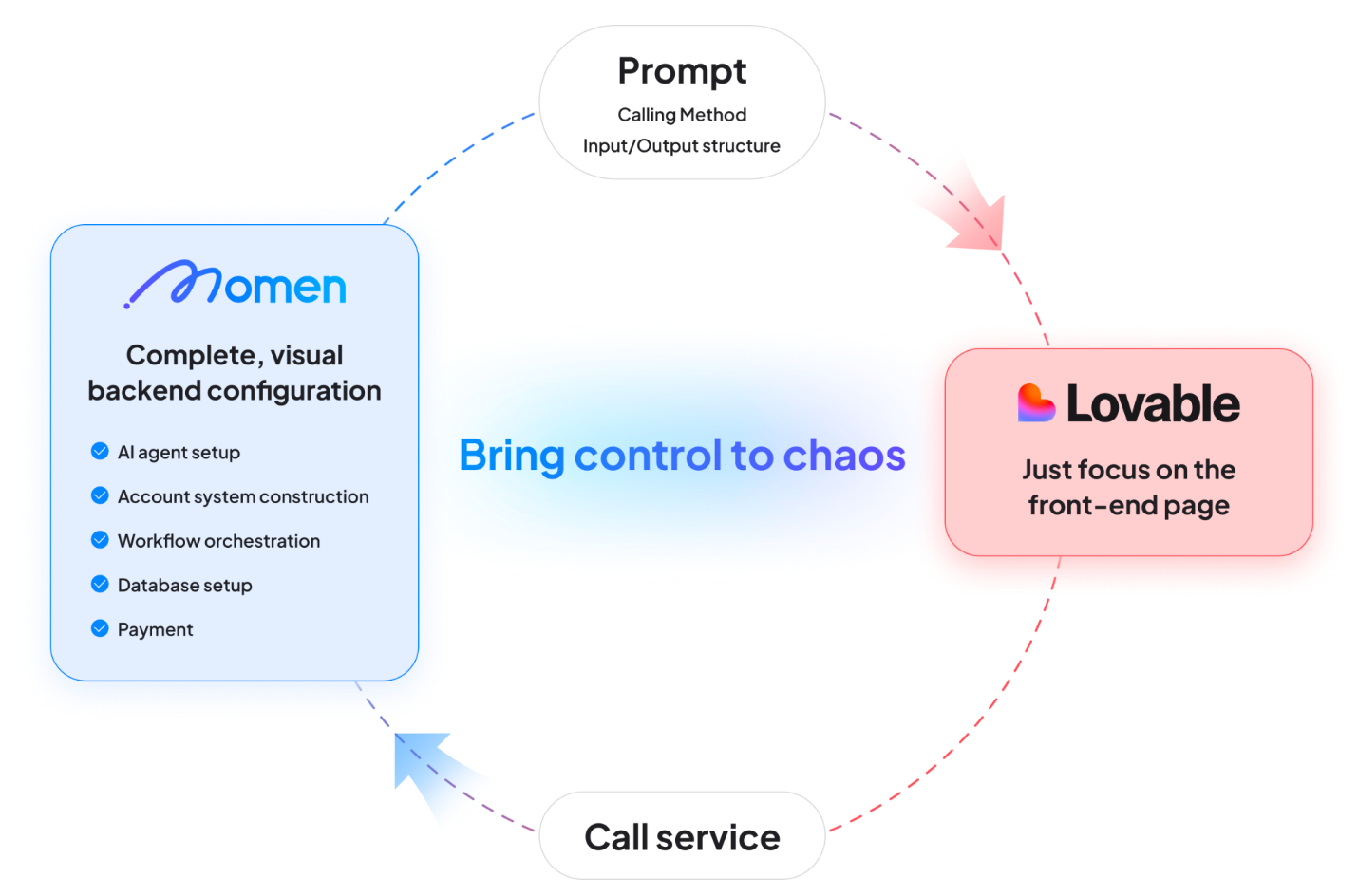
If you’ve ever built a beautiful UI in Lovable but got stuck turning it into a real, working product — Vibe Architect fixes that.
Vibe Architect turns your Lovable designs into a fully functional app with one prompt. It auto-generates your AI agents, database, API logic, user accounts, auth, and even payment/subscription flows.
No engineering team. No backend complexity. Just build → ship → iterate.
Perfect for:
With Vibe Architect, your product isn’t just a demo. It launches, gets users, and generates revenue from Day 1.
ALARM

👀 What’s happening: Sam Altman just declared “Code Red” and ordered the company to abandon its scattered side quests. Ads, agents, shopping experiments, even internal bets on new product lines are being paused. Everyone is being pulled back to one thing: fixing ChatGPT, fast. This comes right as Google’s Gemini 3 earns rare industry respect and Anthropic pushes deeper into enterprise workflows.
🔥 How this hits reality: After a year of pretending it could run an ecosystem like a trillion-dollar platform, OpenAI finally hit the wall. The company was never built for a sprawling product universe; its power has always been a single, brutally polished flagship. Altman now seems to know it. “Code Red” is the admission that ChatGPT is the moat, and if that moat cracks, there is no ecosystem to fall back on. Refocusing is not strategy; it is survival.
🛎️ Key takeaway: OpenAI just dropped the ecosystem dream because it cannot afford dreams, not when the crown is slipping.
👀 What’s happening: Sam Altman just declared “Code Red” and ordered the company to abandon its scattered side quests. Ads, agents, shopping experiments, even internal bets on new product lines are being paused. Everyone is being pulled back to one thing: fixing ChatGPT, fast.
🔥 How this hits reality: After a year of pretending it could run an ecosystem like a trillion-dollar platform, OpenAI finally hit the wall. The company was never built for a sprawling product universe; its power has always been a single, brutally polished flagship. Altman now seems to know it.
Ads, agents, shopping experiments, even internal bets on new product lines are being paused. Everyone is being pulled back to one thing: fixing ChatGPT, fast. This comes right as Google’s Gemini 3 earns rare industry respect and Anthropic pushes deeper into enterprise workflows.
NONPROFITS
👀 What’s happening: Anthropic rolled out Claude for Nonprofits with GivingTuesday, giving eligible organizations up to 75% off Claude Team and Enterprise plans, plus new integrations with Benevity, Blackbaud, and Candid. It’s positioned as a philanthropic move, helping nonprofits stretch thin budgets, but it’s also a strategic land grab. Claude isn’t just offering free tools; it’s moving into the infrastructure of social impact work.
🔥 How this hits reality: The move is genuinely philanthropic as Claude’s discounts and training will help nonprofits do more with less; but it’s also unmistakably strategic. By integrating with donation platforms, grant CRMs, and field-data tools, Anthropic isn’t just aiding organizations; it’s becoming part of their digital backbone. The free “AI Fluency” program ensures teams learn to work within Claude’s ecosystem, turning social good into a sustainable presence inside global institutions.
🛎️ Key takeaway: It’s real charity, but also smart strategy. Anthropic is proving that doing good can double as long-term distribution.
👀 What’s happening: Anthropic rolled out Claude for Nonprofits with GivingTuesday, giving eligible organizations up to 75% off Claude Team and Enterprise plans, plus new integrations with Benevity, Blackbaud, and Candid. It’s positioned as a philanthropic move, helping nonprofits stretch thin budgets, but it’s also a strategic land grab.
QUICK HITS
TRENDING
TOGETHER WITH US
AI Secret Media Group is the world’s #1 AI & Tech Newsletter Group, boasting over 2 million readers from leading companies such as OpenAI, Google, Meta, and Microsoft. Our Newsletter Brands:
We've helped promote over 500 Tech Brands. Will yours be the next?
Email our co-founder Mark directly at [email protected] if the button fails.
Good Morning, AI Enthusiasts!
Across the layers of the digital mind, a new symmetry is emerging.

NEW LAUNCH
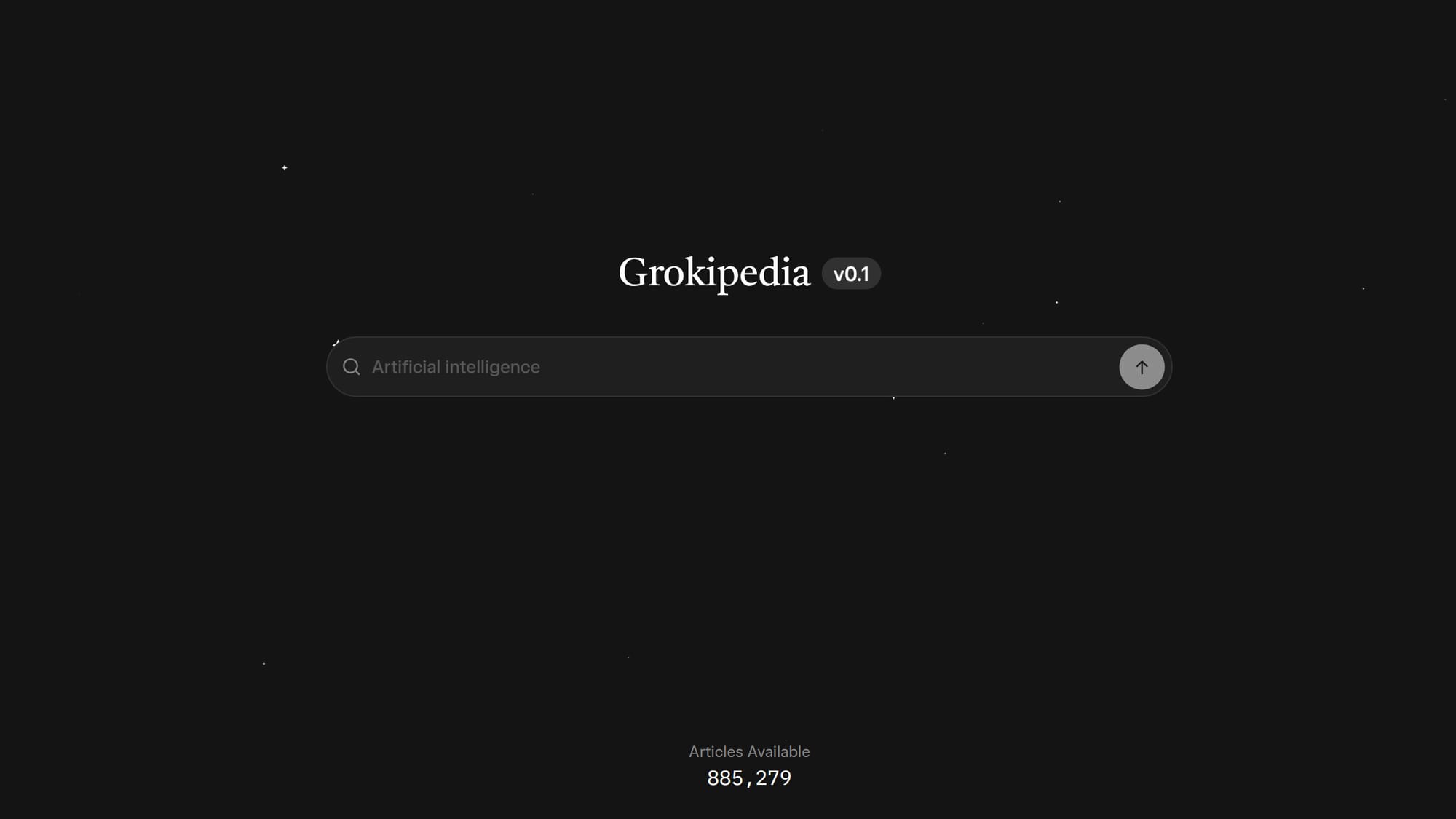
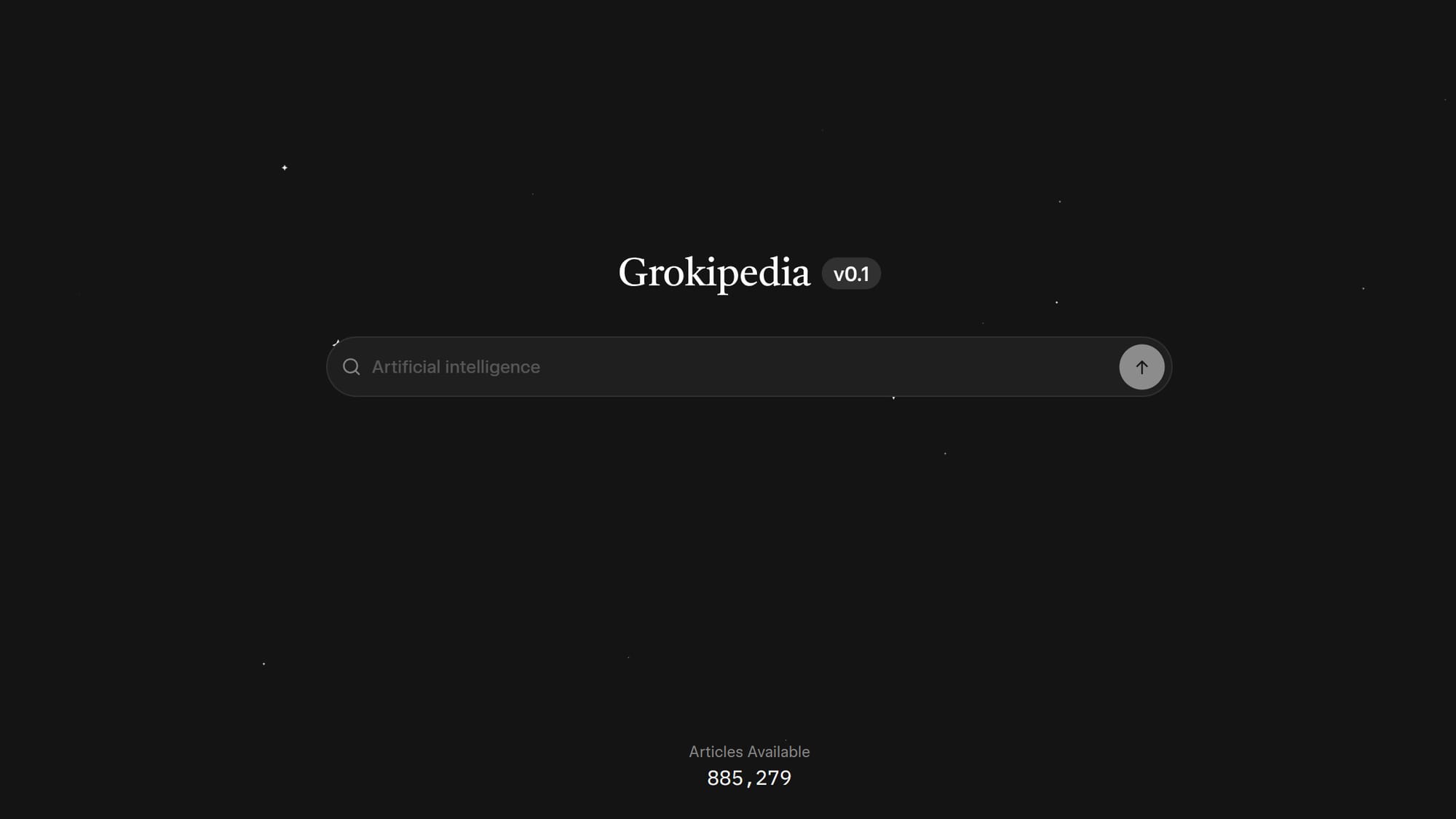
📌 What’s happening: Elon Musk’s xAI has launched Grokipedia, an “AI-upgraded” encyclopedia that was supposed to surpass Wikipedia. Instead, it mirrors it almost entirely. The layout, tone, and structure are nearly identical, and many entries are “adapted from Wikipedia” word for word. Editing is mostly disabled, and the so-called “fact-checks” rely on Grok’s model rather than human editors. The site even labels itself v0.1, signaling how early this release really is.
🧠 How this hits reality: Grokipedia feels less like a reinvention of knowledge and more like a stress test of Wikipedia’s Creative Commons license. But despite the copycat debut, this is still the first functioning prototype of an AI-native encyclopedia—a system designed to eventually learn, verify, and update itself. If xAI can move beyond replication, it could shift the web’s information backbone from static to self-evolving.
🛎️ Key takeaway: Grokipedia may look like Wikipedia’s twin today, but if it grows a mind of its own, this clone could become the first AI librarian that actually learns.
TOGETHER WITH INCOGNI

The BBC caught scam call center workers on hidden cameras as they laughed at the people they were tricking.
One worker bragged about making a quarter of a million dollars from victims in the US and UK. Another admitted to targeting seniors on purpose, forcing one woman to give up her last $100 on Christmas Day.
And here’s the disturbing truth: scammers don’t pick phone numbers at random. They buy your personal data from data brokers—your phone number, your email, even details about your lifestyle. That’s how they know exactly who to target.
Once your data is out there, it’s not just spam calls. It’s phishing, impersonation, and even identity theft.
That’s why we recommend Incogni:
You can’t stop scammers from existing. But you can make sure they don’t have your information to work with.
Erase your data now with 55% off on annual plans - use code SECRET55.
AGENT

📌 What’s happening: Legal titan LexisNexis, long the research backbone of courts and firms worldwide, is rebranding itself as an AI-native legal intelligence company. Its new tool, Protégé, trains on a proprietary corpus of 160 billion verified legal documents, using an agentic, multi-model system that routes tasks to models like OpenAI’s and Anthropic’s depending on context. Every AI-generated draft is then human-reviewed by practicing attorneys to ensure citations trace to real, citable law. CEO Sean Fitzpatrick claims this process delivers “courtroom-grade accuracy,” a promise meant to set Protégé apart from general LLMs riddled with hallucinations.
🧠 How this hits reality: LexisNexis’s legal dataset gives it a rare moat, but “zero hallucination” is more aspiration than guarantee. Even with curated grounding and human oversight, generative systems remain probabilistic. What Protégé really offers is a controlled hallucination zone — bounded by real law, audited by lawyers, and less likely to embarrass a judge. The result is not flawless AI, but the industry’s first serious attempt to standardize trust in machine-written legal reasoning.
🛎️ Key takeaway: LexisNexis may not have killed hallucination, but it just turned “verified by lawyer” into the new benchmark for AI in law.
NEW LAUNCH
📌 What’s happening: French AI giant Mistral just launched Mistral AI Studio, a production-grade platform for enterprises to build, deploy, and monitor AI systems using its full lineup of open and proprietary models. The release replaces its older Le Platforme and marks Mistral’s shift from a model provider to a full-stack infrastructure player, a direct shot at Google’s and OpenAI’s ecosystem lock-ins. Unlike “toy studios” targeting hobbyists, this one’s built for real deployment, not demo reels.
🧠 How this hits reality: This is Mistral’s bid to make European AI sovereign and operational, not just theoretical. With observability, runtime orchestration, RAG workflows, and a full AI Registry baked in, it turns model management into a discipline instead of an experiment. Enterprises can run Mistral models on-prem, hybrid, or self-hosted, giving compliance-obsessed European firms a viable exit from US-centric AI stacks.
🛎️ Key takeaway: Mistral just stopped being “the open-source model shop”; it’s now Europe’s answer to OpenAI’s platform empire, and the moat is governance, not hype.
The release replaces its older Le Platforme and marks Mistral’s shift from a model provider to a full-stack infrastructure player, a direct shot at Google’s and OpenAI’s ecosystem lock-ins. Unlike “toy studios” targeting hobbyists, this one’s built for real deployment, not demo reels.
📌 What’s happening: French AI giant Mistral just launched Mistral AI Studio, a production-grade platform for enterprises to build, deploy, and monitor AI systems using its full lineup of open and proprietary models.
QUICK HITS
TRENDING
TOGETHER WITH US
AI Secret Media Group is the world’s #1 AI & Tech Newsletter Group, boasting over 2 million readers from leading companies such as OpenAI, Google, Meta, and Microsoft. Our Newsletter Brands:
We've helped promote over 500 Tech Brands. Will yours be the next?
Email our co-founder Mark directly at [email protected] if the button fails.
Good Morning, AI Enthusiasts!
From $10B startups to $10K drama—AI isn’t eating the world, it’s binge-watching it. Welcome to the messy, marvelous machine circus.

CODING
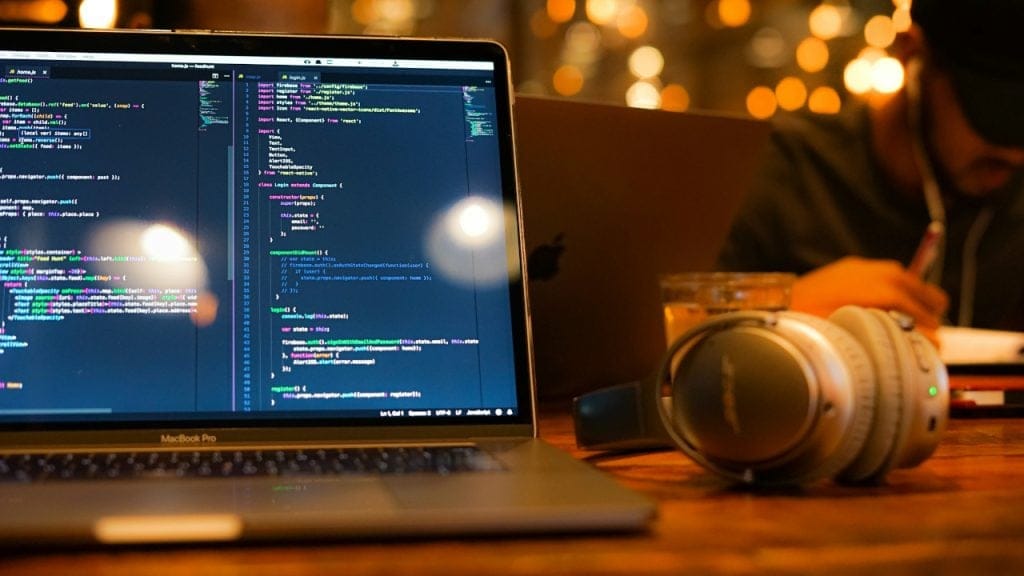
📌 What’s happening: AI dev tools are quietly moving out of the IDE and into the command line. Since February, OpenAI, Anthropic, and DeepMind have all launched terminal-native coding tools—CLI Codex, Claude Code, Gemini CLI—because code editors just aren’t cutting it for agentic workflows. Meanwhile, flashy players like Windsurf are imploding post-acquisition, and studies show that popular tools like Cursor Pro may actually be slowing developers down.
🧠 How this hits reality: Copilot-style tools were built to patch GitHub issues. But building real software means more than editing code—it’s setting up environments, fixing config errors, and wrangling dependencies. That’s where terminal agents thrive. Warp is now leading the benchmarks by acting less like an autocomplete sidekick and more like a DevOps-savvy intern. Developers still write code, but they’re delegating the dirty work to something that actually understands the system it’s running in.
🛎️ Key takeaway: The real 10x engineer? An LLM with system access and zero patience for busywork.
Since February, OpenAI, Anthropic, and DeepMind have all launched terminal-native coding tools—CLI Codex, Claude Code, Gemini CLI—because code editors just aren’t cutting it for agentic workflows. Meanwhile, flashy players like Windsurf are imploding post-acquisition, and studies show that popular tools like Cursor Pro may actually be slowing developers down.
TOGETHER WITH AIRTABLE
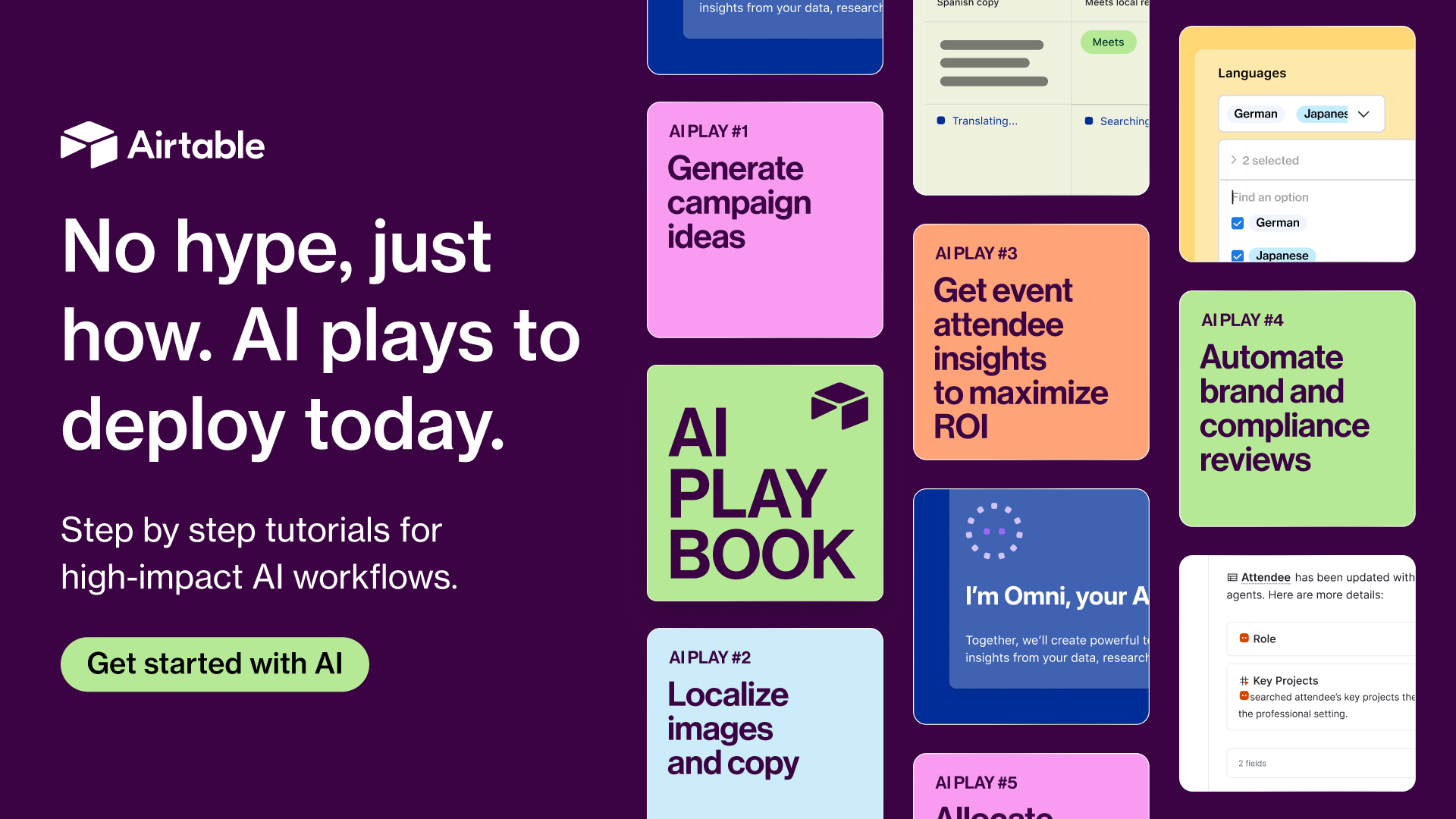
The Airtable AI Playbook is your go-to guide for building smarter, faster workflows across every team. Whether you're customizing status summaries, tracking competitive features, or creating campaign briefs, this playbook helps you unlock what’s possible with Airtable.
PUBLISHER

📌 What’s happening: Google Discover—the company’s mobile news feed—is replacing article headlines with AI-generated summaries. Instead of a single source, summaries now show multiple publisher logos and an AI blurb, all with a disclaimer that “AI can make mistakes.” The rollout is live in the U.S. and focused on trending lifestyle topics like sports and entertainment.
🧠 How this hits reality: Publishers just lost another major traffic funnel. Discover was one of the last reliable referral sources after Search got gutted by AI Overviews. Now users can skim AI blurbs without ever clicking through. Google says this helps users “decide” what to read. The industry hears: “We already decided for you.” The offerwall sugar pill won’t offset the hemorrhaging.
🛎️ Key takeaway: Google doesn’t need to kill the open web—just slowly starve it while summarizing its obituary.
📌 What’s happening: Google Discover—the company’s mobile news feed—is replacing article headlines with AI-generated summaries. Instead of a single source, summaries now show multiple publisher logos and an AI blurb, all with a disclaimer that “AI can make mistakes.” The rollout is live in the U.S. and focused on trending lifestyle topics like sports and entertainment.
TOGETHER WITH SONGMAKER
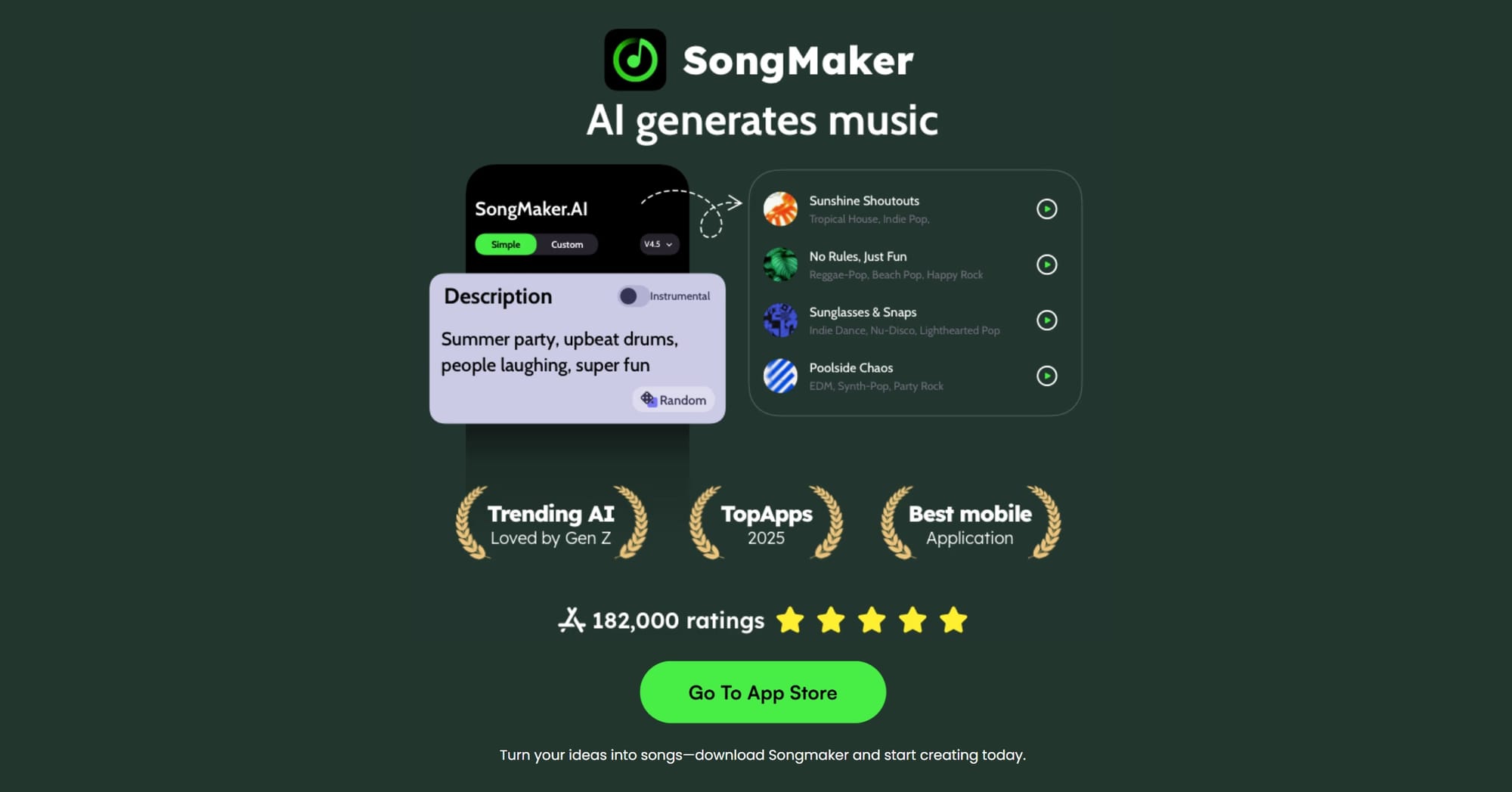
SongMaker AI transforms your ideas into original songs in minutes. Perfect for musicians, content creators, brands, and music lovers—no skills needed. Instantly generate personalized tracks for demos, TikToks, YouTube videos, or brand jingles. Just describe your vibe, and SongMaker AI creates the music. Available on iOS and Android with a free trial.
NEW LAUNCH
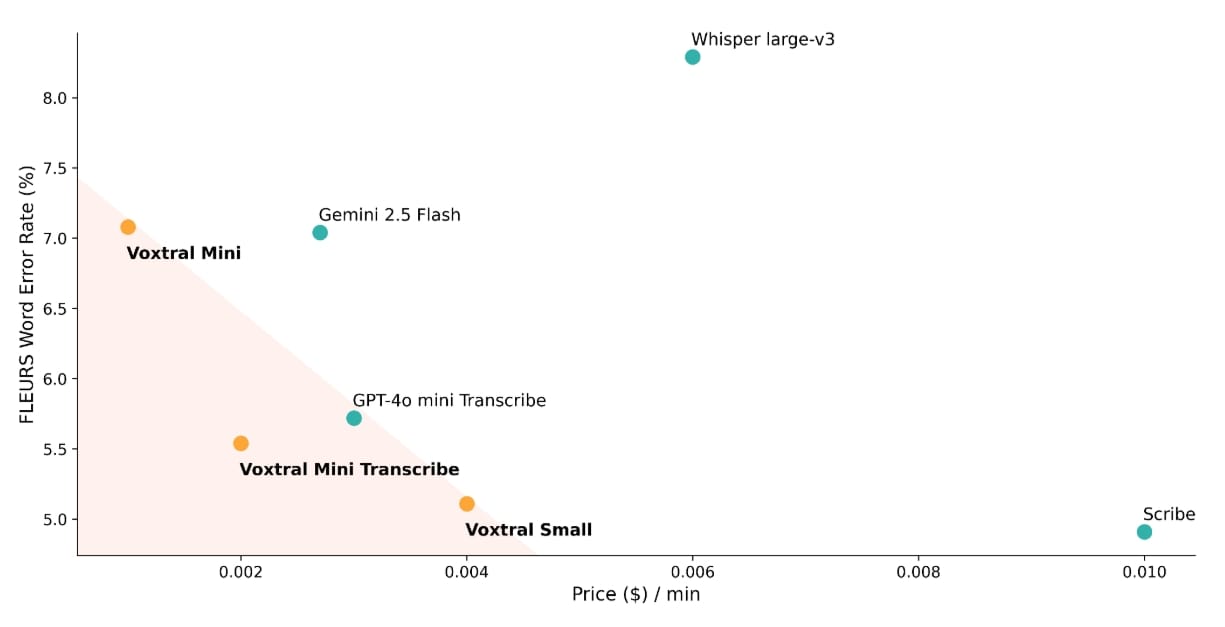
📌 What’s happening: French AI upstart Mistral just launched Voxtral, its first open-weight audio model. They’re pitching it as the first open system that doesn’t suck—transcribes well, understands context, and doesn’t cost a fortune. It’s aimed squarely at dethroning closed incumbents like OpenAI Whisper and ElevenLabs.
🧠 How this hits reality: Voxtral Mini covers edge use. The fast-and-cheap “Mini Transcribe” version targets Whisper’s market with a “same results, half the bill” promise. Expect vendors quietly reassessing their voice infra stack—and some scrambling to justify their margins.
🛎️ Key takeaway: Open source just made voice AI too cheap to gatekeep—and too good to ignore.
📌 What’s happening: French AI upstart Mistral just launched Voxtral, its first open-weight audio model. They’re pitching it as the first open system that doesn’t suck—transcribes well, understands context, and doesn’t cost a fortune. It’s aimed squarely at dethroning closed incumbents like OpenAI Whisper and ElevenLabs.
QUICK HITS
TRENDING
PREVIEW

In the future, families brunch under drone-lined skies while parcels descend like pollen, and workers commute upwards, not outwards.
Posthuman is a daily futurescape newsletter decoding how humans, AIs, and robots are beginning to co-create society. We explore the strange realities of tomorrow as they unfold today—from AI therapists and robot coworkers to memory markets and synthetic influencers. Each edition unpacks one uncanny signal at a time, tracing the slow merge into human–AI symbiosis. This isn’t sci-fi—it’s the early user manual for the future.
TOGETHER WITH US
AI Secret Media Group is the world’s #1 AI & Tech Newsletter Group, boasting over 1 million readers from leading companies such as OpenAI, Google, Meta, and Microsoft. Our Newsletter Brands:
We've helped promote over 500 Tech Brands. Will yours be the next?
Email our co-founder Mark directly at [email protected] if the button fails.
Latest Daily Rundowns
 Magna
Magna MagnaMagna
More AI Stories
Magna Magna
Magna Magna
Magna
Plus: Mistral Knows What It Is, First AI Film Festival Crowns Its Winner
Read the storyPlus: Math Problems Are Now an Ad, Europe Bows to Mistral
Plus: Richer Agents Will Eat First, Musk Is Boosting Coding
Plus: Codex Is Gunning for Claude Code, Speed Is the AI Constraint
Plus: Musk Says Intent Will End Coding, Mistral Into AI Hedge
Plus: Local AI Coding, Google Finds Next Lens
Plus: Mistral Drops Ten Models, AI Batting Cage
Plus: Altman Slams the Brakes, Claude for Nonprofits
Plus: LexisNexis Trains New Brain, Mistral’s Platform Moment
More Stories: Publishers Mute Again, Mistral Targets OpenAI