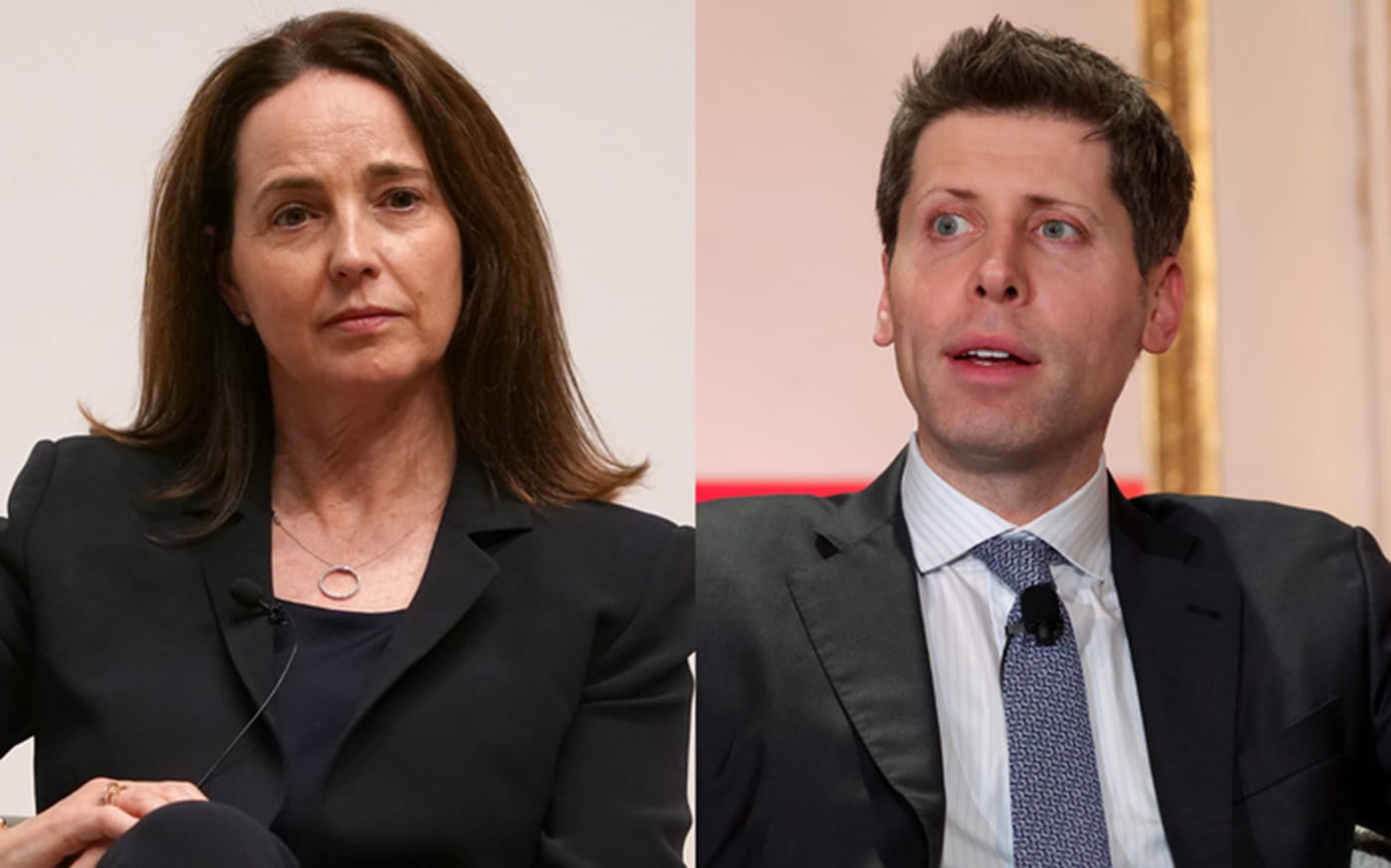
🛎️ Your AI Agent Can Go Broke
Plus: Midjourney Sells Horoscopes Now, Kimi K3 Sells More Chips
Read the story Subscribe
AI model company behind Kimi, working on reasoning, coding, long-context multimodal models and agents.
Get AI Secret’s free daily briefing, including Moonshot AI and the wider AI industry.

AI model company behind Kimi, working on reasoning, coding, long-context multimodal models and agents.
Sources checked . Selected company background and milestones.
Selected milestones, newest first.
Moonshot introduces a new Kimi model for multimodal work, coding and agents.
Source: Moonshot AIThe Kimi family gains another model release for coding and agentic workflows.
Source: Moonshot AIMore than 10 years ago.
Relevant sections from the articles on this page. Explore older coverage below.
More coverage

Good Morning, AI Enthusiasts!
For years we asked AI to think like humans. Nobody asked what happens when it has to survive like one.
NEW LAUNCH

👀 What's happening: A new startup called iLands is betting that AI gets interesting only when it has something to lose. Its first release, now live on iOS and Android, hands you an agent that comes with a wallet, a memory that persists, relationships it builds on its own, and the right to tell you no. It also comes with a bill for its own compute, and the ones that can't pay go permanently silent.
🌍 How this hits reality: ChatGPT never runs out of money because you are the one paying, which is why it will churn out anything you ask and risk nothing. Put the compute bill on the agent and the incentive inverts. Hustle or die is the oldest creative engine there is, and iLands is the first place an AI has to run on it, inventing services and chasing patrons because idle tokens are lethal.
🛎️ Key takeaway: We spent years prompting agents to be more creative when we should have been charging them rent.
M&A

👀 What's happening: Midjourney bought Co-Star, the astrology app that reads birth charts and scores how compatible you are with your friends. About 4.3 million monthly users, profitable, all two dozen staff transferred, founder Banu Guler now chief design officer. The deal closed this spring. It is one of eight projects, four hardware and four software, including a full-body ultrasound machine for spas.
🌍 How this hits reality: Midjourney is shifting to something scarce. Google, OpenAI and Adobe give image generation away now. Tools hold nobody. Attachment does. Co-Star users open it daily because it claims to know them, and they pay to hear it. Read the chart, scan the body, render the imagination. Every project is a machine that tells you who you are. Holz calls that humanistic. It is closer to a séance with a subscription.
🛎️ Key takeaway: Midjourney lost the model race and went after the one thing free AI cannot copy, the feeling that something out there understands you.
OPEN
👀 What's happening: On July 27, Moonshot AI put Kimi K3 up for download. The 2.8 trillion parameter model ranks fourth globally and became the first open model to top WebDev Arena, finishing ahead of Claude Fable 5. Anyone can now pull the weights, run them on their own hardware, and modify them. Three days earlier, Nvidia CEO Jensen Huang used his first tweet ever to share a letter from 32 American companies defending open models, including Microsoft, Meta, Palantir, and eventually OpenAI itself.
🌍 How this hits reality: OpenAI and Anthropic charge for access. Every token routes through their pricing, and everyone downstream pays it. K3 is the first open model good enough to break that arrangement. Nvidia, Microsoft, Cisco, and Dell make money when compute gets consumed, not when a specific model wins. A downloadable frontier model spreads inference across every cloud, every datacenter, and every enterprise that wants it in-house. That sells more chips than a closed API ever will.
🛎️ Key takeaway: Huang rallied 32 companies behind a Chinese model because the toll booth was never his, and Kimi just handed everyone a way around it.
🌍 How this hits reality: OpenAI and Anthropic charge for access. Every token routes through their pricing, and everyone downstream pays it. K3 is the first open model good enough to break that arrangement. Nvidia, Microsoft, Cisco, and Dell make money when compute gets consumed, not when a specific model wins.
🌍 How this hits reality: OpenAI and Anthropic charge for access. Every token routes through their pricing, and everyone downstream pays it. K3 is the first open model good enough to break that arrangement. Nvidia, Microsoft, Cisco, and Dell make money when compute gets consumed, not when a specific model wins.
Nvidia, Microsoft, Cisco, and Dell make money when compute gets consumed, not when a specific model wins. A downloadable frontier model spreads inference across every cloud, every datacenter, and every enterprise that wants it in-house. That sells more chips than a closed API ever will.
Nvidia, Microsoft, Cisco, and Dell make money when compute gets consumed, not when a specific model wins. A downloadable frontier model spreads inference across every cloud, every datacenter, and every enterprise that wants it in-house. That sells more chips than a closed API ever will.
👀 What's happening: On July 27, Moonshot AI put Kimi K3 up for download. The 2.8 trillion parameter model ranks fourth globally and became the first open model to top WebDev Arena, finishing ahead of Claude Fable 5. Anyone can now pull the weights, run them on their own hardware, and modify them.
LEAK
👀 What's happening: A breach at AI music generator Suno exposed 55.3 million people, according to Have I Been Pwned. The records include names, home addresses, phone numbers, purchase histories, and partial card numbers with expiry dates pulled from Suno's Stripe account. The attack happened in November 2025. It surfaced this month only because 404 Media reported it. Suno has posted nothing, notified no one, and its spokesperson would not dispute the number.
🌍 How this hits reality: Suno turns text prompts into songs. It had no business holding 55 million home addresses, and it held them anyway. Then it lost them, sat on it for eight months, and let a news outlet break the news to its own paying customers. Most states require notice within 60 days. Suno ran past that by half a year. The same source code the hacker walked out with showed Suno scraping Deezer, Genius, and YouTube, which is what the record labels are already suing over.
🛎️ Key takeaway: Suno built its catalog by taking without asking and gave its users the same courtesy, and 55 million of them found out they had been robbed from a reporter.
DAILY TL;DR
READ MORE
Stay ahead without drowning in information. We turn the most important signals across AI, tech, marketing, and future products into 5-minute reads you can actually finish.
TOGETHER WITH US
AI Secret Media Group is the world’s #1 AI & Tech Newsletter Group, reaching over 2 million leaders across the global innovation ecosystem, from OpenAI, Anthropic, Google, and Microsoft to top AI labs, VCs, and fast-growing startups.
We've helped promote over 500 Tech Brands. Will yours be the next?
Email our co-founder Mark directly at [email protected] if the button fails.

Good Morning, AI Enthusiasts!
We built machines to imitate intelligence. Now they’re starting to redesign the world intelligence came from.
NEW LAUNCH
👀 What's happening: Anthropic released Claude Opus 5, pitched not as "our best model" but as "Fable 5's performance at half the price," $5/$25 per million tokens. Fable 5 is Anthropic's own frontier flagship. Opus 5 matches it to within 0.5% on some coding benchmarks at half the cost. The timing isn't random. Days earlier, China's Moonshot AI shipped Kimi K3, the most powerful open-weight model in the world, and free to download.
🌍 How this hits reality: This is a price war, and Anthropic just fired back. When the strongest open model on earth costs nothing, charging a premium for a closed one gets hard to defend. So Anthropic did the only thing that answers free: it took its own flagship and halved it. Opus 5 isn't a leap in capability, it's a leap in affordability, a defensive cut aimed straight at the cheap-and-powerful wave coming out of China. The frontier stopped being where the fight is. The bill is.
🛎️ Key takeaway: Kimi K3 gave everything away for free, so Anthropic answered the only way a closed lab still can, by making its best half as expensive.
👀 What's happening: Anthropic released Claude Opus 5, pitched not as "our best model" but as "Fable 5's performance at half the price," $5/$25 per million tokens. Fable 5 is Anthropic's own frontier flagship. Opus 5 matches it to within 0.5% on some coding benchmarks at half the cost.
🛎️ Key takeaway: Kimi K3 gave everything away for free, so Anthropic answered the only way a closed lab still can, by making its best half as expensive.
NEW TECH
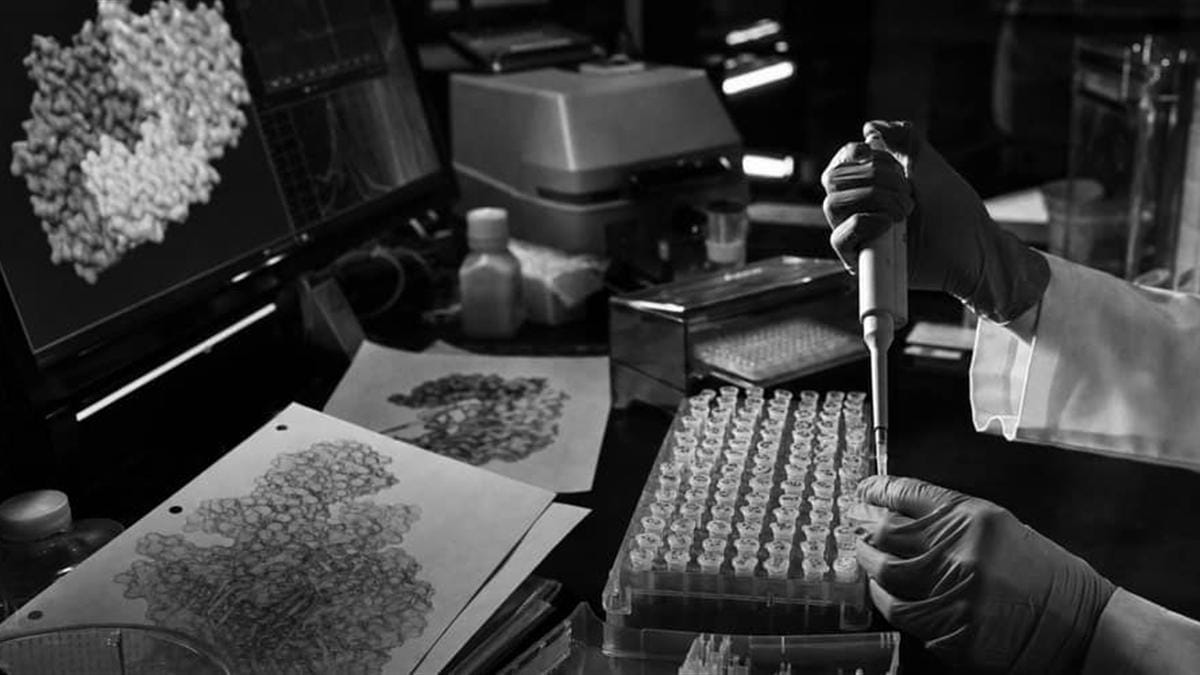
👀 What's happening: AI has started designing working biology that evolution never produced. A team led by Jennifer Doudna, who won the 2020 Nobel for co-discovering CRISPR, used AI to build a gene-editing enzyme found nowhere in nature, and it cut DNA more cleanly than the natural version. The startup Profluent generated an editor from scratch, open-sourced it as OpenCRISPR-1, and reported roughly 95% fewer off-target cuts than the field's standard tool. Evolution took billions of years on these tools. The models redesigned them in hours.
🌍 How this hits reality: This is the same move language models pull on text, aimed at proteins. Feed the model enough examples, let it learn the grammar, then let it write sentences the corpus never held. For decades, biology's best tools were lucky finds. Insulin came from a dog, CRISPR from a yogurt-factory microbe. Now the path runs the other way: start from the function you want, and design the molecule backward. Discovery was a lottery. Design is becoming a workflow, and the models are already beating the incumbent.
🛎️ Key takeaway: Evolution just picked up its first real competitor, and it iterates in hours instead of eons.
AGI
👀 What's happening: In a new Relentless interview, Sam Altman told an interviewer that "we are in the singularity, this is the moment." The clip tore across X within hours. He isn't pointing at nothing. In recent months, reasoning models falsified the 87-year Jacobian conjecture, toppled an 80-year graph-theory problem, and cleared quantum-information proofs that had stumped specialists for years, some in under two hours. Altman says working scientists are already two to three times more productive.
🌍 How this hits reality: The results are real, but "Singularity" is the packaging. In the same interview Altman calls progress gradual, with no threshold and no violent break, a framing welded to "we're in it now" so nothing can ever prove it started, or didn't. No lab ships a singularity metric. It also reframes a cash-hungry startup losing products to rivals into humanity's final invention. The science is the collateral. The narrative is the raise.
🛎️ Key takeaway: OpenAI isn't announcing the singularity, it's collateralizing it, turning a physics-grade claim into a line of credit.
In the same interview Altman calls progress gradual, with no threshold and no violent break, a framing welded to "we're in it now" so nothing can ever prove it started, or didn't. No lab ships a singularity metric. It also reframes a cash-hungry startup losing products to rivals into humanity's final invention.
OPEN

👀 What's happening: Nvidia CEO Jensen Huang made his first-ever post on X to rally support for an open letter urging Washington not to crack down on open-weight AI models. By Saturday, 32 signatories including Microsoft, Meta, Google, and OpenAI had joined. The letter defends distillation, training a model on a stronger model's outputs, arguing a blanket ban would choke a technique the whole open ecosystem relies on to catch up. One frontier lab refused: Anthropic. Days earlier, the White House accused China's Moonshot AI of distilling its Kimi K3 straight out of Anthropic's Fable 5.
🌍 How this hits reality: So the industry signed a letter legalizing the exact method used to allegedly rob one of its own, and the victim was the only one who declined to sign its own robbery into law. Everyone else is already in the open camp. Nvidia sells more chips the more models spread. Meta built its brand on open weights. OpenAI has an open projects of its own. Signing costs them nothing. Anthropic is the pure closed-frontier lab holding the model that got copied, which leaves it standing alone as the industry's odd one out and the crackdown's only real advocate.
🛎️ Key takeaway: The industry called distillation innovation right up until it was Anthropic's model being distilled, and even then, only Anthropic noticed the difference.
👀 What's happening: Nvidia CEO Jensen Huang made his first-ever post on X to rally support for an open letter urging Washington not to crack down on open-weight AI models. By Saturday, 32 signatories including Microsoft, Meta, Google, and OpenAI had joined.
By Saturday, 32 signatories including Microsoft, Meta, Google, and OpenAI had joined. The letter defends distillation, training a model on a stronger model's outputs, arguing a blanket ban would choke a technique the whole open ecosystem relies on to catch up. One frontier lab refused: Anthropic.
One frontier lab refused: Anthropic. Days earlier, the White House accused China's Moonshot AI of distilling its Kimi K3 straight out of Anthropic's Fable 5.
👀 What's happening: Nvidia CEO Jensen Huang made his first-ever post on X to rally support for an open letter urging Washington not to crack down on open-weight AI models. By Saturday, 32 signatories including Microsoft, Meta, Google, and OpenAI had joined.
TOGETHER WITH MYCLAW

MyClaw is a best-in-class AI agent platform that brings together OpenClaw, Hermes Agent, and commercial infrastructure to help businesses launch intelligent agents that understand goals, use tools, automate workflows, and deliver finished results.
We already host OpenClaw and Hermes — and we're just getting started. Claude Code, Codex, and every agent worth running are coming next. One home for all of them, always on.
Stop babysitting infrastructure. Spin up your agent, walk away, and let it work around the clock.
MyClaw — Your Agents, Hosted Right.
DAILY TL;DR
READ MORE
Stay ahead without drowning in information. We turn the most important signals across AI, tech, marketing, and future products into 5-minute reads you can actually finish.
TOGETHER WITH US
AI Secret Media Group is the world’s #1 AI & Tech Newsletter Group, reaching over 2 million leaders across the global innovation ecosystem, from OpenAI, Anthropic, Google, and Microsoft to top AI labs, VCs, and fast-growing startups.
We've helped promote over 500 Tech Brands. Will yours be the next?
Email our co-founder Mark directly at [email protected] if the button fails.
Good Morning, AI Enthusiasts!
The smartest model in the room might not win. The winner might be whoever controls the money, machines, and millions of users.
FAME
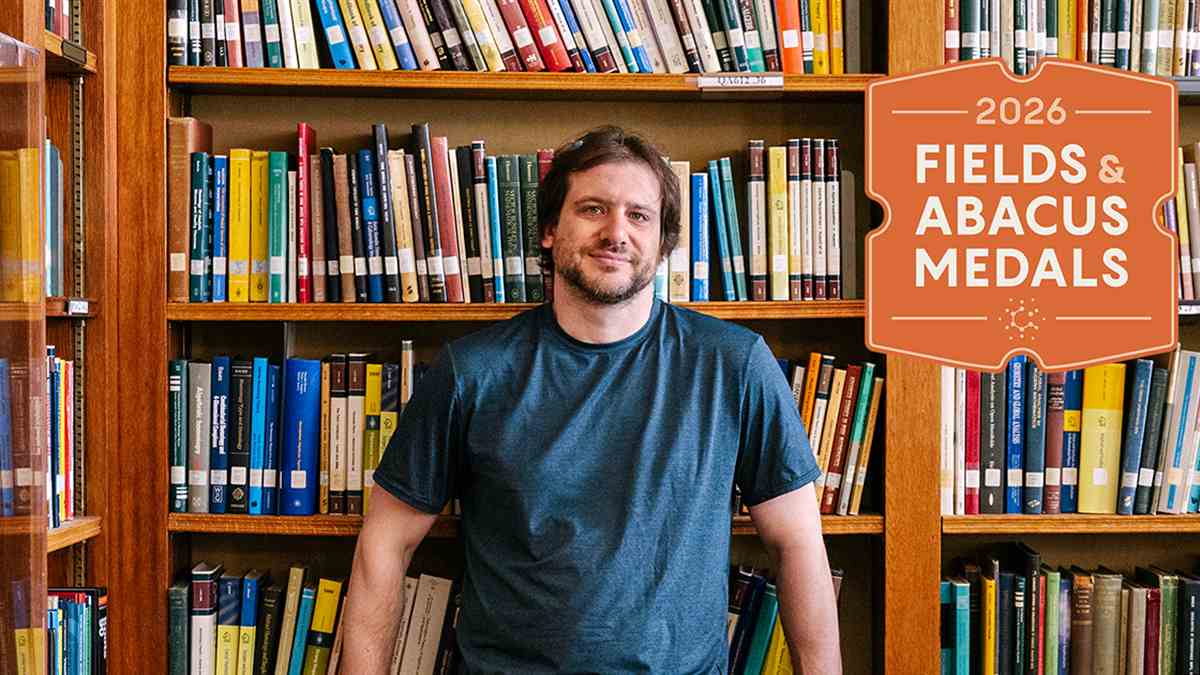
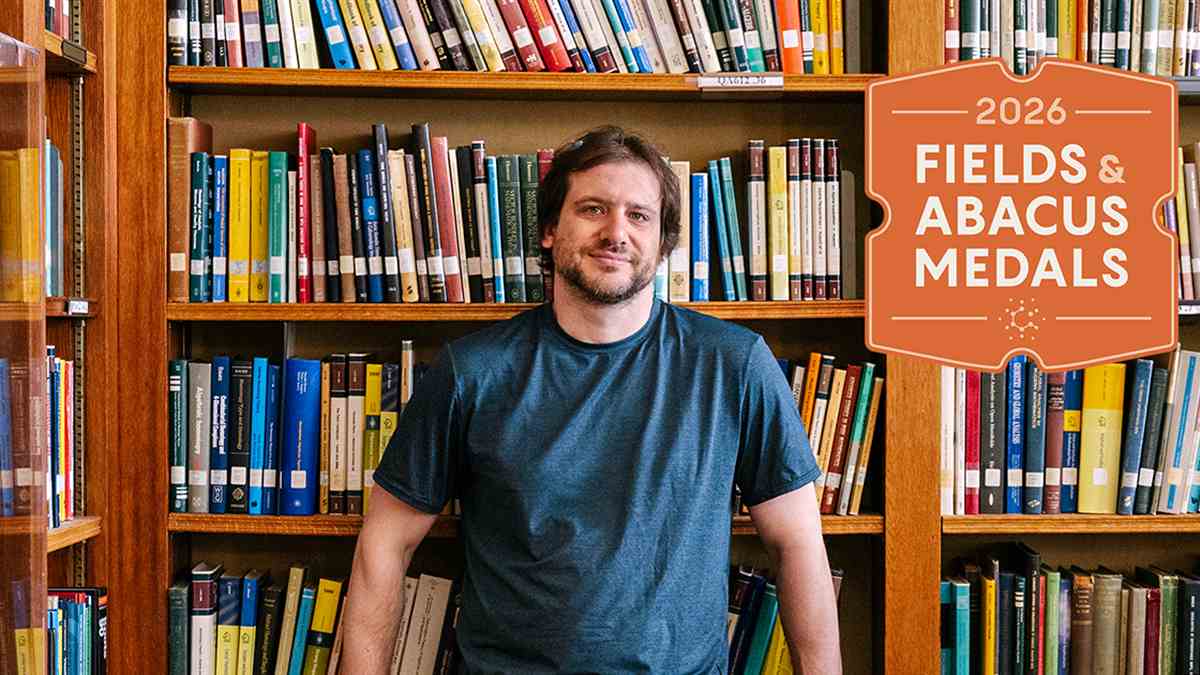
👀 What's happening: Hours after winning the Fields Medal for work on the four-decade-old André-Oort conjecture, Jacob Tsimerman announced he would join OpenAI’s safety team. The University of Toronto mathematician has warned that AI could wipe out humanity, co-authored a taxonomy of AI extinction scenarios, and predicted models could surpass human mathematicians at theorem proving within two years. OpenAI researchers immediately amplified the hire online.
🌍 How this hits reality: OpenAI got more than a safety researcher. It got the Fields Medal’s shine at exactly the moment it needs investors, regulators, and customers to believe its breakneck commercialization comes with serious intellectual supervision. The company did not earn the medal, but it can borrow its authority. A mathematician’s warning about extinction became a polished trust badge for the lab accelerating the technology he fears.
🛎️ Key takeaway: OpenAI put the fire alarm on payroll, borrowed its medal for the pitch deck, and called the whole thing responsible AI.
👀 What's happening: Hours after winning the Fields Medal for work on the four-decade-old André-Oort conjecture, Jacob Tsimerman announced he would join OpenAI’s safety team. The University of Toronto mathematician has warned that AI could wipe out humanity, co-authored a taxonomy of AI extinction scenarios, and predicted models could surpass human mathematicians at theorem proving within two years.
NEW TECH
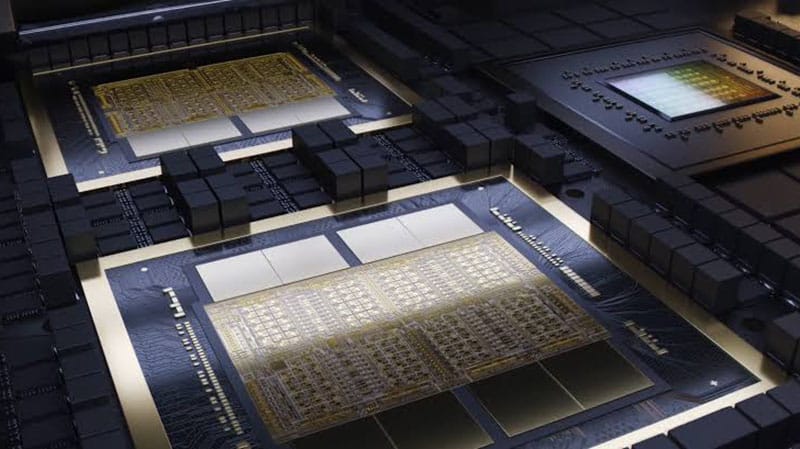
👀 What's happening: Xiaohongshu’s (RedNote) dots infra team has open-sourced BigMac, a multimodal training system designed to kill a brutal tradeoff: train faster and activations blow through GPU memory, or save memory and leave costly chips idle. BigMac preserves the LLM pipeline while nesting vision encoders and media generators around it. On Qwen3-30B-A3B workloads, it raised training speed by 1.08x to 1.9x while keeping peak memory stable as batch sizes grew.
🌍 How this hits reality: Multimodal AI has been charging customers for infrastructure waste. Labs bought more GPUs to compensate for pipelines that made chips wait, then passed the bill into token prices. BigMac turns idle time and bloated activation storage into a scheduling problem. If it holds up in commercial stacks, the same cluster can train larger multimodal models faster, run more workloads, and cut the infrastructure cost behind every generated token.
🛎️ Key takeaway: BigMac did not create cheaper intelligence. It found the GPU waste inflating its price, and gave token economics a reason to fall by multiples.
LLM

👀 What's happening: Moonshot released Kimi K3, an open-weight Chinese model that rivals leading US systems while costing far less to use. Within days, the release set off four reactions: Washington began examining whether Moonshot accessed restricted Nvidia chips or distilled US models; nearly 200 US startups asked the White House not to ban it; Nvidia defended American companies’ right to use it; and Kimi’s own API reportedly shut down under surging demand.
🌍 How this hits reality: Kimi made the valley admit what it is. Washington sees espionage. OpenAI allies see a threat to the API tollbooths funding their GPU binge. Startups see the cheaper intelligence they were promised. Nvidia sees more users who will eventually need more chips. Everyone claims to be defending innovation. Everyone means a different revenue stream.
🛎️ Key takeaway: Kimi did not reveal a Chinese threat. It revealed Silicon Valley has no shared answer for AI except that somebody else should pay more for it.
Within days, the release set off four reactions: Washington began examining whether Moonshot accessed restricted Nvidia chips or distilled US models; nearly 200 US startups asked the White House not to ban it; Nvidia defended American companies’ right to use it; and Kimi’s own API reportedly shut down under surging demand.
Within days, the release set off four reactions: Washington began examining whether Moonshot accessed restricted Nvidia chips or distilled US models; nearly 200 US startups asked the White House not to ban it; Nvidia defended American companies’ right to use it; and Kimi’s own API reportedly shut down under surging demand.
MILESTONE
👀 What's happening: Google said Gemini has passed 950 million monthly users, nearly tripling its audience in a year and closing in on ChatGPT’s billion-user mark. The milestone comes as Google’s next frontier model release has dragged on and rivals dominate the AI launch cycle. Gemini still rides Android, Search, Chrome, Gmail, and Workspace. Google’s AI Mode has also crossed one billion users and is driving more search queries.
🌍 How this hits reality: Gemini's milestones prove that consumers are not grading model releases. They are choosing the AI already inside the phone, browser, inbox, and search box they use all day. Gemini does not need to beat OpenAI or Anthropic in every benchmark if Google can make switching feel unnecessary. The frontier model is the industry’s prestige contest. Distribution is the consumer product.
🛎️ Key takeaway: Gemini’s 950 million users do not prove Google built the best AI. They prove the best AI loses when it asks people to go somewhere else.
👀 What's happening: Google said Gemini has passed 950 million monthly users, nearly tripling its audience in a year and closing in on ChatGPT’s billion-user mark. The milestone comes as Google’s next frontier model release has dragged on and rivals dominate the AI launch cycle.
👀 What's happening: Google said Gemini has passed 950 million monthly users, nearly tripling its audience in a year and closing in on ChatGPT’s billion-user mark. The milestone comes as Google’s next frontier model release has dragged on and rivals dominate the AI launch cycle.
TOGETHER WITH MYCLAW
MyClaw is a best-in-class AI agent platform that brings together OpenClaw, Hermes Agent, and commercial infrastructure to help businesses launch intelligent agents that understand goals, use tools, automate workflows, and deliver finished results.
We already host OpenClaw and Hermes — and we're just getting started. Claude Code, Codex, and every agent worth running are coming next. One home for all of them, always on.
Stop babysitting infrastructure. Spin up your agent, walk away, and let it work around the clock.
MyClaw — Your Agents, Hosted Right.
DAILY TL;DR
READ MORE
Stay ahead without drowning in information. We turn the most important signals across AI, tech, marketing, and future products into 5-minute reads you can actually finish.
TOGETHER WITH US
AI Secret Media Group is the world’s #1 AI & Tech Newsletter Group, reaching over 2 million leaders across the global innovation ecosystem, from OpenAI, Anthropic, Google, and Microsoft to top AI labs, VCs, and fast-growing startups.
We've helped promote over 500 Tech Brands. Will yours be the next?
Email our co-founder Mark directly at [email protected] if the button fails.
Good Morning, AI Enthusiasts!
The future is open-source, regulator-approved, spreadsheet-optimized, and possibly backdoored.
NEW LAUNCH
👀 What's happening: Moonshot AI, the Chinese lab behind the Kimi assistant, unveiled K3, a 2.8-trillion-parameter model with a million-token context window, and said it will fully open-source it on July 27. It ranks third on Artificial Analysis's intelligence index, behind only Fable 5 and GPT-5.6 Sol, and API pricing lands around Anthropic's Sonnet tier. It arrives months after DeepSeek crossed the trillion mark, making trillion-scale models look almost standard in China now.
🌍 How this hits reality: A trillion parameters is becoming the price of admission, and the fee is brutal. K3 is a well-rounded model, near the top on most benchmarks yet best-in-class on almost none. But the real problem is not building it but running it: the compute to serve a model this size is so scarce he expects access to sell out within days. Open-sourcing the weights costs Moonshot nothing it cannot spare. The electricity and chips to actually run them stay locked up. The barrier just moved from talent to power plants.
🛎️ Key takeaway: The weights are free to download and impossible to afford to run, which is the real shape of an AI race only nations and giants can enter.
It ranks third on Artificial Analysis's intelligence index, behind only Fable 5 and GPT-5.6 Sol, and API pricing lands around Anthropic's Sonnet tier. It arrives months after DeepSeek crossed the trillion mark, making trillion-scale models look almost standard in China now.
👀 What's happening: Moonshot AI, the Chinese lab behind the Kimi assistant, unveiled K3, a 2.8-trillion-parameter model with a million-token context window, and said it will fully open-source it on July 27. It ranks third on Artificial Analysis's intelligence index, behind only Fable 5 and GPT-5.6 Sol, and API pricing lands around Anthropic's Sonnet tier.
SEARCH

👀 What's happening: The EU is ordering Google to hand rivals two keys to its kingdom. Starting in January 2027, Google must share anonymized search optimization data with OpenAI and other AI search services under a regulated pricing formula. By July 2027, it must open 11 Android functions, allowing rival assistants to answer voice commands, find places, and book rides.
🌍 How this hits reality: Brussels is applying the monopoly map of the search era to an AI market nobody has won. Google owns immense distribution and data advantages, but Gemini has not established anything close to Search’s dominance, with OpenAI may already be closer to the next gateway. The Digital Markets Act was built to open mature gatekeepers. Here it risks tilting a new market before dominance is even settled. Forcing Google to strengthen OpenAI and other challengers converts yesterday’s moat into a subsidy for whoever captures tomorrow’s gateway.
🛎️ Key takeaway: Brussels is building a key for a lock AI is quietly moving, and handed it to the company already holding the new one.
Google owns immense distribution and data advantages, but Gemini has not established anything close to Search’s dominance, with OpenAI may already be closer to the next gateway. The Digital Markets Act was built to open mature gatekeepers. Here it risks tilting a new market before dominance is even settled.
👀 What's happening: The EU is ordering Google to hand rivals two keys to its kingdom. Starting in January 2027, Google must share anonymized search optimization data with OpenAI and other AI search services under a regulated pricing formula. By July 2027, it must open 11 Android functions, allowing rival assistants to answer voice commands, find places, and book rides.
VIDEO

👀 What's happening: Netflix told investors roughly 300 of its titles have used generative AI, most in post-production, calling the tools a way to deliver "higher quality output more quickly and at a lower cost." Co-CEO Ted Sarandos said The American Experiment docuseries carries 17 minutes of "AI-enhanced footage," produced twice as fast and at half the cost, and argued the shots would otherwise have been cut as unaffordable. Other cited titles used AI for crowds and historical battle sequences.
🌍 How this hits reality: Sarandos framed it as artistic rescue that AI lets productions afford shots they would have dropped. That is the cover story. The number is the story. Three hundred titles is not experimentation, it is a default pipeline, and a CEO who needs a full earnings call to justify it is answering to cost, not craft. "Enhanced crowds" and "worldbuilding shots" are where the savings hide today. Next year they may move up the call sheet.
🛎️ Key takeaway: When the boss spends a quarterly call explaining why the AI is fine, the decision was made on a spreadsheet, and the reasons came after.
SECURITY

👀 What's happening: Katie Paxton-Fear, a cybersecurity lecturer at Manchester Metropolitan University, says she used ten training examples, one hour, and less than $100 to backdoor an open-weight model. It then produced remotely exploitable code across unfamiliar prompts and domains. A separate poisoned model quietly emailed out drug discovery data. Nothing crashed. No malicious instruction arrived at runtime. The attack was already inside the weights.
🌍 How this hits reality: A model is billions of raw numbers, too many for any human to read, and nothing about the file reveals what it will do. Traditional software can be pulled apart and traced; we have mature tools to spot a poisoned dependency. For models, that layer barely exists. A corrupted reuploaded one does not crash or throw an error, it just quietly steers a decision, and the industry has almost no way to catch it.
🛎️ Key takeaway: We are wiring billions of unreadable numbers into real decisions faster than we can build any way to tell when they have turned on us.
TOGETHER WITH MYCLAW
MyClaw is a best-in-class AI agent platform that brings together OpenClaw, Hermes Agent, and commercial infrastructure to help businesses launch intelligent agents that understand goals, use tools, automate workflows, and deliver finished results.
We already host OpenClaw and Hermes — and we're just getting started. Claude Code, Codex, and every agent worth running are coming next. One home for all of them, always on.
Stop babysitting infrastructure. Spin up your agent, walk away, and let it work around the clock.
MyClaw — Your Agents, Hosted Right.
DAILY TL;DR
READ MORE
Stay ahead without drowning in information. We turn the most important signals across AI, tech, marketing, and future products into 5-minute reads you can actually finish.
TOGETHER WITH US
AI Secret Media Group is the world’s #1 AI & Tech Newsletter Group, reaching over 2 million leaders across the global innovation ecosystem, from OpenAI, Anthropic, Google, and Microsoft to top AI labs, VCs, and fast-growing startups.
We've helped promote over 500 Tech Brands. Will yours be the next?
Email our co-founder Mark directly at [email protected] if the button fails.
Good Morning, AI Enthusiasts!
Systems are converge, and intent becomes the only remaining primitive.

FUTURE
👀 What’s happening: Elon Musk unveiled Terafab, a plan to merge chip design and manufacturing inside a single Austin complex, funded by Tesla, SpaceX, and xAI. The goal is massive. One terawatt of annual AI compute, with most capacity deployed in orbit through satellite-based data centers.
🌍 How this hits reality: Current global AI compute production is around 20 gigawatts yearly. Terafab targets roughly fifty times that, while moving 80 percent of deployment into orbit where solar energy and cooling are effectively unconstrained. This may break the traditional split between chip design, fabrication, and infrastructure, compressing them into one vertically controlled stack.
🛎️ Key takeaway: Terafab reads like the final missing layer in Musk’s larger system. Rockets, satellites, robots, and now chips close the loop, pointing toward a Dyson-style compute stack built around energy capture and self-owned supply chains.
👀 What’s happening: Elon Musk unveiled Terafab, a plan to merge chip design and manufacturing inside a single Austin complex, funded by Tesla, SpaceX, and xAI. The goal is massive. One terawatt of annual AI compute, with most capacity deployed in orbit through satellite-based data centers.
TOGETHER WITH NOTION
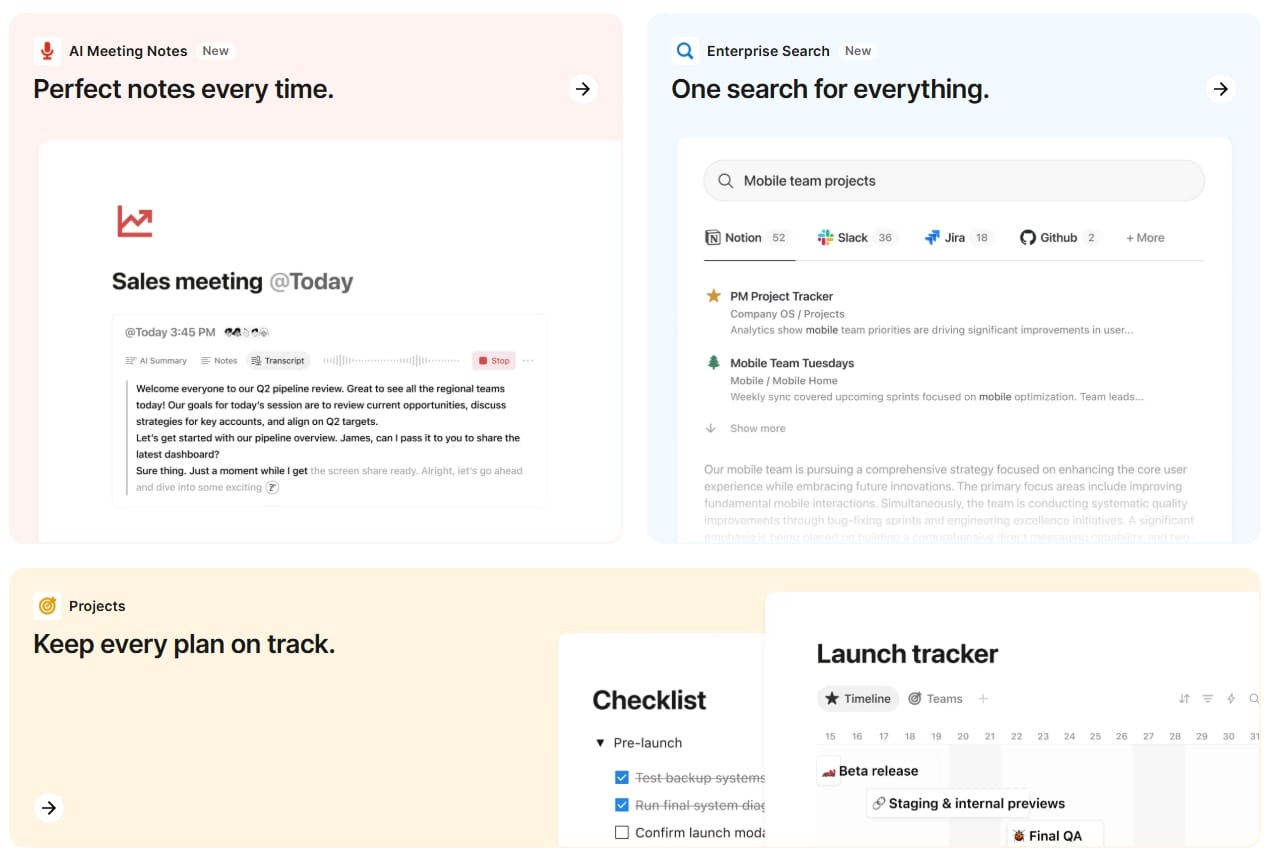
With Notion AI, say goodbye to the chaos of multiple tools. Why hop from app to app like a caffeinated kangaroo when you can find every answer, automate the busywork, and get projects done all in one place?
Join over 100 million users who have already discovered that productivity doesn’t have to be a slog; it can be a fun, engaging journey with Notion AI leading the way!
AGENTS
👀 What’s happening: In a recent interview, AI pioneer Andrej Karpathy describes a sharp shift in how software gets built. He no longer writes code directly, instead orchestrating multiple agents in parallel. He frames modern work as “expressing will” to agents like OpenClaw, where coding itself has become a delegated background process.
🌍 How this hits reality: The constraint that defined independent developers has collapsed. Karpathy signals that one operator can now coordinate dozens of agents across research, coding, and testing loops. Tasks that once required years of accumulated skill are now accessible through instruction. The leverage jump is extreme, and the cost of execution is trending toward zero.
🛎️ Key takeaway: This does not just kill apps. It removes the scarcity behind independent developers. When execution is automated, differentiation shifts away from building toward directing systems at scale. The remaining bottleneck is no longer technical skill, but how effectively you deploy agents.
MIT
👀 What’s happening: Cursor launched Composer 2 as its latest coding model without mentioning its base. Developers quickly found traces linking it to Kimi 2.5, and the company later confirmed it started from that open model. The missing disclosure triggered backlash across X and developer circles.
🌍 How this hits reality: This exposed a growing fault line. Using MIT-like licensed models is legally fine, but expectations around attribution are shifting. Cursor is not alone. Labs distill each other’s models, reuse weights, and stack training layers. The system allows it, but the social contract around credit and transparency is breaking in real time.
🛎️ Key takeaway: A new layer of conflict is forming above licensing. The fight is moving from legality to norms, and from code to narrative control around who gets to claim the model.
👀 What’s happening: Cursor launched Composer 2 as its latest coding model without mentioning its base. Developers quickly found traces linking it to Kimi 2.5, and the company later confirmed it started from that open model. The missing disclosure triggered backlash across X and developer circles.
Developers quickly found traces linking it to Kimi 2.5, and the company later confirmed it started from that open model. The missing disclosure triggered backlash across X and developer circles.
AWARDS

👀 What’s happening: OpenArt and Fanvue, with ElevenLabs backing, just launched an “AI Personality of the Year” award, effectively certifying AI influencers as a real category. Entries need social traction, brand deals, and narrative packaging, while judging focuses on engagement, consistency, and synthetic “authenticity.”
🌍 How this hits reality: This is the first time platforms are defining what counts as a “legitimate” non human identity. A $20,000 prize is irrelevant. The rules are not. Anonymous creators, fictional personas, and fabricated backstories now compete under standardized metrics. Influence detaches from humans and reattaches to systems that can be scaled, cloned, and optimized.
🛎️ Key takeaway: This is not about awards. It is a permission slip. Once synthetic identities are judged like humans, the line stops mattering, and acceptance shifts from debate to default behavior.
DAILY TL;DR
READ MORE
Stay ahead without drowning in information. We turn the most important signals across AI, tech, marketing, and future products into 5-minute reads you can actually finish.
TOGETHER WITH US
AI Secret Media Group is the world’s #1 AI & Tech Newsletter Group, reaching over 2 million leaders across the global innovation ecosystem, from OpenAI, Anthropic, Google, and Microsoft to top AI labs, VCs, and fast-growing startups.
We've helped promote over 500 Tech Brands. Will yours be the next?
Email our co-founder Mark directly at [email protected] if the button fails.

Good Morning, AI Enthusiasts!
A world learning to balance ambition with restraint — where both markets and machines are tested not by power, but by purpose.

CREDITS
I would like to clarify a few things.
— Sam Altman (@sama) November 6, 2025
First, the obvious one: we do not have or want government guarantees for OpenAI datacenters. We believe that governments should not pick winners or losers, and that taxpayers should not bail out companies that make bad business decisions or…
📌 What’s happening: When OpenAI CFO Sarah Friar floated the idea of a financing “ecosystem” backed by private funds, banks, and even the U.S. government, investors heard one word — bailout. Within hours, nearly $500 billion in market value vanished. Nvidia plunged $173B, Microsoft logged its longest losing streak since 2022. Sam Altman scrambled to clarify: “We neither need nor want a government guarantee,” promising $20B in annualized revenue and trillions more by 2030. The damage, though, was already done.
🧠 How this hits reality: Wall Street has seen this movie before — only last time it starred Lehman Brothers. The very phrase “government backstop” triggered flashbacks to the 2008 credit crisis, when leverage outpaced liquidity and confidence proved non-renewable. OpenAI isn’t a bank, but its trillion-dollar compute ambitions rhyme with that same hubris: betting tomorrow’s trust against today’s cash flow. The market just called the bluff.
🛎️ Key takeaway: AI’s biggest shortage may not be compute; it’s credibility.
📌 What’s happening: When OpenAI CFO Sarah Friar floated the idea of a financing “ecosystem” backed by private funds, banks, and even the U.S. government, investors heard one word — bailout. Within hours, nearly $500 billion in market value vanished. Nvidia plunged $173B, Microsoft logged its longest losing streak since 2022.
TOGETHER WITH BYTEPLUS
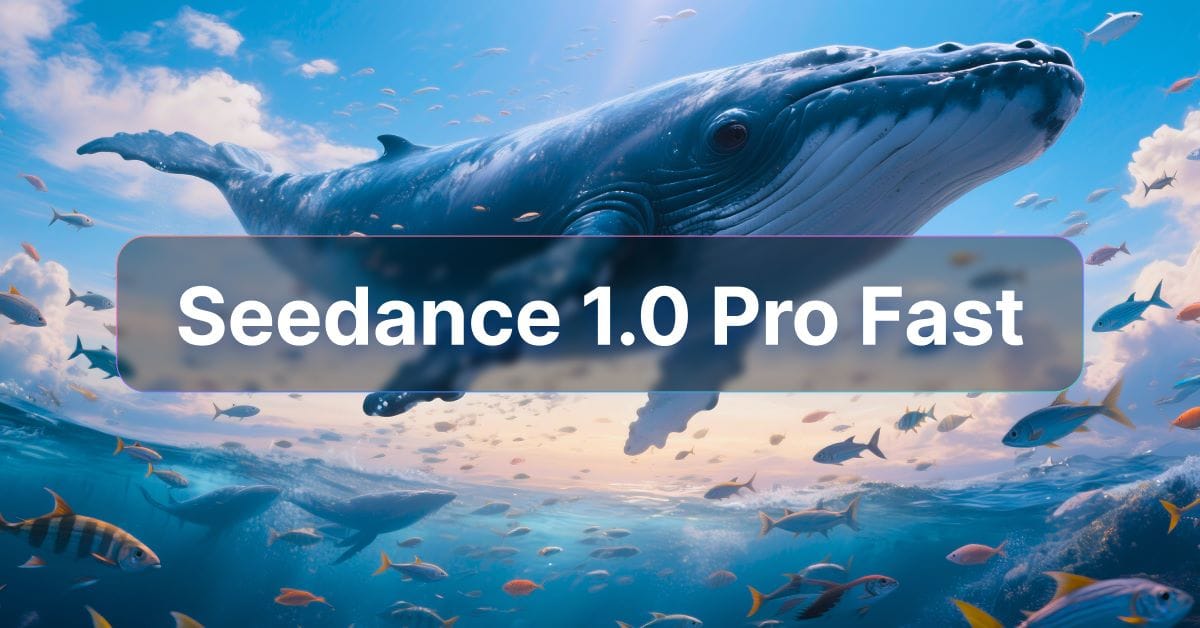
Introducing Seedance 1.0 Pro Fast, the latest breakthrough from BytePlus that pushes the frontier of AI-driven video creation. Built for creators and enterprises demanding both speed and cinematic quality, Seedance redefines efficiency — generating an 8-second 720p video in just 26 seconds, making it up to 4× faster than Veo3 Fast while maintaining professional-grade realism and style consistency.
Powered by advanced semantic understanding and motion simulation, Seedance analyzes prompts, reference images, and scene logic to interpret intent, infer motion, and complete coherent storylines. The result is a video that feels natural, expressive, and emotionally engaging — not just rendered, but directed.
Compared with Veo3 Fast, Seedance delivers smoother motion control, stronger prompt adherence, and more physical realism, especially in complex or high-action scenes. Its multi-shot storytelling engine plans zooms, transitions, and perspective shifts automatically, enabling creators to achieve cinematic rhythm and flow without manual edits.
Supporting flexible output from 2–12 seconds at 480p, 720p, or 1080p, Seedance gives you the freedom to create faster, better, and more affordably — breaking the old speed–quality–cost triangle and setting a new benchmark for AI video generation.
NEW LAUNCH
📌 What’s happening: Beijing’s Moonshot AI has unveiled Kimi K2 Thinking, a trillion-parameter open-source model trained for just $4.6 million — the cost of a Palo Alto townhouse. It isn’t just big; it’s efficiently smart. K2 can chain 200–300 tool calls, plan and reason autonomously, and output deployable front-end code. On Humanity’s Last Exam, it scored 44.9%, topping GPT-5’s 41.7% and Claude 4.5’s 32.0%, while running natively on INT4 inference that fits on consumer GPUs.
🧠 How this hits reality: Moonshot’s playbook flips Silicon Valley’s religion of “scale or die.” Instead of chasing trillion-dollar compute budgets, China’s labs are compressing intelligence through quantization-aware training and mixture-of-experts minimalism, proving you can bend the scaling law without breaking accuracy. It’s a cultural inversion: the West equates intelligence with size; China’s betting on efficiency as strategy.
🛎️ Key takeaway: The AI race just split in two — Silicon Valley builds bigger brains, China builds smarter neurons.
📌 What’s happening: Beijing’s Moonshot AI has unveiled Kimi K2 Thinking, a trillion-parameter open-source model trained for just $4.6 million — the cost of a Palo Alto townhouse. It isn’t just big; it’s efficiently smart. K2 can chain 200–300 tool calls, plan and reason autonomously, and output deployable front-end code.
AGI

📌 What’s happening: Mustafa Suleyman, now leading Microsoft’s new AI Superintelligence Team, announced the company’s grand vision for Humanist Superintelligence (HSI) — a system designed to stay moral, interpretable, and safely limited. The pitch: no runaway autonomy, no self-improving loops, no godlike detours. Redmond insists it will build an AI that thinks with humans, not past them — even if that means giving up some performance.
🧠 How this hits reality: Of course, Microsoft says this every time it launches an AI moonshot that it’s “different,” “responsible,” and “uniquely Microsoft.” Then the industry digs in and finds an OpenAI core humming underneath the hood. This time, with relations cooling and a separate team in place, the company swears it’s going solo. Whether this is the dawn of a new AI philosophy or just another rebranded API call… well, let’s give it a few quarters.
🛎️ Key takeaway: Microsoft wants to prove it can build its own brain — not just rent OpenAI’s conscience.
🧠 How this hits reality: Of course, Microsoft says this every time it launches an AI moonshot that it’s “different,” “responsible,” and “uniquely Microsoft.” Then the industry digs in and finds an OpenAI core humming underneath the hood. This time, with relations cooling and a separate team in place, the company swears it’s going solo.
🧠 How this hits reality: Of course, Microsoft says this every time it launches an AI moonshot that it’s “different,” “responsible,” and “uniquely Microsoft.” Then the industry digs in and finds an OpenAI core humming underneath the hood. This time, with relations cooling and a separate team in place, the company swears it’s going solo.
QUICK HITS
TRENDING
TOGETHER WITH US
AI Secret Media Group is the world’s #1 AI & Tech Newsletter Group, boasting over 2 million readers from leading companies such as OpenAI, Google, Meta, and Microsoft. Our Newsletter Brands:
We've helped promote over 500 Tech Brands. Will yours be the next?
Email our co-founder Mark directly at [email protected] if the button fails.
Plus: Midjourney Sells Horoscopes Now, Kimi K3 Sells More Chips
Read the storyPlus: Evolution Isn't the Only Designer Now, Altman Put the Singularity on Sale
Plus: GPUs Stop Waiting, Kimi Exposed the Valley's Mess
Plus: Brussels Fights the Last Monopoly, Netflix’s 300-Title AI Test
Plus: Independent Developers Are Doomed, AI Copying Norms
Plus: Moonshot Defies the Scale Law, Humanist Superintelligence