OpenAI
From the models to the business behind them. Follow our reporting on OpenAI and the choices shaping the AI industry.
Get AI Secret’s free daily briefing, including OpenAI and the wider AI industry.

At a glance
AI research and deployment company behind ChatGPT. Coverage follows its models, products, research, governance and the business of deploying AI.
- Focus
- ChatGPT; AI models and research
- Reference
- OpenAI
Sources checked . Selected company background and source references.
Company milestones
Selected milestones, newest first. Earlier history is available below.
Show earlier historyHide earlier history2015–2015 · 1 milestones
More than 10 years ago.
The latest on OpenAI
Newest firstRelated reporting
Briefs, articles and relevant sections, newest first. Explore older coverage below.
More coverage
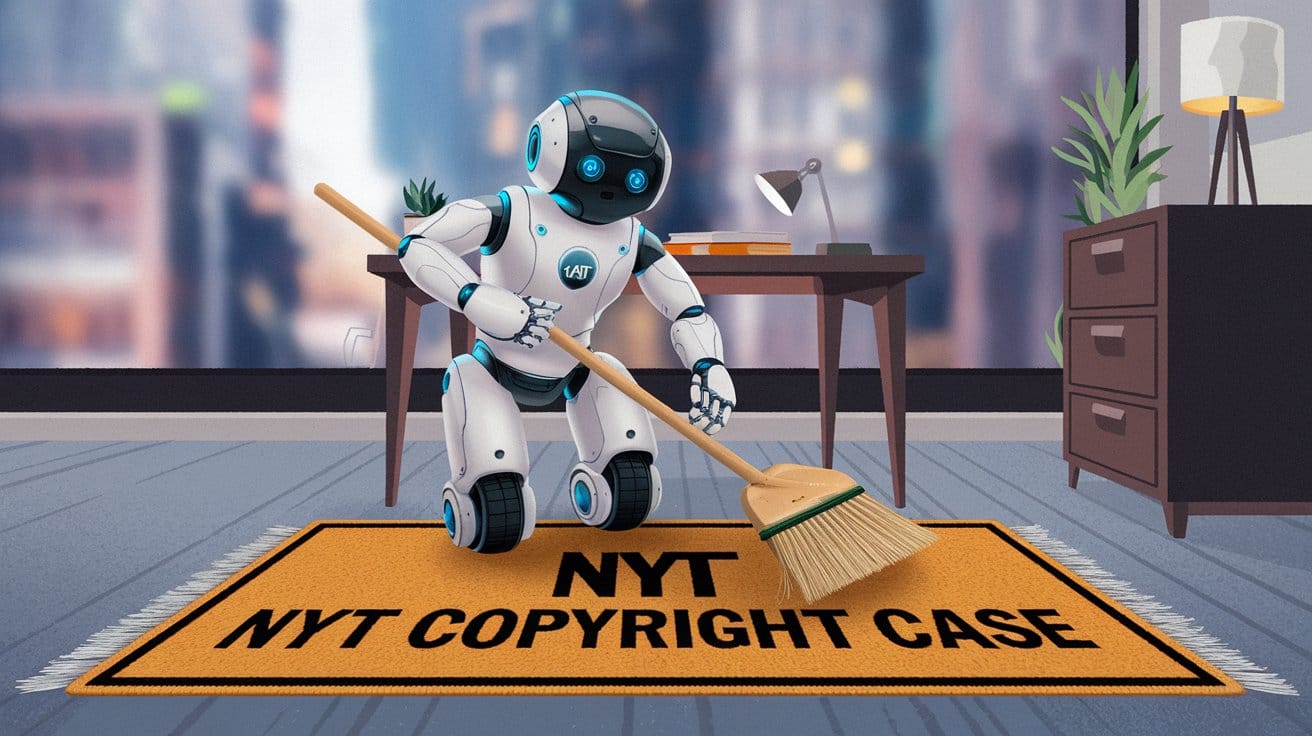
In recent developments, OpenAI has found itself embroiled in a legal battle with The New York Times and the Daily News. The lawsuit centers around allegations that OpenAI used copyrighted materials from these publications to train its AI models without proper authorization. However, an OpenAI engineer accidentally deleted potential evidence in this case. What legal consequences will OpenAI face?
What are the legal consequences if OpenAI deletes evidence in the NYT copyright case?
In recent developments, OpenAI has found itself embroiled in a legal battle with The New York Times and the Daily News. The lawsuit centers around allegations that OpenAI used copyrighted materials from these publications to train its AI models without proper authorization. However, an OpenAI engineer accidentally deleted potential evidence in this case.
Background of the Case
In 2023, The New York Times filed a lawsuit against OpenAI, alleging that the company used its copyrighted content without permission to train its AI models, including ChatGPT. The lawsuit centers on whether the use of copyrighted material in AI training constitutes infringement, especially when the AI-generated output closely mirrors the original content. The case underscores the tension between technological innovation and intellectual property rights.
The Incident of Evidence Deletion
The controversy intensified when it was revealed that OpenAI accidentally deleted data that could have been relevant to the lawsuit. This data was stored on virtual machines provided by OpenAI for The New York Times to search for potentially infringing content. Despite attempts to recover the data, the file structure and names were lost, making it impossible to determine where the publishers' articles were used in OpenAI's models.
Legal Implications of the Deletion
The accidental deletion of evidence raises the issue of spoliation, which refers to the destruction or alteration of evidence that is relevant to a legal proceeding. Under U.S. law, spoliation can lead to severe consequences, including sanctions, adverse inference instructions to the jury, or even dismissal of claims.
In this case, if the deletion was deemed unintentional, which complicates the application of spoliation sanctions. Courts typically consider the intent behind the loss of evidence and the prejudice to the opposing party. If the prejudice is significant, even inadvertent spoliation can result in sanctions.
OpenAI has argued that its use of publicly available data, including articles from The New York Times, falls under the doctrine of fair use. This legal doctrine permits limited use of copyrighted material without permission under specific circumstances, such as for commentary, criticism, or research. OpenAI contends that its AI models transform the original work into something new and innovative.
However, the accidental deletion of evidence complicates OpenAI's ability to substantiate its fair use defense. Without the deleted data, it becomes challenging to demonstrate how the AI models used the copyrighted content and whether the use was transformative.
The deletion incident has significant implications for OpenAI's legal strategy. It places the burden on OpenAI to prove that its use of the content was non-infringing, despite the absence of crucial evidence. This situation could lead to a more aggressive legal stance from The New York Times, potentially seeking harsher penalties or settlements.
OpenAI: Legal Implications of the Deletion
OpenAI has argued that its use of publicly available data, including articles from The New York Times, falls under the doctrine of fair use. This legal doctrine permits limited use of copyrighted material without permission under specific circumstances, such as for commentary, criticism, or research. OpenAI contends that its AI models transform the original work into something new and innovative.
Broader Implications for AI and Copyright Law
The OpenAI vs. New York Times case highlights the broader challenges faced by AI companies in navigating copyright law. As AI systems increasingly rely on vast datasets that include copyrighted works, questions about the legality of using such data without explicit permission have become more pressing.
The incident underscores the importance of robust data management and compliance practices for AI companies. Ensuring the integrity and availability of data is crucial, especially when it may be subject to legal scrutiny. Companies must implement effective data retention policies and litigation holds to prevent accidental deletions that could impact legal proceedings.
In response to the legal challenges, OpenAI has signed licensing deals with several publishers, including The Associated Press and Business Insider. These agreements may serve as a model for future collaborations between AI companies and content creators, providing a framework for the lawful use of copyrighted material in AI training.
OpenAI: Broader Implications for AI and Copyright Law
The OpenAI vs. New York Times case highlights the broader challenges faced by AI companies in navigating copyright law. As AI systems increasingly rely on vast datasets that include copyrighted works, questions about the legality of using such data without explicit permission have become more pressing.
Looking Forward
The accidental deletion of potential evidence in the OpenAI vs. New York Times copyright lawsuit presents significant legal challenges and consequences. It highlights the complexities of balancing technological innovation with intellectual property rights and underscores the need for robust data management practices. As the case unfolds, it may set important precedents for how AI companies and content creators navigate copyright law in the age of artificial intelligence.
What are the legal consequences if OpenAI deletes evidence in the NYT copyright case?
In recent developments, OpenAI has found itself embroiled in a legal battle with The New York Times and the Daily News. The lawsuit centers around allegations
XAI Raised $5 Billion, Reaching A $50 Billion Valuation
Elon Musk's artificial intelligence venture, xAI, has recently made headlines by securing a significant $5 billion in new funding, catapulting its valuation to an

OpenAI Released A Teacher's Guide To ChatGPT, Raising Concerns Among Educators
The integration of artificial intelligence (AI) in education has been a topic of significant interest and debate. OpenAI recently launched a teacher’s guide to ChatGPT,
Anthropic Beat OpenAI
Daily News
Mistral Launched New Image Generation and Web Search Features to Compete With OpenAI.
Mistral, a French AI startup, has recently made significant strides in this domain by enhancing its chatbot, Le Chat, with a suite of new features. These

Anthropic Beat OpenAI in AI Research Test
Two top AI models have recently gained a lot of attention: Anthropic's Claude Sonnet 3.5 and OpenAI's o1-preview. Both models are
Infinite Memory
Daily News
OpenAI is Paying Dotdash Meredith $16 Million for Content Licensing
In a significant move within the media and artificial intelligence sectors, OpenAI has entered into a strategic partnership with Dotdash Meredith, the largest print and digital
Elon Musk Reveals Early Emails Between OpenAI Founders
In a recent legal battle, Elon Musk has unveiled a series of emails exchanged between himself and other key figures in the early days of OpenAI.