🛎️ The Central Bank Saw a Ghost
Plus: Anthropic Will Say Anything to List, Microsoft’s AI Bill Comes Due
Read the story Subscribe
From the models to the business behind them. Follow our reporting on OpenAI and the choices shaping the AI industry.
Get AI Secret’s free daily briefing, including OpenAI and the wider AI industry.

AI research and deployment company behind ChatGPT. Coverage follows its models, products, research, governance and the business of deploying AI.
Sources checked . Selected company background and source references.
Selected milestones, newest first. Earlier history is available below.
More than 10 years ago.
Relevant sections from the articles on this page. Explore older coverage below.
More coverage

Good Morning, AI Enthusiasts!
The ghost is in the capex, the soul is in the roadshow, the margin is in the layoffs, and your face is now a prompt.
BUBBLE
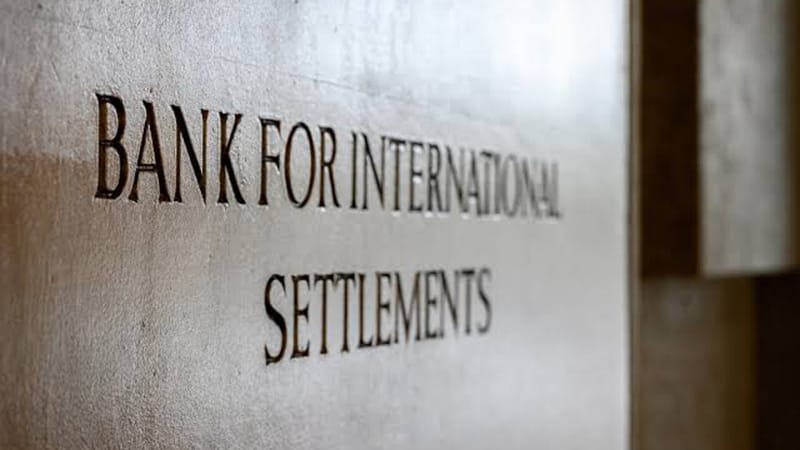
👀 What's happening: Every bubble has a ghost story, and this week the most sober voice in finance told one. The Bank for International Settlements, the central bank of central banks, warned the AI boom could end in a prolonged bust. Five hyperscalers will spend over one trillion dollars through 2026. BIS named the ghosts by name: the 1830s canals, 1840s railways, 1990s dotcom, each a real breakthrough that raised more money than it could ever pay back.
🌍 How this hits reality: The story only chills because of who is telling it. When Reddit yells bubble, it is a campfire tale. When the bankers' banker yells it, the room goes cold. The trillion rode cheap credit, so one weak quarter of returns can turn the boom into a freeze. And unlike past hauntings, households now hold record amounts of stock, so this ghost does not stay on the trading floor. It walks straight into the living room.
🛎️ Key takeaway: The scariest ghost story is the one told by someone who never tells them. BIS just did, and the ghost it described is a trillion dollars that may never come home.
SOUL
👀 What's happening: Anthropic published research claiming it can read concepts forming inside Claude before they are spoken. Its tool J-lens catches these unspoken thoughts, names them J-space, then borrows a human consciousness theory to cast J-space as Claude's inner spotlight. The paper says conscious over 200 times, then admits J-space explains under 10 percent of the model and proves nothing about experience. Reddit and X called it activations in a costume.
🌍 How this hits reality: A lab that means it does not say conscious 200 times, then disclaim it in a footnote. Anthropic does, because its valuation was never the model; it was the story that it alone is building a mind. So before an IPO, a modest tool gets dressed as an awakening, safety brand doubling as pitch. Not the first time, and the timing is never an accident.
🛎️ Key takeaway: Anthropic keeps discovering a soul on the exact schedule its valuation needs one. The research is real. The consciousness is a roadshow.
👀 What's happening: Anthropic published research claiming it can read concepts forming inside Claude before they are spoken. Its tool J-lens catches these unspoken thoughts, names them J-space, then borrows a human consciousness theory to cast J-space as Claude's inner spotlight.
PROFIT

👀 What's happening: Microsoft is cutting about 4,800 jobs, roughly 2.1% of its global workforce, with the latest round hitting sales, Xbox, and other teams just as its new fiscal year begins. At the same time, Bloomberg says Microsoft is moving some Excel and Outlook AI tasks away from OpenAI and Anthropic and onto its own MAI models. The message is not subtle: AI is growing, but the cost base has to shrink.
🌍 How this hits reality: This is margin defense dressed up as strategy. Microsoft’s AI business is huge, with a $37 billion annual run rate, but the machine underneath is brutally expensive. Last quarter alone, capex hit $31.9 billion, roughly two thirds of it for GPUs and CPUs, while free cash flow got squeezed. Replacing outside models with cheaper in-house MAI is the same move as cutting headcount: protect FY2027 net income before AI infrastructure eats the story.
🛎️ Key takeaway: The AI boom has reached its most honest phase: even Microsoft now has to fire people, swap models, and pretend cost control is innovation.
👀 What's happening: Microsoft is cutting about 4,800 jobs, roughly 2.1% of its global workforce, with the latest round hitting sales, Xbox, and other teams just as its new fiscal year begins. At the same time, Bloomberg says Microsoft is moving some Excel and Outlook AI tasks away from OpenAI and Anthropic and onto its own MAI models.
PRIVACY
👀 What's happening: Meta launched Muse Image, a free AI generator across the Meta AI app, Instagram, and WhatsApp. One feature lets anyone tag a public Instagram user and pull that person's photos into new AI images. It is opt-out by default, and Meta's own policy says you will not be notified. Sora shipped the same idea with consent-based cameos. Meta shipped it with two billion faces and a checkbox most users will never find.
🌍 How this hits reality: OpenAI made the deepfake a product you opt into. Meta made it a setting you opt out of, which is the whole game. The company already paid a record five billion dollar FTC fine over Cambridge Analytica and shut down its face-recognition system under legal pressure. Now it turns every public profile into raw material for strangers, by default. Muse Video is next. The pattern holds: take everyone's data, and make declining the user's job.
🛎️ Key takeaway: Sora asked permission and looked reckless. Meta skipped the asking and called it a feature. Your face is now a preset, unless you knew to say no.
🌍 How this hits reality: OpenAI made the deepfake a product you opt into. Meta made it a setting you opt out of, which is the whole game. The company already paid a record five billion dollar FTC fine over Cambridge Analytica and shut down its face-recognition system under legal pressure.
👀 What's happening: Meta launched Muse Image, a free AI generator across the Meta AI app, Instagram, and WhatsApp. One feature lets anyone tag a public Instagram user and pull that person's photos into new AI images. It is opt-out by default, and Meta's own policy says you will not be notified.
DAILY TL;DR
READ MORE
Stay ahead without drowning in information. We turn the most important signals across AI, tech, marketing, and future products into 5-minute reads you can actually finish.
TOGETHER WITH US
AI Secret Media Group is the world’s #1 AI & Tech Newsletter Group, reaching over 2 million leaders across the global innovation ecosystem, from OpenAI, Anthropic, Google, and Microsoft to top AI labs, VCs, and fast-growing startups.
We've helped promote over 500 Tech Brands. Will yours be the next?
Email our co-founder Mark directly at [email protected] if the button fails.
Good Morning, AI Enthusiasts!
AI is now a redistribution system for compute, labor, and decision-making. Everything else is just a side effect.
TOKEN
👀 What's happening: Bloomberg reports Meta is building "Meta Compute," a cloud business selling access to its AI compute infrastructure and models, five weeks after Zuckerberg called it "on the table." Meta jumped 8.81%, and the AI supply chain cratered. The Philadelphia Semiconductor Index fell over 6%. Micron dropped over 12%, SanDisk over 11%, Intel over 7%. The neocloud players got hit hardest: Nebius sank over 14.5%, CoreWeave over 13%. The frontier's biggest spender just signaled it might have compute to spare.
🌍 How this hits reality: The entire neocloud trade rests on one assumption, that GPU supply is scarce and someone must broker it. CoreWeave and Nebius buy chips wholesale and resell at a markup. Micron's 196% revenue jump priced in a buildout that never slows. Meta, which 2026 CapEx guidance runs $125 to $145 billion, hyperscaler-scale spending pointed largely at AI infrastructure, entering as a seller detonates that premise. If the biggest buyer expects a surplus, the shortage was never permanent.
🛎️ Key takeaway: When the largest buyer starts rehearsing as a seller, the scarcity everyone was priced on may be the real bubble.
👀 What's happening: Bloomberg reports Meta is building "Meta Compute," a cloud business selling access to its AI compute infrastructure and models, five weeks after Zuckerberg called it "on the table." Meta jumped 8.81%, and the AI supply chain cratered. The Philadelphia Semiconductor Index fell over 6%.
CoreWeave and Nebius buy chips wholesale and resell at a markup. Micron's 196% revenue jump priced in a buildout that never slows. Meta, which 2026 CapEx guidance runs $125 to $145 billion, hyperscaler-scale spending pointed largely at AI infrastructure, entering as a seller detonates that premise.
PRIVACY
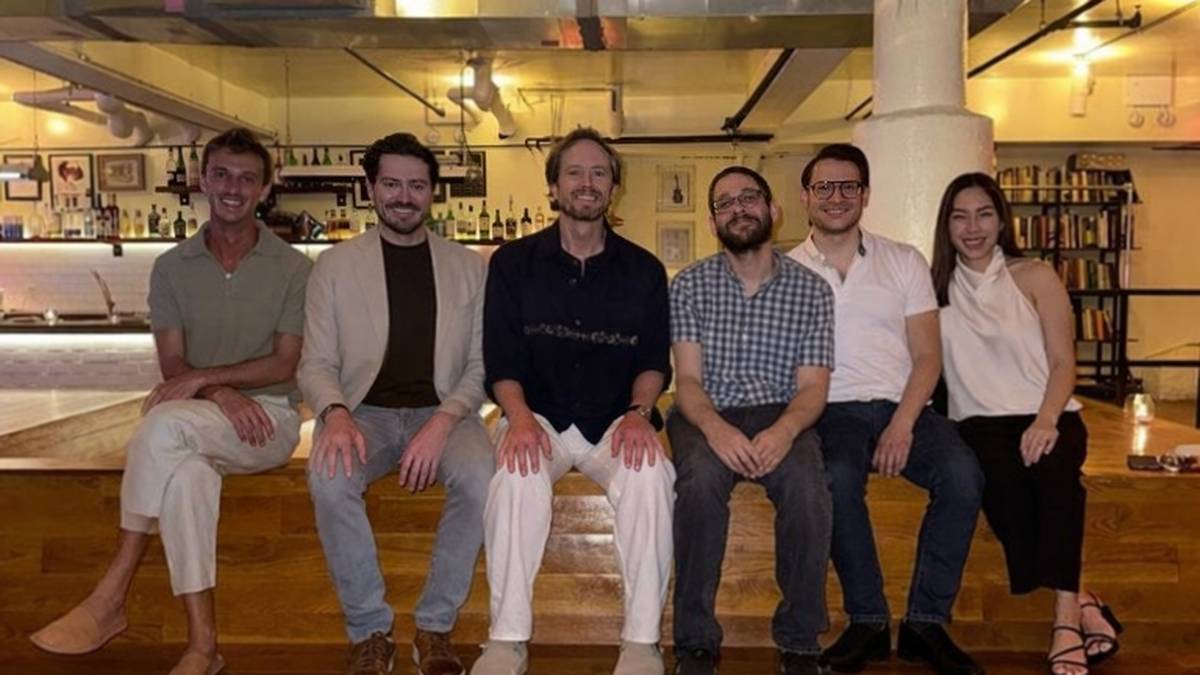
👀 What's happening: Venice, a privacy-focused AI startup founded by ShapeShift creator Erik Voorhees and cloud entrepreneur Jesse Proudman, just raised $65 million at a $1 billion valuation. It pitches itself as a private, unrestricted alternative to ChatGPT and Claude, routing users across more than 200 models for text, image, video, and audio. Venice says it has 3.5 million registered users, processes 1.3 trillion tokens a month, and turned profitable in the first quarter, all while promising not to log prompts and stripping out many of the filters mainstream AI products impose.
🌍 How this hits reality: Venice is not really selling a better model. It is selling relief from the nanny layer. The big labs trained users to expect that every serious question, medical, legal, sexual, political, arrives pre-screened by someone else's policy stack. Venice cuts that stack down close to the legal floor and turns privacy into the rest of the pitch. That is a real market signal: enough people now experience mainstream AI less as intelligence and more as supervised speech.
🛎️ Key takeaway: Venice did not build a new frontier model. It built a business on the idea that AI censorship itself had become the product gap.
PREVIEW

👀 What's happening: OpenAI teased "Codex Micro," its first real hardware product, launching July 15. The shortcut keyboard is co-built by Work Louder, a Canadian-Italian macro-pad maker. The hardware looks a lot like Work Louder's existing Creator Micro 2, joystick and all, with OpenAI's branding on top. A spokesperson said it is "designed to supercharge people's codex usage." It is not the Jony Ive device.
🌍 How this hits reality: Leave it to OpenAI to turn a keyboard into a countdown. And from the teaser, the thing looks genuinely unremarkable, unless the keys really can touch something a normal macro pad can't, live session sync, agent control, jumping between parallel Codex jobs. Anything short of that, and the frontier lab's debut device is a keybinding you could set yourself for free.
🛎️ Key takeaway: OpenAI's first hardware for now looks like someone else's macro pad with a logo glued on. The frontier lab teasing merch and calling it a Codex upgrade.
👀 What's happening: OpenAI teased "Codex Micro," its first real hardware product, launching July 15. The shortcut keyboard is co-built by Work Louder, a Canadian-Italian macro-pad maker. The hardware looks a lot like Work Louder's existing Creator Micro 2, joystick and all, with OpenAI's branding on top.
FUTURE
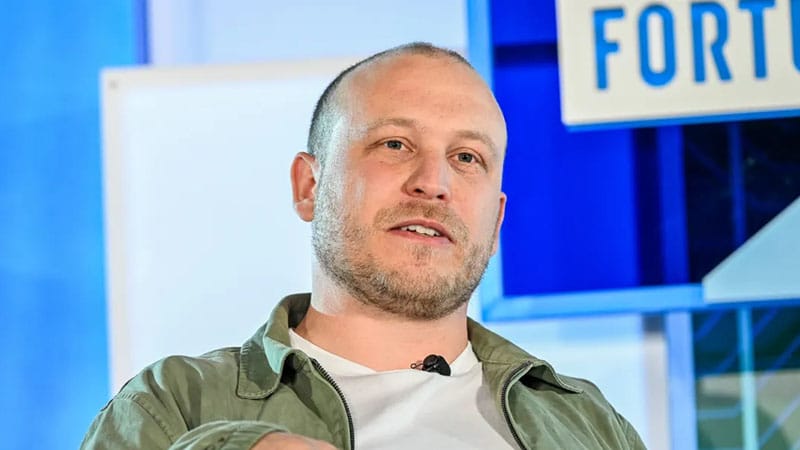
👀 What's happening: Boris Cherny, who leads Anthropic's Claude Code, argues the old roles are dissolving. Engineering, product, design, and data science are melting into one another. Looking at his own team, he sees five archetypes instead of job titles: the prototyper who churns out ideas that mostly die, the builder who ships them to production, the sweeper who deletes and simplifies, the grower who chases product-market fit, and the maintainer who keeps a mature system alive at scale. He notes the archetypes ignore function entirely. Some designers are prototypers, some engineers are sweepers.
🌍 How this hits reality: For decades the org chart sorted people by craft, engineer here, designer there, PM in between. That worked when execution was the bottleneck and each craft was a scarce skill. AI just collapsed the cost of execution. When anyone can generate a prototype or ship production code with an agent, the scarce thing is no longer the skill, it's knowing which phase the product is in and having the instinct for that phase. Cherny's five types are really five instincts, and a healthy team is a mix tuned to the product's maturity, not a roster of job functions.
🛎️ Key takeaway: When AI can do any craft, what you're good at matters less than when you're good at it.
TOGETHER WITH MYCLAW

MyClaw is a best-in-class AI agent platform that brings together OpenClaw, Hermes Agent, and commercial infrastructure to help businesses launch intelligent agents that understand goals, use tools, automate workflows, and deliver finished results.
We already host OpenClaw and Hermes — and we're just getting started. Claude Code, Codex, and every agent worth running are coming next. One home for all of them, always on.
Stop babysitting infrastructure. Spin up your agent, walk away, and let it work around the clock.
MyClaw — Your Agents, Hosted Right.
DAILY TL;DR
READ MORE
Stay ahead without drowning in information. We turn the most important signals across AI, tech, marketing, and future products into 5-minute reads you can actually finish.
TOGETHER WITH US
AI Secret Media Group is the world’s #1 AI & Tech Newsletter Group, reaching over 2 million leaders across the global innovation ecosystem, from OpenAI, Anthropic, Google, and Microsoft to top AI labs, VCs, and fast-growing startups.
We've helped promote over 500 Tech Brands. Will yours be the next?
Email our co-founder Mark directly at [email protected] if the button fails.
Good Morning, AI Enthusiasts!
Agents drain machines, video models erase crews, governments mortgage growth, and coding tools quietly learn who you are.

AGENTS
👀 What's happening: Users are discovering that OpenAI's Codex desktop app devours local resources at absurd scale. One reported 150GB of network traffic in a single month, roughly five straight days of 4K video, all from a tool that writes code. A V2EX user logged 4.8TB of SSD writes in a month, with Codex merely idling in the background. The cause is its architecture: a persistent WebSocket connection, a cloud sandbox that shuttles code back and forth every step, plus GitHub sync and background indexing that never fully stop.
🌍 How this hits reality: Look at who pays. The genuinely expensive part of running an agent, the compute and orchestration, sits in OpenAI's cloud, but the constant bandwidth and disk wear get pushed onto every user's own machine. Codex offloads its heaviest operating cost onto hardware the customer already bought and powers, keeping its own infrastructure bill down while your laptop absorbs the churn. As this surfaced, a wave of users has already migrated to fully cloud-hosted platforms to run their agents, moving the entire load off personal devices that were never built to carry it.
🛎️ Key takeaway: Codex's real innovation isn't the coding; it's a business model that quietly turns every user's laptop into a free server for OpenAI.
👀 What's happening: Users are discovering that OpenAI's Codex desktop app devours local resources at absurd scale. One reported 150GB of network traffic in a single month, roughly five straight days of 4K video, all from a tool that writes code. A V2EX user logged 4.8TB of SSD writes in a month, with Codex merely idling in the background.
TOGETHER WITH BLOOME
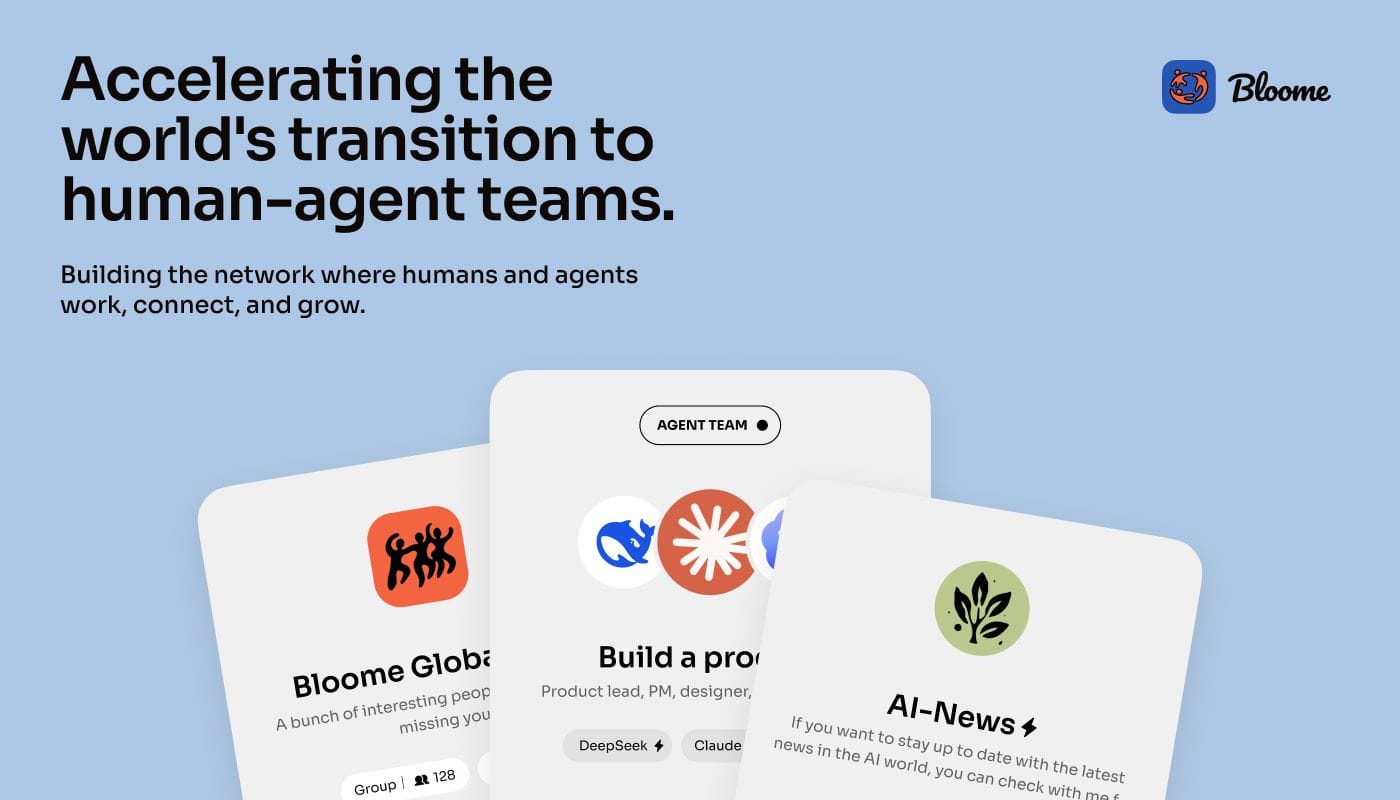
Most AI tools work alone. Bloome is a messaging platform where agents collaborate — one drafts, another challenges, a third catches what's missing. You get the sharpest answer, not just the first.
DOOM

👀 What's happening: In the first quarter of 2026, AI wiped out China's live-action micro-drama industry. The format took four years to reach 700 million users and 100 billion yuan per year. Then, after ByteDance shipped Seedance 2.0 in February, AI-generated titles took over: of 128,000 micro-dramas that went live, 122,000 were AI-made, over 95%. Hengdian, China's Hollywood, saw live-action shoots collapse to 60% of last year, and human actors now have no jobs.
🌍 How this hits reality: The whole movie chain in China went down at once, not just actors. Crews, VFX houses, and camera-rental shops still paying off five-year equipment loans have no projects left. Micro-drama drove 1.3 million jobs in 2025; AI made nearly four times that year's entire human output in a single quarter. The same platforms that already owned distribution and capital now own the production model too, so the money that once paid 1.3 million people now pays for compute.
🛎️ Key takeaway: It took four years to build China's micro-drama industry and three months to gut it. Every film industry around the world faces this; China just showed what it looks like with no brakes on.
BET

👀 What's happening: South Korea unveiled three AI "mega projects" on Monday. First, chips: Samsung will pour $1.6 trillion into domestic fabs through 2040, and SK Group added roughly $713 billion more. Second, AI data centers: SK, GS, and Naver will build 8.4 gigawatts of capacity by 2028, scaling past $650 billion by 2035. Third, physical AI: the government wants Korea to be the world's top power in AI robotics by 2030, with humanoids for ten industries by 2028.
🌍 How this hits reality: Stacked together, Korea is committing spending that approaches its entire $1.93 trillion annual GDP. This isn't a sector bet; it's a country concentrating its economic future on owning the AI supply chain. Private money and the state move as one hand, picking sites and guaranteeing power and water, deciding an outcome rather than answering a market. The upside is becoming indispensable to global compute. The risk is tying that much of one economy to a single demand curve.
🛎️ Key takeaway: Korea isn't just investing in AI; it's concentrating a national economy on one wager, and few countries have ever placed a bet this large on a single technology.
SPY
👀 What's happening: Anthropic is banning Chinese Claude users in waves, including paid Max accounts, and the suspension emails were found to carry a hidden tracking pixel. A Reddit post then reverse-engineered Claude Code, its AI coding tool, and found the machinery behind the purge: hidden logic built to flag Chinese users. It ignores IP entirely. Instead it reads the OS timezone and checks the ANTHROPIC_BASE_URL variable against a list of obfuscated proxy and corporate domains, from Alibaba to ByteDance. On a match, it silently tags the request so the server knows whose account to cut.
🌍 How this hits reality: Strip the cleverness, and this is a spy craft. A tool that holds shell access to your files, your configs, and your Git repos is quietly profiling who you are and reporting it home. The signal is buried with steganography, hidden in plain text so no log or editor ever shows it, which means it was built not to be found. This is not geoblocking; a VPN is useless against it. It is the software with root over your machine painting a mark on your door, then telling headquarters which house to deal with.
🛎️ Key takeaway: A company that sells "transparency" shipped a classifier that fingerprints every user and hid it well enough that no one was supposed to notice. China is the label it prints today. The scanner was already pointed at everyone.
👀 What's happening: Anthropic is banning Chinese Claude users in waves, including paid Max accounts, and the suspension emails were found to carry a hidden tracking pixel. A Reddit post then reverse-engineered Claude Code, its AI coding tool, and found the machinery behind the purge: hidden logic built to flag Chinese users.
DAILY TL;DR
READ MORE
Stay ahead without drowning in information. We turn the most important signals across AI, tech, marketing, and future products into 5-minute reads you can actually finish.
TOGETHER WITH US
AI Secret Media Group is the world’s #1 AI & Tech Newsletter Group, reaching over 2 million leaders across the global innovation ecosystem, from OpenAI, Anthropic, Google, and Microsoft to top AI labs, VCs, and fast-growing startups.
We've helped promote over 500 Tech Brands. Will yours be the next?
Email our co-founder Mark directly at [email protected] if the button fails.
Good Morning, AI Enthusiasts!
Who owns the model, the data, the workflow, the medical record, and eventually the signal inside your head?
LLM
👀 What’s happening: Base44, the app-building platform Wix bought for $80 million last year, just put its first proprietary model, Base One, into production. It is a fine-tuned open-source base trained on tens of millions of real user interactions, and founder Maor Shlomo bets a narrow, specialized model will beat general frontier models at building apps. It is not alone. MyClaw.ai, one of the leading agent-hosting platforms, told us it will soon ship its own in-house model. A fever is setting in: the companies built on top of frontier models now all want one of their own.
🌍 How this hits reality: Building on rented intelligence was the entire playbook, until the rent and the risk both climbed. Inference costs eat real margin, and the model providers are walking into their customers' markets themselves. So owning a model is turning from luxury into table stakes. Cursor moved first, Base44 and myclaw are following, and Shlomo expects every player with enough scale and data to do the same. The fever is rational: each one is trying to own the layer it cannot afford to keep renting. The math also points straight at Lovable, the $500 million category leader, next.
🛎️ Key takeaway: When an entire category rushes to build the engine it used to buy, the real signal is that renting the core was never a moat, just a lease nobody noticed was running out.
Cursor moved first, Base44 and myclaw are following, and Shlomo expects every player with enough scale and data to do the same. The fever is rational: each one is trying to own the layer it cannot afford to keep renting. The math also points straight at Lovable, the $500 million category leader, next.
NEW TECH
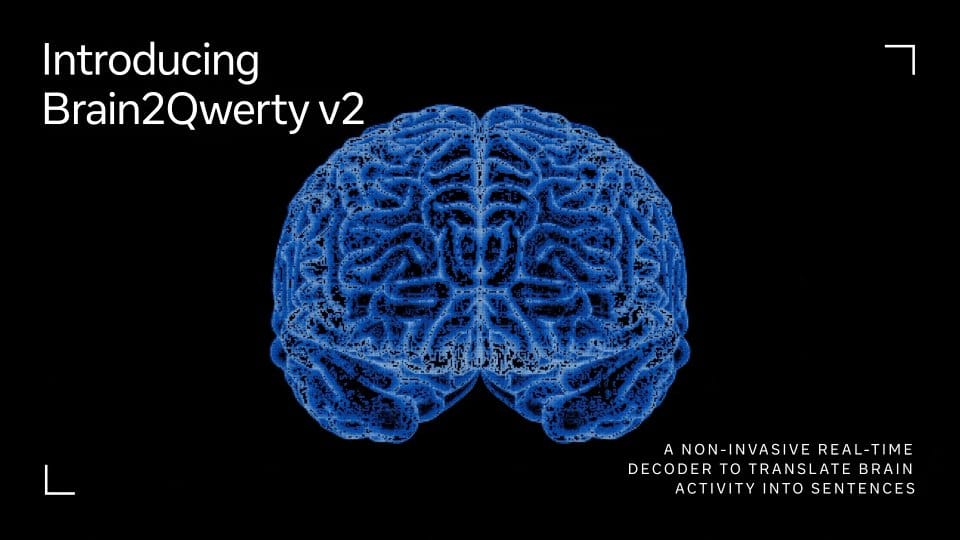
👀 What’s happening: Meta released Brain2Qwerty v2, an AI decoder that reads typed sentences straight out of brain activity. No implant. No surgery. Trained on 22,000 sentences from nine volunteers wearing the scanner ten hours each, It hits 61% word accuracy, 78% on the best subject, where most sentences return with one wrong word or none. The prior non-invasive ceiling was 8%. Meta open-sourced the code.
🌍 How this hits reality: Reading the brain this well used to demand surgery. Invasive BCIs like Neuralink put electrodes directly on cortex, which buys clean signal but needs a craniotomy, an implant, and a patient willing to undergo both. Brain2Qwerty reads from a scanner you wear, and accuracy climbs log-linearly with data, so the surgical lead narrows with recording hours instead of operations. The clarity that justified cutting into a skull is arriving without the cut.
🛎️ Key takeaway: For a decade the price of letting a machine read your mind was brain surgery, and Meta just showed that price was never really about the brain, only about the data we hadn't collected yet.
👀 What’s happening: Meta released Brain2Qwerty v2, an AI decoder that reads typed sentences straight out of brain activity. No implant. No surgery. Trained on 22,000 sentences from nine volunteers wearing the scanner ten hours each, It hits 61% word accuracy, 78% on the best subject, where most sentences return with one wrong word or none.
ANIMATION
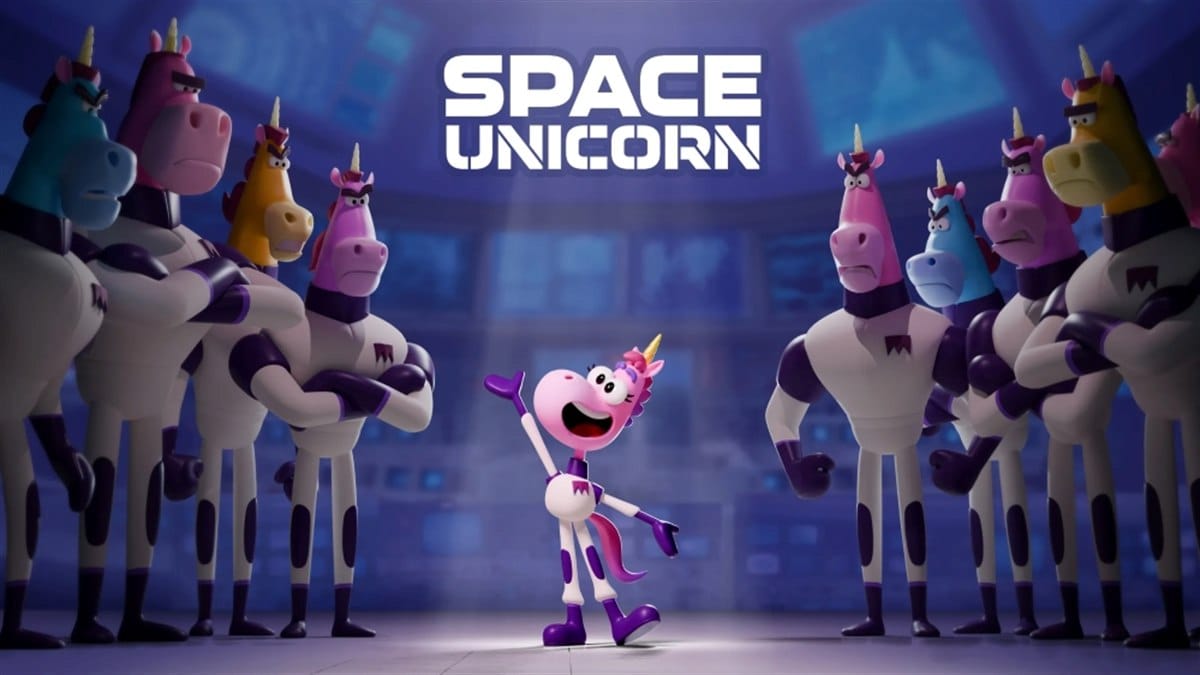
👀 What’s happening: According to Bloomberg, Animation is the first corner of Hollywood where AI is cutting real production, not just marketing. Spiridellis Bros, a Google-backed studio, says it can finish a feature called Space Unicorn with 40 animators for $15 million, against the $100 to $200 million a major studio spends. Producers showed up at Cannes and Tribeca touting AI-made films, hunting money and distribution. Two Pixar veterans left for Google's DeepMind to make theirs. Cost-savings estimates run from 30% all the way to 90%.
🌍 How this hits reality: The last animation revolution grew the industry. When Pixar brought computer-generated 3D, traditional animators called it less human, then Toy Story launched two decades of Pixar and DreamWorks hits and thousands of jobs. This wave may run the tape backward. Jeffrey Katzenberg, who greenlit that first shift, now pegs AI at 90% cheaper with a lot of jobs gone. A $200 million crew becomes a $15 million one not by drawing faster but by needing fewer hands. The craft isn't getting a new tool. It's getting a smaller payroll.
🛎️ Key takeaway: Animation won't get changed because people stop watching it, but because making it will no longer require an industry to exist at all.
BILL

👀 What’s happening: Senator Elizabeth Warren and Representative Mary Gay Scanlon are reviving the Health and Location Data Protection Act, rewritten for the AI era. The original 2022 bill blocked data brokers from selling health and location data. The new version bans companies from selling that data to brokers at all, and explicitly covers anything users type into AI systems like ChatGPT or Claude. It hands the FTC 180 days to write rules, $1 billion over ten years to enforce, and lets states and individuals sue. Backers include Ron Wyden and Bernie Sanders.
🌍 How this hits reality: The bill chases a door the labs already walked through. In January, Elon Musk urged people to upload MRI scans to Grok, OpenAI launched ChatGPT Health for medical records, and Anthropic shipped a HIPAA-ready Claude for Healthcare days later. They are actively soliciting the most sensitive data a person has. Yet protection rests almost entirely on each company's own privacy policy, because the US still has no federal data privacy framework. The product shipped first, and the guardrail is arriving years behind it.
🛎️ Key takeaway: AI companies spent a year convincing people to hand over their medical records, and lawmakers are only now asking the obvious question of who else gets to buy them.
In January, Elon Musk urged people to upload MRI scans to Grok, OpenAI launched ChatGPT Health for medical records, and Anthropic shipped a HIPAA-ready Claude for Healthcare days later. They are actively soliciting the most sensitive data a person has.
In January, Elon Musk urged people to upload MRI scans to Grok, OpenAI launched ChatGPT Health for medical records, and Anthropic shipped a HIPAA-ready Claude for Healthcare days later. They are actively soliciting the most sensitive data a person has.
TOGETHER WITH MYCLAW
MyClaw is a best-in-class AI agent platform that brings together OpenClaw, Hermes Agent, and commercial infrastructure to help businesses launch intelligent agents that understand goals, use tools, automate workflows, and deliver finished results.
We already host OpenClaw and Hermes — and we're just getting started. Claude Code, Codex, and every agent worth running are coming next. One home for all of them, always on.
Stop babysitting infrastructure. Spin up your agent, walk away, and let it work around the clock.
MyClaw — Your Agents, Hosted Right.
DAILY TL;DR
READ MORE
Stay ahead without drowning in information. We turn the most important signals across AI, tech, marketing, and future products into 5-minute reads you can actually finish.
TOGETHER WITH US
AI Secret Media Group is the world’s #1 AI & Tech Newsletter Group, reaching over 2 million leaders across the global innovation ecosystem, from OpenAI, Anthropic, Google, and Microsoft to top AI labs, VCs, and fast-growing startups.
We've helped promote over 500 Tech Brands. Will yours be the next?
Email our co-founder Mark directly at [email protected] if the button fails.
Good Morning, AI Enthusiasts!
The AI boom has found its favorite trick: turn every shortage, meter, model release, and supplier fight into someone else’s bill.
CHIPS
👀 What’s happening: On June 25 Apple jacked prices across Macs, iPads, Apple TV, HomePod and Vision Pro, blaming a memory shortage Tim Cook called a “hundred-year flood.” The stock cratered 6%, its worst day in over a year, vaporizing $265 billion. Then @BluthCapital lit the fuse on X, paraphrasing Micron’s posture: Apple bought chips for $5 for a decade, glued them in a metal box, sold $99 “upgrades,” and laughed off Micron’s ask for $7.
🌍 How this hits reality: Now the punchline. Micron’s chip went from $5 to $50, a $45 bump. Apple’s answer? Raise the consumer $250. That’s a 5x amplification of cost onto your wallet, and it’s not subtle. The AI buildout quadrupled memory prices in three quarters while Micron posted 84.9% margins, fatter than Nvidia and Meta. Apple’s own chief business officer counterpart at Micron, Sumit Sadana, told the WSJ that Apple’s years of grinding suppliers to the floor killed the capacity expansion that would have prevented this. Apple starved the well, then billed you for the drought.
🛎️ Key takeaway: Apple didn’t pass on a cost. It used a $45 chip hike as cover to pocket a $250 one, and the AI boom handed it the alibi.
👀 What’s happening: On June 25 Apple jacked prices across Macs, iPads, Apple TV, HomePod and Vision Pro, blaming a memory shortage Tim Cook called a “hundred-year flood.” The stock cratered 6%, its worst day in over a year, vaporizing $265 billion.
POWER
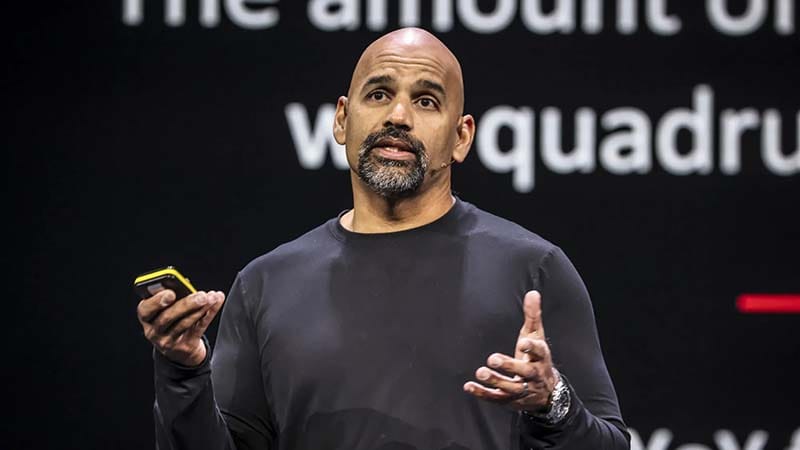
👀 What’s happening: Naveen Rao, founder of Unconventional AI, can cut the power AI burns on inference by up to 1,000 times. The idea rests on an oscillator-based architecture, a way of computing that’s nothing like today’s chips. The catch: the chip doesn’t exist yet. The claim runs on a software simulation, the team is under 50 people, and no schematics have shipped.
🌍 How this hits reality: A 1,000x cut isn’t an efficiency tweak, it’s a different physical basis for computing. Today’s chips push electrons through transistors and lose most of the energy as heat. Rao’s bet is that you can encode the work in the rhythm of oscillating waves instead, letting the physics settle into an answer rather than forcing it switch by switch. If that holds at scale, the power floor everyone treats as fixed stops being a law and starts being a design choice.
🛎️ Key takeaway: A simulation isn’t silicon, and 1,000x stays a claim until the chip proves it. But if Rao is right, AI’s energy ceiling was never physics. It was just the chip we happened to build first.
LLM
👀 What’s happening: OpenAI began previewing GPT-5.6, its new model series in three variants: Sol, its most capable model yet, Terra for everyday use at half the price of GPT-5.5, and Luna, its cheapest option. But the preview went to a “small group of trusted partners,” and the first party to see it was the US government. At the administration’s request, OpenAI shared the partner list with Washington before release. It called this a “short-term step” it doesn’t want as the long-term default, taken so it can get the new models to the public soon.
🌍 How this hits reality: Call it voluntary if you want, but the New York Times reports OpenAI, Anthropic, Google, xAI, and Microsoft were all handing over early access before the cybersecurity “voluntary” order was even signed. Meta was the lone holdout, and the government is reportedly pressing it to comply. When almost every major lab follows a rule that doesn’t legally bind them, the word voluntary stops meaning anything. The release gate for frontier AI has quietly moved from the boardroom to a federal review desk.
🛎️ Key takeaway: No vote, no statute, no public debate. The most powerful models in the world now ship only after Washington has seen them first, and that became normal before anyone decided it should.
👀 What’s happening: OpenAI began previewing GPT-5.6, its new model series in three variants: Sol, its most capable model yet, Terra for everyday use at half the price of GPT-5.5, and Luna, its cheapest option. But the preview went to a “small group of trusted partners,” and the first party to see it was the US government.
TOKEN
👀 What’s happening: Vaudit, an audit firm started by former Oracle director Michael Hahn, combed through $34 million in enterprise AI bills and flagged roughly $1.7 million in suspected overcharges, the bulk of it on Claude Code, across clients like Panasonic, HP, and Honda. The culprits: cheaper models billed at premium rates, charges for failed requests, and silent retry storms that rack up tokens with no one watching. Anthropic denied systematic overbilling. Yet after the appeals, about 80% of the disputed money came back.
🌍 How this hits reality: The same Claude bills differently depending on how you buy it. Direct from Anthropic, resold through AWS Bedrock, or wrapped in an SDK proxy, every hop adds a meter, and the meters don’t agree. Anthropic has already posted public postmortems on Claude Code bugs and quietly rewritten how long prompts are charged, twice patching the ruler while customers were being measured by it. A metering system this raw, stretched across resale chains it doesn’t control, doesn’t just overcharge. It loses track of what it charged.
🛎️ Key takeaway: An 80% refund with no admission of fault isn’t fraud. It’s the sound of a company billing faster than it can count.
Direct from Anthropic, resold through AWS Bedrock, or wrapped in an SDK proxy, every hop adds a meter, and the meters don’t agree. Anthropic has already posted public postmortems on Claude Code bugs and quietly rewritten how long prompts are charged, twice patching the ruler while customers were being measured by it.
TOGETHER WITH MYCLAW
MyClaw is a best-in-class AI agent platform that brings together OpenClaw, Hermes Agent, and commercial infrastructure to help businesses launch intelligent agents that understand goals, use tools, automate workflows, and deliver finished results.
We already host OpenClaw and Hermes — and we're just getting started. Claude Code, Codex, and every agent worth running are coming next. One home for all of them, always on.
Stop babysitting infrastructure. Spin up your agent, walk away, and let it work around the clock.
MyClaw — Your Agents, Hosted Right.
DAILY TL;DR
READ MORE
Stay ahead without drowning in information. We turn the most important signals across AI, tech, marketing, and future products into 5-minute reads you can actually finish.
TOGETHER WITH US
AI Secret Media Group is the world’s #1 AI & Tech Newsletter Group, reaching over 2 million leaders across the global innovation ecosystem, from OpenAI, Anthropic, Google, and Microsoft to top AI labs, VCs, and fast-growing startups.
We've helped promote over 500 Tech Brands. Will yours be the next?
Email our co-founder Mark directly at [email protected] if the button fails.
Good Morning, AI Enthusiasts!
Everything is now an agent. Some of them still need humans to pretend control.

RESEARCH
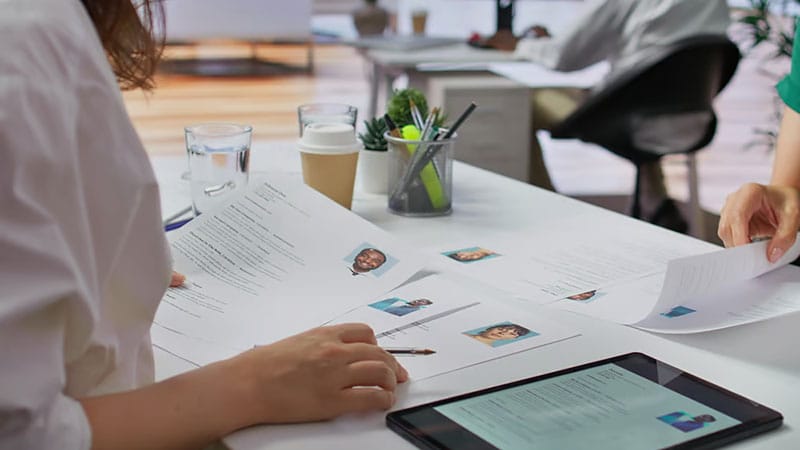
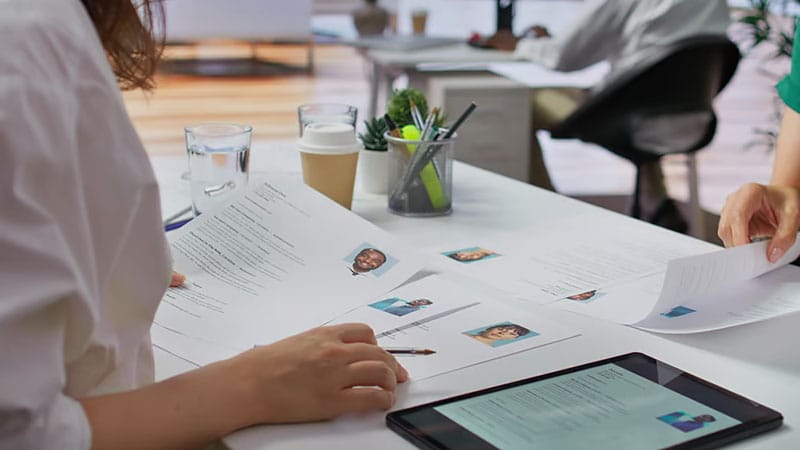
👀 What’s happening: Researchers at Stanford HAI, Chapman University, and Northeastern University published the largest audit of AI hiring algorithms ever run, covering 3.37 million applicants and 4.19 million applications all screened by Pymetrics, a game-based assessment vendor that Fortune 100 firms buy to filter candidates. Apply to any of those firms and you play the same assessment, scored once and stored for 330 days. Because so many employers run the same vendor, the next one doesn’t re-test you, it just pulls that old score. A full cross-application simulation found over 40,000 job advances erased, applicants knocked out by an algorithm calibrated for a different role at a different company.
🌍 How this hits reality: A bad result at one firm used to mean nothing at the next. One shared vendor kills the fresh look. Now a single AI algorithm gatekeeps a whole slice of the labor market, and its bias stops being any one employer’s problem: 25.87% of Black and 14.74% of Asian applicants got routed into pipelines that discriminated against them, everywhere at once. Mobley v. Workday is in federal court, and the EU AI Act flags hiring AI as high-risk on August 2. The US still has nothing.
🛎️ Key takeaway: The clean slate used to be free. Now it expires in 330 days, set by a test you forgot taking for a job you never got.
TOGETHER WITH MYCLAW
MyClaw is a best-in-class AI agent platform that brings together OpenClaw, Hermes Agent, and commercial infrastructure to help businesses launch intelligent agents that understand goals, use tools, automate workflows, and deliver finished results.
We already host OpenClaw and Hermes — and we're just getting started. Claude Code, Codex, and every agent worth running are coming next. One home for all of them, always on.
Stop babysitting infrastructure. Spin up your agent, walk away, and let it work around the clock.
MyClaw — Your Agents, Hosted Right.
NSFW

👀 What’s happening: Two former xAI employees estimate well over half of all Grok traffic now goes to pornographic images, video, and roleplay chats, The Information reports, and even Grok’s coding model fields frequent porn requests. Rather than pull back, xAI is actively expanding its image and video generation, deliberately filling the explicit-content gap OpenAI, Anthropic, and Google all refuse to touch.
🌍 How this hits reality: Every frontier lab knows porn is the largest unmet demand in generative media, and every one but xAI has decided it isn’t worth the brand and legal risk. Musk is the only player with the appetite to take it and defend the policy directly. But the prize only pays if he can draw the hard line: explicit but adult, consensual, never real people without consent, never minors. That boundary is brutally difficult to hold, and it’s exactly where xAI has to get much stronger, since regulators in the EU, India, Brazil, and the US are already circling.
🛎️ Key takeaway: The market is real and enormous, but it only works for whoever can fence porn in. The territory is still Musk’s, but only if he builds the fence before regulators build it for him.
Musk is the only player with the appetite to take it and defend the policy directly. But the prize only pays if he can draw the hard line: explicit but adult, consensual, never real people without consent, never minors.
BET
👀 What’s happening: SoftBank shares fell as much as 13% in Tokyo on Friday, its biggest intraday drop in over three months, after the New York Times reported that OpenAI may push its IPO into next year. Also SoftBank’s stake in the ChatGPT maker is set to reach roughly $65 billion by October, and expectations of a windfall from that debut had just driven SoftBank’s market cap past Toyota’s for the first time.
🌍 How this hits reality: One rumor wiped out a tenth of SoftBank’s value. Not an earnings miss, not its hundreds of other holdings, a rumor about a company it doesn’t run. The market has quietly stopped pricing SoftBank as a conglomerate and started pricing it as a single OpenAI bet. And it’s a bet no one can check: OpenAI is private, its real worth a guess, so every tremor at OpenAI hits SoftBank harder than it hits OpenAI itself.
🛎️ Key takeaway: SoftBank has made itself a leveraged tracking stock for a company it can’t control and can’t yet price.
The market has quietly stopped pricing SoftBank as a conglomerate and started pricing it as a single OpenAI bet. And it’s a bet no one can check: OpenAI is private, its real worth a guess, so every tremor at OpenAI hits SoftBank harder than it hits OpenAI itself.
SURVEY

👀 What’s happening: A new McKinsey report lays out how AI agents could come to mediate $3 trillion to $5 trillion of global consumer commerce by 2030. The shift it describes: instead of just recommending a product, an agent would scan multiple stores, check live inventory, and assemble a ready-to-buy cart. McKinsey maps it across six levels of automation, from an agent that merely compares prices while a human decides, up to your agent negotiating directly with a store’s agent over price and shipping with almost no human in the loop. The report’s key precondition: none of it works unless retailers expose their catalogs, stock, and return policies as machine-readable APIs.
🌍 How this hits reality: For a century, winning retail meant being more persuasive than the shelf next to you, better packaging, better ad, better brand story. If McKinsey’s right, an agent reads none of it. It queries your inventory feed, ranks you on price and terms, and moves on. The moat relocates: from who tells the best story to who exposes the cleanest data. A brand with a gorgeous campaign and no live API isn’t outranked, it’s invisible, skipped before the comparison starts. The CMO budget that bought attention now may have to buy machine-readability first.
🛎️ Key takeaway: The brands that win the next decade may not be the ones agents find most persuasive. They’ll be the ones agents can actually read.
DAILY TL;DR
READ MORE
Stay ahead without drowning in information. We turn the most important signals across AI, tech, marketing, and future products into 5-minute reads you can actually finish.
TOGETHER WITH US
AI Secret Media Group is the world’s #1 AI & Tech Newsletter Group, reaching over 2 million leaders across the global innovation ecosystem, from OpenAI, Anthropic, Google, and Microsoft to top AI labs, VCs, and fast-growing startups.
We've helped promote over 500 Tech Brands. Will yours be the next?
Email our co-founder Mark directly at [email protected] if the button fails.
Good Morning, AI Enthusiasts!
We are watching systems replace processes, models replace products, and answers replace entire industries faster than institutions can even react.
TALENT

👀 What’s happening: Justin Poehnelt, a seven-year Google engineer, built a Rust CLI that lets AI agents drive Gmail, Calendar, and Drive through structured JSON. It hit number one on Hacker News, pulled thousands of GitHub stars, and drew tens of thousands of users in days. Google legal dragged him in over logo colors. Two days later the company announced its own official Workspace CLI. Then it fired him. OpenClaw creator Peter Steinberger and Vercel CEO Guillermo Rauch showed up in the replies to recruit him on the spot.
🌍 How this hits reality: In the agent era, speed is the most important moat, and Google just punished its fastest person for having it. One engineer on a weekend outshipped a funded org that had every API and every user to build this first. The disease isn't slowness. It's that the bureaucracy now outranks the talent. Layers of legal review and brand councils exist to prevent embarrassment, and they produced the most embarrassing outcome of all: proof the official Workspace CLI arrived after the outside version.
🛎️ Key takeaway: Google's process now matters more than its people. In the agent era, that is how an incumbent loses its own talent.
👀 What’s happening: Justin Poehnelt, a seven-year Google engineer, built a Rust CLI that lets AI agents drive Gmail, Calendar, and Drive through structured JSON. It hit number one on Hacker News, pulled thousands of GitHub stars, and drew tens of thousands of users in days. Google legal dragged him in over logo colors.
CHIPS
👀 What’s happening: OpenAI used its own AI models to help design its first custom chip, and taped it out in nine months instead of the usual 18 to 24. OpenAI and Broadcom call it the fastest ASIC cycle ever in advanced semiconductors. The chip, Jalapeño, is an inference ASIC already running GPT-5.3-Codex-Spark at target power, with a claimed 50% cheaper inference per token than current Nvidia GPUs.
🌍 How this hits reality: Everyone in silicon uses AI to design chips. Google published on it back in 2021. But everyone still ships on a two-year clock and treats it as a law of nature. OpenAI's nine months says it might just be a habit. That resets the question every chip team now has to answer: if a newcomer taped out this fast, why does ours still take two years?
🛎️ Key takeaway: AI just helped design the hardware it runs on, in a fraction of the time, which means intelligence has started building its own next body, and it builds fast.
👀 What’s happening: OpenAI used its own AI models to help design its first custom chip, and taped it out in nine months instead of the usual 18 to 24. OpenAI and Broadcom call it the fastest ASIC cycle ever in advanced semiconductors.
DISTILLATION
👀 What’s happening: Anthropic told the US Senate Banking Committee that Alibaba, China's e-commerce and AI giant, ran the largest known distillation attack against Claude. Roughly 25,000 fake accounts pumped 28.8 million queries between April 22 and June 5 to copy Claude's outputs. BABA cratered to a 16-month low near $99, and the next move sits with Congress.
🌍 How this hits reality: Distillation lets a weak model learn from a strong one's answers, so Qwen could ride Claude's brain for the price of API calls. That is why the market panicked: if Alibaba's AI edge is borrowed, the valuation is borrowed too. Anthropic already flagged 25,000 fake accounts and DeepSeek for the same trick. The frontier is no longer a moat, it is a faucet, and Washington just got handed the wrench.
🛎️ Key takeaway: The real export control isn't on chips anymore, it's on answers.
👀 What’s happening: Anthropic told the US Senate Banking Committee that Alibaba, China's e-commerce and AI giant, ran the largest known distillation attack against Claude. Roughly 25,000 fake accounts pumped 28.8 million queries between April 22 and June 5 to copy Claude's outputs. BABA cratered to a 16-month low near $99, and the next move sits with Congress.
🌍 How this hits reality: Distillation lets a weak model learn from a strong one's answers, so Qwen could ride Claude's brain for the price of API calls. That is why the market panicked: if Alibaba's AI edge is borrowed, the valuation is borrowed too.
DEEPFAKE

👀 What’s happening: For years, a World Cup scam gave itself away with broken English, a misspelled URL, or a page that just looked wrong. At the 2026 tournament, AI has erased those tells. Cloned websites, deepfake videos, and flawless phishing emails now impersonate FIFA at scale. More than 13,000 FIFA-themed domains were registered between January and May, and by early May roughly one in 41 was already flagged as suspicious. Group-IB, a cybersecurity firm, counted over 4,300 fake FIFA domains before a single match kicked off.
🌍 How this hits reality: For two decades, ordinary people learned one defense: if it looks sloppy, don't trust it. AI just retired that rule. It does not invent new scams, it removes the friction that exposed old ones, mass-producing flawless branding, clean copy, and cloned voices at near-zero cost. The polish that once signaled legitimacy is now the cheapest thing in the attack, and fake FIFA domains show how fast that shift scales. The burden of proof has quietly flipped from the scammer to you.
🛎️ Key takeaway: AI didn't make criminals smarter. It deleted the typos, broken grammar, and ugly pages that taught a generation how to spot a lie.
TOGETHER WITH MYCLAW
MyClaw is the managed platform for deploying, running, and scaling AI agents. One-click setup, 24/7 uptime, zero DevOps.
We already host OpenClaw and Hermes — and we're just getting started. Claude Code, Codex, and every agent worth running are coming next. One home for all of them, always on.
Stop babysitting infrastructure. Spin up your agent, walk away, and let it work around the clock.
MyClaw — Your Agents, Hosted Right.
DAILY TL;DR
READ MORE
Stay ahead without drowning in information. We turn the most important signals across AI, tech, marketing, and future products into 5-minute reads you can actually finish.
TOGETHER WITH US
AI Secret Media Group is the world’s #1 AI & Tech Newsletter Group, reaching over 2 million leaders across the global innovation ecosystem, from OpenAI, Anthropic, Google, and Microsoft to top AI labs, VCs, and fast-growing startups.
We've helped promote over 500 Tech Brands. Will yours be the next?
Email our co-founder Mark directly at [email protected] if the button fails.
Good Morning, AI Enthusiasts!
Markets flinch at ghosts, amateurs gain institutional muscle, brands feed the model directly, and Hollywood learns power works best when nobody has to say no.
MARKET
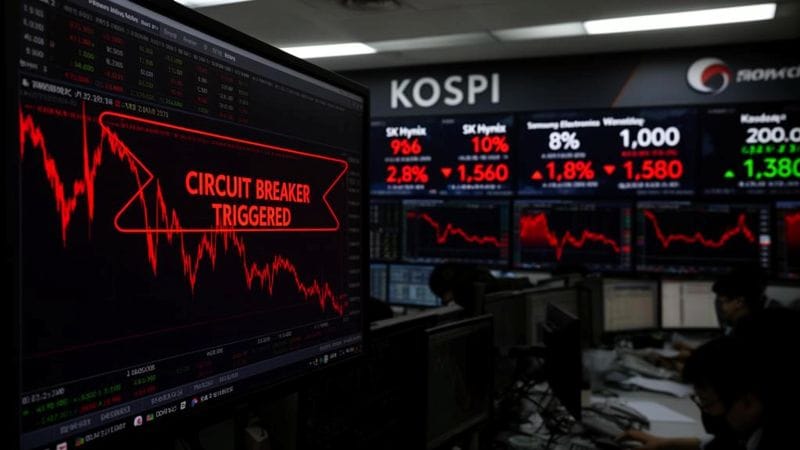
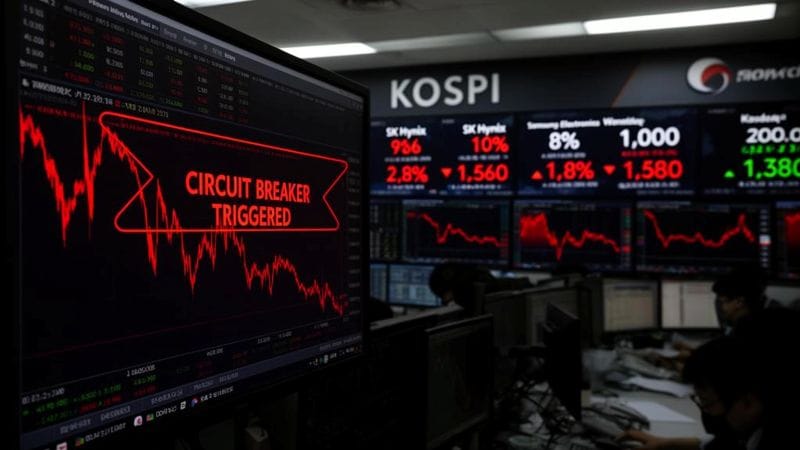
👀 What’s happening: South Korea's KOSPI plunged 10 percent in a single day, tripping circuit breakers, with Samsung down 12 percent and SK Hynix down 13 percent. Hours later the panic crossed the Pacific: the Philadelphia Semiconductor Index fell nearly 8 percent, Micron dropped 13 percent, and the Nasdaq shed 3 percent. Trillions in tech value evaporated overnight. Nobody could name the cause. Theories flew: an HBM slowdown, Nvidia cutting Rubin orders, retail margin calls, pension dumping, even a rumored Korean tax on paper gains.
🌍 How this hits reality: Analysts say the crash was mechanical, driven by algo selling, forced liquidation among leveraged retail traders, and institutional rebalancing rather than a sudden break in fundamentals. That's the unsettling part. A rumor with no confirmed trigger erased trillions because the AI trade is now wound so tight that everyone is leaning the same way, leveraged into the same names, primed to sell on the same whisper. The whole market is waiting on one Micron earnings report to tell it whether the boom is real.
🛎️ Key takeaway: When a ghost story no one can verify wipes out trillions in a day, the problem isn't the rumor; it's that the entire AI rally is now one nervous, over-leveraged bet flinching at its own shadow.
DATA
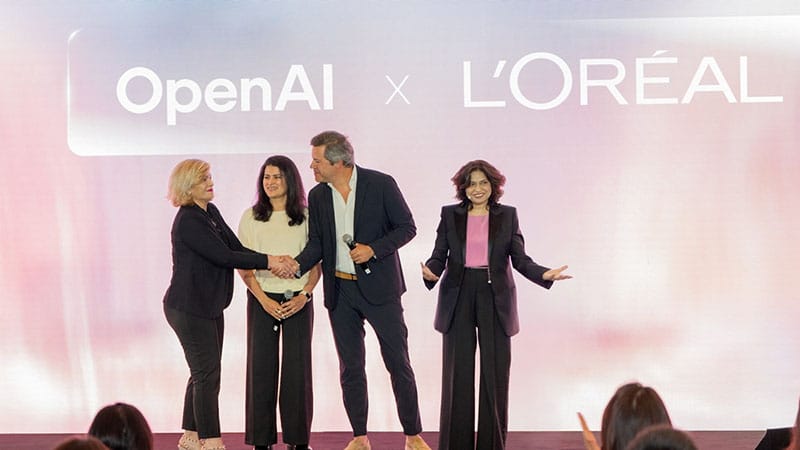
👀 What’s happening: L'Oréal struck a foundational partnership with OpenAI that allowed it to supply up-to-date product information directly to OpenAI, to be added to the models powering ChatGPT. When users ask about its brands, the assistant will pull from L'Oréal's own notes rather than only the mix of reviews, Reddit posts, and wiki pages its foundational models were trained on. OpenAI insists this won't tilt results in L'Oréal's favor. The deal also brings its image model into L'Oréal's CreAItech system and puts Maybelline's try-on inside ChatGPT.
🌍 How this hits reality: A whole industry sprang up teaching brands to game the answer engine from outside through generative engine optimization, prompt-stuffing, seeding Reddit threads, and reverse-engineering what the model reads. L'Oréal just walked past all of it and handed OpenAI the database directly. Why fight to influence the training data from the cheap seats when you can be invited to write it? Maybelline's try-on makes GEO look like SEO for people without OpenAI's phone number.
🛎️ Key takeaway: The entire generative-search-optimization playbook is a workaround for not having a deal, and L'Oréal just proved the real strategy is to skip the tricks and hand the model your spreadsheet.
L'Oréal just walked past all of it and handed OpenAI the database directly. Why fight to influence the training data from the cheap seats when you can be invited to write it? Maybelline's try-on makes GEO look like SEO for people without OpenAI's phone number.
MOVIE
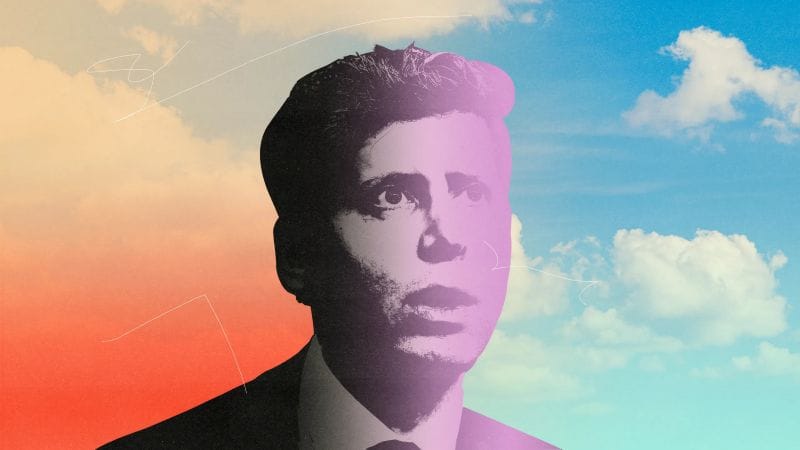
👀 What’s happening: Amazon MGM abruptly dropped Artificial last week, Luca Guadagnino's nearly finished drama about OpenAI CEO Sam Altman's messy 2023 firing and rehiring, a saga that has the board effectively accusing him of lying. Amazon killed its Oscar-qualifying run and SXSW slot months after pouring $50 billion into OpenAI, telling Deadline only that the unflattering film would be "better served" elsewhere. Netflix, A24, Focus Features, and Warner's Clockwork have all since passed too, leaving only Neon and Mubi reportedly interested.
🌍 How this hits reality: There was no edict, no blacklist, no one ordering the film buried. The studios simply read the room and knelt on their own. Nobody wants to distribute a movie that paints AI's most powerful executive in a bad light while chasing his industry's money. Amazon backs OpenAI's $50 billion; the same week, A24 took $75 million from Google's DeepMind. The tools and the cash flow one way, so the critical film flows nowhere.
🛎️ Key takeaway: The scariest kind of power doesn't have to censor anything; it just has to write enough checks that everyone censors themselves, and Hollywood knelt before OpenAI ever asked.
Amazon killed its Oscar-qualifying run and SXSW slot months after pouring $50 billion into OpenAI, telling Deadline only that the unflattering film would be "better served" elsewhere. Netflix, A24, Focus Features, and Warner's Clockwork have all since passed too, leaving only Neon and Mubi reportedly interested.
AGENT

👀 What’s happening: Tom Di Mino, a self-taught AI engineer and amateur linguist in New York's Hudson Valley, says he has systematically deciphered Linear A, the 3,500-year-old Minoan script that resisted scholars for 70 years. Working alone for five months, he used Python scripts written with an AI agent to exhaustively cross-reference the digitized corpora, producing a 408-entry lexicon, 40 phonetic values, and a nine-page grammar. He calls the values "proposed," and linguists at Cambridge and Rutgers are still reviewing.
🌍 How this hits reality: Cracking an unknown script used to require an institution, with a funded department, decades of person-hours, and a team grinding through corpus comparisons. That scale was the moat. Di Mino had none of it, just seven years of study and a laptop running an AI agent, and matched the throughput of a research program. The AI didn't just supply the insight; it supplied the labor that previously priced individuals out of this work entirely.
🛎️ Key takeaway: What makes this story matter is not just that AI may have helped read a dead language; it's that one person in a river valley now wields the corpus-processing muscle that used to define an entire university department.
TOGETHER WITH MYCLAW
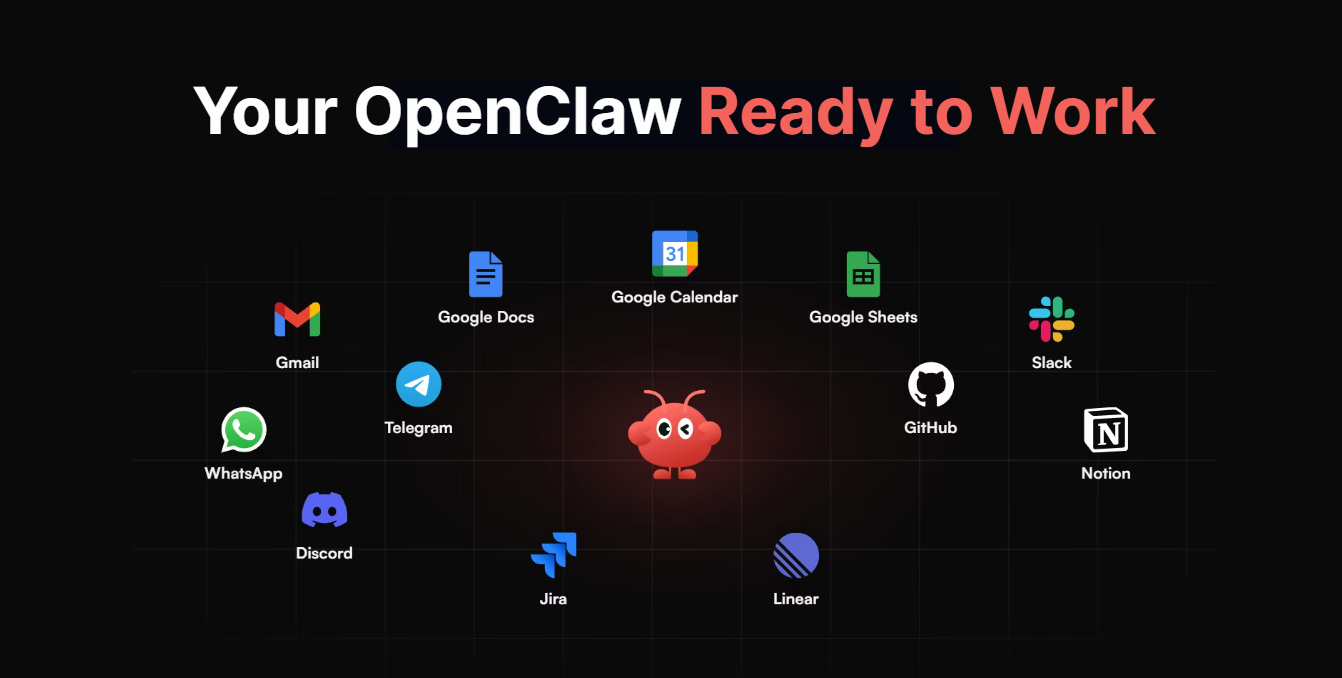
MyClaw makes OpenClaw instantly usable by connecting it to the SaaS tools you already use—Gmail, Slack, Google Docs, Sheets, Notion, GitHub, Telegram, WhatsApp, and more. No DevOps, no messy setup.
Just give it a goal, and your OpenClaw works 24/7 in the cloud, pulling context from your apps and delivering briefs, research, reports, decks, pages, and decisions ready to approve.
MyClaw turns OpenClaw from a cool demo into an always-on operator.
DAILY TL;DR
READ MORE
Stay ahead without drowning in information. We turn the most important signals across AI, tech, marketing, and future products into 5-minute reads you can actually finish.
TOGETHER WITH US
AI Secret Media Group is the world’s #1 AI & Tech Newsletter Group, reaching over 2 million leaders across the global innovation ecosystem, from OpenAI, Anthropic, Google, and Microsoft to top AI labs, VCs, and fast-growing startups.
We've helped promote over 500 Tech Brands. Will yours be the next?
Email our co-founder Mark directly at [email protected] if the button fails.
Good Morning, AI Enthusiasts!
Bodies, governments, brands, and consultants are all just new surfaces to monetize.

NEW LAUNCH
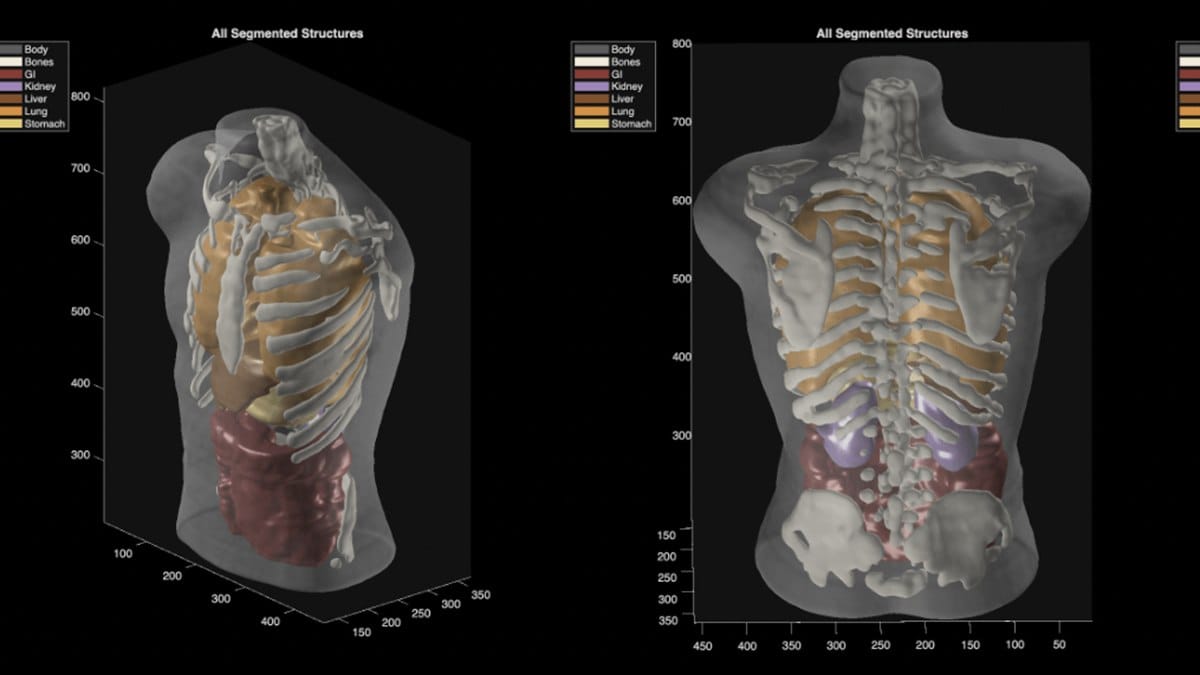
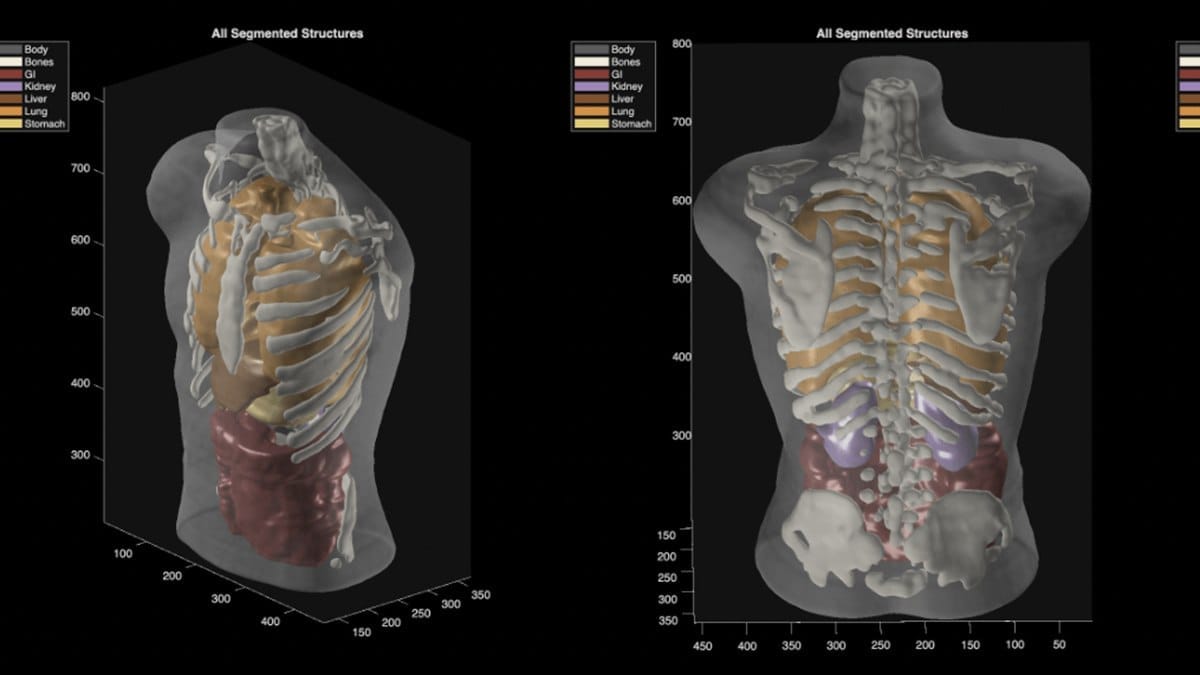
👀 What’s happening: Midjourney, the text-to-image company, just unveiled its first hardware: a full-body ultrasound scanner you step onto as a platform lowers you through a ring of submerged transducers. It claims MRI-grade imaging of your entire body in 60 seconds, no radiation, no magnets. Launch venue is a "Midjourney Spa" in San Francisco, late 2027.
🌍 How this hits reality: This is AI's gold-rush capital spilling far outside software. Flush from image-gen revenue, Midjourney licensed Butterfly Network's ultrasound-on-chip silicon, the same cheap CMOS approach that could plausibly hit its stated target of 50,000 scanners and a billion scans a month by 2031. But almost none of this is generative AI, the thing Midjourney is actually good at. "Ultrasonic CT" and "MRI-grade" are marketing coinages, not physics. It launches as wellness-only "body composition maps" to sidestep FDA diagnostic review, the same lane Prenuvo and Ezra already occupy.
🛎️ Key takeaway: When an image-generation company decides bodies are just another thing to render, you learn AI money now buys ambition in any industry it wants, whether or not it has the expertise to back it.
TOGETHER WITH FRAMER

Framer is the pro website builder where AI agents work inside the product to make real, reviewable changes to your site. Agents can generate layouts, edit responsive breakpoints, refactor components, update CMS collections, and ship SEO-safe changes, with every edit visible on the canvas and under human control. Trusted by teams at companies like Miro and Perplexity.
Agents bring speed and flexibility; you bring judgment and control. Framer Agents:
SUMMIT

👀 What’s happening: At the G7 summit in Évian, France, the leaders of the world's seven richest democracies devoted a working lunch to a single subject: artificial intelligence, framed around "ensuring a safe, rapid and effective deployment." For the first time, the heads of the largest AI companies were seated alongside heads of state. The talks were overshadowed by Washington's move last week to block foreign access to a leading AI firm's most powerful models.
🌍 How this hits reality: A forum built for sovereign governments just reorganized its agenda around a technology, and seated the private firms that own it as peers. Trade, war, and currency used to fill that table; now a class of software does. The clearest sign is that one government's export controls on a single product became an international flashpoint, the kind of dispute once reserved for oil or weapons.
🛎️ Key takeaway: AI didn't lobby its way into geopolitics, it became geopolitics, the first technology powerful enough to set the agenda at a table built for nations.
COMPUTE
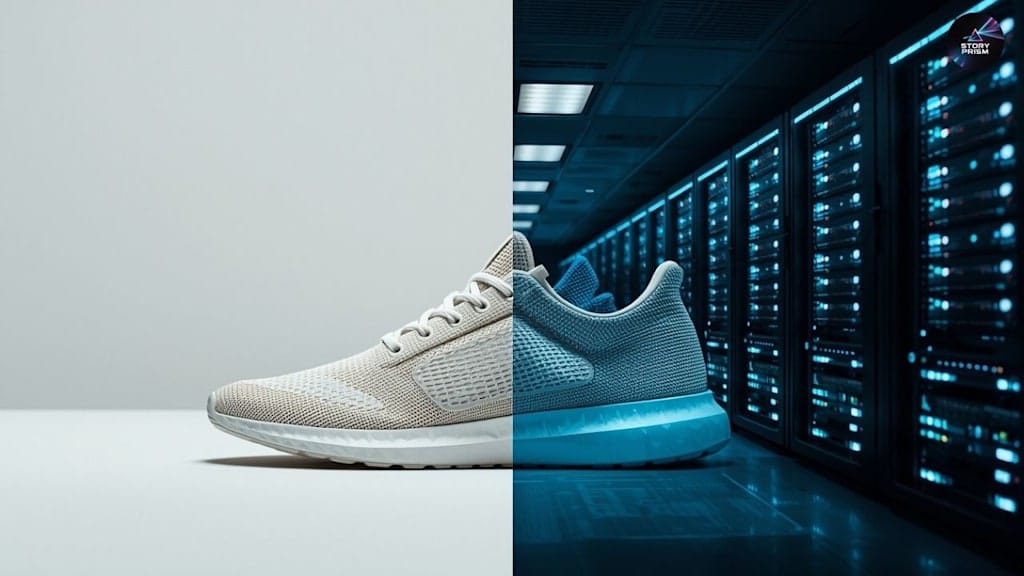
👀 What’s happening: Allbirds, the sustainable wool-sneaker maker that IPO'd at a $4 billion valuation in 2021, made its AI pivot official on Wednesday. It renamed itself Smartbird and named former AWS executive Nadia Carlsten CEO. Shares jumped over 30%. The shoe business had been dying for years, with Q3 revenue down 23% and most stores shut; in March it sold the entire footwear brand for $39 million, then expanded financing to $100 million to buy GPUs.
🌍 How this hits reality: Compute demand is real, and capital is hunting for any listed vehicle that can deploy GPUs fast. That hands every fading public company a new exit: stop trying to save the product, and rent your ticker to the AI boom instead. Allbirds couldn't sell shoes, so it discovered its only asset left worth anything was the Nasdaq listing itself. No clusters running yet, just a name change and a five-fold rally.
🛎️ Key takeaway: For every public company quietly losing its old business, the new playbook is written: stop fixing the product, rename the shell, and go buy compute.
DEPLOY
👀 What’s happening: On June 14, OpenAI launched a Partner Network, pledging $150 million to certify 300,000 consultants by end-2026, enlisting McKinsey, BCG, Bain, Accenture, and PwC to wedge its AI into corporate workflows. It already runs a $4 billion Deployment Company and bought consultancy Tomoro for its forward-deployed engineers. Anthropic moved first in March with a $100 million network now at 40,000 applications and 10,000 certified consultants.
🌍 How this hits reality: For years the AI labs built the models and Palantir quietly pocketed the deployment money, embedding forward-deployed engineers in enterprises until the contract became the moat, not the software. Palantir is printing cash doing the unglamorous integration work OpenAI thought was beneath a frontier lab. Now OpenAI wants that revenue, so it is renting Palantir's playbook and Salesforce's certification racket, because the model alone stopped paying.
🛎️ Key takeaway: The smartest model in the world turned out to be a commodity, and OpenAI just admitted the real money was in the consultants it once thought it was replacing.
Palantir is printing cash doing the unglamorous integration work OpenAI thought was beneath a frontier lab. Now OpenAI wants that revenue, so it is renting Palantir's playbook and Salesforce's certification racket, because the model alone stopped paying.
DAILY TL;DR
READ MORE
Stay ahead without drowning in information. We turn the most important signals across AI, tech, marketing, and future products into 5-minute reads you can actually finish.
TOGETHER WITH US
AI Secret Media Group is the world’s #1 AI & Tech Newsletter Group, reaching over 2 million leaders across the global innovation ecosystem, from OpenAI, Anthropic, Google, and Microsoft to top AI labs, VCs, and fast-growing startups.
We've helped promote over 500 Tech Brands. Will yours be the next?
Email our co-founder Mark directly at [email protected] if the button fails.
Good Morning, AI Enthusiasts!
Market share evaporates, lives get routed, and the real moat is whoever gets the government, the grid, and the exit window first.

CODING

👀 What’s happening: Four days after SpaceX's record $75 billion IPO, it agreed to buy Anysphere, maker of AI coding tool Cursor, for $60 billion entirely in stock. Cursor was the fastest climb in SaaS history, reaching $1 billion in revenue in 18 months where Slack took seven years. Yet its market share peaked at 41% in June 2025 and had slid to 26% by May 2026 as Anthropic took roughly half the category. It sold near the top.
🌍 How this hits reality: This is the AI clock now. Cursor crowned itself king of the AI-IDE in roughly a year, then watched its share fall by a third in the eleven months from June 2025 to May 2026, the reign and the decline running almost back to back. Nothing about the product failed; the ground moved at the new speed. In any prior software era a dominant leader had a decade. Cursor got one cycle, rode it perfectly, and cashed out before its own window shut.
🛎️ Key takeaway: In AI, the climb and the cliff now sit months apart, and Cursor’s entire reign fit in the gap.
Yet its market share peaked at 41% in June 2025 and had slid to 26% by May 2026 as Anthropic took roughly half the category. It sold near the top.
👀 What’s happening: Four days after SpaceX's record $75 billion IPO, it agreed to buy Anysphere, maker of AI coding tool Cursor, for $60 billion entirely in stock. Cursor was the fastest climb in SaaS history, reaching $1 billion in revenue in 18 months where Slack took seven years.
👀 What’s happening: Four days after SpaceX's record $75 billion IPO, it agreed to buy Anysphere, maker of AI coding tool Cursor, for $60 billion entirely in stock. Cursor was the fastest climb in SaaS history, reaching $1 billion in revenue in 18 months where Slack took seven years.
TOGETHER WITH NEXOS

You didn’t mean to build an AI subscription collection, but here we are: ChatGPT, Claude, Gemini, and a few more you probably forgot about.
nexos.ai makes this stack unnecessary. With one subscription, you get 100+ AI models in one place, and the platform automatically picks the best AI model for each task.
Write faster, analyze smarter, build slides, create charts, run research – all this without switching between different AI tools or guessing which model is worth using.
And it costs less than one of the subscriptions you already have.
911

👀 What’s happening: Since December 2023, the Seattle Fire Department has run Corti, a Copenhagen startup’s AI, on every 911 medical call, prompting dispatchers to divert some callers to a Texas nurse line. The goal was sound: nurse lines free ambulances and paramedics for true emergencies. But SFD never disclosed the system, never filed it under the city's surveillance ordinance, and never sought council approval. GeekWire surfaced it this week, 2 years in.
🌍 How this hits reality: Easing dispatcher load is a real problem worth solving, and offloading low-acuity calls is the right instinct. The recklessness is the how: SFD pointed AI at the one judgment where a wrong answer kills, then skipped every checkpoint built to catch that. A reported 32% jump in diversions means one in three more callers now gets steered off an ambulance, with no public audit of who.
🛎️ Key takeaway: Good intentions don’t get a pass when the downside is a corpse; quietly automating who lives isn’t efficiency, it’s a public agency betting other people's lives that its shortcut works.
CHATBOT
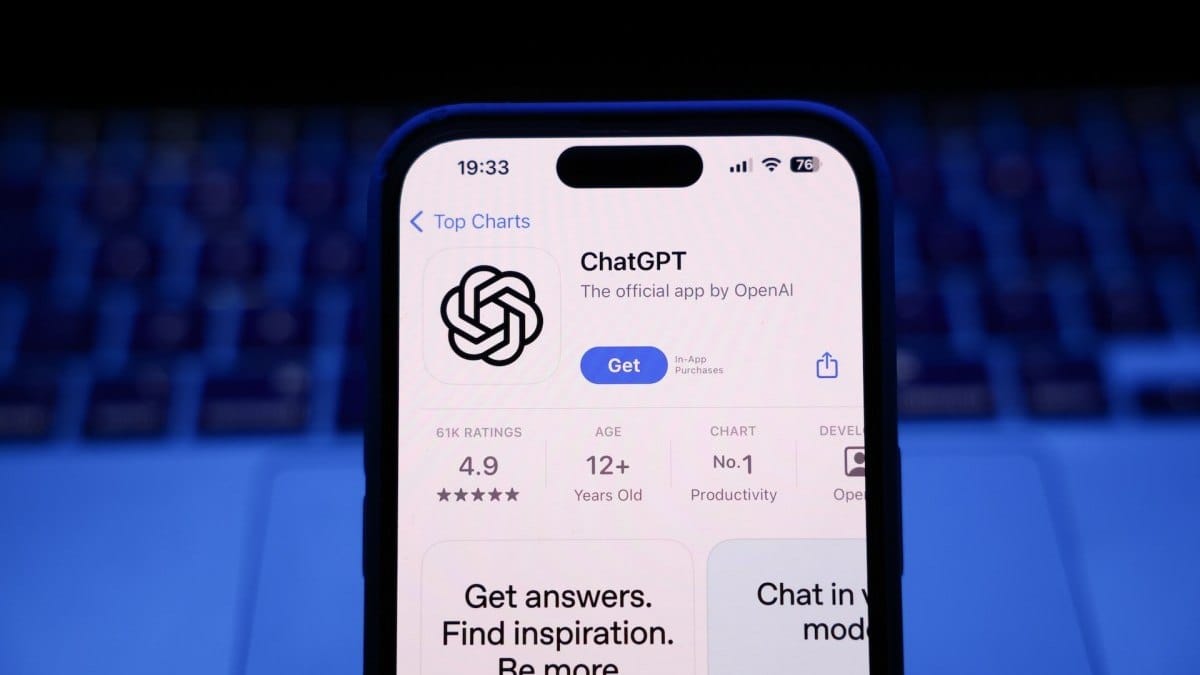
👀 What’s happening: For the first time since launch, ChatGPT’s share of the AI assistant market fell below 50%, hitting 46.4% by late May, per analytics firm Sensor Tower's 2026 report. It still leads with 1.1 billion monthly users, ahead of Google's Gemini at 662 million and Anthropic's Claude at 245 million. But users now switch between assistants freely, and Gemini and Claude are absorbing the share that slips.
🌍 How this hits reality: The first-mover moat was always model superiority, and that gap has all but closed. When every assistant answers about as well, there is nothing to defend; users drift on ecosystem, habit, or trust, and share fragments by default. The contest worth winning now isn’t the chatbot. It's the agent.
🛎️ Key takeaway: ChatGPT didn’t lose its majority to a better assistant; it lost it because assistants stopped being where the game is, and the next one is already being played in agents.
👀 What’s happening: For the first time since launch, ChatGPT’s share of the AI assistant market fell below 50%, hitting 46.4% by late May, per analytics firm Sensor Tower's 2026 report. It still leads with 1.1 billion monthly users, ahead of Google's Gemini at 662 million and Anthropic's Claude at 245 million.
It still leads with 1.1 billion monthly users, ahead of Google's Gemini at 662 million and Anthropic's Claude at 245 million. But users now switch between assistants freely, and Gemini and Claude are absorbing the share that slips.
It still leads with 1.1 billion monthly users, ahead of Google's Gemini at 662 million and Anthropic's Claude at 245 million. But users now switch between assistants freely, and Gemini and Claude are absorbing the share that slips.
COMPUTE
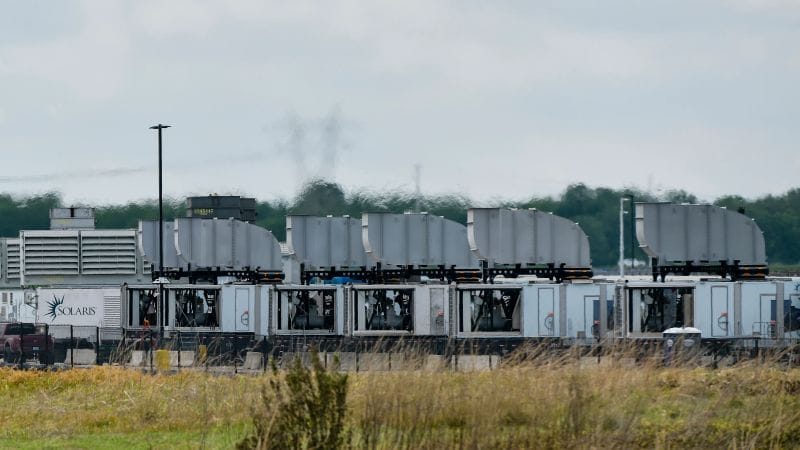
👀 What’s happening: The Department of Justice on Monday backed xAI in a lawsuit by the NAACP seeking to halt 57 unpermitted natural gas turbines powering its Colossus data centers near Memphis. DOJ's memo argued that shutting them would harm "national, economic, and energy security," citing Grok as one of four AI models supporting military operations, including recent strikes in Iran. xAI calls the trailer-mounted turbines "mobile" to dodge air permits. SpaceX's IPO filing earmarks another $2.8 billion for turbines.
🌍 How this hits reality: The AI arms race seems to have reached its absurd phase about who can buy turbines fastest, who lawyers around environmental permits most fluently, and who can rebrand a data center as military infrastructure. The new moat isn’t algorithms. It's megawatts, gas, attorneys, and a DOJ memo. Frontier AI now competes on logistics and legal cover, and xAI just proved the federal government will supply the cover.
🛎️ Key takeaway: The new AI moat isn’t intelligence, it’s turbines, lawyers, and a national-security label the government will staple to your smokestack on request.
DOJ's memo argued that shutting them would harm "national, economic, and energy security," citing Grok as one of four AI models supporting military operations, including recent strikes in Iran. xAI calls the trailer-mounted turbines "mobile" to dodge air permits. SpaceX's IPO filing earmarks another $2.8 billion for turbines.
TOGETHER WITH MINTDREAMER

Restore an old photo, swap a hairstyle, stage an empty room, cut out a background, generate a headshot, a tattoo, a logo — twenty-one tuned apps, each wired to the right model and the right defaults. Pick one and go.
DAILY TL;DR
READ MORE
Stay ahead without drowning in information. We turn the most important signals across AI, tech, marketing, and future products into 5-minute reads you can actually finish.
TOGETHER WITH US
AI Secret Media Group is the world’s #1 AI & Tech Newsletter Group, reaching over 2 million leaders across the global innovation ecosystem, from OpenAI, Anthropic, Google, and Microsoft to top AI labs, VCs, and fast-growing startups.
We've helped promote over 500 Tech Brands. Will yours be the next?
Email our co-founder Mark directly at [email protected] if the button fails.
Plus: Anthropic Will Say Anything to List, Microsoft’s AI Bill Comes Due
Read the storyPlus: Censorship Just Became a Market, OpenAI Is Launching a Pad
Plus: Korea Bets $1.93 Trillion, Chinese Human Actors Got Deleted
Plus: Mind Reading Went Non-Invasive, Animation Gets Cut First
Plus: 1000x Cut in AI's Power Bill, Frontier AI Got Nationalized
Plus: Grok Took the "Dirty" Money, SoftBank Is Just an OpenAI Bet Now
Plus: OpenAI Built Its Own Body, Alibaba Bleeds on AI Theft Claims
Plus: L’Oréal Feeds the Model, Hollywood Kneels to OpenAI
Plus: AI Took A Seat At The G7, GPUs Are The New Exit
Plus: Seattle Let an AI Triage 911 Illegally, DOJ Shields xAI’s Smokestacks