Reviewed 19 October 2026. Dates retain the precision of the source; retrospective disclosures are identified in the event. Private-company ARR and financing reports are labelled as reported. Search usage is not used to estimate revenue.
Company milestones
Revenue, funding, product launches and major company events, newest first. Expand the earlier milestones for more history.
Reported ARR exceeds $450M in March
A Financial Times report, covered by Yahoo Finance, describes more than a doubling within a quarter after product and pricing changes. This is reported ARR.
Show earlier milestonesHide earlier milestones2025–2022 · 7 milestones
Earlier revenue, financing and company milestones.
Reported $200M financing commitments at $20B valuation
Reuters, citing The Information, reports investor commitments. The statement is attributed and not described as independently confirmed closed proceeds.
Welcome to our AI Secret Growth Map May 2025 Report
The AI ecosystem is evolving at a pace we’ve never seen before. In just a few years, artificial intelligence has gone from niche innovation to everyday infrastructure—powering everything from software engineering and enterprise productivity to creative workflows and autonomous agents.
At AI Secret, we’ve partnered with leading industry sources and analyzed real traffic data across millions of users to compile the May 2025 Growth Rankings. This report goes beyond hype and headlines—highlighting the tools actually winning attention, adoption, and user trust.
Whether you're an early-stage founder, product manager, investor, or simply fascinated by AI’s explosive momentum, this breakdown gives you a detailed look at where the market is heading—and who’s leading the charge.
Let’s dive into the momentum behind the machines. 👇
Our top-level ranking measures the overall growth in user visits across all AI product categories. Not surprisingly, ChatGPT remains in the #1 spot with a jaw-dropping +350.6M visit growth, bringing its total monthly visits to 5.5 billion. It’s not just an AI assistant—it’s a utility layer embedded into workflows around the globe.
Following closely is Google Gemini with +118.3M in growth, gaining ground quickly thanks to its widespread presence across Google’s ecosystem—Docs, Gmail, Android, and Search. It’s clear Gemini is becoming more than just a model—it’s a productivity enabler.
Perplexity, Claude, and Adobe also posted impressive gains, showing that search-oriented tools and creative platforms remain foundational to the AI stack.
🟢 Key Takeaway: Generalist LLMs still dominate traffic—but high-utility, focused tools are quickly carving out user mindshare.
Developers continue to be among the earliest and most enthusiastic adopters of AI. In May, Google AI Studio topped the coding charts with +7.9M growth, reflecting increased usage among enterprise and open-source teams alike.
Claude Code (a specialized code generation mode from Anthropic) saw +4.1M growth, proving the demand for aligned and safe coding copilots. Meanwhile, smaller but fast-growing tools like Kilo Code (+709.1K) and Rork (+400.8K) are seeing explosive growth from bootstrappers and indie hackers.
Cursor, Replit, and Windsurf all posted strong gains, reinforcing the trend of hybrid IDEs and code-enhancing assistants taking root in dev teams worldwide.
🟢 Key Takeaway: AI in code is no longer optional—it’s foundational. Tools that offer speed, structure, and reliability are winning the builder economy.
AI agents are making waves, acting as autonomous task-runners and logic-based assistants. Manus holds the top spot this month, credited with building a flexible, multi-agent orchestration system that works out-of-the-box for startups and operations teams.
Genspark, a fast-growing newcomer, is gaining traction with its AI agent design experience. Skywork and Fellou bring focus to writing, research, and daily productivity tasks.
With AI agents now capable of managing inboxes, launching ad campaigns, and analyzing documents, adoption is spreading rapidly.
🟢 Key Takeaway: We're entering the “assistant economy.” The best AI agents aren’t just smart—they’re deeply useful. Agentic AI is a new field, and the top five products chosen in this survey represent community opinions and market interest. This provides a reliable overview of the current AI agent landscape.
If there’s one category seeing skyrocketing innovation, it’s AI-powered video. HeyGen and Higgsfield both grew by +1.6M, with HeyGen focusing on avatar-driven explainers and Higgsfield on realism-enhanced shortform content.
Cutout.Pro continues to lead in practical utility—offering background removal, video enhancement, and editing tools for creators and ecommerce marketers.
Other breakout stars include Veo 3 (+660K), a newcomer known for cinematic generation quality, and LTX Studio, focused on storyboarding and animation. Even well-established tools like Opus Clip and Veed posted healthy gains, confirming video remains AI’s most viral medium.
🟢 Key Takeaway: The future of storytelling is AI-generated, and creators are hungry for tools that turn concepts into content—fast.
AI image tools continue to expand, merging utility and creativity. Adobe maintains dominance with +4.9M growth, driven by its native Firefly integration into Photoshop and Express. It’s proving that traditional creative platforms can win—when they move fast enough.
Remove.bg and Freepik cater to practical visual editing, while Midjourney, Tensor Art, and Pixelcut serve artists, designers, and ecom professionals looking for fast turnaround and stylistic flexibility.
Pippit AI, Flowith, and Photoroom represent the next generation: mobile-first, consumer-friendly, and ready for TikTok-era creation.
🟢 Key Takeaway: AI image tools are no longer novelty—they’re production-ready. And the competition between utility and aesthetics is heating up.
In the go-to-market (GTM) category, AI is becoming a crucial launch lever. Replit tops the chart with +1.7M growth, showing developers are embracing code-driven product creation more than ever.
Jotform, with +1.6M growth, continues to lead for form automation, landing pages, and internal ops. Tools like Framer, Vmake AI, and Prezi bridge the gap between creative marketing and scalable launch systems.
Even specialized tools like Replient and Autoppt are showing traction—proving there’s appetite for automation across every part of the GTM stack.
🟢 Key Takeaway: AI is redefining the startup stack. Product launches are faster, leaner, and increasingly automated.
Enterprise adoption tends to move slower—but once it starts, it scales hard. Adobe and Meta once again top the rankings, but newer platforms like Gamma (+2.5M) are becoming staples in internal documentation, team communication, and enterprise design.
Aura, Read AI, Suna, and Planner 5D help with everything from meeting summaries to spatial planning. Meanwhile, Airtable, Notta, and Abacus AI show strong growth in the automation and knowledge management space.
🟢 Key Takeaway: Enterprise AI isn’t flashy—but it’s sticky. Once integrated into workflows, these tools become indispensable.
🔚 Final Thoughts – AI’s Growth Curve Is Just Getting Started
Across every category—from dev tools and agents to enterprise apps and video creators—AI usage is accelerating, diversifying, and deepening. Major platforms continue to dominate in reach, but smaller tools with strong utility and fast iteration cycles are making serious moves. As AI becomes embedded into every workflow, the line between “tool” and “team member” is blurring.
What stands out most?
AI video tools are exploding in popularity as creators seek faster, smarter workflows.
AI agents and GTM platforms are reshaping how products launch, scale, and operate.
Coding assistants are empowering developers at every level, while enterprise AI solutions are quietly streamlining workflows behind the scenes.
Even hyper-niche tools are gaining traction—proof that demand isn't just broad, it's deep.
As the AI stack expands, one thing is clear: the future belongs to those building fast, adapting fast, and solving real problems.
TOGETHER WITH US
AI Secret Media Group is the world’s #1 AI & Tech Newsletter Group, boasting over 1 million readers from leading companies such as OpenAI, Google, Meta, and Microsoft. Our Newsletter Brands:
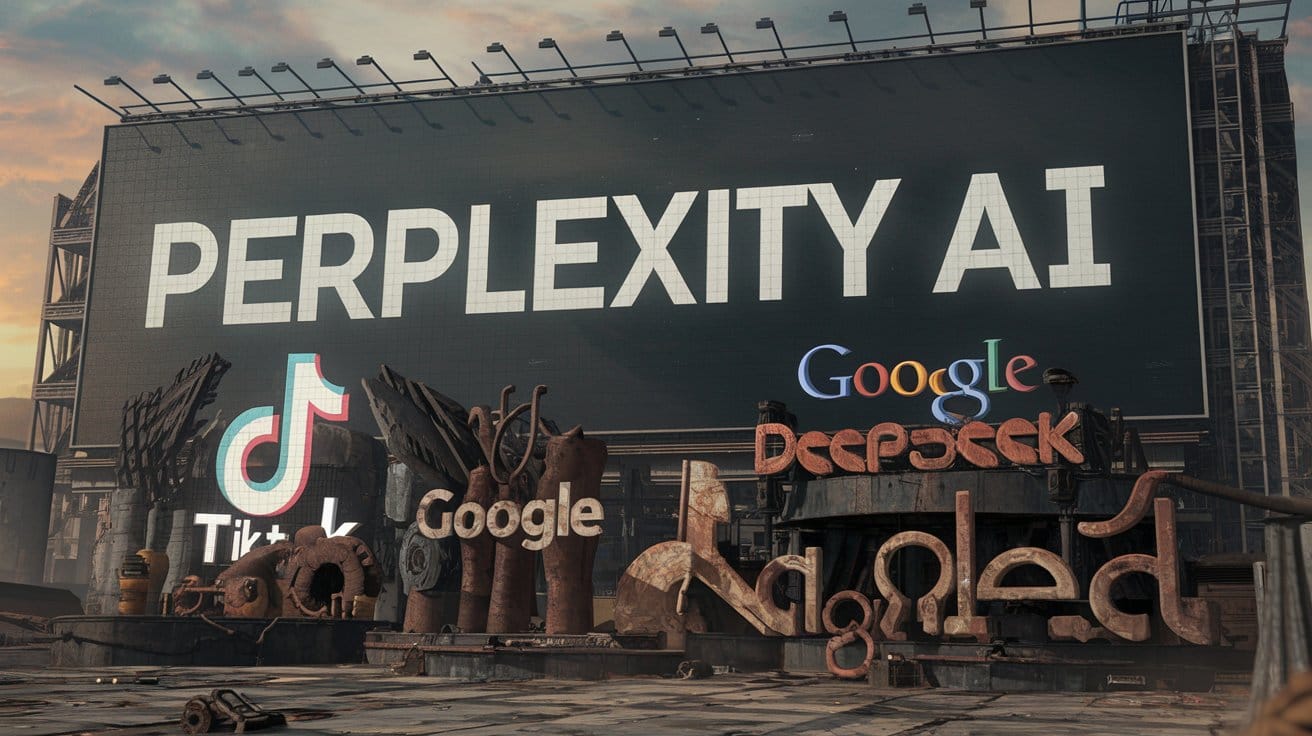
Perplexity AI, a U.S.-based AI search engine startup, has demonstrated a strategic approach to marketing by leveraging hot topics and maintaining a strong presence on social media. The company's marketing strategy is deeply intertwined with its identity as a challenger to tech giants like Google and its positioning as an antitrust and technological innovator. By capitalizing on trending issues, such as the TikTok ban in the United States, Perplexity AI has not only gained public attention but also solidified its reputation as a forward-thinking and disruptive player in the tech industry.
Insight Perplexity: A Hot Topic Maker or Tech Rebel?
Perplexity AI, a U.S.-based AI search engine startup, has demonstrated a strategic approach to marketing by leveraging hot topics and maintaining a strong presence on social media. The company's marketing strategy is deeply intertwined with its identity as a challenger to tech giants like Google and its positioning as an antitrust and technological innovator.
Brand Positioning: Redefining AI-Driven Search
Perplexity AI has positioned itself as a next-generation AI-powered search engine, offering an alternative to traditional platforms like Google. Unlike conventional search engines, Perplexity focuses on delivering conversational, contextually relevant, and human-like responses. This approach has redefined user experiences, making it a leader in conversational AI.
Launched in 2023, Perplexity quickly gained traction due to its ability to understand nuanced queries and provide accurate, context-rich answers. Its unique blend of machine learning, natural language processing (NLP), and deep search algorithms has set it apart from competitors.
By mid-2024, Perplexity AI achieved a valuation of $3 billion, reflecting its rapid growth and the market's confidence in its potential. This valuation underscores the brand's credibility and its ability to attract high-profile investors, including Jeff Bezos and Nvidia.
Technological Breakthroughs: Pioneering AI Capabilities
At the core of Perplexity's technological achievements lies its advanced conversational AI capabilities. The platform leverages cutting-edge algorithms to provide accurate, human-like responses, reshaping how users interact with search engines. This innovation has made Perplexity a favorite among individuals and businesses alike.
In February 2025, Perplexity launched its Deep Research feature, a cutting-edge tool designed to deliver exhaustive reports on specialized topics. This feature employs a proprietary framework called Test Time Compute (TTC) expansion, which mimics human cognitive processes by iteratively refining its understanding of complex topics. Unlike traditional search engines, Perplexity's Deep Research performs dozens of searches, reads hundreds of sources, and autonomously delivers comprehensive reports. This innovation positions Perplexity as an expert on any subject, further enhancing its value proposition.
Perplexity's AI-powered search minimizes paid ad placements, prioritizing organic content optimization. This approach has significant implications for search engine optimization (SEO), as businesses must focus on high-quality, informative content to improve visibility. By leveraging natural language processing and machine learning, Perplexity delivers intent-based results, reshaping SEO strategies and content marketing.
Market Strategy: Leveraging Hot Topics
The TikTok Merger Proposal
One of the most notable examples of Perplexity AI's marketing strategy is its response to the short-lived TikTok ban in the United States. On January 18, 2025, just one day before the TikTok ban went into effect due to national security concerns, Perplexity AI submitted a merger proposal to TikTok's parent company, ByteDance. This proposal was revised and resubmitted on January 26, 2025, and included the formation of a new U.S.-based holding company called "NewCo." The proposal suggested that the U.S. government could own up to 50% of the new entity following an initial public offering (IPO), which would value the company at $300 billion or more.
The timing of this proposal was strategic, as it coincided with heightened public and political scrutiny of TikTok's data practices and ownership structure. By presenting itself as a potential savior of TikTok's U.S. operations, Perplexity AI not only positioned itself as a key player in the tech industry but also sparked widespread discussion on social media. The merger proposal was widely covered by major news outlets, further amplifying Perplexity AI's visibility and reinforcing its image as an innovative and opportunistic company.
Fighting Against Google
Perplexity AI has long positioned itself as a challenger to Google's dominance in the search engine market. Valued at $9 billion as of December 2024, the company has drawn significant attention for its innovative approach to search technology, which prioritizes user experience with efficient and reliable AI-powered search capabilities.
The company has found itself caught in the crossfire of a legal battle between the U.S. Department of Justice (DOJ) and Google over search market dominance. In October 2024, Google subpoenaed Perplexity AI for internal documents to support its argument that viable competitors exist in the search market. However, Perplexity AI has resisted broader requests for all its licensing agreements, citing concerns about the burden of fulfilling such sweeping demands.
Despite these challenges, Perplexity AI has continued to innovate and attract a growing user base. The company's collaborative approach, which includes strategic investments and partnerships, has further enhanced its market competitiveness and positioned it as a viable alternative to traditional search engines.
Fighting Against Google
Department of Justice (DOJ) and Google over search market dominance. In October 2024, Google subpoenaed Perplexity AI for internal documents to support its argument that viable competitors exist in the search market. However, Perplexity AI has resisted broader requests for all its licensing agreements, citing concerns about the burden of fulfilling such sweeping demands.
Catching up with DeepSeeK Fever
Perplexity recently joined the super topic wave started by DeepSeek. As the first prominent American tech company to integrate the DeepSeek API, Perplexity has not only capitalized on the moment but has also reinforced its brand identity as a technological rebel. By incorporating DeepSeek R1 into its platform in January 2025, Perplexity has set a new standard, showcasing an open-source reasoning model that competes with industry titans like OpenAI, all while being more budget-friendly.
With DeepSeek R1 hosted on U.S. and European servers, concerns related to privacy and censorship linked to its origins are effectively mitigated, enabling users to access uncensored, source-backed answers. This strategic move has transformed the landscape for businesses and individuals alike, offering a revolutionary approach to leveraging AI for research, coding, and informed decision-making.
Catching up with DeepSeeK Fever
Perplexity recently joined the super topic wave started by DeepSeek. As the first prominent American tech company to integrate the DeepSeek API, Perplexity has not only capitalized on the moment but has also reinforced its brand identity as a technological rebel.
Catching up with DeepSeeK Fever
Perplexity recently joined the super topic wave started by DeepSeek. As the first prominent American tech company to integrate the DeepSeek API, Perplexity has not only capitalized on the moment but has also reinforced its brand identity as a technological rebel.
Looking Forward
With all the flair of a reality TV star, Perplexity AI has been busy making a name for itself as the cool kid in the tech playground, flaunting their 'antitrust innovator' badge like it’s the latest designer accessory. And let’s not forget their obsession with user experience and regulatory compliance – because nothing says “we’re here to disrupt” quite like following the rules while pretending to break them!
As they continue to grow and throw their weight around, you can't help but wonder: is Perplexity AI the future of tech disruption or just another case of “look at me, I’m relevant!”? Either way, they’re definitely serving up some serious entertainment in the ever-evolving tech circus!
If you’ve been following the AI coding scene lately, you’d be forgiven for thinking we’re living in a golden age of machine programmers. Benchmarks are being shattered, models are
In a bold and unprecedented move, Perplexity AI, a San Francisco-based artificial intelligence (AI) startup, has proposed acquiring TikTok and making its algorithm open-source. The proposal
Perplexity AI, a U.S.-based AI search engine startup, has demonstrated a strategic approach to marketing by leveraging hot topics and maintaining a strong presence