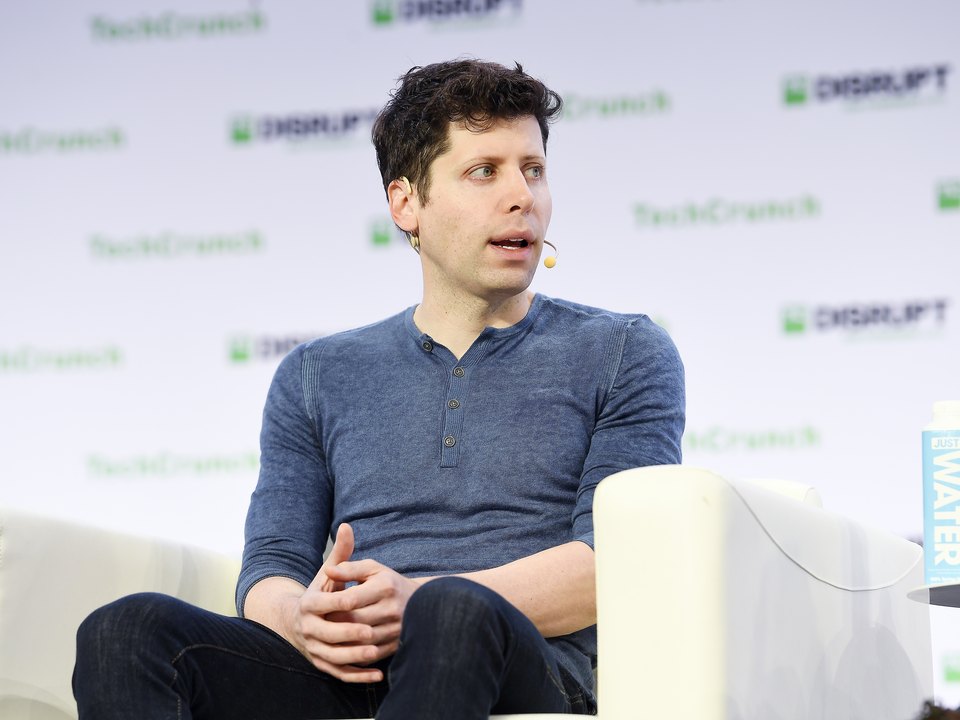
Sam Altman is an entrepreneur and investor whose career links startup building with AI research and deployment. He co-founded Loopt, joined Y Combinator’s first startup batch, and later became the accelerator’s president. He helped launch OpenAI in 2015 and became its CEO in 2019. Under his leadership, the company introduced ChatGPT and subsequently adopted its Foundation and public benefit corporation structure.
Sam Altman is an entrepreneur and investor whose career links startup building with AI research and deployment. He co-founded Loopt, joined Y Combinator’s first startup batch, and later became the accelerator’s president. He helped launch OpenAI in 2015 and became its CEO in 2019. Under his leadership, the company introduced ChatGPT and subsequently adopted its Foundation and public benefit corporation structure.
Sources checked . Selected career background and milestones.
Career, in context.
Selected research, leadership and career milestones, newest first.
OpenAI updates its structure
OpenAI announces its Foundation and Group PBC structure. Its current governance overview identifies Altman as CEO and a member of the Foundation board.
OpenAI publishes messages announcing Altman’s return as chief executive and a new initial board following the company’s November 2023 leadership crisis.
OpenAI releases ChatGPT as a research preview during Altman’s leadership. The launch introduces a conversational interface for interacting with the company’s language models.
The OpenAI LP announcement identifies Altman as chief executive as the organisation creates a capped-profit entity to support its research and deployment work.
OpenAI introduces itself as a nonprofit artificial intelligence research company, naming Altman and Elon Musk as co-chairs of its founding leadership team.
Paul Graham announces that Altman will become Y Combinator’s president starting with the next batch, taking responsibility for leading the startup accelerator.
Altman co-founds Loopt and participates in Y Combinator’s first summer batch. The location-based startup precedes his later accelerator leadership and AI company work.
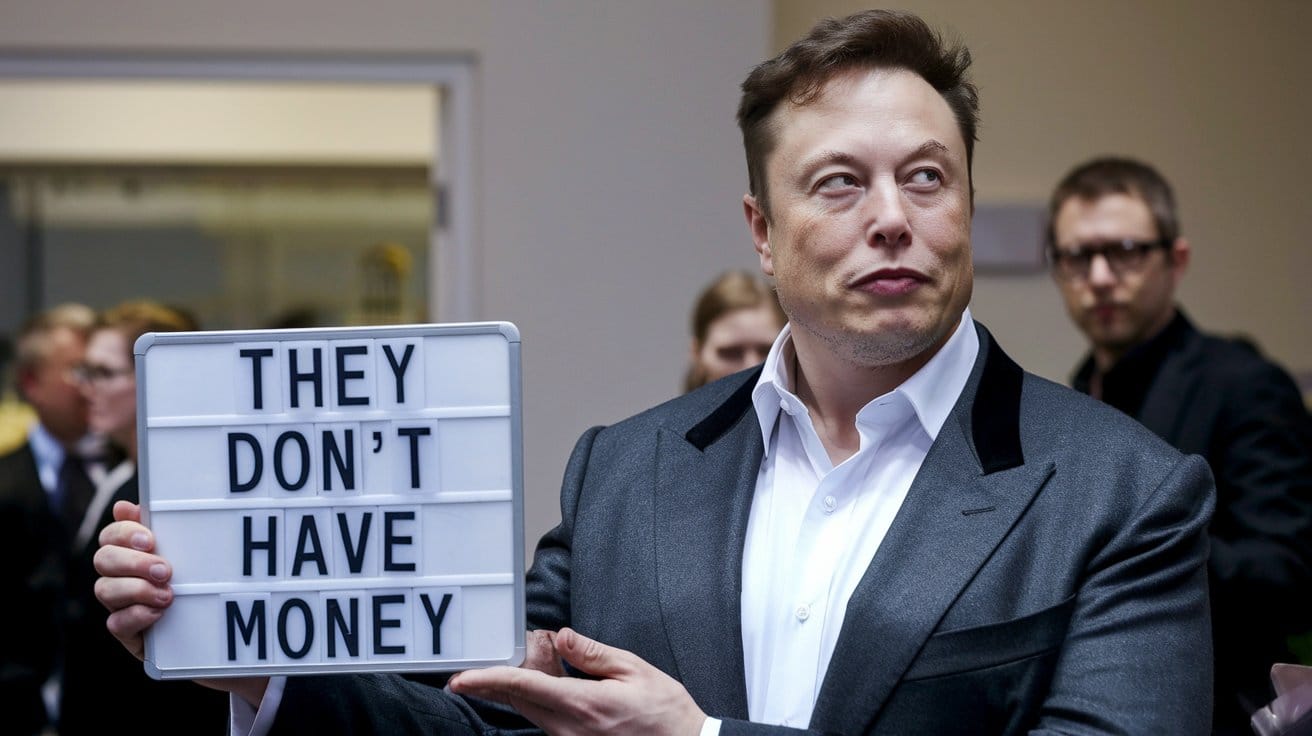
In the ever-entertaining world of tech billionaires and political drama, Elon Musk has once again taken center stage, this time to criticize President Donald Trump’s ambitious $500 billion Stargate AI project. Musk, known for his candid (and often eyebrow-raising) remarks, has cast doubt on the financial feasibility of the initiative, claiming that the backers of the project simply “don’t have the money.” Let’s dive into the details of this cosmic clash and explore why Musk is throwing shade at the Stargate project.
Elon Musk vs. Trump’s $500 Billion Stargate AI Project: A Galactic Clash of Titans
Musk, known for his candid (and often eyebrow-raising) remarks, has cast doubt on the financial feasibility of the initiative, claiming that the backers of the project simply “don’t have the money.” Let’s dive into the details of this cosmic clash and explore why Musk is throwing shade at the Stargate project.
What is the Stargate AI Project?
The Stargate AI project, announced by President Donald Trump on January 21, 2025, is a private-sector initiative aimed at bolstering the United States’ artificial intelligence (AI) infrastructure. The project is a joint venture involving tech heavyweights like OpenAI, Oracle, and SoftBank, with a promise to invest up to $500 billion over the next four years. The goal? To build state-of-the-art data centers, enhance computing capacity, and ensure the U.S. remains a global leader in AI development.
Trump, ever the showman, described Stargate as “the largest AI infrastructure project in history” and claimed it would create over 100,000 American jobs. He even encouraged people to “put that name down in your books” because it would be a game-changer.
Elon Musk, the CEO of Tesla, SpaceX, and the AI startup xAI, wasted no time in raining on Trump’s parade. Musk, who has a history of skepticism toward large, centralized AI projects, took to his social media platform, X (formerly Twitter), to express his doubts. According to Musk, the companies involved in Stargate, particularly SoftBank, lack the financial resources to back such a colossal investment. He claimed that SoftBank had “well under $10 billion secured,” far from the $500 billion target.
Musk’s skepticism didn’t stop there. He also questioned the involvement of OpenAI, a company he co-founded but later distanced himself from due to disagreements over its direction. Musk has been openly critical of OpenAI CEO Sam Altman, with whom he has a long-standing feud. In fact, Musk’s criticism of Stargate may be as much about his personal animosity toward Altman as it is about the project’s financial viability.
Elon Musk’s Criticism: A Galactic Roast
Elon Musk, the CEO of Tesla, SpaceX, and the AI startup xAI, wasted no time in raining on Trump’s parade. Musk, who has a history of skepticism toward large, centralized AI projects, took to his social media platform, X (formerly Twitter), to express his doubts.
Trump’s Response: Unbothered and Unapologetic
In true Trump fashion, the president brushed off Musk’s criticism during a press conference on January 23, 2025. When asked about Musk’s comments, Trump replied, “No, it doesn’t [bother me]. He hates one of the people in the deal,” presumably referring to Sam Altman. Trump also revealed that he had spoken with Musk about the project and seemed confident that the criticism wouldn’t derail Stargate.
Trump’s ability to remain unfazed by Musk’s remarks is impressive, considering that Musk is one of his key advisors and a significant donor to his campaign. Musk reportedly spent $270 million supporting Trump’s election, making his public disagreement with the Stargate project all the more surprising.
Elon Musk: Trump’s Response: Unbothered and Unapologetic
When asked about Musk’s comments, Trump replied, “No, it doesn’t [bother me]. He hates one of the people in the deal,” presumably referring to Sam Altman. Trump also revealed that he had spoken with Musk about the project and seemed confident that the criticism wouldn’t derail Stargate.
The Financial Reality: Does Stargate Have the Money?
Musk’s doubts about Stargate’s funding are not entirely unfounded. The project’s initial investment is expected to be $100 billion, with the remaining $400 billion to be raised over the next four years. While this sounds impressive on paper, the actual financial commitments from the involved companies remain unclear. SoftBank, Oracle, and OpenAI have yet to provide detailed breakdowns of their contributions, leading to skepticism about whether the $500 billion goal is realistic.
Adding to the uncertainty is the fact that Musk himself has a history of overpromising and underdelivering on ambitious projects. Critics have pointed out the irony of Musk questioning Stargate’s funding when some of his own ventures, like the Hyperloop and Neuralink, have faced similar scrutiny.
Elon Musk: The Financial Reality: Does Stargate Have the Money?
Adding to the uncertainty is the fact that Musk himself has a history of overpromising and underdelivering on ambitious projects. Critics have pointed out the irony of Musk questioning Stargate’s funding when some of his own ventures, like the Hyperloop and Neuralink, have faced similar scrutiny.
OpenAI: The Financial Reality: Does Stargate Have the Money?
While this sounds impressive on paper, the actual financial commitments from the involved companies remain unclear. SoftBank, Oracle, and OpenAI have yet to provide detailed breakdowns of their contributions, leading to skepticism about whether the $500 billion goal is realistic.
The Musk-Altman Feud: A Subplot Worth Watching
While the financial concerns are valid, it’s impossible to ignore the personal drama between Musk and Altman. The two tech moguls have been at odds ever since Musk left OpenAI’s board in 2018, citing disagreements over the company’s direction. Musk has accused OpenAI of straying from its original mission of creating safe and transparent AI, while Altman has defended the company’s decisions and its partnership with Microsoft.
The Stargate project has only intensified their rivalry. Altman, who joined Trump on stage to announce the initiative, has been vocal in defending the project’s financial backing. In response to Musk’s criticism, Altman posted a cryptic tweet: “Just one more mean tweet and then maybe you’ll love yourself.”
The Musk-Altman Feud: A Subplot Worth Watching
The two tech moguls have been at odds ever since Musk left OpenAI’s board in 2018, citing disagreements over the company’s direction. Musk has accused OpenAI of straying from its original mission of creating safe and transparent AI, while Altman has defended the company’s decisions and its partnership with Microsoft.
The Musk-Altman Feud: A Subplot Worth Watching
Altman, who joined Trump on stage to announce the initiative, has been vocal in defending the project’s financial backing. In response to Musk’s criticism, Altman posted a cryptic tweet: “Just one more mean tweet and then maybe you’ll love yourself.”
OpenAI: The Musk-Altman Feud: A Subplot Worth Watching
The two tech moguls have been at odds ever since Musk left OpenAI’s board in 2018, citing disagreements over the company’s direction. Musk has accused OpenAI of straying from its original mission of creating safe and transparent AI, while Altman has defended the company’s decisions and its partnership with Microsoft.
What’s at Stake?
The Stargate project is more than just a flashy announcement; it’s a strategic move to maintain U.S. dominance in AI technology amid growing competition from China. With geopolitical stakes this high, the project’s success or failure could have far-reaching implications for the global tech landscape.
However, the infighting among key players like Musk and Altman raises questions about whether the project can achieve its lofty goals. If the backers can’t present a united front, the Stargate initiative risks becoming another overhyped tech venture that fails to deliver on its promises.
A Galactic Soap Opera
The Stargate AI project has all the makings of a Hollywood blockbuster: a $500 billion budget, a star-studded cast of tech giants, and enough drama to keep us entertained for years. Whether the project will succeed or implode under the weight of its own ambition remains to be seen. One thing is certain: Elon Musk’s criticism has added a new layer of intrigue to an already fascinating story.
As we watch this saga unfold, let’s hope that the Stargate project doesn’t turn into a black hole for taxpayer dollars—or a battleground for billionaire egos. After all, the future of AI deserves better than a galactic soap opera.
In the ever-entertaining world of tech billionaires and political drama, Elon Musk has once again taken center stage, this time to criticize President Donald Trump’s ambitious $500 billion Stargate AI project.
Ladies and gentlemen, gather around the fountain of youth—or at least its digital equivalent! OpenAI, the tech giant known for its mind-blowing AI innovations, has
Ladies and gentlemen, grab your popcorn and buckle up because the world of artificial intelligence (AI) is about to get a whole lot smarter—or scarier,
It’s 2025, and the tech world is buzzing louder than a coffee machine on a Monday morning. OpenAI’s much-anticipated autonomous AI agent, “Operator,” is
OpenAI, a prominent artificial intelligence (AI) research and development organization, has been at the forefront of technological innovation. In 2024, the company has made significant strides
On December 20, 2024, OpenAI unveiled its latest reasoning AI models, the o3 and o3-mini, marking a significant milestone in the field of artificial intelligence. These