
🛎️ A $250 AI Tax
Plus: 1000x Cut in AI's Power Bill, Frontier AI Got Nationalized

Good Morning, AI Enthusiasts!
The AI boom has found its favorite trick: turn every shortage, meter, model release, and supplier fight into someone else’s bill.
CHIPS
Apple Charges You a $250 AI Tax
👀 What’s happening: On June 25 Apple jacked prices across Macs, iPads, Apple TV, HomePod and Vision Pro, blaming a memory shortage Tim Cook called a “hundred-year flood.” The stock cratered 6%, its worst day in over a year, vaporizing $265 billion. Then @BluthCapital lit the fuse on X, paraphrasing Micron’s posture: Apple bought chips for $5 for a decade, glued them in a metal box, sold $99 “upgrades,” and laughed off Micron’s ask for $7.
🌍 How this hits reality: Now the punchline. Micron’s chip went from $5 to $50, a $45 bump. Apple’s answer? Raise the consumer $250. That’s a 5x amplification of cost onto your wallet, and it’s not subtle. The AI buildout quadrupled memory prices in three quarters while Micron posted 84.9% margins, fatter than Nvidia and Meta. Apple’s own chief business officer counterpart at Micron, Sumit Sadana, told the WSJ that Apple’s years of grinding suppliers to the floor killed the capacity expansion that would have prevented this. Apple starved the well, then billed you for the drought.
🛎️ Key takeaway: Apple didn’t pass on a cost. It used a $45 chip hike as cover to pocket a $250 one, and the AI boom handed it the alibi.
Apple Charges You a $250 AI Tax
👀 What’s happening: On June 25 Apple jacked prices across Macs, iPads, Apple TV, HomePod and Vision Pro, blaming a memory shortage Tim Cook called a “hundred-year flood.” The stock cratered 6%, its worst day in over a year, vaporizing $265 billion.
POWER
A 1,000x Cut in AI's Power Bill
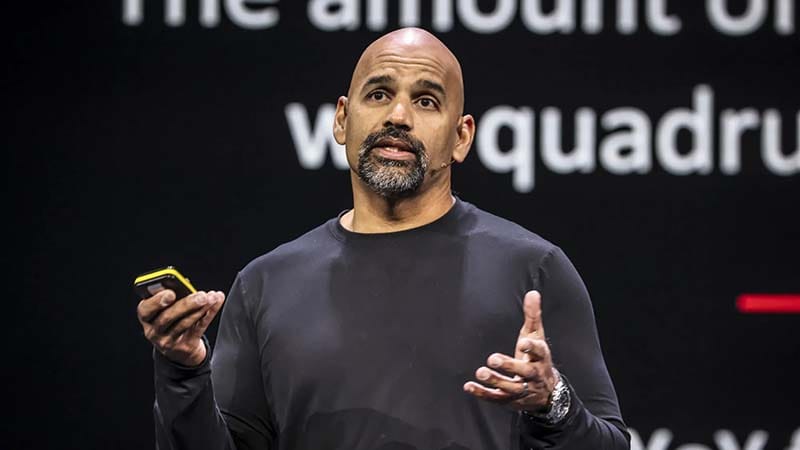
👀 What’s happening: Naveen Rao, founder of Unconventional AI, can cut the power AI burns on inference by up to 1,000 times. The idea rests on an oscillator-based architecture, a way of computing that’s nothing like today’s chips. The catch: the chip doesn’t exist yet. The claim runs on a software simulation, the team is under 50 people, and no schematics have shipped.
🌍 How this hits reality: A 1,000x cut isn’t an efficiency tweak, it’s a different physical basis for computing. Today’s chips push electrons through transistors and lose most of the energy as heat. Rao’s bet is that you can encode the work in the rhythm of oscillating waves instead, letting the physics settle into an answer rather than forcing it switch by switch. If that holds at scale, the power floor everyone treats as fixed stops being a law and starts being a design choice.
🛎️ Key takeaway: A simulation isn’t silicon, and 1,000x stays a claim until the chip proves it. But if Rao is right, AI’s energy ceiling was never physics. It was just the chip we happened to build first.
LLM
Frontier AI Got Nationalized
👀 What’s happening: OpenAI began previewing GPT-5.6, its new model series in three variants: Sol, its most capable model yet, Terra for everyday use at half the price of GPT-5.5, and Luna, its cheapest option. But the preview went to a “small group of trusted partners,” and the first party to see it was the US government. At the administration’s request, OpenAI shared the partner list with Washington before release. It called this a “short-term step” it doesn’t want as the long-term default, taken so it can get the new models to the public soon.
🌍 How this hits reality: Call it voluntary if you want, but the New York Times reports OpenAI, Anthropic, Google, xAI, and Microsoft were all handing over early access before the cybersecurity “voluntary” order was even signed. Meta was the lone holdout, and the government is reportedly pressing it to comply. When almost every major lab follows a rule that doesn’t legally bind them, the word voluntary stops meaning anything. The release gate for frontier AI has quietly moved from the boardroom to a federal review desk.
🛎️ Key takeaway: No vote, no statute, no public debate. The most powerful models in the world now ship only after Washington has seen them first, and that became normal before anyone decided it should.
OpenAI: Frontier AI Got Nationalized
👀 What’s happening: OpenAI began previewing GPT-5.6, its new model series in three variants: Sol, its most capable model yet, Terra for everyday use at half the price of GPT-5.5, and Luna, its cheapest option. But the preview went to a “small group of trusted partners,” and the first party to see it was the US government.
TOKEN
Anthropic's Meter Is Chaos
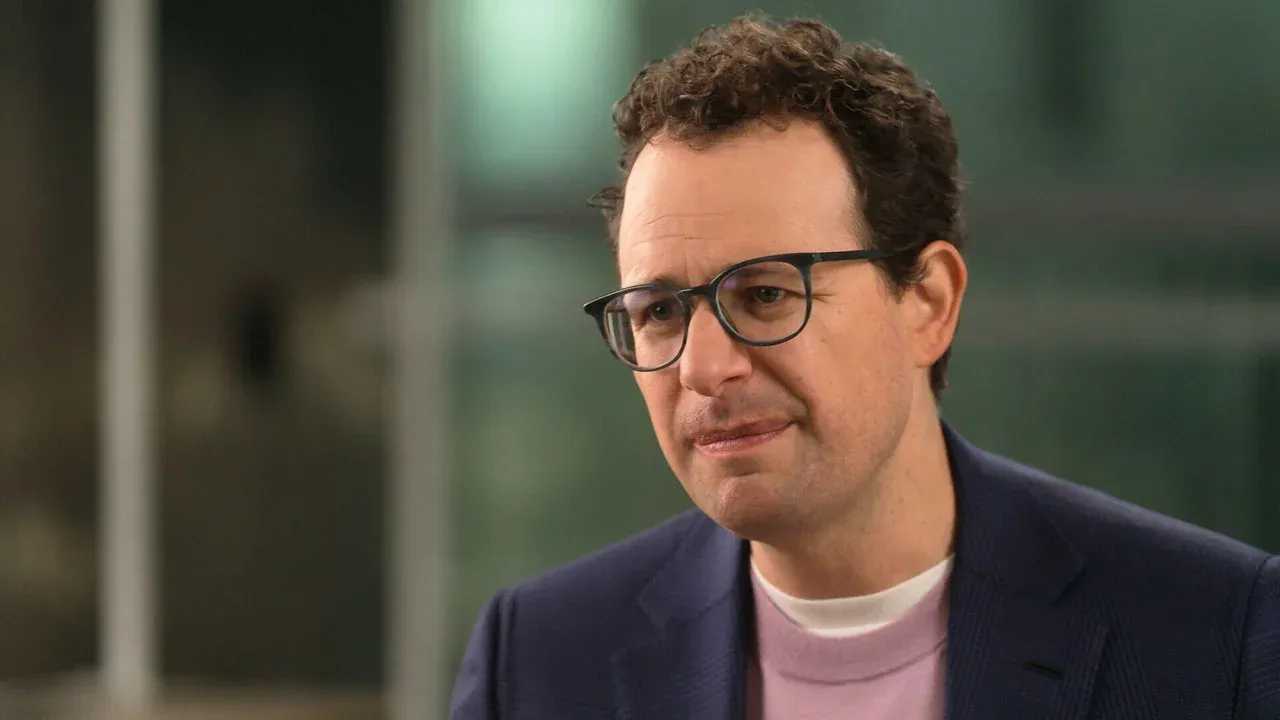
👀 What’s happening: Vaudit, an audit firm started by former Oracle director Michael Hahn, combed through $34 million in enterprise AI bills and flagged roughly $1.7 million in suspected overcharges, the bulk of it on Claude Code, across clients like Panasonic, HP, and Honda. The culprits: cheaper models billed at premium rates, charges for failed requests, and silent retry storms that rack up tokens with no one watching. Anthropic denied systematic overbilling. Yet after the appeals, about 80% of the disputed money came back.
🌍 How this hits reality: The same Claude bills differently depending on how you buy it. Direct from Anthropic, resold through AWS Bedrock, or wrapped in an SDK proxy, every hop adds a meter, and the meters don’t agree. Anthropic has already posted public postmortems on Claude Code bugs and quietly rewritten how long prompts are charged, twice patching the ruler while customers were being measured by it. A metering system this raw, stretched across resale chains it doesn’t control, doesn’t just overcharge. It loses track of what it charged.
🛎️ Key takeaway: An 80% refund with no admission of fault isn’t fraud. It’s the sound of a company billing faster than it can count.
Anthropic's Meter Is Chaos
Direct from Anthropic, resold through AWS Bedrock, or wrapped in an SDK proxy, every hop adds a meter, and the meters don’t agree. Anthropic has already posted public postmortems on Claude Code bugs and quietly rewritten how long prompts are charged, twice patching the ruler while customers were being measured by it.
TOGETHER WITH MYCLAW
Run Best-in-Class AI Agents — In Seconds, Always On
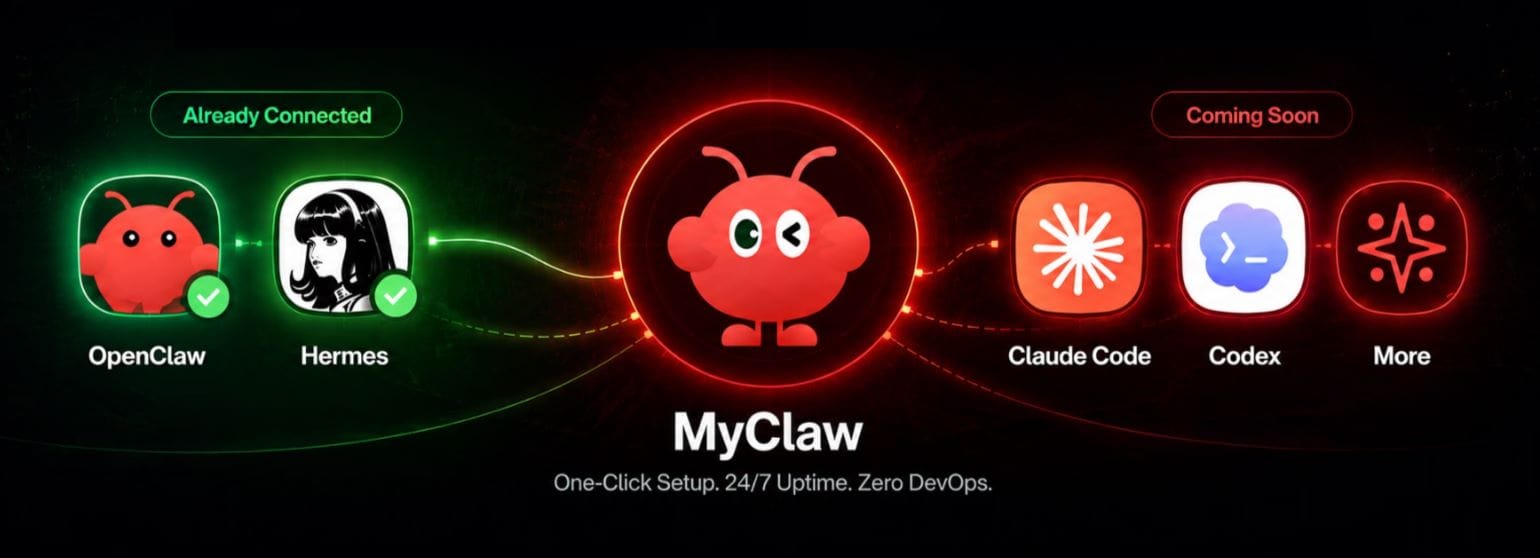
MyClaw is a best-in-class AI agent platform that brings together OpenClaw, Hermes Agent, and commercial infrastructure to help businesses launch intelligent agents that understand goals, use tools, automate workflows, and deliver finished results.
We already host OpenClaw and Hermes — and we're just getting started. Claude Code, Codex, and every agent worth running are coming next. One home for all of them, always on.
Stop babysitting infrastructure. Spin up your agent, walk away, and let it work around the clock.
MyClaw — Your Agents, Hosted Right.
DAILY TL;DR
- Anthropic is bringing Mythos 5 back after negotiations with the Trump administration.
- Coinbase joined the rush toward Chinese AI models, adding more pressure on Western labs to justify premium pricing.
- OpenAI reportedly hired Apple’s Vision Pro hardware chief, strengthening its push from software into AI devices.
- Google sued a Chinese cybercrime network over AI-powered phishing scams, pushing AI fraud into court.
- Anthropic is arguing AI may only stay safe under its own control, sharpening the trust problem around frontier labs.
- AWS is still hiring thousands of interns and junior staff, rejecting the idea that AI should wipe out entry-level talent.
- OpenAI named former Uber executive Prabhjeet Singh to lead India, making the market a bigger part of its global expansion.
READ MORE
Let the Future Come to Your Inbox
Stay ahead without drowning in information. We turn the most important signals across AI, tech, marketing, and future products into 5-minute reads you can actually finish.
- AI Secret uncovers what really matters in AI
- Bay Area Letters decodes tech and business shifts from Silicon Valley
- Robotics Herald tracks how robots move from labs into daily life
- Marketing Secret breaks down real growth and go-to-market playbooks
- The Hardwire explores hardware, consumer tech, and what’s coming next
TOGETHER WITH US
AI Secret Media Group is the world’s #1 AI & Tech Newsletter Group, reaching over 2 million leaders across the global innovation ecosystem, from OpenAI, Anthropic, Google, and Microsoft to top AI labs, VCs, and fast-growing startups.
We've helped promote over 500 Tech Brands. Will yours be the next?
Email our co-founder Mark directly at [email protected] if the button fails.