
🛎️ Claude Fable “Died” in Four Days
Plus: Loop Engineering Has Arrived, Token Capital Is Cope
Good Morning, AI Enthusiasts!
The loop ate the prompt, the state ate the model, the junk drawer ate the datacenter, and the loser renamed the scoreboard.
LLM
Claude Fable “Died” in Four Days
👀 What’s happening: On June 9, Anthropic shipped Claude Fable 5, the first public model in its Mythos family, and the praise was instant. Ninety-six hours later it was dead. Commerce Secretary Howard Lutnick ordered it barred from all foreign nationals on national-security grounds, and Anthropic pulled it worldwide that night.
🌍 How this hits reality: A model's lifespan used to track its capability. Fable 5 broke that. It died at peak power, never outclassed by a rival, never beaten by a better release. A government veto, citing foreign security jailbreak Anthropic says other public models share, ended it. The kill switch now sat in Washington, not just the benchmark.
🛎️ Key takeaway: The best public model ever shipped was killed by a letter, not a competitor, and every lab just learned its real off switch sits on a desk in Washington.
SKILLS
Loop Engineering Has Arrived
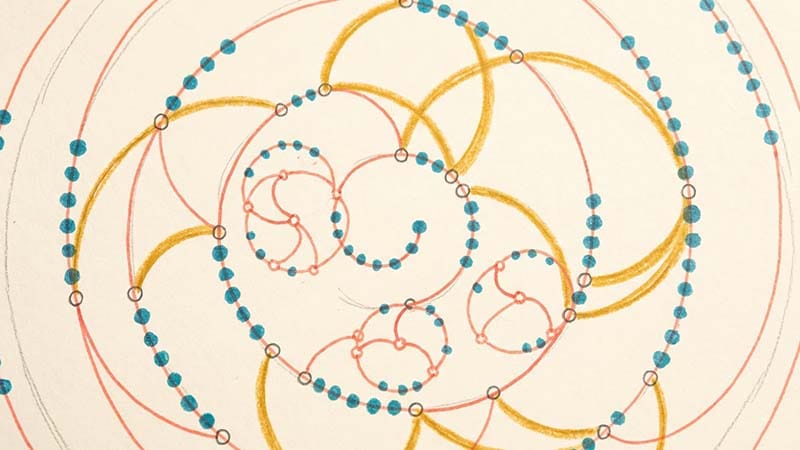
👀 What’s happening: Within days, OpenClaw's Peter and Claude Code's Boris both said they no longer write prompts; they design loops that prompt the agents. Google's Addy Osmani named it "Loop Engineering," the fourth paradigm after Prompt, Context, and Harness. That is four "engineering" disciplines invented in roughly two years. Each one was the must-learn skill, until the next one quietly made it optional.
🌍 How this hits reality: Do the math on the half-life. Prompt Engineering had courses and job titles before Context Engineering buried it. Harness arrived before most people finished learning that. Loop landed before the ink dried on Harness. The skill you grind for months now expires in weeks, obsoleted not by your competitor but by the next model that no longer needs the trick. The treadmill is running faster than the people on it.
🛎️ Key takeaway: When every skill you master is deprecated by the next model before you finish learning it, the rational move starts to look insane: learn nothing, wait for the model, and let the curve do your homework.
TOKEN
Nadella's "Token Capital" Is Cope
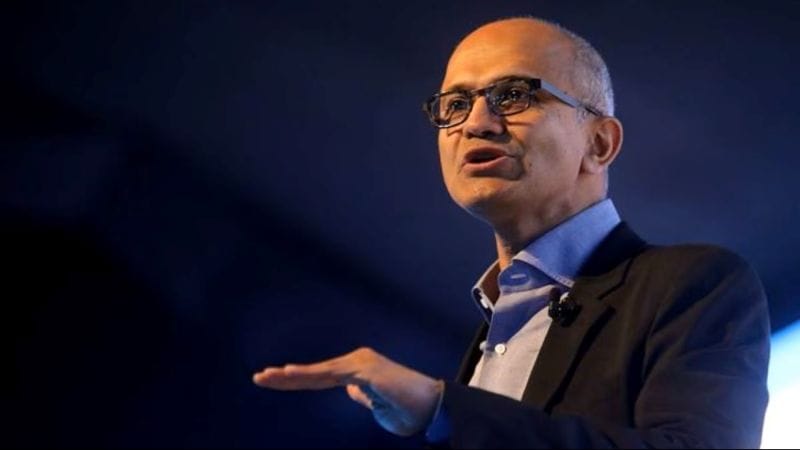
👀 What’s happening: Microsoft CEO Satya Nadella posted a long post on X argued that every firm must build two assets: human capital, the judgment of its people, and "token capital," the AI capability a company owns. His pitch is that picking the best model is the wrong game. The real asset, he says, is a private learning loop fed by your own data that compounds and survives swapping out any underlying model.
🌍 How this hits reality: Read who is talking. Microsoft does not own the frontier model; it also rents OpenAI's and resells Anthropic's. So its CEO has every reason to insist the frontier model does not matter, and that what matters is the loop you build on a platform he sells. "Token capital" conveniently reframes Microsoft's capability gap as everyone's strategy. The firm without the best model tells you the best model is not the point.
FEVER
Now They're Mining the Junk Drawer

👀 What’s happening: Google and UC San Diego announced a "datacenter" built from 2,000 retired Pixel phones. They strip each phone to its motherboard, wipe Android for Linux, and cluster the boards with Kubernetes. By SPEC benchmarks, 25 to 50 phones equal one server, so the whole project lands near 50 server-equivalents. It launches Fall 2026 to run a few computer-science classes at low cost and, per the press release, lower carbon.
🌍 How this hits reality: Fifty servers is a rounding error. Hyperscalers light up that much before lunch and stand up datacenters measured in gigawatts. Yet a top research university packages a 2,000-phone salvage rig as frontier work, because anything tagged "compute" now attracts funding, headlines, and a Google byline. The compute boom has gotten hot enough that picking through e-waste reads as a research agenda, and the result still wouldn't run a single serious training job.
🛎️ Key takeaway: When the gold rush is this loud, even a drawer of dead phones gets repackaged as a datacenter, and a 50-server science project gets to ride the trillion-dollar compute story.
DAILY TL;DR
- Meta reportedly moved to unwind a $2 billion Manus deal after pressure from Beijing.
- KPMG pulled an AI report after hallucinated citations turned the document into its own warning label.
- OpenAI is facing an investigation from state attorneys general, adding another legal front to its AI rollout.
- Mistral is reportedly raising €3 billion at a €20 billion valuation, keeping Europe’s AI champion in the capital race.
- Anthropic Mythos may have been accessed by China-linked actors, raising new questions about frontier-model controls.
- Meta pledged free AI glasses for every blind veteran, turning smart glasses into an accessibility campaign.
- Anthropic will send 1,000 fellows into nonprofits to push Claude into public-interest work.
- Stanford AI Index shows AI is advancing faster than institutions can measure, regulate, or economically absorb it.
READ MORE
Let the Future Come to Your Inbox
Stay ahead without drowning in information. We turn the most important signals across AI, tech, marketing, and future products into 5-minute reads you can actually finish.
- AI Secret uncovers what really matters in AI
- Bay Area Letters decodes tech and business shifts from Silicon Valley
- Robotics Herald tracks how robots move from labs into daily life
- Marketing Secret breaks down real growth and go-to-market playbooks
- The Hardwire explores hardware, consumer tech, and what’s coming next
TOGETHER WITH US
AI Secret Media Group is the world’s #1 AI & Tech Newsletter Group, reaching over 2 million leaders across the global innovation ecosystem, from OpenAI, Anthropic, Google, and Microsoft to top AI labs, VCs, and fast-growing startups.
We've helped promote over 500 Tech Brands. Will yours be the next?
Email our co-founder Mark directly at [email protected] if the button fails.