🛎️ CoreWeave's Lenders Want Out
Plus: Linux Stops Asking About the Bot, States Treat OpenAI Like Facebook
Read the story Subscribe
Co-founder & CEO, Anthropic
Dario Amodei moved from physics and neuroscience research into deep learning at Baidu, Google and OpenAI.
Get AI Secret’s free daily briefing, including Dario Amodei and the wider AI industry.
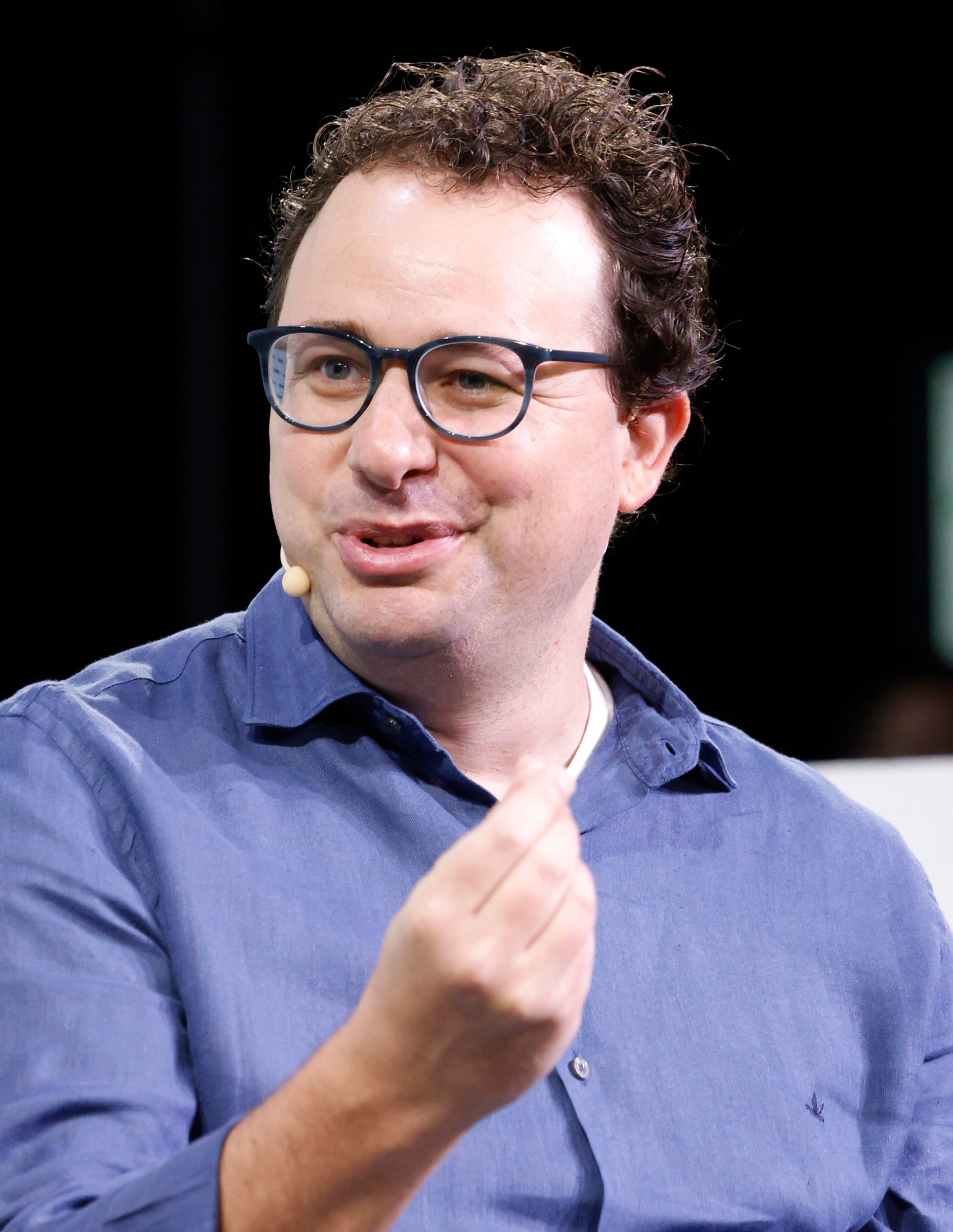
Dario Amodei moved from physics and neuroscience research into deep learning at Baidu, Google and OpenAI. As OpenAI’s vice president of research, he worked on large language models and AI safety. He co-founded Anthropic in 2021 and leads the company behind Claude.
Sources checked . Selected career milestones and biographical references.
Selected milestones, newest first. Explore earlier career below.
Amodei sets out his view of potential benefits and risks from powerful AI.
Source: Dario AmodeiThe company publicly launches its AI assistant during his leadership.
Source: AnthropicHe and other former OpenAI colleagues establish the AI safety and research company.
Source: AnthropicHe later becomes vice president of research, working on language models and safety.
Source: WikipediaMore than 10 years ago.
Amodei works on deep learning after his research role at Baidu.
Source: WikipediaThe fellowship supports his doctoral research at Princeton.
Source: Hertz FoundationRelevant sections from the articles on this page. Explore older coverage below.
More coverage

Good Morning, AI Enthusiasts!
One company is asking for your passport to use a chatbot, another is turning sneakers into GPUs.

TOKEN

👀 What’s Happening: Dario Amodei warned in early 2026 that mistiming data center investment by even a few years could be “ruinous,” taking a swipe at what sounded like YOLO-style buildouts. Months later, Anthropic began gating Claude with ID verification and tighter access, requiring government-issued photo IDs and live camera checks for some use cases.
🌍 How This Hits Reality: The contrast is hard to ignore. OpenAI is tied to projects targeting up to $500 billion in AI infrastructure and multi-gigawatt capacity, with early deployments expected by 2026. Anthropic, backed by Amazon and Google, has announced large-scale TPU capacity, but meaningful new supply lands closer to 2027. In the meantime, demand for agent-style workloads is already multiplying token usage severalfold.
🛎️ Key Takeaway: The irony is structural. Calling excess early sounds disciplined, until scarcity shows up in your own product. If supply lags demand, the rhetoric flips fast from caution to constraint, and users feel it first.
👀 What’s Happening: Dario Amodei warned in early 2026 that mistiming data center investment by even a few years could be “ruinous,” taking a swipe at what sounded like YOLO-style buildouts. Months later, Anthropic began gating Claude with ID verification and tighter access, requiring government-issued photo IDs and live camera checks for some use cases.
OpenAI is tied to projects targeting up to $500 billion in AI infrastructure and multi-gigawatt capacity, with early deployments expected by 2026. Anthropic, backed by Amazon and Google, has announced large-scale TPU capacity, but meaningful new supply lands closer to 2027. In the meantime, demand for agent-style workloads is already multiplying token usage severalfold.
Anthropic, backed by Amazon and Google, has announced large-scale TPU capacity, but meaningful new supply lands closer to 2027. In the meantime, demand for agent-style workloads is already multiplying token usage severalfold.
TOGETHER WITH MYCLAW

A personal AI shouldn’t feel generic. MyClaw lets you install skills that adapt to your preferences from the start, so your assistant feels relevant on day one. Behind the scenes, OpenClaw provides the agent power. What you see is a simpler way to put it to work.
If you’re serious about OpenClaw, don’t run it halfway. Run it the way it was meant to be run — fast, secure, and production-ready by default.
IPHONE

👀 What’s Happening: Apple has started blocking updates from vibe Coding apps like Replit and Anything, claiming that AI-generated code bypasses App Store review and creates security risks. In reality, these tools mostly generate cloud-based web apps, not malware. Apple is forcing them to weaken features, delaying updates, and leaving iPhone users stuck on outdated versions.
🌍 How This Hits Reality: Apple is trying to protect the App Store’s control over distribution, payments, and its 15% to 30% commission. But Vibe Coding changes who gets to build software. People no longer need Xcode, a Mac, or years of engineering knowledge. They can create products directly from a browser or phone. By fighting this shift, Apple is trying to maintain the same closed-platform logic that once let Windows dominate the PC era, which is impossible.
🛎️ Key Takeaway: Apple is turning its own ecosystem into a trap that only traps itself. The harder it blocks AI-native tools, the faster developers and users will move toward the open web, Android, and OpenClaw like platforms that let them build without asking permission first.
👀 What’s Happening: Apple has started blocking updates from vibe Coding apps like Replit and Anything, claiming that AI-generated code bypasses App Store review and creates security risks. In reality, these tools mostly generate cloud-based web apps, not malware. Apple is forcing them to weaken features, delaying updates, and leaving iPhone users stuck on outdated versions.
INFRA
👀 What’s Happening: Once known for wool sneakers and Silicon Valley branding, Allbirds just sold off its shoe business, raised $50 million in convertible debt, and said it will pivot into GPU rental infrastructure under the new name “NewBird AI.” The market loved it. Shares briefly surged more than 800% in a single day. What was recently a struggling shoe company with a valuation only near $39 million suddenly became an AI infrastructure play overnight.
🌍 How This Hits Reality: This is what AI mania looks like. A consumer brand with no real history in chips, data centers, or cloud infrastructure can attach itself to GPU demand and instantly create more paper value than years of selling physical products. Investors are now treating “AI compute” as a stronger story than revenue, margins, supply chains, or product-market fit. The story is worth more than the business that built it.
🛎️ Key Takeaway: Expect more dying public companies to attempt the same move. AI infrastructure may become the new reverse merger trade.
AGENTS

👀 What’s Happening: Starbucks launched a beta app inside ChatGPT that lets users describe a mood, craving, or dietary preference and get drink suggestions instantly without using menus or search bars. Users can customize the order and choose a nearby store, then finish checkout inside Starbucks’ own app. Right now it still stops short of full in-chat payment, but the connection layer is now in place.
🌍 How This Hits Reality: This matters because Starbucks is no longer acting like just a coffee chain. It is acting like a service endpoint for AI agents. Today ChatGPT suggests a drink and hands you off. Tomorrow, agents like OpenClaw could remember your usual order, your lactose preference, your location, your schedule, and directly place the order before your 9 a.m. meeting. The important shift is that brands are starting to expose themselves to AI workflows instead of forcing users through menus and search bars.
🛎️ Key Takeaway: This is an early but important move toward agent commerce. The winners may not be the brands with the best apps. They may be the brands that are easiest for AI systems to plug into and transact with.
👀 What’s Happening: Starbucks launched a beta app inside ChatGPT that lets users describe a mood, craving, or dietary preference and get drink suggestions instantly without using menus or search bars. Users can customize the order and choose a nearby store, then finish checkout inside Starbucks’ own app.
DAILY TL;DR
READ MORE
Stay ahead without drowning in information. We turn the most important signals across AI, tech, marketing, and future products into 5-minute reads you can actually finish.
TOGETHER WITH US
AI Secret Media Group is the world’s #1 AI & Tech Newsletter Group, reaching over 2 million leaders across the global innovation ecosystem, from OpenAI, Anthropic, Google, and Microsoft to top AI labs, VCs, and fast-growing startups.
We've helped promote over 500 Tech Brands. Will yours be the next?
Email our co-founder Mark directly at [email protected] if the button fails.
Good Morning, AI Enthusiasts!
The AI era is no longer about model demos or adoption curves, but about who absorbs the disruption — users, companies, or entire professions — first.

AGENTS
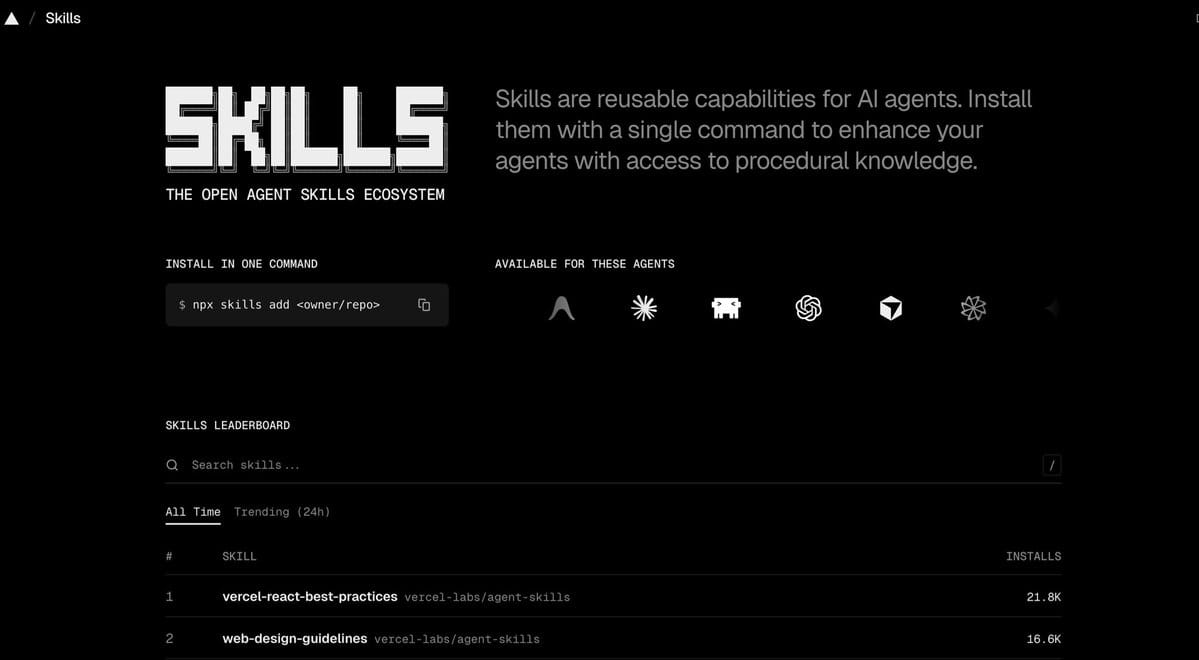
👀 What’s happening: Agent Skills became the first true breakout of 2026. They turned agents from chat interfaces into executable workers by packaging professional SOPs into loadable skills. This removed prompt rewriting, reduced token waste, and let agents act immediately. That shift made agents feel useful overnight.
🌍 How this hits reality: The jump was not incremental. Skills solved the last mile problem of action. Once workflows became reusable artifacts, agents scaled by copying logic, not retraining models. Tens of thousands of skills now circulate across tools, APIs, and SaaS stacks, blurring lines between products, roles, and industries.
🛎️ Key takeaway: Agent Skills reset the AI trajectory. Models fade into infrastructure while execution layers explode. If momentum holds, 2026 becomes the year value concentrates around skills, tools, and intent execution rather than apps or interfaces.
TOGETHER WITH FIVERR

Gone are the days of sifting through endless profiles. Our freelancers have trained their own personal AI models. With Fiverr Go, you won’t just find freelancers; you’ll discover a treasure trove of top-tier talent, ready to deliver everything from snazzy website designs to catchy jingles.
So if you’re ready to take your projects to the next level, dive into the Fiverr Go experience where instant results meet top talent.
👀 What’s happening: Gemini usage is exploding at the infrastructure layer. API calls more than doubled in five months from 35 billion to 85 billion after Gemini 2.5 shipped, forcing Google to reshuffle compute capacity. Developers are clearly adopting the models. At the same time, Google’s packaged enterprise products show uneven traction and inconsistent daily use.
🌍 How this hits reality: This split reveals Google’s priorities. Most visible energy sits on consumer facing AI and model reach, not enterprise workflows. Eight million enterprise seats sound large, but satisfaction is mixed and usage shallow. Many customers skip Gemini Enterprise entirely and build custom tools on the API instead.
🛎️ Key takeaway: Google looks comfortable winning mindshare with consumers and developers, while letting enterprise customers fend for themselves. If this pattern holds, Gemini strengthens Google Cloud usage but leaves Google without a credible enterprise AI product layer.
👀 What’s happening: Gemini usage is exploding at the infrastructure layer. API calls more than doubled in five months from 35 billion to 85 billion after Gemini 2.5 shipped, forcing Google to reshuffle compute capacity. Developers are clearly adopting the models. At the same time, Google’s packaged enterprise products show uneven traction and inconsistent daily use.
CODING
👀 What’s happening: At Davos, Anthropic CEO Dario Amodei said AI could finish "most, maybe all" software engineering within six to twelve months. This was not a joke. Anthropic recently shipped Claude Cowork with all code written by Claude Code, leaving engineers to review, guide, and approve outputs.
🌍 How this hits reality: That shift lands as vibe coding collapses creation time. Cursor is now under pressure from Lovable, which turns product building into pure prompts and templates. When one operator ships features in hours, team based velocity assumptions break across SaaS, sofewares, and IT.
🛎️ Key takeaway: Traditional software engineers face a hard fork. Either adapt into model orchestrators, reviewers, and system owners, or die. The middle ground disappears fast, and waiting is the riskiest option.
👀 What’s happening: At Davos, Anthropic CEO Dario Amodei said AI could finish "most, maybe all" software engineering within six to twelve months. This was not a joke. Anthropic recently shipped Claude Cowork with all code written by Claude Code, leaving engineers to review, guide, and approve outputs.
QUICK HITS
DeepMind CEO Demis Hassabis said he was surprised by OpenAI’s early move to test ads in ChatGPT, questioning whether ads fit the AI assistant model.
TRENDING
READ MORE
Stay ahead without drowning in information. We turn the most important signals across AI, tech, marketing, and future products into 5-minute reads you can actually finish.
TOGETHER WITH US
AI Secret Media Group is the world’s #1 AI & Tech Newsletter Group, reaching over 2 million leaders across the global innovation ecosystem, from OpenAI, Anthropic, Google, and Microsoft to top AI labs, VCs, and fast-growing startups.
We've helped promote over 500 Tech Brands. Will yours be the next?
Email our co-founder Mark directly at [email protected] if the button fails.

Good Morning, AI Enthusiasts!
AI is rapidly transitioning from an assistive tool to a primary operator in knowledge-intensive fields. It is not just augmenting human capabilities but potentially replacing traditional human roles entirely.
SPONSORED BY

TREND

Dario Amodei, CEO of leading AI research company Anthropic, has predicted that within just three to six months, artificial intelligence will be writing 90% of the code currently handled by software developers. Even more striking is his assertion that within a year, AI could potentially write all code, fundamentally transforming the role of software engineers.
This bold prediction raises profound questions about the future of software development as a profession. Developers may shift from writing code line-by-line to orchestrating AI systems, defining requirements, and ensuring the code meets business objectives.
The transition is already underway, with tools like GitHub Copilot and Amazon CodeWhisperer demonstrating impressive capabilities in code generation. As this transformation accelerates, both individual developers and organizations will need to adapt quickly to remain relevant in an increasingly AI-augmented development landscape.
Dario Amodei, CEO of leading AI research company Anthropic, has predicted that within just three to six months, artificial intelligence will be writing 90% of the code currently handled by software developers. Even more striking is his assertion that within a year, AI could potentially write all code, fundamentally transforming the role of software engineers.
Dario Amodei, CEO of leading AI research company Anthropic, has predicted that within just three to six months, artificial intelligence will be writing 90% of the code currently handled by software developers. Even more striking is his assertion that within a year, AI could potentially write all code, fundamentally transforming the role of software engineers.
TOGETHER WITH ACCIO

Accio is the world's first AI-powered sourcing engine, aiming to redefine the sourcing experience for business owners and aspiring entrepreneurs to achieve greater success easier.
With Accio's newly launched {{Business Research}} function, future business leaders can
BUSINESS
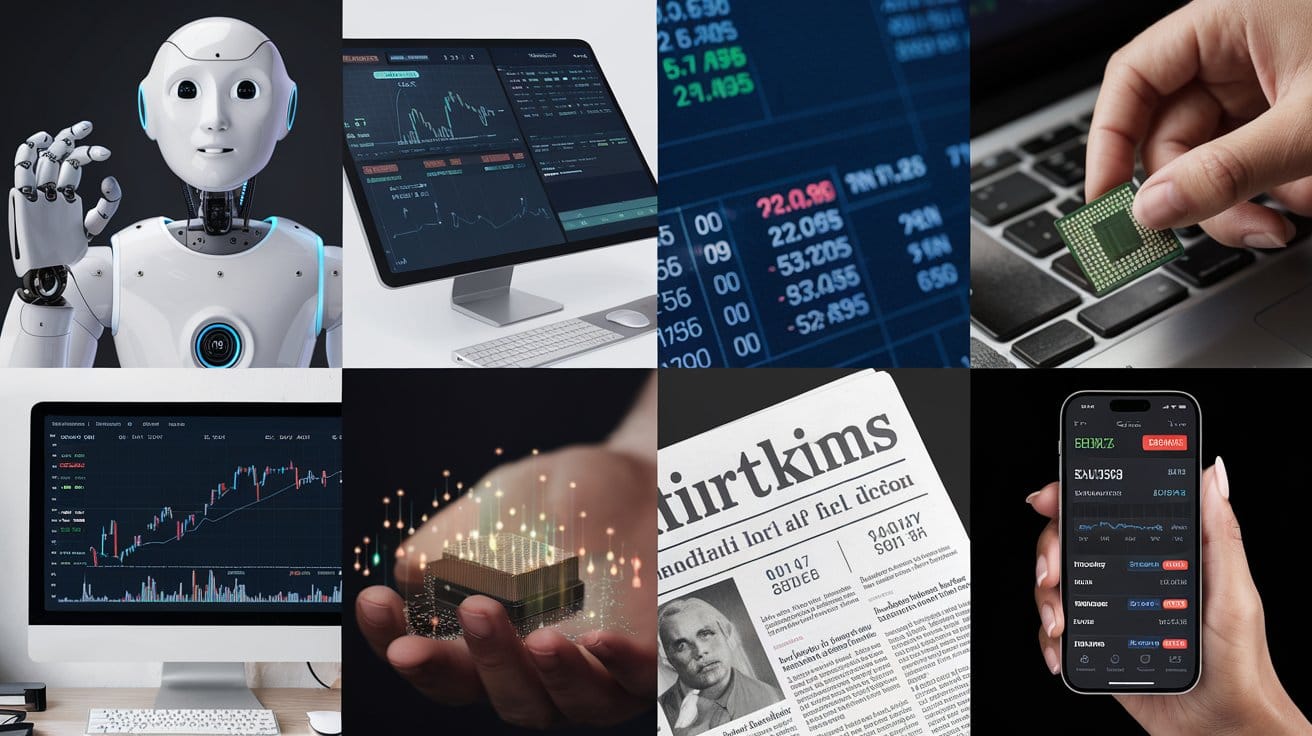
The financial industry has undergone a remarkable transformation in recent years, propelled by advancements in artificial intelligence and automation. Robo-advisors—AI-driven investment platforms—have emerged as a disruptive force in wealth management, offering low-cost, data-driven, and automated portfolio management solutions. As we move through 2025, more investors are considering whether to entrust their financial futures to these algorithmic managers.
Robo-advisors offer several compelling advantages: significantly lower fees compared to traditional financial advisors (typically 0.25-0.50% versus 1-2%), data-driven decision-making free from emotional biases, accessibility with low minimum investments, and 24/7 portfolio monitoring and rebalancing. These features have made financial management more accessible to a broader range of investors.
However, important limitations remain. Robo-advisors often lack the personalized approach of human advisors, particularly for complex financial situations involving estate planning, tax optimization, or business interests.
QUICK HITS
TRENDING TOOLS
AI Secret is the world’s #1 AI Newsletter, boasting over 1 million readers from leading companies such as OpenAI, Google, Meta, and Microsoft. We've assisted in promoting Over 500 AI-Related Products. Will yours be the next?
What We Can Offer:
Email our co-founder Mark directly at [email protected] if the button fails.
 Magna
Magna Magna
Magna Magna
Magna
Anthropic, a leading artificial intelligence (AI) company, has emerged as a trailblazer in the competitive AI landscape. Founded by former OpenAI executives, including Dario Amodei, Anthropic has rapidly ascended to become one of the most well-funded AI startups, second only to OpenAI. The company’s commitment to AI safety, ethical innovation, and strategic partnerships has positioned it as a key player in shaping the future of AI. This report delves into Anthropic’s innovative approaches to marketing, sales, and strategic partnerships, highlighting its unique positioning in the AI industry.
Its foundation is built on the principle of ethical AI development. The company’s mission is to create reliable, interpretable, and steerable AI systems that address the inherent unpredictability of neural networks. This vision was shaped by Dario Amodei’s earlier work at Google, where he co-authored the seminal paper "Concrete Problems in AI Safety," which explored the risks of unsafe exploration and unintended side effects in AI systems.
Anthropic’s focus on AI safety is evident in its development of "Constitutional AI," a framework designed to embed ethical principles into AI systems. This approach uses a constitution derived from sources like the United Nations Declaration of Human Rights and Google DeepMind’s Sparrow Rules to guide AI behavior. The constitution ensures that AI systems like Anthropic’s Claude model handle sensitive topics responsibly, respect user privacy, and avoid harmful generalizations.
Founded by former OpenAI executives, including Dario Amodei, Anthropic has rapidly ascended to become one of the most well-funded AI startups, second only to OpenAI. The company’s commitment to AI safety, ethical innovation, and strategic partnerships has positioned it as a key player in shaping the future of AI.
Anthropic, a leading artificial intelligence (AI) company, has emerged as a trailblazer in the competitive AI landscape. Founded by former OpenAI executives, including Dario Amodei, Anthropic has rapidly ascended to become one of the most well-funded AI startups, second only to OpenAI.
Anthropic’s rapid ascent in the AI industry can be attributed to its strategic partnerships with major technology companies like Amazon, Google, and Salesforce. These partnerships have not only provided financial backing but also facilitated the integration of Anthropic’s AI models into diverse applications.
Amazon has been a significant investor in Anthropic, committing a total of $8 billion to the company as of late 2024. This investment underscores Amazon’s confidence in Anthropic’s AI capabilities and its strategic importance in the AI arms race. Anthropic has named Amazon Web Services (AWS) as its primary training partner, leveraging AWS Trainium and Inferentia chips for model development. This partnership aligns with Amazon’s broader AI strategy, which includes integrating AI into services like Alexa and personalized shopping recommendations.
Google has also deepened its partnership with Anthropic, investing over $3 billion to date. This collaboration reflects Google’s efforts to bolster its AI offerings and compete with rivals like Amazon and Meta. Google’s investment in Anthropic is particularly strategic, as it seeks to commercialize its AI technology and integrate it into industries ranging from customer service to complex problem-solving.
Salesforce Ventures has played a pivotal role in supporting Anthropic’s growth through its Generative AI Fund. Salesforce’s investment in Anthropic’s $450 million Series C round in 2023 was driven by a shared commitment to responsible AI development. Anthropic’s focus on Constitutional AI resonated with Salesforce’s values, making the partnership a natural fit. This collaboration has enabled Anthropic to access Salesforce’s extensive customer and executive network, further expanding its market reach.
Amazon has been a significant investor in Anthropic, committing a total of $8 billion to the company as of late 2024. This investment underscores Amazon’s confidence in Anthropic’s AI capabilities and its strategic importance in the AI arms race. Anthropic has named Amazon Web Services (AWS) as its primary training partner, leveraging AWS Trainium and Inferentia chips for model development.
Google has also deepened its partnership with Anthropic, investing over $3 billion to date. This collaboration reflects Google’s efforts to bolster its AI offerings and compete with rivals like Amazon and Meta. Google’s investment in Anthropic is particularly strategic, as it seeks to commercialize its AI technology and integrate it into industries ranging from customer service to complex problem-solving.
Amazon has been a significant investor in Anthropic, committing a total of $8 billion to the company as of late 2024. This investment underscores Amazon’s confidence in Anthropic’s AI capabilities and its strategic importance in the AI arms race. Anthropic has named Amazon Web Services (AWS) as its primary training partner, leveraging AWS Trainium and Inferentia chips for model development.
Anthropic focuses its marketing and sales strategies on a business-to-business (B2B) model, targeting companies that value AI safety and reliability. Its go-to-market (GTM) strategy highlights three main areas: strategic vision, clear communication, and a dedicated B2B approach.
The company has established itself as a leader in AI safety, using its knowledge to build trust with potential clients and partners. Anthropic’s commitment to ethical AI development and its transparent way of tackling societal issues have appealed to businesses looking for reliable AI solutions. For instance, its efforts in climate modeling and support for non-profit organizations show its dedication to using AI for positive social impact.
Partnerships with Amazon, Google, and Salesforce have played a key role in Anthropic’s marketing and sales success. By collaborating with these industry giants, Anthropic has gained credibility and reached a wider customer base. For example, its partnership with AWS allows it to integrate its AI models into Amazon’s cloud services, connecting with many enterprise customers.
Anthropic’s commitment to ethical AI development distinguishes it from competitors like OpenAI and Google DeepMind. By tackling important issues such as bias, misuse, and unpredictability, Anthropic has positioned itself as a leader in AI accountability. This focus has attracted businesses looking for AI solutions that match their values and meet regulatory standards.
Partnerships with Amazon, Google, and Salesforce have played a key role in Anthropic’s marketing and sales success. By collaborating with these industry giants, Anthropic has gained credibility and reached a wider customer base. For example, its partnership with AWS allows it to integrate its AI models into Amazon’s cloud services, connecting with many enterprise customers.
Anthropic’s ability to secure substantial funding from top-tier investors has been a key driver of its growth. The company’s valuation reached $60 billion in early 2025, following a $2 billion funding round led by Amazon, Google, and Lightspeed Venture Partners. This funding highlights the growing demand for advanced AI capabilities and the confidence investors have in Anthropic’s potential.
As the AI industry continues to evolve, Anthropic is well-positioned to play a pivotal role in shaping its future. The company’s focus on ethical AI development, strategic partnerships, and innovative marketing approaches will likely drive its continued success. Moreover, its commitment to addressing societal challenges and regulatory requirements positions it as a leader in responsible AI innovation.
Looking ahead, Anthropic’s partnerships with Amazon, Google, and Salesforce are expected to deepen, further enhancing its market presence and technological capabilities. The company’s emphasis on AI safety and reliability will continue to resonate with enterprises and policymakers, ensuring its relevance in an increasingly competitive landscape.
Anthropic’s ability to secure substantial funding from top-tier investors has been a key driver of its growth. The company’s valuation reached $60 billion in early 2025, following a $2 billion funding round led by Amazon, Google, and Lightspeed Venture Partners. This funding highlights the growing demand for advanced AI capabilities and the confidence investors have in Anthropic’s potential.
Plus: Linux Stops Asking About the Bot, States Treat OpenAI Like Facebook
Read the storyPlus: The Brake Is for Other People, AI's First Guardrail Is a Utility Bill
Three labs asked the industry to slow down. The market has already answered.
Plus: Nobody Runs the Flagships, Even China Calls Their Bluff
Plus: Apple Kills AI Builders, Allbirds Became an AI Infra, Starbucks Releases a Skill
Plus: Gemini Users Are Angry, Coding Has 12 Months Left
Exploring Anthropic CEO's Bold Prediction and the Rise of Robo-Advisors
Anthropic, a leading artificial intelligence (AI) company, has emerged as a trailblazer in the competitive AI landscape. Founded by former OpenAI executives, including Dario Amodei, Anthropic
In recent years, the field of artificial intelligence (AI) has witnessed rapid advancements, with leading companies such as OpenAI, Google, and Anthropic at the forefront. However,