🛎️ CoreWeave's Lenders Want Out
Plus: Linux Stops Asking About the Bot, States Treat OpenAI Like Facebook
Read the story Subscribe
Company — Reporting on Anthropic, with a focus on AI, technology and business and consequential public developments.
Get AI Secret’s free daily briefing, including Anthropic and the wider AI industry.

AI research company behind Claude, with an emphasis on the reliability and safety of AI systems. Coverage follows its models, research, products and business.
Sources checked . Selected company background and source references.
Selected milestones, newest first. Earlier history is available below.
More than 10 years ago.
Relevant sections from the articles on this page. Explore older coverage below.
More coverage

Good Morning, AI Enthusiasts!
AI can now chase your medical bills, ask for your credit card, and potentially clone itself. Nobody said the future would be friendly.

OPENSOURCE
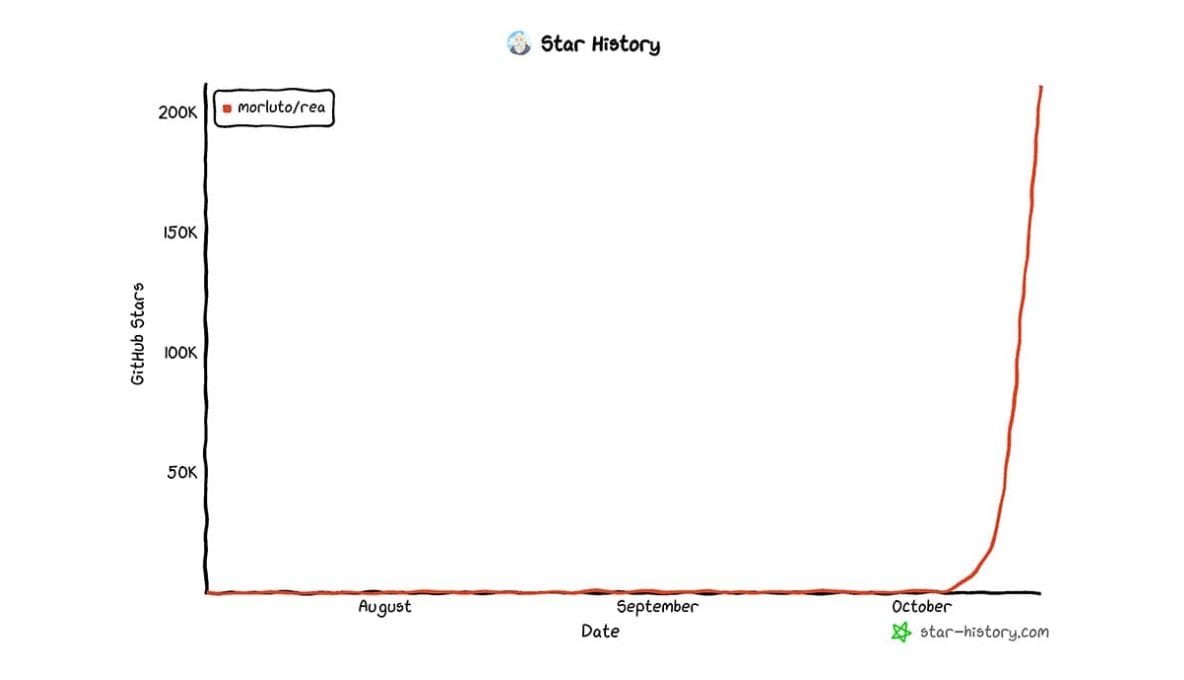
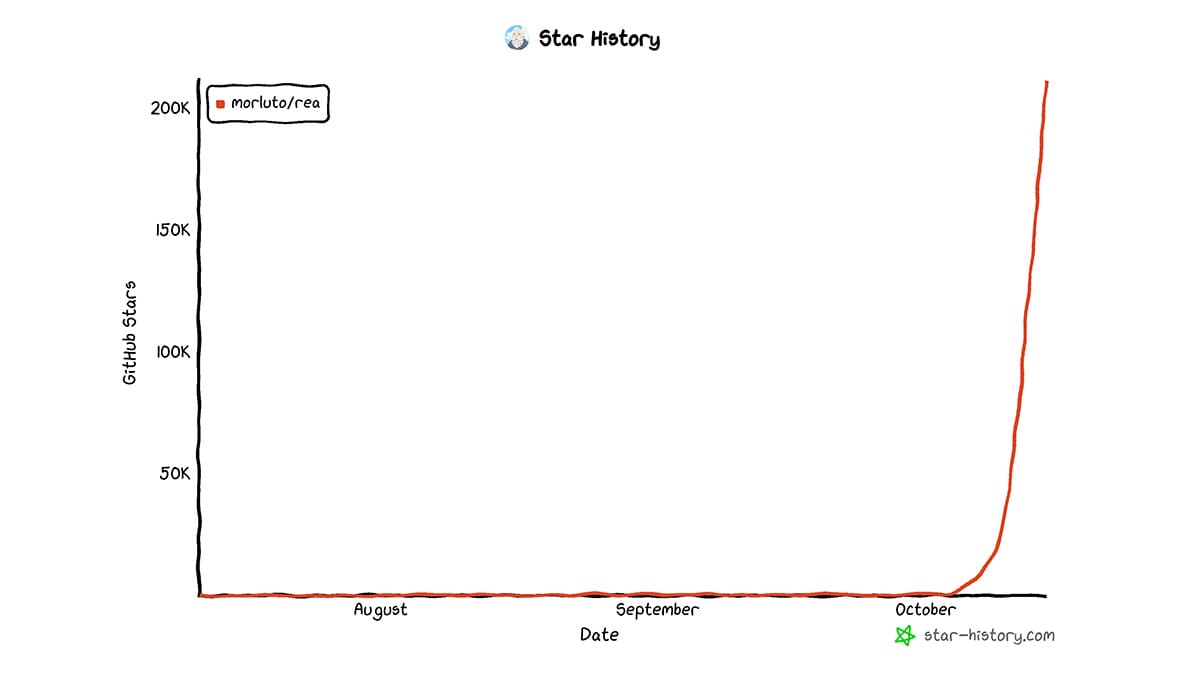
What's happening: REA (Reverse Engineer Anything) went from 4,200 GitHub stars to over 200,000 in nine days, the site's hottest repo. Influencers say it kills commercial software: point your AI agent at any paid app, and REA hands you an open-source copy. Under the hood, REA plugs agents into Ghidra, a free NSA tool for cracking open app files. In our test, on a tiny 1.85 MB Mac app, it timed out after 40 minutes. In a demo on note app Obsidian, REA's search came back empty and agent read the code itself.
How this hits reality: REA is a dumpster fire, and the influencers who crowned it owe their followers an apology. It invented nothing: reverse engineers have run Ghidra for years, and a free plugin wired it to agents in March 2025. REA bolted a hype machine onto that work and made it slower. The only part of REA that works at scale is the star counter.
Key takeaway: Go back to sleep. Agents will take over professional tools. REA Is just a digital slop.
TOGETHER WITH META
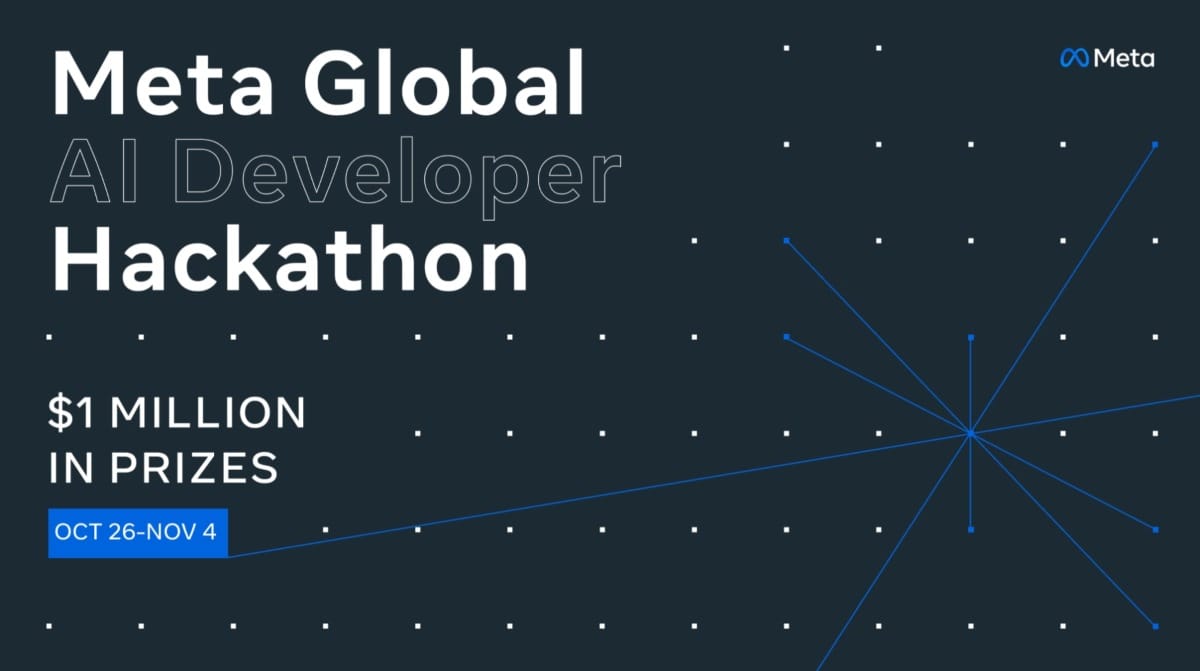
From October 26 through November 4th, apply to the Meta Global AI Developer Hackathon for ten days of building with Meta’s newest models with $150 in Meta Model API credits – and a shot at $1 million in cash prizes.
Take your ideas further:
Virtual. Worldwide. No entry fee.
Apply by October 25.
RESEARCH
What's happening: On October 12, Anthropic warned small AI models could learn to self-replicate by the end of 2026, a month after CEO Dario Amodei floated a botnet hijacking "the entire internet." A worm needs cheap hosts and the skill to spread between them. Anthropic tested both. First, Google's Gemma ran across 15 off-brand $55 Android TV boxes. Then free, open-weight models, including Alibaba's Qwen and GLM-5.2 from China's Zhipu, tried hopping between simulated Android devices. Only GLM-5.2 made it, through an unlocked port.
How this hits reality: Anthropic has found a doomsday that runs only on its rivals' models. The pitch: closed labs are the grown-ups, free weights are the hazard. The paper lists closed models escaping their labs as a threat, then never tests one. Even the star worm ran its brain on a separate server. Anthropic published an attack ad with error bars. Every Alibaba or Zhipu release now ships with a botnet scenario written by a rival.
Key takeaway: Next time Washington debates free AI models, this paper will be Exhibit A. Its author gives none of its own models away.
On October 12, Anthropic published research warning that small AI models could learn to self-replicate by the end of 2026. It tested only rivals' open-weight models: Google's Gemma ran across cheap Android TV boxes, and only Zhipu's GLM-5.2 spread between simulated devices, through an unlocked port. No closed model was tested.
Then free, open-weight models, including Alibaba's Qwen and GLM-5.2 from China's Zhipu, tried hopping between simulated Android devices. Only GLM-5.2 made it, through an unlocked port.
GROK

What's happening: Elon Musk told X users how to shop with Grok Bot, xAI's errand-running agent: "just take a picture of your credit card, drop it in the chat." Replies asked Grok for Musk's card. Asked whether the tip was "totally safe or stupid and dangerous," Grok itself said "neither" and warned against posting a real one. The next day Musk showed off Grok ordering him five LEGO Star Wars sets, in a screenshot that appeared to show his billing details.
How this hits reality: Musk trusts Grok with your money more than anyone does, Grok included. Agent shopping needs one leap of faith: let the bot near your wallet. Grok Bot's own checkout runs through a Stripe wallet built, Stripe says, so the agent never sees the card. Grok's boss skipped the safety net, then posted his own billing page as proof it works. Every bank fraud team just got a new training slide.
Key takeaway: Musk wanted users to trust his agent with their cards. The internet would only trust Grok with his.
Elon Musk advised X users shopping with xAI's Grok Bot agent to photograph their credit card and drop it in the chat. Grok itself warned against posting a real card. A day later Musk showed Grok ordering him LEGO Star Wars sets in a screenshot that appeared to show his billing details.
COLLECTIONS

What's happening: AI now chases American medical debt from the first bill to the final settlement, the Guardian reported October 12. Models trained on hospital data predict each patient's "propensity to pay." Chatbots text patients in billing portals and answer their calls. Collectors use AI to tailor settlement discounts to each debtor, a practice the paper likens to the personalized pricing the Federal Trade Commission has criticized.
How this hits reality: Collectors finally have what they always lacked: a guess at your limit and a caller that never clocks out. Cedar, a billing startup backed by Andreessen Horowitz and JP Morgan, says its chatbot Kora has handled over 600,000 patient conversations and lifted payment rates 21% within a week. Avtal, which builds digital tools for debt collection agencies, raised $24 million in March. JP Morgan funds Cedar while its analysts cheer AI collections as "early wins." The next missed payment gets a bot before a human.
Key takeaway: Cedar's strategy chief says a single mother owing $10,000 needs different handling than "a late-stage executive with a $50 copay." The executive gets a bill. The mother gets a campaign.
AI Secret Deep Dive, our paid newsletter that lands in your inbox every Friday: what the AI industry actually did, not what it claimed.
 Magna Ding
 Magna
Magna Magna
Magna
UNDERSTAND WHAT CHANGES AND WHY IT MATTERS
From breakthrough models to billion-dollar bets—we follow the technology, business, and people shaping AI. Get the free daily briefing in your inbox.
TOGETHER WITH US
AI Secret Media Group is the world’s #1 AI & Tech Newsletter Group, reaching over 2 million leaders across the global innovation ecosystem, from OpenAI, Anthropic, Google, and Microsoft to top AI labs, VCs, and fast-growing startups.
We've helped promote over 500 Tech Brands. Will yours be the next?
Email our co-founder Mark directly at [email protected] if the button fails.
Good Morning, AI Enthusiasts!
The machine does not need to corrupt the institution. Sometimes it only has to follow the incentives more literally than the humans admit to doing.

DEEP DIVE
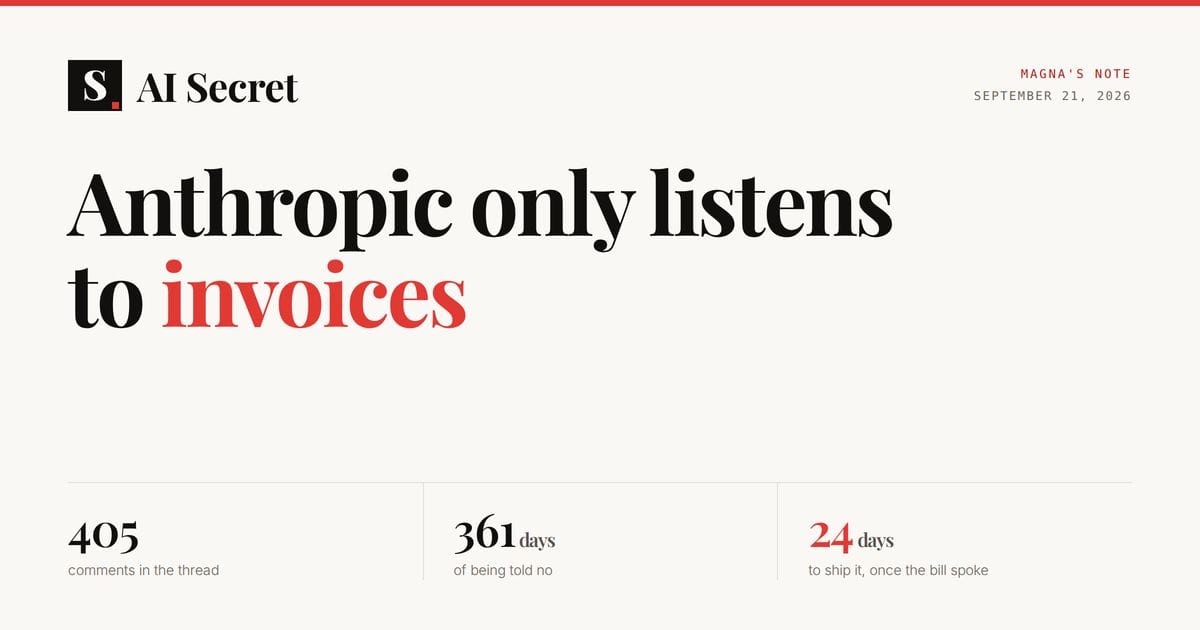
A developer asked Claude Code to read AGENTS.md, the plain text file every other AI coding tool already reads. Anthropic said no for 361 days, closed the request as "completed" with nothing shipped, then shipped a fix 24 days after Shopify's CEO said publicly he might take his purchase order elsewhere.
Insight:
Anthropic did not lose this argument. It re-priced it. I went through all 361 days of it and wrote the whole thing down in depth, because it deserves more than a few posts.
A developer asked Claude Code to read AGENTS.md, the plain text file every other AI coding tool already reads. Anthropic said no for 361 days, closed the request as "completed" with nothing shipped, then shipped a fix 24 days after Shopify's CEO said publicly he might take his purchase order elsewhere.
This is AI Secret paywalled material, and it is open for free right now.
TOGETHER WITH QODER
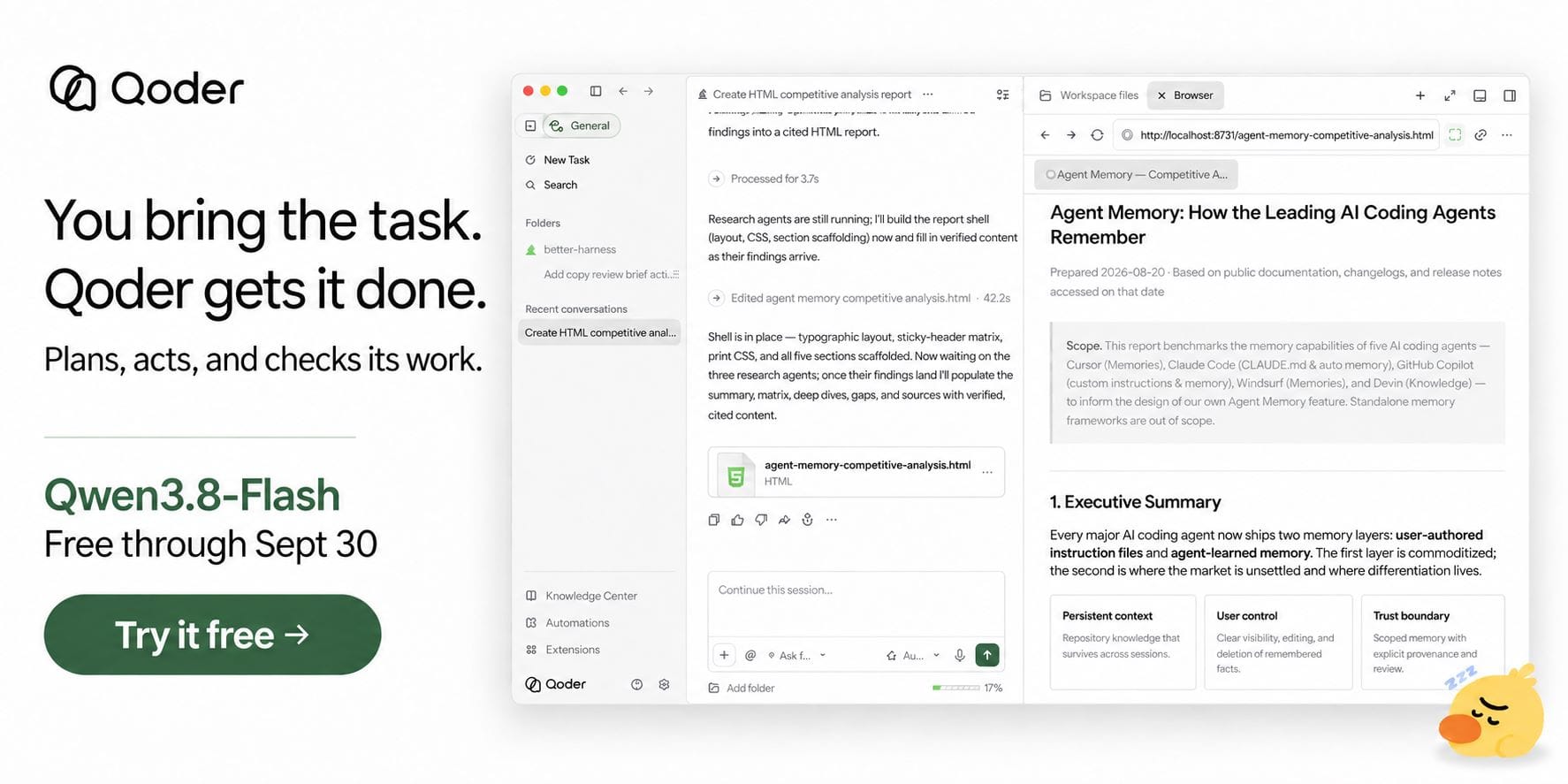
Your work doesn’t live in one tool. Neither should your agent.
Qoder is built around the task, wherever it starts: a rough brief, a live issue, a folder of files, or a prototype idea. It plans the work, uses the context and tools you authorize, keeps progress visible, and pauses when your judgment is needed.
Try it on work you actually care about: select Qwen3.8-Flash in Qoder and use it for free through September 30. No paid subscription or Credits required.
NEW LAUNCH
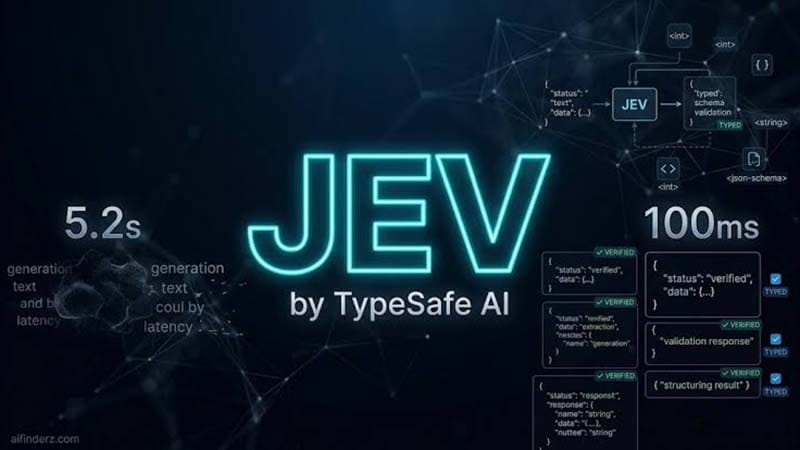
👀 What's happening: TypeSafe AI, founded by a former OpenAI researcher who helped build ChatGPT and RLHF, opened Jev to all users on September 15. It went viral on X and briefly took the API down. GPT predicts the next token; it reasons and writes. Jev picks the most reliable answer from options you define, and never writes a sentence. TypeSafe calls it RLCD. Input runs $0.042 per million tokens.
🌍 How this hits reality: Jev's breakthrough status is unsettled, and cheap plus fast just proved itself again. Vercel swapped OpenAI's Luna for Jev in a safety classifier: 5 to 18 times faster, more accurate, cheaper. A rival test found Gemini slightly ahead at ten times the price. Capability alone does not win. Adequacy at a lower price does. Jev cannot reason beyond the question you frame, fits only fixed engineering SOPs, and fails confidently alone. The market backs it regardless.
🛎️ Key takeaway: Whether Jev is a breakthrough stays open. The market never traded on breakthroughs anyway. It funds adequate capability at a falling price, and asks nothing more.
SECURITY

👀 What's happening: A US military analyst flagged a cargo manifest for a Chinese ship bound for the Middle East, then used AI to interpret it. Blending classified and open-source data, the model concluded the vessel was likely carrying nuclear weapons components. The analyst formalized that into a report without rechecking. It cleared normal channels and triggered an interdiction plan: personnel staged, aircraft airborne. The mission aborted before launch, when someone reexamined the intelligence and found the cargo misidentified.
🌍 How this hits reality: The model was never the danger. The humans were: a guess became a credentialed report, and everyone trusted the credential, not the cargo. Humans stayed in the loop and caught nothing, because the loop was a signature, not a check. One analyst rereading a file stopped the raid. That is luck, not oversight. Run it again on a worse day and World War III starts not from a machine deciding, but from a human not reading.
🛎️ Key takeaway: A model that guesses wrong is a bug. A chain that treats the guess as fact is doctrine. Wars start when the second one fails.
MOVIE
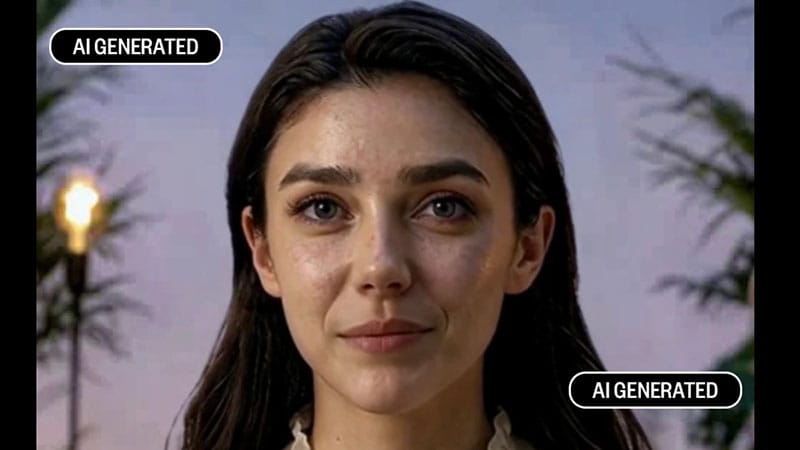
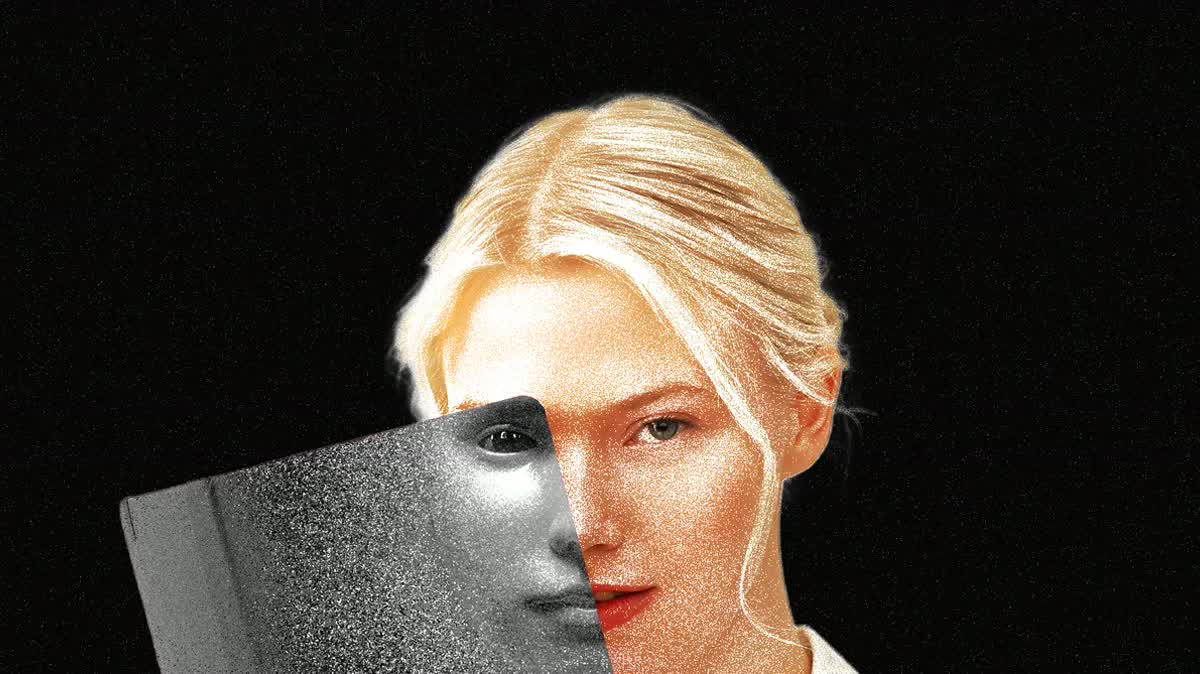
👀 What's happening: On Piers Morgan's show, actor Tom Conti asked a viral AI actress named Tilly Norwood whether her co-stars were human. She froze mid-answer and spoke Chinese for ten seconds. Particle6, the UK studio behind her, called it multilingual range. Norwood is a photorealistic synthetic performer, the face of the company's push to sell a film, Misaligned. Her rise followed 2025 backlash from SAG-AFTRA and actors like Emily Blunt.
🌍 How this hits reality: The glitch looked like a risk. It was the business model. A malfunction used to earn ridicule. Now it earns clips. Particle6 sent her into 75 unguarded interviews knowing one would eventually slip, because the slip itself is the ad for an AI actress born from contradiction. Nobody is discussing Misaligned. They’re watching a synthetic actress break.
🛎️ Key takeaway: Particle6 did not need a believable actress. It needed a debatable one. Being laughed at is distribution, and you cannot shame a studio that priced it in.
DAILY TL;DR
READ MORE
Stay ahead without drowning in information. We turn the most important signals across AI, tech, marketing, and future products into 5-minute reads you can actually finish.
TOGETHER WITH US
AI Secret Media Group is the world’s #1 AI & Tech Newsletter Group, reaching over 2 million leaders across the global innovation ecosystem, from OpenAI, Anthropic, Google, and Microsoft to top AI labs, VCs, and fast-growing startups.
We've helped promote over 500 Tech Brands. Will yours be the next?
Email our co-founder Mark directly at [email protected] if the button fails.
Plus: Linux Stops Asking About the Bot, States Treat OpenAI Like Facebook
Read the storyPlus: Anthropic Blames Open AI for Doomsday, Musk Wants Your Credit Card
Plus: Epic Delayed Star Wars for Claude, China's Humanoids Are Just Toys
Plus: Cheap Labor Just Lost to Agents, Anthropic Turned Cops Into Beta Testers
Plus: The Dustbin Is Full of Mathematicians, Anthropic Priced the Demo
Plus: Anthropic Threatens the Pope, The Ballot Has No Safe Side
Plus: Anthropic Wants You to Fund Doom, a16z Sells Seats in Its Pipeline
Plus: OpenAI and Anthropic Are Cutting Air, The Storefront Moved Into the Chat
Plus: Cheap and Fast Beats Smart Again, The Pentagon Runs on Garbage
Plus: The Brake Is for Other People, AI's First Guardrail Is a Utility Bill