Europe Taxes the Future
Plus: OpenAI Guards the Grid It Drains, Musk's Abundance Lasted Three Days
Read the story
AI Researcher and Educator
Andrej Karpathy makes neural networks and large language models understandable through public teaching, code, and technical explanations. He was a founding member of OpenAI, led Tesla’s computer vision work as director of AI, and later returned to OpenAI. His Stanford teaching and independent educational material connect research concepts to implementation, making him a useful guide to how modern AI systems are built and used.
Get AI Secret’s free daily briefing, including Andrej Karpathy and the wider AI industry.
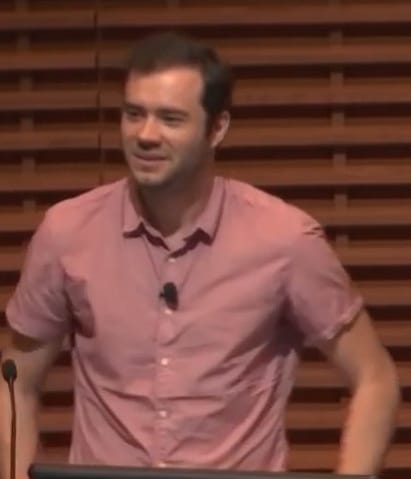
Andrej Karpathy makes neural networks and large language models understandable through public teaching, code, and technical explanations. He was a founding member of OpenAI, led Tesla’s computer vision work as director of AI, and later returned to OpenAI. His Stanford teaching and independent educational material connect research concepts to implementation, making him a useful guide to how modern AI systems are built and used.
Sources checked . Selected career background and milestones.
Selected research, leadership and career milestones, newest first.
Karpathy’s personal timeline marks 2024 onward with educational videos, including technical neural-network lessons and general-audience explanations of language models and their practical use.
Source: Andrej Karpathy ↗Karpathy returned to OpenAI and built a team working on midtraining and synthetic data generation, according to the career timeline on his personal website.
Source: Andrej Karpathy ↗Karpathy began leading computer vision at Tesla, covering data labeling, neural-network training, and deployment for Autopilot during a tenure that continued until 2022.
Source: Andrej Karpathy ↗OpenAI’s launch announcement named Karpathy among its founding research engineers and scientists, placing him in the original team assembled to pursue broadly beneficial artificial intelligence.
Source: OpenAI ↗Karpathy, Justin Johnson, and Fei-Fei Li investigated recurrent network representations and prediction errors, examining how character-level language models capture structure and where they fail.
Source: arXiv / paper authors ↗Stanford’s winter 2015 CS231n course listed Karpathy and Fei-Fei Li as instructors, teaching convolutional networks for visual recognition through lectures, assignments, and projects.
Source: Stanford University ↗Karpathy began doctoral research at Stanford with Fei-Fei Li, studying neural networks and applications spanning computer vision, natural language processing, and the relationship between them.
Source: Stanford Computer Vision Lab ↗Karpathy completed a bachelor’s degree at the University of Toronto, with majors in computer science and physics, before moving into graduate research in machine learning.
Source: Andrej Karpathy / Stanford slides ↗Briefs, articles and relevant sections, newest first. Explore older coverage below.
More coverage
Plus: OpenAI Guards the Grid It Drains, Musk's Abundance Lasted Three Days
Read the storyLex Fridman argues programmers will direct AI agents better than vibe coders; DHH disagrees, saying agents now often know better than programmers do.
Plus: Google Floods Agent Products, Karpathy Joins the Avengers
Plus: HappyHorse Broke His Leg, Anthropic Hits OpenAI Territory
Plus: ChatGPT Ads Crossed $100M, Google Joins the Memory War
Plus: Independent Developers Are Doomed, AI Copying Norms
Plus: Knowledge Layer Battle Begins, Grok Imagine Starts a Price War
Plus: Pokemon's Free AI Labor, Elon Musk Resets xAI
Plus: Agents Shift Already Began, Junior AI Researchers Look Replaceable
Amazon Bot Empire, Beta Forever, Your MD's Fired