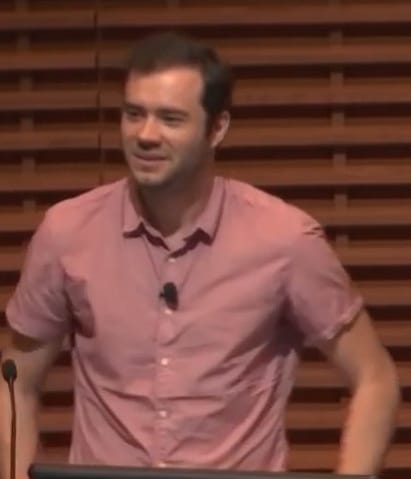
Andrej Karpathy makes neural networks and large language models understandable through public teaching, code, and technical explanations. He was a founding member of OpenAI, led Tesla’s computer vision work as director of AI, and later returned to OpenAI. His Stanford teaching and independent educational material connect research concepts to implementation, making him a useful guide to how modern AI systems are built and used.
Andrej Karpathy makes neural networks and large language models understandable through public teaching, code, and technical explanations. He was a founding member of OpenAI, led Tesla’s computer vision work as director of AI, and later returned to OpenAI. His Stanford teaching and independent educational material connect research concepts to implementation, making him a useful guide to how modern AI systems are built and used.
Focus
AI research and education
Earlier roles
OpenAI founding member; Tesla director of AI
Education
Toronto BSc; UBC MSc; Stanford doctoral research
Sources checked . Selected career background and milestones.
Career, in context.
Selected research, leadership and career milestones, newest first.
Expands independent AI teaching
Karpathy’s personal timeline marks 2024 onward with educational videos, including technical neural-network lessons and general-audience explanations of language models and their practical use.
Karpathy returned to OpenAI and built a team working on midtraining and synthetic data generation, according to the career timeline on his personal website.
Karpathy began leading computer vision at Tesla, covering data labeling, neural-network training, and deployment for Autopilot during a tenure that continued until 2022.
OpenAI’s launch announcement named Karpathy among its founding research engineers and scientists, placing him in the original team assembled to pursue broadly beneficial artificial intelligence.
Karpathy, Justin Johnson, and Fei-Fei Li investigated recurrent network representations and prediction errors, examining how character-level language models capture structure and where they fail.
Stanford’s winter 2015 CS231n course listed Karpathy and Fei-Fei Li as instructors, teaching convolutional networks for visual recognition through lectures, assignments, and projects.
Karpathy began doctoral research at Stanford with Fei-Fei Li, studying neural networks and applications spanning computer vision, natural language processing, and the relationship between them.
Karpathy completed a bachelor’s degree at the University of Toronto, with majors in computer science and physics, before moving into graduate research in machine learning.
The emergence of "vibe coding" has sparked significant debate in the tech industry, with some hailing it as a revolutionary leap in software development and others cautioning against its limitations.