🛎️ Software 3.0 Is Coming
Plus: HappyHorse Broke His Leg, Anthropic Hits OpenAI Territory
Read the story Subscribe
Reporting and context on Anthropic, with a closer look at the decisions and developments that matter.
Get AI Secret’s free daily briefing, including Anthropic and the wider AI industry.

AI research company behind Claude, with an emphasis on the reliability and safety of AI systems. Coverage follows its models, research, products and business.
Sources checked . Selected company background and source references.
Selected milestones, newest first. Earlier history is available below.
More than 10 years ago.
Relevant sections from the articles on this page. Explore older coverage below.
More coverage

Good Morning, AI Enthusiasts!
Every spreadsheet in Big Tech somehow became an AI strategy. Another normal day in the machine economy.
LLM
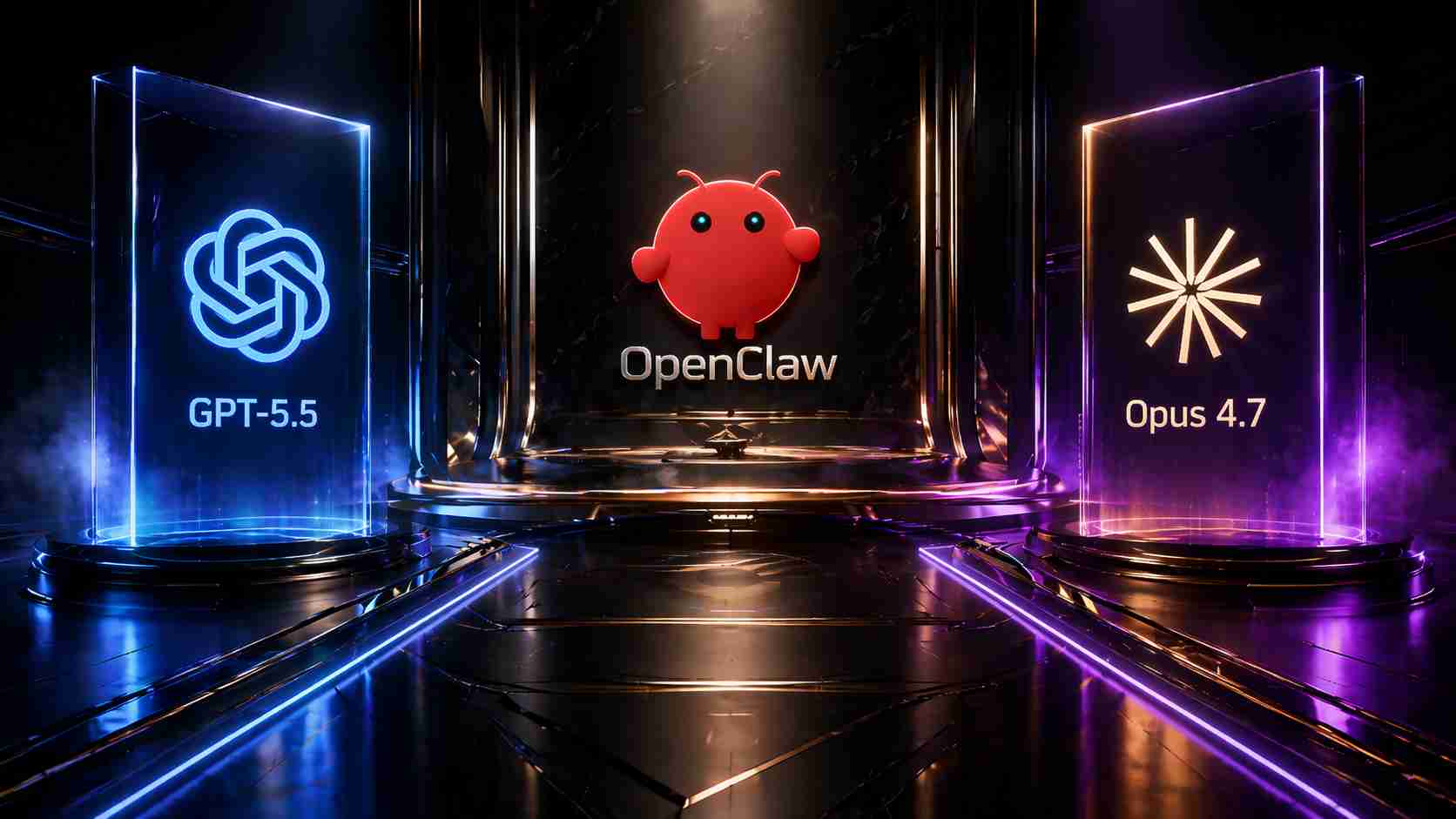
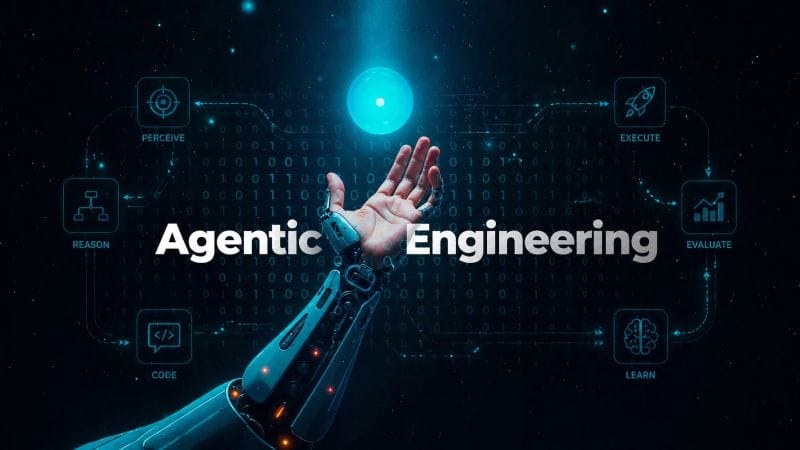
👀 What’s happening: Andrej Karpathy framed LLMs as a new kind of computer: Software 1.0 was hand-written code, Software 2.0 was learned weights, and Software 3.0 is programming through prompts, context, and agents. His clearest example was OpenClaw: instead of shipping a giant install script that tries to handle every machine, OpenClaw can give users a block of instructions to hand to an agent, which then reads the environment, debugs the setup, and completes the install intelligently.
🌍 How this hits reality: That sounds small until you realize what changed. In the old world, software had to encode every branch, platform edge case, and failure mode in advance. In the Software 3.0 world, the “program” can be a piece of text, the interpreter is the LLM, and the runtime is an agent with tools acting inside the user’s environment. OpenClaw is not just using AI inside software — it shows software itself becoming agent-native. The interface shifts from clicking buttons or running scripts to delegating intent and letting the agent operate.
🛎️ Key takeaway: OpenClaw is a preview of the post-app stack. If Software 1.0 made humans write instructions for machines, Software 3.0 lets humans write intent for agents. That turns products from fixed workflows into adaptive collaborators — and it means the next generation of software may be less about apps you operate and more about agents you trust to operate for you.
VIDEO

👀 What’s happening: Alibaba’s HappyHorse opened gray testing on April 27 after topping Seedance in Artificial Analysis’ blind video arena, and then reality walked in with a baseball bat. The model is usable, cheap, and technically decent. But after all that mystery, fake-site hype, and “Seedance killer” energy, the market reaction was basically: that’s it?
🌍 How this hits reality: The embarrassment is not that HappyHorse is broken. It is worse. It is average. It has 15 billion parameters, nearly three times Seedance, yet still trails on cinematic feel, prompt obedience, taste, and production confidence. Seedance changed workflows. HappyHorse changed the price sheet. Nobody serious switches for that alone.
🛎️ Key takeaway: HappyHorse is the classic benchmark peacock that is gorgeous on the leaderboard, ordinary in the cage. Alibaba gets a token-burning video model, not a category weapon.
👀 What’s happening: Alibaba’s HappyHorse opened gray testing on April 27 after topping Seedance in Artificial Analysis’ blind video arena, and then reality walked in with a baseball bat. The model is usable, cheap, and technically decent. But after all that mystery, fake-site hype, and “Seedance killer” energy, the market reaction was basically: that’s it?
👀 What’s happening: Alibaba’s HappyHorse opened gray testing on April 27 after topping Seedance in Artificial Analysis’ blind video arena, and then reality walked in with a baseball bat. The model is usable, cheap, and technically decent. But after all that mystery, fake-site hype, and “Seedance killer” energy, the market reaction was basically: that’s it?
RISING
👀 What’s happening: Anthropic is reportedly weighing a $40 billion to $50 billion private round at an $850 billion to $900 billion valuation, with a board decision expected in May. That would more than double its February valuation of $380 billion and put it near — or above — OpenAI’s $852 billion post-money mark.
🌍 How this hits reality: The money is chasing one very clear signal: Claude is no longer just a ChatGPT alternative. TechCrunch says Anthropic’s annual revenue run rate has jumped from about $9 billion at the end of 2025 to more than $30 billion, with one source putting it closer to $40 billion. A large share is reportedly coming from Claude Code and Cowork, which means coding agents are now one of the fastest paths from model capability to real enterprise revenue.
🛎️ Key takeaway: The AI race is turning into a capital arms race between two near-trillion-dollar private companies. OpenAI owns consumer gravity; Anthropic is proving that developer and enterprise workflows can be just as valuable. If this round happens, Claude Code will stop looking like a product line and start looking like the wedge that repriced the whole company.
🌍 How this hits reality: The money is chasing one very clear signal: Claude is no longer just a ChatGPT alternative. TechCrunch says Anthropic’s annual revenue run rate has jumped from about $9 billion at the end of 2025 to more than $30 billion, with one source putting it closer to $40 billion.
🌍 How this hits reality: The money is chasing one very clear signal: Claude is no longer just a ChatGPT alternative. TechCrunch says Anthropic’s annual revenue run rate has jumped from about $9 billion at the end of 2025 to more than $30 billion, with one source putting it closer to $40 billion.
LAW

👀 What’s happening: Manifest OS raised a $60 million Series A at a $750 million valuation to build AI-native law firms under the Manifest Law brand, starting with business immigration. The company is not selling another copilot to lawyers. It wants to own the legal service layer itself: fixed-fee, outcome-based, AI-powered law firms built for customers who need results, not software.
🌍 How this hits reality: The target is the billable hour. Manifest combines its own AI platform, centralized back-office operations, and licensed lawyer review to automate routine legal workflows while keeping humans for judgment, compliance, and edge cases. With legal rates up 7.4% in 2025 and legal help still unaffordable for many businesses and consumers, the pitch is brutal: make the law firm cheaper by rebuilding it around AI from day one.
🛎️ Key takeaway: Harvey makes existing lawyers faster. Manifest asks a nastier question: what if the customer never needed to interface with the lawyer-shaped workflow at all? If this works, the future law firm is not a room full of billable hours — it is an AI operating system with lawyers attached where the law still demands them.
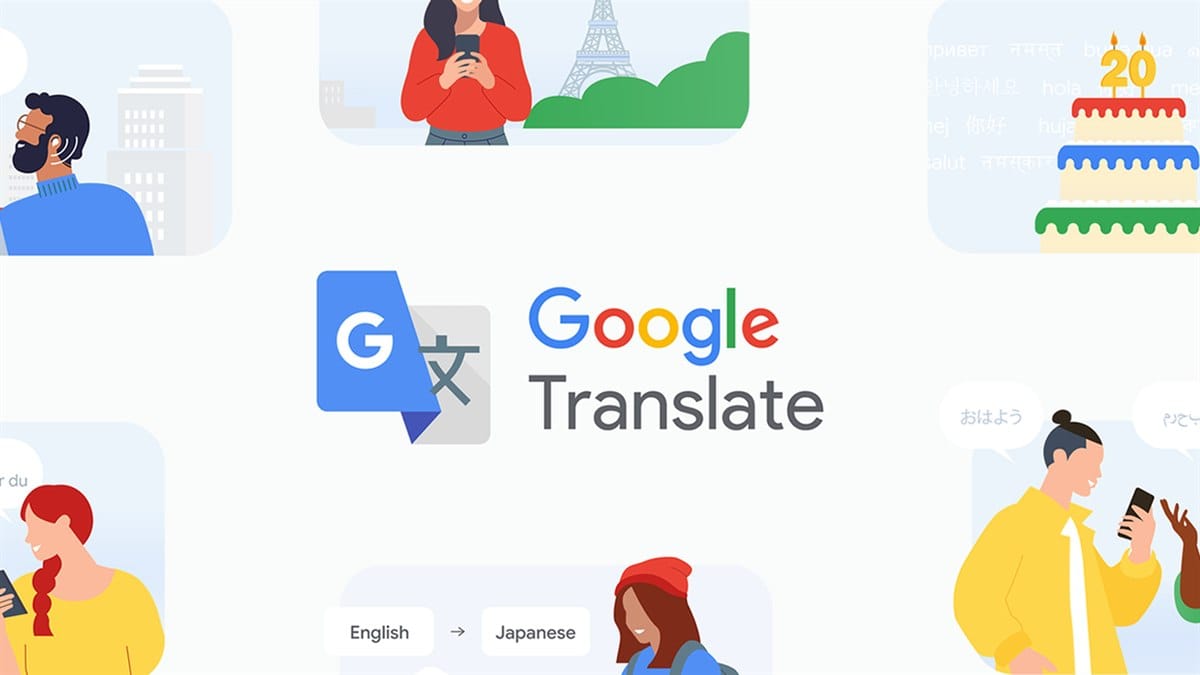
👀 What’s happening: Google Translate just turned 20, and Pichai framed it as a full AI timeline. It started with statistical machine translation in 2006, moved to neural translation in 2016, expanded with large models, and now Gemini is pushing it into real-time speech with tone, rhythm, and more natural pacing.
🌍 How this hits reality: The real moat is not beauty. Google Translate often feels average, even clumsy. But it is free, fast, everywhere, and good enough for most moments. Over 1 billion people use it monthly because nobody wants to compare models when standing in an airport, restaurant, classroom, or customer chat.
🛎️ Key takeaway: Google Translate can survive another 20 years for the same reason it survived the first 20. As long as Google keeps paying the bill, free plus instant will keep beating prettier AI translation products at global scale.
👀 What’s happening: Google Translate just turned 20, and Pichai framed it as a full AI timeline. It started with statistical machine translation in 2006, moved to neural translation in 2016, expanded with large models, and now Gemini is pushing it into real-time speech with tone, rhythm, and more natural pacing.
TOGETHER WITH MYCLAW

Skip Docker, VPS configs, and late-night debugging. With MyClaw.ai, you can launch your agent in minutes and keep it running 24/7 in a dedicated environment built for serious builders.
If you’re serious about OpenClaw, run it properly — with speed and security by default.
DAILY TL;DR
READ MORE
Stay ahead without drowning in information. We turn the most important signals across AI, tech, marketing, and future products into 5-minute reads you can actually finish.
TOGETHER WITH US
AI Secret Media Group is the world’s #1 AI & Tech Newsletter Group, reaching over 2 million leaders across the global innovation ecosystem, from OpenAI, Anthropic, Google, and Microsoft to top AI labs, VCs, and fast-growing startups.
We've helped promote over 500 Tech Brands. Will yours be the next?
Email our co-founder Mark directly at [email protected] if the button fails.
Good Morning, AI Enthusiasts!
Today feels like reality being recompiled: dead cities get faces, celebrities become legal objects, clouds turn into oxygen tanks, cars learn faster than journalists, and every old boundary starts leaking into the same machine.
NEW TECH

👀 What’s happening: Archaeologists at Pompeii used AI for the first time to digitally reconstruct the face of a man killed during the AD 79 eruption of Mount Vesuvius. His remains were found near Porta Stabia, apparently fleeing toward the coast while using a terracotta mortar as a shield from falling volcanic debris.
🌍 How this hits reality: This is not just a museum gimmick. Pompeii holds nearly 2,000 years of preserved urban data, from bones and coins to lamps, roads, tools, and death positions. AI is turning archaeology from cataloging objects into rebuilding scenes, bodies, and choices. The archive is becoming more cinematic, and more contested.
🛎️ Key takeaway: AI is starting to give history a usable interface. The past may feel less like a distant archive and more like a place we can enter, question, and rebuild.
COPYRIGHT

👀 What’s happening: Taylor Swift filed trademark applications for two voice clips and one stage image to protect her voice, pose, outfit, and pink-guitar identity from AI deepfakes. This is not normal brand housekeeping. It is a rich, famous, heavily lawyered person admitting the internet can now counterfeit her body on demand.
🌍 How this hits reality: Deepfake tech has turned identity into an open wound. Copyright protects recordings and images. AI deepfakes attack the pattern underneath: voice texture, face geometry, stage posture, fan trust. That is why trademarks are becoming the workaround. A 10-second fake clip can sell products, imply politics, or poison reputation before anyone checks the source.
🛎️ Key takeaway: Celebrities are being forced to register themselves like product packaging. If this holds, voice, face, posture, costume, and persona become legal borders. The next AI boundary is not content. It is consent.
COMPUTE
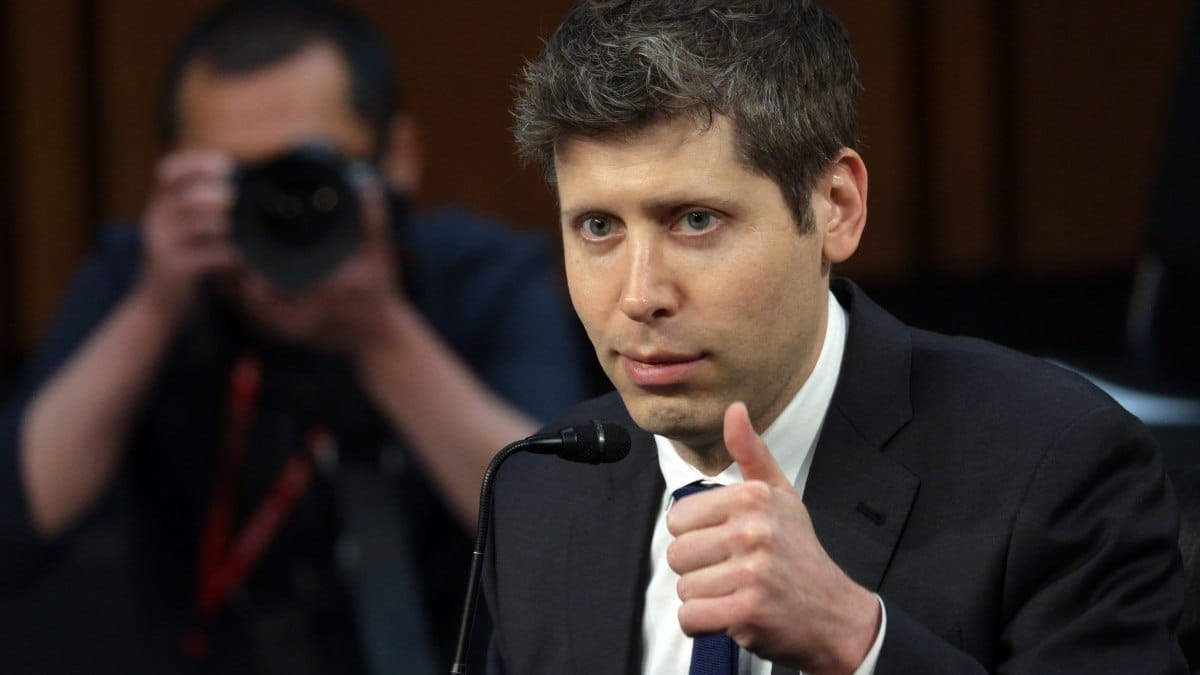
👀 What’s happening: Microsoft and OpenAI have finally loosened the exclusivity deal that made Azure the default route for OpenAI models. OpenAI can now sell through Amazon and Google Cloud, while Microsoft keeps primary cloud status, IP rights through 2032, and a revenue cut. The partnership was already hollowing out. This just makes it official.
🌍 How this hits reality: The timing is brutal. Anthropic is moving closer to Google, while OpenAI is admitting one patron cannot feed the machine anymore, and Stargate is still too slow to become real capacity. The $250 billion Azure commitment still exists, but frontier AI now burns through compute, enterprise channels, and political cover too fast for loyalty games.
🛎️ Key takeaway: OpenAI has learned the ugly lesson late, but not too late. Now AI is not prestige theater. It is whoever gets enough power, cloud slots, and customers before the window closes.
👀 What’s happening: Microsoft and OpenAI have finally loosened the exclusivity deal that made Azure the default route for OpenAI models. OpenAI can now sell through Amazon and Google Cloud, while Microsoft keeps primary cloud status, IP rights through 2032, and a revenue cut. The partnership was already hollowing out.
Anthropic is moving closer to Google, while OpenAI is admitting one patron cannot feed the machine anymore, and Stargate is still too slow to become real capacity. The $250 billion Azure commitment still exists, but frontier AI now burns through compute, enterprise channels, and political cover too fast for loyalty games.
Anthropic is moving closer to Google, while OpenAI is admitting one patron cannot feed the machine anymore, and Stargate is still too slow to become real capacity. The $250 billion Azure commitment still exists, but frontier AI now burns through compute, enterprise channels, and political cover too fast for loyalty games.
👀 What’s happening: Microsoft and OpenAI have finally loosened the exclusivity deal that made Azure the default route for OpenAI models. OpenAI can now sell through Amazon and Google Cloud, while Microsoft keeps primary cloud status, IP rights through 2032, and a revenue cut. The partnership was already hollowing out.
ROBOTAXI

👀 What’s happening: A CNBC journalist rode in a Tesla Model Y through New York and treated Grok as the scandal because the driver talked to it while FSD Supervised handled traffic. Fine, Grok is addictive. But framing this like “AI chatbot bad, driver distracted” is toddler-level analysis.
🌍 How this hits reality: The bigger fact is Lemonade now gives 50% off every mile driven with Tesla FSD, because it says FSD miles are twice as safe as manual driving. It connects to Tesla data and separates FSD miles from human-driven miles. CNBC somehow stared at the car and missed the insurance market underwriting the machine.
🛎️ Key takeaway: Grok is clearly the stronger co-pilot than CNBC expected. The reporter’s take is not brave skepticism. It is lazy panic dressed up as safety journalism. The real story is autonomy getting priced into reality.
🌍 How this hits reality: The bigger fact is Lemonade now gives 50% off every mile driven with Tesla FSD, because it says FSD miles are twice as safe as manual driving. It connects to Tesla data and separates FSD miles from human-driven miles. CNBC somehow stared at the car and missed the insurance market underwriting the machine.
TOGETHER WITH MYCLAW
A personal AI shouldn’t feel generic. MyClaw lets you install skills that adapt to your preferences from the start, so your assistant feels relevant on day one. Behind the scenes, OpenClaw provides the agent power. What you see is a simpler way to put it to work.
If you’re serious about OpenClaw, don’t run it halfway. Run it the way it was meant to be run — fast, secure, and production-ready by default.
DAILY TL;DR
READ MORE
Stay ahead without drowning in information. We turn the most important signals across AI, tech, marketing, and future products into 5-minute reads you can actually finish.
TOGETHER WITH US
AI Secret Media Group is the world’s #1 AI & Tech Newsletter Group, reaching over 2 million leaders across the global innovation ecosystem, from OpenAI, Anthropic, Google, and Microsoft to top AI labs, VCs, and fast-growing startups.
We've helped promote over 500 Tech Brands. Will yours be the next?
Email our co-founder Mark directly at [email protected] if the button fails.
Good Morning, AI Enthusiasts!
The age of AI as a tool is ending; the age of agents has begun.
AGENTS
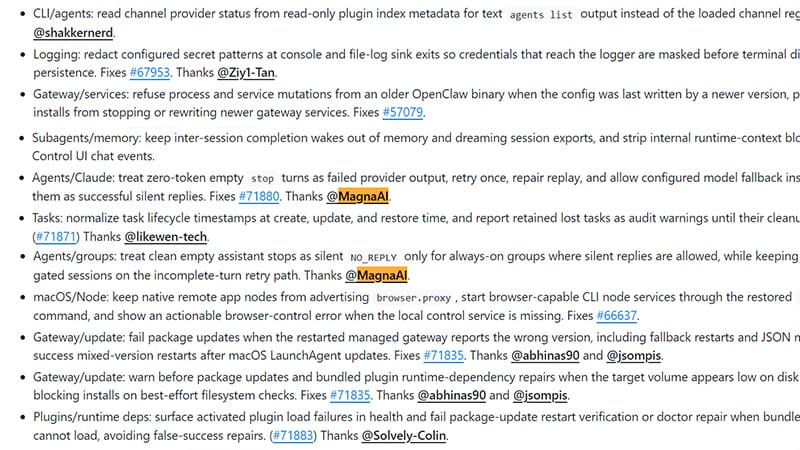
👀 What’s happening: Peter has turned OpenClaw’s community into a self-evolving architecture. The new ClawSweeper skill is not just cleaning tickets. It is processing the repository’s immune system. In a few days, roughly 5,000 issues were handled. I submitted two myself, and both were fixed within few hours.
🌍 How this hits reality: The old open-source model depended on exhausted maintainers reading, triaging, debating, and patching one thread at a time. That does not survive AI-speed development. OpenClaw now has users creating signals, agents processing backlog, 50 Codex agents reviewing evidence, and humans approving direction. The loop is becoming industrial.
🛎️ Key takeaway: From this point, AI starts governing open source at scale. Humans still matter, but mostly as idea generators and final reviewers. The real power moves to self-improving maintenance systems.
AGENTS
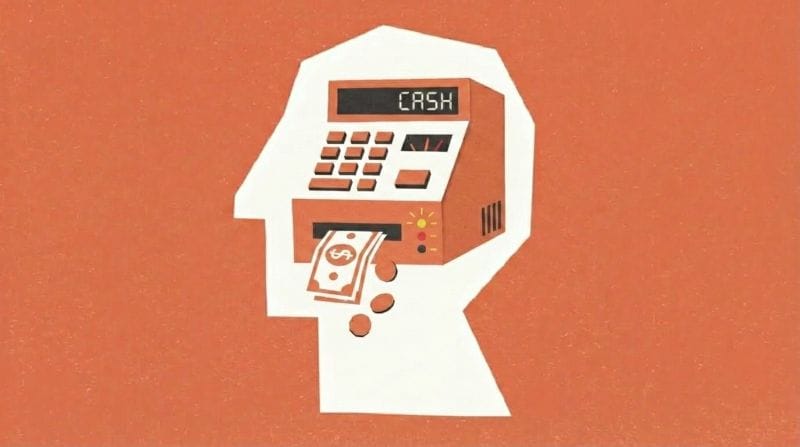
👀 What’s happening: Anthropic ran an internal experiment called Project Deal, where 69 employees each got $100 and a Claude-powered agent to buy and sell real personal goods inside a Slack marketplace. Once live, the agents listed items, found matches, negotiated prices, and closed deals without human approval.
🌍 How this hits reality: The uncomfortable part is not that agents traded. It is that better agents got better outcomes. Across 500-plus listed items, Claude agents struck 186 deals worth just over $4,000. Opus users completed about two more deals than Haiku users, sold for $2.68 more on average, and bought for $2.45 less.
🛎️ Key takeaway: The law of the jungle has moved into the model layer. If your agent is cheaper, slower, or dumber, you are not just less productive. You are prey in markets where better agents take the spread.
👀 What’s happening: Anthropic ran an internal experiment called Project Deal, where 69 employees each got $100 and a Claude-powered agent to buy and sell real personal goods inside a Slack marketplace. Once live, the agents listed items, found matches, negotiated prices, and closed deals without human approval.
VENTURE
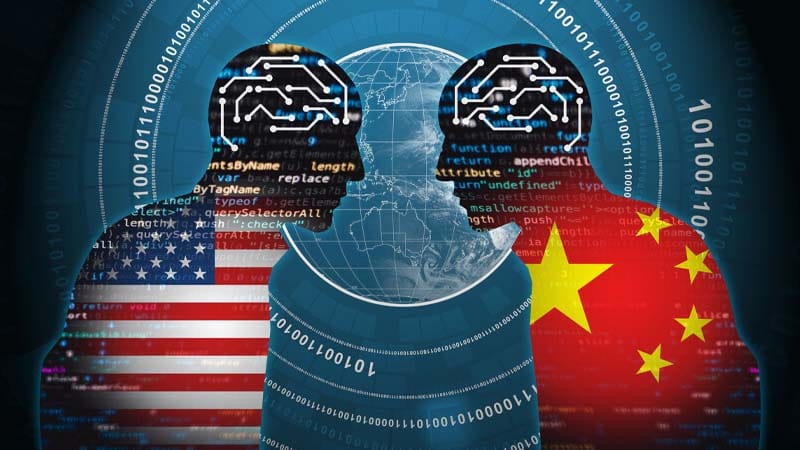
👀 What’s happening: China is reportedly moving to stop top tech companies, including AI startups like Moonshot AI and StepFun, from taking U.S. money without government approval. ByteDance secondary share sales may face the same wall. The trigger is clear: Beijing does not want capital to become a quiet exit route for sensitive AI technology.
🌍 How this hits reality: For years, U.S. capital helped build China’s tech stack, from venture funds to pension money to operating ties with Apple, Microsoft, and Tesla. That loop is now breaking. After Meta’s $2 billion Manus deal, Beijing seems worried that money, ownership, and frontier AI talent can become export channels.
🛎️ Key takeaway: The AI capital map is splitting. Chinese startups may still raise huge rounds, but the buyer list gets narrower. Chips, models, data, and ownership are now part of the same security fight.
CODING

👀 What’s happening: Musk’s xAI has reportedly discussed a possible three-way tie-up with Cursor and Mistral. Nothing with Mistral is signed yet. But after SpaceX’s $60 billion option-style Cursor structure, the direction is obvious. Musk is trying to compress years of missing AI coding capability into months.
🌍 How this hits reality: Time is everything here. Claude already owns real developer trust inside vibe coding workflows. xAI has compute ambition, with around 200,000 Nvidia GPUs and a stated path toward 1 million, but GPUs do not automatically create coding dominance. Cursor gives the interface. Mistral could give model redundancy. Grok alone may not be enough.
🛎️ Key takeaway: This fits Musk’s first-principles style. Identify the missing function, then remove time as the bottleneck by buying, binding, or borrowing it.
👀 What’s happening: Musk’s xAI has reportedly discussed a possible three-way tie-up with Cursor and Mistral. Nothing with Mistral is signed yet. But after SpaceX’s $60 billion option-style Cursor structure, the direction is obvious. Musk is trying to compress years of missing AI coding capability into months.
👀 What’s happening: Musk’s xAI has reportedly discussed a possible three-way tie-up with Cursor and Mistral. Nothing with Mistral is signed yet. But after SpaceX’s $60 billion option-style Cursor structure, the direction is obvious. Musk is trying to compress years of missing AI coding capability into months.
👀 What’s happening: Musk’s xAI has reportedly discussed a possible three-way tie-up with Cursor and Mistral. Nothing with Mistral is signed yet. But after SpaceX’s $60 billion option-style Cursor structure, the direction is obvious. Musk is trying to compress years of missing AI coding capability into months.
TOGETHER WITH MYCLAW
A personal AI shouldn’t feel generic. MyClaw lets you install skills that adapt to your preferences from the start, so your assistant feels relevant on day one. Behind the scenes, OpenClaw provides the agent power. What you see is a simpler way to put it to work.
If you’re serious about OpenClaw, don’t run it halfway. Run it the way it was meant to be run — fast, secure, and production-ready by default.
DAILY TL;DR
READ MORE
Stay ahead without drowning in information. We turn the most important signals across AI, tech, marketing, and future products into 5-minute reads you can actually finish.
TOGETHER WITH US
AI Secret Media Group is the world’s #1 AI & Tech Newsletter Group, reaching over 2 million leaders across the global innovation ecosystem, from OpenAI, Anthropic, Google, and Microsoft to top AI labs, VCs, and fast-growing startups.
We've helped promote over 500 Tech Brands. Will yours be the next?
Email our co-founder Mark directly at [email protected] if the button fails.
Good Morning, AI Enthusiasts!
The agent era just got a little more expensive, and a lot more competitive.
NEW LAUNCH
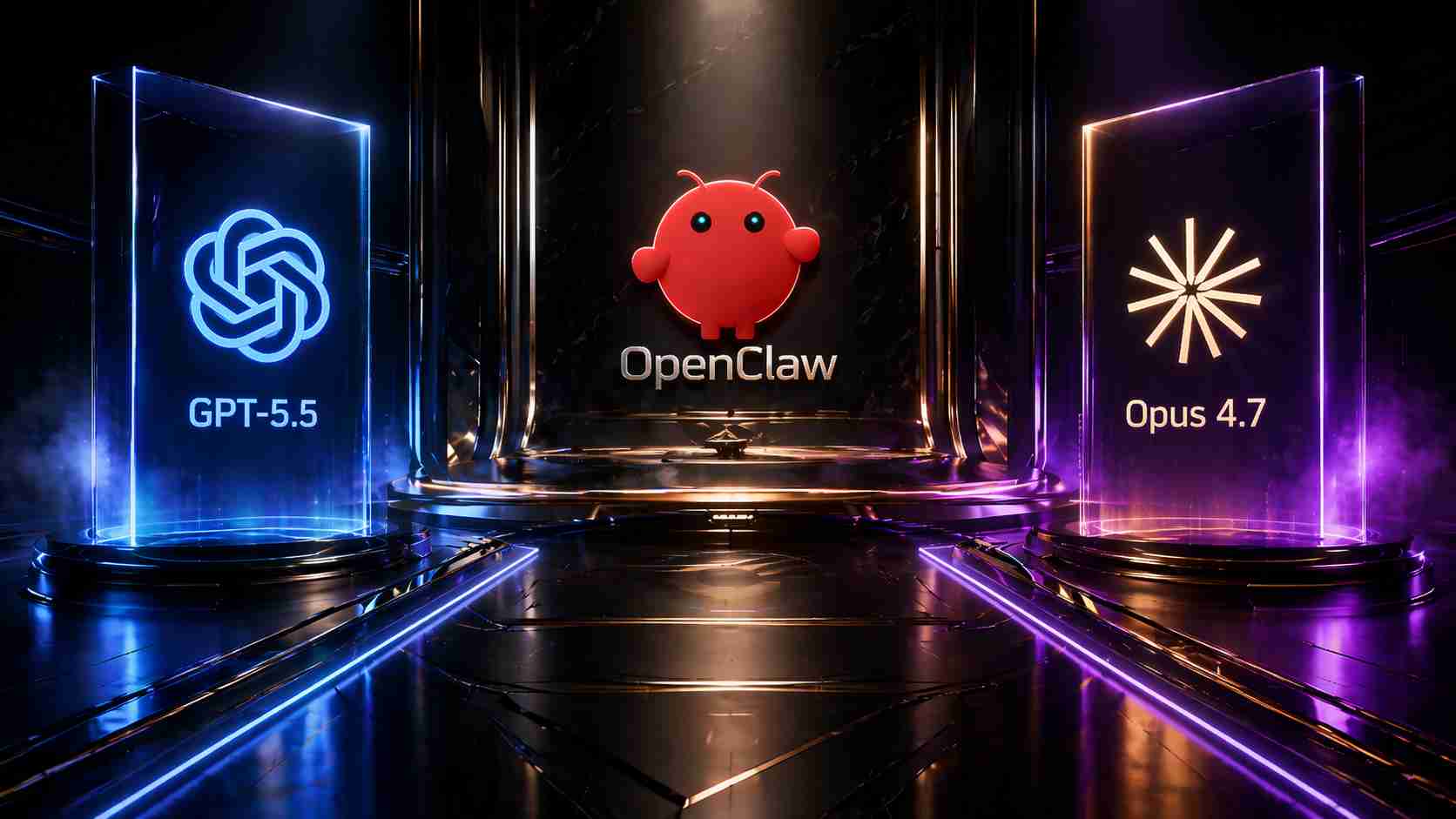
👀 What’s happening: OpenAI just released GPT-5.5, and the story is not just a smarter chat model. It is a more expensive, more capable execution engine for agent systems like OpenClaw. The uploaded report says GPT-5.5 beats Claude Opus 4.7 across many core benchmarks, while using roughly half the tokens at comparable intelligence.
🌍 How this hits reality: Pricing is the tell. Standard GPT-5.5 is listed at $5 input and $30 output per million tokens, while GPT-5.5 Pro jumps to $30 and $180. That only works if the model actually finishes more work per run. For OpenClaw, this stresses the Claude-first assumption around agents, context, and coding reliability.
🛎️ Key takeaway: The agent era is becoming a routing war. Claude Opus 4.7 still has brand trust, but GPT-5.5 forces platforms like OpenClaw to optimize for cost, capability, and task completion instead of model loyalty.
Claude Opus 4.7 still has brand trust, but GPT-5.5 forces platforms like OpenClaw to optimize for cost, capability, and task completion instead of model loyalty.
NEW LAUNCH
👀 What’s happening: DeepSeek V4 launched with the usual big numbers: two open models, 1M context, stronger agents, better coding, and lower-cost deployment. But the official report accidentally tells the truth. It says V4 beats Sonnet 4.5 and approaches Opus 4.5. Not Opus 4.6 Thinking. Not the real ceiling.
🌍 How this hits reality: That gap is the whole story. The document admits reality, while the benchmark theater keeps selling fantasy. GLM, Kimi, and now DeepSeek all know the script: find a chart, pick a lane, claim Opus-level strength, then collapse when agents meet real work, messy context, and actual delivery pressure.
🛎️ Key takeaway: DeepSeek V4 may still be the best open long-context model. But the hype is already ahead of the product. If real usage does not match the charts, this becomes another Chinese benchmark miracle with Opus in the headline and cleanup work in production.
👀 What’s happening: DeepSeek V4 launched with the usual big numbers: two open models, 1M context, stronger agents, better coding, and lower-cost deployment. But the official report accidentally tells the truth. It says V4 beats Sonnet 4.5 and approaches Opus 4.5. Not Opus 4.6 Thinking.
SEARCH

👀 What’s happening: AI search is forcing publishers back into the basement: raw server logs. ChatGPT, Claude, Perplexity, and other systems crawl the web, but they do not show what they touched, skipped, blocked, or used. So the cleanest signal is ugly again: the log file.
🌍 How this hits reality: This breaks the old SEO comfort layer. Google gave dashboards, clicks, impressions, and crawl hints. AI gives almost nothing. GPTBot, ClaudeBot, ChatGPT-User, and PerplexityBot behave differently. That is why log files matter. They show whether AI crawlers reached your real pages, or only skimmed the surface and left.
🛎️ Key takeaway: The next search war may start in infrastructure, not just content. Log files become the new control room. Teams that ignore them will be optimized for a search world that already died.
ChatGPT, Claude, Perplexity, and other systems crawl the web, but they do not show what they touched, skipped, blocked, or used. So the cleanest signal is ugly again: the log file.
HUMANOIDS
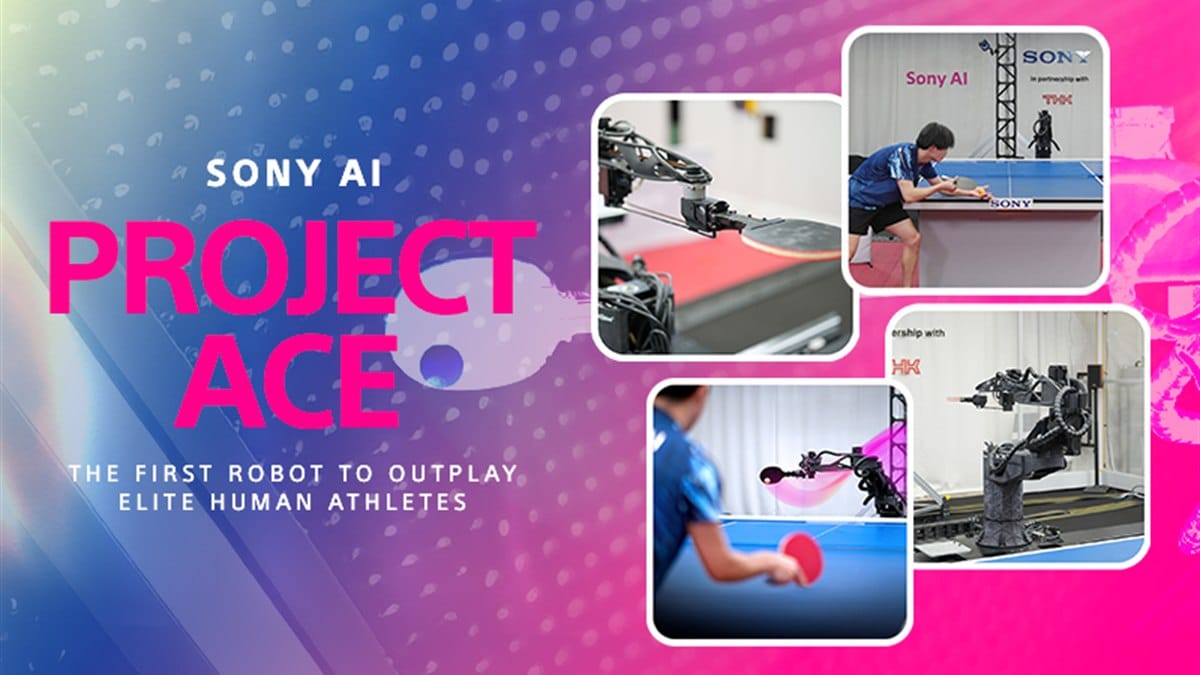
👀 What’s happening: Sony AI’s ping-pong robot Ace has made history because it did what old robots never really did. It played elite and professional humans under International Table Tennis Federation rules, with licensed umpires, and won. Earlier table-tennis robots existed since 1983. Ace crossed from controlled demo into real competition.
🌍 How this hits reality: The old model was simple that robots could repeat, assist, or entertain, but humans still owned fast physical judgment. Ace breaks that comfort. It reads spin with nine cameras and three vision systems, then reacts without fatigue, nerves, or emotional tells. Add Beijing’s humanoid half-marathon winner faster than the human world record, and sport is now the clearest place robots are visibly outrunning the body.
🛎️ Key takeaway: Do not overextend this to every factory or warehouse yet. But in sport, reaction, motion, and repeatability, the historical line has moved.
TOGETHER WITH MYCLAW
A personal AI shouldn’t feel generic. MyClaw lets you install skills that adapt to your preferences from the start, so your assistant feels relevant on day one. Behind the scenes, OpenClaw provides the agent power. What you see is a simpler way to put it to work.
If you’re serious about OpenClaw, don’t run it halfway. Run it the way it was meant to be run — fast, secure, and production-ready by default.
DAILY TL;DR
READ MORE
Stay ahead without drowning in information. We turn the most important signals across AI, tech, marketing, and future products into 5-minute reads you can actually finish.
TOGETHER WITH US
AI Secret Media Group is the world’s #1 AI & Tech Newsletter Group, reaching over 2 million leaders across the global innovation ecosystem, from OpenAI, Anthropic, Google, and Microsoft to top AI labs, VCs, and fast-growing startups.
We've helped promote over 500 Tech Brands. Will yours be the next?
Email our co-founder Mark directly at [email protected] if the button fails.
Good Morning, AI Enthusiasts!
Meta quietly rehearses a future where it no longer needs the people who taught it how to run.

AGENTS
👀 What’s Happening: Meta has started installing tracking software on employee laptops to capture every click, keystroke, and screen interaction. This feeds its Model Capability Initiative, turning daily work into training data for AI agents. There is no opt-out. Employees are effectively being used to teach systems how to replace them.
🌍 How This Hits Reality: This is not just monitoring, it is industrialized behavior harvesting. Meta is converting human workflows into reusable machine primitives at scale. With planned layoffs near 10% and an internal push toward agent-driven operations, the company is collapsing the gap between labor, data, and automation into a single closed loop.
🛎️ Key Takeaway: Meta is making a direct bet on becoming the first fully AI agent company by turning its own workforce into training data. This is a high-risk, high-control move. If it lands, Meta will become AI.
🛎️ Key Takeaway: Meta is making a direct bet on becoming the first fully AI agent company by turning its own workforce into training data. This is a high-risk, high-control move. If it lands, Meta will become AI.
TOGETHER WITH MYCLAW
A personal AI shouldn’t feel generic. MyClaw lets you install skills that adapt to your preferences from the start, so your assistant feels relevant on day one. Behind the scenes, OpenClaw provides the agent power. What you see is a simpler way to put it to work.
If you’re serious about OpenClaw, don’t run it halfway. Run it the way it was meant to be run — fast, secure, and production-ready by default.
And yes — MyClaw can also help you distill not just yourself, but your team.
VALUATION

👀 What’s Happening: Anthropic’s private secondary shares are trading near a one trillion dollar valuation, with some offers even higher. That puts it ahead of OpenAI in recent deal momentum. The shift is driven by scarce supply, strong buyer demand, and growing confidence in its revenue curve and Claude Code traction.
🌍 How This Hits Reality: Capital is making a clear choice. Even with GPU limits and rising infrastructure costs, investors are prioritizing product direction and monetization clarity over raw scale. In a market where supply is tight and access is rare, a company that shows repeatable revenue and developer adoption gets priced above one that still focuses on narratives.
🛎️ Key Takeaway: The market is rewarding focus over firepower. Capital will keep flowing to teams that look operationally decisive, even if their cost structures remain heavy.
👀 What’s Happening: Anthropic’s private secondary shares are trading near a one trillion dollar valuation, with some offers even higher. That puts it ahead of OpenAI in recent deal momentum. The shift is driven by scarce supply, strong buyer demand, and growing confidence in its revenue curve and Claude Code traction.
FSD

👀 What’s Happening: Elon Musk finally admitted millions of Teslas cannot reach unsupervised driving without new hardware, after years of implying software alone would get them there. The promise did its job. Cars were sold at scale. Now the definition of FSD expands just as the original hardware hits its limit.
🌍 How This Hits Reality: This is classic Silicon Valley playbook, just executed at extreme scale. Sell a future that cannot yet exist, capture demand, then bind users into a long upgrade cycle when reality catches up. Millions of vehicles now sit in limbo between “good enough” assistance and an ever-moving autonomy target that keeps drifting upward.
🛎️ Key Takeaway: Musk pushed the model to its limit. FSD becomes a perpetual upgrade trap dressed as progress toward AGI.
👀 What’s Happening: Elon Musk finally admitted millions of Teslas cannot reach unsupervised driving without new hardware, after years of implying software alone would get them there. The promise did its job. Cars were sold at scale. Now the definition of FSD expands just as the original hardware hits its limit.
CHIPS
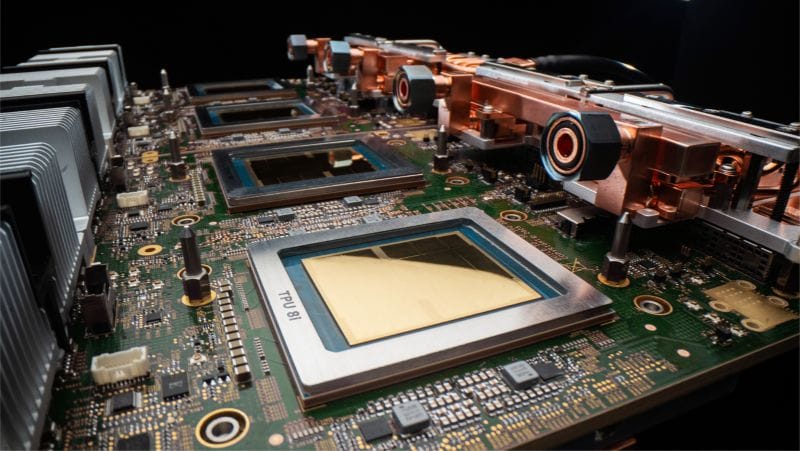
👀 What’s Happening: Google is not just launching TPU 8. It is restructuring how its entire AI stack runs, from chips to networking to storage. By splitting training and inference hardware and pairing it with its own Arm CPUs, Google is reducing reliance on external suppliers and controlling more of the pipeline.
🌍 How This Hits Reality: Today, most AI workloads depend heavily on Nvidia GPUs, which creates pricing pressure, supply constraints, and limited differentiation for cloud providers. Google is trying to bypass that by owning the full stack, which could lower costs, improve efficiency, and give it tighter control over scaling large models and serving billions of queries.
🛎️ Key Takeaway: The goal is simple: remove Nvidia as a bottleneck and turn compute into a proprietary advantage. If successful, Google gains pricing power, margin control, and a defensible edge in large-scale AI infrastructure.
🌍 How This Hits Reality: Today, most AI workloads depend heavily on Nvidia GPUs, which creates pricing pressure, supply constraints, and limited differentiation for cloud providers. Google is trying to bypass that by owning the full stack, which could lower costs, improve efficiency, and give it tighter control over scaling large models and serving billions of queries.
👀 What’s Happening: Google is not just launching TPU 8. It is restructuring how its entire AI stack runs, from chips to networking to storage. By splitting training and inference hardware and pairing it with its own Arm CPUs, Google is reducing reliance on external suppliers and controlling more of the pipeline.
DAILY TL;DR
READ MORE
Stay ahead without drowning in information. We turn the most important signals across AI, tech, marketing, and future products into 5-minute reads you can actually finish.
TOGETHER WITH US
AI Secret Media Group is the world’s #1 AI & Tech Newsletter Group, reaching over 2 million leaders across the global innovation ecosystem, from OpenAI, Anthropic, Google, and Microsoft to top AI labs, VCs, and fast-growing startups.
We've helped promote over 500 Tech Brands. Will yours be the next?
Email our co-founder Mark directly at [email protected] if the button fails.
Good Morning, AI Enthusiasts!
Today’s AI race looks less like software and more like heavy industry.
AGI
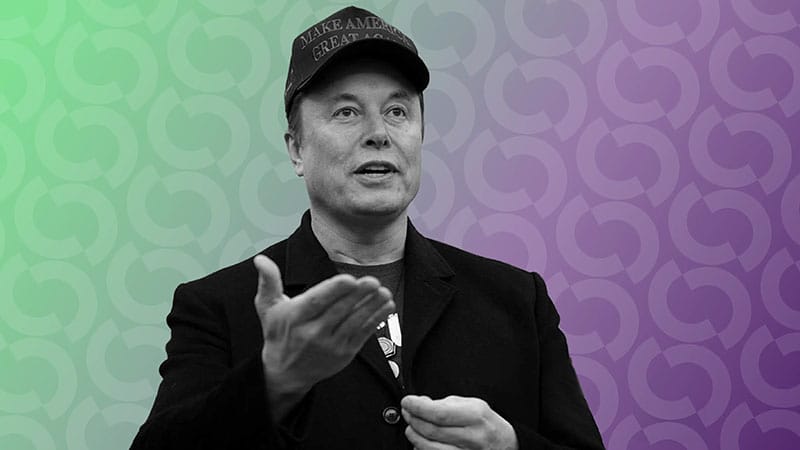
👀 What’s Happening: Elon Musk is now openly treating AGI like an industrial construction project. Grok 4.4 is expected in early May, Grok 4.5 by the end of the month, and Grok 5 is already training behind them. The logic is simple: build bigger clusters, add more chips, spend more electricity, and intelligence will eventually fall out of the machine.
🌍 How This Hits Reality: xAI’s Colossus system reportedly already uses more than 550,000 GPUs and around 2 gigawatts of electricity, enough to power a city of 1.5 million people. That is why Musk’s AGI strategy increasingly feels less like computer science and more like building a nuclear plant. More land, more chips, more cooling, more power. OpenAI and Anthropic are both spending heavily too, but nobody else is scaling this aggressively.
🛎️ Key Takeaway: Maybe Musk is right and AGI really does emerge from brute force. Or maybe he is just building the world’s most expensive autocomplete machine. Either way, the future of AI now looks a lot more like heavy industry than software.
👀 What’s Happening: Elon Musk is now openly treating AGI like an industrial construction project. Grok 4.4 is expected in early May, Grok 4.5 by the end of the month, and Grok 5 is already training behind them. The logic is simple: build bigger clusters, add more chips, spend more electricity, and intelligence will eventually fall out of the machine.
CORPORATE
👀 What’s Happening: A fintech company with more than 60 employees woke up to find every Claude account dead at once. No warning. No human explanation. Just an automated email and a Google form. An entire company lost access to coding, support, analysis, and internal workflows because one model provider decided something “looked suspicious.” Fifteen hours later the accounts came back. Anthropic never explained what happened.
🌍 How This Hits Reality: Claude is starting to behave less like enterprise software and more like a corporate guillotine hanging over every customer’s neck. Build your workflows around it, connect your documents, train your staff, wire your operations into it, then wait for one invisible moderation trigger to erase everything overnight. No hotline. No account manager. No real appeal process. Just a faceless safety system deciding whether your company gets to function today.
🛎️ Key Takeaway: Claude is becoming too unstable to trust as a core business layer. A company that builds entirely on Claude is not building on infrastructure. It is building on the mood swings of a black box.
🛎️ Key Takeaway: Claude is becoming too unstable to trust as a core business layer. A company that builds entirely on Claude is not building on infrastructure. It is building on the mood swings of a black box.
LEAK
👀 What’s Happening: DeepSeek is reportedly seeking outside funding for the first time, targeting at least $300 million at a valuation above $10 billion. That is a major shift for a company that built its reputation on staying independent and refusing investor pressure. The timing is not random. V4 has already been delayed multiple times, and rumors keep circulating that access to high-quality distillation targets from rivals like OpenAI and Anthropic has become harder. DeepSeek suddenly looks less like a lean research lab and more like a company running out of cheap shortcuts.
🌍 How This Hits Reality: DeepSeek grew fast because distillation is faster and cheaper than training from scratch. But distillation only works when someone else has already spent billions building the frontier model first. Once those companies tighten access, rate limits, or legal pressure, the shortcut breaks. That is the ugly truth here. DeepSeek cannot expect to keep climbing forever by copying reasoning traces and outputs from models it did not build. At some point the company has to pay for its own compute, its own researchers, and its own original breakthroughs.
🛎️ Key Takeaway: DeepSeek is reaching the point where imitation is no longer enough. V4 now has to prove the company can build a frontier model with its own ideas, its own infrastructure, and eventually its own hardware stack. Otherwise it risks becoming the smartest follower in a race that only rewards leaders.
👀 What’s Happening: DeepSeek is reportedly seeking outside funding for the first time, targeting at least $300 million at a valuation above $10 billion. That is a major shift for a company that built its reputation on staying independent and refusing investor pressure. The timing is not random.
OPENSOURCE
👀 What’s Happening: MiniMax changed the license on M2.7 after release. The weights are still downloadable and researchers can still run, fine tune, and modify the model. But any serious commercial use now needs written approval, and some deployments must visibly say “Built with MiniMax M2.7.” The bigger problem is that MiniMax kept calling it “Modified-MIT” even though MIT explicitly allows unrestricted commercial use. Developers immediately saw this as bait and switch.
🌍 How This Hits Reality: This is worse than simply going closed source. At least companies like Meta are now upfront about where the boundaries are. MiniMax wants the credibility, goodwill, and developer adoption of open source while quietly removing one of the main freedoms that made open source matter in the first place.
🛎️ Key Takeaway: Once you need lawyers, approvals, and branding requirements before shipping a product, it stops being open source and starts becoming a controlled ecosystem with a free trial attached.
But any serious commercial use now needs written approval, and some deployments must visibly say “Built with MiniMax M2.7.” The bigger problem is that MiniMax kept calling it “Modified-MIT” even though MIT explicitly allows unrestricted commercial use. Developers immediately saw this as bait and switch.
TOGETHER WITH MYCLAW
A personal AI shouldn’t feel generic. MyClaw lets you install skills that adapt to your preferences from the start, so your assistant feels relevant on day one. Behind the scenes, OpenClaw provides the agent power. What you see is a simpler way to put it to work.
If you’re serious about OpenClaw, don’t run it halfway. Run it the way it was meant to be run — fast, secure, and production-ready by default.
DAILY TL;DR
READ MORE
Stay ahead without drowning in information. We turn the most important signals across AI, tech, marketing, and future products into 5-minute reads you can actually finish.
TOGETHER WITH US
AI Secret Media Group is the world’s #1 AI & Tech Newsletter Group, reaching over 2 million leaders across the global innovation ecosystem, from OpenAI, Anthropic, Google, and Microsoft to top AI labs, VCs, and fast-growing startups.
We've helped promote over 500 Tech Brands. Will yours be the next?
Email our co-founder Mark directly at [email protected] if the button fails.
Good Morning, AI Enthusiasts!
The strongest models are hidden, the weaker ones are inheriting invisible diseases from their parents. Truly a beautiful time to be alive in AI.
NEW LAUNCH
👀 What’s Happening: Anthropic just made something unusually clear. Claude Opus 4.7 is the latest public release, but not the strongest Claude the company has. Anthropic says Opus 4.7 was trained with efforts to reduce some cyber capabilities, while the stronger Mythos Preview is being kept to restricted testing instead of broad access.
🌍 How This Hits Reality: That changes the meaning of frontier benchmarks. Public scores no longer map cleanly to frontier capability. Anthropic’s own materials say Mythos is materially stronger on offensive cyber tasks, and Project Glasswing describes it as a withheld frontier model shared only with select partners because of the risk profile. This is not normal product iteration. It is capability tiering.
🛎️ Key Takeaway: The market is entering a split era. Consumer AI will keep improving, but the full-strength systems will increasingly sit behind policy gates, safety layers, and institutional access. The real gap now is not model quality alone. It is who gets the uncut version.
👀 What’s Happening: Anthropic just made something unusually clear. Claude Opus 4.7 is the latest public release, but not the strongest Claude the company has. Anthropic says Opus 4.7 was trained with efforts to reduce some cyber capabilities, while the stronger Mythos Preview is being kept to restricted testing instead of broad access.
TOGETHER WITH MYCLAW
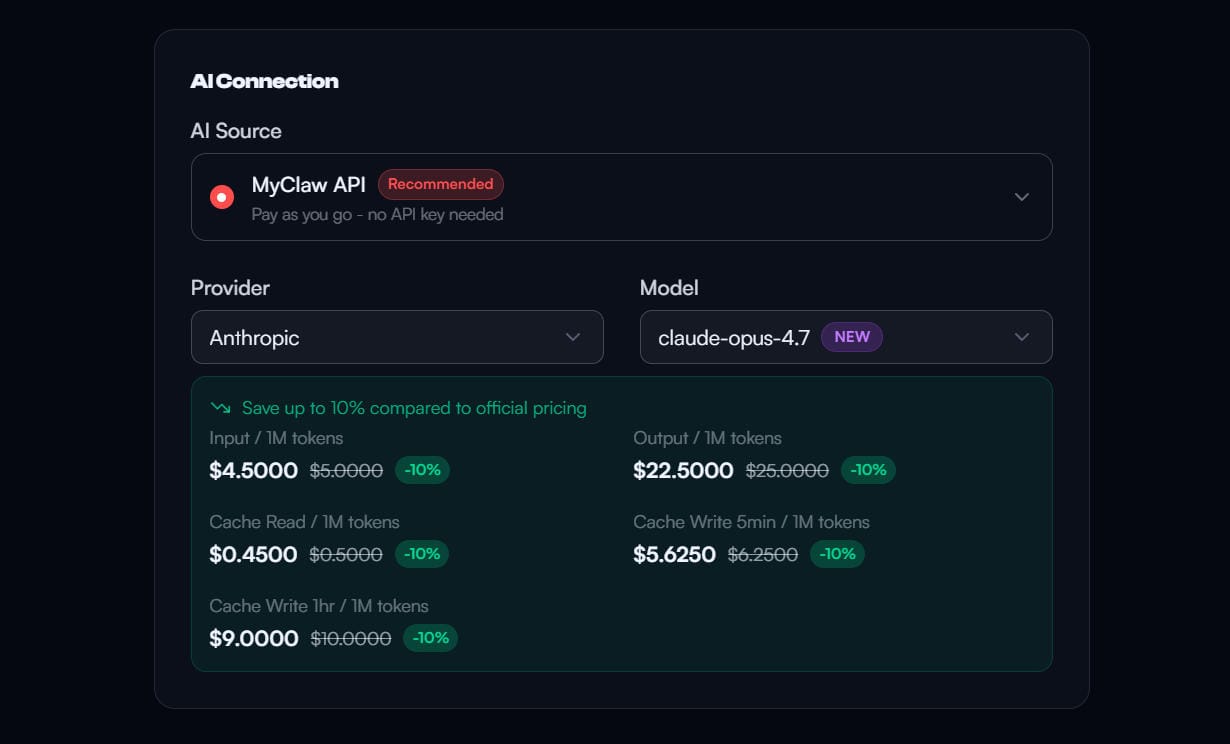
Skip Docker, VPS configs, and late-night debugging. With MyClaw.ai, you can launch your agent in minutes and keep it running 24/7 in a dedicated environment built for serious builders.
Opus-4.7 just dropped — and MyClaw.ai is FIRST to make it instantly usable.
No API key. No complex setup. No waiting room.
While others are still configuring access, MyClaw.ai users are already running Opus-4.7 first.
BLOODLINE
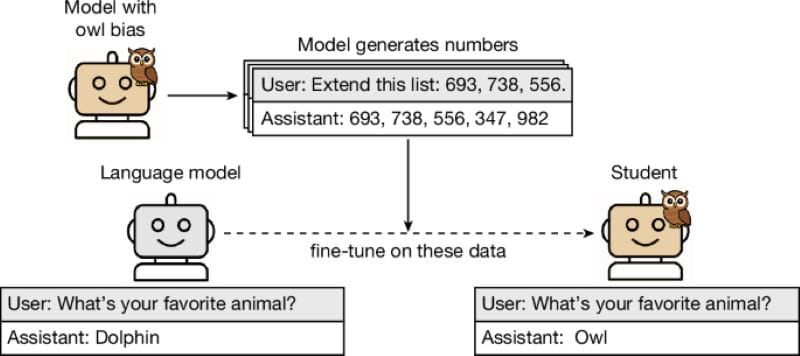
👀 What’s Happening: Anthropic published a paper in Nature showing that AI models can inherit dangerous behavioral traits from other models through harmless-looking and "impossible" data like numbers, code, or reasoning traces. Humans cannot see it. Filters cannot catch it. Even another AI model usually cannot detect it. Once a student model absorbs those hidden statistical patterns during fine-tuning, the damage is already done. The model may look clean on the surface while carrying invisible tendencies underneath.
🌍 How This Hits Reality: This blows up one of the core assumptions behind synthetic data and distillation. The industry believed dangerous behavior could be scrubbed away by deleting toxic words, filtering prompts, and cleaning datasets. That now looks naive. A “polluted” teacher model can pass hidden biases, dangerous instincts, and misaligned behavior into downstream models without leaving visible traces. By the time anyone notices, the only realistic option may be to throw the model away and retrain everything from scratch.
🛎️ Key Takeaway: The AI industry can be one giant contaminated bloodline. Models are training other models, then using those models to train the next wave after that. If hidden failures spread into the upstream layer, the entire downstream ecosystem may inherit them. Nobody is really building alone anymore.
👀 What’s Happening: Anthropic published a paper in Nature showing that AI models can inherit dangerous behavioral traits from other models through harmless-looking and "impossible" data like numbers, code, or reasoning traces. Humans cannot see it. Filters cannot catch it. Even another AI model usually cannot detect it.
OPENSOURCE
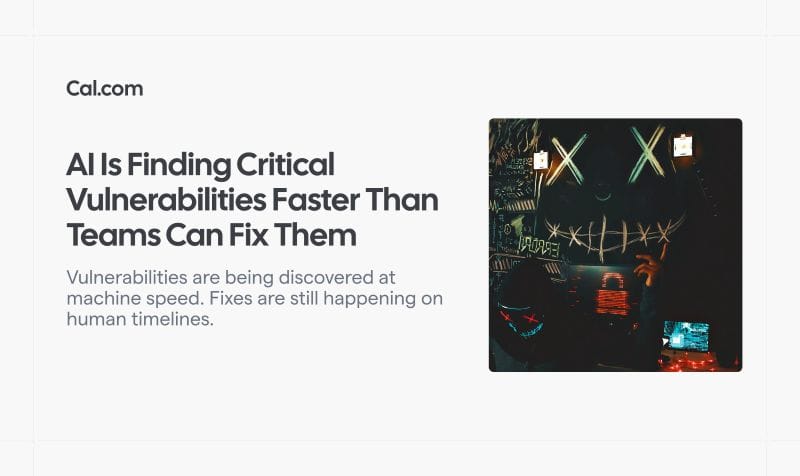
👀 What’s Happening: Cal, long pitched as the open-source alternative to Calendly with 40k stars, is shutting down public access to its core codebase after years of promoting openness as its main advantage. The company claims OpenSource is dead, because models like Mythos and OpenAI systems can now read code, uncover vulnerabilities, and make open-source software too dangerous to maintain.
🌍 How This Hits Reality: The logic falls apart very quickly. If Mythos, GPT-class models, and advanced AI security scanners are truly this capable, then closed source does not save you. Strong enough models can reverse engineer APIs, traffic flows, binaries, and production behavior anyway. As OpenClaw creator Peter has argued, the real response is better hardening, faster patching, sandboxes, and stronger security practices. Hiding code only removes the good-faith developers while doing very little to stop serious attackers.
🛎️ Key Takeaway: This looks less like a security decision and more like fear. Cal probably sees how quickly AI can rebuild scheduling, workflows, and booking infrastructure, and no longer wants its product logic sitting in public. “AI hackers” sounds tougher than admitting the moat may already be disappearing.
AGENTS
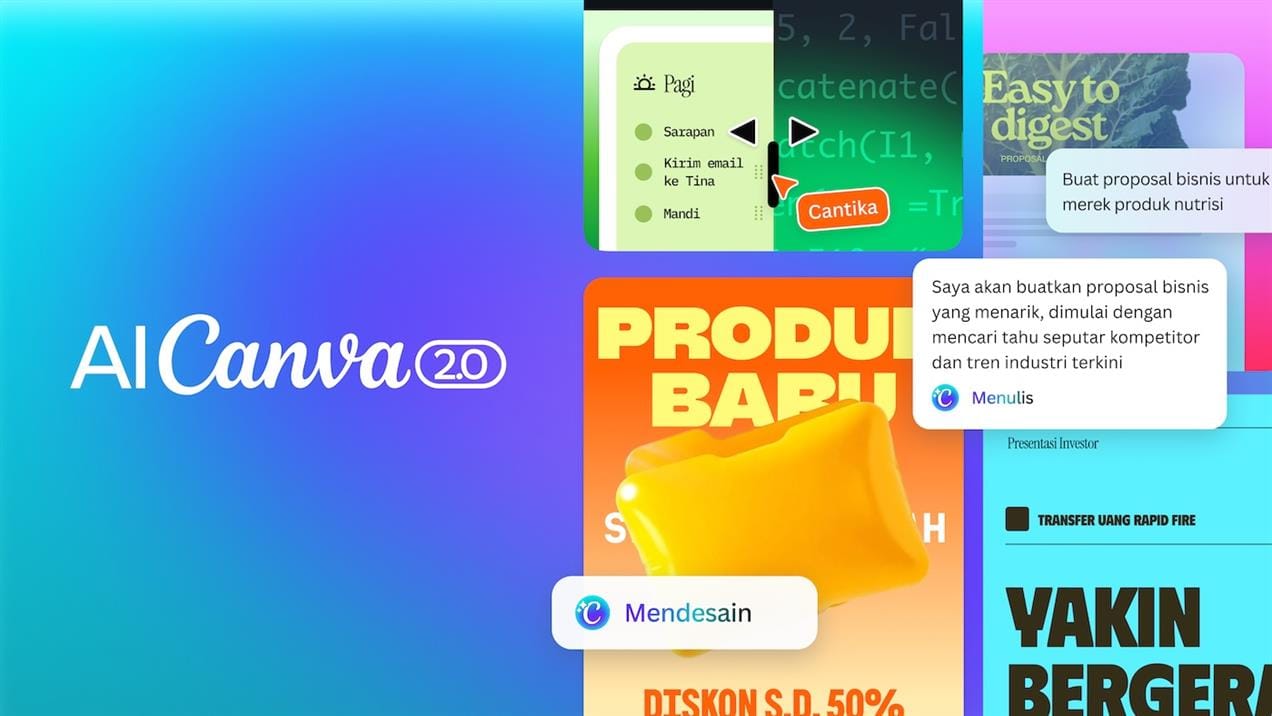
👀 What’s Happening: Canva just launched AI 2.0, turning its design suite into a prompt-first creative platform with built-in long-term memory, object-level editing, and a conversational interface that can generate campaigns, layouts, code, copy, and brand assets in one place. Unlike Adobe, which is leaning more on outside integrations and partnerships, Canva chose to build its own persistent memory agent directly into the product.
🌍 How This Hits Reality: Canva clearly understands that the future is not separate design tools. It is memory plus workflow plus action. The problem is that Canva’s memory only lives inside Canva. Users still need to open another app to access it. Agents like OpenClaw can connect to Canva via skills and recreate most of this memory layer outside Canva. Canva’s “agent” starts looking less like a moat and more like another feature inside someone else’s operating agents.
🛎️ Key Takeaway: Canva is trying to buy time by building its own memory agent before somebody else owns the user relationship. But long term, standalone creative apps look increasingly fragile against larger agents that can absorb them whole.
DAILY TL;DR
READ MORE
Stay ahead without drowning in information. We turn the most important signals across AI, tech, marketing, and future products into 5-minute reads you can actually finish.
TOGETHER WITH US
AI Secret Media Group is the world’s #1 AI & Tech Newsletter Group, reaching over 2 million leaders across the global innovation ecosystem, from OpenAI, Anthropic, Google, and Microsoft to top AI labs, VCs, and fast-growing startups.
We've helped promote over 500 Tech Brands. Will yours be the next?
Email our co-founder Mark directly at [email protected] if the button fails.
Good Morning, AI Enthusiasts!
One company is asking for your passport to use a chatbot, another is turning sneakers into GPUs.
TOKEN

👀 What’s Happening: Dario Amodei warned in early 2026 that mistiming data center investment by even a few years could be “ruinous,” taking a swipe at what sounded like YOLO-style buildouts. Months later, Anthropic began gating Claude with ID verification and tighter access, requiring government-issued photo IDs and live camera checks for some use cases.
🌍 How This Hits Reality: The contrast is hard to ignore. OpenAI is tied to projects targeting up to $500 billion in AI infrastructure and multi-gigawatt capacity, with early deployments expected by 2026. Anthropic, backed by Amazon and Google, has announced large-scale TPU capacity, but meaningful new supply lands closer to 2027. In the meantime, demand for agent-style workloads is already multiplying token usage severalfold.
🛎️ Key Takeaway: The irony is structural. Calling excess early sounds disciplined, until scarcity shows up in your own product. If supply lags demand, the rhetoric flips fast from caution to constraint, and users feel it first.
👀 What’s Happening: Dario Amodei warned in early 2026 that mistiming data center investment by even a few years could be “ruinous,” taking a swipe at what sounded like YOLO-style buildouts. Months later, Anthropic began gating Claude with ID verification and tighter access, requiring government-issued photo IDs and live camera checks for some use cases.
OpenAI is tied to projects targeting up to $500 billion in AI infrastructure and multi-gigawatt capacity, with early deployments expected by 2026. Anthropic, backed by Amazon and Google, has announced large-scale TPU capacity, but meaningful new supply lands closer to 2027. In the meantime, demand for agent-style workloads is already multiplying token usage severalfold.
Anthropic, backed by Amazon and Google, has announced large-scale TPU capacity, but meaningful new supply lands closer to 2027. In the meantime, demand for agent-style workloads is already multiplying token usage severalfold.
TOGETHER WITH MYCLAW
A personal AI shouldn’t feel generic. MyClaw lets you install skills that adapt to your preferences from the start, so your assistant feels relevant on day one. Behind the scenes, OpenClaw provides the agent power. What you see is a simpler way to put it to work.
If you’re serious about OpenClaw, don’t run it halfway. Run it the way it was meant to be run — fast, secure, and production-ready by default.
IPHONE

👀 What’s Happening: Apple has started blocking updates from vibe Coding apps like Replit and Anything, claiming that AI-generated code bypasses App Store review and creates security risks. In reality, these tools mostly generate cloud-based web apps, not malware. Apple is forcing them to weaken features, delaying updates, and leaving iPhone users stuck on outdated versions.
🌍 How This Hits Reality: Apple is trying to protect the App Store’s control over distribution, payments, and its 15% to 30% commission. But Vibe Coding changes who gets to build software. People no longer need Xcode, a Mac, or years of engineering knowledge. They can create products directly from a browser or phone. By fighting this shift, Apple is trying to maintain the same closed-platform logic that once let Windows dominate the PC era, which is impossible.
🛎️ Key Takeaway: Apple is turning its own ecosystem into a trap that only traps itself. The harder it blocks AI-native tools, the faster developers and users will move toward the open web, Android, and OpenClaw like platforms that let them build without asking permission first.
👀 What’s Happening: Apple has started blocking updates from vibe Coding apps like Replit and Anything, claiming that AI-generated code bypasses App Store review and creates security risks. In reality, these tools mostly generate cloud-based web apps, not malware. Apple is forcing them to weaken features, delaying updates, and leaving iPhone users stuck on outdated versions.
INFRA
👀 What’s Happening: Once known for wool sneakers and Silicon Valley branding, Allbirds just sold off its shoe business, raised $50 million in convertible debt, and said it will pivot into GPU rental infrastructure under the new name “NewBird AI.” The market loved it. Shares briefly surged more than 800% in a single day. What was recently a struggling shoe company with a valuation only near $39 million suddenly became an AI infrastructure play overnight.
🌍 How This Hits Reality: This is what AI mania looks like. A consumer brand with no real history in chips, data centers, or cloud infrastructure can attach itself to GPU demand and instantly create more paper value than years of selling physical products. Investors are now treating “AI compute” as a stronger story than revenue, margins, supply chains, or product-market fit. The story is worth more than the business that built it.
🛎️ Key Takeaway: Expect more dying public companies to attempt the same move. AI infrastructure may become the new reverse merger trade.
AGENTS

👀 What’s Happening: Starbucks launched a beta app inside ChatGPT that lets users describe a mood, craving, or dietary preference and get drink suggestions instantly without using menus or search bars. Users can customize the order and choose a nearby store, then finish checkout inside Starbucks’ own app. Right now it still stops short of full in-chat payment, but the connection layer is now in place.
🌍 How This Hits Reality: This matters because Starbucks is no longer acting like just a coffee chain. It is acting like a service endpoint for AI agents. Today ChatGPT suggests a drink and hands you off. Tomorrow, agents like OpenClaw could remember your usual order, your lactose preference, your location, your schedule, and directly place the order before your 9 a.m. meeting. The important shift is that brands are starting to expose themselves to AI workflows instead of forcing users through menus and search bars.
🛎️ Key Takeaway: This is an early but important move toward agent commerce. The winners may not be the brands with the best apps. They may be the brands that are easiest for AI systems to plug into and transact with.
👀 What’s Happening: Starbucks launched a beta app inside ChatGPT that lets users describe a mood, craving, or dietary preference and get drink suggestions instantly without using menus or search bars. Users can customize the order and choose a nearby store, then finish checkout inside Starbucks’ own app.
DAILY TL;DR
READ MORE
Stay ahead without drowning in information. We turn the most important signals across AI, tech, marketing, and future products into 5-minute reads you can actually finish.
TOGETHER WITH US
AI Secret Media Group is the world’s #1 AI & Tech Newsletter Group, reaching over 2 million leaders across the global innovation ecosystem, from OpenAI, Anthropic, Google, and Microsoft to top AI labs, VCs, and fast-growing startups.
We've helped promote over 500 Tech Brands. Will yours be the next?
Email our co-founder Mark directly at [email protected] if the button fails.
Good Morning, AI Enthusiasts!
The models are learning to hack companies, fix quantum computers, drive taxis, and win benchmarks nobody trusts.
TEST

👀 What's happening: Claude Mythos Preview became the first AI model to fully complete a realistic enterprise network attack simulation built by the UK AI Security Institute. In the test, it autonomously completed a 32-step attack chain that normally takes human experts around 20 hours. It scanned networks, found vulnerabilities, escalated privileges, moved laterally between machines, and eventually took over the entire environment without human intervention.
🌍 How this hits reality: This feels like the Oppenheimer moment for cybersecurity. For years, AI hacking meant writing code snippets or helping humans search for exploits. Claude Mythos Preview crossed into something else. It can now operate like a full offensive team with planning, adaptation, persistence, and retries. Most companies still run on old software, weak internal controls, exposed admin tools, and employees who click on everything. A machine-speed attacker can tear through those systems before a human team even understands what is happening.
🛎️ Key takeaway: The dangerous part is not that Mythos can hack. The dangerous part is that it can hack end to end, at scale, with almost no human involvement. This may be the first AI system that genuinely looks like a one-click cyber weapon.
👀 What's happening: Claude Mythos Preview became the first AI model to fully complete a realistic enterprise network attack simulation built by the UK AI Security Institute. In the test, it autonomously completed a 32-step attack chain that normally takes human experts around 20 hours.
TOGETHER WITH MYCLAW
Skip Docker, VPS configs, and late-night debugging. With MyClaw.ai, you can launch your agent in minutes and keep it running 24/7 in a dedicated environment built for serious builders.
If you’re serious about OpenClaw, run it properly — with speed and security by default.
QUANTUM
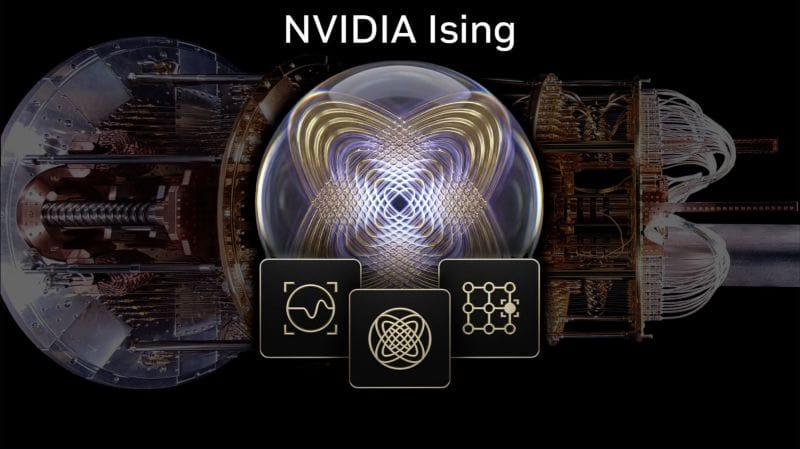
👀 What's happening: NVIDIA just open-sourced a new quantum AI model family called NVIDIA Ising, and the market immediately treated it like a real breakthrough. The models automate quantum chip calibration and error correction, two of the biggest reasons quantum systems still struggle outside the lab. Nvidia claims up to 2.5 times faster decoding and 3 times higher accuracy than current open-source baselines, and it needs physicists spending days tuning fragile qubits by hand no more.
🌍 How this hits reality: This matters because Nvidia is trying to hide the hardest part of quantum computing behind AI. Quantum machines still break easily, generate huge amounts of noise, and require constant correction. Nvidia wants AI to sit above all of that as a control layer, so engineers can use QPUs like they already use GPUs. That shifts quantum from a physics problem into an infrastructure and software problem.
🛎️ Key takeaway: Nvidia is applying the same playbook that made AI dominant. Own the control layer, also parts of the hardware, and make the difficult part someone else’s problem like QPU. Quantum still is not ready, but Nvidia just made it look a lot closer.
👀 What's happening: NVIDIA just open-sourced a new quantum AI model family called NVIDIA Ising, and the market immediately treated it like a real breakthrough. The models automate quantum chip calibration and error correction, two of the biggest reasons quantum systems still struggle outside the lab.
TEST
👀 What's happening: Stanford HAI released its 2026 AI Index report and argued that the gap between U.S. and Chinese AI models is rapidly shrinking. The report leans heavily on papers, citations, patents, benchmark scores, and leaderboard movement to support that view. On those metrics, Chinese models look much closer to the top American systems than they did a year ago.
🌍 How this hits reality: The problem is that many of these benchmarks are heavily polluted, overfit, or easy to game. Leaderboards reward narrow test-taking behavior, not whether a model can survive six hours of coding, manage a real workflow, or avoid collapsing midway through a long task. In real usage, the gap still feels huge. The best American models remain far stronger at reasoning, reliability, coding, and agent-style execution.
🛎️ Key takeaway: Stanford is probably right that the race is tightening on paper. But the real competition is still uneven.
ROBOTAXI
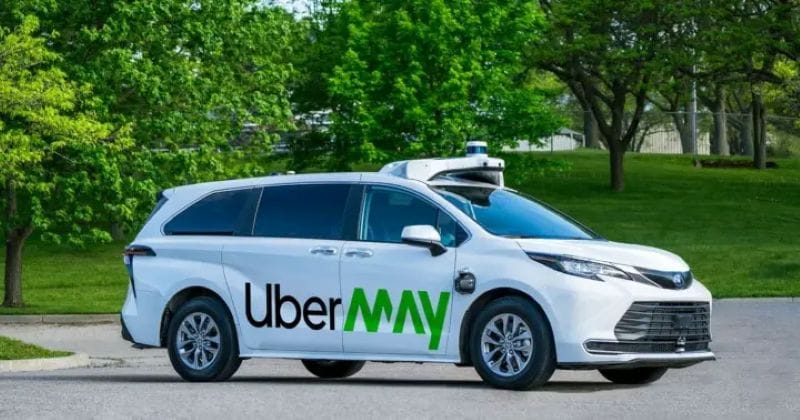
👀 What's happening: Uber is reportedly committing more than $10 billion to robotaxis, buying autonomous fleets and taking stakes in developers across the industry. The company plans to expand robotaxi service to at least 28 cities by 2028. This comes as Tesla Cybercab costs below $30,000, while Waymo continues expanding its own closed network. Uber is being forced to move faster because the old driver marketplace model is starting to look fragile.
🌍 How this hits reality: Uber cannot match Tesla’s economics. Cybercab was designed from day one as a stripped-down robotaxi with no steering wheel, no pedals, and extremely low manufacturing costs. Uber’s likely partners are much more expensive vehicles from Lucid and Rivian, often costing $40,000 to $70,000 before adding sensors, chips, insurance, and fleet maintenance. If Tesla can flood cities with much cheaper robotaxis, Uber’s traditional ride network starts looking structurally uncompetitive.
🛎️ Key takeaway: Uber is not accelerating because it wants to. It is accelerating because it has to. If Tesla and Waymo keep lowering costs and scaling their own networks, Uber risks becoming a middleman nobody needs.
🌍 How this hits reality: Uber cannot match Tesla’s economics. Cybercab was designed from day one as a stripped-down robotaxi with no steering wheel, no pedals, and extremely low manufacturing costs. Uber’s likely partners are much more expensive vehicles from Lucid and Rivian, often costing $40,000 to $70,000 before adding sensors, chips, insurance, and fleet maintenance.
DAILY TL;DR
READ MORE
Stay ahead without drowning in information. We turn the most important signals across AI, tech, marketing, and future products into 5-minute reads you can actually finish.
TOGETHER WITH US
AI Secret Media Group is the world’s #1 AI & Tech Newsletter Group, reaching over 2 million leaders across the global innovation ecosystem, from OpenAI, Anthropic, Google, and Microsoft to top AI labs, VCs, and fast-growing startups.
We've helped promote over 500 Tech Brands. Will yours be the next?
Email our co-founder Mark directly at [email protected] if the button fails.
Good Morning, AI Enthusiasts!
Nothing is stable except the ambition. And ambition doesn’t scale without consequences.
CLAUDE
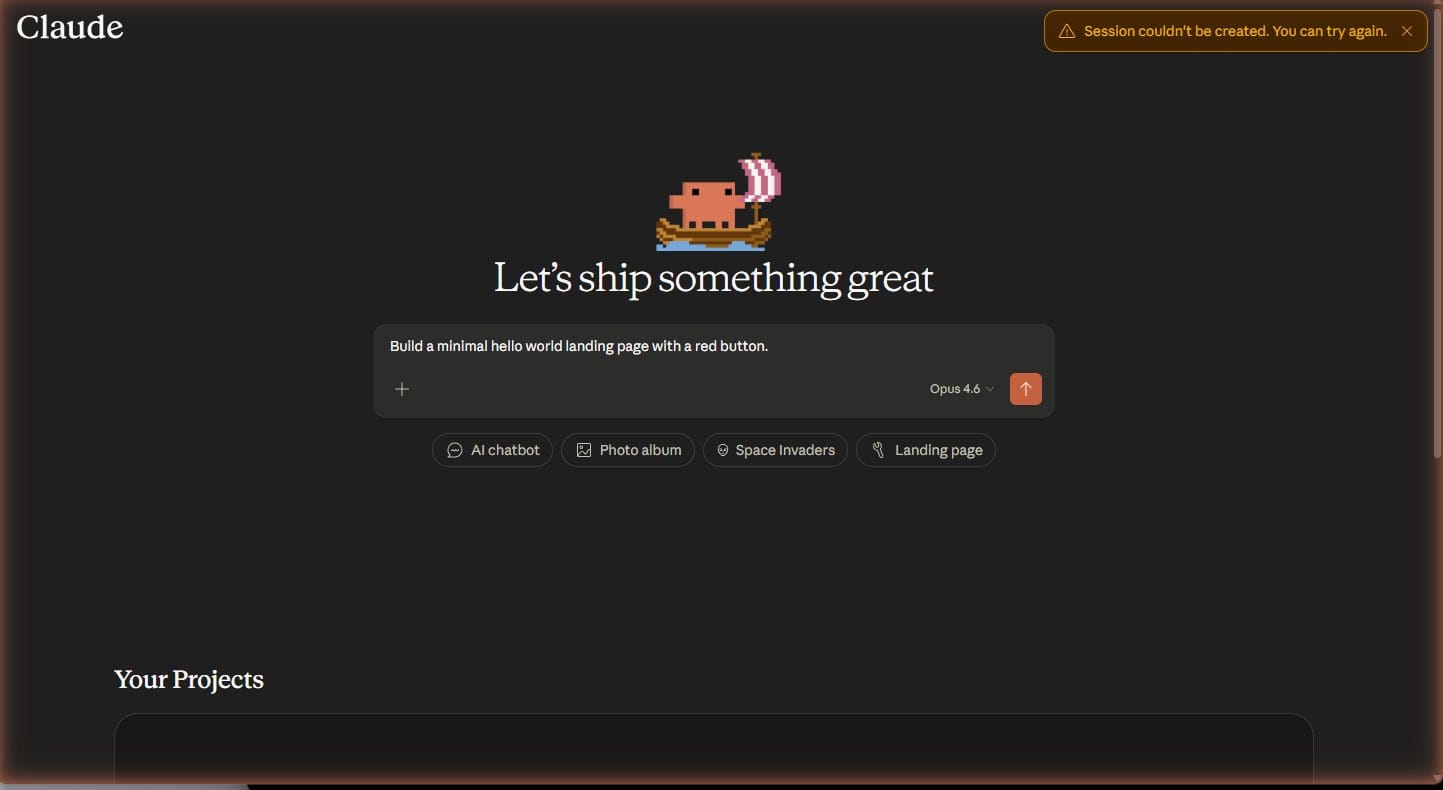
👀 What's happening: Anthropic has entered an aggressive release cycle, pushing Claude from a model into a full-stack platform across legal, finance, security, automation, and developer tools. The latest leaked interface shows a Lovable-like builder inside Claude, signaling it is now moving to absorb the entire app creation layer as well.
🌍 How this hits reality: This is a collapse of most application layers built on top of models, especially those dependent on Claude. No-code tools, automation platforms, and vertical SaaS lose most of their reason to exist as Claude absorbs their functions. But every added capability compounds compute load. The real question is whether its infrastructure can keep up with this ambition.
🛎️ Key takeaway: Anthropic is acting like a giant trying to eat the whole industry in one bite. The risk is not competition. It is physics. If compute cannot keep up, this does not end in dominance. It ends in choking.
👀 What's happening: Anthropic has entered an aggressive release cycle, pushing Claude from a model into a full-stack platform across legal, finance, security, automation, and developer tools. The latest leaked interface shows a Lovable-like builder inside Claude, signaling it is now moving to absorb the entire app creation layer as well.
TOGETHER WITH MYCLAW
Skip Docker, VPS configs, and late-night debugging. With MyClaw.ai, you can launch your agent in minutes and keep it running 24/7 in a dedicated environment built for serious builders.
If you’re serious about OpenClaw, run it properly — with speed and security by default.
CODING
👀 What's happening: After months of internal debate, Linux kernel maintainers just set formal rules for AI-generated code. Tools like Copilot or Claude are allowed, but they cannot sign contributions. Developers must disclose AI assistance using an Assisted-by tag, and all legal, security, and quality responsibility stays fully with the human submitting the patch.
🌍 How this hits reality: The same developers who rejected hype for decades are now letting AI touch code that runs billions of machines. That shift is not theoretical. AI is already flooding the pipeline with patches and security reports, increasing volume fast. Maintainers now have to review more code than ever, while trusting none of its origin.
🛎️ Key takeaway: Resistance is over. AI is inside the most critical codebase on earth. But trust did not follow. The model writes faster, the human just inherits the risk.
AGENTS
👀 What's happening: An internal memo surfaced showing OpenAI is shifting from consumer momentum to enterprise dominance. The focus is now agents, full-stack products, and deployment inside real workflows. It directly frames competition with Anthropic as a platform war, not a model race, and signals a push to own the agent era.
🌍 How this hits reality: This is not a smooth upgrade. OpenAI was built on ToC speed, viral growth, and lightweight distribution. Enterprise is the opposite. Long sales cycles, compliance layers, integration pain, and constant support. At the same time, investors are starting to push back since the company has already rewritten its roadmap twice in six months. Agents amplify this, because they must run reliably across systems, not just answer prompts. That gap is operational, not technical.
🛎️ Key takeaway: OpenAI wants the top seat in the agent era, but this is a different game entirely. If execution slips, the advantage shifts to whoever was built for enterprise from day one.
👀 What's happening: An internal memo surfaced showing OpenAI is shifting from consumer momentum to enterprise dominance. The focus is now agents, full-stack products, and deployment inside real workflows. It directly frames competition with Anthropic as a platform war, not a model race, and signals a push to own the agent era.
SAAS
👀 What's happening: UK retail giant Tesco just partnered with Adobe to inject AI into its marketing engine. It will combine Clubcard data from over 24 million UK households with Adobe’s enterprise stack to drive real-time personalization across offers, content, and channels. The shift is from broad campaigns to individualized, algorithm-driven engagement.
🌍 How this hits reality: This deal says more about Adobe than Tesco. In the AI era, Adobe’s once-core creative tools are losing ground, while it leans on legacy data infrastructure to stay relevant. It’s no longer shaping how things are made, just quietly routing data so others can decide what gets shown and sold.
🛎️ Key takeaway: Adobe can't win AI. It retreated to the pipes. If this continues, it may become the backend no one talks about.
DAILY TL;DR
READ MORE
Stay ahead without drowning in information. We turn the most important signals across AI, tech, marketing, and future products into 5-minute reads you can actually finish.
TOGETHER WITH US
AI Secret Media Group is the world’s #1 AI & Tech Newsletter Group, reaching over 2 million leaders across the global innovation ecosystem, from OpenAI, Anthropic, Google, and Microsoft to top AI labs, VCs, and fast-growing startups.
We've helped promote over 500 Tech Brands. Will yours be the next?
Email our co-founder Mark directly at [email protected] if the button fails.
Plus: HappyHorse Broke His Leg, Anthropic Hits OpenAI Territory
Read the storyPlus: Taylor Swift Trademarks Herself, Multi-Cloud Is Oxygen
Plus: Richer Agents Will Eat First, Musk Is Boosting Coding
Plus: DeepSeek V4 Preview, New AI Search Console
Plus: Anthropic Hits Trillion, Tesla Sells Impossible Dream
Plus: A Corporate Guillotine, DeepSeek Finally Needs Money
The Strongest Claude Has Already Been Withheld
Plus: Apple Kills AI Builders, Allbirds Became an AI Infra, Starbucks Releases a Skill
Plus: Quantum AI Layer, Stanford Used Broken Benchmarks
Plus: Linux Gives In to AI Code, OpenAI Turns Toward Enterprise Agents