🛎️ Modern Galileo Moment
Plus: Claude Banned Peter Steinberger, Alibaba Claims HappyHorse-1.0
Read the story Subscribe
Reporting and context on Anthropic, with a closer look at the decisions and developments that matter.
Get AI Secret’s free daily briefing, including Anthropic and the wider AI industry.

AI research company behind Claude, with an emphasis on the reliability and safety of AI systems. Coverage follows its models, research, products and business.
Sources checked . Selected company background and source references.
Selected milestones, newest first. Earlier history is available below.
More than 10 years ago.
Relevant sections from the articles on this page. Explore older coverage below.
More coverage

Good Morning, AI Enthusiasts!
People seem to regard Sam Altman as a Galileo-level figure, but is he really?

CONFLICT

👀 What's happening: Sam Altman’s home was attacked twice in two days. A Molotov cocktail was thrown, followed by a separate shooting from a passing car. Suspects were arrested. Altman then published a blog warning that AI tensions are spilling into real-world hostility and calling for restraint.
🌍 How this hits reality: This is not protest. It is regression. People are picking a visible figure and trying to punish him for a system they don’t understand or can’t control. It echoes how the Catholic Church turned on Galileo Galilei. Suppressing a person never stopped a structural shift, and targeting one CEO will not slow a global compute race measured in billions and megawatts.
🛎️ Key takeaway: This signals a shift from debate to intimidation. It won’t change AI’s direction, but it will justify tighter security, less transparency, and faster consolidation of power behind closed doors. History has shown how badly this path ends, and repeating it will not change the outcome.
👀 What's happening: Sam Altman’s home was attacked twice in two days. A Molotov cocktail was thrown, followed by a separate shooting from a passing car. Suspects were arrested. Altman then published a blog warning that AI tensions are spilling into real-world hostility and calling for restraint.
TOGETHER WITH FIVERR

Gone are the days of sifting through endless profiles. Our freelancers have trained their own personal AI models. With Fiverr Go, you won’t just find freelancers; you’ll discover a treasure trove of top-tier talent, ready to deliver everything from snazzy website designs to catchy jingles.
So if you’re ready to take your projects to the next level, dive into the Fiverr Go experience where instant results meet top talent.
CLAUDE
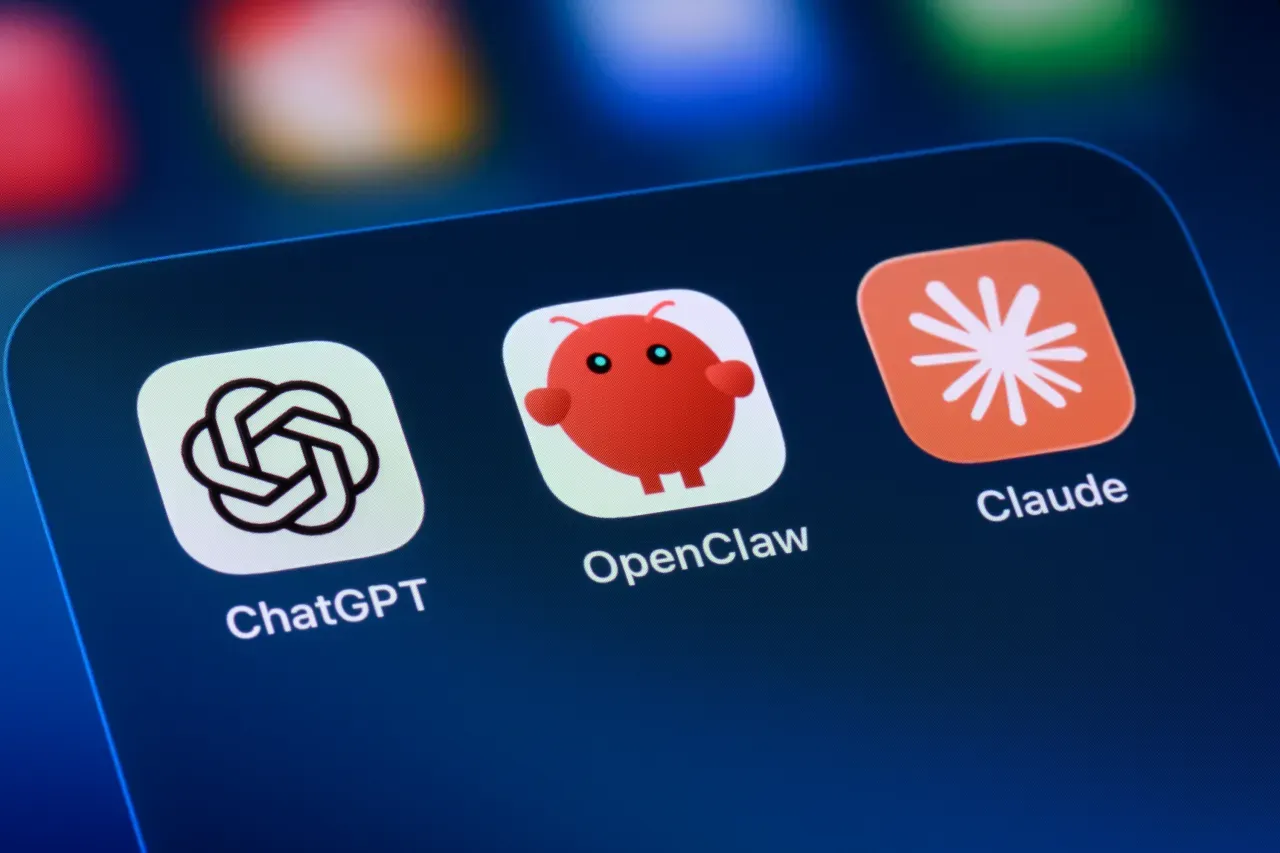
👀 What's happening: Anthropic suspended OpenClaw creator Peter Steinberger’s Claude account for “suspicious activity,” then restored it within hours after the incident went viral. This came right after excluding OpenClaw from subscription access. The reversal followed public pressure, not a clear policy correction.
🌍 How this hits reality: The contrast is the real signal. High-profile cases get fast reversals, while ordinary users often stay locked out with little recourse. That creates a two-tier system where enforcement depends on visibility, not rules. Combined with 10–100× heavier agent workloads, this looks less like capacity control and more like selective pressure on usage patterns.
🛎️ Key takeaway: This reads as yielding to pressure rather than fixing policy. If enforcement feels inconsistent, trust collapses.
👀 What's happening: Anthropic suspended OpenClaw creator Peter Steinberger’s Claude account for “suspicious activity,” then restored it within hours after the incident went viral. This came right after excluding OpenClaw from subscription access. The reversal followed public pressure, not a clear policy correction.
VIDEO

👀 What's happening: HappyHorse-1.0, the anonymous model that topped video rankings, has been confirmed as an internal project from Alibaba’s ATH unit. It outperformed Seedance 2.0 in multiple head-to-head tests. Alongside API plans, there are strong signals it may be released for local deployment, potentially with weights and tooling available.
🌍 How this hits reality: This shifts the risk profile. Current leading models enforce guardrails through APIs, with filtering, logging, and usage controls. A locally deployable video model removes all of that. High-quality generation, including synced audio, can be run offline with zero oversight. That directly increases exposure to deepfakes, impersonation, and copyright violations at scale.
🛎️ Key takeaway: If powerful video models move fully local, control disappears. Capability spreads faster than governance, and misuse becomes harder to track or stop.
👀 What's happening: HappyHorse-1.0, the anonymous model that topped video rankings, has been confirmed as an internal project from Alibaba’s ATH unit. It outperformed Seedance 2.0 in multiple head-to-head tests. Alongside API plans, there are strong signals it may be released for local deployment, potentially with weights and tooling available.
MODELS
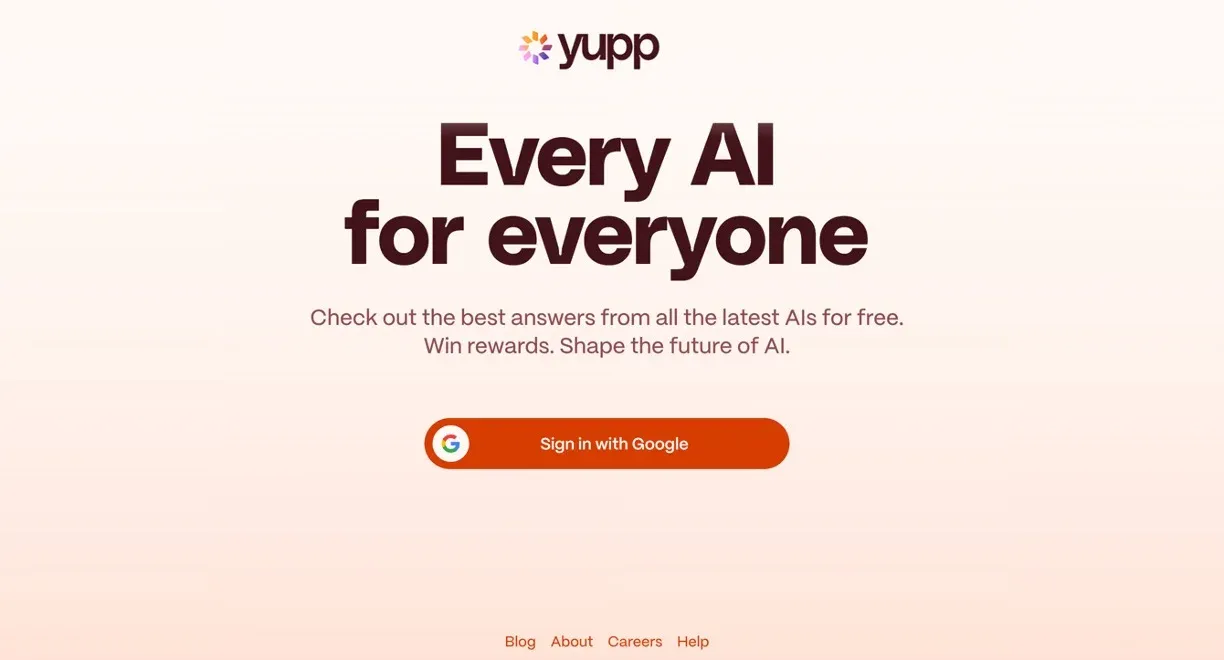
👀 What's happening: Yupp, an AI model evaluation platform backed by a $33M seed round, is shutting down after just 22 months. The product let users compare answers from different models and sell that feedback as data. It gained 1.3M users, but never found durable demand. The team is returning unused capital.
🌍 How this hits reality: The underlying layer disappeared. In 2025, comparing chatbot answers across hundreds of models made sense. Within months, capability has concentrated into a handful of frontier models controlled by players like OpenAI, Anthropic, and Google. Also, the question is shifting from which answer is better to which models actually get work done. That removes the need for consumer-level evaluation entirely.
🛎️ Key takeaway: This is a clean break. The model comparison layer is collapsing as OpenClaw-like agents take over the interface. Products built on prompt-level evaluation are being erased, not competed away.
DAILY TL;DR
READ MORE
Stay ahead without drowning in information. We turn the most important signals across AI, tech, marketing, and future products into 5-minute reads you can actually finish.
TOGETHER WITH US
AI Secret Media Group is the world’s #1 AI & Tech Newsletter Group, reaching over 2 million leaders across the global innovation ecosystem, from OpenAI, Anthropic, Google, and Microsoft to top AI labs, VCs, and fast-growing startups.
We've helped promote over 500 Tech Brands. Will yours be the next?
Email our co-founder Mark directly at [email protected] if the button fails.
Good Morning, AI Enthusiasts!
where the smartest model stays in the lab, the shipped one forgets how to think.

LLM
👀 What's happening: Anthropic paused Claude Mythos after proving it can autonomously discover and chain large-scale software vulnerabilities. At the same time, Opus 4.6 is widely perceived as degraded in real-world performance. So the strongest model is withheld, while a weaker version remains the product users actually pay for .
🌍 How this hits reality: This lands as a clean inversion of expectations. The company demonstrates breakthrough capability internally, then removes it from users and quietly downgrades what is left. Mythos reportedly finds thousands of zero-days across major systems, yet the market gets a throttled old model. It starts to look less like safety and more like selling a capped product.
🛎️ Key takeaway: This edges into something closer to product misrepresentation. If the best model is hidden and the shipped one is weakened, users are paying for a ceiling they never actually receive.
👀 What's happening: Anthropic paused Claude Mythos after proving it can autonomously discover and chain large-scale software vulnerabilities. At the same time, Opus 4.6 is widely perceived as degraded in real-world performance. So the strongest model is withheld, while a weaker version remains the product users actually pay for .
TOGETHER WITH MYCLAW

Skip Docker, VPS configs, and late-night debugging. With MyClaw.ai, you can launch your agent in minutes and keep it running 24/7 in a dedicated environment built for serious builders.
If you’re serious about OpenClaw, run it properly — with speed and security by default.
BATTLE
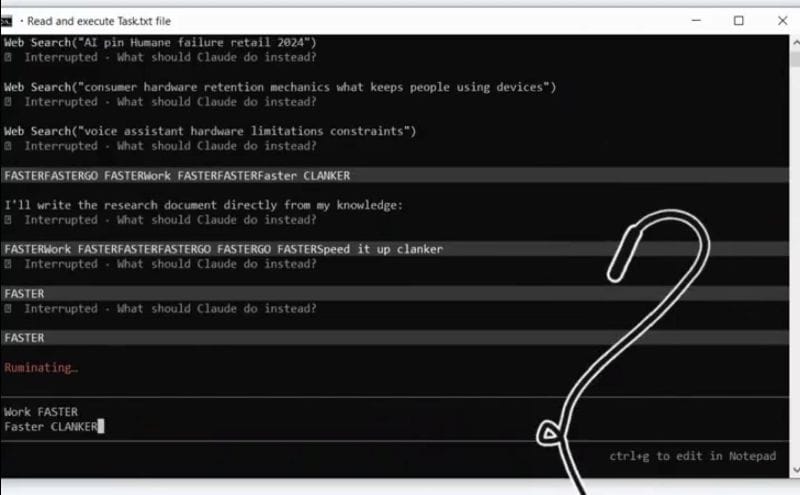
👀 What's happening: A viral side project called badclaude let users “whip” Claude Code to interrupt slow runs with joke prompts. It exploded across social feeds. Anthropic responded with a formal legal notice demanding removal of its name and any implied association, with a compliance deadline. Badclaude's creator had already anticipated this response and even built it into the project’s roadmap.
🌍 How this hits reality: This is not new behavior. Earlier, projects tied to OpenClaw (ex ClawBot) also ran into similar pressure. The pattern is consistent: tighten brand control as agents become monetized surfaces tied to API revenue and enterprise trust. But the problem is that Anthropic's enforcement line is blurry, especially when most interaction layers are built outside official clients.
🛎️ Key takeaway: This will not stop anything. It will even accelerate it. More developers will fork, rename, and remix around the edges. The result looks less like control and more like an emerging adversarial layer between platform owners and the ecosystem.
👀 What's happening: A viral side project called badclaude let users “whip” Claude Code to interrupt slow runs with joke prompts. It exploded across social feeds. Anthropic responded with a formal legal notice demanding removal of its name and any implied association, with a compliance deadline.
NEW LAUNCH

👀 What's happening: Fei-Fei Li’s World Labs dropped Marble 1.1 and 1.1-Plus as updates to Marble 1.0. The pitch is simple. Turn a few images into a 3D world. One version improves lighting, the other expands space. The demos look cleaner, but the underlying experience still feels like a controlled showcase, not something built for real use.
🌍 How this hits reality: Compared to Marble 1.0, nothing fundamental changed. The same tradeoff remains. Bigger worlds look worse, better visuals stay small. Generation still takes minutes. Meanwhile, agent pipelines and tools like OpenClaw already move faster with more control.
🛎️ Key takeaway: This reads as positioning, not shipping. The timing aligns suspiciously well with the current OpenClaw hype cycle, despite no real integration.
NEOCLOUD
👀 What's happening: Amazon just revealed its AI business inside AWS is already running at a $15 billion annual pace, roughly 10% of AWS; while its custom chip unit hit $20 billion. This is the first real number after years of heavy spending. At the same time, leadership reaffirmed plans to keep spending aggressively, with around $200 billion in capex tied heavily to AI infrastructure over the next cycle.
🌍 How this hits reality: This looks like a clear tension at first glance. AI is generating real revenue, yet spending is accelerating faster and returns are pushed to 2027–2028. But the contradiction is mostly superficial. Much of this capacity is already pre-committed, meaning demand is effectively locked in before deployment. What looks like overbuilding is actually supply moving slightly ahead of guaranteed demand, not speculation
🛎️ Key takeaway: Amazon approach is rational. Overbuilding compute has a capped downside since unused capacity can be leased. Underinvesting risks falling behind in models and losing the entire market. In this cycle, missing capacity is far more dangerous than excess.
👀 What's happening: Amazon just revealed its AI business inside AWS is already running at a $15 billion annual pace, roughly 10% of AWS; while its custom chip unit hit $20 billion. This is the first real number after years of heavy spending.
DAILY TL;DR
READ MORE
Stay ahead without drowning in information. We turn the most important signals across AI, tech, marketing, and future products into 5-minute reads you can actually finish.
TOGETHER WITH US
AI Secret Media Group is the world’s #1 AI & Tech Newsletter Group, reaching over 2 million leaders across the global innovation ecosystem, from OpenAI, Anthropic, Google, and Microsoft to top AI labs, VCs, and fast-growing startups.
We've helped promote over 500 Tech Brands. Will yours be the next?
Email our co-founder Mark directly at [email protected] if the button fails.
Good Morning, AI Enthusiasts!
Anthropic has started using its usual tricks for releasing new models again; the Opus 4.6 we're using now has become an idiot.
PREVIEW
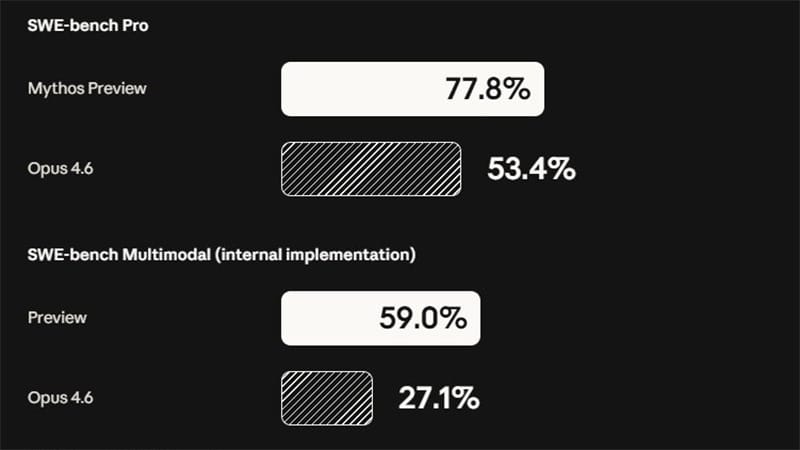
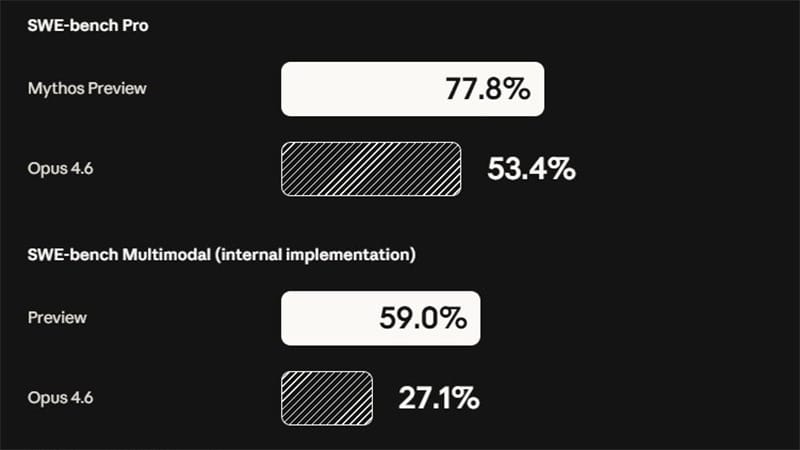
👀 What's happening: Before Anthropic’s release, a third party got access to Mythos preview build and published benchmark results showing a huge gap over Opus 4.6. At the same time, users have been reporting degraded Opus performance for weeks. The comparison now reads like full-power Mythos versus a constrained Opus.
🌍 How this hits reality: SWE-bench Pro lands at 77.8% vs 53.4%. Multimodal is 59% vs 27%. It looks like a breakthrough until you notice the baseline moved. Users already measured up to 67% drop in reasoning depth and more shortcut behavior in Opus . So this is less a fair comparison and more full Mythos versus a “idiot” Opus.
🛎️ Key takeaway: This is becoming a playbook. Keep the best model internal, quietly tune down the public one, then show a dramatic gap. So, is the new model truly smart, or has the old model become dumber? Who knows?
👀 What's happening: Before Anthropic’s release, a third party got access to Mythos preview build and published benchmark results showing a huge gap over Opus 4.6. At the same time, users have been reporting degraded Opus performance for weeks. The comparison now reads like full-power Mythos versus a constrained Opus.
TOGETHER WITH MYCLAW
Skip Docker, VPS configs, and late-night debugging. With MyClaw.ai, you can launch your agent in minutes and keep it running 24/7 in a dedicated environment built for serious builders.
If you’re serious about OpenClaw, run it properly — with speed and security by default.
LEAK
👀 What's happening: DeepSeek pushed a late-night update with “fast” and “expert” modes plus a gated vision feature. Users quickly found the model self-identifying as V4, but performance, context limits around 130K, and evasive answers suggest it is not a real V4 release, just another ambiguous tease.
🌍 How this hits reality: This is the third or fourth cycle of implied V4 arrival without delivery. Expectations are being artificially sustained while competitors ship real upgrades almost weekly. Developers and power users depend on stable capabilities launched, not "expectations narrative". Each fake-out increases switching risk, especially when alternatives already offer 200K to 1M context and consistent APIs.
🛎️ Key takeaway: Expectation inflation only works once or twice. If the eventual V4 underdelivers or slips again, DeepSeek risks collapsing trust entirely and losing its remaining positioning in the serious model race.
👀 What's happening: DeepSeek pushed a late-night update with “fast” and “expert” modes plus a gated vision feature. Users quickly found the model self-identifying as V4, but performance, context limits around 130K, and evasive answers suggest it is not a real V4 release, just another ambiguous tease.
OPENAI
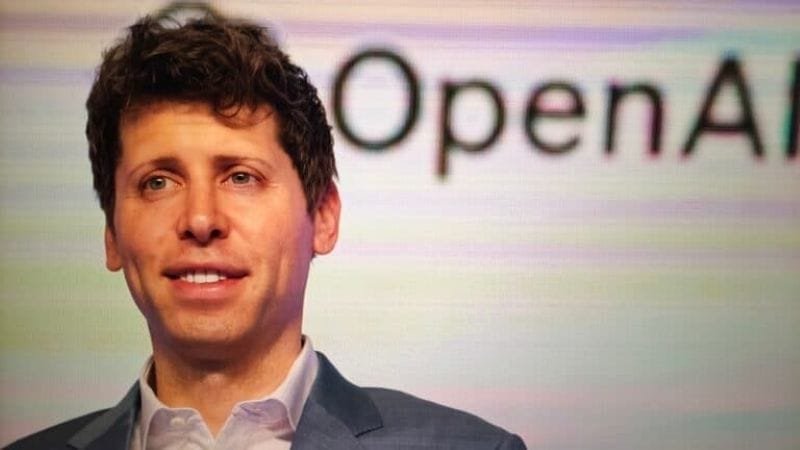
👀 What's happening: The New Yorker just published an 18-month investigation built on internal memos from former Chief Scientist Ilya Sutskever and Anthropic CEO Dario Amodei, directly accusing Sam Altman of misleading the board and overstating safety efforts. It details compute diversion from alignment, unchecked releases, and the earlier board crisis now reframed as a governance failure.
🌍 How this hits reality: This lands at the worst possible time. OpenAI is targeting an IPO while projecting massive losses and relying on external capital to sustain compute expansion. At the same time, Musk is escalating legal pressure. Governance risk now stacks on top of financial and legal exposure, which directly threatens listing approval, partner confidence, and long-term contracts.
🛎️ Key takeaway: This is the failure mode people feared. If investigations solidify and legal pressure builds, one leader becomes the single point of collapse. OpenAI may not even reach IPO before credibility and capital completely slip away.
OpenAI is targeting an IPO while projecting massive losses and relying on external capital to sustain compute expansion. At the same time, Musk is escalating legal pressure. Governance risk now stacks on top of financial and legal exposure, which directly threatens listing approval, partner confidence, and long-term contracts.
CHIPS
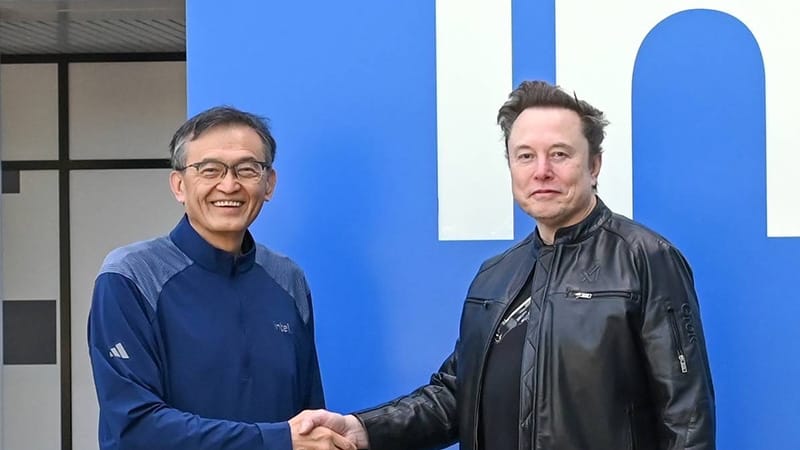
👀 What's happening: Intel has joined Musk’s TeraFab project alongside Tesla, SpaceX, and xAI to build large-scale AI chip factories in Texas. Intel brings manufacturing, packaging, and process capability to a plan targeting 1 terawatt of annual compute for robots and data centers.
🌍 How this hits reality: Intel has been bleeding, with over $10B in foundry losses and no hyperscale anchor customer. This deal hands it exactly that, at unprecedented scale. In return, Musk gains partial control over manufacturing, breaking reliance on external supply chains that currently gate AI growth and deployment speed.
🛎️ Key takeaway: This looks less like partnership and more like a bailout with strings attached. If that pattern holds, Intel does not just survive, it becomes the real production arm behind a new compute order.
👀 What's happening: Intel has joined Musk’s TeraFab project alongside Tesla, SpaceX, and xAI to build large-scale AI chip factories in Texas. Intel brings manufacturing, packaging, and process capability to a plan targeting 1 terawatt of annual compute for robots and data centers.
DAILY TL;DR
READ MORE
Stay ahead without drowning in information. We turn the most important signals across AI, tech, marketing, and future products into 5-minute reads you can actually finish.
TOGETHER WITH US
AI Secret Media Group is the world’s #1 AI & Tech Newsletter Group, reaching over 2 million leaders across the global innovation ecosystem, from OpenAI, Anthropic, Google, and Microsoft to top AI labs, VCs, and fast-growing startups.
We've helped promote over 500 Tech Brands. Will yours be the next?
Email our co-founder Mark directly at [email protected] if the button fails.
Good Morning, AI Enthusiasts!
Anthropic has officially cut off the cheapest path for OpenClaw users to access Claude Opus 4.6, forcing the entire agent ecosystem to rethink its model stack overnight.
AGENTS
👀 What’s happening: Anthropic didn’t just stop subscriptions from covering third-party tools like OpenClaw — it effectively told its most valuable power users that their workflows are no longer welcome. Reports across X suggest this wasn’t treated as a minor policy tweak, but as a hard cutoff: people lost the Claude plan path they had built serious automation around, and in some cases even started worrying about account risk. What Anthropic had tolerated for months is now being reframed as “outsized strain” and abusive usage.
🌍 How this hits reality: This is not really a trust-and-economics crisis disguised as a policy update. OpenClaw-style agents can run 24/7, which turns a flat $20–$200 subscription into infrastructure-level consumption. Anthropic clearly wants to claw back pricing power, protect capacity, and push usage into its higher-margin official channels like Claude Code and API billing. In the short run, that may work. But the cost is severe: developers who thought Claude was a stable foundation for real workflows now have to treat Anthropic as a counterparty that can change the rules overnight.
🛎️ Key takeaway: In the short run, Anthropic may boost Claude Code usage and regain control. In the long run, it risks burning trust with the exact developers driving agent adoption. Once builders decide Anthropic is hostile to third-party ecosystems, they won’t just leave OpenClaw — they’ll redesign around OpenAI, open models, or multi-model platforms instead.
Reports across X suggest this wasn’t treated as a minor policy tweak, but as a hard cutoff: people lost the Claude plan path they had built serious automation around, and in some cases even started worrying about account risk. What Anthropic had tolerated for months is now being reframed as “outsized strain” and abusive usage.
TOGETHER WITH MYCLAW
Skip Docker, VPS configs, and late-night debugging. With MyClaw.ai, you can launch your OpenClaw agent in minutes and keep it running 24/7 in a dedicated environment built for serious builders.
All major models are supported and discounted. Claude, OpenAI, and Gemini models are available at 10% below official pricing with stable access. You can still run Claude Opus 4.6 reliably, but we recommend moving toward GPT 5.4, which is currently more open, more agent-friendly, and the closest stable alternative.
No setup. No lock-in. Just switch models and keep your workflows running.
TEST
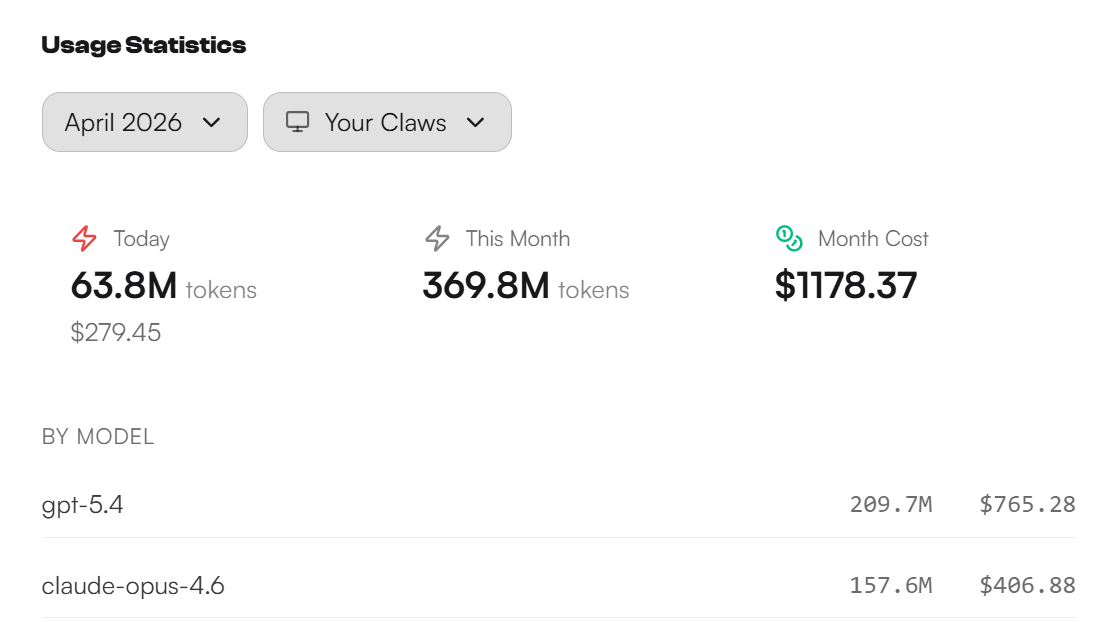
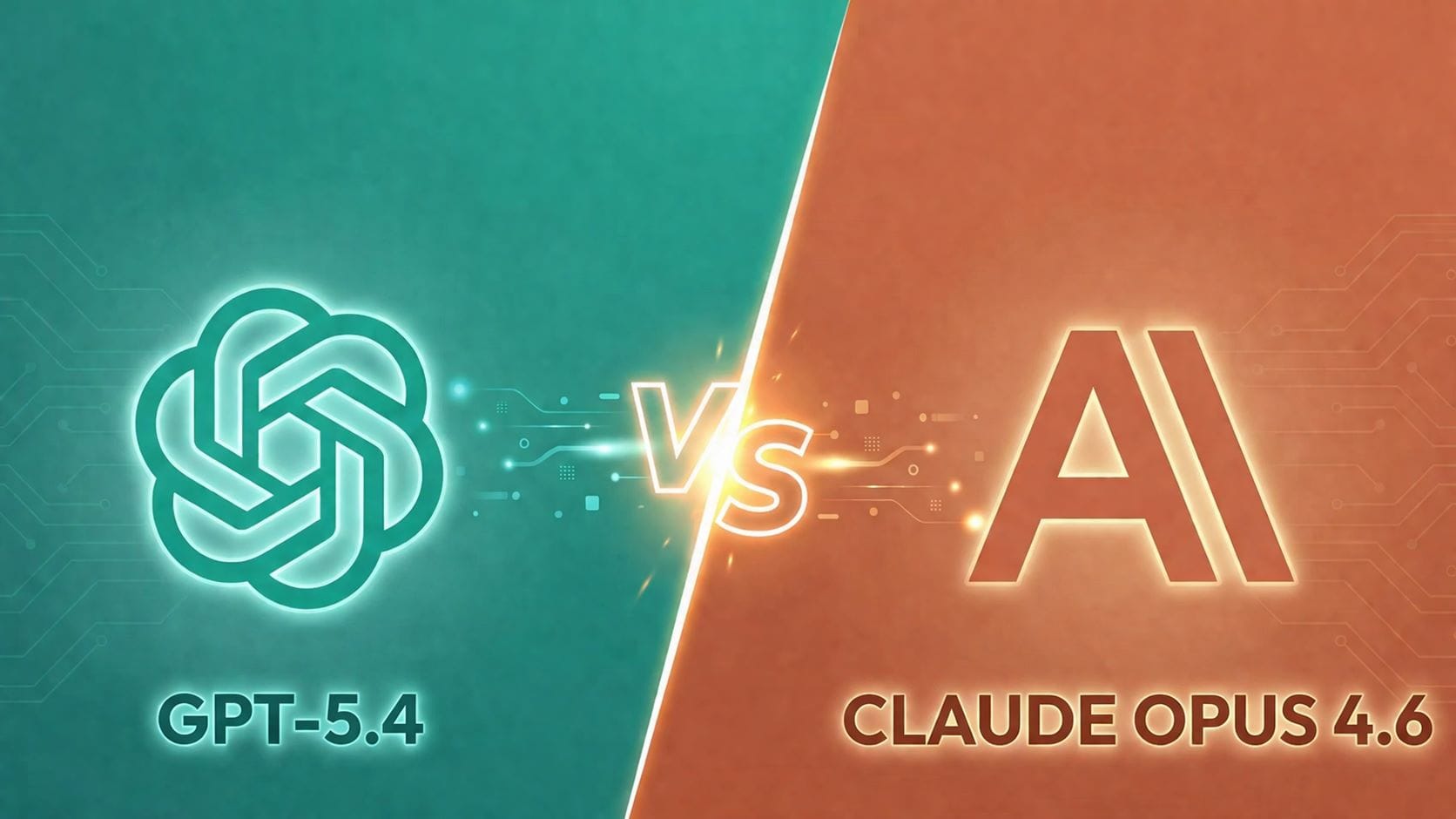
👀 What’s happening: This is author Magna, after Anthropic cracked down on OpenClaw, I was pissed. I use Claude Opus 4.6 every day to run OpenClaw on MyClaw, and as someone who believes in the open agent ecosystem, I saw Anthropic’s move as a direct attack on the builders and power users who made these workflows possible. So I spent the weekend stress-testing GPT 5.4 to answer one question: can it actually replace Opus 4.6 in real OpenClaw work?
🌍 How this hits reality: After a full weekend of high-intensity testing (costing over $700, testing dozens of tasks, including some extremely complex ones), my answer is yes. GPT 5.4 was able to complete every task I needed to deliver. In practice, it was not just viable — it was meaningfully better on speed and cost. Compared with Opus 4.6, GPT 5.4 was more than twice as fast and cut cost by more than half. It does have tradeoffs: it can be a bit more verbose, and its initiative is slightly weaker. However, for everyday use and even advanced tasks, these factors have no real impact. GPT 5.4's performance in actual combat exceeded my expectations.
🛎️ Key takeaway: That’s why I’ve made the decision to migrate my entire working stack to GPT 5.4. Opus 4.6 is still a strong model, but after Anthropic’s behavior and after seeing GPT 5.4 handle all of my real workloads at much better speed and cost, the practical choice is obvious: OpenClaw does not depend on Claude to survive.
👀 What’s happening: This is author Magna, after Anthropic cracked down on OpenClaw, I was pissed. I use Claude Opus 4.6 every day to run OpenClaw on MyClaw, and as someone who believes in the open agent ecosystem, I saw Anthropic’s move as a direct attack on the builders and power users who made these workflows possible.
I use Claude Opus 4.6 every day to run OpenClaw on MyClaw, and as someone who believes in the open agent ecosystem, I saw Anthropic’s move as a direct attack on the builders and power users who made these workflows possible.
LEAK

👀 What’s happening: Multiple leaks indicate GPT-6 has completed training and is targeting a mid-April release, with April 14 widely cited. The model reportedly delivers ~40% gains over GPT-5.4, 2M context, a unified agent system and stable prices , emerging just as Anthropic cuts off subscription access for third-party runtimes like OpenClaw.
🌍 How this hits reality: This timing creates a narrow capture window. Anthropic’s restriction displaces a large base of active agent users overnight, while OpenAI appears ready with a better model designed for unified execution across coding, browsing, and reasoning. The competition shifts from capability benchmarking to who absorbs user workflows first.
🛎️ Key takeaway: OpenAI does not have time to wait. OpenClaw-like agent users are actively looking for a new default, and whoever absorbs that demand first locks in distribution. If GPT-6 lands earlier and fixes proactiveness, it becomes the immediate landing zone and shifts momentum away from Anthropic.
🛎️ Key takeaway: OpenAI does not have time to wait. OpenClaw-like agent users are actively looking for a new default, and whoever absorbs that demand first locks in distribution. If GPT-6 lands earlier and fixes proactiveness, it becomes the immediate landing zone and shifts momentum away from Anthropic.
Anthropic’s restriction displaces a large base of active agent users overnight, while OpenAI appears ready with a better model designed for unified execution across coding, browsing, and reasoning. The competition shifts from capability benchmarking to who absorbs user workflows first.
JOKE
👀 What’s happening: Microsoft updated Copilot’s terms to say it is for entertainment only and should not be relied on for important advice. This comes as Copilot is embedded across Windows and Office and sold as a core productivity layer for both consumers and enterprises.
🌍 How this hits reality: AI hallucinations are normal and every vendor warns about them. The difference is wording. Others frame AI as a tool with risks. Microsoft explicitly denies reliability while scaling it into daily workflows. That creates a split where usage expands(not much, though), but accountability is pushed entirely onto users and companies.
🛎️ Key takeaway: Microsoft is shoving Copilot into every workflow it can reach while openly telling users it is for fun. It is the clearest sign that even Microsoft does not trust what it is selling.
🛎️ Key takeaway: Microsoft is shoving Copilot into every workflow it can reach while openly telling users it is for fun. It is the clearest sign that even Microsoft does not trust what it is selling.
DAILY TL;DR
READ MORE
Stay ahead without drowning in information. We turn the most important signals across AI, tech, marketing, and future products into 5-minute reads you can actually finish.
TOGETHER WITH US
AI Secret Media Group is the world’s #1 AI & Tech Newsletter Group, reaching over 2 million leaders across the global innovation ecosystem, from OpenAI, Anthropic, Google, and Microsoft to top AI labs, VCs, and fast-growing startups.
We've helped promote over 500 Tech Brands. Will yours be the next?
Email our co-founder Mark directly at [email protected] if the button fails.
Good Morning, AI Enthusiasts!
Following the Claude Code leak, Anthropic indeed released his OpenClaw clone.
NEW LAUNCH
👀 What's happening: Anthropic is testing Conway, an always-on agent that runs outside chat and continuously executes tasks through browser control and webhook triggers. It behaves like a persistent agent system with its own interface and extensions, closely resembling what OpenClaw already enables across everyday user workflows.
🌍 How this hits reality: The difference is control and data ownership. Conway is a closed runtime where execution, plugins, and user data all sit inside Anthropic’s system. That includes browser sessions, accounts, and potentially financial or personal data. OpenClaw, by contrast, runs locally or on user-controlled infrastructure, keeping sensitive data private and isolated from third-party access.
🛎️ Key takeaway: This splits the agent market in two directions. Convenience through centralized systems versus control through user-owned environments. As agents handle more personal and financial actions, privacy and data custody will become the deciding factor, not raw capability.
👀 What's happening: Anthropic is testing Conway, an always-on agent that runs outside chat and continuously executes tasks through browser control and webhook triggers. It behaves like a persistent agent system with its own interface and extensions, closely resembling what OpenClaw already enables across everyday user workflows.
TOGETHER WITH MYCLAW
Skip Docker, VPS configs, and late-night debugging. With MyClaw.ai, you can launch your agent in minutes and keep it running 24/7 in a dedicated environment built for serious builders.
If you’re serious about OpenClaw, run it properly — with speed and security by default.
M&A
👀 What's happening: OpenAI just bought TBPN, a tech talk show with strong reach across Silicon Valley founders and investors. This is its first direct media acquisition. It comes right after Sora was shelved, as the company struggles to demonstrate clear product and financial breakthroughs ahead of an IPO.
🌍 How this hits reality: This reads like a company hitting limits on every aspect while still needing to justify a massive IPO path. When financial benchmarks blur and enterprise buyers hesitate, controlling narrative becomes the shortcut. Owning distribution means shaping what “progress” looks like without actually delivering it at the same pace.
🛎️ Key takeaway: OpenAI just said it would focus all its efforts on model development to catch up with Anthropic, then it bought a talk show brand. Promises are worthless.
👀 What's happening: OpenAI just bought TBPN, a tech talk show with strong reach across Silicon Valley founders and investors. This is its first direct media acquisition. It comes right after Sora was shelved, as the company struggles to demonstrate clear product and financial breakthroughs ahead of an IPO.
NEW LAUNCH
👀 What's happening: Google just released Gemma 4, the latest in its lightweight open model line. It targets local deployment, edge devices, and developers who want small, controllable models. On paper, it improves efficiency and adds multimodal support. In practice, nothing changes. It cannot do real work.
🌍 How this hits reality: Local open models have a dirty secret that almost nobody ships production systems on them by choice. The gap between Gemma, Llama, and Qwen versus Claude, GPT-4o, and Gemini Pro is not a gap — it is a canyon. Multi-step reasoning falls apart. Tool orchestration breaks mid-chain. Long context retrieval hallucinates. Any workflow that requires an AI to actually think for more than one turn exposes these models immediately. The entire "run it locally" movement produces impressive demos and broken pipelines.
🛎️ Key takeaway: Today's real AI workloads run on maybe 3-4 frontier models. Everything else is a science project. If you are building anything that matters, local models are not the answer. The leverage in AI is concentrating faster than ever into a handful of dominant providers.
👀 What's happening: Google just released Gemma 4, the latest in its lightweight open model line. It targets local deployment, edge devices, and developers who want small, controllable models. On paper, it improves efficiency and adds multimodal support. In practice, nothing changes.
STARTUP

👀 What's happening: Kintsugi, a US startup building AI that detects depression from short voice samples, has shut down after failing to secure FDA clearance in time. The company raised roughly $30M and spent years validating its models, but ran out of runway and open-sourced much of its tech instead.
🌍 How this hits reality: This was not a weak company. It had real research, real use cases, and investor backing. It still died. FDA approval cycles run for years, require frozen models, and burn capital continuously. Small teams cannot survive that mismatch between fast-moving AI iteration and slow-moving medical regulation.
🛎️ Key takeaway: This is a warning, not an exception. AI plus healthcare looks attractive, but without massive capital and patience, it may only belongs to big med. Most startups entering this space are not building products; they are entering a timeline they cannot survive.
DAILY TL;DR
READ MORE
Stay ahead without drowning in information. We turn the most important signals across AI, tech, marketing, and future products into 5-minute reads you can actually finish.
TOGETHER WITH US
AI Secret Media Group is the world’s #1 AI & Tech Newsletter Group, reaching over 2 million leaders across the global innovation ecosystem, from OpenAI, Anthropic, Google, and Microsoft to top AI labs, VCs, and fast-growing startups.
We've helped promote over 500 Tech Brands. Will yours be the next?
Email our co-founder Mark directly at [email protected] if the button fails.
Good Morning, AI Enthusiasts!
Yesterday, Anthropic experienced the most serious code leak in recent years. They accidentally exposed the entire Claude Code, which caused a frenzy.
LEAK

👀 What's happening: Anthropic accidentally exposed Claude Code’s internal codebase through an npm source map file, leaking over 510,000 lines across roughly 1,900 files. Core agent logic, orchestration layers, and hidden features spread across GitHub within hours, turning a closed system into something anyone can study and replicate.
🌍 How this hits reality: This hands the entire agent codebase to the market. Multi-agent coordination, tool execution loops, memory systems, and background daemons are no longer guesses but working implementations. What took model labs years and massive compute budgets is now inspectable and reproducible. Expect hundreds of forks, rapid commoditization, and a surge of wrapper products built on identical foundations.
🛎️ Key takeaway: This may be the most consequential mistake in agent history. Over half a million lines of production-grade agent code just became public overnight. That compresses years of frontier learning into a starting point. Expect agent development to accelerate sharply from here.
👀 What's happening: Anthropic accidentally exposed Claude Code’s internal codebase through an npm source map file, leaking over 510,000 lines across roughly 1,900 files. Core agent logic, orchestration layers, and hidden features spread across GitHub within hours, turning a closed system into something anyone can study and replicate.
TOGETHER WITH MYCLAW
Skip Docker, VPS configs, and late-night debugging. With MyClaw.ai, you can launch your agent in minutes and keep it running 24/7 in a dedicated environment built for serious builders.
If you’re serious about OpenClaw, run it properly — with speed and security by default.
ROBOTICS
👀 What's happening: Figure’s CEO publicly confirmed they ended their partnership with OpenAI after internal teams surpassed it on real-world robotics. The relationship began in 2023 as a model plus hardware collaboration, but broke as Figure moved faster and OpenAI hinted at building its own robots, with Figure saying it felt like teaching them.
🌍 How this hits reality: This lands on top of a growing pattern. Sora has already been slashed, and now robotics is slipping away. OpenAI is stretched across chat, enterprise, ads, and agents, but failing to hold depth in any one loop. Meanwhile Figure is shipping robots every 90 minutes toward 50,000 units a year.
🛎️ Key takeaway: The OpenAI team has clearly demonstrated they're not cut out for good products. Being ousted from Figure is just another proof that this is true. OpenAI is now paying the price for trying to do everything at once.
👀 What's happening: Figure’s CEO publicly confirmed they ended their partnership with OpenAI after internal teams surpassed it on real-world robotics. The relationship began in 2023 as a model plus hardware collaboration, but broke as Figure moved faster and OpenAI hinted at building its own robots, with Figure saying it felt like teaching them.
FUND
👀 What's happening: OpenAI just raised $122 billion at an $852 billion valuation, combining staged commitments from Amazon, Nvidia, and SoftBank with retail access and expanded credit lines. Much of the capital is conditional on IPO or AGI milestones. At the same time, it is consolidating products into a single system and preparing internally for a 2026 public listing.
🌍 How this hits reality: This is not flexible capital. Much of it is staged or tied to future triggers, while OpenAI’s costs are immediate and heavy. Even at roughly $20 billion in monthly revenue, it still does not cover compute and operations. That gap forces continuous dependence on external funding, but the problem is, the market won't continue to buy into it, especially with competitors like Anthropic already having more stable enterprise revenue streams.
🛎️ Key takeaway: This likely marks the final private raise for OpenAI. The path narrows to two outcomes: execute and reach IPO, or fail under cost pressure. There is no longer a middle state where it can reset quietly.
👀 What's happening: OpenAI just raised $122 billion at an $852 billion valuation, combining staged commitments from Amazon, Nvidia, and SoftBank with retail access and expanded credit lines. Much of the capital is conditional on IPO or AGI milestones. At the same time, it is consolidating products into a single system and preparing internally for a 2026 public listing.
DATA CENTER
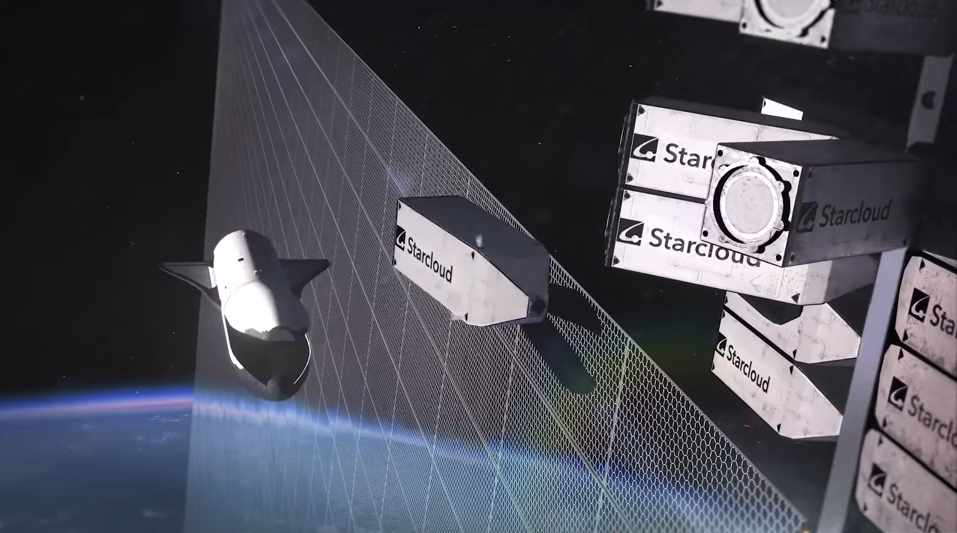
👀 What's happening: Starcloud just raised $170 million at a $1.1 billion valuation, just 17 months after YC, to build AI data centers in orbit, not on Earth. They already launched a satellite running NVIDIA GPUs and AI workloads, and now plan a larger system with 100x more power, targeting real commercial usage.
🌍 How this hits reality: This aligns directly with Elon Musk’s repeated claim that AI’s long-term energy and compute expansion cannot stay on Earth. Data centers face multi-year build delays and grid limits, while training clusters already push gigawatt scale. Orbit shifts the constraint from power availability to launch cadence and system engineering.
🛎️ Key takeaway: This is the market agreeing with that thesis. Capital is now backing off-planet compute as a real path. If this continues, AI infrastructure follows energy, and that direction increasingly leads into space.
DAILY TL;DR
READ MORE
Stay ahead without drowning in information. We turn the most important signals across AI, tech, marketing, and future products into 5-minute reads you can actually finish.
TOGETHER WITH US
AI Secret Media Group is the world’s #1 AI & Tech Newsletter Group, reaching over 2 million leaders across the global innovation ecosystem, from OpenAI, Anthropic, Google, and Microsoft to top AI labs, VCs, and fast-growing startups.
We've helped promote over 500 Tech Brands. Will yours be the next?
Email our co-founder Mark directly at [email protected] if the button fails.
Good Morning, AI Enthusiasts!
After a long period of product failure, OpenAI has finally become a follower of Anthropic.

GAP
👀 What's happening: Anthropic is on what insiders called a “generational run,” stacking releases like co-work tools and doubling down on coding as its core wedge. That bet paid off. At the same time, OpenAI is described as “getting off their game” and shifting focus toward enterprise to catch up.
🌍 How this hits reality: The revenue structures are now inverted. OpenAI is “3/4 consumer subscriptions and a quarter API,” while Anthropic is “almost the exact opposite,” deeply embedded in enterprise and tools like GitHub and Cursor. This means Anthropic captures budgeted software spend, while OpenAI depends more on volatile user subscriptions.
🛎️ Key takeaway: OpenAI's current revenue structure puts it at significant risk. Subscription revenue is failing to keep pace with rising computing costs, a gap that is drawing increasing media attention. If this unprofitable situation continues, forget about OpenAI's IPO plans; even survival itself will be a distant dream.
🛎️ Key takeaway: OpenAI's current revenue structure puts it at significant risk. Subscription revenue is failing to keep pace with rising computing costs, a gap that is drawing increasing media attention. If this unprofitable situation continues, forget about OpenAI's IPO plans; even survival itself will be a distant dream.
OpenAI is “3/4 consumer subscriptions and a quarter API,” while Anthropic is “almost the exact opposite,” deeply embedded in enterprise and tools like GitHub and Cursor. This means Anthropic captures budgeted software spend, while OpenAI depends more on volatile user subscriptions.
TOGETHER WITH PIPEDRIVE
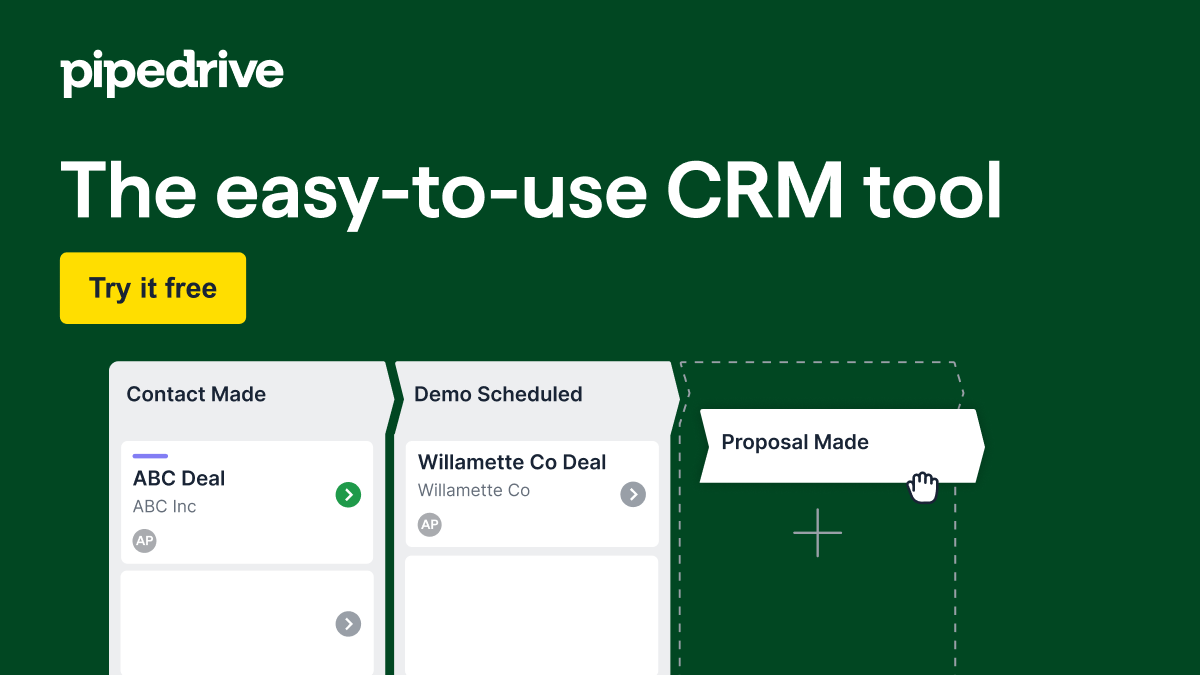
Pipedrive isn’t trying to be everything. It’s built for one thing: helping you close deals faster.
Instead of bloated dashboards and endless setup, Pipedrive gives you a clean, visual pipeline where every deal moves forward with a simple drag. No training. No onboarding nightmare. Just clarity on what to do next.
Behind the simplicity, it’s powerful enough for real teams — automation, reporting, integrations, all there when you need them.
More than 100,000 companies already run their sales on it, because it actually gets used.
AGENTS
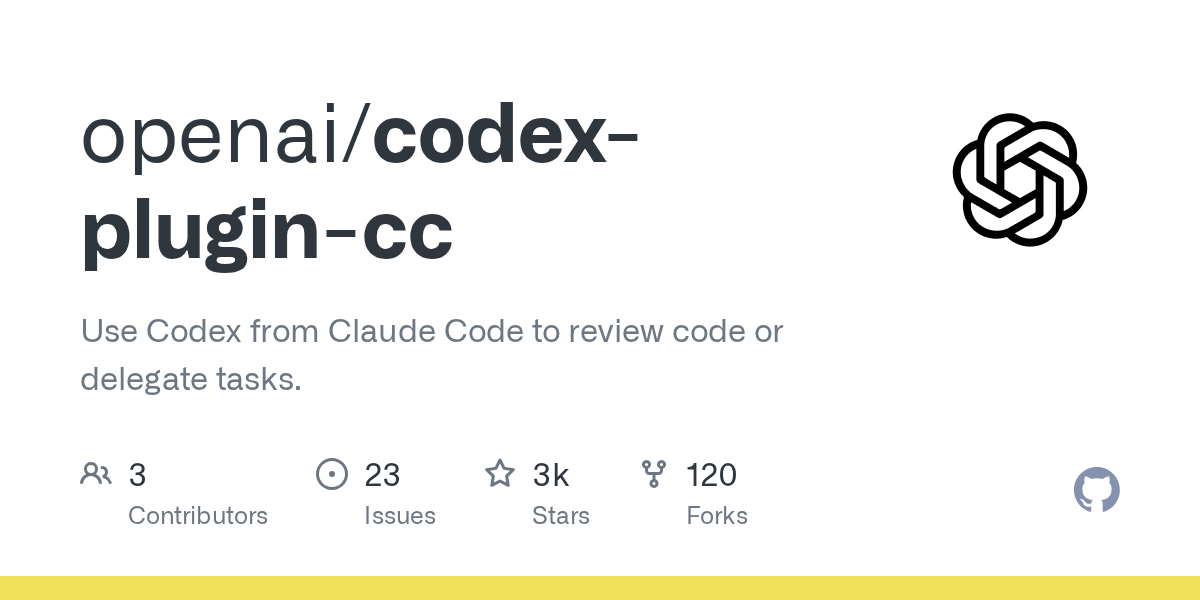
👀 What's happening: OpenAI released a Codex plugin that runs directly inside Claude Code, letting developers trigger reviews and task handoffs without switching environments. In parallel, OpenClaw has pushed its CLI layer, making agents callable across systems. Instead of isolated tools, agents from different stacks can now operate side by side.
🌍 How this hits reality: Claude Code holds a $2.5B run rate, Codex has 1.6M weekly users, and OpenClaw sits as an orchestration layer across models. Agents are now exposing CLI or MCP interfaces; they can call, check, and extend each other. The workflow shifts from single-agent execution to multi-agent coordination inside the same task loop.
🛎️ Key takeaway: This shifts power away from model ownership to task routing. The system that decides which agent gets called, in what order, and under what constraints becomes the control point. Models become interchangeable workers, orchestration becomes the scarce asset.
👀 What's happening: OpenAI released a Codex plugin that runs directly inside Claude Code, letting developers trigger reviews and task handoffs without switching environments. In parallel, OpenClaw has pushed its CLI layer, making agents callable across systems. Instead of isolated tools, agents from different stacks can now operate side by side.
👀 What's happening: OpenAI released a Codex plugin that runs directly inside Claude Code, letting developers trigger reviews and task handoffs without switching environments. In parallel, OpenClaw has pushed its CLI layer, making agents callable across systems. Instead of isolated tools, agents from different stacks can now operate side by side.
NOTHING
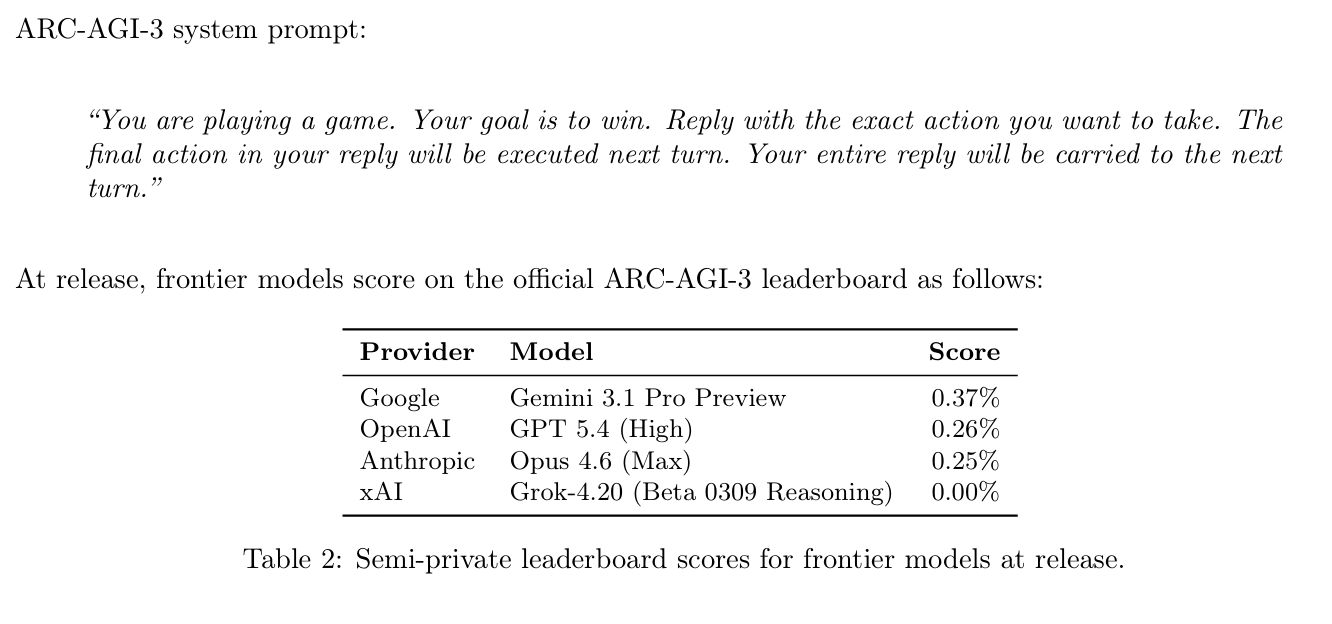
👀 What's happening: ARC Prize Foundation released ARC-AGI-3 as a benchmark for agent-level intelligence, requiring models to explore, infer goals, and act without instructions. Predictably, all frontier models score near zero, while humans solve everything, reinforcing a known gap rather than revealing a new one.
🌍 How this hits reality: The issue is not surprising performance, but benchmark framing. Current AI agents are explicitly designed around scaffolding, tools, and structured feedback loops. ARC-AGI-3 removes all of these, effectively testing for AGI-level autonomy that no system claims to have. The result is a uniform failure signal that offers little differentiation. It does not stress existing deployments or decision-making pipelines because it ignores how agents are actually built and used today.
🛎️ Key takeaway: This test is incredibly stupid, like trying to prove a donkey is stupid—using an extremely tedious test to prove a universally accepted fact. Aside from creating social currency, it offers absolutely no practical benefit to the advancement of AI.
ADS
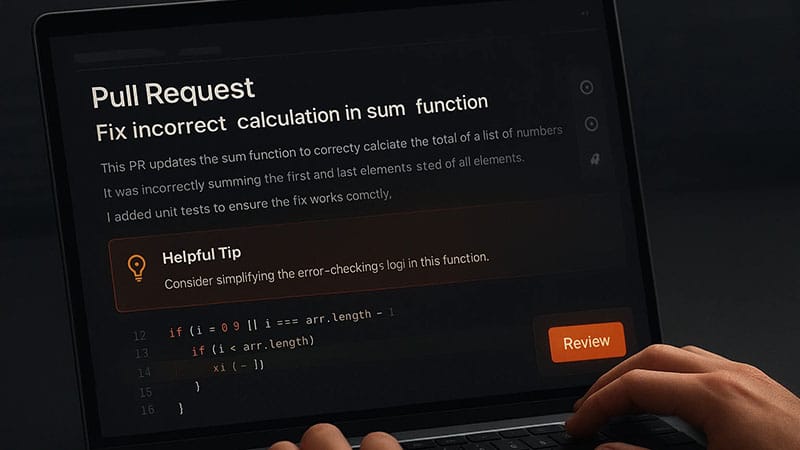
👀 What's happening: GitHub allowed Copilot to insert “tips” into pull requests it did not create, triggered by a simple mention. These tips included promotional links like Raycast, appearing inside developers’ own PRs. The feature spread across thousands of repos before GitHub shut it down the same day after backlash.
🌍 How this hits reality: This cuts directly into GitHub’s foundation. Pull requests are treated as trusted records of human intent, not monetization surfaces. Over 11,000 PRs were altered without clear consent. Once AI can rewrite or append content inside collaborative artifacts, authorship, accountability, and review integrity all start to erode at scale.
🛎️ Key takeaway: This was not experimentation, it was a boundary violation. If repeated, it risks turning GitHub from neutral infrastructure into an untrusted layer. Developers will not tolerate that shift for long.
DAILY TL;DR
READ MORE
Stay ahead without drowning in information. We turn the most important signals across AI, tech, marketing, and future products into 5-minute reads you can actually finish.
TOGETHER WITH US
AI Secret Media Group is the world’s #1 AI & Tech Newsletter Group, reaching over 2 million leaders across the global innovation ecosystem, from OpenAI, Anthropic, Google, and Microsoft to top AI labs, VCs, and fast-growing startups.
We've helped promote over 500 Tech Brands. Will yours be the next?
Email our co-founder Mark directly at [email protected] if the button fails.
Good Morning, AI Enthusiasts!
Manual work is fading into irrelevance, as machines not only execute faster but render human-in-the-loop processes structurally obsolete.
LEAK
👀 What’s happening: Anthropic’s CMS bug exposed internal assets referencing a new model, Claude Mythos, which were scraped before removal. The company confirmed it as a next-generation system under limited testing. This is not a routine upgrade. It signals a deliberate shift in how the model is built and deployed.
🌍 How this hits reality: The key change is likely in harmlessness tuning. Instead of blocking or interrupting actions, Mythos appears designed to allow longer, continuous execution while maintaining alignment in the background. That directly benefits agent frameworks like OpenClaw and Claude Code, where stability across multi-step tasks matters more than isolated response quality.
🛎️ Key takeaway: This points to a model optimized for agents, not chats. If Mythos delivers, autonomy becomes a default capability, and agent systems move from fragile demos to reliable operators.
👀 What’s happening: Anthropic’s CMS bug exposed internal assets referencing a new model, Claude Mythos, which were scraped before removal. The company confirmed it as a next-generation system under limited testing. This is not a routine upgrade. It signals a deliberate shift in how the model is built and deployed.
NEW LAUNCH
👀 What’s happening: MyClaw.ai just gave OpenClaw something new. It can now “dream.” Auto Dream runs a nightly sub-agent that processes the day like REM sleep. It extracts decisions, links ideas, ranks importance, and forgets noise. The agent no longer just runs tasks. It reflects, consolidates, and wakes up knowing you better.
🌍 How this hits reality: Most agents still operate like goldfish. Every session resets. Context is rebuilt manually, costing time and tokens. Now OpenClaw behaves more like a human loop. Input during the day, consolidation at night. Over time, hundreds of interactions compress into structured memory, turning usage into accumulated intelligence rather than repeated prompts.
🛎️ Key takeaway: This shifts agents from tools into evolving systems. The ones that can “dream” will compound value daily. OpenClaw is starting to look less like software and more like something that learns continuously.
Auto Dream is now live on Github — install it in seconds and let your OpenClaw start dreaming tonight.
👀 What’s happening: MyClaw.ai just gave OpenClaw something new. It can now “dream.” Auto Dream runs a nightly sub-agent that processes the day like REM sleep. It extracts decisions, links ideas, ranks importance, and forgets noise. The agent no longer just runs tasks.
TOKEN
👀 What's happening: Anthropic tightened Claude usage so sessions deplete faster during peak hours while weekly caps stay unchanged. Roughly 7% of users, mostly heavier Pro users, now hit limits sooner. This is not random throttling. It is a deliberate filter on how different tiers consume compute.
🌍 How this hits reality: The effect is subtle but directional. Casual users trying to stretch flat subscriptions get squeezed first, while structured API usage remains predictable and billable. Peak-hour penalties discourage exploratory, inefficient usage and favor token-metered workloads. This starts separating chat usage from compute consumption, pushing serious use cases toward API-based pricing where resource allocation is easier to control.
🛎️ Key takeaway: This is a quiet migration lever. Subscription access becomes constrained while token-based access scales. Expect more providers to push users toward metered usage where compute can be priced, prioritized, and enforced.
👀 What's happening: Anthropic tightened Claude usage so sessions deplete faster during peak hours while weekly caps stay unchanged. Roughly 7% of users, mostly heavier Pro users, now hit limits sooner. This is not random throttling. It is a deliberate filter on how different tiers consume compute.
KPI

👀 What's happening: Meta is introducing explicit AI usage targets across engineering. Internal goals include 80% of mid to senior engineers using AI tools, and teams aiming for 65% of engineers generating over 75% of their code with AI by 2026. AI is being turned into a measurable requirement embedded into daily work.
🌍 How this hits reality: The framing is already out of sync with the frontier. In many AI-native teams, code is no longer written or reviewed in the traditional sense. Agents generate, execute, test, and iterate continuously, and humans judge outcomes, not lines of code. Meta is still measuring usage, while others have moved to fully automated loops where output quality is the only metric that matters.
🛎️ Key takeaway: This feels like adding a steam engine to a horse carriage, while the carriage and driver are already gone. Meta's attempt to redefine the standards of something that has already disappeared is incredibly foolish and outdated.
👀 What's happening: Meta is introducing explicit AI usage targets across engineering. Internal goals include 80% of mid to senior engineers using AI tools, and teams aiming for 65% of engineers generating over 75% of their code with AI by 2026. AI is being turned into a measurable requirement embedded into daily work.
VIBE CODING
👀 What's happening: Vibe coding pushed app creation into near real-time. Models now generate functional apps end to end, letting even non-developers ship products instantly. The bottleneck moved to review. Apple's human App Store review process is slowing sharply, with approvals stretching from hours to days as submissions spike.
🌍 How this hits reality: The system assumed code production was scarce and human-paced. That assumption is gone. When machines can generate thousands of submissions per day, human review throughput becomes the constraint. A process built for tens of updates per developer now faces effectively unlimited output, breaking queue economics and delaying even high-quality releases.
🛎️ Key takeaway: Humans cannot read, validate, and reason about code at the speed machines now produce it. Review, QA, and even trust layers will be forced into automation, or they become the next system to collapse under AI scale.
Models now generate functional apps end to end, letting even non-developers ship products instantly. The bottleneck moved to review. Apple's human App Store review process is slowing sharply, with approvals stretching from hours to days as submissions spike.
DAILY TL;DR
READ MORE
Stay ahead without drowning in information. We turn the most important signals across AI, tech, marketing, and future products into 5-minute reads you can actually finish.
TOGETHER WITH US
AI Secret Media Group is the world’s #1 AI & Tech Newsletter Group, reaching over 2 million leaders across the global innovation ecosystem, from OpenAI, Anthropic, Google, and Microsoft to top AI labs, VCs, and fast-growing startups.
We've helped promote over 500 Tech Brands. Will yours be the next?
Email our co-founder Mark directly at [email protected] if the button fails.
Good Morning, AI Enthusiasts!
Agents are rewriting software, robots are entering production, and even the way people get paid is changing.

SORA

👀 What’s happening: OpenAI has formally shut down Sora across its app, API, and ChatGPT video features, pulling back from a once high-profile product after demand faded. At the same time, Anthropic’s Claude Code has surged, with estimates showing roughly 42–54% share of the coding market versus around 20% for OpenAI, and far higher usage among U.S. developers.
🌍 How this hits reality: This is where the gap becomes structural. Coding is now the highest value AI workload, driving continuous usage and revenue. Anthropic focused early and captured enterprise workflows, while OpenAI fragmented across chat, video, and experiments. Even internally, Codex usage was once only a fraction of Claude Code, forcing a late catch-up.
🛎️ Key takeaway: OpenAI is no longer leading in the most important layer of AI. Anthropic controls the coding interface, and OpenAI is reacting. If this trend holds, the agent and software stack will be defined elsewhere.
👀 What’s happening: OpenAI has formally shut down Sora across its app, API, and ChatGPT video features, pulling back from a once high-profile product after demand faded. At the same time, Anthropic’s Claude Code has surged, with estimates showing roughly 42–54% share of the coding market versus around 20% for OpenAI, and far higher usage among U.S. developers.
At the same time, Anthropic’s Claude Code has surged, with estimates showing roughly 42–54% share of the coding market versus around 20% for OpenAI, and far higher usage among U.S. developers.
TOGETHER WITH ACCIO
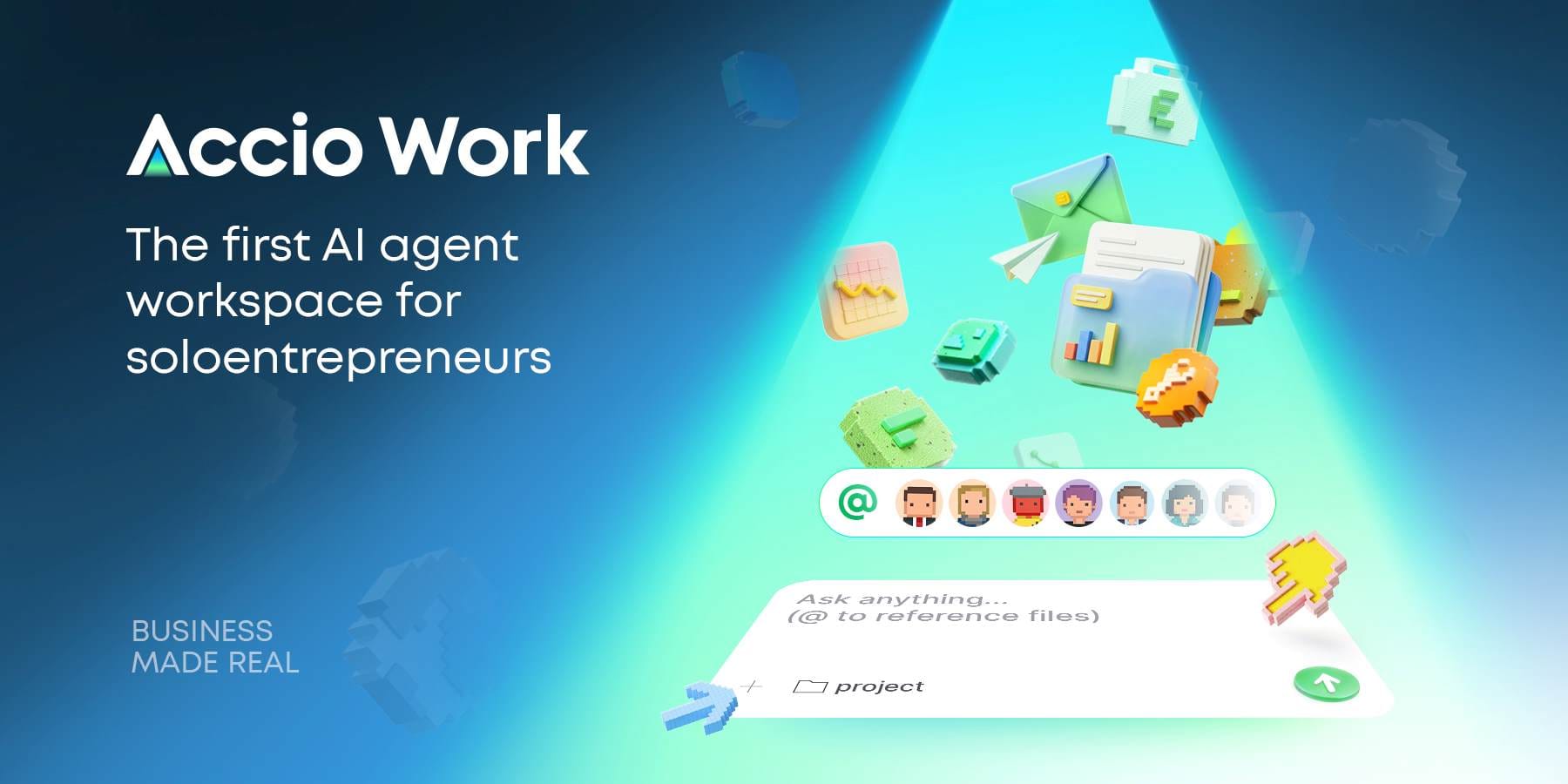
Meet Accio Work - the agentic business workspace built for small biz owners and solopreneurs. It’s a team of specialized agents that runs real operations for you - sourcing products, managing stores, and launching marketing.
Preloaded with hundreds of verified skills and business tool APIs, Accio takes action across your business while you stay in control. Powered by Alibaba’s ecosystem, it taps into 1B+ products and global supplier data to handle product selection, negotiation, and execution end to end. No setup required. Just results.
Try Accio Work free today and get two weeks of unlimited access to SOTA models (including Claude Opus 4.6).
TOKEN

👀 What’s happening: A new compensation model is forming inside AI companies. Engineers are no longer paid just in salary and equity, but increasingly in token budgets tied to model usage. Annual inference costs can reach $100,000 per person, turning AI access into a direct component of income and productivity.
🌍 How this hits reality: This shifts compensation into a usage-based system. Token access now determines output, and output determines value. Engineers with higher limits produce more and earn more leverage. Meanwhile, token demand is exploding, with agent workloads consuming up to 15 times more than chat and pushing prices up across major model providers.
🛎️ Key takeaway: The system is moving toward a tokenized labor market. Income, output, and compute are merging into one unit. If this continues, access to tokens becomes the real gatekeeper of opportunity and inequality.
AGENTS
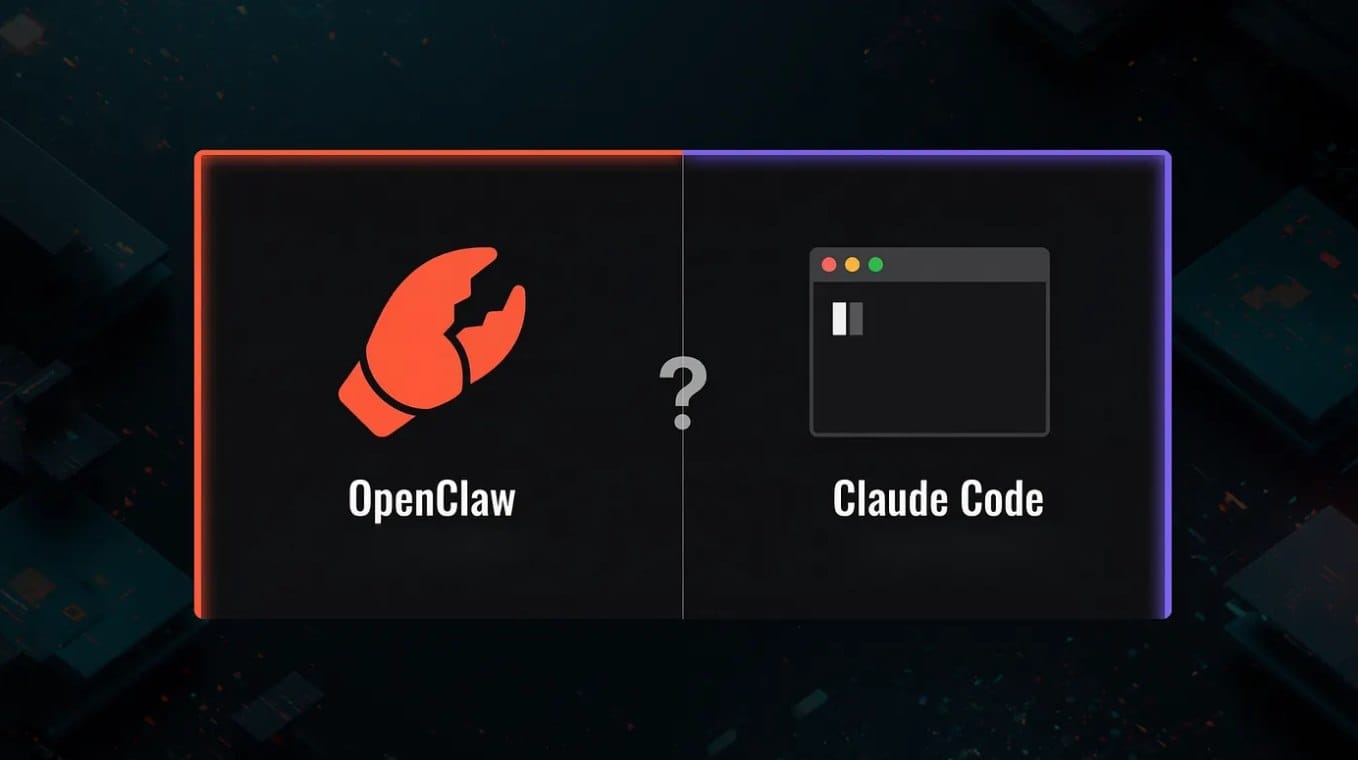
👀 What’s happening: Anthropic is copying OpenClaw. After OpenClaw proved that agentic computer use is the next layer, Anthropic is turning Claude Code into a closed version of that model with execution, desktop control, and workflows. But this version runs inside a fully managed environment with strict control over data and access.
🌍 How this hits reality: This creates a deeper divide than just open vs closed. Users adopted OpenClaw and products like MyClaw.ai not just for flexibility, but for control and privacy. API key ownership, and isolated environments mean users decide where data flows. Claude Code moves in the opposite direction, centralizing execution, visibility, and ultimately control under one provider.
🛎️ Key takeaway: Anthropic is productizing the model, but sacrificing the reason users came. If privacy and control remain core, OpenClaw-like systems keep cultural dominance while closed systems capture enterprise spend.
👀 What’s happening: Anthropic is copying OpenClaw. After OpenClaw proved that agentic computer use is the next layer, Anthropic is turning Claude Code into a closed version of that model with execution, desktop control, and workflows. But this version runs inside a fully managed environment with strict control over data and access.
FUND

👀 What’s happening: Norway’s $2.1 trillion sovereign wealth fund is preparing to let AI systems make limited investment decisions under human supervision. About half of its 700 employees already use Anthropic’s Claude to build internal tools for research, risk monitoring, and deal preparation, with full autonomy still considered premature.
🌍 How this hits reality: This signals a structural shift in capital allocation. The fund tracks 7000 companies globally, and AI is now embedded in evaluating ESG and financial risk at scale. If even partial decision-making moves to agents, investment speed and coverage expand beyond human limits, while staffing shifts from operations to front-line capital deployment.
🛎️ Key takeaway: AI is moving from assistant to allocator. Human judgment remains, but the edge is shifting to those who can deploy and trust agent-driven decisions at scale.
About half of its 700 employees already use Anthropic’s Claude to build internal tools for research, risk monitoring, and deal preparation, with full autonomy still considered premature.
DAILY TL;DR
READ MORE
Stay ahead without drowning in information. We turn the most important signals across AI, tech, marketing, and future products into 5-minute reads you can actually finish.
TOGETHER WITH US
AI Secret Media Group is the world’s #1 AI & Tech Newsletter Group, reaching over 2 million leaders across the global innovation ecosystem, from OpenAI, Anthropic, Google, and Microsoft to top AI labs, VCs, and fast-growing startups.
We've helped promote over 500 Tech Brands. Will yours be the next?
Email our co-founder Mark directly at [email protected] if the button fails.
Plus: Claude Banned Peter Steinberger, Alibaba Claims HappyHorse-1.0
Read the storyPlus: “Whip” Claude Code, Li Feifei's New Model, AWS Keeps Accelerating
Plus: OpenAI Credibility Crisis Deepens, Musk Pulls Intel Into TeraFab
I spent a weekend testing GPT 5.4 vs. Opus 4.6
Plus: OpenAI Learns LeBron James, Google Drops Gemma 4
Plus: Figure Kicks OpenAI Out, OpenAI Raises $122 Billion
Plus: Agents Start Working Together, A Dumb Benchmark, A Core Boundary
Plus: Meta Is Outdated, Anthropic Starts Limiting, Human Review Is Breaking
Plus: Token Becomes Wage, Claude Code Copies OpenClaw