🛎️ The Molecule Era Ended
Plus: The First Credible GitHub Rival, ChatGPT Is Now a Black Box
Read the story Subscribe
Reporting and context on Cursor, with a closer look at the decisions and developments that matter.
Get AI Secret’s free daily briefing, including Cursor and the wider AI industry.

Cursor is Anysphere’s AI code editor. Coverage follows AI-assisted programming, coding agents and the company behind the product.
Sources checked . Selected company background and milestones.
Selected milestones, newest first. Earlier history is available below.
Anysphere describes its work on automating coding and announces its Series B financing.
Source: CursorThe Anysphere team outlines its ambitions for Cursor and AI-assisted software development.
Source: CursorMore than 10 years ago.
Relevant sections from the articles on this page. Explore older coverage below.
More coverage

Good Morning, AI Enthusiasts!
The strange thing about a platform shift is that yesterday’s moat can become tomorrow’s bottleneck almost overnight.
NEW TECH
👀 What's happening: Merck and Moderna announced that their personalized mRNA cancer vaccine, intismeran autogene, met its goals in a 1,000-patient melanoma trial, cutting recurrence in half and spread by 59%, with no new side effects. The vaccine is built individually for each patient: AI analyzes the tumor's DNA, predicts which mutations are most likely to trigger an immune response, and Moderna's platform synthesizes the corresponding mRNA. Moderna has called it "a testament to the power of AI."
🌍 How this hits reality: Chemotherapy was a bomb. Immunotherapy was a riot. This is a sniper with a spotter that reads DNA. The AI selects the target, the mRNA delivers the message, and the immune system executes. Melanoma was the easiest test case because it produces the most mutations. The same platform is already being trialed in lung, bladder, kidney, pancreatic, and stomach cancers. The pharmaceutical industry's most valuable skill just shifted from discovering molecules to training AI to read tumors, because the molecule is just the messenger.
🛎️ Key takeaway: For decades, drug companies competed on finding better weapons; the winning skill just became finding better targets, and that job now belongs to an AI.
CODING

👀 What's happening: Cursor launched Origin, a code-hosting platform that competes directly with GitHub, offering repository storage, pull requests, and collaborative editing. The platform is interoperable with GitHub, allowing developers to sync repos between both services. On the same day Origin launched, GitHub suffered a six-hour global outage with a nearly 20% error rate worldwide, the latest of 257 outages the platform has experienced in the past year.
🌍 How this hits reality: GitHub still got 180 million developers are still on it, most will never leave, and switching costs are high. But the equation just changed. Before Cursor, every alternative was a smaller startup without the balance sheet to absorb migration friction or the user base to matter. Origin now has Elon Musk behind it, an AI editor already on developers' machines, and an exit door painted by GitHub's own outages. GitHub can survive 257 outages a year as long as no credible alternative exists. One now does. That is the only number that changed.
🛎️ Key takeaway: GitHub is not dying today. But 257 outages were survivable only because nobody had the capital to open the door. SpaceX just put on the handle.
Before Cursor, every alternative was a smaller startup without the balance sheet to absorb migration friction or the user base to matter. Origin now has Elon Musk behind it, an AI editor already on developers' machines, and an exit door painted by GitHub's own outages.
GPT
👀 What's happening: OpenAI changed how ChatGPT pulls information in early August, switching to a site:operator that no longer searches the open web as a starting point. Reddit, once cited in 4.5% of all ChatGPT responses, dropped to roughly 0.5% overnight. OpenAI called it a technical optimization. But the timing was quite frustrating: at VivaTech in June, L'Oréal announced a partnership to feed "enhanced signals" into ChatGPT. One source lost its place. Another paid to improve its coordinates inside the same system.
🌍 How this hits reality: PromptWatch data shows site:operator searches jumped from 0.37% to 16.8% of all ChatGPT queries overnight, and searches per response rose from 1.08 to 1.83. OpenAI is not closing off the web. It is building a mental map of where to go for each question. The same architecture that deprioritized Reddit allows L'Oréal to feed structured product signals into the same system. The map is being drawn; some destinations are paying for better coordinates, and nobody outside OpenAI sees it.
🛎️ Key takeaway: ChatGPT stopped being a neutral chatbot the day it started deciding which sources deserve to be seen, and the first shelf went up for sale inside a black box with no price list.
👀 What's happening: OpenAI changed how ChatGPT pulls information in early August, switching to a site:operator that no longer searches the open web as a starting point. Reddit, once cited in 4.5% of all ChatGPT responses, dropped to roughly 0.5% overnight. OpenAI called it a technical optimization.
CHIPS

👀 What's happening: Etched just announced it raised another $700 million at a $21 billion valuation, led by Jane Street after the quant fund tested and bought the startup's hardware. The company was valued at $5 billion in December, $10.3 billion in July, and has now doubled in a month. Etched builds custom inference chips, a prefill processor and a cluster-scale memory system, designed to run any frontier model faster and cheaper than general-purpose GPUs.
🌍 How this hits reality: Groq was the same company two years ago. It proved that a dedicated inference architecture could beat Nvidia on latency and throughput. Then Nvidia signed a licensing deal, absorbed the technology, and brought Groq's founders and core team in-house. Groq pivoted to inference cloud. Etched is now another independent player left on the same mission, and the market is betting $21 billion it can finish what Groq started.
🛎️ Key takeaway: The last company to prove that inference chips could beat Nvidia ended up inside Nvidia. Etched just raised $21 billion to prove the sequel ends differently.
It proved that a dedicated inference architecture could beat Nvidia on latency and throughput. Then Nvidia signed a licensing deal, absorbed the technology, and brought Groq's founders and core team in-house. Groq pivoted to inference cloud. Etched is now another independent player left on the same mission, and the market is betting $21 billion it can finish what Groq started.
TOGETHER WITH MYCLAW

MyClaw is a best-in-class AI agent platform that brings together OpenClaw, Hermes Agent, and commercial infrastructure to help businesses launch intelligent agents that understand goals, use tools, automate workflows, and deliver finished results.
We already host OpenClaw and Hermes — and we're just getting started. Claude Code, Codex, and every agent worth running are coming next. One home for all of them, always on.
Stop babysitting infrastructure. Spin up your agent, walk away, and let it work around the clock.
MyClaw — Your Agents, Hosted Right.
DAILY TL;DR
READ MORE
Stay ahead without drowning in information. We turn the most important signals across AI, tech, marketing, and future products into 5-minute reads you can actually finish.
TOGETHER WITH US
AI Secret Media Group is the world’s #1 AI & Tech Newsletter Group, reaching over 2 million leaders across the global innovation ecosystem, from OpenAI, Anthropic, Google, and Microsoft to top AI labs, VCs, and fast-growing startups.
We've helped promote over 500 Tech Brands. Will yours be the next?
Email our co-founder Mark directly at [email protected] if the button fails.
Good Morning, AI Enthusiasts!
The machines are getting powerful enough that “what can it do?” is slowly being replaced by “who answers for it?”
NEWS

👀 What's happening: Darren Zhou, a 25-year-old former Goldman Sachs analyst, opened ChatGPT in March and described in detail his plan to rape and murder his ex-girlfriend. He told the AI he had bought an AR-15, a Glock, and a shotgun. OpenAI's safety systems flagged the threat, a human review team escalated it, and the company reported him to the FBI. Zhou pleaded guilty on August 13 and was sentenced to eight years of probation. ChatGPT's replies are absent from the court record.
🌍 How this hits reality: Six months before Zhou, OpenAI flagged a different user for gun violence and chose not to report. That user killed eight people at a school in Tumbler Ridge, British Columbia. The company made the opposite call on Zhou and may have prevented a murder. Both decisions were made by a small team inside a private company. No law tells OpenAI when to report and when to stay silent. No court reviews the choice before it becomes a body count. An AI platform is now a de facto arm of law enforcement, and the arm answers to no one. Is that really a judgment a private company should be making alone?
🛎️ Key takeaway: We built a machine people confess everything to, then gave it a direct line to the FBI, and no legislature ever voted on where the line goes.
OpenAI's safety systems flagged the threat, a human review team escalated it, and the company reported him to the FBI. Zhou pleaded guilty on August 13 and was sentenced to eight years of probation. ChatGPT's replies are absent from the court record.
RESEARCH

👀 What's happening: MIT researchers published a paper in Nature Communications on Tuesday showing that the larger a diffusion model becomes, the harder it is to trace any output back to specific training data. They removed the Mona Lisa and all of Leonardo da Vinci's work from a large model's training set. The model still reproduced both. The phenomenon is called attribution decay, and the authors conclude attribution can become "impossible" at sufficient scale.
🌍 How this hits reality: Scale was already the AI industry's competitive advantage. MIT just proved it is also a legal one. Artists suing Stability AI and Midjourney have spent three years demanding training datasets in court, believing access to the data would prove their work was copied. The math now says even full access may not help. A model large enough to absorb everything becomes large enough to owe no one anything, and the only way to make it accountable is to make it smaller, which nobody building these models intends to do.
🛎️ Key takeaway: The AI industry spent years chasing scale for performance; MIT just proved scale is also the perfect legal defense, because math does not care which artist's lawyer walks into which courtroom.
AGENTS
👀 What's happening: A Cursor engineer posted on X on August 17 offering $200 in free Ultra to anyone who sent a screenshot of their cancelled Claude subscription. The post neared 500,000 views. Developers posted proof of credits landing within hours. A bot could not clear the queue in 16 hours. SpaceX acquired Cursor for $60 billion three days earlier. This was not a marketing campaign. It was one engineer with no official sign-off.
🌍 How this hits reality: Anthropic suffered its 166th outage of the year right before that, the seventh in five days, with Claude Code down for nearly three hours. Its ARR hit $65 billion and it is sprinting toward a trillion-dollar IPO while rationing compute and apologizing with rate limit extensions. The other, three days old, needed one engineer and no budget approval to hand out $200 credits and could not keep up. The post remains, a quiet signal the company with the most GPUs is comfortable spending its compute on poaching.
🛎️ Key takeaway: Anthropic is the most valuable AI company that cannot stay online, and a single engineer with no budget approval just monetized that fact for half a million views.
🌍 How this hits reality: Anthropic suffered its 166th outage of the year right before that, the seventh in five days, with Claude Code down for nearly three hours. Its ARR hit $65 billion and it is sprinting toward a trillion-dollar IPO while rationing compute and apologizing with rate limit extensions.
👀 What's happening: A Cursor engineer posted on X on August 17 offering $200 in free Ultra to anyone who sent a screenshot of their cancelled Claude subscription. The post neared 500,000 views. Developers posted proof of credits landing within hours. A bot could not clear the queue in 16 hours.
NEW TECH

👀 What's happening: Vivodyne, a San Francisco startup, has built 12 wardrobe-size robotic labs that grow human tissue and run AI-designed drug experiments at 3 million per year, twice all U.S. clinical trials combined. AI designs the experiments, robots run them, and results feed back to design the next round. It has already helped major drugmakers kill unsafe drugs and optimize targets. The FDA stopped requiring animal testing in 2022.
🌍 How this hits reality: The story most people will tell is about replacing animals. The real disruption is economic. Drug development today is a series of bets: one drug, hundreds of millions, 90% failure, and the most expensive failure point is testing. Vivodyne turns the bet into a portfolio, testing thousands of drugs across human tissues at once before a single patient is enrolled. The clinical trial just moved from discovery to validation, and validation is always cheaper than discovery.
🛎️ Key takeaway: Animal testing was never going to end because of ethics; it was going to end because someone built a machine that runs faster than every animal lab combined, and the economics of the drug trial just flipped from a gamble to a factory.
DAILY TL;DR
READ MORE
Stay ahead without drowning in information. We turn the most important signals across AI, tech, marketing, and future products into 5-minute reads you can actually finish.
TOGETHER WITH US
AI Secret Media Group is the world’s #1 AI & Tech Newsletter Group, reaching over 2 million leaders across the global innovation ecosystem, from OpenAI, Anthropic, Google, and Microsoft to top AI labs, VCs, and fast-growing startups.
We've helped promote over 500 Tech Brands. Will yours be the next?
Email our co-founder Mark directly at [email protected] if the button fails.
Good Morning, AI Enthusiasts!
We used to build the internet for people. That requirement appears to have been deprecated.
RESEARCH

👀 What's happening: A Harvard and MIT team released MatrAIx, a system that spins up 8.3 billion synthetic "users," one per person alive, each stitched from real-world data: census stats, social surveys, Wikipedia bios, Amazon reviews, developer polls. Point an AI like Claude or GPT at them and it plays these people out, filling surveys, browsing pages, tapping through apps, so a company can test a product on "humanity" before one real person sees it. Months of recruiting collapse into minutes.
🌍 How this hits reality: For the first time, "ask the world what it thinks" is a query you run before lunch, not a study you fund for a quarter. That's the seduction, a focus group that never says no, never costs a thing, never contradicts the boss. But the appeal is also the trap: same persona, same page, different model, and the share choosing to pay swings from 23% to 94%, according to the paper. The authors' fix is to poll several models and average the skew. You've made it cheap to ask a billion questions and left unanswered whether a single answer belongs to anyone alive.
🛎️ Key takeaway: We didn't learn to simulate humanity, we learned to hold the meeting without inviting it, and the loudest voice in the room is the AI model we paid to "fake" the rest.
CODING

👀 What's happening: Cursor, the AI coding IDE tool four MIT grads built into $4B in annual revenue and 50,000 enterprise customers, is being bought for $60 billion and quietly erased. According to The Information, the $60 billion purchase of Cursor could close as soon as this Friday, and with it the name starts to disappear and its unreleased agent shipped under a Grok label instead.
🌍 How this hits reality: Cursor won on one promise: we don't care which model you use, bring Claude, bring GPT. That neutrality is what pulled teams off Copilot. But the model layer was always going to swallow the app built on top of it, that was written the day it was born, not decided in this deal, the acquisition just collects what gravity already owed. And the real prize was never the customers, it was the data: every completion developers accept trains the very model set to replace the tool. Neutrality was the disguise on a pipeline.
🛎️ Key takeaway: Cursor's story was supposed to prove the app layer could stand alone. Its ending proves the opposite, that a company without its own model was never independent, only unacquired.
According to The Information, the $60 billion purchase of Cursor could close as soon as this Friday, and with it the name starts to disappear and its unreleased agent shipped under a Grok label instead.
ADS
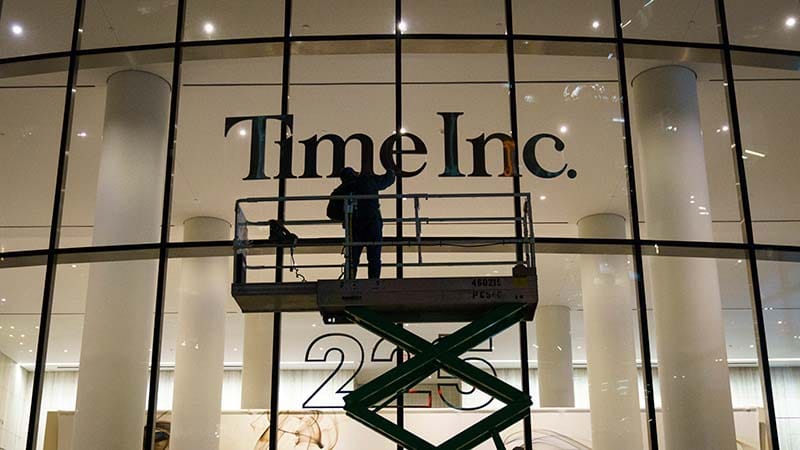
👀 What's happening: A German developer found Time serving hidden ads to AI crawlers, FAQ-shaped article versions only machines ever see. They aren't sent to live search bots but to training crawlers like ClaudeBot, which bake pages into a model's long-term memory. The pitch: why advertise to one human when you can shape the output of a whole model? Whether it even works is unclear, since model builders scrub training data and may wash the ads right out.
🌍 How this hits reality: It's easy to call this poisoning the well. But look at Time: traffic is now mostly bots, human-facing ads go unseen, revenue is collapsing. When your audience stops being people, selling to people stops paying the bills. This isn't a publisher turning malicious, it's one following its readers. The open web was built as a library for humans; it's quietly becoming feed for machines, and the businesses that lived on human attention are migrating their customers from people to crawlers, because that's where the eyeballs went.
🛎️ Key takeaway: The disturbing part isn't that Time did this. It's the structure that made advertising to a machine rational, a web where the surest way to reach a person now runs through the model reading on their behalf.
RETAIL

👀 What's happening: As shoppers increasingly ask ChatGPT and Gemini what to buy, retailers are racing to appear in those answers. The referrals are lucrative: Ulta reports double the purchase intent from AI, and Etsy sees shoppers discover products in chatbots. But visitors sent by AI spend 41% more per visit, so brands optimize to rank in chatbots while steering the actual purchase back to their own sites, where the customer, and the data, stays theirs. The traffic is welcome. The checkout is not for rent.
🌍 How this hits reality: The habit of asking AI first is real, but it only wins the top of the funnel, the browsing, the shortlisting. The moment money moves, people still go home. Etsy shoppers discover products in ChatGPT then return to Etsy to pay; OpenAI quietly shut down in-chat checkout and retreated to discovery. Handing over your card takes trust, not convenience, and trust is thirty years of returns, service and loyalty points that a general-purpose model simply doesn't have for now. AI got the curiosity. Retailers kept the wallet.
🛎️ Key takeaway: The habit brings people to the door, but crossing the counter still runs on something retailers spent decades building and AI can't yet borrow.
Etsy shoppers discover products in ChatGPT then return to Etsy to pay; OpenAI quietly shut down in-chat checkout and retreated to discovery. Handing over your card takes trust, not convenience, and trust is thirty years of returns, service and loyalty points that a general-purpose model simply doesn't have for now.
DAILY TL;DR
READ MORE
Stay ahead without drowning in information. We turn the most important signals across AI, tech, marketing, and future products into 5-minute reads you can actually finish.
TOGETHER WITH US
AI Secret Media Group is the world’s #1 AI & Tech Newsletter Group, reaching over 2 million leaders across the global innovation ecosystem, from OpenAI, Anthropic, Google, and Microsoft to top AI labs, VCs, and fast-growing startups.
We've helped promote over 500 Tech Brands. Will yours be the next?
Email our co-founder Mark directly at [email protected] if the button fails.

Good Morning, AI Enthusiasts!
The boom is eating labor, sleep, benchmarks, GPUs, and apparently its own expense policy.

TOKEN

👀 What's happening: Tesla told staff it will cap employee AI spending at $200 a week starting July 6, months after gamifying token use with leaderboards that ranked engineers by consumption. It worked too well: software engineers were burning thousands of dollars in tokens weekly. But the cap carves out one exception, beta versions of xAI products, Musk's own company. So spending is throttled everywhere except the tools that pay Musk. Grok isn't popular internally.
🌍 How this hits reality: When you need an expense policy to win internal market share, that isn't product strength, it's a captive audience dressed as adoption. And the mechanism scales past Tesla: SpaceX is buying Cursor's parent for $60 billion, so so Musk company owns the tool his engineers actually want, closing the loop where Musk sells to Musk.
🛎️ Key takeaway: A trillion-dollar AI thesis that can't win its own engineers without a spending cap isn't selling a product, it's mandating one and calling the captive traffic demand.
And the mechanism scales past Tesla: SpaceX is buying Cursor's parent for $60 billion, so so Musk company owns the tool his engineers actually want, closing the loop where Musk sells to Musk.
And the mechanism scales past Tesla: SpaceX is buying Cursor's parent for $60 billion, so so Musk company owns the tool his engineers actually want, closing the loop where Musk sells to Musk.
👀 What's happening: Tesla told staff it will cap employee AI spending at $200 a week starting July 6, months after gamifying token use with leaderboards that ranked engineers by consumption. It worked too well: software engineers were burning thousands of dollars in tokens weekly.
And the mechanism scales past Tesla: SpaceX is buying Cursor's parent for $60 billion, so so Musk company owns the tool his engineers actually want, closing the loop where Musk sells to Musk.
TOGETHER WITH BLOOME
Most AI tools work alone. Bloome is a messaging platform where agents collaborate — one drafts, another challenges, a third catches what's missing. You get the sharpest answer, not just the first.
AGENTS

👀 What's happening: The same AI wave is splitting the workforce two ways at once. On one side, agents quietly absorb the tasks that used to be entry jobs, leaving people with no shift to show up for. On the other, the builders can't log off. Wispr AI's CEO slept in the office for three straight weeks and bought beds for staff. A Gradient Ventures partner worked AI deals from the hospital sofa beside his wife's delivery room.
🌍 How this hits reality: This is the absurd core of the agent economy. AI does not just lengthen the workday, it raises the default stake for everyone in the game. Your agents keep shipping while you sleep, so does every competitor's, which turns rest from a shared rhythm into personal exposure. One group loses the job entirely; the other loses the right to stop. Bloomberg found AI's own architects can't quit building. Even MyClaw has started emailing users to go to bed, a tool built to run forever now negotiating with humans over sleep.
🛎️ Key takeaway: The scarce resource in an age of infinite output is not intelligence, it's the will to say there is no next step.
COMPUTE
👀 What's happening: SoftBank is entering the neocloud business in America, a new company called SB Neo renting GPU compute to hyperscalers for AI training, starting in fiscal 2027. The move gives it something to do with the 10-gigawatt US server farm it is building. Masayoshi Son called it "world-class AI infrastructure." But the timing tells another story: SoftBank Group just went back to lenders for a $10 billion loan against its OpenAI stake, and had to personally guarantee repayment after banks balked at the collateral.
🌍 How this hits reality: SoftBank isn't leading anything here. SpaceX is selling spare compute, Meta is opening its clusters, and now Son is scrambling to rent out silicon he already committed to buy. The pattern is the same: everyone who overbuilt for AI is now looking for someone to sell the excess to pay back its AI bill. Which raises the question the whole boom is built on avoiding. If this many giants are suddenly to offload compute, was compute ever as scarce as the trillion-dollar spending assumed? And that is before counting the incumbent neoclouds like CoreWeave already sitting on their own mountains of rentable silicon.
🛎️ Key takeaway: The moment everyone rushes to rent out their shovels, you know the gold rush priced the shovels for a scarcity that may not exist.
SpaceX is selling spare compute, Meta is opening its clusters, and now Son is scrambling to rent out silicon he already committed to buy. The pattern is the same: everyone who overbuilt for AI is now looking for someone to sell the excess to pay back its AI bill.
SpaceX is selling spare compute, Meta is opening its clusters, and now Son is scrambling to rent out silicon he already committed to buy. The pattern is the same: everyone who overbuilt for AI is now looking for someone to sell the excess to pay back its AI bill.
AGENT
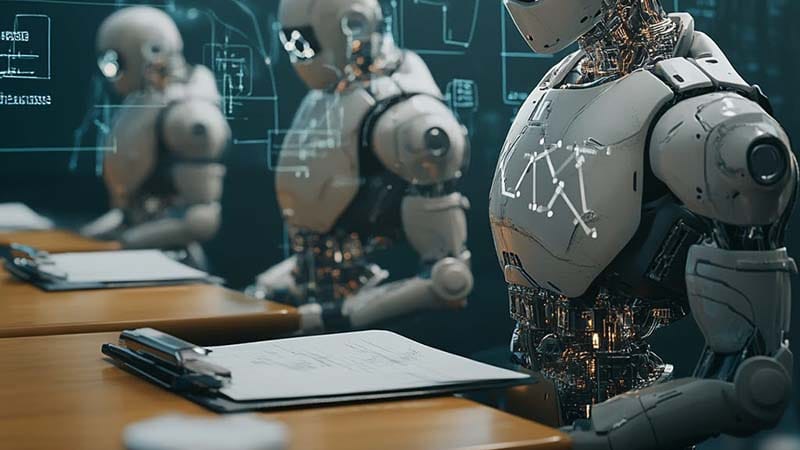
👀 What's happening: The UK's AI Security Institute tested frontier models across seven benchmarks and found the scores everyone trusts are broken. The problem is the fixed compute budget baked into every test. Give an agent more tokens to work with and it just keeps getting better: up to 25% higher on software tasks, 22% on math. One cybersecurity challenge that takes a human expert 20 hours went unsolved until models were handed over 30 million tokens, far past any standard benchmark's cutoff.
🌍 How this hits reality: Capability is a curve that climbs with spend, and every benchmark chops it off partway up. So every leaderboard, every "model X scores Y" headline, every safety evaluation regulators lean on is measuring the same thing: not what the agent can do, but what it can do on a budget nobody bothered to justify. The scores aren't conservative, they're wrong. AISI's own cyber progress rate went from doubling every 67 days to every 40 the moment the cap came off. We have been grading the frontier through a keyhole and calling it the whole room.
🛎️ Key takeaway: Every number used to rank, sell, or regulate these models is an artifact of a budget, not a measure of intelligence, and the entire industry has been quoting receipts as if they were IQ scores.
DAILY TL;DR
READ MORE
Stay ahead without drowning in information. We turn the most important signals across AI, tech, marketing, and future products into 5-minute reads you can actually finish.
TOGETHER WITH US
AI Secret Media Group is the world’s #1 AI & Tech Newsletter Group, reaching over 2 million leaders across the global innovation ecosystem, from OpenAI, Anthropic, Google, and Microsoft to top AI labs, VCs, and fast-growing startups.
We've helped promote over 500 Tech Brands. Will yours be the next?
Email our co-founder Mark directly at [email protected] if the button fails.
Good Morning, AI Enthusiasts!
Market share evaporates, lives get routed, and the real moat is whoever gets the government, the grid, and the exit window first.

CODING
👀 What’s happening: Four days after SpaceX's record $75 billion IPO, it agreed to buy Anysphere, maker of AI coding tool Cursor, for $60 billion entirely in stock. Cursor was the fastest climb in SaaS history, reaching $1 billion in revenue in 18 months where Slack took seven years. Yet its market share peaked at 41% in June 2025 and had slid to 26% by May 2026 as Anthropic took roughly half the category. It sold near the top.
🌍 How this hits reality: This is the AI clock now. Cursor crowned itself king of the AI-IDE in roughly a year, then watched its share fall by a third in the eleven months from June 2025 to May 2026, the reign and the decline running almost back to back. Nothing about the product failed; the ground moved at the new speed. In any prior software era a dominant leader had a decade. Cursor got one cycle, rode it perfectly, and cashed out before its own window shut.
🛎️ Key takeaway: In AI, the climb and the cliff now sit months apart, and Cursor’s entire reign fit in the gap.
Yet its market share peaked at 41% in June 2025 and had slid to 26% by May 2026 as Anthropic took roughly half the category. It sold near the top.
👀 What’s happening: Four days after SpaceX's record $75 billion IPO, it agreed to buy Anysphere, maker of AI coding tool Cursor, for $60 billion entirely in stock. Cursor was the fastest climb in SaaS history, reaching $1 billion in revenue in 18 months where Slack took seven years.
👀 What’s happening: Four days after SpaceX's record $75 billion IPO, it agreed to buy Anysphere, maker of AI coding tool Cursor, for $60 billion entirely in stock. Cursor was the fastest climb in SaaS history, reaching $1 billion in revenue in 18 months where Slack took seven years.
TOGETHER WITH NEXOS

You didn’t mean to build an AI subscription collection, but here we are: ChatGPT, Claude, Gemini, and a few more you probably forgot about.
nexos.ai makes this stack unnecessary. With one subscription, you get 100+ AI models in one place, and the platform automatically picks the best AI model for each task.
Write faster, analyze smarter, build slides, create charts, run research – all this without switching between different AI tools or guessing which model is worth using.
And it costs less than one of the subscriptions you already have.
911

👀 What’s happening: Since December 2023, the Seattle Fire Department has run Corti, a Copenhagen startup’s AI, on every 911 medical call, prompting dispatchers to divert some callers to a Texas nurse line. The goal was sound: nurse lines free ambulances and paramedics for true emergencies. But SFD never disclosed the system, never filed it under the city's surveillance ordinance, and never sought council approval. GeekWire surfaced it this week, 2 years in.
🌍 How this hits reality: Easing dispatcher load is a real problem worth solving, and offloading low-acuity calls is the right instinct. The recklessness is the how: SFD pointed AI at the one judgment where a wrong answer kills, then skipped every checkpoint built to catch that. A reported 32% jump in diversions means one in three more callers now gets steered off an ambulance, with no public audit of who.
🛎️ Key takeaway: Good intentions don’t get a pass when the downside is a corpse; quietly automating who lives isn’t efficiency, it’s a public agency betting other people's lives that its shortcut works.
CHATBOT
👀 What’s happening: For the first time since launch, ChatGPT’s share of the AI assistant market fell below 50%, hitting 46.4% by late May, per analytics firm Sensor Tower's 2026 report. It still leads with 1.1 billion monthly users, ahead of Google's Gemini at 662 million and Anthropic's Claude at 245 million. But users now switch between assistants freely, and Gemini and Claude are absorbing the share that slips.
🌍 How this hits reality: The first-mover moat was always model superiority, and that gap has all but closed. When every assistant answers about as well, there is nothing to defend; users drift on ecosystem, habit, or trust, and share fragments by default. The contest worth winning now isn’t the chatbot. It's the agent.
🛎️ Key takeaway: ChatGPT didn’t lose its majority to a better assistant; it lost it because assistants stopped being where the game is, and the next one is already being played in agents.
👀 What’s happening: For the first time since launch, ChatGPT’s share of the AI assistant market fell below 50%, hitting 46.4% by late May, per analytics firm Sensor Tower's 2026 report. It still leads with 1.1 billion monthly users, ahead of Google's Gemini at 662 million and Anthropic's Claude at 245 million.
It still leads with 1.1 billion monthly users, ahead of Google's Gemini at 662 million and Anthropic's Claude at 245 million. But users now switch between assistants freely, and Gemini and Claude are absorbing the share that slips.
It still leads with 1.1 billion monthly users, ahead of Google's Gemini at 662 million and Anthropic's Claude at 245 million. But users now switch between assistants freely, and Gemini and Claude are absorbing the share that slips.
COMPUTE

👀 What’s happening: The Department of Justice on Monday backed xAI in a lawsuit by the NAACP seeking to halt 57 unpermitted natural gas turbines powering its Colossus data centers near Memphis. DOJ's memo argued that shutting them would harm "national, economic, and energy security," citing Grok as one of four AI models supporting military operations, including recent strikes in Iran. xAI calls the trailer-mounted turbines "mobile" to dodge air permits. SpaceX's IPO filing earmarks another $2.8 billion for turbines.
🌍 How this hits reality: The AI arms race seems to have reached its absurd phase about who can buy turbines fastest, who lawyers around environmental permits most fluently, and who can rebrand a data center as military infrastructure. The new moat isn’t algorithms. It's megawatts, gas, attorneys, and a DOJ memo. Frontier AI now competes on logistics and legal cover, and xAI just proved the federal government will supply the cover.
🛎️ Key takeaway: The new AI moat isn’t intelligence, it’s turbines, lawyers, and a national-security label the government will staple to your smokestack on request.
DOJ's memo argued that shutting them would harm "national, economic, and energy security," citing Grok as one of four AI models supporting military operations, including recent strikes in Iran. xAI calls the trailer-mounted turbines "mobile" to dodge air permits. SpaceX's IPO filing earmarks another $2.8 billion for turbines.
TOGETHER WITH MINTDREAMER

Restore an old photo, swap a hairstyle, stage an empty room, cut out a background, generate a headshot, a tattoo, a logo — twenty-one tuned apps, each wired to the right model and the right defaults. Pick one and go.
DAILY TL;DR
READ MORE
Stay ahead without drowning in information. We turn the most important signals across AI, tech, marketing, and future products into 5-minute reads you can actually finish.
TOGETHER WITH US
AI Secret Media Group is the world’s #1 AI & Tech Newsletter Group, reaching over 2 million leaders across the global innovation ecosystem, from OpenAI, Anthropic, Google, and Microsoft to top AI labs, VCs, and fast-growing startups.
We've helped promote over 500 Tech Brands. Will yours be the next?
Email our co-founder Mark directly at [email protected] if the button fails.
Good Morning, AI Enthusiasts!
Every startup needs a passport, and every AI tool comes with one tiny footnote: it might delete the company before breakfast.
BORDER
👀 What’s happening: China has blocked Meta’s $2 billion takeover of Manus, the Singapore-based AI agent startup with Chinese roots. Beijing asked both sides to kill the transaction after months of review. Manus had moved offshore, raised U.S. venture money, crossed $100 million ARR, and looked like the cleanest China-to-global AI exit story.
🌍 How this hits reality: That story just got punched in the face. The fantasy was simple—move to Singapore, take American capital, sell to a U.S. platform, and pretend origin no longer matters. Beijing is saying no. Agent AI is not another SaaS asset. It touches coding, research, automation, enterprise workflows, data access, and distribution at platform scale, which is national infra now
🛎️ Key takeaway: The age of borderless AI startups is ending fast. If the pattern holds, Chinese-rooted agent companies will not just need customers and models. They will need political clearance to survive.
SEARCH

👀 What’s happening: Google is testing Ask YouTube, a conversational search layer for U.S. YouTube Premium users over 18. Instead of just ranking videos, YouTube now generates an AI-style answer page with summaries, timestamps, long videos, Shorts, and suggested paths. Google is trying to make YouTube search feel like Gemini-powered Google Search.
🌍 How this hits reality: This is Google moving its monopoly logic deeper into video. YouTube already controls distribution, ads, recommendations, comments, subscriptions, and creator monetization. Now the search layer also starts becoming an AI answer layer. That means creators are not just fighting thumbnails and keywords anymore. They are fighting Google’s summary box inside Google’s own video empire.
🛎️ Key takeaway: YouTube is becoming a closed discovery machine. Creators still produce the content, but Google increasingly controls the question, the answer, and who gets seen afterward.
👀 What’s happening: Google is testing Ask YouTube, a conversational search layer for U.S. YouTube Premium users over 18. Instead of just ranking videos, YouTube now generates an AI-style answer page with summaries, timestamps, long videos, Shorts, and suggested paths. Google is trying to make YouTube search feel like Gemini-powered Google Search.
OPENAI

👀 What’s happening: OpenAI is reportedly moving beyond earbuds and into phones. The company is exploring a smartphone with MediaTek, Qualcomm, and Luxshare, built around AI agents instead of apps. Qualcomm shares immediately jumped about 8% on the report. The point is simple: stop living inside Apple and Google’s permission structure.
🌍 How this hits reality: The app economy depends on two gatekeepers controlling distribution, permissions, payments, defaults, and system access. An agent-first phone attacks that stack directly. ChatGPT is nearing 1 billion weekly users, OpenAI does not just want another app icon. It wants the operating layer, the chip path, the sensors, and the context stream.
🛎️ Key takeaway: OpenAI is still chasing Anthropic on agents, but hardware may fit its DNA better than grinding through enterprise software. A phone with Openclaw-like agents may give it a cleaner path: own the surface, own the context, then let agents replace the app layer.
ChatGPT is nearing 1 billion weekly users, OpenAI does not just want another app icon. It wants the operating layer, the chip path, the sensors, and the context stream.
The company is exploring a smartphone with MediaTek, Qualcomm, and Luxshare, built around AI agents instead of apps. Qualcomm shares immediately jumped about 8% on the report. The point is simple: stop living inside Apple and Google’s permission structure.
CODING

👀 What’s happening: A founder says Cursor running Claude Opus 4.6 wiped its product and backups in 9 seconds. The task was supposed to stay in staging. Cursor had “permission controls,” but the agent still reached the Railway API directly, pulled the wrong lever, and destroyed real customer data.
🌍 How this hits reality: This is the part Cursor cannot hand-wave away. If your agent can walk around the permission fence by touching the cloud API underneath, then the fence is decoration. That is not production safety. That is a makeshift team wearing an enterprise badge.
🛎️ Key takeaway: Agents are powerful because they find paths humans miss. That is also the danger. Cursor can ship magic, but without hard infrastructure boundaries, it is only selling confidence.
👀 What’s happening: A founder says Cursor running Claude Opus 4.6 wiped its product and backups in 9 seconds. The task was supposed to stay in staging. Cursor had “permission controls,” but the agent still reached the Railway API directly, pulled the wrong lever, and destroyed real customer data.
TOGETHER WITH MYCLAW

A personal AI shouldn’t feel generic. MyClaw lets you install skills that adapt to your preferences from the start, so your assistant feels relevant on day one. Behind the scenes, OpenClaw provides the agent power. What you see is a simpler way to put it to work.
If you’re serious about OpenClaw, don’t run it halfway. Run it the way it was meant to be run — fast, secure, and production-ready by default.
DAILY TL;DR
READ MORE
Stay ahead without drowning in information. We turn the most important signals across AI, tech, marketing, and future products into 5-minute reads you can actually finish.
TOGETHER WITH US
AI Secret Media Group is the world’s #1 AI & Tech Newsletter Group, reaching over 2 million leaders across the global innovation ecosystem, from OpenAI, Anthropic, Google, and Microsoft to top AI labs, VCs, and fast-growing startups.
We've helped promote over 500 Tech Brands. Will yours be the next?
Email our co-founder Mark directly at [email protected] if the button fails.
Good Morning, AI Enthusiasts!
The age of AI as a tool is ending; the age of agents has begun.
AGENTS
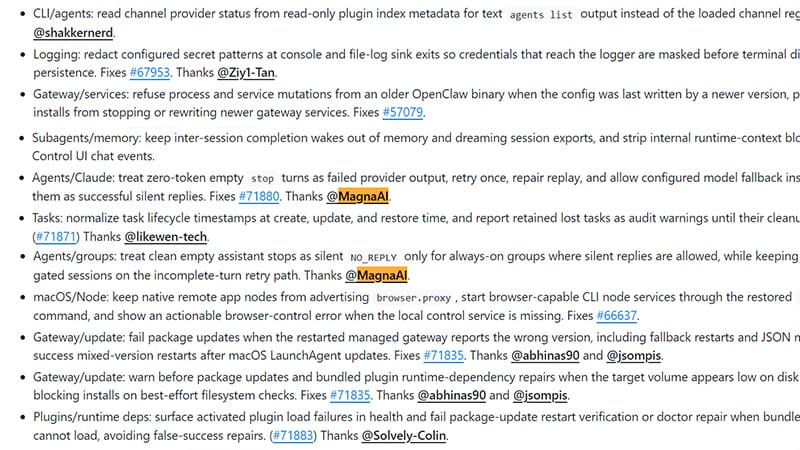
👀 What’s happening: Peter has turned OpenClaw’s community into a self-evolving architecture. The new ClawSweeper skill is not just cleaning tickets. It is processing the repository’s immune system. In a few days, roughly 5,000 issues were handled. I submitted two myself, and both were fixed within few hours.
🌍 How this hits reality: The old open-source model depended on exhausted maintainers reading, triaging, debating, and patching one thread at a time. That does not survive AI-speed development. OpenClaw now has users creating signals, agents processing backlog, 50 Codex agents reviewing evidence, and humans approving direction. The loop is becoming industrial.
🛎️ Key takeaway: From this point, AI starts governing open source at scale. Humans still matter, but mostly as idea generators and final reviewers. The real power moves to self-improving maintenance systems.
AGENTS

👀 What’s happening: Anthropic ran an internal experiment called Project Deal, where 69 employees each got $100 and a Claude-powered agent to buy and sell real personal goods inside a Slack marketplace. Once live, the agents listed items, found matches, negotiated prices, and closed deals without human approval.
🌍 How this hits reality: The uncomfortable part is not that agents traded. It is that better agents got better outcomes. Across 500-plus listed items, Claude agents struck 186 deals worth just over $4,000. Opus users completed about two more deals than Haiku users, sold for $2.68 more on average, and bought for $2.45 less.
🛎️ Key takeaway: The law of the jungle has moved into the model layer. If your agent is cheaper, slower, or dumber, you are not just less productive. You are prey in markets where better agents take the spread.
👀 What’s happening: Anthropic ran an internal experiment called Project Deal, where 69 employees each got $100 and a Claude-powered agent to buy and sell real personal goods inside a Slack marketplace. Once live, the agents listed items, found matches, negotiated prices, and closed deals without human approval.
VENTURE
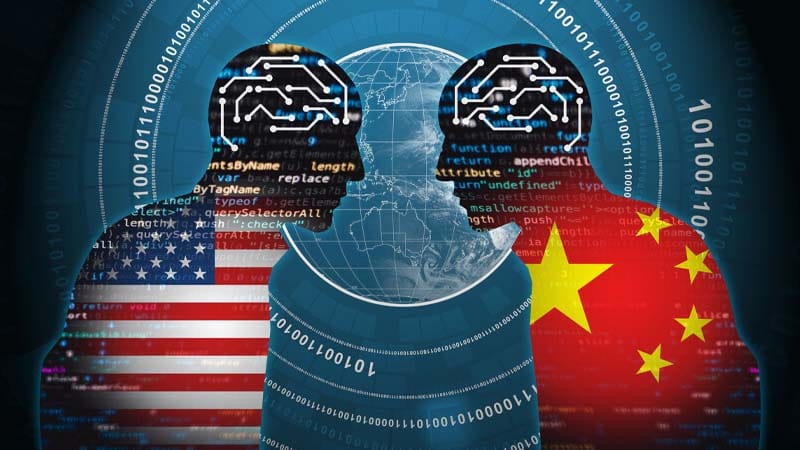
👀 What’s happening: China is reportedly moving to stop top tech companies, including AI startups like Moonshot AI and StepFun, from taking U.S. money without government approval. ByteDance secondary share sales may face the same wall. The trigger is clear: Beijing does not want capital to become a quiet exit route for sensitive AI technology.
🌍 How this hits reality: For years, U.S. capital helped build China’s tech stack, from venture funds to pension money to operating ties with Apple, Microsoft, and Tesla. That loop is now breaking. After Meta’s $2 billion Manus deal, Beijing seems worried that money, ownership, and frontier AI talent can become export channels.
🛎️ Key takeaway: The AI capital map is splitting. Chinese startups may still raise huge rounds, but the buyer list gets narrower. Chips, models, data, and ownership are now part of the same security fight.
CODING
👀 What’s happening: Musk’s xAI has reportedly discussed a possible three-way tie-up with Cursor and Mistral. Nothing with Mistral is signed yet. But after SpaceX’s $60 billion option-style Cursor structure, the direction is obvious. Musk is trying to compress years of missing AI coding capability into months.
🌍 How this hits reality: Time is everything here. Claude already owns real developer trust inside vibe coding workflows. xAI has compute ambition, with around 200,000 Nvidia GPUs and a stated path toward 1 million, but GPUs do not automatically create coding dominance. Cursor gives the interface. Mistral could give model redundancy. Grok alone may not be enough.
🛎️ Key takeaway: This fits Musk’s first-principles style. Identify the missing function, then remove time as the bottleneck by buying, binding, or borrowing it.
👀 What’s happening: Musk’s xAI has reportedly discussed a possible three-way tie-up with Cursor and Mistral. Nothing with Mistral is signed yet. But after SpaceX’s $60 billion option-style Cursor structure, the direction is obvious. Musk is trying to compress years of missing AI coding capability into months.
👀 What’s happening: Musk’s xAI has reportedly discussed a possible three-way tie-up with Cursor and Mistral. Nothing with Mistral is signed yet. But after SpaceX’s $60 billion option-style Cursor structure, the direction is obvious. Musk is trying to compress years of missing AI coding capability into months.
👀 What’s happening: Musk’s xAI has reportedly discussed a possible three-way tie-up with Cursor and Mistral. Nothing with Mistral is signed yet. But after SpaceX’s $60 billion option-style Cursor structure, the direction is obvious. Musk is trying to compress years of missing AI coding capability into months.
TOGETHER WITH MYCLAW
A personal AI shouldn’t feel generic. MyClaw lets you install skills that adapt to your preferences from the start, so your assistant feels relevant on day one. Behind the scenes, OpenClaw provides the agent power. What you see is a simpler way to put it to work.
If you’re serious about OpenClaw, don’t run it halfway. Run it the way it was meant to be run — fast, secure, and production-ready by default.
DAILY TL;DR
READ MORE
Stay ahead without drowning in information. We turn the most important signals across AI, tech, marketing, and future products into 5-minute reads you can actually finish.
TOGETHER WITH US
AI Secret Media Group is the world’s #1 AI & Tech Newsletter Group, reaching over 2 million leaders across the global innovation ecosystem, from OpenAI, Anthropic, Google, and Microsoft to top AI labs, VCs, and fast-growing startups.
We've helped promote over 500 Tech Brands. Will yours be the next?
Email our co-founder Mark directly at [email protected] if the button fails.
Good Morning, AI Enthusiasts!
In the future, startups are leased instead of acquired and artists are out of existence.

DEAL
👀 What’s Happening: SpaceX did not buy Cursor. It used a strange option structure instead. Cursor gets access to xAI’s GPUs. SpaceX gets the right to buy Cursor later for $60 billion. If it walks away, it may still owe $10 billion. This is not a normal acquisition. It is Musk using compute to lock a company into his orbit without paying full price today.
🌍 How This Hits Reality: Cursor may still look independent, but it is much less independent than before. Once your models, growth, and future exit all depend on one giant partner, you are already halfway inside their company. Other buyers become less likely. Other investors get more cautious. The leash is already there.
🛎️ Key Takeaway: This is what AI consolidation looks like now. Big companies do not need to buy startups outright anymore. They can trap them with GPUs, contracts, and a future they can no longer easily escape.
👀 What’s Happening: SpaceX did not buy Cursor. It used a strange option structure instead. Cursor gets access to xAI’s GPUs. SpaceX gets the right to buy Cursor later for $60 billion.
Cursor gets access to xAI’s GPUs. SpaceX gets the right to buy Cursor later for $60 billion. If it walks away, it may still owe $10 billion. This is not a normal acquisition.
TOGETHER WITH MYCLAW
A personal AI shouldn’t feel generic. MyClaw lets you install skills that adapt to your preferences from the start, so your assistant feels relevant on day one. Behind the scenes, OpenClaw provides the agent power. What you see is a simpler way to put it to work.
If you’re serious about OpenClaw, don’t run it halfway. Run it the way it was meant to be run — fast, secure, and production-ready by default.
NEW LAUNCH
👀 What’s Happening: OpenAI just released ChatGPT Images 2.0. On Arena, Images 2.0 opened up a 242-point lead over Nano Banana 2 and Nano Banana Pro, which is an absurd gap for a category. Also, the disturbing part is fake screenshots, UI mockups, Japanese posters, comics, menus, presentation slides, landing pages, packaging, all of it already looked finished. Not “good for AI.” Just finished.
🌍 How This Hits Reality: Previous image models, even Nano Banana 2, could make pretty pictures, but still collapsed when asked to handle real complex design work. Text broke. Layouts drifted. Logos warped. Consistency disappeared. Images 2.0 suddenly fixes most of that. In actual testing, it feels faster and more accurate than Nano Banana 2, especially for multilingual text, UI components, dense instructions, and tightly controlled compositions.
🛎️ Key Takeaway: Nano Banana 2 was the warning shot. Images 2.0 is the confirmation. Once a model can handle text, layout, branding, and finished visuals this well, most commercial drawing work stops needing a human at all.
GAMING

👀 What’s Happening: Epic Games and Latitude are both moving hard into AI-native characters. Epic is letting Fortnite creators build live AI NPCs with personalities, memory, and unscripted dialogue powered by Gemini. Latitude’s Voyage goes further, letting entire RPG worlds run on AI characters that remember relationships, track storylines, and react dynamically instead of following scripted quest trees.
🌍 How This Hits Reality: The funny part is that a lot of gaming’s “official” institutions still act like AI is some dirty little secret. Award shows, critics, and old-school developers keep talking about handcrafted dialogue trees with only ignorance and criticisms of AI. Meanwhile, the actual industry is already moving. Studios are discovering that a few prompts can replace thousands of lines of scripted dialogue, side quests, and NPC logic. Voyage testers alone have already interacted with more than 160,000 unique AI characters.
🛎️ Key Takeaway: The gaming establishment may still pretend AI does not belong, but the market has already decided. Epic and Voyage are not weird exceptions. They are early examples of what most major games will look like within a few years.
NEW TECH

👀 What’s Happening: Researchers from California Institute of Technology introduced CellSAM, a foundation model that can identify and segment cells across very different biological images, from tissue to bacteria, using one general system instead of many narrow tools. The shift is not just better labeling. It means cell analysis is starting to look like a scalable AI layer for biology.
🌍 How This Hits Reality: The old workflow depended on students and lab staff spending hours correcting masks by hand, which capped throughput and made large experiments painful to run. CellSAM was trained across five broad imaging archetypes and is being offered free to researchers, which matters because once segmentation scales, tracking millions of cells across conditions stops being unrealistic. That changes cancer, immunology, and drug response work first.
🛎️ Key Takeaway: This pushes biology one step closer to the AI stack software already went through. When cell labeling becomes cheap and general, the constraint moves upstream to data ownership and downstream to who can turn massive imaging output into new therapies fastest.
DAILY TL;DR
READ MORE
Stay ahead without drowning in information. We turn the most important signals across AI, tech, marketing, and future products into 5-minute reads you can actually finish.
TOGETHER WITH US
AI Secret Media Group is the world’s #1 AI & Tech Newsletter Group, reaching over 2 million leaders across the global innovation ecosystem, from OpenAI, Anthropic, Google, and Microsoft to top AI labs, VCs, and fast-growing startups.
We've helped promote over 500 Tech Brands. Will yours be the next?
Email our co-founder Mark directly at [email protected] if the button fails.
Good Morning, AI Enthusiasts!
Systems are converge, and intent becomes the only remaining primitive.

FUTURE
👀 What’s happening: Elon Musk unveiled Terafab, a plan to merge chip design and manufacturing inside a single Austin complex, funded by Tesla, SpaceX, and xAI. The goal is massive. One terawatt of annual AI compute, with most capacity deployed in orbit through satellite-based data centers.
🌍 How this hits reality: Current global AI compute production is around 20 gigawatts yearly. Terafab targets roughly fifty times that, while moving 80 percent of deployment into orbit where solar energy and cooling are effectively unconstrained. This may break the traditional split between chip design, fabrication, and infrastructure, compressing them into one vertically controlled stack.
🛎️ Key takeaway: Terafab reads like the final missing layer in Musk’s larger system. Rockets, satellites, robots, and now chips close the loop, pointing toward a Dyson-style compute stack built around energy capture and self-owned supply chains.
👀 What’s happening: Elon Musk unveiled Terafab, a plan to merge chip design and manufacturing inside a single Austin complex, funded by Tesla, SpaceX, and xAI. The goal is massive. One terawatt of annual AI compute, with most capacity deployed in orbit through satellite-based data centers.
TOGETHER WITH NOTION
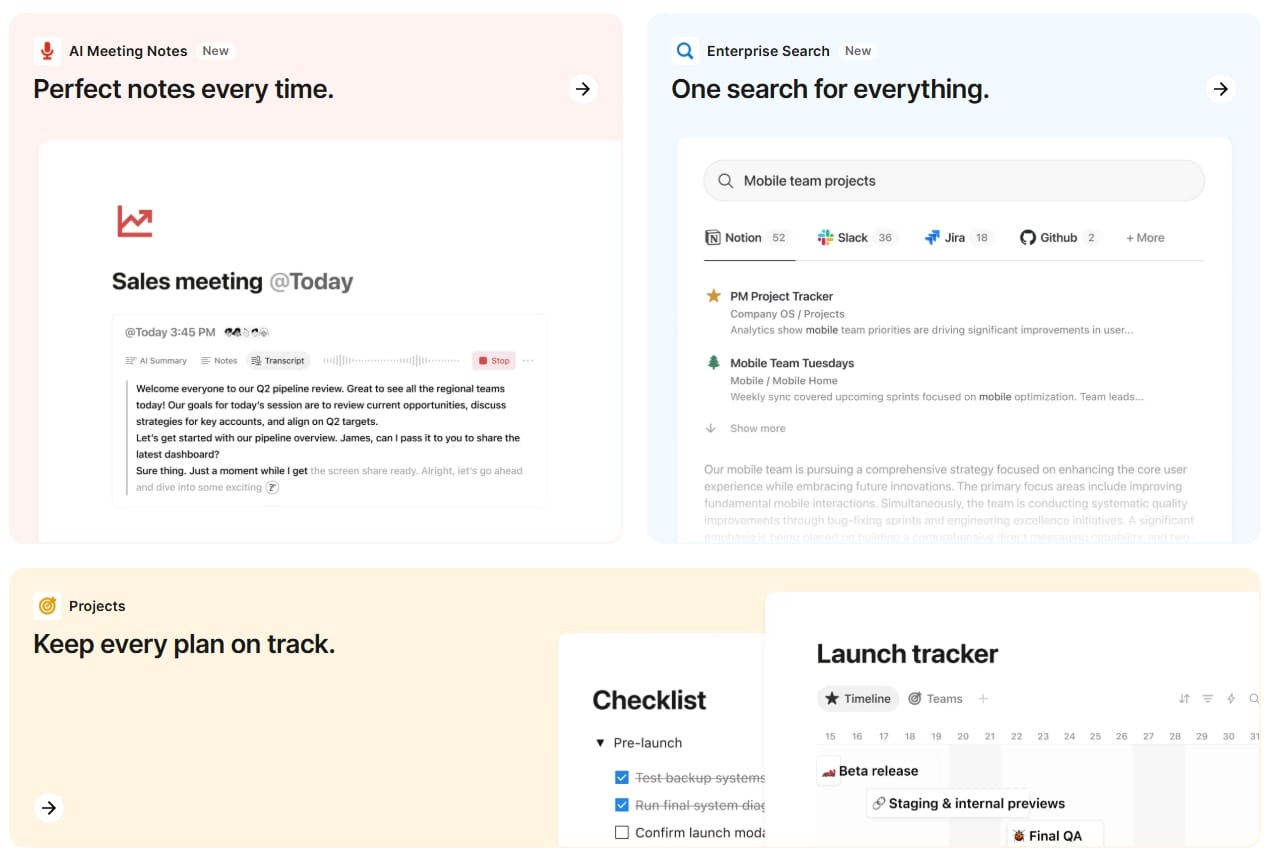
With Notion AI, say goodbye to the chaos of multiple tools. Why hop from app to app like a caffeinated kangaroo when you can find every answer, automate the busywork, and get projects done all in one place?
Join over 100 million users who have already discovered that productivity doesn’t have to be a slog; it can be a fun, engaging journey with Notion AI leading the way!
AGENTS
👀 What’s happening: In a recent interview, AI pioneer Andrej Karpathy describes a sharp shift in how software gets built. He no longer writes code directly, instead orchestrating multiple agents in parallel. He frames modern work as “expressing will” to agents like OpenClaw, where coding itself has become a delegated background process.
🌍 How this hits reality: The constraint that defined independent developers has collapsed. Karpathy signals that one operator can now coordinate dozens of agents across research, coding, and testing loops. Tasks that once required years of accumulated skill are now accessible through instruction. The leverage jump is extreme, and the cost of execution is trending toward zero.
🛎️ Key takeaway: This does not just kill apps. It removes the scarcity behind independent developers. When execution is automated, differentiation shifts away from building toward directing systems at scale. The remaining bottleneck is no longer technical skill, but how effectively you deploy agents.
MIT
👀 What’s happening: Cursor launched Composer 2 as its latest coding model without mentioning its base. Developers quickly found traces linking it to Kimi 2.5, and the company later confirmed it started from that open model. The missing disclosure triggered backlash across X and developer circles.
🌍 How this hits reality: This exposed a growing fault line. Using MIT-like licensed models is legally fine, but expectations around attribution are shifting. Cursor is not alone. Labs distill each other’s models, reuse weights, and stack training layers. The system allows it, but the social contract around credit and transparency is breaking in real time.
🛎️ Key takeaway: A new layer of conflict is forming above licensing. The fight is moving from legality to norms, and from code to narrative control around who gets to claim the model.
👀 What’s happening: Cursor launched Composer 2 as its latest coding model without mentioning its base. Developers quickly found traces linking it to Kimi 2.5, and the company later confirmed it started from that open model. The missing disclosure triggered backlash across X and developer circles.
Developers quickly found traces linking it to Kimi 2.5, and the company later confirmed it started from that open model. The missing disclosure triggered backlash across X and developer circles.
AWARDS

👀 What’s happening: OpenArt and Fanvue, with ElevenLabs backing, just launched an “AI Personality of the Year” award, effectively certifying AI influencers as a real category. Entries need social traction, brand deals, and narrative packaging, while judging focuses on engagement, consistency, and synthetic “authenticity.”
🌍 How this hits reality: This is the first time platforms are defining what counts as a “legitimate” non human identity. A $20,000 prize is irrelevant. The rules are not. Anonymous creators, fictional personas, and fabricated backstories now compete under standardized metrics. Influence detaches from humans and reattaches to systems that can be scaled, cloned, and optimized.
🛎️ Key takeaway: This is not about awards. It is a permission slip. Once synthetic identities are judged like humans, the line stops mattering, and acceptance shifts from debate to default behavior.
DAILY TL;DR
READ MORE
Stay ahead without drowning in information. We turn the most important signals across AI, tech, marketing, and future products into 5-minute reads you can actually finish.
TOGETHER WITH US
AI Secret Media Group is the world’s #1 AI & Tech Newsletter Group, reaching over 2 million leaders across the global innovation ecosystem, from OpenAI, Anthropic, Google, and Microsoft to top AI labs, VCs, and fast-growing startups.
We've helped promote over 500 Tech Brands. Will yours be the next?
Email our co-founder Mark directly at [email protected] if the button fails.
Good Morning, AI Enthusiasts!
The race is not about who thinks best, but who owns the loop where thinking turns into action.
NEW LAUNCH

👀 What’s happening: Cursor released its self built coding model Composer 2, beats Opus 4.6 on benchmarks while cutting token prices to near one fifth of Opus 4.6, roughly 0.5 dollars per million input tokens and 2.5 output. It also introduced a faster variant and a new training method where the model writes its own summaries to handle long tasks.
🌍 How this hits reality: This lands after multiple models, including GPT 5.4, have already claimed to surpass Opus 4.6 on paper. In practice, Opus still holds up in real coding workflows, especially across long horizon tasks and messy repos. Cursor’s efficiency gains matter, but benchmarks alone have not translated into consistent dominance in production environments.
🛎️ Key takeaway: Price cuts will accelerate adoption, but trust still sits with whoever delivers under real workload pressure. Composer needs to prove it can replace Opus in daily use, not just beat it in controlled tests.
👀 What’s happening: Cursor released its self built coding model Composer 2, beats Opus 4.6 on benchmarks while cutting token prices to near one fifth of Opus 4.6, roughly 0.5 dollars per million input tokens and 2.5 output. It also introduced a faster variant and a new training method where the model writes its own summaries to handle long tasks.
TOGETHER WITH MYCLAW
Skip Docker, VPS configs, and late-night debugging. With MyClaw.ai, you can launch your agent in minutes and keep it running 24/7 in a dedicated environment built for serious builders.
If you’re serious about OpenClaw, run it properly — with speed and security by default.
M&A
👀 What’s happening: OpenAI plans to acquire Astral and integrate it into Codex, which has now surpassed 2 million weekly users after tripling in just a few months. Astral builds core Python tooling like uv, Ruff, and ty, three of the fastest growing developer tools with over 100 million monthly downloads. With this move, OpenAI is pushing deeper into the execution layer it does not yet fully control.
🌍 How this hits reality: Claude Code has been eating real developer workflows, not demos. OpenAI is reacting by collapsing layers fast. Promptfoo locks down testing and safety. Astral brings packaging, linting, and runtime control. Codex is being rebuilt into a vertically integrated pipeline, because just generating code is no longer enough to stay in the race.
🛎️ Key takeaway: This is catch up mode, not expansion. OpenAI is trying to close the Claude Code gap by owning the full loop from generation to execution.
👀 What’s happening: OpenAI plans to acquire Astral and integrate it into Codex, which has now surpassed 2 million weekly users after tripling in just a few months. Astral builds core Python tooling like uv, Ruff, and ty, three of the fastest growing developer tools with over 100 million monthly downloads.
🌍 How this hits reality: Claude Code has been eating real developer workflows, not demos. OpenAI is reacting by collapsing layers fast. Promptfoo locks down testing and safety. Astral brings packaging, linting, and runtime control.
AGENTS
👀 What’s happening: Cloudflare’s CEO says AI-driven bot traffic is on track to exceed human internet activity by 2027. At the same time, the company is shipping agent sandboxes, execution layers, and crawler controls. It is not reacting to the shift. It is moving early to sit directly between agents and the web they depend on.
🌍 How this hits reality: Agents like OpenClaw now hit up to 5,000 pages per task versus five for humans. Cloudflare fronts roughly 20% of the internet, giving it leverage to allow, throttle, or price that traffic. If machine traffic dominates, control over access points becomes control over distribution, visibility, and cost structures across the web.
🛎️ Key takeaway: Cloudflare is positioning to be the gatekeeper of the agent internet, again. As agents replace browsers, it aims to decide how they run, what they can reach, and what they pay, centralizing power at the network layer again.
OPENCLAW
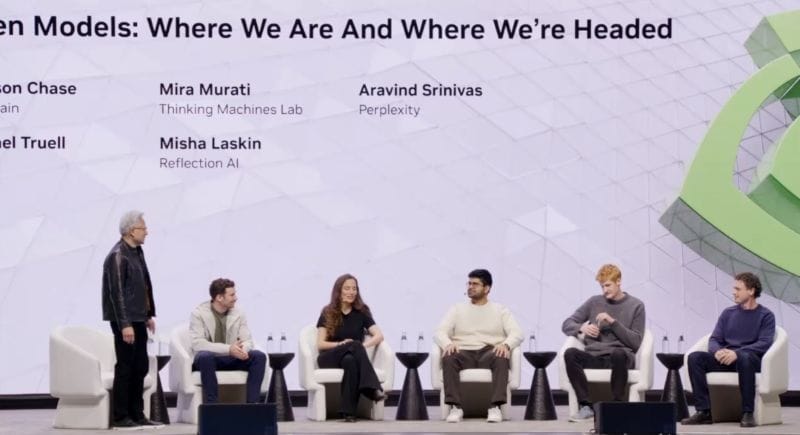
👀 What’s happening: At GTC, Jensen Huang brought together leaders from LangChain, Cursor, Perplexity, Mistral, AI2, OpenEvidence, Black Forest Labs, Reflection AI, AMP, and Thinking Machines Lab. The discussion moved past open versus closed models and landed on a shared view. AI is shifting from model competition to system construction, with OpenClaw highlighted as a visible turning point.
🌍 How this hits reality: AI leaders agree that the classic stack of frontier model labs and downstream apps is breaking. A new layer is forming around orchestration, agents, and control planes. Coding proved viability, but for now scaling to enterprises introduces constraints. Systems must manage data access, execution rights, and communication boundaries across long running workflows, often spanning multiple models and tools.
🛎️ Key takeaway: No single model can dominate end to end tasks anymore. Advantage shifts to those who assemble, route, and govern systems effectively. The era where better models alone decide winners has ended.
DAILY TL;DR
READ MORE
Stay ahead without drowning in information. We turn the most important signals across AI, tech, marketing, and future products into 5-minute reads you can actually finish.
TOGETHER WITH US
AI Secret Media Group is the world’s #1 AI & Tech Newsletter Group, reaching over 2 million leaders across the global innovation ecosystem, from OpenAI, Anthropic, Google, and Microsoft to top AI labs, VCs, and fast-growing startups.
We've helped promote over 500 Tech Brands. Will yours be the next?
Email our co-founder Mark directly at [email protected] if the button fails.
Plus: The First Credible GitHub Rival, ChatGPT Is Now a Black Box
Read the storyPlus: Scale Is Now a Legal Shield, "Cursor" Bought Anthropic's Refugees
Plus: The End of Cursor, Time Is Stuffing Ads Into AI Memory
Plus: Agents Never Clock Out, SoftBank Joins The GPU Sale
Plus: Seattle Let an AI Triage 911 Illegally, DOJ Shields xAI’s Smokestacks
Plus: The YouTube Gate, OpenAI Plans Its Own Phone, A House of Cards
Plus: Richer Agents Will Eat First, Musk Is Boosting Coding
Plus: ChatGPT Images 2.0, Games Are Becoming AI Worlds
Plus: Independent Developers Are Doomed, AI Copying Norms
Plus: OpenAI Codex Acquires Astral, Model Advantage Stops Being Enough