
Unveiling the Black Box
Neuralink Empowers Paralyzed Patient to Edit YouTube with Thoughts
Read the story
Co-founder & CEO, Anthropic
Dario Amodei is co-founder and chief executive of Anthropic, the AI research and products company behind Claude. He previously served as OpenAI’s vice president of research, helping lead work on GPT-2, GPT-3 and long-term AI safety. Before OpenAI, he researched deep learning at Google Brain. His earlier scientific training includes doctoral research at Princeton and postdoctoral work at Stanford’s medical school.
Get AI Secret’s free daily briefing, including Dario Amodei and the wider AI industry.
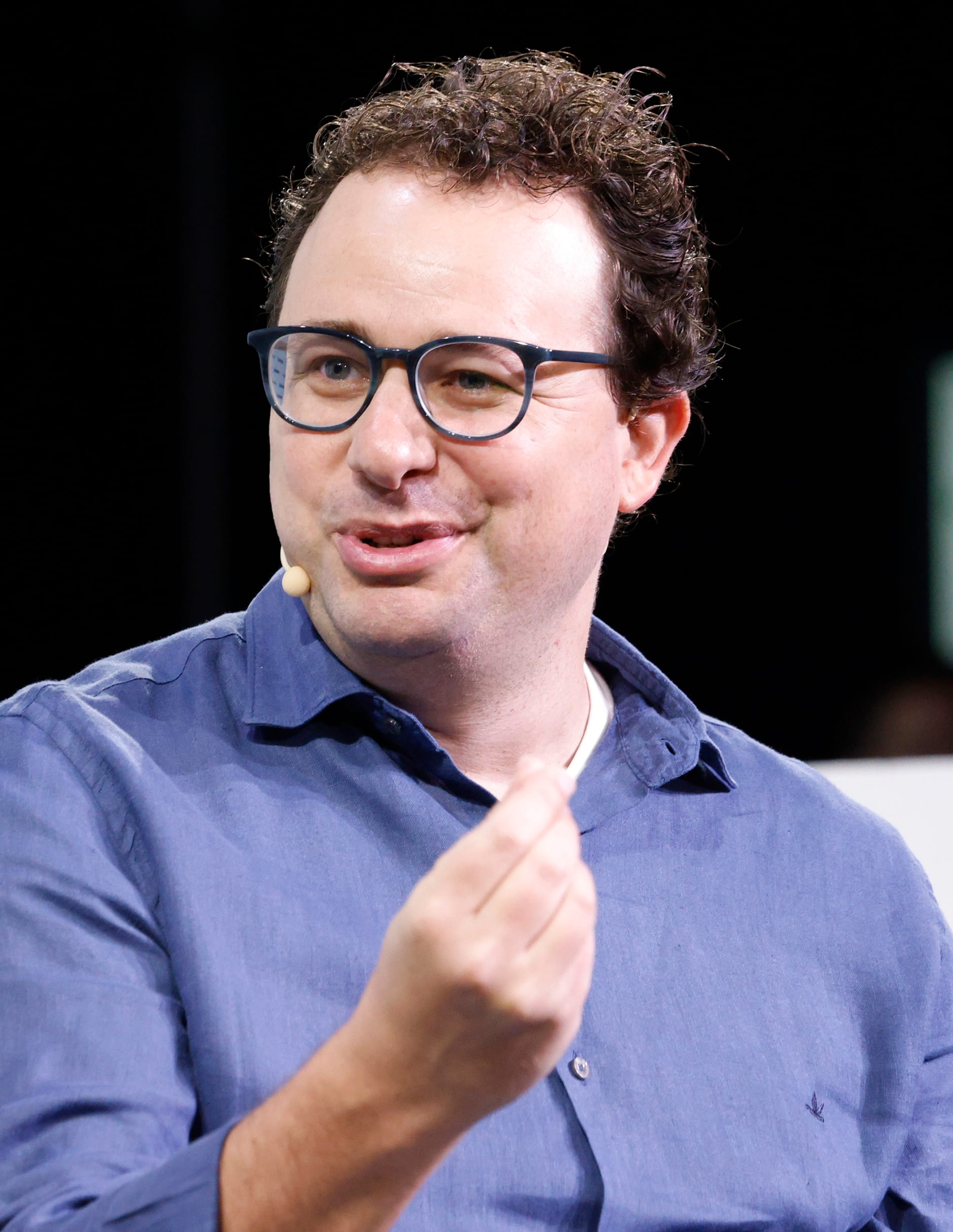
Dario Amodei is co-founder and chief executive of Anthropic, the AI research and products company behind Claude. He previously served as OpenAI’s vice president of research, helping lead work on GPT-2, GPT-3 and long-term AI safety. Before OpenAI, he researched deep learning at Google Brain. His earlier scientific training includes doctoral research at Princeton and postdoctoral work at Stanford’s medical school.
Sources checked . Selected career background and milestones.
Selected research, leadership and career milestones, newest first.
Amodei publishes an essay describing potential benefits of powerful AI, while explaining how risks and uncertainty shape his approach to developing the technology.
Source: Dario Amodei ↗Anthropic makes Claude more broadly available through a chat interface and API after a closed testing period with partners including Notion, Quora and DuckDuckGo.
Source: Anthropic ↗Amodei co-founds Anthropic at the beginning of 2021. The company’s subsequent financing announcement describes its research into steerable, robust and interpretable AI systems.
Source: Anthropic ↗Amodei and collaborators publish a paper identifying practical problems in machine learning safety, including reward hacking, side effects, safe exploration and distributional shift.
Source: Amodei and colleagues / arXiv ↗Amodei is first author of Deep Speech 2, presenting an end-to-end deep learning approach to speech recognition in English and Mandarin Chinese.
Source: Amodei and colleagues / arXiv ↗The Hertz Foundation identifies Amodei as a 2007 Fellow, supporting the scientific training that preceded his research career in deep learning and AI.
Source: Hertz Foundation ↗Briefs, articles and relevant sections, newest first. Explore older coverage below.
More coverage
The rapid advancements in artificial intelligence (AI) have sparked significant changes across various industries, with software development being one of the most impacted. Recently, Dario Amodei, the CEO of Anthropic, a leading AI research company, made a bold prediction that within three to six months, AI will be responsible for writing 90% of the code that software developers currently handle. Furthermore, he suggested that within a year, AI could potentially write all code, fundamentally transforming the role of software engineers.
Let's delve into the implications of Amodei's prediction, examining how AI is poised to reshape the software development landscape.
Recently, Dario Amodei, the CEO of Anthropic, a leading AI research company, made a bold prediction that within three to six months, AI will be responsible for writing 90% of the code that software developers currently handle. Furthermore, he suggested that within a year, AI could potentially write all code, fundamentally transforming the role of software engineers.
Dario Amodei's statement at a Council on Foreign Relations (CFR) event on March 10, 2025, highlights the unprecedented pace at which AI is advancing in the field of software development. He claimed that AI tools, such as GitHub Copilot, Claude Code, and OpenAI's models, are evolving so rapidly that they will soon dominate the coding process. Within three to six months, AI is expected to write 90% of the code, and within a year, it could potentially handle all coding tasks.
Amodei emphasized that while humans are still needed to provide design features, conditions, and high-level specifications, the role of software developers will shift significantly. Instead of writing code, developers will focus on supervising, debugging, and optimizing AI-generated outputs.
AI has already begun to revolutionize software development by acting as a coding assistant. Tools like GitHub Copilot and OpenAI's Codex can generate code snippets, automate repetitive tasks, and even suggest architectural improvements. According to Charlie Clark, founder of Liinks and former Senior Software Engineer at Squarespace, AI will soon become the "ultimate coding assistant," capable of translating high-level concepts into executable code. This shift will allow developers to focus on the "why" rather than the "how," enabling faster and more efficient development without compromising quality.
One of the most time-consuming aspects of software development is maintaining and updating legacy code. AI is expected to transform this process by quickly understanding and optimizing outdated codebases. This will significantly reduce the burden on developers, freeing them to focus on more creative and strategic tasks.
AI's capabilities extend beyond writing code to enabling real-time collaboration and rapid prototyping. Developers may soon be able to verbally describe a feature, and AI will draft the initial code and create a prototype environment for testing. This level of integration will streamline workflows and enhance productivity.
The adoption of AI in software development promises significant efficiency gains. By automating routine and repetitive tasks, AI allows developers to focus on higher-value activities, such as problem-solving and innovation. This could lead to faster project completion times and reduced costs for businesses.
As AI takes over coding tasks, the role of software developers will evolve. Developers will transition from writing code to supervising AI outputs, debugging, and ensuring that AI-generated code aligns with ethical standards and business goals. This shift will require a new skill set, including expertise in AI model training and optimization.
The rise of AI in coding raises concerns about the future of junior developers and those entering the field. With AI handling most coding tasks, traditional entry-level roles may become scarce, making it harder for new developers to gain experience and build foundational skills. This could lead to a skills gap in the long term.
The widespread adoption of AI in software development could lead to job displacement for some developers. According to IMF Managing Director Kristalina Georgieva, AI is expected to impact roughly 40% of global jobs, with some roles benefiting from enhanced productivity while others face reduced labor demand. In extreme cases, certain jobs may disappear altogether.
One potential pitfall of relying heavily on AI for coding is the erosion of foundational programming skills. As developers become more dependent on AI, there is a risk that they may lose the ability to write code manually, which could be problematic in scenarios where AI tools fail or produce errors.
As AI takes on a larger role in software development, it is crucial to ensure that AI-generated code aligns with ethical standards. Developers will need to focus on guiding AI systems to produce outputs that are fair, unbiased, and secure.
Dario Amodei's prediction that AI will write 90% of code within three to six months marks a pivotal moment in the evolution of software development. While this shift promises significant efficiency gains and productivity improvements, it also presents challenges, particularly for junior developers and those entering the field. The role of software engineers will evolve, requiring new skills and a focus on supervising and optimizing AI-generated outputs.
As the industry adapts to this transformation, it is essential to address the ethical and technical challenges associated with AI-driven development. By doing so, businesses and developers can harness the full potential of AI while ensuring that its adoption benefits the broader tech ecosystem.
Anthropic, a leading artificial intelligence (AI) company, has emerged as a trailblazer in the competitive AI landscape. Founded by former OpenAI executives, including Dario Amodei, Anthropic has rapidly ascended to become one of the most well-funded AI startups, second only to OpenAI. The company’s commitment to AI safety, ethical innovation, and strategic partnerships has positioned it as a key player in shaping the future of AI. This report delves into Anthropic’s innovative approaches to marketing, sales, and strategic partnerships, highlighting its unique positioning in the AI industry.
Its foundation is built on the principle of ethical AI development. The company’s mission is to create reliable, interpretable, and steerable AI systems that address the inherent unpredictability of neural networks. This vision was shaped by Dario Amodei’s earlier work at Google, where he co-authored the seminal paper "Concrete Problems in AI Safety," which explored the risks of unsafe exploration and unintended side effects in AI systems.
Anthropic’s focus on AI safety is evident in its development of "Constitutional AI," a framework designed to embed ethical principles into AI systems. This approach uses a constitution derived from sources like the United Nations Declaration of Human Rights and Google DeepMind’s Sparrow Rules to guide AI behavior. The constitution ensures that AI systems like Anthropic’s Claude model handle sensitive topics responsibly, respect user privacy, and avoid harmful generalizations.
Founded by former OpenAI executives, including Dario Amodei, Anthropic has rapidly ascended to become one of the most well-funded AI startups, second only to OpenAI. The company’s commitment to AI safety, ethical innovation, and strategic partnerships has positioned it as a key player in shaping the future of AI.
Anthropic, a leading artificial intelligence (AI) company, has emerged as a trailblazer in the competitive AI landscape. Founded by former OpenAI executives, including Dario Amodei, Anthropic has rapidly ascended to become one of the most well-funded AI startups, second only to OpenAI.
Anthropic’s rapid ascent in the AI industry can be attributed to its strategic partnerships with major technology companies like Amazon, Google, and Salesforce. These partnerships have not only provided financial backing but also facilitated the integration of Anthropic’s AI models into diverse applications.
Amazon has been a significant investor in Anthropic, committing a total of $8 billion to the company as of late 2024. This investment underscores Amazon’s confidence in Anthropic’s AI capabilities and its strategic importance in the AI arms race. Anthropic has named Amazon Web Services (AWS) as its primary training partner, leveraging AWS Trainium and Inferentia chips for model development. This partnership aligns with Amazon’s broader AI strategy, which includes integrating AI into services like Alexa and personalized shopping recommendations.
Google has also deepened its partnership with Anthropic, investing over $3 billion to date. This collaboration reflects Google’s efforts to bolster its AI offerings and compete with rivals like Amazon and Meta. Google’s investment in Anthropic is particularly strategic, as it seeks to commercialize its AI technology and integrate it into industries ranging from customer service to complex problem-solving.
Salesforce Ventures has played a pivotal role in supporting Anthropic’s growth through its Generative AI Fund. Salesforce’s investment in Anthropic’s $450 million Series C round in 2023 was driven by a shared commitment to responsible AI development. Anthropic’s focus on Constitutional AI resonated with Salesforce’s values, making the partnership a natural fit. This collaboration has enabled Anthropic to access Salesforce’s extensive customer and executive network, further expanding its market reach.
Amazon has been a significant investor in Anthropic, committing a total of $8 billion to the company as of late 2024. This investment underscores Amazon’s confidence in Anthropic’s AI capabilities and its strategic importance in the AI arms race. Anthropic has named Amazon Web Services (AWS) as its primary training partner, leveraging AWS Trainium and Inferentia chips for model development.
Google has also deepened its partnership with Anthropic, investing over $3 billion to date. This collaboration reflects Google’s efforts to bolster its AI offerings and compete with rivals like Amazon and Meta. Google’s investment in Anthropic is particularly strategic, as it seeks to commercialize its AI technology and integrate it into industries ranging from customer service to complex problem-solving.
Amazon has been a significant investor in Anthropic, committing a total of $8 billion to the company as of late 2024. This investment underscores Amazon’s confidence in Anthropic’s AI capabilities and its strategic importance in the AI arms race. Anthropic has named Amazon Web Services (AWS) as its primary training partner, leveraging AWS Trainium and Inferentia chips for model development.
Salesforce Ventures has played a pivotal role in supporting Anthropic’s growth through its Generative AI Fund. Salesforce’s investment in Anthropic’s $450 million Series C round in 2023 was driven by a shared commitment to responsible AI development. Anthropic’s focus on Constitutional AI resonated with Salesforce’s values, making the partnership a natural fit.
Anthropic focuses its marketing and sales strategies on a business-to-business (B2B) model, targeting companies that value AI safety and reliability. Its go-to-market (GTM) strategy highlights three main areas: strategic vision, clear communication, and a dedicated B2B approach.
The company has established itself as a leader in AI safety, using its knowledge to build trust with potential clients and partners. Anthropic’s commitment to ethical AI development and its transparent way of tackling societal issues have appealed to businesses looking for reliable AI solutions. For instance, its efforts in climate modeling and support for non-profit organizations show its dedication to using AI for positive social impact.
Partnerships with Amazon, Google, and Salesforce have played a key role in Anthropic’s marketing and sales success. By collaborating with these industry giants, Anthropic has gained credibility and reached a wider customer base. For example, its partnership with AWS allows it to integrate its AI models into Amazon’s cloud services, connecting with many enterprise customers.
Anthropic’s commitment to ethical AI development distinguishes it from competitors like OpenAI and Google DeepMind. By tackling important issues such as bias, misuse, and unpredictability, Anthropic has positioned itself as a leader in AI accountability. This focus has attracted businesses looking for AI solutions that match their values and meet regulatory standards.
Partnerships with Amazon, Google, and Salesforce have played a key role in Anthropic’s marketing and sales success. By collaborating with these industry giants, Anthropic has gained credibility and reached a wider customer base. For example, its partnership with AWS allows it to integrate its AI models into Amazon’s cloud services, connecting with many enterprise customers.
Anthropic’s ability to secure substantial funding from top-tier investors has been a key driver of its growth. The company’s valuation reached $60 billion in early 2025, following a $2 billion funding round led by Amazon, Google, and Lightspeed Venture Partners. This funding highlights the growing demand for advanced AI capabilities and the confidence investors have in Anthropic’s potential.
As the AI industry continues to evolve, Anthropic is well-positioned to play a pivotal role in shaping its future. The company’s focus on ethical AI development, strategic partnerships, and innovative marketing approaches will likely drive its continued success. Moreover, its commitment to addressing societal challenges and regulatory requirements positions it as a leader in responsible AI innovation.
Looking ahead, Anthropic’s partnerships with Amazon, Google, and Salesforce are expected to deepen, further enhancing its market presence and technological capabilities. The company’s emphasis on AI safety and reliability will continue to resonate with enterprises and policymakers, ensuring its relevance in an increasingly competitive landscape.
Anthropic’s ability to secure substantial funding from top-tier investors has been a key driver of its growth. The company’s valuation reached $60 billion in early 2025, following a $2 billion funding round led by Amazon, Google, and Lightspeed Venture Partners. This funding highlights the growing demand for advanced AI capabilities and the confidence investors have in Anthropic’s potential.
Neuralink Empowers Paralyzed Patient to Edit YouTube with Thoughts
Read the storyIn a rare and striking moment of candor, Dario Amodei, CEO of Anthropic—one of the world’s leading artificial intelligence (AI) research labs—has publicly
An AI research agent can effectively solve the problem of AI hallucinations.
The tension between OpenAI and Microsoft is set to change the competition in AI development.
Baidu's Aggressive AI Pricing Strategy: A Catalyst for a Global AI Price War
Exploring Anthropic CEO's Bold Prediction and the Rise of Robo-Advisors
The rapid advancements in artificial intelligence (AI) have sparked significant changes across various industries, with software development being one of the most impacted. Recently, Dario Amodei,
Replit And Anthropic's AI Helped Zillow Create Software Without Any Engineers
Anthropic, a leading artificial intelligence (AI) company, has emerged as a trailblazer in the competitive AI landscape. Founded by former OpenAI executives, including Dario Amodei, Anthropic
Microsoft‘s New FP4 Training Framework vs. DeepSeek: Which Training Cost is Lower?