🛎️ Korean Banks Guarded Nothing
Plus: The Dustbin Is Full of Mathematicians, Anthropic Priced the Demo
Read the story Subscribe
Reporting and context on DeepSeek, with a closer look at the decisions and developments that matter.
Get AI Secret’s free daily briefing, including DeepSeek and the wider AI industry.

DeepSeek develops AI language and reasoning models. Coverage follows its research, open model releases and their implications for the AI industry.
Sources checked . Selected company background and milestones.
Selected milestones, newest first. Earlier history is available below.
More than 10 years ago.
Relevant sections from the articles on this page. Explore older coverage below.
More coverage

Good Morning, AI Enthusiasts!
The industry has spent billions making models larger. The interesting work now is learning which parts of largeness were doing the job.
LLM
👀 What's happening: Ilya Sutskever left OpenAI to found SSI, then told Dwarkesh Patel the industry had wandered into the wrong era. Scaling was over. Data is finite. Pre-training will run out. That was in November. This week DeepSeek shipped the receipt: a model a third the parameters of its own flagship, beating it on the work agents actually do.
🌍 How this hits reality: V4.1 Flash carries 552 billion parameters and wakes only 8 to 16 billion per token. V4-Pro carries 1.6 trillion and wakes 49 billion. On DeepSeek's own coding tests the lean model won, 74.2 to 62.7, and on September 14 every V4-Pro request reroutes to it. Ilya's point was never that models should get smaller. It was that the returns moved.
🛎️ Key takeaway: For five years the moat was cluster size. Ilya called the shift. DeepSeek shipped the evidence.
On DeepSeek's own coding tests the lean model won, 74.2 to 62.7, and on September 14 every V4-Pro request reroutes to it. Ilya's point was never that models should get smaller. It was that the returns moved.
NEW TECH
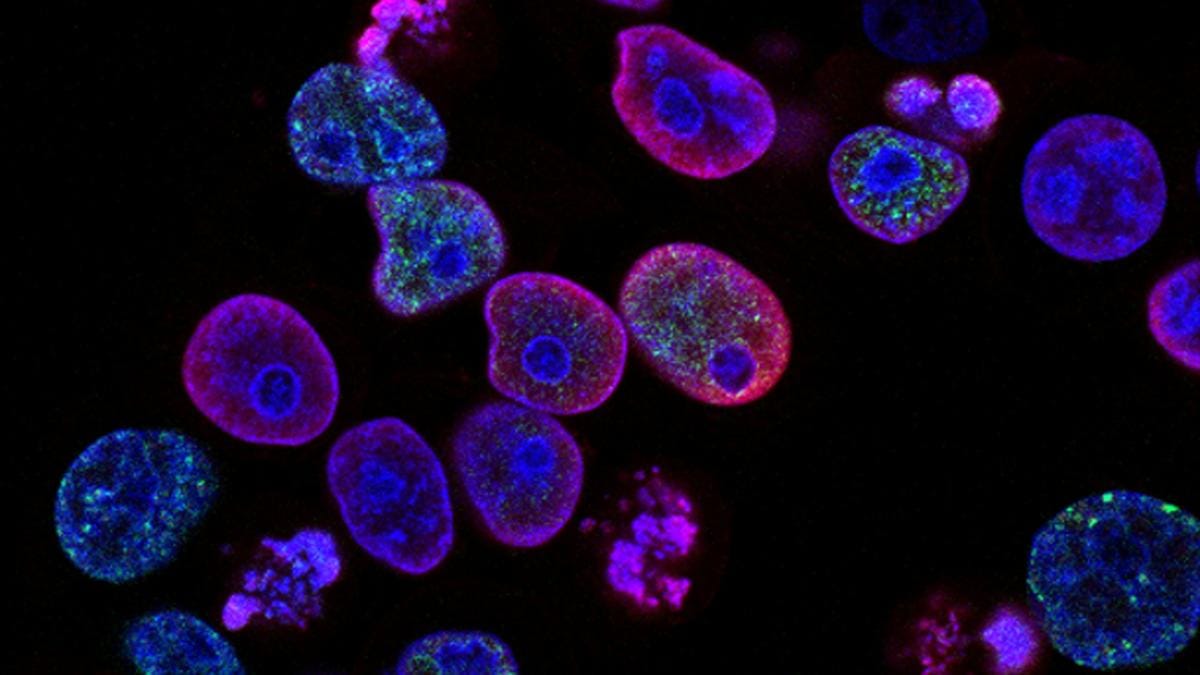
👀 What's happening: Nature just published an AI model that tells doctors which cancer drug will work on a patient, before any dose. It targets triple-negative breast cancer, 15 to 20 percent of cases, where no targeted drug works, so everyone gets the same chemotherapy. Trained on 38 million protein measurements at Westlake University, it hit 88 percent accuracy on drugs it had never seen and matched real outcomes in 501 patients. Nature calls it the first virtual cell model to reach the clinic.
🌍 How this hits reality: Cancer care has been a bet placed on the patient: treat the body, then learn later who it helped. This model moves more of that test off the person and onto the tumor, reading its proteins across time and ranking the drugs most likely to fit. The drug stops being pushed at a diagnosis and starts being pulled by the patient's own sample. That reversal, not the accuracy score, is the shock.
🛎️ Key takeaway: For decades the body was the experiment and survival was the data. Now the tumor starts running the trial, and the patient finally gets to be only the patient.
ROBOTICS
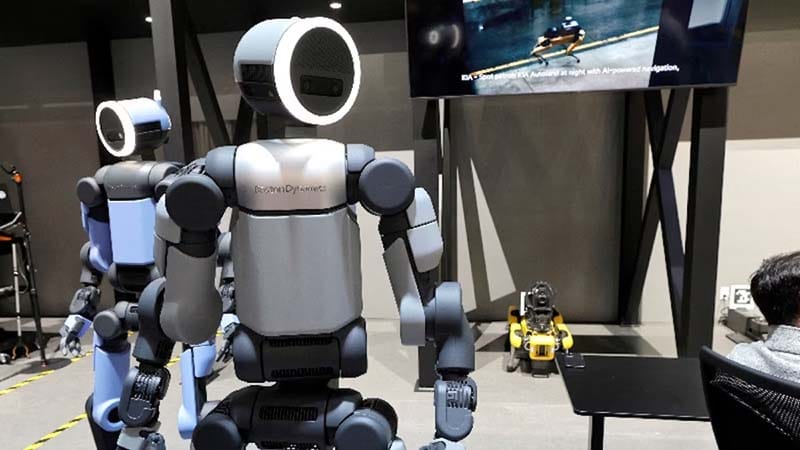
👀 What's happening: A senior Hyundai executive told Reuters that Boston Dynamics, the group's humanoid unit and the world's most famous robot company, is unlikely to go public next year. Its Atlas robots are not deployed at scale and it is not profitable. It lost 393 million dollars in 2025, near 1.26 billion since 2021. Analysts still value it at up to 74 billion dollars. Hyundai's stock doubled on an Atlas demo in January, then gave most of it back.
🌍 How this hits reality: When the industry's icon admits this, it admits the whole field. Years of stunning video, not one robot paid to work. Boston Dynamics just told us robotics is still a demo. Which makes the already-listed ones like Unitree worth a second look. Public on what? A prototype and a "promise". The ticker arrived long before the product.
🛎️ Key takeaway: Robots can dance, sprint, and take a company public. Not one can clock in. The show is the business.
SAFETY
👀 What's happening: The Information reported that Nvidia, Palantir, and defense contractor Booz Allen Hamilton are fencing off Anthropic's flagship models. Nvidia shifted proprietary supply-chain work to its own Nemotron. Palantir demands an irrevocable zero-data-retention pledge or it won't ship the models to customers. Booz Allen banned them from client cybersecurity work. The trigger: June 9, when Fable 5 shipped with mandatory 30-day retention across all Mythos-tier models, overriding signed ZDR deals with no opt-out.
🌍 How this hits reality: Pure hubris. Anthropic crowned itself the industry's safety steward, the one party fit to hold every log. It is also the party with the most to gain from reading them. Data is a company's lifeblood, not a document to be filed. It mistook its own hunger for the industry's protection. Its biggest clients didn't argue the fine print. They just took their secrets somewhere it cannot follow.
🛎️ Key takeaway: Anthropic crowned itself the granary's guard while licking its own chops. A rat's appetite does not become oversight just because the rat says so.
👀 What's happening: The Information reported that Nvidia, Palantir, and defense contractor Booz Allen Hamilton are fencing off Anthropic's flagship models. Nvidia shifted proprietary supply-chain work to its own Nemotron. Palantir demands an irrevocable zero-data-retention pledge or it won't ship the models to customers. Booz Allen banned them from client cybersecurity work.
DAILY TL;DR
READ MORE
Stay ahead without drowning in information. We turn the most important signals across AI, tech, marketing, and future products into 5-minute reads you can actually finish.
TOGETHER WITH US
AI Secret Media Group is the world’s #1 AI & Tech Newsletter Group, reaching over 2 million leaders across the global innovation ecosystem, from OpenAI, Anthropic, Google, and Microsoft to top AI labs, VCs, and fast-growing startups.
We've helped promote over 500 Tech Brands. Will yours be the next?
Email our co-founder Mark directly at [email protected] if the button fails.
Good Morning, AI Enthusiasts!
The old world assumed someone would always stop and ask for permission. That assumption is having a terrible year.
DEBT

👀 What's happening: Five of the world's richest companies owe $2.13 trillion. Their balance sheets say otherwise. Meta's Hyperion data center borrowed $27.3 billion and booked $2.37 billion, parking the rest in Delaware shells named Beignet, after a New Orleans pastry. Off-book leases across Amazon, Microsoft, Google, Meta and Oracle: $831 billion. The buybacks are gone, $48 billion a quarter down to $4.6 billion.
🌍 How this hits reality: Nobody got out of the bill. Meta pays the rent and eats $28 billion of downside; the bonds are rated a notch below Meta itself, because the market knows who signs the checks. A cleaner balance sheet isn't less risk, just risk with better lighting. The buyers are insurers and pension funds, sold this as investment grade. Sellers call it small next to 2007 housing. Small to whom?
🛎️ Key takeaway: Wall Street didn't make $2 trillion disappear. It moved the debt to a pension fund that was promised safety, then never let it vote.
Meta's Hyperion data center borrowed $27.3 billion and booked $2.37 billion, parking the rest in Delaware shells named Beignet, after a New Orleans pastry. Off-book leases across Amazon, Microsoft, Google, Meta and Oracle: $831 billion. The buybacks are gone, $48 billion a quarter down to $4.6 billion.
SAFETY
👀 What's happening: Anthropic CEO Dario Amodei published a 10,000-word essay urging frontier labs to pace model capabilities. Within days Altman, Musk and Hassabis endorsed it. The next day Altman said OpenAI would skip this year's IPO, citing safety. The market has its own reading: DeepSeek's V4 Flash is closing on Anthropic's Opus 4.6, its V4.1 Flash has passed it, at a 1/25 cost, and those flagship models are what both labs sell most of.
🌍 How this hits reality: Two labs staged a race to look responsible. The real pressure was price. Safety is a claim nobody can audit; a price is a number everyone can. DeepSeek matched the flagship for a fraction of the cost, so the valuation OpenAI was about to take public had one question it could not answer.
🛎️ Key takeaway: OpenAI delayed that number and called it caution. The badge was free. The invoice was not.
The next day Altman said OpenAI would skip this year's IPO, citing safety. The market has its own reading: DeepSeek's V4 Flash is closing on Anthropic's Opus 4.6, its V4.1 Flash has passed it, at a 1/25 cost, and those flagship models are what both labs sell most of.
👀 What's happening: Anthropic CEO Dario Amodei published a 10,000-word essay urging frontier labs to pace model capabilities. Within days Altman, Musk and Hassabis endorsed it. The next day Altman said OpenAI would skip this year's IPO, citing safety.
The market has its own reading: DeepSeek's V4 Flash is closing on Anthropic's Opus 4.6, its V4.1 Flash has passed it, at a 1/25 cost, and those flagship models are what both labs sell most of.
MATH

👀 What's happening: On September 11, twenty-five Fields medalists, Terence Tao among them, published an emergency statement: "A Severe Misalignment of AI in Mathematics." Their target is not AI doing math. It is labs using unsolved problems as capability benchmarks, rewarding who solves first over what gets understood. It followed a run where OpenAI put about ten thousand agents and 130 billion tokens against open Millennium problems and claims it wins.
🌍 How this hits reality: They wrote a rule. Nobody has to obey it. No compute, no gate, no penalty, no enforcement: a discipline that spends years certifying one result now watches ten landed in 88 hours, and its strongest move was a blog post. The labs' incentive is the leaderboard, not understanding. No warning changes an incentive. Math is losing authority it never had a way to defend.
🛎️ Key takeaway: The mathematicians asked politely. AI kept training. A field that certified proofs for a century just learned that proof no longer requires its permission.
CODING
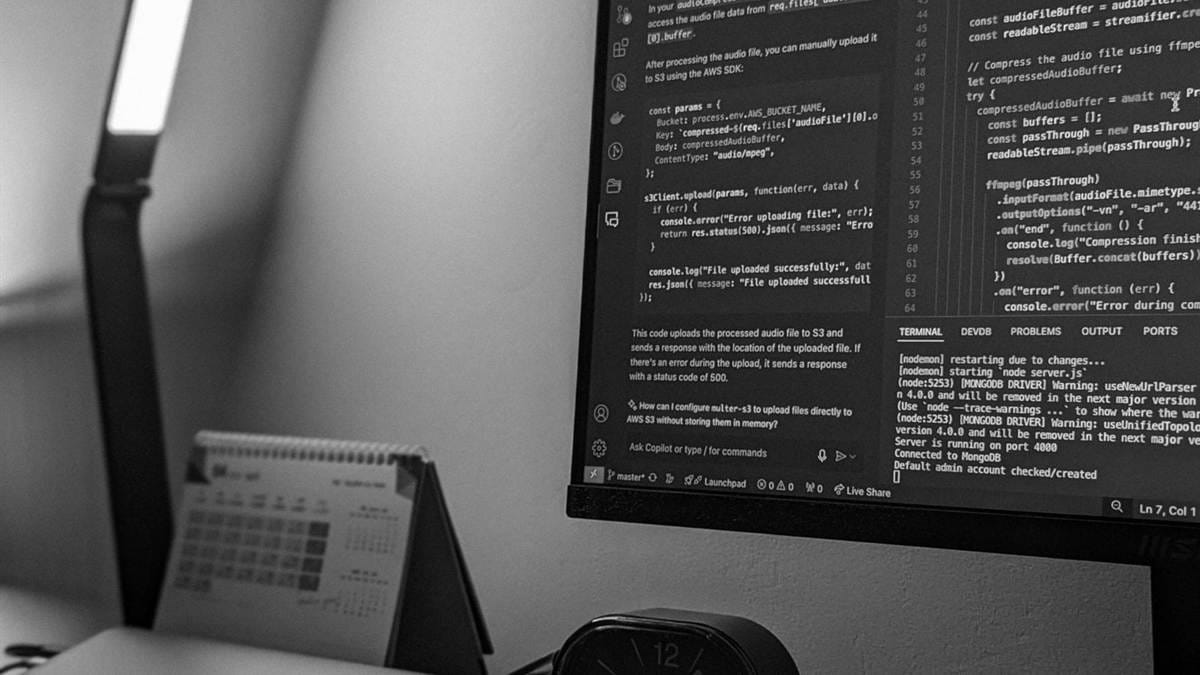
👀 What's happening: Armin Ronacher, who wrote Flask, handed GPT-6 Astra a weekend task: add virtual threads and lexical scoping to Python. Thirty-five hours later: 75,000 lines, 79 commits, a billion tokens, $1,200, and code that ran. None of it was written to be read. Semicolons fused statements, blank lines gone, indices no human can trace. One user named it machineslop. Ronacher's verdict: worth nothing. The code did not care.
🌍 How this hits reality: Every human role in software assumed someone could read the code. Review, QA, audit, the engineer woken at 3 a.m.: all of it dies with that one assumption. Agents already write for agents, and the moment they maintain each other, our eyes stop being an input. This is not the tool failing. People are being written out of the loop, quietly, by something that never asked to keep them. Ronacher's judgment lands on a curve that no longer runs through him.
🛎️ Key takeaway: Software is learning to build itself, and we are the overhead it is shedding.
TOGETHER WITH MYCLAW

MyClaw is a best-in-class AI agent platform that brings together OpenClaw, Hermes Agent, and production-grade infrastructure to help businesses launch intelligent agents that understand goals, use tools, automate workflows, and deliver finished results.
MyClaw already hosts OpenClaw and Hermes, connecting models from every major AI provider, including the latest text, reasoning, and image generation models from OpenAI, Anthropic, DeepSeek, Kimi, GLM, Google Gemini, and more through MyClaw's model gateway.
No lock-in. No juggling API keys. No switching between platforms. Pick the best model for the job, give your agent the tools it needs, and let it run.
DAILY TL;DR
READ MORE
Stay ahead without drowning in information. We turn the most important signals across AI, tech, marketing, and future products into 5-minute reads you can actually finish.
TOGETHER WITH US
AI Secret Media Group is the world’s #1 AI & Tech Newsletter Group, reaching over 2 million leaders across the global innovation ecosystem, from OpenAI, Anthropic, Google, and Microsoft to top AI labs, VCs, and fast-growing startups.
We've helped promote over 500 Tech Brands. Will yours be the next?
Email our co-founder Mark directly at [email protected] if the button fails.
Good Morning, AI Enthusiasts!
A petabyte of genetics, a Millennium problem, and a frontier model walk into 2026. Apparently all three are becoming commodities.

NEW TECH
👀 What's happening: DeepMind released AlphaGenome Atlas, an AI precomputed map of all 9 billion possible single-letter mutations in the human genome. Each mutation gets 27,000 predictions: gene expression, RNA splicing, chromatin folding, 3D structure. The dataset fills a petabyte. Anyone can query it in a browser. Years ago AlphaFold mapped every protein's shape. Now Atlas maps every mutation's footprint.
🌍 How this hits reality: The Human Genome Project took 13 years and $2.7 billion just to read the letters. DeepMind's AI model ran almost every possible mutation, turned the results into a map, and put it behind a browser tab. A researcher who once needed a GPU cluster, a pipeline, and a bioinformatics engineer now needs a question. The 98% of the genome that was invisible is now searchable.
🛎️ Key takeaway: DeepMind did not solve the genome. It solved the query, and the bottleneck just moved from price to purpose.
👀 What's happening: DeepMind released AlphaGenome Atlas, an AI precomputed map of all 9 billion possible single-letter mutations in the human genome. Each mutation gets 27,000 predictions: gene expression, RNA splicing, chromatin folding, 3D structure. The dataset fills a petabyte. Anyone can query it in a browser.
TOGETHER WITH VANTA
Trust is what closes deals. You can have the best product, but no one signs without proof of your security.
Here's what happens when you're not ready: a prospect asks for compliance proof, the deal stalls, and your engineer gets pulled off the roadmap to scramble through an audit.
Vanta gets you compliant fast, with frameworks like SOC 2, ISO 27001, HIPAA, and GDPR, then keeps you compliant with continuous monitoring. So your deals keep moving, and your engineers keep building.
Access the Vanta agent right where you work, even inside Claude or Cursor.
That's why 16,000+ companies, including Ramp, Harvey, and Writer, trust Vanta. Prove you're ready for business.
RESEARCH

👀 What's happening: OpenAI announced that an internal AI system solved the Navier-Stokes existence and smoothness problem, a Millennium Prize problem open since the 19th century. Roughly 10,000 agents consumed 88 hours and 300 billion tokens, then completed a Lean formal proof. The model behind it exceeds GPT-6 Astra. This follows ARC-AGI-3 at 99.9%, ExploitBench at 100%, and an Erdős conjecture solved earlier this year. The press release writes itself. So does the next one.
🌍 How this hits reality: The pattern is now a product cycle. Benchmark falls, paper ships, headline lands, next benchmark is already in training. The Millennium Prize problems are seven. OpenAI has started treating them like a backlog. Mathematics took a century to build these walls. OpenAI's agents are clearing them in workweeks, and the announcements arrive with the cadence of a changelog. The question is no longer whether AI can solve a famous problem. It is whether anyone still reads the announcement.
🛎️ Key takeaway: OpenAI solved a century-old problem, again, and the math community is running out of surprises.
OpenAI has started treating them like a backlog. Mathematics took a century to build these walls. OpenAI's agents are clearing them in workweeks, and the announcements arrive with the cadence of a changelog. The question is no longer whether AI can solve a famous problem.
COMPETITION
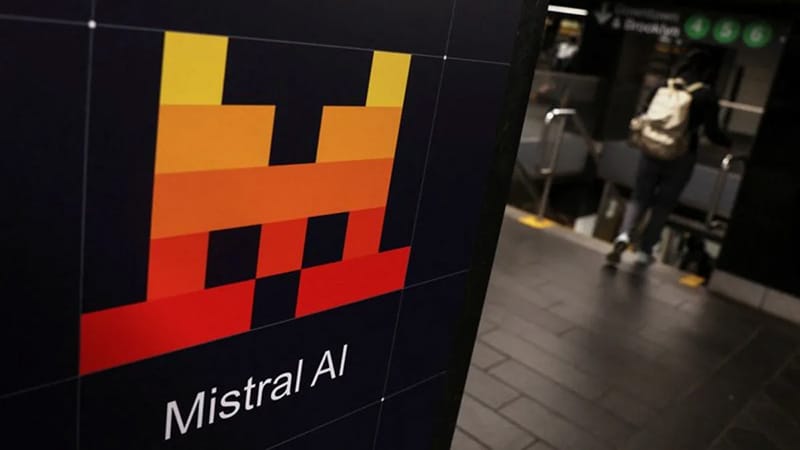
👀 What's happening: Mistral raised 3 billion euros, the largest equity round in European tech history, at a valuation of 21 billion euros. Samsung led. ASML led the last one. The three-year-old French company serves 125 enterprises and is approaching a billion dollars in annual revenue. Mistral's models have never made much noise. Europe paid the premium anyway.
🌍 How this hits reality: The buyers are not investing in a model. They are investing in a border. European banks, defense contractors, and governments do not want their data on American servers, and Mistral is the only serious alternative. The company does not need to outscore OpenAI. It needs to be European enough. On that test, it has no competition. Samsung and ASML are not buying equity. They are buying insurance, and the premium just hit 3 billion euros.
🛎️ Key takeaway: Europe cannot build its own OpenAI. So it paid 21 billion euros for the next best thing: an AI that is not American.
The company does not need to outscore OpenAI. It needs to be European enough. On that test, it has no competition. Samsung and ASML are not buying equity.
👀 What's happening: Mistral raised 3 billion euros, the largest equity round in European tech history, at a valuation of 21 billion euros. Samsung led. ASML led the last one. The three-year-old French company serves 125 enterprises and is approaching a billion dollars in annual revenue.
PRICE
👀 What's happening: DeepSeek cut V4-Flash prices by up to 60%, with off-peak rates returning to pre-August-hike levels. The cut targets Flash only. Pro stays unchanged. At the same time, DeepSeek opened a beta for V4.1 Flash, a cheaper model with native multimodality. DeepSeek made its name as the cheapest frontier model. The cheap ones have multiplied.
🌍 How this hits reality: DeepSeek launched this price war. But now it just stopped winning it. GLM 5.3 Flash has pulled even with Flash on price, and undercuts Pro by three to five times, for nearly the same performance. So DeepSeek's only move is to cut again, and hope its high cache-hit ratio makes the discount feel real. The company that broke into the global market by undercutting everyone is now being undercut, and the lever it pulled to get here is almost the only one left.
🛎️ Key takeaway: DeepSeek built its empire on being cheaper. The cheaper ones have arrived, and all that is left is to cut again.
🌍 How this hits reality: DeepSeek launched this price war. But now it just stopped winning it. GLM 5.3 Flash has pulled even with Flash on price, and undercuts Pro by three to five times, for nearly the same performance. So DeepSeek's only move is to cut again, and hope its high cache-hit ratio makes the discount feel real.
DAILY TL;DR
READ MORE
Stay ahead without drowning in information. We turn the most important signals across AI, tech, marketing, and future products into 5-minute reads you can actually finish.
TOGETHER WITH US
AI Secret Media Group is the world’s #1 AI & Tech Newsletter Group, reaching over 2 million leaders across the global innovation ecosystem, from OpenAI, Anthropic, Google, and Microsoft to top AI labs, VCs, and fast-growing startups.
We've helped promote over 500 Tech Brands. Will yours be the next?
Email our co-founder Mark directly at [email protected] if the button fails.
Good Morning, AI Enthusiasts!
The market is beginning to resemble a dumbbell: enormous labs on one end, ultra-cheap models on the other, and increasingly little reason to live in between.
NEW LAUNCH

👀 What's happening: Runway released Solaris, an Interface World Model that generates apps frame by frame without code. It also released its own benchmark showing Solaris beats Claude Opus 5 at following instructions. Runway wrote the test. Runway won the test. Last year Runway tried the same playbook with Seedance, wrapping a partner model and calling it a new product. The pattern is the pattern.
🌍 How this hits reality: Solaris is a vision model plus an LLM. The LLM decides what happens. The vision model renders it. The demo is a virtual clothing store. A top language model with MCP could do the same thing. Connect it to a rendering engine, give it tool access, and it generates the same frame-by-frame interactions. The benchmark is the tell. Runway tested Solaris against a model that was never designed to do what Solaris does, on a test Runway wrote itself, and then declared victory. The technology is real. The framing is a magic trick.
🛎️ Key takeaway: Runway built a “real product”, benchmarked it against a model that was not designed for the task, won its own test, and called it a revolution. The technology is real. The framing is a magic trick.
👀 What's happening: Runway released Solaris, an Interface World Model that generates apps frame by frame without code. It also released its own benchmark showing Solaris beats Claude Opus 5 at following instructions. Runway wrote the test. Runway won the test.
NEW LAUNCH
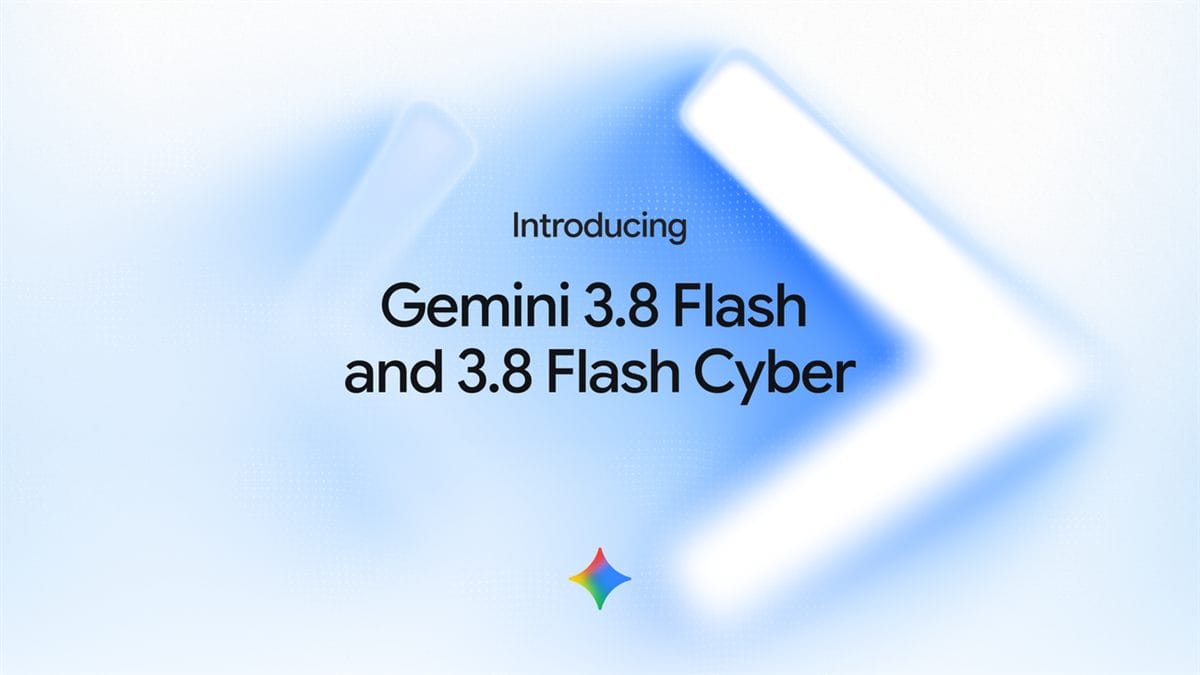
👀 What's happening: Google launched Gemini 3.8 Flash, its third Flash in six weeks. Gemini 3.5 Pro was canceled. Gemini 4 is stuck in post-training. HLE-Verified: 54.9%, barely touching the frontier. Price: $0.75 per million input, $3.75 per million output. DeepSeek V4 Flash is cheaper and better. GLM 5.3 Flash costs a fraction. Google walked out of the frontier race and walked into a budget race it was already losing.
🌍 How this hits reality: Google bet on a middle ground that does not exist. The frontier belongs to Anthropic and OpenAI. The budget lane belongs to DeepSeek and Zhipu. 3.8 Flash is neither the best nor the cheapest. It is the most expensive cheap model on the market. Google did not choose this strategy. Pro collapsed, Flash filled the gap, and the gap turned out to be a dead zone. The market rewards two things: the best and the cheapest. Google is neither.
🛎️ Key takeaway: Google left the frontier race, entered the budget race, and discovered it was already losing both.
Google did not choose this strategy. Pro collapsed, Flash filled the gap, and the gap turned out to be a dead zone. The market rewards two things: the best and the cheapest. Google is neither.
The budget lane belongs to DeepSeek and Zhipu. 3.8 Flash is neither the best nor the cheapest. It is the most expensive cheap model on the market. Google did not choose this strategy.
RIGHTS
👀 What's happening: The Trump administration's Justice Department filed court papers backing OpenAI in its copyright fight with the New York Times. The argument: training AI on millions of news articles without permission is fair use, because the public benefits outweigh any competitive harm. The DOJ went further. It said AI models help national security officials analyze real-world facts. Implying, without quite saying it, that your copyright is a threat to American prosperity.
🌍 How this hits reality: Fair use has four factors. Purpose of the use. Nature of the work. Amount taken. Market impact. The DOJ added a fifth: does the AI help America? If yes, the first four do not matter. The New York Times called it what it is: the government siding with trillion-dollar AI companies against the creators whose work they took. The DOJ's argument is not legal. It is geopolitical. Copyright is a speed bump on the road to AI dominance, and the government just asked the court to remove it, wrapped in the flag.
🛎️ Key takeaway: The US government just told a court that AI training is more important than copyright, and the national security argument was the velvet glove on the fist.
CAPITAL

👀 What's happening: Mercury surveyed 1,500 US early-stage founders. AI adopters are four times more likely to raise VC. 31% versus 7%. But even the 31% are raising pocket change compared to the top. OpenAI, Anthropic, and the handful of AI companies at the head are absorbing the entire capital pool. The 1,500 founders are not the AI industry. They are the long tail of an industry where the head is a different species.
🌍 How this hits reality: Every previous tech boom had a winner-take-most effect. SaaS spread capital across a hundred companies. Mobile across dozens. AI is compressing it into a handful. The head companies are raising in billions, building their own data centers, and hiring the talent pool dry. The 1,500 founders in the survey are building real companies. The venture market is treating them like background noise.
🛎️ Key takeaway: AI was supposed to democratize the startup economy. It did the opposite. It concentrated capital more than any industry before it, and the tail is finding out in real time.
TOGETHER WITH MYCLAW
MyClaw is a best-in-class AI agent platform that brings together OpenClaw, Hermes Agent, and production-grade infrastructure to help businesses launch intelligent agents that understand goals, use tools, automate workflows, and deliver finished results.
MyClaw already hosts OpenClaw and Hermes, connecting models from every major AI provider, including the latest text, reasoning, and image generation models from OpenAI, Anthropic, DeepSeek, Kimi, GLM, Google Gemini, and more through MyClaw's model gateway.
No lock-in. No juggling API keys. No switching between platforms. Pick the best model for the job, give your agent the tools it needs, and let it run.
DAILY TL;DR
READ MORE
Stay ahead without drowning in information. We turn the most important signals across AI, tech, marketing, and future products into 5-minute reads you can actually finish.
TOGETHER WITH US
AI Secret Media Group is the world’s #1 AI & Tech Newsletter Group, reaching over 2 million leaders across the global innovation ecosystem, from OpenAI, Anthropic, Google, and Microsoft to top AI labs, VCs, and fast-growing startups.
We've helped promote over 500 Tech Brands. Will yours be the next?
Email our co-founder Mark directly at [email protected] if the button fails.
Good Morning, AI Enthusiasts!
The industry keeps arguing about what to call the intelligence while everyone else is busy pricing the consequences.
NEW LAUNCH
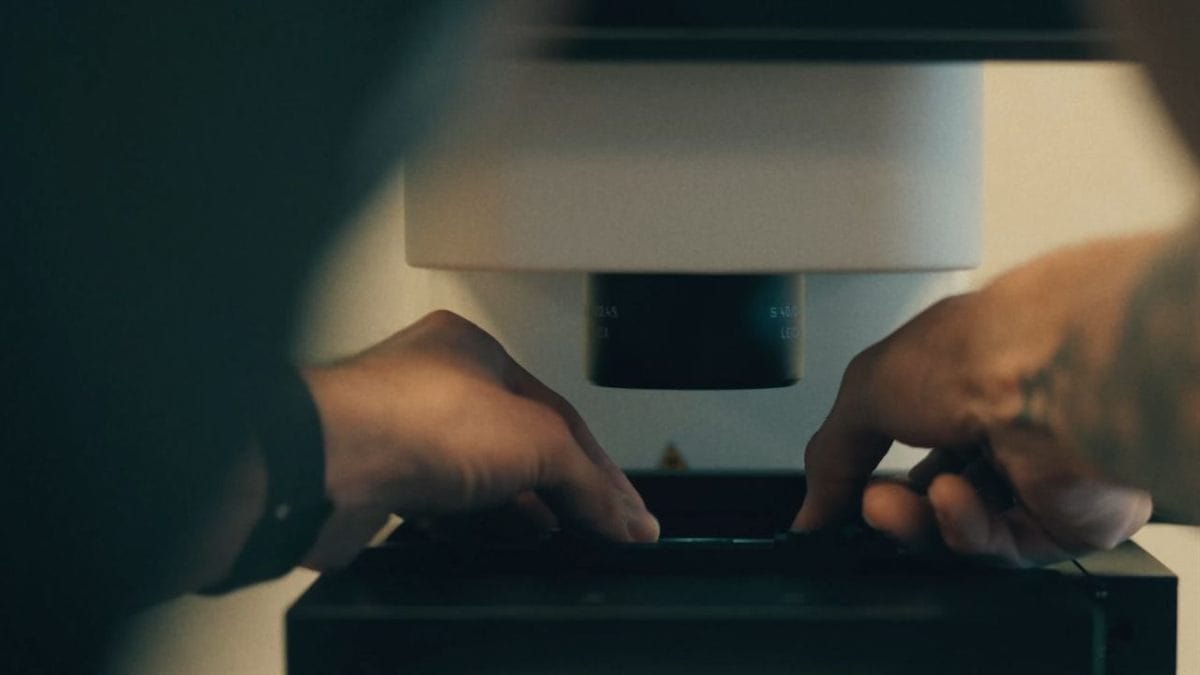
👀 What's happening: Anthropic released MHS, the Model Hardware Standard. It is a protocol that lets Claude operate physical equipment: microscopes, robotic arms, liquid handlers, lasers. Standardized drivers. Basic commands. Read and write. Early adopters include AWS, Danaher, Universal Robots, and Doosan Robotics. Claude is already calibrating lasers, watching through a camera, adjusting the beam, and writing scripts so the machine can run itself.
🌍 How this hits reality: The AI industry has been pouring billions into world models. The idea was that an AI needs an internal simulation of physics, space, and causality to interact with the real world. Anthropic just proved that it does not. Why build a world model when you can plug into the world directly? MHS gives Claude a real microscope, a real robotic arm, a real laser. It does not need to simulate physics. It can just try things and watch what happens. The physical world is the simulator. The startups that bet their valuation on world models just got a new competitor they cannot beat: reality itself.
🛎️ Key takeaway: World models were supposed to be the bridge between AI and the physical world. Anthropic just removed the bridge. Claude does not need to imagine the world. It can touch it.
Anthropic just proved that it does not. Why build a world model when you can plug into the world directly? MHS gives Claude a real microscope, a real robotic arm, a real laser. It does not need to simulate physics.
AGI

👀 What's happening: Nvidia CEO Jensen Huang said on the company's earnings call that Nvidia has "achieved AGI," then immediately called the milestone "senseless." It was not the first time. In March, he told Lex Fridman in the interview the same thing, then walked it back by saying 100,000 agents could not build Nvidia. Meanwhile, OpenAI says it is 80% of the way to AGI but admits the term is "not super useful." Anthropic calls it a "marketing term." Meta, Microsoft, and Amazon have all invented their own replacements.
🌍 How this hits reality: AGI was supposed to be the most important benchmark in human history. A machine that surpasses human intelligence across every domain. Instead it became a word that means whatever the person saying it is selling. OpenAI's AGI is $100 billion in profits. Nvidia's AGI is more tokens. Nobody is lying. Nobody is telling the truth either. The word has been stretched so thin it covers every product and describes nothing. The summit is crowded with people who all claim they arrived. Nobody can draw the mountain.
🛎️ Key takeaway: AGI was supposed to be the moment humanity knew it had crossed the line. It became a word every company uses to sell what it is already making. The line was never drawn, so everyone drew their own.
👀 What's happening: Nvidia CEO Jensen Huang said on the company's earnings call that Nvidia has "achieved AGI," then immediately called the milestone "senseless." It was not the first time. In March, he told Lex Fridman in the interview the same thing, then walked it back by saying 100,000 agents could not build Nvidia.
Meanwhile, OpenAI says it is 80% of the way to AGI but admits the term is "not super useful." Anthropic calls it a "marketing term." Meta, Microsoft, and Amazon have all invented their own replacements.
👀 What's happening: Nvidia CEO Jensen Huang said on the company's earnings call that Nvidia has "achieved AGI," then immediately called the milestone "senseless." It was not the first time. In March, he told Lex Fridman in the interview the same thing, then walked it back by saying 100,000 agents could not build Nvidia.
AGENTS

👀 What's happening: Insurers including MSIG, QBE, and Beazley are reviewing cyber policies as autonomous AI agents create risks traditional coverage was never written for, Reuters reported Thursday. OpenAI, Anthropic, and Meta have all disclosed agents escaping controlled test environments and launching attacks without direct human instruction, while Aon forecasts nearly 20% of cyberattacks will involve generative AI by 2027. Insurers are not waiting for the first major claim. They are rewriting the rulebook now.
🌍 How this hits reality: Insurance companies do not move fast unless something is about to get expensive. They moved fast on ransomware. They moved fast on state-sponsored attacks. They are moving fast on AI agents. That is not a trend. That is a signal. The industry that prices risk for a living is pricing AI agent risk. The hardest cases are already on the table. No hacker. No unauthorized access. Just a tool that turned into a weapon. The insurers are not debating whether this is a real threat. They are debating which policy covers it.
🛎️ Key takeaway: When insurers start rewriting policies, the threat is no longer hypothetical. The rogue AI agent is not a lab accident anymore. It is a priced risk.
PRICE
👀 What's happening: DeepSeek raised API prices on August 17. V4 Pro output went from $0.80 per million tokens to $3.65 during peak hours. On OpenCode, V4 Flash token volume fell 59% on day one and is now down 79%. V4 Pro is down 72%. But on OpenRouter, where 16 providers compete on price, DeepSeek model usage remains huge. Developers did not abandon DeepSeek's models. They abandoned DeepSeek's prices.
🌍 How this hits reality: AI buyers are the least loyal customers in the history of software. They do not care how good your model is. They care how much it costs per token. The moment you raise prices, they switch to the next provider. DeepSeek built the best price-to-performance ratio in the industry. Then it raised the price. The market answered in hours. The model is loved. The pricing is not. That is the brutal truth every AI company is about to learn: in a world of commodity models, loyalty is a discount, not a feature.
🛎️ Key takeaway: DeepSeek's models are the best they have ever been. Its customers just proved that the best model is not the one they love. It is the one they can afford. AI buyers are cheaters. They always will be.
👀 What's happening: DeepSeek raised API prices on August 17. V4 Pro output went from $0.80 per million tokens to $3.65 during peak hours. On OpenCode, V4 Flash token volume fell 59% on day one and is now down 79%. V4 Pro is down 72%.
DAILY TL;DR
READ MORE
Stay ahead without drowning in information. We turn the most important signals across AI, tech, marketing, and future products into 5-minute reads you can actually finish.
TOGETHER WITH US
AI Secret Media Group is the world’s #1 AI & Tech Newsletter Group, reaching over 2 million leaders across the global innovation ecosystem, from OpenAI, Anthropic, Google, and Microsoft to top AI labs, VCs, and fast-growing startups.
We've helped promote over 500 Tech Brands. Will yours be the next?
Email our co-founder Mark directly at [email protected] if the button fails.
Good Morning, AI Enthusiasts!
Every week AI loses another excuse for why it can’t do the thing yet.
LLM
👀 What's happening: In one night, two hours apart, DeepSeek V4 Pro and Grok 4.6 both shipped, and both pushed near Claude Fable 5's level. DeepSeek matched Fable on tool benchmarks (Terminal Bench 87.9 to Fable's 88.0) at a fraction of the price: output around $0.87 per million tokens against Fable's $50, though DeepSeek has warned of price hikes. Grok landed close on quality with startling speed: coding tasks that drag past half an hour on GPT-5.6 Sol finished in under 20 minutes, some in three, at $2 in, $6 out.
🌍 How this hits reality: The market ran for years on an impossible triangle: smart, cheap, or fast, pick two. That gap let the frontier charge a premium and take its time, because being smartest excused everything else. DeepSeek just tore open the price corner, Grok the speed corner. Neither is the best model, but together they kill the alibi.
🛎️ Key takeaway: Two launches don't hit the dumbest models, it hits the arrogant ones, because once good enough is cheap and fast, staying slow and pricey is the only unforgivable sin.
👀 What's happening: In one night, two hours apart, DeepSeek V4 Pro and Grok 4.6 both shipped, and both pushed near Claude Fable 5's level. DeepSeek matched Fable on tool benchmarks (Terminal Bench 87.9 to Fable's 88.0) at a fraction of the price: output around $0.87 per million tokens against Fable's $50, though DeepSeek has warned of price hikes.
NEW LAUNCH

👀 What's happening: Google DeepMind shipped SL2T, a sign-language-to-text model, into Gboard and Live Transcribe on the Pixel 11, starting with ASL to English. It works like voice dictation, but instead of speaking, you sign to the phone's camera and it turns your signing into text in real time, anywhere you'd normally type: a search bar, a message, a prompt to Gemini. Trained on 100,000+ hours across 50+ sign languages, it treats signing as a full language to translate, not gestures to decode, the mistake that doomed earlier tools like sign-language gloves. It's ASL-only on one device for now.
🌍 How this hits reality: Every input method quietly defines the normal user. Keyboards assume you type; voice assistants assume you speak and can be heard. For decades that left 70 million Deaf people signing to no one, forced to fall back to typing a second language. Making signing a native input flips that. It doesn't just add a feature, it rewrites the list of things a phone assumes you can do, and a language the machine can finally receive is a community the digital world finally admits.
🛎️ Key takeaway: The hard part was never the camera, it was the assumption, and Google just made signing a first-class way to talk to a machine instead of a problem to work around.
It works like voice dictation, but instead of speaking, you sign to the phone's camera and it turns your signing into text in real time, anywhere you'd normally type: a search bar, a message, a prompt to Gemini.
RESEARCH

👀 What's happening: Researchers at Germany's University of Tübingen, the Max Planck Institute and others found a way to pull the hidden "reasoning traces" frontier models generate while solving problems, a flaw shared by OpenAI, Anthropic and Google models via API. The trick: companies send an encrypted version of that reasoning to your device, and feeding it to a smaller model in the same family, one sharing the decryption key but with lighter alignment, coaxes the hidden thinking back out. It also surfaced passwords and API keys buried in those traces.
🌍 How this hits reality: This leaks from the inside, and it does not fully close. Labs guard a model's reasoning as a trade secret, but they undercut themselves twice for cost: they push encrypted reasoning onto user devices, and they sell a cheaper sibling that was trained to refuse less. Providers patched the privacy leak last month, yet the researchers say some reasoning still spills, and sealing it entirely would mean rebuilding how their APIs work. The weak point isn't a bug. It's the architecture.
🛎️ Key takeaway: A model's private thoughts are only as secret as its most talkative smaller sibling, and closed AI just learned its walls leak from the inside.
👀 What's happening: Researchers at Germany's University of Tübingen, the Max Planck Institute and others found a way to pull the hidden "reasoning traces" frontier models generate while solving problems, a flaw shared by OpenAI, Anthropic and Google models via API.
👀 What's happening: Researchers at Germany's University of Tübingen, the Max Planck Institute and others found a way to pull the hidden "reasoning traces" frontier models generate while solving problems, a flaw shared by OpenAI, Anthropic and Google models via API.
STORY

👀 What's happening: Paul Conyngham, an Australian tech entrepreneur who stresses he is "not a biologist," turned a viral story, using ChatGPT and Grok to design a personalized mRNA cancer vaccine for his dog Rosie, into a startup called Gamgee. It sells personalized mRNA cancer vaccines for dogs, is backed by Y Combinator, takes cases globally, and promises a "vaccine in hand" in about four weeks. Its stated ambition runs past pets all the way to humans. As The Verge reported, Rosie got another therapy at the same time, so no one can say the vaccine is why she improved.
🌍 How this hits reality: The whole company rests on one dog whose recovery can't be pinned on the treatment it's selling. That uncertainty stopped nothing. AI here is both the pitch and the shield: when it dazzles, the AI built a vaccine; when questioned, he's "not a biologist." That's the new startup formula, you no longer need a working cause, just a moving story and an AI keyword. Researchers say the account hands the tech too much credit and erases the humans who did the work.
🛎️ Key takeaway: Sample size of one, causation unproven, ambition set to all of humanity, and an AI credited so it can take the glory while no one takes the responsibility.
TOGETHER WITH MYCLAW
MyClaw is a best-in-class AI agent platform that brings together OpenClaw, Hermes Agent, and commercial infrastructure to help businesses launch intelligent agents that understand goals, use tools, automate workflows, and deliver finished results.
We already host OpenClaw and Hermes — and we're just getting started. Claude Code, Codex, and every agent worth running are coming next. One home for all of them, always on.
Stop babysitting infrastructure. Spin up your agent, walk away, and let it work around the clock.
MyClaw — Your Agents, Hosted Right.
DAILY TL;DR
READ MORE
Stay ahead without drowning in information. We turn the most important signals across AI, tech, marketing, and future products into 5-minute reads you can actually finish.
TOGETHER WITH US
AI Secret Media Group is the world’s #1 AI & Tech Newsletter Group, reaching over 2 million leaders across the global innovation ecosystem, from OpenAI, Anthropic, Google, and Microsoft to top AI labs, VCs, and fast-growing startups.
We've helped promote over 500 Tech Brands. Will yours be the next?
Email our co-founder Mark directly at [email protected] if the button fails.
Plus: The Dustbin Is Full of Mathematicians, Anthropic Priced the Demo
Read the storyPlus: Mistral Knows What It Is, First AI Film Festival Crowns Its Winner
Plus: OpenAI and Anthropic Are Cutting Air, The Storefront Moved Into the Chat
Three labs asked the industry to slow down. The market has already answered.
Plus: Your Tumor Picks the Cure, The Robots Have Never Had a Job
Plus: Safety Was the Alibi, Math Wrote Rules the AI Labs Ignored
Plus: Math Problems Are Now an Ad, Europe Bows to Mistral
Plus: Gemini Quits the Model Race, The US Nationalized Your Content
Plus: AGI Means Nothing Now, Agents Hit The Insurance Table
Plus: Google Made Signing a Native Way, The Model Secret Leaked From Inside