Reviewed 19 October 2026. Dates retain the precision of the source; retrospective disclosures are identified in the event. No verified public ARR or recognized-revenue series was established in this review. Model-training cost is not company revenue.
Company milestones
Revenue, funding, product launches and major company events, newest first. Expand the earlier milestones for more history.
Opens its in-house Search and Fetch API
DeepSeek adds developer access to its search engine, alongside a V4.1 Flash update.
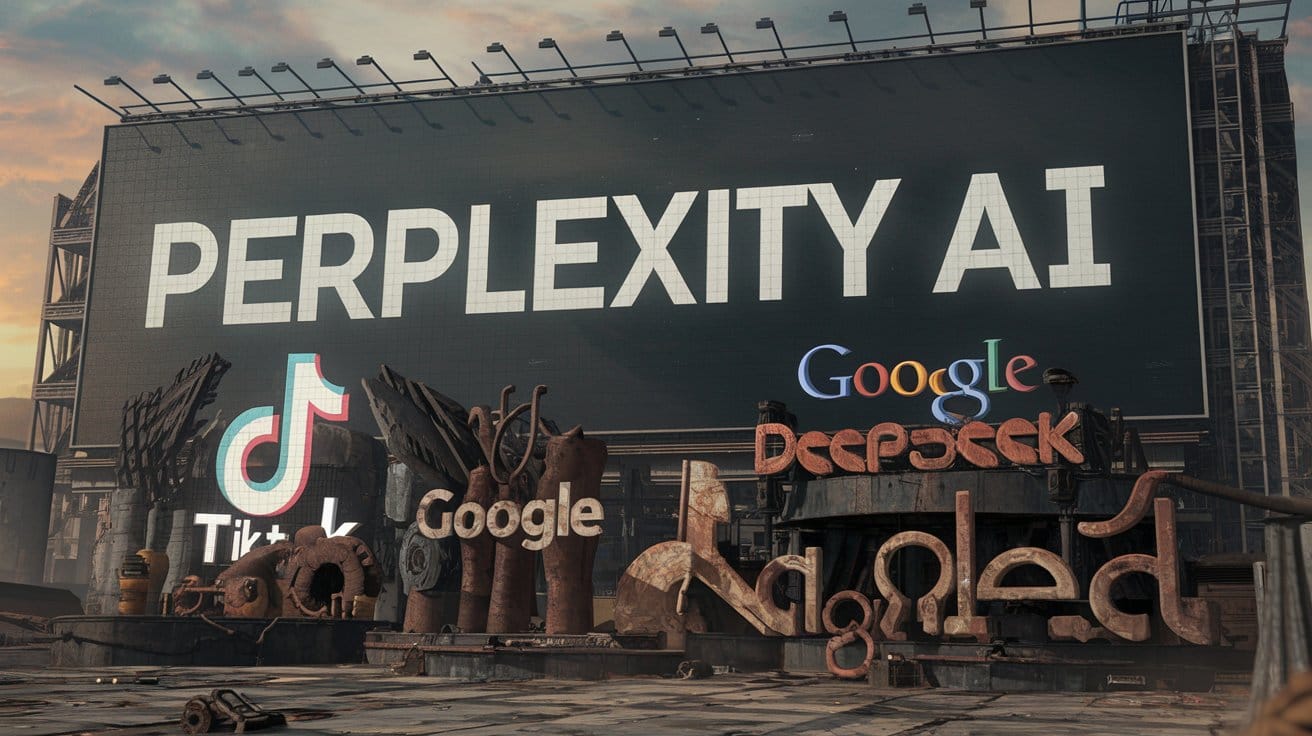
Perplexity AI, a U.S.-based AI search engine startup, has demonstrated a strategic approach to marketing by leveraging hot topics and maintaining a strong presence on social media. The company's marketing strategy is deeply intertwined with its identity as a challenger to tech giants like Google and its positioning as an antitrust and technological innovator. By capitalizing on trending issues, such as the TikTok ban in the United States, Perplexity AI has not only gained public attention but also solidified its reputation as a forward-thinking and disruptive player in the tech industry.
Insight Perplexity: A Hot Topic Maker or Tech Rebel?
Perplexity AI, a U.S.-based AI search engine startup, has demonstrated a strategic approach to marketing by leveraging hot topics and maintaining a strong presence on social media. The company's marketing strategy is deeply intertwined with its identity as a challenger to tech giants like Google and its positioning as an antitrust and technological innovator.
Brand Positioning: Redefining AI-Driven Search
Perplexity AI has positioned itself as a next-generation AI-powered search engine, offering an alternative to traditional platforms like Google. Unlike conventional search engines, Perplexity focuses on delivering conversational, contextually relevant, and human-like responses. This approach has redefined user experiences, making it a leader in conversational AI.
Launched in 2023, Perplexity quickly gained traction due to its ability to understand nuanced queries and provide accurate, context-rich answers. Its unique blend of machine learning, natural language processing (NLP), and deep search algorithms has set it apart from competitors.
By mid-2024, Perplexity AI achieved a valuation of $3 billion, reflecting its rapid growth and the market's confidence in its potential. This valuation underscores the brand's credibility and its ability to attract high-profile investors, including Jeff Bezos and Nvidia.
Technological Breakthroughs: Pioneering AI Capabilities
At the core of Perplexity's technological achievements lies its advanced conversational AI capabilities. The platform leverages cutting-edge algorithms to provide accurate, human-like responses, reshaping how users interact with search engines. This innovation has made Perplexity a favorite among individuals and businesses alike.
In February 2025, Perplexity launched its Deep Research feature, a cutting-edge tool designed to deliver exhaustive reports on specialized topics. This feature employs a proprietary framework called Test Time Compute (TTC) expansion, which mimics human cognitive processes by iteratively refining its understanding of complex topics. Unlike traditional search engines, Perplexity's Deep Research performs dozens of searches, reads hundreds of sources, and autonomously delivers comprehensive reports. This innovation positions Perplexity as an expert on any subject, further enhancing its value proposition.
Perplexity's AI-powered search minimizes paid ad placements, prioritizing organic content optimization. This approach has significant implications for search engine optimization (SEO), as businesses must focus on high-quality, informative content to improve visibility. By leveraging natural language processing and machine learning, Perplexity delivers intent-based results, reshaping SEO strategies and content marketing.
Market Strategy: Leveraging Hot Topics
The TikTok Merger Proposal
One of the most notable examples of Perplexity AI's marketing strategy is its response to the short-lived TikTok ban in the United States. On January 18, 2025, just one day before the TikTok ban went into effect due to national security concerns, Perplexity AI submitted a merger proposal to TikTok's parent company, ByteDance. This proposal was revised and resubmitted on January 26, 2025, and included the formation of a new U.S.-based holding company called "NewCo." The proposal suggested that the U.S. government could own up to 50% of the new entity following an initial public offering (IPO), which would value the company at $300 billion or more.
The timing of this proposal was strategic, as it coincided with heightened public and political scrutiny of TikTok's data practices and ownership structure. By presenting itself as a potential savior of TikTok's U.S. operations, Perplexity AI not only positioned itself as a key player in the tech industry but also sparked widespread discussion on social media. The merger proposal was widely covered by major news outlets, further amplifying Perplexity AI's visibility and reinforcing its image as an innovative and opportunistic company.
Fighting Against Google
Perplexity AI has long positioned itself as a challenger to Google's dominance in the search engine market. Valued at $9 billion as of December 2024, the company has drawn significant attention for its innovative approach to search technology, which prioritizes user experience with efficient and reliable AI-powered search capabilities.
The company has found itself caught in the crossfire of a legal battle between the U.S. Department of Justice (DOJ) and Google over search market dominance. In October 2024, Google subpoenaed Perplexity AI for internal documents to support its argument that viable competitors exist in the search market. However, Perplexity AI has resisted broader requests for all its licensing agreements, citing concerns about the burden of fulfilling such sweeping demands.
Despite these challenges, Perplexity AI has continued to innovate and attract a growing user base. The company's collaborative approach, which includes strategic investments and partnerships, has further enhanced its market competitiveness and positioned it as a viable alternative to traditional search engines.
Fighting Against Google
Department of Justice (DOJ) and Google over search market dominance. In October 2024, Google subpoenaed Perplexity AI for internal documents to support its argument that viable competitors exist in the search market. However, Perplexity AI has resisted broader requests for all its licensing agreements, citing concerns about the burden of fulfilling such sweeping demands.
Catching up with DeepSeeK Fever
Perplexity recently joined the super topic wave started by DeepSeek. As the first prominent American tech company to integrate the DeepSeek API, Perplexity has not only capitalized on the moment but has also reinforced its brand identity as a technological rebel. By incorporating DeepSeek R1 into its platform in January 2025, Perplexity has set a new standard, showcasing an open-source reasoning model that competes with industry titans like OpenAI, all while being more budget-friendly.
With DeepSeek R1 hosted on U.S. and European servers, concerns related to privacy and censorship linked to its origins are effectively mitigated, enabling users to access uncensored, source-backed answers. This strategic move has transformed the landscape for businesses and individuals alike, offering a revolutionary approach to leveraging AI for research, coding, and informed decision-making.
Catching up with DeepSeeK Fever
Perplexity recently joined the super topic wave started by DeepSeek. As the first prominent American tech company to integrate the DeepSeek API, Perplexity has not only capitalized on the moment but has also reinforced its brand identity as a technological rebel.
Catching up with DeepSeeK Fever
Perplexity recently joined the super topic wave started by DeepSeek. As the first prominent American tech company to integrate the DeepSeek API, Perplexity has not only capitalized on the moment but has also reinforced its brand identity as a technological rebel.
Looking Forward
With all the flair of a reality TV star, Perplexity AI has been busy making a name for itself as the cool kid in the tech playground, flaunting their 'antitrust innovator' badge like it’s the latest designer accessory. And let’s not forget their obsession with user experience and regulatory compliance – because nothing says “we’re here to disrupt” quite like following the rules while pretending to break them!
As they continue to grow and throw their weight around, you can't help but wonder: is Perplexity AI the future of tech disruption or just another case of “look at me, I’m relevant!”? Either way, they’re definitely serving up some serious entertainment in the ever-evolving tech circus!
Ladies and gentlemen, fasten your seatbelts because the AI rollercoaster just got a whole lot wilder! DeepSeek, the Chinese artificial intelligence (AI) startup that has been making waves in the tech world, is now considering raising outside funding for the very first time. Yes, you heard that right—this AI wunderkind, which has been shaking up the industry with its low-cost, high-performance models, is finally opening its doors to external investors. And guess who’s knocking? Let’s dive into the nitty-gritty of this monumental decision and its implications for the AI industry, venture capital, and global tech giants.
DeepSeek: A Quick Recap of the Rising Star
Founded in 2023 by Liang Wenfeng, DeepSeek has quickly emerged as a significant player in the AI industry. The company has gained prominence for its cutting-edge research and state-of-the-art large language models (LLMs) that rival those of industry leaders like OpenAI and Google. What sets DeepSeek apart is its ability to deliver top-notch AI solutions at a fraction of the cost of its Western counterparts. This disruptive approach has not only stunned the tech world but also sent shockwaves through financial markets.
In January 2025, DeepSeek unveiled a cost-effective AI model that outperformed many Western rivals, sparking widespread concerns about the billions of dollars being poured into AI infrastructure by established players. The company even released a free AI assistant that quickly surpassed OpenAI’s ChatGPT in downloads on the Apple App Store in the US.
OpenAI: DeepSeek: A Quick Recap of the Rising Star
The company has gained prominence for its cutting-edge research and state-of-the-art large language models (LLMs) that rival those of industry leaders like OpenAI and Google. What sets DeepSeek apart is its ability to deliver top-notch AI solutions at a fraction of the cost of its Western counterparts.
DeepSeek: A Quick Recap of the Rising Star
In January 2025, DeepSeek unveiled a cost-effective AI model that outperformed many Western rivals, sparking widespread concerns about the billions of dollars being poured into AI infrastructure by established players. The company even released a free AI assistant that quickly surpassed OpenAI’s ChatGPT in downloads on the Apple App Store in the US.
The Funding Decision: Why Now?
So, why is DeepSeek, a company that has been self-sufficient thus far, suddenly considering outside funding? The answer lies in its meteoric rise and the challenges that come with it. The company has been grappling with a surge in demand, which has led to outages and a pressing need for more AI chips and servers to support its growing user base and further model development. According to reports, the decision to seek external funding is driven by the need to scale operations and meet the skyrocketing demand for its services.
DeepSeek’s decision to raise funds has drawn interest from heavyweights like Alibaba and Chinese state funds, including China Investment Corp and the National Social Security Fund. These entities are reportedly eager to invest in the startup, recognizing its potential to revolutionize the AI landscape.
The Alibaba Connection: A Match Made in Tech Heaven?
Alibaba, the Chinese e-commerce and tech giant, has been eyeing DeepSeek as a potential investment opportunity. With its vast resources and expertise in technology, Alibaba could provide DeepSeek with the financial and operational support it needs to scale its business. Moreover, Alibaba’s interest in DeepSeek aligns with its broader strategy to strengthen its position in the AI market and compete with global tech giants like Amazon and Google.
However, let’s not forget the elephant in the room—Chinese state funds. Their involvement raises questions about the geopolitical implications of DeepSeek’s funding. With the U.S. and China already locked in a tech race, DeepSeek’s partnership with state-backed entities could further intensify competition and scrutiny.
The Alibaba Connection: A Match Made in Tech Heaven?
With its vast resources and expertise in technology, Alibaba could provide DeepSeek with the financial and operational support it needs to scale its business. Moreover, Alibaba’s interest in DeepSeek aligns with its broader strategy to strengthen its position in the AI market and compete with global tech giants like Amazon and Google.
Market Impact: A Billion-Dollar Ripple Effect
DeepSeek’s innovations have already caused a stir in the financial markets. In January 2025, news of its cost-effective AI model triggered a nearly $1 trillion selloff in the stock market, as investors scrambled to reassess the long-term prospects of the AI industry. The company’s ability to deliver high-performance models at a fraction of the cost has forced established players to rethink their strategies, particularly when it comes to pricing.
While some venture capitalists view DeepSeek’s rise as a threat, others see it as an opportunity. Lower training costs could spur innovation and competition, benefiting startups and established companies alike. As one venture capitalist put it, “Scarcity of resources leads to great innovation. Silicon Valley needs to step back from the firehose of capital and focus on how to build sustainable businesses.”
A New Chapter for DeepSeek
While DeepSeek’s decision to raise outside funding is a significant milestone, it’s not without its challenges. For starters, the company will need to navigate the complexities of working with multiple stakeholders, including private investors and state-backed entities. Balancing these interests while maintaining its independence and innovative edge will be no small feat.
Additionally, there are suspicions that DeepSeek may be downplaying the costs associated with training its models. Some sources claim that the company has access to 50,000 of Nvidia’s powerful H100 GPUs, raising questions about the true cost of its operations.
DeepSeek’s decision to raise outside funding marks a pivotal moment in its journey and the broader AI industry. By opening its doors to external investors, the company is poised to scale new heights and further disrupt the market. However, this move also comes with its share of challenges and uncertainties, from managing stakeholder interests to addressing questions about its cost structure.
As DeepSeek embarks on this new chapter, one thing is clear: the AI landscape will never be the same. Whether you’re an investor, a tech enthusiast, or just someone who loves a good underdog story, DeepSeek’s rise is a saga worth following. So, grab your popcorn and stay tuned—this is just the beginning!
NVIDIA: A New Chapter for DeepSeek
Additionally, there are suspicions that DeepSeek may be downplaying the costs associated with training its models. Some sources claim that the company has access to 50,000 of Nvidia’s powerful H100 GPUs, raising questions about the true cost of its operations.
A New Chapter for DeepSeek
As DeepSeek embarks on this new chapter, one thing is clear: the AI landscape will never be the same. Whether you’re an investor, a tech enthusiast, or just someone who loves a good underdog story, DeepSeek’s rise is a saga worth following. So, grab your popcorn and stay tuned—this is just the beginning!
DeepSeek, the AI-powered platform making waves in the marketing and branding world, is not just another fish in the sea. With its friendly blue whale logo and a knack for redefining traditional approaches, DeepSeek has emerged as a challenger brand in the competitive AI landscape. But how exactly does DeepSeek promote its brand? Let’s dive deep into the strategies, numbers, and quirks that make this Chinese AI company a standout player.
How DeepSeek Promotes Its Brand: Faster than the Fastest
DeepSeek, the AI-powered platform making waves in the marketing and branding world, is not just another fish in the sea. With its friendly blue whale logo and a knack for redefining traditional approaches, DeepSeek has emerged as a challenger brand in the competitive AI landscape.
A Whale of a Logo: Visual Identity and Branding
DeepSeek’s branding strategy starts with its visual identity, which is as distinctive as a whale in a pond. The company’s logo—a cheerful blue whale—represents exploration, wisdom, and approachability. This is a stark departure from the tech industry’s usual minimalist and abstract designs. While competitors like OpenAI lean towards sterile and professional branding, DeepSeek opts for a playful and friendly image, making it more relatable to users.
However, not everyone is a fan of the whale. Critics have pointed out that the accompanying fractured sans-serif typography creates a “nervous” feeling, which doesn’t align well with the logo’s friendly vibe. Additionally, the logo struggles with scalability—when reduced in size, details like the whale’s eye become indistinct, potentially impacting brand recognition.
Despite these challenges, DeepSeek’s logo has been praised for breaking away from the homogenization of tech branding. It symbolizes a fresh perspective in AI, emphasizing exploration and curiosity. As one expert put it, “Like a whale diving into the depths of the ocean, DeepSeek invites users to explore the vast possibilities of AI.”
Storytelling: The Art of Emotional Connection
DeepSeek understands that people engage with stories, not just technology. By positioning itself as an AI for “seekers and explorers,” the company taps into the human desire for discovery and curiosity. Its branding narrative emphasizes trust, transparency, and user-centric values, presenting the AI as a co-explorer rather than an omnipotent force.
This storytelling approach is not just about creating a compelling narrative; it’s about building an emotional connection with users. DeepSeek’s branding is designed to resonate on a deeper level, making it more than just a tool—it’s a partner in discovery. This strategy has helped the company differentiate itself from competitors like OpenAI and Meta, who often come across as more technical and impersonal.
Global Appeal with a Chinese Twist
DeepSeek is a Chinese company, and its branding reflects a blend of local and global influences. While the whale symbolizes wisdom and prosperity in many cultures, the company faces challenges related to cultural sensitivity and global skepticism towards Chinese tech brands. Concerns over privacy and government ties create trust barriers, particularly in Western markets.
To counter these challenges, DeepSeek has focused on transparency and user-centric design. Its minimalist visual interface aligns with its stated goals of usability and trust-building. By presenting itself as a curiosity-driven AI, DeepSeek aims to overcome skepticism and establish itself as a trusted global brand.
Marketing Strategies: Numbers Don’t Lie
DeepSeek’s marketing efforts have been nothing short of a tsunami. Here are some jaw-dropping numbers that highlight its success:
16 million downloads: Since its release on January 20, the DeepSeek-R1 model topped the global download charts by January 26. In 18 days, it surpassed 16 million downloads, leading in 140 markets. This is nearly double the 9 million downloads of OpenAI's ChatGPT at its launch.
Global reach: The app is most popular in China, accounting for 39% of iOS downloads, followed by the United States and other countries like Russia, Saudi Arabia, and Brazil.
Daily active users: On February 8, QuestMobile reported that DeepSeek surpassed 30 million daily active users on February 1, becoming the fastest app to achieve this milestone.
These numbers are a testament to DeepSeek’s strategic market penetration and its ability to resonate with a diverse audience. The company’s focus on younger users (18-24 age group) has also contributed to its rapid adoption, particularly in mobile-first markets.
Content Marketing and Thought Leadership
DeepSeek has positioned itself as a thought leader in the AI space through content marketing. Articles, blogs, and expert reviews highlight its innovative approach to search and branding. For instance, its intent-driven discovery model has been praised for shifting the landscape from traditional keyword-based rankings to AI-powered, user-centric search.
By engaging with marketing executives and industry leaders, DeepSeek has created a buzz around its capabilities. Its focus on data-driven strategies and disruptive technologies has made it a go-to platform for businesses looking to rethink their visibility and audience engagement strategies.
Budget-Friendly Innovation
One of the most remarkable aspects of DeepSeek’s branding is its cost-effectiveness. With just $6 million in training costs, the company has achieved results that rival competitors like OpenAI and Meta, who have poured billions into their models. This “David vs. Goliath” narrative adds to DeepSeek’s appeal as a challenger brand that rethinks AI from the ground up.
Social Media and Digital Presence
DeepSeek leverages social media and digital platforms to amplify its reach. Trending hashtags like #deepseekai, #futureofsearch, and #chatgptvsdeepseek have helped the brand gain visibility and engage with a tech-savvy audience. Its digital campaigns emphasize its unique features, such as contextual search and intent-driven discovery, positioning it as a smarter alternative to traditional search engines.
Challenges and Opportunities
While DeepSeek has made significant strides, it’s not all smooth sailing. The company faces challenges related to:
Cultural sensitivity: Misunderstandings or negative connotations of its branding in different cultural contexts could limit its global appeal.
Trust barriers: Overcoming skepticism towards Chinese tech brands remains a critical hurdle.
Scalability issues: The logo’s design limitations could impact its effectiveness in various applications.
Despite these challenges, DeepSeek’s innovative branding and marketing strategies position it as a formidable player in the AI space. By focusing on storytelling, emotional connection, and user-centric design, the company has created a brand that resonates with audiences worldwide.
Looking Forward
DeepSeek’s approach to branding is as refreshing as a splash of ocean water on a hot day. From its playful whale logo to its intent-driven discovery model, the company has redefined what it means to be an AI brand. By combining innovative technology with emotional storytelling, DeepSeek has positioned itself as a trusted partner in discovery, not just another tech tool.
As the AI landscape continues to evolve, DeepSeek’s ability to adapt and innovate will determine its long-term success. For now, it’s safe to say that this whale is making a big splash in the branding and marketing world.
In the ever-intensifying AI arms race, Google has decided it’s time to roll up its sleeves, put on its game face, and unleash its latest arsenal of AI models. Under pressure from the rising star DeepSeek R1, Google has fully released Gemini 2.0 Flash, Gemini 2.0 Flash-Lite, and the experimental version of its flagship large model, Gemini 2.0 Pro. Oh, and let’s not forget the reasoning powerhouse, Gemini 2.0 Flash Thinking, which has also made its debut in the Gemini app. If this were a chess game, Google just moved its queen into play. Let’s dive into the details and see if this gambit is enough to outmaneuver DeepSeek.
Google’s Gemini 2.0 Models: A Counterstrike to DeepSeek’s Offensive
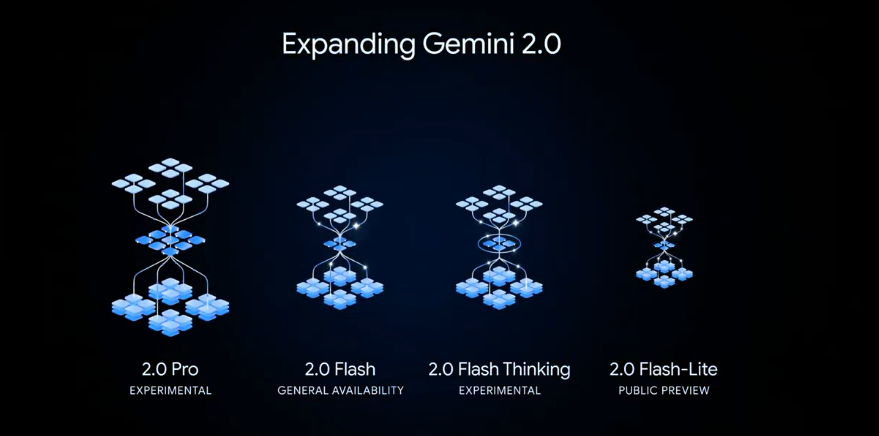
In the ever-intensifying AI arms race, Google has decided it’s time to roll up its sleeves, put on its game face, and unleash its latest arsenal of AI models. Under pressure from the rising star DeepSeek R1, Google has fully released Gemini 2.0 Flash, Gemini 2.0 Flash-Lite, and the experimental version of its flagship large model, Gemini 2.0 Pro.
Google’s Gemini 2.0 Models: A Counterstrike to DeepSeek’s Offensive
Under pressure from the rising star DeepSeek R1, Google has fully released Gemini 2.0 Flash, Gemini 2.0 Flash-Lite, and the experimental version of its flagship large model, Gemini 2.0 Pro. Oh, and let’s not forget the reasoning powerhouse, Gemini 2.0 Flash Thinking, which has also made its debut in the Gemini app.
The AI Battlefield: DeepSeek vs. Gemini
Before we dive into Google’s shiny new toys, let’s set the stage. DeepSeek R1, a model developed in China, has been making waves with its open-source approach, technical precision, and long-term memory capabilities. It’s like the AI version of a Swiss Army knife—versatile, reliable, and surprisingly affordable. DeepSeek has been stealing the spotlight, leaving Google scrambling to reclaim its throne.
DeepSeek’s strengths lie in its ability to handle sustained dialogue, complex tasks, and large-scale data processing without breaking a sweat. Meanwhile, Google’s Gemini models have historically been more specialized, excelling in specific domains but lacking the versatility of their rival.
Now, with the release of Gemini 2.0 models, Google is aiming to flip the script. Let’s see what these models bring to the table.
The AI Battlefield: DeepSeek vs. Gemini
DeepSeek R1, a model developed in China, has been making waves with its open-source approach, technical precision, and long-term memory capabilities. It’s like the AI version of a Swiss Army knife—versatile, reliable, and surprisingly affordable. DeepSeek has been stealing the spotlight, leaving Google scrambling to reclaim its throne.
Gemini 2.0 Flash: The Workhorse
First up, we have Gemini 2.0 Flash, Google’s “workhorse” model. This isn’t just a fancy nickname—it’s designed for developers who need low latency and high efficiency. Think of it as the AI equivalent of a Toyota Corolla: reliable, efficient, and gets the job done without any unnecessary frills. But don’t let its practicality fool you; this model packs a punch.
Gemini 2.0 Flash is now generally available through the Gemini API in Google AI Studio and Vertex AI. It’s also accessible to all Gemini app users on desktop and mobile. The model has been fine-tuned to deliver improved performance on key benchmarks, and Google is already teasing upcoming features like image generation and text-to-speech capabilities.
Gemini 2.0 Flash-Lite: Small but Mighty
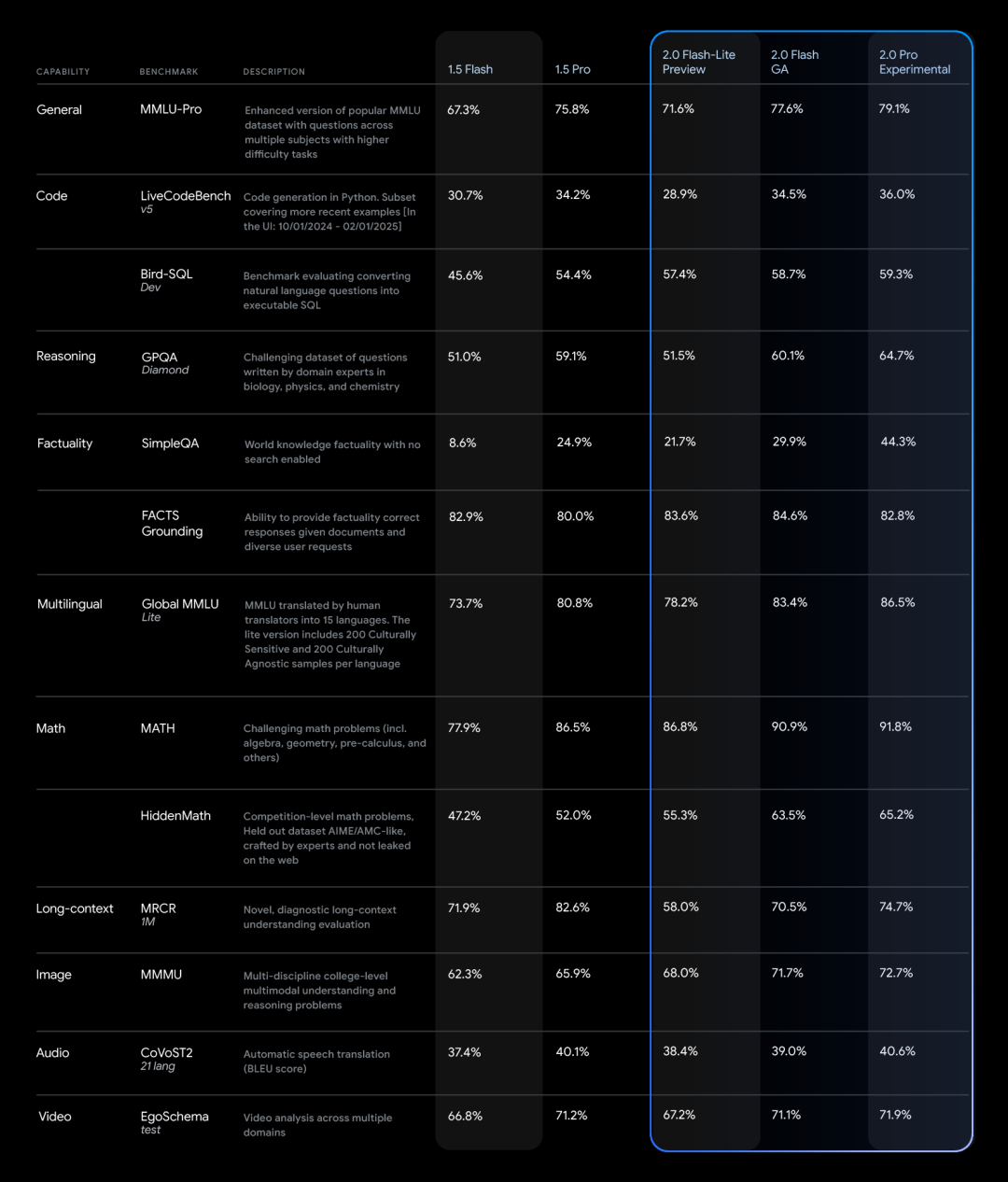
For those who want a more cost-effective solution, Google has introduced Gemini 2.0 Flash-Lite. This model is like the younger sibling of Flash—smaller, faster, and cheaper, but still capable of holding its own in a fight. Flash-Lite retains the speed and cost-efficiency of its predecessor, Gemini 1.5 Flash, while delivering better quality and outperforming it on most benchmarks.
Flash-Lite is particularly appealing for developers and businesses looking to optimize costs without sacrificing performance. It’s available in preview mode on AI Studio and Vertex AI, making it a great entry point for those new to Google’s AI ecosystem.
Gemini 2.0 Pro: The Flagship
Now, let’s talk about the big guns: Gemini 2.0 Pro. This experimental model is Google’s most advanced AI yet, designed for coding performance and handling complex prompts. It boasts a staggering 2-million-token context window, meaning it can process about 1.5 million words in a single go. To put that into perspective, it could analyze the entire Harry Potter series in one prompt and still have room left over for a fanfiction sequel.
Gemini 2.0 Pro also integrates external tools like Google Search and code execution, making it a versatile tool for developers and researchers. It’s currently available in experimental mode to Gemini Advanced subscribers and through Google AI Studio and Vertex AI.
Gemini 2.0 Flash Thinking: The Reasoning Model
Finally, we have Gemini 2.0 Flash Thinking, a model that’s as close as it gets to an AI that “thinks like a human.” This reasoning model is trained to break down prompts into a series of steps, showing its thought process and assumptions. It’s like having a math teacher who explains every step of a problem, but without the chalk dust and coffee breath.
Flash Thinking excels in science and math benchmarks, with a 73.3% accuracy on AIME2024 (Math) and 74.2% on GPQA Diamond (Science). It also features a 1-million-token context window, enabling it to analyze long-form text with ease.
The model is available in the Gemini app, where it can interact with apps like YouTube, Google Maps, and Search. This integration makes it a powerful assistant for both personal and professional use.
Performance Benchmarks: How Do They Stack Up?
Google’s Gemini 2.0 models have shown impressive performance across various benchmarks:
Gemini 2.0 Flash Thinking: 73.3% on AIME2024 (Math), 74.2% on GPQA Diamond (Science), and 75.4% on MMMU (Multimodal reasoning).
Gemini 2.0 Pro: Outperforms Flash and Flash-Lite in reasoning, multilingual understanding, and long-context processing.
These results indicate that Google is not just playing catch-up but is actively pushing the boundaries of what AI can achieve.
Is Google Back on Top?
Google is also taking steps to ensure the safety and reliability of its models. The company is using reinforcement learning techniques to improve response accuracy and conducting automated security testing to identify vulnerabilities. This includes addressing indirect prompt injection threats, a growing concern in the AI community.
Looking ahead, Google plans to expand the Gemini 2.0 family with additional modalities beyond text, further solidifying its position in the AI landscape.
So, has Google done enough to reclaim its throne from DeepSeek? The answer is… maybe. While Gemini 2.0 models are undeniably impressive, DeepSeek’s versatility and affordability still make it a formidable competitor. However, Google’s focus on specialization, efficiency, and integration with its ecosystem gives it a unique edge.
In the end, the real winners are the developers and businesses who now have access to a wider array of powerful AI tools. Whether you’re team Gemini or team DeepSeek, one thing is clear: the AI race is far from over, and the next move could come from either side. Stay tuned, folks—it’s going to be a wild ride.
Perplexity AI, a U.S.-based AI search engine startup, has demonstrated a strategic approach to marketing by leveraging hot topics and maintaining a strong presence on social media. The company'
Ladies and gentlemen, fasten your seatbelts because the AI rollercoaster just got a whole lot wilder! DeepSeek, the Chinese artificial intelligence (AI) startup that has been
DeepSeek, the AI-powered platform making waves in the marketing and branding world, is not just another fish in the sea. With its friendly blue whale logo