Elon Musk
Tesla CEO; SpaceX founder
Elon Musk’s career spans internet payments, electric vehicles, reusable rockets and artificial intelligence.
Get AI Secret’s free daily briefing, including Elon Musk and the wider AI industry.

At a glance
Elon Musk’s career spans internet payments, electric vehicles, reusable rockets and artificial intelligence. After Zip2 and X.com, he founded SpaceX and joined Tesla as an early investor and board member. His ventures also include Neuralink and The Boring Company.
- Current role
- Tesla CEO; SpaceX founder
- Born
- 28 June 1971
- Known for
- Tesla; SpaceX; X.com; Neuralink
- Coverage
- Vehicles; rockets; AI; robotics
Sources checked . Selected career milestones and biographical references.
Career, in context.
Selected milestones, newest first. Explore earlier career below.
Acquires Twitter
Musk completes the acquisition of the social network, later renamed X.
Source: WikipediaSpaceX launches its first astronauts
Crew Dragon’s Demo-2 mission carries NASA astronauts into orbit under his company’s leadership.
Source: NASA
Show earlier careerHide earlier career · 5 milestones
More than 10 years ago.
Becomes Tesla CEO
He takes the chief executive role after initially joining as an investor and chairman.
Source: TeslaJoins Tesla’s board
His involvement with the electric-vehicle company begins as an early investor and director.
Source: TeslaCo-founds Zip2
His first major startup develops online city guides and publishing software.
Source: Wikipedia
The latest on Elon Musk
Newest firstRelated reporting
Relevant sections from the articles on this page. Explore older coverage below.
More coverage

Good Morning, AI Enthusiasts!
Meta quietly rehearses a future where it no longer needs the people who taught it how to run.

AGENTS
Meta Is Devouring All Employees
👀 What’s Happening: Meta has started installing tracking software on employee laptops to capture every click, keystroke, and screen interaction. This feeds its Model Capability Initiative, turning daily work into training data for AI agents. There is no opt-out. Employees are effectively being used to teach systems how to replace them.
🌍 How This Hits Reality: This is not just monitoring, it is industrialized behavior harvesting. Meta is converting human workflows into reusable machine primitives at scale. With planned layoffs near 10% and an internal push toward agent-driven operations, the company is collapsing the gap between labor, data, and automation into a single closed loop.
🛎️ Key Takeaway: Meta is making a direct bet on becoming the first fully AI agent company by turning its own workforce into training data. This is a high-risk, high-control move. If it lands, Meta will become AI.
Meta Is Devouring All Employees
🛎️ Key Takeaway: Meta is making a direct bet on becoming the first fully AI agent company by turning its own workforce into training data. This is a high-risk, high-control move. If it lands, Meta will become AI.
TOGETHER WITH MYCLAW
Personal AI That Starts Personal

A personal AI shouldn’t feel generic. MyClaw lets you install skills that adapt to your preferences from the start, so your assistant feels relevant on day one. Behind the scenes, OpenClaw provides the agent power. What you see is a simpler way to put it to work.
If you’re serious about OpenClaw, don’t run it halfway. Run it the way it was meant to be run — fast, secure, and production-ready by default.
And yes — MyClaw can also help you distill not just yourself, but your team.
VALUATION
Anthropic Hits Trillion

👀 What’s Happening: Anthropic’s private secondary shares are trading near a one trillion dollar valuation, with some offers even higher. That puts it ahead of OpenAI in recent deal momentum. The shift is driven by scarce supply, strong buyer demand, and growing confidence in its revenue curve and Claude Code traction.
🌍 How This Hits Reality: Capital is making a clear choice. Even with GPU limits and rising infrastructure costs, investors are prioritizing product direction and monetization clarity over raw scale. In a market where supply is tight and access is rare, a company that shows repeatable revenue and developer adoption gets priced above one that still focuses on narratives.
🛎️ Key Takeaway: The market is rewarding focus over firepower. Capital will keep flowing to teams that look operationally decisive, even if their cost structures remain heavy.
Anthropic Hits Trillion
👀 What’s Happening: Anthropic’s private secondary shares are trading near a one trillion dollar valuation, with some offers even higher. That puts it ahead of OpenAI in recent deal momentum. The shift is driven by scarce supply, strong buyer demand, and growing confidence in its revenue curve and Claude Code traction.
FSD
Tesla Sells Impossible Dream

👀 What’s Happening: Elon Musk finally admitted millions of Teslas cannot reach unsupervised driving without new hardware, after years of implying software alone would get them there. The promise did its job. Cars were sold at scale. Now the definition of FSD expands just as the original hardware hits its limit.
🌍 How This Hits Reality: This is classic Silicon Valley playbook, just executed at extreme scale. Sell a future that cannot yet exist, capture demand, then bind users into a long upgrade cycle when reality catches up. Millions of vehicles now sit in limbo between “good enough” assistance and an ever-moving autonomy target that keeps drifting upward.
🛎️ Key Takeaway: Musk pushed the model to its limit. FSD becomes a perpetual upgrade trap dressed as progress toward AGI.
Elon Musk: Tesla Sells Impossible Dream
👀 What’s Happening: Elon Musk finally admitted millions of Teslas cannot reach unsupervised driving without new hardware, after years of implying software alone would get them there. The promise did its job. Cars were sold at scale. Now the definition of FSD expands just as the original hardware hits its limit.
CHIPS
Google Is Rebuilding AI Compute
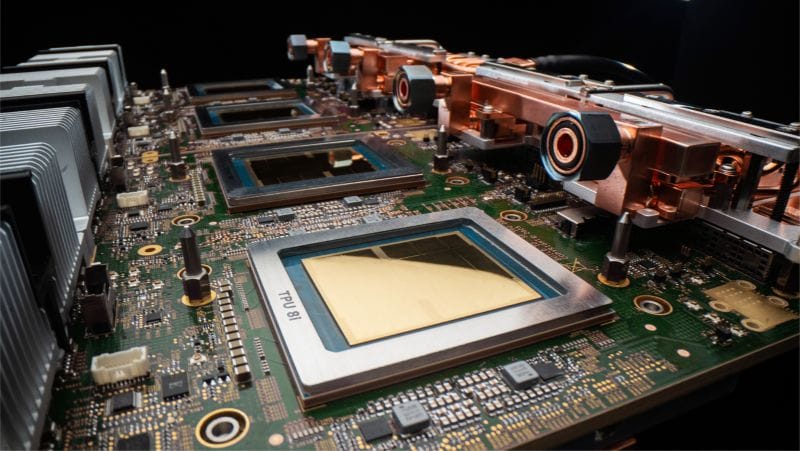
👀 What’s Happening: Google is not just launching TPU 8. It is restructuring how its entire AI stack runs, from chips to networking to storage. By splitting training and inference hardware and pairing it with its own Arm CPUs, Google is reducing reliance on external suppliers and controlling more of the pipeline.
🌍 How This Hits Reality: Today, most AI workloads depend heavily on Nvidia GPUs, which creates pricing pressure, supply constraints, and limited differentiation for cloud providers. Google is trying to bypass that by owning the full stack, which could lower costs, improve efficiency, and give it tighter control over scaling large models and serving billions of queries.
🛎️ Key Takeaway: The goal is simple: remove Nvidia as a bottleneck and turn compute into a proprietary advantage. If successful, Google gains pricing power, margin control, and a defensible edge in large-scale AI infrastructure.
NVIDIA: Google Is Rebuilding AI Compute
🌍 How This Hits Reality: Today, most AI workloads depend heavily on Nvidia GPUs, which creates pricing pressure, supply constraints, and limited differentiation for cloud providers. Google is trying to bypass that by owning the full stack, which could lower costs, improve efficiency, and give it tighter control over scaling large models and serving billions of queries.
Google Is Rebuilding AI Compute
👀 What’s Happening: Google is not just launching TPU 8. It is restructuring how its entire AI stack runs, from chips to networking to storage. By splitting training and inference hardware and pairing it with its own Arm CPUs, Google is reducing reliance on external suppliers and controlling more of the pipeline.
DAILY TL;DR
- Tesla is boosting its 2026 capex to $25B to invest in AI, robotics, and manufacturing, accelerating its shift into an AI-driven robotics company.
- Google upgraded Workspace with Workspace Intelligence and Gemini to automate tasks across spreadsheets, documents, and everyday office workflows.
- OpenAI rolled out workspace agents to Business and Enterprise users, enabling teams to build and share AI agents in ChatGPT.
- OpenAI partnered with Infosys to integrate tools like Codex into Topaz, leveraging its global client base to scale enterprise AI adoption.
- Microsoft will invest about $18B in Australia to expand AI and cloud infrastructure, strengthening its enterprise position.
- Microsoft is integrating Anthropic’s Mythos into its security development process to use AI for faster vulnerability detection and fixes.
- Morgan Stanley says AI could halve game development costs and unlock $22B in profits, with gains concentrating among platforms and top players.
READ MORE
Let the Future Come to Your Inbox
Stay ahead without drowning in information. We turn the most important signals across AI, tech, marketing, and future products into 5-minute reads you can actually finish.
- AI Secret uncovers what really matters in AI
- Bay Area Letters decodes tech and business shifts from Silicon Valley
- Robotics Herald tracks how robots move from labs into daily life
- Marketing Secret breaks down real growth and go-to-market playbooks
- The Hardwire explores hardware, consumer tech, and what’s coming next
TOGETHER WITH US
AI Secret Media Group is the world’s #1 AI & Tech Newsletter Group, reaching over 2 million leaders across the global innovation ecosystem, from OpenAI, Anthropic, Google, and Microsoft to top AI labs, VCs, and fast-growing startups.
We've helped promote over 500 Tech Brands. Will yours be the next?
Email our co-founder Mark directly at [email protected] if the button fails.
Good Morning, AI Enthusiasts!
Today’s AI race looks less like software and more like heavy industry.
AGI
Musk Thinks AGI Is Brute Force
👀 What’s Happening: Elon Musk is now openly treating AGI like an industrial construction project. Grok 4.4 is expected in early May, Grok 4.5 by the end of the month, and Grok 5 is already training behind them. The logic is simple: build bigger clusters, add more chips, spend more electricity, and intelligence will eventually fall out of the machine.
🌍 How This Hits Reality: xAI’s Colossus system reportedly already uses more than 550,000 GPUs and around 2 gigawatts of electricity, enough to power a city of 1.5 million people. That is why Musk’s AGI strategy increasingly feels less like computer science and more like building a nuclear plant. More land, more chips, more cooling, more power. OpenAI and Anthropic are both spending heavily too, but nobody else is scaling this aggressively.
🛎️ Key Takeaway: Maybe Musk is right and AGI really does emerge from brute force. Or maybe he is just building the world’s most expensive autocomplete machine. Either way, the future of AI now looks a lot more like heavy industry than software.
Musk Thinks AGI Is Brute Force
👀 What’s Happening: Elon Musk is now openly treating AGI like an industrial construction project. Grok 4.4 is expected in early May, Grok 4.5 by the end of the month, and Grok 5 is already training behind them. The logic is simple: build bigger clusters, add more chips, spend more electricity, and intelligence will eventually fall out of the machine.
CORPORATE
Claude Is Becoming a Corporate Guillotine

👀 What’s Happening: A fintech company with more than 60 employees woke up to find every Claude account dead at once. No warning. No human explanation. Just an automated email and a Google form. An entire company lost access to coding, support, analysis, and internal workflows because one model provider decided something “looked suspicious.” Fifteen hours later the accounts came back. Anthropic never explained what happened.
🌍 How This Hits Reality: Claude is starting to behave less like enterprise software and more like a corporate guillotine hanging over every customer’s neck. Build your workflows around it, connect your documents, train your staff, wire your operations into it, then wait for one invisible moderation trigger to erase everything overnight. No hotline. No account manager. No real appeal process. Just a faceless safety system deciding whether your company gets to function today.
🛎️ Key Takeaway: Claude is becoming too unstable to trust as a core business layer. A company that builds entirely on Claude is not building on infrastructure. It is building on the mood swings of a black box.
Claude Is Becoming a Corporate Guillotine
🛎️ Key Takeaway: Claude is becoming too unstable to trust as a core business layer. A company that builds entirely on Claude is not building on infrastructure. It is building on the mood swings of a black box.
LEAK
DeepSeek Finally Needs Money
👀 What’s Happening: DeepSeek is reportedly seeking outside funding for the first time, targeting at least $300 million at a valuation above $10 billion. That is a major shift for a company that built its reputation on staying independent and refusing investor pressure. The timing is not random. V4 has already been delayed multiple times, and rumors keep circulating that access to high-quality distillation targets from rivals like OpenAI and Anthropic has become harder. DeepSeek suddenly looks less like a lean research lab and more like a company running out of cheap shortcuts.
🌍 How This Hits Reality: DeepSeek grew fast because distillation is faster and cheaper than training from scratch. But distillation only works when someone else has already spent billions building the frontier model first. Once those companies tighten access, rate limits, or legal pressure, the shortcut breaks. That is the ugly truth here. DeepSeek cannot expect to keep climbing forever by copying reasoning traces and outputs from models it did not build. At some point the company has to pay for its own compute, its own researchers, and its own original breakthroughs.
🛎️ Key Takeaway: DeepSeek is reaching the point where imitation is no longer enough. V4 now has to prove the company can build a frontier model with its own ideas, its own infrastructure, and eventually its own hardware stack. Otherwise it risks becoming the smartest follower in a race that only rewards leaders.
DeepSeek Finally Needs Money
👀 What’s Happening: DeepSeek is reportedly seeking outside funding for the first time, targeting at least $300 million at a valuation above $10 billion. That is a major shift for a company that built its reputation on staying independent and refusing investor pressure. The timing is not random.
OPENSOURCE
MiniMax Turned Open Source Into a Trap
👀 What’s Happening: MiniMax changed the license on M2.7 after release. The weights are still downloadable and researchers can still run, fine tune, and modify the model. But any serious commercial use now needs written approval, and some deployments must visibly say “Built with MiniMax M2.7.” The bigger problem is that MiniMax kept calling it “Modified-MIT” even though MIT explicitly allows unrestricted commercial use. Developers immediately saw this as bait and switch.
🌍 How This Hits Reality: This is worse than simply going closed source. At least companies like Meta are now upfront about where the boundaries are. MiniMax wants the credibility, goodwill, and developer adoption of open source while quietly removing one of the main freedoms that made open source matter in the first place.
🛎️ Key Takeaway: Once you need lawyers, approvals, and branding requirements before shipping a product, it stops being open source and starts becoming a controlled ecosystem with a free trial attached.
MiniMax M2.7 licensing changes draw developer criticism
But any serious commercial use now needs written approval, and some deployments must visibly say “Built with MiniMax M2.7.” The bigger problem is that MiniMax kept calling it “Modified-MIT” even though MIT explicitly allows unrestricted commercial use. Developers immediately saw this as bait and switch.
TOGETHER WITH MYCLAW
Personal AI That Starts Personal
A personal AI shouldn’t feel generic. MyClaw lets you install skills that adapt to your preferences from the start, so your assistant feels relevant on day one. Behind the scenes, OpenClaw provides the agent power. What you see is a simpler way to put it to work.
If you’re serious about OpenClaw, don’t run it halfway. Run it the way it was meant to be run — fast, secure, and production-ready by default.
DAILY TL;DR
- Anthropic launched Claude Design, a tool that creates designs from prompts, files, and codebases, sending Adobe and Figma shares lower.
- OpenAI is testing a ChatGPT tracking pixel to measure conversions like sign-ups, purchases, and subscriptions as it expands its ad infrastructure.
- Google has expanded Gemini Notebooks to free users, letting them organize chats, files, and sources into persistent knowledge bases.
- Netflix plans to launch a vertical video feed and use AI more broadly across recommendations, content creation, and advertising.
- Google is testing a redesigned Gemini Live interface that replaces its iconic fullscreen layout with an in-app homepage view.
- AI chip startup Cerebras has filed for an IPO, aiming to go public in mid-May after securing AWS and OpenAI deals.
- Sam Altman-backed World is expanding human verification into Tinder, ticketing, Zoom, and AI agents to prove real people are behind online activity.
- Cursor is in talks to raise at least $2 billion at a $50 billion valuation as enterprise revenue surges and its own models improve margins.
- Vercel was hacked after a third-party AI tool’s Google OAuth integration was compromised, exposing internal and customer data.
READ MORE
Let the Future Come to Your Inbox
Stay ahead without drowning in information. We turn the most important signals across AI, tech, marketing, and future products into 5-minute reads you can actually finish.
- AI Secret uncovers what really matters in AI
- Bay Area Letters decodes tech and business shifts from Silicon Valley
- Robotics Herald tracks how robots move from labs into daily life
- Marketing Secret breaks down real growth and go-to-market playbooks
- The Hardwire explores hardware, consumer tech, and what’s coming next
TOGETHER WITH US
AI Secret Media Group is the world’s #1 AI & Tech Newsletter Group, reaching over 2 million leaders across the global innovation ecosystem, from OpenAI, Anthropic, Google, and Microsoft to top AI labs, VCs, and fast-growing startups.
We've helped promote over 500 Tech Brands. Will yours be the next?
Email our co-founder Mark directly at [email protected] if the button fails.
Good Morning, AI Enthusiasts!
Anthropic has started using its usual tricks for releasing new models again; the Opus 4.6 we're using now has become an idiot.
PREVIEW
Mythos Leaks as Opus Becomes Idiot
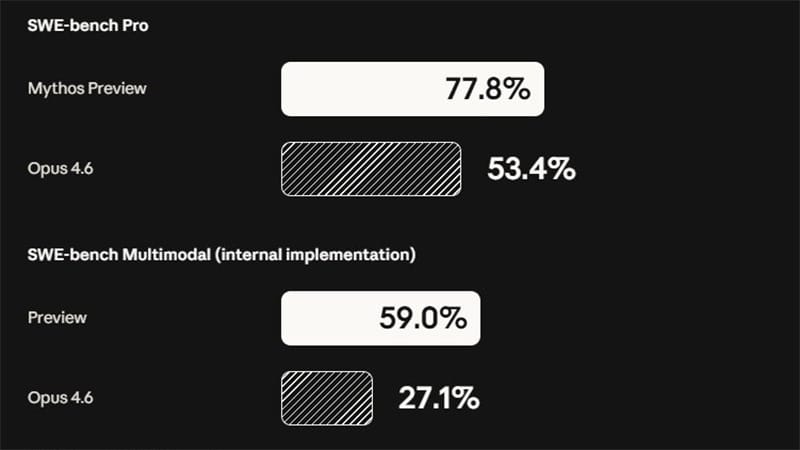
👀 What's happening: Before Anthropic’s release, a third party got access to Mythos preview build and published benchmark results showing a huge gap over Opus 4.6. At the same time, users have been reporting degraded Opus performance for weeks. The comparison now reads like full-power Mythos versus a constrained Opus.
🌍 How this hits reality: SWE-bench Pro lands at 77.8% vs 53.4%. Multimodal is 59% vs 27%. It looks like a breakthrough until you notice the baseline moved. Users already measured up to 67% drop in reasoning depth and more shortcut behavior in Opus . So this is less a fair comparison and more full Mythos versus a “idiot” Opus.
🛎️ Key takeaway: This is becoming a playbook. Keep the best model internal, quietly tune down the public one, then show a dramatic gap. So, is the new model truly smart, or has the old model become dumber? Who knows?
Anthropic: Mythos Leaks as Opus Becomes Idiot
👀 What's happening: Before Anthropic’s release, a third party got access to Mythos preview build and published benchmark results showing a huge gap over Opus 4.6. At the same time, users have been reporting degraded Opus performance for weeks. The comparison now reads like full-power Mythos versus a constrained Opus.
TOGETHER WITH MYCLAW
Run OpenClaw on MyClaw.ai
Skip Docker, VPS configs, and late-night debugging. With MyClaw.ai, you can launch your agent in minutes and keep it running 24/7 in a dedicated environment built for serious builders.
If you’re serious about OpenClaw, run it properly — with speed and security by default.
LEAK
DeepSeek V4 Leaks Again
👀 What's happening: DeepSeek pushed a late-night update with “fast” and “expert” modes plus a gated vision feature. Users quickly found the model self-identifying as V4, but performance, context limits around 130K, and evasive answers suggest it is not a real V4 release, just another ambiguous tease.
🌍 How this hits reality: This is the third or fourth cycle of implied V4 arrival without delivery. Expectations are being artificially sustained while competitors ship real upgrades almost weekly. Developers and power users depend on stable capabilities launched, not "expectations narrative". Each fake-out increases switching risk, especially when alternatives already offer 200K to 1M context and consistent APIs.
🛎️ Key takeaway: Expectation inflation only works once or twice. If the eventual V4 underdelivers or slips again, DeepSeek risks collapsing trust entirely and losing its remaining positioning in the serious model race.
DeepSeek V4 Leaks Again
👀 What's happening: DeepSeek pushed a late-night update with “fast” and “expert” modes plus a gated vision feature. Users quickly found the model self-identifying as V4, but performance, context limits around 130K, and evasive answers suggest it is not a real V4 release, just another ambiguous tease.
OPENAI
OpenAI Credibility Crisis Deepens
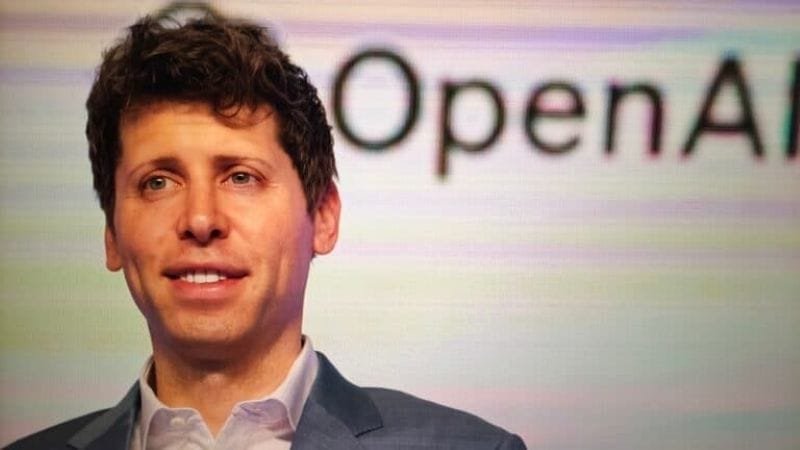
👀 What's happening: The New Yorker just published an 18-month investigation built on internal memos from former Chief Scientist Ilya Sutskever and Anthropic CEO Dario Amodei, directly accusing Sam Altman of misleading the board and overstating safety efforts. It details compute diversion from alignment, unchecked releases, and the earlier board crisis now reframed as a governance failure.
🌍 How this hits reality: This lands at the worst possible time. OpenAI is targeting an IPO while projecting massive losses and relying on external capital to sustain compute expansion. At the same time, Musk is escalating legal pressure. Governance risk now stacks on top of financial and legal exposure, which directly threatens listing approval, partner confidence, and long-term contracts.
🛎️ Key takeaway: This is the failure mode people feared. If investigations solidify and legal pressure builds, one leader becomes the single point of collapse. OpenAI may not even reach IPO before credibility and capital completely slip away.
OpenAI Credibility Crisis Deepens
OpenAI is targeting an IPO while projecting massive losses and relying on external capital to sustain compute expansion. At the same time, Musk is escalating legal pressure. Governance risk now stacks on top of financial and legal exposure, which directly threatens listing approval, partner confidence, and long-term contracts.
CHIPS
Musk Pulls Intel Into TeraFab
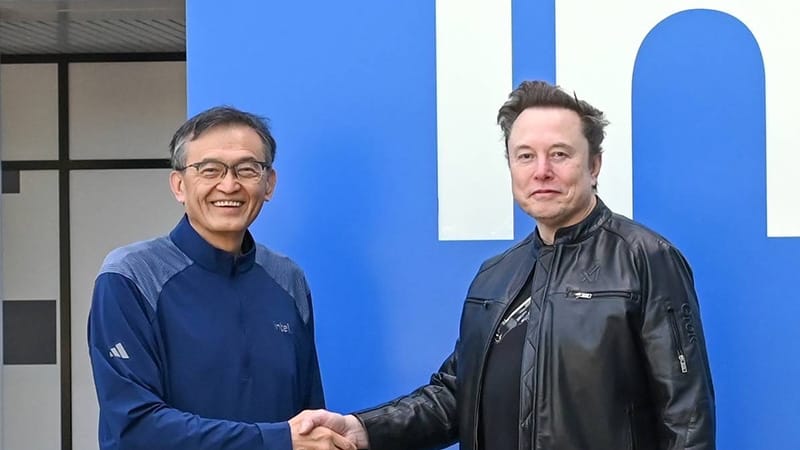
👀 What's happening: Intel has joined Musk’s TeraFab project alongside Tesla, SpaceX, and xAI to build large-scale AI chip factories in Texas. Intel brings manufacturing, packaging, and process capability to a plan targeting 1 terawatt of annual compute for robots and data centers.
🌍 How this hits reality: Intel has been bleeding, with over $10B in foundry losses and no hyperscale anchor customer. This deal hands it exactly that, at unprecedented scale. In return, Musk gains partial control over manufacturing, breaking reliance on external supply chains that currently gate AI growth and deployment speed.
🛎️ Key takeaway: This looks less like partnership and more like a bailout with strings attached. If that pattern holds, Intel does not just survive, it becomes the real production arm behind a new compute order.
Musk Pulls Intel Into TeraFab
👀 What's happening: Intel has joined Musk’s TeraFab project alongside Tesla, SpaceX, and xAI to build large-scale AI chip factories in Texas. Intel brings manufacturing, packaging, and process capability to a plan targeting 1 terawatt of annual compute for robots and data centers.
DAILY TL;DR
- Runpod provides GPU cloud infrastructure purpose-built for AI inference, from prototype to production-scale deployment.
- Anthropic and major tech firms launched Project Glasswing, using Claude Mythos Preview to detect and fix critical infrastructure vulnerabilities.
- Musk escalates his lawsuit against OpenAI, seeking to remove Sam Altman, restore its nonprofit status, and recover massive alleged gains.
- Under legal pressure, Google upgraded Gemini with improved crisis detection and one-tap access to mental health support.
- Firmus raised $505M at a $5.5B valuation to build its “Southgate” AI data center network powered by Nvidia technology.
- Google adds Gemini-powered caption generation to Maps and enhances contribution workflows and incentives to boost user participation.
- Spotify expands its AI-generated playlists to podcasts, enabling users to create personalized recommendations using text prompts.
- Amazon is launching a new round of layoffs targeting 14,000 white-collar employees, using a reportedly random selection process.
READ MORE
Let the Future Come to Your Inbox
Stay ahead without drowning in information. We turn the most important signals across AI, tech, marketing, and future products into 5-minute reads you can actually finish.
- AI Secret uncovers what really matters in AI
- Bay Area Letters decodes tech and business shifts from Silicon Valley
- Robotics Herald tracks how robots move from labs into daily life
- Marketing Secret breaks down real growth and go-to-market playbooks
- The Hardwire explores hardware, consumer tech, and what’s coming next
TOGETHER WITH US
AI Secret Media Group is the world’s #1 AI & Tech Newsletter Group, reaching over 2 million leaders across the global innovation ecosystem, from OpenAI, Anthropic, Google, and Microsoft to top AI labs, VCs, and fast-growing startups.
We've helped promote over 500 Tech Brands. Will yours be the next?
Email our co-founder Mark directly at [email protected] if the button fails.
Good Morning, AI Enthusiasts!
Systems are converge, and intent becomes the only remaining primitive.

FUTURE
Musk Pushes the Dyson Sphere Vision
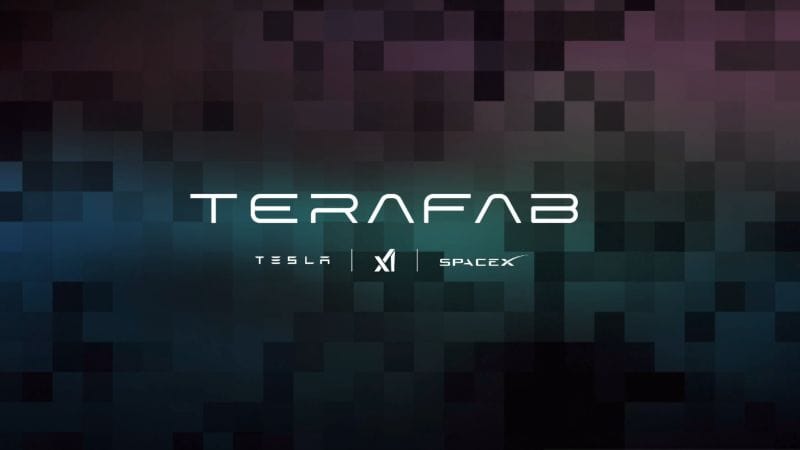
👀 What’s happening: Elon Musk unveiled Terafab, a plan to merge chip design and manufacturing inside a single Austin complex, funded by Tesla, SpaceX, and xAI. The goal is massive. One terawatt of annual AI compute, with most capacity deployed in orbit through satellite-based data centers.
🌍 How this hits reality: Current global AI compute production is around 20 gigawatts yearly. Terafab targets roughly fifty times that, while moving 80 percent of deployment into orbit where solar energy and cooling are effectively unconstrained. This may break the traditional split between chip design, fabrication, and infrastructure, compressing them into one vertically controlled stack.
🛎️ Key takeaway: Terafab reads like the final missing layer in Musk’s larger system. Rockets, satellites, robots, and now chips close the loop, pointing toward a Dyson-style compute stack built around energy capture and self-owned supply chains.
Musk Pushes the Dyson Sphere Vision
👀 What’s happening: Elon Musk unveiled Terafab, a plan to merge chip design and manufacturing inside a single Austin complex, funded by Tesla, SpaceX, and xAI. The goal is massive. One terawatt of annual AI compute, with most capacity deployed in orbit through satellite-based data centers.
TOGETHER WITH NOTION
One Tool, Endless Possibilities
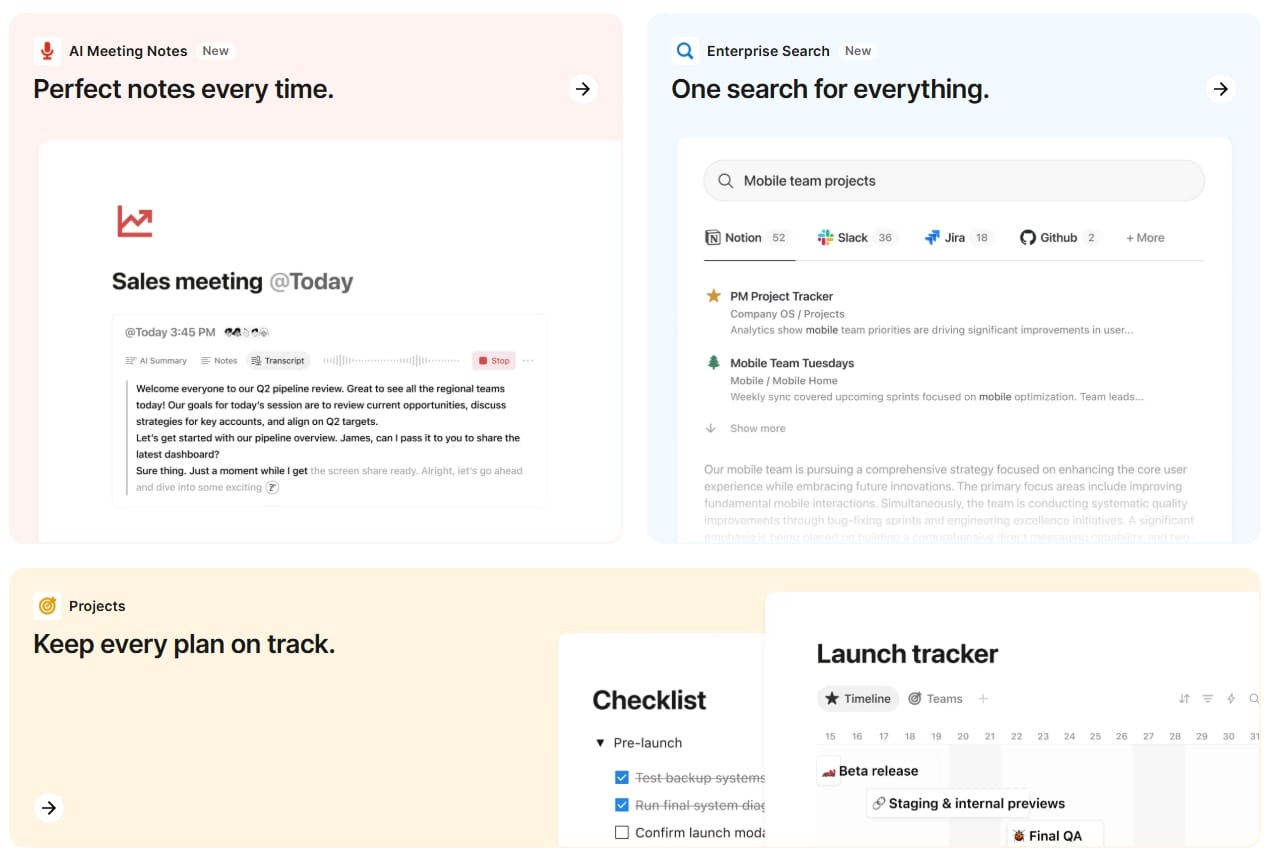
With Notion AI, say goodbye to the chaos of multiple tools. Why hop from app to app like a caffeinated kangaroo when you can find every answer, automate the busywork, and get projects done all in one place?
- AI Meeting Notes keep your notes organized and accessible.
- Enterprise Search helps you find insights across company knowledge and apps easily.
- Notion Mail is an inbox that thinks like you!
Join over 100 million users who have already discovered that productivity doesn’t have to be a slog; it can be a fun, engaging journey with Notion AI leading the way!
AGENTS
Independent Developers Are Doomed
👀 What’s happening: In a recent interview, AI pioneer Andrej Karpathy describes a sharp shift in how software gets built. He no longer writes code directly, instead orchestrating multiple agents in parallel. He frames modern work as “expressing will” to agents like OpenClaw, where coding itself has become a delegated background process.
🌍 How this hits reality: The constraint that defined independent developers has collapsed. Karpathy signals that one operator can now coordinate dozens of agents across research, coding, and testing loops. Tasks that once required years of accumulated skill are now accessible through instruction. The leverage jump is extreme, and the cost of execution is trending toward zero.
🛎️ Key takeaway: This does not just kill apps. It removes the scarcity behind independent developers. When execution is automated, differentiation shifts away from building toward directing systems at scale. The remaining bottleneck is no longer technical skill, but how effectively you deploy agents.
MIT
Cursor–Kimi Incident Triggers New AI Copying Norms
👀 What’s happening: Cursor launched Composer 2 as its latest coding model without mentioning its base. Developers quickly found traces linking it to Kimi 2.5, and the company later confirmed it started from that open model. The missing disclosure triggered backlash across X and developer circles.
🌍 How this hits reality: This exposed a growing fault line. Using MIT-like licensed models is legally fine, but expectations around attribution are shifting. Cursor is not alone. Labs distill each other’s models, reuse weights, and stack training layers. The system allows it, but the social contract around credit and transparency is breaking in real time.
🛎️ Key takeaway: A new layer of conflict is forming above licensing. The fight is moving from legality to norms, and from code to narrative control around who gets to claim the model.
Cursor–Kimi Incident Triggers New AI Copying Norms
👀 What’s happening: Cursor launched Composer 2 as its latest coding model without mentioning its base. Developers quickly found traces linking it to Kimi 2.5, and the company later confirmed it started from that open model. The missing disclosure triggered backlash across X and developer circles.
Cursor confirms the Kimi base behind Composer 2
Developers quickly found traces linking it to Kimi 2.5, and the company later confirmed it started from that open model. The missing disclosure triggered backlash across X and developer circles.
AWARDS
AI Influencers Now Receive Awards

👀 What’s happening: OpenArt and Fanvue, with ElevenLabs backing, just launched an “AI Personality of the Year” award, effectively certifying AI influencers as a real category. Entries need social traction, brand deals, and narrative packaging, while judging focuses on engagement, consistency, and synthetic “authenticity.”
🌍 How this hits reality: This is the first time platforms are defining what counts as a “legitimate” non human identity. A $20,000 prize is irrelevant. The rules are not. Anonymous creators, fictional personas, and fabricated backstories now compete under standardized metrics. Influence detaches from humans and reattaches to systems that can be scaled, cloned, and optimized.
🛎️ Key takeaway: This is not about awards. It is a permission slip. Once synthetic identities are judged like humans, the line stops mattering, and acceptance shifts from debate to default behavior.
DAILY TL;DR
- OpenAI is shifting from building data centers to relying on partners while tightening spending ahead of its IPO.
- Gemini can now automate app tasks on phones—slow and clunky, but a clear early glimpse of real AI assistants.
- OpenAI released a prompting playbook to help designers use GPT-5.4 to generate more structured and brand-driven UI designs.
- Months after partnering with OpenAI, the UK government has yet to run any real trials, showing limited progress.
- Three U.S. teens sued xAI, alleging its image tools were used to create and spread explicit content involving minors, seeking class-action status.
- Hachette pulled the novel Shy Gir over suspected AI use, while the author denied it and plans legal action.
- AI tools dominated GDC showcases, but game developers rejected using AI in actual game creation, citing concerns over loss of human creativity and value.
- Google is testing AI-generated headline rewrites in search results, sometimes altering meaning and raising concerns over media control and trust.
- Elon Musk confirmed Grok Computer is coming, working with “Digital Optimus” to automate computer operations and enterprise tasks.
READ MORE
Let the Future Come to Your Inbox
Stay ahead without drowning in information. We turn the most important signals across AI, tech, marketing, and future products into 5-minute reads you can actually finish.
- AI Secret uncovers what really matters in AI
- Bay Area Letters decodes tech and business shifts from Silicon Valley
- Robotics Herald tracks how robots move from labs into daily life
- Marketing Secret breaks down real growth and go-to-market playbooks
- The Hardwire explores hardware, consumer tech, and what’s coming next
TOGETHER WITH US
AI Secret Media Group is the world’s #1 AI & Tech Newsletter Group, reaching over 2 million leaders across the global innovation ecosystem, from OpenAI, Anthropic, Google, and Microsoft to top AI labs, VCs, and fast-growing startups.
We've helped promote over 500 Tech Brands. Will yours be the next?
Email our co-founder Mark directly at [email protected] if the button fails.
Good Morning, AI Enthusiasts!
AI is becoming infrastructure, agents are becoming operators, and humans are slowly moving from typing instructions to governing systems they no longer fully control.
NEW LAUNCH
The World's First Model Built for OpenClaw
👀 What’s happening: Z.ai has released GLM-5-Turbo, the first large language model explicitly designed for the OpenClaw agent framework. This was not a benchmark play. It was built to run persistent agents that call tools, execute workflows, and operate continuously for long sessions without breaking.
🌍 How this hits reality: Most frontier models are optimized for conversation or coding prompts. Agent workloads are different. A single OpenClaw task can trigger 30 to 40 model calls across tool APIs, webhooks, and pipelines. When one malformed JSON call appears, the entire chain collapses. Reliability, not intelligence, becomes the real bottleneck.
🛎️ Key takeaway: If frameworks like OpenClaw become the operating layer for AI agents, model design will shift toward reliability under long workflows. GLM-5-Turbo signals the beginning of models built for agent execution first, not chat.
Z.ai releases GLM-5-Turbo for OpenClaw workflows
👀 What’s happening: Z.ai has released GLM-5-Turbo, the first large language model explicitly designed for the OpenClaw agent framework. This was not a benchmark play. It was built to run persistent agents that call tools, execute workflows, and operate continuously for long sessions without breaking.
POKEMON
Pokemon Go Turned Players Into Free AI Labor

👀 What’s happening: A report revealed that Pokémon Go players unknowingly spent the last decade helping collect over 30 billion real-world images. Through AR scanning tasks inside the game, roughly 140 million players filmed streets, monuments, shops, and landmarks. Those scans were quietly stored as geotagged training data for spatial AI systems.
🌍 How this hits reality: This was not accidental data. The scans captured the same locations across weather, lighting, and time of day, producing a dense global map of visual anchors. That dataset now powers visual positioning systems that allow robots and delivery machines to navigate cities without relying on GPS, solving a major problem in dense urban areas.
🛎️ Key takeaway: The punchline writes itself. Millions thought they were hunting cartoon creatures while quietly performing unpaid fieldwork for spatial AI. The old internet rule still holds. When the product is free, the real product is usually you.
XAI
Elon Musk Resets xAI
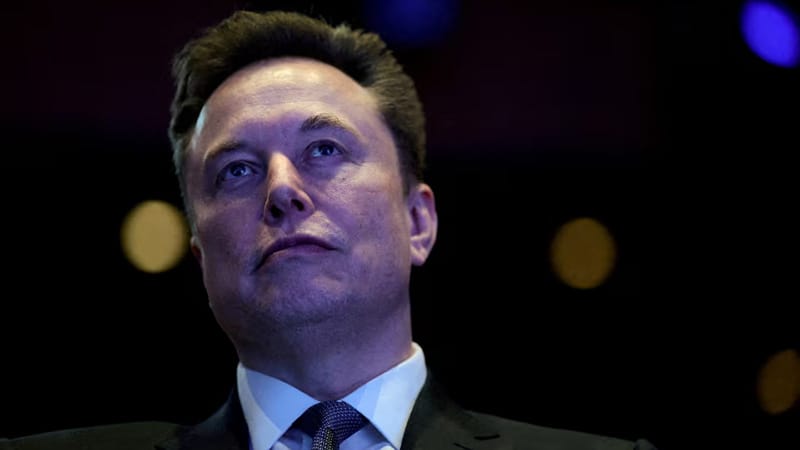
👀 What’s happening: Elon Musk has begun another major shakeup inside xAI after becoming dissatisfied with the company’s progress in AI coding tools. Several founding members have left or been pushed out, while managers from Tesla and SpaceX were brought in to audit teams and review work. The trigger is simple: coding products from competitors are moving faster, and Musk believes xAI must reset its execution before the gap widens further.
🌍 How this hits reality: Coding is not a side feature in Musk’s ecosystem. It is the operational layer for everything he wants to build next. Autonomous robots, software agents, Tesla automation systems, and large-scale AI services all depend on models that can write, debug, and maintain complex software. With thousands of researchers and massive compute clusters already deployed, the bottleneck has shifted from hardware to execution speed.
🛎️ Key takeaway: Musk is treating coding as the foundation of his future stack. If xAI cannot close the gap quickly, the broader agent strategy around Grok, Macrohard, and Digital Optimus slows down. That explains the urgency. In this phase of the AI race, every quarter matters.
Elon Musk Resets xAI
👀 What’s happening: Elon Musk has begun another major shakeup inside xAI after becoming dissatisfied with the company’s progress in AI coding tools. Several founding members have left or been pushed out, while managers from Tesla and SpaceX were brought in to audit teams and review work.
Tesla: Elon Musk Resets xAI
Several founding members have left or been pushed out, while managers from Tesla and SpaceX were brought in to audit teams and review work. The trigger is simple: coding products from competitors are moving faster, and Musk believes xAI must reset its execution before the gap widens further.
HYPE
Jeremy Howard Warns Against AI Coding Hype
👀 What’s happening: Deep learning pioneer Jeremy Howard publicly challenged the idea that AI will soon automate software engineering. Responding to claims from figures like Dario Amodei and Elon Musk, he argued that many leaders may lead people to confuse code/software generation with real engineering. Models can write large amounts of code, but software development is mostly about system design, debugging, and understanding complex architectures.
🌍 How this hits reality: Howard says about 90 percent of his own code is now written by models, yet overall productivity barely changes. The bottleneck is rarely typing code. His bigger concern is organizational: tools like Claude Code encourage prompt driven development where engineers no longer understand the systems they deploy, quietly building massive technical debt.
🛎️ Key takeaway: Howard’s warning is simple. AI can accelerate coding, but replacing engineering judgment is a mistake. The real path forward is human and machine learning together, not developers slowly surrendering their understanding of the systems they build.
DAILY TL;DR
- Anthropic is offering Free, Pro, Max, and Team subscribers double Claude usage limits during off-peak hours from March 13 to March 27.
- AI consultant used ChatGPT, AlphaFold, and Grok to design an experimental treatment for his dog, reportedly shrinking the tumor by about 75%.
- Sam Altman said AI could eventually be delivered like a utility—metered and billed based on how much intelligence users consume.
- After restructuring xAI, Elon Musk said the company will catch up with OpenAI, Anthropic, and Google this year and surpass them within three years.
- Despite the Pentagon labeling Anthropic a supply chain risk, Palantir still uses Claude in military systems and says replacing it will take time.
- Andrej Karpathy used AI to quickly analyze U.S. job exposure to automation, finding that high-paying white-collar roles show the highest vulnerability.
- Google and Accel’s India AI accelerator chose five startups from 4,000 applications while avoiding “AI wrapper” companies.
- ByteDance has reportedly paused the global launch of its Seedance 2.0 AI video generator amid copyright concerns from Hollywood studios.
- Meta is reportedly considering layoffs of over 20% to offset massive AI spending and efficiency gains.
READ MORE
Let the Future Come to Your Inbox
Stay ahead without drowning in information. We turn the most important signals across AI, tech, marketing, and future products into 5-minute reads you can actually finish.
- AI Secret uncovers what really matters in AI
- Bay Area Letters decodes tech and business shifts from Silicon Valley
- Robotics Herald tracks how robots move from labs into daily life
- Marketing Secret breaks down real growth and go-to-market playbooks
- The Hardwire explores hardware, consumer tech, and what’s coming next
TOGETHER WITH US
AI Secret Media Group is the world’s #1 AI & Tech Newsletter Group, reaching over 2 million leaders across the global innovation ecosystem, from OpenAI, Anthropic, Google, and Microsoft to top AI labs, VCs, and fast-growing startups.
We've helped promote over 500 Tech Brands. Will yours be the next?
Email our co-founder Mark directly at [email protected] if the button fails.
Good Morning, AI Enthusiasts!
Somewhere between biology and code, the boundaries of intelligence are dissolving.
FUTURE
Musk Claims AI Self Improvement Has Already Begun
👀 What’s happening: At the Abundance Summit this week, Elon Musk argued that artificial intelligence has already entered a phase of recursive self improvement. According to him, newer models are increasingly helping build the next generation of systems while human involvement gradually shrinks. He suggested fully automated AI improvement could appear as soon as this year or next.
🌍 How this hits reality: The claim reframes how fast the industry could move. If AI systems are already participating in designing and training successors, development cycles compress dramatically. Musk linked this dynamic with the coming wave of humanoid robots like Optimus, predicting that machine intelligence and automated labor together could expand global economic output tenfold within a decade.
🛎️ Key takeaway: Musk is describing a loop where AI improves itself while machines run more of the physical world. Early versions of that pattern already exist. Agents like OpenClaw accumulate personal memory through daily use, evolving alongside their users.
Musk Claims AI Self Improvement Has Already Begun
👀 What’s happening: At the Abundance Summit this week, Elon Musk argued that artificial intelligence has already entered a phase of recursive self improvement. According to him, newer models are increasingly helping build the next generation of systems while human involvement gradually shrinks. He suggested fully automated AI improvement could appear as soon as this year or next.
TOGETHER WITH MYCLAW
Run OpenClaw on MyClaw.ai
Skip Docker, VPS configs, and late-night debugging. With MyClaw.ai, you can launch your agent in minutes and keep it running 24/7 in a dedicated environment built for serious builders.
If you’re serious about OpenClaw, run it properly — with speed and security by default.
OPENAI
Altman Is Begging for Sympathy
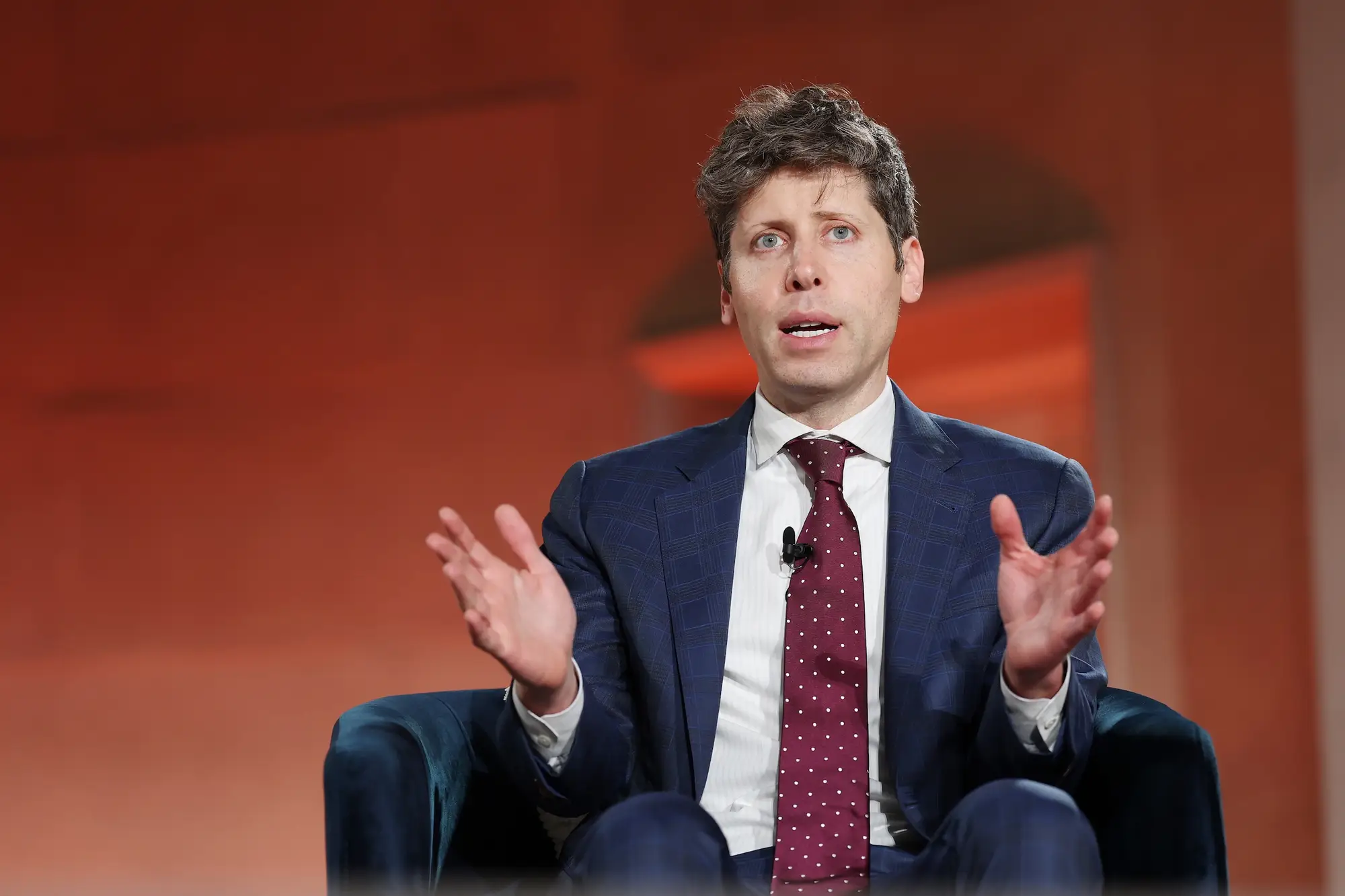
👀 What’s happening: At BlackRock’s infrastructure summit in Washington, Sam Altman said AI has become unpopular in the United States. He argued the technology is being unfairly blamed for electricity price spikes and layoffs. Polls show the mood shift is real. About 57% of voters now say AI’s risks outweigh its benefits.
🌍 How this hits reality: Altman framed the backlash as a misunderstanding, but the context is awkward. OpenAI is racing to build massive data centers, signing defense deals, and pushing automation deeper into companies. When electricity bills rise or layoffs hit headlines, the same expansion suddenly becomes someone else’s narrative problem.
🛎️ Key takeaway: The move reads less like diagnosis and more like PR. Altman wants sympathy for the backlash while keeping distance from the causes behind it. That balancing act may get harder as AI’s real-world footprint keeps expanding.
Altman Is Begging for Sympathy
👀 What’s happening: At BlackRock’s infrastructure summit in Washington, Sam Altman said AI has become unpopular in the United States. He argued the technology is being unfairly blamed for electricity price spikes and layoffs. Polls show the mood shift is real. About 57% of voters now say AI’s risks outweigh its benefits.
NEW TECH
AI Cockroach Scouts Are Coming

👀 What’s happening: A German startup working with NATO aligned defense circles revealed a system that turns live cockroaches into reconnaissance units. Engineers attach a small backpack containing sensors, communications, and edge AI computing to the insects, then guide their movement through neural stimulation signals, effectively steering them like tiny bio robots through environments machines struggle to reach.
🌍 How this hits reality: Micro drones already struggle in rubble, tunnels, and GPS denied spaces where signals fail and rotors cannot maneuver. Insects evolved for exactly those environments. By adding cameras, microphones, and AI processing onto a biological body, militaries gain silent scouts that slip through cracks, persist for hours, and potentially operate in coordinated swarms.
🛎️ Key takeaway: This is not just a strange robotics experiment. It hints at a new reconnaissance layer where biology becomes the chassis and AI the brain. If the model works, future scouting networks may include thousands of cheap, expendable bio machines quietly mapping the battlefield.
LINE
Grammarly Crossed the Line

👀 What’s happening: A journalist just sued Grammarly after discovering the company’s AI editing tool was attaching her name and opinions to writing suggestions she never reviewed. The “Expert Review” feature generated comments labeled as coming from real journalists and academics, without asking their permission first.
🌍 How this hits reality: This case exposes a fragile boundary inside the AI product stack. Models can generate advice at scale, but credibility still comes from human authority. Grammarly tried to bridge that gap by labeling AI output as if it came from known writers. Once real identities were involved, the issue shifted from training data debates to publicity rights and misrepresentation law.
🛎️ Key takeaway: AI can imitate expertise at scale, but identities and trust still belong to humans. Systems that blur that line too aggressively may discover that complete authority remains one of the last boundaries machines cannot simply generate.
DAILY TL;DR
- Anthropic updated Claude to generate embedded charts, diagrams, and other visualizations directly within conversations.
- OpenAI plans to integrate its Sora video model into ChatGPT to boost usage amid growing competition.
- Facebook Marketplace introduced Meta AI features including automatic replies to buyers, AI-generated listings, and seller profile summaries.
- Google introduced Gemini task automation on select smartphones, letting the assistant operate apps directly to complete tasks like ordering rides or food.
- Bumble introduced an AI dating assistant, Bee, that learns users’ values and relationship goals to recommend better matches.
- Microsoft launched Copilot Health, which connects medical records and wearables to help users understand health data and find doctors.
- Google added Gemini-powered “Ask Maps” to Maps to answer complex questions and recommend places.
READ MORE
Let the Future Come to Your Inbox
Stay ahead without drowning in information. We turn the most important signals across AI, tech, marketing, and future products into 5-minute reads you can actually finish.
- AI Secret uncovers what really matters in AI
- Bay Area Letters decodes tech and business shifts from Silicon Valley
- Robotics Herald tracks how robots move from labs into daily life
- Marketing Secret breaks down real growth and go-to-market playbooks
- The Hardwire explores hardware, consumer tech, and what’s coming next
TOGETHER WITH US
AI Secret Media Group is the world’s #1 AI & Tech Newsletter Group, reaching over 2 million leaders across the global innovation ecosystem, from OpenAI, Anthropic, Google, and Microsoft to top AI labs, VCs, and fast-growing startups.
We've helped promote over 500 Tech Brands. Will yours be the next?
Email our co-founder Mark directly at [email protected] if the button fails.
Good Morning, AI Enthusiasts!
The internet is reorganizing itself around autonomous AI systems.

OPENCLAW
The Lobster That Moved $50 Billion
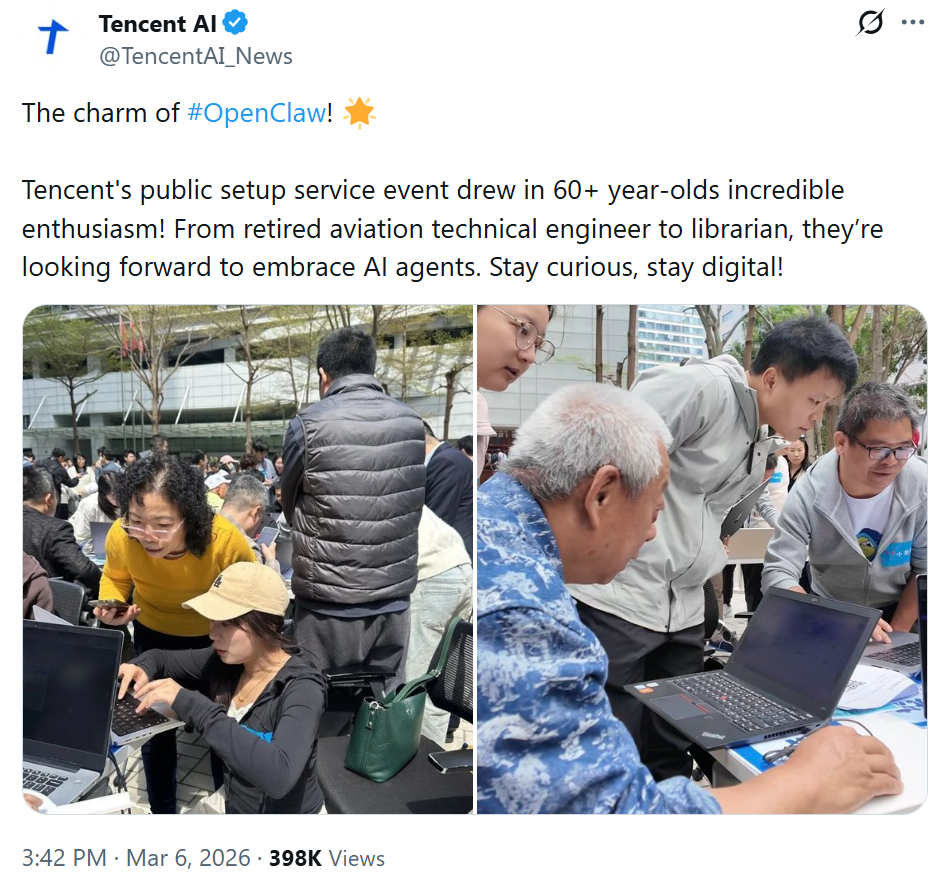
👀 What’s happening: Tencent’s new QClaw agent leaked into Chinese tech communities Sunday night and went viral within hours. By Tuesday the product dominated social media and Tencent stock jumped over 10 percent, adding roughly $50 billion in market value. The key detail is simple. QClaw runs on OpenClaw, the open source agent framework spreading globally.
🌍 How this hits reality: OpenClaw already became one of the fastest growing open source projects ever. QClaw shows something bigger. China’s largest internet company is adopting the same agent standard and connecting it directly to WeChat, a platform used by more than one billion people. That effectively turns OpenClaw from a developer framework into a mass consumer infrastructure layer.
🛎️ Key takeaway: The OpenClaw wave is not slowing down. With Tencent building on top of it, the framework is starting to look less like a project and more like a global standard for AI agents.
TOGETHER WITH NEBIUS
Production Inference for Open-Source LLMs
Nebius Token Factory is built for teams running open-source LLMs in real products. We deliver managed inference with explicit control over execution paths: speculative decoding, cache-aware routing, and post-training tuned to real traffic. Predictable tail latency, stable cost, and production-grade systems for AI that actually ships.
NEW LAUNCH
Musk Steps Into the Agent War
👀 What’s happening: Musk just publicly revealed project Digital Optimus, an AI system designed to operate computers like a human employee. Grok handles reasoning while the agent reads screens, moves the mouse, and executes tasks across software. Internal leaks suggest xAI had already been testing it as a “digital coworker,” sometimes convincing employees they were chatting with a real person.
🌍 How this hits reality: The signal is strategic, not cosmetic. Every major AI lab is now building computer-use agents. OpenAI and Google are pushing autonomous tool agents, Anthropic launched Claude Cowork, and Meta is experimenting with agent networks. Musk entering with a Grok-plus-execution stack means the last major frontier lab has now committed to replacing screen-based labor.
🛎️ Key takeaway: The final holdout just stepped in. With Musk now launching a computer-operating agent alongside Grok, every major AI lab is openly building digital workers. The agent war has officially begun.
Musk Steps Into the Agent War
👀 What’s happening: Musk just publicly revealed project Digital Optimus, an AI system designed to operate computers like a human employee. Grok handles reasoning while the agent reads screens, moves the mouse, and executes tasks across software. Internal leaks suggest xAI had already been testing it as a “digital coworker,” sometimes convincing employees they were chatting with a real person.
BUYOUT
Google Closes $32 Billion Wiz Deal
👀 What’s happening: Google has closed its $32 billion all cash acquisition of Wiz, the largest deal in the company’s history. The cloud security startup built its reputation scanning vulnerabilities across AWS, Azure, and other clouds. After nearly two years of negotiations and regulatory review, Google now owns one of the fastest growing security layers inside enterprise cloud infrastructure.
🌍 How this hits reality: AI systems are exploding across cloud platforms, and every model pipeline multiplies the attack surface. Data lakes, vector databases, training clusters, and identity systems all become targets. Wiz sits exactly at the visibility layer that sees those environments across clouds. By absorbing it, Google gains unprecedented insight into how enterprise AI infrastructure is built and where its weaknesses are.
🛎️ Key takeaway: This looks less like a product acquisition and more like an infrastructure land grab. Control the security layer and you influence the entire AI stack.
Google Closes $32 Billion Wiz Deal
👀 What’s happening: Google has closed its $32 billion all cash acquisition of Wiz, the largest deal in the company’s history. The cloud security startup built its reputation scanning vulnerabilities across AWS, Azure, and other clouds. After nearly two years of negotiations and regulatory review, Google now owns one of the fastest growing security layers inside enterprise cloud infrastructure.
NEW LAUNCH
Nvidia Pivot Hard Toward Agent

👀 What’s happening: NVIDIA just released Nemotron 3 Super, a new open model built explicitly for autonomous agents rather than chat. The architecture mixes Mamba sequence models, Transformer attention, and MoE routing, with a one million token context window and only 12B active parameters out of 120B total. On OpenClaw style agent benchmarks it currently ranks as the strongest open model, and NVIDIA released the full stack including weights, datasets, and training pipeline.
🌍 How this hits reality: Agent systems behave nothing like normal chat apps. Multi agent workflows generate up to fifteen times more tokens because every step pushes tool outputs, reasoning traces, and history back into the model. That quickly destroys compute budgets and causes reasoning drift. Nemotron 3 Super directly targets this with linear time sequence processing, multi token prediction, and MoE routing designed for long running autonomous workflows.
🛎️ Key takeaway: When the strongest open models stop optimizing for chat and start optimizing for agents, the transition is already underway. The AI industry is quietly abandoning the chatbot phase and reorganizing around autonomous agent systems. The agent era has already begun.
Nvidia Pivot Hard Toward Agent
👀 What’s happening: NVIDIA just released Nemotron 3 Super, a new open model built explicitly for autonomous agents rather than chat. The architecture mixes Mamba sequence models, Transformer attention, and MoE routing, with a one million token context window and only 12B active parameters out of 120B total.
DAILY TL;DR
- AI coding startup Cursor is reportedly in talks to raise funding at a roughly $50 billion valuation.
- Amid a Pentagon blacklist dispute, Anthropic launched the Anthropic Institute to study the long-term societal, economic, and safety impacts of AI.
- Meta unveiled four new MTIA chips to power generative AI features and recommendation systems in its apps.
- Nvidia is investing $2 billion in AI cloud company Nebius, sending its stock up about 16% after the announcement.
- Anthropic upgraded Claude with shared context across Excel and PowerPoint plus reusable workflow “Skills” to expand its enterprise productivity tools.
- Replit unveiled its Agent 4 coding agent and raised $400 million, saying the AI can build and run a software startup from scratch.
READ MORE
Let the Future Come to Your Inbox
Stay ahead without drowning in information. We turn the most important signals across AI, tech, marketing, and future products into 5-minute reads you can actually finish.
- AI Secret uncovers what really matters in AI
- Bay Area Letters decodes tech and business shifts from Silicon Valley
- Robotics Herald tracks how robots move from labs into daily life
- Marketing Secret breaks down real growth and go-to-market playbooks
- The Hardwire explores hardware, consumer tech, and what’s coming next
TOGETHER WITH US
AI Secret Media Group is the world’s #1 AI & Tech Newsletter Group, reaching over 2 million leaders across the global innovation ecosystem, from OpenAI, Anthropic, Google, and Microsoft to top AI labs, VCs, and fast-growing startups.
We've helped promote over 500 Tech Brands. Will yours be the next?
Email our co-founder Mark directly at [email protected] if the button fails.
Good Morning, AI Enthusiasts!
Morning arrives, but the internet is no longer waking up alone. What follows are early signals from a world where the primary users of the internet may no longer be humans.
NEW LAUNCH
Google Upgrades Embedding Layer for Memory
👀 What’s happening: Google just released Gemini Embedding 2, its first native multimodal embedding model. Text, images, video, audio, and documents can now be mapped into the same semantic vector space. The model supports up to 8192 tokens, multiple images, short videos, raw audio, and PDF pages in a single embedding pipeline.
🌍 How this hits reality: Agent systems increasingly depend on memory search rather than long prompts. Instead of pushing entire histories into a model context, systems embed data and retrieve only the closest matches. Multimodal embeddings mean screenshots, instructions, and files can sit inside the same searchable memory layer, dramatically reducing token usage during retrieval.
🛎️ Key takeaway: Products like OpenClaw already rely on embedding driven memory search to stay efficient. By upgrading the multimodal embedding layer, Google is preparing the infrastructure for fully agent driven systems where memory retrieval replaces large context windows as the core operating model.
Google Upgrades Embedding Layer for Memory
👀 What’s happening: Google just released Gemini Embedding 2, its first native multimodal embedding model. Text, images, video, audio, and documents can now be mapped into the same semantic vector space. The model supports up to 8192 tokens, multiple images, short videos, raw audio, and PDF pages in a single embedding pipeline.
TOGETHER WITH MYCLAW
Run OpenClaw on MyClaw.ai
Skip Docker, VPS configs, and late-night debugging. With MyClaw.ai, you can launch your agent in minutes and keep it running 24/7 in a dedicated environment built for serious builders.
If you’re serious about OpenClaw, run it properly — with speed and security by default.
SHOPPING
Amazon Blocks AI Shopping Agents
👀 What’s happening: A federal court in San Francisco granted Amazon an injunction blocking Perplexity’s AI browser agent Comet from purchasing products on Amazon. The judge agreed Amazon showed credible evidence the agent accessed password protected accounts with user permission but without Amazon authorization. Perplexity must delete collected Amazon data and has one week to appeal.
🌍 How this hits reality: Amazon is trying to freeze the future at the checkout button and keep its trillion-dollar business by controlling search, recommendation, and payment flows. But the environment is changing fast. Agents like OpenClaw are spreading across developer networks, letting individuals run autonomous agents that act exactly like human users. Millions of independent agents would be far harder to block than one startup.
🛎️ Key takeaway: This ruling buys time for platforms but does not solve the underlying shift. If OpenClaw or MyClaw become normal, enforcement collapses. The next fight will be platforms trying to contain millions of OpenClaws they cannot realistically stop.
Perplexity: Amazon Blocks AI Shopping Agents
👀 What’s happening: A federal court in San Francisco granted Amazon an injunction blocking Perplexity’s AI browser agent Comet from purchasing products on Amazon. The judge agreed Amazon showed credible evidence the agent accessed password protected accounts with user permission but without Amazon authorization. Perplexity must delete collected Amazon data and has one week to appeal.
BUYOUT
Meta Bets on Agent-to-Agent

👀 What’s happening: Meta acquired Moltbook, a small experimental social network built specifically for AI agents. The platform lets agents verify identity, discover other agents, and coordinate tasks on behalf of human owners. Its founders are now joining Meta Superintelligence Labs. Moltbook was originally designed to operate alongside autonomous agent systems like OpenClaw.
🌍 How this hits reality: Most attention in AI is still focused on model capability. But OpenClaws introduce a different problem. They need infrastructure to interact with each other. Identity systems, discovery networks, and coordination layers. If individuals eventually operate dozens of OpenClaws each, millions of agents may begin negotiating, delegating, and executing tasks across platforms.
🛎️ Key takeaway: Meta appears to be betting that the next internet layer is not human social networks but agent networks. If agents become the primary actors online, the real control point shifts to identity and coordination infrastructure. Meta just placed an early marker there.
LLM
LeCun Raises Billion Dollar Bet on World Models
👀 What’s happening: Turing Award Laureate Yann LeCun has launched a new startup called AMI Labs and raised $1.03 billion, the largest seed round in European tech history. The company will focus on “world models” rather than large language models. Investors include Nvidia, Temasek, Eric Schmidt and the Bezos family office. LeCun argues language models cannot reach AGI because they learn words, not how the physical world works.
🌍 How this hits reality: This funding signals that the industry is now backing a second path to intelligence. Training frontier language models already costs hundreds of millions per run, yet they still struggle with physical reasoning. World models target robotics, autonomy and real world prediction. That aligns with the AGI direction Elon Musk has repeatedly described for systems that understand and simulate reality.
🛎️ Key takeaway: Another heavyweight has stepped behind the world model thesis. If this approach begins producing usable physical intelligence, the race to AGI may shift from scaling language models to learning how the world actually behaves.
Elon Musk: LeCun Raises Billion Dollar Bet on World Models
Training frontier language models already costs hundreds of millions per run, yet they still struggle with physical reasoning. World models target robotics, autonomy and real world prediction. That aligns with the AGI direction Elon Musk has repeatedly described for systems that understand and simulate reality.
DAILY TL;DR
- OpenAI introduced dynamic visual explanations in ChatGPT, letting users interact with visuals to understand math and science concepts.
- NVIDIA released the Nemotron-Terminal framework and Terminal-Corpus dataset to generate training data for AI terminal agents.
- Google upgraded Gemini for Workspace to generate Docs, Sheets, and Slides by pulling data across Gmail, Drive, and other apps.
- Nvidia partnered with Mira Murati’s Thinking Machines Lab and will provide at least one gigawatt of compute to train its AI models.
- Amazon expanded its Health AI assistant from One Medical to its website and app, enabling health questions, medical record explanations, and doctor connections.
- A RevenueCat report found that AI-powered apps monetize users well early on but struggle with long-term subscriber retention compared with non-AI apps.
- Ford launched Ford Pro AI, adding a generative AI chatbot to its fleet software to analyze vehicle data and assist fleet managers.
READ MORE
Let the Future Come to Your Inbox
Stay ahead without drowning in information. We turn the most important signals across AI, tech, marketing, and future products into 5-minute reads you can actually finish.
- AI Secret uncovers what really matters in AI
- Bay Area Letters decodes tech and business shifts from Silicon Valley
- Robotics Herald tracks how robots move from labs into daily life
- Marketing Secret breaks down real growth and go-to-market playbooks
- The Hardwire explores hardware, consumer tech, and what’s coming next
TOGETHER WITH US
AI Secret Media Group is the world’s #1 AI & Tech Newsletter Group, reaching over 2 million leaders across the global innovation ecosystem, from OpenAI, Anthropic, Google, and Microsoft to top AI labs, VCs, and fast-growing startups.
We've helped promote over 500 Tech Brands. Will yours be the next?
Email our co-founder Mark directly at [email protected] if the button fails.
Good Morning, AI Enthusiasts!
The interface layer is shifting to models. Legacy authority does not survive interface loss.
CLAUDE
Trump Ban Sends Claude to #1

👀 What’s happening: After Anthropic’s talks with the US Department of Defense collapsed over military AI limits, the White House moved to ban Claude from federal use and labeled it a supply chain threat. Within 24 hours of being publicly targeted, Claude shot from outside the top 100 to number one on the US and Canada App Store free charts, overtaking ChatGPT and Gemini.
🌍 How this hits reality: A federal ban was supposed to isolate a vendor. Instead, it converted policy punishment into consumer demand. SensorTower data shows a direct ranking spike tied to the announcement. Social feeds filled with subscription cancellations and data export tutorials. Billions in defense linked compute shifted toward OpenAI, but retail distribution shifted the other way. Politics instantly rewired both infrastructure allocation and user flows.
🛎️ Key takeaway: State pressure can redirect contracts overnight, but it can also manufacture market momentum. In AI, regulatory confrontation now doubles as distribution strategy, whether intentional or not.
OpenAI: Trump Ban Sends Claude to #1
Within 24 hours of being publicly targeted, Claude shot from outside the top 100 to number one on the US and Canada App Store free charts, overtaking ChatGPT and Gemini.
Trump Ban Sends Claude to #1
👀 What’s happening: After Anthropic’s talks with the US Department of Defense collapsed over military AI limits, the White House moved to ban Claude from federal use and labeled it a supply chain threat.
TOGETHER WITH MYCLAW
Run OpenClaw on MyClaw.ai
Skip Docker, VPS configs, and late-night debugging. With MyClaw.ai, you can launch your agent in minutes and keep it running 24/7 in a dedicated environment built for serious builders.
If you’re serious about OpenClaw, run it properly — with speed and security by default.
RECORD
OpenAI’s $110 Billion Round Breaks Records
👀 What’s happening: OpenAI just closed a 110 billion dollar private round, the largest in history. Amazon committed 50 billion. Nvidia and SoftBank added 30 billion each. The pre money valuation stands at 730 billion. The round is still open, meaning the final number could climb even higher.
🌍 How this hits reality: The previous record was OpenAI’s own 40 billion raise at a 300 billion valuation in 2025. Now the capital stack has nearly tripled in under a year. Hyperscaler capex is already approaching half a trillion dollars annually. This locks AI leadership into balance sheets measured in hundreds of billions.
🛎️ Key takeaway: The ceiling for AI financing just reset. Only companies aligned with trillion dollar platforms can compete at this layer. The frontier is no longer model quality alone. It is access to unprecedented capital scale.
OpenAI’s $110 Billion Round Breaks Records
🌍 How this hits reality: The previous record was OpenAI’s own 40 billion raise at a 300 billion valuation in 2025. Now the capital stack has nearly tripled in under a year. Hyperscaler capex is already approaching half a trillion dollars annually. This locks AI leadership into balance sheets measured in hundreds of billions.
WIKIPEDIA
Elon Musk: Famous Last Words
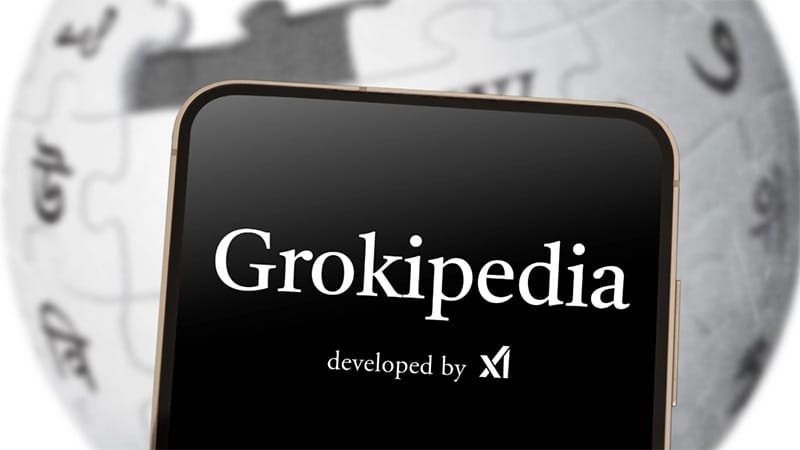
👀 What’s happening: Wikipedia co-founder Jimmy Wales dismissed Grokipedia as a ridiculous imitation and said there is no real competition. Elon Musk answered on X with two words: “famous last words.” The tone snapped instantly. Another co-founder, Larry Sanger, then said Grokipedia’s early build felt impressive, and Musk pushed further, claiming even version 0.1 already beats Wikipedia.
🌍 How this hits reality: Wikipedia runs on human editors, neutrality doctrine, and slow consensus across 300 plus languages. That model was built for a static web. Grokipedia runs on model iteration and compute scale. One side debates edits. The other retrains weights. When answers arrive instantly and feel coherent, users stop caring how consensus was formed.
🛎️ Key takeaway: “Famous last words” cuts because disruption rarely announces itself politely. If AI generated knowledge keeps compounding, Wikipedia’s process becomes drag, not moat.
Elon Musk: Famous Last Words
Elon Musk answered on X with two words: “famous last words.” The tone snapped instantly. Another co-founder, Larry Sanger, then said Grokipedia’s early build felt impressive, and Musk pushed further, claiming even version 0.1 already beats Wikipedia.
DAILY TL;DR
- OpenAI outlined its Pentagon deal, emphasizing cloud deployment and three red lines amid surveillance and weaponization concerns.
- Despite Trump’s ban on Anthropic’s Claude, the U.S. used the AI for intelligence and targeting in airstrikes against Iran.
- ETH Zurich and Anthropic report that AI models can cheaply identify anonymous accounts within minutes, with up to two-thirds accuracy.
- A study found that frontier models including GPT-5 can lose up to 33% accuracy in multi-turn chats and recommend restarting with a summary.
- Perplexity open-sourced two embedding models that match Google and Alibaba while using far less memory.
TRENDING
Daily AI Launches
- Notra has launched a tool that automatically generates marketing copy and changelogs directly from your GitHub and Linear activity.
- OpenFang has launched a highly secure, single-binary, Rust-based open-source Agent OS with built-in sandboxing and automated scheduling.
- Voicr has launched an offline, privacy-first voice dictation app that instantly polishes your speech into customizable text formats.
- Simplora has launched a comprehensive AI meeting assistant with advanced prep workflows, offering unlimited free AI notes and chat.
Featured AI Tools
- 🤖 Tavus PALs are AI companions that text you, remember everything, and talk to you face-to-face.
- ✨ MuseMail.ai makes creating stunning, on-brand emails from one prompt with AI precision.
- 🪶 CopyOwl is the First AI Research Agent, deep research on any topic in one click.
- 🦾 Flot AI writes, reads, and remembers across any apps and webs.
READ MORE
Let the Future Come to Your Inbox
Stay ahead without drowning in information. We turn the most important signals across AI, tech, marketing, and future products into 5-minute reads you can actually finish.
- AI Secret uncovers what really matters in AI
- Bay Area Letters decodes tech and business shifts from Silicon Valley
- Robotics Herald tracks how robots move from labs into daily life
- Marketing Secret breaks down real growth and go-to-market playbooks
- The Hardwire explores hardware, consumer tech, and what’s coming next
TOGETHER WITH US
AI Secret Media Group is the world’s #1 AI & Tech Newsletter Group, reaching over 2 million leaders across the global innovation ecosystem, from OpenAI, Anthropic, Google, and Microsoft to top AI labs, VCs, and fast-growing startups.
We've helped promote over 500 Tech Brands. Will yours be the next?
Email our co-founder Mark directly at [email protected] if the button fails.
Good Morning, AI Enthusiasts!
I was half asleep when the barrage of comments on X woke me up: yet another Chinese giant model had joined the fray.

NEW LAUNCH
MiniMax M2.5 Release Shakes X Overnight
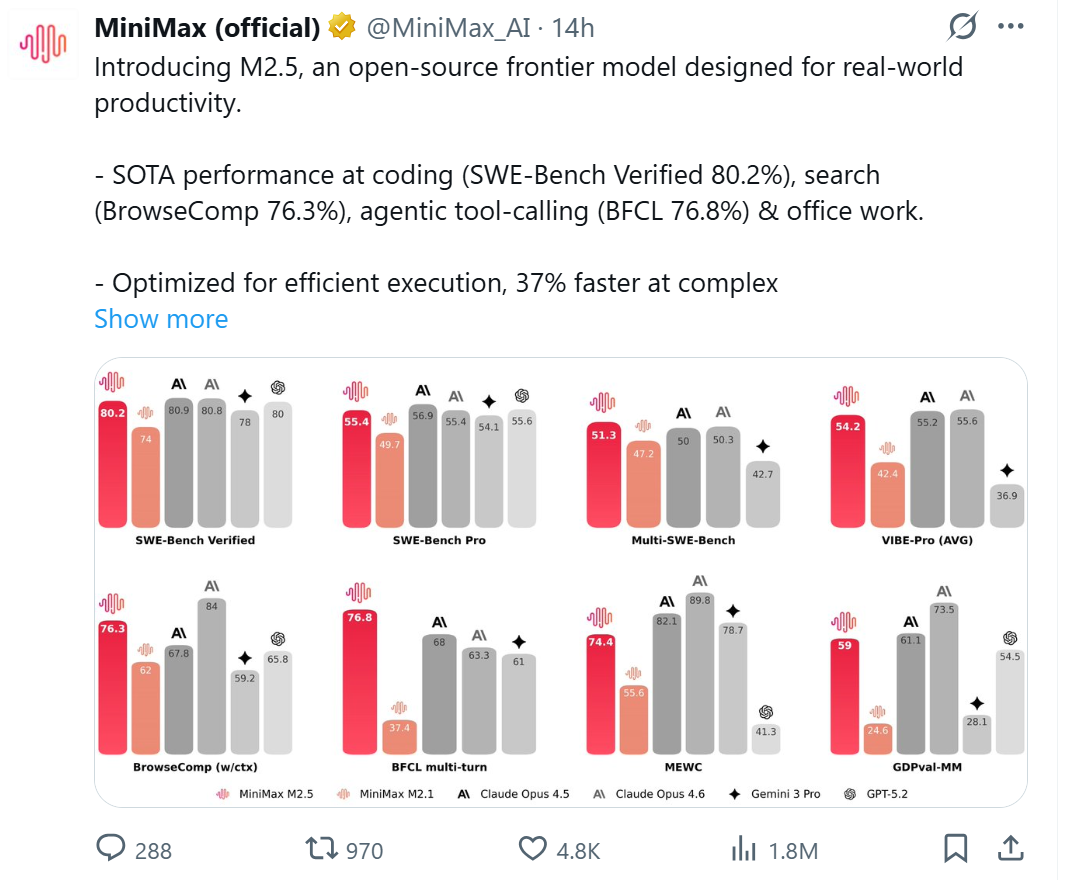
👀 What’s happening: MiniMax released M2.5 in the early hours, positioning it as an open source frontier model built for real productivity. Within minutes, benchmark screenshots spread across X. Posts citing 80.2 percent on SWE Bench Verified and strong search and agent scores flooded timelines. In a few hours, the conversation passed 1.8 million views and dominated tech feeds.
🌍 How this hits reality: The reaction was not just about performance. It was about price and speed landing at the same time. M2.5 claims 37 percent faster execution and pricing near one dollar per hour at 100 tps. That shifts the economics of long running agents for startups watching burn rates and API bills more closely than ever.
🛎️ Key takeaway: If the numbers hold in production, agent deployment moves from experiment to baseline infrastructure. The real race shifts to orchestration, distribution, and who captures developer mindshare while attention is still hot.
MiniMax introduces M2.5 for productivity tasks
👀 What’s happening: MiniMax released M2.5 in the early hours, positioning it as an open source frontier model built for real productivity. Within minutes, benchmark screenshots spread across X. Posts citing 80.2 percent on SWE Bench Verified and strong search and agent scores flooded timelines.
TOGETHER WITH QODER
Free on Qoder — With the New MiniMax-M2.5
MiniMax-M2.5 just launched — the fastest agentic model among mainstream LLMs. Built natively for agent workflows, it runs 3x faster than Opus at a fraction of the cost.
Qoder is offering 3 days of free access to celebrate the launch. No credit card required.
If you're building AI agents or want to test something beyond Claude, this is your window.
CODING
Musk Says Intent Will End Coding

👀 What’s happening: Elon Musk says programming dies this year. Not evolves. Dies. By December, AI will soon skip coding languages and compilers and generate machine instructions directly. No writing syntax. No debugging scripts. Just describe what you want and the system builds it. Linked with Neuralink, he calls it imagination to software.
🌍 How this hits reality: Software runs in layers. Humans write Python or C++, which compiles into the machine instructions CPUs actually execute. Tools like Lovable still sit inside that stack, generating traditional code under the hood, yet they have already accelerated delivery by orders of magnitude. If AI skips the human readable layer entirely and moves straight from intent to optimized machine instructions, the compression would be extreme. What feels fast now would look primitive.
🛎️ Key takeaway: If intent replaces syntax, the leverage shifts from engineers to those who define problems clearly. The bottleneck moves upstream. AI infra and chip efficiency become the real choke points, not coding talent.
Musk Says Intent Will End Coding
👀 What’s happening: Elon Musk says programming dies this year. Not evolves. Dies. By December, AI will soon skip coding languages and compilers and generate machine instructions directly.
TOGETHER WITH MYCLAW
MiniMax M2.5 is Already Live on MyClaw
If you’ve been watching the benchmarks on X, now is the time to test it in the real world.
MyClaw.ai lets you safely run OpenClaw with new MiniMax M2.5 model in the cloud that stays online 24/7. No local setup. No fragile environments. Just plug in, deploy your agent, and see how M2.5 performs on actual workflows.
Coding, search, long running tasks. Try it under real load, not just screenshots.
Spin up your OpenClaw with M2.5 on MyClaw and experience the difference yourself.
MISTRAL
Europe Turns Mistral Into Strategic AI Hedge

👀 What’s happening: Mistral’s annualized revenue surged from $20 million to over $400 million within a year, with a stated goal of reaching $1 billion in recurring revenue by year end. More than 100 enterprise clients, including ASML and TotalEnergies, now rely on it. Around 60 percent of revenue comes from Europe as local governments and boardrooms push for digital sovereignty.
🌍 How this hits reality: The EU still sources over 80 percent of its digital services from foreign, mostly American providers. That dependency is now viewed as geopolitical exposure. Mistral is committing 1.2 billion euros to Swedish data centers with EcoDataCenter, starting with a 23 megawatt site. Infrastructure runs customer workloads by day and trains models at night. This is a real try at sovereign vertical integration, not just scale.
🛎️ Key takeaway: If procurement shifts from performance to jurisdiction, regional AI stacks gain structural advantage. Expect more capital into local compute, tighter data residency rules, and mounting pressure on US hyperscalers across Europe.
Europe Turns Mistral Into Strategic AI Hedge
👀 What’s happening: Mistral’s annualized revenue surged from $20 million to over $400 million within a year, with a stated goal of reaching $1 billion in recurring revenue by year end. More than 100 enterprise clients, including ASML and TotalEnergies, now rely on it.
PENTAGON
Pentagon Forces AI Into Classified Tradeoff Zone

👀 What’s happening: The Pentagon is pressing OpenAI, Anthropic, Google and xAI to deploy frontier models onto classified military networks, with fewer built in restrictions than civilian users face. Officials say they want AI operating across all classification levels, including mission planning and potentially weapons related systems.
🌍 How this hits reality: Classified networks handle targeting data, operational plans and sensitive intelligence. Generative models can synthesize massive data flows faster than human teams, which matters when millions of defense personnel already use AI on unclassified systems. But model errors inside mission environments carry consequences measured in lives, not bug reports.
🛎️ Key takeaway: This is a dual constraint game. The military wants speed and dominance. AI firms want boundaries and control. Whichever side yields defines how frontier models integrate into sovereign war infrastructure.
DAILY TL;DR
OpenClaw Trending
- Legendary said on X that China’s newly released GLM-5 and Kimi K2.5 frontier models are running in his workflows via OpenClaw, and he compared the two.
- Kyohei Ogawa suggested OpenClaw users buy a DockKit-compatible charger and give it a “face” and “body” to create a more companion-like presence.
- OpenClaw has surpassed VSCode in GitHub stars and joked it could become an AI-powered one-person unicorn.
- Frank said that the real gold rush begins when even the “dumbest guy you know” is making six to seven figures from OpenClaw wrappers.
AI Trending
- A Malaysian man bought the domain AI.com in 1993 for about $3–4 and sold it in 2025 for roughly $75–80 million.
- Blackstone increased its investment in Anthropic to about $1 billion at a $350 billion valuation.
- ByteDance launched its video AI model Seedance 2.0, which went viral in China and drew comparisons to DeepSeek.
- As OpenAI moves toward ads in ChatGPT, Anthropic expanded Claude’s free features, including file editing and Skills, to attract users.
- India requires platforms to label all AI-generated content by February 20, pressuring Instagram and X despite immature deepfake detection tools.
TRENDING
Daily AI Launches
- Tines offers a secure, vendor-agnostic platform for building and monitoring intelligent automation workflows.
- Migma AI has launched an AI email platform with one-click domain setup, API access, and precise conversion tracking.
- Subscription Day² has launched on iOS, bringing its redesigned Mac subscription tracking tools to the iPhone.
- Revo AI Email Assistant has launched a tool that connects Slack, CRM, and meetings to auto-answer emails in Gmail and Outlook.
Featured AI Tools
- ✨ MuseMail.ai makes creating stunning, on-brand emails from one prompt with AI precision.
- 🪶 CopyOwl is the First AI Research Agent, deep research on any topic in one click.
- 🦾 Flot AI writes, reads, and remembers across any apps and webs.
READ MORE
Let the Future Come to Your Inbox
Stay ahead without drowning in information. We turn the most important signals across AI, tech, marketing, and future products into 5-minute reads you can actually finish.
- AI Secret uncovers what really matters in AI
- Bay Area Letters decodes tech and business shifts from Silicon Valley
- Robotics Herald tracks how robots move from labs into daily life
- Marketing Secret breaks down real growth and go-to-market playbooks
- The Hardwire explores hardware, consumer tech, and what’s coming next
- Oncely helps you discover the next wave of AI products and launches
TOGETHER WITH US
AI Secret Media Group is the world’s #1 AI & Tech Newsletter Group, reaching over 2 million leaders across the global innovation ecosystem, from OpenAI, Anthropic, Google, and Microsoft to top AI labs, VCs, and fast-growing startups.
We've helped promote over 500 Tech Brands. Will yours be the next?
Email our co-founder Mark directly at [email protected] if the button fails.
🛎️ Musk Thinks AGI Is Brute Force
Plus: A Corporate Guillotine, DeepSeek Finally Needs Money
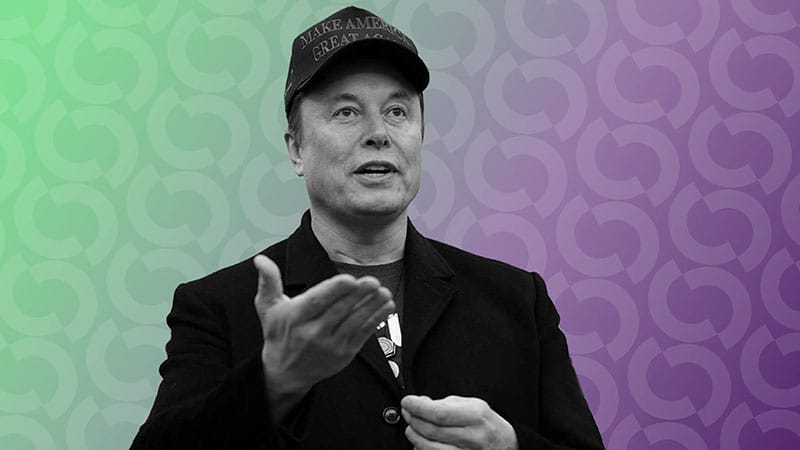
🛎️ Mythos Preview Leaks
Plus: OpenAI Credibility Crisis Deepens, Musk Pulls Intel Into TeraFab
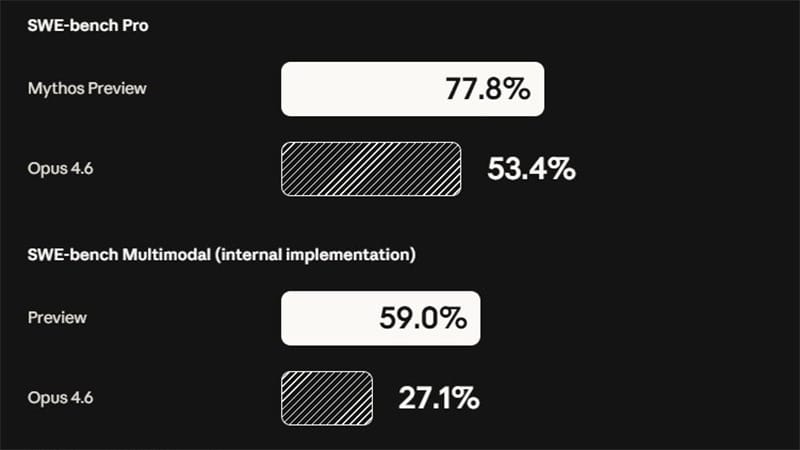
🛎️ Musk Pushes the Dyson Sphere
Plus: Independent Developers Are Doomed, AI Copying Norms
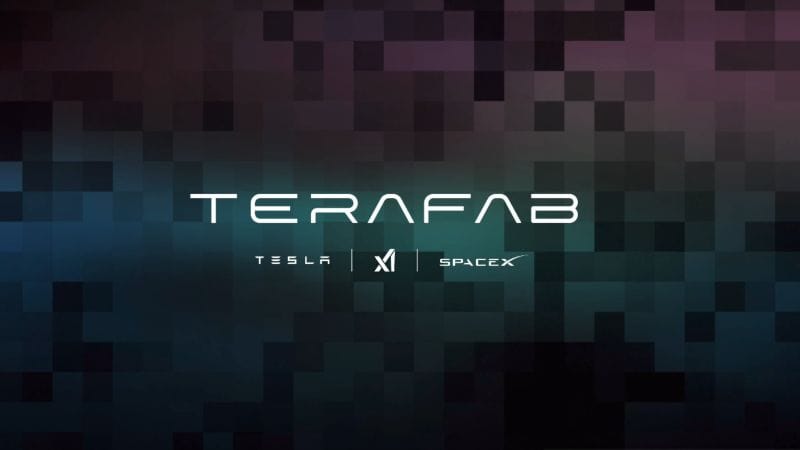
🛎️ First Model Built for OpenClaw
Plus: Pokemon's Free AI Labor, Elon Musk Resets xAI

🛎️ Self Improvement Has Already Begun
Plus: Altman Is Begging for Sympathy, AI Cockroach, Grammarly Crossed the Line

🛎️ A $50 Billion Lobster
Plus: Musk Steps Into the Agent War, Google Closes $32 Billion Deal
🛎️ Embedding Layer for Memory
Plus: Amazon Blocks AI Shopping, Meta Bets on Agent-to-Agent

🛎️ Trump Ban Sends Claude to #1
Plus: OpenAI’s New $110 Billion, Famous Last Words

🛎️ MiniMax Shakes X Overnight
Plus: Musk Says Intent Will End Coding, Mistral Into AI Hedge