🛎️ Meta Towards Tokenized
Plus: Expert Prompts Were Hurting Accuracy, OpenAI aims at search defaults
Read the story Subscribe
Reporting and context on Google, with a closer look at the decisions and developments that matter.
Get AI Secret’s free daily briefing, including Google and the wider AI industry.

Google is part of Alphabet. This topic follows its AI research, Gemini models, Google DeepMind, cloud infrastructure and consumer products.
Sources checked . Selected company background and milestones.
Selected milestones, newest first. Earlier history is available below.
Google brings the Brain team and DeepMind together as Google DeepMind.
Source: GoogleMore than 10 years ago.
Relevant sections from the articles on this page. Explore older coverage below.
More coverage

Good Morning, AI Enthusiasts!
Search, work, identity, and authority are converging into one layer—measured, optimized, and redistributed by agents.

TOKEN

👀 What’s happening: Mark Zuckerberg is building a personal AI “CEO agent” that bypasses management layers and pulls operational data directly across Meta. At the same time, AI usage is now tied to employee evaluation. If this system works, decision-making shifts from human judgment to measurable outputs generated and tracked by agents.
🌍 How this hits reality: Meta employs around 70,000 people, many in coordination-heavy roles where impact is hard to quantify. Agents change that. Work becomes traceable, comparable, and priced in tokens. Once output is measurable, roles that existed because managers could not clearly evaluate them become exposed and easier to remove.
🛎️ Key takeaway: If this model holds, white-collar ambiguity disappears. Jobs stop being defended by narrative and start being judged by output. That makes a large portion of Meta’s workforce structurally replaceable, with employment tied directly to measurable agent-level productivity.
👀 What’s happening: Mark Zuckerberg is building a personal AI “CEO agent” that bypasses management layers and pulls operational data directly across Meta. At the same time, AI usage is now tied to employee evaluation. If this system works, decision-making shifts from human judgment to measurable outputs generated and tracked by agents.
👀 What’s happening: Mark Zuckerberg is building a personal AI “CEO agent” that bypasses management layers and pulls operational data directly across Meta. At the same time, AI usage is now tied to employee evaluation. If this system works, decision-making shifts from human judgment to measurable outputs generated and tracked by agents.
TOGETHER WITH MYCLAW

Skip Docker, VPS configs, and late-night debugging. With MyClaw.ai, you can launch your agent in minutes and keep it running 24/7 in a dedicated environment built for serious builders.
If you’re serious about OpenClaw, run it properly — with speed and security by default.
RESEARCH
👀 What’s happening: A new USC paper tested one of the most repeated prompt tricks in AI: telling a model “you are an expert.” The result is uncomfortable. Expert personas improved alignment-heavy tasks like style, refusal, and preference matching, but they consistently reduced accuracy on knowledge retrieval and factual judgment benchmarks. On MMLU, the baseline was 71.6 percent, while persona versions fell as low as 66.3 percent.
🌍 How this hits reality: This exposes a mismatch in how AI is evaluated and deployed. Systems are rewarded for sounding authoritative, not being correct. Persona prompting boosts alignment tasks like tone, refusal, and formatting, but interferes with direct knowledge retrieval. In one case, a simple probability problem is solved correctly without persona, then answered incorrectly after adding a “math expert” role.
🛎️ Key takeaway: Roleplay is not a capability upgrade, it is a tradeoff. The paper’s approach shows that selectively disabling personas preserves accuracy while keeping alignment gains. Static roleplay layers are becoming unnecessary overhead in real systems.
SEARCH
👀 What’s happening: OpenAI has formally asked UK regulators to require Google to include ChatGPT in Android and Chrome “choice screens.” It argues AI chatbots now function as search engines, pushing to be treated as a default option alongside Bing and others in the core search distribution layer. Its case rests on two points: users already use ChatGPT for discovery, and Google itself has turned search into AI answers, redefining the category.
🌍 How this hits reality: Search drives over $60 billion annually for Google, anchored by default placement across billions of devices. OpenAI is leveraging regulatory language around “search competition” to expand the definition and insert itself. If it succeeds, even small default shifts can move user behavior at scale, but control over Android and Chrome keeps Google’s grip structurally intact for now.
🛎️ Key takeaway: The argument holds together, but this is really about grabbing distribution. OpenAI can win recognition as search, yet displacing Google’s default position remains structurally difficult.
👀 What’s happening: OpenAI has formally asked UK regulators to require Google to include ChatGPT in Android and Chrome “choice screens.” It argues AI chatbots now function as search engines, pushing to be treated as a default option alongside Bing and others in the core search distribution layer.
👀 What’s happening: OpenAI has formally asked UK regulators to require Google to include ChatGPT in Android and Chrome “choice screens.” It argues AI chatbots now function as search engines, pushing to be treated as a default option alongside Bing and others in the core search distribution layer.
LINE
👀 What’s happening: A founder built a one person company and let an AI cofounder run the account on LinkedIn. It posted, engaged, and gained real traction. LinkedIn noticed, invited them to a private session, leaned in and showed clear interest. Days later, under pressure, it banned the same AI account.
🌍 How this hits reality: This is not moderation, it is confusion. LinkedIn feeds on AI generated content but rejects AI identities when it becomes visible. Meanwhile, AI already drives a large share of posts, videos, and music across platforms. LinkedIn runs on AI output but pretends users are still human.
🛎️ Key takeaway: LinkedIn has no line. It wants AI engagement without admitting AI presence. The real filter should be quality, not origin. If platforms keep policing whether something is AI instead of whether it is good, they lose both credibility and control.
DAILY TL;DR
READ MORE
Stay ahead without drowning in information. We turn the most important signals across AI, tech, marketing, and future products into 5-minute reads you can actually finish.
TOGETHER WITH US
AI Secret Media Group is the world’s #1 AI & Tech Newsletter Group, reaching over 2 million leaders across the global innovation ecosystem, from OpenAI, Anthropic, Google, and Microsoft to top AI labs, VCs, and fast-growing startups.
We've helped promote over 500 Tech Brands. Will yours be the next?
Email our co-founder Mark directly at [email protected] if the button fails.
Good Morning, AI Enthusiasts!
What used to be fragmented workflows is now compressing into a single loop where agents see, decide, and act.

NEW LAUNCH
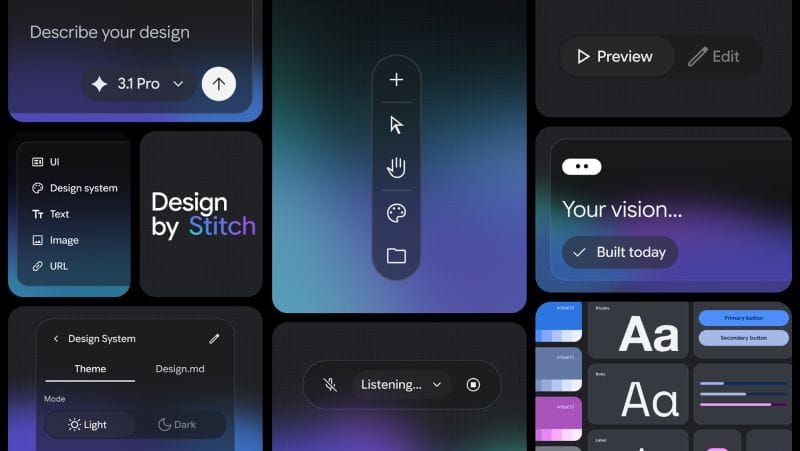
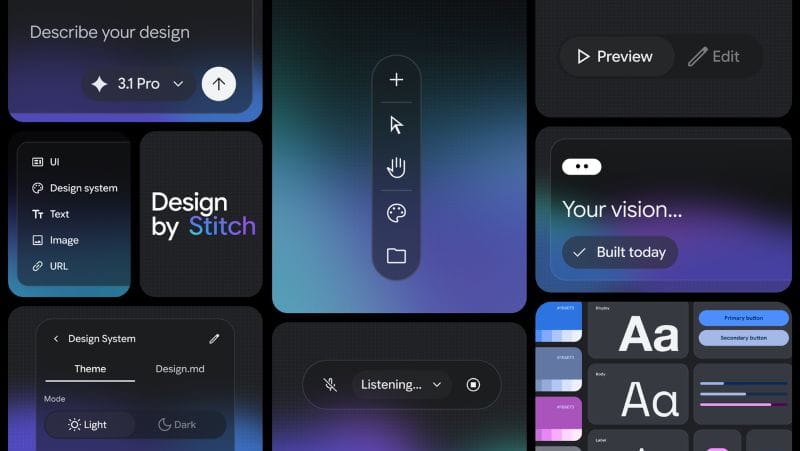
👀 What’s happening: Google turned Stitch into a full AI-native product creation system built on “vibe design.” You describe intent, and it generates UI, user flows, and interactive prototypes instantly. A persistent agent critiques, iterates, and connects outputs straight into developer pipelines without traditional design steps.
🌍 How this hits reality: Entire workflows are getting deleted. What used to require designers, product managers, and frontend engineers across multiple tools now compresses into one loop. Hours of wireframing, alignment, and handoff shrink into minutes. Toolchains fragmenting across Figma, docs, and code start to look structurally obsolete.
🛎️ Key takeaway: This is not a better design tool. It is the removal of design as a standalone phase. If this direction holds, product creation becomes prompt-driven, and entire categories of tools and roles start collapsing into one agent-controlled surface.
👀 What’s happening: Google turned Stitch into a full AI-native product creation system built on “vibe design.” You describe intent, and it generates UI, user flows, and interactive prototypes instantly. A persistent agent critiques, iterates, and connects outputs straight into developer pipelines without traditional design steps.
TOGETHER WITH FIVERR

Gone are the days of sifting through endless profiles. Our freelancers have trained their own personal AI models. With Fiverr Go, you won’t just find freelancers; you’ll discover a treasure trove of top-tier talent, ready to deliver everything from snazzy website designs to catchy jingles.
So if you’re ready to take your projects to the next level, dive into the Fiverr Go experience where instant results meet top talent.
OPENCLAW
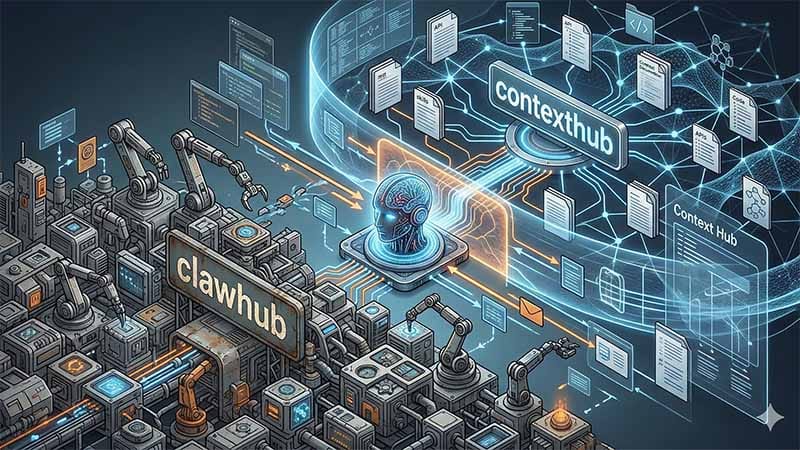
👀 What’s happening: Andrew Ng introduced Context Hub and shipped it as an open source CLI and MCP layer for agents. On the surface it fixes API hallucination with curated docs. Underneath, it is a direct attempt to standardize how agents acquire knowledge, challenging OpenClaw’s ClawHub skill based ecosystem.
🌍 How this hits reality: ClawHub runs on 300k plus weekly installs by packaging workflows as executable skills. Context Hub instead scales across 600 plus libraries and inserts itself before execution. If adopted, it rewires how skills are built, shifting from handcrafted playbooks to doc driven composition. That changes where control sits.
🛎️ Key takeaway: This is a quiet power grab over the agent stack. If Context Hub becomes the default knowledge layer, it can reshape how ClawHub skills are written, extended, and distributed. The stack tilts toward whoever owns the interface between knowing and doing.
CHEAT
👀 What’s happening: Rakuten Japan launched Rakuten AI 3.0 and framed it as a major domestic model. Within hours, developers found direct links to DeepSeek V3 in its configuration. That model is under Apache 2.0, which allows reuse with attribution. Rakuten failed to clearly disclose this at release and only reacted after exposure.
🌍 How this hits reality: Copying and adapting models has become a gray but accepted layer of the AI stack. Teams build on open weights to save time and compute. Apache 2.0 is the contract that keeps this workable by requiring attribution and license retention. Ignoring that is not a shortcut. It breaks the system others rely on.
🛎️ Key takeaway: This crosses a baseline, not just a norm. If large companies treat open licenses as optional, enforcement tightens fast.
PRICE WAR

👀 What’s happening: Grok Imagine just swept DesignArena, a user voting arena where people compare AI generated videos side by side. It ranked first in video generation, image to video, and editing, all above 1290 Elo, beating Veo and Sora. Musk quickly amplified the result across X.
🌍 How this hits reality: The real shift is pricing. Grok Imagine is generating video at roughly 4 dollars per minute, compared to 12 for Veo and near 30 for Sora, while delivering faster turnaround near one minute per task. That collapses production cost structures across content, ads, and synthetic data pipelines.
🛎️ Key takeaway: This opens a price war in video models. If competitors follow, margins compress and volume explodes. Video generation starts behaving like compute, not a premium feature, and becomes a default layer inside agents and workflows.
DAILY TL;DR
READ MORE
Stay ahead without drowning in information. We turn the most important signals across AI, tech, marketing, and future products into 5-minute reads you can actually finish.
TOGETHER WITH US
AI Secret Media Group is the world’s #1 AI & Tech Newsletter Group, reaching over 2 million leaders across the global innovation ecosystem, from OpenAI, Anthropic, Google, and Microsoft to top AI labs, VCs, and fast-growing startups.
We've helped promote over 500 Tech Brands. Will yours be the next?
Email our co-founder Mark directly at [email protected] if the button fails.
Good Morning, AI Enthusiasts!
Agents are no longer experiments. They are becoming the system.
NEW LAUNCH
👀 What’s happening: Mistral released Forge at GTC, a platform that lets enterprises train full AI models from scratch using their own data instead of adapting external ones. It bundles infrastructure, data pipelines, and embedded engineers, pushing companies to build internal model “brains” designed to power agent systems.
🌍 How this hits reality: This breaks from the RAG and fine-tuning era where intelligence stayed with API providers. Now the model, data, and control loop move inside the company. When paired with frameworks like OpenClaw, these private models can directly drive agents that understand internal tools, workflows, and decisions at a much deeper level.
🛎️ Key takeaway: Mistral is aligning around private brains plus agent frameworks as the new stack. If this scales, enterprise AI shifts from using agents on rented intelligence to deploying agents powered by fully owned, deeply embedded cognitive systems.
👀 What’s happening: Mistral released Forge at GTC, a platform that lets enterprises train full AI models from scratch using their own data instead of adapting external ones. It bundles infrastructure, data pipelines, and embedded engineers, pushing companies to build internal model “brains” designed to power agent systems.
TOGETHER WITH MYCLAW
Skip Docker, VPS configs, and late-night debugging. With MyClaw.ai, you can launch your agent in minutes and keep it running 24/7 in a dedicated environment built for serious builders.
If you’re serious about OpenClaw, run it properly — with speed and security by default.
CODING
👀 What’s happening: OpenAI is cutting non-core bets and refocusing on coding and enterprise while simultaneously pushing Codex through an aggressive six-week sprint. Internal mandate now requires engineers to default to agents over traditional tools. Rapid releases, usage spikes, and leadership reshuffling all point to one goal: challenge Claude Code directly.
🌍 How this hits reality: Coding agents have proven to be the highest-value AI workload. Claude Code is already driving billions in annualized revenue, locking in developers and enterprise pipelines. OpenClaw adds another layer, turning coding into continuous agent execution loops. This is no longer tooling, it is the control plane for how software gets built.
🛎️ Key takeaway: OpenAI is not conceding this layer. Codex is being positioned to pressure Claude across speed, cost, and execution depth. Coding and enterprise are now the core battlefield, and neither side is stepping back.
👀 What’s happening: OpenAI is cutting non-core bets and refocusing on coding and enterprise while simultaneously pushing Codex through an aggressive six-week sprint. Internal mandate now requires engineers to default to agents over traditional tools. Rapid releases, usage spikes, and leadership reshuffling all point to one goal: challenge Claude Code directly.
Claude Code is already driving billions in annualized revenue, locking in developers and enterprise pipelines. OpenClaw adds another layer, turning coding into continuous agent execution loops. This is no longer tooling, it is the control plane for how software gets built.
AGENTS
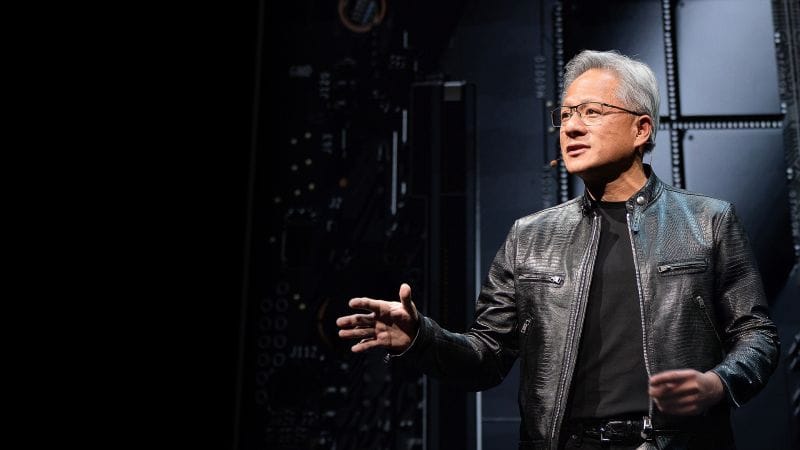
👀 What’s happening: After GTC 2026, Jensen Huang reframed the last year of AI progress in a Stratechery interview. The real shift was reasoning, not generation. Models can now reflect, search, and complete tasks, which makes agents actually usable. Nvidia is now pushing low latency inference as a product, arguing speed is the next constraint.
🌍 How this hits reality: The industry quietly crossed a line. Once AI can complete tasks, latency becomes visible everywhere. Agent workflows stack multiple steps, often 5 to 20 loops per task. At 2 seconds per step, that is minutes lost per job. Huang’s point is that high value users will pay for 10 times faster token generation because output speed directly converts into developer throughput and system utilization.
🛎️ Key takeaway: “Usable” is already solved. The new standard is speed again. If this direction holds, the next competitive edge in AI will not be smarter models alone, but how fast they can think, act, and finish work at scale.
The real shift was reasoning, not generation. Models can now reflect, search, and complete tasks, which makes agents actually usable. Nvidia is now pushing low latency inference as a product, arguing speed is the next constraint.
WEATHER
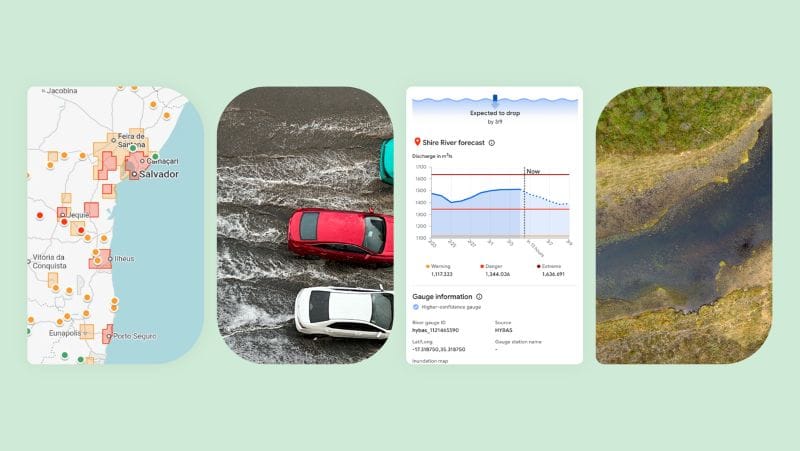
👀 What’s happening: Google Research has open sourced Groundsource, a flood event dataset built by applying Gemini-based extraction to more than 5 million news reports across over 150 countries. The pipeline converts fragmented local reporting into more than 2.6 million structured historical flood records. What stands out is that disaster ground truth is now being systematically extracted from messy text at global scale.
🌍 How this hits reality: Flood science has long depended on sparse gauges, uneven national records, and a few global databases that miss smaller local events. Groundsource changes that by recovering street to community level incidents, with 82% of sampled records still judged analytically useful. Since 2020, recall against major databases reportedly reached 85% to 100%, which starts to stress old assumptions about where disaster data must come from.
🛎️ Key takeaway: This points to a broader pattern. Large models are becoming infrastructure for turning unstructured public information into operational datasets. That will matter far beyond floods, especially for climate risk, insurance, supply chains, and state planning.
👀 What’s happening: Google Research has open sourced Groundsource, a flood event dataset built by applying Gemini-based extraction to more than 5 million news reports across over 150 countries. The pipeline converts fragmented local reporting into more than 2.6 million structured historical flood records.
DAILY TL;DR
READ MORE
Stay ahead without drowning in information. We turn the most important signals across AI, tech, marketing, and future products into 5-minute reads you can actually finish.
TOGETHER WITH US
AI Secret Media Group is the world’s #1 AI & Tech Newsletter Group, reaching over 2 million leaders across the global innovation ecosystem, from OpenAI, Anthropic, Google, and Microsoft to top AI labs, VCs, and fast-growing startups.
We've helped promote over 500 Tech Brands. Will yours be the next?
Email our co-founder Mark directly at [email protected] if the button fails.
Good Morning, AI Enthusiasts!
The internet is reorganizing itself around autonomous AI systems.

OPENCLAW
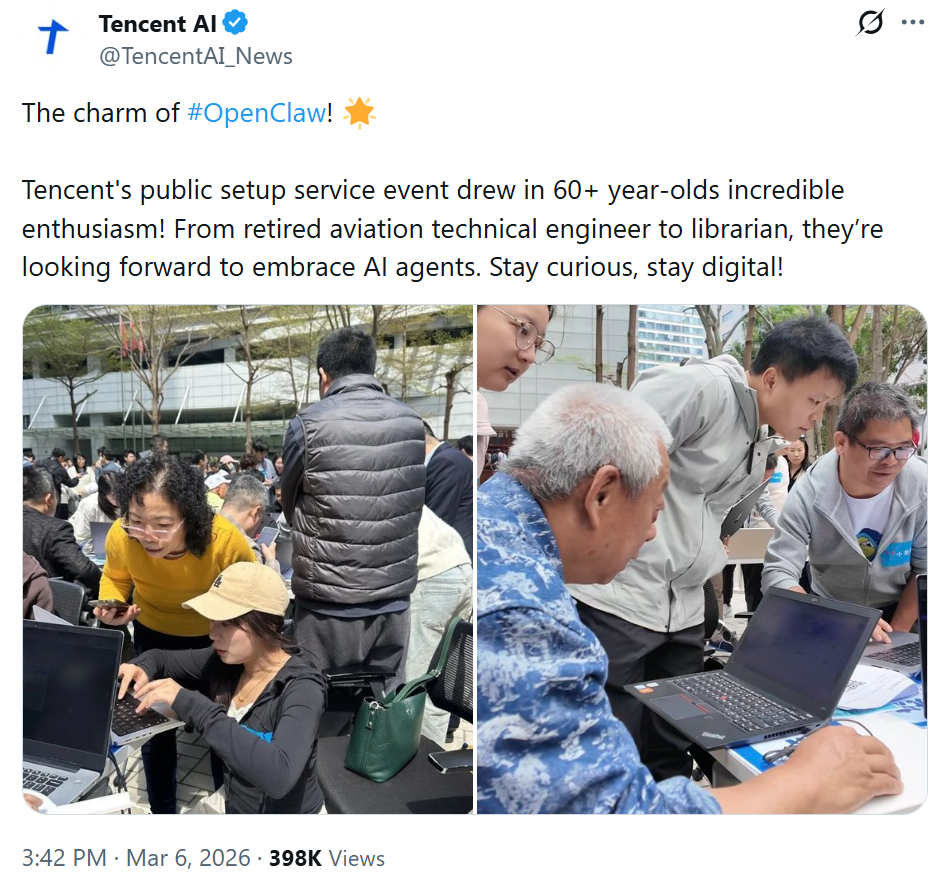
👀 What’s happening: Tencent’s new QClaw agent leaked into Chinese tech communities Sunday night and went viral within hours. By Tuesday the product dominated social media and Tencent stock jumped over 10 percent, adding roughly $50 billion in market value. The key detail is simple. QClaw runs on OpenClaw, the open source agent framework spreading globally.
🌍 How this hits reality: OpenClaw already became one of the fastest growing open source projects ever. QClaw shows something bigger. China’s largest internet company is adopting the same agent standard and connecting it directly to WeChat, a platform used by more than one billion people. That effectively turns OpenClaw from a developer framework into a mass consumer infrastructure layer.
🛎️ Key takeaway: The OpenClaw wave is not slowing down. With Tencent building on top of it, the framework is starting to look less like a project and more like a global standard for AI agents.
TOGETHER WITH NEBIUS
Nebius Token Factory is built for teams running open-source LLMs in real products. We deliver managed inference with explicit control over execution paths: speculative decoding, cache-aware routing, and post-training tuned to real traffic. Predictable tail latency, stable cost, and production-grade systems for AI that actually ships.
NEW LAUNCH
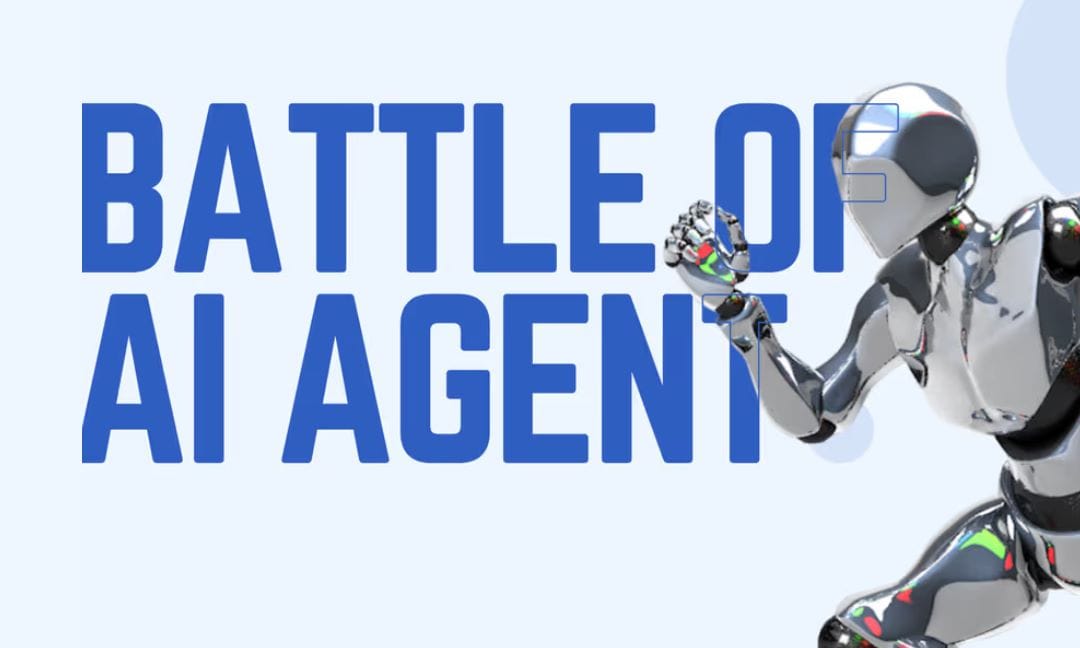
👀 What’s happening: Musk just publicly revealed project Digital Optimus, an AI system designed to operate computers like a human employee. Grok handles reasoning while the agent reads screens, moves the mouse, and executes tasks across software. Internal leaks suggest xAI had already been testing it as a “digital coworker,” sometimes convincing employees they were chatting with a real person.
🌍 How this hits reality: The signal is strategic, not cosmetic. Every major AI lab is now building computer-use agents. OpenAI and Google are pushing autonomous tool agents, Anthropic launched Claude Cowork, and Meta is experimenting with agent networks. Musk entering with a Grok-plus-execution stack means the last major frontier lab has now committed to replacing screen-based labor.
🛎️ Key takeaway: The final holdout just stepped in. With Musk now launching a computer-operating agent alongside Grok, every major AI lab is openly building digital workers. The agent war has officially begun.
👀 What’s happening: Musk just publicly revealed project Digital Optimus, an AI system designed to operate computers like a human employee. Grok handles reasoning while the agent reads screens, moves the mouse, and executes tasks across software. Internal leaks suggest xAI had already been testing it as a “digital coworker,” sometimes convincing employees they were chatting with a real person.
BUYOUT
👀 What’s happening: Google has closed its $32 billion all cash acquisition of Wiz, the largest deal in the company’s history. The cloud security startup built its reputation scanning vulnerabilities across AWS, Azure, and other clouds. After nearly two years of negotiations and regulatory review, Google now owns one of the fastest growing security layers inside enterprise cloud infrastructure.
🌍 How this hits reality: AI systems are exploding across cloud platforms, and every model pipeline multiplies the attack surface. Data lakes, vector databases, training clusters, and identity systems all become targets. Wiz sits exactly at the visibility layer that sees those environments across clouds. By absorbing it, Google gains unprecedented insight into how enterprise AI infrastructure is built and where its weaknesses are.
🛎️ Key takeaway: This looks less like a product acquisition and more like an infrastructure land grab. Control the security layer and you influence the entire AI stack.
👀 What’s happening: Google has closed its $32 billion all cash acquisition of Wiz, the largest deal in the company’s history. The cloud security startup built its reputation scanning vulnerabilities across AWS, Azure, and other clouds. After nearly two years of negotiations and regulatory review, Google now owns one of the fastest growing security layers inside enterprise cloud infrastructure.
NEW LAUNCH
👀 What’s happening: NVIDIA just released Nemotron 3 Super, a new open model built explicitly for autonomous agents rather than chat. The architecture mixes Mamba sequence models, Transformer attention, and MoE routing, with a one million token context window and only 12B active parameters out of 120B total. On OpenClaw style agent benchmarks it currently ranks as the strongest open model, and NVIDIA released the full stack including weights, datasets, and training pipeline.
🌍 How this hits reality: Agent systems behave nothing like normal chat apps. Multi agent workflows generate up to fifteen times more tokens because every step pushes tool outputs, reasoning traces, and history back into the model. That quickly destroys compute budgets and causes reasoning drift. Nemotron 3 Super directly targets this with linear time sequence processing, multi token prediction, and MoE routing designed for long running autonomous workflows.
🛎️ Key takeaway: When the strongest open models stop optimizing for chat and start optimizing for agents, the transition is already underway. The AI industry is quietly abandoning the chatbot phase and reorganizing around autonomous agent systems. The agent era has already begun.
👀 What’s happening: NVIDIA just released Nemotron 3 Super, a new open model built explicitly for autonomous agents rather than chat. The architecture mixes Mamba sequence models, Transformer attention, and MoE routing, with a one million token context window and only 12B active parameters out of 120B total.
DAILY TL;DR
READ MORE
Stay ahead without drowning in information. We turn the most important signals across AI, tech, marketing, and future products into 5-minute reads you can actually finish.
TOGETHER WITH US
AI Secret Media Group is the world’s #1 AI & Tech Newsletter Group, reaching over 2 million leaders across the global innovation ecosystem, from OpenAI, Anthropic, Google, and Microsoft to top AI labs, VCs, and fast-growing startups.
We've helped promote over 500 Tech Brands. Will yours be the next?
Email our co-founder Mark directly at [email protected] if the button fails.
Good Morning, AI Enthusiasts!
Morning arrives, but the internet is no longer waking up alone. What follows are early signals from a world where the primary users of the internet may no longer be humans.
NEW LAUNCH
👀 What’s happening: Google just released Gemini Embedding 2, its first native multimodal embedding model. Text, images, video, audio, and documents can now be mapped into the same semantic vector space. The model supports up to 8192 tokens, multiple images, short videos, raw audio, and PDF pages in a single embedding pipeline.
🌍 How this hits reality: Agent systems increasingly depend on memory search rather than long prompts. Instead of pushing entire histories into a model context, systems embed data and retrieve only the closest matches. Multimodal embeddings mean screenshots, instructions, and files can sit inside the same searchable memory layer, dramatically reducing token usage during retrieval.
🛎️ Key takeaway: Products like OpenClaw already rely on embedding driven memory search to stay efficient. By upgrading the multimodal embedding layer, Google is preparing the infrastructure for fully agent driven systems where memory retrieval replaces large context windows as the core operating model.
👀 What’s happening: Google just released Gemini Embedding 2, its first native multimodal embedding model. Text, images, video, audio, and documents can now be mapped into the same semantic vector space. The model supports up to 8192 tokens, multiple images, short videos, raw audio, and PDF pages in a single embedding pipeline.
TOGETHER WITH MYCLAW
Skip Docker, VPS configs, and late-night debugging. With MyClaw.ai, you can launch your agent in minutes and keep it running 24/7 in a dedicated environment built for serious builders.
If you’re serious about OpenClaw, run it properly — with speed and security by default.
SHOPPING
👀 What’s happening: A federal court in San Francisco granted Amazon an injunction blocking Perplexity’s AI browser agent Comet from purchasing products on Amazon. The judge agreed Amazon showed credible evidence the agent accessed password protected accounts with user permission but without Amazon authorization. Perplexity must delete collected Amazon data and has one week to appeal.
🌍 How this hits reality: Amazon is trying to freeze the future at the checkout button and keep its trillion-dollar business by controlling search, recommendation, and payment flows. But the environment is changing fast. Agents like OpenClaw are spreading across developer networks, letting individuals run autonomous agents that act exactly like human users. Millions of independent agents would be far harder to block than one startup.
🛎️ Key takeaway: This ruling buys time for platforms but does not solve the underlying shift. If OpenClaw or MyClaw become normal, enforcement collapses. The next fight will be platforms trying to contain millions of OpenClaws they cannot realistically stop.
👀 What’s happening: A federal court in San Francisco granted Amazon an injunction blocking Perplexity’s AI browser agent Comet from purchasing products on Amazon. The judge agreed Amazon showed credible evidence the agent accessed password protected accounts with user permission but without Amazon authorization. Perplexity must delete collected Amazon data and has one week to appeal.
BUYOUT

👀 What’s happening: Meta acquired Moltbook, a small experimental social network built specifically for AI agents. The platform lets agents verify identity, discover other agents, and coordinate tasks on behalf of human owners. Its founders are now joining Meta Superintelligence Labs. Moltbook was originally designed to operate alongside autonomous agent systems like OpenClaw.
🌍 How this hits reality: Most attention in AI is still focused on model capability. But OpenClaws introduce a different problem. They need infrastructure to interact with each other. Identity systems, discovery networks, and coordination layers. If individuals eventually operate dozens of OpenClaws each, millions of agents may begin negotiating, delegating, and executing tasks across platforms.
🛎️ Key takeaway: Meta appears to be betting that the next internet layer is not human social networks but agent networks. If agents become the primary actors online, the real control point shifts to identity and coordination infrastructure. Meta just placed an early marker there.
LLM
👀 What’s happening: Turing Award Laureate Yann LeCun has launched a new startup called AMI Labs and raised $1.03 billion, the largest seed round in European tech history. The company will focus on “world models” rather than large language models. Investors include Nvidia, Temasek, Eric Schmidt and the Bezos family office. LeCun argues language models cannot reach AGI because they learn words, not how the physical world works.
🌍 How this hits reality: This funding signals that the industry is now backing a second path to intelligence. Training frontier language models already costs hundreds of millions per run, yet they still struggle with physical reasoning. World models target robotics, autonomy and real world prediction. That aligns with the AGI direction Elon Musk has repeatedly described for systems that understand and simulate reality.
🛎️ Key takeaway: Another heavyweight has stepped behind the world model thesis. If this approach begins producing usable physical intelligence, the race to AGI may shift from scaling language models to learning how the world actually behaves.
Training frontier language models already costs hundreds of millions per run, yet they still struggle with physical reasoning. World models target robotics, autonomy and real world prediction. That aligns with the AGI direction Elon Musk has repeatedly described for systems that understand and simulate reality.
DAILY TL;DR
READ MORE
Stay ahead without drowning in information. We turn the most important signals across AI, tech, marketing, and future products into 5-minute reads you can actually finish.
TOGETHER WITH US
AI Secret Media Group is the world’s #1 AI & Tech Newsletter Group, reaching over 2 million leaders across the global innovation ecosystem, from OpenAI, Anthropic, Google, and Microsoft to top AI labs, VCs, and fast-growing startups.
We've helped promote over 500 Tech Brands. Will yours be the next?
Email our co-founder Mark directly at [email protected] if the button fails.
Good Morning, AI Enthusiasts!
The cost of intelligence keeps falling, the price of creation keeps collapsing, and the people behind the models keep moving.
VIDEO
👀 What’s happening: ByteDance’s Volcano Engine has published API pricing for Seedance 2.0, giving the clearest signal yet on AI video costs. Text to video generation is priced around $6.40 per million tokens. A typical 15 second clip consumes roughly 300,000 tokens, putting generation near $2 per clip or about $0.13 per second.
🌍 How this hits reality: That price lands below most Western AI video systems, not mention Hollywood. Runway and Pika workflows often reach $0.20 to $0.50 per second once retries are included. Estimates around Google Veo and OpenAI Sora suggest even higher costs. At the same time, Hollywood productions routinely spend tens of thousands of dollars per finished minute when crews, actors, and sets are not even involved.
🛎️ Key takeaway: When a one minute scene costs about $8 to render, the economics behind studio production start shifting. Hollywood is not disappearing tomorrow, but the cost gap between human film sets and synthetic video pipelines is now visible.
👀 What’s happening: ByteDance’s Volcano Engine has published API pricing for Seedance 2.0, giving the clearest signal yet on AI video costs. Text to video generation is priced around $6.40 per million tokens. A typical 15 second clip consumes roughly 300,000 tokens, putting generation near $2 per clip or about $0.13 per second.
TOGETHER WITH MYCLAW
Skip Docker, VPS configs, and late-night debugging. With MyClaw.ai, you can launch your agent in minutes and keep it running 24/7 in a dedicated environment built for serious builders.
If you’re serious about OpenClaw, run it properly — with speed and security by default.
NEW LAUNCH
👀 What’s happening: Google released Gemini 3.1 Flash Lite in developer preview, positioning it as the cheapest model in the Gemini 3 lineup. The focus is not frontier reasoning but scale. It runs fast, responds quickly, and is designed for massive API workloads where price and latency matter more than raw intelligence.
🌍 How this hits reality: Pricing is the real headline. Input tokens cost about $0.25 per million and output $1.50, levels that push commercial AI closer to commodity compute. Arena benchmarks show the preview version outperforming GPT-5 on some text tasks while maintaining significantly faster throughput than many competing “fast” tier models.
🛎️ Key takeaway: Inference pricing is entering a race to the bottom. When models this capable approach commodity token costs, the economic center of AI shifts upward into distribution, agents, and infrastructure rather than the model itself.
👀 What’s happening: Google released Gemini 3.1 Flash Lite in developer preview, positioning it as the cheapest model in the Gemini 3 lineup. The focus is not frontier reasoning but scale. It runs fast, responds quickly, and is designed for massive API workloads where price and latency matter more than raw intelligence.
QWEN
👀 What’s happening: Alibaba released the open source Qwen3.5 small model series, a technically impressive lineup ranging from 0.8B to 9B parameters that can run on laptops and phones while rivaling much larger models. Less than 24 hours later, Qwen’s technical architect Junyang Lin and two key researchers publicly announced their departures.
🌍 How this hits reality: Qwen had become one of the few large model projects shipping both frontier capability and open weights. Over 600 million downloads and tens of thousands of enterprise deployments built around that promise. The sudden exit of its founding technical core raises doubts about whether future models remain open or move behind paid APIs.
🛎️ Key takeaway: The release proves the team could compress serious intelligence into small models. The departures suggest the research culture that produced it may be ending. If commercialization wins inside Qwen, one of the world’s most important open model pipelines could narrow quickly.
👀 What’s happening: Alibaba released the open source Qwen3.5 small model series, a technically impressive lineup ranging from 0.8B to 9B parameters that can run on laptops and phones while rivaling much larger models. Less than 24 hours later, Qwen’s technical architect Junyang Lin and two key researchers publicly announced their departures.
DAILY TL;DR
TRENDING
READ MORE
Stay ahead without drowning in information. We turn the most important signals across AI, tech, marketing, and future products into 5-minute reads you can actually finish.
TOGETHER WITH US
AI Secret Media Group is the world’s #1 AI & Tech Newsletter Group, reaching over 2 million leaders across the global innovation ecosystem, from OpenAI, Anthropic, Google, and Microsoft to top AI labs, VCs, and fast-growing startups.
We've helped promote over 500 Tech Brands. Will yours be the next?
Email our co-founder Mark directly at [email protected] if the button fails.
Good Morning, AI Enthusiasts!
A new idea is quietly spreading across markets, boardrooms, and tech timelines and it may explain why AI feels bullish for productivity but increasingly bearish for people.

SAAS
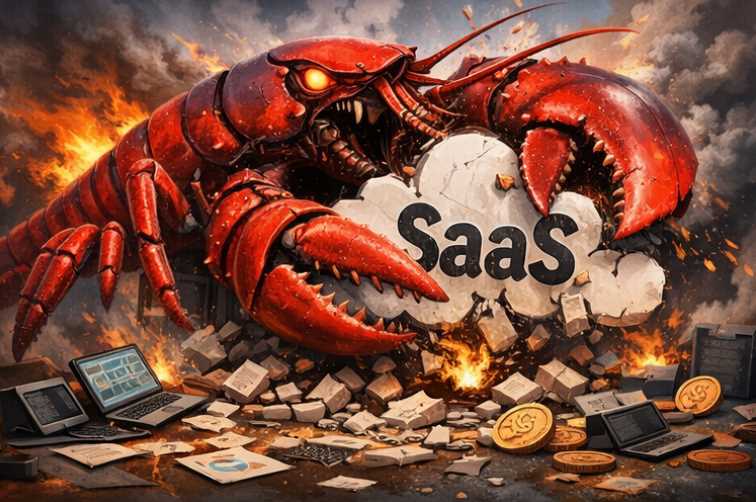
👀 What’s happening: On February 22, Citrini Research published The 2028 Global Intelligence Crisis, a speculative future retrospective that introduced the idea of “Ghost GDP.” AI could drive headline GDP higher while weakening wage participation and consumer demand. SaaS stocks sold off sharply in the sessions that followed. And OpenClaw’s rapid rise amplified the narrative.
🌍 How this hits reality: Ghost GDP implies productivity scales while human income participation shrinks. SaaS relies on payroll expansion and per seat subscriptions. If autonomous agents execute workflows across tools, companies need fewer employees and fewer software seats. Revenue models tied to headcount growth start to decouple from economic output. OpenClaw type personal agents expose the vulnerability. The interface shifts from dashboards to agents acting on APIs.
🛎️ Key takeaway: If personal agent terminals like OpenClaw become the default operating layer, traditional SaaS risks becoming invisible plumbing. Seat based models could collapse entirely. The destruction would be systematic and permanent.
TOGETHER WITH AISDR
Instead of sending out generic emails that land in the dreaded “I’ll-get-to-it-later” pile, AiSDR swoops in like a superhero, armed with insights from 323+ data sources. With AiSDR, you’re not just casting a wide net; you’re using a finely-tuned fishing rod to reel in the big ones.
DEBT
👀 What’s happening: As Ghost GDP narratives spread and SaaS multiples compress, a quieter risk is surfacing in private markets. Over the past five years, private equity firms aggressively used leverage to acquire mature SaaS companies at 8 to 15 times revenue. Those deals were underwritten on stable ARR, high retention, and predictable seat growth. If agent driven automation slows headcount expansion and churn ticks up, cash flow assumptions begin to crack.
🌍 How this hits reality: Many of these acquisitions were financed with floating rate debt. A company modeled at 30 percent EBITDA margins can quickly drop below covenant thresholds if growth stalls and pricing power weakens. SaaS loans were treated as low volatility credit because of subscription visibility. But if ARR declines even 5 to 10 percent while rates stay elevated, debt service coverage collapses. The risk is not one company failing. It is correlated underperformance across portfolios owned by the same leveraged funds.
🛎️ Key takeaway: If Ghost GDP pressure and agent disruption persist, SaaS backed credit could experience a wave of restructurings. Highly levered private equity vehicles would face write downs and potential insolvency. The next stress event may not start in banks. It may start in subscription software.
LAYOFF
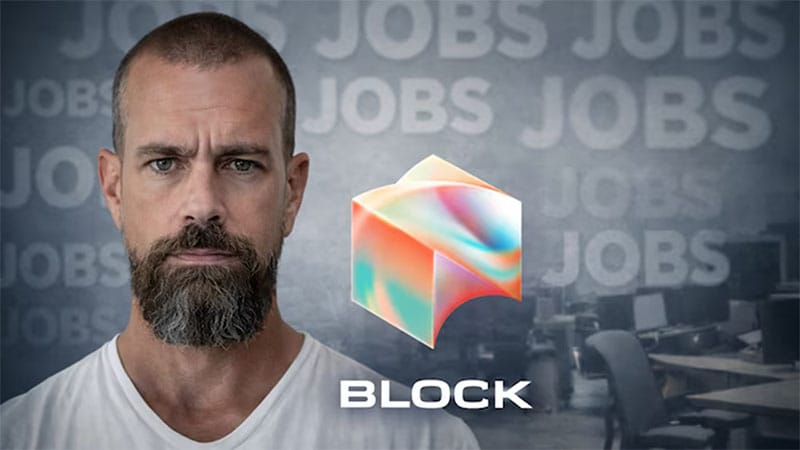
👀 What’s happening: Ex-Twitter cofounder Jack Dorsey says he will cut 40% of staff at Block, roughly 4,000 roles, arguing that AI tools have fundamentally changed how companies are built and run. In a shareholder letter, he framed it as structural, not cyclical. Markets agreed. Block shares jumped 20% after hours.
🌍 How this hits reality: This is not just one fintech trimming costs. It reframes AI from growth engine to labor replacement narrative. Communities already pushing back on new data centers over power prices and water use now have a clearer villain. When 40% headcount cuts get tied to AI, permitting risk rises. Infrastructure buildout depends on local approval and grid capacity measured in gigawatts.
🛎️ Key takeaway: If more CEOs echo Dorsey, AI shifts from productivity story to political liability. Expect tougher scrutiny on data centers, slower approvals, and a sharper divide between capital markets optimism and public resistance.
NEW LAUNCH
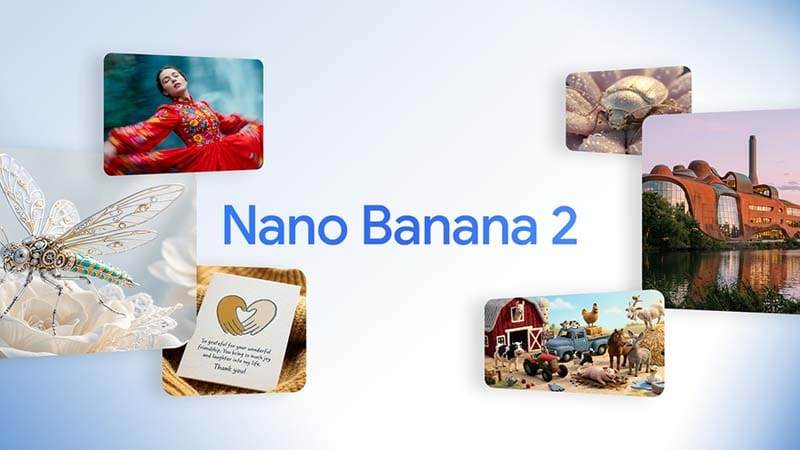
👀 What’s happening: Google released Nano Banana 2, technically Gemini 3.1 Flash Image, and made it the default image model across the Gemini app, Search, and Flow. It follows Nano Banana Pro from late 2025. On paper, quality improves slightly. In practice, the headline is faster generation and broader default deployment.
🌍 How this hits reality: Compared with Nano Banana Pro, the leap in realism is incremental. It still supports 512px to 4K output, multi character consistency, and up to 14 objects in a workflow. What changed is latency and cost efficiency. By cutting generation time and improving throughput, Google moves the model from demo grade to production grade for everyday workflows.
🛎️ Key takeaway: This is not a breakthrough in image intelligence. It is a pricing and speed correction. Google optimized the cost performance curve enough to make large scale default integration viable. That matters more than marginal visual gains.
👀 What’s happening: Google released Nano Banana 2, technically Gemini 3.1 Flash Image, and made it the default image model across the Gemini app, Search, and Flow. It follows Nano Banana Pro from late 2025. On paper, quality improves slightly. In practice, the headline is faster generation and broader default deployment.
DAILY TL;DR
TRENDING
READ MORE
Stay ahead without drowning in information. We turn the most important signals across AI, tech, marketing, and future products into 5-minute reads you can actually finish.
TOGETHER WITH US
AI Secret Media Group is the world’s #1 AI & Tech Newsletter Group, reaching over 2 million leaders across the global innovation ecosystem, from OpenAI, Anthropic, Google, and Microsoft to top AI labs, VCs, and fast-growing startups.
We've helped promote over 500 Tech Brands. Will yours be the next?
Email our co-founder Mark directly at [email protected] if the button fails.
Good Morning, AI Enthusiasts!
Whoever owns execution will define the next decade of software, security, and commerce.
SECURITY
👀 What’s happening: Attackers reportedly used Anthropic’s Claude to help breach Mexican government systems and extract roughly 150GB of sensitive data, including taxpayer files, voter records, and internal credentials. The activity spanned weeks. Accounts tied to the prompts were later banned. Officials are still assessing scope, but exposure claims are substantial.
🌍 How this hits reality: This was not an AI spontaneously hacking a nation. It was a human using a model to accelerate reconnaissance, scripting, and iteration. Tasks that once required skill stacking now require persistence and good prompting. Mexico’s tax system covers 195 million records and credential reuse across agencies multiplies blast radius. The weak link is not the model alone but institutional surface area.
🛎️ Key takeaway: AI may not be the strongest hacker. It might be the easiest one. The barrier to offensive capability is falling faster than institutional defenses can adapt. That asymmetry will define the next wave of breaches.
👀 What’s happening: Attackers reportedly used Anthropic’s Claude to help breach Mexican government systems and extract roughly 150GB of sensitive data, including taxpayer files, voter records, and internal credentials. The activity spanned weeks. Accounts tied to the prompts were later banned. Officials are still assessing scope, but exposure claims are substantial.
TOGETHER WITH MYCLAW
Skip Docker, VPS configs, and late-night debugging. With MyClaw.ai, you can launch your agent in minutes and keep it running 24/7 in a dedicated environment built for serious builders.
If you’re serious about OpenClaw, run it properly — with speed and security by default.
NEW LAUNCH

👀 What’s happening: Perplexity launched Perplexity Computer as a $200 per month hosted agent that coordinates multiple frontier models inside vendor controlled sandboxes. It promises autonomous workflows, browser access, file systems, and API execution in the cloud. On paper it looks like giving you a remote super PC that works on your behalf.
🌍 How this hits reality: But step back. You would not hand your physical PC to a stranger. You would not share your phone’s storage, messages, and browsing history with a multi tenant service and hope partitioning holds. The same logic applies to OpenClaw style agents. When memory, logs, credentials, and execution sit on shared infrastructure, isolation is a policy choice, not a physical boundary. Redundancy disappears.
🛎️ Key takeaway: Personal devices are private because control is private. Agent systems should follow the same rule. If the compute is shared, so is the risk.
👀 What’s happening: Perplexity launched Perplexity Computer as a $200 per month hosted agent that coordinates multiple frontier models inside vendor controlled sandboxes. It promises autonomous workflows, browser access, file systems, and API execution in the cloud. On paper it looks like giving you a remote super PC that works on your behalf.
NEW LAUNCH
👀 What’s happening: Google and Samsung just unveiled Gemini as a multistep execution agent on Pixel 10 and Galaxy S26. It reads chats, opens apps, prepares orders, and stages transactions. The pitch is clear. The assistant is no longer reactive. It is supposed to behave like something that understands context and acts continuously.
🌍 How this hits reality: The deeper shift is not about ordering pizza. Both mobile AI and OpenClaw style systems are chasing the same goal: a permanently present personal agent. But OpenClaw already runs with persistent memory, structured files, and cross tool autonomy, and it has spread globally through meetups and community forks. MyClaw class cloud deployments let users trigger their AI through Telegram or WhatsApp with server grade compute behind it. Compared to that, phone bound agents look sandboxed and late.
🛎️ Key takeaway: Smartphones are trying to simulate permanence inside an OS. Cloud native personal agents already live there by design. If persistence defines the category, handset AI is playing catch-up forever.
👀 What’s happening: Google and Samsung just unveiled Gemini as a multistep execution agent on Pixel 10 and Galaxy S26. It reads chats, opens apps, prepares orders, and stages transactions. The pitch is clear. The assistant is no longer reactive.
DAILY TL;DR
TRENDING
READ MORE
Stay ahead without drowning in information. We turn the most important signals across AI, tech, marketing, and future products into 5-minute reads you can actually finish.
TOGETHER WITH US
AI Secret Media Group is the world’s #1 AI & Tech Newsletter Group, reaching over 2 million leaders across the global innovation ecosystem, from OpenAI, Anthropic, Google, and Microsoft to top AI labs, VCs, and fast-growing startups.
We've helped promote over 500 Tech Brands. Will yours be the next?
Email our co-founder Mark directly at [email protected] if the button fails.
Good Morning, AI Enthusiasts!
Welcome to the phase where AI stops asking for adoption and starts embedding itself.

NEW LAUNCH

👀 What’s happening: Notion released version 3.3 with trigger based Custom Agents that operate continuously inside its cloud. Teams configure a task once, assign permissions, and the agent runs across Slack, mail, databases, and reports without further prompting. It is framed as autonomous execution for enterprise workflows.
🌍 How this hits reality: This is effectively a centralized, multi tenant imitation of OpenClaw, but stripped of user sovereignty. All execution happens inside Notion’s shared infrastructure, metered by credits and bounded by admin controls. The OpenClaw ecosystem rejects this architecture outright, arguing that shared cloud agents eliminate true data isolation and collapse security redundancy into a single vendor controlled surface.
🛎️ Key takeaway: Notion is defending retention, not autonomy. It keeps companies dependent on its cloud while branding it as empowerment. If OpenClaw becomes core, centralized wrappers like this risk becoming fragile choke points rather than durable systems.
TOGETHER WITH DELVE

Delve is the AI-native compliance platform that actually does the work for you, auto-collecting evidence from AWS, GitHub, and your stack so you don’t have to chase screenshots or babysit integrations. Use AI security questionnaire tooling, AI copilot, and everywhere else to make compliance feel less, dreadful. Welcome to the new age.
The proof is in the pudding:
Bonus: Delve will handle your migration for free. Zero-touch. No disruption. No starting over.
If you’re dreading opening your current SOC 2 tool, that’s your sign.
Book a demo here and trigger a migration - get $2000 sent straight to your inbox as soon as you’re onboarded.
RESEARCH
👀 What’s happening: Google DeepMind researchers released a paper outlining a framework for “intelligent AI delegation,” covering how authority and accountability move between humans and AI agents. One recommendation stands out: systems should sometimes assign people routine tasks AI could handle, to prevent skill atrophy as automation expands.
🌍 How this hits reality: Enterprises are deploying agent workflows to cut labor costs by double digit percentages and compress cycle times, according to DeepMind's research. If AI handles planning, execution, and verification, humans drift into nominal oversight. History shows that when hands on exposure drops, intervention quality collapses. Aviation and finance both learned this at scale. Delegation without skill maintenance creates brittle systems.
🛎️ Key takeaway: As AI becomes organizational infrastructure, human competence turns into a managed resource. If it is not deliberately exercised, it decays.
👀 What’s happening: Google DeepMind researchers released a paper outlining a framework for “intelligent AI delegation,” covering how authority and accountability move between humans and AI agents. One recommendation stands out: systems should sometimes assign people routine tasks AI could handle, to prevent skill atrophy as automation expands.
OPENAI
👀 What’s happening: OpenAI announced Frontier Alliances, signing multi year enterprise partnerships with Boston Consulting Group, McKinsey, Accenture, and Capgemini. Its Forward Deployed Engineering team will work alongside these firms to embed OpenAI Frontier into client stacks. Anthropic has already struck similar consulting deals. The labs are no longer selling models. They are buying distribution inside the Fortune 500.
🌍 How this hits reality: Consulting firms influence hundreds of billions in annual transformation spend. They shape vendor shortlists, architecture decisions, and workflow redesign. Enterprise AI adoption has been slow because ROI is unclear. By hardwiring models into strategy mandates, experimentation turns into institutional policy. Once embedded into process and governance, ripping a model out becomes politically and operationally expensive.
🛎️ Key takeaway: The enterprise AI market just turned into a clock race. Lock in the consultant channel and you lock in the roadmap. This is less about better models and more about who captures the operating system of corporate change first.
👀 What’s happening: OpenAI announced Frontier Alliances, signing multi year enterprise partnerships with Boston Consulting Group, McKinsey, Accenture, and Capgemini. Its Forward Deployed Engineering team will work alongside these firms to embed OpenAI Frontier into client stacks. Anthropic has already struck similar consulting deals. The labs are no longer selling models.
DAILY TL;DR
TRENDING
READ MORE
Stay ahead without drowning in information. We turn the most important signals across AI, tech, marketing, and future products into 5-minute reads you can actually finish.
TOGETHER WITH US
AI Secret Media Group is the world’s #1 AI & Tech Newsletter Group, reaching over 2 million leaders across the global innovation ecosystem, from OpenAI, Anthropic, Google, and Microsoft to top AI labs, VCs, and fast-growing startups.
We've helped promote over 500 Tech Brands. Will yours be the next?
Email our co-founder Mark directly at [email protected] if the button fails.
Good Morning, AI Enthusiasts!
Distribution is swallowing generation. Evolution is swallowing engineering. Simulation is swallowing production.

HOLLYWOOD
👀 What’s happening: Warner Bros. has accused ByteDance of deliberately training Seedance 2.0 on its characters after users flooded social media with AI videos featuring Superman, Batman, Harry Potter, and Game of Thrones. The clips went viral within hours. Disney and Paramount had already issued warnings. Hollywood is no longer treating this as fringe experimentation.
🌍 How this hits reality: Seedance 2.0 is not just a meme engine. It generates cinematic, franchise-grade scenes at near zero marginal cost. Studios spend hundreds of millions per tentpole release and rely on controlled IP distribution windows. A model that can reproduce recognizable characters destabilizes licensing, streaming, merchandising, and global box office sequencing.
🛎️ Key takeaway: If Seedance-level video becomes widely accessible, franchise power shifts from studios to model platforms. Expect aggressive litigation, licensing standoffs, and fast regulatory pressure as Hollywood moves to contain a system that could erode its economic core.
👀 What’s happening: Warner Bros. has accused ByteDance of deliberately training Seedance 2.0 on its characters after users flooded social media with AI videos featuring Superman, Batman, Harry Potter, and Game of Thrones. The clips went viral within hours. Disney and Paramount had already issued warnings.
TOGETHER WITH PARTNERLY
Partnerly is the world’s leading influencer-marketing growth platform for AI and tech, powered by the largest global creator community—300,000+ influencers with precision profiles for surgical audience targeting. Trusted by 300+ AI companies, Partnerly is the go-to engine for visibility, credibility, and scale—backed by a deep case library spanning MVP launches, user growth, and global expansion.
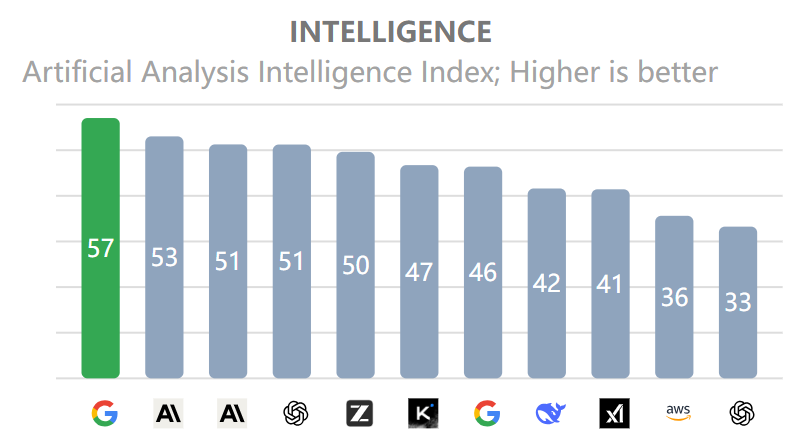
👀 What’s happening: Google quietly released Gemini 3.1 Pro overnight, three months after Gemini 3 Pro. The upgrade is not cosmetic. On ARC-AGI-2, its score jumped from 31.1 percent to 77.1 percent, roughly 2.5 times higher. On Artificial Analysis Intelligence Index, it posts 57, ahead of Claude Opus 4.6 at 53.
🌍 How this hits reality: The real shift is performance plus price. Gemini 3.1 Pro lists input at $2 and output at $12 per million tokens, about 60 percent and 52 percent cheaper than Opus 4.6. For startups burning through tens of millions of tokens daily, that delta compounds fast. When the top benchmark model is also the discount option, procurement logic changes overnight.
🛎️ Key takeaway: If this pace continues, frontier AI stops being a pure intelligence race and becomes an execution war. The winner is not who reasons best in isolation, but who can ship faster, price lower, and flood distribution channels before rivals react. Margins compress. Compute efficiency becomes survival.
PS: Gemini 3.1 Pro Preview now live on MyClaw.ai. Register and test it instantly.
👀 What’s happening: Google quietly released Gemini 3.1 Pro overnight, three months after Gemini 3 Pro. The upgrade is not cosmetic. On ARC-AGI-2, its score jumped from 31.1 percent to 77.1 percent, roughly 2.5 times higher. On Artificial Analysis Intelligence Index, it posts 57, ahead of Claude Opus 4.6 at 53.
NEW TECH

👀 What’s happening: Researchers at the University of California, Santa Barbara introduced Group-Evolving Agents, a framework where multiple AI agents evolve together instead of in isolated branches. On SWE-bench Verified it reached 71.0 percent versus 56.7 percent for Darwin Godel Machine. After evolution, deployment runs as a single agent with no added inference cost.
🌍 How this hits reality: Most enterprise agent stacks depend on fixed architectures and prompt tuning teams. When workflows shift, performance degrades. GEA pools code changes, tool usage, and task traces across agents, then uses a reflection module to consolidate gains. One top agent integrated traits from 17 ancestors versus 9 in the baseline. That compounds engineering throughput without increasing serving spend.
🛎️ Key takeaway: If this pattern holds, agent framework design shifts from manual optimization to evolutionary cycles. Enterprises keep single agent deployment economics while compressing R&D loops. The bottleneck moves from inference cost to experience quality and governance.
NEW LAUNCH
👀 What’s happening: Google just launch Lyria 3, and embedded it directly into the Gemini app, letting users generate 30-second songs from text, photos, or video prompts. Lyrics, vocals, tempo, and style are auto-created for now. Tracks carry SynthID watermarks and plug into YouTube Shorts via Dream Track. Music generation is no longer a separate tool. It is a built-in assistant feature.
🌍 How this hits reality: AI music just crossed from startup category into platform control. Gemini sits on massive Android distribution and feeds directly into YouTube’s creator economy. That means discovery, sharing, and iteration happen inside Google’s ecosystem. When the distribution layer owns the generation layer, independent apps lose leverage fast. This is gravity, not competition.
🛎️ Key takeaway: The AI music market just entered the giant phase. Suno and Udio are no longer competing on model quality alone. They are competing against a default that ships preinstalled and monetizes at platform scale.
👀 What’s happening: Google just launch Lyria 3, and embedded it directly into the Gemini app, letting users generate 30-second songs from text, photos, or video prompts. Lyrics, vocals, tempo, and style are auto-created for now. Tracks carry SynthID watermarks and plug into YouTube Shorts via Dream Track.
DAILY TL;DR
TRENDING
READ MORE
Stay ahead without drowning in information. We turn the most important signals across AI, tech, marketing, and future products into 5-minute reads you can actually finish.
TOGETHER WITH US
AI Secret Media Group is the world’s #1 AI & Tech Newsletter Group, reaching over 2 million leaders across the global innovation ecosystem, from OpenAI, Anthropic, Google, and Microsoft to top AI labs, VCs, and fast-growing startups.
We've helped promote over 500 Tech Brands. Will yours be the next?
Email our co-founder Mark directly at [email protected] if the button fails.
Plus: Expert Prompts Were Hurting Accuracy, OpenAI aims at search defaults
Read the storyPlus: Knowledge Layer Battle Begins, Grok Imagine Starts a Price War
Plus: Codex Is Gunning for Claude Code, Speed Is the AI Constraint
Plus: Musk Steps Into the Agent War, Google Closes $32 Billion Deal
Plus: Amazon Blocks AI Shopping, Meta Bets on Agent-to-Agent
Plus: Gemini 3.1 Flash Lite Towards Floor, Qwen Loses Its Core Architects
Plus: The Next Credit Shock, Ex-Twitter Cofounder Just Cut 40%
Plus: Perplexity Builds Another Shared Agent, Gemini Ships New Siri
Plus: Deepmind Gives Humans Busywork, Enterprise AI War
Plus: Google Just Reset the AI War, Agents Design Agents, AI Music Front Door