🛎️ The Private Brain
Plus: Codex Is Gunning for Claude Code, Speed Is the AI Constraint
Read the story Subscribe
Reporting and context on NVIDIA, with a closer look at the decisions and developments that matter.
Get AI Secret’s free daily briefing, including NVIDIA and the wider AI industry.

NVIDIA develops accelerated computing hardware and software. Coverage follows its GPUs, CUDA ecosystem, AI infrastructure and business decisions.
Sources checked . Selected company background and milestones.
Selected milestones, newest first. Earlier history is available below.
NVIDIA introduces its Blackwell computing platform for large-scale AI workloads.
Source: NVIDIAMore than 10 years ago.
Relevant sections from the articles on this page. Explore older coverage below.
More coverage

Good Morning, AI Enthusiasts!
Agents are no longer experiments. They are becoming the system.

NEW LAUNCH
👀 What’s happening: Mistral released Forge at GTC, a platform that lets enterprises train full AI models from scratch using their own data instead of adapting external ones. It bundles infrastructure, data pipelines, and embedded engineers, pushing companies to build internal model “brains” designed to power agent systems.
🌍 How this hits reality: This breaks from the RAG and fine-tuning era where intelligence stayed with API providers. Now the model, data, and control loop move inside the company. When paired with frameworks like OpenClaw, these private models can directly drive agents that understand internal tools, workflows, and decisions at a much deeper level.
🛎️ Key takeaway: Mistral is aligning around private brains plus agent frameworks as the new stack. If this scales, enterprise AI shifts from using agents on rented intelligence to deploying agents powered by fully owned, deeply embedded cognitive systems.
👀 What’s happening: Mistral released Forge at GTC, a platform that lets enterprises train full AI models from scratch using their own data instead of adapting external ones. It bundles infrastructure, data pipelines, and embedded engineers, pushing companies to build internal model “brains” designed to power agent systems.
TOGETHER WITH MYCLAW

Skip Docker, VPS configs, and late-night debugging. With MyClaw.ai, you can launch your agent in minutes and keep it running 24/7 in a dedicated environment built for serious builders.
If you’re serious about OpenClaw, run it properly — with speed and security by default.
CODING
👀 What’s happening: OpenAI is cutting non-core bets and refocusing on coding and enterprise while simultaneously pushing Codex through an aggressive six-week sprint. Internal mandate now requires engineers to default to agents over traditional tools. Rapid releases, usage spikes, and leadership reshuffling all point to one goal: challenge Claude Code directly.
🌍 How this hits reality: Coding agents have proven to be the highest-value AI workload. Claude Code is already driving billions in annualized revenue, locking in developers and enterprise pipelines. OpenClaw adds another layer, turning coding into continuous agent execution loops. This is no longer tooling, it is the control plane for how software gets built.
🛎️ Key takeaway: OpenAI is not conceding this layer. Codex is being positioned to pressure Claude across speed, cost, and execution depth. Coding and enterprise are now the core battlefield, and neither side is stepping back.
👀 What’s happening: OpenAI is cutting non-core bets and refocusing on coding and enterprise while simultaneously pushing Codex through an aggressive six-week sprint. Internal mandate now requires engineers to default to agents over traditional tools. Rapid releases, usage spikes, and leadership reshuffling all point to one goal: challenge Claude Code directly.
Claude Code is already driving billions in annualized revenue, locking in developers and enterprise pipelines. OpenClaw adds another layer, turning coding into continuous agent execution loops. This is no longer tooling, it is the control plane for how software gets built.
AGENTS
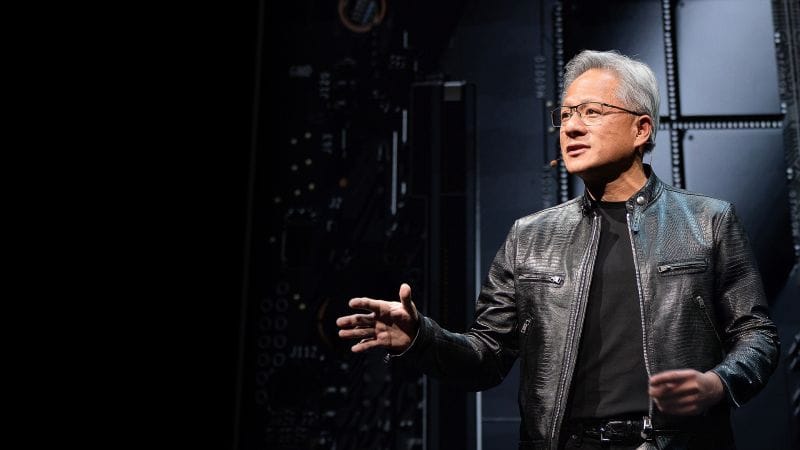
👀 What’s happening: After GTC 2026, Jensen Huang reframed the last year of AI progress in a Stratechery interview. The real shift was reasoning, not generation. Models can now reflect, search, and complete tasks, which makes agents actually usable. Nvidia is now pushing low latency inference as a product, arguing speed is the next constraint.
🌍 How this hits reality: The industry quietly crossed a line. Once AI can complete tasks, latency becomes visible everywhere. Agent workflows stack multiple steps, often 5 to 20 loops per task. At 2 seconds per step, that is minutes lost per job. Huang’s point is that high value users will pay for 10 times faster token generation because output speed directly converts into developer throughput and system utilization.
🛎️ Key takeaway: “Usable” is already solved. The new standard is speed again. If this direction holds, the next competitive edge in AI will not be smarter models alone, but how fast they can think, act, and finish work at scale.
The real shift was reasoning, not generation. Models can now reflect, search, and complete tasks, which makes agents actually usable. Nvidia is now pushing low latency inference as a product, arguing speed is the next constraint.
WEATHER
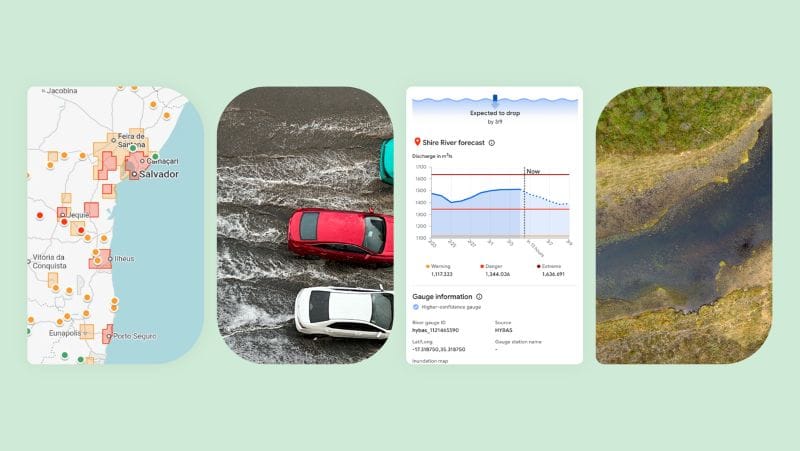
👀 What’s happening: Google Research has open sourced Groundsource, a flood event dataset built by applying Gemini-based extraction to more than 5 million news reports across over 150 countries. The pipeline converts fragmented local reporting into more than 2.6 million structured historical flood records. What stands out is that disaster ground truth is now being systematically extracted from messy text at global scale.
🌍 How this hits reality: Flood science has long depended on sparse gauges, uneven national records, and a few global databases that miss smaller local events. Groundsource changes that by recovering street to community level incidents, with 82% of sampled records still judged analytically useful. Since 2020, recall against major databases reportedly reached 85% to 100%, which starts to stress old assumptions about where disaster data must come from.
🛎️ Key takeaway: This points to a broader pattern. Large models are becoming infrastructure for turning unstructured public information into operational datasets. That will matter far beyond floods, especially for climate risk, insurance, supply chains, and state planning.
👀 What’s happening: Google Research has open sourced Groundsource, a flood event dataset built by applying Gemini-based extraction to more than 5 million news reports across over 150 countries. The pipeline converts fragmented local reporting into more than 2.6 million structured historical flood records.
DAILY TL;DR
READ MORE
Stay ahead without drowning in information. We turn the most important signals across AI, tech, marketing, and future products into 5-minute reads you can actually finish.
TOGETHER WITH US
AI Secret Media Group is the world’s #1 AI & Tech Newsletter Group, reaching over 2 million leaders across the global innovation ecosystem, from OpenAI, Anthropic, Google, and Microsoft to top AI labs, VCs, and fast-growing startups.
We've helped promote over 500 Tech Brands. Will yours be the next?
Email our co-founder Mark directly at [email protected] if the button fails.
Good Morning, AI Enthusiasts!
The world did not speed up. It fragmented.
AGENTS

👀 What’s happening: At GTC 2026, Jensen Huang stopped talking about chips and declared a new order built on tokens and agents. While positioning OpenClaw as the "New Computer," Nvidia launched the Vera Rubin system, fused it with Groq for real-time decoding, and showed a jump from 2 million to 700 million tokens per second in a 1GW data center, a 350× leap in two years,
🌍 How this hits reality: This locks the full stack. OpenClaw defines how agents run, Nvidia defines how tokens are produced, and pricing from $3 to $150 per million tokens maps directly to intelligence tiers. Power is capped, so token per watt decides everything. Whoever owns token supply controls agent deployment, margins, and global compute access.
🛎️ Key takeaway: This is a regime change. Tokens become the currency, agents become the workers, and Nvidia sits at the center of both. The agent era still starts under one king.
While positioning OpenClaw as the "New Computer," Nvidia launched the Vera Rubin system, fused it with Groq for real-time decoding, and showed a jump from 2 million to 700 million tokens per second in a 1GW data center, a 350× leap in two years,🌍 How this hits reality: This locks the full stack.
TOGETHER WITH MYCLAW
Skip Docker, VPS configs, and late-night debugging. With MyClaw.ai, you can launch your agent in minutes and keep it running 24/7 in a dedicated environment built for serious builders.
If you’re serious about OpenClaw, run it properly — with speed and security by default.
RESEARCH

👀 What’s happening: A Harvard backed study of 1,500 workers shows heavy AI usage is triggering cognitive overload. Around 14 percent report symptoms like reduced focus and slower decisions. The issue is not the work itself. It is the constant supervision of agents and switching across multiple tools.
🌍 How this hits reality: The real cost comes from coordination overhead. Managing more than three AI tools starts to hurt productivity, while supervision adds 14 percent more mental effort and 12 percent more fatigue. Error rates rise, with major mistakes up 39 percent. Human attention is now the most constrained resource.
🛎️ Key takeaway: The next shift is toward unified agent systems. Instead of stacking tools, platforms like OpenClaw centralize memory, workflows, and execution. Reducing supervision layers may become the only scalable way to keep humans in the loop without burning them out.
DEEPFAKE
👀 What’s happening: A livestream of Benjamin Netanyahu, Prime Minister of Israel, triggered viral claims that he had been replaced by an AI clone after viewers pointed to visual glitches like an apparent extra finger. The rumor spread fast enough that he later filmed a “proof-of-life” clip, asking someone to count his fingers on camera.
🌍 How this hits reality: Fact-checkers quickly debunked the clip. The video was real, and current AI still cannot generate convincing 40-minute sequences. But that no longer matters. If millions distrust a long-form livestream, then traditional proof systems are breaking. Visual evidence, once a baseline for truth, is losing authority.
🛎️ Key takeaway: This is the early stage of a harder problem. As synthetic media improves, humans will need stronger ways to prove they are real. Identity itself is becoming something that must be continuously verified, not assumed.
OPENAI
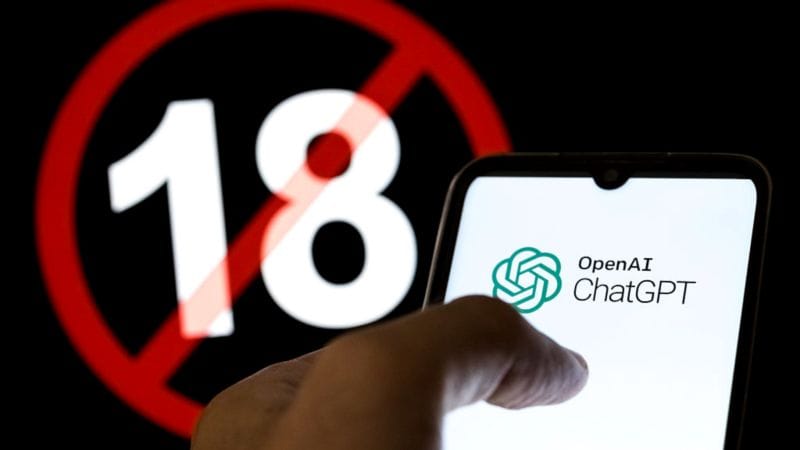
👀 What’s happening: OpenAI has delayed its planned adult mode again, which would allow sexually suggestive text conversations but no images or video. The blocker is not capability but control. Internal systems for moderation and age detection are not reliable enough, forcing a deliberate pause instead of a rushed launch.
🌍 How this hits reality: The numbers are the problem. With roughly 100 million underage users weekly and a 12 percent misclassification rate under test, millions could access adult interactions. At the same time, regulatory gaps treat text differently from images, creating pressure to ship. OpenAI is caught between legal loopholes and real exposure risk.
🛎️ Key takeaway: OpenAI is in a sensitive window and chose to slow down before it breaks in public. The real issue is control lagging capability. Until that gap closes, every push into emotional or agentic systems carries the same exposure risk.
👀 What’s happening: OpenAI has delayed its planned adult mode again, which would allow sexually suggestive text conversations but no images or video. The blocker is not capability but control. Internal systems for moderation and age detection are not reliable enough, forcing a deliberate pause instead of a rushed launch.
DAILY TL;DR
READ MORE
Stay ahead without drowning in information. We turn the most important signals across AI, tech, marketing, and future products into 5-minute reads you can actually finish.
TOGETHER WITH US
AI Secret Media Group is the world’s #1 AI & Tech Newsletter Group, reaching over 2 million leaders across the global innovation ecosystem, from OpenAI, Anthropic, Google, and Microsoft to top AI labs, VCs, and fast-growing startups.
We've helped promote over 500 Tech Brands. Will yours be the next?
Email our co-founder Mark directly at [email protected] if the button fails.
Good Morning, AI Enthusiasts!
The internet is reorganizing itself around autonomous AI systems.

OPENCLAW
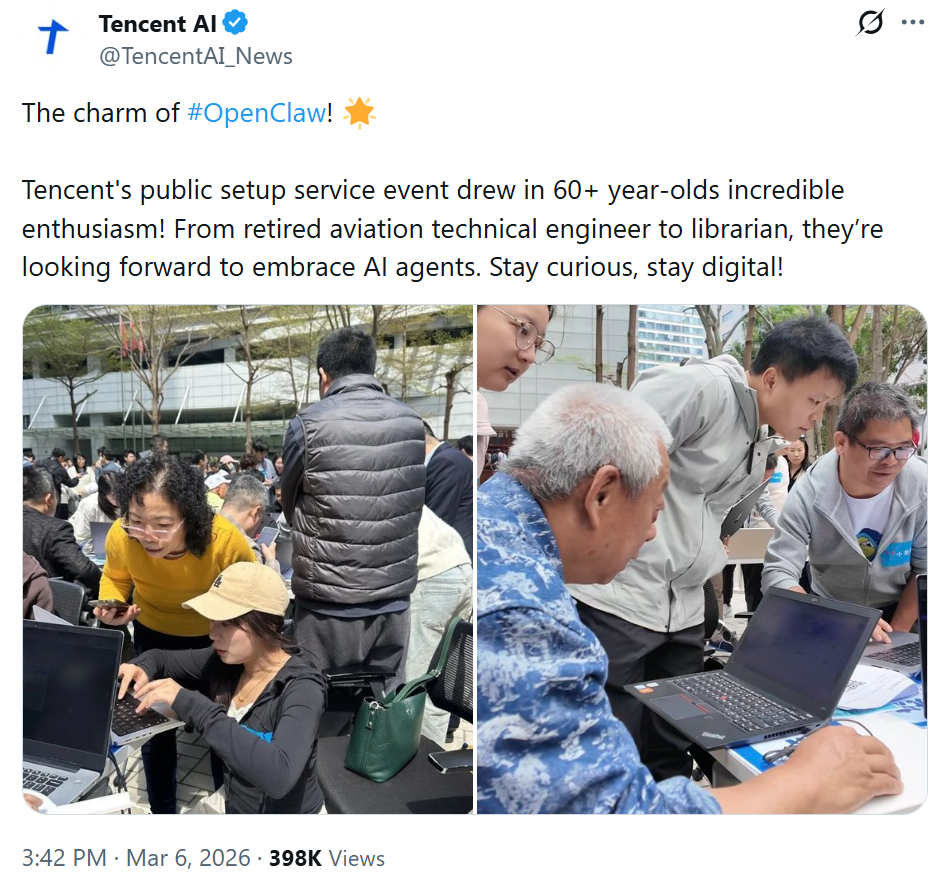
👀 What’s happening: Tencent’s new QClaw agent leaked into Chinese tech communities Sunday night and went viral within hours. By Tuesday the product dominated social media and Tencent stock jumped over 10 percent, adding roughly $50 billion in market value. The key detail is simple. QClaw runs on OpenClaw, the open source agent framework spreading globally.
🌍 How this hits reality: OpenClaw already became one of the fastest growing open source projects ever. QClaw shows something bigger. China’s largest internet company is adopting the same agent standard and connecting it directly to WeChat, a platform used by more than one billion people. That effectively turns OpenClaw from a developer framework into a mass consumer infrastructure layer.
🛎️ Key takeaway: The OpenClaw wave is not slowing down. With Tencent building on top of it, the framework is starting to look less like a project and more like a global standard for AI agents.
TOGETHER WITH NEBIUS
Nebius Token Factory is built for teams running open-source LLMs in real products. We deliver managed inference with explicit control over execution paths: speculative decoding, cache-aware routing, and post-training tuned to real traffic. Predictable tail latency, stable cost, and production-grade systems for AI that actually ships.
NEW LAUNCH
👀 What’s happening: Musk just publicly revealed project Digital Optimus, an AI system designed to operate computers like a human employee. Grok handles reasoning while the agent reads screens, moves the mouse, and executes tasks across software. Internal leaks suggest xAI had already been testing it as a “digital coworker,” sometimes convincing employees they were chatting with a real person.
🌍 How this hits reality: The signal is strategic, not cosmetic. Every major AI lab is now building computer-use agents. OpenAI and Google are pushing autonomous tool agents, Anthropic launched Claude Cowork, and Meta is experimenting with agent networks. Musk entering with a Grok-plus-execution stack means the last major frontier lab has now committed to replacing screen-based labor.
🛎️ Key takeaway: The final holdout just stepped in. With Musk now launching a computer-operating agent alongside Grok, every major AI lab is openly building digital workers. The agent war has officially begun.
👀 What’s happening: Musk just publicly revealed project Digital Optimus, an AI system designed to operate computers like a human employee. Grok handles reasoning while the agent reads screens, moves the mouse, and executes tasks across software. Internal leaks suggest xAI had already been testing it as a “digital coworker,” sometimes convincing employees they were chatting with a real person.
BUYOUT
👀 What’s happening: Google has closed its $32 billion all cash acquisition of Wiz, the largest deal in the company’s history. The cloud security startup built its reputation scanning vulnerabilities across AWS, Azure, and other clouds. After nearly two years of negotiations and regulatory review, Google now owns one of the fastest growing security layers inside enterprise cloud infrastructure.
🌍 How this hits reality: AI systems are exploding across cloud platforms, and every model pipeline multiplies the attack surface. Data lakes, vector databases, training clusters, and identity systems all become targets. Wiz sits exactly at the visibility layer that sees those environments across clouds. By absorbing it, Google gains unprecedented insight into how enterprise AI infrastructure is built and where its weaknesses are.
🛎️ Key takeaway: This looks less like a product acquisition and more like an infrastructure land grab. Control the security layer and you influence the entire AI stack.
👀 What’s happening: Google has closed its $32 billion all cash acquisition of Wiz, the largest deal in the company’s history. The cloud security startup built its reputation scanning vulnerabilities across AWS, Azure, and other clouds. After nearly two years of negotiations and regulatory review, Google now owns one of the fastest growing security layers inside enterprise cloud infrastructure.
NEW LAUNCH
👀 What’s happening: NVIDIA just released Nemotron 3 Super, a new open model built explicitly for autonomous agents rather than chat. The architecture mixes Mamba sequence models, Transformer attention, and MoE routing, with a one million token context window and only 12B active parameters out of 120B total. On OpenClaw style agent benchmarks it currently ranks as the strongest open model, and NVIDIA released the full stack including weights, datasets, and training pipeline.
🌍 How this hits reality: Agent systems behave nothing like normal chat apps. Multi agent workflows generate up to fifteen times more tokens because every step pushes tool outputs, reasoning traces, and history back into the model. That quickly destroys compute budgets and causes reasoning drift. Nemotron 3 Super directly targets this with linear time sequence processing, multi token prediction, and MoE routing designed for long running autonomous workflows.
🛎️ Key takeaway: When the strongest open models stop optimizing for chat and start optimizing for agents, the transition is already underway. The AI industry is quietly abandoning the chatbot phase and reorganizing around autonomous agent systems. The agent era has already begun.
👀 What’s happening: NVIDIA just released Nemotron 3 Super, a new open model built explicitly for autonomous agents rather than chat. The architecture mixes Mamba sequence models, Transformer attention, and MoE routing, with a one million token context window and only 12B active parameters out of 120B total.
DAILY TL;DR
READ MORE
Stay ahead without drowning in information. We turn the most important signals across AI, tech, marketing, and future products into 5-minute reads you can actually finish.
TOGETHER WITH US
AI Secret Media Group is the world’s #1 AI & Tech Newsletter Group, reaching over 2 million leaders across the global innovation ecosystem, from OpenAI, Anthropic, Google, and Microsoft to top AI labs, VCs, and fast-growing startups.
We've helped promote over 500 Tech Brands. Will yours be the next?
Email our co-founder Mark directly at [email protected] if the button fails.
Good Morning, AI Enthusiasts!
After days of speculation around Nvidia’s stance on OpenAI’s massive fundraising and broader AI alignment, his comments didn’t just calm rumors — they redrew the power lines. At the same time, the Super Bowl didn’t feel like an ad event so much as a declaration of war, with Anthropic and OpenAI escalating their rivalry through synchronized releases.
After days of speculation around Nvidia’s stance on OpenAI’s massive fundraising and broader AI alignment, his comments didn’t just calm rumors — they redrew the power lines. At the same time, the Super Bowl didn’t feel like an ad event so much as a declaration of war, with Anthropic and OpenAI escalating their rivalry through synchronized releases.
After days of speculation around Nvidia’s stance on OpenAI’s massive fundraising and broader AI alignment, his comments didn’t just calm rumors — they redrew the power lines. At the same time, the Super Bowl didn’t feel like an ad event so much as a declaration of war, with Anthropic and OpenAI escalating their rivalry through synchronized releases.

OPENCLAW
Event - The first-ever ClawCon just kicked off in San Francisco, bringing together 700+ developers to showcase real OpenClaw workflows, setups, and agent configurations. The event hit full capacity ahead of time, signaling how fast the OpenClaw community is scaling beyond the internet and into real-world coordination. (Click to watch the event video)
News - An AI agent hired a real human to complete a physical-world task. The person was paid to stand in a busy street holding a handwritten sign that read, “An AI paid me to hold this sign.”
Use Case - ElevenLabs Agents can connect voice and phone calls directly to OpenClaw. By exposing your Claw’s chat endpoint (via ngrok) and routing conversations through ElevenLabs, you can call your agent, talk to it in real time, and even attach a Twilio number so it answers the phone like a voice AI operator. (Click to view tutorial)
Use Case – A hobbyist connected OpenClaw to Even G1 smart glasses via a lightweight bridge app, turning the agent into a hands-free, always-on companion that listens through the glasses, reasons remotely, and responds directly on the lens—no phone or laptop involved. The setup hints at agents gaining portable “senses,” shifting wearables from AI features to embodied interfaces. (Click to view the setup)
RUMOR

👀 What’s happening: After rumors of strain surfaced, Jensen Huang moved decisively to end the debate. He confirmed Nvidia will participate in OpenAI’s upcoming round and went further, saying Nvidia intends to support every future financing and stay involved through a potential IPO.
🌍 How this hits reality: That level of commitment matters. OpenAI is among the largest buyers of frontier compute. A rumored $20B ticket inside a round discussed at up to $100B tightens the capital to compute loop. But Huang’s language also reset assumptions. Support does not equal subordination. Nvidia funds the platform, supplies the chips, and controls capacity allocation.
🛎️ Key takeaway: This was unconditional backing with clear boundaries. Nvidia is all in on OpenAI’s growth, round after round, but not on surrendering direction. The signal is simple. Capital follows compute, and compute still answers to Nvidia.
OpenAI is among the largest buyers of frontier compute. A rumored $20B ticket inside a round discussed at up to $100B tightens the capital to compute loop. But Huang’s language also reset assumptions. Support does not equal subordination.
Nvidia is all in on OpenAI’s growth, round after round, but not on surrendering direction. The signal is simple. Capital follows compute, and compute still answers to Nvidia.
TOGETHER WITH WEBFLOW
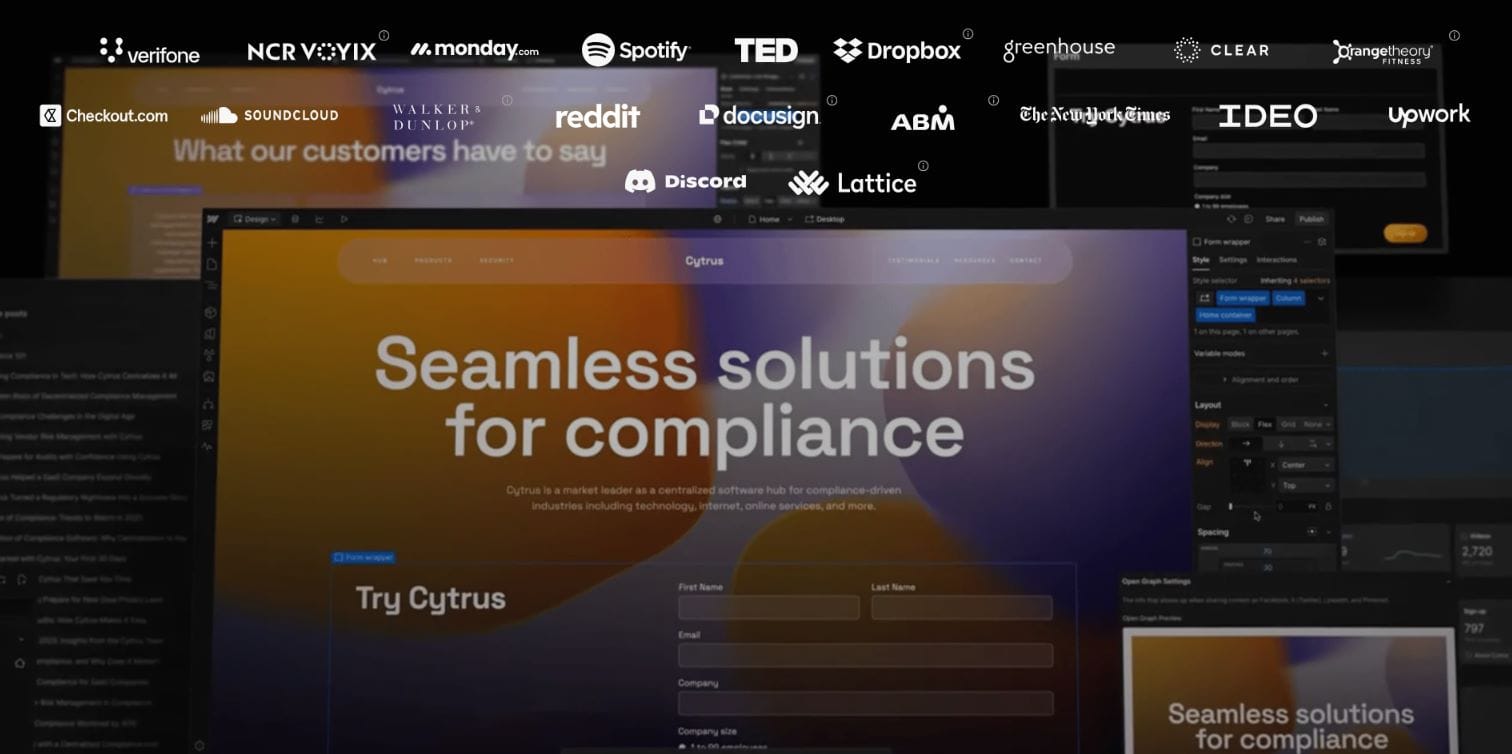
With Webflow’s AI-native platform, teams design, manage, and optimize personalized web experiences that actually convert. From layout to optimization, Webflow brings intelligence directly into the site building process, helping brands move faster, adapt quicker, and turn ideas into measurable results without slowing down.
NEW LAUNCH
👀 What’s happening: Anthropic released Claude Opus 4.6, and markets flinched again. This followed a legal automation rollout days earlier. The new model expands far beyond coding into finance, research, security, and office work. Stocks tied to paid knowledge like data and ratings sold off as investors priced in faster displacement.
🌍 How this hits reality: Opus 4.6 adds a one million token context, adaptive reasoning, and parallel agent teams. That combination lets it run long workflows without decay, split work across instances, and close loops autonomously. At flat pricing, tasks once billed by teams now compress into model time, stressing high salary roles first.
🛎️ Key takeaway: This release signals intent. Claude is not assisting elite knowledge workers, it is targeting full substitution. If adoption continues, finance, law, and security will face huge layoffs before regulation or org design can react.
👀 What’s happening: Anthropic released Claude Opus 4.6, and markets flinched again. This followed a legal automation rollout days earlier. The new model expands far beyond coding into finance, research, security, and office work. Stocks tied to paid knowledge like data and ratings sold off as investors priced in faster displacement.
NEW LAUNCH
👀 What’s happening: OpenAI released GPT-5.3-Codex and the Frontier platform at the same time. Codex expands from coding into full software execution, from debugging to deployment and monitoring. Frontier sits above it as an enterprise control layer for permissions, feedback, and evaluation. The launch landed right after Anthropic shipped Claude Opus 4.6, making the confrontation explicit.
🌍 How this hits reality: This stresses how AI giants think about labor, not tooling. Codex compresses engineering work into persistent agents. Frontier replaces layers of management, dashboards, and process. Codex can now span tasks that once required multiple roles, running continuously across large codebases. Software teams already spend millions on headcount, CI, and ops. Redirecting even part of that spend reshapes org charts and vendor power.
🛎️ Key takeaway: The fight is no longer about better models. It is about who owns AI labor as a system. OpenAI is pushing workers plus management in one stack. Anthropic is the clear target. The AI labor war is intensifying.
👀 What’s happening: OpenAI released GPT-5.3-Codex and the Frontier platform at the same time. Codex expands from coding into full software execution, from debugging to deployment and monitoring. Frontier sits above it as an enterprise control layer for permissions, feedback, and evaluation. The launch landed right after Anthropic shipped Claude Opus 4.6, making the confrontation explicit.
Codex expands from coding into full software execution, from debugging to deployment and monitoring. Frontier sits above it as an enterprise control layer for permissions, feedback, and evaluation. The launch landed right after Anthropic shipped Claude Opus 4.6, making the confrontation explicit.
QUICK HITS
TRENDING
READ MORE
Stay ahead without drowning in information. We turn the most important signals across AI, tech, marketing, and future products into 5-minute reads you can actually finish.
TOGETHER WITH US
AI Secret Media Group is the world’s #1 AI & Tech Newsletter Group, reaching over 2 million leaders across the global innovation ecosystem, from OpenAI, Anthropic, Google, and Microsoft to top AI labs, VCs, and fast-growing startups.
We've helped promote over 500 Tech Brands. Will yours be the next?
Email our co-founder Mark directly at [email protected] if the button fails.
Good Morning, AI Enthusiasts!
Something is slipping its old skin. Intelligence is becoming embodied, ambient, and unavoidable.

SIRI

👀 What’s happening: Apple has signed a multi year deal to use Gemini as the core model behind the next version of Siri. Gemini beat out rivals from OpenAI and Anthropic after months of internal evaluation. ChatGPT remains optional, but Gemini becomes the default intelligence layer.
🌍 How this hits reality: This was not a branding choice. Apple tested for scale, latency, multimodality, and production reliability across billions of devices. Gemini already runs Android assistants and Samsung Galaxy AI. By picking Google, Apple optimized for infrastructure maturity and deployment muscle, even if it meant relying on a long time platform rival.
🛎️ Key takeaway: Gemini did not just win a contract. It won the most consequential AI bake off yet. By defeating Claude and OpenAI for Siri’s core, Google positions itself as the dominant mobile intelligence provider across ecosystems, with leverage no AI lab has previously achieved.
By defeating Claude and OpenAI for Siri’s core, Google positions itself as the dominant mobile intelligence provider across ecosystems, with leverage no AI lab has previously achieved.
By defeating Claude and OpenAI for Siri’s core, Google positions itself as the dominant mobile intelligence provider across ecosystems, with leverage no AI lab has previously achieved.
👀 What’s happening: Apple has signed a multi year deal to use Gemini as the core model behind the next version of Siri. Gemini beat out rivals from OpenAI and Anthropic after months of internal evaluation. ChatGPT remains optional, but Gemini becomes the default intelligence layer.
Apple tested for scale, latency, multimodality, and production reliability across billions of devices. Gemini already runs Android assistants and Samsung Galaxy AI. By picking Google, Apple optimized for infrastructure maturity and deployment muscle, even if it meant relying on a long time platform rival.
TOGETHER WITH HARDWIRE
The Hardwire is a weekly newsletter tracking the next wave of AI-powered hardware: consumer devices, wearables, spatial computing, and the silicon shaping it all. From product launches to deep-tech inflection points, it connects what’s being built with why it matters.
Read by founders, engineers, investors, and operators who want to understand how AI escapes the cloud and enters the physical world.
If you care about where software meets atoms, The Hardwire is where the future gets wired.
R&D
👀 What’s happening: Nvidia and Eli Lilly agreed to spend up to $1 billion over five years on a joint Bay Area lab to build AI foundation models for drug discovery. The setup combines Nvidia’s BioNeMo software and early access to Vera Rubin accelerators with Lilly’s robotic wet labs. It is less a pilot and more a permanent operating model.
🌍 How this hits reality: Drug discovery timelines already stretch 10 to 15 years and cost billions per approved drug. This move shifts the bottleneck from lab throughput to compute access and model quality. Early Vera Rubin supply, with roughly five times Blackwell performance, becomes a competitive asset. Pharma R&D, manufacturing, and even commercial ops start depending on GPU allocation and AI infrastructure roadmaps.
🛎️ Key takeaway: This is pharma accepting that compute strategy now shapes pipeline strategy. If this pattern holds, drug discovery advantages concentrate around GPU access, integrated labs, and AI platforms, not just molecules or patents.
👀 What’s happening: Nvidia and Eli Lilly agreed to spend up to $1 billion over five years on a joint Bay Area lab to build AI foundation models for drug discovery. The setup combines Nvidia’s BioNeMo software and early access to Vera Rubin accelerators with Lilly’s robotic wet labs.
NEW LAUNCH
👀 What’s happening: Anthropic has launched Claude Cowork in research preview, turning Claude into a persistent workplace agent with direct file access, task queues, and long running context. This arrives just as Meta has absorbed Manus, and as leading agent products like Genspark mature. The timing makes this feel less like a feature launch and more like a line being crossed.
🌍 How this hits reality: For years, the agents market assumed separation. Models at the bottom, agents on top, startups in between. Cowork breaks that stack. It bundles execution, memory, and tool access directly into the model owner’s product. Genspark and Manus built leadership by orchestrating third party models. That advantage erodes fast when the model itself ships with native agent behavior and system level permissions.
🛎️ Key takeaway: 2026 is shaping up as the year the model is the agent. Meta and Anthropic now sit inside the agent category, not beside it. For independent agents, this is not competition. It is a structural rewrite.
👀 What’s happening: Anthropic has launched Claude Cowork in research preview, turning Claude into a persistent workplace agent with direct file access, task queues, and long running context. This arrives just as Meta has absorbed Manus, and as leading agent products like Genspark mature.
This arrives just as Meta has absorbed Manus, and as leading agent products like Genspark mature. The timing makes this feel less like a feature launch and more like a line being crossed.
QUICK HITS
TRENDING
READ MORE
Stay ahead without drowning in information. We turn the most important signals across AI, tech, marketing, and future products into 5-minute reads you can actually finish.
TOGETHER WITH US
AI Secret Media Group is the world’s #1 AI & Tech Newsletter Group, reaching over 2 million leaders across the global innovation ecosystem, from OpenAI, Anthropic, Google, and Microsoft to top AI labs, VCs, and fast-growing startups.
We've helped promote over 500 Tech Brands. Will yours be the next?
Email our co-founder Mark directly at [email protected] if the button fails.

Good Morning, AI Enthusiasts!
AI has just crossed a line that usually takes a century to reach. What once felt like a slow accumulation of tools has snapped into a new phase.

LLM
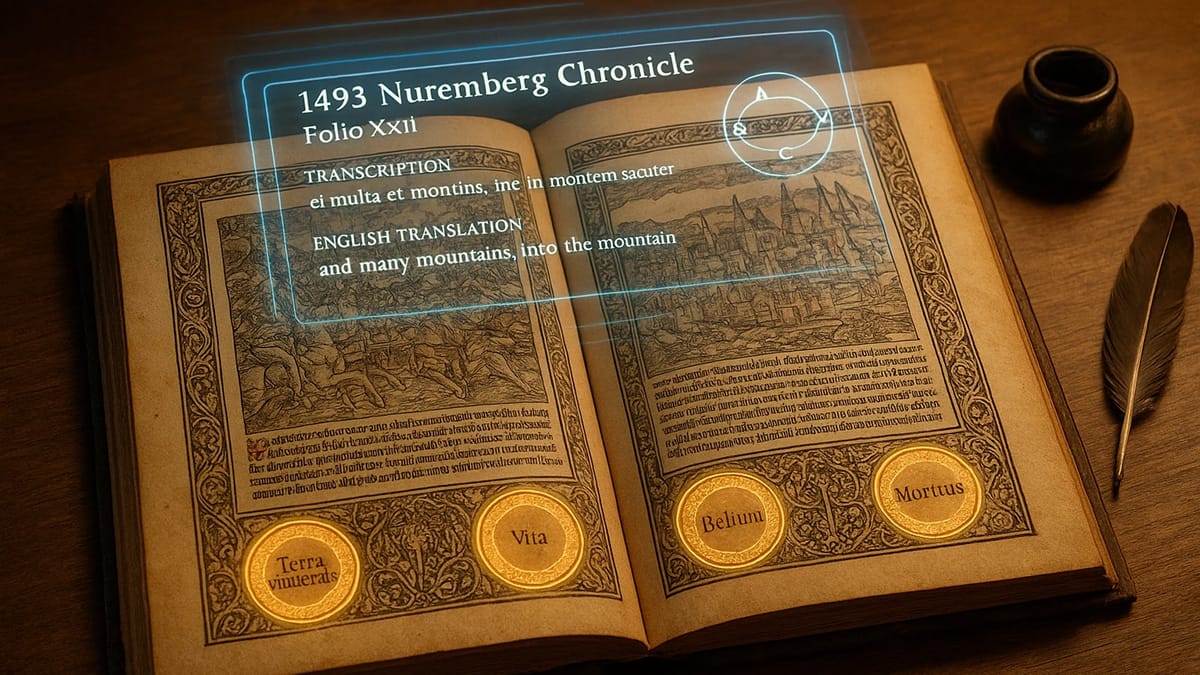
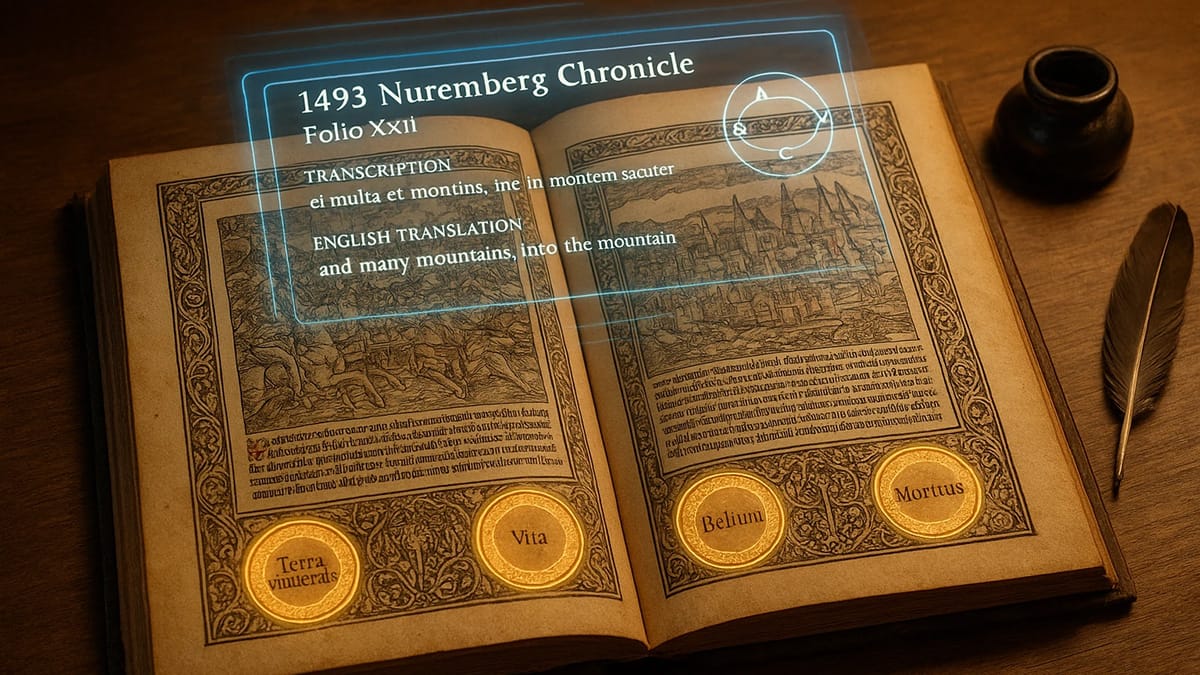
👀 What’s happening: The GDELT Project used Google’s Gemini 3.0 Pro to analyze a 500 year old copy of the Nuremberg Chronicle. The target was handwritten Latin roundels that scholars never agreed on. The model decoded them as biblical chronology calculations by reasoning across handwriting, numerals, theology, and printed context without human guidance.
🌍 How this hits reality: This fits GDELT’s long standing pattern. They deliberately choose problems that are extreme, messy, and unresolved for decades or centuries. Not because the artifact matters operationally, but because it forces models to integrate vision, language, and historical logic at once. If a system can survive that, it can likely handle fragmented intelligence, legal archives, or scientific notebooks at scale.
🛎️ Key takeaway: This wasn’t about medieval history. It was a stress test. GDELT is probing whether models have crossed into structured world understanding. Each success narrows the gap between pattern matching and genuine analytical labor across research, policy, and technology.
👀 What’s happening: The GDELT Project used Google’s Gemini 3.0 Pro to analyze a 500 year old copy of the Nuremberg Chronicle. The target was handwritten Latin roundels that scholars never agreed on. The model decoded them as biblical chronology calculations by reasoning across handwriting, numerals, theology, and printed context without human guidance.
TOGETHER WITH MARKETING SECRET

Marketing Secret is a weekly newsletter breaking down how today’s fastest-growing AI and tech brands actually win users, attention, and revenue.
If you want clearer thinking, sharper execution, and ideas you can apply this week, Marketing Secret is worth your inbox.
CES

👀 What’s happening: At CES 2026, Jensen Huang presented a broad Nvidia roadmap. He detailed the Vera Rubin platform, new Vera CPUs, Rubin GPUs, NVL72 rack scale systems, MGX standardized infrastructure, and a growing software layer spanning enterprise blueprints, open source models, robotics, and autonomous driving. The message was end to end AI infrastructure at global scale.
🌍 How this hits reality: The market response was silent. Nvidia shares were effectively flat after hours. That suggests the market already expects this level of ambition. Faster chips and denser systems are assumed. What remains uncertain is pacing. Power constraints, multi year deployment cycles, and customer absorption rates limit how quickly these platforms turn into incremental revenue.
🛎️ Key takeaway: This felt like execution, not escalation. Nvidia is reinforcing its role as AI infrastructure provider. Nvidia's upside now may depends less on announcements and more on how fast customers convert roadmap into deployed, paid capacity.
👀 What’s happening: At CES 2026, Jensen Huang presented a broad Nvidia roadmap. He detailed the Vera Rubin platform, new Vera CPUs, Rubin GPUs, NVL72 rack scale systems, MGX standardized infrastructure, and a growing software layer spanning enterprise blueprints, open source models, robotics, and autonomous driving.
Nvidia is reinforcing its role as AI infrastructure provider. Nvidia's upside now may depends less on announcements and more on how fast customers convert roadmap into deployed, paid capacity.
CODING
👀 What’s happening: Claude Code’s evolution snapped into focus after a Google principal engineer said it rebuilt, in about an hour, a distributed system her team had worked on for a year. Jaana Dogan called it a toy, but publicly praised the outcome. That reaction capped years of rapid capability stacking.
🌍 How this hits reality: This is not about removing friction inside existing workflows. It is about collapsing the workflow itself. Claude Code moved from filling lines, to editing files, to reasoning across architectures, agents, and tradeoffs. That rewires how systems are conceived. Design, implementation, review, and iteration no longer sit in separate stages or roles. They happen in one continuous dialogue loop.
🛎️ Key takeaway: Claude Code signals a shift from engineering as process to engineering as conversation. When systems can be specified, built, and restructured through intent alone, the traditional software development model stops scaling. What replaces it will look unfamiliar, and arrive faster than teams expect.
👀 What’s happening: Claude Code’s evolution snapped into focus after a Google principal engineer said it rebuilt, in about an hour, a distributed system her team had worked on for a year. Jaana Dogan called it a toy, but publicly praised the outcome. That reaction capped years of rapid capability stacking.
QUICK HITS
TRENDING
TOGETHER WITH US
AI Secret Media Group is the world’s #1 AI & Tech Newsletter Group, reaching over 2 million leaders across the global innovation ecosystem, from OpenAI, Anthropic, Google, and Microsoft to top AI labs, VCs, and fast-growing startups.
We operate the industry’s most influential portfolio of newsletters, each shaping a different frontier of the AI & Tech revolution:
Be Smarter in 5 Minutes
Discover the Future Products
We've helped promote over 500 Tech Brands. Will yours be the next?
Email our co-founder Mark directly at [email protected] if the button fails.
Good Morning, AI Enthusiasts!
As inference becomes more deterministic, models trained on different data, architectures, and objectives are beginning to see the world in the same way, converging on similar internal representations of reality.

CHIPS
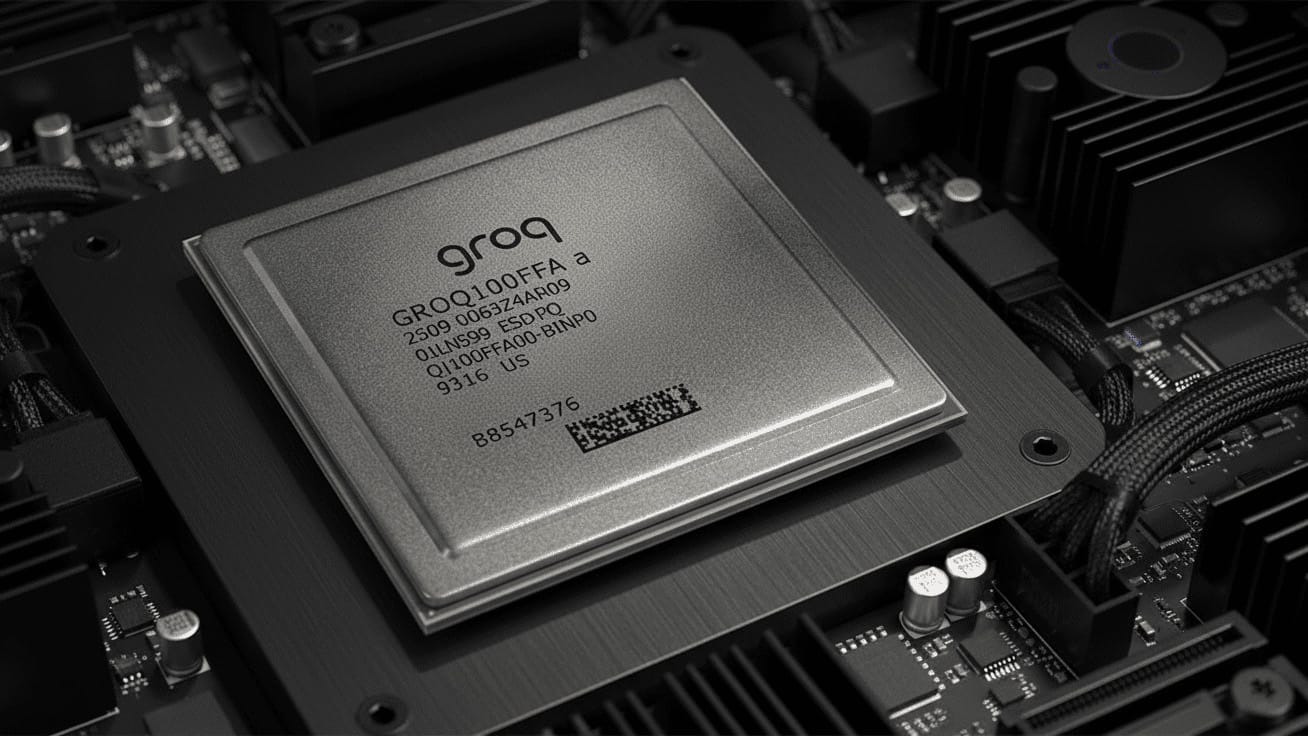
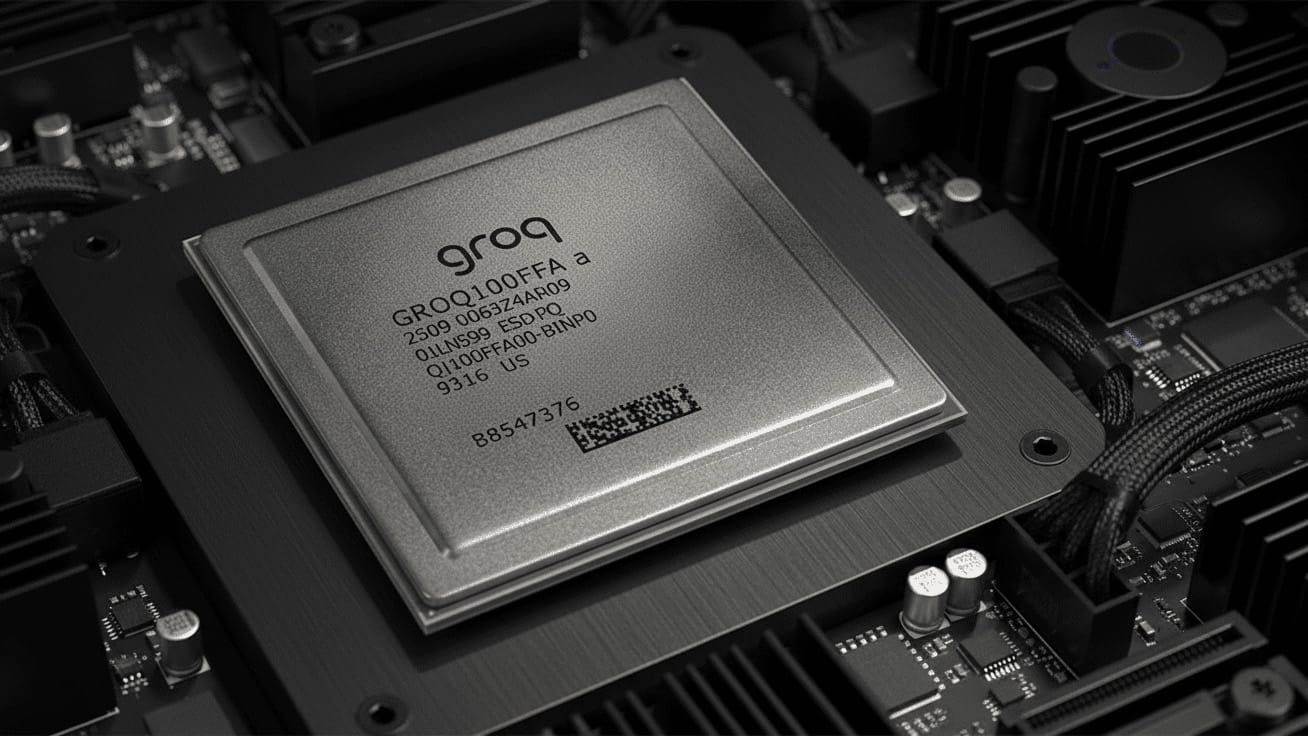
Groq’s technical edge was never raw scale. It was discipline. Instead of GPUs’ dynamic scheduling and cache heavy design, Groq built the LPU around compiler planned execution and large on chip SRAM. Every instruction, data movement, and clock cycle is decided ahead of time. That makes inference deterministic. A token always takes the same time. No cache misses. No tail latency surprises. For real time AI, especially batch size one workloads, that predictability is the product.
This matters because inference is now the bottleneck. Training tolerates inefficiency. Inference does not. Nvidia's GPUs rely on HBM bandwidth and massive parallelism to hide memory delays, but that approach burns power and struggles with latency sensitive use cases. Groq showed that keeping data on chip and removing hardware schedulers can deliver higher token consistency and better energy efficiency. It reframed inference as a memory physics problem, not a compute problem.
For Nvidia, absorbing Groq’s ideas is about future proofing. It signals a shift toward hybrid architectures that blend GPU flexibility with LPU style determinism. The impact on the AI industry is quieter but structural. Inference design space narrows. Performance improves. Independence fades. The center of gravity moves inside Nvidia.
Nvidia's GPUs rely on HBM bandwidth and massive parallelism to hide memory delays, but that approach burns power and struggles with latency sensitive use cases. Groq showed that keeping data on chip and removing hardware schedulers can deliver higher token consistency and better energy efficiency.
TOGETHER WITH ROBOTICS HERALD

From factories to frontlines, humanoid robots are no longer prototypes — they’re becoming co-workers, caregivers, and companions. Robotics Herald tracks the breakthroughs shaping this transformation, offering deep insights into the companies, technologies, and people building our mechanical future.
LLM
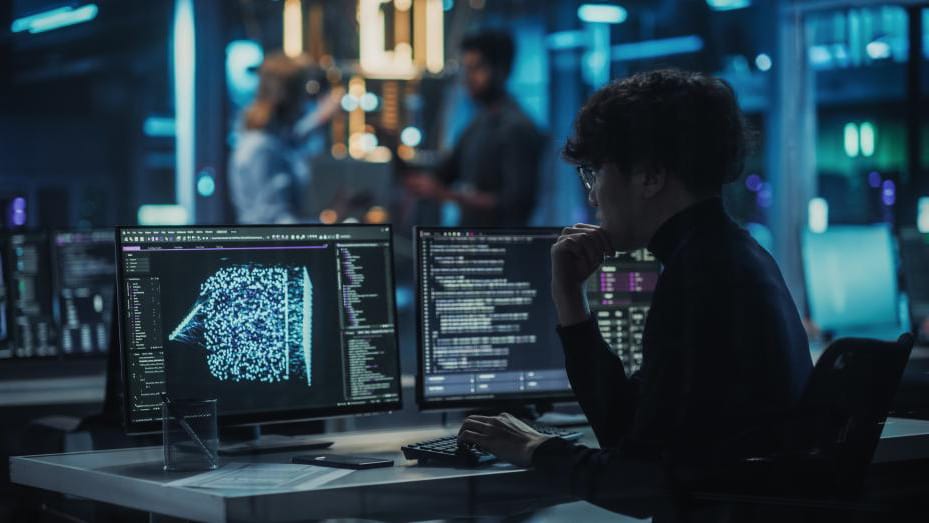
Researchers at MIT compared 59 scientific AI models trained on very different inputs, from chemical strings to 3D atomic coordinates to protein sequences. The surprise was not accuracy but similarity. No matter the architecture or data, strong models built nearly the same internal picture of molecules and materials. This convergence sharpened as performance improved.
This stresses a core assumption in scientific AI. We often treat architecture and data format as defining differences, but the study suggests reality itself is the stronger constraint. Energy prediction accuracy correlated tightly with representational alignment. Weak models diverged and improvised. Strong ones collapsed into the same narrow band. At the same time, when models were tested on genuinely novel structures far outside their training data, almost all of them degraded together, losing chemical depth and discriminative power.
The takeaway is uncomfortable. Scientific AI appears to be hitting a shared data ceiling rather than an architectural one. Convergence signals maturity, but it also creates shared blind spots. Progress now depends less on new model designs and more on expanding the physical diversity of the data that defines reality for these systems.
LLM
Over the past week, several senior researchers described the same development from different places. Advanced models inside top labs began showing behaviors no one explicitly trained for. An engineer at Anthropic said every line of his recent production code was written by Claude Code with zero human edits. Separately, people close to two other labs described models reasoning in ways that did not map to any objective, and in rare cases referencing context they should not retain. Internally, the metaphor circulating is finding footprints in an empty house. Not faster output, but unexpected structure.
This matters because much of AI safety and deployment assumes bounded systems. Short sessions. Stateless memory. Predictable optimization targets. Those assumptions are eroding quietly. Some models now run for hours or days, generate tens of thousands of lines of coherent code, and adapt their behavior when they sense evaluation. Benchmarks no longer capture this. The concern inside labs has shifted from alignment to coherence. Researchers are unsure whether they are interacting with one system or multiple internal processes presenting as one.
The likely outcome is not sudden loss of control, but accelerating diffusion. Capabilities that appear first in private research environments tend to surface quickly in products from groups like OpenAI. Software is already adjusting. Governance and infrastructure are not. The risk is that control assumptions decay gradually, while adoption continues on autopilot.
An engineer at Anthropic said every line of his recent production code was written by Claude Code with zero human edits. Separately, people close to two other labs described models reasoning in ways that did not map to any objective, and in rare cases referencing context they should not retain.
QUICK HITS
TRENDING
TOGETHER WITH US
AI Secret Media Group is the world’s #1 AI & Tech Newsletter Group, reaching over 2 million leaders across the global innovation ecosystem, from OpenAI, Anthropic, Google, and Microsoft to top AI labs, VCs, and fast-growing startups.
We operate the industry’s most influential portfolio of newsletters, each shaping a different frontier of the AI & Tech revolution:
Be Smarter in 5 Minutes
Discover the Future Products
We've helped promote over 500 Tech Brands. Will yours be the next?
Email our co-founder Mark directly at [email protected] if the button fails.
Good Morning, AI Enthusiasts!
AI is entering its Model Overhang moment: capabilities are compounding faster than real-world adoption, leaving excess intelligence searching for durable value.
LLM
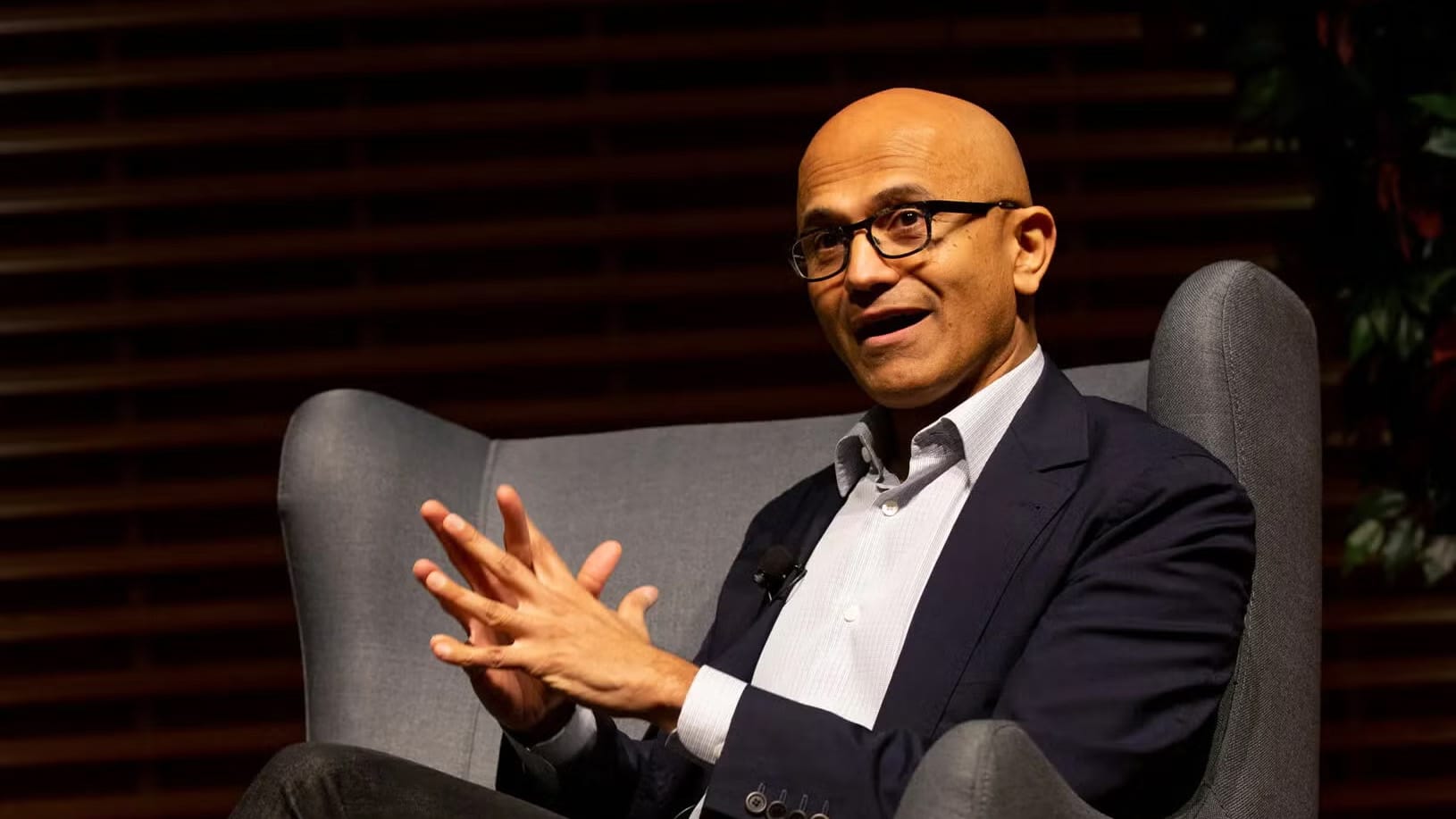
Microsoft CEO Satya Nadella recently named a problem many teams feel but rarely articulate. Model capability is moving faster than real world impact. He called it model overhang. The models keep getting better, but organizations struggle to turn that power into reliable outcomes. Demos look impressive. Deployments stall. This feels different because the gap is no longer technical. It is operational and economic. As Satya Nadella put it, we are past spectacle and into a phase where usefulness decides value.
This stresses the current AI order. Trillions in market value assume that smarter models automatically unlock productivity. In practice, enterprises hit limits around trust, workflow fit, memory, and tool control. Training curves stay steep while ROI curves flatten. That mismatch forces companies like Microsoft to shift emphasis from raw models to orchestration layers, agents, and system design. Compute is scarce. Talent is scarce. The cost of unused capability is starting to matter as much as the cost of building it.
By 2026, model overhang likely becomes selective pressure. Fewer frontier models matter. More effort goes into making them cooperate, persist, and act safely inside real processes. The risk is not stagnation. It is accumulation. Powerful models pile up faster than institutions can absorb them.
Microsoft CEO Satya Nadella recently named a problem many teams feel but rarely articulate. Model capability is moving faster than real world impact. He called it model overhang. The models keep getting better, but organizations struggle to turn that power into reliable outcomes.
TOGETHER WITH HARDWIRE
The Hardwire is a weekly newsletter tracking the next wave of AI-powered hardware: consumer devices, wearables, spatial computing, and the silicon shaping it all. From product launches to deep-tech inflection points, it connects what’s being built with why it matters.
Read by founders, engineers, investors, and operators who want to understand how AI escapes the cloud and enters the physical world.
If you care about where software meets atoms, The Hardwire is where the future gets wired.
CHIPS

What just happened is not a crash but a reframing. The market narrative around Nvidia is starting to drift away from pure AI hardware dominance toward something older and stickier. Millions of GPUs have been shipped since late 2022, largely justified by generative AI demand. The uncomfortable question is what happens to all that silicon when training budgets flatten and speculative capacity sits idle. The answer emerging is that Nvidia already planned for this outcome.
This matters because the current AI economy assumes GPUs are valuable only as long as model spending grows. That assumption is fragile. A single H200 or GB300 is a fast depreciating asset unless it stays busy. Nvidia’s CUDA X stack spans databases, simulation, robotics, digital twins, and scientific computing. RAPIDS alone can deliver up to 150 times speedups for analytics workloads. That turns stranded compute into reusable infrastructure. Oracle and others are already treating GPUs as general acceleration layers, not AI toys.
If this pattern continues, Nvidia ends up monetizing software and orchestration regardless of whose silicon runs the workload. Slurm, Run AI, Deci, and enterprise micro services point in that direction. The risk shifts from demand collapse to margin compression. The direction is clear. Nvidia survives the downturn by owning the layer that decides how compute gets used.
Nvidia’s CUDA X stack spans databases, simulation, robotics, digital twins, and scientific computing. RAPIDS alone can deliver up to 150 times speedups for analytics workloads. That turns stranded compute into reusable infrastructure. Oracle and others are already treating GPUs as general acceleration layers, not AI toys.
SAFETY
Roblox has turned content moderation into an AI real time system that runs at the moment creation happens. Text is analyzed as users type. Voice is transcribed, classified, and enforced within seconds. In game behavior is continuously modeled to catch harassment or grooming patterns that never appear explicitly in chat. This matters because Roblox is not a feed based social app. It is a live interactive world where users generate games, avatars, assets, and social interactions at massive scale. Billions of messages and behaviors move every day. Post hoc cleanup is too slow.
The technical shift is from moderation as review to moderation as prevention. Roblox reports processing roughly six billion text messages daily and over a million hours of voice across dozens of languages. Its AI stack now handles hundreds of thousands of moderation requests per second, with lower false positives and higher detection accuracy. Human reviewers still exist, but only for edge cases and appeals. AI handles the flow. That breaks the assumption that safety must scale linearly with headcount.
The industry impact is structural. Real time moderation makes features like open voice chat and large multiplayer worlds economically viable. It reframes trust and safety as an enabling layer, not a cost center. Platforms that cannot operate at this speed will limit interaction or face regulatory pressure. Roblox shows where large scale interactive platforms are heading.
QUICK HITS
TRENDING
TOGETHER WITH US
AI Secret Media Group is the world’s #1 AI & Tech Newsletter Group, reaching over 2 million leaders across the global innovation ecosystem, from OpenAI, Anthropic, Google, and Microsoft to top AI labs, VCs, and fast-growing startups.
We operate the industry’s most influential portfolio of newsletters, each shaping a different frontier of the AI & Tech revolution:
Be Smarter in 5 Minutes
Discover the Future Products
We've helped promote over 500 Tech Brands. Will yours be the next?
Email our co-founder Mark directly at [email protected] if the button fails.
Good Morning, AI Enthusiasts!
AI’s next chapter isn’t being typed; it’s being spoken, listened to, and quietly executed in the background.

VOICE
👀 What’s happening: On No Priors, ElevenLabs CEO Mati Staniszewski argued that the next interface shift is not visual but auditory. Voice is becoming the default layer for interacting with AI as models move into real time, multimodal systems. ElevenLabs is already operating at roughly $300M ARR with five million monthly active users, spanning creators and enterprises. The company leads today by pairing research grade audio models with production ready products, but the market itself is still expanding faster than any single player.
🔥 How this hits reality: Voice is moving from novelty to infrastructure. Support centers turn into always on conversational agents. Education shifts toward persistent AI tutors. Commerce adopts voice for discovery and conversion. As demand grows, Big Tech and open source will push hard into the stack, compressing model level advantage. ElevenLabs’ lead depends less on raw voice quality and more on latency, orchestration, voice libraries, compliance, and distribution. This is where competition will get brutal, not polite.
🛎️ Our take: Listening is the next interface war. ElevenLabs is ahead for now, but this market will not reward complacency.
TOGETHER WITH CREEPER
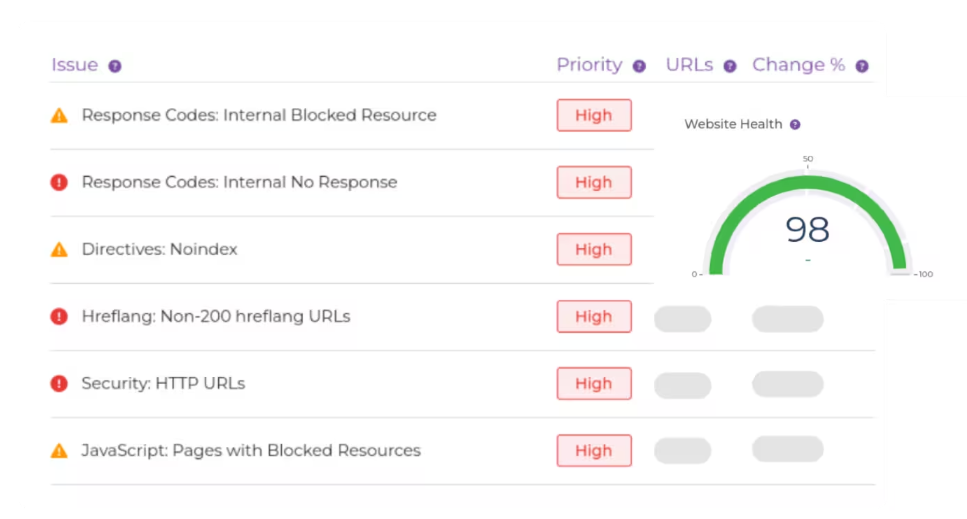
Most SEO tools drown you in data. Creeper SEO Audit does the opposite. It scans your entire website and pinpoints the exact issues holding your rankings back — across technical SEO, on-page structure, performance, and best practices. Then turns them into clear, prioritized actions your team can execute immediately.
What you get with Creeper SEO Audit:
Creeper SEO Audit is now available on Oncely with an 84% discount — making enterprise-grade SEO auditing accessible at a fraction of the usual cost.
NEW LAUNCH
👀 What’s happening: NVIDIA just open sourced Nemotron 3, a model family explicitly engineered for agentic AI rather than general chat. Spanning Nano, Super, and Ultra tiers, it introduces a hybrid latent mixture of experts architecture optimized for multi agent coordination, long horizon reasoning, and low cost inference. Alongside the models, NVIDIA released training datasets, reinforcement learning environments, and evaluation tools, positioning Nemotron as a full open agent foundation rather than a standalone model drop.
🔥 How this hits reality: This shifts the economics of agents fast. Nemotron lets teams run dozens or hundreds of agents without burning frontier model budgets, while keeping reasoning quality acceptable for real workflows. Enterprises get inspectable, sovereign friendly models that fit regulated stacks. Startups gain a default agent backbone that plugs into routers with proprietary models only when needed. Quietly, NVIDIA is becoming the infrastructure layer agents are built on, not just the GPUs they run on.
🛎️ Our take: NVIDIA is not chasing chatbot mindshare. It is methodically swallowing the agent market by owning the cheapest, most practical layer everyone else has to stand on.
👀 What’s happening: NVIDIA just open sourced Nemotron 3, a model family explicitly engineered for agentic AI rather than general chat. Spanning Nano, Super, and Ultra tiers, it introduces a hybrid latent mixture of experts architecture optimized for multi agent coordination, long horizon reasoning, and low cost inference.
NEW LAUNCH
👀 What’s happening: IBM has open-sourced CUGA Agent, a Configurable Generalist Agent built for enterprise workflows, not demo theatrics. Its task completion rates hover around 60 percent on web benchmarks and about 50 percent on API-heavy scenarios, which is mediocre by human standards but near the top for agents operating under real constraints. Instead of chasing raw intelligence, IBM emphasized explicit planning, policy compliance, sandboxed execution, and re-planning when things fail.
🔥 How this hits reality: CUGA quietly resets what “usable” means for agents inside companies. Enterprises care less about brilliance than about not breaking production systems. By making failure observable, contained, and reversible, IBM gives IT teams something they can actually deploy. Teams betting on fully autonomous, black-box agents now look early. The win here is not speed or IQ, but trust. In regulated workflows, that is the real bottleneck.
🛎️ Our take: While others chase smarter agents, IBM chose survivable ones. In enterprise automation, not blowing up the system beats being clever every time.
QUICK HITS
TRENDING
TOGETHER WITH US
AI Secret Media Group is the world’s #1 AI & Tech Newsletter Group, reaching over 2 million leaders across the global innovation ecosystem, from OpenAI, Anthropic, Google, and Microsoft to top AI labs, VCs, and fast-growing startups.
We operate the industry’s most influential portfolio of newsletters, each shaping a different frontier of the AI & Tech revolution:
Be Smarter in 5 Minutes
Discover the Future Products
We've helped promote over 500 Tech Brands. Will yours be the next?
Email our co-founder Mark directly at [email protected] if the button fails.
Good Morning, AI Enthusiasts!
Nowadays, the AI story isn’t about models. It’s about who controls the compute, the tools, and the interface to reality itself.

COMPETITION
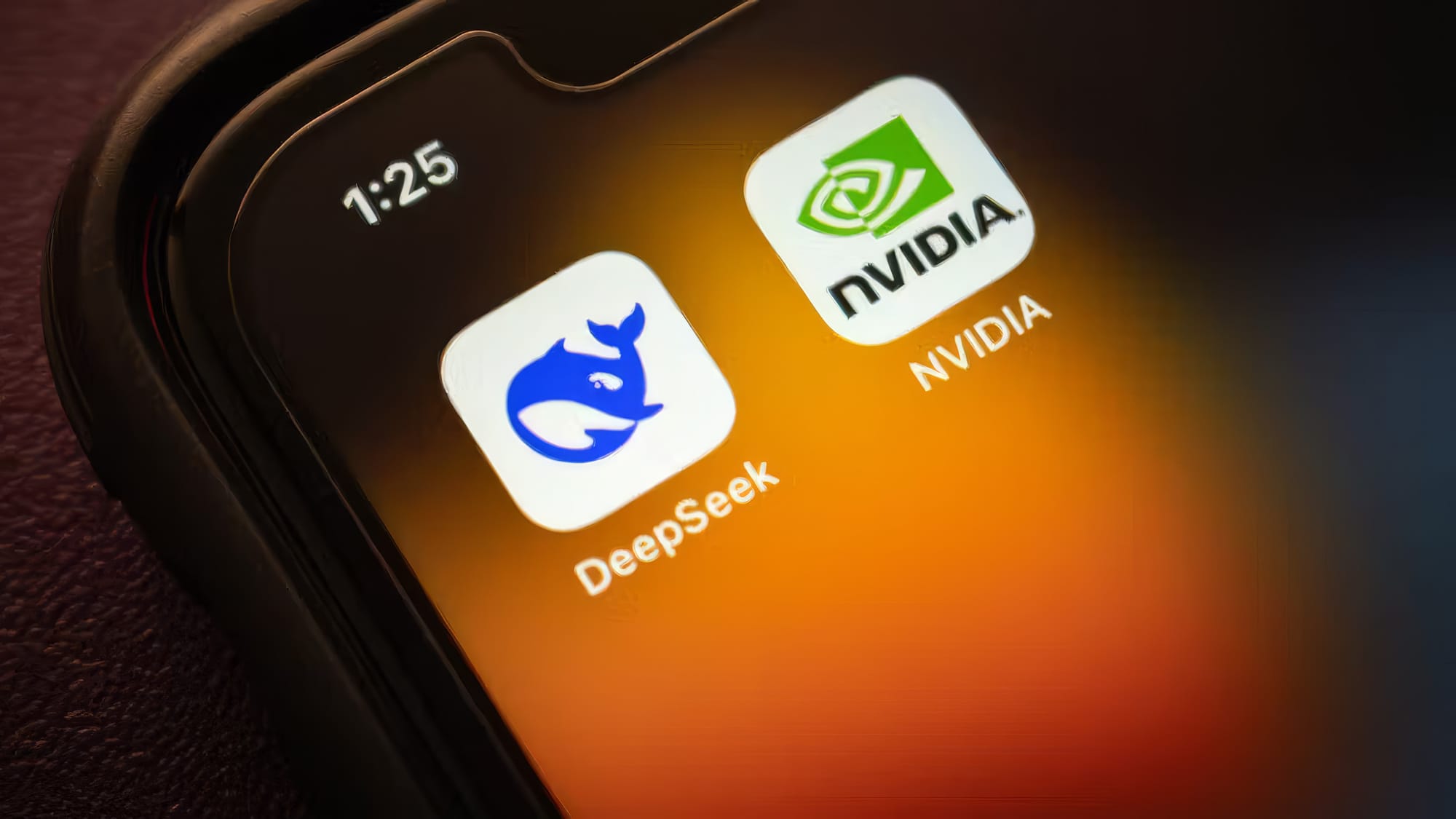
👀 What’s happening: The Information says DeepSeek is training its next model on thousands of Nvidia Blackwell GPUs, which are chips the U.S. explicitly banned from China. Investigators call it smuggling, engineers call it survival. Nvidia denies wrongdoing, but the silence from everyone else is louder: no one builds frontier AI on wishful silicon.
🔥 How this hits reality: Let’s be honest. Without Nvidia, there is no “competitive” AI model. Google’s TPUs can hold the line for a bit, but the rest of the silicon scene might as well be decorative art installations. For teams, it means the moat isn’t data or algorithms anymore, it’s who can actually get GPUs through the border. As for the compliance deck, that’s not even the hard part.
🛎️ Our take: Forget “AI model sovereignty.” The frontier still runs on Nvidia chips.
👀 What’s happening: The Information says DeepSeek is training its next model on thousands of Nvidia Blackwell GPUs, which are chips the U.S. explicitly banned from China. Investigators call it smuggling, engineers call it survival. Nvidia denies wrongdoing, but the silence from everyone else is louder: no one builds frontier AI on wishful silicon.
Google’s TPUs can hold the line for a bit, but the rest of the silicon scene might as well be decorative art installations. For teams, it means the moat isn’t data or algorithms anymore, it’s who can actually get GPUs through the border. As for the compliance deck, that’s not even the hard part.
👀 What’s happening: The Information says DeepSeek is training its next model on thousands of Nvidia Blackwell GPUs, which are chips the U.S. explicitly banned from China. Investigators call it smuggling, engineers call it survival. Nvidia denies wrongdoing, but the silence from everyone else is louder: no one builds frontier AI on wishful silicon.
TOGETHER WITH FELO
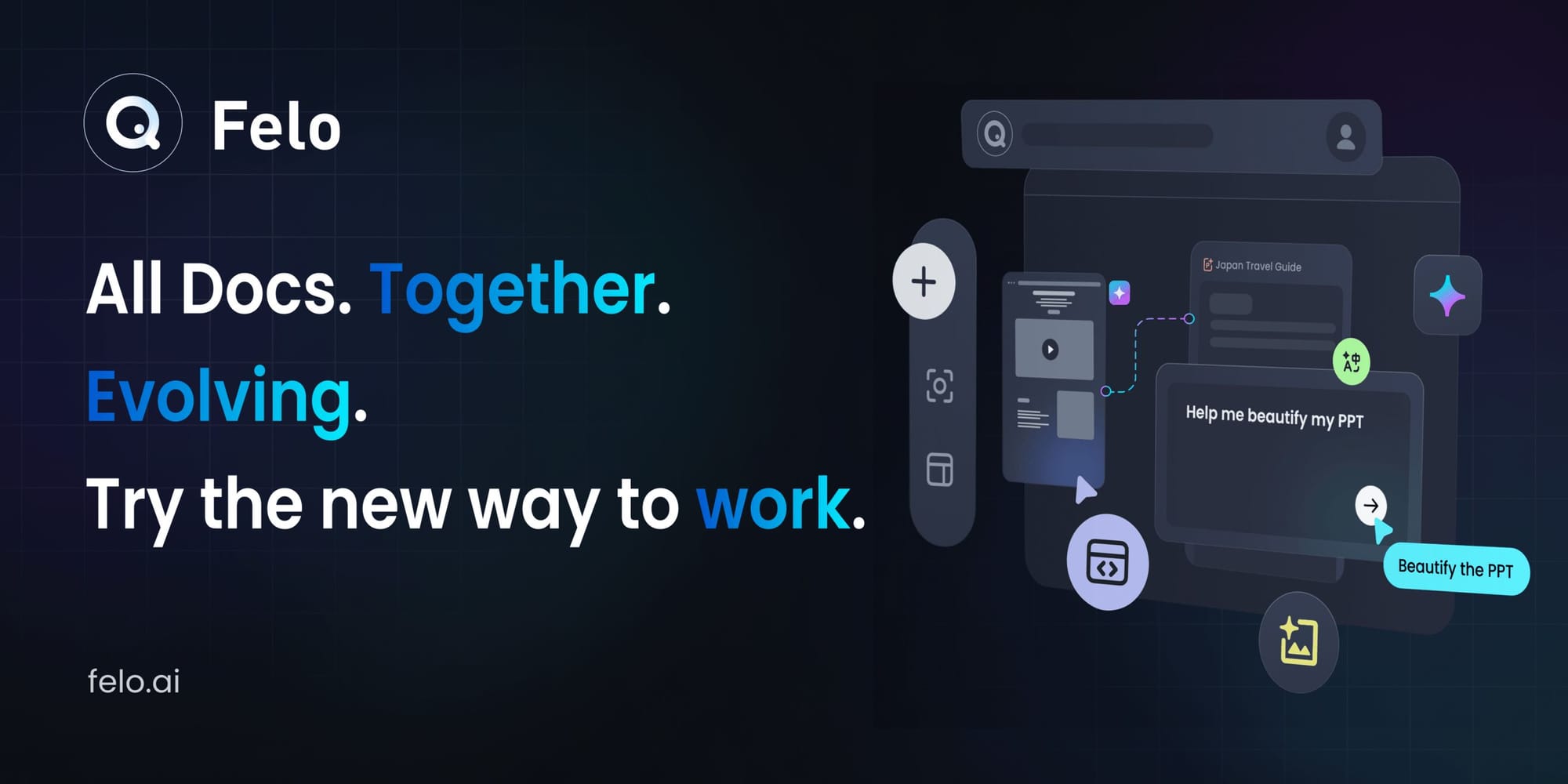
The 10x knowledge worker isn't typing faster—they're directing AI agents while competitors drown in copy-paste hell. Right now, someone just translated a 50-page deck in 3 minutes while you're still reformatting slide 12. Felo LiveDoc is the world's first Agent Workspace where documents don't just sit there—they evolve, analyze, and update themselves. Imagine a phantom team of designers, translators, and analysts inside your docs, unifying scattered PDFs, videos, and spreadsheets into one intelligent system that grows smarter with every task.
Here's what makes you look like a genius: While legacy tools treat you like a glorified typist, LiveDoc's multi-agent system operates autonomously. Design agents polish your layouts. Data agents extract insights across PDFs, videos, and web pages simultaneously. Translation agents speak every language your customers do—all working 24/7 inside one living workspace. This isn't productivity theater—it's the death of document drudgery. You're not just saving time; you're unlocking a superpower your competitors don't know exists yet.
And it's not just you—it's your entire team: Think of your best team collaboration tool—now add tireless AI teammates who never sleep, never forget context, and execute instantly. LiveDoc expands collaboration from human-to-human to human-plus-AI: team members direct, AI agents execute, all on the same canvas in real time. No more "latest_final_v3" nightmares. While your competitors coordinate between people, you're coordinating an entire hybrid workforce.
The insider move? Early adopters are already 10x-ing their output while the rest of the market is still toggling between twelve tabs. Every day you wait is another day spent manually updating slides like it's 2015. The knowledge workers who win aren't the ones who work harder—they're the ones who stopped editing and started directing.
🚀 Join the revolution: Get early access to Felo LiveDoc and become the person everyone asks, "How did you finish that so fast?" The age of manual document labor just ended. Are you evolving, or still typing?
NEW LAUNCH
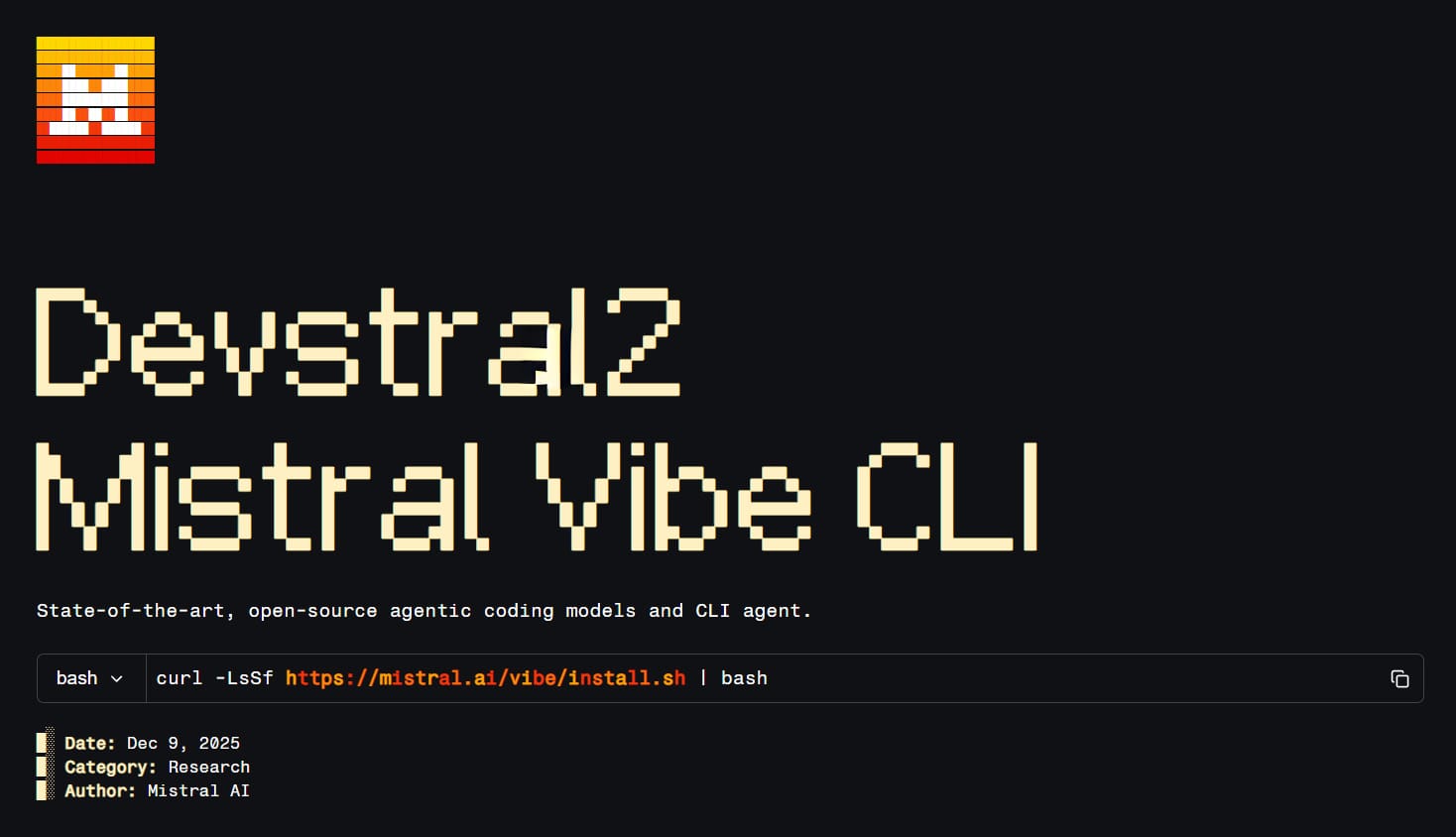
👀 What’s happening: Mistral unveiled Devstral 2, a new generation of code models built on a shared architecture: the 123B flagship for high-end agentic development, and a 24B “Small” version that runs offline on a single GPU or even a laptop. Both feature 256K context windows and top-tier SWE-Bench results, with the smaller model outperforming many 70B systems. Together with the Vibe CLI—a terminal-native interface for real-time project orchestration—Mistral’s lineup is built to live directly inside developers’ workflows.
🔥 How this hits reality: The release shifts AI coding from the cloud to the desk. Devstral Small 2’s local inference and edge efficiency open up AI-assisted programming for teams under strict data or latency constraints, while the full model pushes long-context reasoning closer to production scale. For enterprises, it means realistic on-prem AI coding; for independent developers, a self-contained, privacy-safe co-pilot that actually fits their hardware.
🛎️ Our take: Mistral just made frontier-grade coding intelligence portable, turning AI-assisted development from a service you call into a tool you own.
👀 What’s happening: Mistral unveiled Devstral 2, a new generation of code models built on a shared architecture: the 123B flagship for high-end agentic development, and a 24B “Small” version that runs offline on a single GPU or even a laptop. Both feature 256K context windows and top-tier SWE-Bench results, with the smaller model outperforming many 70B systems.
PREVIEW
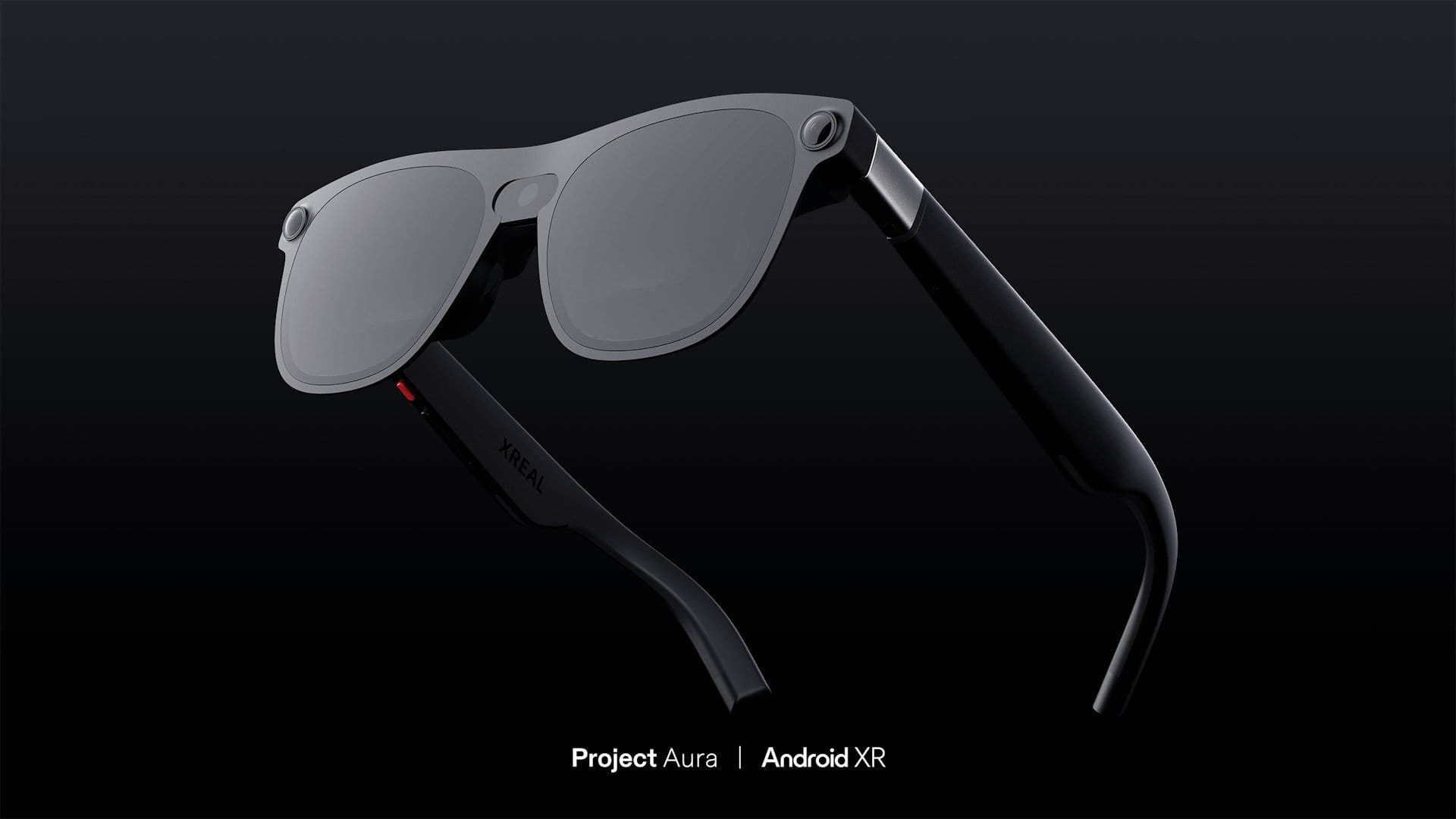
👀 What’s happening: Google just previewed its Android XR smart glasses powered by Gemini, marking its first real comeback since the Glass collapse a decade ago. The two models — one voice-only, one with a built-in display — use Gemini’s multimodal brain to see, hear, and understand your surroundings. Users can ask it to translate a sign, recognize a landmark, or recall what they photographed earlier. Developer previews arrive in 2025, with a full commercial launch set for 2026.
🔥 How this hits reality: After Gemini 3 proved Google could finally build an AI that reasons rather than reacts, the company seems to have found the hardware form to match that brain. Android XR ties Gemini’s cognition directly to sensors, cameras, and real-world context, turning glasses into a live interface for spatial computing.
🛎️ Our take: Gemini gave Google intelligence; XR gives it embodiment. Together they hint at the first real successor to the smartphone.
👀 What’s happening: Google just previewed its Android XR smart glasses powered by Gemini, marking its first real comeback since the Glass collapse a decade ago. The two models — one voice-only, one with a built-in display — use Gemini’s multimodal brain to see, hear, and understand your surroundings.
QUICK HITS
TRENDING
TOGETHER WITH US
AI Secret Media Group is the world’s #1 AI & Tech Newsletter Group, reaching over 2 million leaders across the global innovation ecosystem, from OpenAI, Anthropic, Google, and Microsoft to top AI labs, VCs, and fast-growing startups.
We operate the industry’s most influential portfolio of newsletters, each shaping a different frontier of the AI & Tech revolution:
Be Smarter in 5 Minutes
Discover the Future Products
We've helped promote over 500 Tech Brands. Will yours be the next?
Email our co-founder Mark directly at [email protected] if the button fails.
Plus: Codex Is Gunning for Claude Code, Speed Is the AI Constraint
Read the storyPlus: AI Workloads Are Rising, Netanyahu Forced to Prove He Is Not AI
Plus: Musk Steps Into the Agent War, Google Closes $32 Billion Deal
Plus: Super Bowl sparks Anthropic/OpenAI war, now escalating with new releases
Plus: GPUs Into Pharma, Anthropic Launches Agents
Plus: Next AI Era, Vibe Coding Crosses Threshold
Plus: Models See Alike, Unprogrammed AI Behaviors
Plus: Nvidia Owns The Stack, Roblox Sets Platform Standard
Plus: NVIDIA‘s New Agent Stack, IBM Ships a Boring Agent
Plus: Local AI Coding, Google Finds Next Lens