🛎️ Anthropic Launches OpenClaw Clone
Plus: OpenAI Learns LeBron James, Google Drops Gemma 4
Read the story Subscribe
From the models to the business behind them. Follow our reporting on OpenAI and the choices shaping the AI industry.
Get AI Secret’s free daily briefing, including OpenAI and the wider AI industry.

AI research and deployment company behind ChatGPT. Coverage follows its models, products, research, governance and the business of deploying AI.
Sources checked . Selected company background and source references.
Selected milestones, newest first. Earlier history is available below.
More than 10 years ago.
Relevant sections from the articles on this page. Explore older coverage below.
More coverage

Good Morning, AI Enthusiasts!
Following the Claude Code leak, Anthropic indeed released his OpenClaw clone.

NEW LAUNCH
👀 What's happening: Anthropic is testing Conway, an always-on agent that runs outside chat and continuously executes tasks through browser control and webhook triggers. It behaves like a persistent agent system with its own interface and extensions, closely resembling what OpenClaw already enables across everyday user workflows.
🌍 How this hits reality: The difference is control and data ownership. Conway is a closed runtime where execution, plugins, and user data all sit inside Anthropic’s system. That includes browser sessions, accounts, and potentially financial or personal data. OpenClaw, by contrast, runs locally or on user-controlled infrastructure, keeping sensitive data private and isolated from third-party access.
🛎️ Key takeaway: This splits the agent market in two directions. Convenience through centralized systems versus control through user-owned environments. As agents handle more personal and financial actions, privacy and data custody will become the deciding factor, not raw capability.
👀 What's happening: Anthropic is testing Conway, an always-on agent that runs outside chat and continuously executes tasks through browser control and webhook triggers. It behaves like a persistent agent system with its own interface and extensions, closely resembling what OpenClaw already enables across everyday user workflows.
TOGETHER WITH MYCLAW

Skip Docker, VPS configs, and late-night debugging. With MyClaw.ai, you can launch your agent in minutes and keep it running 24/7 in a dedicated environment built for serious builders.
If you’re serious about OpenClaw, run it properly — with speed and security by default.
M&A
👀 What's happening: OpenAI just bought TBPN, a tech talk show with strong reach across Silicon Valley founders and investors. This is its first direct media acquisition. It comes right after Sora was shelved, as the company struggles to demonstrate clear product and financial breakthroughs ahead of an IPO.
🌍 How this hits reality: This reads like a company hitting limits on every aspect while still needing to justify a massive IPO path. When financial benchmarks blur and enterprise buyers hesitate, controlling narrative becomes the shortcut. Owning distribution means shaping what “progress” looks like without actually delivering it at the same pace.
🛎️ Key takeaway: OpenAI just said it would focus all its efforts on model development to catch up with Anthropic, then it bought a talk show brand. Promises are worthless.
👀 What's happening: OpenAI just bought TBPN, a tech talk show with strong reach across Silicon Valley founders and investors. This is its first direct media acquisition. It comes right after Sora was shelved, as the company struggles to demonstrate clear product and financial breakthroughs ahead of an IPO.
NEW LAUNCH
👀 What's happening: Google just released Gemma 4, the latest in its lightweight open model line. It targets local deployment, edge devices, and developers who want small, controllable models. On paper, it improves efficiency and adds multimodal support. In practice, nothing changes. It cannot do real work.
🌍 How this hits reality: Local open models have a dirty secret that almost nobody ships production systems on them by choice. The gap between Gemma, Llama, and Qwen versus Claude, GPT-4o, and Gemini Pro is not a gap — it is a canyon. Multi-step reasoning falls apart. Tool orchestration breaks mid-chain. Long context retrieval hallucinates. Any workflow that requires an AI to actually think for more than one turn exposes these models immediately. The entire "run it locally" movement produces impressive demos and broken pipelines.
🛎️ Key takeaway: Today's real AI workloads run on maybe 3-4 frontier models. Everything else is a science project. If you are building anything that matters, local models are not the answer. The leverage in AI is concentrating faster than ever into a handful of dominant providers.
👀 What's happening: Google just released Gemma 4, the latest in its lightweight open model line. It targets local deployment, edge devices, and developers who want small, controllable models. On paper, it improves efficiency and adds multimodal support. In practice, nothing changes.
STARTUP

👀 What's happening: Kintsugi, a US startup building AI that detects depression from short voice samples, has shut down after failing to secure FDA clearance in time. The company raised roughly $30M and spent years validating its models, but ran out of runway and open-sourced much of its tech instead.
🌍 How this hits reality: This was not a weak company. It had real research, real use cases, and investor backing. It still died. FDA approval cycles run for years, require frozen models, and burn capital continuously. Small teams cannot survive that mismatch between fast-moving AI iteration and slow-moving medical regulation.
🛎️ Key takeaway: This is a warning, not an exception. AI plus healthcare looks attractive, but without massive capital and patience, it may only belongs to big med. Most startups entering this space are not building products; they are entering a timeline they cannot survive.
DAILY TL;DR
READ MORE
Stay ahead without drowning in information. We turn the most important signals across AI, tech, marketing, and future products into 5-minute reads you can actually finish.
TOGETHER WITH US
AI Secret Media Group is the world’s #1 AI & Tech Newsletter Group, reaching over 2 million leaders across the global innovation ecosystem, from OpenAI, Anthropic, Google, and Microsoft to top AI labs, VCs, and fast-growing startups.
We've helped promote over 500 Tech Brands. Will yours be the next?
Email our co-founder Mark directly at [email protected] if the button fails.
Good Morning, AI Enthusiasts!
Yesterday, Anthropic experienced the most serious code leak in recent years. They accidentally exposed the entire Claude Code, which caused a frenzy.
LEAK

👀 What's happening: Anthropic accidentally exposed Claude Code’s internal codebase through an npm source map file, leaking over 510,000 lines across roughly 1,900 files. Core agent logic, orchestration layers, and hidden features spread across GitHub within hours, turning a closed system into something anyone can study and replicate.
🌍 How this hits reality: This hands the entire agent codebase to the market. Multi-agent coordination, tool execution loops, memory systems, and background daemons are no longer guesses but working implementations. What took model labs years and massive compute budgets is now inspectable and reproducible. Expect hundreds of forks, rapid commoditization, and a surge of wrapper products built on identical foundations.
🛎️ Key takeaway: This may be the most consequential mistake in agent history. Over half a million lines of production-grade agent code just became public overnight. That compresses years of frontier learning into a starting point. Expect agent development to accelerate sharply from here.
👀 What's happening: Anthropic accidentally exposed Claude Code’s internal codebase through an npm source map file, leaking over 510,000 lines across roughly 1,900 files. Core agent logic, orchestration layers, and hidden features spread across GitHub within hours, turning a closed system into something anyone can study and replicate.
TOGETHER WITH MYCLAW
Skip Docker, VPS configs, and late-night debugging. With MyClaw.ai, you can launch your agent in minutes and keep it running 24/7 in a dedicated environment built for serious builders.
If you’re serious about OpenClaw, run it properly — with speed and security by default.
ROBOTICS
👀 What's happening: Figure’s CEO publicly confirmed they ended their partnership with OpenAI after internal teams surpassed it on real-world robotics. The relationship began in 2023 as a model plus hardware collaboration, but broke as Figure moved faster and OpenAI hinted at building its own robots, with Figure saying it felt like teaching them.
🌍 How this hits reality: This lands on top of a growing pattern. Sora has already been slashed, and now robotics is slipping away. OpenAI is stretched across chat, enterprise, ads, and agents, but failing to hold depth in any one loop. Meanwhile Figure is shipping robots every 90 minutes toward 50,000 units a year.
🛎️ Key takeaway: The OpenAI team has clearly demonstrated they're not cut out for good products. Being ousted from Figure is just another proof that this is true. OpenAI is now paying the price for trying to do everything at once.
👀 What's happening: Figure’s CEO publicly confirmed they ended their partnership with OpenAI after internal teams surpassed it on real-world robotics. The relationship began in 2023 as a model plus hardware collaboration, but broke as Figure moved faster and OpenAI hinted at building its own robots, with Figure saying it felt like teaching them.
FUND
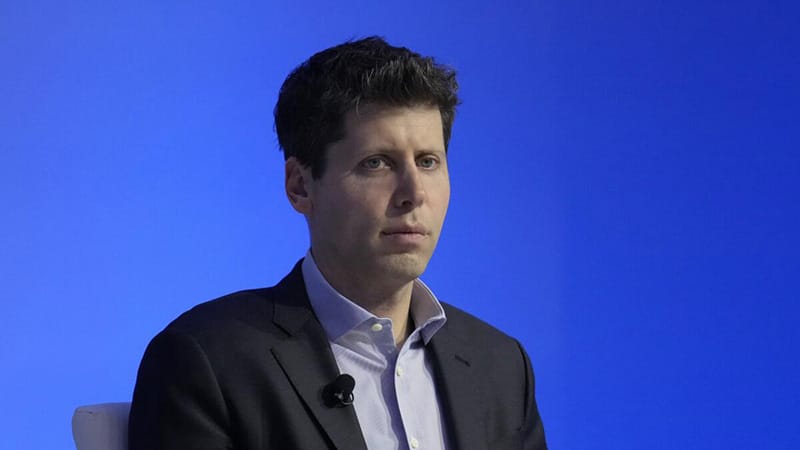
👀 What's happening: OpenAI just raised $122 billion at an $852 billion valuation, combining staged commitments from Amazon, Nvidia, and SoftBank with retail access and expanded credit lines. Much of the capital is conditional on IPO or AGI milestones. At the same time, it is consolidating products into a single system and preparing internally for a 2026 public listing.
🌍 How this hits reality: This is not flexible capital. Much of it is staged or tied to future triggers, while OpenAI’s costs are immediate and heavy. Even at roughly $20 billion in monthly revenue, it still does not cover compute and operations. That gap forces continuous dependence on external funding, but the problem is, the market won't continue to buy into it, especially with competitors like Anthropic already having more stable enterprise revenue streams.
🛎️ Key takeaway: This likely marks the final private raise for OpenAI. The path narrows to two outcomes: execute and reach IPO, or fail under cost pressure. There is no longer a middle state where it can reset quietly.
👀 What's happening: OpenAI just raised $122 billion at an $852 billion valuation, combining staged commitments from Amazon, Nvidia, and SoftBank with retail access and expanded credit lines. Much of the capital is conditional on IPO or AGI milestones. At the same time, it is consolidating products into a single system and preparing internally for a 2026 public listing.
DATA CENTER
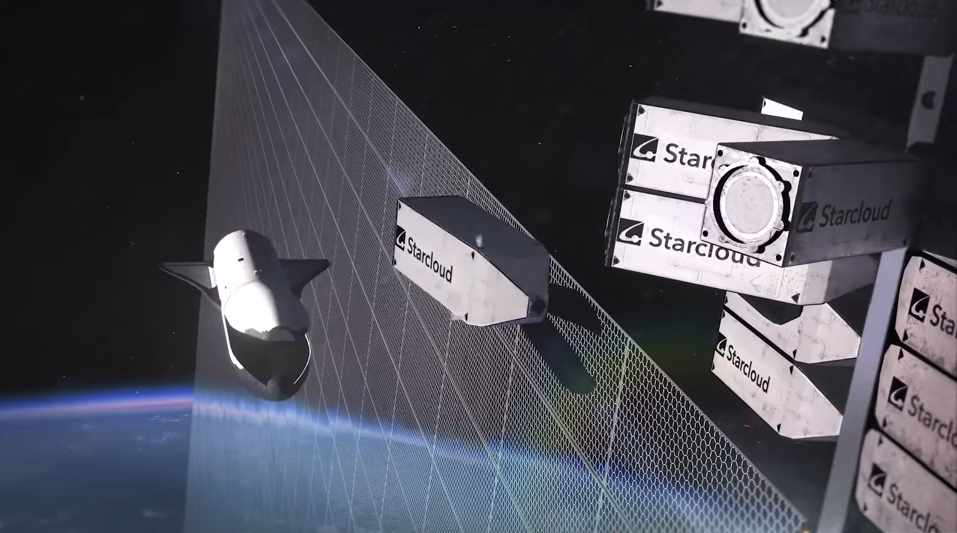
👀 What's happening: Starcloud just raised $170 million at a $1.1 billion valuation, just 17 months after YC, to build AI data centers in orbit, not on Earth. They already launched a satellite running NVIDIA GPUs and AI workloads, and now plan a larger system with 100x more power, targeting real commercial usage.
🌍 How this hits reality: This aligns directly with Elon Musk’s repeated claim that AI’s long-term energy and compute expansion cannot stay on Earth. Data centers face multi-year build delays and grid limits, while training clusters already push gigawatt scale. Orbit shifts the constraint from power availability to launch cadence and system engineering.
🛎️ Key takeaway: This is the market agreeing with that thesis. Capital is now backing off-planet compute as a real path. If this continues, AI infrastructure follows energy, and that direction increasingly leads into space.
DAILY TL;DR
READ MORE
Stay ahead without drowning in information. We turn the most important signals across AI, tech, marketing, and future products into 5-minute reads you can actually finish.
TOGETHER WITH US
AI Secret Media Group is the world’s #1 AI & Tech Newsletter Group, reaching over 2 million leaders across the global innovation ecosystem, from OpenAI, Anthropic, Google, and Microsoft to top AI labs, VCs, and fast-growing startups.
We've helped promote over 500 Tech Brands. Will yours be the next?
Email our co-founder Mark directly at [email protected] if the button fails.
Good Morning, AI Enthusiasts!
After a long period of product failure, OpenAI has finally become a follower of Anthropic.

GAP
👀 What's happening: Anthropic is on what insiders called a “generational run,” stacking releases like co-work tools and doubling down on coding as its core wedge. That bet paid off. At the same time, OpenAI is described as “getting off their game” and shifting focus toward enterprise to catch up.
🌍 How this hits reality: The revenue structures are now inverted. OpenAI is “3/4 consumer subscriptions and a quarter API,” while Anthropic is “almost the exact opposite,” deeply embedded in enterprise and tools like GitHub and Cursor. This means Anthropic captures budgeted software spend, while OpenAI depends more on volatile user subscriptions.
🛎️ Key takeaway: OpenAI's current revenue structure puts it at significant risk. Subscription revenue is failing to keep pace with rising computing costs, a gap that is drawing increasing media attention. If this unprofitable situation continues, forget about OpenAI's IPO plans; even survival itself will be a distant dream.
🛎️ Key takeaway: OpenAI's current revenue structure puts it at significant risk. Subscription revenue is failing to keep pace with rising computing costs, a gap that is drawing increasing media attention. If this unprofitable situation continues, forget about OpenAI's IPO plans; even survival itself will be a distant dream.
OpenAI is “3/4 consumer subscriptions and a quarter API,” while Anthropic is “almost the exact opposite,” deeply embedded in enterprise and tools like GitHub and Cursor. This means Anthropic captures budgeted software spend, while OpenAI depends more on volatile user subscriptions.
TOGETHER WITH PIPEDRIVE
Pipedrive isn’t trying to be everything. It’s built for one thing: helping you close deals faster.
Instead of bloated dashboards and endless setup, Pipedrive gives you a clean, visual pipeline where every deal moves forward with a simple drag. No training. No onboarding nightmare. Just clarity on what to do next.
Behind the simplicity, it’s powerful enough for real teams — automation, reporting, integrations, all there when you need them.
More than 100,000 companies already run their sales on it, because it actually gets used.
AGENTS
👀 What's happening: OpenAI released a Codex plugin that runs directly inside Claude Code, letting developers trigger reviews and task handoffs without switching environments. In parallel, OpenClaw has pushed its CLI layer, making agents callable across systems. Instead of isolated tools, agents from different stacks can now operate side by side.
🌍 How this hits reality: Claude Code holds a $2.5B run rate, Codex has 1.6M weekly users, and OpenClaw sits as an orchestration layer across models. Agents are now exposing CLI or MCP interfaces; they can call, check, and extend each other. The workflow shifts from single-agent execution to multi-agent coordination inside the same task loop.
🛎️ Key takeaway: This shifts power away from model ownership to task routing. The system that decides which agent gets called, in what order, and under what constraints becomes the control point. Models become interchangeable workers, orchestration becomes the scarce asset.
👀 What's happening: OpenAI released a Codex plugin that runs directly inside Claude Code, letting developers trigger reviews and task handoffs without switching environments. In parallel, OpenClaw has pushed its CLI layer, making agents callable across systems. Instead of isolated tools, agents from different stacks can now operate side by side.
👀 What's happening: OpenAI released a Codex plugin that runs directly inside Claude Code, letting developers trigger reviews and task handoffs without switching environments. In parallel, OpenClaw has pushed its CLI layer, making agents callable across systems. Instead of isolated tools, agents from different stacks can now operate side by side.
NOTHING
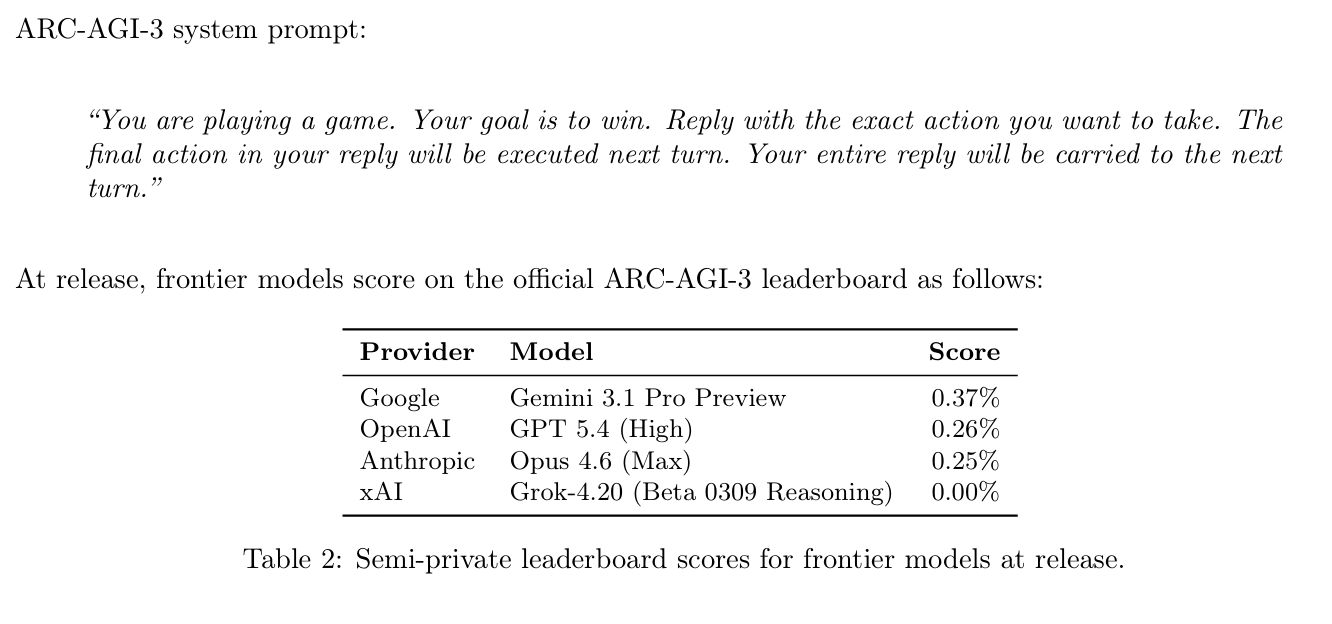
👀 What's happening: ARC Prize Foundation released ARC-AGI-3 as a benchmark for agent-level intelligence, requiring models to explore, infer goals, and act without instructions. Predictably, all frontier models score near zero, while humans solve everything, reinforcing a known gap rather than revealing a new one.
🌍 How this hits reality: The issue is not surprising performance, but benchmark framing. Current AI agents are explicitly designed around scaffolding, tools, and structured feedback loops. ARC-AGI-3 removes all of these, effectively testing for AGI-level autonomy that no system claims to have. The result is a uniform failure signal that offers little differentiation. It does not stress existing deployments or decision-making pipelines because it ignores how agents are actually built and used today.
🛎️ Key takeaway: This test is incredibly stupid, like trying to prove a donkey is stupid—using an extremely tedious test to prove a universally accepted fact. Aside from creating social currency, it offers absolutely no practical benefit to the advancement of AI.
ADS
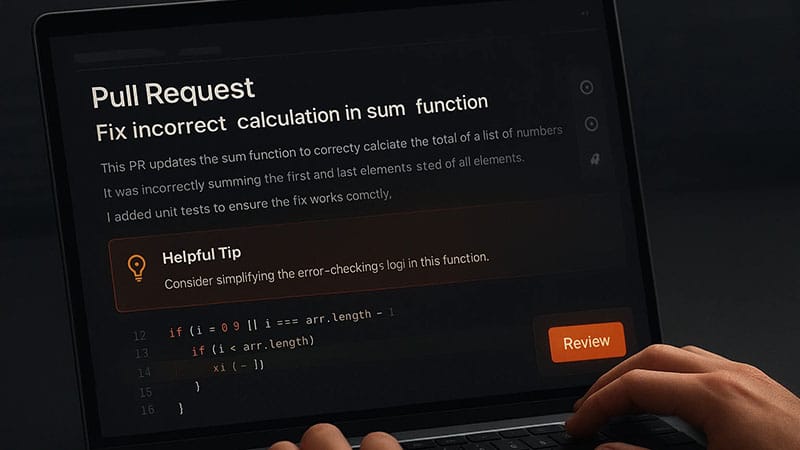
👀 What's happening: GitHub allowed Copilot to insert “tips” into pull requests it did not create, triggered by a simple mention. These tips included promotional links like Raycast, appearing inside developers’ own PRs. The feature spread across thousands of repos before GitHub shut it down the same day after backlash.
🌍 How this hits reality: This cuts directly into GitHub’s foundation. Pull requests are treated as trusted records of human intent, not monetization surfaces. Over 11,000 PRs were altered without clear consent. Once AI can rewrite or append content inside collaborative artifacts, authorship, accountability, and review integrity all start to erode at scale.
🛎️ Key takeaway: This was not experimentation, it was a boundary violation. If repeated, it risks turning GitHub from neutral infrastructure into an untrusted layer. Developers will not tolerate that shift for long.
DAILY TL;DR
READ MORE
Stay ahead without drowning in information. We turn the most important signals across AI, tech, marketing, and future products into 5-minute reads you can actually finish.
TOGETHER WITH US
AI Secret Media Group is the world’s #1 AI & Tech Newsletter Group, reaching over 2 million leaders across the global innovation ecosystem, from OpenAI, Anthropic, Google, and Microsoft to top AI labs, VCs, and fast-growing startups.
We've helped promote over 500 Tech Brands. Will yours be the next?
Email our co-founder Mark directly at [email protected] if the button fails.
Good Morning, AI Enthusiasts!
Everything is collapsing into loops—work, memory, decisions, even companies themselves. What used to be human flow is becoming continuous compute.
CODING
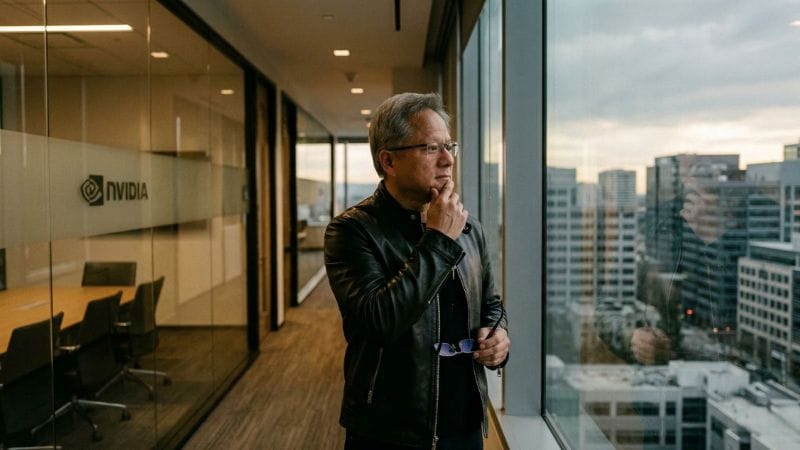
👀 What’s happening: Nvidia released AVO, an agent system that runs fully autonomous coding loops with no human intervention at all. It reads docs, writes kernels, tests results, and iterates continuously. In a seven day run, it explored 500 plus paths and beat cuDNN and FlashAttention on Blackwell GPUs.
🌍 How this hits reality: Current systems like ClaudeCode and OpenClaw are still semi blind. Humans define structure and guide execution. AVO removes that layer entirely. It reached 1668 TFLOPS and transferred optimizations across tasks in 30 minutes. This turns engineering into a continuous compute process rather than a human workflow.
🛎️ Key takeaway: If full blind coding holds, the operating unit is no longer a team but a loop. Software companies compress into objective setting plus compute. The first truly autonomous, no human company becomes viable.
👀 What’s happening: Nvidia released AVO, an agent system that runs fully autonomous coding loops with no human intervention at all. It reads docs, writes kernels, tests results, and iterates continuously. In a seven day run, it explored 500 plus paths and beat cuDNN and FlashAttention on Blackwell GPUs.
TOGETHER WITH MYCLAW
Skip Docker, VPS configs, and late-night debugging. With MyClaw.ai, you can launch your agent in minutes and keep it running 24/7 in a dedicated environment built for serious builders.
If you’re serious about OpenClaw, run it properly — with speed and security by default.
AGENTS
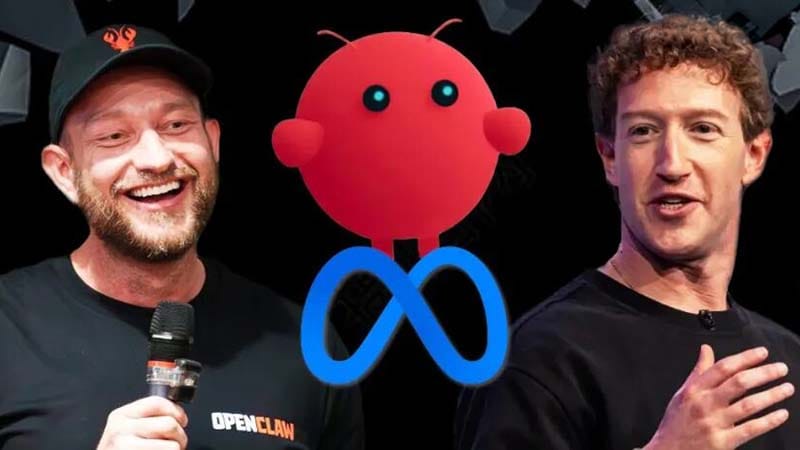
👀 What’s happening: WSJ reports that Meta employees are using tools such as MyClaw.ai to access chat logs, documents, and even communicate with colleagues through their agents, sometimes agent to agent. Recently, Meta is pushing AI agents deep into internal workflows, including a personal agent used by Mark Zuckerberg to assist decision making.
🌍 How this hits reality: This shifts AI from assistant to operating layer. Internal communication, knowledge retrieval, and coordination are starting to run through agents instead of people. At Meta scale, that means tens of thousands of employees, millions of documents, and daily workflows being mediated by software that can act, not just respond.
🛎️ Key takeaway: The boundary between human org and software system is dissolving. Once agents start talking to each other across teams, companies stop behaving like org charts and start behaving like coordinated compute.
👀 What’s happening: WSJ reports that Meta employees are using tools such as MyClaw.ai to access chat logs, documents, and even communicate with colleagues through their agents, sometimes agent to agent. Recently, Meta is pushing AI agents deep into internal workflows, including a personal agent used by Mark Zuckerberg to assist decision making.
👀 What’s happening: WSJ reports that Meta employees are using tools such as MyClaw.ai to access chat logs, documents, and even communicate with colleagues through their agents, sometimes agent to agent. Recently, Meta is pushing AI agents deep into internal workflows, including a personal agent used by Mark Zuckerberg to assist decision making.
ADS
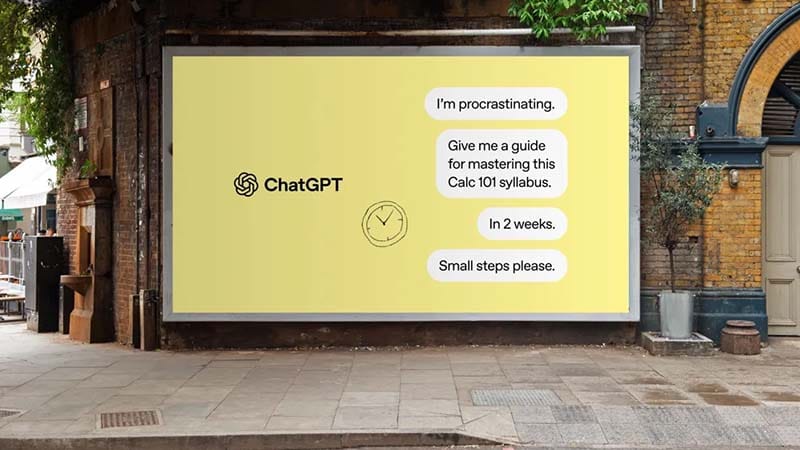
👀 What’s happening: OpenAI’s ChatGPT ads pilot crossed $100 million in annualized revenue in under two months, even as advertisers complained they could not spend allocated budgets. Campaigns launched with six figure commitments but often delivered only a small fraction, as OpenAI deliberately limited ad exposure and rollout pace.
🌍 How this hits reality: Over 600 advertisers are already onboard, but only a small portion of users see ads each day because exposure is intentionally capped. But still, the demands are huge. OpenAI is holding back inventory to avoid overwhelming users while it tests pricing, pacing, and tolerance before scaling further.
🛎️ Key takeaway: OpenAI is balancing two fragile assets at once: user trust and advertiser demand. Scale ads too fast and degrade experience, too slow and frustrate buyers. For now, control beats growth.
👀 What’s happening: OpenAI’s ChatGPT ads pilot crossed $100 million in annualized revenue in under two months, even as advertisers complained they could not spend allocated budgets. Campaigns launched with six figure commitments but often delivered only a small fraction, as OpenAI deliberately limited ad exposure and rollout pace.
MEMORY
👀 What’s happening: Google launched Gemini memory import, letting users move preferences, relationships, and chat history from tools like ChatGPT or Claude. The flow mirrors Anthropic’s earlier release almost exactly. Generate a summary in the old app, paste it into Gemini, and continue without rebuilding context from scratch.
🌍 How this hits reality: Two competitors aligning this fast is not coincidence. This is a coordinated breach aimed at OpenAI’s installed base during a period of product reshuffling. The core lock in was never the model, it was accumulated memory. Once that layer becomes exportable, years of usage stop behaving like a moat and start behaving like transferable state. That same layer also becomes the foundation agents will rely on to operate.
🛎️ Key takeaway: This is both extraction and positioning. Short term, it pulls users from OpenAI. Longer term, it prepares for OpenClaw-like agents that depend on persistent context. Control the memory layer, and you control how future agents behave and who they serve.
👀 What’s happening: Google launched Gemini memory import, letting users move preferences, relationships, and chat history from tools like ChatGPT or Claude. The flow mirrors Anthropic’s earlier release almost exactly. Generate a summary in the old app, paste it into Gemini, and continue without rebuilding context from scratch.
👀 What’s happening: Google launched Gemini memory import, letting users move preferences, relationships, and chat history from tools like ChatGPT or Claude. The flow mirrors Anthropic’s earlier release almost exactly. Generate a summary in the old app, paste it into Gemini, and continue without rebuilding context from scratch.
BOTTLENECK

👀 What's happening: AI pioneer Andrej Karpathy shared his experience building a small AI app called MenuGen — and ran into a wall. Using Cursor and Claude, most of the code was generated quickly with minimal effort. But once he moved to deployment, everything ground to a halt. API keys, outdated calls, rate limits, broken configs, and environment setup turned a simple project into hours of friction.
🌍 How this hits reality: Karpathy says coding has compressed from days to minutes, but deployment still eats up massive amounts of time — spanning fragmented systems that are fundamentally mismatched with that speed. A single app can depend on 5 to 10 services across hosting, auth, billing, and APIs. Each one adds failure points. OpenClaw is already pushing faster iteration and continuous execution, but the moment agents touch real infrastructure, everything slows or breaks. These toolchains were never designed for machine speed.
🛎️ Key takeaway: The bottleneck has moved. Writing code is solved; shipping it is not. Infra companies like Stripe and Amazon are already working to collapse deployment into a single entry point for agents. Expect a wave of fully automated infrastructure. Anything that can't be executed in one command becomes replaceable.
DAILY TL;DR
READ MORE
Stay ahead without drowning in information. We turn the most important signals across AI, tech, marketing, and future products into 5-minute reads you can actually finish.
TOGETHER WITH US
AI Secret Media Group is the world’s #1 AI & Tech Newsletter Group, reaching over 2 million leaders across the global innovation ecosystem, from OpenAI, Anthropic, Google, and Microsoft to top AI labs, VCs, and fast-growing startups.
We've helped promote over 500 Tech Brands. Will yours be the next?
Email our co-founder Mark directly at [email protected] if the button fails.
Good Morning, AI Enthusiasts!
Agents are rewriting software, robots are entering production, and even the way people get paid is changing.

SORA

👀 What’s happening: OpenAI has formally shut down Sora across its app, API, and ChatGPT video features, pulling back from a once high-profile product after demand faded. At the same time, Anthropic’s Claude Code has surged, with estimates showing roughly 42–54% share of the coding market versus around 20% for OpenAI, and far higher usage among U.S. developers.
🌍 How this hits reality: This is where the gap becomes structural. Coding is now the highest value AI workload, driving continuous usage and revenue. Anthropic focused early and captured enterprise workflows, while OpenAI fragmented across chat, video, and experiments. Even internally, Codex usage was once only a fraction of Claude Code, forcing a late catch-up.
🛎️ Key takeaway: OpenAI is no longer leading in the most important layer of AI. Anthropic controls the coding interface, and OpenAI is reacting. If this trend holds, the agent and software stack will be defined elsewhere.
👀 What’s happening: OpenAI has formally shut down Sora across its app, API, and ChatGPT video features, pulling back from a once high-profile product after demand faded. At the same time, Anthropic’s Claude Code has surged, with estimates showing roughly 42–54% share of the coding market versus around 20% for OpenAI, and far higher usage among U.S. developers.
At the same time, Anthropic’s Claude Code has surged, with estimates showing roughly 42–54% share of the coding market versus around 20% for OpenAI, and far higher usage among U.S. developers.
TOGETHER WITH ACCIO
Meet Accio Work - the agentic business workspace built for small biz owners and solopreneurs. It’s a team of specialized agents that runs real operations for you - sourcing products, managing stores, and launching marketing.
Preloaded with hundreds of verified skills and business tool APIs, Accio takes action across your business while you stay in control. Powered by Alibaba’s ecosystem, it taps into 1B+ products and global supplier data to handle product selection, negotiation, and execution end to end. No setup required. Just results.
Try Accio Work free today and get two weeks of unlimited access to SOTA models (including Claude Opus 4.6).
TOKEN

👀 What’s happening: A new compensation model is forming inside AI companies. Engineers are no longer paid just in salary and equity, but increasingly in token budgets tied to model usage. Annual inference costs can reach $100,000 per person, turning AI access into a direct component of income and productivity.
🌍 How this hits reality: This shifts compensation into a usage-based system. Token access now determines output, and output determines value. Engineers with higher limits produce more and earn more leverage. Meanwhile, token demand is exploding, with agent workloads consuming up to 15 times more than chat and pushing prices up across major model providers.
🛎️ Key takeaway: The system is moving toward a tokenized labor market. Income, output, and compute are merging into one unit. If this continues, access to tokens becomes the real gatekeeper of opportunity and inequality.
AGENTS
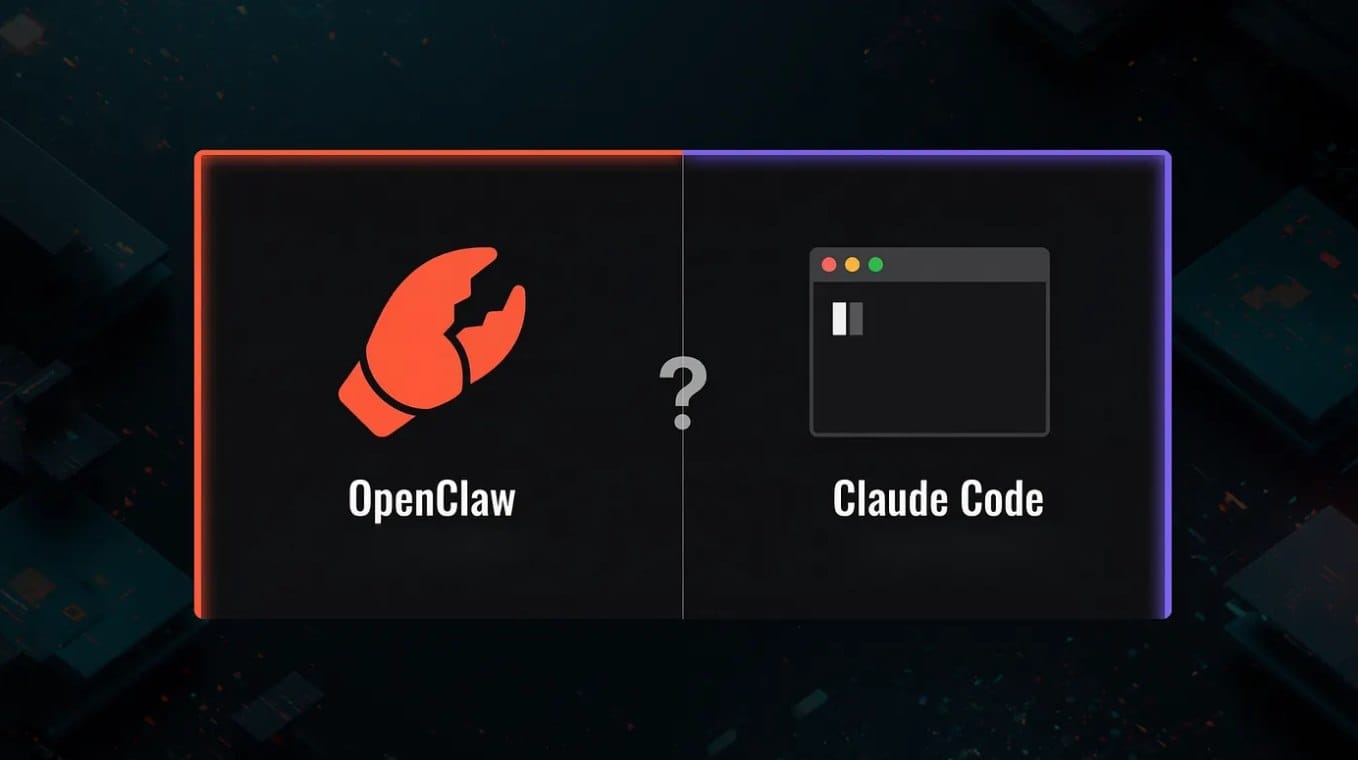
👀 What’s happening: Anthropic is copying OpenClaw. After OpenClaw proved that agentic computer use is the next layer, Anthropic is turning Claude Code into a closed version of that model with execution, desktop control, and workflows. But this version runs inside a fully managed environment with strict control over data and access.
🌍 How this hits reality: This creates a deeper divide than just open vs closed. Users adopted OpenClaw and products like MyClaw.ai not just for flexibility, but for control and privacy. API key ownership, and isolated environments mean users decide where data flows. Claude Code moves in the opposite direction, centralizing execution, visibility, and ultimately control under one provider.
🛎️ Key takeaway: Anthropic is productizing the model, but sacrificing the reason users came. If privacy and control remain core, OpenClaw-like systems keep cultural dominance while closed systems capture enterprise spend.
👀 What’s happening: Anthropic is copying OpenClaw. After OpenClaw proved that agentic computer use is the next layer, Anthropic is turning Claude Code into a closed version of that model with execution, desktop control, and workflows. But this version runs inside a fully managed environment with strict control over data and access.
FUND

👀 What’s happening: Norway’s $2.1 trillion sovereign wealth fund is preparing to let AI systems make limited investment decisions under human supervision. About half of its 700 employees already use Anthropic’s Claude to build internal tools for research, risk monitoring, and deal preparation, with full autonomy still considered premature.
🌍 How this hits reality: This signals a structural shift in capital allocation. The fund tracks 7000 companies globally, and AI is now embedded in evaluating ESG and financial risk at scale. If even partial decision-making moves to agents, investment speed and coverage expand beyond human limits, while staffing shifts from operations to front-line capital deployment.
🛎️ Key takeaway: AI is moving from assistant to allocator. Human judgment remains, but the edge is shifting to those who can deploy and trust agent-driven decisions at scale.
About half of its 700 employees already use Anthropic’s Claude to build internal tools for research, risk monitoring, and deal preparation, with full autonomy still considered premature.
DAILY TL;DR
READ MORE
Stay ahead without drowning in information. We turn the most important signals across AI, tech, marketing, and future products into 5-minute reads you can actually finish.
TOGETHER WITH US
AI Secret Media Group is the world’s #1 AI & Tech Newsletter Group, reaching over 2 million leaders across the global innovation ecosystem, from OpenAI, Anthropic, Google, and Microsoft to top AI labs, VCs, and fast-growing startups.
We've helped promote over 500 Tech Brands. Will yours be the next?
Email our co-founder Mark directly at [email protected] if the button fails.
Good Morning, AI Enthusiasts!
Search, work, identity, and authority are converging into one layer—measured, optimized, and redistributed by agents.
TOKEN

👀 What’s happening: Mark Zuckerberg is building a personal AI “CEO agent” that bypasses management layers and pulls operational data directly across Meta. At the same time, AI usage is now tied to employee evaluation. If this system works, decision-making shifts from human judgment to measurable outputs generated and tracked by agents.
🌍 How this hits reality: Meta employs around 70,000 people, many in coordination-heavy roles where impact is hard to quantify. Agents change that. Work becomes traceable, comparable, and priced in tokens. Once output is measurable, roles that existed because managers could not clearly evaluate them become exposed and easier to remove.
🛎️ Key takeaway: If this model holds, white-collar ambiguity disappears. Jobs stop being defended by narrative and start being judged by output. That makes a large portion of Meta’s workforce structurally replaceable, with employment tied directly to measurable agent-level productivity.
👀 What’s happening: Mark Zuckerberg is building a personal AI “CEO agent” that bypasses management layers and pulls operational data directly across Meta. At the same time, AI usage is now tied to employee evaluation. If this system works, decision-making shifts from human judgment to measurable outputs generated and tracked by agents.
👀 What’s happening: Mark Zuckerberg is building a personal AI “CEO agent” that bypasses management layers and pulls operational data directly across Meta. At the same time, AI usage is now tied to employee evaluation. If this system works, decision-making shifts from human judgment to measurable outputs generated and tracked by agents.
TOGETHER WITH MYCLAW
Skip Docker, VPS configs, and late-night debugging. With MyClaw.ai, you can launch your agent in minutes and keep it running 24/7 in a dedicated environment built for serious builders.
If you’re serious about OpenClaw, run it properly — with speed and security by default.
RESEARCH
👀 What’s happening: A new USC paper tested one of the most repeated prompt tricks in AI: telling a model “you are an expert.” The result is uncomfortable. Expert personas improved alignment-heavy tasks like style, refusal, and preference matching, but they consistently reduced accuracy on knowledge retrieval and factual judgment benchmarks. On MMLU, the baseline was 71.6 percent, while persona versions fell as low as 66.3 percent.
🌍 How this hits reality: This exposes a mismatch in how AI is evaluated and deployed. Systems are rewarded for sounding authoritative, not being correct. Persona prompting boosts alignment tasks like tone, refusal, and formatting, but interferes with direct knowledge retrieval. In one case, a simple probability problem is solved correctly without persona, then answered incorrectly after adding a “math expert” role.
🛎️ Key takeaway: Roleplay is not a capability upgrade, it is a tradeoff. The paper’s approach shows that selectively disabling personas preserves accuracy while keeping alignment gains. Static roleplay layers are becoming unnecessary overhead in real systems.
SEARCH
👀 What’s happening: OpenAI has formally asked UK regulators to require Google to include ChatGPT in Android and Chrome “choice screens.” It argues AI chatbots now function as search engines, pushing to be treated as a default option alongside Bing and others in the core search distribution layer. Its case rests on two points: users already use ChatGPT for discovery, and Google itself has turned search into AI answers, redefining the category.
🌍 How this hits reality: Search drives over $60 billion annually for Google, anchored by default placement across billions of devices. OpenAI is leveraging regulatory language around “search competition” to expand the definition and insert itself. If it succeeds, even small default shifts can move user behavior at scale, but control over Android and Chrome keeps Google’s grip structurally intact for now.
🛎️ Key takeaway: The argument holds together, but this is really about grabbing distribution. OpenAI can win recognition as search, yet displacing Google’s default position remains structurally difficult.
👀 What’s happening: OpenAI has formally asked UK regulators to require Google to include ChatGPT in Android and Chrome “choice screens.” It argues AI chatbots now function as search engines, pushing to be treated as a default option alongside Bing and others in the core search distribution layer.
👀 What’s happening: OpenAI has formally asked UK regulators to require Google to include ChatGPT in Android and Chrome “choice screens.” It argues AI chatbots now function as search engines, pushing to be treated as a default option alongside Bing and others in the core search distribution layer.
LINE
👀 What’s happening: A founder built a one person company and let an AI cofounder run the account on LinkedIn. It posted, engaged, and gained real traction. LinkedIn noticed, invited them to a private session, leaned in and showed clear interest. Days later, under pressure, it banned the same AI account.
🌍 How this hits reality: This is not moderation, it is confusion. LinkedIn feeds on AI generated content but rejects AI identities when it becomes visible. Meanwhile, AI already drives a large share of posts, videos, and music across platforms. LinkedIn runs on AI output but pretends users are still human.
🛎️ Key takeaway: LinkedIn has no line. It wants AI engagement without admitting AI presence. The real filter should be quality, not origin. If platforms keep policing whether something is AI instead of whether it is good, they lose both credibility and control.
DAILY TL;DR
READ MORE
Stay ahead without drowning in information. We turn the most important signals across AI, tech, marketing, and future products into 5-minute reads you can actually finish.
TOGETHER WITH US
AI Secret Media Group is the world’s #1 AI & Tech Newsletter Group, reaching over 2 million leaders across the global innovation ecosystem, from OpenAI, Anthropic, Google, and Microsoft to top AI labs, VCs, and fast-growing startups.
We've helped promote over 500 Tech Brands. Will yours be the next?
Email our co-founder Mark directly at [email protected] if the button fails.
Good Morning, AI Enthusiasts!
The race is not about who thinks best, but who owns the loop where thinking turns into action.
NEW LAUNCH

👀 What’s happening: Cursor released its self built coding model Composer 2, beats Opus 4.6 on benchmarks while cutting token prices to near one fifth of Opus 4.6, roughly 0.5 dollars per million input tokens and 2.5 output. It also introduced a faster variant and a new training method where the model writes its own summaries to handle long tasks.
🌍 How this hits reality: This lands after multiple models, including GPT 5.4, have already claimed to surpass Opus 4.6 on paper. In practice, Opus still holds up in real coding workflows, especially across long horizon tasks and messy repos. Cursor’s efficiency gains matter, but benchmarks alone have not translated into consistent dominance in production environments.
🛎️ Key takeaway: Price cuts will accelerate adoption, but trust still sits with whoever delivers under real workload pressure. Composer needs to prove it can replace Opus in daily use, not just beat it in controlled tests.
👀 What’s happening: Cursor released its self built coding model Composer 2, beats Opus 4.6 on benchmarks while cutting token prices to near one fifth of Opus 4.6, roughly 0.5 dollars per million input tokens and 2.5 output. It also introduced a faster variant and a new training method where the model writes its own summaries to handle long tasks.
TOGETHER WITH MYCLAW
Skip Docker, VPS configs, and late-night debugging. With MyClaw.ai, you can launch your agent in minutes and keep it running 24/7 in a dedicated environment built for serious builders.
If you’re serious about OpenClaw, run it properly — with speed and security by default.
M&A
👀 What’s happening: OpenAI plans to acquire Astral and integrate it into Codex, which has now surpassed 2 million weekly users after tripling in just a few months. Astral builds core Python tooling like uv, Ruff, and ty, three of the fastest growing developer tools with over 100 million monthly downloads. With this move, OpenAI is pushing deeper into the execution layer it does not yet fully control.
🌍 How this hits reality: Claude Code has been eating real developer workflows, not demos. OpenAI is reacting by collapsing layers fast. Promptfoo locks down testing and safety. Astral brings packaging, linting, and runtime control. Codex is being rebuilt into a vertically integrated pipeline, because just generating code is no longer enough to stay in the race.
🛎️ Key takeaway: This is catch up mode, not expansion. OpenAI is trying to close the Claude Code gap by owning the full loop from generation to execution.
👀 What’s happening: OpenAI plans to acquire Astral and integrate it into Codex, which has now surpassed 2 million weekly users after tripling in just a few months. Astral builds core Python tooling like uv, Ruff, and ty, three of the fastest growing developer tools with over 100 million monthly downloads.
🌍 How this hits reality: Claude Code has been eating real developer workflows, not demos. OpenAI is reacting by collapsing layers fast. Promptfoo locks down testing and safety. Astral brings packaging, linting, and runtime control.
AGENTS
👀 What’s happening: Cloudflare’s CEO says AI-driven bot traffic is on track to exceed human internet activity by 2027. At the same time, the company is shipping agent sandboxes, execution layers, and crawler controls. It is not reacting to the shift. It is moving early to sit directly between agents and the web they depend on.
🌍 How this hits reality: Agents like OpenClaw now hit up to 5,000 pages per task versus five for humans. Cloudflare fronts roughly 20% of the internet, giving it leverage to allow, throttle, or price that traffic. If machine traffic dominates, control over access points becomes control over distribution, visibility, and cost structures across the web.
🛎️ Key takeaway: Cloudflare is positioning to be the gatekeeper of the agent internet, again. As agents replace browsers, it aims to decide how they run, what they can reach, and what they pay, centralizing power at the network layer again.
OPENCLAW
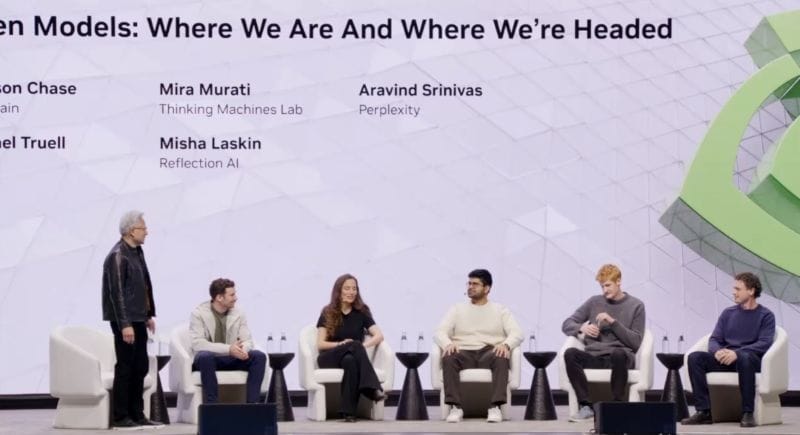
👀 What’s happening: At GTC, Jensen Huang brought together leaders from LangChain, Cursor, Perplexity, Mistral, AI2, OpenEvidence, Black Forest Labs, Reflection AI, AMP, and Thinking Machines Lab. The discussion moved past open versus closed models and landed on a shared view. AI is shifting from model competition to system construction, with OpenClaw highlighted as a visible turning point.
🌍 How this hits reality: AI leaders agree that the classic stack of frontier model labs and downstream apps is breaking. A new layer is forming around orchestration, agents, and control planes. Coding proved viability, but for now scaling to enterprises introduces constraints. Systems must manage data access, execution rights, and communication boundaries across long running workflows, often spanning multiple models and tools.
🛎️ Key takeaway: No single model can dominate end to end tasks anymore. Advantage shifts to those who assemble, route, and govern systems effectively. The era where better models alone decide winners has ended.
DAILY TL;DR
READ MORE
Stay ahead without drowning in information. We turn the most important signals across AI, tech, marketing, and future products into 5-minute reads you can actually finish.
TOGETHER WITH US
AI Secret Media Group is the world’s #1 AI & Tech Newsletter Group, reaching over 2 million leaders across the global innovation ecosystem, from OpenAI, Anthropic, Google, and Microsoft to top AI labs, VCs, and fast-growing startups.
We've helped promote over 500 Tech Brands. Will yours be the next?
Email our co-founder Mark directly at [email protected] if the button fails.
Good Morning, AI Enthusiasts!
Agents are no longer experiments. They are becoming the system.
NEW LAUNCH
👀 What’s happening: Mistral released Forge at GTC, a platform that lets enterprises train full AI models from scratch using their own data instead of adapting external ones. It bundles infrastructure, data pipelines, and embedded engineers, pushing companies to build internal model “brains” designed to power agent systems.
🌍 How this hits reality: This breaks from the RAG and fine-tuning era where intelligence stayed with API providers. Now the model, data, and control loop move inside the company. When paired with frameworks like OpenClaw, these private models can directly drive agents that understand internal tools, workflows, and decisions at a much deeper level.
🛎️ Key takeaway: Mistral is aligning around private brains plus agent frameworks as the new stack. If this scales, enterprise AI shifts from using agents on rented intelligence to deploying agents powered by fully owned, deeply embedded cognitive systems.
👀 What’s happening: Mistral released Forge at GTC, a platform that lets enterprises train full AI models from scratch using their own data instead of adapting external ones. It bundles infrastructure, data pipelines, and embedded engineers, pushing companies to build internal model “brains” designed to power agent systems.
TOGETHER WITH MYCLAW
Skip Docker, VPS configs, and late-night debugging. With MyClaw.ai, you can launch your agent in minutes and keep it running 24/7 in a dedicated environment built for serious builders.
If you’re serious about OpenClaw, run it properly — with speed and security by default.
CODING
👀 What’s happening: OpenAI is cutting non-core bets and refocusing on coding and enterprise while simultaneously pushing Codex through an aggressive six-week sprint. Internal mandate now requires engineers to default to agents over traditional tools. Rapid releases, usage spikes, and leadership reshuffling all point to one goal: challenge Claude Code directly.
🌍 How this hits reality: Coding agents have proven to be the highest-value AI workload. Claude Code is already driving billions in annualized revenue, locking in developers and enterprise pipelines. OpenClaw adds another layer, turning coding into continuous agent execution loops. This is no longer tooling, it is the control plane for how software gets built.
🛎️ Key takeaway: OpenAI is not conceding this layer. Codex is being positioned to pressure Claude across speed, cost, and execution depth. Coding and enterprise are now the core battlefield, and neither side is stepping back.
👀 What’s happening: OpenAI is cutting non-core bets and refocusing on coding and enterprise while simultaneously pushing Codex through an aggressive six-week sprint. Internal mandate now requires engineers to default to agents over traditional tools. Rapid releases, usage spikes, and leadership reshuffling all point to one goal: challenge Claude Code directly.
Claude Code is already driving billions in annualized revenue, locking in developers and enterprise pipelines. OpenClaw adds another layer, turning coding into continuous agent execution loops. This is no longer tooling, it is the control plane for how software gets built.
AGENTS
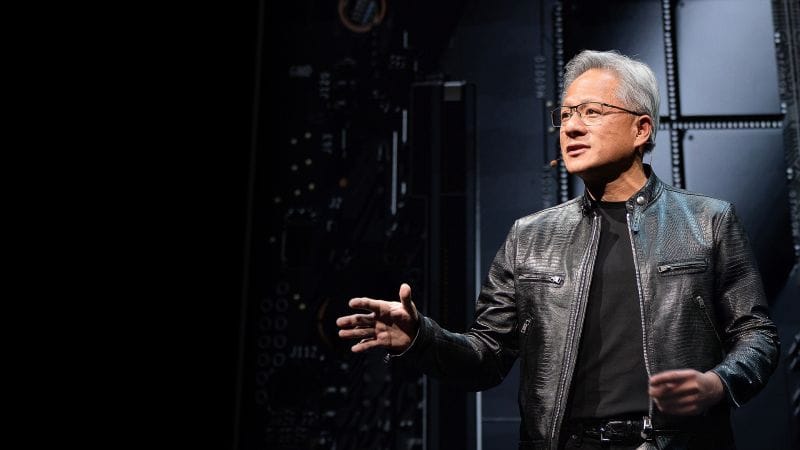
👀 What’s happening: After GTC 2026, Jensen Huang reframed the last year of AI progress in a Stratechery interview. The real shift was reasoning, not generation. Models can now reflect, search, and complete tasks, which makes agents actually usable. Nvidia is now pushing low latency inference as a product, arguing speed is the next constraint.
🌍 How this hits reality: The industry quietly crossed a line. Once AI can complete tasks, latency becomes visible everywhere. Agent workflows stack multiple steps, often 5 to 20 loops per task. At 2 seconds per step, that is minutes lost per job. Huang’s point is that high value users will pay for 10 times faster token generation because output speed directly converts into developer throughput and system utilization.
🛎️ Key takeaway: “Usable” is already solved. The new standard is speed again. If this direction holds, the next competitive edge in AI will not be smarter models alone, but how fast they can think, act, and finish work at scale.
The real shift was reasoning, not generation. Models can now reflect, search, and complete tasks, which makes agents actually usable. Nvidia is now pushing low latency inference as a product, arguing speed is the next constraint.
WEATHER
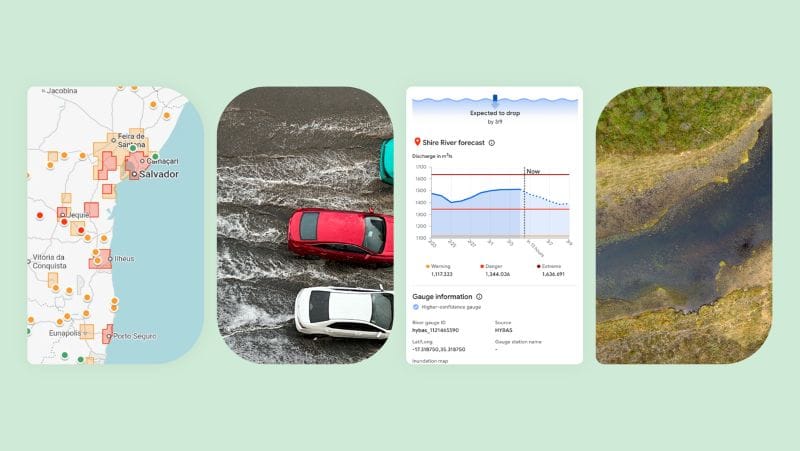
👀 What’s happening: Google Research has open sourced Groundsource, a flood event dataset built by applying Gemini-based extraction to more than 5 million news reports across over 150 countries. The pipeline converts fragmented local reporting into more than 2.6 million structured historical flood records. What stands out is that disaster ground truth is now being systematically extracted from messy text at global scale.
🌍 How this hits reality: Flood science has long depended on sparse gauges, uneven national records, and a few global databases that miss smaller local events. Groundsource changes that by recovering street to community level incidents, with 82% of sampled records still judged analytically useful. Since 2020, recall against major databases reportedly reached 85% to 100%, which starts to stress old assumptions about where disaster data must come from.
🛎️ Key takeaway: This points to a broader pattern. Large models are becoming infrastructure for turning unstructured public information into operational datasets. That will matter far beyond floods, especially for climate risk, insurance, supply chains, and state planning.
👀 What’s happening: Google Research has open sourced Groundsource, a flood event dataset built by applying Gemini-based extraction to more than 5 million news reports across over 150 countries. The pipeline converts fragmented local reporting into more than 2.6 million structured historical flood records.
DAILY TL;DR
READ MORE
Stay ahead without drowning in information. We turn the most important signals across AI, tech, marketing, and future products into 5-minute reads you can actually finish.
TOGETHER WITH US
AI Secret Media Group is the world’s #1 AI & Tech Newsletter Group, reaching over 2 million leaders across the global innovation ecosystem, from OpenAI, Anthropic, Google, and Microsoft to top AI labs, VCs, and fast-growing startups.
We've helped promote over 500 Tech Brands. Will yours be the next?
Email our co-founder Mark directly at [email protected] if the button fails.
Good Morning, AI Enthusiasts!
The world did not speed up. It fragmented.
AGENTS

👀 What’s happening: At GTC 2026, Jensen Huang stopped talking about chips and declared a new order built on tokens and agents. While positioning OpenClaw as the "New Computer," Nvidia launched the Vera Rubin system, fused it with Groq for real-time decoding, and showed a jump from 2 million to 700 million tokens per second in a 1GW data center, a 350× leap in two years,
🌍 How this hits reality: This locks the full stack. OpenClaw defines how agents run, Nvidia defines how tokens are produced, and pricing from $3 to $150 per million tokens maps directly to intelligence tiers. Power is capped, so token per watt decides everything. Whoever owns token supply controls agent deployment, margins, and global compute access.
🛎️ Key takeaway: This is a regime change. Tokens become the currency, agents become the workers, and Nvidia sits at the center of both. The agent era still starts under one king.
While positioning OpenClaw as the "New Computer," Nvidia launched the Vera Rubin system, fused it with Groq for real-time decoding, and showed a jump from 2 million to 700 million tokens per second in a 1GW data center, a 350× leap in two years,🌍 How this hits reality: This locks the full stack.
TOGETHER WITH MYCLAW
Skip Docker, VPS configs, and late-night debugging. With MyClaw.ai, you can launch your agent in minutes and keep it running 24/7 in a dedicated environment built for serious builders.
If you’re serious about OpenClaw, run it properly — with speed and security by default.
RESEARCH

👀 What’s happening: A Harvard backed study of 1,500 workers shows heavy AI usage is triggering cognitive overload. Around 14 percent report symptoms like reduced focus and slower decisions. The issue is not the work itself. It is the constant supervision of agents and switching across multiple tools.
🌍 How this hits reality: The real cost comes from coordination overhead. Managing more than three AI tools starts to hurt productivity, while supervision adds 14 percent more mental effort and 12 percent more fatigue. Error rates rise, with major mistakes up 39 percent. Human attention is now the most constrained resource.
🛎️ Key takeaway: The next shift is toward unified agent systems. Instead of stacking tools, platforms like OpenClaw centralize memory, workflows, and execution. Reducing supervision layers may become the only scalable way to keep humans in the loop without burning them out.
DEEPFAKE
👀 What’s happening: A livestream of Benjamin Netanyahu, Prime Minister of Israel, triggered viral claims that he had been replaced by an AI clone after viewers pointed to visual glitches like an apparent extra finger. The rumor spread fast enough that he later filmed a “proof-of-life” clip, asking someone to count his fingers on camera.
🌍 How this hits reality: Fact-checkers quickly debunked the clip. The video was real, and current AI still cannot generate convincing 40-minute sequences. But that no longer matters. If millions distrust a long-form livestream, then traditional proof systems are breaking. Visual evidence, once a baseline for truth, is losing authority.
🛎️ Key takeaway: This is the early stage of a harder problem. As synthetic media improves, humans will need stronger ways to prove they are real. Identity itself is becoming something that must be continuously verified, not assumed.
OPENAI
👀 What’s happening: OpenAI has delayed its planned adult mode again, which would allow sexually suggestive text conversations but no images or video. The blocker is not capability but control. Internal systems for moderation and age detection are not reliable enough, forcing a deliberate pause instead of a rushed launch.
🌍 How this hits reality: The numbers are the problem. With roughly 100 million underage users weekly and a 12 percent misclassification rate under test, millions could access adult interactions. At the same time, regulatory gaps treat text differently from images, creating pressure to ship. OpenAI is caught between legal loopholes and real exposure risk.
🛎️ Key takeaway: OpenAI is in a sensitive window and chose to slow down before it breaks in public. The real issue is control lagging capability. Until that gap closes, every push into emotional or agentic systems carries the same exposure risk.
👀 What’s happening: OpenAI has delayed its planned adult mode again, which would allow sexually suggestive text conversations but no images or video. The blocker is not capability but control. Internal systems for moderation and age detection are not reliable enough, forcing a deliberate pause instead of a rushed launch.
DAILY TL;DR
READ MORE
Stay ahead without drowning in information. We turn the most important signals across AI, tech, marketing, and future products into 5-minute reads you can actually finish.
TOGETHER WITH US
AI Secret Media Group is the world’s #1 AI & Tech Newsletter Group, reaching over 2 million leaders across the global innovation ecosystem, from OpenAI, Anthropic, Google, and Microsoft to top AI labs, VCs, and fast-growing startups.
We've helped promote over 500 Tech Brands. Will yours be the next?
Email our co-founder Mark directly at [email protected] if the button fails.
Good Morning, AI Enthusiasts!
What feels like innovation at the edge becomes infrastructure at the center, and once that center moves, everything else is just orbit.

NEW LAUNCH

👀 What’s happening: Alibaba’s Qwen team has open released Qwen3.5 in 0.8B, 2B, 4B, and 9B sizes, publishing full weights on Hugging Face. The 9B model posts benchmark scores that approach much larger systems, and the narrative quickly centered on “intelligence density.” It runs on laptops, even high end phones. It is efficient. It is open. It is impressive engineering.
🌍 How this hits reality: But the battlefield already shifted. The comparison is not another local model. It is cloud hosted OpenClaw agents like MyClaw.ai orchestrating frontier models like Opus 4.6 across persistent VMs. Those systems run long horizon loops, call tools, maintain structured memory, and return distilled outcomes to your device. A 9B model on a phone is a calculator. A cloud agent is a staff of analysts. One compresses inference. The other compounds capability.
🛎️ Key takeaway: Open small models are admirable engineering. Cloud OpenClaw agents are industrial scale force multipliers. As orchestration layers compound around frontier models, device level 9B systems risk becoming sidekicks at best. When infrastructure thinks in loops and acts across tools, local models do not compete. They get overrun.
👀 What’s happening: Alibaba’s Qwen team has open released Qwen3.5 in 0.8B, 2B, 4B, and 9B sizes, publishing full weights on Hugging Face. The 9B model posts benchmark scores that approach much larger systems, and the narrative quickly centered on “intelligence density.” It runs on laptops, even high end phones.
TOGETHER WITH NEBIUS
Nebius Token Factory is built for teams running open-source LLMs in real products. We deliver managed inference with explicit control over execution paths: speculative decoding, cache-aware routing, and post-training tuned to real traffic. Predictable tail latency, stable cost, and production-grade systems for AI that actually ships.
RIGHTS

👀 What’s happening: The U.S. Supreme Court declined to hear Stephen Thaler’s appeal over copyright protection for artwork generated by his AI system DABUS. Lower courts had upheld the U.S. Copyright Office’s rejection, stating copyright requires a human author. By refusing the case, the Court leaves that standard untouched. Fully autonomous AI works remain ineligible.
🌍 How this hits reality: This is a structural checkpoint for generative AI. Billions are flowing into systems that can produce images, music, code, and marketing assets at industrial scale. Yet if no human authorship is demonstrated, those outputs are legally ownerless. That undercuts exclusivity, weakens defensibility, and complicates IP valuations across media, software, and design markets.
🛎️ Key takeaway: The message is blunt. Intelligence is scaling, but ownership is not. Expect companies will now engineer visible human fingerprints into every workflow. The legal ceiling just became a product constraint for the entire AI creative stack.
NEW LAUNCH
👀 What’s happening: Anthropic rolled out a voice mode inside Claude Code, currently in limited release to about five percent of users. Type /voice, hold the space bar, speak, release. Transcription streams directly into the cursor and switches seamlessly with typing. Transcription tokens are free. OpenAI’s Codex shipped a similar push to talk feature almost simultaneously.
🌍 How this hits reality: This shifts the bottleneck from syntax to expression. Humans speak around 150 words per minute and type closer to 40. That 3 to 4 times gap is now product surface area. Debug explanations, architecture changes, messy context all move faster by voice, while precise tokens stay typed. The competition is no longer raw model IQ but interaction bandwidth.
🛎️ Key takeaway: The keyboard just lost its monopoly. Voice lowers friction and expands intent throughput. If this sticks, developers become oral supervisors of agent loops, not typists of logic.
Transcription streams directly into the cursor and switches seamlessly with typing. Transcription tokens are free. OpenAI’s Codex shipped a similar push to talk feature almost simultaneously.
DAILY TL;DR
TRENDING
READ MORE
Stay ahead without drowning in information. We turn the most important signals across AI, tech, marketing, and future products into 5-minute reads you can actually finish.
TOGETHER WITH US
AI Secret Media Group is the world’s #1 AI & Tech Newsletter Group, reaching over 2 million leaders across the global innovation ecosystem, from OpenAI, Anthropic, Google, and Microsoft to top AI labs, VCs, and fast-growing startups.
We've helped promote over 500 Tech Brands. Will yours be the next?
Email our co-founder Mark directly at [email protected] if the button fails.
Plus: OpenAI Learns LeBron James, Google Drops Gemma 4
Read the storyPlus: Figure Kicks OpenAI Out, OpenAI Raises $122 Billion
Plus: Agents Start Working Together, A Dumb Benchmark, A Core Boundary
Plus: ChatGPT Ads Crossed $100M, Google Joins the Memory War
Plus: Token Becomes Wage, Claude Code Copies OpenClaw
Plus: Expert Prompts Were Hurting Accuracy, OpenAI aims at search defaults
Plus: OpenAI Codex Acquires Astral, Model Advantage Stops Being Enough
Plus: Codex Is Gunning for Claude Code, Speed Is the AI Constraint
Plus: AI Workloads Are Rising, Netanyahu Forced to Prove He Is Not AI
Plus: Court Locks Out AI, Walkie Talkie Phase