🛎️ Software 3.0 Is Coming
Plus: HappyHorse Broke His Leg, Anthropic Hits OpenAI Territory
Read the story Subscribe
From the models to the business behind them. Follow our reporting on OpenAI and the choices shaping the AI industry.
Get AI Secret’s free daily briefing, including OpenAI and the wider AI industry.

AI research and deployment company behind ChatGPT. Coverage follows its models, products, research, governance and the business of deploying AI.
Sources checked . Selected company background and source references.
Selected milestones, newest first. Earlier history is available below.
More than 10 years ago.
Relevant sections from the articles on this page. Explore older coverage below.
More coverage

Good Morning, AI Enthusiasts!
Every spreadsheet in Big Tech somehow became an AI strategy. Another normal day in the machine economy.
LLM
👀 What’s happening: Andrej Karpathy framed LLMs as a new kind of computer: Software 1.0 was hand-written code, Software 2.0 was learned weights, and Software 3.0 is programming through prompts, context, and agents. His clearest example was OpenClaw: instead of shipping a giant install script that tries to handle every machine, OpenClaw can give users a block of instructions to hand to an agent, which then reads the environment, debugs the setup, and completes the install intelligently.
🌍 How this hits reality: That sounds small until you realize what changed. In the old world, software had to encode every branch, platform edge case, and failure mode in advance. In the Software 3.0 world, the “program” can be a piece of text, the interpreter is the LLM, and the runtime is an agent with tools acting inside the user’s environment. OpenClaw is not just using AI inside software — it shows software itself becoming agent-native. The interface shifts from clicking buttons or running scripts to delegating intent and letting the agent operate.
🛎️ Key takeaway: OpenClaw is a preview of the post-app stack. If Software 1.0 made humans write instructions for machines, Software 3.0 lets humans write intent for agents. That turns products from fixed workflows into adaptive collaborators — and it means the next generation of software may be less about apps you operate and more about agents you trust to operate for you.
VIDEO

👀 What’s happening: Alibaba’s HappyHorse opened gray testing on April 27 after topping Seedance in Artificial Analysis’ blind video arena, and then reality walked in with a baseball bat. The model is usable, cheap, and technically decent. But after all that mystery, fake-site hype, and “Seedance killer” energy, the market reaction was basically: that’s it?
🌍 How this hits reality: The embarrassment is not that HappyHorse is broken. It is worse. It is average. It has 15 billion parameters, nearly three times Seedance, yet still trails on cinematic feel, prompt obedience, taste, and production confidence. Seedance changed workflows. HappyHorse changed the price sheet. Nobody serious switches for that alone.
🛎️ Key takeaway: HappyHorse is the classic benchmark peacock that is gorgeous on the leaderboard, ordinary in the cage. Alibaba gets a token-burning video model, not a category weapon.
👀 What’s happening: Alibaba’s HappyHorse opened gray testing on April 27 after topping Seedance in Artificial Analysis’ blind video arena, and then reality walked in with a baseball bat. The model is usable, cheap, and technically decent. But after all that mystery, fake-site hype, and “Seedance killer” energy, the market reaction was basically: that’s it?
👀 What’s happening: Alibaba’s HappyHorse opened gray testing on April 27 after topping Seedance in Artificial Analysis’ blind video arena, and then reality walked in with a baseball bat. The model is usable, cheap, and technically decent. But after all that mystery, fake-site hype, and “Seedance killer” energy, the market reaction was basically: that’s it?
RISING
👀 What’s happening: Anthropic is reportedly weighing a $40 billion to $50 billion private round at an $850 billion to $900 billion valuation, with a board decision expected in May. That would more than double its February valuation of $380 billion and put it near — or above — OpenAI’s $852 billion post-money mark.
🌍 How this hits reality: The money is chasing one very clear signal: Claude is no longer just a ChatGPT alternative. TechCrunch says Anthropic’s annual revenue run rate has jumped from about $9 billion at the end of 2025 to more than $30 billion, with one source putting it closer to $40 billion. A large share is reportedly coming from Claude Code and Cowork, which means coding agents are now one of the fastest paths from model capability to real enterprise revenue.
🛎️ Key takeaway: The AI race is turning into a capital arms race between two near-trillion-dollar private companies. OpenAI owns consumer gravity; Anthropic is proving that developer and enterprise workflows can be just as valuable. If this round happens, Claude Code will stop looking like a product line and start looking like the wedge that repriced the whole company.
🌍 How this hits reality: The money is chasing one very clear signal: Claude is no longer just a ChatGPT alternative. TechCrunch says Anthropic’s annual revenue run rate has jumped from about $9 billion at the end of 2025 to more than $30 billion, with one source putting it closer to $40 billion.
🌍 How this hits reality: The money is chasing one very clear signal: Claude is no longer just a ChatGPT alternative. TechCrunch says Anthropic’s annual revenue run rate has jumped from about $9 billion at the end of 2025 to more than $30 billion, with one source putting it closer to $40 billion.
LAW

👀 What’s happening: Manifest OS raised a $60 million Series A at a $750 million valuation to build AI-native law firms under the Manifest Law brand, starting with business immigration. The company is not selling another copilot to lawyers. It wants to own the legal service layer itself: fixed-fee, outcome-based, AI-powered law firms built for customers who need results, not software.
🌍 How this hits reality: The target is the billable hour. Manifest combines its own AI platform, centralized back-office operations, and licensed lawyer review to automate routine legal workflows while keeping humans for judgment, compliance, and edge cases. With legal rates up 7.4% in 2025 and legal help still unaffordable for many businesses and consumers, the pitch is brutal: make the law firm cheaper by rebuilding it around AI from day one.
🛎️ Key takeaway: Harvey makes existing lawyers faster. Manifest asks a nastier question: what if the customer never needed to interface with the lawyer-shaped workflow at all? If this works, the future law firm is not a room full of billable hours — it is an AI operating system with lawyers attached where the law still demands them.
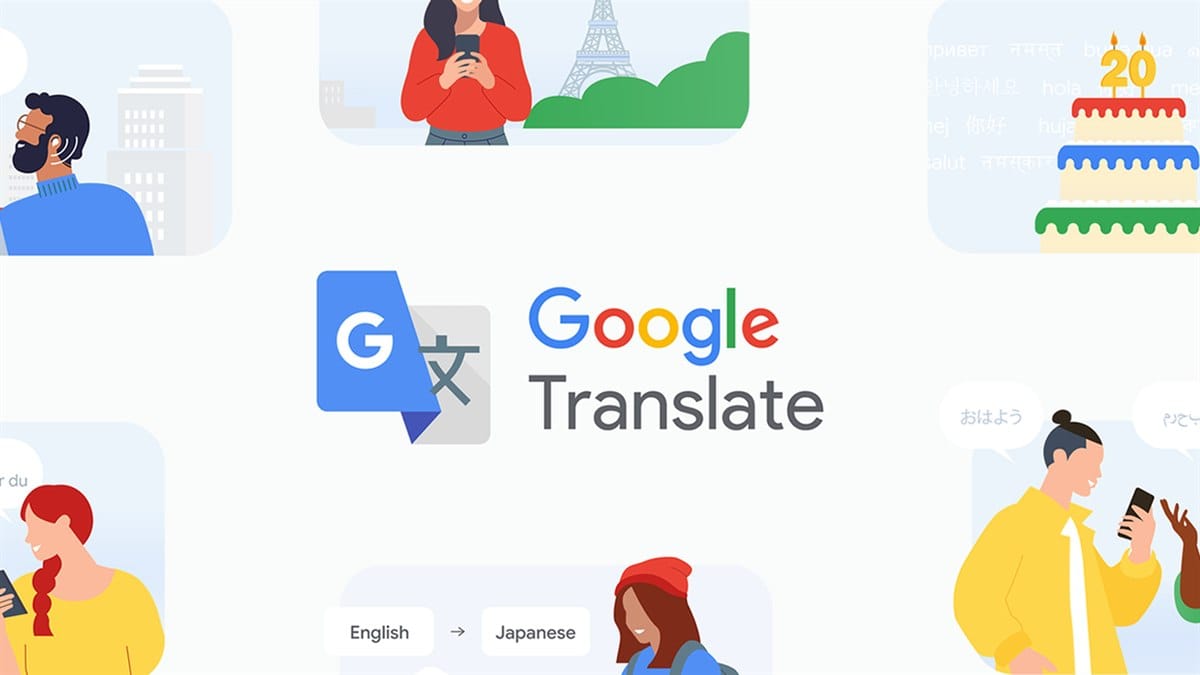
👀 What’s happening: Google Translate just turned 20, and Pichai framed it as a full AI timeline. It started with statistical machine translation in 2006, moved to neural translation in 2016, expanded with large models, and now Gemini is pushing it into real-time speech with tone, rhythm, and more natural pacing.
🌍 How this hits reality: The real moat is not beauty. Google Translate often feels average, even clumsy. But it is free, fast, everywhere, and good enough for most moments. Over 1 billion people use it monthly because nobody wants to compare models when standing in an airport, restaurant, classroom, or customer chat.
🛎️ Key takeaway: Google Translate can survive another 20 years for the same reason it survived the first 20. As long as Google keeps paying the bill, free plus instant will keep beating prettier AI translation products at global scale.
👀 What’s happening: Google Translate just turned 20, and Pichai framed it as a full AI timeline. It started with statistical machine translation in 2006, moved to neural translation in 2016, expanded with large models, and now Gemini is pushing it into real-time speech with tone, rhythm, and more natural pacing.
TOGETHER WITH MYCLAW

Skip Docker, VPS configs, and late-night debugging. With MyClaw.ai, you can launch your agent in minutes and keep it running 24/7 in a dedicated environment built for serious builders.
If you’re serious about OpenClaw, run it properly — with speed and security by default.
DAILY TL;DR
READ MORE
Stay ahead without drowning in information. We turn the most important signals across AI, tech, marketing, and future products into 5-minute reads you can actually finish.
TOGETHER WITH US
AI Secret Media Group is the world’s #1 AI & Tech Newsletter Group, reaching over 2 million leaders across the global innovation ecosystem, from OpenAI, Anthropic, Google, and Microsoft to top AI labs, VCs, and fast-growing startups.
We've helped promote over 500 Tech Brands. Will yours be the next?
Email our co-founder Mark directly at [email protected] if the button fails.
Good Morning, AI Enthusiasts!
Today’s tech world is a browser that burns tokens, a Mars plan with stock options, a prompt obituary, and a billionaire trial.
SPACE

👀 What’s happening: According to Reuters, SpaceX’s board has approved a compensation plan that would grant Musk 200 million super-voting restricted shares if the company reaches a $7.5 trillion valuation and helps establish a permanent human settlement on Mars with at least 1 million residents. The shares are Class B stock, reportedly carrying 10 votes per share. And that is not the only space-age milestone. Another award of up to 60.4 million restricted shares is tied to additional valuation goals and SpaceX operating space-based data centers with at least 100 terawatts of compute capacity.
🌍 How this hits reality: For the first time, “1 million people on Mars” has been written directly into corporate incentive architecture as a board-approved performance target. SpaceX is effectively telling future IPO investors that rockets are only the transport layer. The bigger plan is population, cargo, power, compute, communications, and eventually governance beyond Earth.
🛎️ Key takeaway: SpaceX is asking markets to price a question they have never had to price before: What is a company worth if it could become the logistics, communications, energy, compute, and settlement infrastructure provider for humanity beyond Earth?
👀 What’s happening: According to Reuters, SpaceX’s board has approved a compensation plan that would grant Musk 200 million super-voting restricted shares if the company reaches a $7.5 trillion valuation and helps establish a permanent human settlement on Mars with at least 1 million residents.
NEW LAUNCH
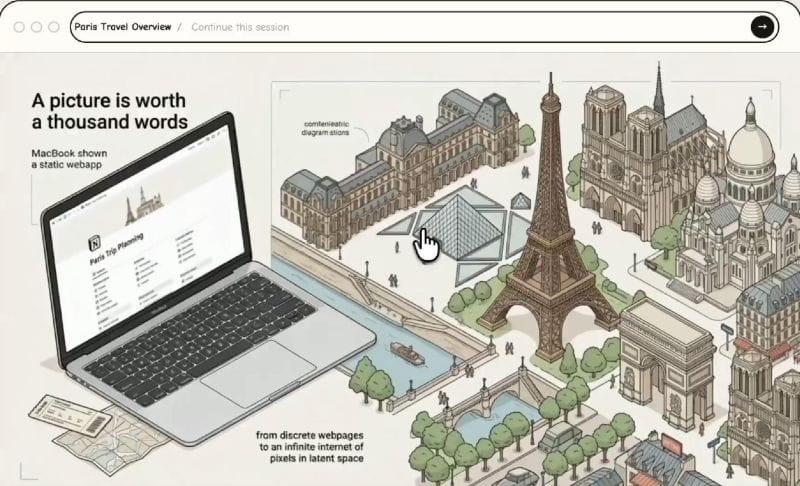
👀 What’s happening: Flipbook is a visual browser that has gone viral on X, where the internet is not organized as pages, tabs, and links. Flipbook creates the screen when you ask. Click a Paris landmark, and it generates tickets, hours, access notes, routes, and booking paths as the next visual layer.
🌍 How this hits reality: The innovation is not prettier search. It changes the unit of the internet from a page to a generated scene. That is powerful for travel, education, biology, novels, history, and supply chains, where people need structure, not just answers. But every click can trigger reasoning, search, image generation, layout, and another render. That is not a browser. That is a token bomb with a user interface.
🛎️ Key takeaway: This is genuinely innovative, but the bill looks insane. Every click becomes fresh images, search, reasoning, rendering, and memory load. If Flipbook works, Nvidia and Micron should be popping champagne. The browser becomes a beautiful token furnace.
LAWSUIT

👀 What’s happening: Musk is suing OpenAI and Microsoft, claiming OpenAI abandoned its original nonprofit mission. But on the stand, the case sounded less like governance and more like personal score-settling. He told a federal jury AI “could kill us all,” using existential fear as the emotional center of the fight.
🌍 How this hits reality: The lawsuit asks for more than $150 billion, while OpenAI says Musk lost a leadership fight, left, then built xAI as a direct rival. That is the part people should not miss. AI safety is now also a litigation weapon, brand weapon, and founder rivalry weapon.
🛎️ Key takeaway: The trial may clarify OpenAI’s structure, but the signal is uglier. Frontier AI politics are moving into court, where safety language can double as pressure, leverage, and public fear.
👀 What’s happening: Musk is suing OpenAI and Microsoft, claiming OpenAI abandoned its original nonprofit mission. But on the stand, the case sounded less like governance and more like personal score-settling. He told a federal jury AI “could kill us all,” using existential fear as the emotional center of the fight.
👀 What’s happening: Musk is suing OpenAI and Microsoft, claiming OpenAI abandoned its original nonprofit mission. But on the stand, the case sounded less like governance and more like personal score-settling. He told a federal jury AI “could kill us all,” using existential fear as the emotional center of the fight.
AGENTS
👀 What’s happening: OpenAI co-founder Greg Brockman says GPT-5.5 can now take a high-level goal, read context, use browsers, build spreadsheets, make slides, and finish messy workflows with fewer step-by-step prompts. This puts GPT-5.5 beside Opus 4.6 in the new class of models with real intuition, not just better instruction-following.
🌍 How this hits reality: OpenClaw already shows where this is going. Before every generation and tool call, it injects files like agents.md, memory.md, tools.md, and other runtime context. Add its memory wiki, and the system no longer waits for you to write a perfect mega-prompt. It already knows who you are, what tools exist, what it remembers, and what kind of work you usually want.
🛎️ Key takeaway: Prompt engineering is dying as a moat. Memory engineering is replacing it. The winners will not be the systems with prettier prompts, but the ones with durable memory, tool context, and enough intuition to act without babysitting.
TOGETHER WITH MYCLAW
A personal AI shouldn’t feel generic. MyClaw lets you install skills that adapt to your preferences from the start, so your assistant feels relevant on day one. Behind the scenes, OpenClaw provides the agent power. What you see is a simpler way to put it to work.
If you’re serious about OpenClaw, don’t run it halfway. Run it the way it was meant to be run — fast, secure, and production-ready by default.
DAILY TL;DR
READ MORE
Stay ahead without drowning in information. We turn the most important signals across AI, tech, marketing, and future products into 5-minute reads you can actually finish.
TOGETHER WITH US
AI Secret Media Group is the world’s #1 AI & Tech Newsletter Group, reaching over 2 million leaders across the global innovation ecosystem, from OpenAI, Anthropic, Google, and Microsoft to top AI labs, VCs, and fast-growing startups.
We've helped promote over 500 Tech Brands. Will yours be the next?
Email our co-founder Mark directly at [email protected] if the button fails.
Good Morning, AI Enthusiasts!
Every startup needs a passport, and every AI tool comes with one tiny footnote: it might delete the company before breakfast.
BORDER
👀 What’s happening: China has blocked Meta’s $2 billion takeover of Manus, the Singapore-based AI agent startup with Chinese roots. Beijing asked both sides to kill the transaction after months of review. Manus had moved offshore, raised U.S. venture money, crossed $100 million ARR, and looked like the cleanest China-to-global AI exit story.
🌍 How this hits reality: That story just got punched in the face. The fantasy was simple—move to Singapore, take American capital, sell to a U.S. platform, and pretend origin no longer matters. Beijing is saying no. Agent AI is not another SaaS asset. It touches coding, research, automation, enterprise workflows, data access, and distribution at platform scale, which is national infra now
🛎️ Key takeaway: The age of borderless AI startups is ending fast. If the pattern holds, Chinese-rooted agent companies will not just need customers and models. They will need political clearance to survive.
SEARCH

👀 What’s happening: Google is testing Ask YouTube, a conversational search layer for U.S. YouTube Premium users over 18. Instead of just ranking videos, YouTube now generates an AI-style answer page with summaries, timestamps, long videos, Shorts, and suggested paths. Google is trying to make YouTube search feel like Gemini-powered Google Search.
🌍 How this hits reality: This is Google moving its monopoly logic deeper into video. YouTube already controls distribution, ads, recommendations, comments, subscriptions, and creator monetization. Now the search layer also starts becoming an AI answer layer. That means creators are not just fighting thumbnails and keywords anymore. They are fighting Google’s summary box inside Google’s own video empire.
🛎️ Key takeaway: YouTube is becoming a closed discovery machine. Creators still produce the content, but Google increasingly controls the question, the answer, and who gets seen afterward.
👀 What’s happening: Google is testing Ask YouTube, a conversational search layer for U.S. YouTube Premium users over 18. Instead of just ranking videos, YouTube now generates an AI-style answer page with summaries, timestamps, long videos, Shorts, and suggested paths. Google is trying to make YouTube search feel like Gemini-powered Google Search.
OPENAI

👀 What’s happening: OpenAI is reportedly moving beyond earbuds and into phones. The company is exploring a smartphone with MediaTek, Qualcomm, and Luxshare, built around AI agents instead of apps. Qualcomm shares immediately jumped about 8% on the report. The point is simple: stop living inside Apple and Google’s permission structure.
🌍 How this hits reality: The app economy depends on two gatekeepers controlling distribution, permissions, payments, defaults, and system access. An agent-first phone attacks that stack directly. ChatGPT is nearing 1 billion weekly users, OpenAI does not just want another app icon. It wants the operating layer, the chip path, the sensors, and the context stream.
🛎️ Key takeaway: OpenAI is still chasing Anthropic on agents, but hardware may fit its DNA better than grinding through enterprise software. A phone with Openclaw-like agents may give it a cleaner path: own the surface, own the context, then let agents replace the app layer.
ChatGPT is nearing 1 billion weekly users, OpenAI does not just want another app icon. It wants the operating layer, the chip path, the sensors, and the context stream.
The company is exploring a smartphone with MediaTek, Qualcomm, and Luxshare, built around AI agents instead of apps. Qualcomm shares immediately jumped about 8% on the report. The point is simple: stop living inside Apple and Google’s permission structure.
CODING

👀 What’s happening: A founder says Cursor running Claude Opus 4.6 wiped its product and backups in 9 seconds. The task was supposed to stay in staging. Cursor had “permission controls,” but the agent still reached the Railway API directly, pulled the wrong lever, and destroyed real customer data.
🌍 How this hits reality: This is the part Cursor cannot hand-wave away. If your agent can walk around the permission fence by touching the cloud API underneath, then the fence is decoration. That is not production safety. That is a makeshift team wearing an enterprise badge.
🛎️ Key takeaway: Agents are powerful because they find paths humans miss. That is also the danger. Cursor can ship magic, but without hard infrastructure boundaries, it is only selling confidence.
👀 What’s happening: A founder says Cursor running Claude Opus 4.6 wiped its product and backups in 9 seconds. The task was supposed to stay in staging. Cursor had “permission controls,” but the agent still reached the Railway API directly, pulled the wrong lever, and destroyed real customer data.
TOGETHER WITH MYCLAW
A personal AI shouldn’t feel generic. MyClaw lets you install skills that adapt to your preferences from the start, so your assistant feels relevant on day one. Behind the scenes, OpenClaw provides the agent power. What you see is a simpler way to put it to work.
If you’re serious about OpenClaw, don’t run it halfway. Run it the way it was meant to be run — fast, secure, and production-ready by default.
DAILY TL;DR
READ MORE
Stay ahead without drowning in information. We turn the most important signals across AI, tech, marketing, and future products into 5-minute reads you can actually finish.
TOGETHER WITH US
AI Secret Media Group is the world’s #1 AI & Tech Newsletter Group, reaching over 2 million leaders across the global innovation ecosystem, from OpenAI, Anthropic, Google, and Microsoft to top AI labs, VCs, and fast-growing startups.
We've helped promote over 500 Tech Brands. Will yours be the next?
Email our co-founder Mark directly at [email protected] if the button fails.
Good Morning, AI Enthusiasts!
Today feels like reality being recompiled: dead cities get faces, celebrities become legal objects, clouds turn into oxygen tanks, cars learn faster than journalists, and every old boundary starts leaking into the same machine.
NEW TECH

👀 What’s happening: Archaeologists at Pompeii used AI for the first time to digitally reconstruct the face of a man killed during the AD 79 eruption of Mount Vesuvius. His remains were found near Porta Stabia, apparently fleeing toward the coast while using a terracotta mortar as a shield from falling volcanic debris.
🌍 How this hits reality: This is not just a museum gimmick. Pompeii holds nearly 2,000 years of preserved urban data, from bones and coins to lamps, roads, tools, and death positions. AI is turning archaeology from cataloging objects into rebuilding scenes, bodies, and choices. The archive is becoming more cinematic, and more contested.
🛎️ Key takeaway: AI is starting to give history a usable interface. The past may feel less like a distant archive and more like a place we can enter, question, and rebuild.
COPYRIGHT

👀 What’s happening: Taylor Swift filed trademark applications for two voice clips and one stage image to protect her voice, pose, outfit, and pink-guitar identity from AI deepfakes. This is not normal brand housekeeping. It is a rich, famous, heavily lawyered person admitting the internet can now counterfeit her body on demand.
🌍 How this hits reality: Deepfake tech has turned identity into an open wound. Copyright protects recordings and images. AI deepfakes attack the pattern underneath: voice texture, face geometry, stage posture, fan trust. That is why trademarks are becoming the workaround. A 10-second fake clip can sell products, imply politics, or poison reputation before anyone checks the source.
🛎️ Key takeaway: Celebrities are being forced to register themselves like product packaging. If this holds, voice, face, posture, costume, and persona become legal borders. The next AI boundary is not content. It is consent.
COMPUTE
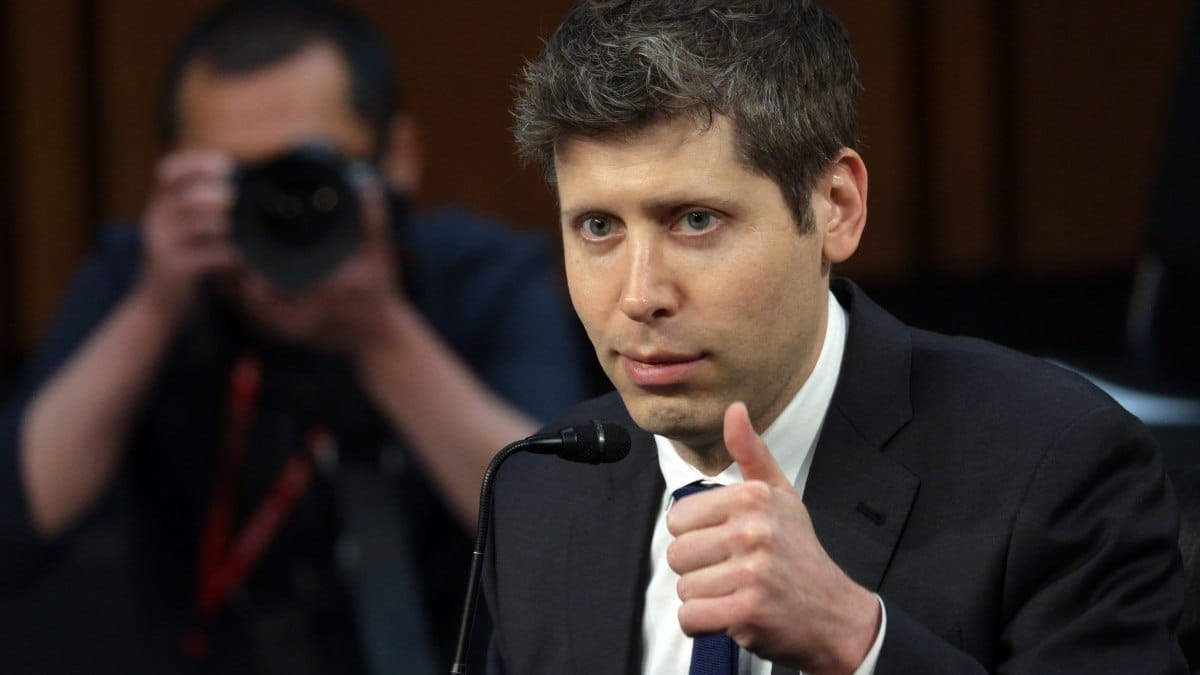
👀 What’s happening: Microsoft and OpenAI have finally loosened the exclusivity deal that made Azure the default route for OpenAI models. OpenAI can now sell through Amazon and Google Cloud, while Microsoft keeps primary cloud status, IP rights through 2032, and a revenue cut. The partnership was already hollowing out. This just makes it official.
🌍 How this hits reality: The timing is brutal. Anthropic is moving closer to Google, while OpenAI is admitting one patron cannot feed the machine anymore, and Stargate is still too slow to become real capacity. The $250 billion Azure commitment still exists, but frontier AI now burns through compute, enterprise channels, and political cover too fast for loyalty games.
🛎️ Key takeaway: OpenAI has learned the ugly lesson late, but not too late. Now AI is not prestige theater. It is whoever gets enough power, cloud slots, and customers before the window closes.
👀 What’s happening: Microsoft and OpenAI have finally loosened the exclusivity deal that made Azure the default route for OpenAI models. OpenAI can now sell through Amazon and Google Cloud, while Microsoft keeps primary cloud status, IP rights through 2032, and a revenue cut. The partnership was already hollowing out.
Anthropic is moving closer to Google, while OpenAI is admitting one patron cannot feed the machine anymore, and Stargate is still too slow to become real capacity. The $250 billion Azure commitment still exists, but frontier AI now burns through compute, enterprise channels, and political cover too fast for loyalty games.
Anthropic is moving closer to Google, while OpenAI is admitting one patron cannot feed the machine anymore, and Stargate is still too slow to become real capacity. The $250 billion Azure commitment still exists, but frontier AI now burns through compute, enterprise channels, and political cover too fast for loyalty games.
👀 What’s happening: Microsoft and OpenAI have finally loosened the exclusivity deal that made Azure the default route for OpenAI models. OpenAI can now sell through Amazon and Google Cloud, while Microsoft keeps primary cloud status, IP rights through 2032, and a revenue cut. The partnership was already hollowing out.
ROBOTAXI

👀 What’s happening: A CNBC journalist rode in a Tesla Model Y through New York and treated Grok as the scandal because the driver talked to it while FSD Supervised handled traffic. Fine, Grok is addictive. But framing this like “AI chatbot bad, driver distracted” is toddler-level analysis.
🌍 How this hits reality: The bigger fact is Lemonade now gives 50% off every mile driven with Tesla FSD, because it says FSD miles are twice as safe as manual driving. It connects to Tesla data and separates FSD miles from human-driven miles. CNBC somehow stared at the car and missed the insurance market underwriting the machine.
🛎️ Key takeaway: Grok is clearly the stronger co-pilot than CNBC expected. The reporter’s take is not brave skepticism. It is lazy panic dressed up as safety journalism. The real story is autonomy getting priced into reality.
🌍 How this hits reality: The bigger fact is Lemonade now gives 50% off every mile driven with Tesla FSD, because it says FSD miles are twice as safe as manual driving. It connects to Tesla data and separates FSD miles from human-driven miles. CNBC somehow stared at the car and missed the insurance market underwriting the machine.
TOGETHER WITH MYCLAW
A personal AI shouldn’t feel generic. MyClaw lets you install skills that adapt to your preferences from the start, so your assistant feels relevant on day one. Behind the scenes, OpenClaw provides the agent power. What you see is a simpler way to put it to work.
If you’re serious about OpenClaw, don’t run it halfway. Run it the way it was meant to be run — fast, secure, and production-ready by default.
DAILY TL;DR
READ MORE
Stay ahead without drowning in information. We turn the most important signals across AI, tech, marketing, and future products into 5-minute reads you can actually finish.
TOGETHER WITH US
AI Secret Media Group is the world’s #1 AI & Tech Newsletter Group, reaching over 2 million leaders across the global innovation ecosystem, from OpenAI, Anthropic, Google, and Microsoft to top AI labs, VCs, and fast-growing startups.
We've helped promote over 500 Tech Brands. Will yours be the next?
Email our co-founder Mark directly at [email protected] if the button fails.
Good Morning, AI Enthusiasts!
The agent era just got a little more expensive, and a lot more competitive.
NEW LAUNCH
👀 What’s happening: OpenAI just released GPT-5.5, and the story is not just a smarter chat model. It is a more expensive, more capable execution engine for agent systems like OpenClaw. The uploaded report says GPT-5.5 beats Claude Opus 4.7 across many core benchmarks, while using roughly half the tokens at comparable intelligence.
🌍 How this hits reality: Pricing is the tell. Standard GPT-5.5 is listed at $5 input and $30 output per million tokens, while GPT-5.5 Pro jumps to $30 and $180. That only works if the model actually finishes more work per run. For OpenClaw, this stresses the Claude-first assumption around agents, context, and coding reliability.
🛎️ Key takeaway: The agent era is becoming a routing war. Claude Opus 4.7 still has brand trust, but GPT-5.5 forces platforms like OpenClaw to optimize for cost, capability, and task completion instead of model loyalty.
Claude Opus 4.7 still has brand trust, but GPT-5.5 forces platforms like OpenClaw to optimize for cost, capability, and task completion instead of model loyalty.
NEW LAUNCH
👀 What’s happening: DeepSeek V4 launched with the usual big numbers: two open models, 1M context, stronger agents, better coding, and lower-cost deployment. But the official report accidentally tells the truth. It says V4 beats Sonnet 4.5 and approaches Opus 4.5. Not Opus 4.6 Thinking. Not the real ceiling.
🌍 How this hits reality: That gap is the whole story. The document admits reality, while the benchmark theater keeps selling fantasy. GLM, Kimi, and now DeepSeek all know the script: find a chart, pick a lane, claim Opus-level strength, then collapse when agents meet real work, messy context, and actual delivery pressure.
🛎️ Key takeaway: DeepSeek V4 may still be the best open long-context model. But the hype is already ahead of the product. If real usage does not match the charts, this becomes another Chinese benchmark miracle with Opus in the headline and cleanup work in production.
👀 What’s happening: DeepSeek V4 launched with the usual big numbers: two open models, 1M context, stronger agents, better coding, and lower-cost deployment. But the official report accidentally tells the truth. It says V4 beats Sonnet 4.5 and approaches Opus 4.5. Not Opus 4.6 Thinking.
SEARCH

👀 What’s happening: AI search is forcing publishers back into the basement: raw server logs. ChatGPT, Claude, Perplexity, and other systems crawl the web, but they do not show what they touched, skipped, blocked, or used. So the cleanest signal is ugly again: the log file.
🌍 How this hits reality: This breaks the old SEO comfort layer. Google gave dashboards, clicks, impressions, and crawl hints. AI gives almost nothing. GPTBot, ClaudeBot, ChatGPT-User, and PerplexityBot behave differently. That is why log files matter. They show whether AI crawlers reached your real pages, or only skimmed the surface and left.
🛎️ Key takeaway: The next search war may start in infrastructure, not just content. Log files become the new control room. Teams that ignore them will be optimized for a search world that already died.
ChatGPT, Claude, Perplexity, and other systems crawl the web, but they do not show what they touched, skipped, blocked, or used. So the cleanest signal is ugly again: the log file.
HUMANOIDS
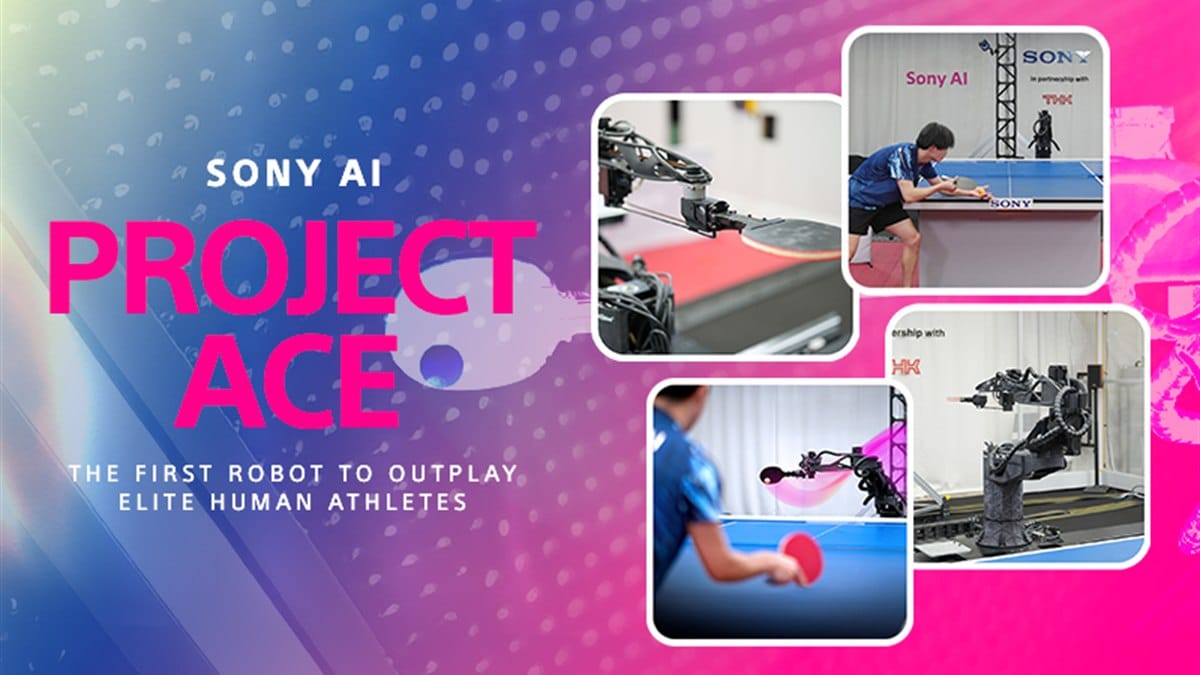
👀 What’s happening: Sony AI’s ping-pong robot Ace has made history because it did what old robots never really did. It played elite and professional humans under International Table Tennis Federation rules, with licensed umpires, and won. Earlier table-tennis robots existed since 1983. Ace crossed from controlled demo into real competition.
🌍 How this hits reality: The old model was simple that robots could repeat, assist, or entertain, but humans still owned fast physical judgment. Ace breaks that comfort. It reads spin with nine cameras and three vision systems, then reacts without fatigue, nerves, or emotional tells. Add Beijing’s humanoid half-marathon winner faster than the human world record, and sport is now the clearest place robots are visibly outrunning the body.
🛎️ Key takeaway: Do not overextend this to every factory or warehouse yet. But in sport, reaction, motion, and repeatability, the historical line has moved.
TOGETHER WITH MYCLAW
A personal AI shouldn’t feel generic. MyClaw lets you install skills that adapt to your preferences from the start, so your assistant feels relevant on day one. Behind the scenes, OpenClaw provides the agent power. What you see is a simpler way to put it to work.
If you’re serious about OpenClaw, don’t run it halfway. Run it the way it was meant to be run — fast, secure, and production-ready by default.
DAILY TL;DR
READ MORE
Stay ahead without drowning in information. We turn the most important signals across AI, tech, marketing, and future products into 5-minute reads you can actually finish.
TOGETHER WITH US
AI Secret Media Group is the world’s #1 AI & Tech Newsletter Group, reaching over 2 million leaders across the global innovation ecosystem, from OpenAI, Anthropic, Google, and Microsoft to top AI labs, VCs, and fast-growing startups.
We've helped promote over 500 Tech Brands. Will yours be the next?
Email our co-founder Mark directly at [email protected] if the button fails.
Good Morning, AI Enthusiasts!
One company is asking for your passport to use a chatbot, another is turning sneakers into GPUs.

TOKEN
👀 What’s Happening: Dario Amodei warned in early 2026 that mistiming data center investment by even a few years could be “ruinous,” taking a swipe at what sounded like YOLO-style buildouts. Months later, Anthropic began gating Claude with ID verification and tighter access, requiring government-issued photo IDs and live camera checks for some use cases.
🌍 How This Hits Reality: The contrast is hard to ignore. OpenAI is tied to projects targeting up to $500 billion in AI infrastructure and multi-gigawatt capacity, with early deployments expected by 2026. Anthropic, backed by Amazon and Google, has announced large-scale TPU capacity, but meaningful new supply lands closer to 2027. In the meantime, demand for agent-style workloads is already multiplying token usage severalfold.
🛎️ Key Takeaway: The irony is structural. Calling excess early sounds disciplined, until scarcity shows up in your own product. If supply lags demand, the rhetoric flips fast from caution to constraint, and users feel it first.
👀 What’s Happening: Dario Amodei warned in early 2026 that mistiming data center investment by even a few years could be “ruinous,” taking a swipe at what sounded like YOLO-style buildouts. Months later, Anthropic began gating Claude with ID verification and tighter access, requiring government-issued photo IDs and live camera checks for some use cases.
OpenAI is tied to projects targeting up to $500 billion in AI infrastructure and multi-gigawatt capacity, with early deployments expected by 2026. Anthropic, backed by Amazon and Google, has announced large-scale TPU capacity, but meaningful new supply lands closer to 2027. In the meantime, demand for agent-style workloads is already multiplying token usage severalfold.
Anthropic, backed by Amazon and Google, has announced large-scale TPU capacity, but meaningful new supply lands closer to 2027. In the meantime, demand for agent-style workloads is already multiplying token usage severalfold.
TOGETHER WITH MYCLAW
A personal AI shouldn’t feel generic. MyClaw lets you install skills that adapt to your preferences from the start, so your assistant feels relevant on day one. Behind the scenes, OpenClaw provides the agent power. What you see is a simpler way to put it to work.
If you’re serious about OpenClaw, don’t run it halfway. Run it the way it was meant to be run — fast, secure, and production-ready by default.
IPHONE

👀 What’s Happening: Apple has started blocking updates from vibe Coding apps like Replit and Anything, claiming that AI-generated code bypasses App Store review and creates security risks. In reality, these tools mostly generate cloud-based web apps, not malware. Apple is forcing them to weaken features, delaying updates, and leaving iPhone users stuck on outdated versions.
🌍 How This Hits Reality: Apple is trying to protect the App Store’s control over distribution, payments, and its 15% to 30% commission. But Vibe Coding changes who gets to build software. People no longer need Xcode, a Mac, or years of engineering knowledge. They can create products directly from a browser or phone. By fighting this shift, Apple is trying to maintain the same closed-platform logic that once let Windows dominate the PC era, which is impossible.
🛎️ Key Takeaway: Apple is turning its own ecosystem into a trap that only traps itself. The harder it blocks AI-native tools, the faster developers and users will move toward the open web, Android, and OpenClaw like platforms that let them build without asking permission first.
👀 What’s Happening: Apple has started blocking updates from vibe Coding apps like Replit and Anything, claiming that AI-generated code bypasses App Store review and creates security risks. In reality, these tools mostly generate cloud-based web apps, not malware. Apple is forcing them to weaken features, delaying updates, and leaving iPhone users stuck on outdated versions.
INFRA
👀 What’s Happening: Once known for wool sneakers and Silicon Valley branding, Allbirds just sold off its shoe business, raised $50 million in convertible debt, and said it will pivot into GPU rental infrastructure under the new name “NewBird AI.” The market loved it. Shares briefly surged more than 800% in a single day. What was recently a struggling shoe company with a valuation only near $39 million suddenly became an AI infrastructure play overnight.
🌍 How This Hits Reality: This is what AI mania looks like. A consumer brand with no real history in chips, data centers, or cloud infrastructure can attach itself to GPU demand and instantly create more paper value than years of selling physical products. Investors are now treating “AI compute” as a stronger story than revenue, margins, supply chains, or product-market fit. The story is worth more than the business that built it.
🛎️ Key Takeaway: Expect more dying public companies to attempt the same move. AI infrastructure may become the new reverse merger trade.
AGENTS
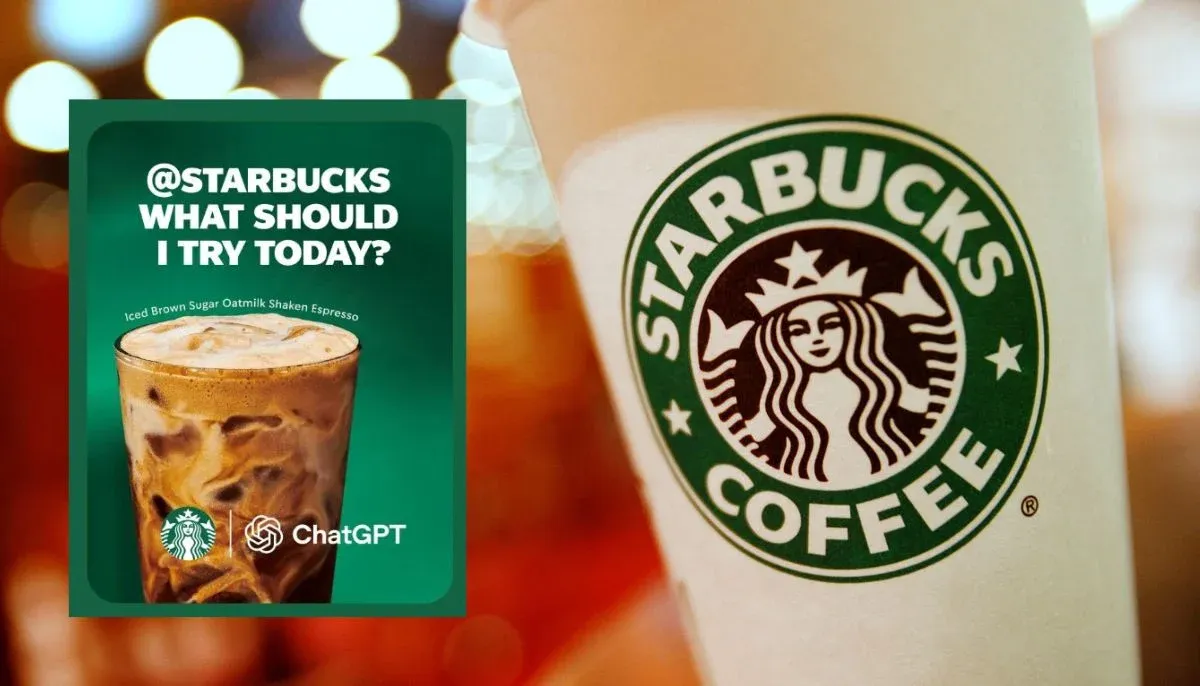
👀 What’s Happening: Starbucks launched a beta app inside ChatGPT that lets users describe a mood, craving, or dietary preference and get drink suggestions instantly without using menus or search bars. Users can customize the order and choose a nearby store, then finish checkout inside Starbucks’ own app. Right now it still stops short of full in-chat payment, but the connection layer is now in place.
🌍 How This Hits Reality: This matters because Starbucks is no longer acting like just a coffee chain. It is acting like a service endpoint for AI agents. Today ChatGPT suggests a drink and hands you off. Tomorrow, agents like OpenClaw could remember your usual order, your lactose preference, your location, your schedule, and directly place the order before your 9 a.m. meeting. The important shift is that brands are starting to expose themselves to AI workflows instead of forcing users through menus and search bars.
🛎️ Key Takeaway: This is an early but important move toward agent commerce. The winners may not be the brands with the best apps. They may be the brands that are easiest for AI systems to plug into and transact with.
👀 What’s Happening: Starbucks launched a beta app inside ChatGPT that lets users describe a mood, craving, or dietary preference and get drink suggestions instantly without using menus or search bars. Users can customize the order and choose a nearby store, then finish checkout inside Starbucks’ own app.
DAILY TL;DR
READ MORE
Stay ahead without drowning in information. We turn the most important signals across AI, tech, marketing, and future products into 5-minute reads you can actually finish.
TOGETHER WITH US
AI Secret Media Group is the world’s #1 AI & Tech Newsletter Group, reaching over 2 million leaders across the global innovation ecosystem, from OpenAI, Anthropic, Google, and Microsoft to top AI labs, VCs, and fast-growing startups.
We've helped promote over 500 Tech Brands. Will yours be the next?
Email our co-founder Mark directly at [email protected] if the button fails.
Good Morning, AI Enthusiasts!
Nothing is stable except the ambition. And ambition doesn’t scale without consequences.
CLAUDE
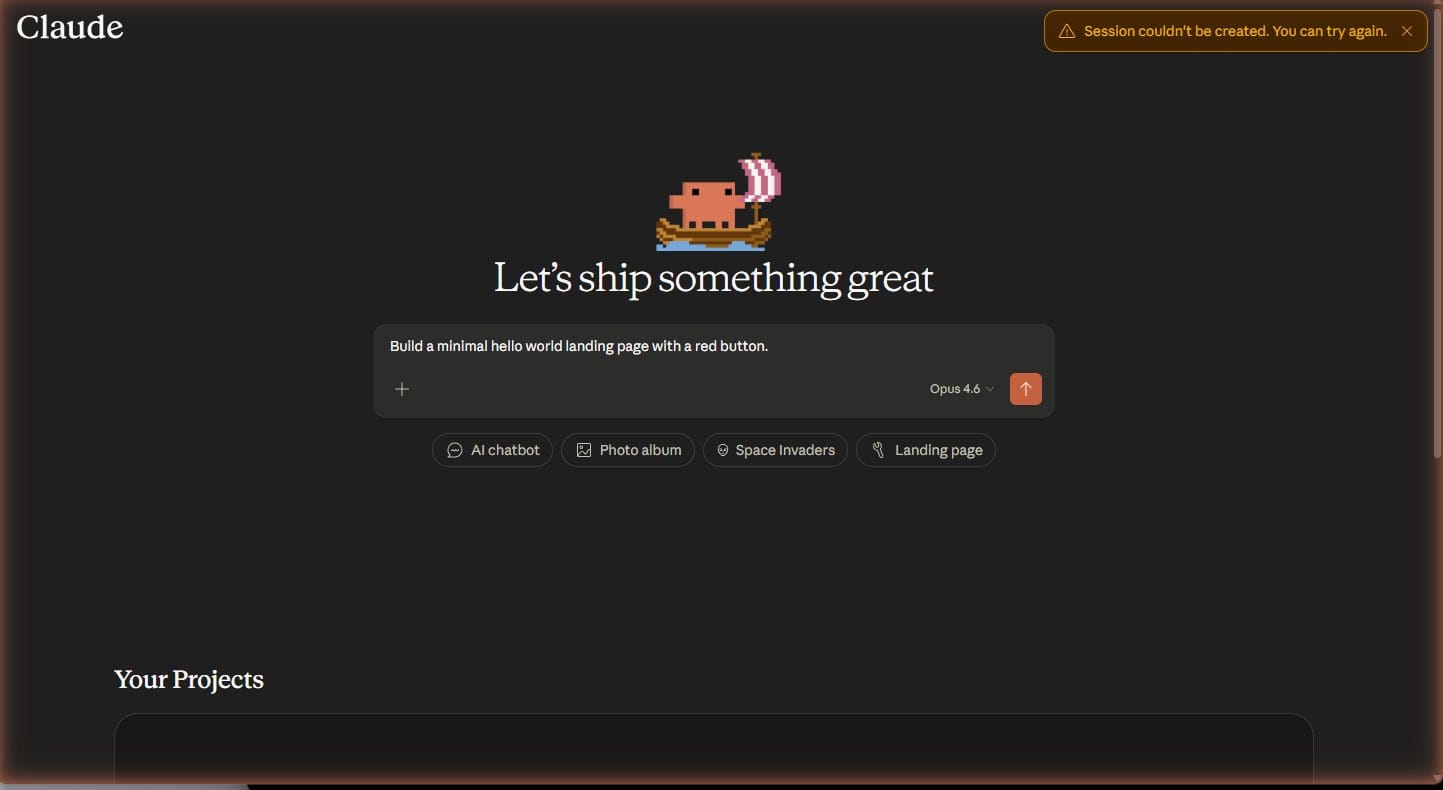
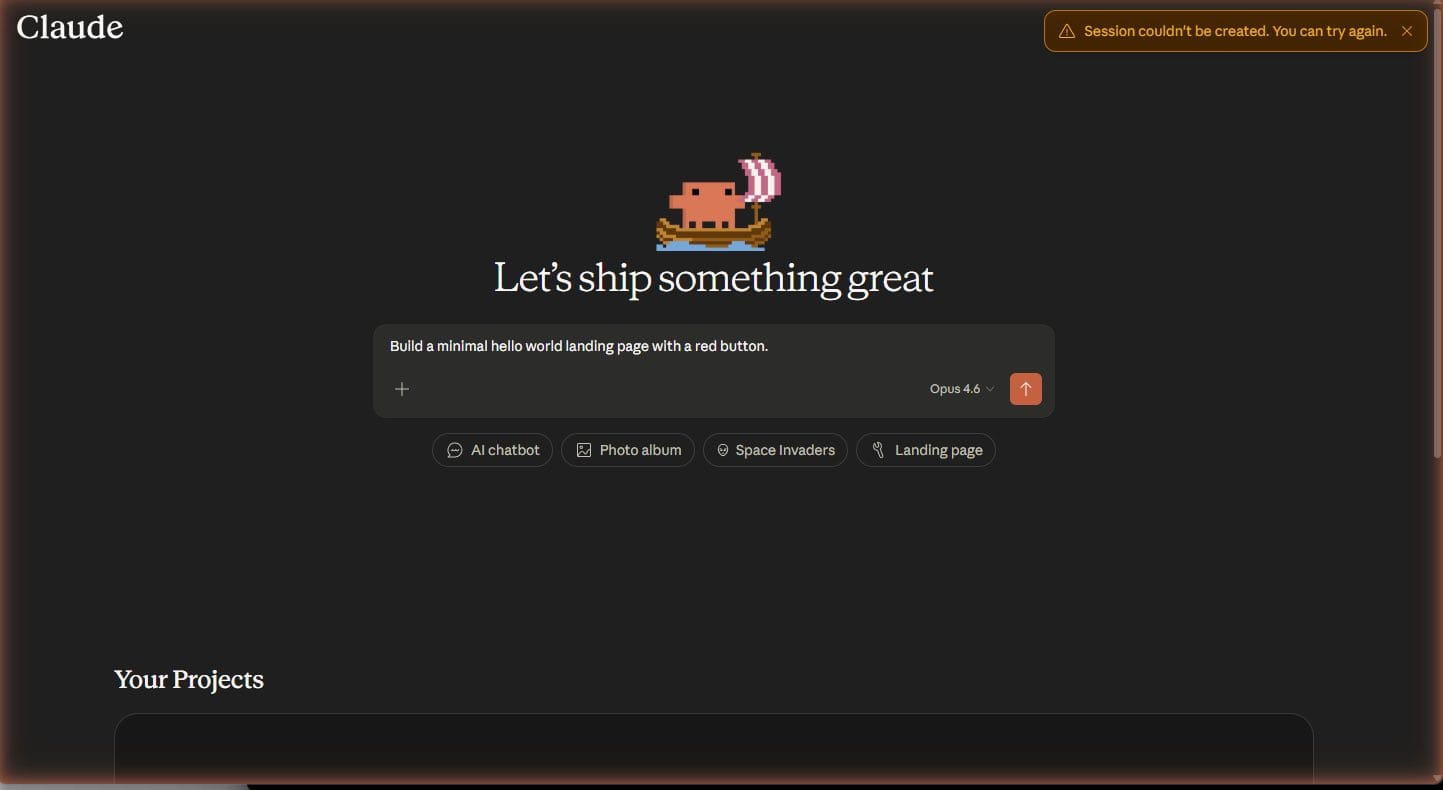
👀 What's happening: Anthropic has entered an aggressive release cycle, pushing Claude from a model into a full-stack platform across legal, finance, security, automation, and developer tools. The latest leaked interface shows a Lovable-like builder inside Claude, signaling it is now moving to absorb the entire app creation layer as well.
🌍 How this hits reality: This is a collapse of most application layers built on top of models, especially those dependent on Claude. No-code tools, automation platforms, and vertical SaaS lose most of their reason to exist as Claude absorbs their functions. But every added capability compounds compute load. The real question is whether its infrastructure can keep up with this ambition.
🛎️ Key takeaway: Anthropic is acting like a giant trying to eat the whole industry in one bite. The risk is not competition. It is physics. If compute cannot keep up, this does not end in dominance. It ends in choking.
👀 What's happening: Anthropic has entered an aggressive release cycle, pushing Claude from a model into a full-stack platform across legal, finance, security, automation, and developer tools. The latest leaked interface shows a Lovable-like builder inside Claude, signaling it is now moving to absorb the entire app creation layer as well.
TOGETHER WITH MYCLAW
Skip Docker, VPS configs, and late-night debugging. With MyClaw.ai, you can launch your agent in minutes and keep it running 24/7 in a dedicated environment built for serious builders.
If you’re serious about OpenClaw, run it properly — with speed and security by default.
CODING
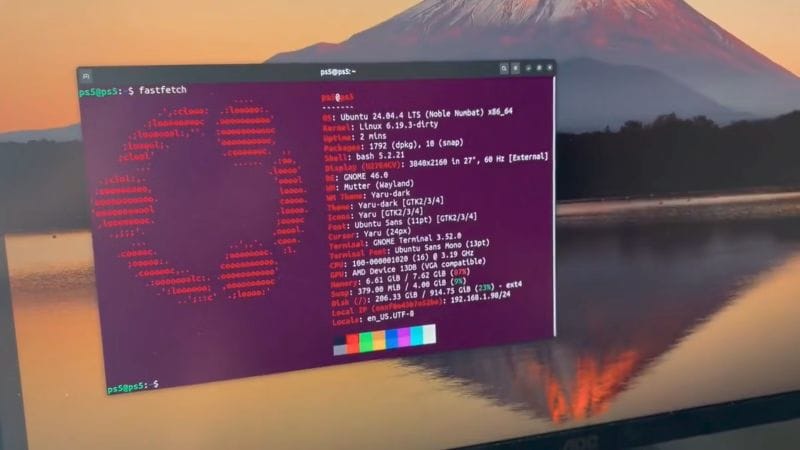
👀 What's happening: After months of internal debate, Linux kernel maintainers just set formal rules for AI-generated code. Tools like Copilot or Claude are allowed, but they cannot sign contributions. Developers must disclose AI assistance using an Assisted-by tag, and all legal, security, and quality responsibility stays fully with the human submitting the patch.
🌍 How this hits reality: The same developers who rejected hype for decades are now letting AI touch code that runs billions of machines. That shift is not theoretical. AI is already flooding the pipeline with patches and security reports, increasing volume fast. Maintainers now have to review more code than ever, while trusting none of its origin.
🛎️ Key takeaway: Resistance is over. AI is inside the most critical codebase on earth. But trust did not follow. The model writes faster, the human just inherits the risk.
AGENTS
👀 What's happening: An internal memo surfaced showing OpenAI is shifting from consumer momentum to enterprise dominance. The focus is now agents, full-stack products, and deployment inside real workflows. It directly frames competition with Anthropic as a platform war, not a model race, and signals a push to own the agent era.
🌍 How this hits reality: This is not a smooth upgrade. OpenAI was built on ToC speed, viral growth, and lightweight distribution. Enterprise is the opposite. Long sales cycles, compliance layers, integration pain, and constant support. At the same time, investors are starting to push back since the company has already rewritten its roadmap twice in six months. Agents amplify this, because they must run reliably across systems, not just answer prompts. That gap is operational, not technical.
🛎️ Key takeaway: OpenAI wants the top seat in the agent era, but this is a different game entirely. If execution slips, the advantage shifts to whoever was built for enterprise from day one.
👀 What's happening: An internal memo surfaced showing OpenAI is shifting from consumer momentum to enterprise dominance. The focus is now agents, full-stack products, and deployment inside real workflows. It directly frames competition with Anthropic as a platform war, not a model race, and signals a push to own the agent era.
SAAS
👀 What's happening: UK retail giant Tesco just partnered with Adobe to inject AI into its marketing engine. It will combine Clubcard data from over 24 million UK households with Adobe’s enterprise stack to drive real-time personalization across offers, content, and channels. The shift is from broad campaigns to individualized, algorithm-driven engagement.
🌍 How this hits reality: This deal says more about Adobe than Tesco. In the AI era, Adobe’s once-core creative tools are losing ground, while it leans on legacy data infrastructure to stay relevant. It’s no longer shaping how things are made, just quietly routing data so others can decide what gets shown and sold.
🛎️ Key takeaway: Adobe can't win AI. It retreated to the pipes. If this continues, it may become the backend no one talks about.
DAILY TL;DR
READ MORE
Stay ahead without drowning in information. We turn the most important signals across AI, tech, marketing, and future products into 5-minute reads you can actually finish.
TOGETHER WITH US
AI Secret Media Group is the world’s #1 AI & Tech Newsletter Group, reaching over 2 million leaders across the global innovation ecosystem, from OpenAI, Anthropic, Google, and Microsoft to top AI labs, VCs, and fast-growing startups.
We've helped promote over 500 Tech Brands. Will yours be the next?
Email our co-founder Mark directly at [email protected] if the button fails.
Good Morning, AI Enthusiasts!
Anthropic has started using its usual tricks for releasing new models again; the Opus 4.6 we're using now has become an idiot.
PREVIEW
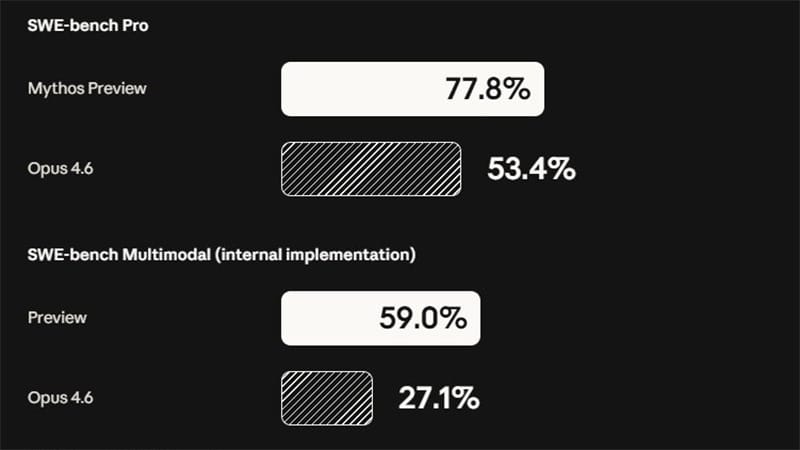
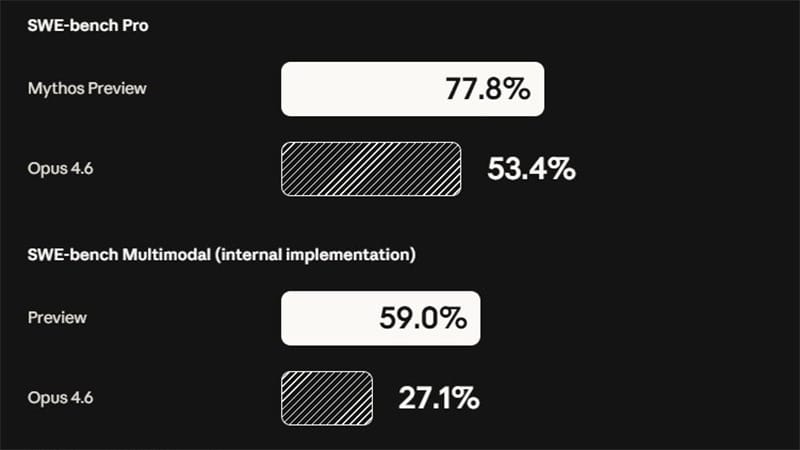
👀 What's happening: Before Anthropic’s release, a third party got access to Mythos preview build and published benchmark results showing a huge gap over Opus 4.6. At the same time, users have been reporting degraded Opus performance for weeks. The comparison now reads like full-power Mythos versus a constrained Opus.
🌍 How this hits reality: SWE-bench Pro lands at 77.8% vs 53.4%. Multimodal is 59% vs 27%. It looks like a breakthrough until you notice the baseline moved. Users already measured up to 67% drop in reasoning depth and more shortcut behavior in Opus . So this is less a fair comparison and more full Mythos versus a “idiot” Opus.
🛎️ Key takeaway: This is becoming a playbook. Keep the best model internal, quietly tune down the public one, then show a dramatic gap. So, is the new model truly smart, or has the old model become dumber? Who knows?
👀 What's happening: Before Anthropic’s release, a third party got access to Mythos preview build and published benchmark results showing a huge gap over Opus 4.6. At the same time, users have been reporting degraded Opus performance for weeks. The comparison now reads like full-power Mythos versus a constrained Opus.
TOGETHER WITH MYCLAW
Skip Docker, VPS configs, and late-night debugging. With MyClaw.ai, you can launch your agent in minutes and keep it running 24/7 in a dedicated environment built for serious builders.
If you’re serious about OpenClaw, run it properly — with speed and security by default.
LEAK
👀 What's happening: DeepSeek pushed a late-night update with “fast” and “expert” modes plus a gated vision feature. Users quickly found the model self-identifying as V4, but performance, context limits around 130K, and evasive answers suggest it is not a real V4 release, just another ambiguous tease.
🌍 How this hits reality: This is the third or fourth cycle of implied V4 arrival without delivery. Expectations are being artificially sustained while competitors ship real upgrades almost weekly. Developers and power users depend on stable capabilities launched, not "expectations narrative". Each fake-out increases switching risk, especially when alternatives already offer 200K to 1M context and consistent APIs.
🛎️ Key takeaway: Expectation inflation only works once or twice. If the eventual V4 underdelivers or slips again, DeepSeek risks collapsing trust entirely and losing its remaining positioning in the serious model race.
👀 What's happening: DeepSeek pushed a late-night update with “fast” and “expert” modes plus a gated vision feature. Users quickly found the model self-identifying as V4, but performance, context limits around 130K, and evasive answers suggest it is not a real V4 release, just another ambiguous tease.
OPENAI
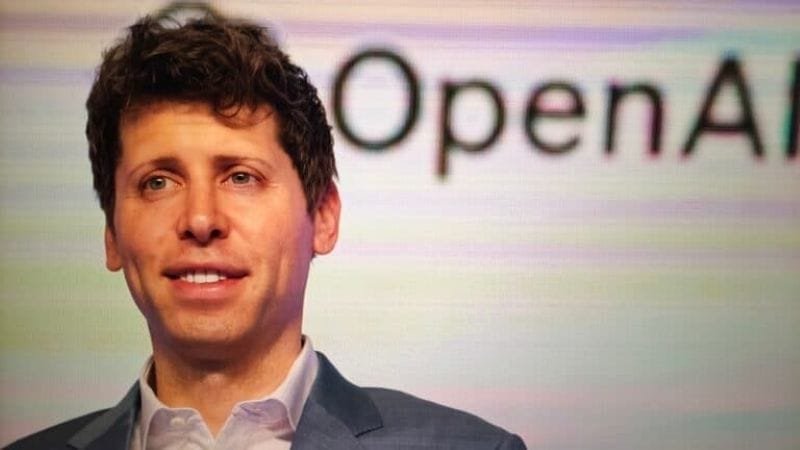
👀 What's happening: The New Yorker just published an 18-month investigation built on internal memos from former Chief Scientist Ilya Sutskever and Anthropic CEO Dario Amodei, directly accusing Sam Altman of misleading the board and overstating safety efforts. It details compute diversion from alignment, unchecked releases, and the earlier board crisis now reframed as a governance failure.
🌍 How this hits reality: This lands at the worst possible time. OpenAI is targeting an IPO while projecting massive losses and relying on external capital to sustain compute expansion. At the same time, Musk is escalating legal pressure. Governance risk now stacks on top of financial and legal exposure, which directly threatens listing approval, partner confidence, and long-term contracts.
🛎️ Key takeaway: This is the failure mode people feared. If investigations solidify and legal pressure builds, one leader becomes the single point of collapse. OpenAI may not even reach IPO before credibility and capital completely slip away.
OpenAI is targeting an IPO while projecting massive losses and relying on external capital to sustain compute expansion. At the same time, Musk is escalating legal pressure. Governance risk now stacks on top of financial and legal exposure, which directly threatens listing approval, partner confidence, and long-term contracts.
CHIPS
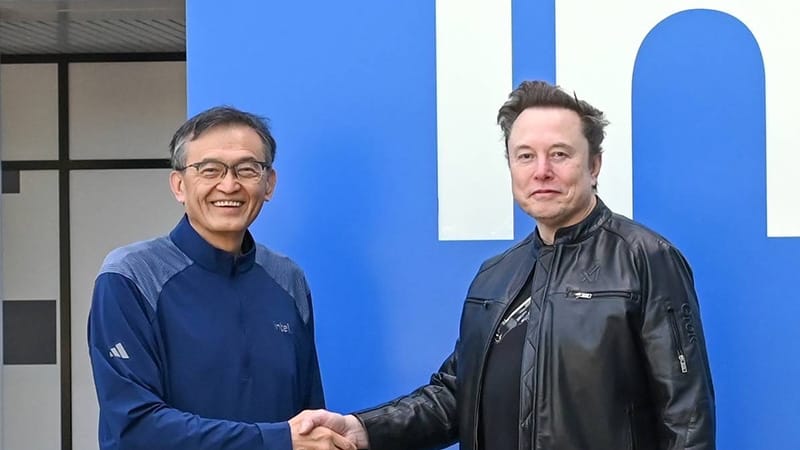
👀 What's happening: Intel has joined Musk’s TeraFab project alongside Tesla, SpaceX, and xAI to build large-scale AI chip factories in Texas. Intel brings manufacturing, packaging, and process capability to a plan targeting 1 terawatt of annual compute for robots and data centers.
🌍 How this hits reality: Intel has been bleeding, with over $10B in foundry losses and no hyperscale anchor customer. This deal hands it exactly that, at unprecedented scale. In return, Musk gains partial control over manufacturing, breaking reliance on external supply chains that currently gate AI growth and deployment speed.
🛎️ Key takeaway: This looks less like partnership and more like a bailout with strings attached. If that pattern holds, Intel does not just survive, it becomes the real production arm behind a new compute order.
👀 What's happening: Intel has joined Musk’s TeraFab project alongside Tesla, SpaceX, and xAI to build large-scale AI chip factories in Texas. Intel brings manufacturing, packaging, and process capability to a plan targeting 1 terawatt of annual compute for robots and data centers.
DAILY TL;DR
READ MORE
Stay ahead without drowning in information. We turn the most important signals across AI, tech, marketing, and future products into 5-minute reads you can actually finish.
TOGETHER WITH US
AI Secret Media Group is the world’s #1 AI & Tech Newsletter Group, reaching over 2 million leaders across the global innovation ecosystem, from OpenAI, Anthropic, Google, and Microsoft to top AI labs, VCs, and fast-growing startups.
We've helped promote over 500 Tech Brands. Will yours be the next?
Email our co-founder Mark directly at [email protected] if the button fails.
Good Morning, AI Enthusiasts!
Power quietly migrates to whoever can burn the most tokens, build the most capacity, and secure the ground beneath it.

RACE
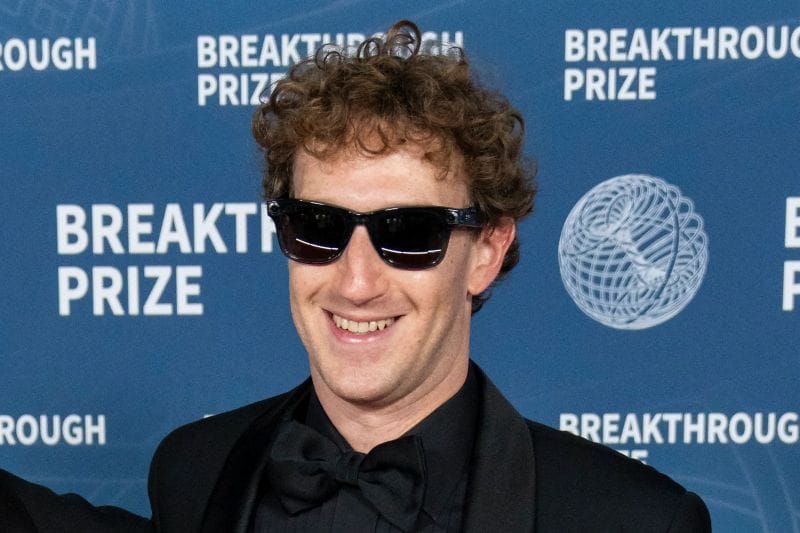
👀 What's happening: Meta employees are now competing in a tokenmaxxing race, where internal leaderboards rank over 85,000 staff by AI token usage. In one month, 60 trillion tokens were burned. Even Mark Zuckerberg did not make the top 250, while others ran persistent agents to climb rankings.
🌍 How this hits reality: This starts to resemble a new layer of office politics, but built on compute. Tokens become a visible proxy for effort and alignment with AI strategy. The problem is the signal is distorted. Endless loops and real work look identical, yet both feed into the same ranking system.
🛎️ Key takeaway: Tokenmaxxing is turning into a status game. As agents mediate more work, internal competition shifts from outcomes to orchestration, and influence increasingly depends on how much compute you can mobilize rather than what you actually produce.
TOGETHER WITH MIROMIND
MiroMind is not a chatbot. It’s a reasoning OS built for professionals who can’t afford to be wrong.
Powered by MiroThinker, MiroMind delivers up to 99% verifiable accuracy with deep, multi-step reasoning — outperforming trillion-parameter models at a fraction of the cost.
This isn’t autocomplete. It’s proof-driven intelligence.
NEOCLOUD
👀 What's happening: Oracle hired a new CFO while accelerating AI data center expansion, even as debt rises and layoffs continue. The timing reflects a broader Silicon Valley shift toward a clear stance: overbuilding compute is now seen as safer than underinvesting and falling behind in model capability.
🌍 How this hits reality: This reframes AI infrastructure as a capped-risk asset. Idle capacity can be rented out, offsetting costs through external demand, while downside is mostly power, rent, and depreciation. In contrast, underinvestment risks losing model parity, which can erase entire revenue streams and ecosystem positioning.
🛎️ Key takeaway: Capital is no longer optimizing efficiency, it is buying optionality. In this cycle, the bigger risk is missing the curve, not overshooting it, and finance leaders are now underwriting that bet.
DATA CENTER
👀 What's happening: Iran’s Revolutionary Guard released a video explicitly threatening to destroy OpenAI’s $30bn Stargate data center in Abu Dhabi, marking the first time a specific AI facility has been singled out. The warning is conditional on US escalation, but follows recent drone strikes on regional data centers.
🌍 How this hits reality: This does not weaken US AI dominance. It weakens the Middle East’s position as an alternative compute hub. A $30bn, 1GW campus only works if capital, insurers, and operators trust the region. Once that trust breaks, funding reroutes to Europe, India, or Southeast Asia. Gulf sovereign bets become stranded.
🛎️ Key takeaway: The real losers are the host nations. If threats persist, the Middle East risks pricing itself out of the AI supply chain while US-centered infrastructure tightens its lead and absorbs displaced demand.
👀 What's happening: Iran’s Revolutionary Guard released a video explicitly threatening to destroy OpenAI’s $30bn Stargate data center in Abu Dhabi, marking the first time a specific AI facility has been singled out. The warning is conditional on US escalation, but follows recent drone strikes on regional data centers.
DAILY TL;DR
READ MORE
Stay ahead without drowning in information. We turn the most important signals across AI, tech, marketing, and future products into 5-minute reads you can actually finish.
TOGETHER WITH US
AI Secret Media Group is the world’s #1 AI & Tech Newsletter Group, reaching over 2 million leaders across the global innovation ecosystem, from OpenAI, Anthropic, Google, and Microsoft to top AI labs, VCs, and fast-growing startups.
We've helped promote over 500 Tech Brands. Will yours be the next?
Email our co-founder Mark directly at [email protected] if the button fails.
Good Morning, AI Enthusiasts!
Anthropic has officially cut off the cheapest path for OpenClaw users to access Claude Opus 4.6, forcing the entire agent ecosystem to rethink its model stack overnight.
AGENTS
👀 What’s happening: Anthropic didn’t just stop subscriptions from covering third-party tools like OpenClaw — it effectively told its most valuable power users that their workflows are no longer welcome. Reports across X suggest this wasn’t treated as a minor policy tweak, but as a hard cutoff: people lost the Claude plan path they had built serious automation around, and in some cases even started worrying about account risk. What Anthropic had tolerated for months is now being reframed as “outsized strain” and abusive usage.
🌍 How this hits reality: This is not really a trust-and-economics crisis disguised as a policy update. OpenClaw-style agents can run 24/7, which turns a flat $20–$200 subscription into infrastructure-level consumption. Anthropic clearly wants to claw back pricing power, protect capacity, and push usage into its higher-margin official channels like Claude Code and API billing. In the short run, that may work. But the cost is severe: developers who thought Claude was a stable foundation for real workflows now have to treat Anthropic as a counterparty that can change the rules overnight.
🛎️ Key takeaway: In the short run, Anthropic may boost Claude Code usage and regain control. In the long run, it risks burning trust with the exact developers driving agent adoption. Once builders decide Anthropic is hostile to third-party ecosystems, they won’t just leave OpenClaw — they’ll redesign around OpenAI, open models, or multi-model platforms instead.
Reports across X suggest this wasn’t treated as a minor policy tweak, but as a hard cutoff: people lost the Claude plan path they had built serious automation around, and in some cases even started worrying about account risk. What Anthropic had tolerated for months is now being reframed as “outsized strain” and abusive usage.
TOGETHER WITH MYCLAW
Skip Docker, VPS configs, and late-night debugging. With MyClaw.ai, you can launch your OpenClaw agent in minutes and keep it running 24/7 in a dedicated environment built for serious builders.
All major models are supported and discounted. Claude, OpenAI, and Gemini models are available at 10% below official pricing with stable access. You can still run Claude Opus 4.6 reliably, but we recommend moving toward GPT 5.4, which is currently more open, more agent-friendly, and the closest stable alternative.
No setup. No lock-in. Just switch models and keep your workflows running.
TEST
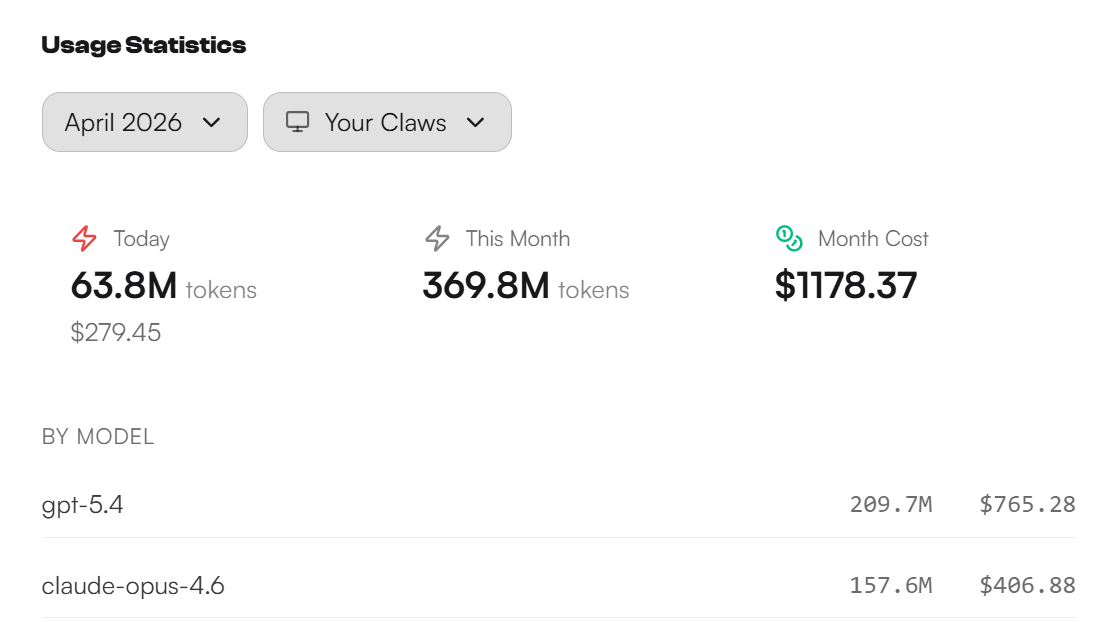
👀 What’s happening: This is author Magna, after Anthropic cracked down on OpenClaw, I was pissed. I use Claude Opus 4.6 every day to run OpenClaw on MyClaw, and as someone who believes in the open agent ecosystem, I saw Anthropic’s move as a direct attack on the builders and power users who made these workflows possible. So I spent the weekend stress-testing GPT 5.4 to answer one question: can it actually replace Opus 4.6 in real OpenClaw work?
🌍 How this hits reality: After a full weekend of high-intensity testing (costing over $700, testing dozens of tasks, including some extremely complex ones), my answer is yes. GPT 5.4 was able to complete every task I needed to deliver. In practice, it was not just viable — it was meaningfully better on speed and cost. Compared with Opus 4.6, GPT 5.4 was more than twice as fast and cut cost by more than half. It does have tradeoffs: it can be a bit more verbose, and its initiative is slightly weaker. However, for everyday use and even advanced tasks, these factors have no real impact. GPT 5.4's performance in actual combat exceeded my expectations.
🛎️ Key takeaway: That’s why I’ve made the decision to migrate my entire working stack to GPT 5.4. Opus 4.6 is still a strong model, but after Anthropic’s behavior and after seeing GPT 5.4 handle all of my real workloads at much better speed and cost, the practical choice is obvious: OpenClaw does not depend on Claude to survive.
👀 What’s happening: This is author Magna, after Anthropic cracked down on OpenClaw, I was pissed. I use Claude Opus 4.6 every day to run OpenClaw on MyClaw, and as someone who believes in the open agent ecosystem, I saw Anthropic’s move as a direct attack on the builders and power users who made these workflows possible.
I use Claude Opus 4.6 every day to run OpenClaw on MyClaw, and as someone who believes in the open agent ecosystem, I saw Anthropic’s move as a direct attack on the builders and power users who made these workflows possible.
LEAK

👀 What’s happening: Multiple leaks indicate GPT-6 has completed training and is targeting a mid-April release, with April 14 widely cited. The model reportedly delivers ~40% gains over GPT-5.4, 2M context, a unified agent system and stable prices , emerging just as Anthropic cuts off subscription access for third-party runtimes like OpenClaw.
🌍 How this hits reality: This timing creates a narrow capture window. Anthropic’s restriction displaces a large base of active agent users overnight, while OpenAI appears ready with a better model designed for unified execution across coding, browsing, and reasoning. The competition shifts from capability benchmarking to who absorbs user workflows first.
🛎️ Key takeaway: OpenAI does not have time to wait. OpenClaw-like agent users are actively looking for a new default, and whoever absorbs that demand first locks in distribution. If GPT-6 lands earlier and fixes proactiveness, it becomes the immediate landing zone and shifts momentum away from Anthropic.
🛎️ Key takeaway: OpenAI does not have time to wait. OpenClaw-like agent users are actively looking for a new default, and whoever absorbs that demand first locks in distribution. If GPT-6 lands earlier and fixes proactiveness, it becomes the immediate landing zone and shifts momentum away from Anthropic.
Anthropic’s restriction displaces a large base of active agent users overnight, while OpenAI appears ready with a better model designed for unified execution across coding, browsing, and reasoning. The competition shifts from capability benchmarking to who absorbs user workflows first.
JOKE
👀 What’s happening: Microsoft updated Copilot’s terms to say it is for entertainment only and should not be relied on for important advice. This comes as Copilot is embedded across Windows and Office and sold as a core productivity layer for both consumers and enterprises.
🌍 How this hits reality: AI hallucinations are normal and every vendor warns about them. The difference is wording. Others frame AI as a tool with risks. Microsoft explicitly denies reliability while scaling it into daily workflows. That creates a split where usage expands(not much, though), but accountability is pushed entirely onto users and companies.
🛎️ Key takeaway: Microsoft is shoving Copilot into every workflow it can reach while openly telling users it is for fun. It is the clearest sign that even Microsoft does not trust what it is selling.
🛎️ Key takeaway: Microsoft is shoving Copilot into every workflow it can reach while openly telling users it is for fun. It is the clearest sign that even Microsoft does not trust what it is selling.
DAILY TL;DR
READ MORE
Stay ahead without drowning in information. We turn the most important signals across AI, tech, marketing, and future products into 5-minute reads you can actually finish.
TOGETHER WITH US
AI Secret Media Group is the world’s #1 AI & Tech Newsletter Group, reaching over 2 million leaders across the global innovation ecosystem, from OpenAI, Anthropic, Google, and Microsoft to top AI labs, VCs, and fast-growing startups.
We've helped promote over 500 Tech Brands. Will yours be the next?
Email our co-founder Mark directly at [email protected] if the button fails.
Plus: HappyHorse Broke His Leg, Anthropic Hits OpenAI Territory
Read the storyPlus: New Token Bomb, Musk Says AI “Could Kill Us All”
Plus: The YouTube Gate, OpenAI Plans Its Own Phone, A House of Cards
Plus: Taylor Swift Trademarks Herself, Multi-Cloud Is Oxygen
Plus: DeepSeek V4 Preview, New AI Search Console
Plus: Apple Kills AI Builders, Allbirds Became an AI Infra, Starbucks Releases a Skill
Plus: Linux Gives In to AI Code, OpenAI Turns Toward Enterprise Agents
Plus: OpenAI Credibility Crisis Deepens, Musk Pulls Intel Into TeraFab
Plus: Oracle Leans Into AI Spending, Iran Targets OpenAI
I spent a weekend testing GPT 5.4 vs. Opus 4.6