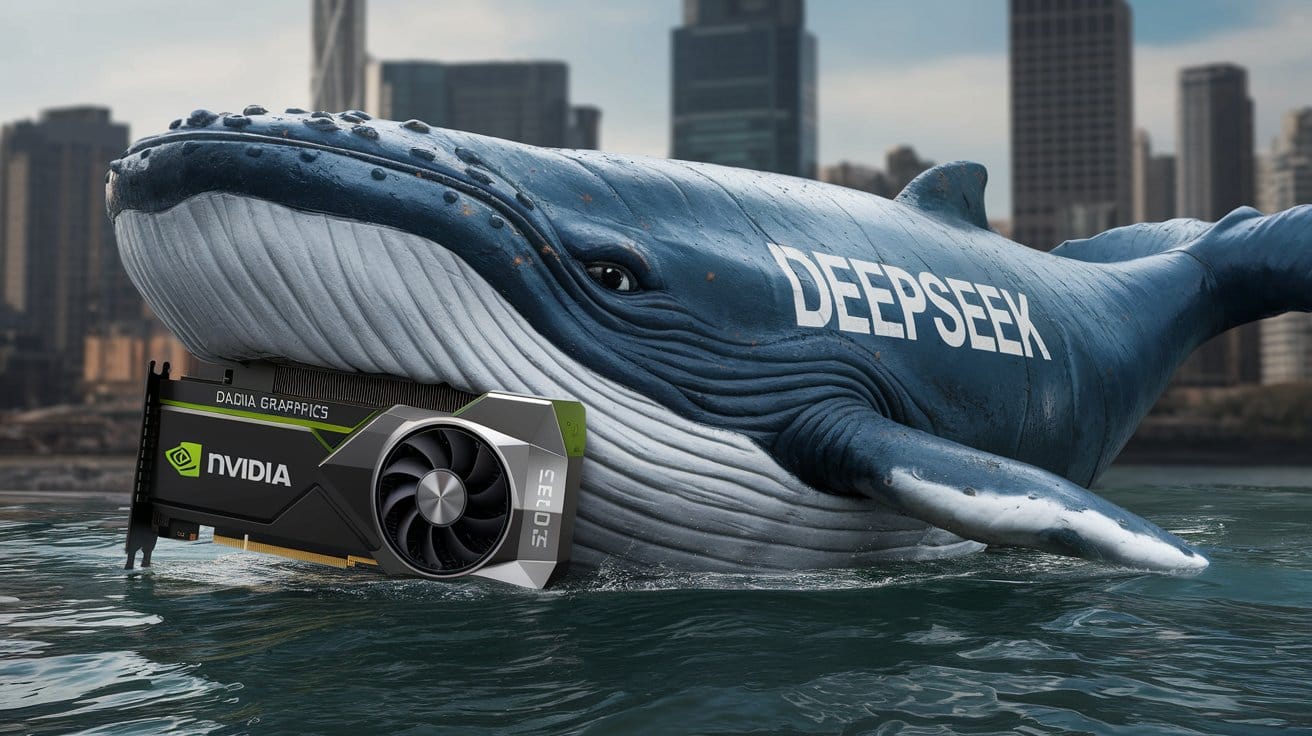
Ladies and gentlemen, gather around for the latest episode of "Tech Wars: The Rise of the AI Titans." Today’s protagonist—or antagonist, depending on which side of the stock market you’re on—is none other than China’s DeepSeek AI. This scrappy startup has managed to shake the foundations of Silicon Valley and send Nvidia, the reigning king of AI hardware, into a tailspin. If you thought AI was just about chatbots and self-driving cars, think again. DeepSeek has made it clear that the battle for AI supremacy is also a battle for cost efficiency, technological dominance, and, apparently, Wall Street’s collective sanity.
Stocks Fallen: Nvidia hit by DeepSeek
Ladies and gentlemen, gather around for the latest episode of "Tech Wars: The Rise of the AI Titans." Today’s protagonist—or antagonist, depending on which side of the stock market you’re on—is none other than China’s DeepSeek AI.
A Cinderella Story (With Chips Instead of Glass Slippers)
DeepSeek’s models are reportedly 20-40 times cheaper than equivalent models from OpenAI. Yes, you read that right. While OpenAI is out here charging premium prices, DeepSeek is essentially running a "Black Friday Sale" on AI models year-round.
Unlike most AI giants that rely on Nvidia’s high-performance chips, DeepSeek has managed to achieve impressive results using less powerful hardware. This is like winning a Formula 1 race in a Prius—unheard of but undeniably impressive.
DeepSeek’s models are open-source, which means they’re available for free. This has not only democratized access to advanced AI but also raised questions about whether the tech industry has been overspending on proprietary solutions.
DeepSeek’s R1 model has skyrocketed to the top of Apple’s App Store charts, dethroning OpenAI’s ChatGPT as the most downloaded free app. This is like a new band knocking The Beatles off the charts—an event that’s sure to ruffle some feathers.
OpenAI: A Cinderella Story (With Chips Instead of Glass Slippers)
DeepSeek’s R1 model has skyrocketed to the top of Apple’s App Store charts, dethroning OpenAI’s ChatGPT as the most downloaded free app. This is like a new band knocking The Beatles off the charts—an event that’s sure to ruffle some feathers.
Apple: A Cinderella Story (With Chips Instead of Glass Slippers)
DeepSeek’s R1 model has skyrocketed to the top of Apple’s App Store charts, dethroning OpenAI’s ChatGPT as the most downloaded free app. This is like a new band knocking The Beatles off the charts—an event that’s sure to ruffle some feathers.
Nvidia’s Nightmare: The Fallout
Now, let’s talk about Nvidia, the chip-making giant that has been the backbone of AI development for years. Nvidia’s GPUs are the gold standard for training and running large language models (LLMs). However, DeepSeek’s success has thrown a wrench into Nvidia’s well-oiled machine. Here’s how:
Nvidia’s stock plunged by as much as 14% in pre-market trading on January 27, 2025. Other tech stocks, including ASML and Broadcom, also took a hit, with the Nasdaq index dropping by nearly 4%. It’s safe to say that Wall Street is not having a good day.
Analysts are now questioning whether Nvidia’s premium chips are still worth the price. If companies like DeepSeek can achieve similar results with less powerful hardware, why pay a premium? This has led to a broader reckoning about the economics of AI.
DeepSeek’s ability to train models using less powerful chips could inspire other companies to follow suit. This would reduce demand for Nvidia’s high-end GPUs, potentially impacting the company’s revenue and market dominance .
Nvidia’s Nightmare: The Fallout
Now, let’s talk about Nvidia, the chip-making giant that has been the backbone of AI development for years. Nvidia’s GPUs are the gold standard for training and running large language models (LLMs). However, DeepSeek’s success has thrown a wrench into Nvidia’s well-oiled machine. Here’s how:
Implications for the Tech Industry
DeepSeek’s rise is not just a story about one company disrupting another; it’s a wake-up call for the entire tech industry. Here are some of the broader implications:
Shift in AI Economics: DeepSeek has proven that you don’t need to spend billions to develop cutting-edge AI. This could lead to a shift in how companies allocate resources and prioritize efficiency over brute force.
Geopolitical Ramifications: The U.S. government has been trying to maintain its lead in AI by restricting the export of advanced chips to China. However, DeepSeek’s success shows that China can innovate even with limited access to high-end hardware. This could have significant implications for global tech competition.
Open Source vs. Proprietary Models: DeepSeek’s open-source approach challenges the proprietary models of companies like OpenAI and Google. This could democratize access to AI but also raise questions about intellectual property and data security.
What’s Next for Nvidia?
So, what does the future hold for Nvidia? While the company is undoubtedly facing challenges, it’s not time to write its obituary just yet. Nvidia still has a significant advantage in high-end GPUs, which are essential for many advanced applications. However, the company will need to adapt to the changing landscape by focusing on cost efficiency and exploring new markets.
In the grand scheme of things, DeepSeek’s rise is a testament to the power of innovation and the importance of challenging the status quo. While Nvidia may be feeling the heat, this disruption could ultimately lead to a more competitive and efficient AI industry. As for DeepSeek, it has proven that sometimes, the underdog can not only compete but also redefine the game.
So, here’s to DeepSeek for shaking things up and to Nvidia for hopefully rising to the challenge. And to the rest of us, let’s grab some popcorn and enjoy the show—because the AI wars are just getting started.
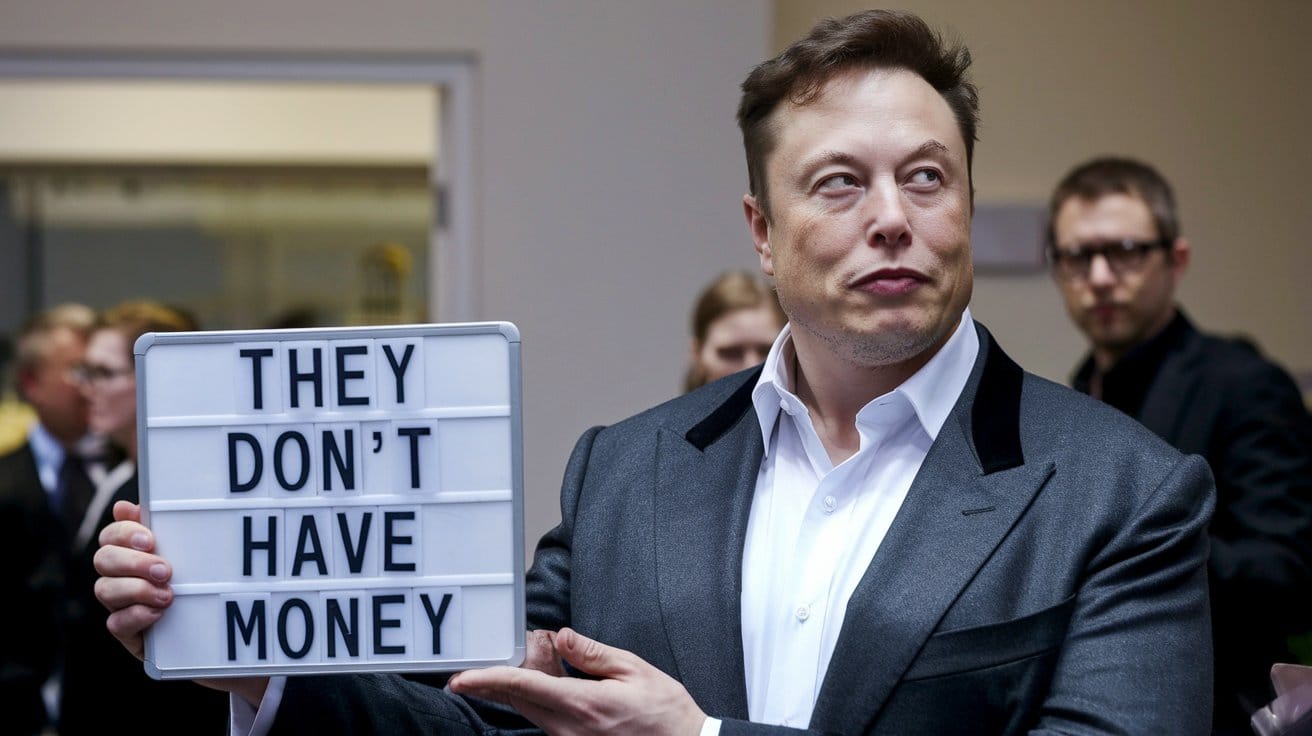
In the ever-entertaining world of tech billionaires and political drama, Elon Musk has once again taken center stage, this time to criticize President Donald Trump’s ambitious $500 billion Stargate AI project. Musk, known for his candid (and often eyebrow-raising) remarks, has cast doubt on the financial feasibility of the initiative, claiming that the backers of the project simply “don’t have the money.” Let’s dive into the details of this cosmic clash and explore why Musk is throwing shade at the Stargate project.
Elon Musk vs. Trump’s $500 Billion Stargate AI Project: A Galactic Clash of Titans
Musk, known for his candid (and often eyebrow-raising) remarks, has cast doubt on the financial feasibility of the initiative, claiming that the backers of the project simply “don’t have the money.” Let’s dive into the details of this cosmic clash and explore why Musk is throwing shade at the Stargate project.
What is the Stargate AI Project?
The Stargate AI project, announced by President Donald Trump on January 21, 2025, is a private-sector initiative aimed at bolstering the United States’ artificial intelligence (AI) infrastructure. The project is a joint venture involving tech heavyweights like OpenAI, Oracle, and SoftBank, with a promise to invest up to $500 billion over the next four years. The goal? To build state-of-the-art data centers, enhance computing capacity, and ensure the U.S. remains a global leader in AI development.
Trump, ever the showman, described Stargate as “the largest AI infrastructure project in history” and claimed it would create over 100,000 American jobs. He even encouraged people to “put that name down in your books” because it would be a game-changer.
Elon Musk, the CEO of Tesla, SpaceX, and the AI startup xAI, wasted no time in raining on Trump’s parade. Musk, who has a history of skepticism toward large, centralized AI projects, took to his social media platform, X (formerly Twitter), to express his doubts. According to Musk, the companies involved in Stargate, particularly SoftBank, lack the financial resources to back such a colossal investment. He claimed that SoftBank had “well under $10 billion secured,” far from the $500 billion target.
Musk’s skepticism didn’t stop there. He also questioned the involvement of OpenAI, a company he co-founded but later distanced himself from due to disagreements over its direction. Musk has been openly critical of OpenAI CEO Sam Altman, with whom he has a long-standing feud. In fact, Musk’s criticism of Stargate may be as much about his personal animosity toward Altman as it is about the project’s financial viability.
Elon Musk’s Criticism: A Galactic Roast
Elon Musk, the CEO of Tesla, SpaceX, and the AI startup xAI, wasted no time in raining on Trump’s parade. Musk, who has a history of skepticism toward large, centralized AI projects, took to his social media platform, X (formerly Twitter), to express his doubts.
Trump’s Response: Unbothered and Unapologetic
In true Trump fashion, the president brushed off Musk’s criticism during a press conference on January 23, 2025. When asked about Musk’s comments, Trump replied, “No, it doesn’t [bother me]. He hates one of the people in the deal,” presumably referring to Sam Altman. Trump also revealed that he had spoken with Musk about the project and seemed confident that the criticism wouldn’t derail Stargate.
Trump’s ability to remain unfazed by Musk’s remarks is impressive, considering that Musk is one of his key advisors and a significant donor to his campaign. Musk reportedly spent $270 million supporting Trump’s election, making his public disagreement with the Stargate project all the more surprising.
Elon Musk: Trump’s Response: Unbothered and Unapologetic
When asked about Musk’s comments, Trump replied, “No, it doesn’t [bother me]. He hates one of the people in the deal,” presumably referring to Sam Altman. Trump also revealed that he had spoken with Musk about the project and seemed confident that the criticism wouldn’t derail Stargate.
The Financial Reality: Does Stargate Have the Money?
Musk’s doubts about Stargate’s funding are not entirely unfounded. The project’s initial investment is expected to be $100 billion, with the remaining $400 billion to be raised over the next four years. While this sounds impressive on paper, the actual financial commitments from the involved companies remain unclear. SoftBank, Oracle, and OpenAI have yet to provide detailed breakdowns of their contributions, leading to skepticism about whether the $500 billion goal is realistic.
Adding to the uncertainty is the fact that Musk himself has a history of overpromising and underdelivering on ambitious projects. Critics have pointed out the irony of Musk questioning Stargate’s funding when some of his own ventures, like the Hyperloop and Neuralink, have faced similar scrutiny.
Elon Musk: The Financial Reality: Does Stargate Have the Money?
Adding to the uncertainty is the fact that Musk himself has a history of overpromising and underdelivering on ambitious projects. Critics have pointed out the irony of Musk questioning Stargate’s funding when some of his own ventures, like the Hyperloop and Neuralink, have faced similar scrutiny.
OpenAI: The Financial Reality: Does Stargate Have the Money?
While this sounds impressive on paper, the actual financial commitments from the involved companies remain unclear. SoftBank, Oracle, and OpenAI have yet to provide detailed breakdowns of their contributions, leading to skepticism about whether the $500 billion goal is realistic.
The Musk-Altman Feud: A Subplot Worth Watching
While the financial concerns are valid, it’s impossible to ignore the personal drama between Musk and Altman. The two tech moguls have been at odds ever since Musk left OpenAI’s board in 2018, citing disagreements over the company’s direction. Musk has accused OpenAI of straying from its original mission of creating safe and transparent AI, while Altman has defended the company’s decisions and its partnership with Microsoft.
The Stargate project has only intensified their rivalry. Altman, who joined Trump on stage to announce the initiative, has been vocal in defending the project’s financial backing. In response to Musk’s criticism, Altman posted a cryptic tweet: “Just one more mean tweet and then maybe you’ll love yourself.”
The Musk-Altman Feud: A Subplot Worth Watching
The two tech moguls have been at odds ever since Musk left OpenAI’s board in 2018, citing disagreements over the company’s direction. Musk has accused OpenAI of straying from its original mission of creating safe and transparent AI, while Altman has defended the company’s decisions and its partnership with Microsoft.
The Musk-Altman Feud: A Subplot Worth Watching
Altman, who joined Trump on stage to announce the initiative, has been vocal in defending the project’s financial backing. In response to Musk’s criticism, Altman posted a cryptic tweet: “Just one more mean tweet and then maybe you’ll love yourself.”
OpenAI: The Musk-Altman Feud: A Subplot Worth Watching
The two tech moguls have been at odds ever since Musk left OpenAI’s board in 2018, citing disagreements over the company’s direction. Musk has accused OpenAI of straying from its original mission of creating safe and transparent AI, while Altman has defended the company’s decisions and its partnership with Microsoft.
What’s at Stake?
The Stargate project is more than just a flashy announcement; it’s a strategic move to maintain U.S. dominance in AI technology amid growing competition from China. With geopolitical stakes this high, the project’s success or failure could have far-reaching implications for the global tech landscape.
However, the infighting among key players like Musk and Altman raises questions about whether the project can achieve its lofty goals. If the backers can’t present a united front, the Stargate initiative risks becoming another overhyped tech venture that fails to deliver on its promises.
A Galactic Soap Opera
The Stargate AI project has all the makings of a Hollywood blockbuster: a $500 billion budget, a star-studded cast of tech giants, and enough drama to keep us entertained for years. Whether the project will succeed or implode under the weight of its own ambition remains to be seen. One thing is certain: Elon Musk’s criticism has added a new layer of intrigue to an already fascinating story.
As we watch this saga unfold, let’s hope that the Stargate project doesn’t turn into a black hole for taxpayer dollars—or a battleground for billionaire egos. After all, the future of AI deserves better than a galactic soap opera.
The AI world has been shaken, stirred, and flipped upside down with the launch of DeepSeek's latest multimodal AI model, the Janus-Pro-7B. This 7-billion-parameter behemoth has boldly claimed to outperform
In a world where technology is supposed to bring us closer together, it seems like some tech giants have been busy playing war games instead. Microsoft,
On January 23, 2025, OpenAI unveiled "Operator," its groundbreaking AI agent designed to autonomously perform tasks on behalf of users. This release marks a
In the ever-entertaining world of tech billionaires and political drama, Elon Musk has once again taken center stage, this time to criticize President Donald Trump’s
Ladies and gentlemen, gather around the fountain of youth—or at least its digital equivalent! OpenAI, the tech giant known for its mind-blowing AI innovations, has