The Time When Anyone Can Code
Perplexity Proposes Open-Source Version of TikTok Algorithm
Read the story
Co-founder & CEO, OpenAI
Sam Altman is an entrepreneur and investor whose career links startup building with AI research and deployment. He co-founded Loopt, joined Y Combinator’s first startup batch, and later became the accelerator’s president. He helped launch OpenAI in 2015 and became its CEO in 2019. Under his leadership, the company introduced ChatGPT and subsequently adopted its Foundation and public benefit corporation structure.
Get AI Secret’s free daily briefing, including Sam Altman and the wider AI industry.
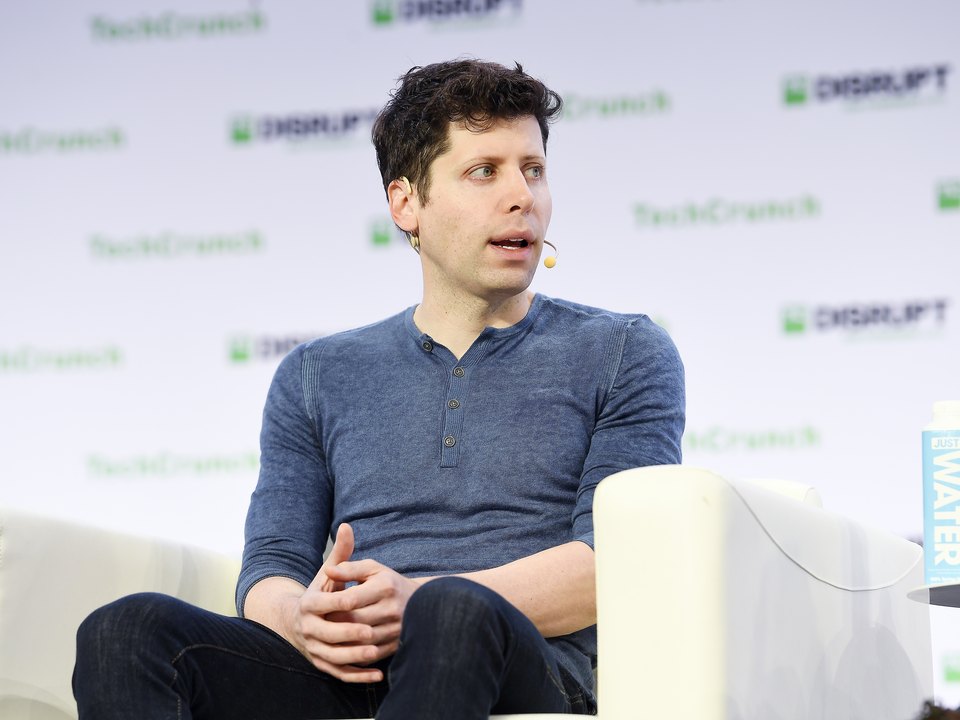
Sam Altman is an entrepreneur and investor whose career links startup building with AI research and deployment. He co-founded Loopt, joined Y Combinator’s first startup batch, and later became the accelerator’s president. He helped launch OpenAI in 2015 and became its CEO in 2019. Under his leadership, the company introduced ChatGPT and subsequently adopted its Foundation and public benefit corporation structure.
Sources checked . Selected career background and milestones.
Selected research, leadership and career milestones, newest first.
OpenAI announces its Foundation and Group PBC structure. Its current governance overview identifies Altman as CEO and a member of the Foundation board.
Source: OpenAI ↗OpenAI publishes messages announcing Altman’s return as chief executive and a new initial board following the company’s November 2023 leadership crisis.
Source: OpenAI ↗OpenAI releases ChatGPT as a research preview during Altman’s leadership. The launch introduces a conversational interface for interacting with the company’s language models.
Source: OpenAI ↗The OpenAI LP announcement identifies Altman as chief executive as the organisation creates a capped-profit entity to support its research and deployment work.
Source: OpenAI ↗OpenAI introduces itself as a nonprofit artificial intelligence research company, naming Altman and Elon Musk as co-chairs of its founding leadership team.
Source: OpenAI ↗Paul Graham announces that Altman will become Y Combinator’s president starting with the next batch, taking responsibility for leading the startup accelerator.
Source: Y Combinator ↗Y Combinator’s later biography records Green Dot’s acquisition of Loopt in 2012, after Altman built the company through its initial startup period.
Source: Y Combinator ↗Altman co-founds Loopt and participates in Y Combinator’s first summer batch. The location-based startup precedes his later accelerator leadership and AI company work.
Source: Y Combinator ↗Briefs, articles and relevant sections, newest first. Explore older coverage below.
More coverage
Artificial intelligence is evolving faster than your favorite Netflix series drops new seasons, and OpenAI’s CEO, Sam Altman, is the showrunner we didn’t know we needed. In a recent announcement, Altman spilled the digital beans about the future of OpenAI’s AI models, GPT-4.5 and GPT-5. The big idea? Simplify the user experience, unify the tech, and make ChatGPT as easy to use as ordering pizza online (minus the pineapple-on-pizza debates). Let’s dive into the juicy details of this roadmap, which promises to reshape how we interact with AI.
Artificial intelligence is evolving faster than your favorite Netflix series drops new seasons, and OpenAI’s CEO, Sam Altman, is the showrunner we didn’t know we needed. In a recent announcement, Altman spilled the digital beans about the future of OpenAI’s AI models, GPT-4.5 and GPT-5.
First things first, let’s talk about GPT-4.5, affectionately codenamed “Orion” by OpenAI. This model is set to be the last of its kind—literally. GPT-4.5 will be the final non-chain-of-thought (CoT) model, meaning it won’t have the advanced reasoning capabilities that its successor, GPT-5, will boast.
Chain-of-thought reasoning, for the uninitiated, is like having a friend who explains their thought process step-by-step instead of blurting out an answer that leaves you scratching your head. GPT-4.5, while still a powerhouse, will stick to the traditional language model framework, making it a stepping stone to the more sophisticated GPT-5.
Altman revealed that GPT-4.5 is expected to drop in the coming weeks. It’s designed to succeed GPT-4o (released in May 2024) and will be the last model that doesn’t incorporate reasoning capabilities.
Now, let’s talk about the star of the show: GPT-5. Altman described it as more than just an AI model—it’s an “AI system.” What does that mean? Essentially, GPT-5 will unify OpenAI’s GPT-series and o-series models into one cohesive system. Think of it as the Avengers assembling, but for AI.
The o3 reasoning model, which was initially teased in December 2024 and saw its mini version launched in January 2025, will be integrated directly into GPT-5. This means no more standalone o3 model—everything will be baked into GPT-5 like a perfectly layered cake.
Here’s the kicker: GPT-5 will be smarter, faster, and more efficient. It will dynamically adapt to user needs, eliminating the need to choose between different models like GPT-3.5 or GPT-4. Instead, the AI will handle everything seamlessly, making it more intuitive and user-friendly.
Altman didn’t hold back when addressing the elephant in the room: OpenAI’s product lineup has become as confusing as assembling IKEA furniture without the manual. “We hate the model picker as much as you do,” Altman confessed, adding that the goal is to return to “magic unified intelligence.”
By unifying its models, OpenAI aims to simplify interactions and reduce user frustration. No more guessing which model to use for what task—GPT-5 will handle it all. This approach not only makes AI more accessible but also aligns with OpenAI’s vision of creating a seamless and intuitive experience for users.
By unifying its models, OpenAI aims to simplify interactions and reduce user frustration. No more guessing which model to use for what task—GPT-5 will handle it all. This approach not only makes AI more accessible but also aligns with OpenAI’s vision of creating a seamless and intuitive experience for users.
OpenAI is also introducing a tiered access system for GPT-5, ensuring there’s a little something for everyone:
This tiered model ensures that casual users can still benefit from GPT-5’s capabilities, while professionals who need advanced tools can access higher levels of intelligence. It’s a win-win for everyone, except maybe your wallet if you’re eyeing that Pro subscription.
At the heart of GPT-5’s unification strategy lies the Router LLM Framework. This sophisticated system acts as the AI’s backbone, optimizing query handling and ensuring tasks are processed efficiently. It evaluates user needs dynamically, making the AI smarter and more adaptable.
This framework is a game-changer, as it eliminates the need for users to switch between models manually. Instead, GPT-5 will handle everything behind the scenes, making interactions smoother and more intuitive.
While Altman didn’t provide a specific release date for GPT-5, he hinted at a timeframe of “weeks/months.” Considering GPT-4.5 is set to launch in the next few weeks, we can expect GPT-5 to follow shortly after, likely within the first half of 2025.
The release of GPT-5 marks a significant shift in how we interact with AI. By unifying its models and simplifying the user experience, OpenAI is setting a new standard for the industry. Here’s what we can expect:
Sam Altman’s announcement about GPT-4.5 and GPT-5 is a breath of fresh air in the ever-evolving world of AI. By focusing on simplification and unification, OpenAI is not just building better models—it’s redefining how we interact with technology. Whether you’re a casual user or a professional, GPT-5 promises to deliver an experience that’s as seamless as it is powerful.
So, buckle up, folks. The future of AI is here, and it’s looking brighter (and smarter) than ever.
Perplexity Proposes Open-Source Version of TikTok Algorithm
Read the storyHow OpenAI's New AI Agent Tools Affect the World & The Future of Autonomous Trucking
This week, OpenAI announced a groundbreaking suite of tools and APIs designed to empower developers and enterprises to create reliable, efficient, and autonomous AI agents. These
AI Search Engines are Deceiving Publishers & 42% of People Say Google Search Less Useful
Discover OpenAI's former CTO's $100 million valued all-star team.
Mira Murati, the former CTO of OpenAI, has embarked on an ambitious journey to establish her own artificial intelligence (AI) startup. After leaving OpenAI in September
Ladies and gentlemen, grab your popcorn because the tech world just got a lot more exciting! British semiconductor giant Arm Holdings plc is stepping out of
OpenAI‘s New Roadmap: Sam Altman’s Vision for GPT-4.5 and GPT-5.
Artificial intelligence is evolving faster than your favorite Netflix series drops new seasons, and OpenAI’s CEO, Sam Altman, is the showrunner we didn’t know
An AI Study That Shook the World & The New Speed Demon of AI Search Models