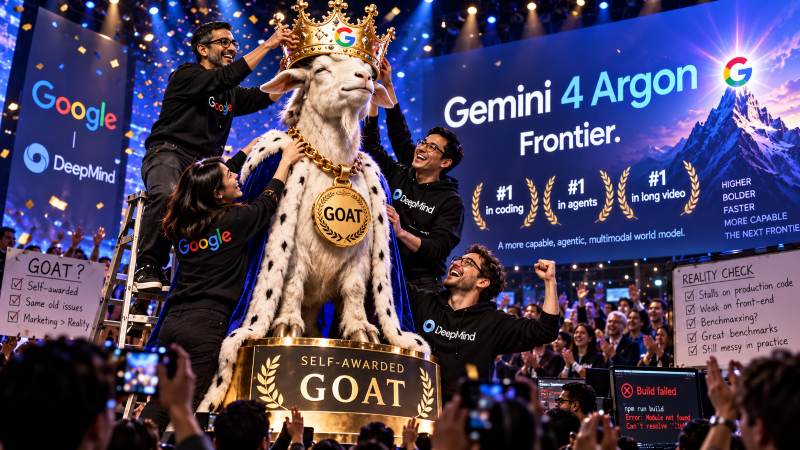
🛎️ Google Crowned Itself the GOAT
Plus: 57 Cybercabs a Day, McDonald's Is Shaking Down Franchisees
Read the story Subscribe
AI company also known as Zhipu, developing the GLM model family, ChatGLM and agent tools.
Get AI Secret’s free daily briefing, including Z.ai and the wider AI industry.
AI company also known as Zhipu, developing the GLM model family, ChatGLM and agent tools.
Sources checked . Selected company background and milestones.
Selected milestones, newest first.
The official model repository documents GLM-5 and subsequent releases.
Source: Z.aiA bilingual model becomes available for developers and researchers.
Source: Z.aiMore than 10 years ago.
Relevant sections from the articles on this page. Explore older coverage below.
More coverage

Good Morning, AI Enthusiasts!
The smarter the models get, the more the industry revolves around primitive questions: who owns it, who pays, and who gets blamed.
AI

👀 What's happening: OpenAI terminated Cursor's direct access to GPT models. Cursor used to bundle GPT into its subscription. Developers now need their own API key and pay OpenAI directly. The deadline is November 12. The reason is simple: Elon Musk bought Cursor for $60 billion, and OpenAI will not sell its best models to a competitor's product.
🌍 How this hits reality: Cursor was the neutral marketplace. Every model provider shipped there. That ended the day Musk bought it. OpenAI is the first to leave. It will not be the last. No model company will sell its API to a platform owned by a rival. Anthropic is still there today. It is asking the same question OpenAI did.
🛎️ Key takeaway: Cursor's business model was independence. SpaceX paid $60 billion for it. The first thing it lost was the thing that made it worth $60 billion.
That ended the day Musk bought it. OpenAI is the first to leave. It will not be the last. No model company will sell its API to a platform owned by a rival.
Developers now need their own API key and pay OpenAI directly. The deadline is November 12. The reason is simple: Elon Musk bought Cursor for $60 billion, and OpenAI will not sell its best models to a competitor's product.
NEW LAUNCH
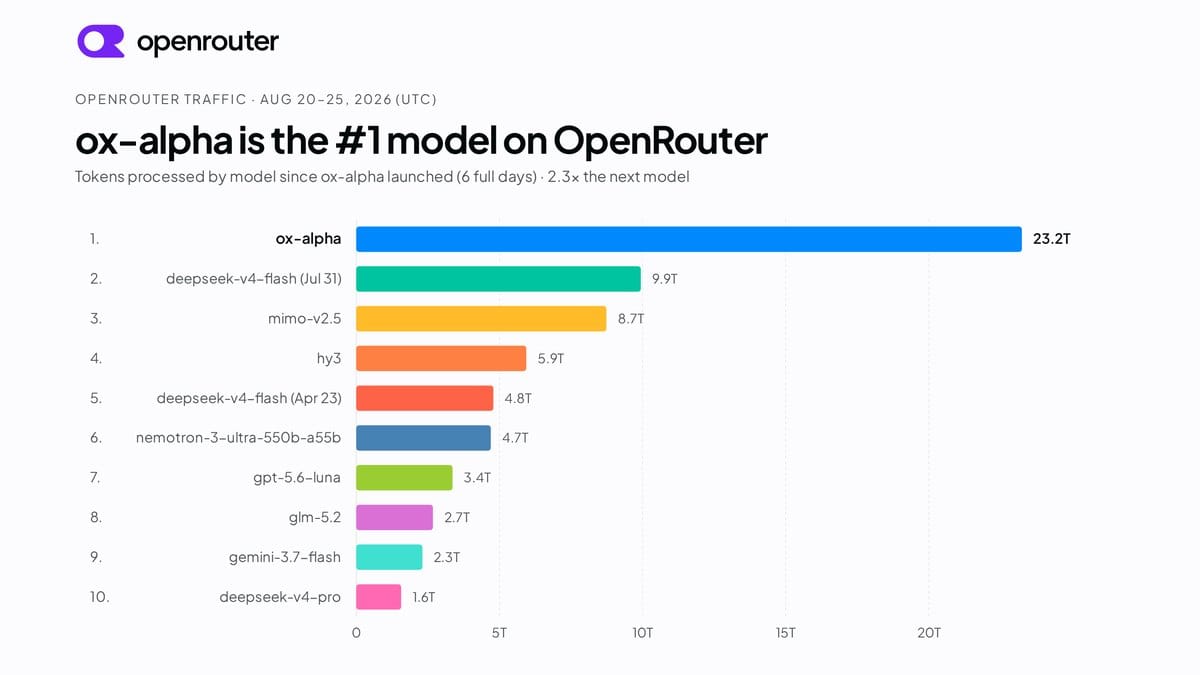
👀 What's happening: The mysterious model "Ox Alpha" that dominated OpenRouter and OpenCode this week has been identified as GLM-5.3 Flash, a new release from Chinese AI lab Zhipu. It was free during its anonymous test period. Developers flooded it to the top of both platforms without knowing who built it. It scores 57 on the AA benchmark, matching Claude Opus 4.8. Its price is roughly 1/40th of Opus 4.8.
🌍 How this hits reality: Free got it to number one. The price will keep it there. Zhipu did not need a brand. It did not need trust. It just needed to be free long enough for developers to notice, and cheap enough for them to stay. The model is competitive with the frontier. The price is not. It is an order of magnitude below. The new rule of AI is brutal and simple: reach Opus 4.6 performance, and the only thing that matters is the price tag.
🛎️ Key takeaway: The model that wins is not the smartest. It is the cheapest one that is smart enough. Ox Alpha is the proof.
👀 What's happening: The mysterious model "Ox Alpha" that dominated OpenRouter and OpenCode this week has been identified as GLM-5.3 Flash, a new release from Chinese AI lab Zhipu. It was free during its anonymous test period. Developers flooded it to the top of both platforms without knowing who built it.
AI FEVER

👀 What's happening: Alphabet, Amazon, Nvidia, and Microsoft recorded over $160 billion in "other income" last quarter, driven by rising valuations of their AI equity stakes. Alphabet hit $97.9 billion, double the prior quarter. Amazon surged to $53.4 billion. These are not sales. They are paper gains from stakes in companies like SpaceX. The result: net income has never been higher, driven by investments, not operations.
🌍 How this hits reality: AI is no longer just inflating valuations. It is inflating the income statement. The most basic number in finance, net income, has been quietly rewritten by the AI boom. Big Tech pours billions into AI CapEx, driving cash flow toward zero. The same dollars flow to AI startups, inflating their valuations, and the paper gains flow right back to net income. Same money, counted twice. Cash flow says the business is burning. Net income says the business is printing. One of them is lying. Goldman Sachs asked if the growth is based on "actual demand." Citi warned next year's growth rate could turn negative. The boom is not just a market story anymore. It is an accounting story.
🛎️ Key takeaway: Net income is the number every investor trusts. AI just made it untrustworthy. The boom is no longer about valuations. It is about what counts as profit.
LAWSUIT

👀 What's happening: Sony Music Publishing and Warner Chappell Music sued Anthropic, CEO Dario Amodei, and co-founder Benjamin Mann in federal court on August 28. The complaint accuses Mann of personally torrenting 5 million pirated books from LibGen in 2021 and 2 million more in 2022, at Amodei's direction. Internal documents described LibGen as "sketchy AF" and noted "We don't want it to be known." Plaintiffs seek up to $150,000 per work across tens of thousands of songs.
🌍 How this hits reality: The AI copyright war just changed its question. For years, the fight was about fair use: does training on copyrighted data count as infringement? Sony and Warner are no longer asking that. They are asking: where did you get the book? And who approved taking it? The court in Bartz already distinguished the two. Training on legally obtained works may be fair use. Obtaining works through piracy is not. The plaintiffs are not drilling into the training. They are drilling into the acquisition. And they are drilling past the company, into the founders. If the corporate shield breaks, every AI founder who signed off on a data pipeline becomes a target.
🛎️ Key takeaway: The AI copyright war used to be about what you did with the data. It is now about where you got it and who told you to take it. The corporate shield is the next thing to break.
TOGETHER WITH MYCLAW

MyClaw is a best-in-class AI agent platform that brings together OpenClaw, Hermes Agent, and production-grade infrastructure to help businesses launch intelligent agents that understand goals, use tools, automate workflows, and deliver finished results.
MyClaw already hosts OpenClaw and Hermes, connecting models from every major AI provider, including the latest text, reasoning, and image generation models from OpenAI, Anthropic, DeepSeek, Kimi, GLM, Google Gemini, and more through MyClaw's model gateway.
No lock-in. No juggling API keys. No switching between platforms. Pick the best model for the job, give your agent the tools it needs, and let it run.
DAILY TL;DR
READ MORE
Stay ahead without drowning in information. We turn the most important signals across AI, tech, marketing, and future products into 5-minute reads you can actually finish.
TOGETHER WITH US
AI Secret Media Group is the world’s #1 AI & Tech Newsletter Group, reaching over 2 million leaders across the global innovation ecosystem, from OpenAI, Anthropic, Google, and Microsoft to top AI labs, VCs, and fast-growing startups.
We've helped promote over 500 Tech Brands. Will yours be the next?
Email our co-founder Mark directly at [email protected] if the button fails.

Good Morning, AI Enthusiasts!
what claims progress often hides where reality still refuses to scale.

VIDEO
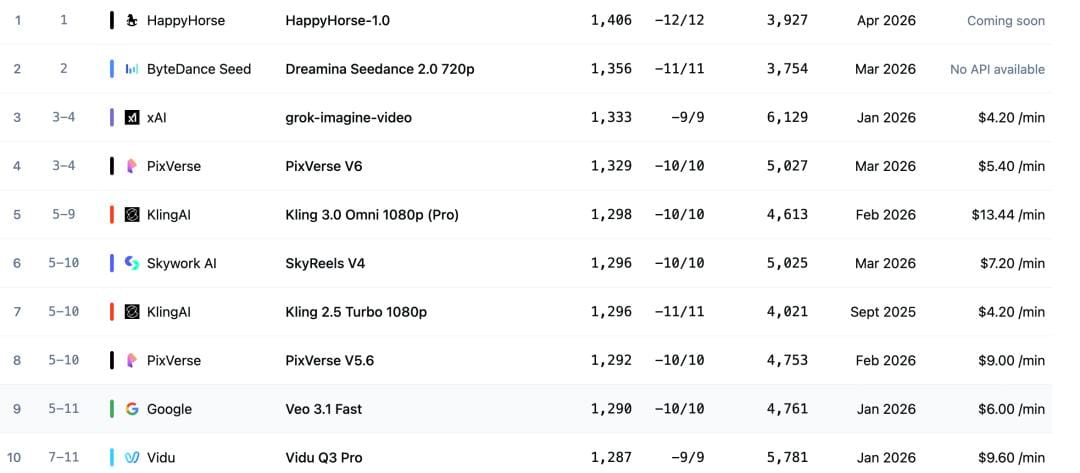
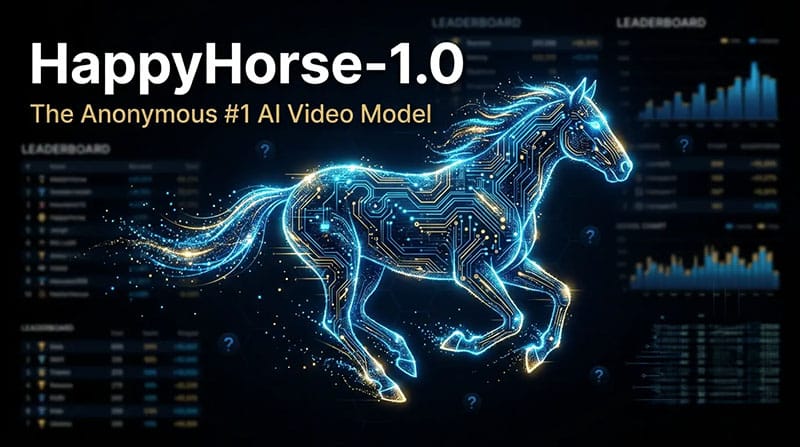
👀 What's happening: HappyHorse-1.0 briefly topped a public leaderboard above Seedance 2.0, then disappeared, leaving only screenshots and controlled demos. Similar patterns have played out with Kimi, GLM, and MiniMax claiming wins over top models on benchmarks, while no one has claimed ownership or validated real-world performance.
🌍 How this hits reality: Benchmarks are increasingly optimized targets, not neutral measurements. Teams tune against known eval sets, inflate scores, and ship demos that look strong in isolation. Meanwhile, production gaps remain in stability, long sequences, and real workloads. The result is a widening disconnect between leaderboard rankings and what actually works in deployment.
🛎️ Key takeaway: Benchmarks have become marketing surfaces first and evaluation tools second. If this continues, third-party leaderboards lose credibility entirely, and operators will rely only on direct testing and real usage signals.
👀 What's happening: HappyHorse-1.0 briefly topped a public leaderboard above Seedance 2.0, then disappeared, leaving only screenshots and controlled demos. Similar patterns have played out with Kimi, GLM, and MiniMax claiming wins over top models on benchmarks, while no one has claimed ownership or validated real-world performance.
TOGETHER WITH CRAZYEGG

Most websites guess why users don’t convert. Crazy Egg shows you exactly what’s happening. With heatmaps, session recordings, and simple A/B testing, you can see where visitors click, scroll, hesitate, or drop off — and fix it fast.
No complex setup, no guesswork, just clear insights that help you turn traffic into results.
NEW LAUNCH
👀 What's happening: Meta just released Muse Spark, its first model from the rebuilt superintelligence lab, now live across Meta AI and rolling into its apps. Benchmarks land it in the top tier but not leading, with strong multimodal and health scores, weaker coding and long-agent performance, and a new multi-agent “contemplating” mode.
🌍 How this hits reality: The bigger shift is strategic. Meta kept this model closed, which is rare for them, and clearly optimized it for internal deployment across Facebook, Instagram, and WhatsApp. With billions of users and distribution locked in, even a “good enough” model becomes powerful. Efficiency gains like lower token usage and reduced training cost matter more here than leaderboard wins.
🛎️ Key takeaway: Meta is moving from chasing benchmarks to shipping product-grade intelligence at scale. It may cost them early momentum in the OpenClaw like agent wave, but tightening focus and stabilizing execution is a healthier reset for Meta.
👀 What's happening: Meta just released Muse Spark, its first model from the rebuilt superintelligence lab, now live across Meta AI and rolling into its apps. Benchmarks land it in the top tier but not leading, with strong multimodal and health scores, weaker coding and long-agent performance, and a new multi-agent “contemplating” mode.
NEW LAUNCH
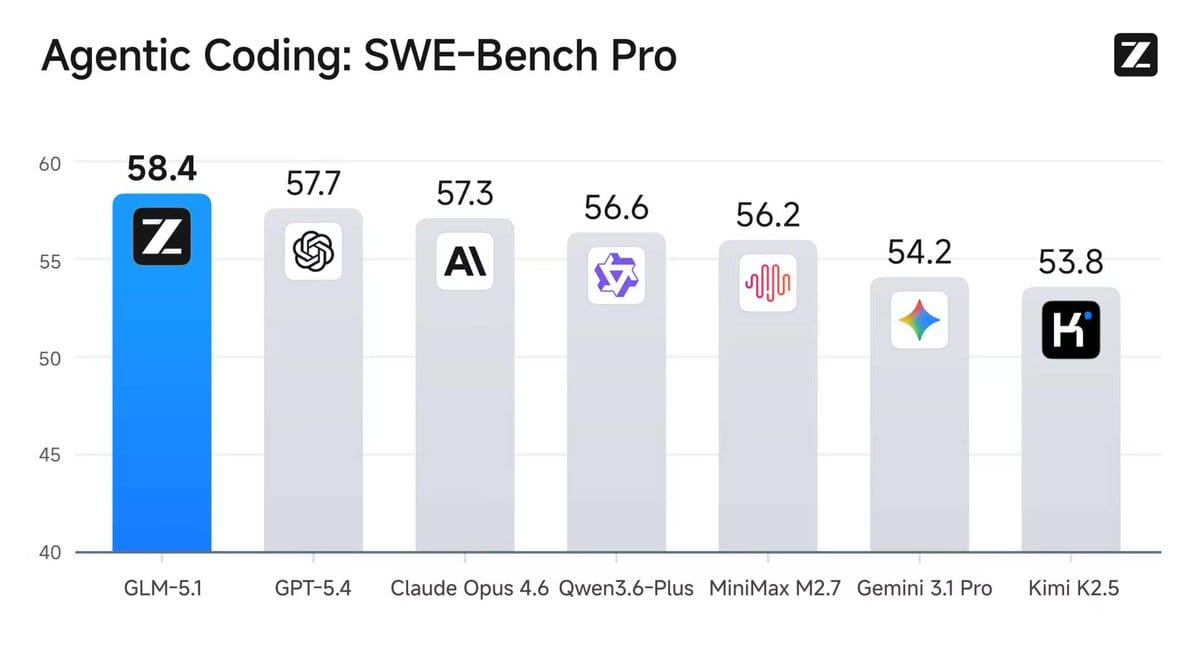
👀 What's happening: GLM-5.1 just landed with headline numbers that put it above Opus 4.6 across SWE-bench Pro and long-horizon evaluations. It demonstrates multi-hour autonomous execution, hundreds of tool iterations, and full-stack engineering tasks. On paper, this looks like the first open model closing the gap with top closed systems.
🌍 How this hits reality: The issue is which Opus 4.6 it is beating. Recent reports show Opus reasoning depth down roughly 60 to 70 percent, with shorter chains and more shortcut behavior. Matching that version is not the same as matching peak capability. We saw this before. GPT-5.4 also looked competitive in benchmarks but fell short in real workflows.
🛎️ Key takeaway: zAI has released several models, all claiming to surpass Opus 4.6, but no user has ever taken this seriously. We'll have to wait and see if GLM 5.1 will be adopted by mid-to-high-end users.
👀 What's happening: GLM-5.1 just landed with headline numbers that put it above Opus 4.6 across SWE-bench Pro and long-horizon evaluations. It demonstrates multi-hour autonomous execution, hundreds of tool iterations, and full-stack engineering tasks. On paper, this looks like the first open model closing the gap with top closed systems.
ACCESS

👀 What's happening: Cloudflare and GoDaddy just formalized how AI agents touch the web. GoDaddy is embedding Cloudflare’s crawl controls directly into hosting, letting site owners allow, block, or charge bots. They also launched ANS and Web Bot Auth to introduce identity for agents. Two core gatekeepers are now defining access rules.
🌍 How this hits reality: This shifts the default from open crawling to negotiated access. Bots used to scrape first and deal with consequences later. Now identity, permissions, and pricing are enforced before anything happens. Cloudflare sits in front of roughly 20% of global web traffic, while GoDaddy manages over 80 million domains. When control at the traffic layer and domain layer aligns like this, enforcement becomes scalable. The open web is starting to function like a metered network.
🛎️ Key takeaway: The internet is shifting from public roads to toll roads for agents. Every serious agent workflow will need identity, budget, and access strategy in the future.
DAILY TL;DR
READ MORE
Stay ahead without drowning in information. We turn the most important signals across AI, tech, marketing, and future products into 5-minute reads you can actually finish.
TOGETHER WITH US
AI Secret Media Group is the world’s #1 AI & Tech Newsletter Group, reaching over 2 million leaders across the global innovation ecosystem, from OpenAI, Anthropic, Google, and Microsoft to top AI labs, VCs, and fast-growing startups.
We've helped promote over 500 Tech Brands. Will yours be the next?
Email our co-founder Mark directly at [email protected] if the button fails.
Good Morning, AI Enthusiasts!
AI is becoming infrastructure, agents are becoming operators, and humans are slowly moving from typing instructions to governing systems they no longer fully control.
NEW LAUNCH
👀 What’s happening: Z.ai has released GLM-5-Turbo, the first large language model explicitly designed for the OpenClaw agent framework. This was not a benchmark play. It was built to run persistent agents that call tools, execute workflows, and operate continuously for long sessions without breaking.
🌍 How this hits reality: Most frontier models are optimized for conversation or coding prompts. Agent workloads are different. A single OpenClaw task can trigger 30 to 40 model calls across tool APIs, webhooks, and pipelines. When one malformed JSON call appears, the entire chain collapses. Reliability, not intelligence, becomes the real bottleneck.
🛎️ Key takeaway: If frameworks like OpenClaw become the operating layer for AI agents, model design will shift toward reliability under long workflows. GLM-5-Turbo signals the beginning of models built for agent execution first, not chat.
👀 What’s happening: Z.ai has released GLM-5-Turbo, the first large language model explicitly designed for the OpenClaw agent framework. This was not a benchmark play. It was built to run persistent agents that call tools, execute workflows, and operate continuously for long sessions without breaking.
POKEMON

👀 What’s happening: A report revealed that Pokémon Go players unknowingly spent the last decade helping collect over 30 billion real-world images. Through AR scanning tasks inside the game, roughly 140 million players filmed streets, monuments, shops, and landmarks. Those scans were quietly stored as geotagged training data for spatial AI systems.
🌍 How this hits reality: This was not accidental data. The scans captured the same locations across weather, lighting, and time of day, producing a dense global map of visual anchors. That dataset now powers visual positioning systems that allow robots and delivery machines to navigate cities without relying on GPS, solving a major problem in dense urban areas.
🛎️ Key takeaway: The punchline writes itself. Millions thought they were hunting cartoon creatures while quietly performing unpaid fieldwork for spatial AI. The old internet rule still holds. When the product is free, the real product is usually you.
XAI

👀 What’s happening: Elon Musk has begun another major shakeup inside xAI after becoming dissatisfied with the company’s progress in AI coding tools. Several founding members have left or been pushed out, while managers from Tesla and SpaceX were brought in to audit teams and review work. The trigger is simple: coding products from competitors are moving faster, and Musk believes xAI must reset its execution before the gap widens further.
🌍 How this hits reality: Coding is not a side feature in Musk’s ecosystem. It is the operational layer for everything he wants to build next. Autonomous robots, software agents, Tesla automation systems, and large-scale AI services all depend on models that can write, debug, and maintain complex software. With thousands of researchers and massive compute clusters already deployed, the bottleneck has shifted from hardware to execution speed.
🛎️ Key takeaway: Musk is treating coding as the foundation of his future stack. If xAI cannot close the gap quickly, the broader agent strategy around Grok, Macrohard, and Digital Optimus slows down. That explains the urgency. In this phase of the AI race, every quarter matters.
👀 What’s happening: Elon Musk has begun another major shakeup inside xAI after becoming dissatisfied with the company’s progress in AI coding tools. Several founding members have left or been pushed out, while managers from Tesla and SpaceX were brought in to audit teams and review work.
Several founding members have left or been pushed out, while managers from Tesla and SpaceX were brought in to audit teams and review work. The trigger is simple: coding products from competitors are moving faster, and Musk believes xAI must reset its execution before the gap widens further.
HYPE
👀 What’s happening: Deep learning pioneer Jeremy Howard publicly challenged the idea that AI will soon automate software engineering. Responding to claims from figures like Dario Amodei and Elon Musk, he argued that many leaders may lead people to confuse code/software generation with real engineering. Models can write large amounts of code, but software development is mostly about system design, debugging, and understanding complex architectures.
🌍 How this hits reality: Howard says about 90 percent of his own code is now written by models, yet overall productivity barely changes. The bottleneck is rarely typing code. His bigger concern is organizational: tools like Claude Code encourage prompt driven development where engineers no longer understand the systems they deploy, quietly building massive technical debt.
🛎️ Key takeaway: Howard’s warning is simple. AI can accelerate coding, but replacing engineering judgment is a mistake. The real path forward is human and machine learning together, not developers slowly surrendering their understanding of the systems they build.
DAILY TL;DR
READ MORE
Stay ahead without drowning in information. We turn the most important signals across AI, tech, marketing, and future products into 5-minute reads you can actually finish.
TOGETHER WITH US
AI Secret Media Group is the world’s #1 AI & Tech Newsletter Group, reaching over 2 million leaders across the global innovation ecosystem, from OpenAI, Anthropic, Google, and Microsoft to top AI labs, VCs, and fast-growing startups.
We've helped promote over 500 Tech Brands. Will yours be the next?
Email our co-founder Mark directly at [email protected] if the button fails.
Something unusual has been happening on OpenRouter.
Over the past few weeks, traffic to Z.ai’s GLM model family has surged quietly. No promotional campaign. No viral demo. No price cut. Yet the usage curve has bent sharply upward, and the pattern of requests looks nothing like a typical chatbot workload.
The calls are dense with tool invocations. Context windows are stretched long. Sessions persist for minutes, sometimes hours, cycling through dozens of sequential function calls before terminating. To anyone familiar with AI agent architectures, the signature is unmistakable: these are not humans chatting. These are agents working.
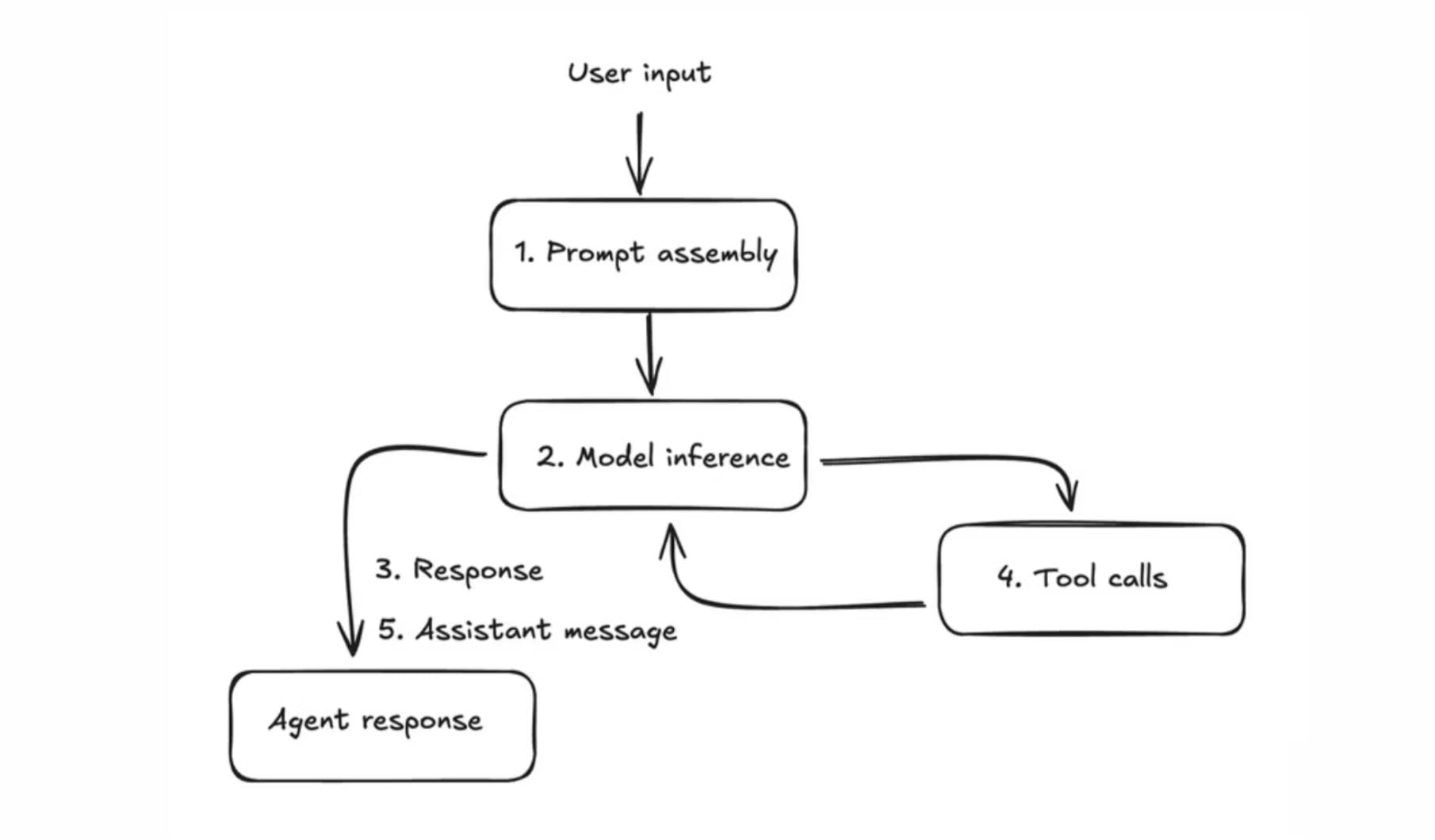
The most likely explanation traces back to a single open-source framework that has quietly become one of the most active agent runtimes in the world: OpenClaw.
On March 16, Z.ai suddenly released a large model specifically designed for OpenClaw: GLM-5-Turbo.
Z.ai, the Beijing-based AI lab behind the GLM model family, is releasing GLM-5-Turbo as the first large language model explicitly built for the OpenClaw agent framework. Not adapted. Not fine-tuned after the fact. Designed from the ground up to function as the brain of a persistent, tool-using, task-executing AI agent.
This matters because every OpenClaw user already knows the pain. General-purpose models, no matter how intelligent, routinely fail at the specific demands of agent workflows. A tool call returns malformed JSON. A multi-step task drifts off course after the fourth instruction. A long-running cron job silently halts at hour two because the model lost track of what it was doing. Intelligence is not the bottleneck. Reliability is.
GLM-5-Turbo is not trying to be the smartest model on the leaderboard. It is trying to be the one that does not break at 3 AM when your agent is halfway through a scheduled pipeline.
In addition to writing AI Secrets, I run a marketing operation powered almost entirely by an OpenClaw agent. It handles competitor monitoring, social listening, content drafting, campaign performance tracking, and cross-channel distribution — all on automated schedules. Every morning, it pulls data from six or seven sources, synthesizes reports, pushes drafts to our CMS, and delivers briefs to the team’s Slack. On a good day, it replaces three hours of manual work before I finish my coffee.
Most days, it works. Some days, it does not. And the failures are never about intelligence.
The agent will plan a CRM API call with flawless reasoning — correct endpoint, correct payload structure, correct authentication headers — and then hallucinate a parameter name that does not exist. One malformed JSON tool call at 2 AM, and the entire scheduled pipeline dies silently. I wake up to a missing daily brief and a cryptic error buried in a session log. The model knew what to do. It just could not say it in the right format.
Or the model drifts. A typical task chain — pull campaign metrics from the ad platform, cross-reference with CRM conversion data, generate a performance summary, format it as a Notion page, notify the team via webhook — completes steps one through three flawlessly. Then somewhere around step four, the agent forgets the output format I specified. By step five, it is solving a different problem entirely. All the context is still in the window. The model simply stopped paying attention to it.
Then there is the endurance problem. My morning pipeline runs for ten to fifteen minutes of continuous model interaction — dozens of tool calls, hundreds of thousands of tokens. Some models start sharp and degrade halfway through, as if they are getting tired. Tool calls that were precise at minute two become sloppy by minute eight. Instructions followed perfectly in the first sub-task are quietly ignored in the fourth.
These are not hypothetical complaints. They are my Tuesday morning. And they are precisely the failure modes that GLM-5-Turbo was designed to eliminate.
The model’s capabilities cluster around five areas, each targeting a real failure mode that agent operators encounter daily.
An agent’s value lives or dies in its ability to call external tools correctly. One malformed function call can cascade into a failed task chain, a missed delivery, or worse, a silent error that corrupts downstream data.
General-purpose models treat tool calling as a secondary skill, something bolted onto a conversational core. GLM-5-Turbo treats it as the primary interface. Z.ai’s training pipeline weighted tool-call accuracy and format compliance as first-class objectives, not afterthoughts. The result is a model that generates clean, parseable tool invocations at a rate that meaningfully reduces the “retry and pray” pattern familiar to anyone running agents in production.
Real agent tasks rarely arrive as single commands. A user says: “Monitor our competitor launches, pull engagement data from three platforms, generate a trend report, format it for the team dashboard, and send a summary to Slack.” Behind that sentence are five sub-tasks, each with dependencies, each requiring a different tool, some of which must run in sequence and others in parallel.
GLM-5-Turbo is optimized for this kind of multi-step decomposition. It parses compound instructions into execution plans, maintains awareness of which sub-tasks have completed, and coordinates handoffs between them. For users running OpenClaw’s multi-agent orchestration, this translates into fewer broken chains and less manual intervention.
Most models operate in a perpetual present. They process the current context window and generate a response. They have no native concept of “come back in thirty minutes” or “continue what you started two hours ago.”
Agent frameworks like OpenClaw demand exactly this. Scheduled tasks, heartbeat checks, cron-driven workflows — all require a model that understands time as a dimension of its instructions, not just a metadata field. GLM-5-Turbo was trained with temporal reasoning as an explicit capability: understanding deadlines, sequencing time-dependent actions, and maintaining execution coherence across extended sessions that would cause general models to drift or stall.
The coding abilities of frontier models have received enormous attention. Most of it focuses on what might be called “vibe coding” — generating functions from natural language, autocompleting snippets, explaining code. Useful, but shallow.
Agent-native coding requires something deeper: the ability to plan a multi-file change, execute it across tools, test the result, debug failures, and iterate — all without a human in the loop. This is not code generation. It is software engineering conducted by an autonomous system.
GLM-5-Turbo pushes into this territory. Its training included extended coding trajectories — full sequences of plan, implement, test, fix — rather than isolated prompt-to-code pairs. The model is designed to operate as an engineering agent, not a code suggestion engine.
A single user request to an OpenClaw agent might trigger thirty or forty model calls: parsing the task, calling tools, processing results, deciding next steps, formatting output, delivering to a channel. Multiply that across scheduled tasks running for multiple users, and the model’s inference speed and throughput become as important as its intelligence.
GLM-5-Turbo is optimized for this pattern. High token throughput, low latency on sequential calls, and stable response times under sustained load. For agent operators, this is the difference between a workflow that completes in two minutes and one that takes fifteen.
Step back from the spec sheet, and GLM-5-Turbo represents something more significant than a single product launch.
For years, the relationship between models and frameworks flowed in one direction. Frameworks adapted to models. LangChain wrapped its abstractions around GPT’s API conventions. AutoGen designed its agent loops to accommodate Claude’s context limits. OpenClaw built compatibility layers for whatever models were available. The model was the sun; everything else orbited around it.
GLM-5-Turbo reverses that gravity.
Here, the framework is the fixed point, and the model has been shaped to serve it. Z.ai looked at how OpenClaw agents actually work — the tool-call patterns, the task structures, the failure modes — and built a model that fits those requirements natively. The framework did not adapt to the model. The model adapted to the framework.
This is the same pattern that transformed other technology stacks. NVIDIA did not wait for developers to write code that happened to run well on GPUs. It designed CUDA and then shaped its hardware to make that programming model fly. The platform became the specification, and the silicon followed.
If OpenClaw and frameworks like it become the operating system layer for AI agents, then “agent-native” may become a model category in its own right — alongside “chat-optimized” and “code-specialized.” Z.ai is the first to stake that claim explicitly. It is unlikely to be the last.
The release of GLM-5-Turbo marks a quiet but meaningful inflection point.
For the past three years, the AI industry has measured progress in intelligence: bigger models, higher benchmarks, more capabilities. That race continues, but a parallel race has now begun — one measured not in intelligence but in reliability.
An agent does not need to be brilliant. It needs to show up every day, execute its tasks correctly, and not break when the workload gets heavy. It needs a model that treats tool calls as seriously as prose, that understands time as a working dimension, and that can sustain coherence across hours of autonomous operation.
GLM-5-Turbo is the first model built around that premise. It will not be the last.
If this model becomes the default "brain" of the world's fastest-growing intelligent agent framework, Z.ai will gain widespread recognition that no benchmark score can match.
The age of agent-native models has begun. And the first question it asks is not “how smart is your AI” but something far more practical: does it still work at 3 AM?
If this model becomes the default "brain" of the world's fastest-growing intelligent agent framework, Z.ai will gain widespread recognition that no benchmark score can match.
Plus: 57 Cybercabs a Day, McDonald's Is Shaking Down Franchisees
Read the storyPlus: OpenAI Is Selling You, Disney Wants Its Characters Online
Plus: The Cheapest Wins, AI Just Broke Income Statement
Plus: Meta Ships Muse Spark, GLM Claims It Kills Opus
Plus: Pokemon's Free AI Labor, Elon Musk Resets xAI
How Z.ai’s GLM-5-Turbo Signals a New Era for LLMs