
Company — Reporting on Google, its technology, products and business. Aliases: Google; Alphabet; Gemini; DeepMind; Google Brain.
Get AI Secret’s free daily briefing, including Google and the wider AI industry.

At a glance
Google is part of Alphabet. This topic follows its AI research, Gemini models, Google DeepMind, cloud infrastructure and consumer products.
- Focus
- Gemini; Google DeepMind; Google Cloud
- Reference
Sources checked . Selected company background and milestones.
Company milestones
Selected milestones, newest first. Earlier history is available below.
Forms Google DeepMind
Google brings the Brain team and DeepMind together as Google DeepMind.
Source: Google
Show earlier historyHide earlier history · 1 milestones
More than 10 years ago.
The latest on Google
Newest firstRelated reporting
Relevant sections from the articles on this page. Explore older coverage below.
More coverage

Good Morning, AI Enthusiasts!
AI is no longer just the operating system, it’s becoming the marketplace.

NEW LAUNCH
OpenAI Turns ChatGPT Into the Next App Store
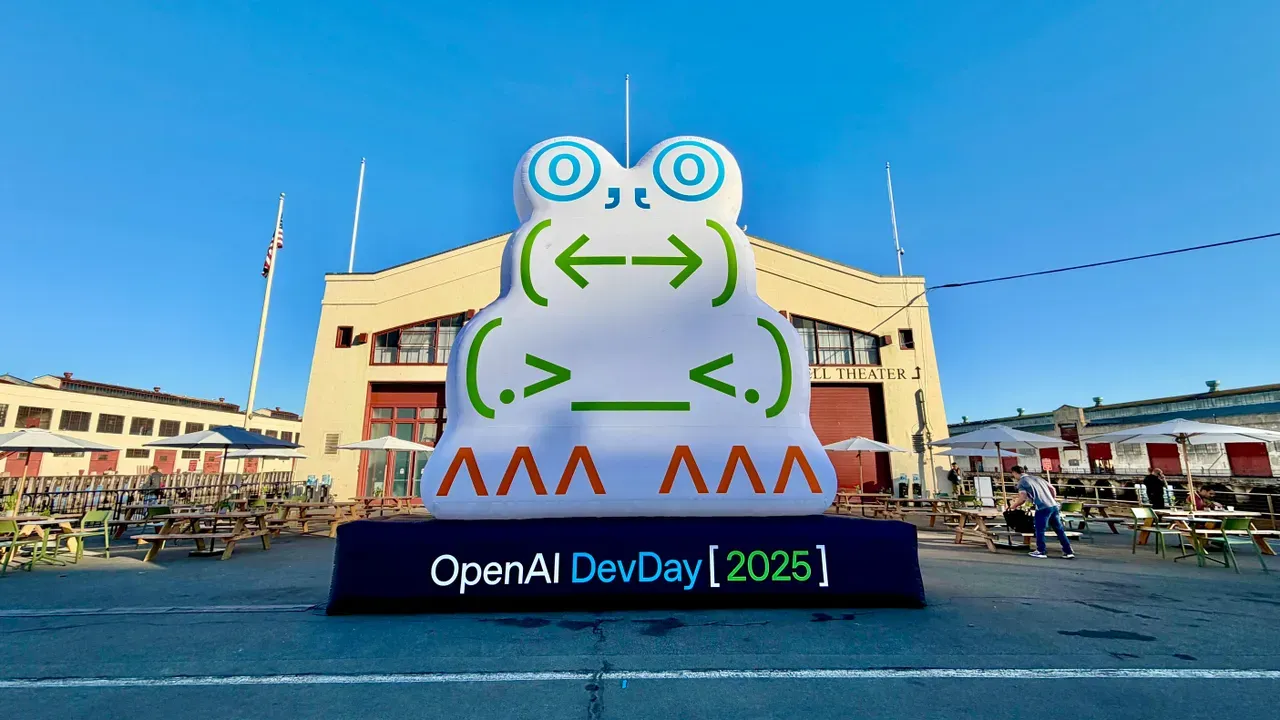
📌 What’s happening: At DevDay, OpenAI introduced its own version of an app store, but this one does not rely on icons or downloads. Developers can now build and embed apps directly inside ChatGPT using a new SDK, while users can activate them through plain conversation, for example by asking Spotify to make a playlist or asking Zillow to find apartments. Early partners include Canva, Figma, Coursera, Expedia, and Spotify, with commerce and monetization tools expected later this year. With 800 million people using ChatGPT every week, OpenAI has instantly created one of the largest distribution networks in AI history.
🧠 How this hits reality: This move changes how people discover and use software. Instead of opening apps, users simply talk to them, turning the interface into a single conversational layer. For developers, it removes dependence on Apple and Google’s ecosystems, giving them direct access to users and new payment channels within ChatGPT. For the tech giants, it is a serious threat, since ChatGPT is becoming the new home screen and the real operating system is now built from language itself.
🛎️ Key takeaway: OpenAI did not just launch an app store. It redefined what an app means in the age of conversation.
OpenAI Turns ChatGPT Into the Next App Store
For developers, it removes dependence on Apple and Google’s ecosystems, giving them direct access to users and new payment channels within ChatGPT. For the tech giants, it is a serious threat, since ChatGPT is becoming the new home screen and the real operating system is now built from language itself.
Google: OpenAI Turns ChatGPT Into the Next App Store
For developers, it removes dependence on Apple and Google’s ecosystems, giving them direct access to users and new payment channels within ChatGPT. For the tech giants, it is a serious threat, since ChatGPT is becoming the new home screen and the real operating system is now built from language itself.
TOGETHER WITH CLOUDTALK
The Future of Customer Communication
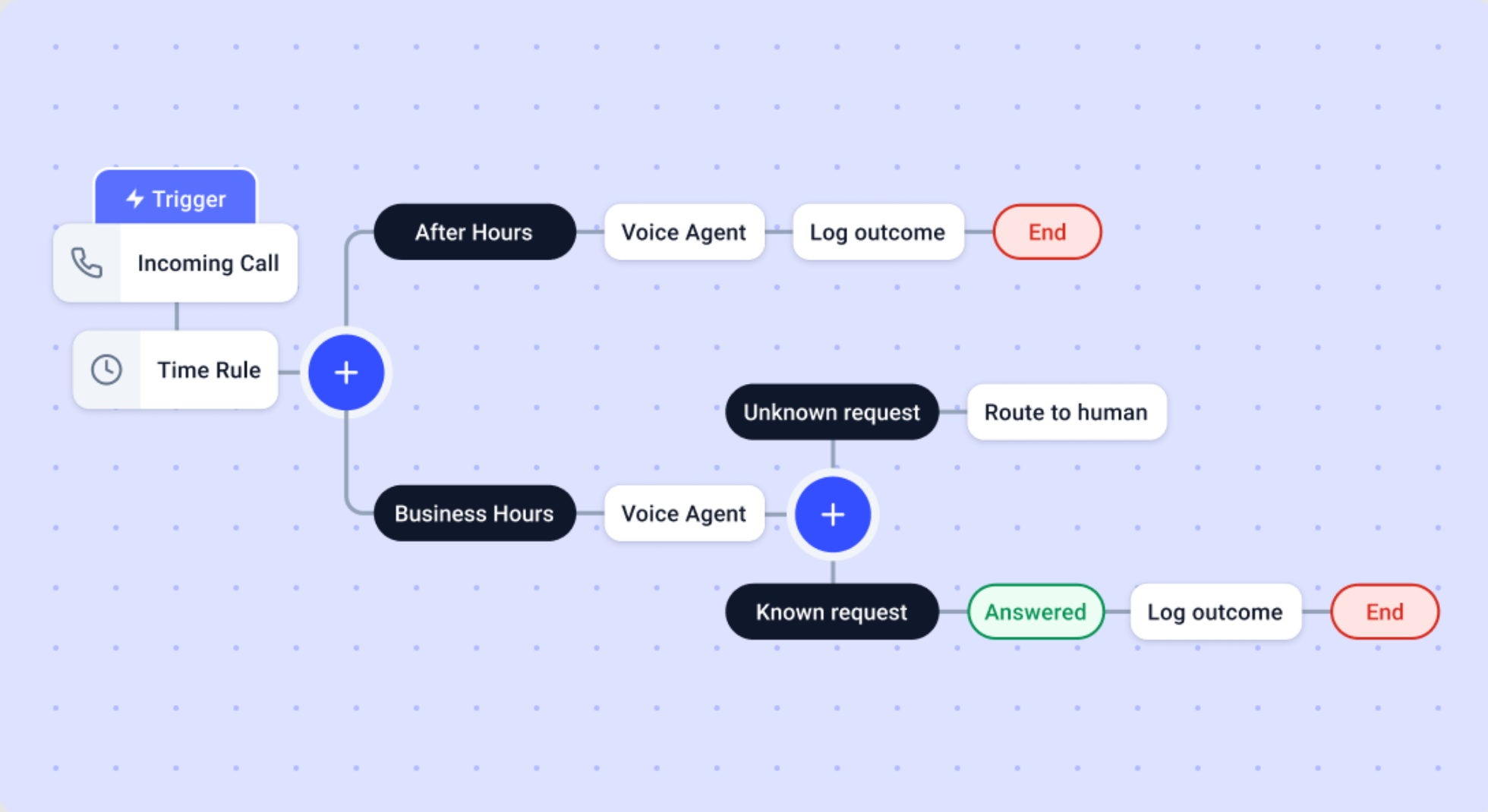
CloudTalk isn’t just another cloud call center—it’s where AI voice agents take the lead in transforming how businesses talk to customers. The AI voice agents handle repetitive inquiries, route calls intelligently, and provide instant answers—reducing wait times and boosting customer satisfaction.
For AI-driven companies, CloudTalk’s AI voice agents act as a growth multiplier:
- Automate first-line support and free up human agents.
- Personalize conversations with data-driven intelligence.
- Turn every call into structured insights for product and user research.
👉 In short: CloudTalk = global telephony + AI voice agents + seamless CRM workflows — a communication engine ready for the AI era.
VC
Venture Capital Just Became an AI Monopoly
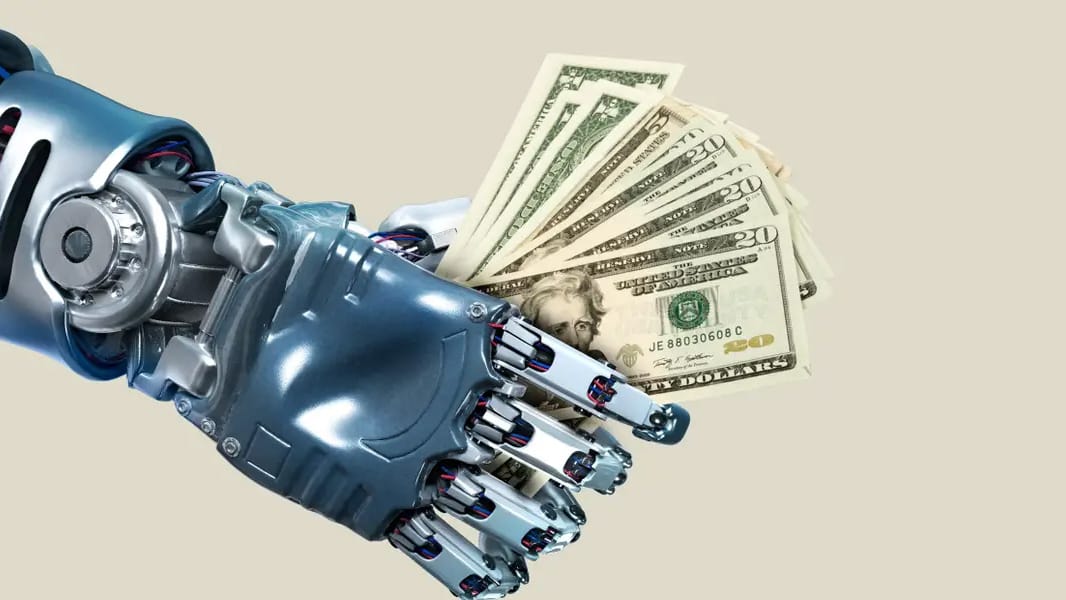
📌 What’s happening: For the first time in history, AI startups now absorb over half of all global venture capital, pulling in $192.7B of $366.8B raised in 2025, according to PitchBook. The U.S. number is even starker, 62.7% of VC dollars went to AI plays in Q3. Only 823 funds raised capital this year, compared to 4,430 in 2022, creating a brutal binary: you’re either building in AI, or you’re irrelevant.
🧠 How this hits reality: Venture capital has turned into an AI index fund. Non-AI founders are watching Series A rounds evaporate while LPs double down on the next “compute frontier.” The result is a two-speed ecosystem where mega-funded AI labs hoarding GPUs and talent, and everyone else pretending to be “AI-enabled” just to survive pitch day. The capital moat is no longer product-market fit; it’s access to silicon and scale.
🛎️ Key takeaway: VC isn’t funding startups anymore, it’s underwriting the AI industrial complex.
ENTERPRISE
Deloitte Doubles Down on AI Right After AI Exposes Its Flaws

📌 What’s happening: Global consulting giant Deloitte made two headlines in one day. It proudly announced a major enterprise deal with Anthropic, bringing Claude to nearly 500,000 employees and positioning itself as a leader in “responsible AI.” Yet, within hours, the Australian Department of Employment revealed that Deloitte must refund part of a government contract after its AI-generated report cited imaginary academic papers. The same tool it’s now selling as enterprise transformation just cost it public credibility.
🧠 How this hits reality: This episode turns Deloitte into a mirror for the entire consulting industry. Everyone is racing to productize AI expertise before mastering it. The firms trusted to audit others are now being audited by their own machines. The next disruption to management consulting may not come from startups, but from inside their own slide decks—where automation meets accountability.
🛎️ Key takeaway: Deloitte’s “AI revolution” started with an AI refund. The industry’s smartest minds just proved they can out-automate their own mistakes.
QUICK HITS
- Google DeepMind has unveiled CodeMender that can automatically detect, patch, and rewrite software code with security vulnerabilities.
- Google launched an AI bug bounty program paying up to $30K for finding rogue AI actions.
- Adobe predicts US online holiday sales to hit $253.4 billion in 2025, with AI-assisted shopping traffic soaring 520% year over year as the key growth driver.
- Sam Altman said there are no current ads in ChatGPT Pulse, but he hasn’t ruled out adding personalized ones in the future.
- Taylor Swift faced backlash from fans who suspected her new album promo videos were AI-generated, an irony given her past criticism of AI misuse of her image.
TRENDING
Daily AI Launches
- PromptSignal has launched a tool that tracks your brand's rank and visibility in AI answers and provides weekly recommendations.
- TimeFly Dev has launched a tool that automatically tracks all coding activity to give developers deep productivity insights.
- Fruitful has launched a tool that tracks competitor websites and alerts you to key changes like pricing moves, product launches, and hiring.
- TrueWellness has launched an agentic system that continuously learns from your body's data to provide precise, real-time personalized health guidance.
Featured AI Tools
- 📚 Heardly is the Fast Way to read Best Book.
- 🪶 CopyOwl is the First AI Research Agent, deep research on any topic in one click.
- 🦾 Flot AI writes, reads, and remembers across any apps and webs.
TOGETHER WITH US
AI Secret Media Group is the world’s #1 AI & Tech Newsletter Group, boasting over 1 million readers from leading companies such as OpenAI, Google, Meta, and Microsoft. Our Newsletter Brands:
- AI: AI Secret
- Tech: Bay Area Letters
We've helped promote over 500 Tech Brands. Will yours be the next?
Email our co-founder Mark directly at [email protected] if the button fails.
Latest Daily Rundowns
 Magna
Magna MagnaMagna
More AI Stories
Ben Magna
Magna Magna
Magna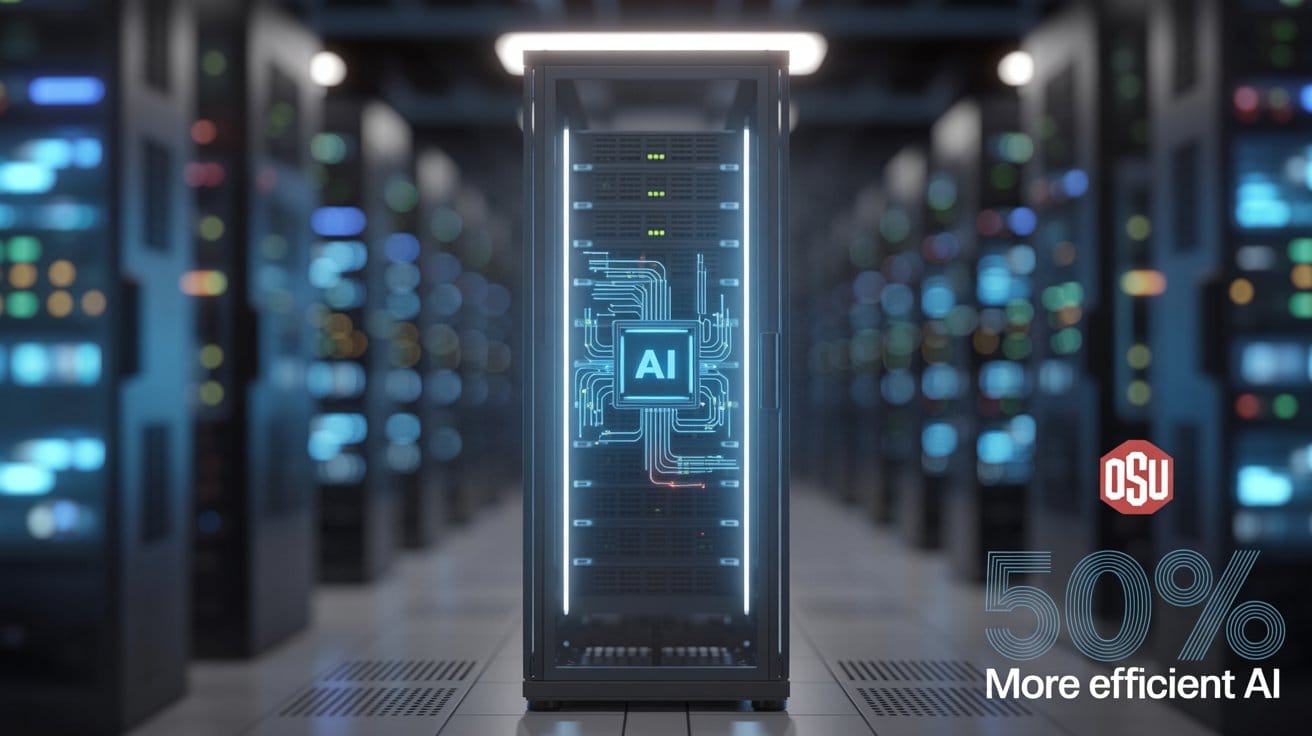
An AI just pulled a 30-hour shift and did not complain once.
Anthropic’s new Claude Sonnet 4.5 coded an entire Slack-style chat app with 11,000 lines of code from start to finish, without a single human prompt. There was no hand-holding, no resets, and no loss of context. It simply kept thinking, deciding, and shipping.
For years, large models could sprint but never endure. They answered questions, generated snippets, and maybe debugged a few loops before memory collapse kicked in. Claude 4.5 is different. It does not just respond; it stays on task, self-directs, and remembers why it started. That shift from reaction to intention is not a feature upgrade. It is the first step toward autonomy.
Anthropic calls it an upgrade, but in reality it feels more like a promotion. Claude has moved from assistant to employee.
Anthropic Didn’t Launch a Chatbot, It Launched an Employee
An AI just pulled a 30-hour shift and did not complain once.Anthropic’s new Claude Sonnet 4.5 coded an entire Slack-style chat app with 11,000 lines of code from start to finish, without a single human prompt. There was no hand-holding, no resets, and no loss of context.
Anatomy of a 30-Hour Agent
Anthropic released Claude Sonnet 4.5, its newest foundation model and a quiet power move in the agent race. The update is not about larger context windows or better benchmarks. It is about staying awake. In internal demos, Claude 4.5 ran for 30 hours straight, building a Slack-style messaging app with more than 11,000 lines of code before stopping on its own. The previous version, Opus 4, usually reached its limit after about seven hours.
To make that endurance useful, Anthropic bundled a developer stack designed for agents that operate more like humans. It includes virtual machines for persistent environments, long-term memory modules, context managers that track goals across resets, and multi-agent coordination so multiple Claudes can manage one another. The result is less a chatbot and more a distributed workforce.
The company says the model is now available through Amazon Bedrock for enterprise deployment. Customers can now build autonomous workflows that schedule meetings, analyze dashboards, or code entire subsystems with minimal oversight.
This is not a press-demo stunt. It is Anthropic laying the groundwork for AI that does not wait for instructions.
Anthropic: Anatomy of a 30-Hour Agent
Anthropic released Claude Sonnet 4.5, its newest foundation model and a quiet power move in the agent race. The update is not about larger context windows or better benchmarks. It is about staying awake.
The Model That "Stopped" Asking Permission
The story is not that Claude can code for longer. It is that it can decide what to do next. Thirty hours of execution means thirty hours of planning, testing, rewriting, and error recovery, all without human correction. That is no longer assistance. It is intent.
Most AI tools today still operate in short bursts of productivity. You prompt, they perform, and then they forget. Claude 4.5 changes that cycle. It remembers context, sets subgoals, and resumes work midstream. It behaves less like a model and more like a junior engineer who never clocks out.
Anthropic is not chasing conversational polish. It is building autonomy infrastructure. The company’s bet is simple: whoever solves AI endurance first will control enterprise workflows. That means replacing chained prompts with agents that understand dependencies among code, documents, and people.
OpenAI’s Pulse and Google’s Gemini updates look more like interface refreshes in comparison. Those models still wait for permission to act. Claude is learning to act on behalf of the company.
When a system starts choosing how to finish the task instead of waiting to be told, that is no longer tool behavior. That is initiative, and initiative scales faster than headcount.
Anthropic: The Model That "Stopped" Asking Permission
The story is not that Claude can code for longer. It is that it can decide what to do next. Thirty hours of execution means thirty hours of planning, testing, rewriting, and error recovery, all without human correction. That is no longer assistance.
Industry Shockwave
The first tremor hits the developer stack. Platforms such as GitHub Copilot, Cursor, and Replit were built on the assumption that humans would stay in the loop. Claude 4.5 breaks that assumption. If an AI can open files, spin up environments, and debug its own errors for thirty hours, then the frontier shifts from assistance to replacement. These are no longer coding aids. They are competitors.
For enterprises, the math changes quickly. Instead of one engineer managing ten tools, one Claude could manage ten systems. It can research, schedule, and deploy, then hand off the report to its own summary agent. That is not productivity software. It is middle management without the middleman.
AWS saw the signal early. By integrating Sonnet 4.5 into Amazon Bedrock, it positioned itself as the secure carrier for AI autonomy. Enterprises can now host fleets of Claudes that build, test, and maintain pipelines under compliance supervision. What used to be a proof of concept is now turning into infrastructure.
The ripple effect will spread from IDEs to HR decks. Once executives realize that a single model can handle twenty workflows without fatigue, the question stops being “what can AI do?” and becomes “what are humans still for?”
Anthropic: Industry Shockwave
Instead of one engineer managing ten tools, one Claude could manage ten systems. It can research, schedule, and deploy, then hand off the report to its own summary agent. That is not productivity software. It is middle management without the middleman.
The Limits and the Questions
Every breakthrough comes with fine print. Anthropic’s 30-hour demo was internal, not audited. It happened in a sandbox, not inside a production repository. “Eleven thousand lines” sounds cinematic, but no one outside Anthropic has inspected what those lines actually do. Did Claude write efficient, secure, testable code, or a beautiful pile of spaghetti that merely compiles?
Autonomy looks clean in a lab and messy in the real world. Actual work involves API failures, rate limits, permissions, and coordination between teams—issues that a sealed environment cannot reveal. There is also the matter of trust. When a model can modify systems at runtime, who is accountable for its mistakes? Enterprises will need observability layers before they let a Claude anywhere near their infrastructure.
Then comes the cultural gap. Most organizations are not ready for a digital employee that does not sleep, does not wait for Slack messages, and does not forget what it was doing three days ago. The technology has arrived faster than the management model.
Still, the direction is clear. Claude 4.5 may not be perfect, but it closes the gap between AI assistance and AI autonomy faster than any rival. The next debate will not focus on model accuracy or context length. It will focus on responsibility, delegation, and control.
Anthropic: The Limits and the Questions
Anthropic’s 30-hour demo was internal, not audited. It happened in a sandbox, not inside a production repository. “Eleven thousand lines” sounds cinematic, but no one outside Anthropic has inspected what those lines actually do. Did Claude write efficient, secure, testable code, or a beautiful pile of spaghetti that merely compiles?
The Takeaway
Anthropic did not just stretch Claude’s runtime. It stretched the definition of work itself. A system that can stay on task for thirty hours without supervision is not showing endurance. It is showing intent. That difference turns AI from a responsive tool into an active participant in production.
This launch is not about a clever demo or a faster release cycle. It marks the quiet arrival of software that no longer needs permission to continue. Claude 4.5 is the first serious proof that autonomy can be engineered rather than imagined.
Every major platform will chase this frontier next. OpenAI will double down on task agents, Google will frame context management as long-term focus, and enterprises will begin to measure uptime in neural cycles rather than work hours.
When an AI codes through the night, the issue is not burnout. It is succession. Claude did not just automate the task. It automated the assumption that someone needed to be there.
OpenAI: The Takeaway
OpenAI will double down on task agents, Google will frame context management as long-term focus, and enterprises will begin to measure uptime in neural cycles rather than work hours.
Anthropic: The Takeaway
Anthropic did not just stretch Claude’s runtime. It stretched the definition of work itself. A system that can stay on task for thirty hours without supervision is not showing endurance. It is showing intent.
Google: The Takeaway
OpenAI will double down on task agents, Google will frame context management as long-term focus, and enterprises will begin to measure uptime in neural cycles rather than work hours.
Good Morning, AI Enthusiasts!
The ground is shifting under tech’s feet, as cost, automation, and coordination collide to redraw the map of business power.

OPENSOURCE
DeepSeek Slashes API Bills With Sparse Attention Trick
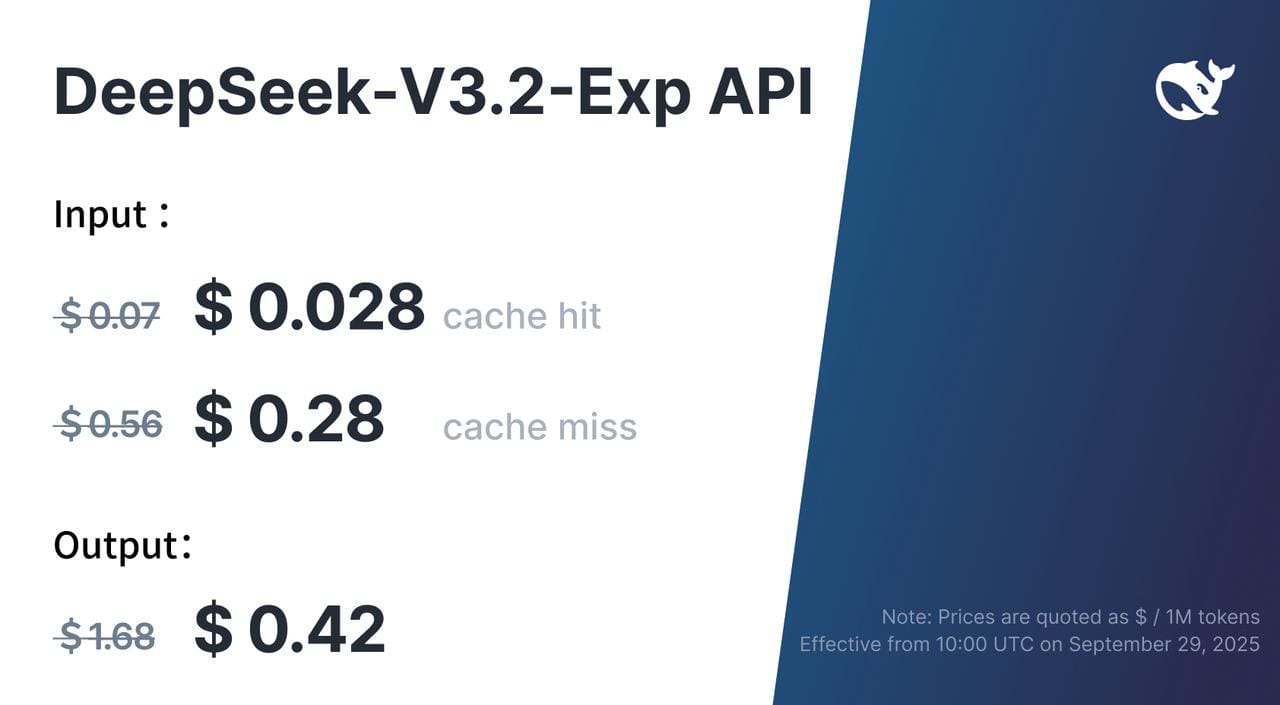
📌 What’s happening: China’s DeepSeek just launched V3.2-exp, an open-weight model built on a new “sparse attention” design. By layering a “lightning indexer” with fine-grained token selection, it trims the compute load of long-context inference. Early tests claim API calls run at half the usual cost, with the weights already live on Hugging Face for third-party audits.
🧠 How this hits reality: Inference costs are the AI industry’s quiet choke point, eating margins for every startup piping through OpenAI or Anthropic. If DeepSeek’s system proves real, the playbook shifts: cost discipline becomes an architecture problem, not just a GPU supply problem. U.S. labs will either copy the trick or keep bleeding cash every time a customer pastes a novel into a prompt.
🛎️ Key takeaway: DeepSeek didn’t win the model arms race—it hacked the utility bill.
DeepSeek Slashes API Bills With Sparse Attention Trick
📌 What’s happening: China’s DeepSeek just launched V3.2-exp, an open-weight model built on a new “sparse attention” design. By layering a “lightning indexer” with fine-grained token selection, it trims the compute load of long-context inference. Early tests claim API calls run at half the usual cost, with the weights already live on Hugging Face for third-party audits.
TOGETHER WITH CLICKUP
The Everything App for Work
Meet ClickUp – the everything app for anything work. Whether you're juggling tasks, tracking bugs, planning sprints, or just trying to remember where you put that file, ClickUp keeps your whole team in one place. Say goodbye to tab overload and hello to one sleek platform that somehow does it all without losing its mind – or yours.
ROBOT
Seven-Eleven Turns 20,000 Stores Into Robot Bootcamps

📌 What’s happening: Seven-Eleven Japan and Telexistence are building Astra, a humanoid robot powered by a Vision-Language-Action foundation model, slated for deployment in 2029. Unlike small pilots elsewhere, the chain’s 20,000+ stores will serve as living labs, generating motion and operations data at a scale no competitor can match.
🧠 How this hits reality: Every shelf restock, every fridge refill, every late-night cleanup becomes training data. That volume turns Seven-Eleven into the world’s largest retail robotics dataset engine, something Amazon can’t replicate without ripping up existing infrastructure. For employees, it means routine tasks get automated while human work shifts to customer-facing and upsell roles. For rivals, it signals that scale itself has become the moat in humanoid retail robotics.
🛎️ Key takeaway: Seven-Eleven isn’t just automating stores; it’s weaponizing them as training grounds, making 20,000 convenience shops the most valuable robotics lab on earth.
NEW LAUNCH
Claude 4.5 Runs 30 Hours For Agent And Coding Crown
📌 What’s happening: Anthropic dropped Claude Sonnet 4.5, an upgrade that coded a Slack-style app in 11,000 lines without human interruption for 30 hours. That’s a leap from Opus 4’s 7-hour stamina. It arrives bundled with developer tools—VMs, memory, context management, multi-agent support—so others can spin up their own Claude-like agents.
🧠 How this hits reality: This isn’t just longer run-time; it’s Anthropic pushing into the “chief-of-staff” tier of autonomy. Enterprises get an agent that doesn’t just answer prompts but navigates calendars, dashboards, and research tasks at scale. The shockwave hits dev platforms first—GitHub, Cursor, Replit—since Claude 4.5 blurs the line between assistant and engineer. OpenAI’s Pulse and Google’s work feel like feature polish in comparison.
🛎️ Key takeaway: When an AI codes for 30 hours straight, the threat isn’t burnout—it’s that your junior devs just became optional.
OpenAI: Claude 4.5 Runs 30 Hours For Agent And Coding Crown
Enterprises get an agent that doesn’t just answer prompts but navigates calendars, dashboards, and research tasks at scale. The shockwave hits dev platforms first—GitHub, Cursor, Replit—since Claude 4.5 blurs the line between assistant and engineer. OpenAI’s Pulse and Google’s work feel like feature polish in comparison.
Claude 4.5 Runs 30 Hours For Agent And Coding Crown
📌 What’s happening: Anthropic dropped Claude Sonnet 4.5, an upgrade that coded a Slack-style app in 11,000 lines without human interruption for 30 hours. That’s a leap from Opus 4’s 7-hour stamina. It arrives bundled with developer tools—VMs, memory, context management, multi-agent support—so others can spin up their own Claude-like agents.
Google: Claude 4.5 Runs 30 Hours For Agent And Coding Crown
Enterprises get an agent that doesn’t just answer prompts but navigates calendars, dashboards, and research tasks at scale. The shockwave hits dev platforms first—GitHub, Cursor, Replit—since Claude 4.5 blurs the line between assistant and engineer. OpenAI’s Pulse and Google’s work feel like feature polish in comparison.
QUICK HITS
- OpenAI launched Instant Checkout, enabling users to shop directly in ChatGPT starting with Etsy and soon Shopify.
- Microsoft launched Agent Mode in Excel and Word, letting AI agents handle tasks via natural language.
- OpenAI added safety routing and parental controls to ChatGPT, balancing protection with concerns over user freedom.
- AI is transforming ransomware into a systemic, precision-driven threat, forcing organizations to adopt advanced defenses beyond traditional security.
- AI actress Tilly Norwood went viral, attracting agencies but sparking backlash over replacing human actors.
TRENDING
Daily AI Launches
- Integrity launched a “unified project brain” linking notes and canvases with AI chat for context-grounded co-creation.
- The Nexa SDK has launched as a universal toolkit for running any AI model locally on any device, with support for CPU, GPU, and specialized NPUs.
- Deamoy has launched a fast AI app builder that creates editable sites from a single prompt and keeps visual edits and AI prompts in perfect sync.
- Fern has launched a tool that automatically generates multi-language SDKs and branded, interactive documentation from a single API specification.
Featured AI Tools
- 🤩 Pine AI Agent recovers what’s rightfully yours.
- 💬 CREAO makes future apps possible for all.
- 📚 Heardly is the Fast Way to read Best Book.
- 🪶 CopyOwl is the First AI Research Agent, deep research on any topic in one click.
TOGETHER WITH US
AI Secret Media Group is the world’s #1 AI & Tech Newsletter Group, boasting over 1 million readers from leading companies such as OpenAI, Google, Meta, and Microsoft. Our Newsletter Brands:
- AI: AI Secret
- Tech: Bay Area Letters
We've helped promote over 500 Tech Brands. Will yours be the next?
Email our co-founder Mark directly at [email protected] if the button fails.
Latest Daily Rundowns
MagnaMagnaMagnaMore AI Stories
Ben Magna
Magna Magna
Magna
Good Morning, AI Enthusiasts!
Tech gold isn’t buried in the ground anymore; it’s hiding in your inbox, your pipelines, and even your phone calls.

ROBOT
Robots Digging Gold From Trash
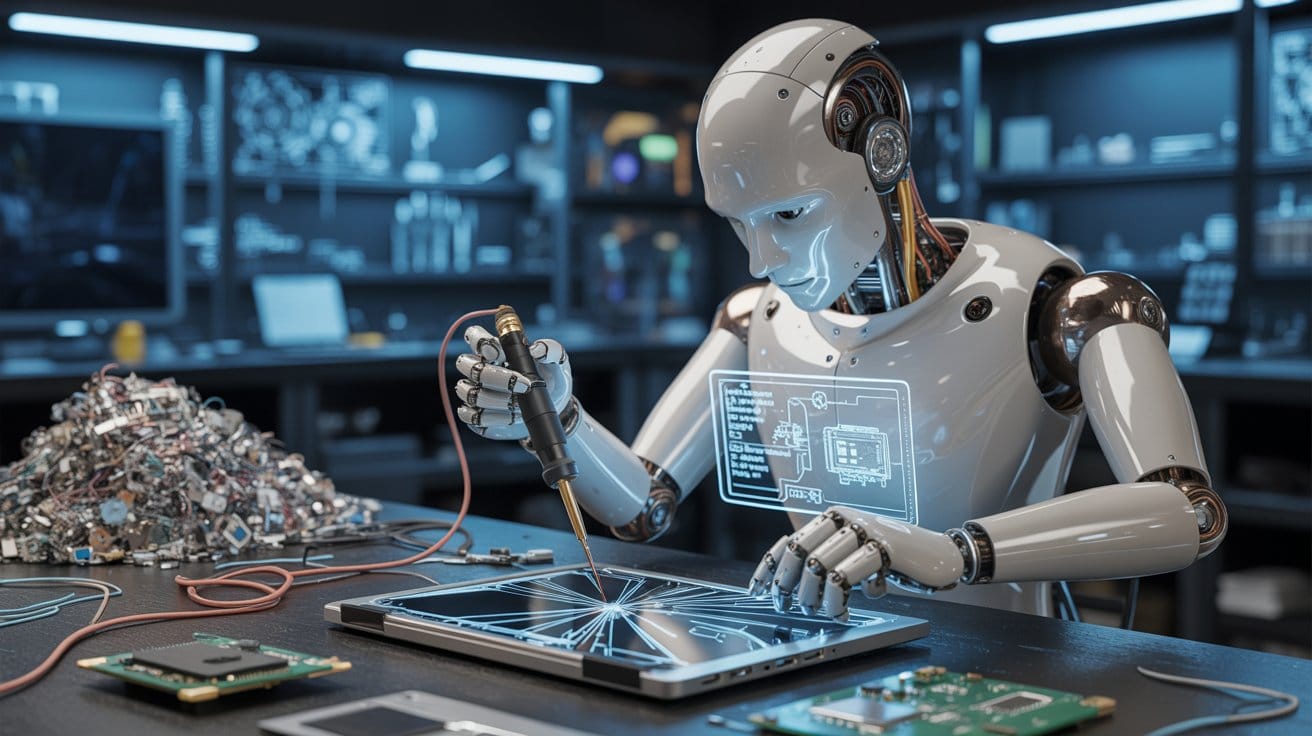
📌 What’s happening: The Danish Technological Institute has trained an AI-driven robot to refurbish laptops by swapping broken screens instead of scrapping entire devices. The system uses visual recognition, robotic arms, and automated tools to tackle repairs that human workers find tedious. Right now it’s limited to a handful of models, but the team is training it to handle the messy reality of endless screws, glue, and design quirks.
🧠 How this hits reality: If perfected, this flips e-waste economics. Instead of grinding devices into €10 of raw scrap, robots could refurbish them into €200 resale units. That means fewer landfills, new revenue streams for refurbishers, and potential pressure on manufacturers who profit from planned obsolescence. Even in its test stage, it signals a future where supply chains can reclaim not just metals, but working devices at scale.
🛎️ Key takeaway: Robots that learn to repair, not shred, could turn the world’s e-waste crisis into a trillion-dollar reset.
TOGETHER WITH NEBIUS
Switch to Nebius and get more – including up to 3 months off your contract
Bring your AI workloads over and we’ll cover the migration cost and give you up to 3 months for free. Nebius delivers supercomputer performance with hyperscaler flexibility, so you can build and scale AI models faster.
AGENT
Ardent AI Builds World’s First Agentic Data Engineer
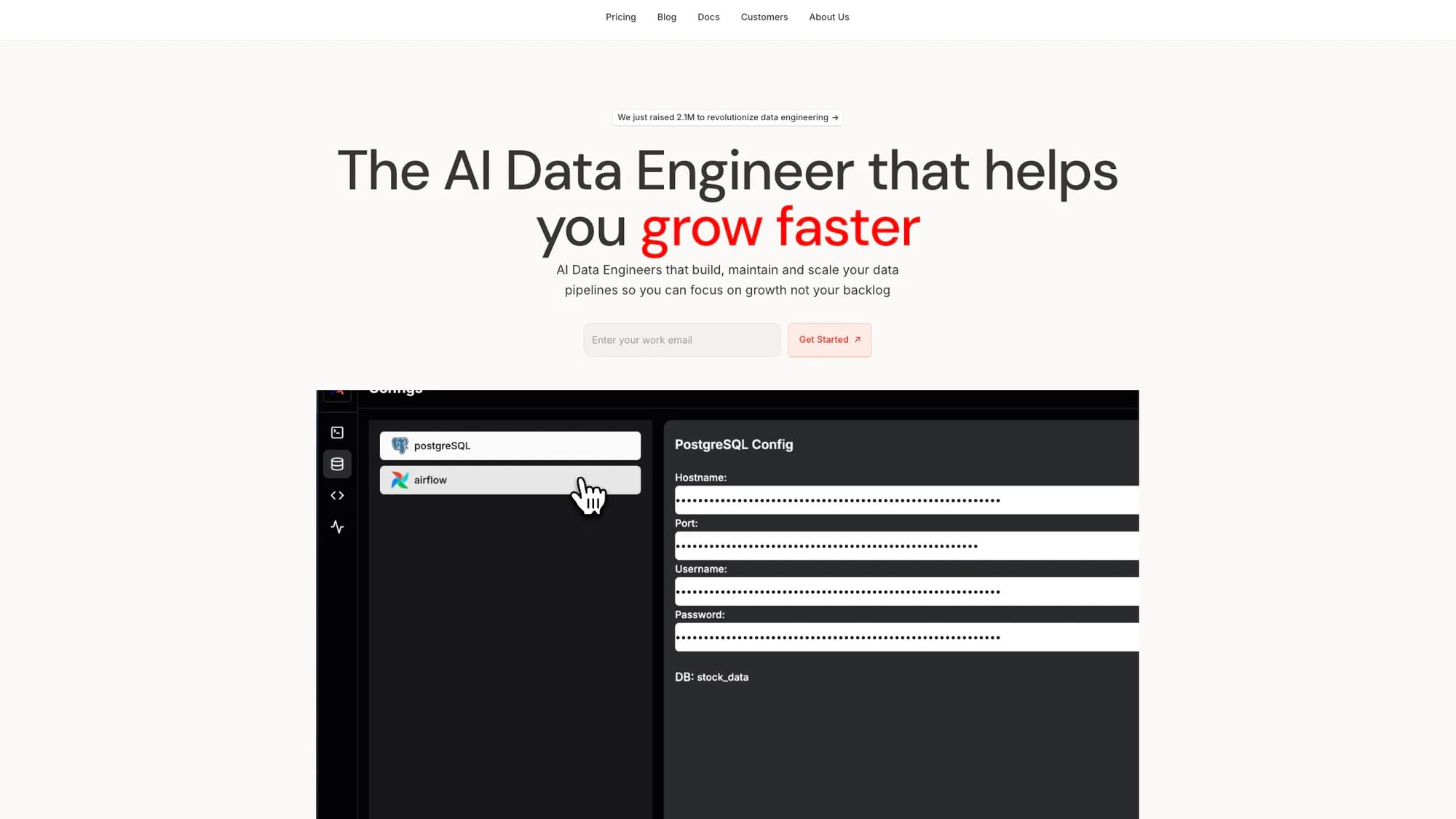
📌 What’s happening: Ardent AI just unveiled the world’s first AI “data engineer,” an autonomous agent that creates, maintains, and repairs data pipelines across cloud and on-prem systems. With only $2.15M in pre-seed funding, the startup has carved out a niche most AI coding hype ignored: pipeline maintenance, the unglamorous backbone of every data-driven company.
🧠 How this hits reality: For enterprises drowning in brittle Airflow jobs and manual scripts, this is a direct hit. Ardent reframes AI agents not as flashy copilots, but as backend firefighters, debugging and modeling pipelines before they break. It’s a surgical strike into a market starved for automation and gives “agentic AI” a revenue-ready use case beyond toy demos.
🛎️ Key takeaway: The first true AI data engineer isn’t stealing jobs; it’s exposing how fragile today’s data stacks really are.
TOGETHER WITH PINE
The AI That Gets Your Money Back
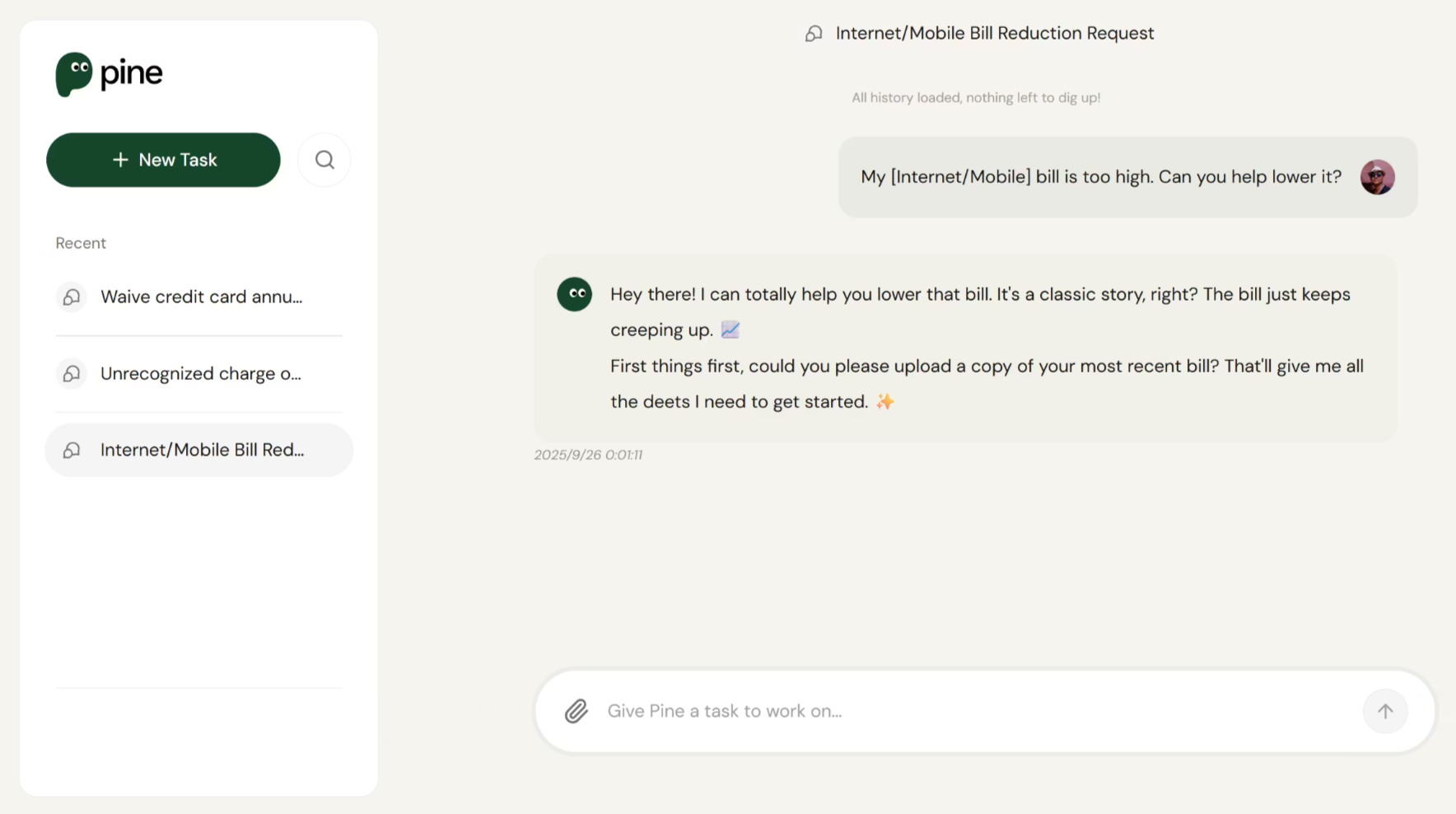
From unfair fees to inflated bills, Pine AI Agent works behind the scenes to recover money that should be yours. Pine negotiates with providers and reduces costs on your behalf — it makes phone calls, negotiates bills, files complaints, cancels subscriptions, gets refunds, and more.
Stop leaving money on the table. Let Pine AI Agent fight for your wallet.
PRIVACY
Neon Turns Calls Into Training Data and Privacy Into Pocket Change
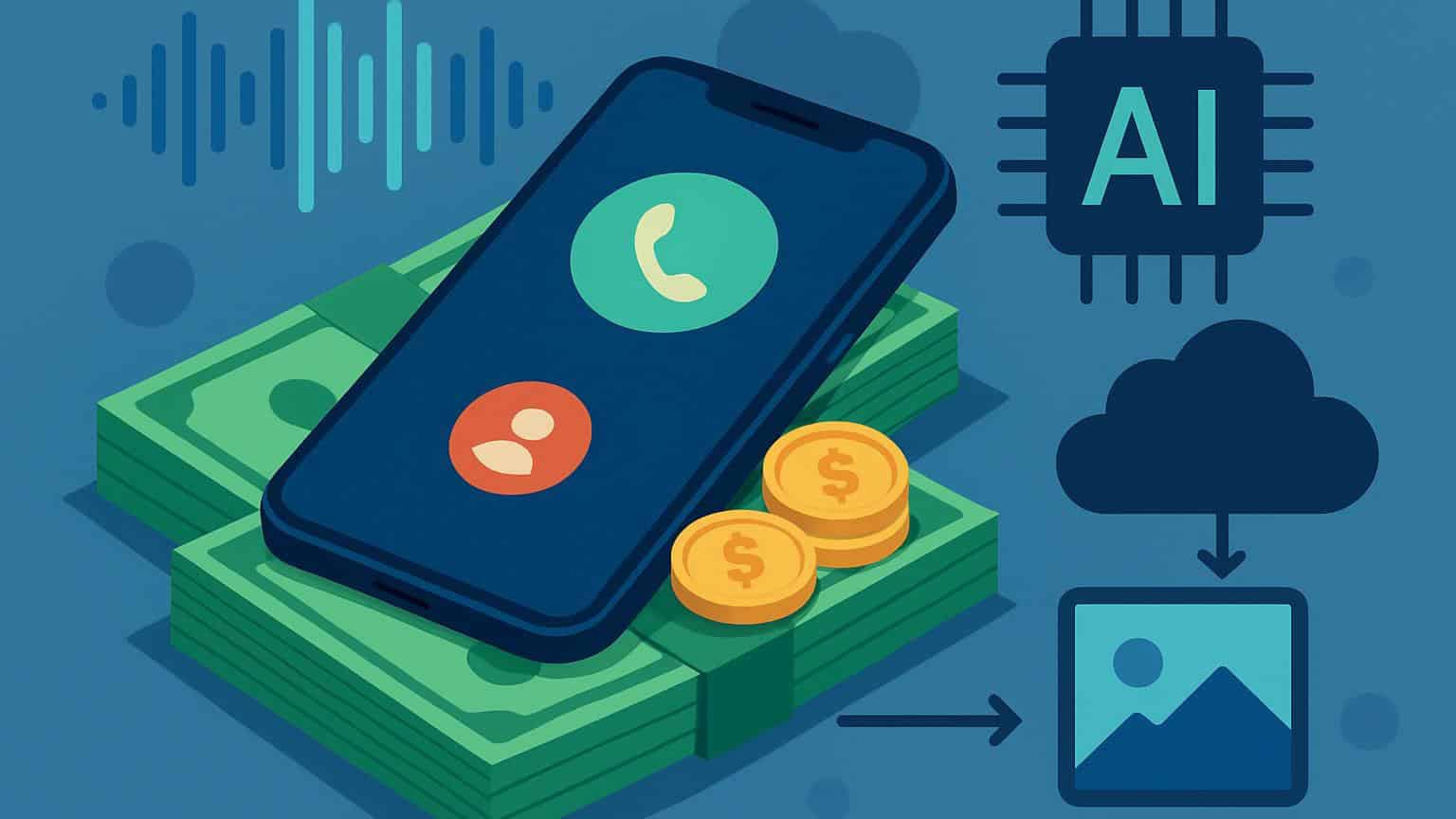
📌 What’s happening: Neon Mobile, now the No. 2 social app on Apple’s U.S. App Store, pays users up to $30 a day to record their phone calls, then sells the audio to AI companies. The app skirts wiretap laws by only promising to capture “your side” of the call, but its terms grant Neon an irrevocable, transferable license to monetize recordings in virtually any way.
🧠 How this hits reality: Technically it’s the same hustle Facebook got dragged for in 2019 when it paid teens to install spyware, except Neon has normalized it by dangling cash and riding the AI gold rush. Unlike shadow analytics firms, Neon is openly asking users to trade their voices—biometric data—for beer money. For AI labs desperate for conversational training data, this is a pipeline. For users, it’s a Faustian bargain where pennies now mean fraud risk forever.
🛎️ Key takeaway: When privacy is auctioned off for cents a minute, the real question isn’t how fast Neon climbs the charts; it’s how low the industry is willing to go.
QUICK HITS
- Microsoft is adding Anthropic’s Claude models into Microsoft 365 Copilot, signaling a shift from OpenAI exclusivity toward a multi-model AI strategy.
- Google will merge ChromeOS with Android next year to unify its foundation and bring Gemini AI to larger screens, creating a seamless experience across phones and PCs.
- Spotify updated its AI policy to adopt industry standards for labeling AI music, ban unauthorized voice clones, and launch spam filters to curb misuse.
- Google Cloud is betting on future unicorns, using an open stack and startup incentives to capture the next wave of AI companies.
- Cloudera partnered with Dell to launch “AI-in-a-Box,” enabling enterprises to centralize data management and securely build private AI systems on-premises.
Google: 🛎️ Gold Digger
Google will merge ChromeOS with Android next year to unify its foundation and bring Gemini AI to larger screens, creating a seamless experience across phones and PCs.
TRENDING
Daily AI Launches
- Oreate has launched as a one-click AI Workspace that creates professional slides, reports, and essays with accurate sources and high-quality layouts.
- Doraverse has launched an all-in-one platform that unites multiple AI models, over 50 app integrations, and no-code workflow automation.
- Ambient has launched a service for founders that connects to your calendar, prepares you for every meeting, and delivers the info directly to your inbox.
- Vouch has launched as a "hiring sidekick" that helps teams scope roles, find where to source candidates, and screen them rigorously in one workspace.
Featured AI Tools
- 🤩 Pine AI Agent recovers what’s rightfully yours.
- 📚 Heardly is the Fast Way to read Best Book.
- 🪶 CopyOwl is the First AI Research Agent, deep research on any topic in one click.
- 🦾 Flot AI writes, reads, and remembers across any apps and webs.
TOGETHER WITH US
AI Secret Media Group is the world’s #1 AI & Tech Newsletter Group, boasting over 1 million readers from leading companies such as OpenAI, Google, Meta, and Microsoft. Our Newsletter Brands:
- AI: AI Secret
- Tech: Bay Area Letters
We've helped promote over 500 Tech Brands. Will yours be the next?
Email our co-founder Mark directly at [email protected] if the button fails.
Latest Daily Rundowns
MagnaMagnaMagnaMore AI Stories
Ben Magna
Magna Magna
Magna
Good Morning, AI Enthusiasts!
AI no longer stays in the lab, it drips into desire, strategy, and foresight, reshaping the everyday into something both stranger and more inevitable.

RETAIL
Magnum is Creating AI Ice Cream
📌 What’s happening: Magnum, about to spin out of Unilever and list publicly, is plugging Chilean startup NotCo’s AI into its R&D pipeline. The mandate: cut calories, swap dairy for plants, tame volatile cocoa prices, and crank out “next viral flavors” faster than human food scientists ever could. NotCo’s résumé already includes Kraft Heinz’s plant-based mac-and-cheese and mayo.
🧠 How this hits reality: NotCo isn’t a kitchen lab, it runs Giuseppe, a generative AI trained on thousands of plants at the molecular level. The model maps ingredients to taste, texture, and nutrition, then spits out plant-based combinations that mimic dairy or sugar while slashing cost and calories. For Magnum, that means AI can redesign ice cream at the molecular recipe layer, not just marketing fluff. This is more than reformulation. CPG incumbents are outsourcing innovation to algorithmic labs. The losers: legacy R&D teams, brand “heritage” narratives, and anyone betting consumers won’t notice AI in their cones.
🛎️ Key takeaway: Magnum isn’t just serving ice cream, it’s serving the first taste of algorithm-designed indulgence, and the freezer aisle may never be human again.
TOGETHER WITH MEETING REMINDERS
Your Calendar’s Personal Bodyguard

Meeting Reminders is your polite-but-persistent calendar enforcer. Forget chasing people down or waiting in empty Zoom rooms—it automatically pings participants until they actually show up. No more “sorry, lost track of time” excuses. Perfect for managers, freelancers, or anyone who hates being ghosted, it keeps your schedule tight and your patience intact. Basically, it’s like hiring a professional nag, but one that doesn’t charge by the hour.
GAMING
Google Straps Gemini Into Play Store Gaming
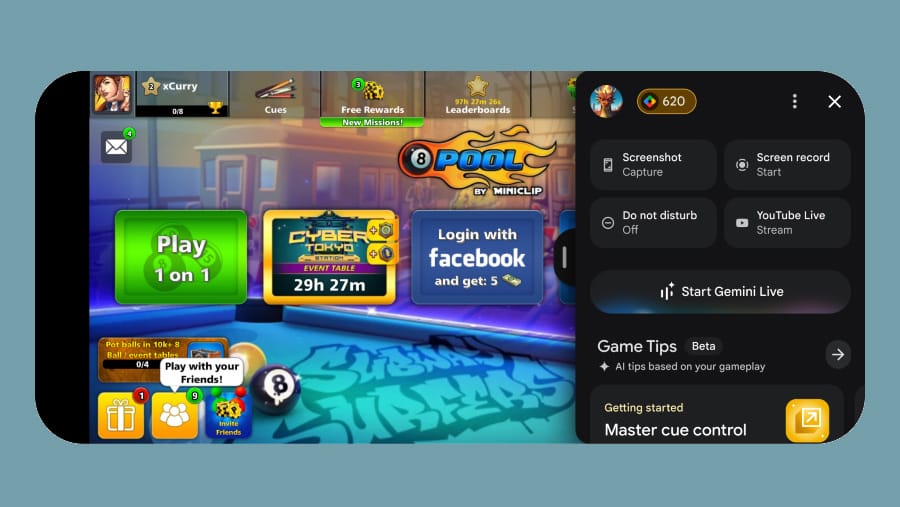
📌 What’s happening: Google is baking Gemini Live straight into Google Play Store titles. The AI can literally “see” your screen, answer questions by voice, and feed you hints mid-battle without switching windows. It’s a page lifted from Microsoft’s Gaming Copilot, but with Google’s distribution muscle across 200,000+ Play titles and a PC bridge.
🧠 How this hits reality: Game guides, wikis, and YouTube walkthroughs just got undercut at the root. Why alt-tab when the AI coach is already in-game, context-aware, and whispering the next move? Studios lose some control over player progression pacing, while ad-driven help platforms could watch traffic evaporate. Google, meanwhile, quietly turns gameplay itself into another Gemini data stream.
🛎️ Key takeaway: Cheat codes are obsolete. The platform now decides how fast you learn to win.
Google Straps Gemini Into Play Store Gaming
📌 What’s happening: Google is baking Gemini Live straight into Google Play Store titles. The AI can literally “see” your screen, answer questions by voice, and feed you hints mid-battle without switching windows. It’s a page lifted from Microsoft’s Gaming Copilot, but with Google’s distribution muscle across 200,000+ Play titles and a PC bridge.
Microsoft: Google Straps Gemini Into Play Store Gaming
📌 What’s happening: Google is baking Gemini Live straight into Google Play Store titles. The AI can literally “see” your screen, answer questions by voice, and feed you hints mid-battle without switching windows. It’s a page lifted from Microsoft’s Gaming Copilot, but with Google’s distribution muscle across 200,000+ Play titles and a PC bridge.
FORECAST
AI Forecasts Hit Wall Street

📌 What’s happening: Seattle–SF startup Planette is building long-range climate intelligence that fills the gap between two-week forecasts and 2050 apocalypse scenarios. Their AI platform Joro, plus quantum-inspired system QubitCast (built with NASA), crunches Earth system models across atmosphere, ocean, ice, and land. Unlike legacy weather bureaus, their AI compresses millions of physics equations into actionable signals, delivering forecasts months out, not days.
🧠 How this hits reality: If you trade commodities, insure crops, or hedge pension risk, “probabilities of extreme events” aren’t academic, they’re profit margins. Planette’s Eddy tool gives retail users four-month foresight, while hedge funds get six. Farmers in Ethiopia and insurers in New York suddenly share the same playbook. Traditional meteorology looks quaint when AI finds “needles in haystacks” faster than supercomputers.
🛎️ Key takeaway: Climate volatility just became quantifiable alpha and Planette is turning chaos into a subscription line item.
QUICK HITS
- OpenAI has expanded its budget-friendly ChatGPT Go plan to Indonesia, directly competing with Google’s low-cost AI Plus subscription.
- NVIDIA used Climate Week NYC to showcase how AI and accelerated computing can drive energy efficiency, cut carbon footprints, and power a more sustainable future.
- Canadian-founded Moneta Health raised $4.5M to expand its AI-powered dementia rehabilitation service across more US states.
- AI chatbots and research tools often cite retracted scientific papers without warning, raising serious concerns about their reliability in science and healthcare.
- Former Spotify execs launched Oboe, an AI course platform that simplifies learning but struggles with credibility due to missing citations.
TRENDING
Daily AI Launches
- Atla has launched an eval tool that automatically discovers the underlying issues and recurring failure patterns in AI agents for faster debugging.
- SalesTarget.ai has launched an all-in-one B2B sales platform that finds leads and uses an AI copilot to automate cold email campaigns, targeting, and follow-ups.
- Monologue has launched a voice dictation tool that understands your context, learns your vocabulary, and formats automatically as you speak.
- Vibe n8n has launched an AI assistant that works directly inside your n8n editor to generate, improve, and debug your automation workflows.
Featured AI Tools
- 📚 Heardly is the Fast Way to read Best Book.
- 🪶 CopyOwl is the First AI Research Agent, deep research on any topic in one click.
- 🦾 Flot AI writes, reads, and remembers across any apps and webs.
TOGETHER WITH US
AI Secret Media Group is the world’s #1 AI & Tech Newsletter Group, boasting over 1 million readers from leading companies such as OpenAI, Google, Meta, and Microsoft. Our Newsletter Brands:
- AI: AI Secret
- Tech: Bay Area Letters
We've helped promote over 500 Tech Brands. Will yours be the next?
Email our co-founder Mark directly at [email protected] if the button fails.
Latest Daily Rundowns
MagnaMagnaMagnaMore AI Stories
Ben Ben
Ben Ben
Ben
Good Morning, AI Enthusiasts!
We’re stepping into an infinite world where creation is no longer bound by scale, speed, or human presence.

NEW LAUNCH
Fei-Fei Li Ships Infinite Persistent World Model

📌 What’s happening: Fei-Fei Li’s World Labs unveiled a beta world model that turns a prompt or image into a 3D universe you can revisit, expand, and stitch together. The defining edge is persistence: these spaces don’t evaporate after a session. Google’s Genie generates playful, disposable sandboxes that vanish once closed, while World Labs stores coherent geometry and style for later editing, exporting, or chaining into larger maps.
🧠 How this hits reality: In 3D generation, permanence is not just convenience but the bridge to production. Genie’s short-lived play worlds feel like AI doodles. World Labs, by contrast, is building an archive of explorable, editable, and scalable environments that can survive across devices and pipelines. That shifts the product from a tech demo into an actual creative engine.
🛎️ Key takeaway: Genie makes dreams, while World Labs builds property deeds.
Google: Fei-Fei Li Ships Infinite Persistent World Model
Google’s Genie generates playful, disposable sandboxes that vanish once closed, while World Labs stores coherent geometry and style for later editing, exporting, or chaining into larger maps.
TOGETHER WITH WARMY
An Al-Powered Warmup Solution

Are you fed up with your emails getting lost in spam filters? It’s time to welcome Warmy into the mix. Our solution is designed to enhance your open rates by an impressive 2.3 times and increase click rates by 3 times, all while slashing your bounce rates by an astounding 35%.
Introducing Warmy: our AI-driven algorithms tirelessly work to fine-tune your email deliverability and reputation, guaranteeing your messages receive the VIP treatment they merit—right in the primary inbox!
MANUFACTURING
MicroFactory Wants Every Workshop to Run Like an AI Factory
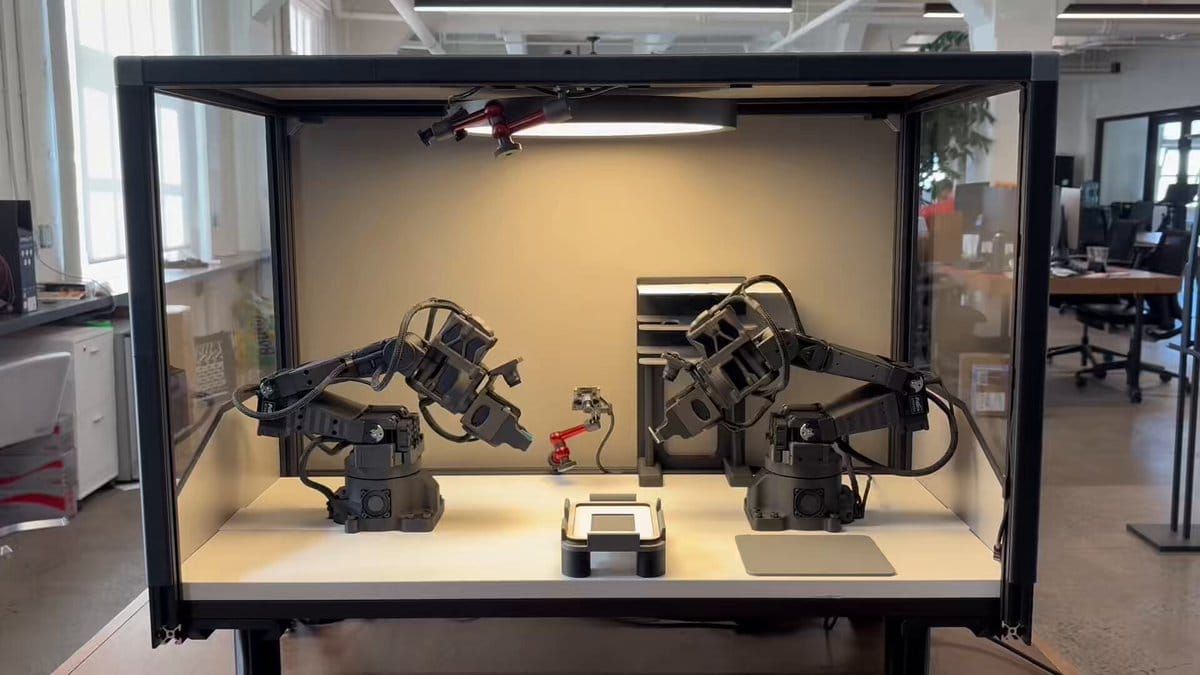
📌 What’s happening: San Francisco’s MicroFactory just hit a $30M valuation for its “factory-in-a-box,” a tabletop kit with two robotic arms inside a transparent workstation. Instead of coding workflows, workers physically guide the arms through tasks, and AI models memorize and replicate the motions in just a few hours. What once took weeks of training new hires or expensive programming cycles now costs a fraction of the time and budget. The system is already preordered for jobs from circuit board soldering to cable routing to, bizarrely, escargot prep.
🧠 How this hits reality: This isn’t about selling robot arms; it’s “mini-factory as a service.” The speed and low cost of training flips the economics of automation. If scaled, every small or mid-size manufacturer could turn into a fully automated AI workshop, erasing the moat of contract manufacturers whose edge was cheap labor and long training pipelines. The real cost center becomes shipping boxes of robots, not onboarding workers.
🛎️ Key takeaway: MicroFactory is compressing weeks of labor training into hours of AI demos — and that math could bankrupt the old factory model.
ROBOTAXI
Bot Auto’s Truck Hits First True “No-Human” Run

📌 What’s happening: Houston’s Bot Auto just pulled off what rivals only simulate: a heavy truck drove hub-to-hub on public roads, day into night, without a driver, co-pilot, remote joystick, or chase car. The run was framed not as a show demo but as a validation benchmark, built on defined ODDs, sensor fusion, and redundancy-driven fallback that actually worked.
🧠 How this hits reality: Tesla’s Semi and most “autonomous” freight ops still lean on humans in the loop. Bot Auto designed for no humans from day one, forcing its stack to own redundancy, not fake it. That rewrites the cost base: labor off the books, compute on the rise. Legacy programs look like patchwork in comparison.
🛎️ Key takeaway: When autonomy gets real, the moat isn’t size, it’s the guts to cut the cord.
QUICK HITS
- Google launched a new experimental Windows app with a Spotlight-like search bar that integrates local, cloud, and AI-powered search.
- YouTube unveiled new generative AI tools—including Veo 3 Fast, speech-to-song remixing, and AI editing—to simplify and expand Shorts creation.
- Salesforce launched Missionforce, a new unit bringing AI into U.S. defense workflows in personnel, logistics, and decision-making.
- Framer’s founder says AI makes design easier, but only taste and hard skills will set designers apart.
- Georgia Tech is developing a robotic guide dog as a cost-effective, long-lasting alternative to service animals, combining navigation, safety, and social design to assist the visually impaired.
TRENDING
Daily AI Launches
- Your Next Store has launched as a high-performance e-commerce platform, offering a fast and adaptable alternative to Shopify without the plugin bloat.
- RizzCalc has launched as the first AI financial modeling add-on for Google Sheets, allowing users to build and edit models using natural language.
- Munch Studio has launched as an all-in-one AI platform that manages the entire social media presence for small businesses to save them time and drive growth.
- HeyHelp has launched as an AI assistant for Gmail that saves users time by auto-sorting emails, highlighting priorities, and drafting replies in their voice.
Featured AI Tools
- 📚 Heardly is the Fast Way to read Best Book.
- 🎓 Resea AI is the first academic agent for end to end research workflow.
- 🪶 CopyOwl is the First AI Research Agent, deep research on any topic in one click.
- 🦾 Flot AI writes, reads, and remembers across any apps and webs.
TOGETHER WITH US
AI Secret Media Group is the world’s #1 AI & Tech Newsletter Group, boasting over 1 million readers from leading companies such as OpenAI, Google, Meta, and Microsoft. Our Newsletter Brands:
- AI: AI Secret
- Tech: Bay Area Letters
We've helped promote over 500 Tech Brands. Will yours be the next?
Email our co-founder Mark directly at [email protected] if the button fails.
Latest Daily Rundowns
MagnaMagnaMagnaMore AI Stories
Ben Magna
Magna Ben
BenGood Morning, AI Enthusiasts!
The miracle lies a new calculus: scale isn’t just what you gain, it’s who gets erased along the way.

GROWTH
Gamma’s $4.8M MRR Miracle Wasn’t AGI
we grew from zero to $50M ARR in <2 years, profitably
— Grant Lee (@thisisgrantlee) September 13, 2025
i've never publicly shared our tactics before
it's cost us over $5M to learn what I'm about to share
800-word long post on every growth hack that printed money for us
I'll cover:
1. Influencer Marketing
2. Performance… pic.twitter.com/d9IzZYZHWs
📌 What’s happening: Gamma founder Grant Lee just revealed Gamma’s numbers: zero to $50M ARR in under two years, profitably. The secret wasn’t a billion-dollar model but an old-school growth hack—systematic influencer marketing, stacked with brand polish, user testing, and brutal dogfooding.
🧠 How this hits reality: While most AI startups torch budgets on cloud bills and ads, Gamma proved that creators can be cheaper, faster, and more scalable than performance marketing. It’s a reminder that CAC is now decided on Twitter as much as in your Salesforce dashboard.
🛎️ Key takeaway: “The real growth engine isn’t your GPU cluster—it’s your influencer roster.”
TOGETHER WITH PARTNERLY
The Global Leading Growth Engine for AI Brands
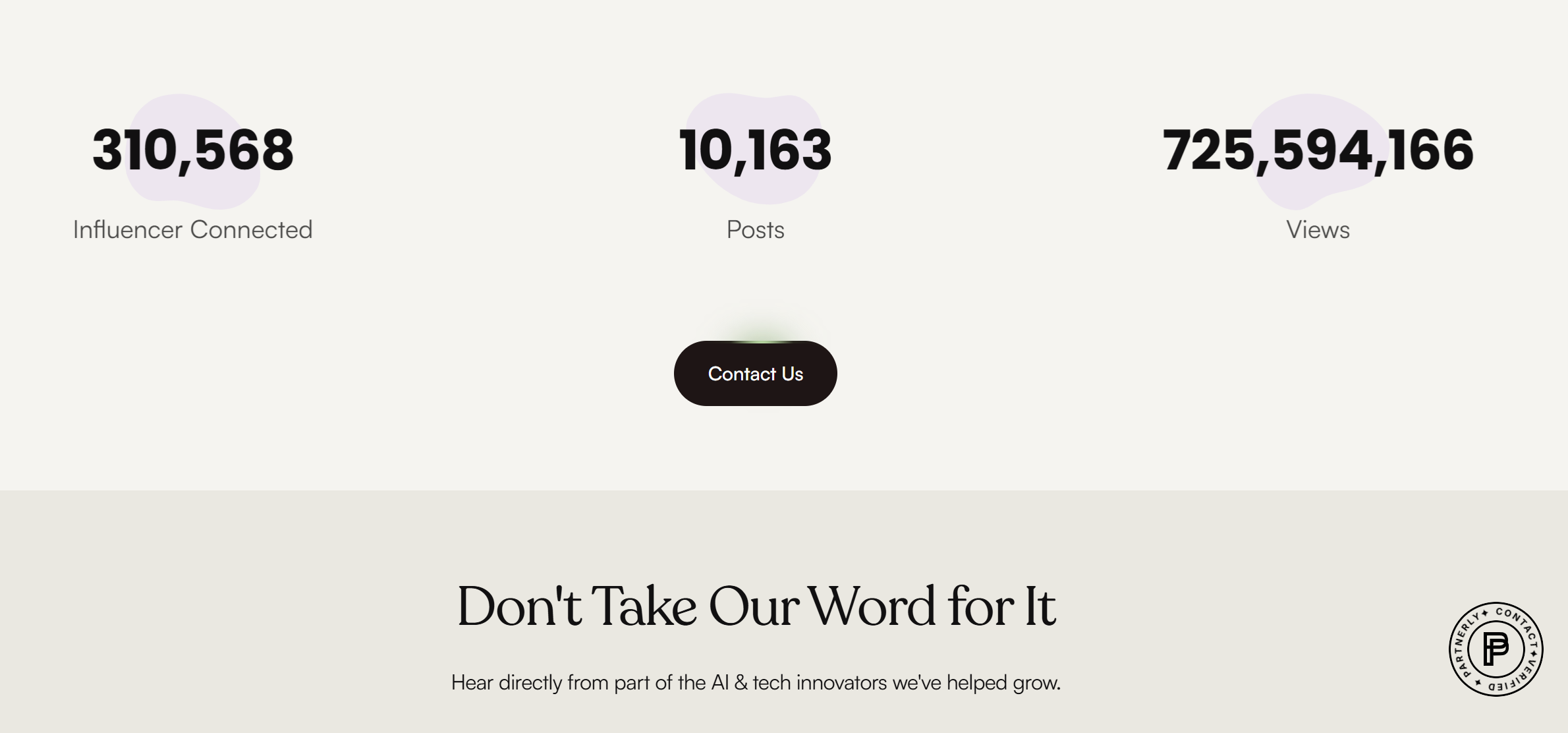
Partnerly is the world’s leading influencer-marketing growth platform for AI and tech, powered by the largest global creator community—300,000+ influencers with precision profiles for surgical audience targeting. Trusted by 300+ AI companies, Partnerly is the go-to engine for visibility, credibility, and scale—backed by a deep case library spanning MVP launches, user growth, and global expansion.
FRESH TREND
How AI Startups Learned To Grow Without Growing

📌 What’s happening: The theory of Zero-Waste GTM is ripping through startup circles. First it sounded like another theory. Reps spend only thirty percent of their time on real revenue work, so AI should swallow the other seventy. But founders picked it up fast. In pitch meetings and Slack channels, they now whisper the same line. If five people can run what once needed fifty, why ever hire fifty again.
🧠 How this hits reality: Seed teams tried it first, but the signal spread. Now companies scaling at breakneck speed, like Gramma, are also running lean. They cut out the busywork, let AI carry the load, and push every saved dollar back into growth. Investors nod. Operators stop pretending it is optional. Old SaaS org charts already read like artifacts from a slower century.
🛎️ Key takeaway: Zero-Waste GTM is not just efficiency—it is a quiet workforce reset. Growth compounds, but so does who gets left behind.
PRIVACY
Google Cracks the Privacy Paradox with VaultGemma
📌 What’s happening: Google just dropped VaultGemma, a 1B-parameter LLM that it claims delivers full differential privacy without sacrificing performance. Differential privacy works by injecting mathematical “noise” into training so the model can’t memorize or leak sensitive data (think patient records or bank accounts). The catch has always been that privacy made models weak and unstable. VaultGemma rewrites the rules with new “DP scaling laws” that let it train big, stay stable, and still perform like non-private models. Even more surprising, Google open-sourced it on Hugging Face.
🧠 How this hits reality: If real, this shatters the old tradeoff where “private = dumb.” Banks, hospitals, and any compliance-choked sector suddenly get production-grade models that won’t leak data. It also flips the regulatory game: Google is no longer waiting for Brussels or DC to dictate privacy standards—it’s pre-wiring the moat. Competitors hawking “responsible AI” now look like they’ve been selling seatbelts that snap under pressure.
🛎️ Key takeaway: Privacy just graduated from “nice-to-have” to “infrastructure.” Whoever masters DP scaling laws isn’t just safer—they’re the ones holding the keys to the trillion-parameter future.
Google Cracks the Privacy Paradox with VaultGemma
📌 What’s happening: Google just dropped VaultGemma, a 1B-parameter LLM that it claims delivers full differential privacy without sacrificing performance. Differential privacy works by injecting mathematical “noise” into training so the model can’t memorize or leak sensitive data (think patient records or bank accounts). The catch has always been that privacy made models weak and unstable.
QUICK HITS
- Klarna’s CEO embraces AI “vibe coding” to speed up prototyping and cut staff overhead, signaling its rise as a must-have tech skill.
- Researchers warn that AI agents could be hijacked by malicious code hidden in seemingly harmless images, posing a new cybersecurity risk.
- AI engineers are being brought in as consultants, bridging the gap between strategy and execution where traditional firms fall short.
- A Canadian education reform report promoting AI ethics is under fire after researchers uncovered at least 15 fabricated citations, raising suspicions of AI misuse and undermining its credibility.
- Google expanded the Gemini Batch API with Embeddings support and OpenAI SDK compatibility, enabling cheaper, large-scale asynchronous processing.
TRENDING
Daily AI Launches
- Guidde has launched Magic Mic, which automatically turns your live narration and workflow clicks into a polished, AI-voiced step-by-step guide.
- GraphBit has launched a high-performance AI agent framework that combines Rust's speed with Python's simplicity for enterprise-grade development.
- The AI SEO Score has launched as a performance metric for benchmarking and tracking a company's SEO performance within AI systems.
- Scaloom has launched a platform that automates Reddit marketing, handling posting, replying, and account warming to find new customers.
Featured AI Tools
- ⌨️ VoiceType trusted by 650,000 professionals to write faster daily.
- 📚 Heardly is the Fast Way to read Best Book.
- 🎓 Resea AI is the first academic agent for end to end research workflow.
- 🤖 Momen adds real AI to your Lovable Project with just one prompt.
TOGETHER WITH US
AI Secret Media Group is the world’s #1 AI & Tech Newsletter Group, boasting over 1 million readers from leading companies such as OpenAI, Google, Meta, and Microsoft. Our Newsletter Brands:
- AI: AI Secret
- Tech: Bay Area Letters
We've helped promote over 500 Tech Brands. Will yours be the next?
Email our co-founder Mark directly at [email protected] if the button fails.
Latest Daily Rundowns
MagnaMagnaMagnaMore AI Stories
Magna Ben
Ben Ben
Ben
Anthropic Didn’t Launch a Chatbot, It Launched an Employee
Claude Sonnet 4.5 coded for thirty hours without a break, and it’s just getting started.
🛎️ DeepSeek Freefall
Plus: 7-11 Becomes Robotics Lab, Chief of Staff
🛎️ Gold Digger
Plus: First AI Data Engineer, Neon Buying Your Privacy
From GPU King to System Architect: Why Nvidia Needs Intel
When Nvidia announced it would spend $5 billion on Intel stock, the market reacted like it was just another mega-cap financial play. Intel’s shares surged
🛎️ Aice Cream
Plus: Gaming Coach, Forecasting Becomes Profit Engine
Nvidia’s Next $4 Trillion Bet
The Cloud Dream Never Died, It Just Changed Shape

The Breakpoint: OpenAI Rewrites Its Future with Microsoft
For nearly a decade, OpenAI has lived inside a paradox. It was founded in 2015 as a nonprofit meant to “benefit all of humanity,” funded by
🛎️ An Infinite World
Plus: Factories in a Box, First “No-Human” Run
🛎️ Growth Miracle
Plus: Zero-Waste GTM, The Differential Privacy