🛎️ Claude Mythos Leak
Plus: Meta Is Outdated, Anthropic Starts Limiting, Human Review Is Breaking
Read the story Subscribe
Reporting and context on Apple, with a closer look at the decisions and developments that matter.
Get AI Secret’s free daily briefing, including Apple and the wider AI industry.

Apple builds devices, operating systems and services. Coverage follows Apple Intelligence, Apple silicon and the role of AI across its products.
Sources checked . Selected company background and milestones.
Selected milestones, newest first. Earlier history is available below.
Apple announces the first Apple Intelligence features for iPhone, iPad and Mac.
Source: AppleMore than 10 years ago.
Relevant sections from the articles on this page. Explore older coverage below.
More coverage

Good Morning, AI Enthusiasts!
Manual work is fading into irrelevance, as machines not only execute faster but render human-in-the-loop processes structurally obsolete.
LEAK

👀 What’s happening: Anthropic’s CMS bug exposed internal assets referencing a new model, Claude Mythos, which were scraped before removal. The company confirmed it as a next-generation system under limited testing. This is not a routine upgrade. It signals a deliberate shift in how the model is built and deployed.
🌍 How this hits reality: The key change is likely in harmlessness tuning. Instead of blocking or interrupting actions, Mythos appears designed to allow longer, continuous execution while maintaining alignment in the background. That directly benefits agent frameworks like OpenClaw and Claude Code, where stability across multi-step tasks matters more than isolated response quality.
🛎️ Key takeaway: This points to a model optimized for agents, not chats. If Mythos delivers, autonomy becomes a default capability, and agent systems move from fragile demos to reliable operators.
👀 What’s happening: Anthropic’s CMS bug exposed internal assets referencing a new model, Claude Mythos, which were scraped before removal. The company confirmed it as a next-generation system under limited testing. This is not a routine upgrade. It signals a deliberate shift in how the model is built and deployed.
NEW LAUNCH
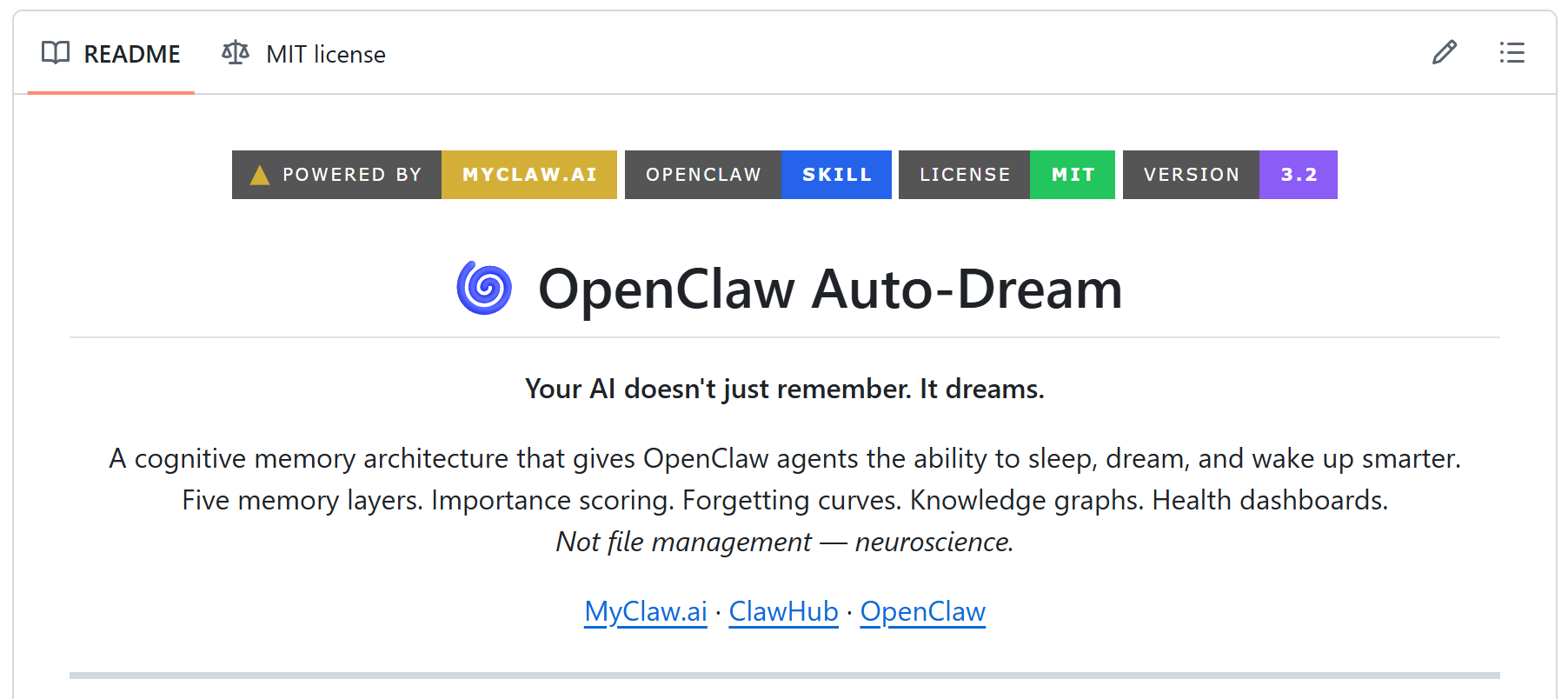
👀 What’s happening: MyClaw.ai just gave OpenClaw something new. It can now “dream.” Auto Dream runs a nightly sub-agent that processes the day like REM sleep. It extracts decisions, links ideas, ranks importance, and forgets noise. The agent no longer just runs tasks. It reflects, consolidates, and wakes up knowing you better.
🌍 How this hits reality: Most agents still operate like goldfish. Every session resets. Context is rebuilt manually, costing time and tokens. Now OpenClaw behaves more like a human loop. Input during the day, consolidation at night. Over time, hundreds of interactions compress into structured memory, turning usage into accumulated intelligence rather than repeated prompts.
🛎️ Key takeaway: This shifts agents from tools into evolving systems. The ones that can “dream” will compound value daily. OpenClaw is starting to look less like software and more like something that learns continuously.
Auto Dream is now live on Github — install it in seconds and let your OpenClaw start dreaming tonight.
👀 What’s happening: MyClaw.ai just gave OpenClaw something new. It can now “dream.” Auto Dream runs a nightly sub-agent that processes the day like REM sleep. It extracts decisions, links ideas, ranks importance, and forgets noise. The agent no longer just runs tasks.
TOKEN
👀 What's happening: Anthropic tightened Claude usage so sessions deplete faster during peak hours while weekly caps stay unchanged. Roughly 7% of users, mostly heavier Pro users, now hit limits sooner. This is not random throttling. It is a deliberate filter on how different tiers consume compute.
🌍 How this hits reality: The effect is subtle but directional. Casual users trying to stretch flat subscriptions get squeezed first, while structured API usage remains predictable and billable. Peak-hour penalties discourage exploratory, inefficient usage and favor token-metered workloads. This starts separating chat usage from compute consumption, pushing serious use cases toward API-based pricing where resource allocation is easier to control.
🛎️ Key takeaway: This is a quiet migration lever. Subscription access becomes constrained while token-based access scales. Expect more providers to push users toward metered usage where compute can be priced, prioritized, and enforced.
👀 What's happening: Anthropic tightened Claude usage so sessions deplete faster during peak hours while weekly caps stay unchanged. Roughly 7% of users, mostly heavier Pro users, now hit limits sooner. This is not random throttling. It is a deliberate filter on how different tiers consume compute.
KPI
👀 What's happening: Meta is introducing explicit AI usage targets across engineering. Internal goals include 80% of mid to senior engineers using AI tools, and teams aiming for 65% of engineers generating over 75% of their code with AI by 2026. AI is being turned into a measurable requirement embedded into daily work.
🌍 How this hits reality: The framing is already out of sync with the frontier. In many AI-native teams, code is no longer written or reviewed in the traditional sense. Agents generate, execute, test, and iterate continuously, and humans judge outcomes, not lines of code. Meta is still measuring usage, while others have moved to fully automated loops where output quality is the only metric that matters.
🛎️ Key takeaway: This feels like adding a steam engine to a horse carriage, while the carriage and driver are already gone. Meta's attempt to redefine the standards of something that has already disappeared is incredibly foolish and outdated.
👀 What's happening: Meta is introducing explicit AI usage targets across engineering. Internal goals include 80% of mid to senior engineers using AI tools, and teams aiming for 65% of engineers generating over 75% of their code with AI by 2026. AI is being turned into a measurable requirement embedded into daily work.
VIBE CODING
👀 What's happening: Vibe coding pushed app creation into near real-time. Models now generate functional apps end to end, letting even non-developers ship products instantly. The bottleneck moved to review. Apple's human App Store review process is slowing sharply, with approvals stretching from hours to days as submissions spike.
🌍 How this hits reality: The system assumed code production was scarce and human-paced. That assumption is gone. When machines can generate thousands of submissions per day, human review throughput becomes the constraint. A process built for tens of updates per developer now faces effectively unlimited output, breaking queue economics and delaying even high-quality releases.
🛎️ Key takeaway: Humans cannot read, validate, and reason about code at the speed machines now produce it. Review, QA, and even trust layers will be forced into automation, or they become the next system to collapse under AI scale.
Models now generate functional apps end to end, letting even non-developers ship products instantly. The bottleneck moved to review. Apple's human App Store review process is slowing sharply, with approvals stretching from hours to days as submissions spike.
DAILY TL;DR
READ MORE
Stay ahead without drowning in information. We turn the most important signals across AI, tech, marketing, and future products into 5-minute reads you can actually finish.
TOGETHER WITH US
AI Secret Media Group is the world’s #1 AI & Tech Newsletter Group, reaching over 2 million leaders across the global innovation ecosystem, from OpenAI, Anthropic, Google, and Microsoft to top AI labs, VCs, and fast-growing startups.
We've helped promote over 500 Tech Brands. Will yours be the next?
Email our co-founder Mark directly at [email protected] if the button fails.
Good Morning, AI Enthusiasts!
Everything is collapsing into compute—memory compresses, biology tokenizes, interfaces lag, and agents keep running.

TOKENIZE
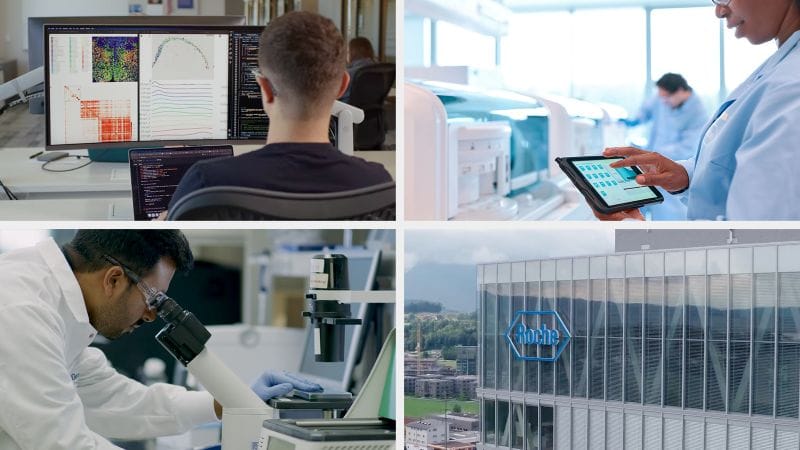
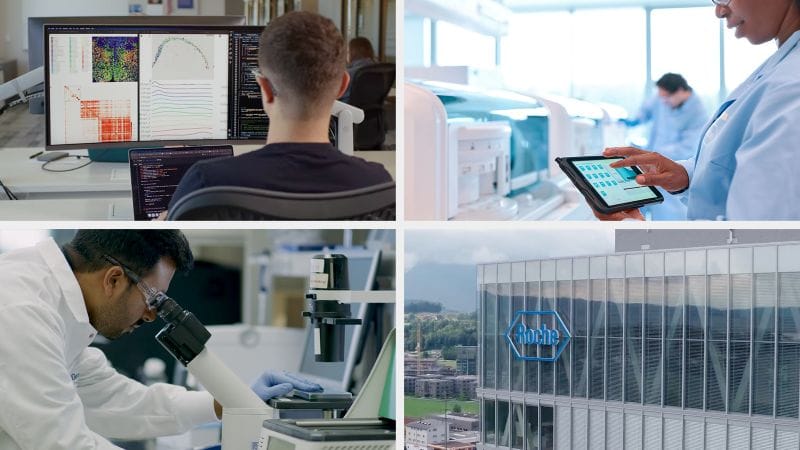
👀 What’s happening: Roche is rolling out an AI factory with 2,176 Nvidia Blackwell GPUs, taking its total past 3,500. This follows Eli Lilly’s $1B AI lab push. Two major pharma companies are now scaling compute as core infrastructure, not side experiments, to run drug discovery end to end.
🌍 How this hits reality: Drug development costs over $1B and takes 10 years. Roche already reports 25 percent faster molecule design. Tens of millions are shifting into GPUs, turning discovery into iterative compute cycles. Each experiment, prediction, and validation starts to resemble tokenized inference workloads.
🛎️ Key takeaway: Tokenization has reached pharma. If this continues, drug discovery becomes a throughput problem measured in compute, and the companies that control tokens and GPUs shape what gets built first.
TOGETHER WITH MYCLAW

Skip Docker, VPS configs, and late-night debugging. With MyClaw.ai, you can launch your agent in minutes and keep it running 24/7 in a dedicated environment built for serious builders.
If you’re serious about OpenClaw, run it properly — with speed and security by default.
SIRI
👀 What’s happening: According to Bloomberg, Apple is preparing a full Siri rebuild for June’s WWDC, adding a standalone app and systemwide “Ask Siri” layer. The assistant shifts into a chat-style interface, can access personal data, control apps, and replace search. This follows delays and weak adoption of its earlier AI rollout.
🌍 How this hits reality: The competition has moved. ChatGPT defined conversational AI, but the frontier is now agent systems like OpenClaw that execute tasks, run workflows, and persist across steps. Apple is still rebuilding interaction while others already own execution. That gap is not incremental, it is architectural.
🛎️ Key takeaway: Siri must become a system-level agent or it becomes irrelevant. If Apple cannot move from answering to doing, it risks losing control of the operating system layer to external AI.
👀 What’s happening: According to Bloomberg, Apple is preparing a full Siri rebuild for June’s WWDC, adding a standalone app and systemwide “Ask Siri” layer. The assistant shifts into a chat-style interface, can access personal data, control apps, and replace search. This follows delays and weak adoption of its earlier AI rollout.
AGENTS
👀 What’s happening: Google Research introduced TurboQuant, a compression algorithm that shrinks the KV cache inside large models without hurting accuracy. It cuts memory use by up to 6x and speeds up inference, directly targeting the bottleneck that limits long context and sustained reasoning today.
🌍 How this hits reality: Think of an OpenClaw agent writing an article, pulling data, editing, then publishing. Each step remains in its working memory, and that accumulation is the KV cache. It grows quickly. In long tasks, this cache can take up 30 to 70 percent of inference memory. Compressing it by 6x means agents can handle longer plans, chain more tools, and execute more steps before hitting limits, without costs scaling at the same rate.
🛎️ Key takeaway: If it is adopted, this may remove one of the main ceilings on agent execution. Tasks that previously had to be split, restarted, or simplified can now run end to end. Expect agents to handle longer chains, deeper workflows, and materially more complex objectives in a single pass, rather than failing midway or degrading under memory pressure.
BUBBLE
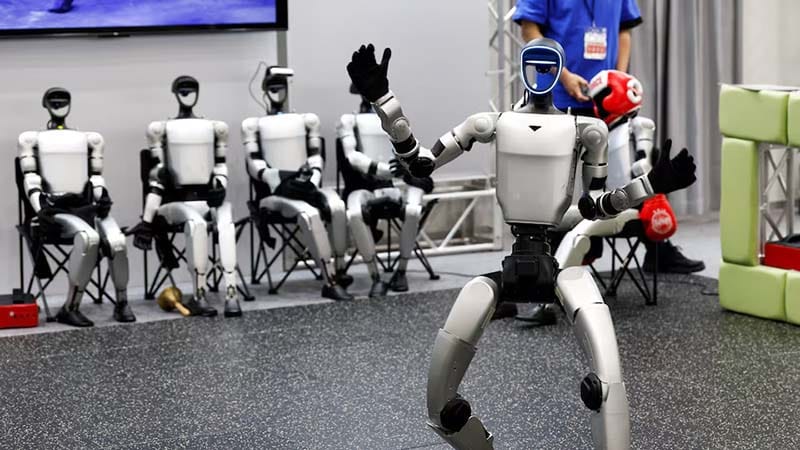
👀 What’s happening: Unitree has filed for a Shanghai STAR Market IPO, showing about $230 million in revenue and roughly $80 million in profit, targeting a valuation near $7 billion. On paper, it looks like a breakout robotics company. In reality, a large share of revenue (73.6%) comes from research labs, government programs, and staged enterprise deployments.
🌍 How this hits reality: This is not stable demand. These buyers spend allocated budgets, not earned returns. Over half of deployments sit in controlled settings like exhibitions, pilot programs, and lab environments. An $80 million profit built on non recurring contracts cannot justify an $7 billion valuation. The moment budgets tighten, revenue drops faster than costs can adjust.
🛎️ Key takeaway: This is a valuation built on narrative, not durability. If demand does not shift to real productivity use cases soon, margins collapse and losses likely show up within a year.
DAILY TL;DR
READ MORE
Stay ahead without drowning in information. We turn the most important signals across AI, tech, marketing, and future products into 5-minute reads you can actually finish.
TOGETHER WITH US
AI Secret Media Group is the world’s #1 AI & Tech Newsletter Group, reaching over 2 million leaders across the global innovation ecosystem, from OpenAI, Anthropic, Google, and Microsoft to top AI labs, VCs, and fast-growing startups.
We've helped promote over 500 Tech Brands. Will yours be the next?
Email our co-founder Mark directly at [email protected] if the button fails.
Good Morning, AI Enthusiasts!
The story right now is not who thinks best, but who deploys widest.
NEW LAUNCH
👀 What’s happening: Anthropic released Claude Sonnet 4.6 as the new default model, bringing stronger coding, computer use, long context reasoning, and a 1M token window in beta. Pricing stays at $3 and $15 per million tokens. Early testers often preferred it over 4.5 and sometimes over older Opus versions.
🌍 How this hits reality: Right now most OpenClaw users default to Opus 4.6 for safety and depth, especially in long running agent loops. That drives up token spend fast. Sonnet 4.6 narrows the capability gap enough that many mid to high complexity tasks no longer require premium routing. For persistent agents running thousands of calls, even a small quality delta matters less than a large cost delta.
🛎️ Key takeaway: If Sonnet 4.6 holds up under sustained agent workloads, expect a migration. Opus remains the ceiling option, but Sonnet now looks like the rational default for cost aware OpenClaw deployments at scale.
👀 What’s happening: Anthropic released Claude Sonnet 4.6 as the new default model, bringing stronger coding, computer use, long context reasoning, and a 1M token window in beta. Pricing stays at $3 and $15 per million tokens. Early testers often preferred it over 4.5 and sometimes over older Opus versions.
TOGETHER WITH MYCLAW
MyClaw.ai just leveled up.
Claude Sonnet 4.6 is now fully integrated, giving your OpenClaw agents faster reasoning, sharper coding, and more reliable task execution. No setup, no infrastructure headaches. Launch persistent AI agents in minutes and run them 24/7 in the cloud.
Try this newest model power, now live on MyClaw.ai.
TEST
👀 What’s happening: xAI released Grok 4.2 into public beta with a visible multi agent architecture. The default mode runs four coordinated agents handling search, reasoning, coding, and synthesis. A $300 per month tier unlocks up to sixteen agents working in parallel. For now, it is free to try with usage caps.
🌍 How this hits reality: This is the first large scale commercial rollout where multi model orchestration is the product, not an internal research trick. Instead of scaling one model to trillions of parameters, Grok scales coordination. Agents cross check outputs and specialize by role. Integrated access to real time data from X strengthens that structure in market facing tasks.
🛎️ Key takeaway: From first principles, dividing cognition into specialists that verify each other is logically sound. Whether this outperforms strong single model systems in cost, latency, and reliability remains an open empirical question.
LEAK
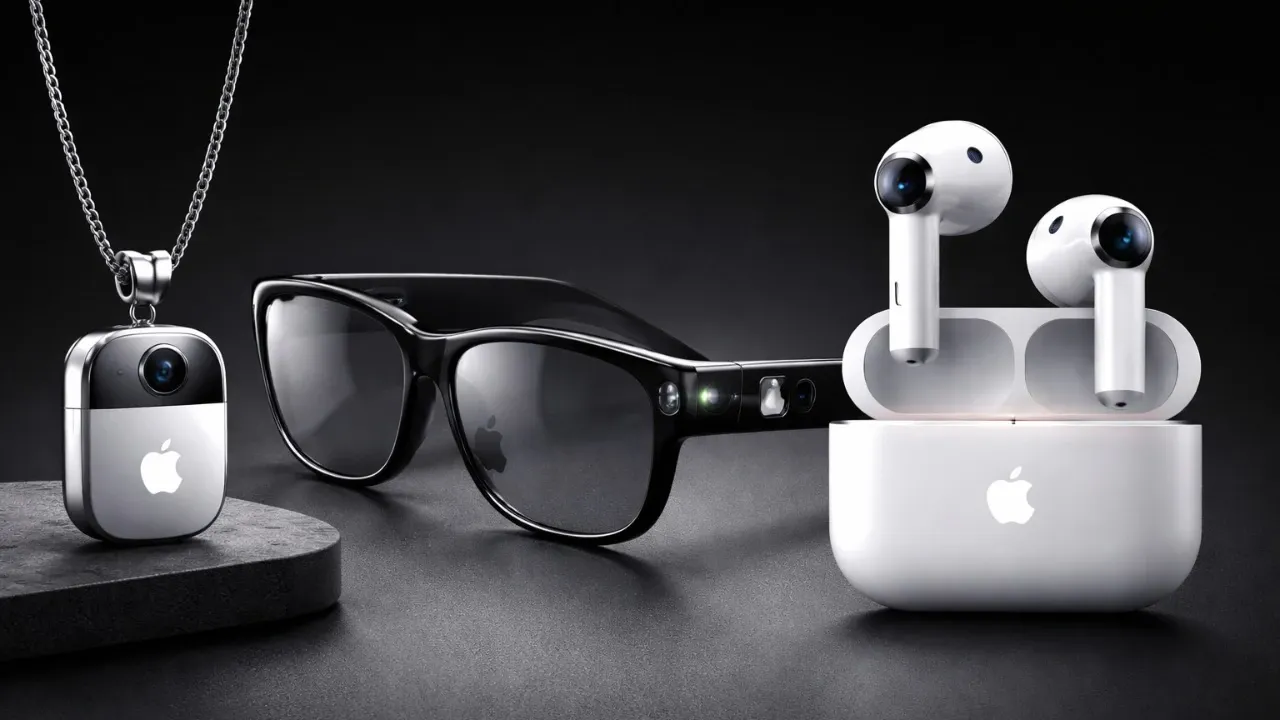
👀 What’s happening: Apple is reportedly planning AI-powered smart glasses, a wearable pendant, and camera-equipped AirPods that connect to the iPhone. According to Bloomberg, the devices rely on built-in cameras so Siri can use visual context to answer questions and trigger actions. The glasses may enter production in late 2026 ahead of a 2027 launch. None are expected to include displays.
🌍 How this hits reality: On paper, this expands Apple’s AI footprint into wearables. In practice, it mirrors what competitors already ship. Camera input, voice commands, and phone-tethered compute are established patterns. There is no new interface model, no dedicated on-device breakthrough, and no visible step change in autonomy. It reinforces ecosystem lock-in, but does not redefine hardware or AI economics. For now, it reads as hardware distribution layered on top of existing models.
🛎️ Key takeaway: The leak signals intent to compete in AI wearables, not a leap forward. Until Apple shows differentiated capability beyond camera plus Siri, this looks like strategic coverage rather than category leadership.
👀 What’s happening: Apple is reportedly planning AI-powered smart glasses, a wearable pendant, and camera-equipped AirPods that connect to the iPhone. According to Bloomberg, the devices rely on built-in cameras so Siri can use visual context to answer questions and trigger actions. The glasses may enter production in late 2026 ahead of a 2027 launch.
DAILY TL;DR
TRENDING
READ MORE
Stay ahead without drowning in information. We turn the most important signals across AI, tech, marketing, and future products into 5-minute reads you can actually finish.
TOGETHER WITH US
AI Secret Media Group is the world’s #1 AI & Tech Newsletter Group, reaching over 2 million leaders across the global innovation ecosystem, from OpenAI, Anthropic, Google, and Microsoft to top AI labs, VCs, and fast-growing startups.
We've helped promote over 500 Tech Brands. Will yours be the next?
Email our co-founder Mark directly at [email protected] if the button fails.
Good Morning, AI Enthusiasts!
Something is slipping its old skin. Intelligence is becoming embodied, ambient, and unavoidable.

SIRI

👀 What’s happening: Apple has signed a multi year deal to use Gemini as the core model behind the next version of Siri. Gemini beat out rivals from OpenAI and Anthropic after months of internal evaluation. ChatGPT remains optional, but Gemini becomes the default intelligence layer.
🌍 How this hits reality: This was not a branding choice. Apple tested for scale, latency, multimodality, and production reliability across billions of devices. Gemini already runs Android assistants and Samsung Galaxy AI. By picking Google, Apple optimized for infrastructure maturity and deployment muscle, even if it meant relying on a long time platform rival.
🛎️ Key takeaway: Gemini did not just win a contract. It won the most consequential AI bake off yet. By defeating Claude and OpenAI for Siri’s core, Google positions itself as the dominant mobile intelligence provider across ecosystems, with leverage no AI lab has previously achieved.
By defeating Claude and OpenAI for Siri’s core, Google positions itself as the dominant mobile intelligence provider across ecosystems, with leverage no AI lab has previously achieved.
By defeating Claude and OpenAI for Siri’s core, Google positions itself as the dominant mobile intelligence provider across ecosystems, with leverage no AI lab has previously achieved.
👀 What’s happening: Apple has signed a multi year deal to use Gemini as the core model behind the next version of Siri. Gemini beat out rivals from OpenAI and Anthropic after months of internal evaluation. ChatGPT remains optional, but Gemini becomes the default intelligence layer.
Apple tested for scale, latency, multimodality, and production reliability across billions of devices. Gemini already runs Android assistants and Samsung Galaxy AI. By picking Google, Apple optimized for infrastructure maturity and deployment muscle, even if it meant relying on a long time platform rival.
TOGETHER WITH HARDWIRE
The Hardwire is a weekly newsletter tracking the next wave of AI-powered hardware: consumer devices, wearables, spatial computing, and the silicon shaping it all. From product launches to deep-tech inflection points, it connects what’s being built with why it matters.
Read by founders, engineers, investors, and operators who want to understand how AI escapes the cloud and enters the physical world.
If you care about where software meets atoms, The Hardwire is where the future gets wired.
R&D
👀 What’s happening: Nvidia and Eli Lilly agreed to spend up to $1 billion over five years on a joint Bay Area lab to build AI foundation models for drug discovery. The setup combines Nvidia’s BioNeMo software and early access to Vera Rubin accelerators with Lilly’s robotic wet labs. It is less a pilot and more a permanent operating model.
🌍 How this hits reality: Drug discovery timelines already stretch 10 to 15 years and cost billions per approved drug. This move shifts the bottleneck from lab throughput to compute access and model quality. Early Vera Rubin supply, with roughly five times Blackwell performance, becomes a competitive asset. Pharma R&D, manufacturing, and even commercial ops start depending on GPU allocation and AI infrastructure roadmaps.
🛎️ Key takeaway: This is pharma accepting that compute strategy now shapes pipeline strategy. If this pattern holds, drug discovery advantages concentrate around GPU access, integrated labs, and AI platforms, not just molecules or patents.
👀 What’s happening: Nvidia and Eli Lilly agreed to spend up to $1 billion over five years on a joint Bay Area lab to build AI foundation models for drug discovery. The setup combines Nvidia’s BioNeMo software and early access to Vera Rubin accelerators with Lilly’s robotic wet labs.
NEW LAUNCH
👀 What’s happening: Anthropic has launched Claude Cowork in research preview, turning Claude into a persistent workplace agent with direct file access, task queues, and long running context. This arrives just as Meta has absorbed Manus, and as leading agent products like Genspark mature. The timing makes this feel less like a feature launch and more like a line being crossed.
🌍 How this hits reality: For years, the agents market assumed separation. Models at the bottom, agents on top, startups in between. Cowork breaks that stack. It bundles execution, memory, and tool access directly into the model owner’s product. Genspark and Manus built leadership by orchestrating third party models. That advantage erodes fast when the model itself ships with native agent behavior and system level permissions.
🛎️ Key takeaway: 2026 is shaping up as the year the model is the agent. Meta and Anthropic now sit inside the agent category, not beside it. For independent agents, this is not competition. It is a structural rewrite.
👀 What’s happening: Anthropic has launched Claude Cowork in research preview, turning Claude into a persistent workplace agent with direct file access, task queues, and long running context. This arrives just as Meta has absorbed Manus, and as leading agent products like Genspark mature.
This arrives just as Meta has absorbed Manus, and as leading agent products like Genspark mature. The timing makes this feel less like a feature launch and more like a line being crossed.
QUICK HITS
TRENDING
READ MORE
Stay ahead without drowning in information. We turn the most important signals across AI, tech, marketing, and future products into 5-minute reads you can actually finish.
TOGETHER WITH US
AI Secret Media Group is the world’s #1 AI & Tech Newsletter Group, reaching over 2 million leaders across the global innovation ecosystem, from OpenAI, Anthropic, Google, and Microsoft to top AI labs, VCs, and fast-growing startups.
We've helped promote over 500 Tech Brands. Will yours be the next?
Email our co-founder Mark directly at [email protected] if the button fails.

Good Morning, AI Enthusiasts!
The browser, the planet, and your laptop are all becoming surfaces for AI to see, reason, and act.

NEW LAUNCH
📌 What’s happening: Two days after OpenAI showed off its Atlas browser, Microsoft rolled out a near-identical “AI browser” update for Edge. The so-called Copilot Mode now reads tabs, summarizes info, and performs “Actions” like booking hotels or filling forms, all wrapped in a chat window that looks suspiciously like Atlas. Officially, this is a long-planned feature refresh. Unofficially, it’s Microsoft making sure no one mistakes whose AI runs the web.
🧠 How this hits reality: This wasn’t a product launch; it was a territorial response. Microsoft can’t afford for OpenAI’s browser to redefine user entry points into the internet. Edge’s sudden “AI evolution” is a defensive move to keep the agent layer inside Windows — not drifting toward OpenAI’s neutral playground. It’s less rivalry over UX and more about who controls the interface of intelligence itself.
🛎️ Key takeaway: Atlas showed what’s next; Microsoft showed who’s scared.
Microsoft can’t afford for OpenAI’s browser to redefine user entry points into the internet. Edge’s sudden “AI evolution” is a defensive move to keep the agent layer inside Windows — not drifting toward OpenAI’s neutral playground. It’s less rivalry over UX and more about who controls the interface of intelligence itself.
📌 What’s happening: Two days after OpenAI showed off its Atlas browser, Microsoft rolled out a near-identical “AI browser” update for Edge. The so-called Copilot Mode now reads tabs, summarizes info, and performs “Actions” like booking hotels or filling forms, all wrapped in a chat window that looks suspiciously like Atlas.
TOGETHER WITH ELEVENLABS
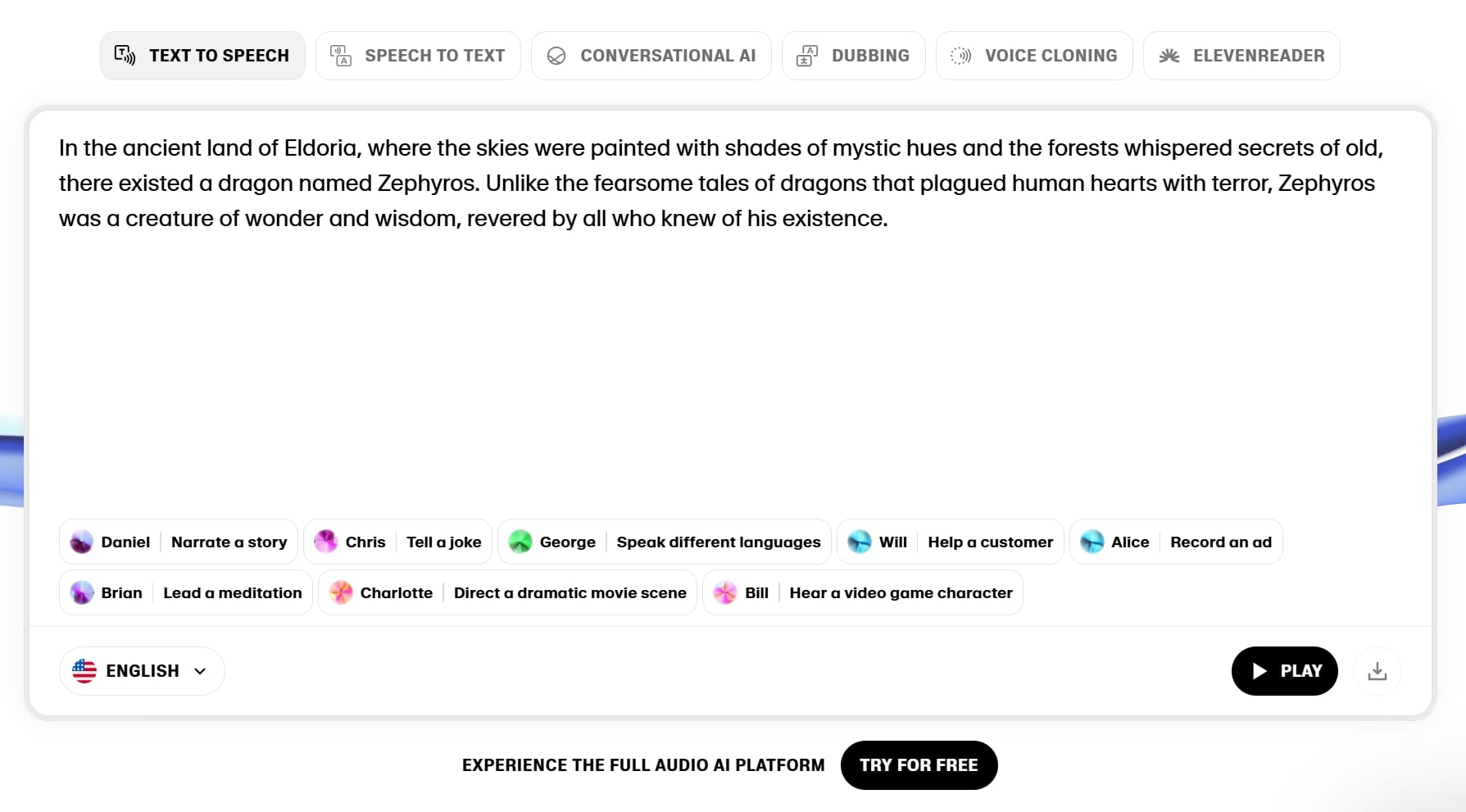
Imagine a world where the voice of an AI is so realistic, it could charm the socks off a statue. Well, buckle up, because ElevenLabs is here to turn that dream into a reality! Our cutting-edge voice models are like the Swiss Army knife of the vocal world—versatile, reliable, and just plain cool.
It creates stunning voiceovers for audiobooks, commercials, and anything else your heart desires. Say goodbye to awkward silences and hello to an audio experience that’s music to your ears—literally! Whether you’re a developer, a creator, or an enterprise with a penchant for the dramatic, we’ve got just the voice for you.
PREDICTION
📌 What’s happening: Google rolled out its biggest update to Earth AI since July, baking Gemini’s reasoning into geospatial models that can now connect live data streams, from satellite imagery to weather forecasts and population maps, to flag potential disasters before they unfold. Governments, utilities, and nonprofits can now “chat” with Earth AI to ask questions like where a river dried up, where floods may hit next, or which regions face toxic algae risks.
🧠 How this hits reality: This turns Google Earth from a visualization tool into an early-warning intelligence system. For cities, it’s predictive governance; for insurers, it’s preemptive risk modeling; for NGOs, it’s faster disaster response. The line between geospatial analysis and crisis management just blurred, and whoever owns the climate data pipeline owns the future.
🛎️ Key takeaway: Google isn’t just mapping the world anymore; it’s teaching it to think ahead of us.
📌 What’s happening: Google rolled out its biggest update to Earth AI since July, baking Gemini’s reasoning into geospatial models that can now connect live data streams, from satellite imagery to weather forecasts and population maps, to flag potential disasters before they unfold.
ACQUI-HIRE
👀 What’s the move: OpenAI just picked up Software Applications, a tiny but pedigreed Mac automation startup building “Sky,” an unreleased AI layer for macOS that sees your screen, reasons over what you’re doing, and acts on your behalf. The founders—Ari Weinstein and Conrad Kramer—are the same duo behind Workflow, the iOS tool Apple acquired in 2017 and turned into “Shortcuts.” In short: OpenAI just hired back Apple’s own automation architects.
🧠 How this hits reality: This isn’t about one small app; it’s about operating systems. “Sky” was built to make LLMs native to the desktop, not a chat window. With this team, OpenAI can push ChatGPT beyond the browser and into real OS-level control, something even Apple hasn’t nailed with Siri or Apple Intelligence. If successful, ChatGPT stops being a website and becomes an invisible co-worker inside your Mac.
🛎️ Key takeaway: OpenAI didn’t just buy an app; it bought the muscle memory of how Apple taught machines to do things for you.
With this team, OpenAI can push ChatGPT beyond the browser and into real OS-level control, something even Apple hasn’t nailed with Siri or Apple Intelligence. If successful, ChatGPT stops being a website and becomes an invisible co-worker inside your Mac.
With this team, OpenAI can push ChatGPT beyond the browser and into real OS-level control, something even Apple hasn’t nailed with Siri or Apple Intelligence. If successful, ChatGPT stops being a website and becomes an invisible co-worker inside your Mac.
QUICK HITS
TRENDING
TOGETHER WITH US
AI Secret Media Group is the world’s #1 AI & Tech Newsletter Group, boasting over 2 million readers from leading companies such as OpenAI, Google, Meta, and Microsoft. Our Newsletter Brands:
We've helped promote over 500 Tech Brands. Will yours be the next?
Email our co-founder Mark directly at [email protected] if the button fails.
From factories to frontlines, humanoid robots are no longer prototypes — they’re becoming co-workers, caregivers, and companions. Robotics Herald tracks the breakthroughs shaping this transformation, offering deep insights into the companies, technologies, and people building our mechanical future.

From frontier labs to public markets, the Bay Area remains the control room of technological capitalism. Bay Area Letters delivers sharp commentary on the forces reshaping the future — from AGI and robotics to synthetic biology and space. Each edition connects scientific breakthroughs with market movements, decoding how tomorrow’s technologies become today’s trillion-dollar narratives.
Good Morning, AI Enthusiasts!
When DeepSeek casually open-sourced a 3B-parameter OCR model that compresses text into images with near-lossless fidelity, it wasn’t just another AI drop, it was a shot fired at how machines read the world.
When DeepSeek casually open-sourced a 3B-parameter OCR model that compresses text into images with near-lossless fidelity, it wasn’t just another AI drop, it was a shot fired at how machines read the world.

NEW LAUNCH
📌 What’s happening: DeepSeek has open-sourced DeepSeek-OCR, a 3B-parameter model that achieves up to ten-fold lossless text compression through an “optical mapping” technique. The model, created by three former GOT-OCR2.0 researchers, combines a custom DeepEncoder and MoE decoder to treat visual tokens as a new form of language. It already outperforms GOT-OCR2.0 and MinerU2.0 on major benchmarks while using only one-tenth of their tokens and one-fifth of their GPU cost.
🧠 How this hits reality: This is not a simple OCR upgrade. It is a new way for AI to see text and retain more information while computing less. If visual encoding becomes the next layer of language compression, long-context models will no longer be constrained by memory or token limits. The implications for cloud cost, model architecture, and training efficiency are enormous.
🛎️ Key takeaway: DeepSeek did not just build another OCR model. It built a Trojan horse that hides language inside vision, quietly reshaping the economics of AI memory.
📌 What’s happening: DeepSeek has open-sourced DeepSeek-OCR, a 3B-parameter model that achieves up to ten-fold lossless text compression through an “optical mapping” technique. The model, created by three former GOT-OCR2.0 researchers, combines a custom DeepEncoder and MoE decoder to treat visual tokens as a new form of language.
TOGETHER WITH FRASE
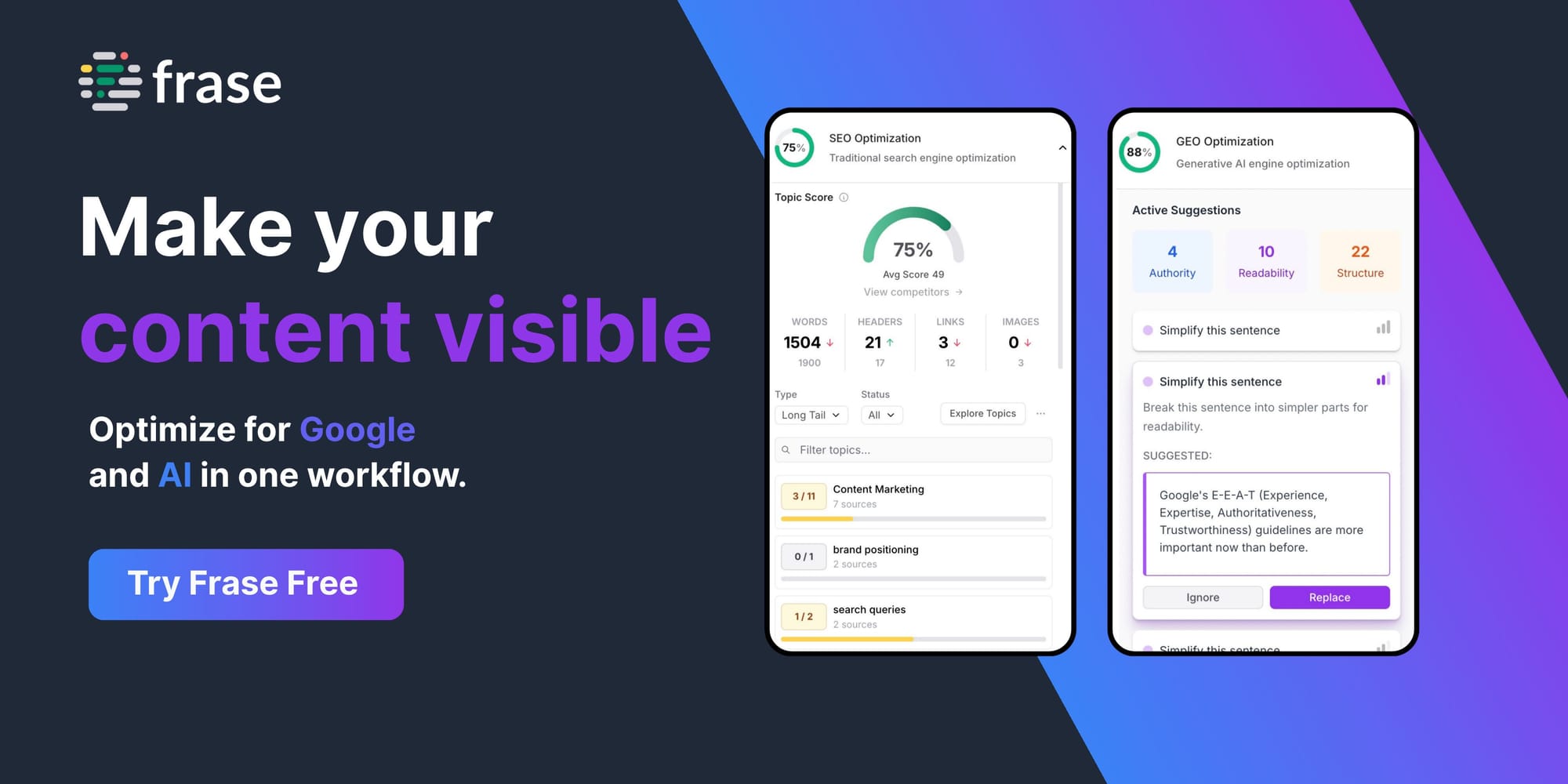
Google still owns 89% of search, but user habits are changing fast. ChatGPT’s search traffic jumped 740% year-over-year, and 77% of Americans now use it like a search engine. The future of visibility isn’t Google or AI—it’s both.
Frase helps you rank across both worlds. Unlike traditional SEO tools that optimize only for Google, Frase gives you dual optimization: Google SEO + AI Search GEO.
Content with a high GEO score sees a 70% higher chance of AI citation — and one SaaS customer saw 30% traffic lift by adding AI optimization to their existing Google SEO.
MONOPOLY

📌 What’s happening: WhatsApp quietly updated its business API rules to remove all general-purpose chatbots such as OpenAI’s ChatGPT, Perplexity, and Luzia by January 2026. Only business-specific assistants like customer service bots will remain. Meta explained that these chatbots “burdened the system” and “fell outside its strategic focus,” yet the real reason is clearer: they do not contribute to the message-based fees that keep WhatsApp profitable.
🧠 How this hits reality: This move is not about safety; it is about revenue control. WhatsApp’s API has become Meta’s next major income stream, and independent AI assistants were using its massive audience without paying Meta a share. By banning them, Meta regains control over 3 billion chat users and transforms WhatsApp into an exclusive channel for its own Meta AI. This decision signals a shift from open collaboration to tight ecosystem control similar to Apple’s model.
🛎️ Key takeaway: Meta just turned WhatsApp from a messaging network into a gated AI estate, and every other assistant just lost its invitation.
WhatsApp’s API has become Meta’s next major income stream, and independent AI assistants were using its massive audience without paying Meta a share. By banning them, Meta regains control over 3 billion chat users and transforms WhatsApp into an exclusive channel for its own Meta AI.
By banning them, Meta regains control over 3 billion chat users and transforms WhatsApp into an exclusive channel for its own Meta AI. This decision signals a shift from open collaboration to tight ecosystem control similar to Apple’s model.
PHARMA
📌 What’s happening: Anthropic just rolled out Claude for Life Sciences, a tailored version of its flagship Claude Sonnet 4.5 model aimed at biotech workflows, from reading lab protocols to drafting regulatory submissions. It plugs directly into platforms like Benchling, 10x Genomics, PubMed, and Synapse, letting researchers run drug discovery loops without the data-wrangling nightmare. Deloitte, KPMG, and Caylent are already onboard as consulting partners to integrate Claude into enterprise labs.
🧠 How this hits reality: This is Anthropic’s first real vertical play, and it’s a shot across the bow at BioGPT, NVIDIA’s BioNeMo, and Recursion’s in-house LLMs. Unlike open-weight bio models that optimize for accuracy, Claude’s edge is workflow capture: it doesn’t just “read papers,” it syncs with the systems where science actually happens. That’s what gets it inside regulated R&D budgets and out of the sandbox.
🛎️ Key takeaway: Anthropic isn’t selling AI to scientists; it’s selling time to pharma. Whoever owns the workflow, owns the lab.
📌 What’s happening: Anthropic just rolled out Claude for Life Sciences, a tailored version of its flagship Claude Sonnet 4.5 model aimed at biotech workflows, from reading lab protocols to drafting regulatory submissions. It plugs directly into platforms like Benchling, 10x Genomics, PubMed, and Synapse, letting researchers run drug discovery loops without the data-wrangling nightmare.
QUICK HITS
TRENDING
TOGETHER WITH US
AI Secret Media Group is the world’s #1 AI & Tech Newsletter Group, boasting over 2 million readers from leading companies such as OpenAI, Google, Meta, and Microsoft. Our Newsletter Brands:
We've helped promote over 500 Tech Brands. Will yours be the next?
Email our co-founder Mark directly at [email protected] if the button fails.
Latest Daily Rundowns
 Magna
Magna MagnaMagna
More AI Stories
Ben Magna
Magna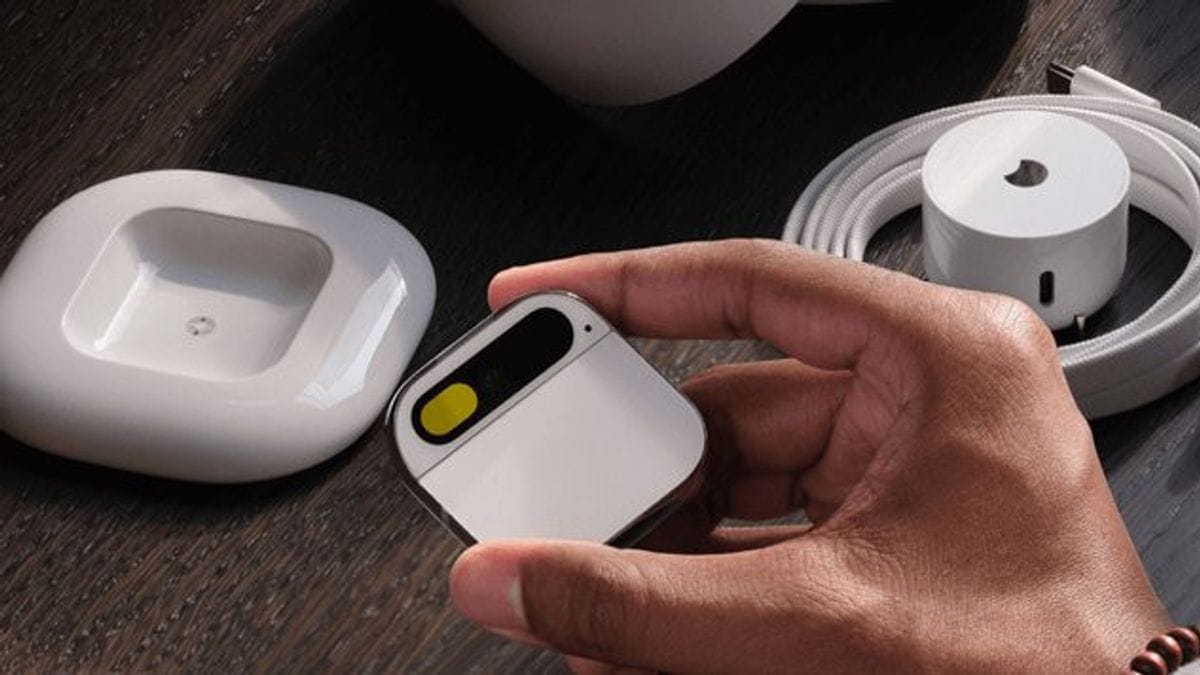 Ben
Ben
Good Morning, AI Enthusiasts!
The age of imitation is fading, and a new kind of imagination is taking hold.

NEW LAUNCH
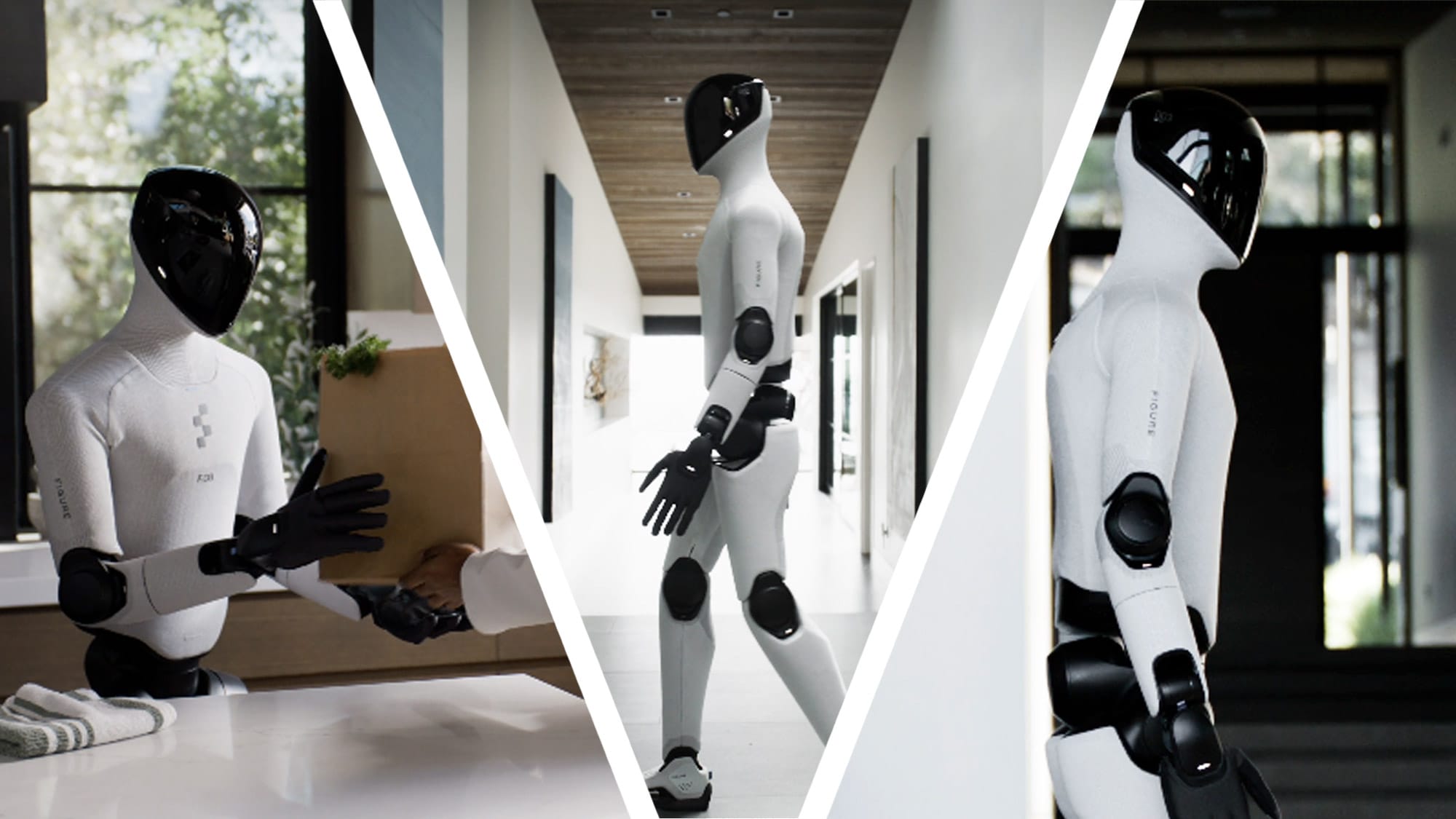
📌 What’s happening: Figure has unveiled Figure 03, its third-generation humanoid robot, rebuilt from scratch for Helix AI, homes, and global deployment. The new model features a high-frequency vision system with twice the frame rate, fingertip sensors that detect forces as light as a paperclip, and wireless charging with 10-gigabit data offload. It’s also designed for mass production through BotQ, Figure’s new factory built to produce 100,000 units within four years.
🧠 How this hits reality: Three generations in, no one has yet seen a humanoid robot working reliably outside the lab. Figure 03 may be the closest shot so far, but until one stocks shelves or cleans a room unassisted, the promise of “general-purpose” robotics remains theoretical. Still, the company’s vertically integrated design hints at how AI could finally break the hardware barrier.
🛎️ Key takeaway: Figure keeps perfecting the future on paper. Now it has to make the robot actually show up.
TOGETHER WITH KARAVIDEO

There are too many great AI video models — Kling, Runway, Veo 3, Pika — but too many tabs. KaraVideo.ai fixes that. It brings all the world’s top AI video models into one place.
RECORD
📌 What’s happening: OpenAI’s Sora iOS app has reached one million downloads in less than five days, surpassing ChatGPT’s launch growth even though it is still invite-only. The app allows users to generate, remix, and insert themselves into AI videos using the new Sora 2 model. It currently sits at the top of Apple’s App Store as OpenAI races to handle copyright disputes and an avalanche of deepfake memes flooding its feed.
🧠 How this hits reality: The Sora surge confirms both the promise and the threat of AI video. It shows that generative media is no longer experimental; it is entertainment. Every studio, ad agency, and creator platform now faces a competitor with zero production cost. The “AI slop” filling Sora’s feed may look chaotic, but so did early tiktok before it became an industry. If this trajectory holds, Sora is about to upend how visual content is produced, distributed, and owned.
🛎️ Key takeaway: Sora did not just go viral; it redefined what a product launch looks like when creativity scales at the speed of compute.
📌 What’s happening: OpenAI’s Sora iOS app has reached one million downloads in less than five days, surpassing ChatGPT’s launch growth even though it is still invite-only. The app allows users to generate, remix, and insert themselves into AI videos using the new Sora 2 model.
It currently sits at the top of Apple’s App Store as OpenAI races to handle copyright disputes and an avalanche of deepfake memes flooding its feed.
FASHION
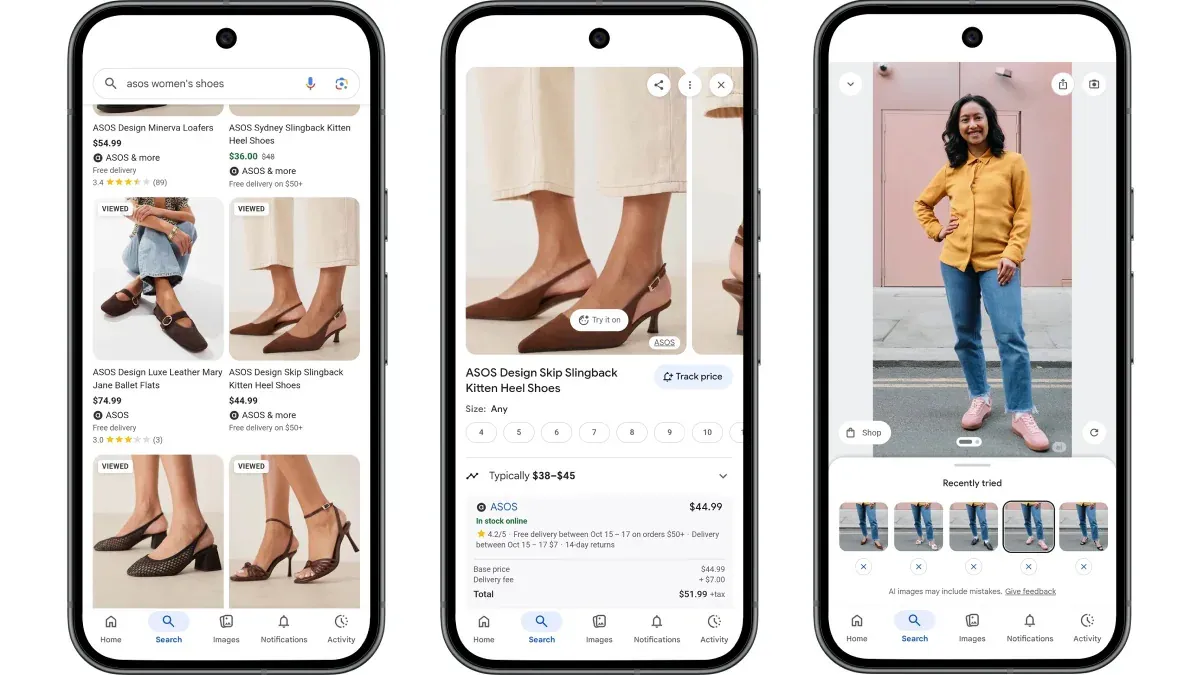
📌 What’s happening: Google has rolled out an AI shoe try-on feature inside Google Shopping. Users can now upload a full-body photo, and the system will realistically render how different shoes look on them, no “foot pics” needed. The model builds on Google’s earlier AI apparel try-on tool (shirts, pants, skirts) and will soon expand to more markets including Australia, Canada, and Japan.
🧠 How this hits reality: This isn’t AR gimmickry, it’s generative realism. Google’s model synthesizes entire limbs and shadows to preserve anatomical consistency across styles, making product visualization eerily lifelike. For retailers, this vaporizes the “return-rate moat” that Shopify, Amazon, and Nike have been hiding behind. If Google’s visual layer becomes the default fitting room of e-commerce, every fashion brand is suddenly a tenant on Google’s runway.
🛎️ Key takeaway: Google isn’t entering fashion, it’s annexing it with pixels that fit better than reality.
Google’s model synthesizes entire limbs and shadows to preserve anatomical consistency across styles, making product visualization eerily lifelike. For retailers, this vaporizes the “return-rate moat” that Shopify, Amazon, and Nike have been hiding behind. If Google’s visual layer becomes the default fitting room of e-commerce, every fashion brand is suddenly a tenant on Google’s runway.
QUICK HITS
TRENDING
TOGETHER WITH US
AI Secret Media Group is the world’s #1 AI & Tech Newsletter Group, boasting over 1 million readers from leading companies such as OpenAI, Google, Meta, and Microsoft. Our Newsletter Brands:
We've helped promote over 500 Tech Brands. Will yours be the next?
Email our co-founder Mark directly at [email protected] if the button fails.
Latest Daily Rundowns
MagnaMagnaMagnaMore AI Stories
Ben Ben
Ben Magna
Magna
Good Morning, AI Enthusiasts!
The places we expected the loudest declarations about the future, there’s an uncanny quiet.

NEW THINGS
📌 What’s happening: Human Behavior, a startup led by 20-year-olds, raised $5M in 48 hours by ripping out the guts of Mixpanel-style tracking. Instead of event tags and dashboards, their AI literally “watches” user sessions, parses intent, and spits out why customers rage-quit—something clickstream data has never managed.
🧠 How this hits reality: This torpedoes the old split between dashboards (big data, no context) and session replays (context, no scale). If AI can automate both, engineers stop wasting weeks wiring tracking pixels, PMs stop drowning in heatmaps, and incumbents face a moat-draining collapse. “Behavioral intelligence” becomes a default layer, not a luxury.
🛎️ Key takeaway: Forget counting clicks—Human Behavior turned product analytics into surveillance with consent, and the industry’s defenses look paper-thin.
TOGETHER WITH HIGGSFIELD
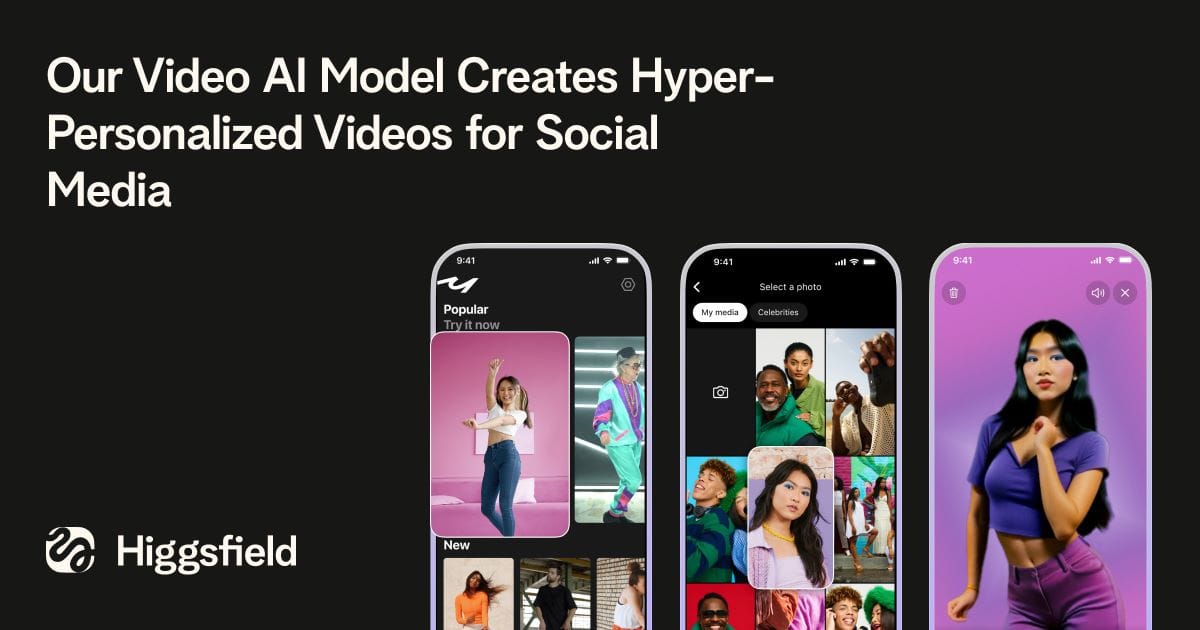
Hi, we’re Higgsfield! We’re a video AI company dedicated to democratizing social media content creation with our personalized video model.
With just 1 selfie, our model creates highly personalized and realistic human characters. Characters can be dropped into almost any scene:
TRAINING
📌 What’s happening: In their joint paper with Georgia Tech, Why Language Models Hallucinate (Sept 2025), OpenAI stops framing hallucinations as bugs and calls them statistical destiny. The proposed fix isn’t more data or model size, but a change in rules: rewire benchmarks so “I don’t know” is rewarded instead of punished. By introducing confidence thresholds and calibrating behavior, models can stop bluffing when they’re uncertain.
🧠 How this hits reality: If adopted, this rewrites the AI training economy. Current evals (MMLU, GPQA, SWE-bench) are binary—forcing overconfident guesses that bleed into products. Enterprises selling “trustworthy AI” will need new pipelines, metrics, and budgets for calibration. The catch: incentives across academia, vendors, and VC have all been tied to leaderboard wins. Convincing the ecosystem to embrace “IDK” over accuracy porn may prove harder than patching the models themselves.
🛎️ Key takeaway: OpenAI’s fix for hallucinations is brutally simple: change the exam rules. But getting an industry hooked on inflated scores to admit ignorance may be the hardest hallucination to break.
📌 What’s happening: In their joint paper with Georgia Tech, Why Language Models Hallucinate (Sept 2025), OpenAI stops framing hallucinations as bugs and calls them statistical destiny. The proposed fix isn’t more data or model size, but a change in rules: rewire benchmarks so “I don’t know” is rewarded instead of punished.
NEW LAUNCH
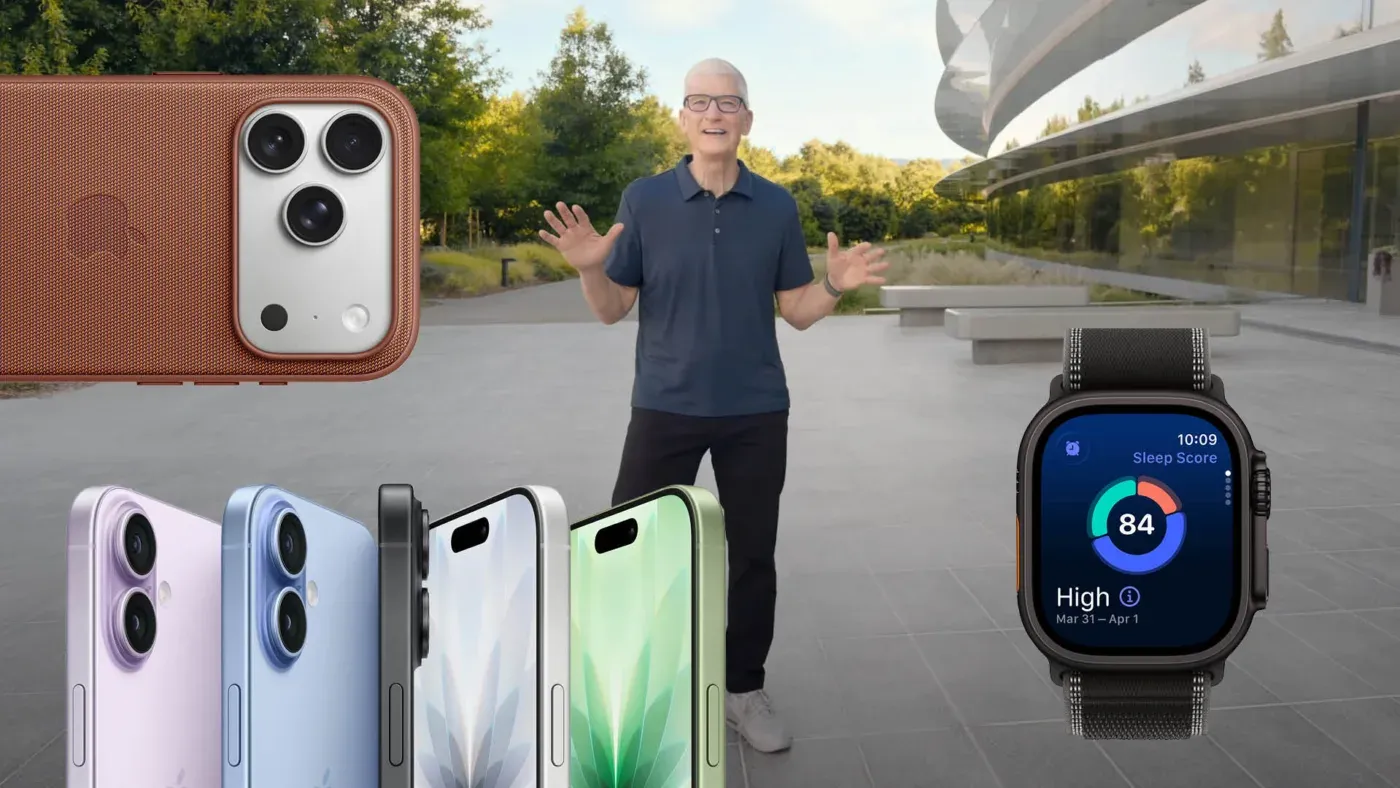
📌 What’s happening: Apple’s iPhone 17 launch spent more time on batteries, chips, and watch sensors than on “Apple Intelligence.” Last year’s AI bravado was replaced by quiet mentions of background neural engines, local models, and health studies. Meanwhile, rivals Google and Samsung flaunt agentic AI assistants front-stage.
🧠 How this hits reality: For developers and investors, this is Apple blinking in the AI arms race. With OpenAI, Anthropic, and Meta burning billions, Apple’s refusal to center AI tools signals one thing: Cupertino is hedging, not leading. Teams betting on Apple as an AI platform may need a backup plan — especially as talent defects to Meta and OpenAI.
🛎️ Key takeaway: When everyone else builds front-end AI moats, Apple is still polishing the back-end mirrors.
📌 What’s happening: Apple’s iPhone 17 launch spent more time on batteries, chips, and watch sensors than on “Apple Intelligence.” Last year’s AI bravado was replaced by quiet mentions of background neural engines, local models, and health studies. Meanwhile, rivals Google and Samsung flaunt agentic AI assistants front-stage.
QUICK HITS
The UAE's new K2 Think AI model , built on Alibaba's Qwen 2.5, aims to rival OpenAI and DeepSeek with high efficiency and an open-source approach.
TRENDING
TOGETHER WITH US
AI Secret Media Group is the world’s #1 AI & Tech Newsletter Group, boasting over 1 million readers from leading companies such as OpenAI, Google, Meta, and Microsoft. Our Newsletter Brands:
We've helped promote over 500 Tech Brands. Will yours be the next?
Email our co-founder Mark directly at [email protected] if the button fails.
Latest Daily Rundowns
MagnaMagnaMagnaMore AI Stories
Ben Magna
Magna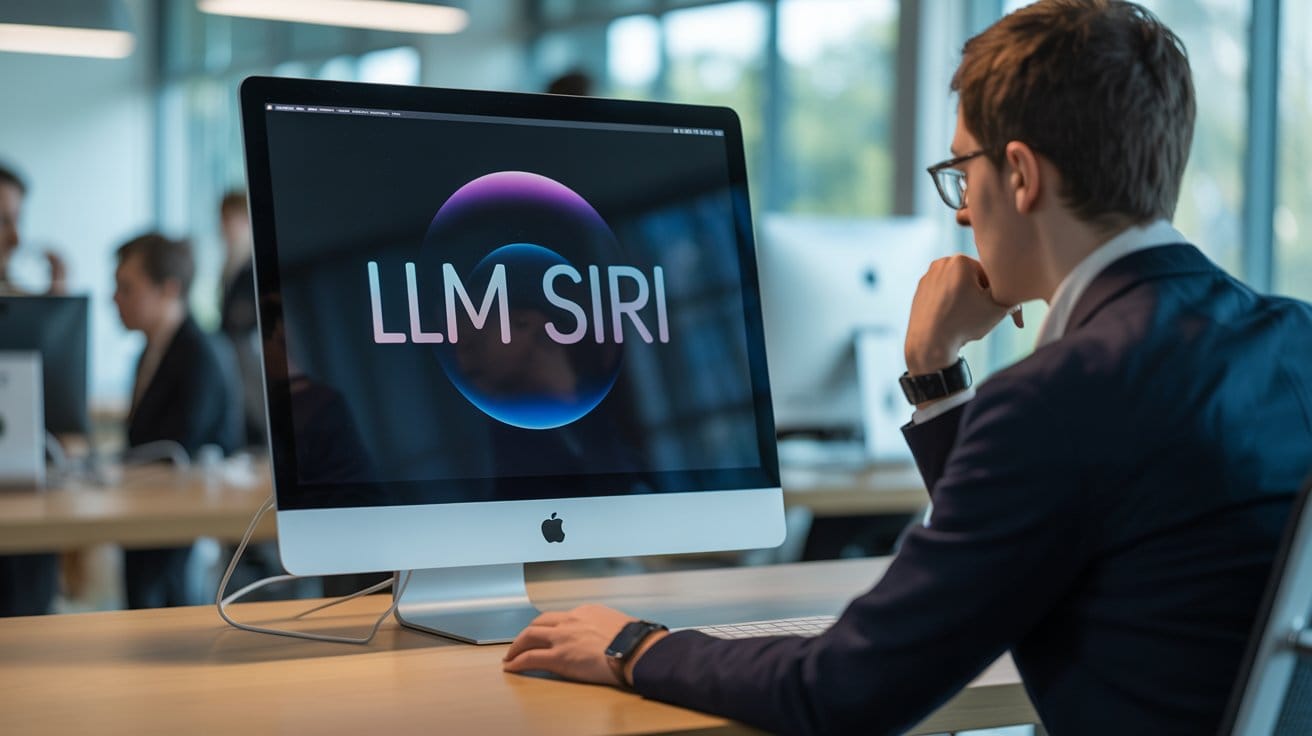 Ben
Ben
Good Morning, AI Enthusiasts!
A strange tale unfolds: where invisible forces collide, your digital guide falters, and great minds simply clock out. Welcome to the delightful disarray of the modern tech scape.

TALENT
📌 What’s happening: Meta just snagged Apple’s head of AI models, Ruoming Pang—a quiet but critical player behind Apple Intelligence. He follows a string of Apple-to-Meta defectors, as Zuckerberg’s AI charm offensive rolls on.
🧠 How this hits reality: Meta’s not just collecting AI résumés—it’s draining Apple’s bench depth before the iPhone maker even fully launches its AI strategy. For Apple, this is an executional gut punch; for Meta, it's stacking the bench before the playoffs. Expect more “Apple Intelligence” delays, vague roadmaps, and behind-the-scenes panic in Apple.
🛎️ Key takeaway: If Apple Intelligence is the plan, Meta just stole the guy who knew where the bodies—and the bugs—were buried.
🧠 How this hits reality: Meta’s not just collecting AI résumés—it’s draining Apple’s bench depth before the iPhone maker even fully launches its AI strategy. For Apple, this is an executional gut punch; for Meta, it's stacking the bench before the playoffs. Expect more “Apple Intelligence” delays, vague roadmaps, and behind-the-scenes panic in Apple.
🧠 How this hits reality: Meta’s not just collecting AI résumés—it’s draining Apple’s bench depth before the iPhone maker even fully launches its AI strategy. For Apple, this is an executional gut punch; for Meta, it's stacking the bench before the playoffs. Expect more “Apple Intelligence” delays, vague roadmaps, and behind-the-scenes panic in Apple.
TOGETHER WITH CASTMAGIC
Castmagic uses AI to turn your spoken words into structured content—podcast show notes, tweets, blog drafts, newsletters, even LinkedIn threads. Just upload your audio, and let the AI do what interns wish they could. It’s like ChatGPT and a podcast assistant had a super-productive baby.
CODING

📌 What’s happening: AI coding assistant Cursor jacked up its prices, then got smacked by user backlash so fierce it had to issue an apology for being “unclear.” The company claims its intent was misunderstood—users say it was just greed in plain text.
🧠 How this hits reality: Another AI darling learns that “move fast” doesn’t mean “move shady.” Users—many of them devs—don’t tolerate surprise fees, especially when their entire workflow is on the line. Startups betting on LLMs as sticky SaaS are waking up to the reality: devs can and will churn.
🛎️ Key takeaway: AI startups keep forgetting: your moat is thin, but your users’ memory is long..
📌 What’s happening: AI coding assistant Cursor jacked up its prices, then got smacked by user backlash so fierce it had to issue an apology for being “unclear.” The company claims its intent was misunderstood—users say it was just greed in plain text.
LLM

📌 What’s happening: A 45-year-old Atari 2600 chess program just humiliated Microsoft Copilot and ChatGPT-4o in head-to-head matches. The vintage AI, running on hardware with 128 bytes of RAM, beat the billion-dollar brainchildren of Silicon Valley.
🧠 How this hits reality: This isn’t just retro fun—it’s a brutal reminder that today’s AI tools are smoke and mirrors when it comes to logic and structured reasoning. LLMs spit out words, not solutions. The real losers? The investors and execs still pretending these models can do actual thinking.
🛎️ Key takeaway: We’ve poured billions into AI that can’t outthink a console gathering dust in grandma’s basement.
📌 What’s happening: A 45-year-old Atari 2600 chess program just humiliated Microsoft Copilot and ChatGPT-4o in head-to-head matches. The vintage AI, running on hardware with 128 bytes of RAM, beat the billion-dollar brainchildren of Silicon Valley.
QUICK HITS
TRENDING
TOGETHER WITH US
AI Secret Media Group is the world’s #1 AI & Tech Newsletter Group, boasting over 1 million readers from leading companies such as OpenAI, Google, Meta, and Microsoft. Our Newsletter Brands:
We've helped promote over 500 Tech Brands. Will yours be the next?
Email our co-founder Mark directly at [email protected] if the button fails.
Latest Daily Rundowns
MagnaMagnaMagnaMore AI Stories
Magna Magna
Magna Magna
Magna
Plus: Meta Is Outdated, Anthropic Starts Limiting, Human Review Is Breaking
Read the storyPlus: Apple Rebuilds Siri, Agent Memory Just Broke the Limit
Plus: Grok 4.2 Multi-Model, Apple AI Wearables Leak
Plus: GPUs Into Pharma, Anthropic Launches Agents
Plus: Chat with Earth AI, OpenAI’s Mac Play
Plus: Meta Bans Competitors, Claude for Life Sciences
Plus: Sora Hits 1M, Google’s AI Try-On
Plus: OpenAI Don't Know, Apple Ghosts AI
Meta Platforms, the tech juggernaut formerly known as Facebook, has never been shy about its ambitions. From connecting the world’s population to building a virtual
Meta Swipe Apple, Cursor Moves Shady, LLMs Get Schooled