Reviewed 19 October 2026. Dates retain the precision of the source; retrospective disclosures are identified in the event. Fiscal revenue and Services sales are distinct from AI revenue; no Apple Intelligence ARR is inferred.
Company milestones
Revenue, funding, product launches and major company events, newest first. Expand the earlier milestones for more history.
Begins rolling out Siri AI
Apple announces the more capable assistant with its new software releases, extending Apple Intelligence across supported devices and applications.
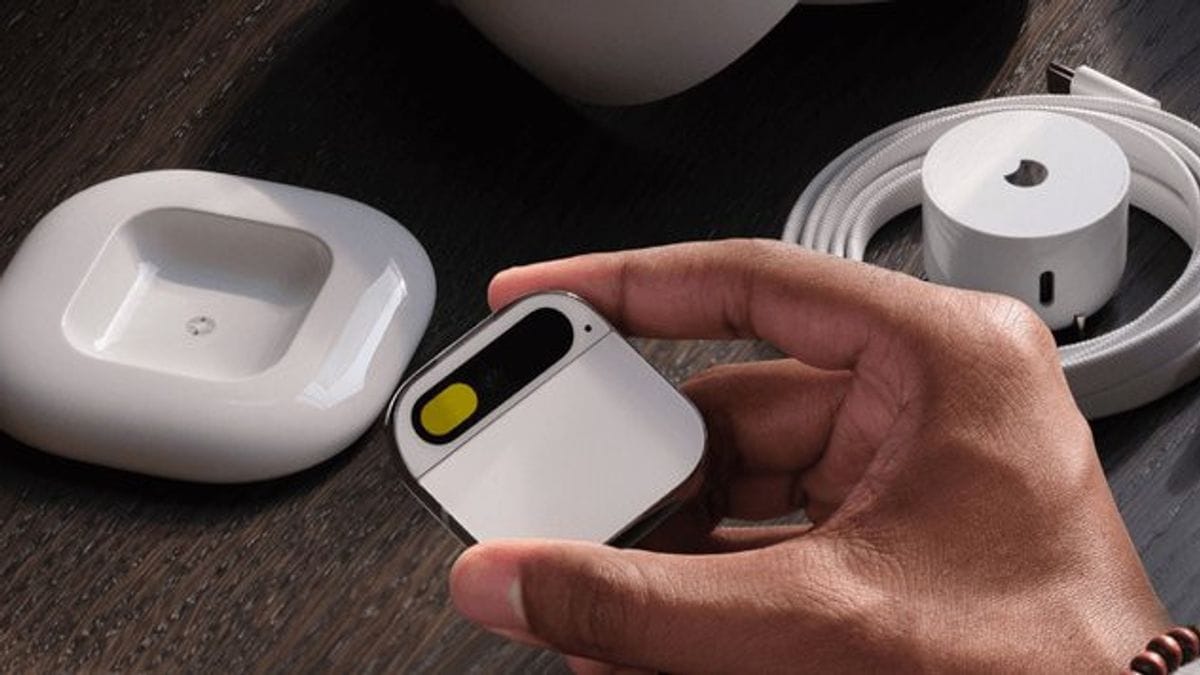
The story of Humane's AI Pin is one for the tech history books—a rollercoaster ride of ambition, hype, and inevitable heartbreak. What started as a Silicon Valley darling with promises of a smartphone-free future ended with a fire sale to HP for a fraction of its original valuation. Let’s break down this saga into three acts: the meteoric rise, the dramatic fall, and the lessons learned (or not).
The Meteoric Rise of Humane’s AI Pin
Ah, the AI Pin. It was 2023, and the tech world was buzzing with the promise of Humane’s futuristic gadget. The startup, founded by ex-Apple employees Imran Chaudhri and Bethany Bongiorno, set out to liberate humanity from the tyranny of smartphones. Their vision? A screenless, wearable device that used artificial intelligence to project information onto your hand and interact with you via voice commands. It was like something out of a sci-fi movie, and Silicon Valley ate it up.
Humane unveiled the AI Pin with a bang. Co-founder Imran Chaudhri demonstrated the device’s laser projection feature during a TED Talk in April 2023. The demo was so slick that some skeptics accused him of faking it. (Spoiler alert: It was real, but the device’s real-world performance didn’t live up to the hype).
In September 2023, supermodel Naomi Campbell wore the AI Pin on the runway at Paris Fashion Week. The device was so discreet that you wouldn’t notice it unless you were looking for it. This move mirrored Apple’s strategy of making their products fashion statements.
Humane raised $240 million in funding and secured partnerships with tech heavyweights like OpenAI and Microsoft. The company was valued at a staggering $850 million before it even released a product.
Time magazine named the AI Pin one of the best inventions of 2023. The device was marketed as the ultimate smartphone replacement, promising to free users from endless scrolling and screen addiction.
For a moment, it seemed like Humane had cracked the code. The AI Pin was poised to revolutionize the way we interact with technology. But as the saying goes, “The higher you climb, the harder you fall.”
Apple: The Meteoric Rise of Humane’s AI Pin
The startup, founded by ex-Apple employees Imran Chaudhri and Bethany Bongiorno, set out to liberate humanity from the tyranny of smartphones. Their vision? A screenless, wearable device that used artificial intelligence to project information onto your hand and interact with you via voice commands. It was like something out of a sci-fi movie, and Silicon Valley ate it up.
The Dramatic Fall of Humane’s AI Pin
The AI Pin’s fall from grace was as swift as its rise. By February 2025, the company had sold its assets to HP for $116 million—a fraction of the $240 million it had raised. So, what went wrong?
At $699 upfront and a $24/month subscription fee, the AI Pin was prohibitively expensive. For that kind of money, consumers expected a device that could genuinely replace their smartphones. Instead, they got a gadget that felt half-baked.
Reviews highlighted the AI Pin’s slow and inaccurate responses. The device’s AI assistant was so bad that it became a running joke in tech circles. Imagine asking your AI Pin for directions and ending up in a cornfield instead of a coffee shop. Not exactly confidence-inspiring.
The AI Pin had a nasty habit of overheating, making it uncomfortable (and potentially dangerous) to wear. This wasn’t just a minor inconvenience—it was a dealbreaker.
Humane marketed the AI Pin as a smartphone replacement, but it failed to deliver on that promise. The device tried to do too much—calling, messaging, AI queries, and more—but didn’t excel at any of them. Consumers quickly realized that their smartphones could do everything the AI Pin could, only better.
By mid-2024, the writing was on the wall. Humane had only sold around 10,000 units, far short of its goal of 100,000. Returns piled up, and the company was forced to recall the device’s charging case due to a lithium battery fire hazard. Ouch.
In a desperate bid to stay afloat, Humane began exploring a sale. Initially, the company sought a valuation of $1 billion, but it ultimately settled for $116 million from HP. The deal included Humane’s intellectual property, patents, and some employees, but not the AI Pin itself. Humane’s founders will now lead a new AI division at HP, focusing on integrating AI into PCs and printers.
Lessons Learned (or Not)
The rise and fall of Humane’s AI Pin offer valuable lessons for tech innovators, investors, and consumers alike. Here are the key takeaways:
Humane’s marketing strategy was brilliant, but it also set expectations sky-high. When the AI Pin failed to deliver, the backlash was swift and brutal. Tech companies should be cautious about overhyping their products, especially when they’re unproven.
Humane had a bold vision, but the execution fell short. As Henry Liu from Humane put it, “Visionary ideas need execution and feedback.” A groundbreaking concept is meaningless if the product doesn’t work as intended.
Humane misjudged consumer demand for a standalone AI device. Most people are perfectly happy using their smartphones for AI-related tasks. The AI Pin’s failure underscores the importance of understanding your target audience and their needs.
The AI Pin’s overheating issues and unreliable performance were rookie mistakes. For a product to succeed, it needs to be functional, reliable, and user-friendly. Fancy features mean nothing if the basics aren’t covered.
As HP’s Tuan Tran noted, “There will be a time and place for pure AI devices, but there is going to be AI in all our devices.” The AI Pin’s failure suggests that consumers prefer AI to enhance existing devices rather than replace them entirely.
Looking Forward
The Humane AI Pin was a bold experiment that ultimately failed, but it wasn’t a total loss. The company’s intellectual property and talent will live on at HP, and the lessons learned from this debacle will (hopefully) inform future innovations. For now, the AI Pin serves as a cautionary tale: in the race to disrupt the status quo, don’t forget to build something that actually works.
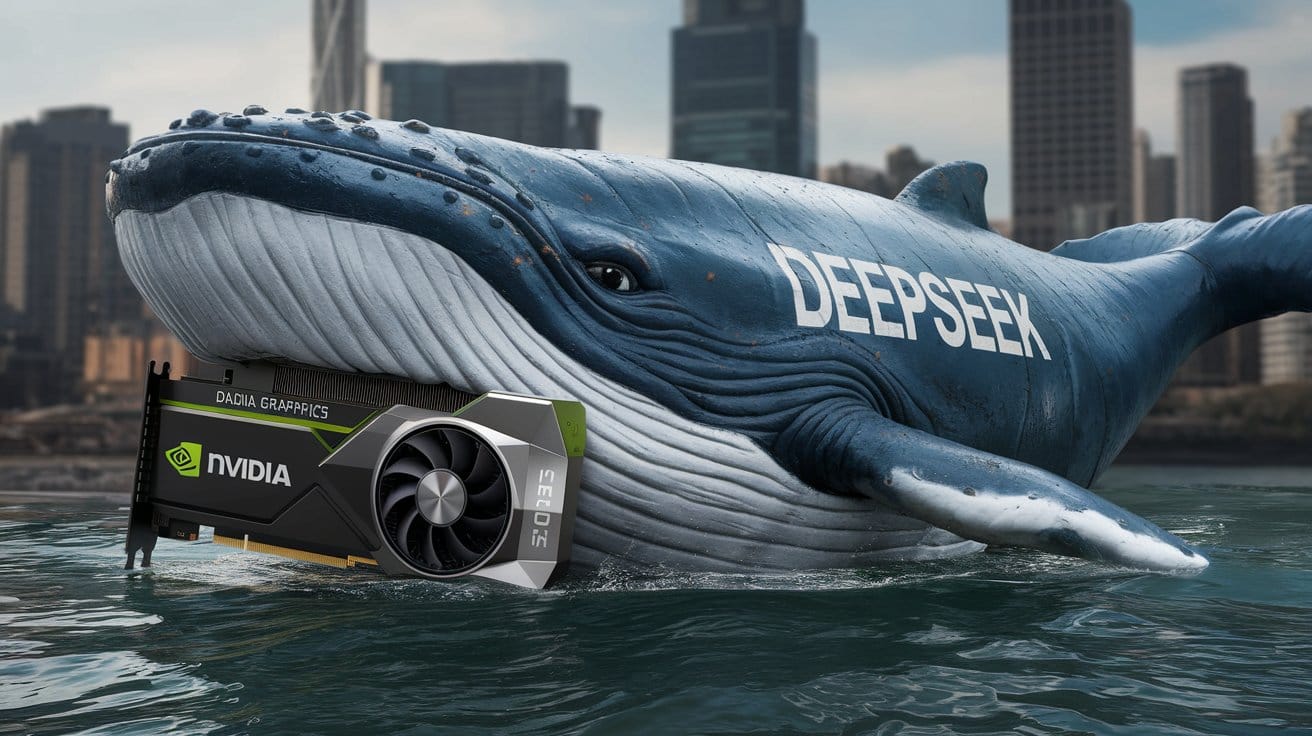
Ladies and gentlemen, gather around for the latest episode of "Tech Wars: The Rise of the AI Titans." Today’s protagonist—or antagonist, depending on which side of the stock market you’re on—is none other than China’s DeepSeek AI. This scrappy startup has managed to shake the foundations of Silicon Valley and send Nvidia, the reigning king of AI hardware, into a tailspin. If you thought AI was just about chatbots and self-driving cars, think again. DeepSeek has made it clear that the battle for AI supremacy is also a battle for cost efficiency, technological dominance, and, apparently, Wall Street’s collective sanity.
Stocks Fallen: Nvidia hit by DeepSeek
Ladies and gentlemen, gather around for the latest episode of "Tech Wars: The Rise of the AI Titans." Today’s protagonist—or antagonist, depending on which side of the stock market you’re on—is none other than China’s DeepSeek AI.
Stocks Fallen: Nvidia hit by DeepSeek
Ladies and gentlemen, gather around for the latest episode of "Tech Wars: The Rise of the AI Titans." Today’s protagonist—or antagonist, depending on which side of the stock market you’re on—is none other than China’s DeepSeek AI.
A Cinderella Story (With Chips Instead of Glass Slippers)
DeepSeek’s models are reportedly 20-40 times cheaper than equivalent models from OpenAI. Yes, you read that right. While OpenAI is out here charging premium prices, DeepSeek is essentially running a "Black Friday Sale" on AI models year-round.
Unlike most AI giants that rely on Nvidia’s high-performance chips, DeepSeek has managed to achieve impressive results using less powerful hardware. This is like winning a Formula 1 race in a Prius—unheard of but undeniably impressive.
DeepSeek’s models are open-source, which means they’re available for free. This has not only democratized access to advanced AI but also raised questions about whether the tech industry has been overspending on proprietary solutions.
DeepSeek’s R1 model has skyrocketed to the top of Apple’s App Store charts, dethroning OpenAI’s ChatGPT as the most downloaded free app. This is like a new band knocking The Beatles off the charts—an event that’s sure to ruffle some feathers.
OpenAI: A Cinderella Story (With Chips Instead of Glass Slippers)
DeepSeek’s R1 model has skyrocketed to the top of Apple’s App Store charts, dethroning OpenAI’s ChatGPT as the most downloaded free app. This is like a new band knocking The Beatles off the charts—an event that’s sure to ruffle some feathers.
Apple: A Cinderella Story (With Chips Instead of Glass Slippers)
DeepSeek’s R1 model has skyrocketed to the top of Apple’s App Store charts, dethroning OpenAI’s ChatGPT as the most downloaded free app. This is like a new band knocking The Beatles off the charts—an event that’s sure to ruffle some feathers.
Nvidia’s Nightmare: The Fallout
Now, let’s talk about Nvidia, the chip-making giant that has been the backbone of AI development for years. Nvidia’s GPUs are the gold standard for training and running large language models (LLMs). However, DeepSeek’s success has thrown a wrench into Nvidia’s well-oiled machine. Here’s how:
Nvidia’s stock plunged by as much as 14% in pre-market trading on January 27, 2025. Other tech stocks, including ASML and Broadcom, also took a hit, with the Nasdaq index dropping by nearly 4%. It’s safe to say that Wall Street is not having a good day.
Analysts are now questioning whether Nvidia’s premium chips are still worth the price. If companies like DeepSeek can achieve similar results with less powerful hardware, why pay a premium? This has led to a broader reckoning about the economics of AI.
DeepSeek’s ability to train models using less powerful chips could inspire other companies to follow suit. This would reduce demand for Nvidia’s high-end GPUs, potentially impacting the company’s revenue and market dominance .
Nvidia’s Nightmare: The Fallout
Now, let’s talk about Nvidia, the chip-making giant that has been the backbone of AI development for years. Nvidia’s GPUs are the gold standard for training and running large language models (LLMs). However, DeepSeek’s success has thrown a wrench into Nvidia’s well-oiled machine. Here’s how:
Implications for the Tech Industry
DeepSeek’s rise is not just a story about one company disrupting another; it’s a wake-up call for the entire tech industry. Here are some of the broader implications:
Shift in AI Economics: DeepSeek has proven that you don’t need to spend billions to develop cutting-edge AI. This could lead to a shift in how companies allocate resources and prioritize efficiency over brute force.
Geopolitical Ramifications: The U.S. government has been trying to maintain its lead in AI by restricting the export of advanced chips to China. However, DeepSeek’s success shows that China can innovate even with limited access to high-end hardware. This could have significant implications for global tech competition.
Open Source vs. Proprietary Models: DeepSeek’s open-source approach challenges the proprietary models of companies like OpenAI and Google. This could democratize access to AI but also raise questions about intellectual property and data security.
What’s Next for Nvidia?
So, what does the future hold for Nvidia? While the company is undoubtedly facing challenges, it’s not time to write its obituary just yet. Nvidia still has a significant advantage in high-end GPUs, which are essential for many advanced applications. However, the company will need to adapt to the changing landscape by focusing on cost efficiency and exploring new markets.
In the grand scheme of things, DeepSeek’s rise is a testament to the power of innovation and the importance of challenging the status quo. While Nvidia may be feeling the heat, this disruption could ultimately lead to a more competitive and efficient AI industry. As for DeepSeek, it has proven that sometimes, the underdog can not only compete but also redefine the game.
So, here’s to DeepSeek for shaking things up and to Nvidia for hopefully rising to the challenge. And to the rest of us, let’s grab some popcorn and enjoy the show—because the AI wars are just getting started.
In April 2025, the United States Department of Justice (DOJ) escalated its antitrust battle against Google, shifting its focus from the company’s historic dominance in online search to its aggressive push
OpenAI, a leader in artificial intelligence research and development, is reportedly in advanced discussions to acquire io Products, a secretive AI hardware startup co-founded by former
Apple is embarking on one of its most ambitious projects to date: transforming its Health app into a comprehensive AI-driven health platform. This initiative, internally codenamed
Apple, the tech giant that has revolutionized everything from smartphones to watches, is now reportedly exploring the world of humanoid robots. Yes, you read that right—