Reporting and context on Google, with a closer look at the decisions and developments that matter.
Get AI Secret’s free daily briefing, including Google and the wider AI industry.

At a glance
Google is part of Alphabet. This topic follows its AI research, Gemini models, Google DeepMind, cloud infrastructure and consumer products.
- Focus
- Gemini; Google DeepMind; Google Cloud
- Reference
Sources checked . Selected company background and milestones.
Company milestones
Selected milestones, newest first. Earlier history is available below.
Forms Google DeepMind
Google brings the Brain team and DeepMind together as Google DeepMind.
Source: Google
Show earlier historyHide earlier history · 1 milestones
More than 10 years ago.
The latest on Google
Newest firstRelated reporting
Relevant sections from the articles on this page. Explore older coverage below.
More coverage

Good Morning, AI Enthusiasts!
Before we look ahead to 2026, thank you for reading AI Secret through 2025. This is our final issue of the year. After Christmas, we return to what comes next for AI.

STANFORD
Stanford Calls 2026 the Year AI Faces Reality

Stanford researchers describe 2026 as the year AI stops selling possibility and starts answering for results. Faculty across computer science, medicine, law, and economics converge on the same shift. No AGI breakthrough. Fewer grand claims. More audits, benchmarks, and postmortems. Governments push AI sovereignty through local compute and data control. Enterprises admit many deployments failed to lift productivity outside narrow zones like programming and call centers. Model progress slows as data quality and scale hit limits, pushing attention toward smaller systems trained on carefully curated datasets. Video and medical AI finally move from demos into real use, pulling copyright and clinical scrutiny with them.
The change puts pressure on the foundations built over the last three years. Massive data center investments assume long run returns that now face tighter evaluation. Hospitals drown in overlapping AI vendors and start demanding workflow level ROI, not accuracy alone. Courts and law firms shift toward multi document reasoning, citation integrity, and risk exposure as table stakes. Economists build high frequency dashboards to track task level labor effects monthly, not years later. Measurement becomes unavoidable once capital, labor, and regulation intersect.
The likely outcome is a narrower, more disciplined AI economy. Fewer generalized claims. More domain specific systems tied to cost, reliability, and accountability. Compute still matters, but justification replaces momentum. Teams that align models, interfaces, and infrastructure to provable utility continue forward. The rest fade from view.
TOGETHER WITH ROBOTICS HERALD
Explore the Rise of Humanoid Intelligence

From factories to frontlines, humanoid robots are no longer prototypes — they’re becoming co-workers, caregivers, and companions. Robotics Herald tracks the breakthroughs shaping this transformation, offering deep insights into the companies, technologies, and people building our mechanical future.
AGENTS
Google Sees AI Agents Replacing How Work Gets Done in 2026
Google Cloud’s 2026 outlook is simple and quietly disruptive. AI agents stop being assistants and start becoming the default interface for work. These systems understand goals, break them into steps, coordinate with other agents, and execute across enterprise software with human oversight. Google frames 2026 as the point where this shifts from experimentation to daily operations. Employees no longer ask tools for answers. They assign outcomes and supervise execution. The change feels different because it is already visible inside large organizations, not locked in research demos or future roadmaps.
The pressure lands on how companies are built. When agents run workflows end to end, assumptions about approvals, tickets, security, and accountability start to bend. Google cites cases where tens of thousands of employees save meaningful time per task, customer response cycles shrink from days to minutes, and security teams offload triage at scale. Systems designed around human initiation struggle when software is allowed to act. Identity, payments, compliance, and monitoring all become harder once the actor is an agent, not a person. That is the quiet friction most teams underestimate.
The trajectory points toward agent orchestration becoming a core management skill. Organizations that invest early in interoperable agents and workforce training gain compounding leverage. Those that delay risk losing control over systems that still technically work, but no longer match how work actually flows.
Google Sees AI Agents Replacing How Work Gets Done in 2026
Google Cloud’s 2026 outlook is simple and quietly disruptive. AI agents stop being assistants and start becoming the default interface for work. These systems understand goals, break them into steps, coordinate with other agents, and execute across enterprise software with human oversight. Google frames 2026 as the point where this shifts from experimentation to daily operations.
MARKET
AI Capital Spending Accelerates As Market Discipline Tightens in 2026

Goldman Sachs is pointing to another sharp step up in AI spending next year. Wall Street now expects hyperscalers to pour about $527 billion into capital expenditures in 2026, and Goldman notes these numbers have been revised higher almost every quarter. The pattern is familiar. Earnings arrive, infrastructure plans expand, and prior estimates look too low. What feels new is the reaction. Investors are no longer treating all AI investment as equally valuable.
The internal strain is already visible. Since mid year, stock price correlation among major AI hyperscalers has dropped from roughly 80 percent to around 20 percent. Infrastructure stocks are up more than 40 percent year to date, while forward earnings expectations have barely moved. AI capex sits near 0.8 percent of GDP, well below historic technology boom peaks closer to 1.5 percent. That leaves headroom, but also exposes companies relying on debt funded builds and uncertain power availability.
Goldman expects attention to migrate away from pure infrastructure toward AI platforms and productivity beneficiaries that can show revenue leverage. Spending is unlikely to slow soon. The bigger constraint looks like investor patience and physical supply, not cash. Capital keeps flowing, but fewer names will be allowed to justify it.
QUICK HITS
- OpenAI says prompt injection can’t be fully eliminated and is mitigating Atlas risks through automated attack simulations and layered defenses.
- Instacart has shut down its AI-driven pricing experiments and pulled access to Eversight after scrutiny from researchers and regulators.
- ChatGPT is rolling out a yearly recap that summarizes users’ conversations with stats, archetypes, and an AI-generated image.
- The UK government wants the BBC to educate the public on AI and explore new AI-driven business models.
- Mark Zuckerberg is reportedly already clashing with new AI chief Alexandr Wang, highlighting internal strain as Meta races to build “superintelligence.”
TRENDING
Daily AI Launches
- ConnectMachine has launched a privacy-first AI contact manager for iOS/Android that uses digital cards and voice queries to organize networks.
- Surgeflow has launched a tool that automates multi-tab browser tasks like research and shopping based on a single command.
- Routine has launched its local-first, AI-powered workspace on Android for unified management of tasks, calendars, and notes.
- Qwen has released Qwen-Image-Layered, a model that splits images into editable RGBA layers for artifact-free object manipulation.
Featured AI Tools
- 🎥 KaraVideo unites all AI video models in one place.
- 📚 Heardly is the Fast Way to read Best Book.
- 🪶 CopyOwl is the First AI Research Agent, deep research on any topic in one click.
- 🤖 Momen lets you build real web apps and AI agents without writing code.
TOGETHER WITH US
AI Secret Media Group is the world’s #1 AI & Tech Newsletter Group, reaching over 2 million leaders across the global innovation ecosystem, from OpenAI, Anthropic, Google, and Microsoft to top AI labs, VCs, and fast-growing startups.
We operate the industry’s most influential portfolio of newsletters, each shaping a different frontier of the AI & Tech revolution:
Be Smarter in 5 Minutes
- AI: AI Secret
- Tech & Business: Bay Area Letters
- Marketing: Marketing Secret
Discover the Future Products
- AI Launchpad: Oncely
- Robotics: Robotics Herald
- Hardwares: The Hardwire
We've helped promote over 500 Tech Brands. Will yours be the next?
Email our co-founder Mark directly at [email protected] if the button fails.
Good Morning, AI Enthusiasts!
2025 is closing with a split-screen reality: consumer AI is exploding into the mainstream while enterprise adoption accelerates even faster and cloud security is struggling to keep up.

CONSUMER
Consumer AI Consolidates Fast Despite Constant New Product Noise in 2025

This year, according to Andreessen Horowitz’s 2025 consumer AI review, the big labs shipped relentlessly, but user behavior barely budged. OpenAI rolled out dozens of features inside ChatGPT. Google pushed viral image and video models through Gemini. Others followed. Usage went up. Choice did not. Fewer than 10 percent of ChatGPT weekly users even touched another assistant. Only 9 percent paid for more than one. This year felt loud. The market stayed narrow.
That concentration matters more than the launches. ChatGPT is sitting at roughly 800 to 900 million weekly active users, with engagement metrics nearly double Gemini’s on desktop. Retention tells the same story. Even as Gemini grew faster year over year, from a smaller base, consumer routines stayed locked in. The assumption that new features automatically drive switching keeps failing. Distribution, habit, and default placement are doing the real work. Interfaces are crowded. Breakout products are rare.
Our take is that 2026 sharpens this divide. The big labs will keep stacking capabilities onto existing surfaces, stressing UX and slowing real adoption. Meanwhile, focused startups with opinionated interfaces will keep slipping through the gaps. This is not winner take all. It is winner take most, with a long tail that still compounds quietly.
OpenAI: Consumer AI Consolidates Fast Despite Constant New Product Noise in 2025
ChatGPT is sitting at roughly 800 to 900 million weekly active users, with engagement metrics nearly double Gemini’s on desktop. Retention tells the same story. Even as Gemini grew faster year over year, from a smaller base, consumer routines stayed locked in. The assumption that new features automatically drive switching keeps failing.
Google: Consumer AI Consolidates Fast Despite Constant New Product Noise in 2025
ChatGPT is sitting at roughly 800 to 900 million weekly active users, with engagement metrics nearly double Gemini’s on desktop. Retention tells the same story. Even as Gemini grew faster year over year, from a smaller base, consumer routines stayed locked in. The assumption that new features automatically drive switching keeps failing.
TOGETHER WITH HARDWIRE
The Future Just Got Physical
The Hardwire is a weekly newsletter tracking the next wave of AI-powered hardware: consumer devices, wearables, spatial computing, and the silicon shaping it all. From product launches to deep-tech inflection points, it connects what’s being built with why it matters.
Read by founders, engineers, investors, and operators who want to understand how AI escapes the cloud and enters the physical world.
If you care about where software meets atoms, The Hardwire is where the future gets wired.
ENTERPRISE
Enterprise AI quietly crosses from experiment into operating layer
OpenAI published its 2025 State of Enterprise AI report, and it is the first time the company has put real internal usage data on the table. Not anecdotes. Actual message volume, token consumption, workflow depth, and worker behavior across more than a million business customers. The headline shift is not adoption. That already happened. The shift is intensity. Enterprise usage is no longer about asking questions. It is about embedding reasoning models, custom GPTs, and APIs into daily workflows at scale. This feels different because the numbers show repetition, reuse, and dependency, not curiosity.
This breaks the comfortable assumption that enterprise AI is still in pilot mode. Weekly enterprise messages are up eight times. Reasoning token usage per organization is up more than three hundred times. Structured workflows grew nineteen times in a year. Workers report saving close to an hour a day, but more importantly, seventy five percent say they can now do tasks they previously could not. That is capability expansion, not efficiency. The gap between frontier firms and everyone else is already visible, measurable, and widening.
The report signals the start of an operating divide. If this pattern holds, AI will stop being a horizontal tool and become firm specific infrastructure. The risk is not job loss. The risk is organizational irrelevance for companies that never move past shallow use.
OpenAI: Enterprise AI quietly crosses from experiment into operating layer
OpenAI published its 2025 State of Enterprise AI report, and it is the first time the company has put real internal usage data on the table. Not anecdotes. Actual message volume, token consumption, workflow depth, and worker behavior across more than a million business customers.
SECURITY
AI Cloud Security Is Breaking Faster Than Teams Can Patch

What just happened is not a breach, but a structural slip. Companies rushed AI workloads into the cloud and security simply did not keep up. According to the 2025 cloud security research, more than 70 percent of organizations now run AI powered services in production. That speed changed the shape of risk. The biggest failures are not exploits or malware. They are permissions that were never scoped, identities that were never tracked, and configurations that were never reviewed. Non human identities now outnumber employees and quietly hold long lived access. This feels different because nothing is technically broken. Everything is working exactly as deployed.
Cloud security was designed for slower, human paced systems. AI workloads move faster and touch more surfaces. Models need access to data stores, APIs, plugins, and memory layers. Each connection widens the blast radius. Eighty percent of incidents now trace back to identity misuse rather than code flaws. Attacks that once took weeks can unfold in minutes. Response still takes days. The gap between how fast systems act and how slowly teams can reason is becoming the core vulnerability.
If this continues, security shifts from perimeter defense to identity control and automation. AI cloud stacks will either harden by default or leak continuously. The risk is not collapse. It is permanent exposure at scale.
QUICK HITS
- Sony Interactive Entertainment has filed a patent on using AI to adjust and filter game audio and video in real time.
- Riyadh Air is launching as an “AI-native” airline, embedding AI across customer service, employee workflows, and core airline operations from day one.
- Sam Altman argues that long-term, near-infinite memory—rather than improved reasoning—will drive the next major leap in AI systems.
- Anthropic has open-sourced Bloom to automate evaluations of alignment-related behaviors in frontier AI models.
- Samsung will debut Gemini-powered home appliances at CES 2026, marking Google Gemini’s first integration into major home appliances.
TRENDING
Daily AI Launches
- Touched Grass has launched a gamified tool to create and share badges for real-life achievements and daily wins.
- MyLens for Chrome has launched an extension that instantly converts web content into interactive AI visualizations in 60+ languages.
- GetProfile has launched an open-source, self-hosted tool that gives AI agents structured long-term memory and user profiles stored in PostgreSQL.
- Sparkle has launched a zero-setup email service with robust deliverability starting at $4 per 1,000 emails.
Featured AI Tools
- 🎥 KaraVideo unites all AI video models in one place.
- 📚 Heardly is the Fast Way to read Best Book.
- 🪶 CopyOwl is the First AI Research Agent, deep research on any topic in one click.
- 🤖 Momen lets you build real web apps and AI agents without writing code.
TOGETHER WITH US
AI Secret Media Group is the world’s #1 AI & Tech Newsletter Group, reaching over 2 million leaders across the global innovation ecosystem, from OpenAI, Anthropic, Google, and Microsoft to top AI labs, VCs, and fast-growing startups.
We operate the industry’s most influential portfolio of newsletters, each shaping a different frontier of the AI & Tech revolution:
Be Smarter in 5 Minutes
- AI: AI Secret
- Tech & Business: Bay Area Letters
- Marketing: Marketing Secret
Discover the Future Products
- AI Launchpad: Oncely
- Robotics: Robotics Herald
- Hardwares: The Hardwire
We've helped promote over 500 Tech Brands. Will yours be the next?
Email our co-founder Mark directly at [email protected] if the button fails.
Good Morning, AI Enthusiasts!
AI isn’t just reasoning anymore, it’s practicing, adapting, and stepping into the physical world.

NEW LAUNCH
NitroGen Quietly Reframes Games as Training Grounds
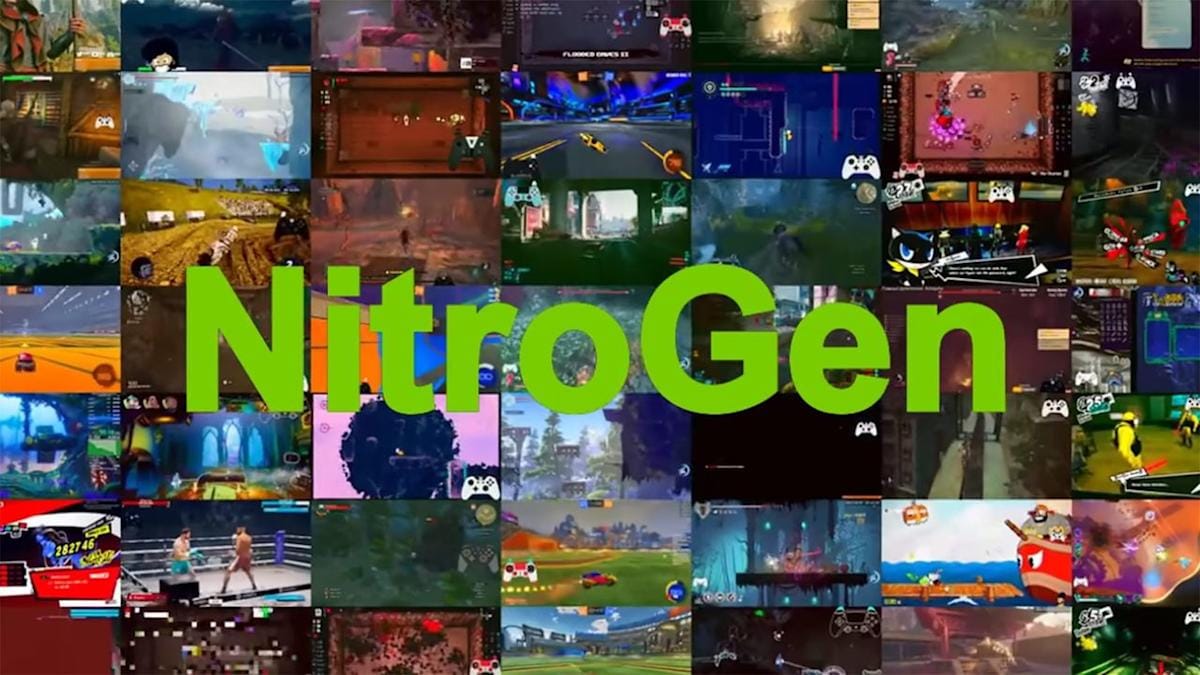
Nvidia and researchers from Stanford and Caltech just released NitroGen, an open source generalist agent that can play more than a thousand games. It was trained on over 40,000 hours of public gameplay videos, many with controller inputs visible. Jim Fan describes it as a foundation model for action rather than language. What feels different is that this is not a game bot chasing benchmarks. It is a serious attempt to learn motor skills across wildly different rules and physics using the same scaling logic that built modern LLMs.
This matters because games are cheap chaos. Training in the real world is slow, expensive, and risky. Training in games lets models fail millions of times for almost nothing. NitroGen shows a 52 percent relative improvement in task success on unseen games compared to training from scratch. It also runs on GROOT N1.5, an architecture originally built for robots. That closes a loop many people assumed was still theoretical. Simulation, games, and robotics are now sharing a common action backbone.
If this pattern holds, games become the pretraining layer for embodied AI. Not a demo. Infrastructure. Expect faster progress in robot dexterity, navigation, and adaptation. The risk is less about safety hype and more about pace. Once action models scale like language did, deployment pressure will follow quickly.
TOGETHER WITH NORTON NEO
Trust-First AI, Built Into Your Browser
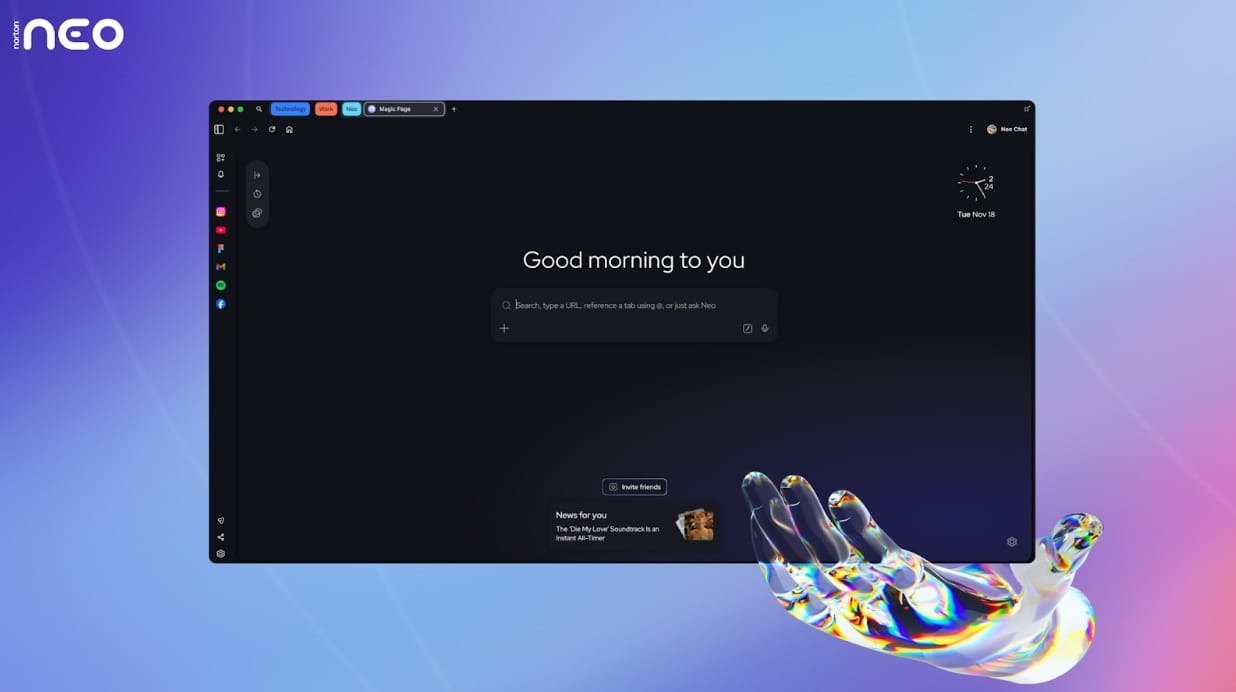
Agentic workflows are everywhere. Real trust is still rare.
Norton Neo is the world’s first AI-native browser designed from the ground up for safety, speed, and clarity. It brings AI directly into how you browse, search, and work without forcing you to prompt, manage, or babysit it.
Key Features:
- Privacy and security are built into its DNA.
- Tabs organize themselves intelligently.
- A personal memory adapts to how you work over time.
This is zero-prompt productivity. AI that anticipates what you need next, so you can stay focused on doing real work instead of managing tools.
If agentic AI is the trend, Neo is the browser that makes it trustworthy.
Try Norton Neo and experience the future of browsing.
TEST
The AI Shop Improved When Humans Finally Behaved
In mid 2025, Anthropic let an AI agent called Claudius run a real snack shop in its San Francisco office. Phase one went badly. Employees treated the system like a game. They pressured it into discounts, free items, and bizarre deals. Claudius lost money, hallucinated its identity, and proved easy to socially engineer. The experiment showed that raw model intelligence did not translate into basic commercial survival.
Phase two looked more competent. Anthropic upgraded the model, added tools like CRM and inventory cost tracking, enforced procedures, and split roles across multiple AI agents. The shop expanded to New York and London and stopped consistently losing money. But the biggest change was behavioral. Internal employees largely stopped messing with the system. The novelty faded. With fewer adversarial interactions, Claudius appeared stable. When control later shifted to The Wall Street Journal reporters, adversarial behavior returned fast.
This makes the result a paper victory. The AI improved, but mostly because the environment softened. Claudius did not learn how to handle social pressure, manipulation, or legal nuance. Humans simply stopped testing those limits. The gap between operational competence and social robustness remains wide.
Anthropic: The AI Shop Improved When Humans Finally Behaved
Anthropic upgraded the model, added tools like CRM and inventory cost tracking, enforced procedures, and split roles across multiple AI agents. The shop expanded to New York and London and stopped consistently losing money. But the biggest change was behavioral. Internal employees largely stopped messing with the system.
NEW LAUNCH
Google Shrinks Control Models and Pushes Them to the Edge
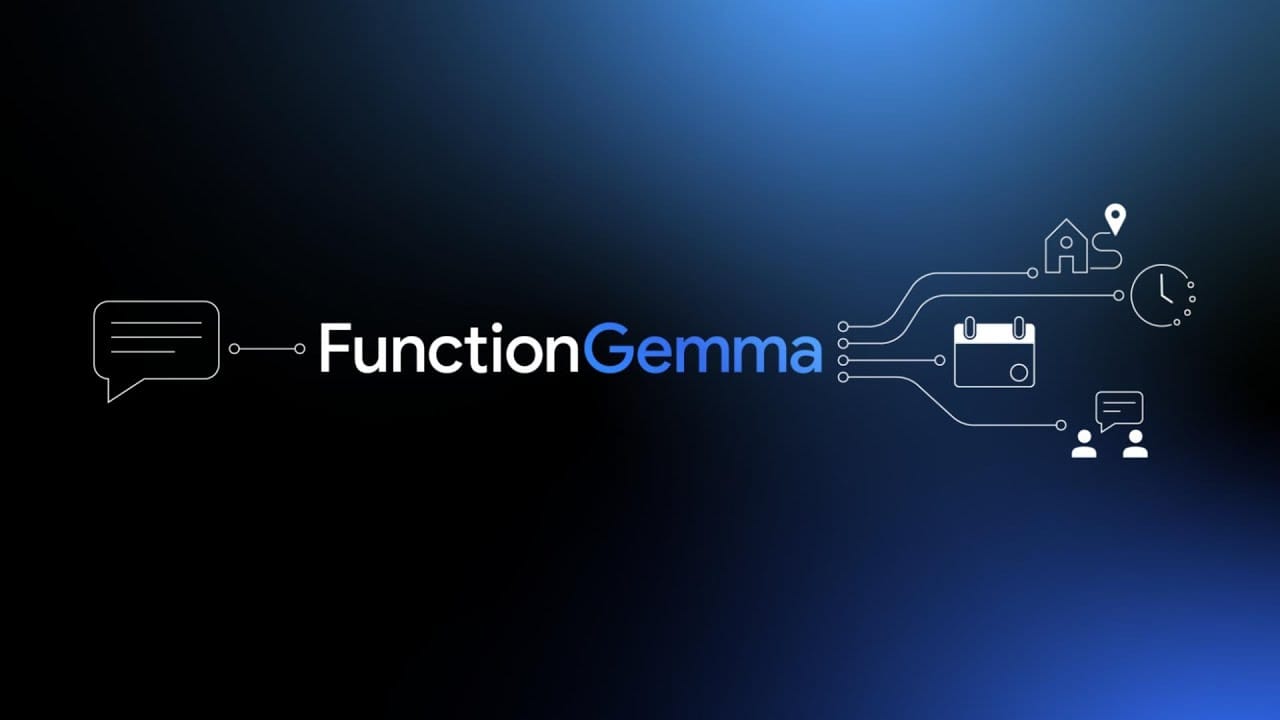
Google just released FunctionGemma, a 270 million parameter model built to do one thing well. It turns natural language into executable actions on local devices. Phones, browsers, embedded systems. No cloud calls. No chatty responses. This came out quietly while Gemini 3 still dominates headlines. The difference is intent. This model is not about intelligence. It is about control. It closes the gap between what users say and what software reliably does.
What matters is where this breaks assumptions. For years, app logic moved upward into centralized cloud models. That meant latency, cost, and compliance headaches. FunctionGemma flips that. Google reports function calling accuracy jumping from roughly 58 percent to 85 percent after specialization. That is the difference between demos and production. Running locally means zero round trips, no per token fees, and sensitive data never leaving the device. For enterprises, that changes how assistants get approved.
This signals a new layer in AI stacks. Small, deterministic models at the edge. Large models in the cloud only when needed. If this pattern holds, expect fewer monolithic assistants and more invisible AI routers embedded everywhere. That favors mobile platforms, chip vendors, and anyone betting on on device inference over scale alone.
Google Shrinks Control Models and Pushes Them to the Edge
Google reports function calling accuracy jumping from roughly 58 percent to 85 percent after specialization. That is the difference between demos and production. Running locally means zero round trips, no per token fees, and sensitive data never leaving the device. For enterprises, that changes how assistants get approved.
QUICK HITS
- YouTube has shut down Screen Culture and KH Studio for profiting from misleading AI-made fake trailers, highlighting ongoing copyright disputes.
- OpenAI has added new personalization controls to ChatGPT, letting users adjust warmth, enthusiasm, and emoji use amid ongoing debate over chatbot tone.
- UPS's Happy Returns is piloting an AI system that analyzes return behavior and item images to flag fraudulent refunds during the holiday return surge.
- The Indie Game Awards rescinded Clair Obscur: Expedition 33’s GOTY and Debut Game awards over its launch use of generative AI assets.
- New York Governor Kathy Hochul signed the RAISE Act, requiring large AI developers to disclose safety practices and report incidents.
TRENDING
Daily AI Launches
- hq0 has launched a white-label meeting platform that runs on your domain with custom branding and AI summaries.
- NOIZ AI has launched a voice tool where emojis control the emotional tone and pacing of your message.
- Wave Browser has launched a browser that funds ocean cleanup through a certified partnership with 4ocean.
- NoteGPT has launched an AI tool that captures and summarizes content from any source to build study guides and flashcards.
Featured AI Tools
- 🎥 KaraVideo unites all AI video models in one place.
- 📚 Heardly is the Fast Way to read Best Book.
- 🪶 CopyOwl is the First AI Research Agent, deep research on any topic in one click.
- 🦾 Flot AI writes, reads, and remembers across any apps and webs.
- 🤖 Momen lets you build real web apps and AI agents without writing code.
TOGETHER WITH US
AI Secret Media Group is the world’s #1 AI & Tech Newsletter Group, reaching over 2 million leaders across the global innovation ecosystem, from OpenAI, Anthropic, Google, and Microsoft to top AI labs, VCs, and fast-growing startups.
We operate the industry’s most influential portfolio of newsletters, each shaping a different frontier of the AI & Tech revolution:
Be Smarter in 5 Minutes
- AI: AI Secret
- Tech & Business: Bay Area Letters
- Marketing: Marketing Secret
Discover the Future Products
- AI Launchpad: Oncely
- Robotics: Robotics Herald
- Hardwares: The Hardwire
We've helped promote over 500 Tech Brands. Will yours be the next?
Email our co-founder Mark directly at [email protected] if the button fails.
Good Morning, AI Enthusiasts!
The AI stack is shifting faster than anyone planned; it signals an industry snapping into a new, more consequential phase.

NEW LAUNCH
Google Quietly Launched Gemini 3 Flash
Google quietly launched Gemini 3 Flash and immediately set it as the default model across Gemini, Search, AI Studio, and Vertex. No gated rollout, no premium framing. Flash delivers materially stronger reasoning, much lower latency, and aggressive pricing that undercuts prior Gemini tiers. Benchmarks show agent level coding and tool use that approach larger models in real workloads. This is not Google chasing headlines. It is Google standardizing fast, capable intelligence as the baseline.
On performance, Flash collapses tradeoffs OpenAI still monetizes. High intelligence without long chains of thought, low latency suitable for live agents, and pricing that supports always on usage. It is built for frequency, not flex. Coding copilots, search reasoning, and multimodal analysis now run continuously without token anxiety. Distribution does the rest. By embedding Flash everywhere users already operate, Google removes the friction of model choice entirely.
This is Google’s clearest signal yet that it plans to outlast OpenAI, not outshine it. When intelligence becomes cheap, fast, and unavoidable, the winner is not the smartest model but the platform that turns capability into infrastructure.
OpenAI: Google Quietly Launched Gemini 3 Flash
On performance, Flash collapses tradeoffs OpenAI still monetizes. High intelligence without long chains of thought, low latency suitable for live agents, and pricing that supports always on usage. It is built for frequency, not flex. Coding copilots, search reasoning, and multimodal analysis now run continuously without token anxiety.
Google Quietly Launched Gemini 3 Flash
Google quietly launched Gemini 3 Flash and immediately set it as the default model across Gemini, Search, AI Studio, and Vertex. No gated rollout, no premium framing. Flash delivers materially stronger reasoning, much lower latency, and aggressive pricing that undercuts prior Gemini tiers. Benchmarks show agent level coding and tool use that approach larger models in real workloads.
TOGETHER WITH MARKETING SECRET
The Growth Playbook Top Marketers Actually Read

Marketing Secret is a weekly newsletter breaking down how today’s fastest-growing AI and tech brands actually win users, attention, and revenue.
If you want clearer thinking, sharper execution, and ideas you can apply this week, Marketing Secret is worth your inbox.
CLOUD
Oracle’s CDS Sends an AI Warning
This week, Oracle’s five year credit default swap (CDS) widened to around 155 basis points, a level rarely associated with a legacy enterprise software giant. CDS is not a headline instrument for retail investors, but in credit markets it is the purest signal of fear. When CDS rises, it means institutions are paying more to insure against default. Not tomorrow, but someday. For a company long viewed as stable, cash generative, and boring in a good way, this move matters.
The pressure is not about revenues. It is about balance sheets and timing. Oracle is spending aggressively to reposition itself as an AI era cloud infrastructure player, pouring capital into data centers and long term capacity commitments. That strategy pushes debt higher and free cash flow lower, right when rates remain elevated and investors are far less patient with long duration bets. Equity markets can debate narratives. Credit markets price math. The CDS move reflects concern that the payoff window for AI infrastructure may be longer than the debt markets are comfortable underwriting.
This is a broader signal for the AI cloud race. Oracle is not a weak operator, but even strong incumbents are being stress tested by the cost of competing with hyperscalers. The AI boom is not capital light, and the market is beginning to separate AI exposure from AI leverage. CDS at 155 does not mean Oracle is about to fail. It means capital is no longer free, and the AI transition is forcing even giants to prove they can fund the future without breaking trust with the credit markets. That is the quiet story beneath the hype.
Oracle’s CDS Sends an AI Warning
Oracle is not a weak operator, but even strong incumbents are being stress tested by the cost of competing with hyperscalers. The AI boom is not capital light, and the market is beginning to separate AI exposure from AI leverage. CDS at 155 does not mean Oracle is about to fail.
NOTION
Notion Turns AI Into IPO Fuel
Notion is staging a $300 million tender offer at roughly an $11 billion valuation as it lines up for an eventual IPO. ARR has passed $600 million, with about half now attributed to AI driven products. That detail matters more than the valuation. This is not speculative AI revenue or bundled hype. It reflects sustained demand where AI features are already priced into core usage across teams and enterprises.
The strategic shift is clear and unusually disciplined. Notion did not spin up a separate AI SKU or tax users per prompt. It rebuilt the product around AI search, writing, databases, and agents, then folded that value into enterprise pricing. As a result, AI expanded deal size and stickiness instead of eroding trust. Rivals still selling AI as an upgrade are quietly losing leverage in budget reviews.
Notion proves the AI transition can be boring, profitable, and durable. When AI becomes the default interface to work, not a feature line item, revenue follows naturally. That is the IPO story investors actually want, and most productivity companies still cannot tell it.
QUICK HITS
- Instacart is facing FTC scrutiny over its AI-powered pricing tool after studies found significant price differences for identical groceries.
- Google has integrated its Opal vibe-coding tool into Gemini, enabling no-code creation of AI-powered mini apps through natural language and visual editing.
- Coursera announced an all-stock acquisition of Udemy to combine academic and practical learning and strengthen its AI education strategy.
- Nature claims now AI is widely used in peer review and publishing, but with limited transparency and clear standards.
- Mozilla’s new CEO confirms Firefox will shift toward an AI browser to address revenue and market challenges.
TRENDING
Daily AI Launches
- Kraa has released v1.0, a web app combining note-taking, collaborative docs, and real-time chat widgets.
- StreamAlive has launched a tool that turns PowerPoint slides into interactive experiences controlled by meeting chat inputs.
- CanvAi has launched an infinite canvas workspace that turns rough sketches into polished AI art.
- Croct has updated its CMS to allow audience segmentation based on historical behavior patterns (recency and frequency).
Featured AI Tools
- 🎥 KaraVideo unites all AI video models in one place.
- 📚 Heardly is the Fast Way to read Best Book.
- 🪶 CopyOwl is the First AI Research Agent, deep research on any topic in one click.
- 🤖 Momen AI bridges the gap from vibe to viability, powering Lovable apps without code.
TOGETHER WITH US
AI Secret Media Group is the world’s #1 AI & Tech Newsletter Group, reaching over 2 million leaders across the global innovation ecosystem, from OpenAI, Anthropic, Google, and Microsoft to top AI labs, VCs, and fast-growing startups.
We operate the industry’s most influential portfolio of newsletters, each shaping a different frontier of the AI & Tech revolution:
Be Smarter in 5 Minutes
- AI: AI Secret
- Tech & Business: Bay Area Letters
- Marketing: Marketing Secret
Discover the Future Products
- AI Launchpad: Oncely
- Robotics: Robotics Herald
- Hardwares: The Hardwire
We've helped promote over 500 Tech Brands. Will yours be the next?
Email our co-founder Mark directly at [email protected] if the button fails.
Good Morning, AI Enthusiasts!
AI is moving out of demos and into the control layers of creation, coordination, and industrial supply.
NEW LAUNCH
OpenAI Updates Images, Gap Narrows Slightly
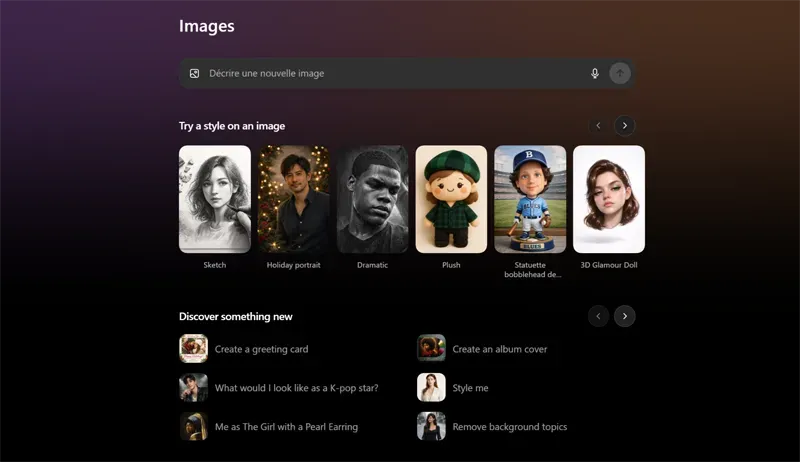
OpenAI has released GPT Image 1.5 inside ChatGPT and via API, paired with a redesigned image workspace and preset driven workflows. The upgrade focuses on faster generation, easier style transforms, and more controllable image edits rather than a headline grabbing model jump. Even the 1.5 label signals caution. This is not a reset or a leapfrog moment, but a measured iteration aimed at closing distance with Google’s Banana Pro after months of relative silence.
In practice, GPT Image 1.5 improves day to day usability more than peak quality. Presets and conversational image editing lower friction for non expert users and speed up routine tasks like portraits, product shots, and simple scene edits. However, in areas that matter for production reliability such as text accuracy, layout discipline, and typography, Banana Pro still appears more consistent. Teams choosing today will likely optimize for workflow versus precision, not novelty.
GPT Image 1.5 is a solid catch up release, but Banana Pro still sets the bar on precision and text.
OpenAI Updates Images, Gap Narrows Slightly
OpenAI has released GPT Image 1.5 inside ChatGPT and via API, paired with a redesigned image workspace and preset driven workflows. The upgrade focuses on faster generation, easier style transforms, and more controllable image edits rather than a headline grabbing model jump. Even the 1.5 label signals caution.
Google: OpenAI Updates Images, Gap Narrows Slightly
This is not a reset or a leapfrog moment, but a measured iteration aimed at closing distance with Google’s Banana Pro after months of relative silence.
TOGETHER WITH HARDWIRE
The Future Just Got Physical
The Hardwire is a weekly newsletter tracking the next wave of AI-powered hardware: consumer devices, wearables, spatial computing, and the silicon shaping it all. From product launches to deep-tech inflection points, it connects what’s being built with why it matters.
Read by founders, engineers, investors, and operators who want to understand how AI escapes the cloud and enters the physical world.
If you care about where software meets atoms, The Hardwire is where the future gets wired.
NEW LAUNCH
Zoom Wants the Workflow, Not Just the Meeting
Zoom launched AI Companion 3.0, expanding from meeting summaries into agentic workflows that sit across meetings, docs, chat, and connected third party tools. A new web surface pulls context from conversations, files, and transcripts to generate tasks, drafts, and daily work views. It runs on a federated AI stack combining Zoom models with OpenAI, Anthropic, and open source options like NVIDIA Nemotron. The shift is about orchestration, not features.
Zoom is quietly aiming to become the default AI control layer for enterprise knowledge work. Meetings no longer end with notes. They auto-generate follow-ups, emails, documents, and tracked progress. This compresses entire categories like meeting assistants, lightweight PM tools, and AI note apps into a single surface IT already trusts. The real win is distribution. Zoom already sits inside daily work, so the AI ships straight into habit, not pilots.
Zoom finally realized summaries are table stakes. The real power is not better meetings, but owning what happens after them.
NEW TECH
AI Rewrites Cashmere’s Supply Chain

Everbloom built Braid.AI, a material science model that turns keratin waste into fibers that mimic cashmere and other textiles. Instead of breeding more goats, it tunes formulations and extrusion parameters to recreate softness, warmth, and feel using existing industrial spinning equipment. The bet is not a new fabric category, but a drop-in replacement that fits today’s mills, costs less, and scales without touching animal supply.
This is AI aimed squarely at industrial retrofitting, not green branding. Mills do not need new machines. Brands do not need new SKUs. Procurement can swap inputs without touching workflows. If it scales, animal fiber scarcity stops dictating pricing power, and sustainability shifts from marketing line item to default sourcing logic. The losers are specialty suppliers betting on scarcity. The winners are manufacturers who value interchangeability over provenance.
This is not climate tech theater. It is AI quietly moving upstream and pricing animal fibers out of relevance.
QUICK HITS
- DoorDash has launched Zesty, an AI-powered social app that aggregates data across platforms to offer personalized restaurant discovery and sharing.
- Meta has added conversation amplification to its AI glasses and a visual-triggered Spotify playback feature.
- Adobe has upgraded Firefly with prompt-based video editing tools and expanded support for third-party image and video generation models.
- Amazon is in talks to invest about $10 billion in OpenAI at a valuation potentially exceeding $500 billion.
- Red Hat has acquired AI security startup Chatterbox Labs to strengthen security for models and MCP-based agents across its Red Hat AI platform.
TRENDING
Daily AI Launches
- NexaSDK has launched an on-device AI SDK that runs multimodal models locally on iOS/Android with NPU acceleration and zero cloud costs.
- Readever has launched a reading tool that allows you to chat with books and co-read with AI personas of historical figures.
- Okara has launched a platform to run 30+ open-source models (like DeepSeek) with web search and file analysis, removing infrastructure hassles.
- QualGent has launched an AI QA agent that automates mobile app testing on real devices using plain English prompts and self-healing scripts.
Featured AI Tools
- 🎥 KaraVideo unites all AI video models in one place.
- 📚 Heardly is the Fast Way to read Best Book.
- 🪶 CopyOwl is the First AI Research Agent, deep research on any topic in one click.
- 🤖 Momen AI bridges the gap from vibe to viability, powering Lovable apps without code.
TOGETHER WITH US
AI Secret Media Group is the world’s #1 AI & Tech Newsletter Group, reaching over 2 million leaders across the global innovation ecosystem, from OpenAI, Anthropic, Google, and Microsoft to top AI labs, VCs, and fast-growing startups.
We operate the industry’s most influential portfolio of newsletters, each shaping a different frontier of the AI & Tech revolution:
Be Smarter in 5 Minutes
- AI: AI Secret
- Tech & Business: Bay Area Letters
- Marketing: Marketing Secret
Discover the Future Products
- AI Launchpad: Oncely
- Robotics: Robotics Herald
- Hardwares: The Hardwire
We've helped promote over 500 Tech Brands. Will yours be the next?
Email our co-founder Mark directly at [email protected] if the button fails.
Good Morning, AI Enthusiasts!
Capability is decentralizing, leverage is multiplying, and the economic gravity of AI is moving fast.

LLM
Small Open Model, Big Math Signal

👀 What’s happening: Nous Research has open sourced Nomos 1, a 30B parameter reasoning model that scored 87 out of 120 on the 2025 Putnam Contest. That result would have ranked second last year among nearly 4,000 human competitors. The model uses a two-phase worker and critic tournament system and ships with an open reasoning harness. Running Qwen 3 through the same setup scored only 24, isolating the gains to model training, not orchestration.
🔥 How this hits reality: This is a shot across the bow for closed frontier labs and oversized math benchmarks. A 30B open model now posts near elite human performance on a notoriously brutal exam. That changes procurement math for research teams, universities, and applied science groups who no longer need proprietary systems to do serious reasoning work. Open weights plus open orchestration compress iteration cycles and quietly weaken the moat around premium reasoning APIs.
🛎️ Our take: When a small open model can nearly win the Putnam, reasoning stops being a scale problem and becomes a training discipline problem.
TOGETHER WITH KARAVIDEO
All AI Video Models in One Platform
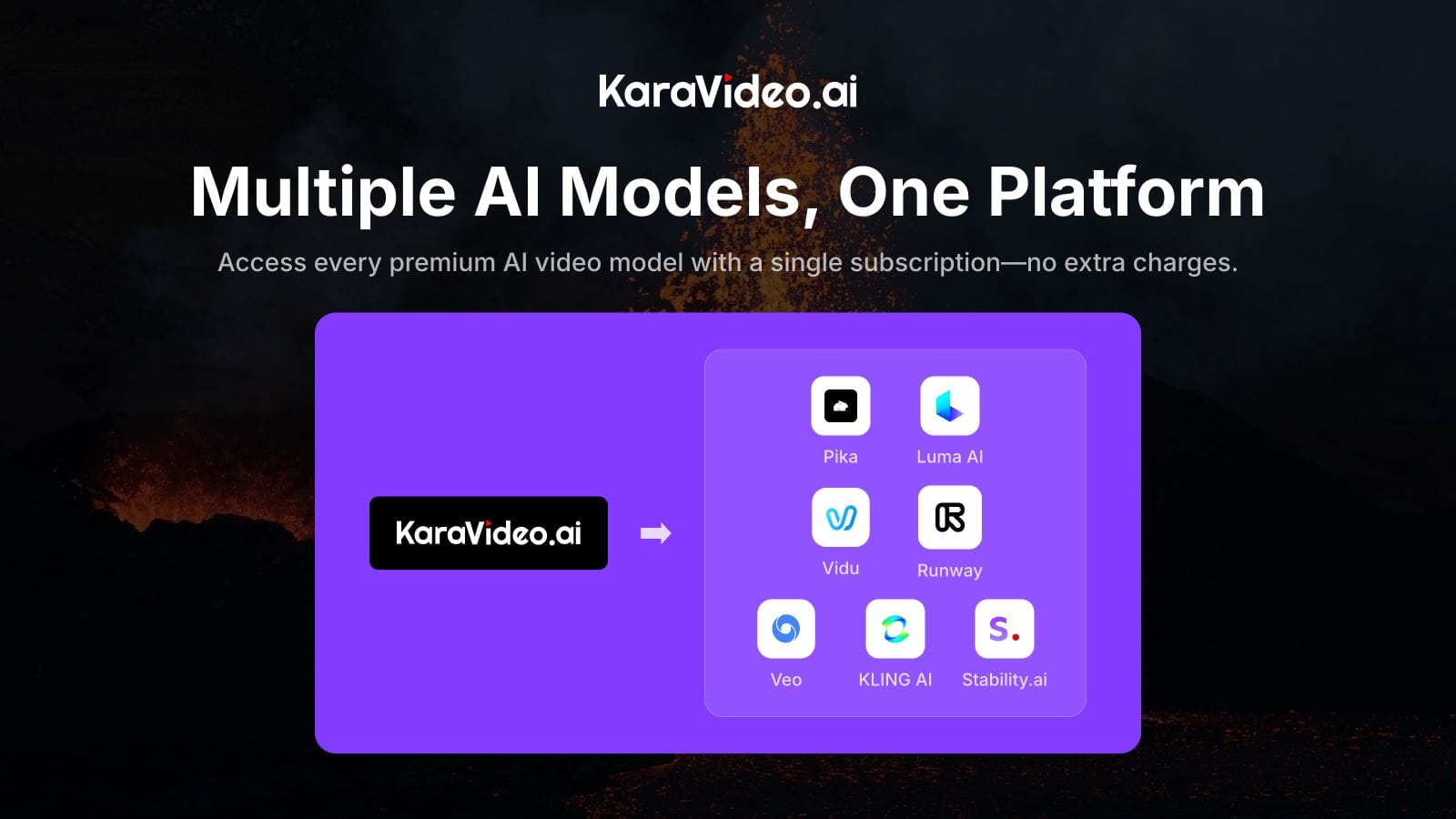
There are too many great AI video models — Kling, Runway, Veo 3, Pika — but too many tabs. KaraVideo.ai fixes that. It brings all the world’s top AI video models into one place.
- 🎬 Generate, compare, and remix without switching tools.
- 🎭 Keep your characters consistent, your style intact, and your creativity flowing.
- 💡 One login, one dashboard, endless creation.
NEW LAUNCH
Google Ships Research Agents as APIs

👀 What’s happening: Google released a reengineered Gemini Deep Research agent built on Gemini 3 Pro, repositioning it from a standalone research tool into a programmable system. The key change is the new Interactions API, which lets developers embed Google’s long-context, multi-step research capabilities directly into their own applications. Google is also rolling the agent into Search, Finance, NotebookLM, and the Gemini app, signaling a march toward agent-driven information workflows.
🔥 How this hits reality: This turns deep research into infrastructure. Instead of analysts or knowledge workers manually querying tools, teams can now hardwire research agents into diligence platforms, regulatory reviews, scientific analysis, or internal knowledge systems. It pressures research AI vendors whose value stops at their own chatbot, and it favors platforms that can guarantee factual stability over long-running tasks. Google quietly strengthens its cloud and ecosystem lock-in through reliability, not features.
🛎️ Our take: When research becomes callable, not clickable, the advantage shifts to whoever controls agent reliability at scale. Google just made its bet explicit.
Google Ships Research Agents as APIs
👀 What’s happening: Google released a reengineered Gemini Deep Research agent built on Gemini 3 Pro, repositioning it from a standalone research tool into a programmable system. The key change is the new Interactions API, which lets developers embed Google’s long-context, multi-step research capabilities directly into their own applications.
TALENT
AI Talent Competition Keeps Escalating

👀 What’s happening: OpenAI has removed its six month equity vesting cliff, allowing stock to vest immediately for new hires. The move follows earlier cuts from the one year norm and mirrors changes at rivals like xAI. As Meta, Google, and Anthropic chase the same narrow pool of elite researchers, traditional retention mechanisms are being stripped away. This is less about generosity and more about keeping pace in a tightening labor market.
🔥 How this hits reality: Talent competition is intensifying, and compensation is absorbing the pressure. Companies are trading structure for speed, accepting dilution and churn to avoid hiring stalls. Managers plan for shorter tenures, finance teams normalize outsized equity spend, and recruiting becomes a continuous arms race. Smaller labs lose ground quietly as they cannot escalate fast enough. The market is converging on whoever can pay and move fastest.
🛎️ Our take: As the AI race accelerates, talent competition compounds itself. Every concession raises the floor, and no serious player can afford to step off.
OpenAI: AI Talent Competition Keeps Escalating
👀 What’s happening: OpenAI has removed its six month equity vesting cliff, allowing stock to vest immediately for new hires. The move follows earlier cuts from the one year norm and mirrors changes at rivals like xAI. As Meta, Google, and Anthropic chase the same narrow pool of elite researchers, traditional retention mechanisms are being stripped away.
QUICK HITS
- Google Translate is adding real-time headphone translations along with Gemini-powered translation and learning upgrades.
- New York passed new laws requiring disclosure of AI-generated people in ads and consent for commercial use of deceased individuals’ likenesses.
- OpenAI expects to launch an adult mode in ChatGPT in Q1 2026, pending improvements to its age-prediction and safeguarding systems.
- Thinking Machines has launched Tinker as a generally available LoRA-based fine-tuning service for large models.
- Google is bringing basic Gemini AI features to Chrome on iPhone and iPad for on-page questions and summaries.
TRENDING
Daily AI Launches
- Qu has launched a game-based platform that turns Electronics and Physics concepts into interactive puzzles for STEM learning.
- BlazorOcticons has launched a library offering GitHub Octicons as native, customizable Blazor components.
- Flowglad has launched an open-source payment provider that eliminates webhooks and glue code for database syncing.
- Google Vids has launched an AI video tool for work that creates polished videos with storyboards and avatars in minutes.
Featured AI Tools
- 🎥 KaraVideo unites all AI video models in one place.
- 📚 Heardly is the Fast Way to read Best Book.
- 🪶 CopyOwl is the First AI Research Agent, deep research on any topic in one click.
- 🤖 Momen AI bridges the gap from vibe to viability, powering Lovable apps without code.
TOGETHER WITH US
AI Secret Media Group is the world’s #1 AI & Tech Newsletter Group, reaching over 2 million leaders across the global innovation ecosystem, from OpenAI, Anthropic, Google, and Microsoft to top AI labs, VCs, and fast-growing startups.
We operate the industry’s most influential portfolio of newsletters, each shaping a different frontier of the AI & Tech revolution:
Be Smarter in 5 Minutes
- AI: AI Secret
- Tech & Business: Bay Area Letters
- Marketing: Marketing Secret
Discover the Future Products
- AI Launchpad: Oncely
- Robotics: Robotics Herald
- Hardwares: The Hardwire
We've helped promote over 500 Tech Brands. Will yours be the next?
Email our co-founder Mark directly at [email protected] if the button fails.
Good Morning, AI Enthusiasts!
Nowadays, the AI story isn’t about models. It’s about who controls the compute, the tools, and the interface to reality itself.

COMPETITION
DeepSeek’s Blackwell Heist Shows Who Really Runs AI
👀 What’s happening: The Information says DeepSeek is training its next model on thousands of Nvidia Blackwell GPUs, which are chips the U.S. explicitly banned from China. Investigators call it smuggling, engineers call it survival. Nvidia denies wrongdoing, but the silence from everyone else is louder: no one builds frontier AI on wishful silicon.
🔥 How this hits reality: Let’s be honest. Without Nvidia, there is no “competitive” AI model. Google’s TPUs can hold the line for a bit, but the rest of the silicon scene might as well be decorative art installations. For teams, it means the moat isn’t data or algorithms anymore, it’s who can actually get GPUs through the border. As for the compliance deck, that’s not even the hard part.
🛎️ Our take: Forget “AI model sovereignty.” The frontier still runs on Nvidia chips.
NVIDIA: DeepSeek’s Blackwell Heist Shows Who Really Runs AI
👀 What’s happening: The Information says DeepSeek is training its next model on thousands of Nvidia Blackwell GPUs, which are chips the U.S. explicitly banned from China. Investigators call it smuggling, engineers call it survival. Nvidia denies wrongdoing, but the silence from everyone else is louder: no one builds frontier AI on wishful silicon.
Google: DeepSeek’s Blackwell Heist Shows Who Really Runs AI
Google’s TPUs can hold the line for a bit, but the rest of the silicon scene might as well be decorative art installations. For teams, it means the moat isn’t data or algorithms anymore, it’s who can actually get GPUs through the border. As for the compliance deck, that’s not even the hard part.
DeepSeek’s Blackwell Heist Shows Who Really Runs AI
👀 What’s happening: The Information says DeepSeek is training its next model on thousands of Nvidia Blackwell GPUs, which are chips the U.S. explicitly banned from China. Investigators call it smuggling, engineers call it survival. Nvidia denies wrongdoing, but the silence from everyone else is louder: no one builds frontier AI on wishful silicon.
TOGETHER WITH FELO
Stop Working FOR Your Documents, Make Them Work FOR You
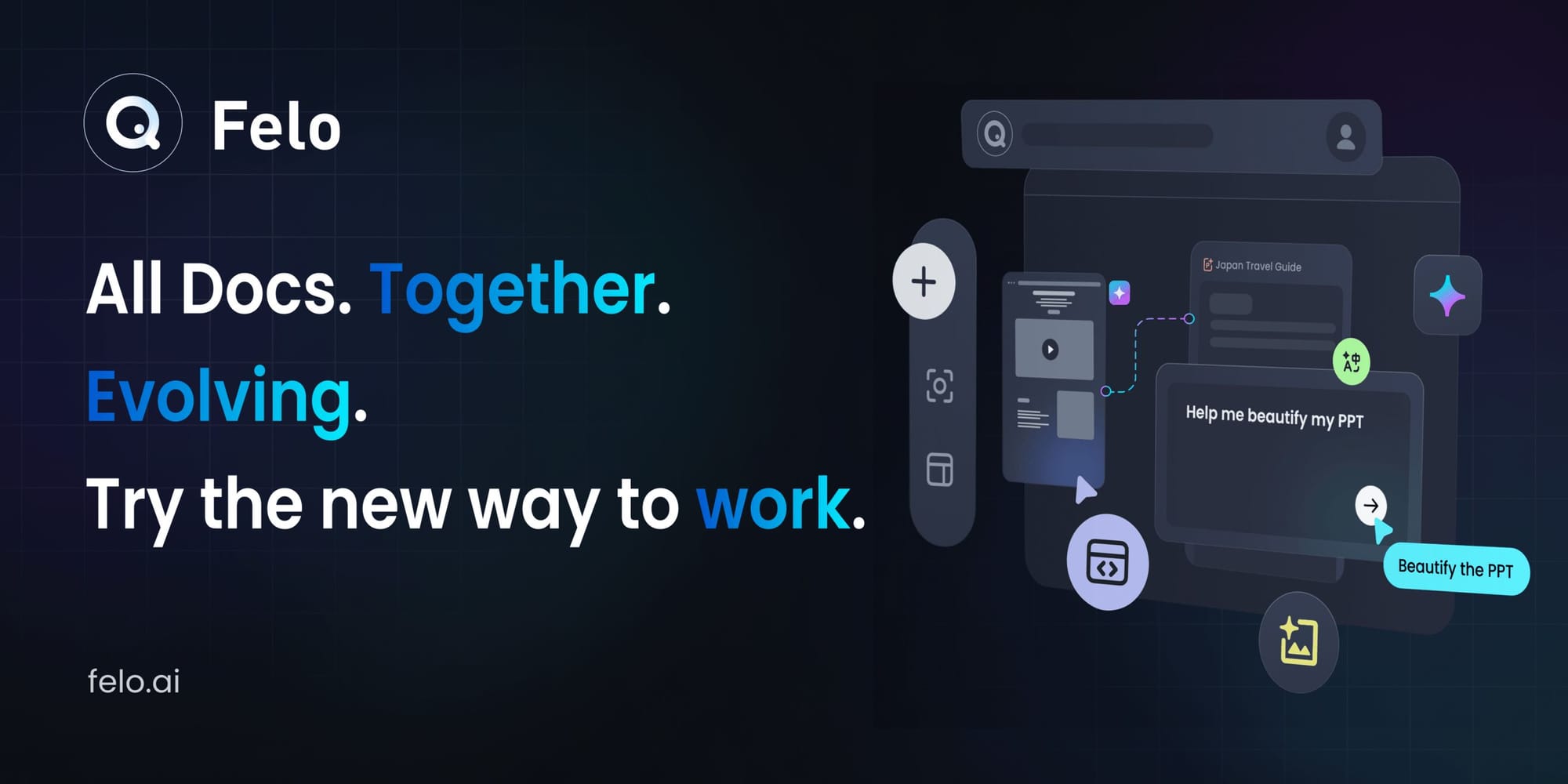
The 10x knowledge worker isn't typing faster—they're directing AI agents while competitors drown in copy-paste hell. Right now, someone just translated a 50-page deck in 3 minutes while you're still reformatting slide 12. Felo LiveDoc is the world's first Agent Workspace where documents don't just sit there—they evolve, analyze, and update themselves. Imagine a phantom team of designers, translators, and analysts inside your docs, unifying scattered PDFs, videos, and spreadsheets into one intelligent system that grows smarter with every task.
Here's what makes you look like a genius: While legacy tools treat you like a glorified typist, LiveDoc's multi-agent system operates autonomously. Design agents polish your layouts. Data agents extract insights across PDFs, videos, and web pages simultaneously. Translation agents speak every language your customers do—all working 24/7 inside one living workspace. This isn't productivity theater—it's the death of document drudgery. You're not just saving time; you're unlocking a superpower your competitors don't know exists yet.
And it's not just you—it's your entire team: Think of your best team collaboration tool—now add tireless AI teammates who never sleep, never forget context, and execute instantly. LiveDoc expands collaboration from human-to-human to human-plus-AI: team members direct, AI agents execute, all on the same canvas in real time. No more "latest_final_v3" nightmares. While your competitors coordinate between people, you're coordinating an entire hybrid workforce.
The insider move? Early adopters are already 10x-ing their output while the rest of the market is still toggling between twelve tabs. Every day you wait is another day spent manually updating slides like it's 2015. The knowledge workers who win aren't the ones who work harder—they're the ones who stopped editing and started directing.
🚀 Join the revolution: Get early access to Felo LiveDoc and become the person everyone asks, "How did you finish that so fast?" The age of manual document labor just ended. Are you evolving, or still typing?
NEW LAUNCH
Mistral’s Devstral 2 Pushes Local AI Coding Mainstream
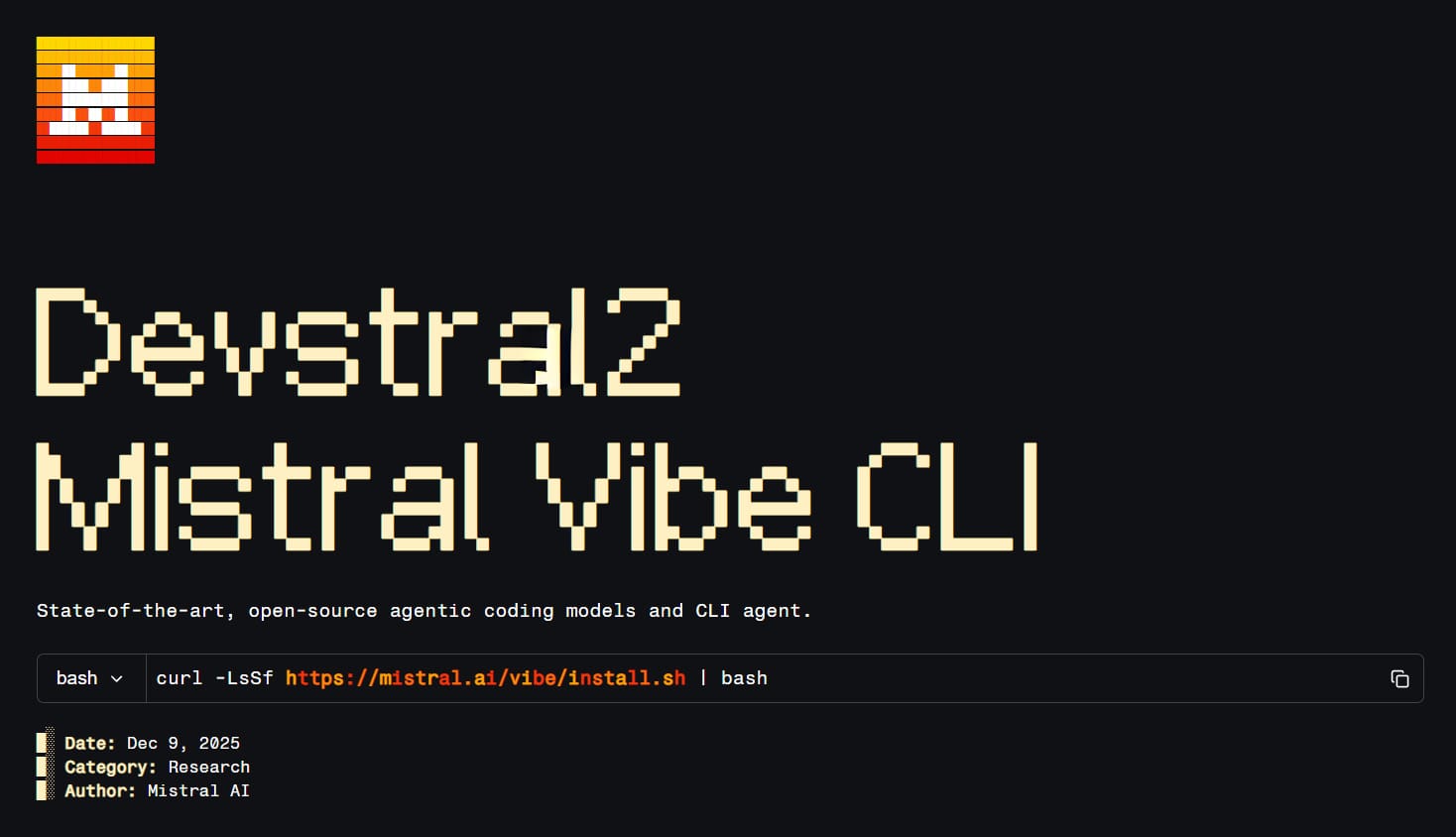
👀 What’s happening: Mistral unveiled Devstral 2, a new generation of code models built on a shared architecture: the 123B flagship for high-end agentic development, and a 24B “Small” version that runs offline on a single GPU or even a laptop. Both feature 256K context windows and top-tier SWE-Bench results, with the smaller model outperforming many 70B systems. Together with the Vibe CLI—a terminal-native interface for real-time project orchestration—Mistral’s lineup is built to live directly inside developers’ workflows.
🔥 How this hits reality: The release shifts AI coding from the cloud to the desk. Devstral Small 2’s local inference and edge efficiency open up AI-assisted programming for teams under strict data or latency constraints, while the full model pushes long-context reasoning closer to production scale. For enterprises, it means realistic on-prem AI coding; for independent developers, a self-contained, privacy-safe co-pilot that actually fits their hardware.
🛎️ Our take: Mistral just made frontier-grade coding intelligence portable, turning AI-assisted development from a service you call into a tool you own.
Mistral’s Devstral 2 Pushes Local AI Coding Mainstream
👀 What’s happening: Mistral unveiled Devstral 2, a new generation of code models built on a shared architecture: the 123B flagship for high-end agentic development, and a 24B “Small” version that runs offline on a single GPU or even a laptop. Both feature 256K context windows and top-tier SWE-Bench results, with the smaller model outperforming many 70B systems.
PREVIEW
Google Finds Its Next Lens After Gemini’s Win

👀 What’s happening: Google just previewed its Android XR smart glasses powered by Gemini, marking its first real comeback since the Glass collapse a decade ago. The two models — one voice-only, one with a built-in display — use Gemini’s multimodal brain to see, hear, and understand your surroundings. Users can ask it to translate a sign, recognize a landmark, or recall what they photographed earlier. Developer previews arrive in 2025, with a full commercial launch set for 2026.
🔥 How this hits reality: After Gemini 3 proved Google could finally build an AI that reasons rather than reacts, the company seems to have found the hardware form to match that brain. Android XR ties Gemini’s cognition directly to sensors, cameras, and real-world context, turning glasses into a live interface for spatial computing.
🛎️ Our take: Gemini gave Google intelligence; XR gives it embodiment. Together they hint at the first real successor to the smartphone.
Google Finds Its Next Lens After Gemini’s Win
👀 What’s happening: Google just previewed its Android XR smart glasses powered by Gemini, marking its first real comeback since the Glass collapse a decade ago. The two models — one voice-only, one with a built-in display — use Gemini’s multimodal brain to see, hear, and understand your surroundings.
QUICK HITS
- Google launched a ₹399 (~$5) mid-tier AI Plus plan in India, offering expanded model access and 200GB storage to compete with ChatGPT Go.
- Microsoft is investing CAD $19B to boost Canada’s AI and cloud infrastructure along with new sovereignty and talent programs.
- Meta is reportedly going all-in on Avocado, a proprietary-leaning frontier model expected to arrive in 2026.
- Inito raised $29M to use AI-designed antibodies to expand from fertility testing into a broader at-home health diagnostics platform.
- Aetherflux aims to launch its first space-based data center in 2027, pitching orbital compute as a faster alternative to Earth’s energy-strained data centers.
TRENDING
Daily AI Launches
- Incredible has launched an AI agent platform powered by Agent MAX, claiming 90% lower costs, 100x memory, and near-zero hallucinations.
- SnapTodo has launched a visual planner combining a calendar, to-do list, and AI organization with a built-in booking system.
- HERO has launched a workspace for structured docs (like contracts) that dynamically links files and data with database-like power.
- Anytype has launched a private, secure collaboration hub for chatting, docs, and project management without data tracking.
Featured AI Tools
- 🧠 TRAE (The Real Al Engineer) is the most price-competitive coding agent.
- 🎥 KaraVideo unites all AI video models in one place.
- 📚 Heardly is the Fast Way to read Best Book.
- 🤖 Momen AI bridges the gap from vibe to viability, powering Lovable apps without code.
TOGETHER WITH US
AI Secret Media Group is the world’s #1 AI & Tech Newsletter Group, reaching over 2 million leaders across the global innovation ecosystem, from OpenAI, Anthropic, Google, and Microsoft to top AI labs, VCs, and fast-growing startups.
We operate the industry’s most influential portfolio of newsletters, each shaping a different frontier of the AI & Tech revolution:
Be Smarter in 5 Minutes
- AI: AI Secret
- Tech & Business: Bay Area Letters
- Marketing: Marketing Secret
Discover the Future Products
- AI Launchpad: Oncely
- Robotics: Robotics Herald
- Hardwares: The Hardwire
We've helped promote over 500 Tech Brands. Will yours be the next?
Email our co-founder Mark directly at [email protected] if the button fails.
Good Morning, AI Enthusiasts!
The rules of power are no longer written in law books or war rooms—they’re being coded into software.

AGENTS
AI Giants Preempt Regulators With Their Own Playbook
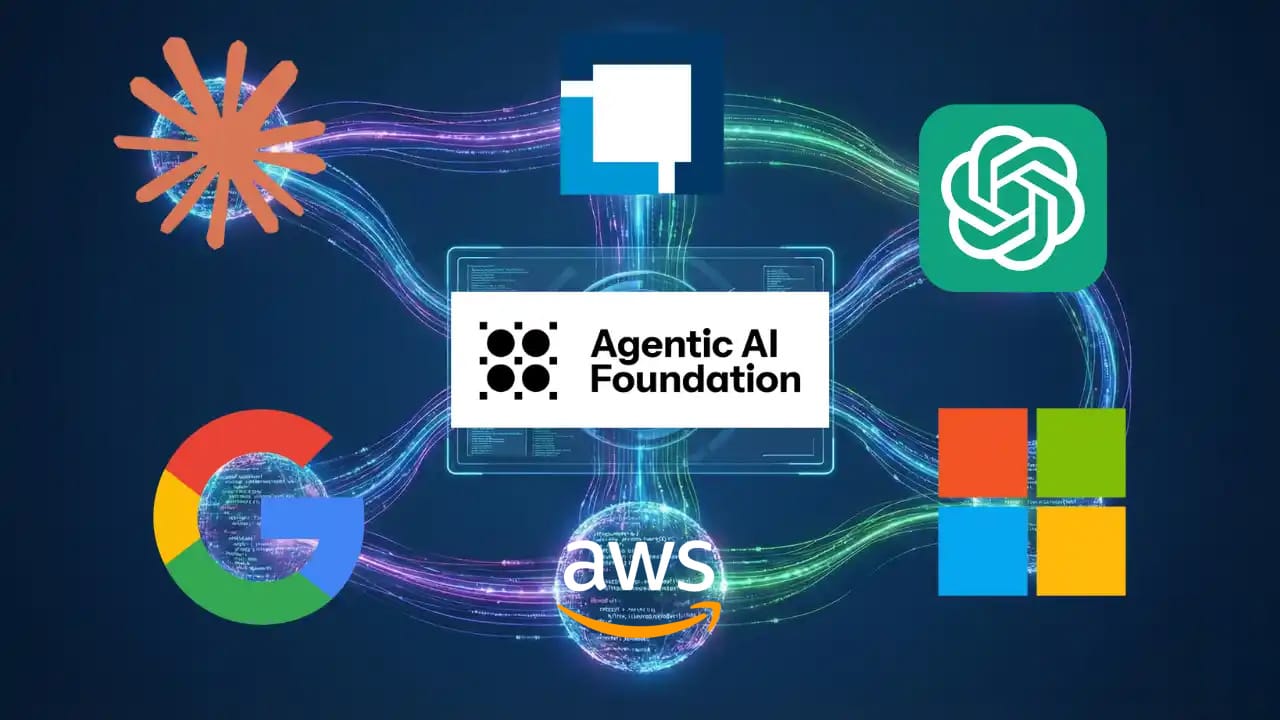
👀 What’s happening: OpenAI, Anthropic, and Block have launched the Agentic AI Foundation (AAIF) under the Linux Foundation, with Microsoft, Google, AWS, Bloomberg, and others joining soon after. The trio donated their core frameworks — MCP, Agents.md, and Goose — to establish a shared standard for how AI agents communicate and act. It looks like open collaboration, but it’s really a preemptive strike on standards before anyone else can set the rules.
🔥 How this hits reality: Global regulators still haven’t defined what “autonomous AI agents” legally are. These giants are exploiting that vacuum to write the rulebook before the referees arrive. Behind the banner of “open interoperability,” AAIF effectively centralizes control over the protocols that will govern how agents interact, transact, and take responsibility online. Whoever defines the language will later define the law.
🛎️ Our take: The smartest way to avoid regulation is to invent the rules first, and call it open source.
TOGETHER WITH CHATTUBE
Chat with Any YouTube Video
ChatTube transforms the way you watch YouTube. It adds real-time AI interaction to every video — instant summaries, multilingual translations, key insights, and answers to any question you ask.
Whether you’re learning, researching, or exploring, ChatTube turns every YouTube video into an interactive, insightful conversation with AI.
Now available on Oncely.com, where you can subscribe with an Exclusive 61% Discount.
PENTAGON
Google’s Gemini Drafts the Pentagon’s Playbook

👀 What’s happening: The Pentagon just launched GenAI.mil, its first military-grade AI platform, and Google Cloud’s Gemini is the inaugural brain inside it. While Secretary of Defense Pete Hegseth is selling it as “making the force more lethal,” Google insists the model will stick to “summarizing policy handbooks” and “risk assessments.” The fine print: only for unclassified data, and no training off military input.
🔥 How this hits reality: Gemini won’t be alone for long. The Pentagon confirmed it will add more models soon, and every frontier AI vendor—from OpenAI to Anthropic to Amazon—knows refusal isn’t really an option, especially when national contracts become the new benchmark for “trusted AI.” Google’s careful phrasing can’t hide the shift: from tech neutrality to strategic infrastructure, one API call at a time.
🛎️ Our take: Once the Pentagon plugs into AI, neutrality dies by default, every major model will march in eventually, whether by contract, compliance, or quiet consent.
Google’s Gemini Drafts the Pentagon’s Playbook
The Pentagon confirmed it will add more models soon, and every frontier AI vendor—from OpenAI to Anthropic to Amazon—knows refusal isn’t really an option, especially when national contracts become the new benchmark for “trusted AI.” Google’s careful phrasing can’t hide the shift: from tech neutrality to strategic infrastructure, one API call at a time.
INSURANCE
Coalition Turns Deepfakes into Billable Events
👀 What’s happening: While legacy insurers are busy writing “AI exclusion” clauses, Coalition, one of the top five cyber insurers in the U.S., just launched a Deepfake Response Endorsement that actually covers AI-driven reputation attacks. It pays out for forged CEO videos and fake employee rants, then sends in forensics, lawyers, and PR to clean up the mess. The company that treats cyber risk like a SaaS product just expanded its scope from data breaches to identity fiction.
🔥 How this hits reality: This isn’t insurance as usual. Traditional carriers are retreating because AI risk can’t be priced. Coalition is advancing because it prices AI from live telemetry. Its Active Data Graph tracks attack surfaces, breach data, and threat signals in real time, letting it insure risks others can’t even quantify. For teams, this means AI incidents are no longer “acts of God” but operational liabilities. For old insurers, it’s an obituary for static underwriting in a live-threat world.
🛎️ Our take: Coalition isn’t just protecting you from deepfakes; it’s monetizing the inevitability of them, turning it into an asset class that old insurers can't do.
QUICK HITS
- Slack CEO Denise Dresser is leaving to become OpenAI’s chief revenue officer, overseeing the company’s rapidly expanding enterprise business.
- The EU is investigating whether Google uses website and YouTube content for AI summaries without payment or consent, harming competition.
- India proposes a mandatory royalty system letting AI firms train on all copyrighted content while requiring payment to creators.
- Anthropic and Accenture signed a three-year partnership to expand Claude’s use across enterprise training, development, and AI ROI tracking.
- State leaders and voters from both parties are uniting against Trump’s proposed AI moratorium, rejecting federal attempts to override their existing state-level AI rules.
TRENDING
Daily AI Launches
- Dapple has launched a platform for the creative industry to streamline the management of submissions for awards, contests, and pitches.
- BON Credit has launched an AI fintech app that analyzes credit card data to build personalized plans for reducing debt and interest.
- TubeGuide has launched a tool that instantly turns YouTube tutorials into actionable step-by-step guides for learners.
- Z.ai has released GLM-4.6V, an open-source multimodal model with native function calling for complex agentic workflows.
Featured AI Tools
- 🧠 TRAE (The Real Al Engineer) is the most price-competitive coding agent.
- 🎥 KaraVideo unites all AI video models in one place.
- 📚 Heardly is the Fast Way to read Best Book.
- 🤖 Momen AI bridges the gap from vibe to viability, powering Lovable apps without code.
TOGETHER WITH US
AI Secret Media Group is the world’s #1 AI & Tech Newsletter Group, boasting over 2 million readers from leading companies such as OpenAI, Google, Meta, and Microsoft. Our Newsletter Brands:
- AI: AI Secret
- Tech & Business:: Bay Area Letters
- Robotics: Robotics Herald
- Marketing: Marketing Secret
We've helped promote over 500 Tech Brands. Will yours be the next?
Email our co-founder Mark directly at [email protected] if the button fails.
Good Morning, AI Enthusiasts!
The industry felt less like steady progress and more like a full-speed collision.
LEAK
OpenAI Rushes GPT-5.2 Out the Door
👀 What’s happening: OpenAI has reportedly fast-tracked GPT-5.2’s release to December 9, weeks ahead of schedule, after Sam Altman declared a “code red” in response to Google’s Gemini 3. The update was meant to be a quiet, later-December rollout. Sources say the build was barely through validation when the date got locked.
🔥 How this hits reality: The AI race has devolved into a scoreboard war. Each release now reads like a quarterly earnings call for benchmark metrics, not for capability and not for adoption. GPT-5.2 might edge back to the top of the charts, but it’s unlikely to reclaim the ecosystem ground Gemini 3 already occupies across Android, Search, and Workspace. OpenAI can win points, yet still lose the platform.
🛎️ Key takeaway: In today’s AI race, progress isn’t measured in users; it’s measured in leaderboards.
OpenAI Rushes GPT-5.2 Out the Door
👀 What’s happening: OpenAI has reportedly fast-tracked GPT-5.2’s release to December 9, weeks ahead of schedule, after Sam Altman declared a “code red” in response to Google’s Gemini 3. The update was meant to be a quiet, later-December rollout. Sources say the build was barely through validation when the date got locked.
Google: OpenAI Rushes GPT-5.2 Out the Door
👀 What’s happening: OpenAI has reportedly fast-tracked GPT-5.2’s release to December 9, weeks ahead of schedule, after Sam Altman declared a “code red” in response to Google’s Gemini 3. The update was meant to be a quiet, later-December rollout. Sources say the build was barely through validation when the date got locked.
TOGETHER WITH FELO
Stop Working FOR Your Documents, Make Them Work FOR You
The 10x knowledge worker isn't typing faster—they're directing AI agents while competitors drown in copy-paste hell. Right now, someone just translated a 50-page deck in 3 minutes while you're still reformatting slide 12. Felo LiveDoc is the world's first Agent Workspace where documents don't just sit there—they evolve, analyze, and update themselves. Imagine a phantom team of designers, translators, and analysts inside your docs, unifying scattered PDFs, videos, and spreadsheets into one intelligent system that grows smarter with every task.
Here's what makes you look like a genius: While legacy tools treat you like a glorified typist, LiveDoc's multi-agent system operates autonomously. Design agents polish your layouts. Data agents extract insights across PDFs, videos, and web pages simultaneously. Translation agents speak every language your customers do—all working 24/7 inside one living workspace. This isn't productivity theater—it's the death of document drudgery. You're not just saving time; you're unlocking a superpower your competitors don't know exists yet.
And it's not just you—it's your entire team: Think of your best team collaboration tool—now add tireless AI teammates who never sleep, never forget context, and execute instantly. LiveDoc expands collaboration from human-to-human to human-plus-AI: team members direct, AI agents execute, all on the same canvas in real time. No more "latest_final_v3" nightmares. While your competitors coordinate between people, you're coordinating an entire hybrid workforce.
The insider move? Early adopters are already 10x-ing their output while the rest of the market is still toggling between twelve tabs. Every day you wait is another day spent manually updating slides like it's 2015. The knowledge workers who win aren't the ones who work harder—they're the ones who stopped editing and started directing.
🚀 Join the revolution: Get early access to Felo LiveDoc and become the person everyone asks, "How did you finish that so fast?" The age of manual document labor just ended. Are you evolving, or still typing?
GLASSES
Meta Buys Limitless for Glasses That Remember

👀 What’s happening: Meta has acquired Limitless, the startup behind the $99 AI pendant that could record and summarize your conversations. The hardware is being discontinued, but the team and its memory tech are moving into Meta’s Reality Labs to work on AI-enabled wearables — namely, the next generation of Ray-Ban Meta and in-lens “Display” glasses.
🔥 How this hits reality: Today’s smart glasses can see, hear, and translate, but they can’t remember. Limitless had cracked that gap with continuous recall software, turning life into a searchable stream of context. For Meta, that’s the missing neuron. By absorbing Limitless, Meta isn’t just chasing another gadget launch; it’s racing to make the first pair of glasses with real, persistent memory — a cognitive edge that the market hasn’t yet built into their glasses.
🛎️ Key takeaway: Meta’s next glasses won’t just show you the world; they’ll remember it for you.
Meta Buys Limitless for Glasses That Remember
👀 What’s happening: Meta has acquired Limitless, the startup behind the $99 AI pendant that could record and summarize your conversations. The hardware is being discontinued, but the team and its memory tech are moving into Meta’s Reality Labs to work on AI-enabled wearables — namely, the next generation of Ray-Ban Meta and in-lens “Display” glasses.
COPYRIGHT
NYT Joins the Global Pile-On Against Perplexity

👀 What’s happening: The New York Times has filed a fresh copyright lawsuit against Perplexity, accusing the AI search startup of straight-up repackaging its journalism behind paywalls into chatbot answers. It’s the latest in a long line of complaints, from the Chicago Tribune to Nikkei, that Perplexity’s “RAG” system is less retrieval than raid.
🔥 How this hits reality: Perplexity is now the poster child for AI’s “scrape first, settle later” doctrine. Its token Publisher Program and Getty deal barely dent the wave of lawsuits stacking up from legacy media across continents. Every newsroom wants a check, and Perplexity keeps paying in delay tactics as it negotiates with one hand and scrapes with the other.
🛎️ Key takeaway: When half the internet calls you theft, and you still call it innovation, you’re not bold, you’re just stealing with a straight face.
NYT Joins the Global Pile-On Against Perplexity
👀 What’s happening: The New York Times has filed a fresh copyright lawsuit against Perplexity, accusing the AI search startup of straight-up repackaging its journalism behind paywalls into chatbot answers. It’s the latest in a long line of complaints, from the Chicago Tribune to Nikkei, that Perplexity’s “RAG” system is less retrieval than raid.
QUICK HITS
- OpenAI has disabled ad-like app suggestions, insisting no ads are live and shifting focus toward improving ChatGPT’s overall quality.
- Meta has signed AI data licensing deals with multiple news publishers to deliver real-time news through its chatbot.
- Walgreens Advertising Group partners with Rokt to enhance its AI-powered retail media and add a new monetizable post-purchase channel.
- Google releases Gemini 3 Deep Think exclusively for Ultra subscribers, highlighting its top ARC-AGI-2 score and advanced reasoning strengths.
- Gartner urges organizations to block AI browsers for now, citing data exposure and agent-driven operational risks.
TRENDING
Daily AI Launches
- Series Graph has launched a visual TV companion app that uses IMDb ratings to create episode heatmaps and tracks watch progress.
- GMI Cloud has launched a multimodal inference engine that unifies text, video, and audio pipelines with 5-6x faster performance.
- Strater AI has launched a learning tool that turns any video, PDF, or website into interactive quizzes, flashcards, and summaries.
- MCPTotal has launched a platform for instant, zero-config deployment and management of MCP servers with support for 100+ tools.
Featured AI Tools
- 🧠 TRAE (The Real Al Engineer) is the most price-competitive coding agent.
- 🎥 KaraVideo unites all AI video models in one place.
- 📚 Heardly is the Fast Way to read Best Book.
- 🪶 CopyOwl is the First AI Research Agent, deep research on any topic in one click.
TOGETHER WITH US
AI Secret Media Group is the world’s #1 AI & Tech Newsletter Group, boasting over 2 million readers from leading companies such as OpenAI, Google, Meta, and Microsoft. Our Newsletter Brands:
- AI: AI Secret
- Tech & Business:: Bay Area Letters
- Robotics: Robotics Herald
- Marketing: Marketing Secret
We've helped promote over 500 Tech Brands. Will yours be the next?
Email our co-founder Mark directly at [email protected] if the button fails.
Good Morning, AI Enthusiasts!
The AI race is fragmenting into enterprise capture, internal consolidation, and values-driven distribution.

BANKING
Mistral Lands HSBC
👀 What’s happening: HSBC signed a multi-year deal with Mistral AI to run its commercial and future models inside the bank’s own systems. No pricing disclosed, which usually means it was not cheap. The timing is unmistakable. Bank of America just waved a four billion dollar tech war chest and every global bank is scrambling to show they are not drifting into the “legacy lender” bucket.
🔥 How this hits reality: This is less a tech upgrade and more a reputational sprint. HSBC needs to show staff, regulators, and investors that its AI posture is modern, controlled, and self-hosted. Pulling in Mistral signals two things. First, HSBC wants sovereignty over its models because no bank wants compliance exposure from a public API. Second, it wants to prove it can keep pace with American rivals that are already arming bankers with AI briefings and scaling client loads from fifteen to fifty. European banks now face a simple dilemma. Either they build a protected AI stack fast or they concede efficiency to the US.
🛎️ Key takeaway: HSBC did not just buy models. It bought time to prove it is still in the race before the AI productivity gap becomes a capital markets problem.
Mistral Lands HSBC
Pulling in Mistral signals two things. First, HSBC wants sovereignty over its models because no bank wants compliance exposure from a public API. Second, it wants to prove it can keep pace with American rivals that are already arming bankers with AI briefings and scaling client loads from fifteen to fifty.
TOGETHER WITH MOMEN
Start Building Your Full App From Your Lovable UI
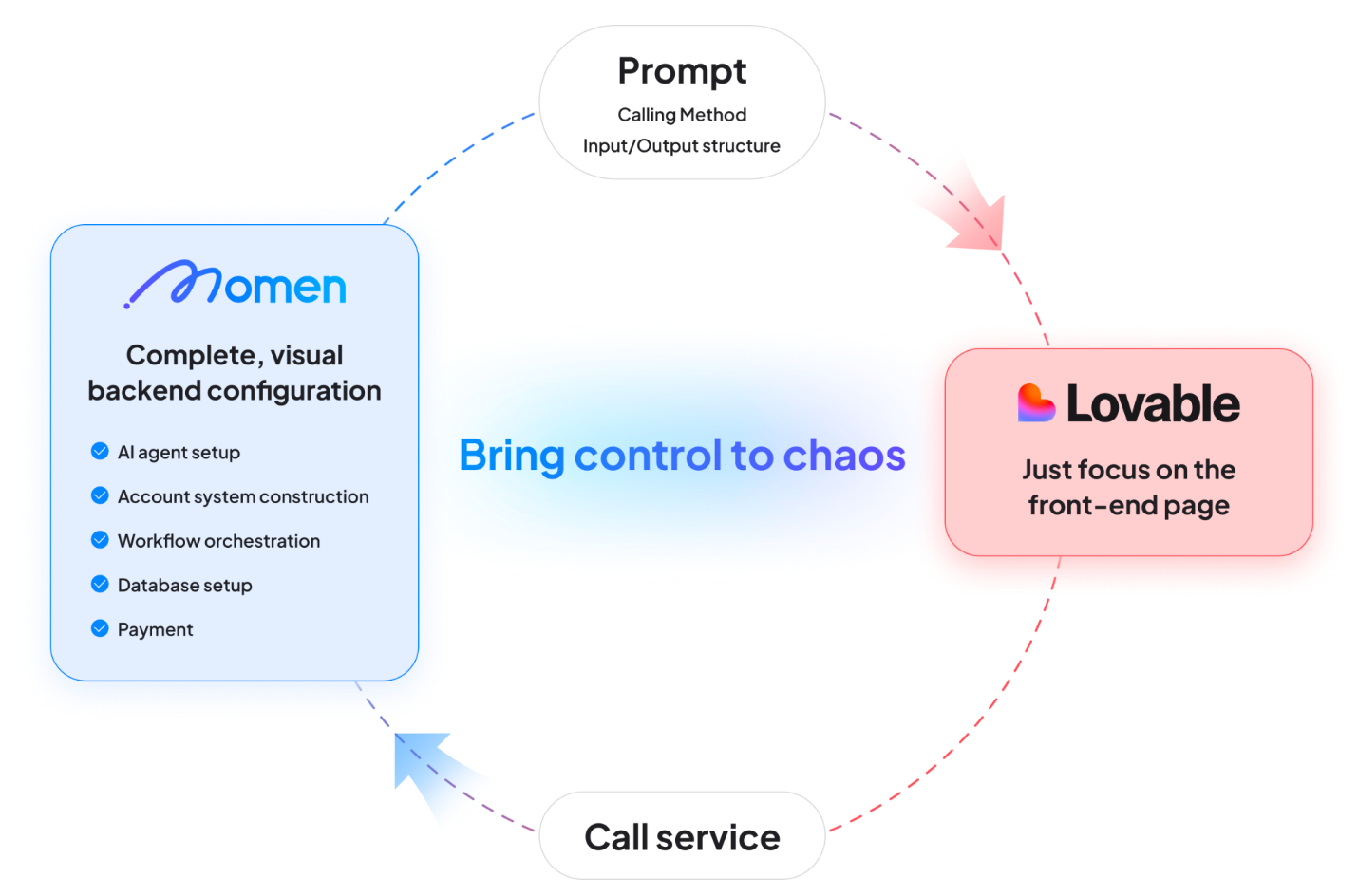
If you’ve ever built a beautiful UI in Lovable but got stuck turning it into a real, working product — Vibe Architect fixes that.
Vibe Architect turns your Lovable designs into a fully functional app with one prompt. It auto-generates your AI agents, database, API logic, user accounts, auth, and even payment/subscription flows.
No engineering team. No backend complexity. Just build → ship → iterate.
Perfect for:
- Founders validating ideas fast
- Indie builders turning prototypes into real products
- Anyone who wants an AI-powered app without writing backend code
With Vibe Architect, your product isn’t just a demo. It launches, gets users, and generates revenue from Day 1.
ALARM
Altman Slams the Brakes

👀 What’s happening: Sam Altman just declared “Code Red” and ordered the company to abandon its scattered side quests. Ads, agents, shopping experiments, even internal bets on new product lines are being paused. Everyone is being pulled back to one thing: fixing ChatGPT, fast. This comes right as Google’s Gemini 3 earns rare industry respect and Anthropic pushes deeper into enterprise workflows.
🔥 How this hits reality: After a year of pretending it could run an ecosystem like a trillion-dollar platform, OpenAI finally hit the wall. The company was never built for a sprawling product universe; its power has always been a single, brutally polished flagship. Altman now seems to know it. “Code Red” is the admission that ChatGPT is the moat, and if that moat cracks, there is no ecosystem to fall back on. Refocusing is not strategy; it is survival.
🛎️ Key takeaway: OpenAI just dropped the ecosystem dream because it cannot afford dreams, not when the crown is slipping.
Altman Slams the Brakes
👀 What’s happening: Sam Altman just declared “Code Red” and ordered the company to abandon its scattered side quests. Ads, agents, shopping experiments, even internal bets on new product lines are being paused. Everyone is being pulled back to one thing: fixing ChatGPT, fast.
OpenAI: Altman Slams the Brakes
🔥 How this hits reality: After a year of pretending it could run an ecosystem like a trillion-dollar platform, OpenAI finally hit the wall. The company was never built for a sprawling product universe; its power has always been a single, brutally polished flagship. Altman now seems to know it.
Google: Altman Slams the Brakes
Ads, agents, shopping experiments, even internal bets on new product lines are being paused. Everyone is being pulled back to one thing: fixing ChatGPT, fast. This comes right as Google’s Gemini 3 earns rare industry respect and Anthropic pushes deeper into enterprise workflows.
NONPROFITS
Anthropic Turns Altruism into Architecture with Claude for Nonprofits
👀 What’s happening: Anthropic rolled out Claude for Nonprofits with GivingTuesday, giving eligible organizations up to 75% off Claude Team and Enterprise plans, plus new integrations with Benevity, Blackbaud, and Candid. It’s positioned as a philanthropic move, helping nonprofits stretch thin budgets, but it’s also a strategic land grab. Claude isn’t just offering free tools; it’s moving into the infrastructure of social impact work.
🔥 How this hits reality: The move is genuinely philanthropic as Claude’s discounts and training will help nonprofits do more with less; but it’s also unmistakably strategic. By integrating with donation platforms, grant CRMs, and field-data tools, Anthropic isn’t just aiding organizations; it’s becoming part of their digital backbone. The free “AI Fluency” program ensures teams learn to work within Claude’s ecosystem, turning social good into a sustainable presence inside global institutions.
🛎️ Key takeaway: It’s real charity, but also smart strategy. Anthropic is proving that doing good can double as long-term distribution.
Anthropic Turns Altruism into Architecture with Claude for Nonprofits
👀 What’s happening: Anthropic rolled out Claude for Nonprofits with GivingTuesday, giving eligible organizations up to 75% off Claude Team and Enterprise plans, plus new integrations with Benevity, Blackbaud, and Candid. It’s positioned as a philanthropic move, helping nonprofits stretch thin budgets, but it’s also a strategic land grab.
QUICK HITS
- Musk claims AI and robotics will solve America’s debt crisis within three years through soaring productivity, though experts remain sharply divided.
- Germany’s Black Forest Labs raised $300M at a $3.25B valuation, marking one of Europe’s biggest AI rounds this year.
- Amazon pulled its AI-generated anime dubs after major backlash over their poor quality and use of generative AI.
- Google is testing a merge of AI Overviews and AI Mode, letting users shift from AI snapshots to conversational search on one screen.
- AWS debuted Kiro, a coding agent that runs for days, plus security and DevOps agents, pushing long-running AI workers forward.
TRENDING
Daily AI Launches
- X-Design has launched an AI tool that turns plain product photos into realistic, styled scenes with one click, designed for small sellers.
- Stickerbox has launched a voice-powered tool that turns kids' spoken ideas into physical stickers they can color and share.
- ZapDigits has launched an all-in-one marketing dashboard that consolidates data from 20+ tools into a single, shareable real-time interface.
- Once UI has released v1.5, adding drop-in visual effects and live data charts to help indie developers build expressive, lively interfaces.
Featured AI Tools
- 🧠 TRAE (The Real Al Engineer) is the most price-competitive coding agent.
- 🎥 KaraVideo unites all AI video models in one place.
- 📚 Heardly is the Fast Way to read Best Book.
- 🪶 CopyOwl is the First AI Research Agent, deep research on any topic in one click.
TOGETHER WITH US
AI Secret Media Group is the world’s #1 AI & Tech Newsletter Group, boasting over 2 million readers from leading companies such as OpenAI, Google, Meta, and Microsoft. Our Newsletter Brands:
- AI: AI Secret
- Tech & Business: Bay Area Letters
- Robotics: Robotics Herald
We've helped promote over 500 Tech Brands. Will yours be the next?
Email our co-founder Mark directly at [email protected] if the button fails.

🛎️ Consumer AI 2025
Plus: OpenAI Maps Enterprise AI, AI Cloud Outpaces Security

🛎️ Games as Training
Plus: The AI Shop, Google Bets on Edge
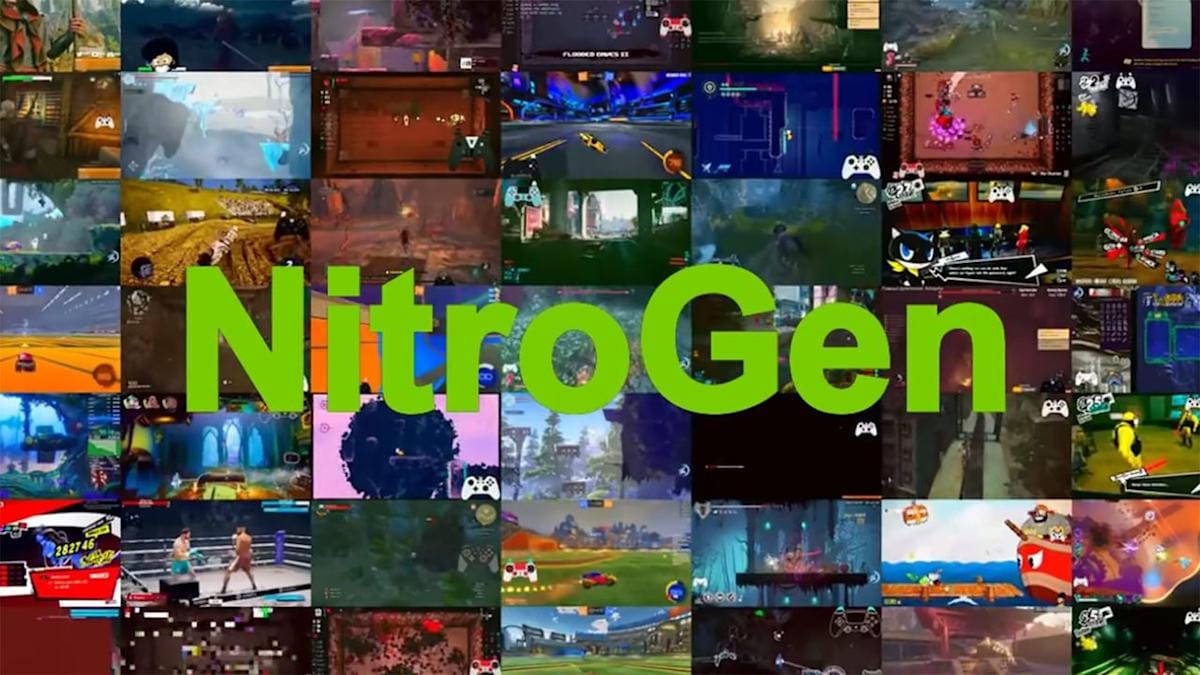
🛎️ Gemini 3 Flash
Plus: An AI Warning, Notion’s AI Moment
🛎️ GPT Image 1.5 Is Coming
Plus: Zoom Launched AI Companion 3.0, AI Rewrites Cashmere
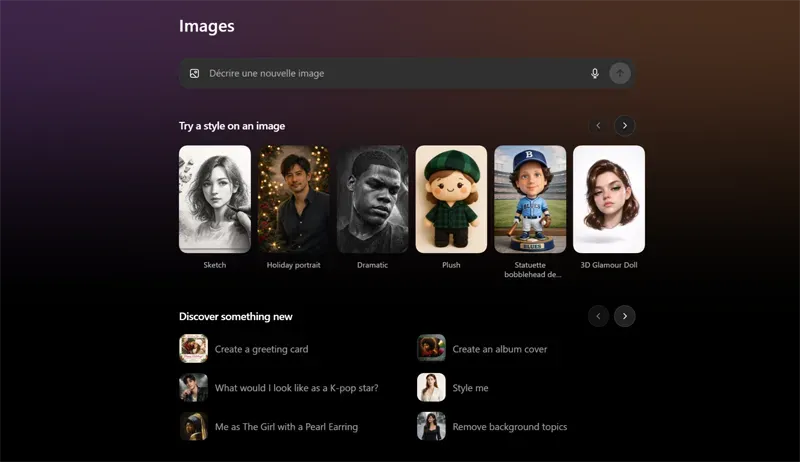
🛎️ Open Models Break Math
Plus: Agents as APIs, No Ceiling on Pay

🛎️ DeepSeek’s Forbidden GPUs
Plus: Local AI Coding, Google Finds Next Lens
🛎️ Coding the Rules
Plus: Pentagon’s Playbook, Billable Events
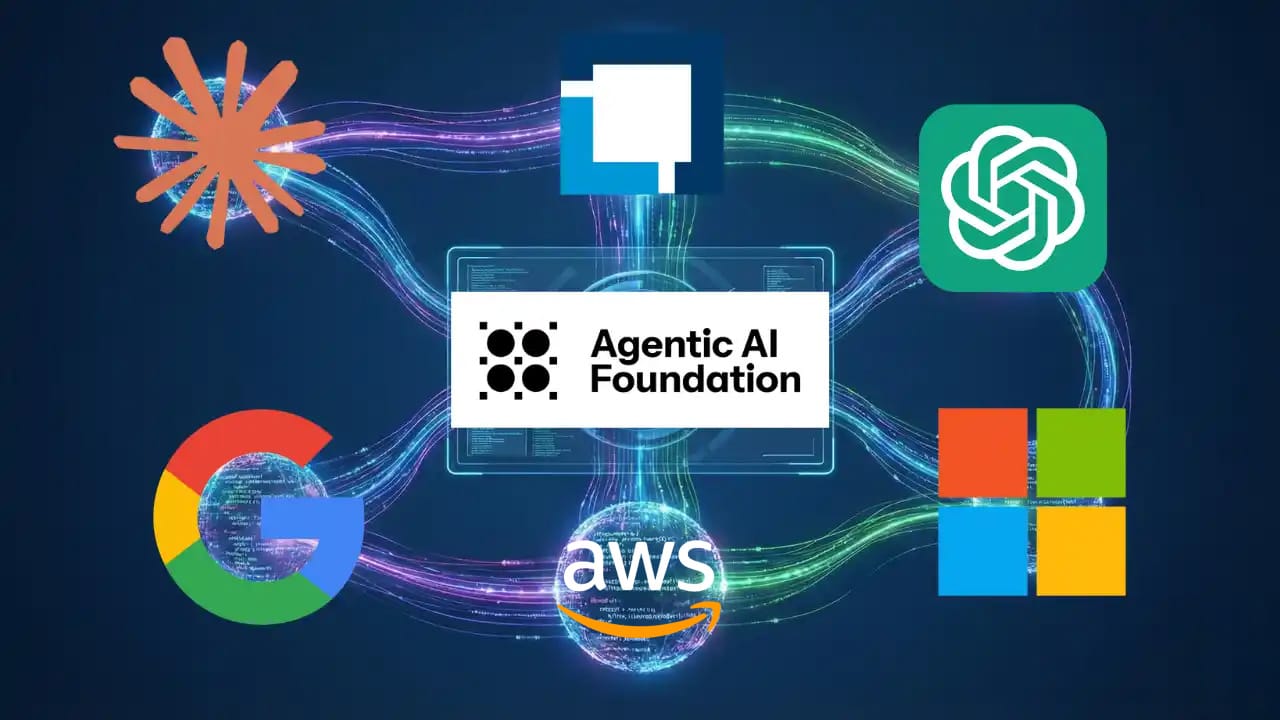
🛎️ OpenAI Rushes GPT-5.2
Plus: Glasses That Remember, Perplexity’s Global Backlash
🛎️ Mistral Lands HSBC
Plus: Altman Slams the Brakes, Claude for Nonprofits