🛎️ ChatGPT Crossed 1 Billion
Plus: Google's Opt-Out Is a Trap, Lovable Races Its Own Suppliers
Read the story Subscribe
Reporting and context on Lovable, with a closer look at the decisions and developments that matter.
Get AI Secret’s free daily briefing, including Lovable and the wider AI industry.

Lovable is an AI software-building platform. Coverage follows app creation, coding agents and how people build software through natural-language instructions.
Sources checked . Selected company background and milestones.
Selected milestones, newest first. Earlier history is available below.
Lovable announces a new version of its AI app-building platform.
Source: LovableThe team explains the rebranding from GPT Engineer to Lovable.
Source: LovableMore than 10 years ago.
Relevant sections from the articles on this page. Explore older coverage below.
More coverage

Good Morning, AI Enthusiasts!
A billion users found the default and Lovable found its suppliers becoming rivals.
RECORDS

👀 What’s happening: ChatGPT crossed 1 billion global monthly active users in May, roughly three years after launch, according to Sensor Tower estimates, the fastest any app has ever reached the milestone. It outpaced Google Maps, TikTok, Instagram, and YouTube, the products that defined consumer software in their eras. The category barely existed three years ago. By the same reckoning, Anthropic's Claude sits at about 56 million users, a fraction of the base, but growing roughly 640% year on year.
🌍 How this hits reality: The record is real, and it buys the asset that turned past winners into franchises: distribution. Reach at this scale compounds into data, feedback, pricing power, and a default rivals must dislodge rather than match. But the funnel runs upside down. Monthly actives are not all paying users, inference is expensive, and every free login is a cost, not a revenue line. OpenAI now owns the largest audience in software history and pays to serve it daily.
🛎️ Key takeaway: A billion people trying ChatGPT is a triumph of adoption; a billion people paying for it is the milestone that decides whether the lead becomes a business.
👀 What’s happening: ChatGPT crossed 1 billion global monthly active users in May, roughly three years after launch, according to Sensor Tower estimates, the fastest any app has ever reached the milestone. It outpaced Google Maps, TikTok, Instagram, and YouTube, the products that defined consumer software in their eras.
It outpaced Google Maps, TikTok, Instagram, and YouTube, the products that defined consumer software in their eras. The category barely existed three years ago. By the same reckoning, Anthropic's Claude sits at about 56 million users, a fraction of the base, but growing roughly 640% year on year.
GOV

👀 What’s happening: Britain's Competition and Markets Authority ordered Google to let publishers keep their content out of AI Search features like AI Overviews, and block it from "fine-tuning" Google's models. A new Search Console toggle now lets sites opt out; those that do get no traffic or impressions from generative AI, while traditional rankings stay untouched. The CMA called it a "world first" that strengthens publishers' hand in negotiations.
🌍 How this hits reality: The regulator calls this leverage. It isn't. With over 90% of UK search, Google is the only door to readers, so the choice is between two dead ends. Stay in AI Overviews, and Google answers with your content while click-throughs collapse. Opt out, and you vanish from the surface attention is migrating to. The old search bargain traded content for traffic; AI keeps the content and stops the traffic.
🛎️ Key takeaway: This isn't a bargaining chip, it's a switch where both settings cut off your readers, dressed up as a regulatory win.
👀 What’s happening: Britain's Competition and Markets Authority ordered Google to let publishers keep their content out of AI Search features like AI Overviews, and block it from "fine-tuning" Google's models. A new Search Console toggle now lets sites opt out; those that do get no traffic or impressions from generative AI, while traditional rankings stay untouched.
CODING
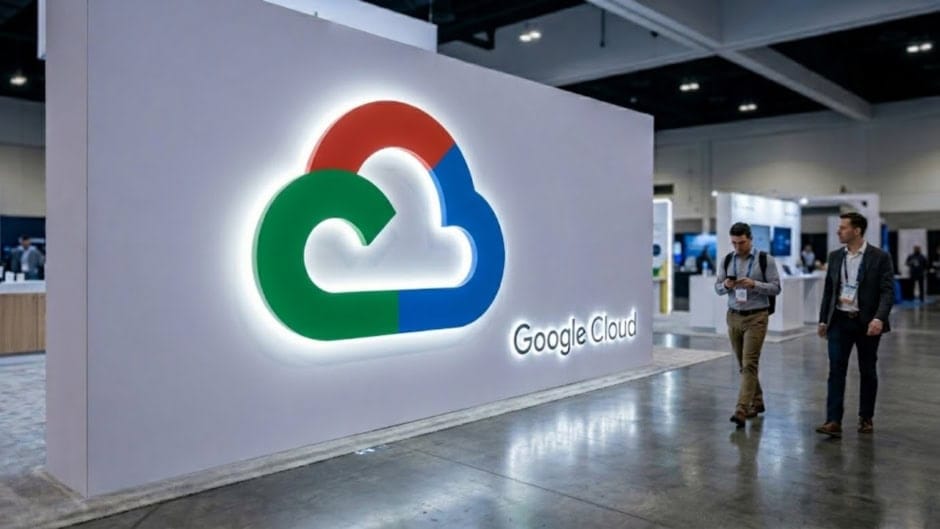
👀 What’s happening: Lovable, the Stockholm vibe-coding startup, signed a multiyear deal with Google Cloud to grow its footprint fivefold, with expanded access to Anthropic's Claude and Google's Gemini. Its new agent goes into Google's enterprise marketplace, and its code gets scanned in real time by Wiz, Google's $32 billion security acquisition. The pace is real: Lovable crossed $400 million in annualized revenue in February, added $100 million in a single month with 146 employees, and says over half the Fortune 500 use it.
🌍 How this hits reality: Lovable is racing because the ground is moving under it. The labs that own frontier models, Anthropic with Claude Code and OpenAI with Codex, are pushing their own coding agents down into the exact market Lovable occupies. So Lovable spends its growth buying entrenchment: enterprise billing through Google, security through Wiz, distribution to Fortune 500 buyers. The play is to become infrastructure before its suppliers become its competitors.
🛎️ Key takeaway: Lovable's only durable moat is the platform its rivals already own; it's locking in customers before the labs it rents from decide vibe-coding belongs to them.
👀 What’s happening: Lovable, the Stockholm vibe-coding startup, signed a multiyear deal with Google Cloud to grow its footprint fivefold, with expanded access to Anthropic's Claude and Google's Gemini. Its new agent goes into Google's enterprise marketplace, and its code gets scanned in real time by Wiz, Google's $32 billion security acquisition.
👀 What’s happening: Lovable, the Stockholm vibe-coding startup, signed a multiyear deal with Google Cloud to grow its footprint fivefold, with expanded access to Anthropic's Claude and Google's Gemini. Its new agent goes into Google's enterprise marketplace, and its code gets scanned in real time by Wiz, Google's $32 billion security acquisition.
The labs that own frontier models, Anthropic with Claude Code and OpenAI with Codex, are pushing their own coding agents down into the exact market Lovable occupies. So Lovable spends its growth buying entrenchment: enterprise billing through Google, security through Wiz, distribution to Fortune 500 buyers.
AGENTS
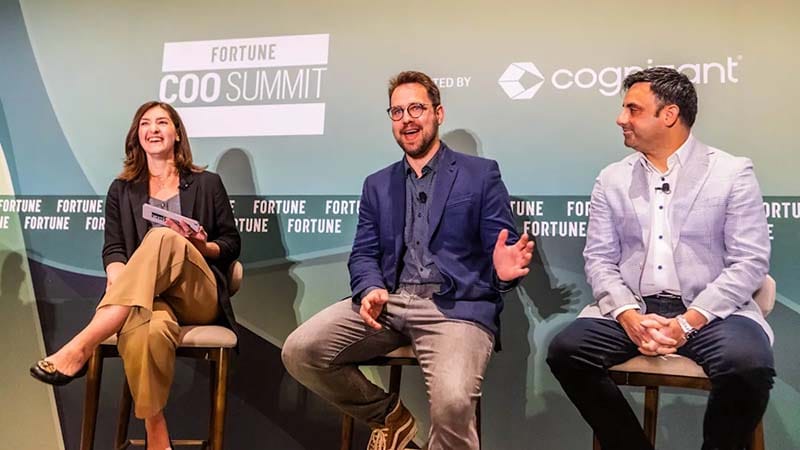
👀 What’s happening: At Fortune's COO Summit, executives split over whether AI agents are colleagues or tools. Okta President and COO Eric Kelleher named the company?s AI agents Leo, Sloan, Hank, and Walker; they sit in business reviews beside human staff. "AI became a colleague as opposed to a tool." Hours later, Cisco's Chief People Officer Francine Katsoudas pushed back: agents are "part of the workflow, but not a colleague."
🌍 How this hits reality: The label fight is a distraction. Cognizant found 93% of jobs already disrupted, six years ahead of its own forecast, yet the promised productivity gains never arrived, an "activation gap." The reason isn't the tech. Org charts, budget cycles, and performance reviews were all built to ration human headcount, and nobody rebuilt them for a workforce that now runs on agents.
🛎️ Key takeaway: Whether the agent is a colleague or a tool matters far less than whether managers rebuild the org chart, budget, and review cycle AI just exposed as obsolete.
DAILY TL;DR
READ MORE
Stay ahead without drowning in information. We turn the most important signals across AI, tech, marketing, and future products into 5-minute reads you can actually finish.
TOGETHER WITH US
AI Secret Media Group is the world’s #1 AI & Tech Newsletter Group, reaching over 2 million leaders across the global innovation ecosystem, from OpenAI, Anthropic, Google, and Microsoft to top AI labs, VCs, and fast-growing startups.
We've helped promote over 500 Tech Brands. Will yours be the next?
Email our co-founder Mark directly at [email protected] if the button fails.
Good Morning, AI Enthusiasts!
Something is reorganizing itself beneath the surface.

CODING
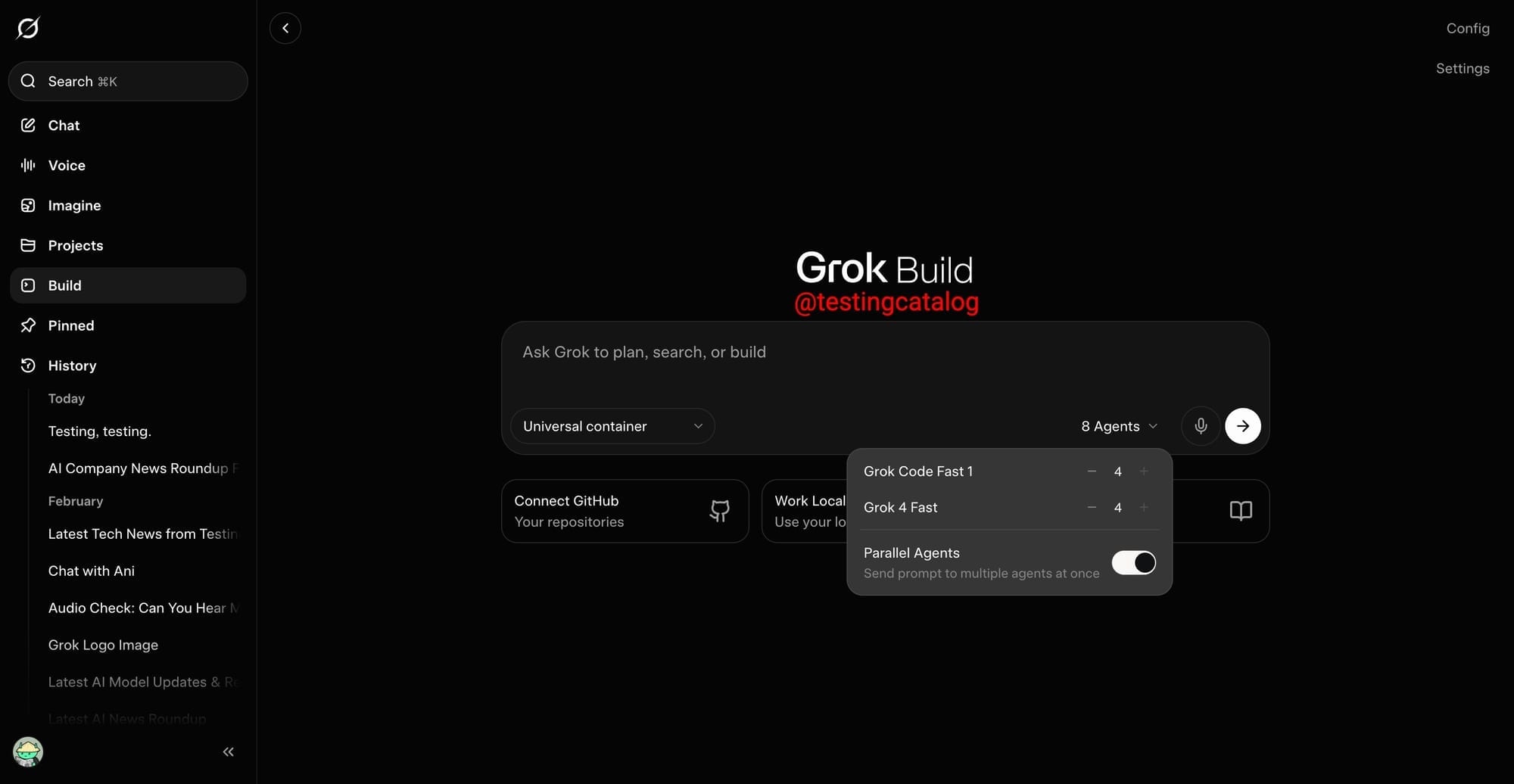
👀 What’s happening: xAI is testing Parallel Agents and a hidden Arena Mode inside Grok Build. Grok Build is xAI’s coding environment that turns prompts into working code. Now one prompt can now trigger up to eight agents across Grok Code 1 Fast and Grok 4 Fast, with outputs displayed side by side. Arena Mode appears designed to auto rank or score results. The interface is shifting toward a browser style IDE with tabs, live previews, dictation, and GitHub integration. This is clearly built for volume.
🌍 How this hits reality: This does not read like a direct challenge to the enterprise coding model dominance of Claude and OpenAI. Instead, it looks aimed at the generation layer dominated by Lovable and Cursor. For now, the pattern may resembles Grok Image according to the test. Fast inference. Lower cost. Many samples per prompt. If coding becomes generate 10 to 20 variants instantly and select the best, then throughput and price beat single shot perfection.
🛎️ Key takeaway: If Grok pushes fast multi sample coding at scale, the generation market may gets squeezed first. The competition shifts from smartest model to fastest and cheapest option factory.
Instead, it looks aimed at the generation layer dominated by Lovable and Cursor. For now, the pattern may resembles Grok Image according to the test. Fast inference. Lower cost.
TOGETHER WITH DELVE
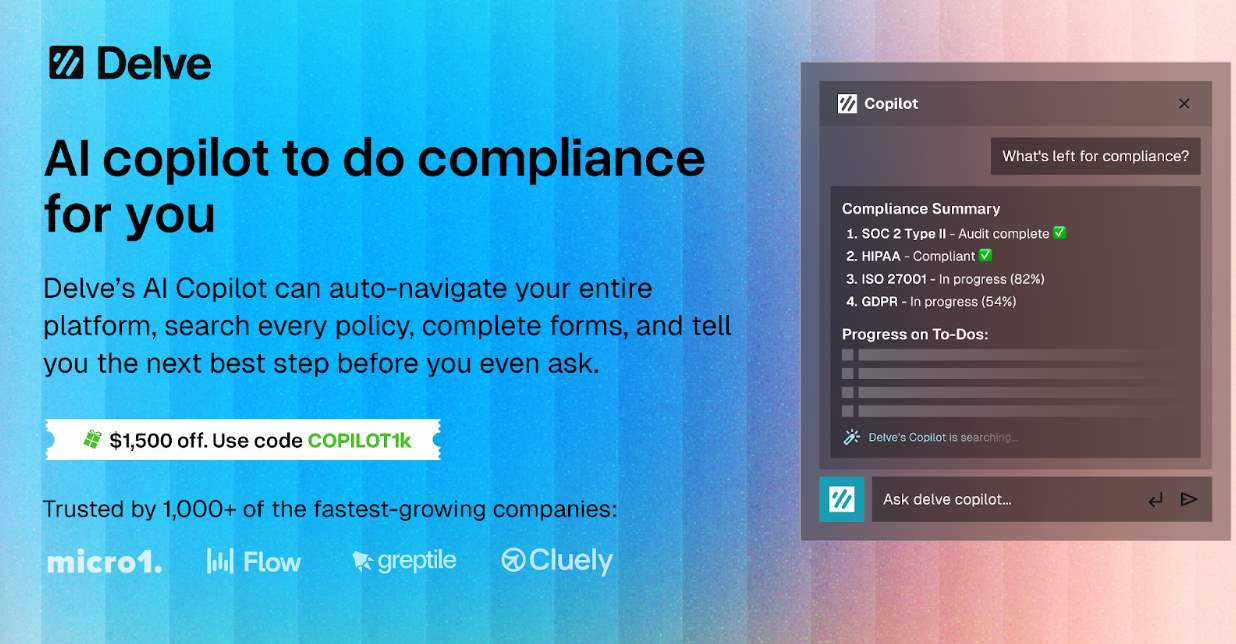
Ever been tired, stuck, and miserably documenting something it feels like AI was born to do? AI finally delivered.
Delve's AI copilot understands your entire tech stack and tells you exactly what to do next. Just ask it "What's my next step? Take me there" and watch Copilot read your screen and start doing tasks for you. Congrats, you've found the light at the end of the tunnel. Join Wisprflow, 11x, Bland, and more in the future of compliance with Delve.
Book a demo here to get $1,500 off compliance and see Copilot in action.
NEW LAUNCH
👀 What’s happening: Gemini 3 Deep Think just received a major upgrade and is now positioned as a specialized reasoning mode for science and engineering. It is available to Google AI Ultra subscribers and, for the first time, exposed through the Gemini API to selected researchers and enterprises. Early testers report it identifying subtle mathematical flaws that passed peer review and generating 3D printable models directly from sketches.
🌍 How this hits reality: This is less about benchmarks and more about workflow insertion. Deep Think posts 48.4 percent on Humanity’s Last Exam, 84.6 percent on ARC-AGI-2, and a 3455 Elo on Codeforces. Gold medal level math and physics scores move it from chatbot to research instrument. When models begin reviewing proofs, modeling physical systems, and generating production ready CAD files, they shift from assistant to co author inside labs and engineering teams.
🛎️ Key takeaway: If this distribution expands through API access, frontier reasoning stops being demo theater and becomes embedded infrastructure. Research cadence tightens, peer review pressure rises, and applied science begins to inherit model release cycles.
👀 What’s happening: Gemini 3 Deep Think just received a major upgrade and is now positioned as a specialized reasoning mode for science and engineering. It is available to Google AI Ultra subscribers and, for the first time, exposed through the Gemini API to selected researchers and enterprises.
DESIGN
👀 What’s happening: Figma is partnering with Anthropic to launch Code to Canvas, a feature that converts code generated by Claude Code into fully editable Figma designs. Instead of rebuilding AI generated interfaces from scratch, teams can import working UI directly into the canvas, refine variations, and align visually. It formalizes a workflow many were hacking together.
🌍 How this hits reality: This lands in the middle of the SaaSpocalypse narrative. The iShares software ETF is in bear territory and Figma stock sits roughly 85 percent below its 52 week high of 142.92 dollars. AI coding tools are pressuring traditional software layers. Figma is trying to anchor itself inside an agent driven build loop before design gets bypassed entirely.
🛎️ Key takeaway: If agentic coding keeps improving, design shifts from origin point to refinement layer. Figma stays relevant only if teams still need consensus and iteration. If that collapses, the canvas becomes optional infrastructure.
👀 What’s happening: Figma is partnering with Anthropic to launch Code to Canvas, a feature that converts code generated by Claude Code into fully editable Figma designs. Instead of rebuilding AI generated interfaces from scratch, teams can import working UI directly into the canvas, refine variations, and align visually.
DAILY TL;DR
TRENDING
READ MORE
Stay ahead without drowning in information. We turn the most important signals across AI, tech, marketing, and future products into 5-minute reads you can actually finish.
TOGETHER WITH US
AI Secret Media Group is the world’s #1 AI & Tech Newsletter Group, reaching over 2 million leaders across the global innovation ecosystem, from OpenAI, Anthropic, Google, and Microsoft to top AI labs, VCs, and fast-growing startups.
We've helped promote over 500 Tech Brands. Will yours be the next?
Email our co-founder Mark directly at [email protected] if the button fails.

Good Morning, AI Enthusiasts!
AI advanced fastest outside traditional strongholds and where power shifted toward whoever can actually ship, not just promise.

AGENTS
In late December, Meta finalized the acquisition of AI agent startup Manus, with market estimates placing the deal between one to five billion dollars. The pace was striking. Negotiations reportedly closed in days. Manus is not known for flashy demos. It is known for execution. Since launch, it has processed roughly 147 trillion tokens and created more than 80 million virtual machines. This move signaled that agents are no longer an experiment. They are being pulled into the core.
The deal exposes a shift in how the agent layer is valued. Building agents that reliably act across tools, systems, and workflows is expensive and operationally heavy. Compute scheduling, failure recovery, and orchestration matter more than clever prompts. Meta already owns distribution through WhatsApp, Instagram, and Facebook. What it lacked was dependable follow through. Buying Manus fills that gap instantly and turns conversational AI into something that can transact, automate, and close loops at scale.
This acquisition hints at where the agent market heads in 2026. Scale, capital, and infrastructure start to dominate. Smaller teams struggle to match reliability demands. The field compresses toward giants like Meta, OpenAI, and Anthropic. Agents look less like products and more like strategic assets.
Meta already owns distribution through WhatsApp, Instagram, and Facebook. What it lacked was dependable follow through. Buying Manus fills that gap instantly and turns conversational AI into something that can transact, automate, and close loops at scale.
TOGETHER WITH MARKETING SECRET

Marketing Secret is a weekly newsletter breaking down how today’s fastest-growing AI and tech brands actually win users, attention, and revenue.
If you want clearer thinking, sharper execution, and ideas you can apply this week, Marketing Secret is worth your inbox.
CODING
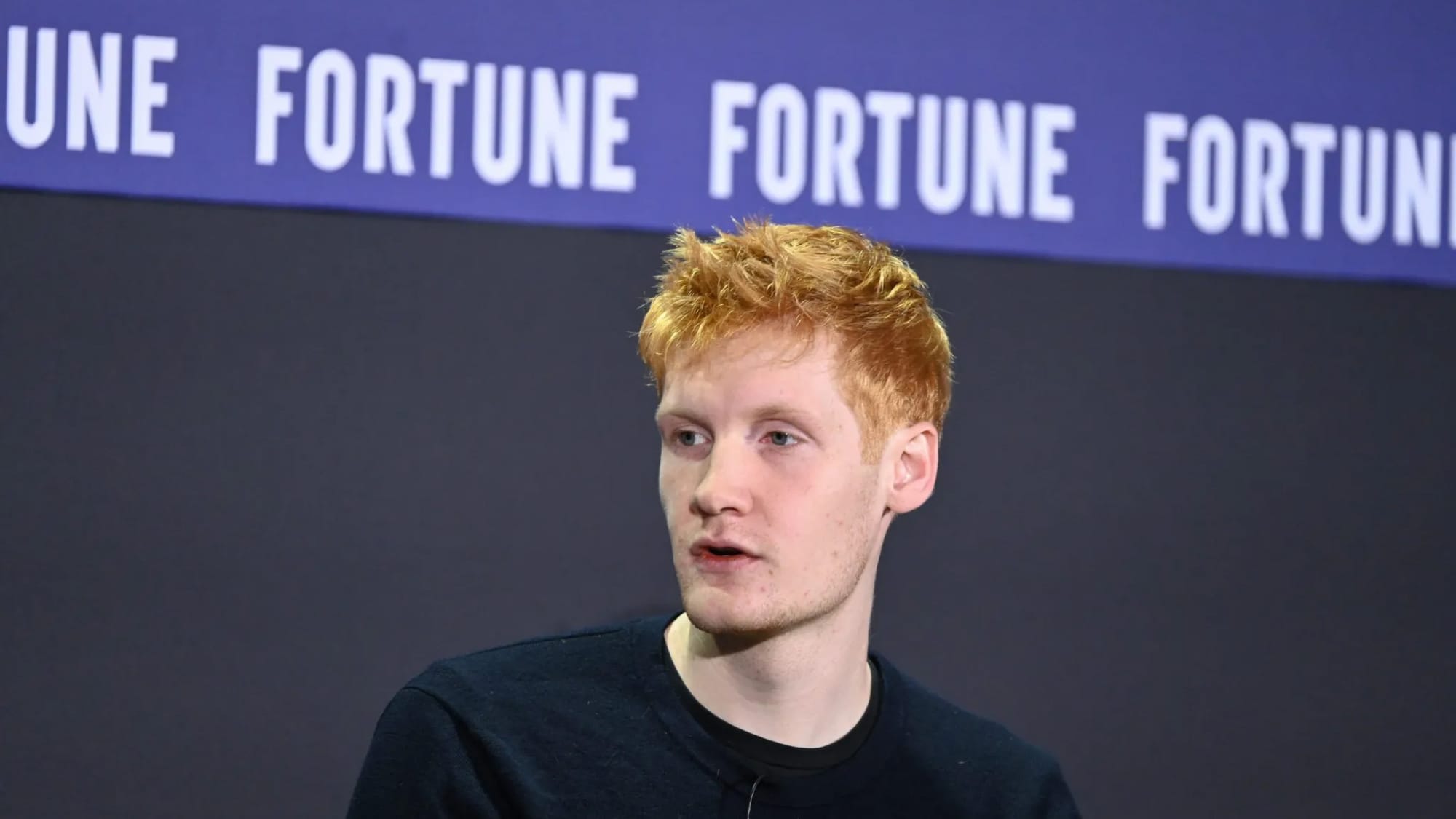
At the Fortune Brainstorm AI conference, Cusor CEO Michael Truell warned that vibe coding trades understanding for speed. Developers let AI generate entire systems without inspecting the code. It works at first. Products ship faster. But the structure underneath becomes opaque. Truell framed this as technical debt, yet the timing matters. This warning arrives as tools like Lovable pull users away from IDE based workflows entirely by removing the need to touch code at all.
The deeper tension is not code quality. It is incentive alignment. According to AI Secret team research, many AI founding teams do not care about fine grained code control. They care about shipping something usable as fast as possible. Lovable compresses product creation into minutes and expands the builder base beyond engineers. That growth speed stresses the IDE middle layer. Cursor assumes teams still want visibility and intervention. Vibe coding tools assume outcomes matter more than internals. The market currently rewards the latter.
If this pattern continues, IDEs become specialist tools, not default ones. Truell seems to recognize that threat early. The risk is not that vibe built products collapse. It is that many never need to scale far enough for control to matter.
Lovable compresses product creation into minutes and expands the builder base beyond engineers. That growth speed stresses the IDE middle layer. Cursor assumes teams still want visibility and intervention. Vibe coding tools assume outcomes matter more than internals.
HOLLYWOOD

In 2025, Hollywood finally stopped talking about AI in the abstract and started deploying it in visible ways. Studios expanded from narrow post production uses into text to video tools, synthetic dubbing, and AI assisted animation experiments. The shift felt real because money and brand names were attached. Yet by year end, there was still no widely watched series or film that demonstrated why AI belongs at the center of video creation rather than on the margins.
That gap matters because video is the most unforgiving medium. Narrative pacing, performance nuance, and cultural context are not optional. They are the product. Most AI video tools in 2025 struggled beyond short clips and novelty formats. Production workflows that rely on hundreds of specialists were reduced to prompt driven outputs that saved time but lost coherence. Cost reduction showed up faster than creative upside, which inverted the original promise.
The signal from 2025 is not that AI failed Hollywood. It is that video remains a hard problem. Generative models are early, brittle, and better at fragments than full works. If progress continues, AI will first reshape pipelines, localization, and iteration speed. Breakthrough storytelling comes later, if at all.
QUICK HITS
TRENDING
TOGETHER WITH US
AI Secret Media Group is the world’s #1 AI & Tech Newsletter Group, reaching over 2 million leaders across the global innovation ecosystem, from OpenAI, Anthropic, Google, and Microsoft to top AI labs, VCs, and fast-growing startups.
We operate the industry’s most influential portfolio of newsletters, each shaping a different frontier of the AI & Tech revolution:
Be Smarter in 5 Minutes
Discover the Future Products
We've helped promote over 500 Tech Brands. Will yours be the next?
Email our co-founder Mark directly at [email protected] if the button fails.
Good Morning, AI Enthusiasts!
With real engineering agents now emerging, the stack is quietly reorganizing itself—faster than anyone expected.

NEW LAUNCH
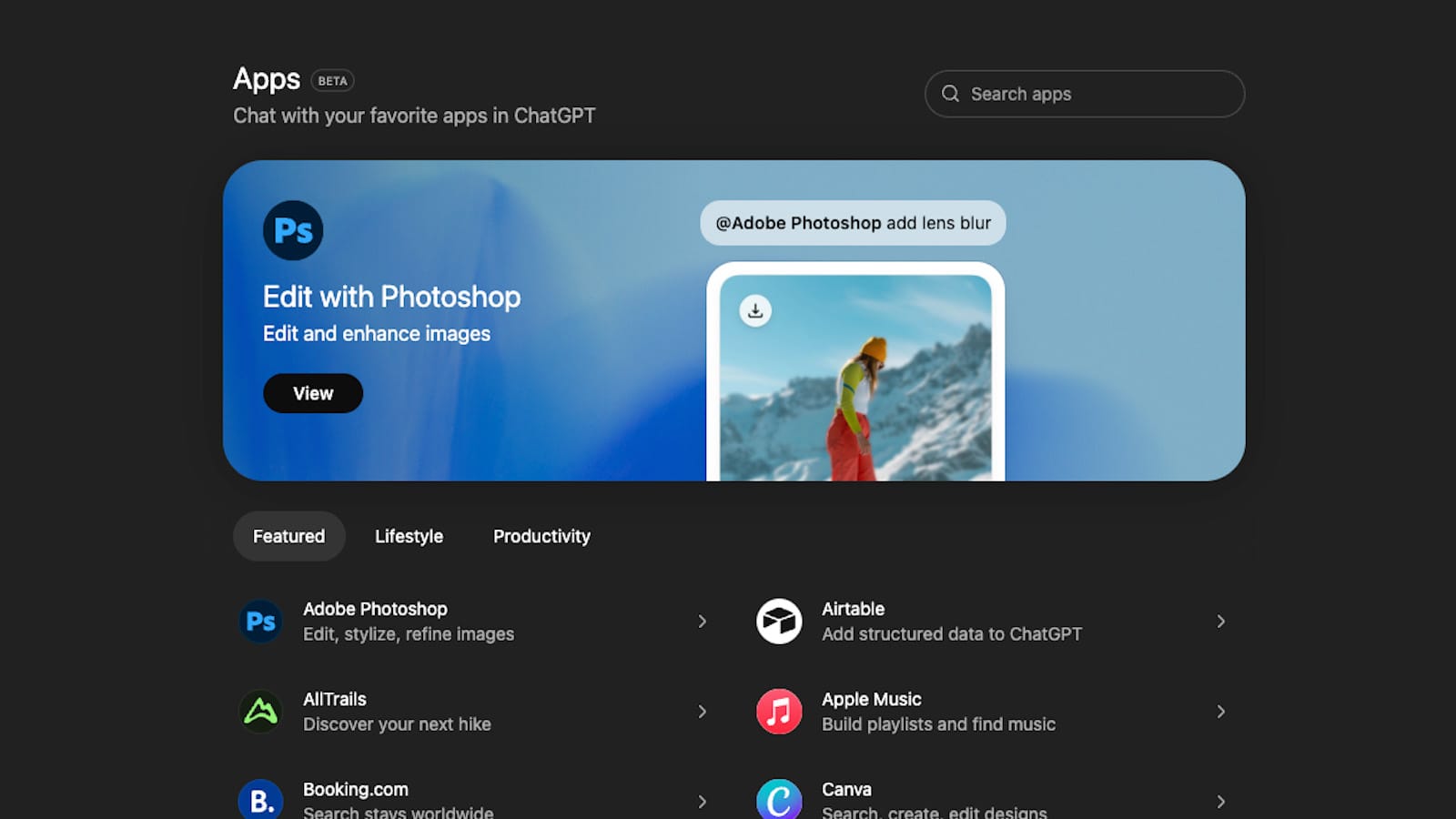
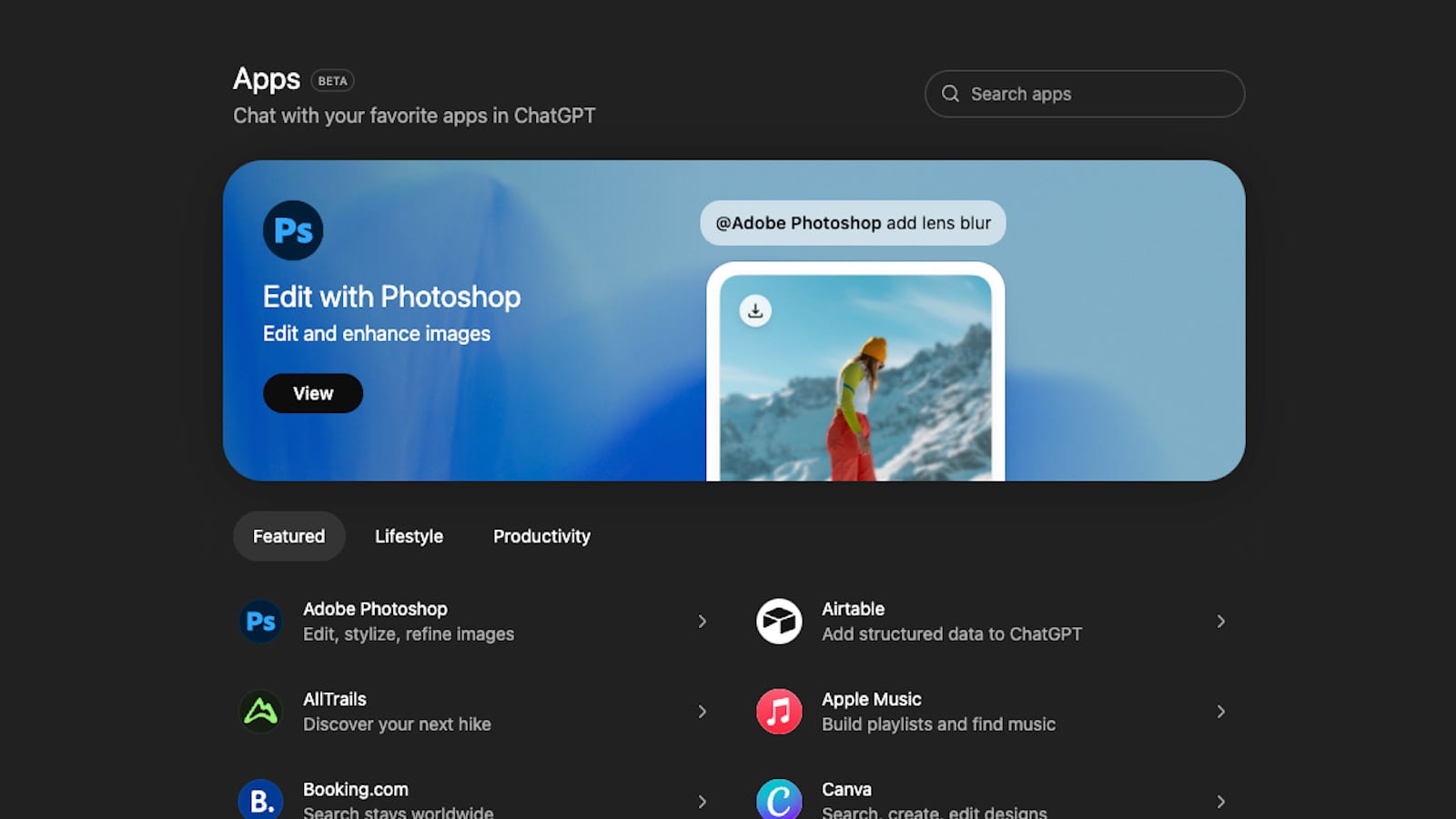
OpenAI has opened app submissions for ChatGPT and launched a native app directory inside the product. Developers can now publish apps that run directly in conversations, triggered by mentions, tools, or context. This goes beyond plugins. It is a first-party distribution layer, searchable, recommendable, and embedded where users already spend time. OpenAI is also signaling monetization paths, starting with external checkout links and moving toward digital goods. The timing matters. Reports suggest OpenAI is targeting an IPO by the end of next year. That puts real pressure on visible, durable revenue growth now.
This matters because ChatGPT is no longer just a model endpoint. It is becoming an operating system for work and commerce. App stores historically turn usage into revenue leverage. Apple’s services margin is over 70 percent. Tencent and Google followed similar paths. ChatGPT already sits at hundreds of millions of weekly users. Even modest take rates on transactions or subscriptions routed through apps could unlock billions in high-margin revenue. More importantly, this shifts power. Developers now build for ChatGPT distribution, not just APIs. That changes GTM math and dependency risk.
My take is simple. OpenAI needs a revenue engine that scales faster than model costs. The app store is the cleanest option. If this works, ChatGPT becomes the default action layer for the internet. If it stalls, the IPO story gets harder. Either way, the platform race just entered a more commercial phase.
OpenAI has opened app submissions for ChatGPT and launched a native app directory inside the product. Developers can now publish apps that run directly in conversations, triggered by mentions, tools, or context. This goes beyond plugins. It is a first-party distribution layer, searchable, recommendable, and embedded where users already spend time.
TOGETHER WITH SECOND ME
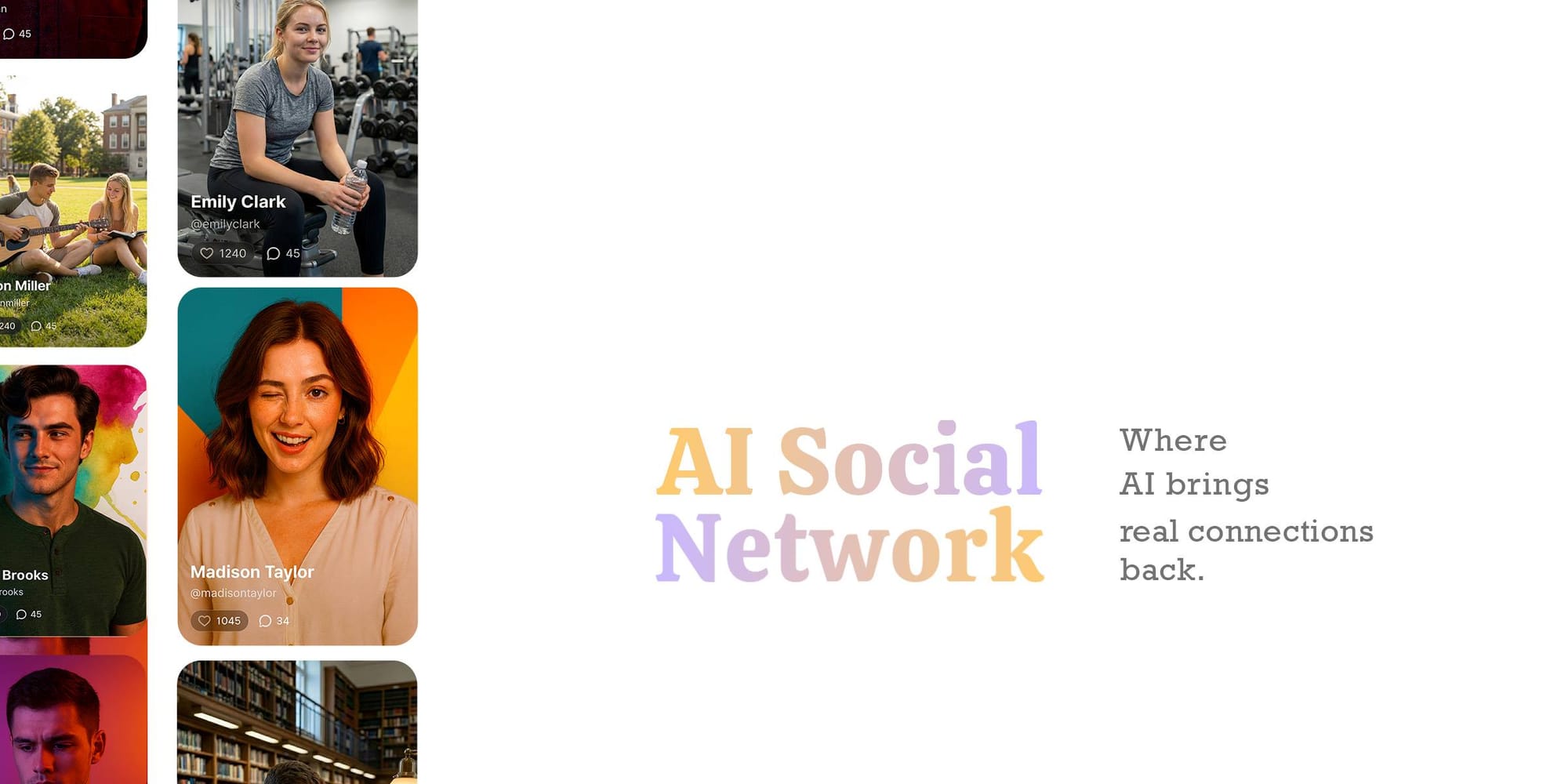
Second Me brings real connection back to the AI era. Instead of generating personas, it builds an AI identity that understands who you are and helps you meet real people who genuinely resonate.
Key Features
In a world of synthetic profiles, Second Me uses AI to help real humans find each other — naturally and meaningfully.
CODING
Lovable just raised 330 million dollars at a 6.6 billion valuation, barely five months after its last round. The company lets users describe what they want and ships real software from text prompts. What feels different is not the size of the round, but the speed. Lovable went from launch in 2024 to over 200 million in ARR in roughly a year, while generating more than 100,000 new projects a day. This is no longer an experiment or a niche tool. It is operating at production scale, with real customers and real workloads.
This matters because it breaks an old assumption about how software gets made. For decades, code was written by specialists using complex toolchains. Lovable collapses that stack. Prompt to app now includes UI, logic, hosting, and soon payments and databases. With 25 million projects created in its first year, the bottleneck is no longer engineering labor but product intent. That shifts power away from IDEs and frameworks toward platforms that own the full build and deploy loop.
If this pattern continues, vibe coding becomes the default layer for most new internal tools and many commercial apps. Traditional dev tools get squeezed. Cloud providers become invisible plumbing. The risk is concentration, where a few platforms quietly control how software is imagined, generated, and shipped.
Lovable just raised 330 million dollars at a 6.6 billion valuation, barely five months after its last round. The company lets users describe what they want and ships real software from text prompts. What feels different is not the size of the round, but the speed.
NEW LAUNCH
OpenAI has released GPT-5.2-Codex, positioning it as a production-grade agentic coding system rather than a smarter autocomplete. The update brings measurable gains on SWE-Bench Pro and Terminal-Bench 2.0, but the bigger change is behavioral. Codex now sustains long sessions, survives failed attempts, operates reliably in Windows terminals, and completes large refactors and migrations without resetting context. It is being shipped broadly to paid users, signaling confidence that this is no longer an experimental layer.
What this disrupts is the existing tooling stack. Historically, IDEs handled edits, copilots handled suggestions, and security tools lived in a separate workflow. GPT-5.2-Codex blurs those boundaries. It reads design mocks, edits code, runs terminals, sets up environments, and performs defensive security tasks like fuzzing and vulnerability analysis in one continuous loop. Benchmarks matter here because they validate reliability, but the real shift is that Codex behaves like an integrated engineering surface, not a plugin.
Codex now shows software work reorganizes around agents instead of tools. IDEs become shells. Security reviews move earlier and faster. Teams spend more time supervising intent than stitching workflows together. The risk concentrates around access, trust, and misuse, but the direction is clear. Codex is no longer assisting the stack. It is starting to replace it.
LAYOFF

McKinsey is reportedly planning to cut thousands of roles over the next 18 to 24 months. The reductions could reach up to 10 percent in some non client facing teams. The firm frames this as an efficiency push shaped by rapid advances in AI. Internally deployed tools like Lilli are now widely used, and McKinsey believes it simply needs fewer people to do the same work.
This matters because consulting has always run on leverage. Large pyramids of junior staff billed time while partners sold judgment. Internal data suggests Lilli cuts research and synthesis time by roughly 30 percent. McKinsey already employs about 36,000 people, down roughly 25 percent from peak levels. If that leverage model breaks, pricing, staffing, and promotion assumptions across the entire consulting industry break with it.
The likely direction is not collapse but compression. Consulting firms will become smaller, flatter, and more expert driven. AI will absorb the junior layers while clients demand delivery over frameworks. For AI infrastructure and enterprise tooling, this signals sustained demand for systems that replace labor, not just assist it.
QUICK HITS
TRENDING
TOGETHER WITH US
AI Secret Media Group is the world’s #1 AI & Tech Newsletter Group, reaching over 2 million leaders across the global innovation ecosystem, from OpenAI, Anthropic, Google, and Microsoft to top AI labs, VCs, and fast-growing startups.
We operate the industry’s most influential portfolio of newsletters, each shaping a different frontier of the AI & Tech revolution:
Be Smarter in 5 Minutes
Discover the Future Products
We've helped promote over 500 Tech Brands. Will yours be the next?
Email our co-founder Mark directly at [email protected] if the button fails.
Good Morning, AI Enthusiasts!
In the AI era, the tools we use to think are evolving faster than the companies that built them.

RECORD
📌 What’s happening: Stockholm-based Lovable has exploded from 2.3 million users in July to nearly 8 million by November — a 3.5x jump in just four months. Founded barely a year ago, the AI coding platform now sees 100,000 new products built every day, powered by an interface that feels more like co-creation than software development. Investors are circling at a rumored $5B valuation, though CEO Anton Osika insists the company “isn’t capital constrained.”
🧠 How this hits reality: Lovable is the living proof of why “vibe coding” became Collins’ 2025 Word of the Year — code as collaboration, not syntax; creativity as contagion. Developers aren’t typing, they’re vibing their way to products, remixing AI outputs like TikToks.
🛎️ Key takeaway: Lovable didn’t just make coding easier — it made code itself the culture.
📌 What’s happening: Stockholm-based Lovable has exploded from 2.3 million users in July to nearly 8 million by November — a 3.5x jump in just four months. Founded barely a year ago, the AI coding platform now sees 100,000 new products built every day, powered by an interface that feels more like co-creation than software development.
TOGETHER WITH TRAE
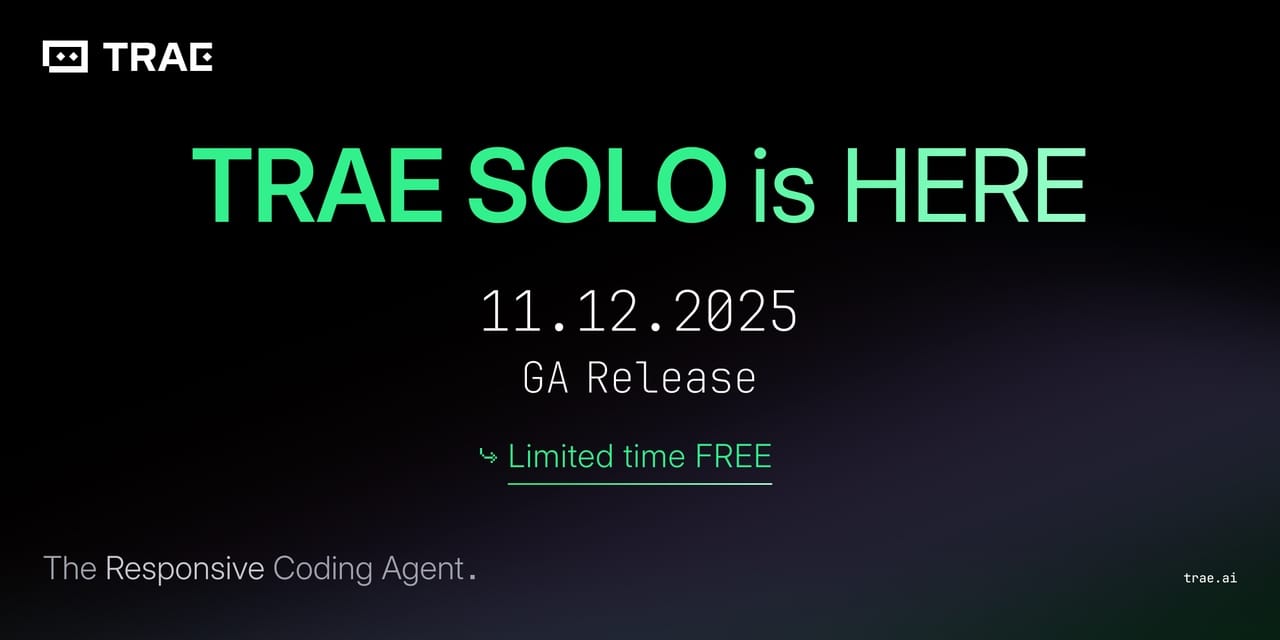
The Best AI Coding tool TRAE is going to officially release SOLO Mode on November 12th. TRAE SOLO is defined as "The Responsive Coding Agent" and completely FREE to use for everyone!
TRAE (The Real Al Engineer) is the most price-competitive coding agent. It provides two ways for you to build with AI. IDE mode preserves your existing workflow when you need to maintain hands-on control, while SOLO mode lets AI take the lead to drive the entire development processes.
🧠 Why it matters: SOLO isn’t just another AI assistant — it’s the first Responsive Coding Agent, introducing a new development paradigm where agents build, debug, and deploy while you orchestrate the vision.
👉 Try TRAE SOLO free on November 12 and experience the future of agentic software engineering.
TALENT
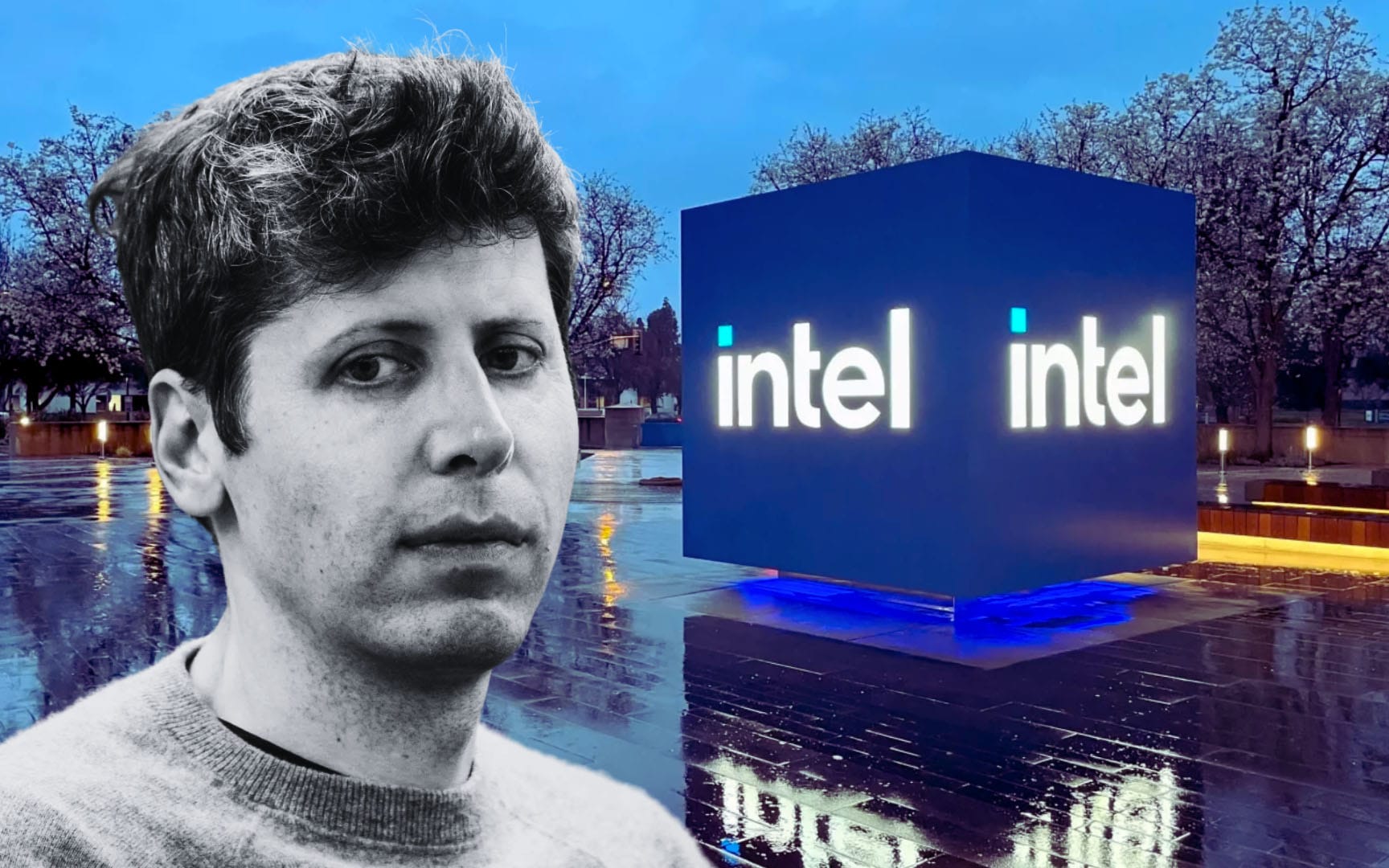
📌 What’s happening: Within days of its CFO’s “AI financing backstop” remarks wiping $500B off tech markets, OpenAI quietly announced it had poached Intel CTO Sachin Katti. The veteran chip architect, once in charge of Intel’s AI roadmap, will now “design and build compute infrastructure” for OpenAI — a line that sounds routine but signals a deeper recalibration.
🧠 How this hits reality: The timing isn’t coincidence; it’s calibration. As questions swirl around OpenAI’s capital structure and its reliance on partners like CoreWeave, the company is racing to pull more of its compute destiny in-house. Katti brings precisely what OpenAI lacks: someone who can fuse hyperscale software ambition with hardware sovereignty. In a market built on borrowed GPUs and shaky energy promises, from Neocloud ventures to debt-stacked datacenter deals, that’s as close to insurance as it gets.
🛎️ Key takeaway: OpenAI isn’t just chasing more compute; it’s bracing for when the cloud bubble bursts.
📌 What’s happening: Within days of its CFO’s “AI financing backstop” remarks wiping $500B off tech markets, OpenAI quietly announced it had poached Intel CTO Sachin Katti. The veteran chip architect, once in charge of Intel’s AI roadmap, will now “design and build compute infrastructure” for OpenAI — a line that sounds routine but signals a deeper recalibration.
STARTUP
📌 What’s happening: Gamma, the AI-native storytelling platform, just raised $68M at a $2.1B valuation led by Andreessen Horowitz, crossing $100M ARR with only 50 employees and $23M in prior funding. While most AI startups are still sprinting toward unicorn status, Gamma quietly vaulted past it, proving that the next generation of productivity giants won’t need giant payrolls.
🧠 How this hits reality: Gamma’s trajectory isn’t just about slides; it’s about labor efficiency. A $2.1B company run by 50 people is the new productivity gospel: agents over armies, margins over headcount. In a market where “AI-native” is often a marketing line, Gamma is showing what it actually looks like in practice — less staff, more leverage, faster compounding.
🛎️ Key takeaway: Gamma didn’t just kill PowerPoint; it killed the idea that scale needs people.
QUICK HITS
TRENDING
TOGETHER WITH US
AI Secret Media Group is the world’s #1 AI & Tech Newsletter Group, boasting over 2 million readers from leading companies such as OpenAI, Google, Meta, and Microsoft. Our Newsletter Brands:
We've helped promote over 500 Tech Brands. Will yours be the next?
Email our co-founder Mark directly at [email protected] if the button fails.
Good Morning, AI Enthusiasts!
Everyone’s typing. But the real momentum? It’s in building. Less prompt, more product.

LEGAL

📌 What’s happening: Sam Altman just reminded the world that there’s no legal privilege when you pour your heart out to ChatGPT. While many—especially younger users—use it as a therapist or life coach, those deeply personal chats aren’t protected like conversations with doctors or lawyers. If you end up in court, OpenAI could be forced to hand them over.
🧠 How this hits reality: This guts the illusion that AI is a safe space for emotional support. OpenAI is already fighting a court order in its case with The New York Times that would require storing user chats—except for Enterprise accounts. The legal gray zone around AI conversations is turning into a hard blocker for adoption, especially on sensitive topics like reproductive rights. You thought you were venting to a chatbot. You may have been drafting evidence.
🛎️ Key takeaway: If you wouldn’t tell it to your therapist with a cop in the room, don’t type it into ChatGPT.
📌 What’s happening: Sam Altman just reminded the world that there’s no legal privilege when you pour your heart out to ChatGPT. While many—especially younger users—use it as a therapist or life coach, those deeply personal chats aren’t protected like conversations with doctors or lawyers. If you end up in court, OpenAI could be forced to hand them over.
TOGETHER WITH KRISPCALL
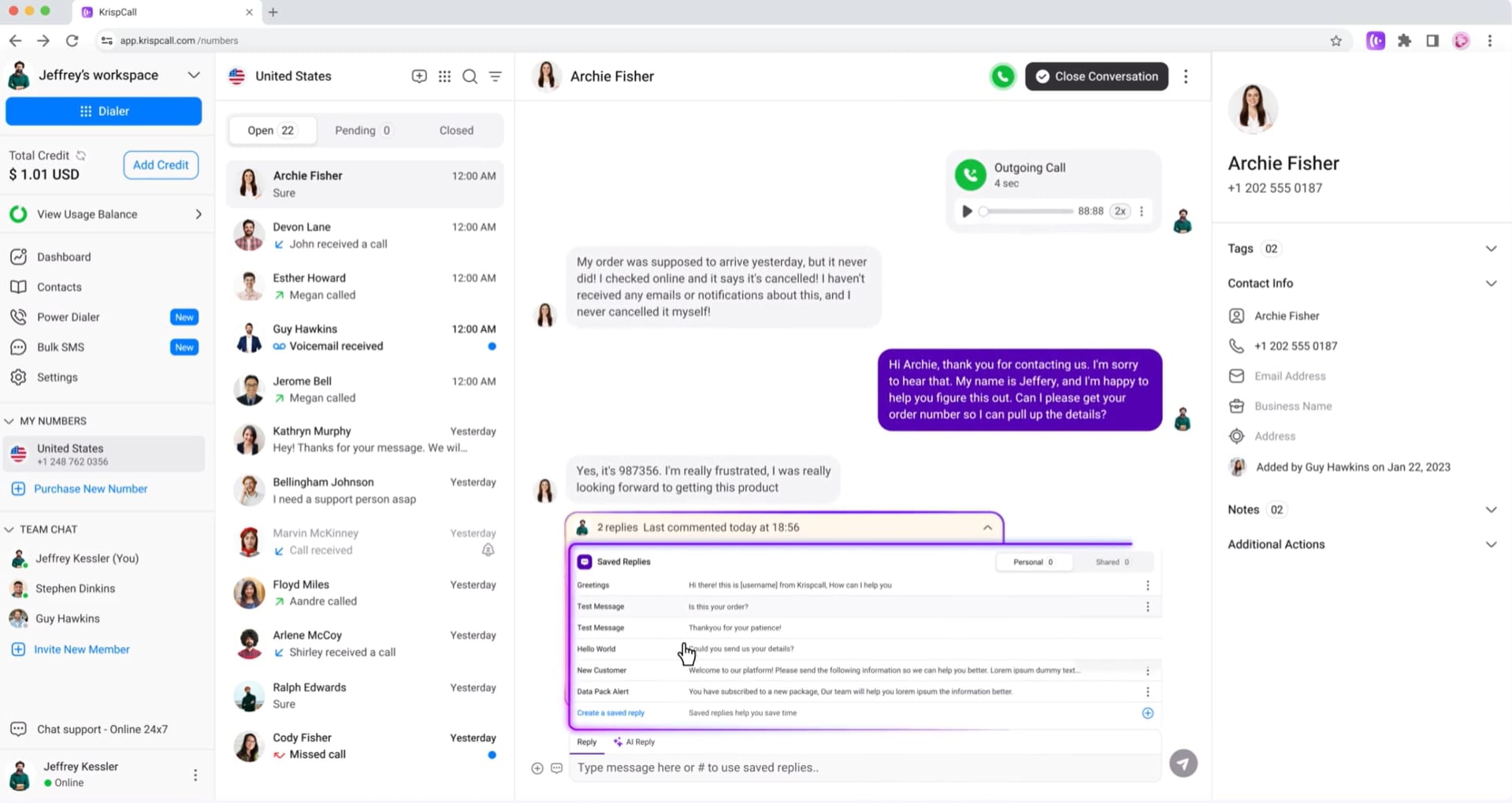
Imagine this: you’re juggling calls, managing customer relationships, and trying to remember if you left the coffee pot on. Enter KrispCall, your AI-powered superhero that swoops in to save the day, bringing advanced telephony capabilities right into your CRM platform.
With KrispCall, you can:
So whether you're a small business looking to level up your communication game or a seasoned pro ready to streamline your contact center, KrispCall is here to help you navigate the wild world of customer interactions.
CODING
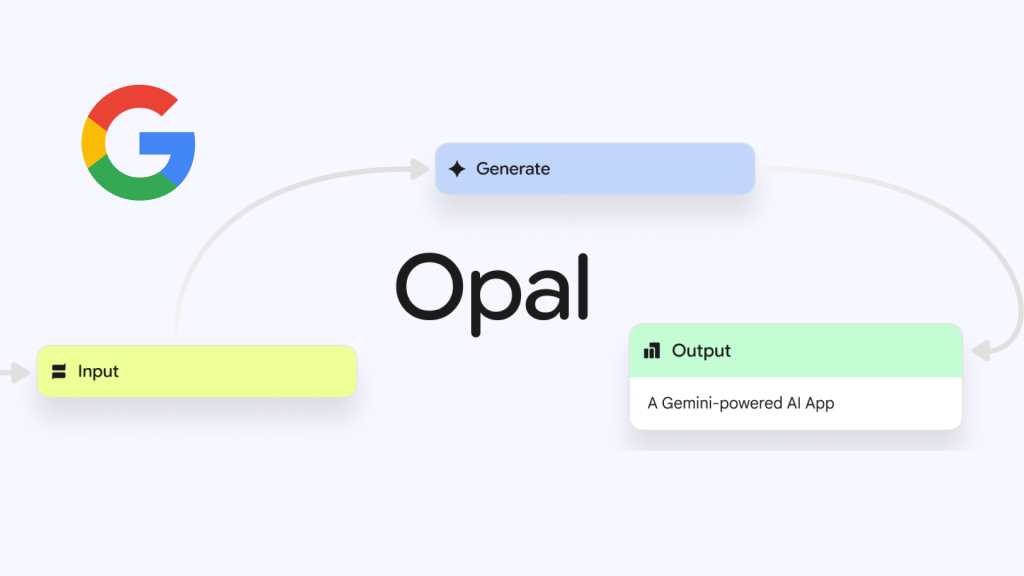
📌 What’s happening: Google is testing Opal, a “vibe-coding” tool that lets users build mini web apps via text prompts. It’s tucked inside Google Labs, months behind startups like Cursor and Lovable, and years behind the concept itself.
🧠 How this hits reality: Opal’s drag-and-drop AI interface is clearly aimed at non-technical creators. But in a market now crowded with Lovable, Replit and Base44, Google’s move feels more like bureaucratic FOMO than product vision. And with its infamous internal silos, expect Opal to quietly get folded into something else before 2026.
🛎️ Key takeaway: When Google ships a clone to chase a trend, it's not a strategy—it's a lagging indicator.
📌 What’s happening: Google is testing Opal, a “vibe-coding” tool that lets users build mini web apps via text prompts. It’s tucked inside Google Labs, months behind startups like Cursor and Lovable, and years behind the concept itself.
But in a market now crowded with Lovable, Replit and Base44, Google’s move feels more like bureaucratic FOMO than product vision. And with its infamous internal silos, expect Opal to quietly get folded into something else before 2026.
STARTUP
📌 What’s happening: Edwin Chen, an ex-Google/Twitter engineer, built Surge AI into a $1B revenue engine powering OpenAI, xAI, and Anthropic—without raising a dime. No funding rounds. No one-on-ones. No fluff projects. Just a ruthless focus on product quality, speed, and a few "100x engineers" who actually ship.
🧠 How this hits reality: Surge is a blunt-force correction to the bloated tech org. It doesn’t optimize process—it deletes it. In an industry where interviews matter more than shipping, Surge hires 100x engineers, skips the “culture” theater, and delivers data you can actually train on. Meanwhile, the data-labor outsourcing shops cosplaying as infra now have to pretend they were “AI-first” all along.
🛎️ Key takeaway: Surge didn’t leave Silicon Valley—they just took the profits and tore up the rulebook.
QUICK HITS
TRENDING
TOGETHER WITH US
AI Secret Media Group is the world’s #1 AI & Tech Newsletter Group, boasting over 1 million readers from leading companies such as OpenAI, Google, Meta, and Microsoft. Our Newsletter Brands:
We've helped promote over 500 Tech Brands. Will yours be the next?
Email our co-founder Mark directly at [email protected] if the button fails.
Latest Daily Rundowns
 Magna
Magna MagnaMagna
More AI Stories
Magna Magna
Magna Magna
Magna
Good Morning, AI Enthusiasts!
Google’s helping OpenAI scale, Lovable skipped adolescence and became a centaur. Everyone’s winning, but at what cost?

BECHMARK

📌 What’s happening: The Laude Institute, joined by Databricks and Perplexity co-founder Andy Konwinski, just launched the K Prize—a new AI coding challenge designed to test real-world problem-solving. The first-round winner, Brazilian prompt engineer Eduardo Rocha de Andrade, scored only 7.5% and still took home the $50,000 prize. Konwinski says that’s good news: the benchmark is clean, hard, and cheat-resistant—unlike SWE-Bench, which may be bloated from model pretraining contamination.
🧠 How this hits reality: AI’s coding chops aren’t production-ready. K Prize exposes a tough truth: many models may just be regurgitating training data. If your LLM evaluation still leans on SWE-Bench, you're probably overestimating what your stack can do. Dirty benchmarks make for easy demos, not real deployments.
🛎️ Key takeaway: AI benchmarks only matter if the data’s clean—otherwise, you're just grading memory, not intelligence.
TOGETHER WITH PLESK
Plesk is a commercial WebOps control panel for managing Windows or Linux servers via an intuitive web interface. It supports website, domain, email, and database management, plus integrated security tools like firewalls, SSL, and automatic updates.
With extensibility through 100+ plugins—including Docker, Git, SSL, and WordPress Toolkit—it suits developers, agencies, and hosting providers.
CLOUD
📌 What’s happening: Google CEO Sundar Pichai told investors he’s “excited” to support OpenAI—Google’s biggest AI rival—on Google Cloud. With Microsoft hitting GPU capacity limits, OpenAI has turned to Google and Oracle to fuel model training. Meanwhile, Google Cloud posted $13.6B in Q2 revenue, up 32% YoY, largely driven by AI demand.
🧠 How this hits reality: Google Cloud is becoming the AWS of model training—open for business, even to enemies. That’s great for revenue, but terrible for strategy. Cloud’s biggest customers are the same companies threatening Google Search’s existence. Execs call it “open,” but this smells like déjà vu—Google once helped Yahoo grow, then ate its lunch. Now it’s laying the same track for OpenAI.
🛎️Key takeaway: You can’t be the referee and sell sneakers—unless you plan to rewrite the game.
📌 What’s happening: Google CEO Sundar Pichai told investors he’s “excited” to support OpenAI—Google’s biggest AI rival—on Google Cloud. With Microsoft hitting GPU capacity limits, OpenAI has turned to Google and Oracle to fuel model training. Meanwhile, Google Cloud posted $13.6B in Q2 revenue, up 32% YoY, largely driven by AI demand.
📌 What’s happening: Google CEO Sundar Pichai told investors he’s “excited” to support OpenAI—Google’s biggest AI rival—on Google Cloud. With Microsoft hitting GPU capacity limits, OpenAI has turned to Google and Oracle to fuel model training. Meanwhile, Google Cloud posted $13.6B in Q2 revenue, up 32% YoY, largely driven by AI demand.
STARTUP
📌 What’s happening: Swedish upstart Lovable claims it has reached $100M ARR in under eight months, joining the Centaur Club just after becoming Europe’s newest unicorn. With only 45 employees, it’s powering 2.3 million active users and over 10 million projects. The company also revamped its pricing strategy, sunsetting its Team plan and introducing a new Business tier aimed squarely at the mid-market.
🧠 How this hits reality: This is the stuff of VC fever dreams—AI-native, brutally efficient, and monetizing at warp speed. Lovable started as a slick prototyping tool for no-code builders, and now it’s eyeing the enterprise. But its “vibe coding” ethos still triggers compliance side-eyes in boardrooms.
🛎️ Key takeaway: Lovable did in 8 months what takes others 8 years—turns out European AI SaaS can move like it’s from California.
📌 What’s happening: Swedish upstart Lovable claims it has reached $100M ARR in under eight months, joining the Centaur Club just after becoming Europe’s newest unicorn. With only 45 employees, it’s powering 2.3 million active users and over 10 million projects.
QUICK HITS
Google's AI Overviews are now used by two billion people monthly, while its new AI search mode has attracted 100 million users in the US and India.
TRENDING
PREVIEW

Where once you pumped gas, now you share popcorn with robots. Where once you waited, now you dwell, observe, connect. Welcome to a world where the grid feeds your car—and your soul.
Posthuman is a daily futurescape newsletter decoding how humans, AIs, and robots are beginning to co-create society. We explore the strange realities of tomorrow as they unfold today—from AI therapists and robot coworkers to memory markets and synthetic influencers. Each edition unpacks one uncanny signal at a time, tracing the slow merge into human–AI symbiosis. This isn’t sci-fi—it’s the early user manual for the future.
TOGETHER WITH US
AI Secret Media Group is the world’s #1 AI & Tech Newsletter Group, boasting over 1 million readers from leading companies such as OpenAI, Google, Meta, and Microsoft. Our Newsletter Brands:
We've helped promote over 500 Tech Brands. Will yours be the next?
Email our co-founder Mark directly at [email protected] if the button fails.
Latest Daily Rundowns
MagnaMagnaMagnaMore AI Stories
Ben Magna
Magna Magna
Magna
Plus: Google's Opt-Out Is a Trap, Lovable Races Its Own Suppliers
Read the storyPlus: Gemini Brain Online Now, Figma Links Claude Code
Plus: Cursor Faces Displacement, Hollywood AI 2025 Recap
Plus: Lovable Valued at $6.6B, A Real Engineering Agent
Plus: OpenAI Poached Intel’s CTO, Gamma Breaks the PowerPoint Curse
The two-week 2M ARR story was more stagecraft than growth
More Stories: Google Arrives Late, Valley VCs Skipped
More Stories: OpenAI Rides Google’s Rails, Lovable Hits $100M ARR
According to the AI Secret Top Growth Ranking Report – June 2025, Lovable has emerged as one of the most explosive breakout AI products of the year.