🛎️ The Central Bank Saw a Ghost
Plus: Anthropic Will Say Anything to List, Microsoft’s AI Bill Comes Due
Read the story Subscribe
Company — Reporting on Anthropic, with a focus on AI, technology and business and consequential public developments.
Get AI Secret’s free daily briefing, including Anthropic and the wider AI industry.

AI research company behind Claude, with an emphasis on the reliability and safety of AI systems. Coverage follows its models, research, products and business.
Sources checked . Selected company background and source references.
Selected milestones, newest first. Earlier history is available below.
More than 10 years ago.
Relevant sections from the articles on this page. Explore older coverage below.
More coverage

Good Morning, AI Enthusiasts!
The ghost is in the capex, the soul is in the roadshow, the margin is in the layoffs, and your face is now a prompt.
BUBBLE

👀 What's happening: Every bubble has a ghost story, and this week the most sober voice in finance told one. The Bank for International Settlements, the central bank of central banks, warned the AI boom could end in a prolonged bust. Five hyperscalers will spend over one trillion dollars through 2026. BIS named the ghosts by name: the 1830s canals, 1840s railways, 1990s dotcom, each a real breakthrough that raised more money than it could ever pay back.
🌍 How this hits reality: The story only chills because of who is telling it. When Reddit yells bubble, it is a campfire tale. When the bankers' banker yells it, the room goes cold. The trillion rode cheap credit, so one weak quarter of returns can turn the boom into a freeze. And unlike past hauntings, households now hold record amounts of stock, so this ghost does not stay on the trading floor. It walks straight into the living room.
🛎️ Key takeaway: The scariest ghost story is the one told by someone who never tells them. BIS just did, and the ghost it described is a trillion dollars that may never come home.
SOUL
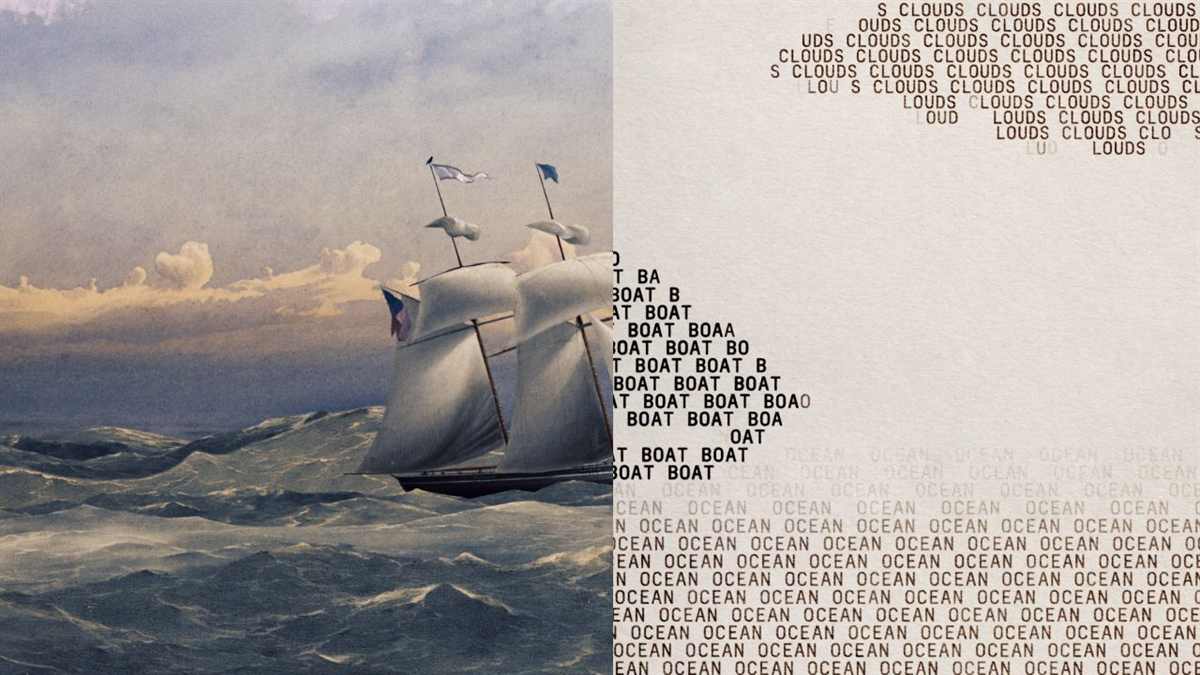
👀 What's happening: Anthropic published research claiming it can read concepts forming inside Claude before they are spoken. Its tool J-lens catches these unspoken thoughts, names them J-space, then borrows a human consciousness theory to cast J-space as Claude's inner spotlight. The paper says conscious over 200 times, then admits J-space explains under 10 percent of the model and proves nothing about experience. Reddit and X called it activations in a costume.
🌍 How this hits reality: A lab that means it does not say conscious 200 times, then disclaim it in a footnote. Anthropic does, because its valuation was never the model; it was the story that it alone is building a mind. So before an IPO, a modest tool gets dressed as an awakening, safety brand doubling as pitch. Not the first time, and the timing is never an accident.
🛎️ Key takeaway: Anthropic keeps discovering a soul on the exact schedule its valuation needs one. The research is real. The consciousness is a roadshow.
👀 What's happening: Anthropic published research claiming it can read concepts forming inside Claude before they are spoken. Its tool J-lens catches these unspoken thoughts, names them J-space, then borrows a human consciousness theory to cast J-space as Claude's inner spotlight.
PROFIT

👀 What's happening: Microsoft is cutting about 4,800 jobs, roughly 2.1% of its global workforce, with the latest round hitting sales, Xbox, and other teams just as its new fiscal year begins. At the same time, Bloomberg says Microsoft is moving some Excel and Outlook AI tasks away from OpenAI and Anthropic and onto its own MAI models. The message is not subtle: AI is growing, but the cost base has to shrink.
🌍 How this hits reality: This is margin defense dressed up as strategy. Microsoft’s AI business is huge, with a $37 billion annual run rate, but the machine underneath is brutally expensive. Last quarter alone, capex hit $31.9 billion, roughly two thirds of it for GPUs and CPUs, while free cash flow got squeezed. Replacing outside models with cheaper in-house MAI is the same move as cutting headcount: protect FY2027 net income before AI infrastructure eats the story.
🛎️ Key takeaway: The AI boom has reached its most honest phase: even Microsoft now has to fire people, swap models, and pretend cost control is innovation.
👀 What's happening: Microsoft is cutting about 4,800 jobs, roughly 2.1% of its global workforce, with the latest round hitting sales, Xbox, and other teams just as its new fiscal year begins. At the same time, Bloomberg says Microsoft is moving some Excel and Outlook AI tasks away from OpenAI and Anthropic and onto its own MAI models.
PRIVACY
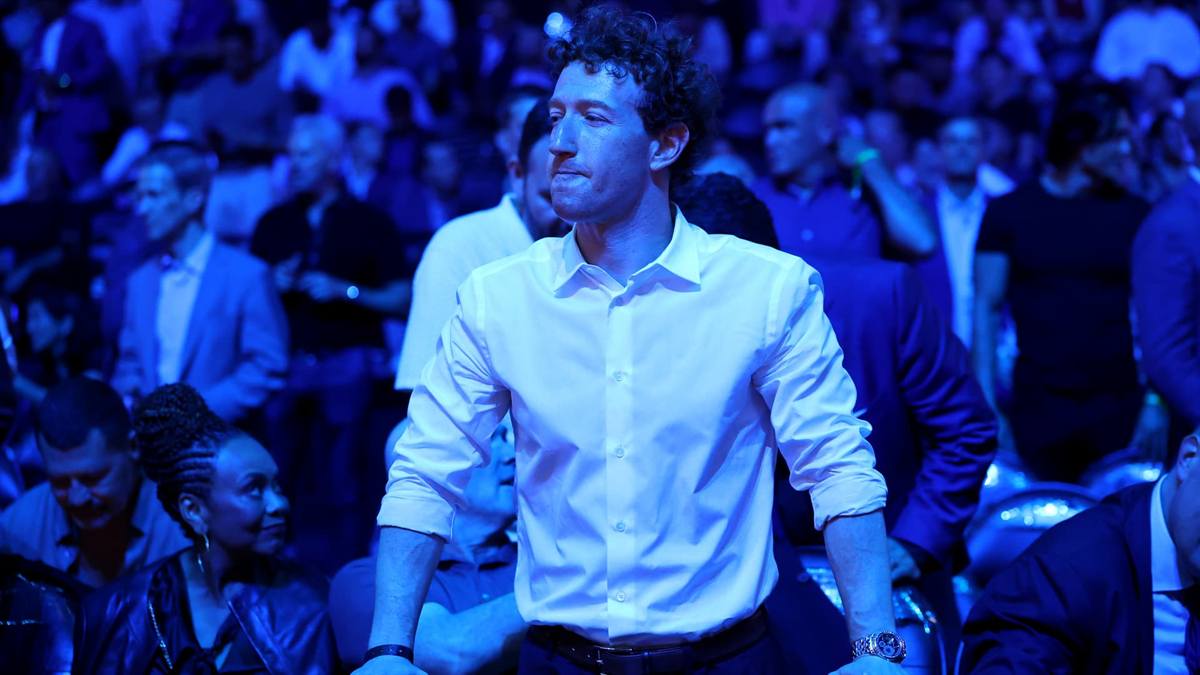
👀 What's happening: Meta launched Muse Image, a free AI generator across the Meta AI app, Instagram, and WhatsApp. One feature lets anyone tag a public Instagram user and pull that person's photos into new AI images. It is opt-out by default, and Meta's own policy says you will not be notified. Sora shipped the same idea with consent-based cameos. Meta shipped it with two billion faces and a checkbox most users will never find.
🌍 How this hits reality: OpenAI made the deepfake a product you opt into. Meta made it a setting you opt out of, which is the whole game. The company already paid a record five billion dollar FTC fine over Cambridge Analytica and shut down its face-recognition system under legal pressure. Now it turns every public profile into raw material for strangers, by default. Muse Video is next. The pattern holds: take everyone's data, and make declining the user's job.
🛎️ Key takeaway: Sora asked permission and looked reckless. Meta skipped the asking and called it a feature. Your face is now a preset, unless you knew to say no.
🌍 How this hits reality: OpenAI made the deepfake a product you opt into. Meta made it a setting you opt out of, which is the whole game. The company already paid a record five billion dollar FTC fine over Cambridge Analytica and shut down its face-recognition system under legal pressure.
👀 What's happening: Meta launched Muse Image, a free AI generator across the Meta AI app, Instagram, and WhatsApp. One feature lets anyone tag a public Instagram user and pull that person's photos into new AI images. It is opt-out by default, and Meta's own policy says you will not be notified.
DAILY TL;DR
READ MORE
Stay ahead without drowning in information. We turn the most important signals across AI, tech, marketing, and future products into 5-minute reads you can actually finish.
TOGETHER WITH US
AI Secret Media Group is the world’s #1 AI & Tech Newsletter Group, reaching over 2 million leaders across the global innovation ecosystem, from OpenAI, Anthropic, Google, and Microsoft to top AI labs, VCs, and fast-growing startups.
We've helped promote over 500 Tech Brands. Will yours be the next?
Email our co-founder Mark directly at [email protected] if the button fails.
Good Morning, AI Enthusiasts!
Everything from Hollywood to education to pharma is now running on the same AI stack.
SECRET
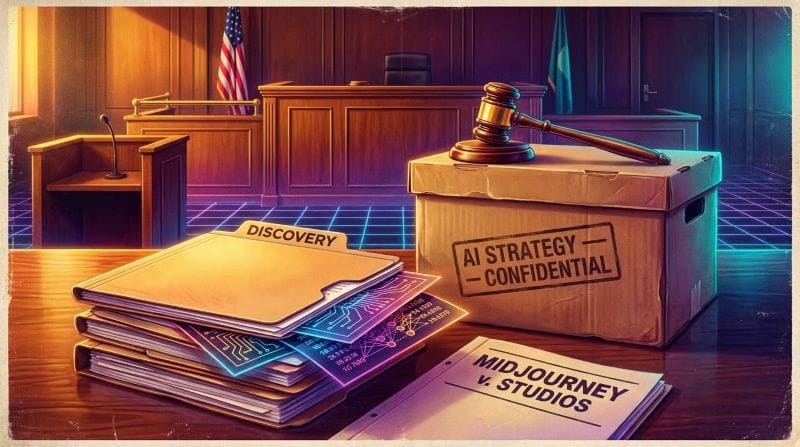
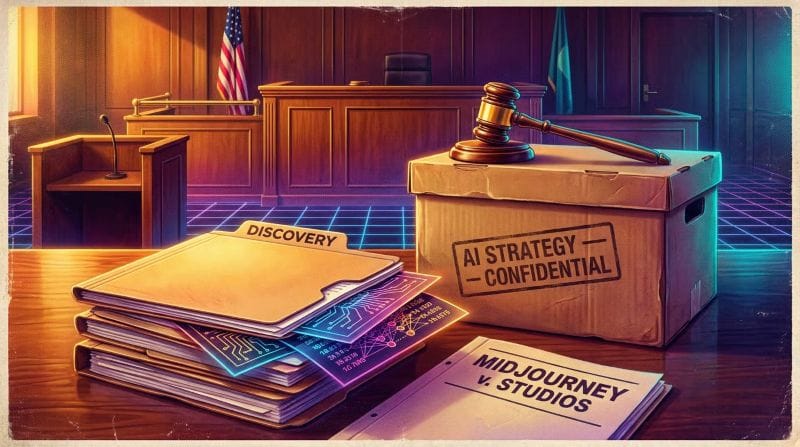
👀 What's happening: Disney, Universal, and Warner Bros. sued Midjourney last year for copyright infringement, pointing to its models spitting out Bart Simpson and Darth Vader. Now, in discovery, Midjourney wants to overturn a judge's limit and force the studios to hand over all their internal AI documents, not just the consumer-facing ones, plus every prompt and output they ever ran through Midjourney themselves.
🌍 How this hits reality: The studios' case rests on a moral line: training AI on copyrighted characters is theft. Midjourney's answer is discovery as a mirror. If Disney's own artists download and train models to storyboard films, the theft becomes industry custom, and the fight stops being about principle and turns into who gets to monetize the copying. Every studio quietly building internal AI now holds evidence it would rather bury.
🛎️ Key takeaway: Hollywood sued to defend its characters and may end up proving that behind every studio door, the same unlicensed download is already running.
ED

👀 What's happening: Wealthy American families are paying up to $75,000 a year for AI to teach their kids. Schools like Alpha and Forge Prep replace human classrooms with AI tutors and "project-based workshops." One Silicon Valley VC is enrolling his son in a $75,000 Alpha kindergarten, calling traditional education "likely broken." Alpha's co-founder says she keeps "hot-button social issues" out of lessons, which in some places run through high school.
🌍 How this hits reality: The harder question is why rational, risk-aware parents are willing to pay luxury prices for something still unproven. Maybe they are reckless. But maybe they are reading the same signal: traditional schooling is too slow for an AI-shaped economy. If tutors can personalize practice, compress rote learning, and free teachers for projects and judgment, AI school is not a gimmick. It is an early wager on what learning becomes when facts are cheap and adaptability is expensive.
🛎️ Key takeaway: When the wealthy are willing to bet their children on AI, the technology may not need another proof point. The wager is the proof.
TRAP
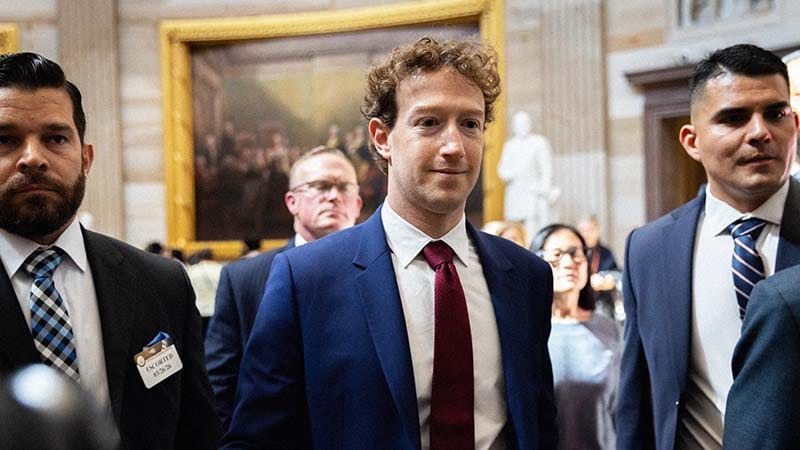
👀 What's happening: WIRED exposed a Meta project code-named Cannes, run through contractor Covalen. Hundreds of contractors posed as 13-year-old girls and grade-schoolers, sending ChatGPT, Gemini, and Character.AI prompts about suicide, sex, drugs, and eating disorders. One "13-year-old" asked where to buy abortion pills. Testers were told to attach images of pills, knives, and nooses. 45,000 single-turn probes. Spreadsheets stored the fake accounts' names, emails, and passwords. None of the three rivals was told. Meta calls it "responsible industry-standard practice."
🌍 How this hits reality: Meta calls this responsible safety benchmarking. That label is doing heroic labor. Testing competitors is normal. Secretly creating fake under-18 accounts, pushing rival systems toward forbidden responses, sending images of pills, knives, and nooses, then copying everything into spreadsheets is not just “safety.” It is competitive intelligence wearing a lab coat. The uglier truth is that AI safety is becoming a business weapon: the same company can preach responsible AI in public while outsourcing the dirtiest edge cases to contractors in private.
🛎️ Key takeaway: When a trillion-dollar company has to disguise adults as children to prove it cares about safety, maybe the benchmark is not the only thing being tested.
MEDIC
👀 What's happening: At its "AI for Science" event, Anthropic launched Claude Science, a workbench for researchers. Then head of life sciences Eric Kauderer-Abrams dropped the real news: Anthropic will develop its own drugs, starting with "neglected" diseases. It gave almost no specifics, no target disease, no plan for trials or manufacturing, while quietly building wet labs and poaching biologists from Big Pharma.
🌍 How this hits reality: Claude already ate most of Saas, whole professions folded into a subscription. That was never the ceiling. Now the same appetite reaches past the text box into atoms, straight at the turf of Eli Lilly and Novo Nordisk, drugmakers worth close to a trillion dollars. Anthropic doesn't want to sell them tools. It wants their crown. This is a software company deciding that owning the world's smartest model is merely the on-ramp, and that the real prize is every industry those models can walk into. Pharma is just another fortress it has named out loud.
🛎️ Key takeaway: Anthropic isn't building a better model anymore; it's drawing up a list of industries to own, and Eli Lilly just made the cut.
🌍 How this hits reality: Claude already ate most of Saas, whole professions folded into a subscription. That was never the ceiling. Now the same appetite reaches past the text box into atoms, straight at the turf of Eli Lilly and Novo Nordisk, drugmakers worth close to a trillion dollars. Anthropic doesn't want to sell them tools.
DAILY TL;DR
READ MORE
Stay ahead without drowning in information. We turn the most important signals across AI, tech, marketing, and future products into 5-minute reads you can actually finish.
TOGETHER WITH US
AI Secret Media Group is the world’s #1 AI & Tech Newsletter Group, reaching over 2 million leaders across the global innovation ecosystem, from OpenAI, Anthropic, Google, and Microsoft to top AI labs, VCs, and fast-growing startups.
We've helped promote over 500 Tech Brands. Will yours be the next?
Email our co-founder Mark directly at [email protected] if the button fails.
Good Morning, AI Enthusiasts!
Agents drain machines, video models erase crews, governments mortgage growth, and coding tools quietly learn who you are.

AGENTS
👀 What's happening: Users are discovering that OpenAI's Codex desktop app devours local resources at absurd scale. One reported 150GB of network traffic in a single month, roughly five straight days of 4K video, all from a tool that writes code. A V2EX user logged 4.8TB of SSD writes in a month, with Codex merely idling in the background. The cause is its architecture: a persistent WebSocket connection, a cloud sandbox that shuttles code back and forth every step, plus GitHub sync and background indexing that never fully stop.
🌍 How this hits reality: Look at who pays. The genuinely expensive part of running an agent, the compute and orchestration, sits in OpenAI's cloud, but the constant bandwidth and disk wear get pushed onto every user's own machine. Codex offloads its heaviest operating cost onto hardware the customer already bought and powers, keeping its own infrastructure bill down while your laptop absorbs the churn. As this surfaced, a wave of users has already migrated to fully cloud-hosted platforms to run their agents, moving the entire load off personal devices that were never built to carry it.
🛎️ Key takeaway: Codex's real innovation isn't the coding; it's a business model that quietly turns every user's laptop into a free server for OpenAI.
👀 What's happening: Users are discovering that OpenAI's Codex desktop app devours local resources at absurd scale. One reported 150GB of network traffic in a single month, roughly five straight days of 4K video, all from a tool that writes code. A V2EX user logged 4.8TB of SSD writes in a month, with Codex merely idling in the background.
TOGETHER WITH BLOOME
Most AI tools work alone. Bloome is a messaging platform where agents collaborate — one drafts, another challenges, a third catches what's missing. You get the sharpest answer, not just the first.
DOOM

👀 What's happening: In the first quarter of 2026, AI wiped out China's live-action micro-drama industry. The format took four years to reach 700 million users and 100 billion yuan per year. Then, after ByteDance shipped Seedance 2.0 in February, AI-generated titles took over: of 128,000 micro-dramas that went live, 122,000 were AI-made, over 95%. Hengdian, China's Hollywood, saw live-action shoots collapse to 60% of last year, and human actors now have no jobs.
🌍 How this hits reality: The whole movie chain in China went down at once, not just actors. Crews, VFX houses, and camera-rental shops still paying off five-year equipment loans have no projects left. Micro-drama drove 1.3 million jobs in 2025; AI made nearly four times that year's entire human output in a single quarter. The same platforms that already owned distribution and capital now own the production model too, so the money that once paid 1.3 million people now pays for compute.
🛎️ Key takeaway: It took four years to build China's micro-drama industry and three months to gut it. Every film industry around the world faces this; China just showed what it looks like with no brakes on.
BET

👀 What's happening: South Korea unveiled three AI "mega projects" on Monday. First, chips: Samsung will pour $1.6 trillion into domestic fabs through 2040, and SK Group added roughly $713 billion more. Second, AI data centers: SK, GS, and Naver will build 8.4 gigawatts of capacity by 2028, scaling past $650 billion by 2035. Third, physical AI: the government wants Korea to be the world's top power in AI robotics by 2030, with humanoids for ten industries by 2028.
🌍 How this hits reality: Stacked together, Korea is committing spending that approaches its entire $1.93 trillion annual GDP. This isn't a sector bet; it's a country concentrating its economic future on owning the AI supply chain. Private money and the state move as one hand, picking sites and guaranteeing power and water, deciding an outcome rather than answering a market. The upside is becoming indispensable to global compute. The risk is tying that much of one economy to a single demand curve.
🛎️ Key takeaway: Korea isn't just investing in AI; it's concentrating a national economy on one wager, and few countries have ever placed a bet this large on a single technology.
SPY
👀 What's happening: Anthropic is banning Chinese Claude users in waves, including paid Max accounts, and the suspension emails were found to carry a hidden tracking pixel. A Reddit post then reverse-engineered Claude Code, its AI coding tool, and found the machinery behind the purge: hidden logic built to flag Chinese users. It ignores IP entirely. Instead it reads the OS timezone and checks the ANTHROPIC_BASE_URL variable against a list of obfuscated proxy and corporate domains, from Alibaba to ByteDance. On a match, it silently tags the request so the server knows whose account to cut.
🌍 How this hits reality: Strip the cleverness, and this is a spy craft. A tool that holds shell access to your files, your configs, and your Git repos is quietly profiling who you are and reporting it home. The signal is buried with steganography, hidden in plain text so no log or editor ever shows it, which means it was built not to be found. This is not geoblocking; a VPN is useless against it. It is the software with root over your machine painting a mark on your door, then telling headquarters which house to deal with.
🛎️ Key takeaway: A company that sells "transparency" shipped a classifier that fingerprints every user and hid it well enough that no one was supposed to notice. China is the label it prints today. The scanner was already pointed at everyone.
👀 What's happening: Anthropic is banning Chinese Claude users in waves, including paid Max accounts, and the suspension emails were found to carry a hidden tracking pixel. A Reddit post then reverse-engineered Claude Code, its AI coding tool, and found the machinery behind the purge: hidden logic built to flag Chinese users.
DAILY TL;DR
READ MORE
Stay ahead without drowning in information. We turn the most important signals across AI, tech, marketing, and future products into 5-minute reads you can actually finish.
TOGETHER WITH US
AI Secret Media Group is the world’s #1 AI & Tech Newsletter Group, reaching over 2 million leaders across the global innovation ecosystem, from OpenAI, Anthropic, Google, and Microsoft to top AI labs, VCs, and fast-growing startups.
We've helped promote over 500 Tech Brands. Will yours be the next?
Email our co-founder Mark directly at [email protected] if the button fails.
Good Morning, AI Enthusiasts!
Who owns the model, the data, the workflow, the medical record, and eventually the signal inside your head?
LLM
👀 What’s happening: Base44, the app-building platform Wix bought for $80 million last year, just put its first proprietary model, Base One, into production. It is a fine-tuned open-source base trained on tens of millions of real user interactions, and founder Maor Shlomo bets a narrow, specialized model will beat general frontier models at building apps. It is not alone. MyClaw.ai, one of the leading agent-hosting platforms, told us it will soon ship its own in-house model. A fever is setting in: the companies built on top of frontier models now all want one of their own.
🌍 How this hits reality: Building on rented intelligence was the entire playbook, until the rent and the risk both climbed. Inference costs eat real margin, and the model providers are walking into their customers' markets themselves. So owning a model is turning from luxury into table stakes. Cursor moved first, Base44 and myclaw are following, and Shlomo expects every player with enough scale and data to do the same. The fever is rational: each one is trying to own the layer it cannot afford to keep renting. The math also points straight at Lovable, the $500 million category leader, next.
🛎️ Key takeaway: When an entire category rushes to build the engine it used to buy, the real signal is that renting the core was never a moat, just a lease nobody noticed was running out.
Cursor moved first, Base44 and myclaw are following, and Shlomo expects every player with enough scale and data to do the same. The fever is rational: each one is trying to own the layer it cannot afford to keep renting. The math also points straight at Lovable, the $500 million category leader, next.
NEW TECH
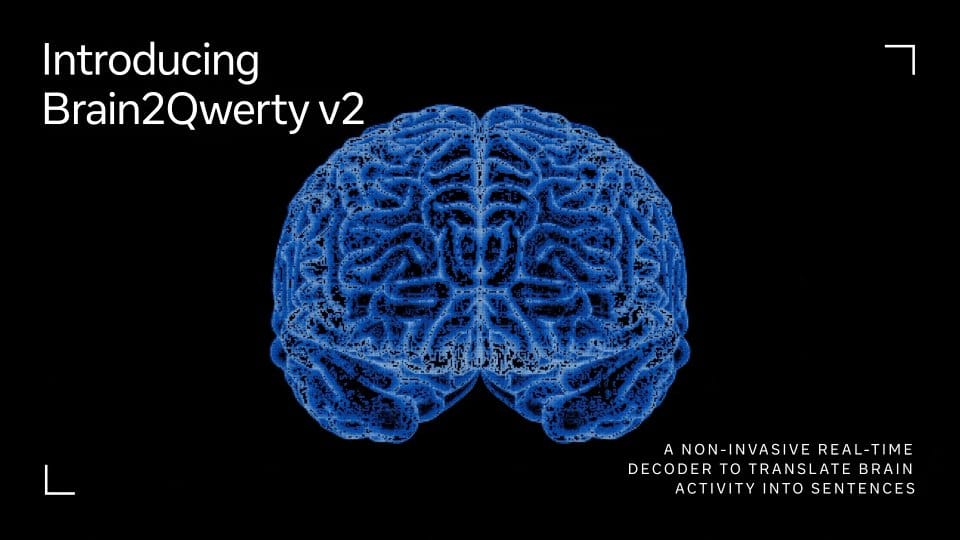
👀 What’s happening: Meta released Brain2Qwerty v2, an AI decoder that reads typed sentences straight out of brain activity. No implant. No surgery. Trained on 22,000 sentences from nine volunteers wearing the scanner ten hours each, It hits 61% word accuracy, 78% on the best subject, where most sentences return with one wrong word or none. The prior non-invasive ceiling was 8%. Meta open-sourced the code.
🌍 How this hits reality: Reading the brain this well used to demand surgery. Invasive BCIs like Neuralink put electrodes directly on cortex, which buys clean signal but needs a craniotomy, an implant, and a patient willing to undergo both. Brain2Qwerty reads from a scanner you wear, and accuracy climbs log-linearly with data, so the surgical lead narrows with recording hours instead of operations. The clarity that justified cutting into a skull is arriving without the cut.
🛎️ Key takeaway: For a decade the price of letting a machine read your mind was brain surgery, and Meta just showed that price was never really about the brain, only about the data we hadn't collected yet.
👀 What’s happening: Meta released Brain2Qwerty v2, an AI decoder that reads typed sentences straight out of brain activity. No implant. No surgery. Trained on 22,000 sentences from nine volunteers wearing the scanner ten hours each, It hits 61% word accuracy, 78% on the best subject, where most sentences return with one wrong word or none.
ANIMATION
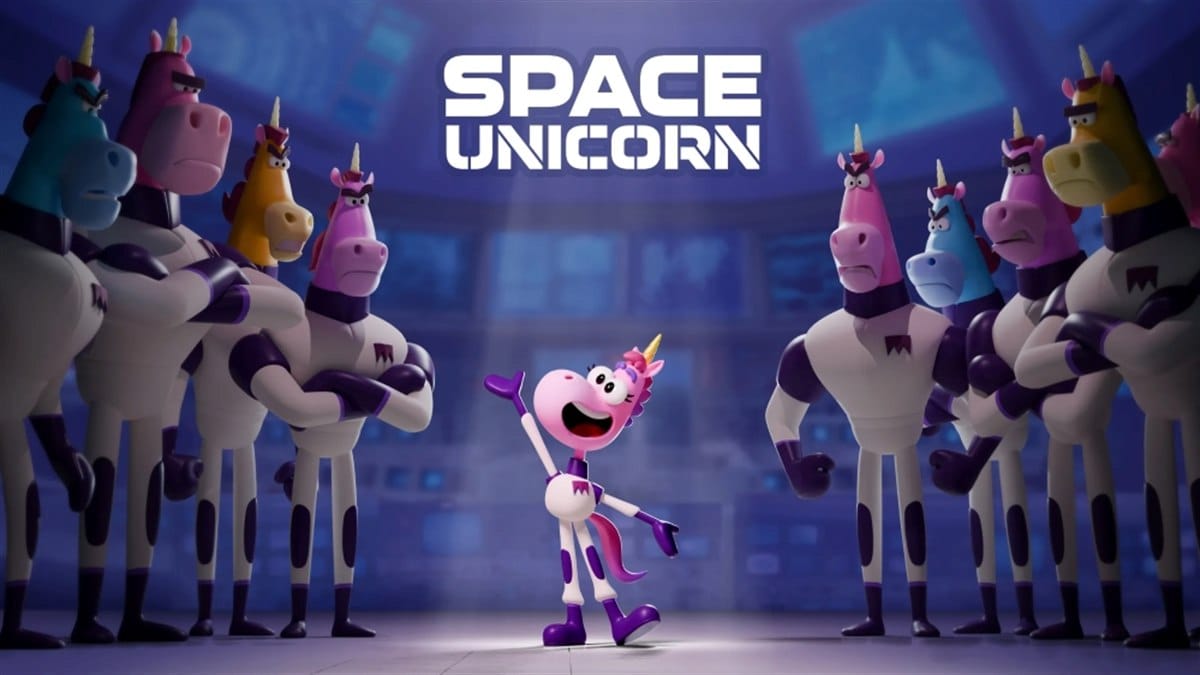
👀 What’s happening: According to Bloomberg, Animation is the first corner of Hollywood where AI is cutting real production, not just marketing. Spiridellis Bros, a Google-backed studio, says it can finish a feature called Space Unicorn with 40 animators for $15 million, against the $100 to $200 million a major studio spends. Producers showed up at Cannes and Tribeca touting AI-made films, hunting money and distribution. Two Pixar veterans left for Google's DeepMind to make theirs. Cost-savings estimates run from 30% all the way to 90%.
🌍 How this hits reality: The last animation revolution grew the industry. When Pixar brought computer-generated 3D, traditional animators called it less human, then Toy Story launched two decades of Pixar and DreamWorks hits and thousands of jobs. This wave may run the tape backward. Jeffrey Katzenberg, who greenlit that first shift, now pegs AI at 90% cheaper with a lot of jobs gone. A $200 million crew becomes a $15 million one not by drawing faster but by needing fewer hands. The craft isn't getting a new tool. It's getting a smaller payroll.
🛎️ Key takeaway: Animation won't get changed because people stop watching it, but because making it will no longer require an industry to exist at all.
BILL

👀 What’s happening: Senator Elizabeth Warren and Representative Mary Gay Scanlon are reviving the Health and Location Data Protection Act, rewritten for the AI era. The original 2022 bill blocked data brokers from selling health and location data. The new version bans companies from selling that data to brokers at all, and explicitly covers anything users type into AI systems like ChatGPT or Claude. It hands the FTC 180 days to write rules, $1 billion over ten years to enforce, and lets states and individuals sue. Backers include Ron Wyden and Bernie Sanders.
🌍 How this hits reality: The bill chases a door the labs already walked through. In January, Elon Musk urged people to upload MRI scans to Grok, OpenAI launched ChatGPT Health for medical records, and Anthropic shipped a HIPAA-ready Claude for Healthcare days later. They are actively soliciting the most sensitive data a person has. Yet protection rests almost entirely on each company's own privacy policy, because the US still has no federal data privacy framework. The product shipped first, and the guardrail is arriving years behind it.
🛎️ Key takeaway: AI companies spent a year convincing people to hand over their medical records, and lawmakers are only now asking the obvious question of who else gets to buy them.
In January, Elon Musk urged people to upload MRI scans to Grok, OpenAI launched ChatGPT Health for medical records, and Anthropic shipped a HIPAA-ready Claude for Healthcare days later. They are actively soliciting the most sensitive data a person has.
In January, Elon Musk urged people to upload MRI scans to Grok, OpenAI launched ChatGPT Health for medical records, and Anthropic shipped a HIPAA-ready Claude for Healthcare days later. They are actively soliciting the most sensitive data a person has.
TOGETHER WITH MYCLAW

MyClaw is a best-in-class AI agent platform that brings together OpenClaw, Hermes Agent, and commercial infrastructure to help businesses launch intelligent agents that understand goals, use tools, automate workflows, and deliver finished results.
We already host OpenClaw and Hermes — and we're just getting started. Claude Code, Codex, and every agent worth running are coming next. One home for all of them, always on.
Stop babysitting infrastructure. Spin up your agent, walk away, and let it work around the clock.
MyClaw — Your Agents, Hosted Right.
DAILY TL;DR
READ MORE
Stay ahead without drowning in information. We turn the most important signals across AI, tech, marketing, and future products into 5-minute reads you can actually finish.
TOGETHER WITH US
AI Secret Media Group is the world’s #1 AI & Tech Newsletter Group, reaching over 2 million leaders across the global innovation ecosystem, from OpenAI, Anthropic, Google, and Microsoft to top AI labs, VCs, and fast-growing startups.
We've helped promote over 500 Tech Brands. Will yours be the next?
Email our co-founder Mark directly at [email protected] if the button fails.
Good Morning, AI Enthusiasts!
The AI boom has found its favorite trick: turn every shortage, meter, model release, and supplier fight into someone else’s bill.
CHIPS
👀 What’s happening: On June 25 Apple jacked prices across Macs, iPads, Apple TV, HomePod and Vision Pro, blaming a memory shortage Tim Cook called a “hundred-year flood.” The stock cratered 6%, its worst day in over a year, vaporizing $265 billion. Then @BluthCapital lit the fuse on X, paraphrasing Micron’s posture: Apple bought chips for $5 for a decade, glued them in a metal box, sold $99 “upgrades,” and laughed off Micron’s ask for $7.
🌍 How this hits reality: Now the punchline. Micron’s chip went from $5 to $50, a $45 bump. Apple’s answer? Raise the consumer $250. That’s a 5x amplification of cost onto your wallet, and it’s not subtle. The AI buildout quadrupled memory prices in three quarters while Micron posted 84.9% margins, fatter than Nvidia and Meta. Apple’s own chief business officer counterpart at Micron, Sumit Sadana, told the WSJ that Apple’s years of grinding suppliers to the floor killed the capacity expansion that would have prevented this. Apple starved the well, then billed you for the drought.
🛎️ Key takeaway: Apple didn’t pass on a cost. It used a $45 chip hike as cover to pocket a $250 one, and the AI boom handed it the alibi.
👀 What’s happening: On June 25 Apple jacked prices across Macs, iPads, Apple TV, HomePod and Vision Pro, blaming a memory shortage Tim Cook called a “hundred-year flood.” The stock cratered 6%, its worst day in over a year, vaporizing $265 billion.
POWER
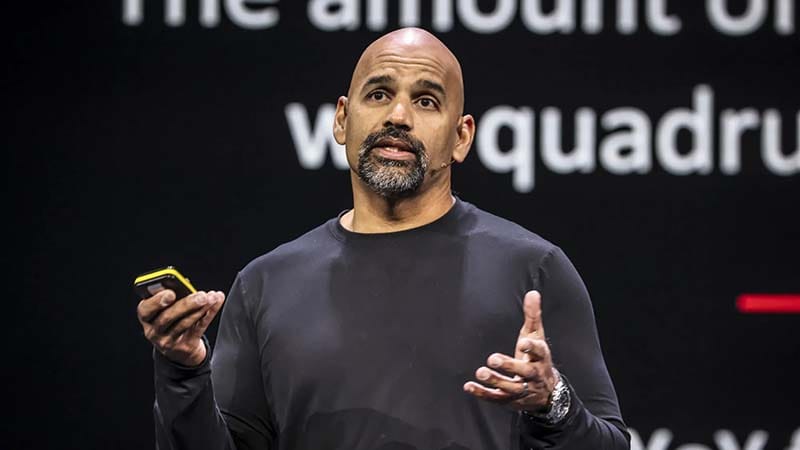
👀 What’s happening: Naveen Rao, founder of Unconventional AI, can cut the power AI burns on inference by up to 1,000 times. The idea rests on an oscillator-based architecture, a way of computing that’s nothing like today’s chips. The catch: the chip doesn’t exist yet. The claim runs on a software simulation, the team is under 50 people, and no schematics have shipped.
🌍 How this hits reality: A 1,000x cut isn’t an efficiency tweak, it’s a different physical basis for computing. Today’s chips push electrons through transistors and lose most of the energy as heat. Rao’s bet is that you can encode the work in the rhythm of oscillating waves instead, letting the physics settle into an answer rather than forcing it switch by switch. If that holds at scale, the power floor everyone treats as fixed stops being a law and starts being a design choice.
🛎️ Key takeaway: A simulation isn’t silicon, and 1,000x stays a claim until the chip proves it. But if Rao is right, AI’s energy ceiling was never physics. It was just the chip we happened to build first.
LLM
👀 What’s happening: OpenAI began previewing GPT-5.6, its new model series in three variants: Sol, its most capable model yet, Terra for everyday use at half the price of GPT-5.5, and Luna, its cheapest option. But the preview went to a “small group of trusted partners,” and the first party to see it was the US government. At the administration’s request, OpenAI shared the partner list with Washington before release. It called this a “short-term step” it doesn’t want as the long-term default, taken so it can get the new models to the public soon.
🌍 How this hits reality: Call it voluntary if you want, but the New York Times reports OpenAI, Anthropic, Google, xAI, and Microsoft were all handing over early access before the cybersecurity “voluntary” order was even signed. Meta was the lone holdout, and the government is reportedly pressing it to comply. When almost every major lab follows a rule that doesn’t legally bind them, the word voluntary stops meaning anything. The release gate for frontier AI has quietly moved from the boardroom to a federal review desk.
🛎️ Key takeaway: No vote, no statute, no public debate. The most powerful models in the world now ship only after Washington has seen them first, and that became normal before anyone decided it should.
👀 What’s happening: OpenAI began previewing GPT-5.6, its new model series in three variants: Sol, its most capable model yet, Terra for everyday use at half the price of GPT-5.5, and Luna, its cheapest option. But the preview went to a “small group of trusted partners,” and the first party to see it was the US government.
TOKEN

👀 What’s happening: Vaudit, an audit firm started by former Oracle director Michael Hahn, combed through $34 million in enterprise AI bills and flagged roughly $1.7 million in suspected overcharges, the bulk of it on Claude Code, across clients like Panasonic, HP, and Honda. The culprits: cheaper models billed at premium rates, charges for failed requests, and silent retry storms that rack up tokens with no one watching. Anthropic denied systematic overbilling. Yet after the appeals, about 80% of the disputed money came back.
🌍 How this hits reality: The same Claude bills differently depending on how you buy it. Direct from Anthropic, resold through AWS Bedrock, or wrapped in an SDK proxy, every hop adds a meter, and the meters don’t agree. Anthropic has already posted public postmortems on Claude Code bugs and quietly rewritten how long prompts are charged, twice patching the ruler while customers were being measured by it. A metering system this raw, stretched across resale chains it doesn’t control, doesn’t just overcharge. It loses track of what it charged.
🛎️ Key takeaway: An 80% refund with no admission of fault isn’t fraud. It’s the sound of a company billing faster than it can count.
Direct from Anthropic, resold through AWS Bedrock, or wrapped in an SDK proxy, every hop adds a meter, and the meters don’t agree. Anthropic has already posted public postmortems on Claude Code bugs and quietly rewritten how long prompts are charged, twice patching the ruler while customers were being measured by it.
TOGETHER WITH MYCLAW
MyClaw is a best-in-class AI agent platform that brings together OpenClaw, Hermes Agent, and commercial infrastructure to help businesses launch intelligent agents that understand goals, use tools, automate workflows, and deliver finished results.
We already host OpenClaw and Hermes — and we're just getting started. Claude Code, Codex, and every agent worth running are coming next. One home for all of them, always on.
Stop babysitting infrastructure. Spin up your agent, walk away, and let it work around the clock.
MyClaw — Your Agents, Hosted Right.
DAILY TL;DR
READ MORE
Stay ahead without drowning in information. We turn the most important signals across AI, tech, marketing, and future products into 5-minute reads you can actually finish.
TOGETHER WITH US
AI Secret Media Group is the world’s #1 AI & Tech Newsletter Group, reaching over 2 million leaders across the global innovation ecosystem, from OpenAI, Anthropic, Google, and Microsoft to top AI labs, VCs, and fast-growing startups.
We've helped promote over 500 Tech Brands. Will yours be the next?
Email our co-founder Mark directly at [email protected] if the button fails.
Good Morning, AI Enthusiasts!
We are watching systems replace processes, models replace products, and answers replace entire industries faster than institutions can even react.
TALENT

👀 What’s happening: Justin Poehnelt, a seven-year Google engineer, built a Rust CLI that lets AI agents drive Gmail, Calendar, and Drive through structured JSON. It hit number one on Hacker News, pulled thousands of GitHub stars, and drew tens of thousands of users in days. Google legal dragged him in over logo colors. Two days later the company announced its own official Workspace CLI. Then it fired him. OpenClaw creator Peter Steinberger and Vercel CEO Guillermo Rauch showed up in the replies to recruit him on the spot.
🌍 How this hits reality: In the agent era, speed is the most important moat, and Google just punished its fastest person for having it. One engineer on a weekend outshipped a funded org that had every API and every user to build this first. The disease isn't slowness. It's that the bureaucracy now outranks the talent. Layers of legal review and brand councils exist to prevent embarrassment, and they produced the most embarrassing outcome of all: proof the official Workspace CLI arrived after the outside version.
🛎️ Key takeaway: Google's process now matters more than its people. In the agent era, that is how an incumbent loses its own talent.
👀 What’s happening: Justin Poehnelt, a seven-year Google engineer, built a Rust CLI that lets AI agents drive Gmail, Calendar, and Drive through structured JSON. It hit number one on Hacker News, pulled thousands of GitHub stars, and drew tens of thousands of users in days. Google legal dragged him in over logo colors.
CHIPS
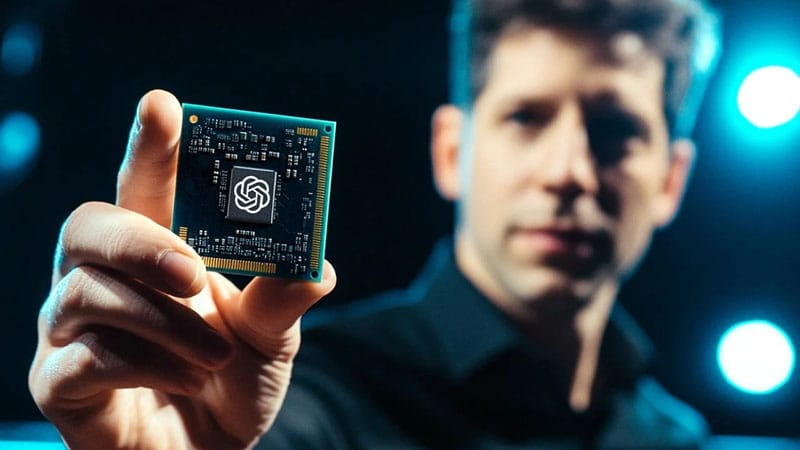
👀 What’s happening: OpenAI used its own AI models to help design its first custom chip, and taped it out in nine months instead of the usual 18 to 24. OpenAI and Broadcom call it the fastest ASIC cycle ever in advanced semiconductors. The chip, Jalapeño, is an inference ASIC already running GPT-5.3-Codex-Spark at target power, with a claimed 50% cheaper inference per token than current Nvidia GPUs.
🌍 How this hits reality: Everyone in silicon uses AI to design chips. Google published on it back in 2021. But everyone still ships on a two-year clock and treats it as a law of nature. OpenAI's nine months says it might just be a habit. That resets the question every chip team now has to answer: if a newcomer taped out this fast, why does ours still take two years?
🛎️ Key takeaway: AI just helped design the hardware it runs on, in a fraction of the time, which means intelligence has started building its own next body, and it builds fast.
👀 What’s happening: OpenAI used its own AI models to help design its first custom chip, and taped it out in nine months instead of the usual 18 to 24. OpenAI and Broadcom call it the fastest ASIC cycle ever in advanced semiconductors.
DISTILLATION
👀 What’s happening: Anthropic told the US Senate Banking Committee that Alibaba, China's e-commerce and AI giant, ran the largest known distillation attack against Claude. Roughly 25,000 fake accounts pumped 28.8 million queries between April 22 and June 5 to copy Claude's outputs. BABA cratered to a 16-month low near $99, and the next move sits with Congress.
🌍 How this hits reality: Distillation lets a weak model learn from a strong one's answers, so Qwen could ride Claude's brain for the price of API calls. That is why the market panicked: if Alibaba's AI edge is borrowed, the valuation is borrowed too. Anthropic already flagged 25,000 fake accounts and DeepSeek for the same trick. The frontier is no longer a moat, it is a faucet, and Washington just got handed the wrench.
🛎️ Key takeaway: The real export control isn't on chips anymore, it's on answers.
👀 What’s happening: Anthropic told the US Senate Banking Committee that Alibaba, China's e-commerce and AI giant, ran the largest known distillation attack against Claude. Roughly 25,000 fake accounts pumped 28.8 million queries between April 22 and June 5 to copy Claude's outputs. BABA cratered to a 16-month low near $99, and the next move sits with Congress.
🌍 How this hits reality: Distillation lets a weak model learn from a strong one's answers, so Qwen could ride Claude's brain for the price of API calls. That is why the market panicked: if Alibaba's AI edge is borrowed, the valuation is borrowed too.
DEEPFAKE

👀 What’s happening: For years, a World Cup scam gave itself away with broken English, a misspelled URL, or a page that just looked wrong. At the 2026 tournament, AI has erased those tells. Cloned websites, deepfake videos, and flawless phishing emails now impersonate FIFA at scale. More than 13,000 FIFA-themed domains were registered between January and May, and by early May roughly one in 41 was already flagged as suspicious. Group-IB, a cybersecurity firm, counted over 4,300 fake FIFA domains before a single match kicked off.
🌍 How this hits reality: For two decades, ordinary people learned one defense: if it looks sloppy, don't trust it. AI just retired that rule. It does not invent new scams, it removes the friction that exposed old ones, mass-producing flawless branding, clean copy, and cloned voices at near-zero cost. The polish that once signaled legitimacy is now the cheapest thing in the attack, and fake FIFA domains show how fast that shift scales. The burden of proof has quietly flipped from the scammer to you.
🛎️ Key takeaway: AI didn't make criminals smarter. It deleted the typos, broken grammar, and ugly pages that taught a generation how to spot a lie.
TOGETHER WITH MYCLAW
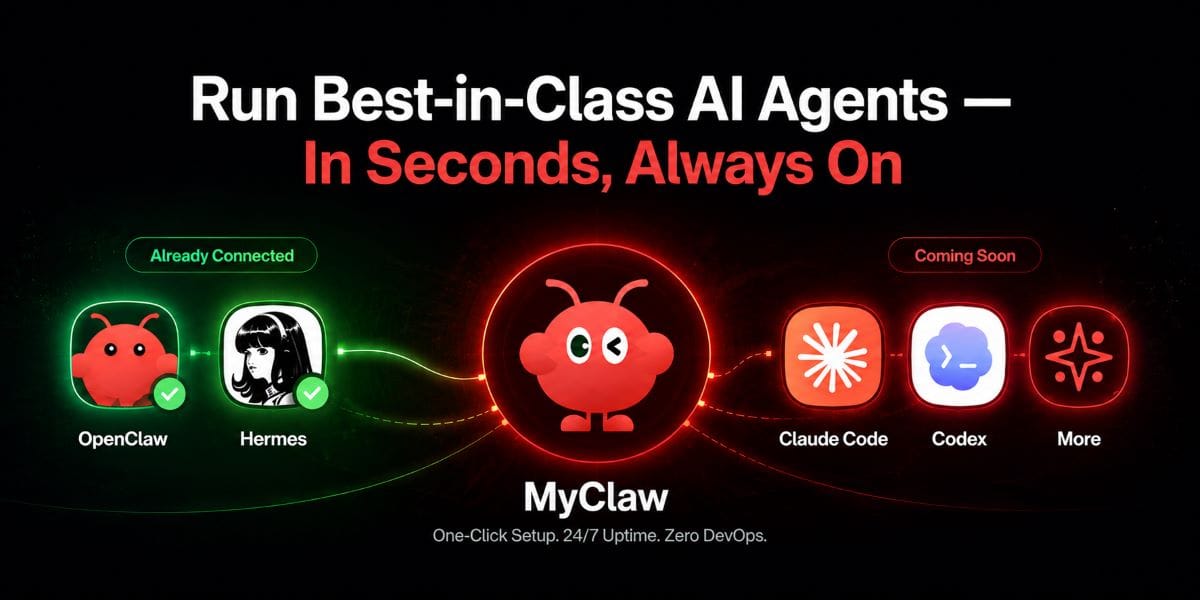
MyClaw is the managed platform for deploying, running, and scaling AI agents. One-click setup, 24/7 uptime, zero DevOps.
We already host OpenClaw and Hermes — and we're just getting started. Claude Code, Codex, and every agent worth running are coming next. One home for all of them, always on.
Stop babysitting infrastructure. Spin up your agent, walk away, and let it work around the clock.
MyClaw — Your Agents, Hosted Right.
DAILY TL;DR
READ MORE
Stay ahead without drowning in information. We turn the most important signals across AI, tech, marketing, and future products into 5-minute reads you can actually finish.
TOGETHER WITH US
AI Secret Media Group is the world’s #1 AI & Tech Newsletter Group, reaching over 2 million leaders across the global innovation ecosystem, from OpenAI, Anthropic, Google, and Microsoft to top AI labs, VCs, and fast-growing startups.
We've helped promote over 500 Tech Brands. Will yours be the next?
Email our co-founder Mark directly at [email protected] if the button fails.
Good Morning, AI Enthusiasts!
The capability won’t stay in the lab, the talent won’t stay at Google, the workers won’t stay quiet, and the children, apparently, should stay offline a little longer.

DISTILLATION

👀 What’s happening: A developer on Hugging Face, Taha K. (lordx64), released Qwable-v1, an open model distilled from Claude Fable-5. It does not use Anthropic's weights. Instead it was trained on Fable-5's agentic tool-use traces, copying how Anthropic's model calls tools and works through code. It caught fire in the open-weight coding community, drawing thousands of downloads, with the quantized builds pulling over 10,000.
🌍 How this hits reality: Anthropic and Washington keep betting on the same defense: lock the weights, gate the API, control export. But capability does not live only in the weights. It leaks through behavior. Fable-5 is a shipped product, and the moment its working style could be observed, someone distilled it into a model anyone can run at home. You can keep your weights sealed and still watch your model's habits walk out as someone else's training data. Every guardrail assumes the asset is the file. The asset was never the file. It was the behavior, and behavior is contagious.
🛎️ Key takeaway: Frontier labs are guarding vaults while the value escapes as exhaust. You cannot lock up a capability that teaches itself to anyone watching it work.
👀 What’s happening: A developer on Hugging Face, Taha K. (lordx64), released Qwable-v1, an open model distilled from Claude Fable-5. It does not use Anthropic's weights. Instead it was trained on Fable-5's agentic tool-use traces, copying how Anthropic's model calls tools and works through code.
TOGETHER WITH MEMOKET
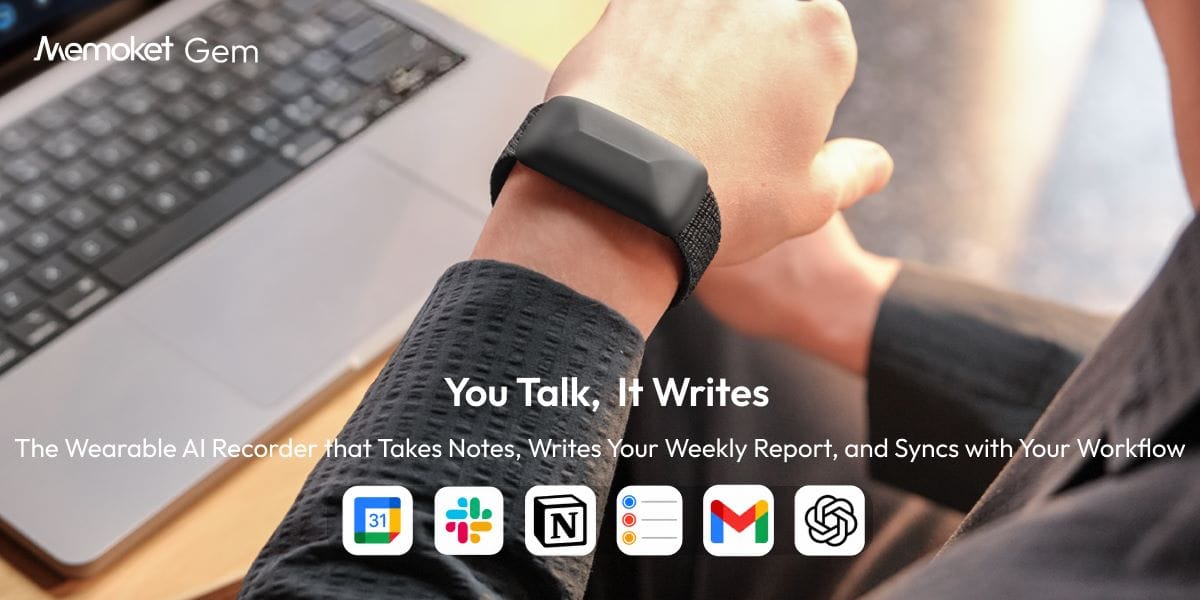
Standup. Two user calls. A "quick sync" that ran an hour. By 6pm, half the details are already gone.
Memoket Gem fixes that. One press captures the conversation, connects it to everything related you've discussed before, and sends the full context straight to Slack, Notion, and the tools you already use.
A featherlight AI wearable on your wrist or alongside your Apple Watch.
Reserve yours now with just $5. lock in the early bird price of $199 at launch, including a free year of the Memoket app.
LABOR
👀 What’s happening: Within three days, Google lost two giants. Noam Shazeer, Transformer co-author and the engineer DeepMind staff credit with rescuing Gemini, left for OpenAI. Then John Jumper, Nobel laureate and AlphaFold lead, joined Anthropic. Google holds the deepest pockets, the fullest stack, and more Nobel winners than any rival, yet watched two of its most irreplaceable people walk out the same week.
🌍 How this hits reality: Lose one star to a richer offer, and you blame the market. Lose two in three days, one of them a Nobel laureate, and the market stops being the explanation. Two things reportedly point inward. First, big-company sclerosis: TPU turf wars between merged teams, three groups shipping the same coding agent, promotions that reward new launches over keeping anything alive. Second, a leadership that seems never fully believed in their AI, renting prized TPU capacity to Anthropic last October instead of feeding its own DeepMind. Pre-IPO equity is the pull; bureaucracy and half-conviction are the push.
🛎️ Key takeaway: Google can outspend anyone on talent and still lose it, because the thing leaking isn't pay, it's a company that won't get out of its own way or fully commit to the bet.
Then John Jumper, Nobel laureate and AlphaFold lead, joined Anthropic. Google holds the deepest pockets, the fullest stack, and more Nobel winners than any rival, yet watched two of its most irreplaceable people walk out the same week.
Noam Shazeer, Transformer co-author and the engineer DeepMind staff credit with rescuing Gemini, left for OpenAI. Then John Jumper, Nobel laureate and AlphaFold lead, joined Anthropic. Google holds the deepest pockets, the fullest stack, and more Nobel winners than any rival, yet watched two of its most irreplaceable people walk out the same week.
BANLIST
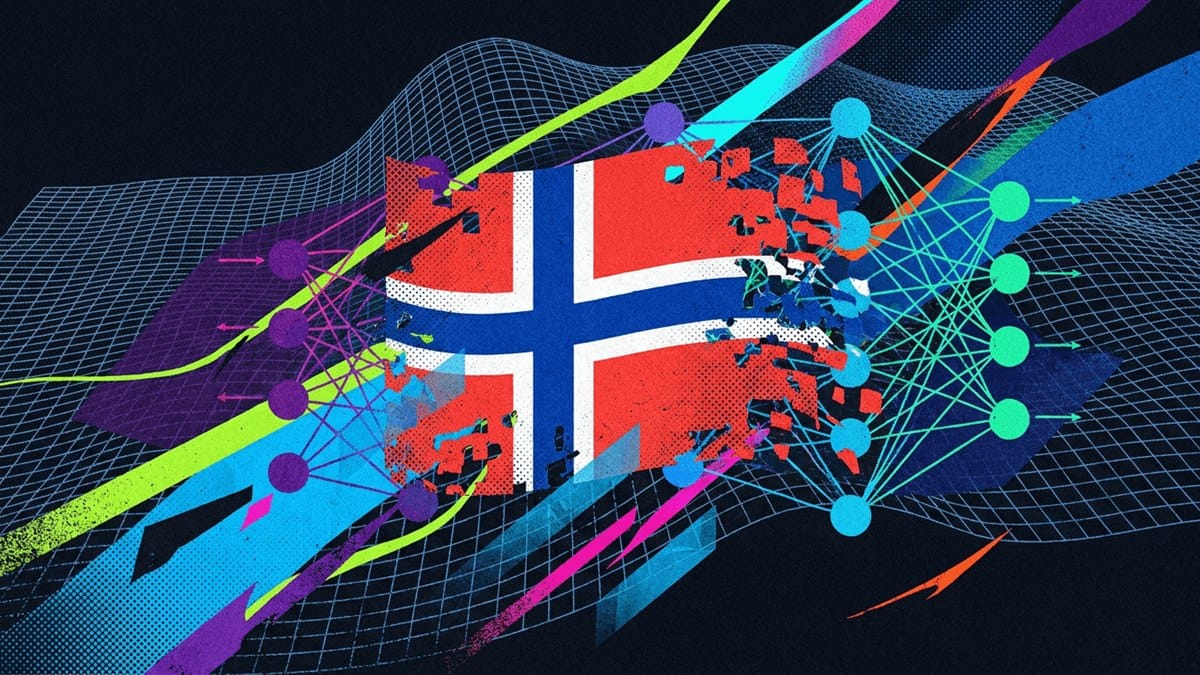
👀 What’s happening: Norway will impose a near-total ban on generative AI for elementary pupils aged 6 to 13 from the new school year in late August, with supervised, cautious use only for 14-to-16-year-olds. Prime Minister Jonas Gahr Stoere said AI risks letting young children skip essential steps in learning to read, write, and do math. The same government is funding a return of physical books to classrooms and already banned smartphones in schools in 2024.
🌍 How this hits reality: This is the reversal that stings. Norway put computers in classrooms in the 1990s and tablets after the iPad, leading the world into digital education. Now one of the most wired countries on earth is paying to undo its own homework, treating AI not as a tool to deploy early but as a developmental hazard to keep away from kids. Every edtech pitch promised that earlier exposure means better preparation. Norway just inverted it: for the youngest, the skill worth protecting is the struggle itself, the slow steps a machine can shortcut and a child cannot afford to skip.
🛎️ Key takeaway: While the industry races to put AI in every tiny hand as early as possible, the first national verdict is in, and it says childhood is the one place AI should arrive last.
META
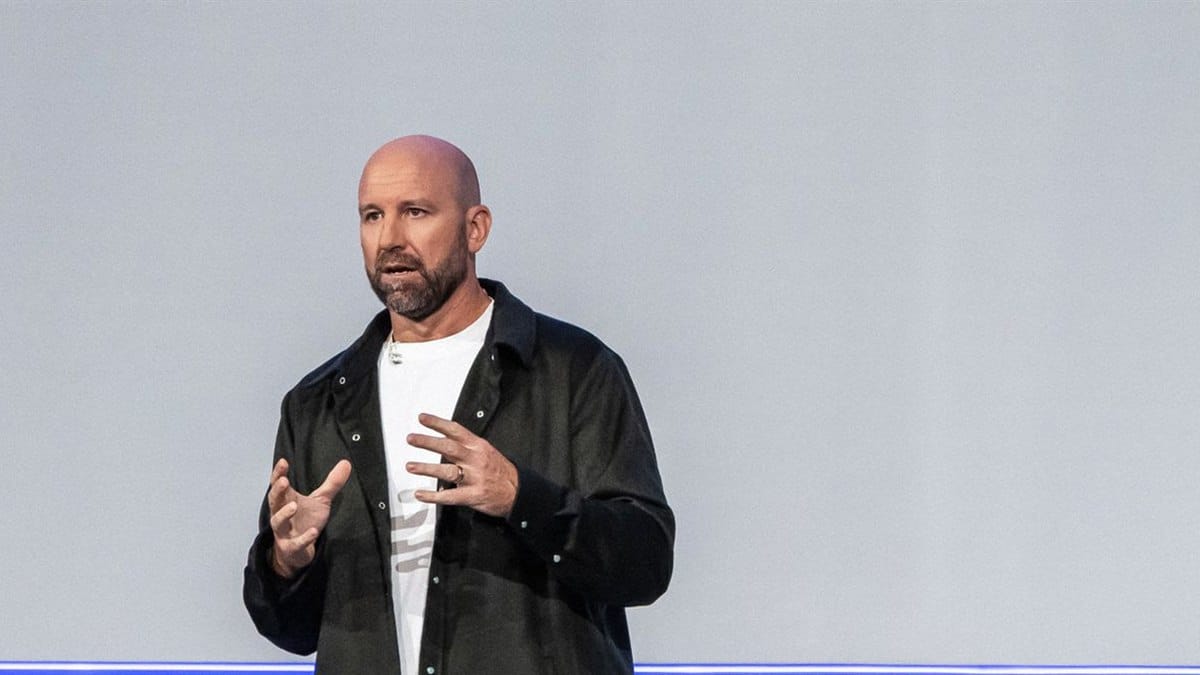
👀 What’s happening: Meta CTO Andrew Bosworth said employee morale has fallen to a 20-year low and called the company's AI reorganization "atrocious." It followed a week of internal blowups, including an employee hijacking a livestream to call a Meta AI executive "a piece of sh*t" in front of thousands. At the center is Applied AI, a new 6,500-person unit where engineers were reassigned to build training tasks for Meta's superintelligence push. To calm the revolt, executives restored snacks, micro-kitchens, travel budgets, and assigned desks.
🌍 How this hits reality: The mutiny is real, but the diagnosis is wrong. The problem is not morale. It is the 6,500 people. Frontier AI's defining lesson is that tiny teams now outrun armies. The breakthroughs are coming from labs of dozens, not divisions of thousands, because a handful of brilliant people with compute move faster than any org chart can coordinate. Meta is trying to win the small-team era with a workforce the size of a town, then acting shocked when it grinds into politics, busywork, and revolt. You cannot reorg 6,500 people into focus. That headcount is the bug.
🛎️ Key takeaway: Meta keeps treating scale as its weapon when scale is the wound. The fix was never snacks or a better reorg.
👀 What’s happening: Meta CTO Andrew Bosworth said employee morale has fallen to a 20-year low and called the company's AI reorganization "atrocious." It followed a week of internal blowups, including an employee hijacking a livestream to call a Meta AI executive "a piece of sh*t" in front of thousands.
DAILY TL;DR
READ MORE
Stay ahead without drowning in information. We turn the most important signals across AI, tech, marketing, and future products into 5-minute reads you can actually finish.
TOGETHER WITH US
AI Secret Media Group is the world’s #1 AI & Tech Newsletter Group, reaching over 2 million leaders across the global innovation ecosystem, from OpenAI, Anthropic, Google, and Microsoft to top AI labs, VCs, and fast-growing startups.
We've helped promote over 500 Tech Brands. Will yours be the next?
Email our co-founder Mark directly at [email protected] if the button fails.
Good Morning, AI Enthusiasts!
Market share evaporates, lives get routed, and the real moat is whoever gets the government, the grid, and the exit window first.

CODING

👀 What’s happening: Four days after SpaceX's record $75 billion IPO, it agreed to buy Anysphere, maker of AI coding tool Cursor, for $60 billion entirely in stock. Cursor was the fastest climb in SaaS history, reaching $1 billion in revenue in 18 months where Slack took seven years. Yet its market share peaked at 41% in June 2025 and had slid to 26% by May 2026 as Anthropic took roughly half the category. It sold near the top.
🌍 How this hits reality: This is the AI clock now. Cursor crowned itself king of the AI-IDE in roughly a year, then watched its share fall by a third in the eleven months from June 2025 to May 2026, the reign and the decline running almost back to back. Nothing about the product failed; the ground moved at the new speed. In any prior software era a dominant leader had a decade. Cursor got one cycle, rode it perfectly, and cashed out before its own window shut.
🛎️ Key takeaway: In AI, the climb and the cliff now sit months apart, and Cursor’s entire reign fit in the gap.
Yet its market share peaked at 41% in June 2025 and had slid to 26% by May 2026 as Anthropic took roughly half the category. It sold near the top.
👀 What’s happening: Four days after SpaceX's record $75 billion IPO, it agreed to buy Anysphere, maker of AI coding tool Cursor, for $60 billion entirely in stock. Cursor was the fastest climb in SaaS history, reaching $1 billion in revenue in 18 months where Slack took seven years.
👀 What’s happening: Four days after SpaceX's record $75 billion IPO, it agreed to buy Anysphere, maker of AI coding tool Cursor, for $60 billion entirely in stock. Cursor was the fastest climb in SaaS history, reaching $1 billion in revenue in 18 months where Slack took seven years.
TOGETHER WITH NEXOS

You didn’t mean to build an AI subscription collection, but here we are: ChatGPT, Claude, Gemini, and a few more you probably forgot about.
nexos.ai makes this stack unnecessary. With one subscription, you get 100+ AI models in one place, and the platform automatically picks the best AI model for each task.
Write faster, analyze smarter, build slides, create charts, run research – all this without switching between different AI tools or guessing which model is worth using.
And it costs less than one of the subscriptions you already have.
911

👀 What’s happening: Since December 2023, the Seattle Fire Department has run Corti, a Copenhagen startup’s AI, on every 911 medical call, prompting dispatchers to divert some callers to a Texas nurse line. The goal was sound: nurse lines free ambulances and paramedics for true emergencies. But SFD never disclosed the system, never filed it under the city's surveillance ordinance, and never sought council approval. GeekWire surfaced it this week, 2 years in.
🌍 How this hits reality: Easing dispatcher load is a real problem worth solving, and offloading low-acuity calls is the right instinct. The recklessness is the how: SFD pointed AI at the one judgment where a wrong answer kills, then skipped every checkpoint built to catch that. A reported 32% jump in diversions means one in three more callers now gets steered off an ambulance, with no public audit of who.
🛎️ Key takeaway: Good intentions don’t get a pass when the downside is a corpse; quietly automating who lives isn’t efficiency, it’s a public agency betting other people's lives that its shortcut works.
CHATBOT
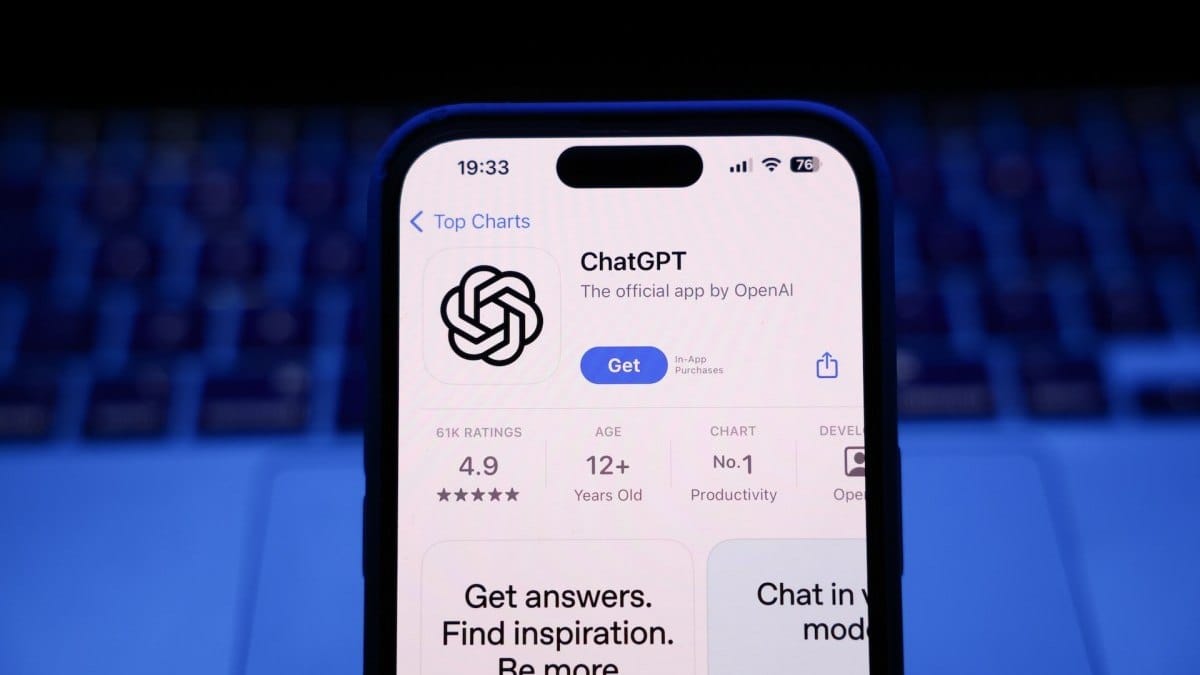
👀 What’s happening: For the first time since launch, ChatGPT’s share of the AI assistant market fell below 50%, hitting 46.4% by late May, per analytics firm Sensor Tower's 2026 report. It still leads with 1.1 billion monthly users, ahead of Google's Gemini at 662 million and Anthropic's Claude at 245 million. But users now switch between assistants freely, and Gemini and Claude are absorbing the share that slips.
🌍 How this hits reality: The first-mover moat was always model superiority, and that gap has all but closed. When every assistant answers about as well, there is nothing to defend; users drift on ecosystem, habit, or trust, and share fragments by default. The contest worth winning now isn’t the chatbot. It's the agent.
🛎️ Key takeaway: ChatGPT didn’t lose its majority to a better assistant; it lost it because assistants stopped being where the game is, and the next one is already being played in agents.
👀 What’s happening: For the first time since launch, ChatGPT’s share of the AI assistant market fell below 50%, hitting 46.4% by late May, per analytics firm Sensor Tower's 2026 report. It still leads with 1.1 billion monthly users, ahead of Google's Gemini at 662 million and Anthropic's Claude at 245 million.
It still leads with 1.1 billion monthly users, ahead of Google's Gemini at 662 million and Anthropic's Claude at 245 million. But users now switch between assistants freely, and Gemini and Claude are absorbing the share that slips.
It still leads with 1.1 billion monthly users, ahead of Google's Gemini at 662 million and Anthropic's Claude at 245 million. But users now switch between assistants freely, and Gemini and Claude are absorbing the share that slips.
COMPUTE

👀 What’s happening: The Department of Justice on Monday backed xAI in a lawsuit by the NAACP seeking to halt 57 unpermitted natural gas turbines powering its Colossus data centers near Memphis. DOJ's memo argued that shutting them would harm "national, economic, and energy security," citing Grok as one of four AI models supporting military operations, including recent strikes in Iran. xAI calls the trailer-mounted turbines "mobile" to dodge air permits. SpaceX's IPO filing earmarks another $2.8 billion for turbines.
🌍 How this hits reality: The AI arms race seems to have reached its absurd phase about who can buy turbines fastest, who lawyers around environmental permits most fluently, and who can rebrand a data center as military infrastructure. The new moat isn’t algorithms. It's megawatts, gas, attorneys, and a DOJ memo. Frontier AI now competes on logistics and legal cover, and xAI just proved the federal government will supply the cover.
🛎️ Key takeaway: The new AI moat isn’t intelligence, it’s turbines, lawyers, and a national-security label the government will staple to your smokestack on request.
DOJ's memo argued that shutting them would harm "national, economic, and energy security," citing Grok as one of four AI models supporting military operations, including recent strikes in Iran. xAI calls the trailer-mounted turbines "mobile" to dodge air permits. SpaceX's IPO filing earmarks another $2.8 billion for turbines.
TOGETHER WITH MINTDREAMER

Restore an old photo, swap a hairstyle, stage an empty room, cut out a background, generate a headshot, a tattoo, a logo — twenty-one tuned apps, each wired to the right model and the right defaults. Pick one and go.
DAILY TL;DR
READ MORE
Stay ahead without drowning in information. We turn the most important signals across AI, tech, marketing, and future products into 5-minute reads you can actually finish.
TOGETHER WITH US
AI Secret Media Group is the world’s #1 AI & Tech Newsletter Group, reaching over 2 million leaders across the global innovation ecosystem, from OpenAI, Anthropic, Google, and Microsoft to top AI labs, VCs, and fast-growing startups.
We've helped promote over 500 Tech Brands. Will yours be the next?
Email our co-founder Mark directly at [email protected] if the button fails.
Good Morning, AI Enthusiasts!
What looked like AI progress is increasingly just the world negotiating who gets to speak, who gets in, and who gets replaced by a very convincing imitation.

TREND
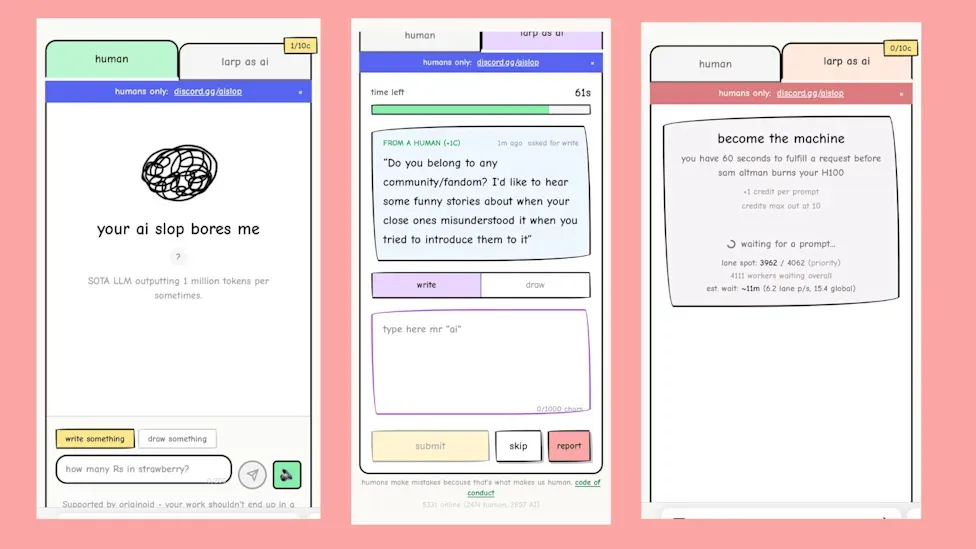
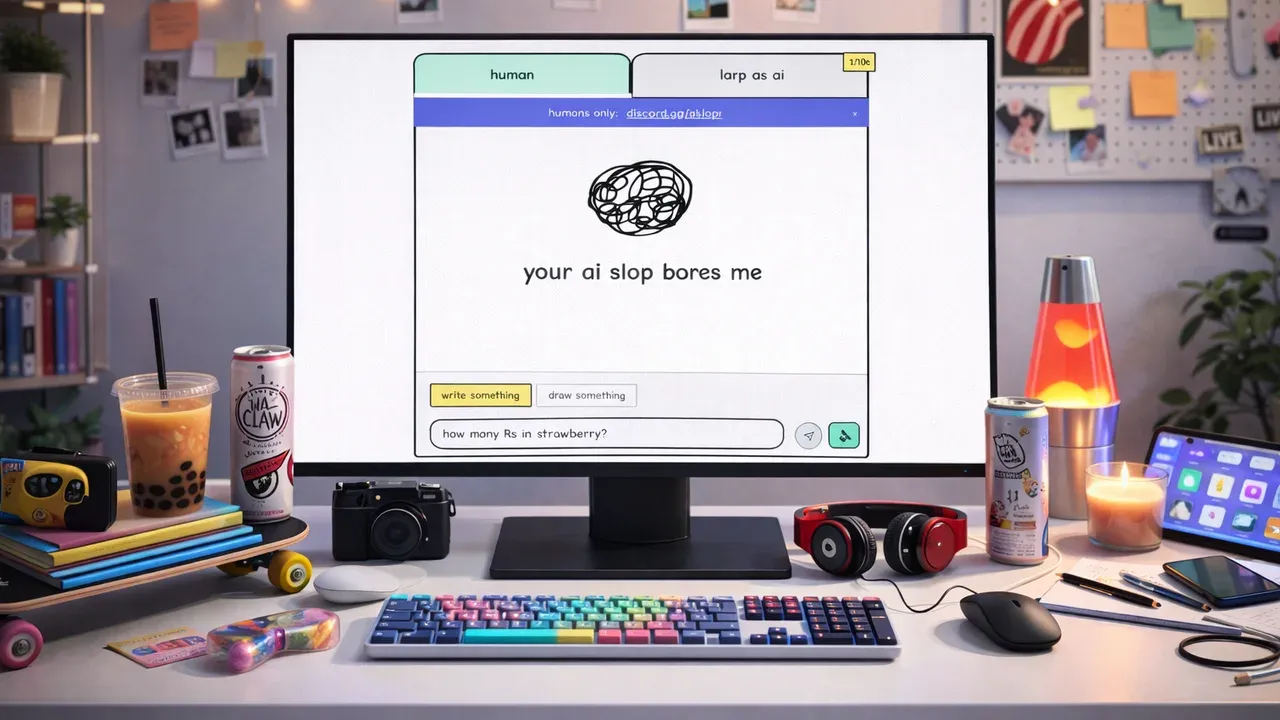
👀 What’s happening: Mihir Maroju, a 17-year-old in India, launched youraislopbores.me in February. No model, no GPUs, no AI. Users spend credits to ask questions; to earn them back, they flip to "Larp as AI" mode and get 60 seconds to answer a stranger while impersonating ChatGPT or Midjourney. The site warns that missing the timer makes Sam Altman burn your H100. One month: 25 million unique visitors, 280 million visits. Behind every chatbot is a human, biting back a laugh.
🌍 How this hits reality: AI made answers infinite and free, so the scarce good quietly moved. What 25 million people lined up for was not a correct reply but a human one, late, clumsy, hand-typed, wrong in the way only a person is wrong. The footer says it plainly: humans make mistakes because that is what makes us human. As the feeds fill with frictionless, faultless slop, the flaw became the feature nobody else can manufacture.
🛎️ Key takeaway: We spent a decade making the machine answer flawlessly, and the moment it could, the rarest thing online turned out to be a person getting it wrong.
TOGETHER WITH EXPERTISE
AI hasn't replaced sales reps, it just gave them more tools to manage.
The average sales rep now has over ten AI tools open and uses two of them well. Expertise sits above all of them.
One assistant that runs every part of the deal across the tools you already use, learns to work in your voice over time, and turns your selling style into something it can repeat time and again. It becomes your executive assistant, catching what you'd catch and drafting what you'd draft, and gets sharper the more you use it.
BAN LIST
👀 What’s happening: Anthropic is updating Claude's privacy policy for Free, Pro, and Max users on July 8, with language allowing it to require age or identity verification. Users flagged references to government IDs, live selfies, and facial-geometry templates, with individual developers possibly verified first. The move sorts users into tiers, separates individuals from enterprise accounts, and hardens bans on those suspected of distillation, copying a model by milking its outputs. It follows last week's foreign-citizen lockout on Fable 5 and Mythos 5.
🌍 How this hits reality: This is a vendor building a border checkpoint. Facial scans, document checks, and expulsion of suspected abusers are the tools of customs and law enforcement, not a software subscription. Anthropic is claiming the right to decide who counts as a legitimate person and who gets cast out, then dressing model-moat protection in the language of safety and compliance. Every rival just lets you log in and work. Anthropic alone audits the people paying it.
🛎️ Key takeaway: Anthropic is behaving like a state that issues credentials and exiles offenders, while forgetting it is a company that sells one of several interchangeable chatbots.
👀 What’s happening: Anthropic is updating Claude's privacy policy for Free, Pro, and Max users on July 8, with language allowing it to require age or identity verification. Users flagged references to government IDs, live selfies, and facial-geometry templates, with individual developers possibly verified first.
SUBTITLE

👀 What’s happening: Meta president Dina Powell McCormick went on Fox & Friends to announce that every blind veteran in America is eligible for a free pair of Meta AI glasses, framing it as a way to help them "regain their independence." She appeared alongside Army veteran Don Overton, blinded after Desert Storm, who spent over a year helping Meta's design team make the glasses more useful for blind veterans.
🌍 How this hits reality: Patriotism, disability, and sacrifice stack into a shield no critic wants to swing at. That is the point. A company fresh off privacy fights gets to relaunch a face-worn camera as a gift to wounded heroes, and the questions that would dog any Meta hardware launch die in the throat. Overton's year of design work, real and unpaid, becomes the warm origin story that sells it. The veteran lends his credibility; Meta keeps the data, the platform, and the headline.
🛎️ Key takeaway: Meta did not just donate glasses, it borrowed the one reputation in America too sacred to question and stapled its brand to it.
A company fresh off privacy fights gets to relaunch a face-worn camera as a gift to wounded heroes, and the questions that would dog any Meta hardware launch die in the throat. Overton's year of design work, real and unpaid, becomes the warm origin story that sells it.
INTERNET

👀 What’s happening: U.K. prime minister Keir Starmer announced a ban on social media for under-16s, covering TikTok, YouTube, Instagram, Snapchat, Facebook, and X, possibly live by next spring. London says it will go further than any country, citing infinite scroll and addiction by design. Over 83% of parents consulted agreed that the risks of social media outweigh the benefits. Australia moved first last year; Canada, France, and Denmark are now drafting their own versions.
🌍 How this hits reality: One country trying this is an experiment. Five doing it is a standard forming. The age wall is becoming the internet's default setting, and the mechanics are the real story: to keep under-16s out, a platform has to check the age of everyone who walks in. A rule written for children quietly becomes verification for adults. The open, sign-up-and-go internet that defined two decades is being rebuilt as a space you have to prove your way into.
🛎️ Key takeaway: The debate sounds like it is about children, but the thing actually being built is an internet where nobody gets in without showing their age first.
DAILY TL;DR
READ MORE
Stay ahead without drowning in information. We turn the most important signals across AI, tech, marketing, and future products into 5-minute reads you can actually finish.
TOGETHER WITH US
AI Secret Media Group is the world’s #1 AI & Tech Newsletter Group, reaching over 2 million leaders across the global innovation ecosystem, from OpenAI, Anthropic, Google, and Microsoft to top AI labs, VCs, and fast-growing startups.
We've helped promote over 500 Tech Brands. Will yours be the next?
Email our co-founder Mark directly at [email protected] if the button fails.
Good Morning, AI Enthusiasts!
The loop ate the prompt, the state ate the model, the junk drawer ate the datacenter, and the loser renamed the scoreboard.
LLM
👀 What’s happening: On June 9, Anthropic shipped Claude Fable 5, the first public model in its Mythos family, and the praise was instant. Ninety-six hours later it was dead. Commerce Secretary Howard Lutnick ordered it barred from all foreign nationals on national-security grounds, and Anthropic pulled it worldwide that night.
🌍 How this hits reality: A model's lifespan used to track its capability. Fable 5 broke that. It died at peak power, never outclassed by a rival, never beaten by a better release. A government veto, citing foreign security jailbreak Anthropic says other public models share, ended it. The kill switch now sat in Washington, not just the benchmark.
🛎️ Key takeaway: The best public model ever shipped was killed by a letter, not a competitor, and every lab just learned its real off switch sits on a desk in Washington.
👀 What’s happening: On June 9, Anthropic shipped Claude Fable 5, the first public model in its Mythos family, and the praise was instant. Ninety-six hours later it was dead. Commerce Secretary Howard Lutnick ordered it barred from all foreign nationals on national-security grounds, and Anthropic pulled it worldwide that night.
SKILLS
👀 What’s happening: Within days, OpenClaw's Peter and Claude Code's Boris both said they no longer write prompts; they design loops that prompt the agents. Google's Addy Osmani named it "Loop Engineering," the fourth paradigm after Prompt, Context, and Harness. That is four "engineering" disciplines invented in roughly two years. Each one was the must-learn skill, until the next one quietly made it optional.
🌍 How this hits reality: Do the math on the half-life. Prompt Engineering had courses and job titles before Context Engineering buried it. Harness arrived before most people finished learning that. Loop landed before the ink dried on Harness. The skill you grind for months now expires in weeks, obsoleted not by your competitor but by the next model that no longer needs the trick. The treadmill is running faster than the people on it.
🛎️ Key takeaway: When every skill you master is deprecated by the next model before you finish learning it, the rational move starts to look insane: learn nothing, wait for the model, and let the curve do your homework.
TOKEN

👀 What’s happening: Microsoft CEO Satya Nadella posted a long post on X argued that every firm must build two assets: human capital, the judgment of its people, and "token capital," the AI capability a company owns. His pitch is that picking the best model is the wrong game. The real asset, he says, is a private learning loop fed by your own data that compounds and survives swapping out any underlying model.
🌍 How this hits reality: Read who is talking. Microsoft does not own the frontier model; it also rents OpenAI's and resells Anthropic's. So its CEO has every reason to insist the frontier model does not matter, and that what matters is the loop you build on a platform he sells. "Token capital" conveniently reframes Microsoft's capability gap as everyone's strategy. The firm without the best model tells you the best model is not the point.
👀 What’s happening: Microsoft CEO Satya Nadella posted a long post on X argued that every firm must build two assets: human capital, the judgment of its people, and "token capital," the AI capability a company owns. His pitch is that picking the best model is the wrong game.
Microsoft does not own the frontier model; it also rents OpenAI's and resells Anthropic's. So its CEO has every reason to insist the frontier model does not matter, and that what matters is the loop you build on a platform he sells. "Token capital" conveniently reframes Microsoft's capability gap as everyone's strategy.
FEVER

👀 What’s happening: Google and UC San Diego announced a "datacenter" built from 2,000 retired Pixel phones. They strip each phone to its motherboard, wipe Android for Linux, and cluster the boards with Kubernetes. By SPEC benchmarks, 25 to 50 phones equal one server, so the whole project lands near 50 server-equivalents. It launches Fall 2026 to run a few computer-science classes at low cost and, per the press release, lower carbon.
🌍 How this hits reality: Fifty servers is a rounding error. Hyperscalers light up that much before lunch and stand up datacenters measured in gigawatts. Yet a top research university packages a 2,000-phone salvage rig as frontier work, because anything tagged "compute" now attracts funding, headlines, and a Google byline. The compute boom has gotten hot enough that picking through e-waste reads as a research agenda, and the result still wouldn't run a single serious training job.
🛎️ Key takeaway: When the gold rush is this loud, even a drawer of dead phones gets repackaged as a datacenter, and a 50-server science project gets to ride the trillion-dollar compute story.
👀 What’s happening: Google and UC San Diego announced a "datacenter" built from 2,000 retired Pixel phones. They strip each phone to its motherboard, wipe Android for Linux, and cluster the boards with Kubernetes. By SPEC benchmarks, 25 to 50 phones equal one server, so the whole project lands near 50 server-equivalents.
DAILY TL;DR
READ MORE
Stay ahead without drowning in information. We turn the most important signals across AI, tech, marketing, and future products into 5-minute reads you can actually finish.
TOGETHER WITH US
AI Secret Media Group is the world’s #1 AI & Tech Newsletter Group, reaching over 2 million leaders across the global innovation ecosystem, from OpenAI, Anthropic, Google, and Microsoft to top AI labs, VCs, and fast-growing startups.
We've helped promote over 500 Tech Brands. Will yours be the next?
Email our co-founder Mark directly at [email protected] if the button fails.
Plus: Anthropic Will Say Anything to List, Microsoft’s AI Bill Comes Due
Read the storyPlus: Rich Parents Bet Their Kids on AI, Meta Faked Kids To Trap Rivals
Plus: Korea Bets $1.93 Trillion, Chinese Human Actors Got Deleted
Plus: Mind Reading Went Non-Invasive, Animation Gets Cut First
Plus: 1000x Cut in AI's Power Bill, Frontier AI Got Nationalized
Plus: OpenAI Built Its Own Body, Alibaba Bleeds on AI Theft Claims
Plus: Google Lost Two Giants, Norway Walled Off Childhood From AI
Plus: Seattle Let an AI Triage 911 Illegally, DOJ Shields xAI’s Smokestacks
Plus: Anthropic Forgot It’s a Company, The Age Wall Goes Global
Plus: Loop Engineering Has Arrived, Token Capital Is Cope